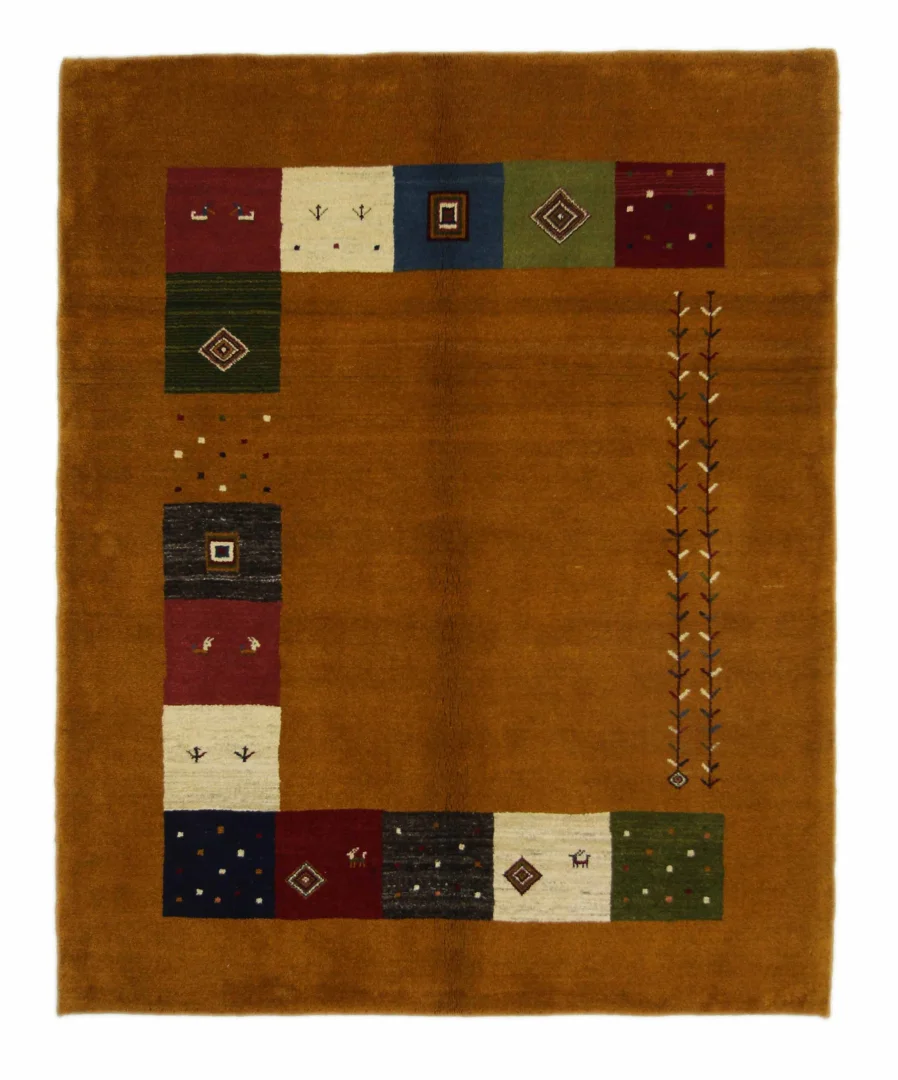
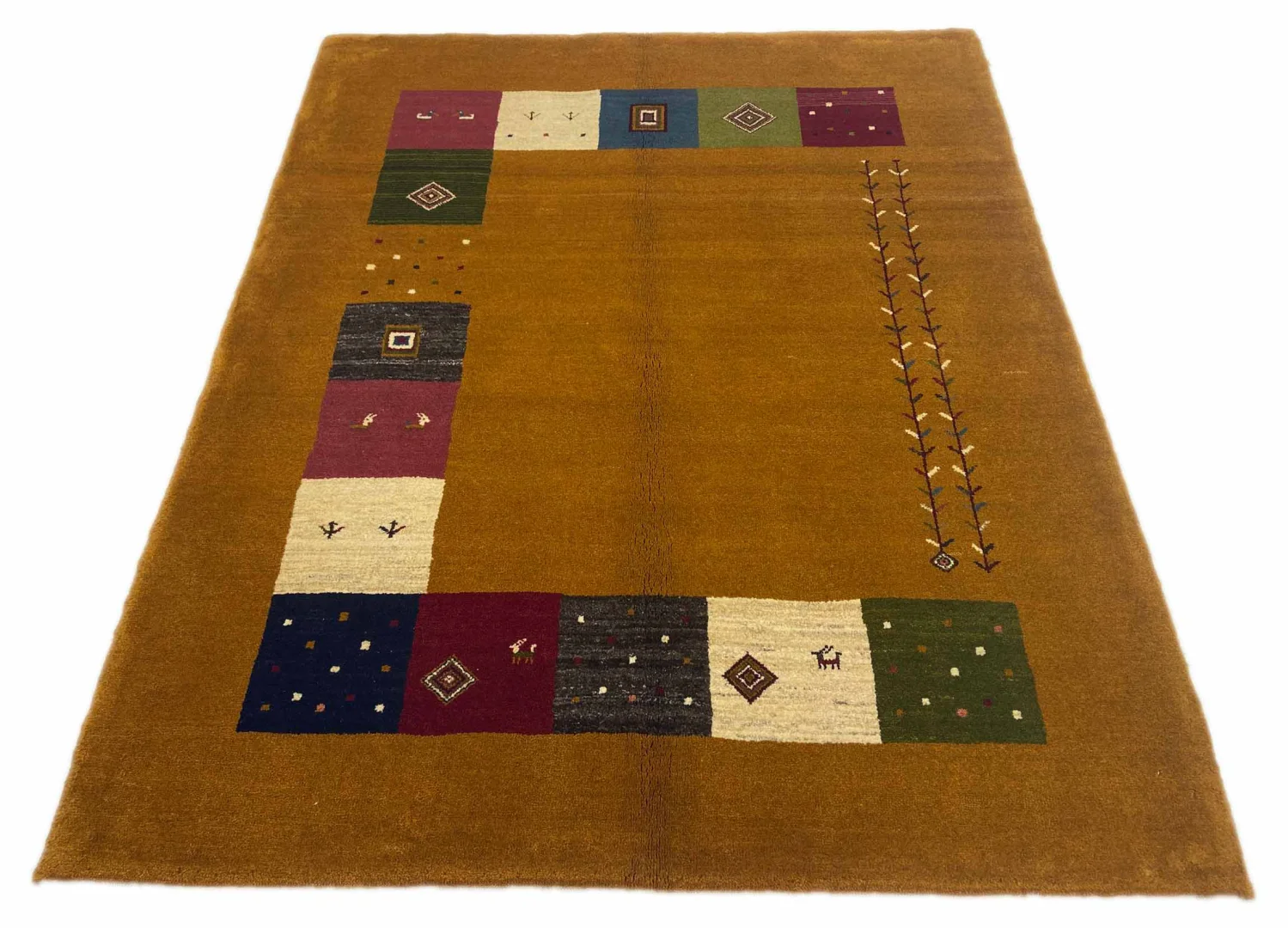
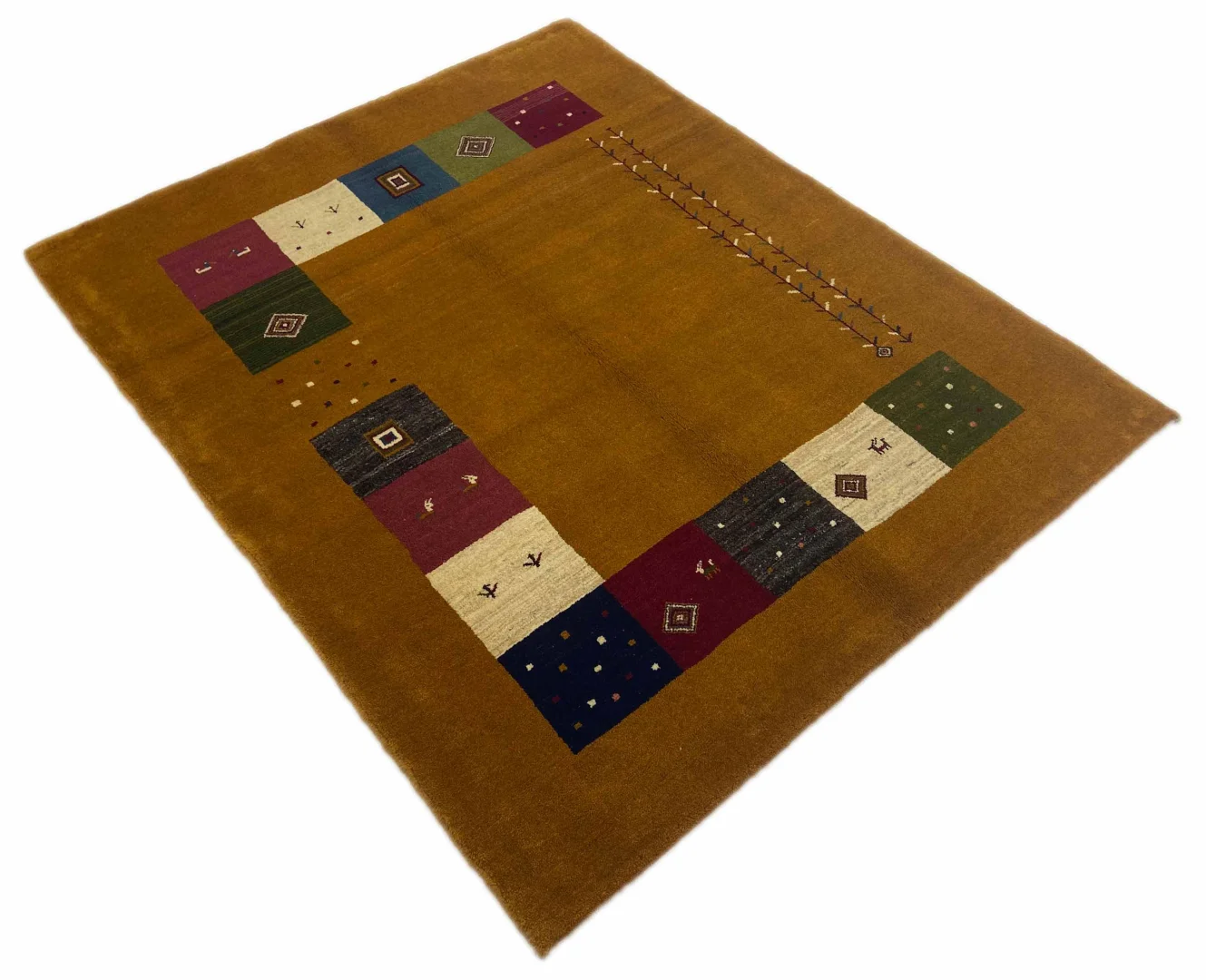
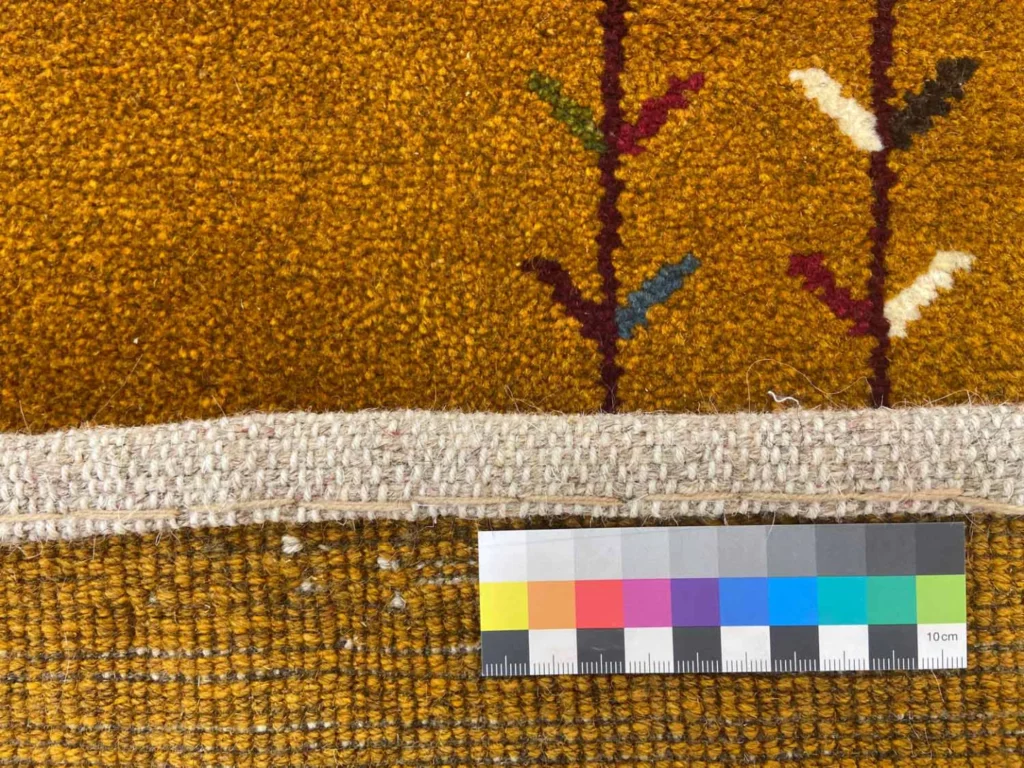
Persian Rug Fars 196 x 160 cm Wool Hand-knotted
€ 1222
Hand-knotted Fars Persian Rug | Knot density: 50.000 – 180.000 knots/m² | Material: Pile hand-spun sheep and goat wool | Size: 196 x 160 cm | Pattern: Abstract design with large colour fields and playful figures | Condition: High-quality soft pile up to 2 cm
1 available
- ✓Free Shipping in EU
- ✓2-5 Business Days Delivery
- ✓14-Day Return Policy
- ✓Worldwide Shipping on request
 SECURE PAYMENT
 SHIPPING PARTNERS
Inventory number: BBAB9229
Description
Fars Persian Rug
Material and Craftsmanship
This hand-knotted Persian rug from Fars is made from hand-spun sheep and goat wool. The wool forms a soft, high-quality pile and gives the rug its distinctive textile surface. Hand-spun wool is one of the traditional materials used in Oriental rug making because it can be worked by hand while retaining a naturally varied structure. The material therefore connects the surface of the rug with the craft process behind it.
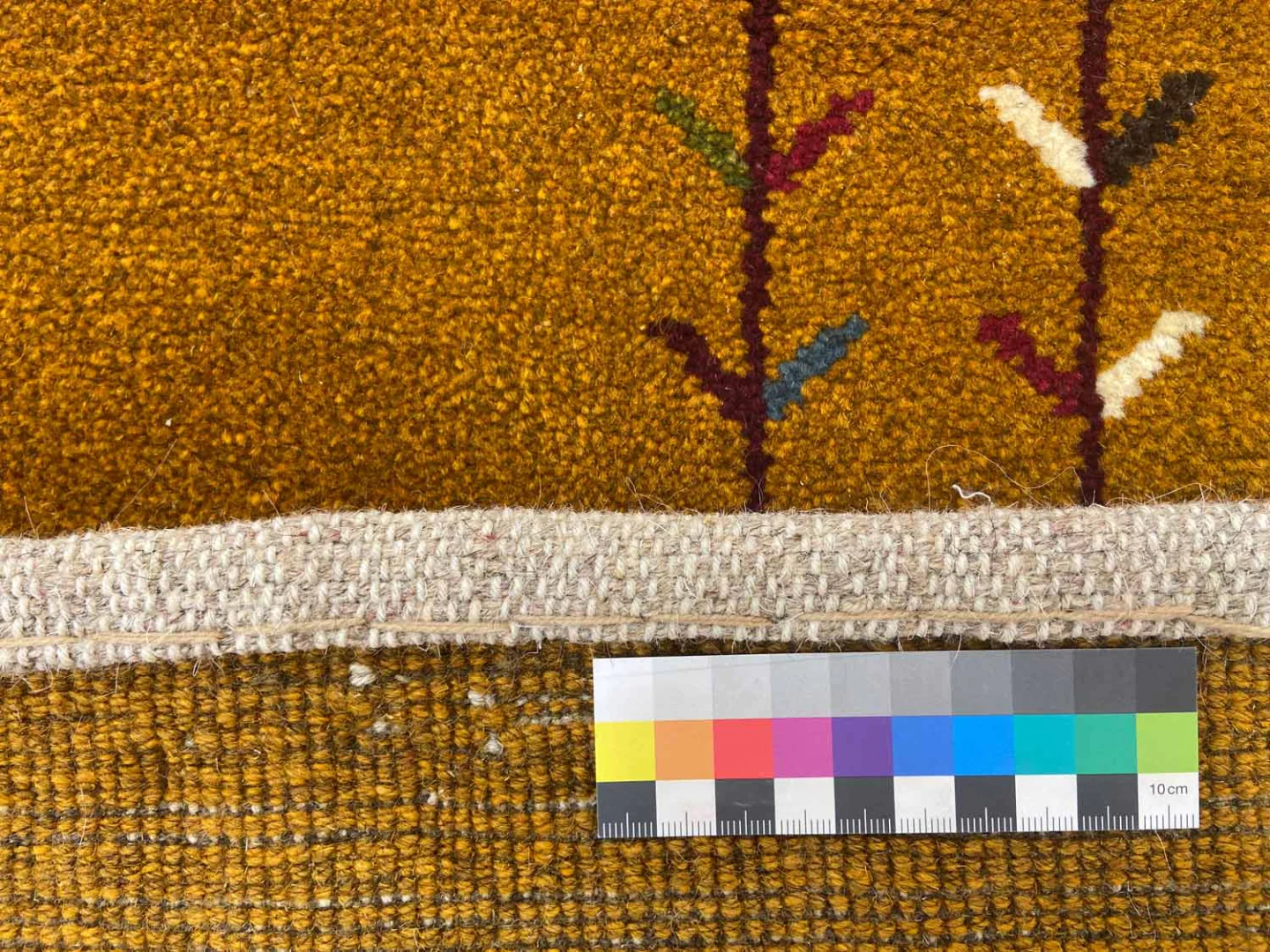
The knot density of this rug is stated as 50.000 – 180.000 knots/m². In hand-knotting, each knot is placed individually into the foundation. The surface is consequently created through many separate working steps rather than through an industrially produced, uniform covering. Knotting also joins the colour areas and figures to the underlying structure, making the handmade construction perceptible in the way the rug feels and looks.
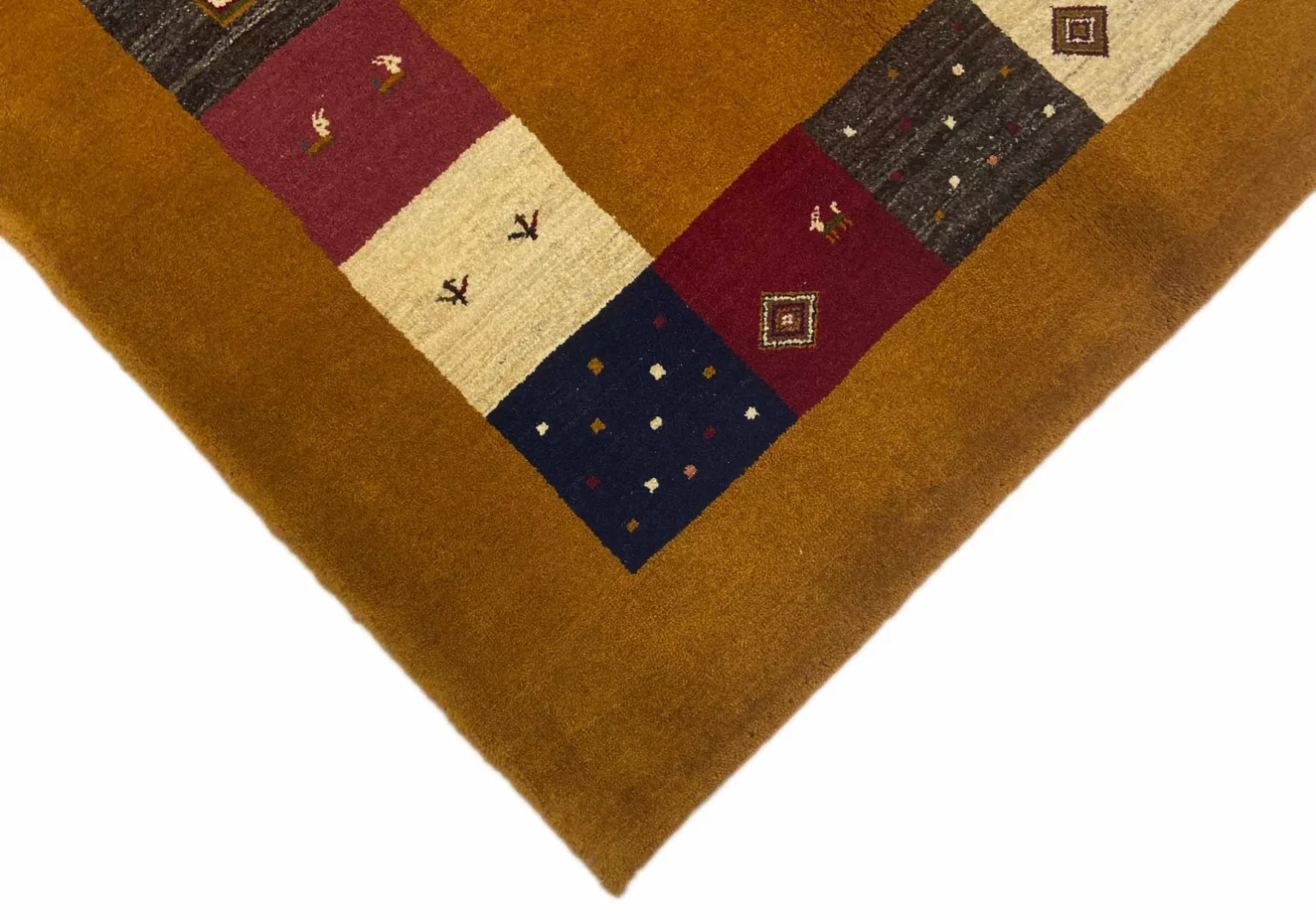
The pile is described as high-quality and soft, with a height of up to 2 cm. Together with the high knot density, this gives the rug a dense handle and a comfortable surface underfoot. The product description also identifies it as durable and relatively easy to care for. Wool is traditionally used in rug making because its fibre structure is resilient and its feel is pleasant. Here, hand-spun sheep and goat wool is combined with the hand-knotting technique.
A hand-knotted Gabbeh is made through numerous individual stages. The weaver must coordinate knots, colours and fields continuously as the design develops. Small variations in execution are part of handmade production and distinguish it from machine-made floor coverings. The material information for this piece refers to the wool pile; no separate warp material is specified.
Origin and Tradition
Gabbeh rugs originate in Iran and are particularly associated with Fars. This rug was made by nomadic Ghashghai in Fars, Iran. The region has a long history of rug weaving. For nomadic communities, weaving was closely connected with daily life: wool, colour, form and use were all part of a textile culture handed down across generations.
Fars lies in southern Iran and contains several established traditions of textile production. Gabbeh weaving among the nomadic Ghashghai is associated with a direct and informal visual language. These rugs often appear less formal than courtly or urban rugs with tightly ordered ornament. Broad areas, simple geometric forms and individual figures can instead determine the structure of the field.
The name Gabbeh is associated with rugs that show an informal design and a soft pile. Within nomadic rug culture, a rug was not understood only as a decorative object. It could serve everyday purposes while also carrying knowledge of wool preparation, colouring, knotting and pattern making. Gabbeh rugs therefore represent a connection between practical use and visual expression.
The pattern tradition of Fars draws on the environment and on the lives of the people who developed it. Gabbeh compositions may include diamonds, geometric shapes and stylised motifs from nature. Animals, people and simplified figures can also appear as independent signs within the field. These motifs do not need to be rendered naturalistically. Their reduced forms allow a composition to remain clear and immediately readable.
The nomadic background also helps explain the freedom associated with Gabbeh design. Not every rug follows a rigid repeat or an identical template. Colours, fields and figures may be arranged differently from one composition to another. This does not mean that the making is without rules. The rugs rely on inherited skills, applied within a living tradition that allows room for individual design decisions.
Through its production in Fars and its attribution to the Ghashghai, this rug belongs to the Iranian Gabbeh context. Its origin is established by the named place of manufacture, not by the name of an isolated ornament. The combination of nomadic tradition, hand-spun wool and hand-knotting provides the cultural and technical setting for this one-off piece.
Design and Pattern
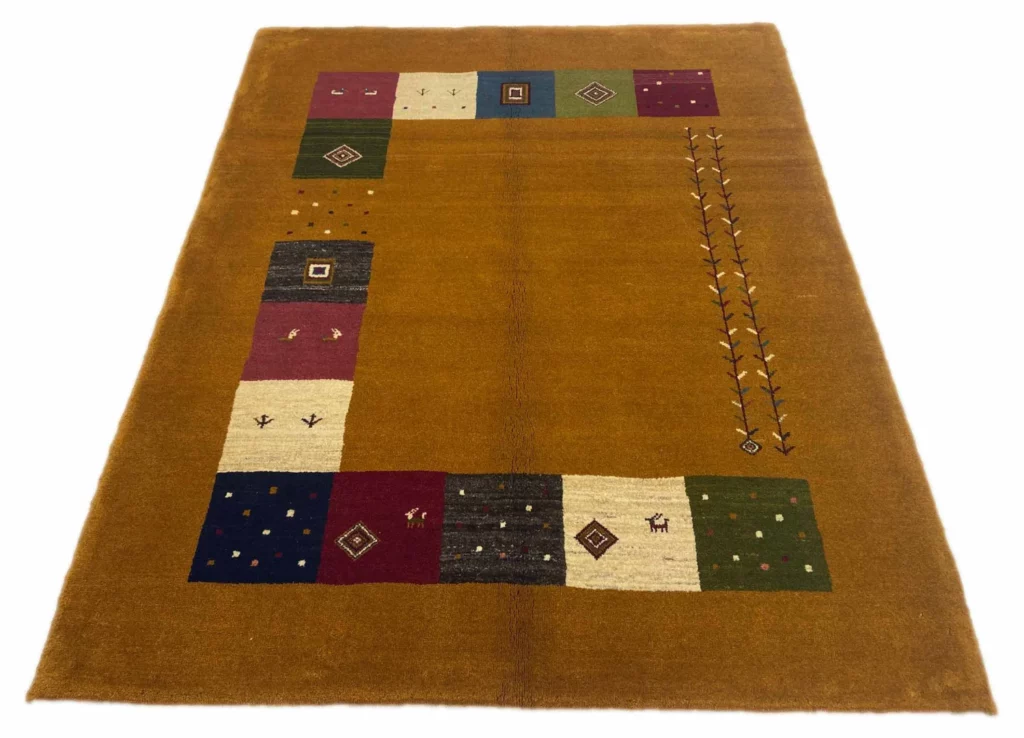
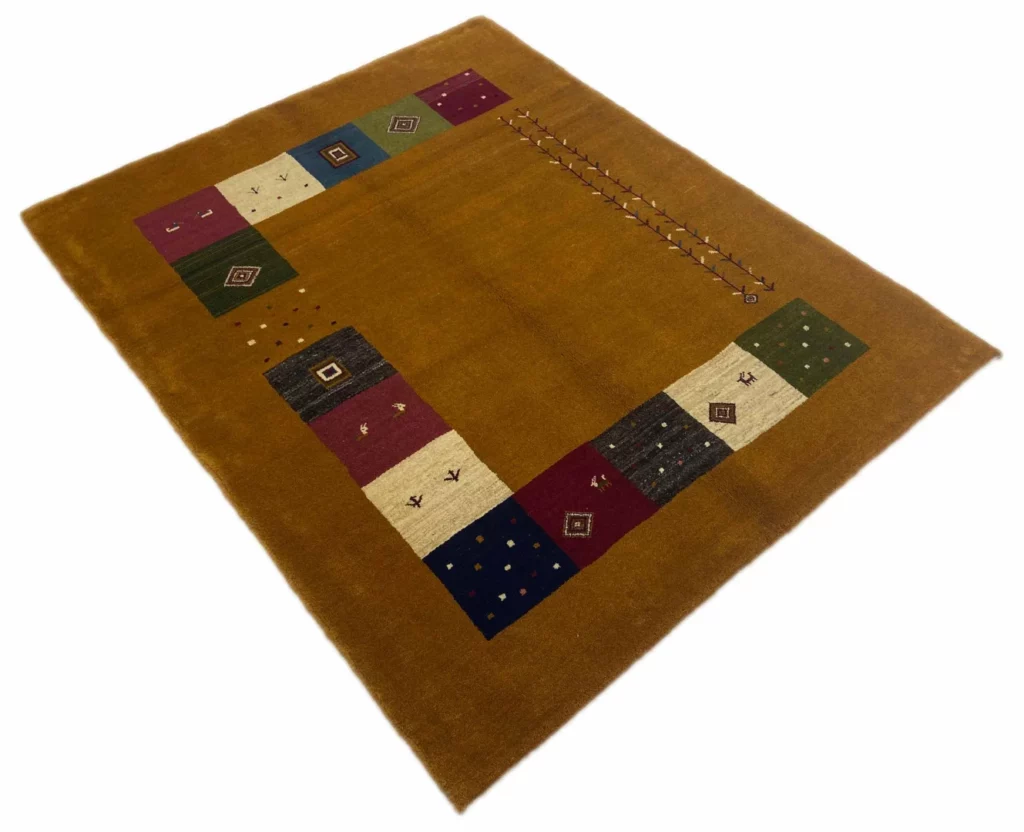
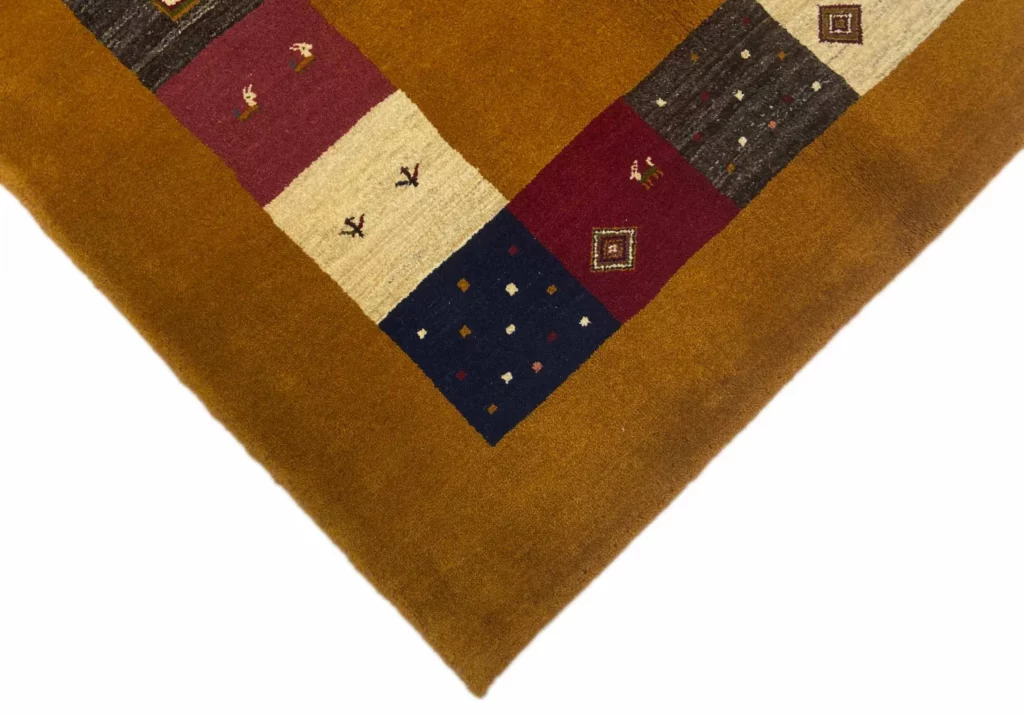
The design of this Gabbeh is described as abstract, with large colour fields and playful figures. It therefore does not depend on a small, continuously repeated ornament. Instead, clearly visible areas of colour provide the broad structure, while the figures act as distinct pictorial accents within that structure. The result is an arrangement in which broad fields and individual signs can be read together.
Abstract Gabbeh design belongs to a tradition in which a form does not have to reproduce every detail of a real object. A figure may be recognisable through a few lines or a simplified silhouette. A geometric sign may function both as a decorative shape and as part of an inherited visual vocabulary. This reduction is characteristic of informal Gabbeh composition and allows individual elements to remain legible from a distance.
The playful figures create a contrast with the larger connected fields. They introduce movement and variation into areas that otherwise provide visual calm. The composition can appear modern because it uses simplification and open arrangement, while remaining connected to the Iranian Gabbeh tradition. Its abstract structure can consequently be read alongside restrained interiors as well as more traditional settings, without requiring one particular decorating style.
Gabbeh rugs are often associated with natural colour ranges such as sand, earth tones and gentle natural shades. These colours relate to the landscape around Fars and to the traditional use of natural materials in rug culture. The present design is additionally described as using a variety of colours with harmonious transitions. The colour fields can therefore remain distinct while still forming a coherent overall composition.
Gabbeh patterns often preserve references to nomadic life. Diamonds and other geometric forms may act as organising signs, while stylised plants, animals or people can refer to the natural environment and everyday experience. For this rug, however, the specific description places large colour fields and playful figures at the centre. The broader Gabbeh tradition supplies the cultural context, while those stated elements define the design of this piece.
The visual effect develops from the relationship between the parts. The fields establish calm areas, the figures create recognisable accents, and the colour transitions link different sections of the composition. This shows how Gabbeh weavers can join inherited hand skills with freer pictorial ideas. The design consequently places cultural origin and an abstract, contemporary-looking form side by side.
Special Features
The defining features of this rug include its high knot density, soft pile and hand-spun sheep and goat wool. The knot density is given as 50.000 – 180.000 knots/m². The pile is high-quality, soft and up to 2 cm high. These details determine the rug’s handle and its tactile textile character.
The abstract pattern combines large colour fields with playful figures. It does not rely on a strictly symmetrical sequence of repeated ornament. The hand-knotting and the open pictorial language make the relationship between traditional workmanship and a contemporary-looking form visible.
The rug is described as robust and easy to care for and can be used in different living areas. The listed examples include the living room, bedroom and hallway. Its significance lies both in practical use and in its classification as a hand-knotted Gabbeh from Fars, made by nomadic Ghashghai.
FAQ
How should I clean a Gabbeh rug?
For regular care, vacuum carefully without using a brush attachment. This removes loose dust while avoiding unnecessary stress on the soft wool pile. For heavier soiling, professional rug cleaning should be considered. Strong cleaning agents should not be used, since they can damage the colours and the wool surface. A gentle approach is appropriate for a hand-knotted rug because the pile, knots and colours are parts of a carefully made textile structure. Regular, restrained maintenance helps preserve the stated soft surface and the appearance of the design.
How can I identify a high-quality Gabbeh rug?
General indicators of a high-quality Gabbeh include a high knot density, suitable wool material and a balanced, considered design. The colours should also appear natural and lively. For this rug, the specified features are hand-spun sheep and goat wool, a knot density of 50.000 – 180.000 knots/m², a soft pile and an abstract pattern with large colour fields and playful figures. Its hand-knotted construction also identifies the traditional production method. These points describe the workmanship and material without confusing the Gabbeh design tradition with machine-made reproduction.
Where can I buy Gabbeh rugs?
Gabbeh rugs can be found at specialist rug dealers, in online shops for Oriental rugs and at markets in Iran. When buying, attention should be paid to authenticity and quality. Useful information includes a clear statement of origin and manufacture, a material description and an indication of the technique. For this rug, Fars in Iran and production by nomadic Ghashghai are specified. The details about hand-spun wool, knot density and pattern provide further points of reference when distinguishing a hand-knotted piece from a purely machine-made imitation.
Additional information
| Design Style | |
|---|---|
| Color | |
| Size | |
| Shape | |
| Origin | |
| Knot Density | |
| Material |
Related products

Persian Rug Qashqai 293 x 198 cm Wool Hand-woven
€ 798
Persian Rug Qashqai 290 x 192 cm Wool Hand-woven
€ 798
Persian Rug Heriz ca 341 x 242 cm Wool Hand-knotted
€ 1800
Persian Rug Qashqai 286 x 192 cm Wool Hand-woven
€ 944
Persian Rug Qashqai 284 x 183 cm Wool Hand-woven
€ 798
Persian Rug Fars 292 x 206 cm Wool Hand-woven
€ 798
Persian Rug Fars 240 x 150 cm Cashmere Hand-knotted
€ 1118
Persian Rug Gabbeh 305×260 cm Wool Hand-knotted
€ 2307