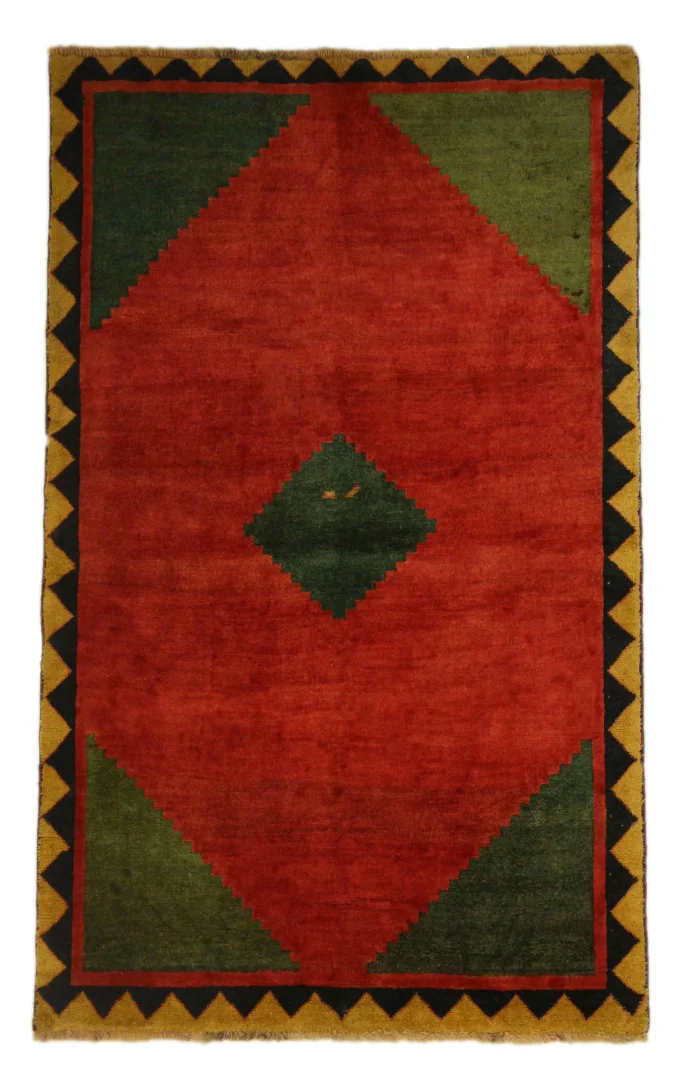
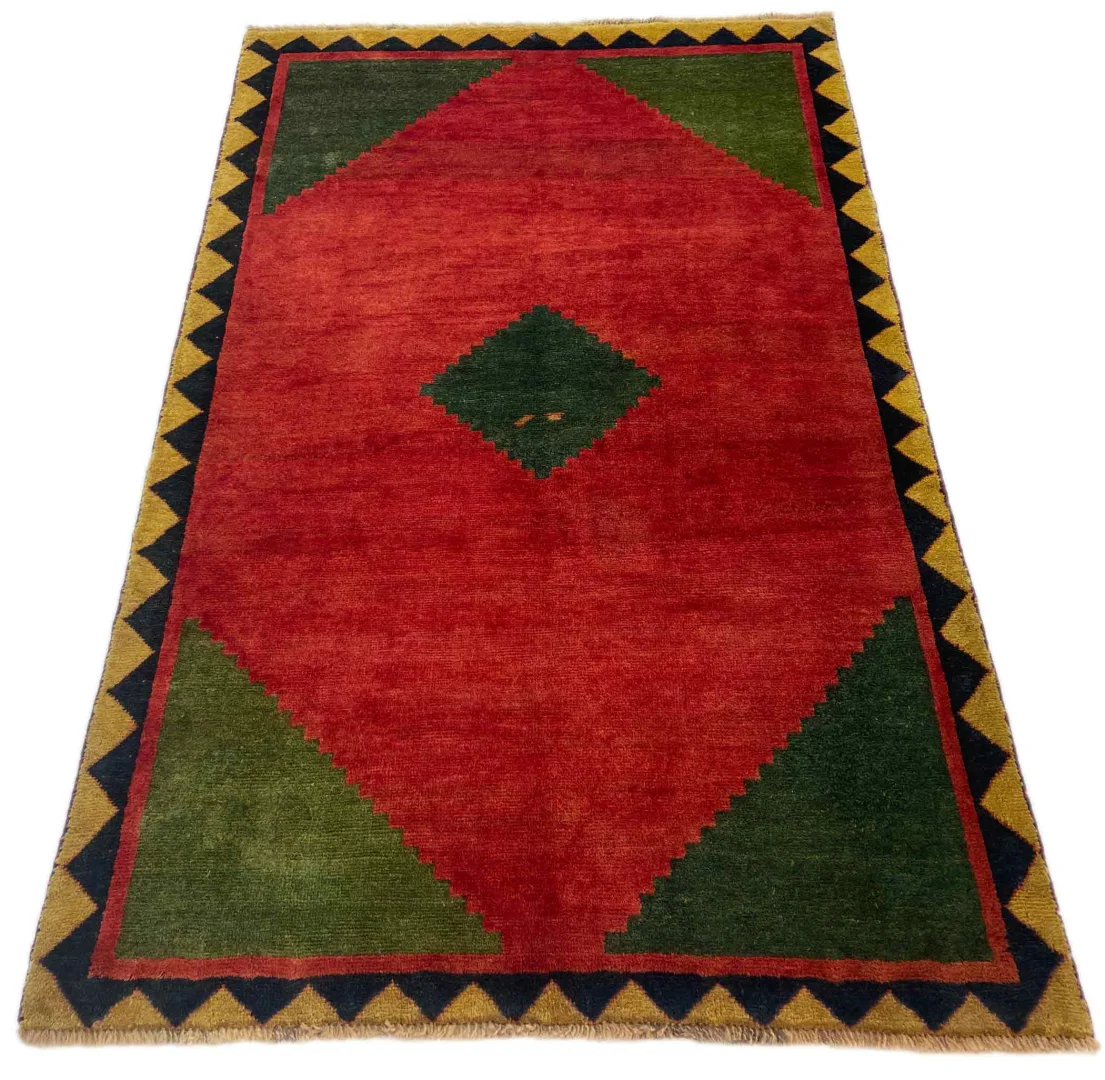
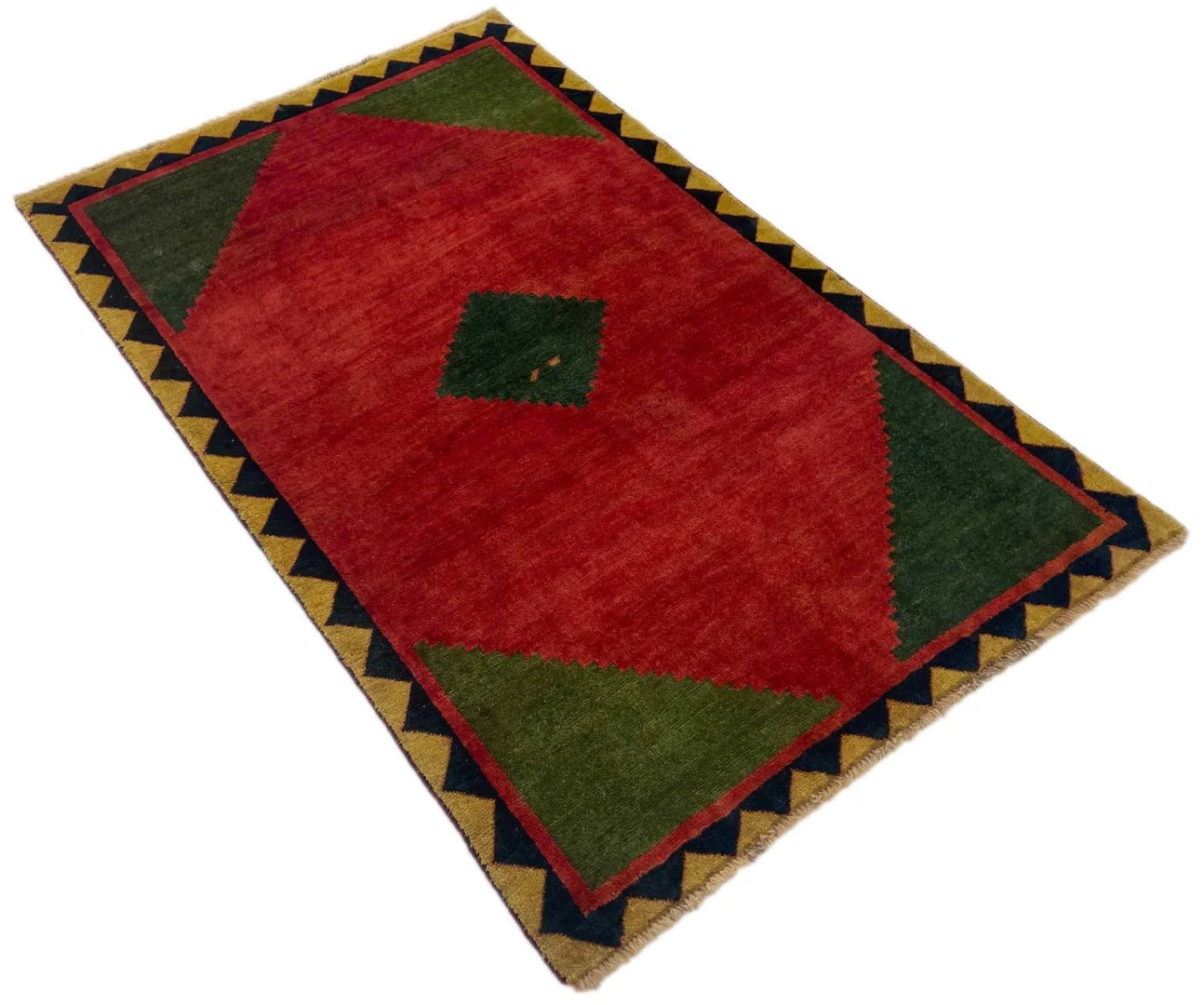
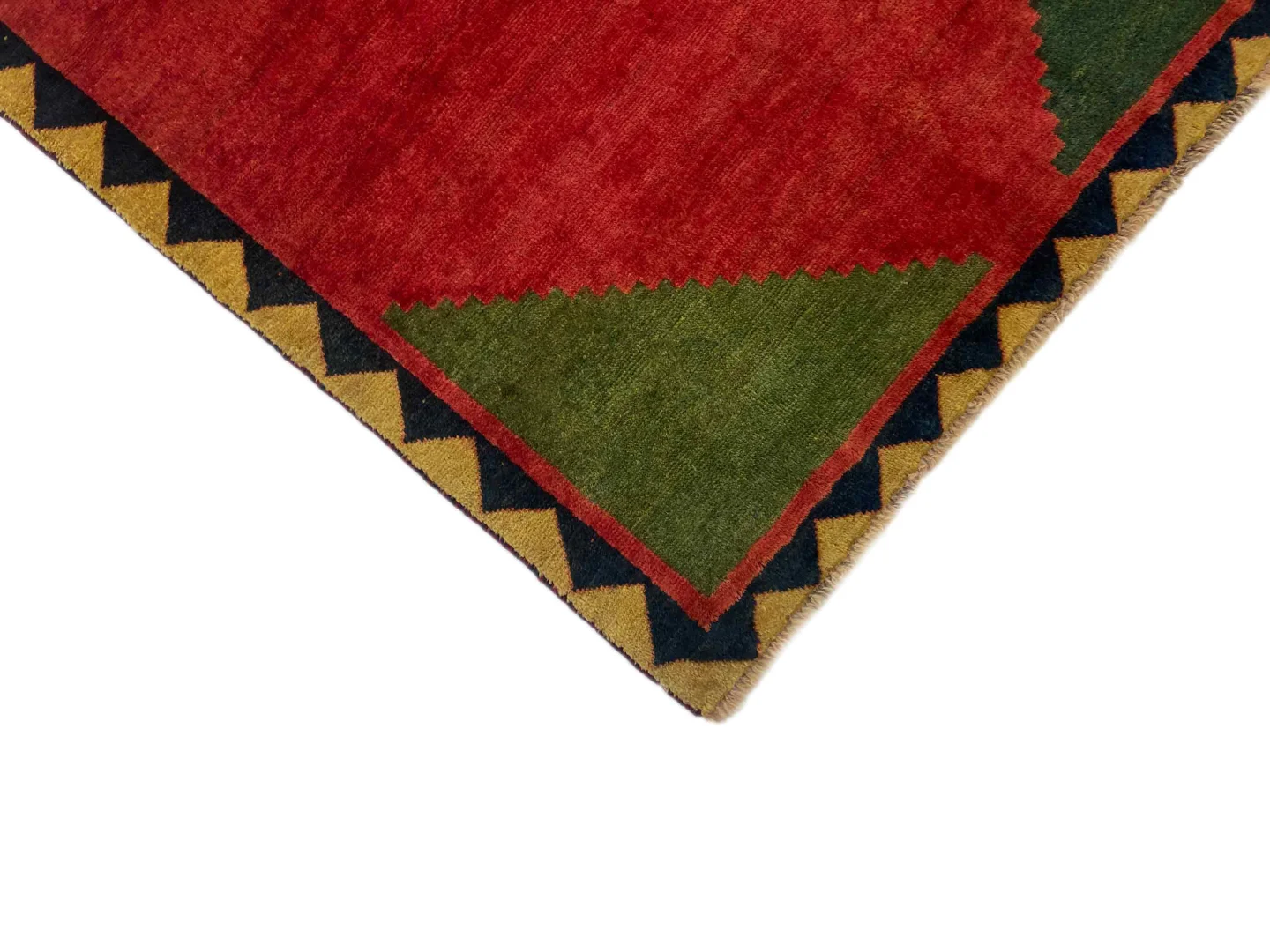
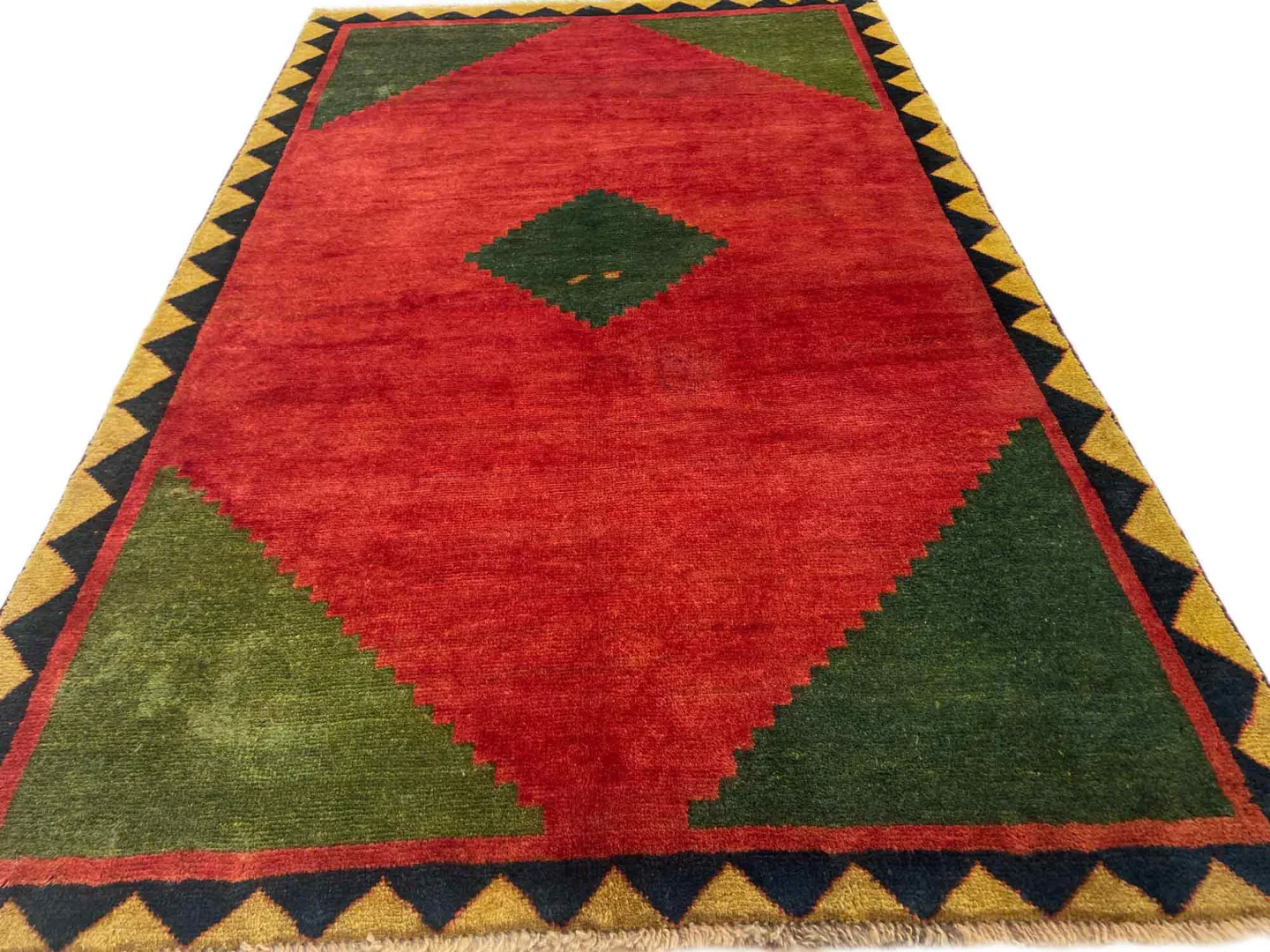
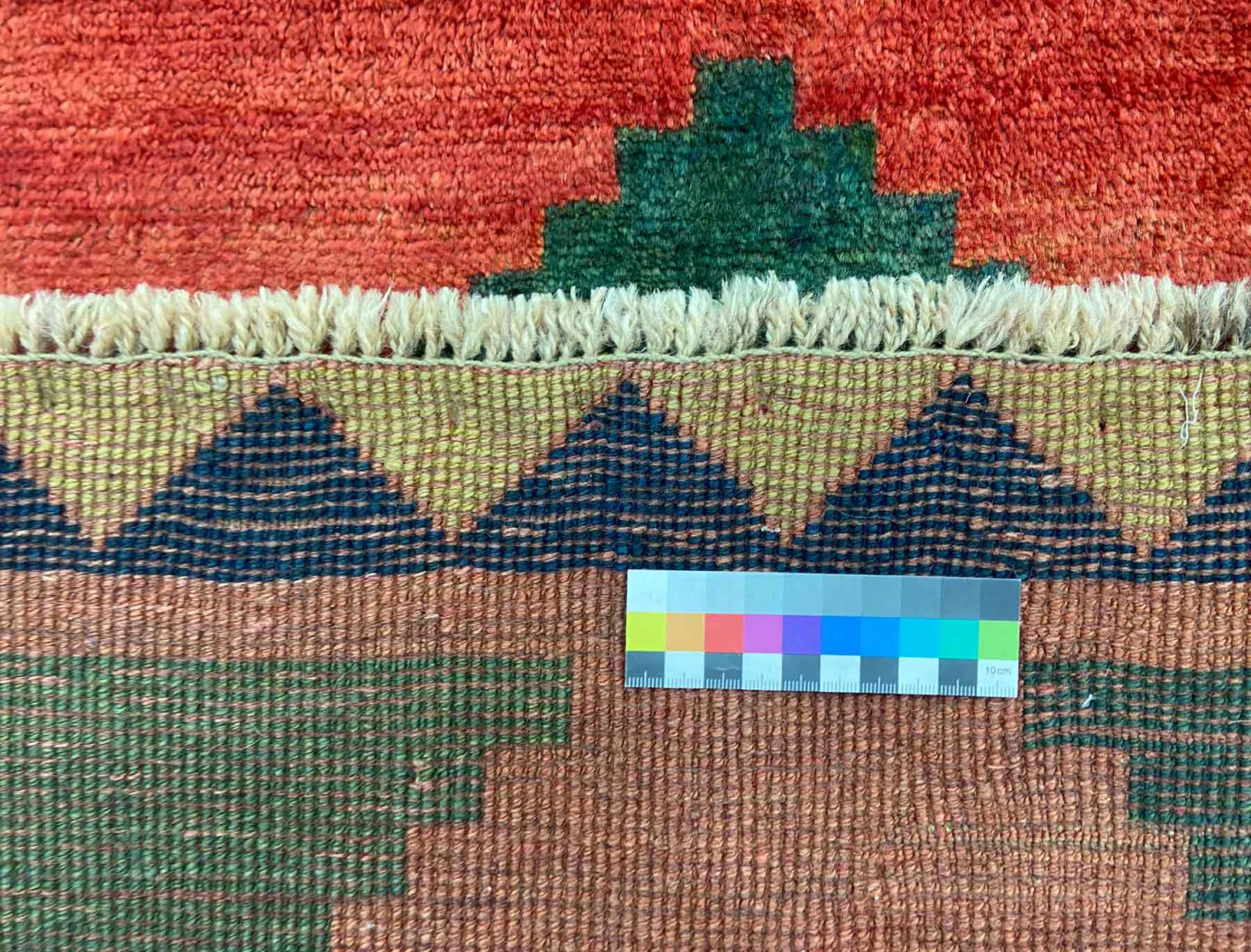
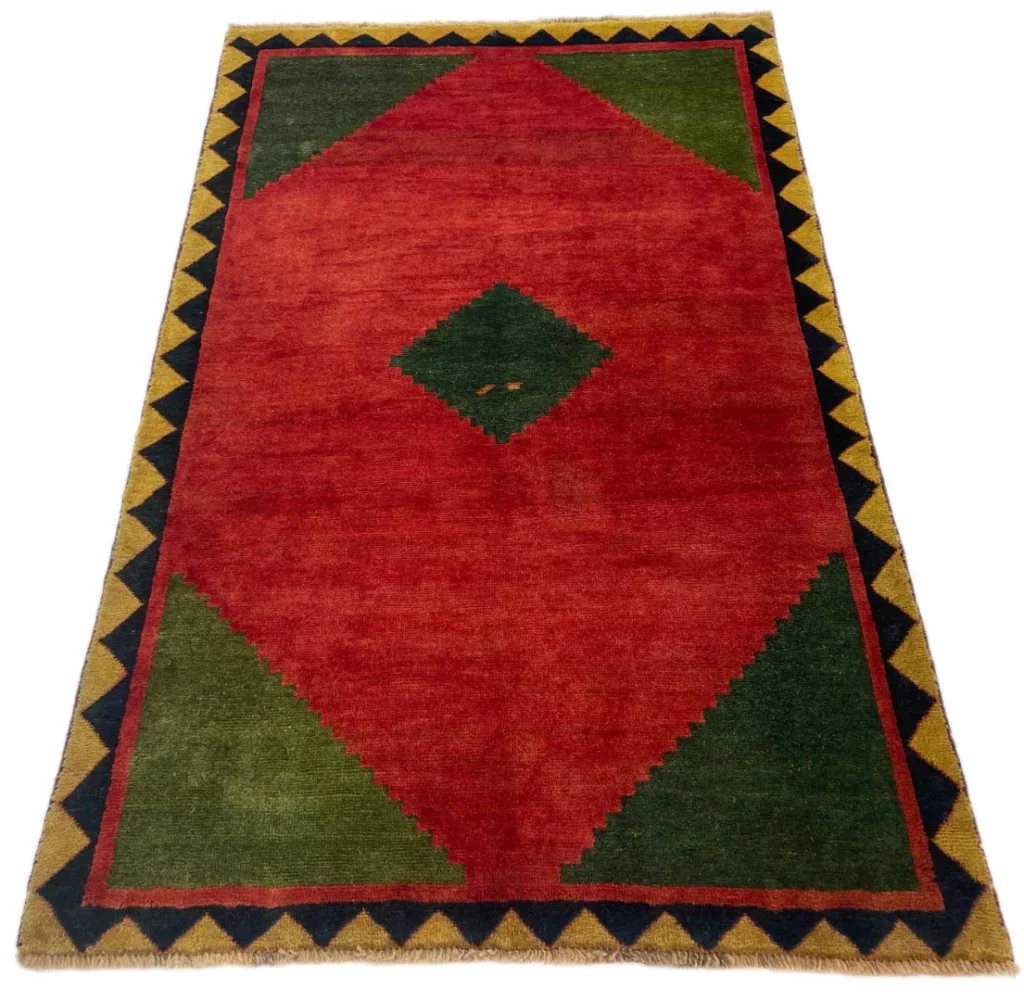
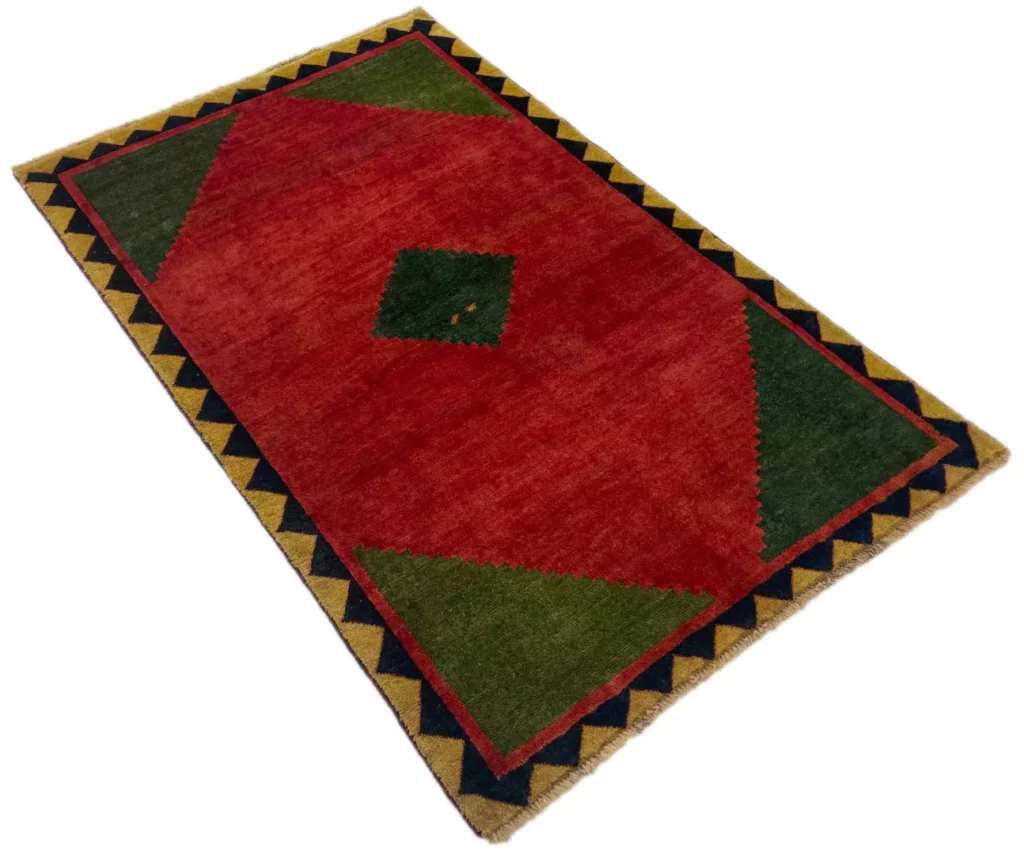
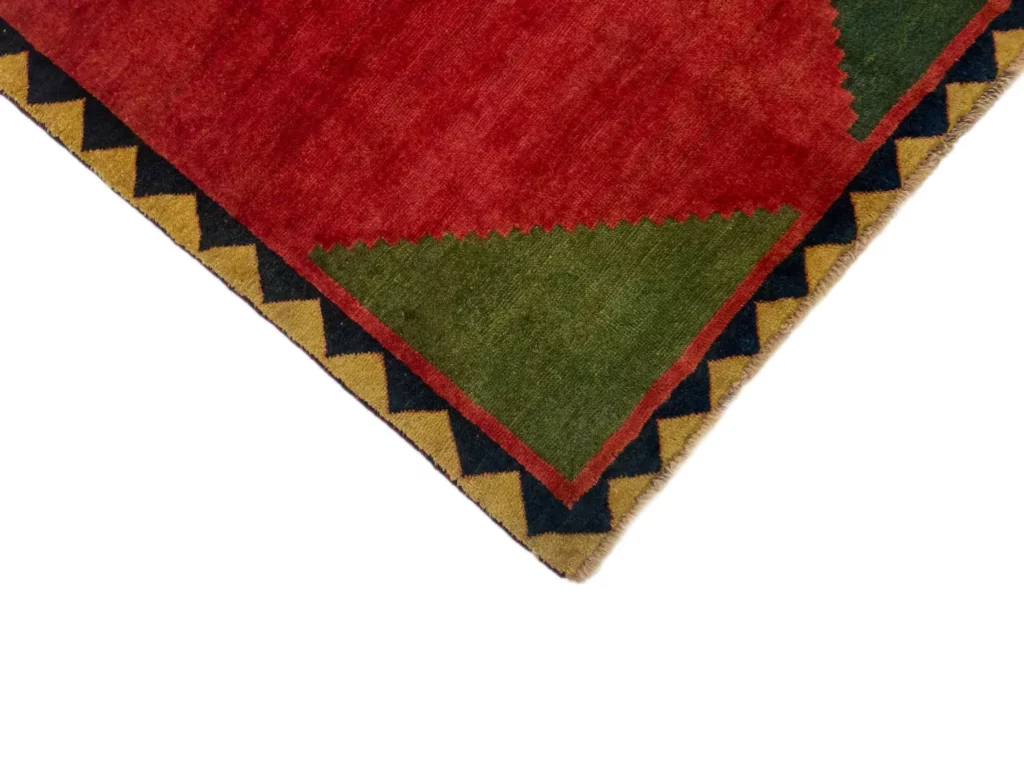
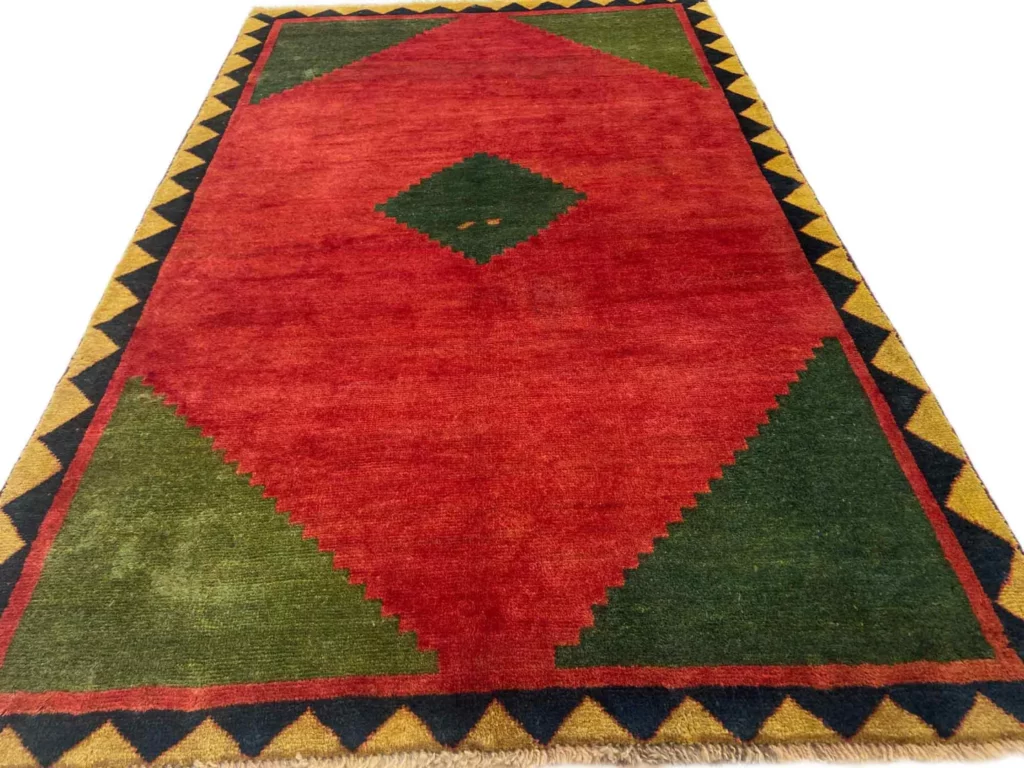
Persian Rug Fars 195 x 119 cm Wool Hand-knotted
€ 600
Hand-knotted Fars Persian rug | Knot density: 90,000 – 180,000 knots/m² | Material: Pile wool | Size: 195 x 119 cm | Pattern: Unusual, imaginative designs | Condition: New and unused
Sold out
- ✓Free Shipping in EU
- ✓2-5 Business Days Delivery
- ✓14-Day Return Policy
- ✓Worldwide Shipping on request
 SECURE PAYMENT
 SHIPPING PARTNERS
Inventory number: E46F79B6
Description
Fars Persian Rug
Material and Craftsmanship
This Gabbeh Shuli is a hand-knotted Persian rug from the Fars region, made with lustrous virgin wool. The wool is identified as the pile material and gives the surface its stated character. Its appearance is described as lustrous, while the making of the rug is defined by hand knotting. The material and technique therefore form the central foundation of this individual piece.
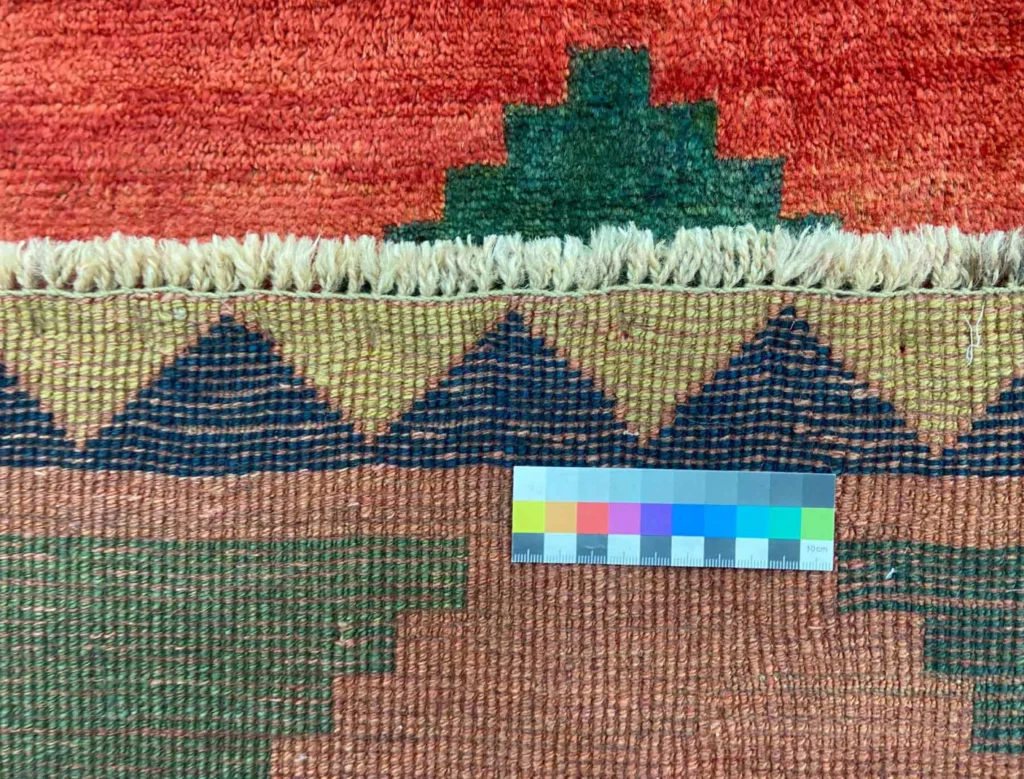
The listed knot density ranges from 90,000 to 180,000 knots per square metre. Knot density indicates how closely the individual knots are arranged and helps describe the fineness of the work. In a hand-knotted rug, each knot is placed by hand as the design is built up. The pattern is therefore formed through the combined work of colour, structure and individual knots rather than through a printed surface.
The Gabbeh Shuli brings together a wool pile and a traditional hand-knotted construction. Its material is described as lustrous virgin wool, and its condition is new and unused. The stated information concerns the pile; no separate material specification for the warp is given. The focus remains on the visible wool surface and on the manual craft involved in creating the rug.
Hand knotting also means that the appearance of a rug is tied to the decisions made during its making. Small changes in the placement of knots can contribute to the character of a design. This is especially relevant to a Gabbeh whose pattern is described as unusual and imaginative. The stated knot density provides a technical description of the workmanship without changing the regional and artistic identity of the rug.
Origin and Tradition
This Gabbeh Shuli is a Persian rug from the Fars region of Persia. The source places the traditional production of these hand-knotted rugs near the city of Shiraz. Fars is one of the important cultural areas of Persian rug making, and its weaving traditions include rugs with a direct, individual and often rural visual language. The origin of this piece is Fars; the place name is not merely a pattern reference.
Rug making in Fars belongs to a long textile culture in which knowledge is passed from one generation to the next. Such knowledge includes the treatment of wool, the arrangement of knots, the handling of colour and the construction of a balanced composition. Hand knotting preserves the connection between the maker and the finished textile. The rug is not presented as a factory-made repeat, but as a piece whose surface is built through manual work.
Gabbeh rugs are commonly associated with the landscapes and communities of southwestern Persia. Their tradition allows a less formal and more immediate approach than the highly structured designs found in some courtly or urban rug schools. Simpler forms, expressive details and personal interpretations can all have a place within the Gabbeh family. The Gabbeh Shuli follows this regional context while being identified by its own unusual and imaginative design.
Shiraz provides an important cultural point of reference for Fars. The city and its surrounding region have long been connected with Persian arts, craft and trade. Within the wider Fars area, different kinds of rugs have been made, ranging from more restrained village pieces to works with more elaborate compositions. The present rug is specifically described as a Gabbeh Shuli from Fars, so its regional identity remains the primary point of classification.
The tradition of Fars shows that provenance can be expressed through more than a single ornament. It can also be seen in the hand-knotted method, the use of wool and the willingness to let a design reflect the maker’s own ideas. Similar rugs such as Gabbeh Fars may share a regional vocabulary, yet each hand-knotted example can develop its own arrangement of shapes and colours. This distinction is important for a one-off rug: a tradition provides the framework, while the individual design gives the piece its particular appearance.
Persian rug traditions are varied. Tabriz and Kashan rugs, for example, are also associated with artistic designs and high-quality materials, but they represent different design histories from the Gabbeh tradition of Fars. Comparing them helps place the Gabbeh Shuli within Persian weaving without confusing their origins. This rug is a Fars Persian rug with the regional and technical qualities stated for it.
Design and Pattern
The pattern of the Gabbeh Shuli is described as unusual and imaginative. It expresses the creativity of the weavers and allows personal ideas and visions to enter the composition. Rather than relying only on a fixed arrangement of conventional ornaments, the design is presented as an individual interpretation. Its character comes from the combination of a Gabbeh tradition and a freer, more inventive approach to pattern.
Gabbeh designs are often understood through clear forms, simplified figures and a direct relationship between motif and ground. A composition does not need to be crowded with ornament in order to be expressive. A single shape, a simplified figure or an unexpected combination of elements can carry visual meaning. In this rug, the unusual and imaginative quality is the stated pattern characteristic, while the precise individual motifs are not specified.
The described colour range includes warm reds, gentle beige tones, deep grey and brown. Together these colours create a palette that brings warm and subdued areas into the same design. Red may function as a noticeable accent, while beige, grey and brown can provide quieter areas within the composition. The information identifies these colour families without assigning a particular colour to a particular motif or section of the rug.
The design is also connected to the act of hand knotting. Lines, areas and colour changes are built through the placement of individual knots. This gives the pattern a textile structure rather than the character of a printed image. The listed knot density provides a technical measure of the work, while the description of the pattern explains its visual direction: unusual, imaginative and shaped by the creative contribution of the weavers.
The name Shuli identifies the specific Gabbeh form used in the product description. It does not replace the origin Fars, and it should not be read as a different provincial attribution. The rug belongs to the Gabbeh family and is presented as a Fars piece. Its pattern can therefore be understood as part of a regional tradition while retaining the personal interpretation associated with imaginative Gabbeh designs.
Gabbeh Fars is mentioned as a related type from the same region and is also associated with imaginative designs. Other Persian rugs, including Tabriz and Kashan, are known for artistic patterns and quality materials as well, although their design traditions differ. The Gabbeh Shuli remains distinct through its Fars origin, its hand-knotted wool construction and its unusual, imaginative pattern language.
Special Features
The defining features of this rug are its Fars origin, its Gabbeh Shuli designation and its unusual, imaginative pattern. The pile is made from lustrous virgin wool, and the rug is hand-knotted. Its stated knot density adds a detailed technical description of the workmanship. The piece is listed as new and unused.
The rug is described as suitable for a living room, bedroom or hallway, where it can serve as a decorative accent. Its colour range of red, beige, grey and brown can be combined with different interior styles. Care is described as straightforward: vacuum regularly, wipe stains promptly with a damp cloth and arrange professional cleaning every few years to help protect the colours and material.
FAQ
What makes the Gabbeh Shuli special?
The Gabbeh Shuli combines an origin in the Fars region with an unusual and imaginative design. Its pattern reflects the creative expression of the weavers rather than following only a rigid, conventional ornament system. The rug is hand-knotted from lustrous virgin wool and has a listed knot density of 90,000 to 180,000 knots per square metre. It is new and unused.
How should I care for my Gabbeh Shuli?
Vacuum the Gabbeh Shuli regularly to remove dust from the wool pile. If a stain occurs, wipe it promptly with a damp cloth. Professional cleaning every few years is recommended to take care of the colours and the material. These instructions are suited to the rug’s stated virgin-wool pile and hand-knotted construction, and careful treatment helps preserve its described appearance.
What size should my Gabbeh Shuli be?
The right size depends on the available area and on how the rug is intended to function in the room. Measure the space before choosing a rug so that the selected format fits comfortably without making the room feel overloaded. A Gabbeh can be used as a runner, a smaller accent or a larger living-area rug. This particular piece is offered in its existing individual format as one hand-knotted rug.
Additional information
| Design Style | |
|---|---|
| Color | |
| Size | |
| Shape | |
| Origin | |
| Knot Density | |
| Material |
Related products

Persian Rug Fars 240 x 150 cm Cashmere Hand-knotted
€ 1118
Persian Rug Qashqai 286 x 192 cm Wool Hand-woven
€ 944
Persian Rug Qashqai 290 x 192 cm Wool Hand-woven
€ 798
Persian Rug Qashqai 286 x 200 cm Wool Hand-woven
€ 798
Persian Rug Qashqai 284 x 183 cm Wool Hand-woven
€ 798
Persian Rug Tabriz approx. 350 x 245 cm Wool Hand-knotted
€ 1280
Persian Rug Tabriz 388 x 295 cm Wool Hand-knotted
€ 1440
Persian Rug Fars 293 x 186 cm Wool Hand-woven
€ 798