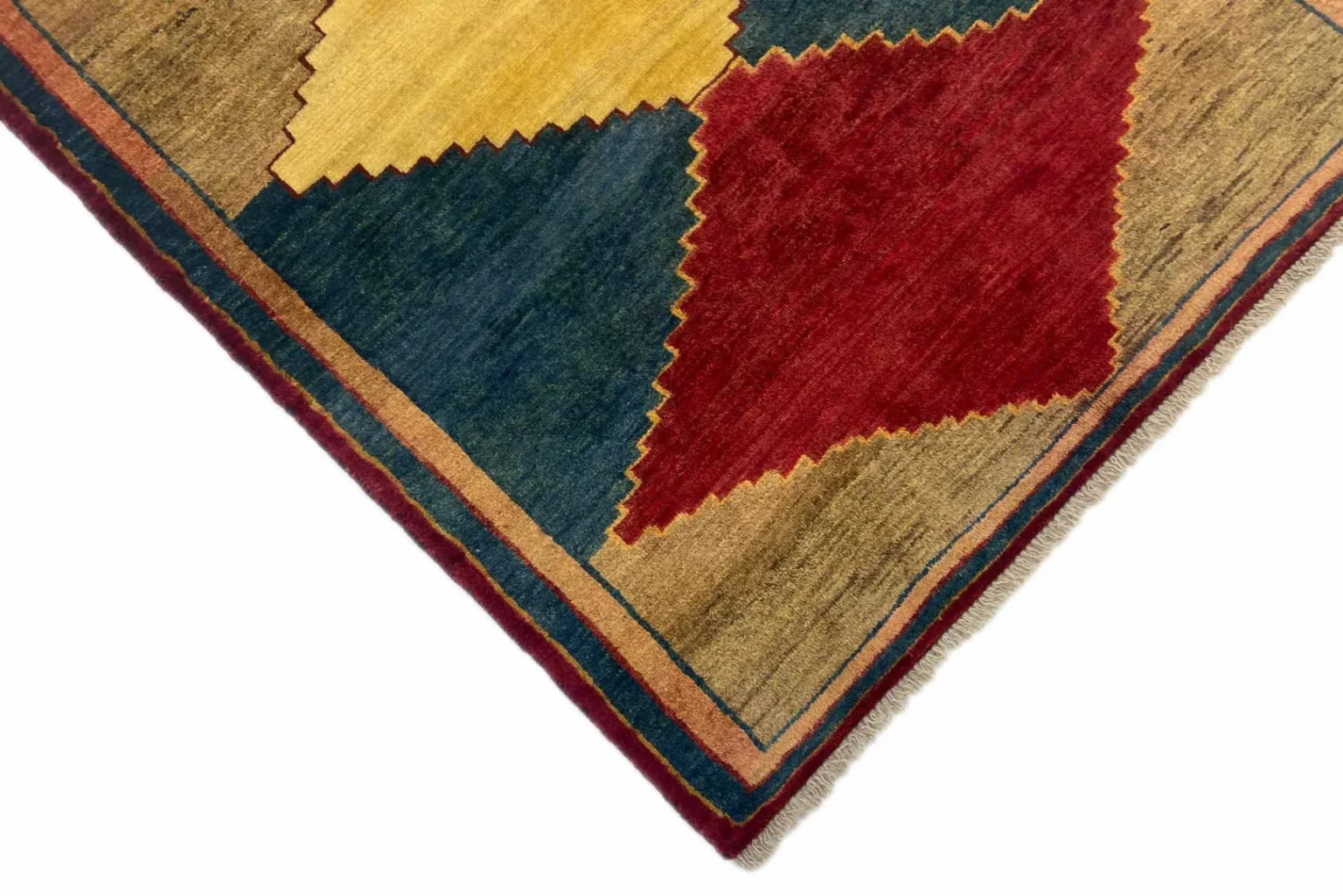
This Gabbeh-Shuli Persian rug is hand-knotted with a pile made from lustrous virgin wool. The wool gives the surface its natural textile character, while the sheen becomes visible as light moves across the knotted areas. Virgin wool has long been used in Persian rug making because it offers a warm, tactile surface and can be shaped into a durable woven textile. Here, the material is an essential part of the rug’s identity rather than a secondary detail.
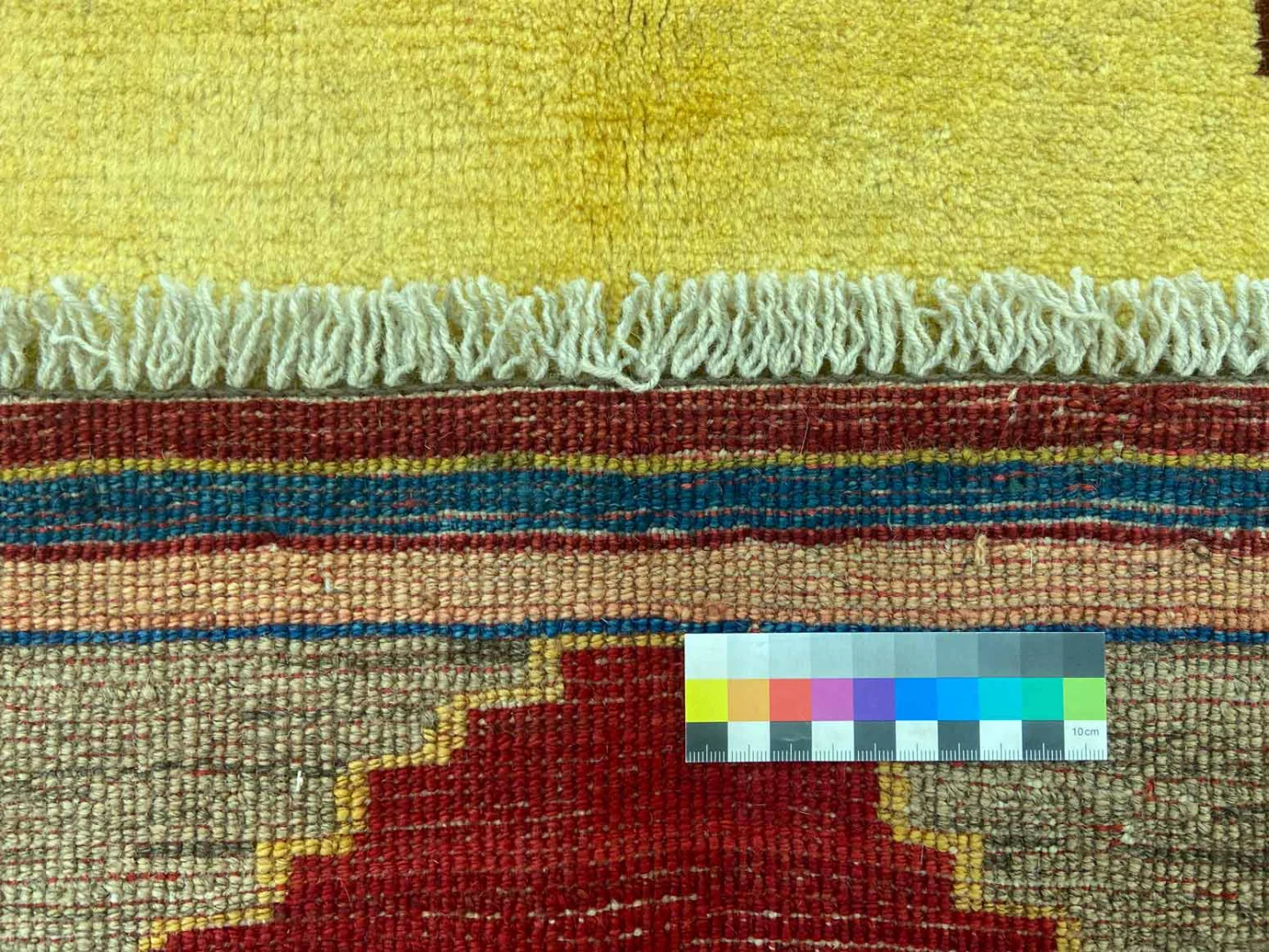
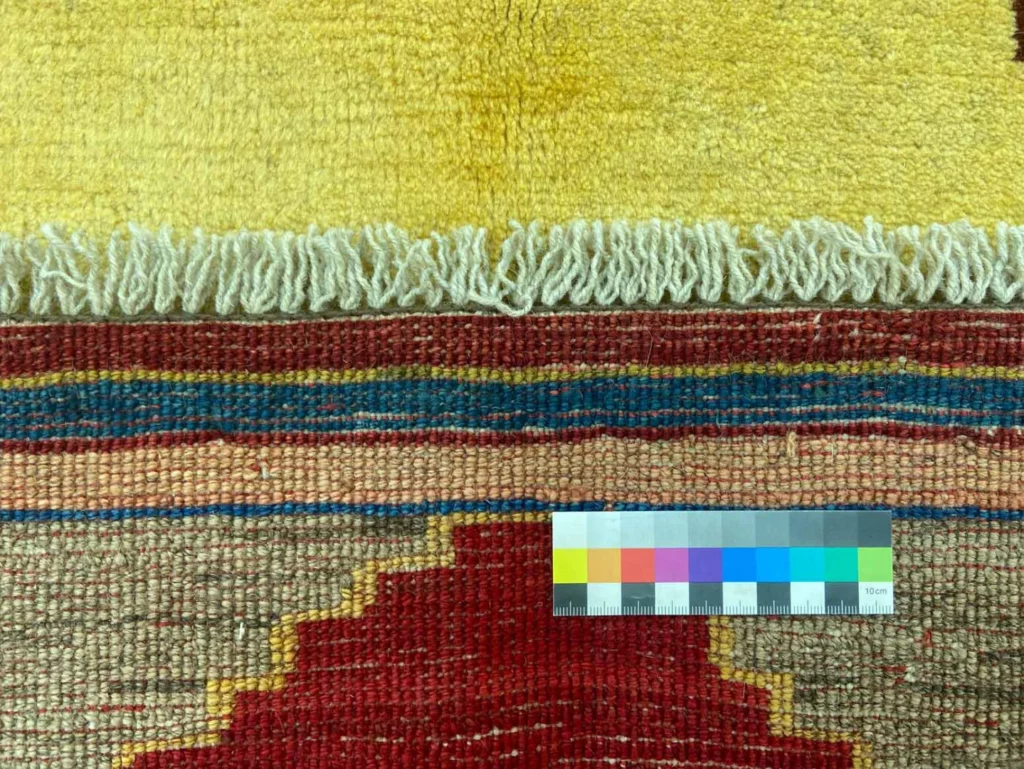
The knot density is 90,000 to 180,000 knots per square metre. That density provides a finely built foundation for the composition and supports the rendering of imaginative designs. In hand-knotting, the rug is constructed one knot at a time. Each row requires attention to the sequence of colours, the progression of the surface and the relationship between the different areas of the pattern. This process differs from machine production because the textile surface is formed through many individual manual steps.
Gabbeh rugs are generally associated with a direct and expressive approach to design. The Gabbeh-Shuli type can retain that simplicity while allowing a more varied and inventive visual language. The present rug combines hand-knotting, virgin wool and a knot density of 90,000 to 180,000 knots per square metre. Its listed colours are red, beige, grey and brown. Together, the material, construction and palette define the main physical and visual characteristics of this piece.
Wool is valued in Persian rug making for its natural feel and its ability to create a substantial textile surface. Its appearance can change subtly with the direction of the pile and the movement of light. In this rug, the material is specifically described as lustrous virgin wool. The hand-knotted construction is equally important: it explains how the surface and the design were built and distinguishes the rug from a hand-woven Kilim.
The craft of knotting also connects the rug to a broader tradition of working with fibre, colour and proportion. A design is not simply printed onto the finished surface. It is formed during the making process, with coloured areas and motifs taking shape as the knots are added. That method gives hand-knotted rugs their particular textile presence. In this case, it serves a Gabbeh-Shuli design described as unusual and imaginative.
Origin and Tradition
This rug comes from the Fars region of Persia. Fars is one of the important landscapes in the history of Persian carpet making and is especially associated with Gabbeh rugs. Located in southern Iran, the region has a long tradition of textile craftsmanship. Gabbeh is commonly linked with rural and nomadic environments in Fars, where weaving and knotting developed as practical skills as well as forms of visual expression. The regional setting is therefore central to understanding the Gabbeh tradition.
The name Gabbeh refers to a rug type recognised for its woollen construction and distinctive, often straightforward designs. Gabbeh-Shuli is a particular expression within this tradition. Its designs may be shaped more by the imagination of the makers than by a fixed workshop cartoon. This allows the pattern to remain individual while still belonging to a recognisable regional family. The term identifies a style and origin context; it does not imply that every Gabbeh-Shuli rug uses the same arrangement of motifs.
Fars has supported generations of textile work in which material, colour and pattern are closely connected. Wool was a practical and versatile fibre for this environment, and it became an important part of the regional rug tradition. Knowledge was passed on through experience with fibres, dyes, knots and the organisation of a field. Such knowledge does not depend only on written instructions. It also includes the ability to judge the material by touch, maintain an even working rhythm and develop a balanced composition while the rug is being made.
Persian rugs are often classified through a combination of region, construction and design language. Fars has a distinct position in that system because Gabbeh rugs from the region are associated with a more immediate and less formalised visual vocabulary. This does not mean that every rug from Fars looks alike. Variation is part of the tradition, particularly when patterns are developed freely rather than copied from a single repeated template. The present piece is placed in that context by its Fars origin and its Gabbeh-Shuli designation.
The Persian carpet world also includes many other regional traditions. Nain rugs are known for fine drawing and the use of silk, while Isfahan rugs are associated with opulent designs, intense colour and floral or geometric ornament. Kerman represents another established tradition, with its own decorative designs and use of quality materials. These names refer to different regional and stylistic identities. They do not alter the classification of this rug as a Gabbeh-Shuli Persian rug from Fars.
The tradition behind a Persian rug is therefore more than a single ornament or colour combination. It includes the methods used to prepare and knot the textile, the choice of available fibres, the development of regional palettes and the transmission of design ideas. Gabbeh-Shuli adds a free and imaginative approach to that heritage. Makers may take familiar forms, simplify them or combine them in a new composition. The regional identity remains present without requiring every piece to follow an identical historical pattern.
Design and Pattern
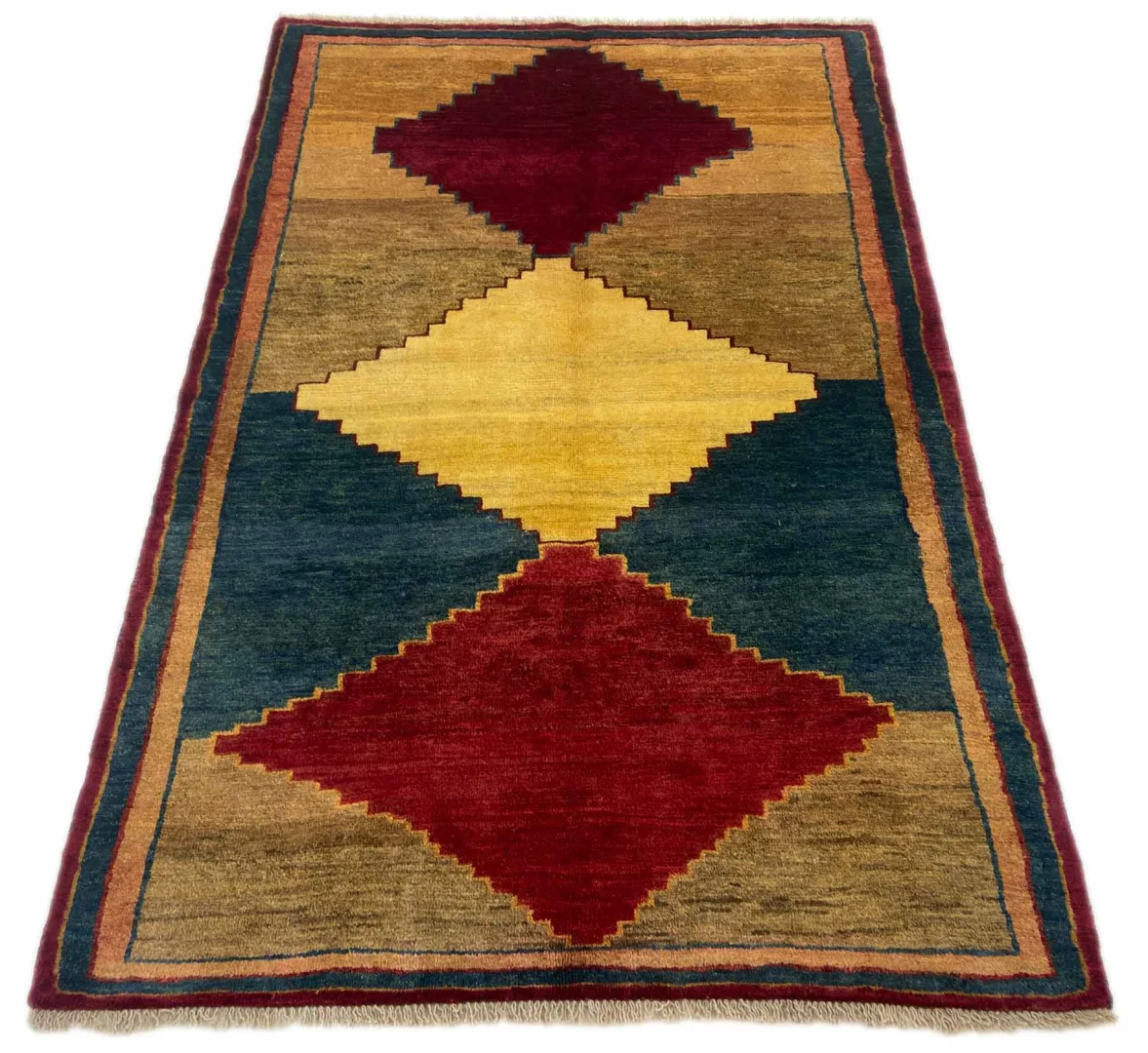
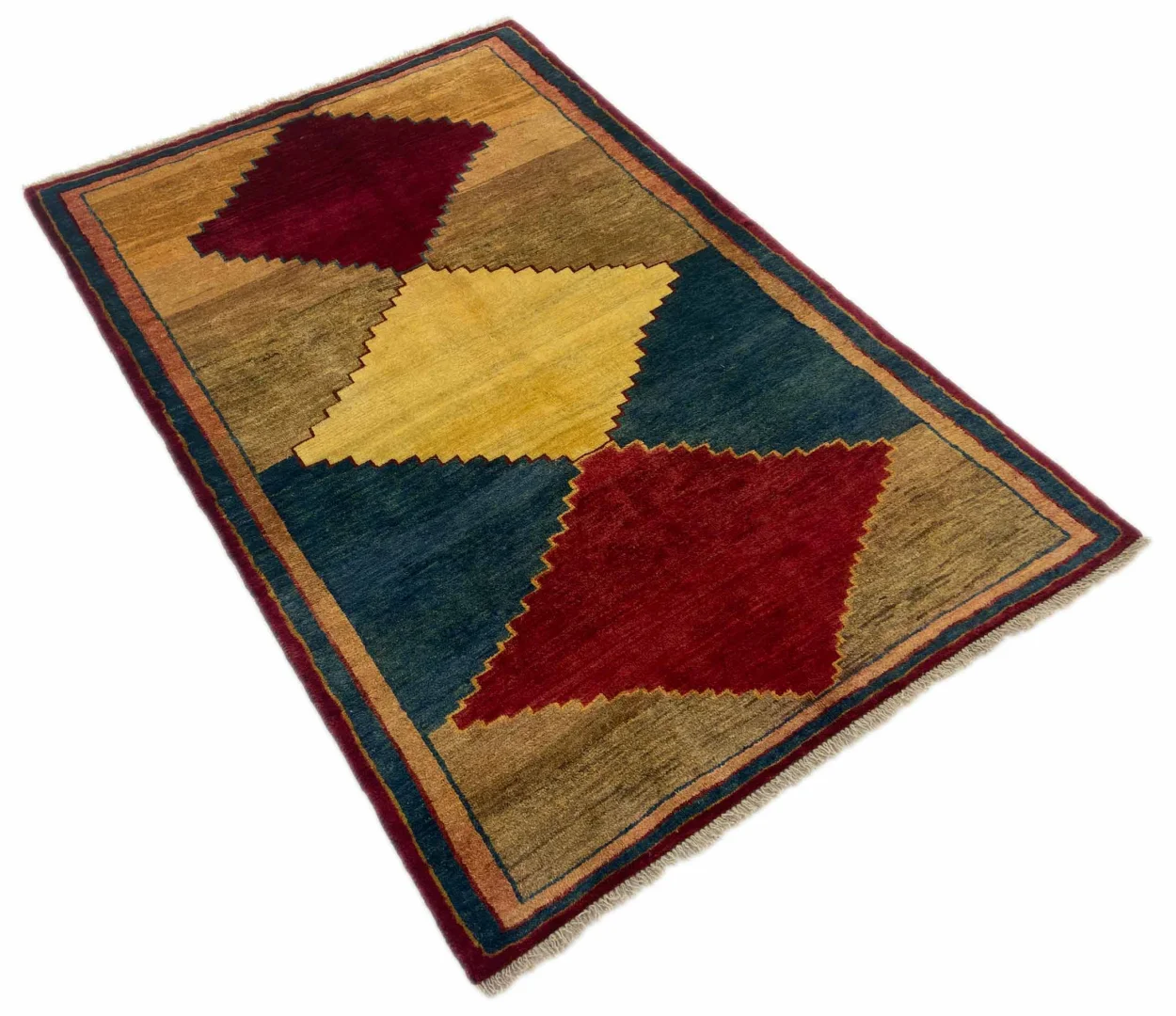
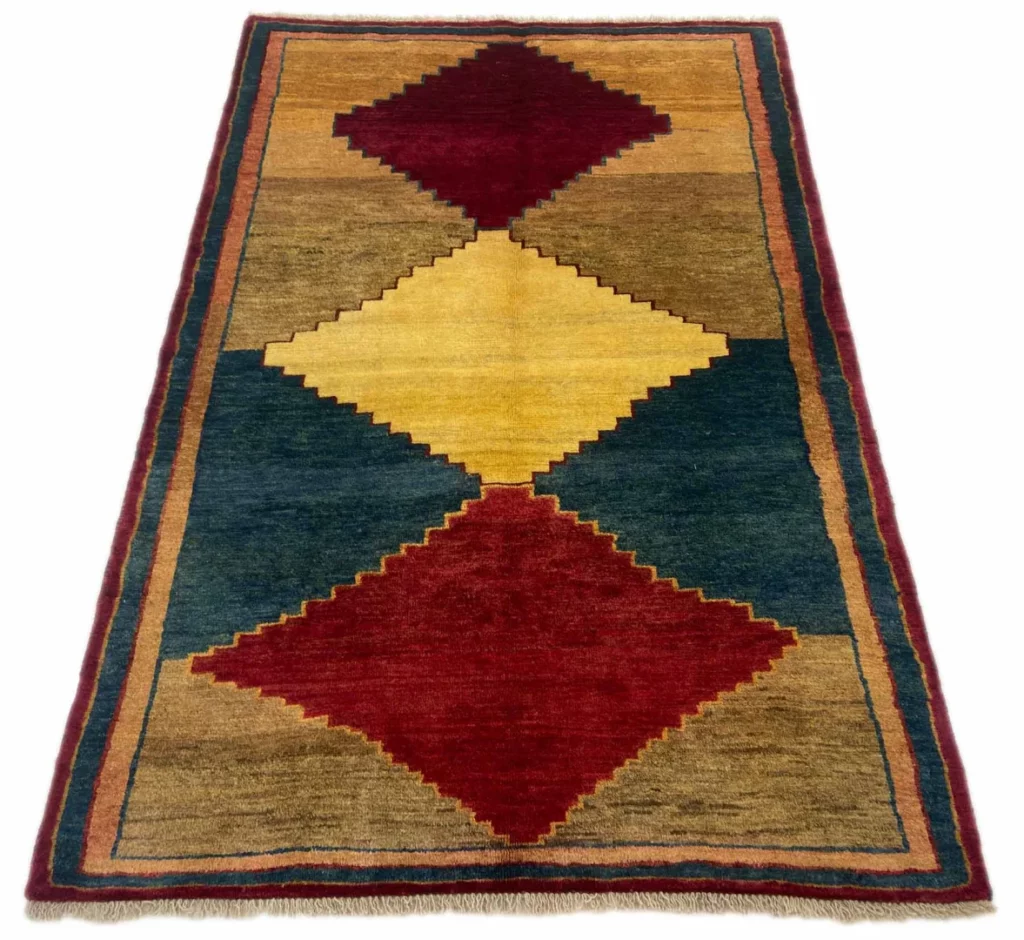
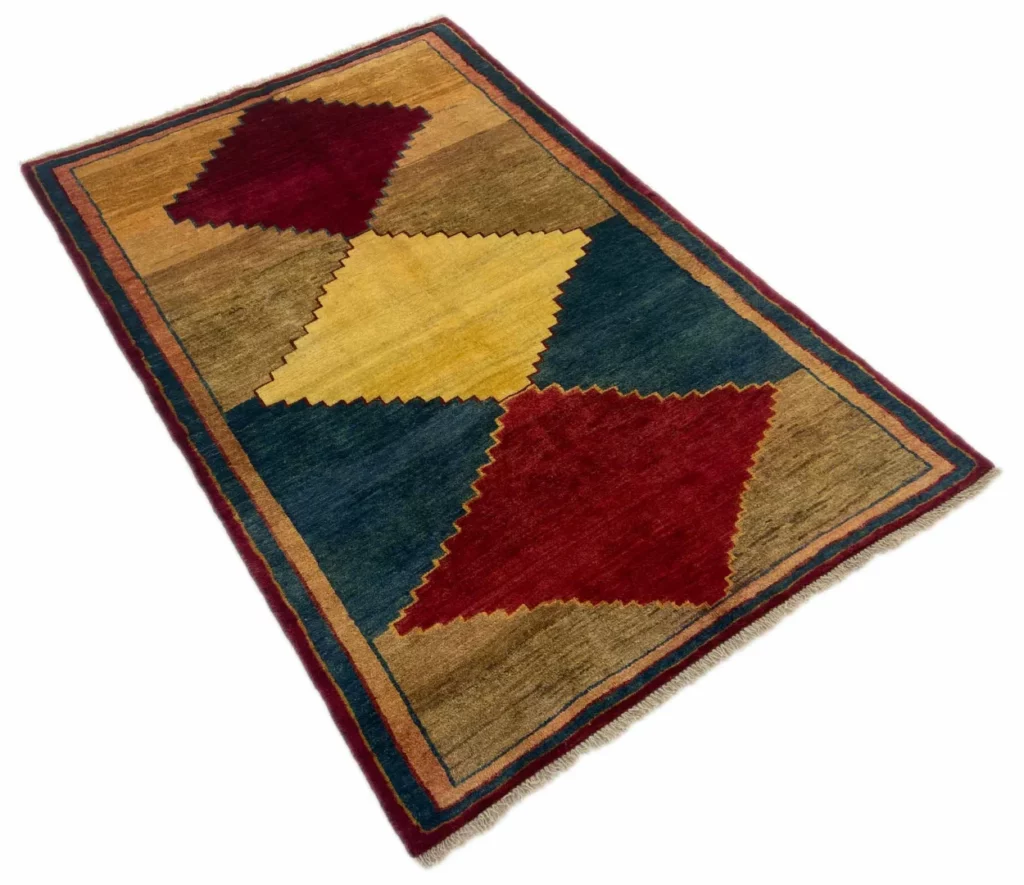
The pattern of this rug is described as unusual and imaginative. That description points to a composition that is not defined solely by a strict symmetrical repeat. Instead, the arrangement of shapes and colour fields becomes part of the rug’s individual character. Gabbeh-Shuli rugs are associated with designs that can communicate an idea clearly through simplified forms. In this example, the emphasis is on an inventive pattern rather than on one named ornament.
Red, beige, grey and brown are the colours specified for the rug. Red can function as a strong accent within a Persian composition, while beige introduces a light and quiet area. Grey provides a restrained intermediate tone, and brown adds an earthy presence to the palette. These colour names identify the tones used in the rug; they do not establish a fixed order or a precise proportion. The visual balance comes from the way the individual areas are arranged in the finished design.
Gabbeh design is often connected with simplified shapes, open fields and clearly readable outlines. Forms may suggest figures, geometric signs or abstracted elements from the natural world without every mark having one fixed interpretation. The source description specifically calls the designs unusual and imaginative. For that reason, the pattern is best understood through its overall creative character rather than being assigned to a particular formal motif that is not named.
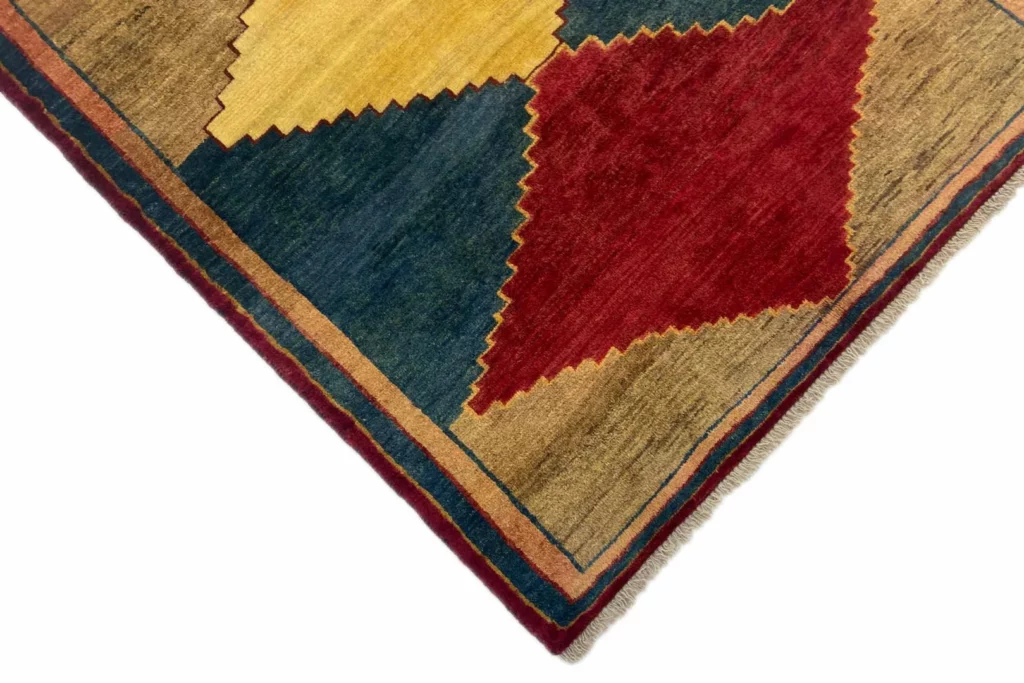
Hand-knotting influences the way the design appears. Each coloured section is built gradually as the knots are tied, so the pattern is integrated into the structure of the rug rather than applied afterwards. The knot density of 90,000 to 180,000 knots per square metre provides the technical basis for the surface. It stands alongside the freer design approach as one of the defining aspects of this piece. The result is a meeting of detailed construction and an imaginative Gabbeh-Shuli composition.
Gabbeh patterns can work with both traditional interiors and restrained contemporary settings. This is a general quality of the design tradition: simplified forms can be read clearly in a calm room, while the colours can also sit among other textiles and decorative elements. Red, beige, grey and brown offer several possible relationships with wood, neutral surfaces and additional colour accents. These are design possibilities arising from the palette and pattern language, not claims about a particular room or intended placement.
A hand-knotted pattern is more than decoration repeated across a surface. It is a sequence of decisions about fields, outlines, colour changes and proportion. In imaginative Gabbeh-Shuli designs, those decisions can produce a composition that feels individual while remaining rooted in Fars tradition. This rug is therefore described by its unusual, inventive design rather than by a standardised series pattern. The combination of colour and form gives the regional type room for personal interpretation.
Special Features
The defining features of this rug are its Gabbeh-Shuli classification, its origin in the Fars region, its hand-knotted construction and its pile of lustrous virgin wool. The knot density is 90,000 to 180,000 knots per square metre. These details bring together regional origin, material and technique in a clear profile. The rug is also identified by unusual, imaginative designs using red, beige, grey and brown.
The combination of lustrous wool and a free pattern language creates a close relationship between surface and design. Depending on the light, the pile may reveal different aspects of its sheen. The listed colours remain the stated palette of the rug. Because a hand-knotted carpet is made knot by knot, the specific arrangement forms an individual piece within the Gabbeh-Shuli tradition rather than a mechanically repeated surface.
Persian wool rugs should be vacuumed regularly and gently. Occasional professional cleaning can help extend the useful life of the rug. Direct sunlight should be avoided so that the colours do not fade. These care recommendations apply generally to Persian rugs made with wool and take the stated material into account. For more substantial soiling, professional treatment is appropriate, particularly because hand-knotted construction should be handled with care.
FAQ
What makes a Gabbeh-Shuli Persian rug distinctive?
A Gabbeh-Shuli Persian rug brings together the hand-knotted tradition of the Fars region and an open, imaginative approach to pattern. This rug has a pile of lustrous virgin wool and uses red, beige, grey and brown. Its knot density is 90,000 to 180,000 knots per square metre. Its identity therefore comes from the combination of regional origin, natural material, manual construction and unusual design. As with hand-knotted rugs generally, the particular arrangement of the composition makes the finished piece individual.
How should I care for a Persian rug made of virgin wool?
Vacuum a virgin-wool Persian rug regularly and gently. Careful routine cleaning is preferable to unnecessarily harsh treatment. Occasional professional cleaning may help preserve the rug over time. Direct sunlight should be avoided because prolonged exposure can cause colours to fade. If the rug has heavier soiling, a specialist cleaner familiar with hand-knotted wool rugs is the appropriate choice. This approach respects both the fibre and the construction method.
How do different Persian rug types differ?
Persian rug types differ through their knotting methods, materials, regional origins and design traditions. Gabbeh and Gabbeh-Shuli rugs from Fars are associated with an individual and often freely developed visual language. Nain rugs are known for fine patterns and the use of silk, while Isfahan rugs are associated with opulent designs and floral or geometric ornament. Kerman has its own tradition of decorative patterns and quality materials. A rug’s type should therefore be considered together with its origin, fibre, technique and pattern rather than from a single visual feature alone.
To provide the best experiences, we use technologies like cookies to store and/or access device information. Consenting to these technologies will allow us to process data such as browsing behavior or unique IDs on this site. Not consenting or withdrawing consent, may adversely affect certain features and functions.
Functional Always active
The technical storage or access is strictly necessary for the legitimate purpose of enabling the use of a specific service explicitly requested by the subscriber or user, or for the sole purpose of carrying out the transmission of a communication over an electronic communications network.
Preferences
The technical storage or access is necessary for the legitimate purpose of storing preferences that are not requested by the subscriber or user.
Statistics
The technical storage or access that is used exclusively for statistical purposes.The technical storage or access that is used exclusively for anonymous statistical purposes. Without a subpoena, voluntary compliance on the part of your Internet Service Provider, or additional records from a third party, information stored or retrieved for this purpose alone cannot usually be used to identify you.
Marketing
The technical storage or access is required to create user profiles to send advertising, or to track the user on a website or across several websites for similar marketing purposes.

 SECURE PAYMENT
 SHIPPING PARTNERS


