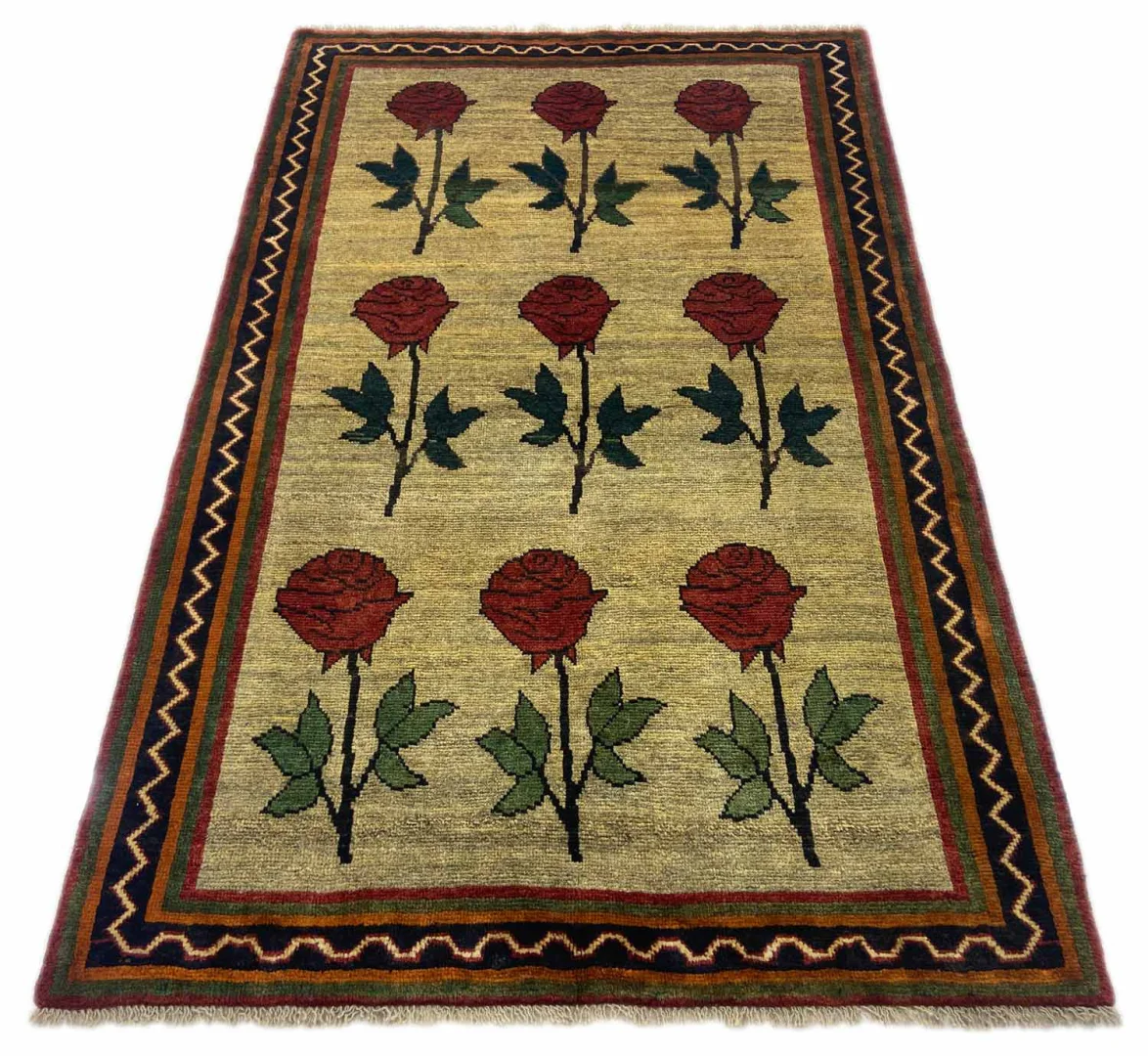
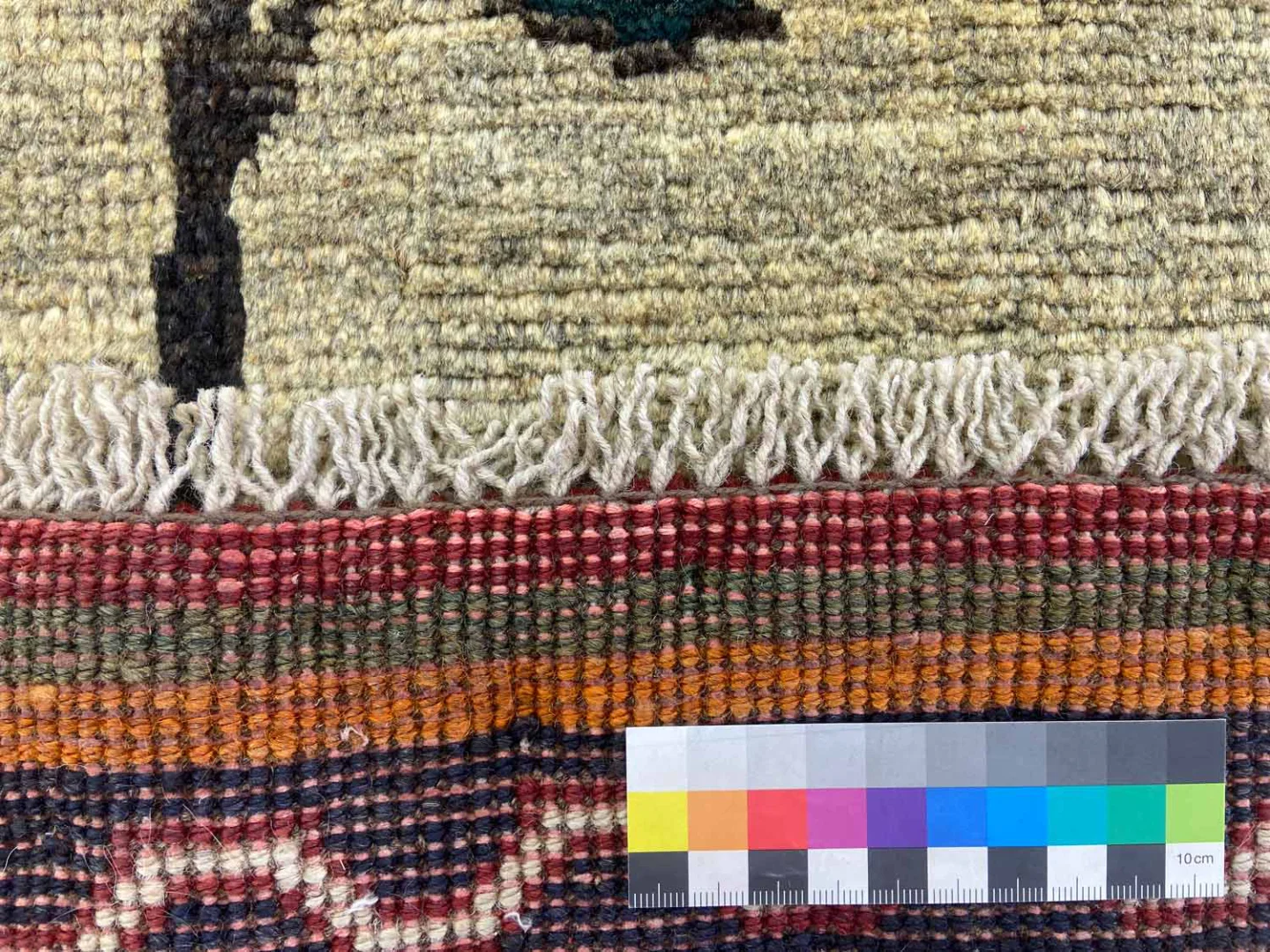
This Gabbeh Shuli Persian rug comes from the Fars region and is hand-knotted in high-quality virgin wool. Wool has been central to Persian rug making for centuries because it combines a soft handle with a resilient natural fibre. Its structure allows the pile to feel pleasant while retaining the strength needed for everyday use. In this rug, the material is part of the design rather than merely a backing for the pattern: the colour fields and the tactile surface are formed together through the knotting process.
Virgin wool also has natural insulating properties. It can help create a balanced sense of warmth in a room while remaining a breathable textile material. For a hand-knotted rug, the wool is prepared and worked knot by knot into the foundation. Once the knotting is complete, the pile is brought into order and the surface is finished. This method gives the object its individual character. It is not an identical factory repeat, but a one-off textile made through a sequence of manual decisions.
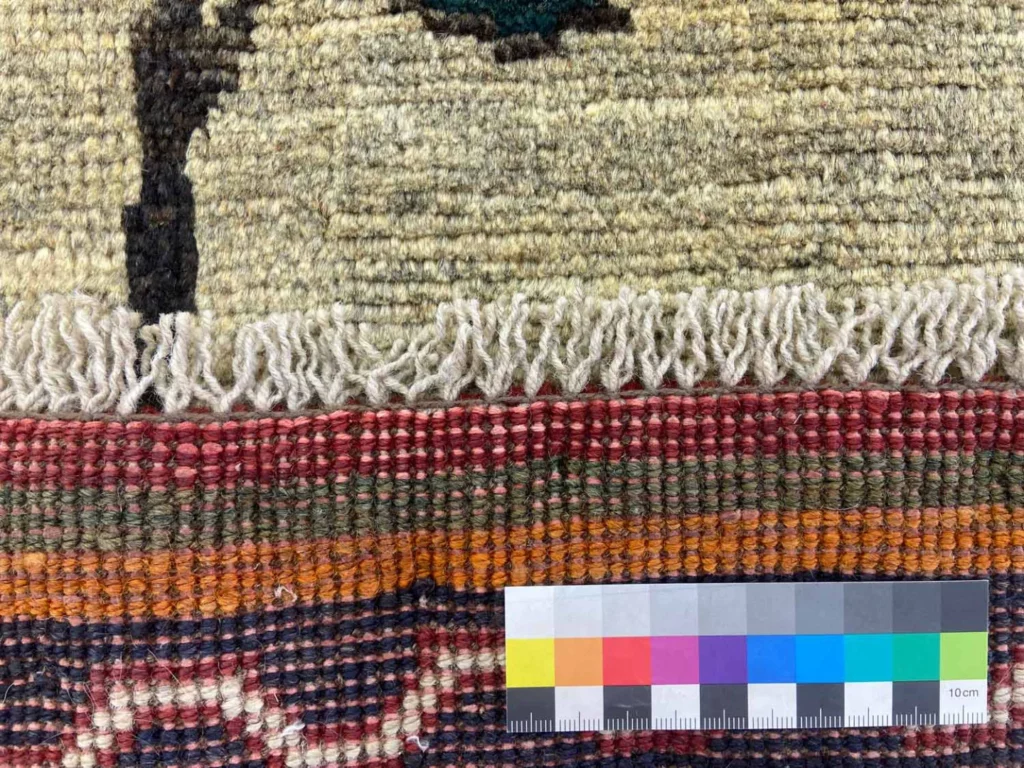
The stated knot density ranges from 90.000 to 180.000 knots per square metre. Knot density describes how many knots are used within the woven surface and is related to the possible definition of a pattern. Here, the hand-knotted construction is combined with fine workmanship and high-quality virgin wool. The rug is described as new and finely crafted.
Origin and Tradition
The rug originates in the Fars region of southern Persia, near the well-known city of Shiraz. Fars is one of the important landscapes of Persian rug culture. Its textile traditions have been shaped by rural communities, settled groups and nomadic ways of life. That varied background has produced more than one visual language. Regional rug making can preserve familiar methods while leaving room for individual choices in colour, proportion and pattern.
Gabbeh rugs are associated with the weaving culture of southern Persia. In the rug trade, the name commonly refers to hand-knotted rugs with a direct, robust appearance and a comparatively free approach to composition. Their visual character is not based solely on elaborate ornament. It can arise from the relationship between broad areas, simplified forms, colour and the visible texture of the pile. A Gabbeh is therefore not without design; it expresses design through a less formal and more immediate structure.
The designation Gabbeh Shuli identifies the type named for this rug. Its connection with Fars places it within a regional tradition in which inherited craft knowledge and personal interpretation meet. Skills such as preparing wool, setting knots, arranging colours and finishing the textile are passed on through practice. At the same time, the individual maker can develop a particular arrangement within the limits of the technique. The result is a rug that belongs to a recognizable tradition without requiring every example to look the same.
Fars has long been an important setting for Persian textile work. The region’s cultural landscape connects local production with the wider history of Persian arts and crafts. Shiraz is an important nearby reference point, but the name of Shiraz should not be used to relabel this rug. A Gabbeh from Fars and a Shiraz rug are related through their regional context, yet they represent different design categories. Gabbeh Fars rugs share related hand-knotted qualities, while Shiraz rugs may use more complex patterns and a higher knot density.
Other Persian rug centres, including Nain and Isfahan, are known for their own forms of refined craftsmanship and may use combinations of wool and silk. Those traditions help illustrate the breadth of Persian rug making, but they do not define this piece. This rug is identified as a Gabbeh Shuli from Fars. Its origin, material and construction should therefore be understood through that designation rather than through the names of other weaving centres.
Hand-knotted Persian rugs carry regional knowledge in a practical form. The foundation, the wool, the sequence of colours and the treatment of the pile all contribute to the finished textile. In a Gabbeh from Fars, the craft tradition is visible not only in the individual knots but also in the decision to let the composition remain open and personal. The rug connects a southern Persian origin with a design approach that permits invention within an established manual technique.
Design and Pattern
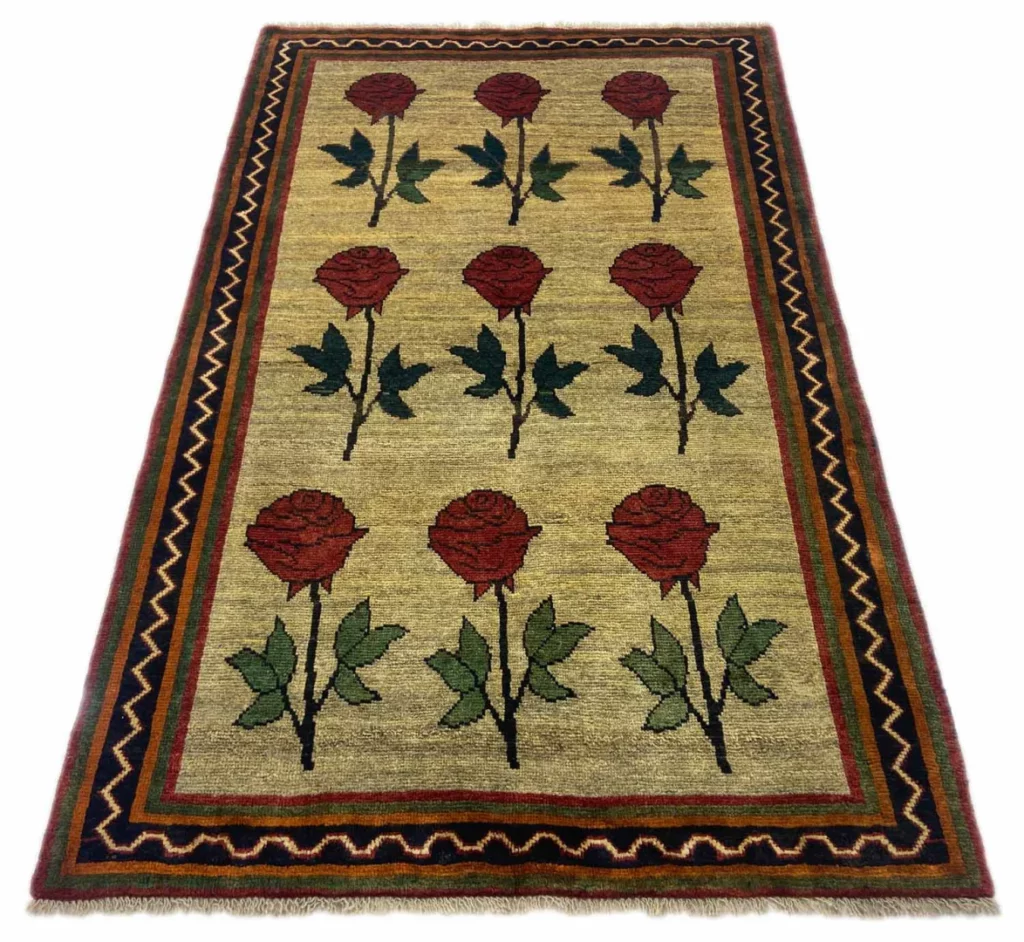
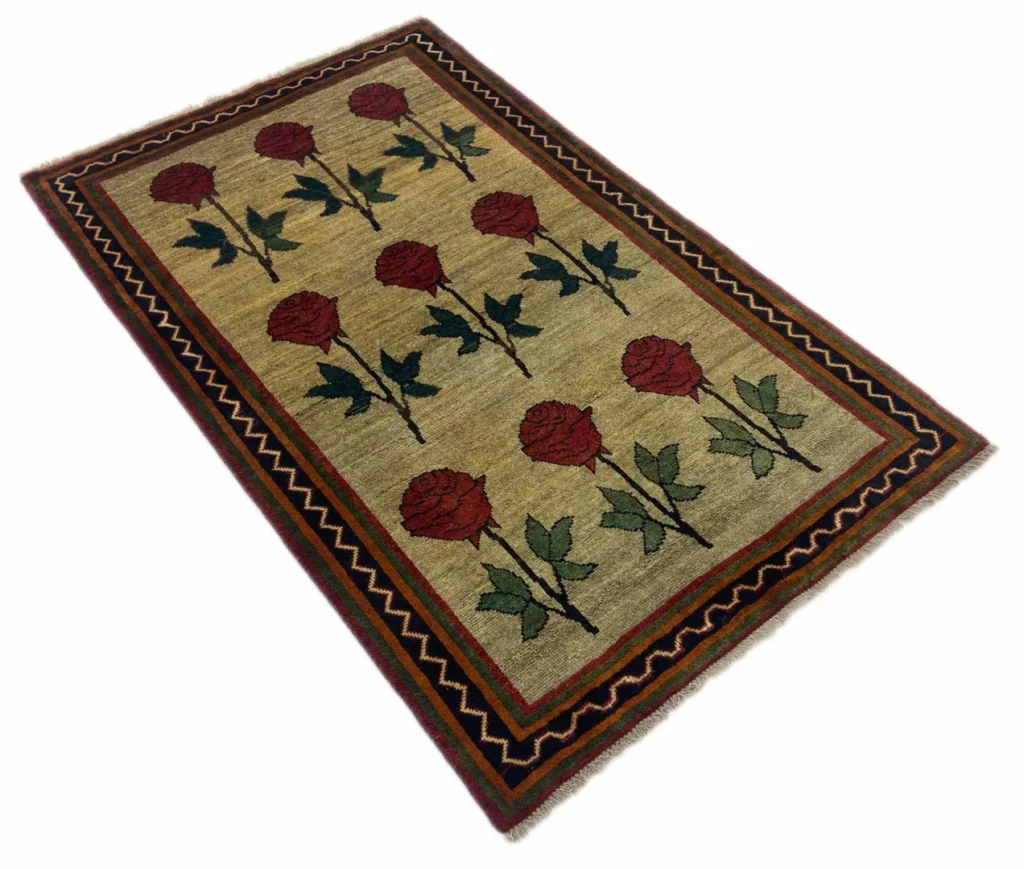
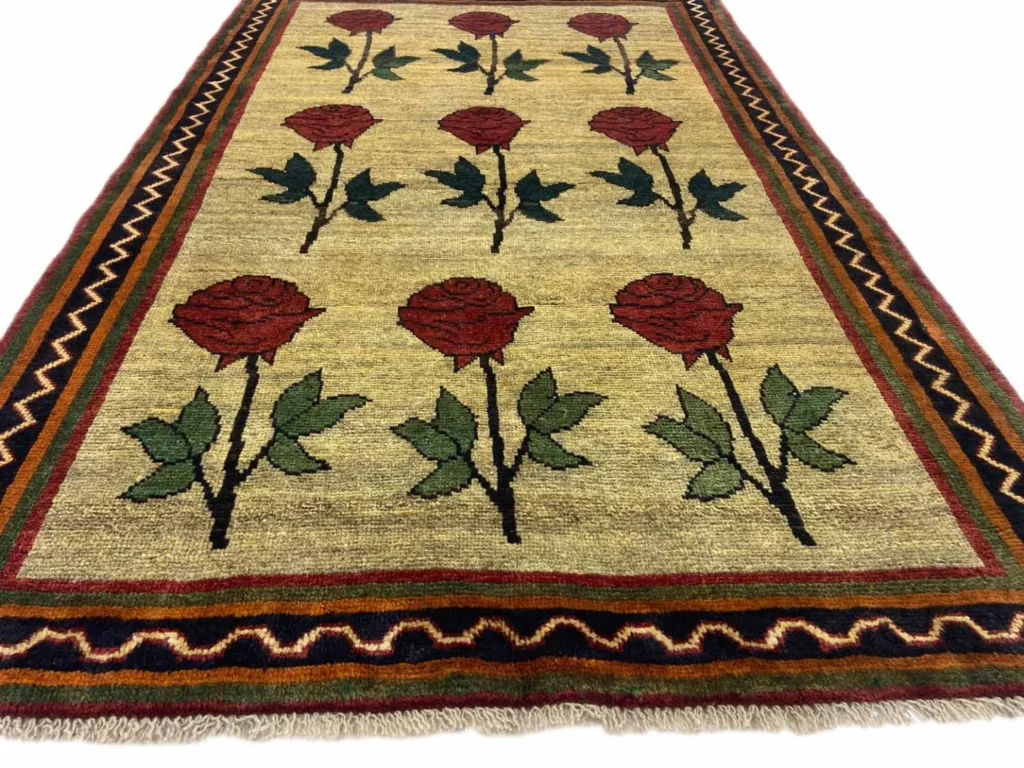
The pattern is described as free and imaginative. This means that the composition is not presented as a rigid, repetitive scheme that must be copied in every example. Instead, its forms can be arranged with a sense of independence, allowing the maker’s interpretation to remain visible. A free-form Gabbeh design may use simplified shapes, changing areas and deliberate irregularity. The important feature is the overall relationship between colour, space and motif rather than a display of dense ornament alone.
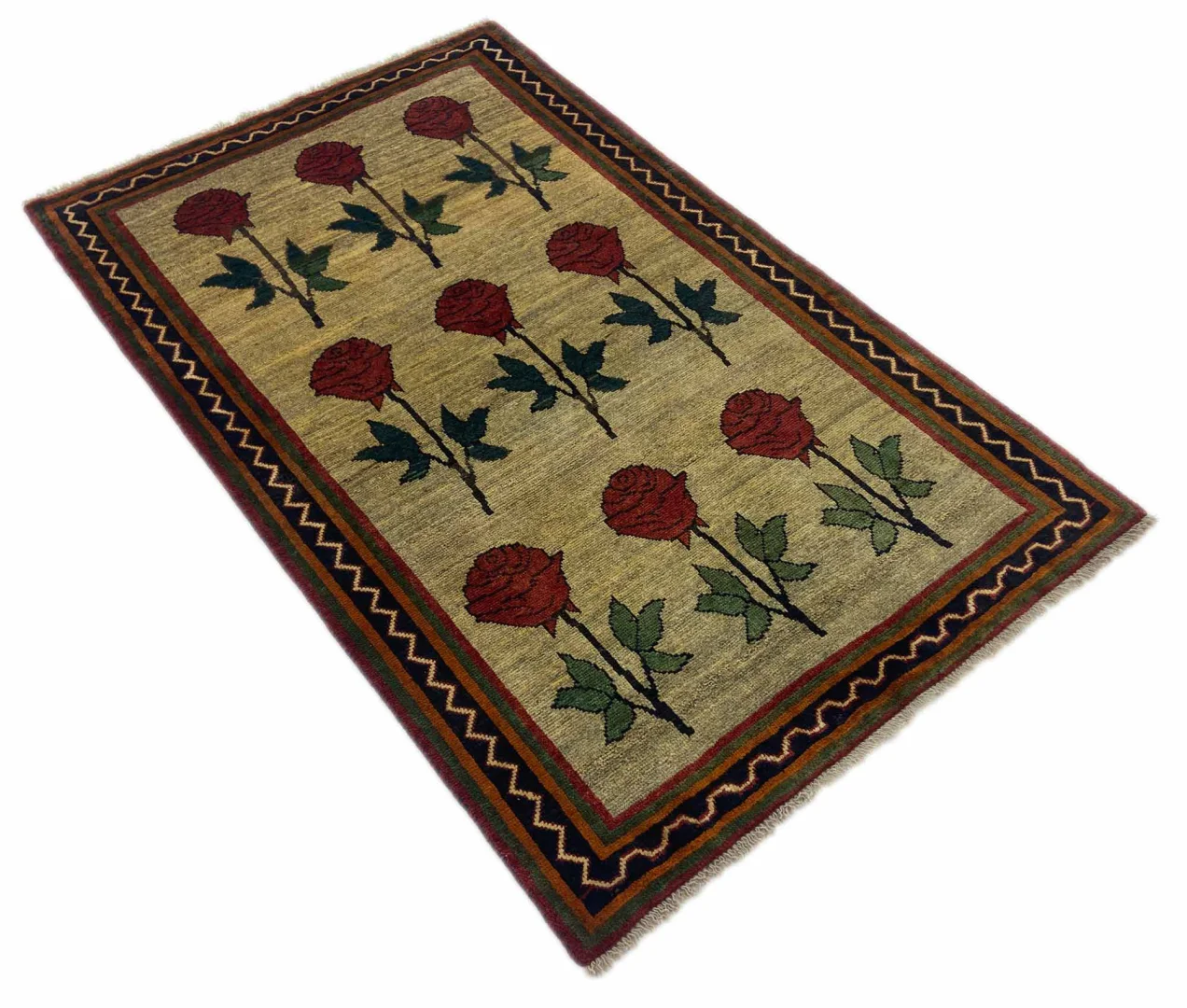
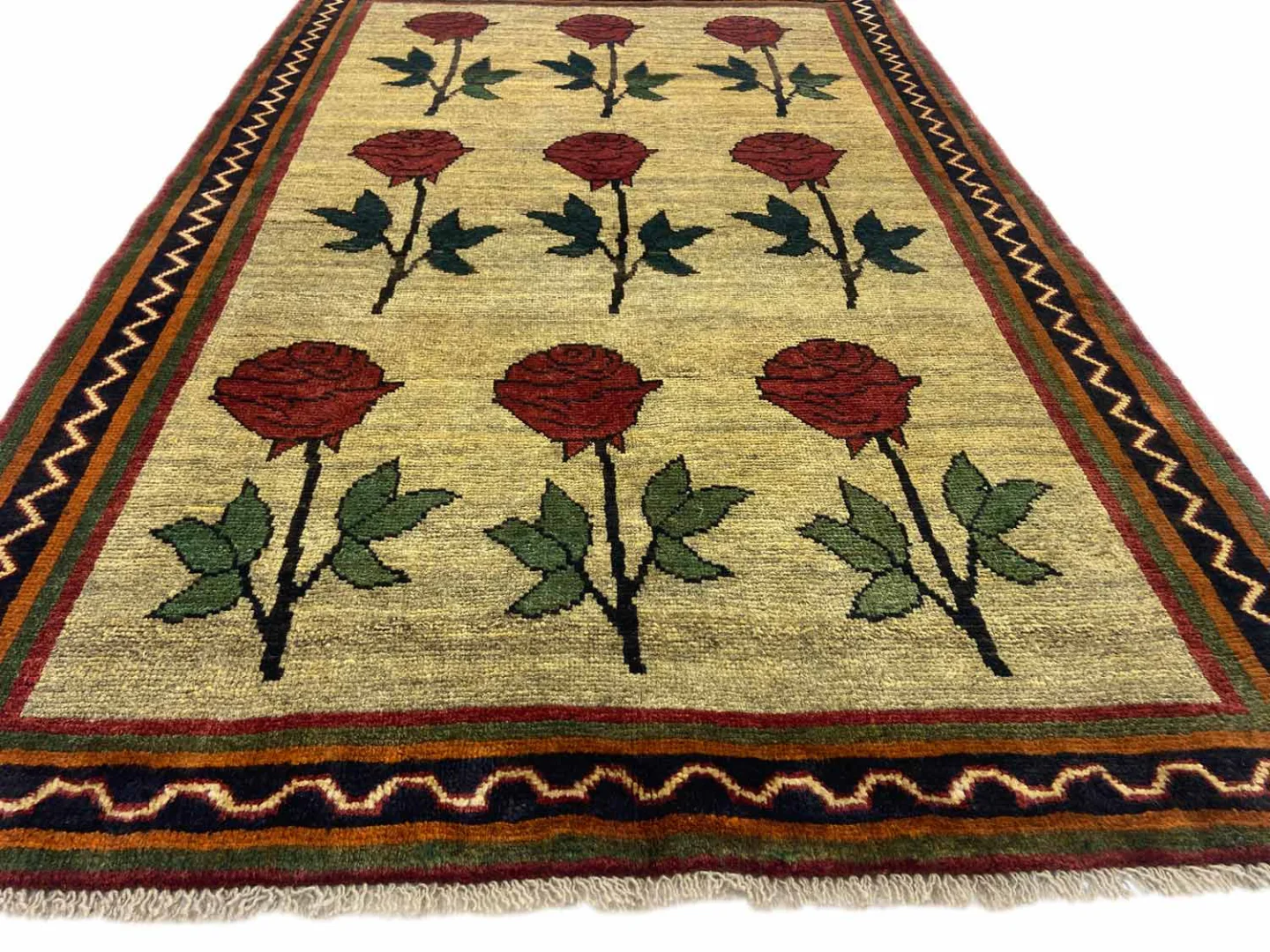
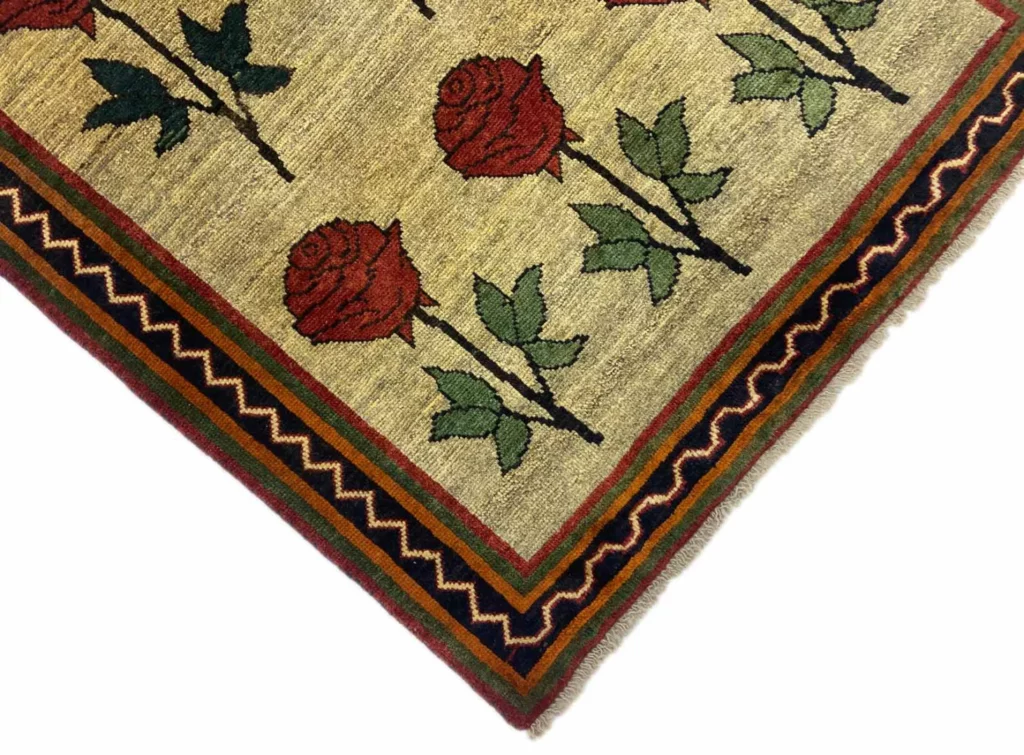
The listed colours are red, beige, grey and brown. Red can provide a strong point of emphasis, while beige, grey and brown introduce quieter, earthy counterpoints. Together they form a warm and grounded palette. Depending on their placement, the colours may create contrast or move gently from one area into another. The visual effect comes from the interaction of these four named colours and from the way the hand-knotted pile receives and reflects them.
Imaginative motifs do not have to reproduce an object literally. A remembered figure, a plant-like suggestion or a geometric idea can be reduced to a simple sign and then altered through the maker’s own sense of balance. Forms may be shifted, enlarged or combined with open spaces. This kind of interpretation distinguishes a free Gabbeh composition from a strict copy of a predetermined drawing. The pattern remains connected to tradition while retaining an individual character.
Persian rug traditions are transmitted across generations, but transmission does not necessarily mean exact repetition. A technique, a regional vocabulary and an approach to colour can be inherited, while the particular arrangement is newly made. Gabbeh Shuli rugs demonstrate this meeting of continuity and invention. Their hand-knotted basis belongs to an established craft, whereas the free and imaginative design gives each composition its own rhythm and emphasis.
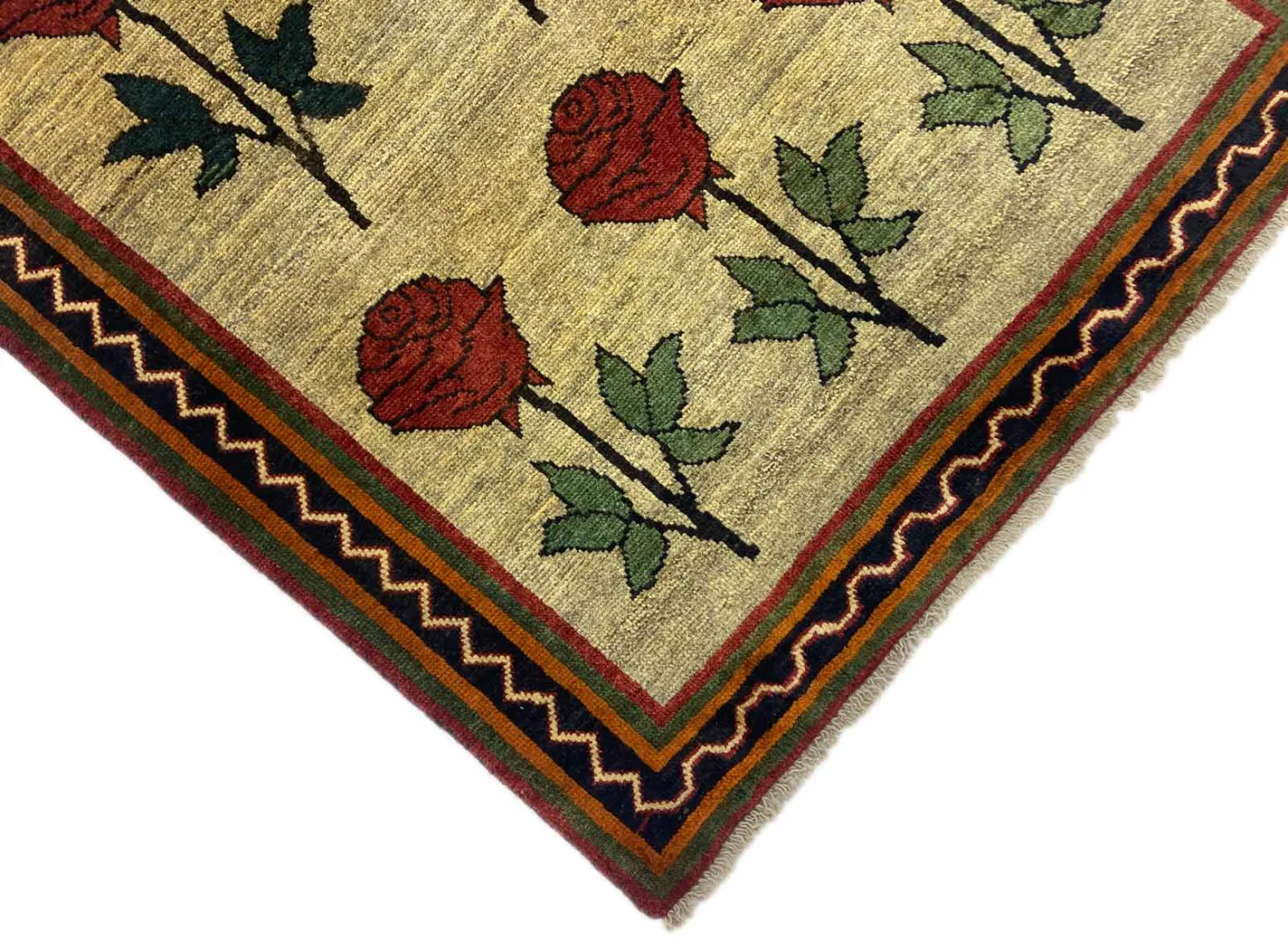
The wool surface is an active part of the pattern’s appearance. Colour is held in the pile, and the hand-knotted construction gives the design a textile depth that a flat printed image does not have. The structure can make a colour field appear calm in one area and more tactile in another. Knots, fibres and colour therefore work together. The pattern is not separate from the material; it is built into the surface through the making of the rug.
Gabbeh rugs are often described as rustic because their visual language is straightforward, tactile and less formal than that of many courtly or highly ornamental Persian rugs. In this case, the free designs, the Fars origin and the palette of red, beige, grey and brown support that description. Rustic refers to a direct craft expression, not to a lack of care. The new condition and fine workmanship remain part of the rug’s stated characteristics.
Special Features
The notable qualities of this rug are brought together by the Gabbeh Shuli designation, its origin in Fars and its free-form imaginative patterning. It is made from high-quality virgin wool and is hand-knotted. Red, beige, grey and brown are identified as its colours, and the rug is described as new and finely crafted. The stated knot density is another documented feature of its construction.
Because of its natural materials and particular knotting technique, the rug is suitable for use in a room with underfloor heating. Regular vacuuming is recommended to remove dust and dirt. Fresh stains should be treated promptly with a damp cloth and a mild cleaning agent. Professional cleaning every few years can help preserve the colours and the structure of the hand-knotted rug.
FAQ
What is the best way to clean a Gabbeh Shuli rug?
Vacuum the rug regularly to remove dust and loose dirt from the pile. If a stain occurs, treat it promptly with a damp cloth and a mild cleaning agent. There is no need for aggressive rubbing, which can disturb the surface. Professional cleaning every few years can help maintain the colours and structure of the wool rug. For a larger or more delicate stain, specialist cleaning is the appropriate choice.
Can this rug be used in a room with underfloor heating?
Yes. Gabbeh Shuli rugs are suitable for rooms with underfloor heating because of their natural materials and particular knotting technique. Virgin wool provides a comfortable sense of warmth while remaining breathable. The rug should be laid correctly and kept flat so that heat can move evenly into the room. Its suitability refers to use above an underfloor heating system.
How do Gabbeh Shuli rugs differ from other Persian rugs?
Gabbeh Shuli rugs are distinguished by simpler, free-spirited patterns and the use of virgin wool. Many other Persian rugs are associated with more complex designs and higher knot densities. Gabbeh Shuli examples are more rustic and direct in their visual expression, combining inherited craft with open-ended pattern development. With its Gabbeh Shuli name, Fars origin and free imaginative design, this rug belongs to that regional tradition.
To provide the best experiences, we use technologies like cookies to store and/or access device information. Consenting to these technologies will allow us to process data such as browsing behavior or unique IDs on this site. Not consenting or withdrawing consent, may adversely affect certain features and functions.
Functional Always active
The technical storage or access is strictly necessary for the legitimate purpose of enabling the use of a specific service explicitly requested by the subscriber or user, or for the sole purpose of carrying out the transmission of a communication over an electronic communications network.
Preferences
The technical storage or access is necessary for the legitimate purpose of storing preferences that are not requested by the subscriber or user.
Statistics
The technical storage or access that is used exclusively for statistical purposes.The technical storage or access that is used exclusively for anonymous statistical purposes. Without a subpoena, voluntary compliance on the part of your Internet Service Provider, or additional records from a third party, information stored or retrieved for this purpose alone cannot usually be used to identify you.
Marketing
The technical storage or access is required to create user profiles to send advertising, or to track the user on a website or across several websites for similar marketing purposes.

 SECURE PAYMENT
 SHIPPING PARTNERS


