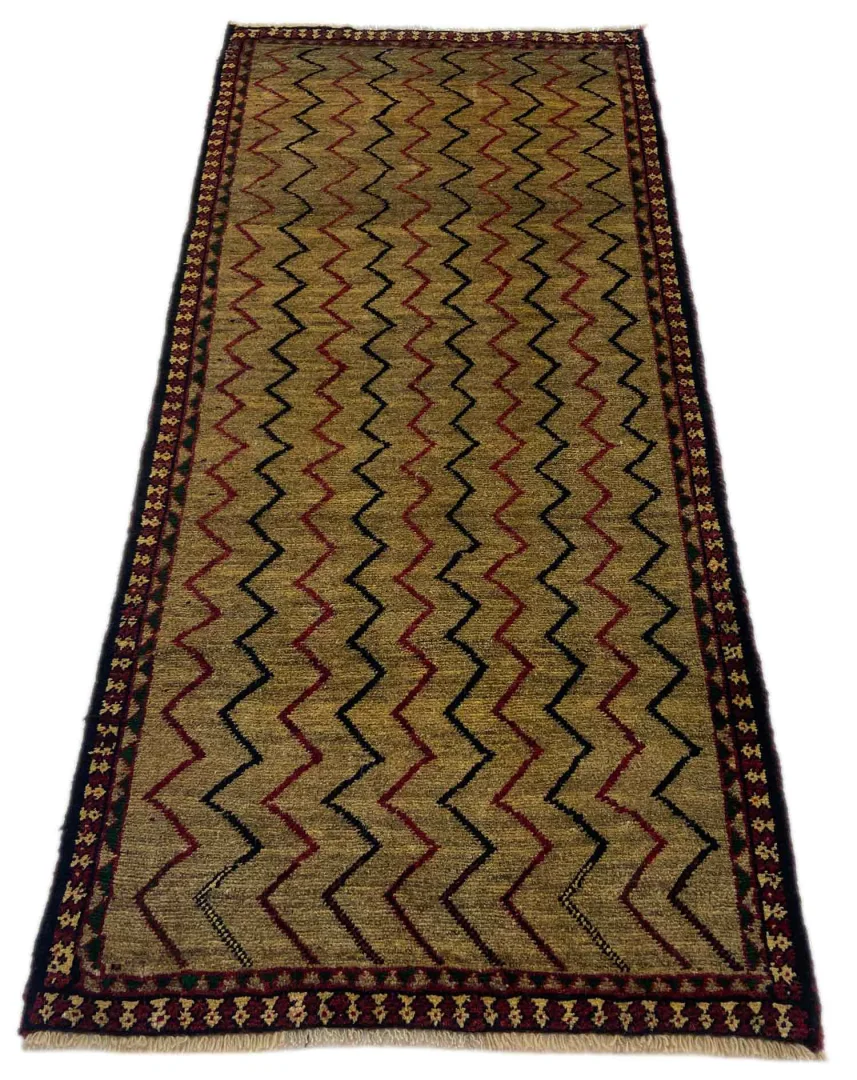
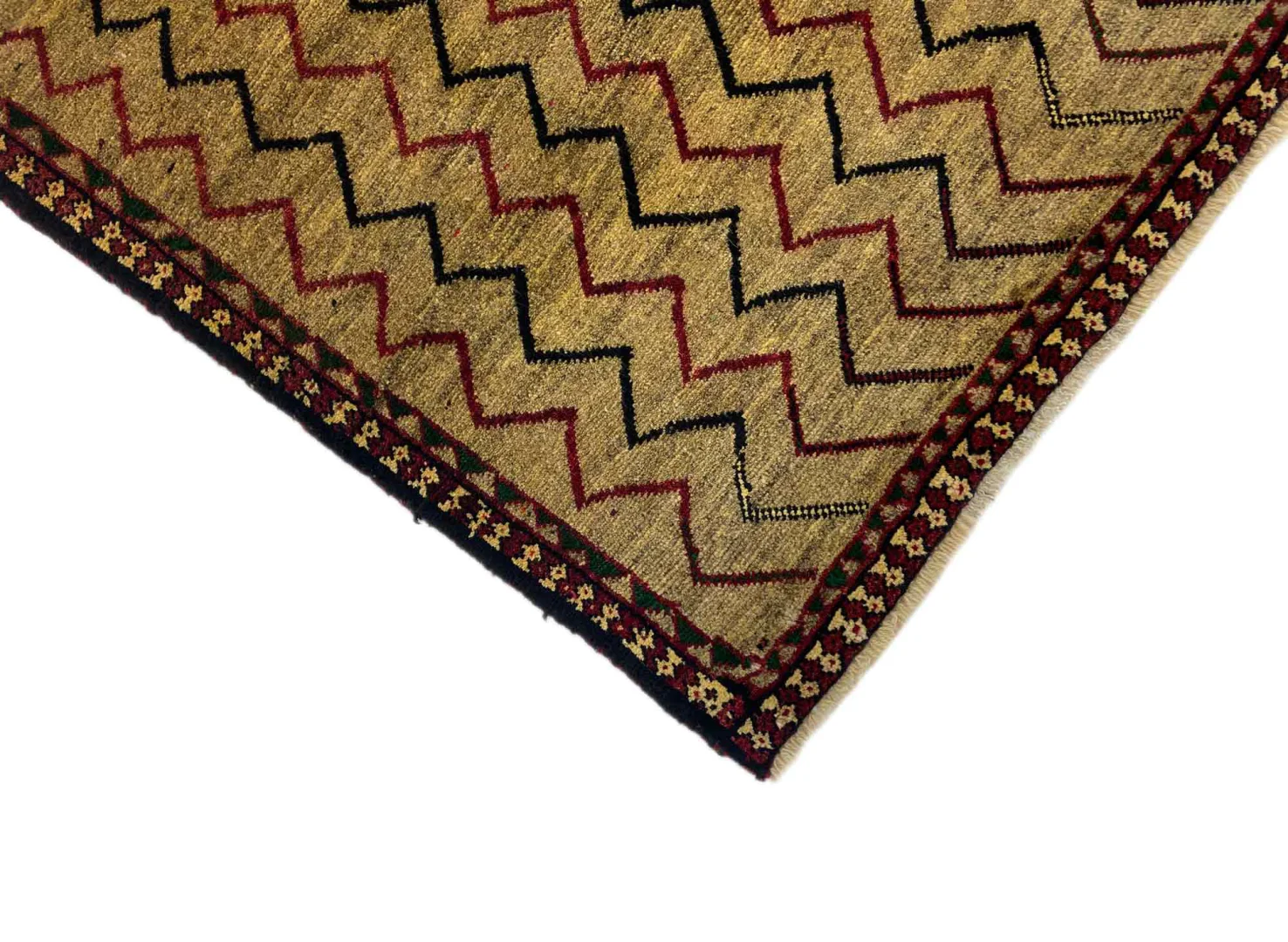
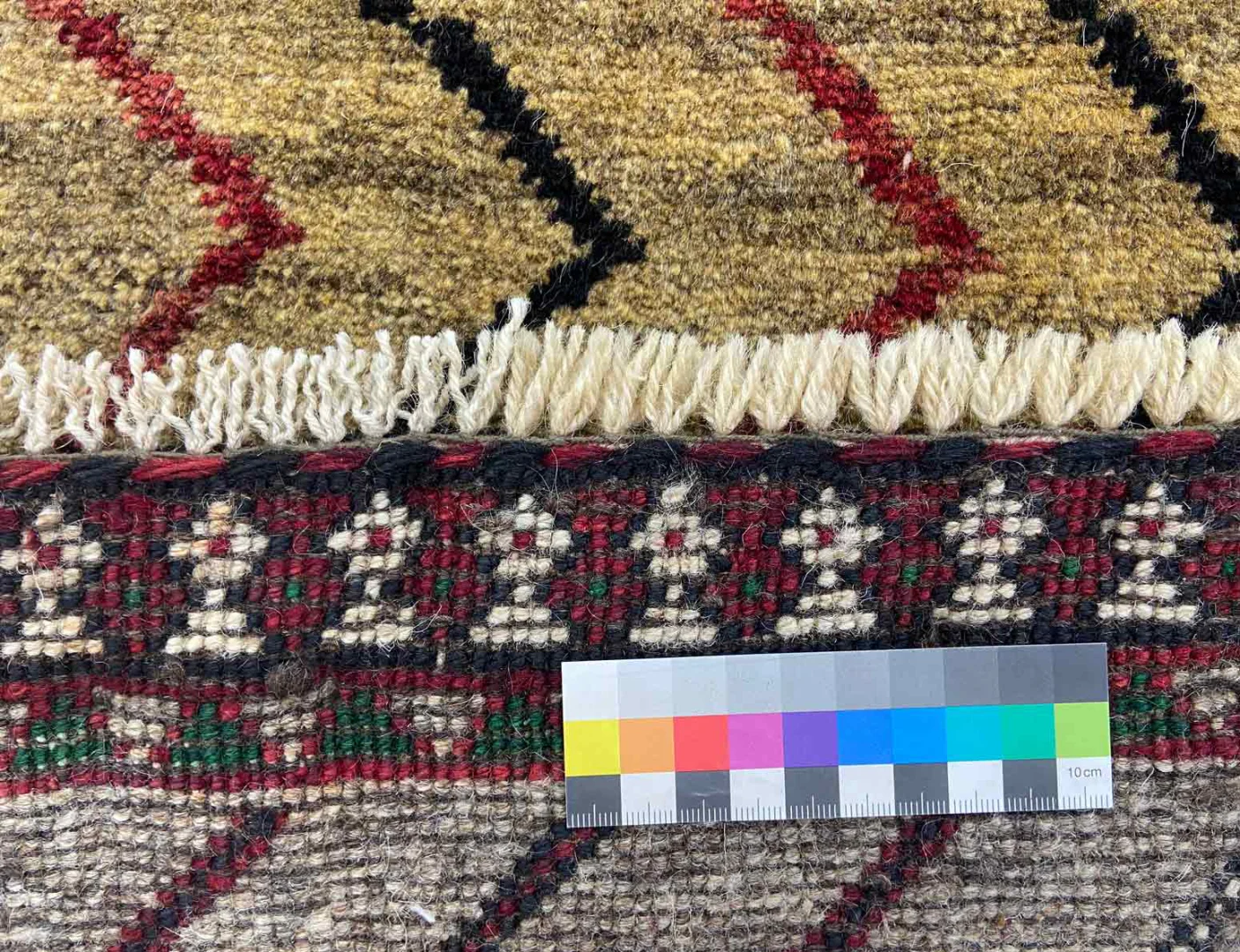
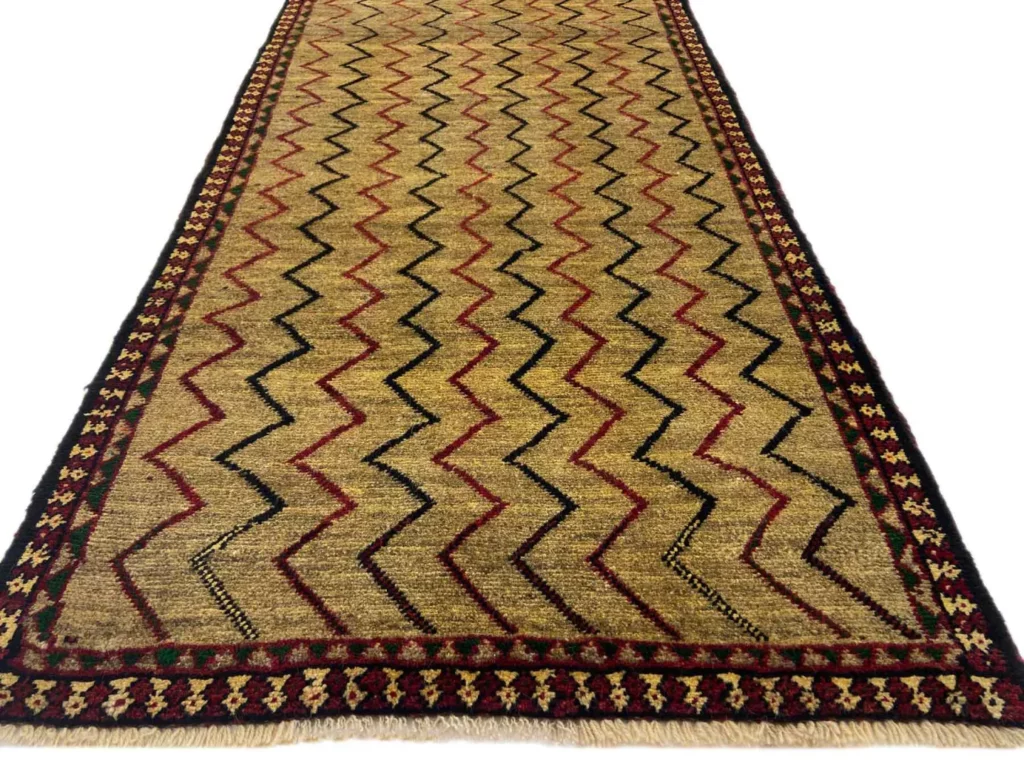
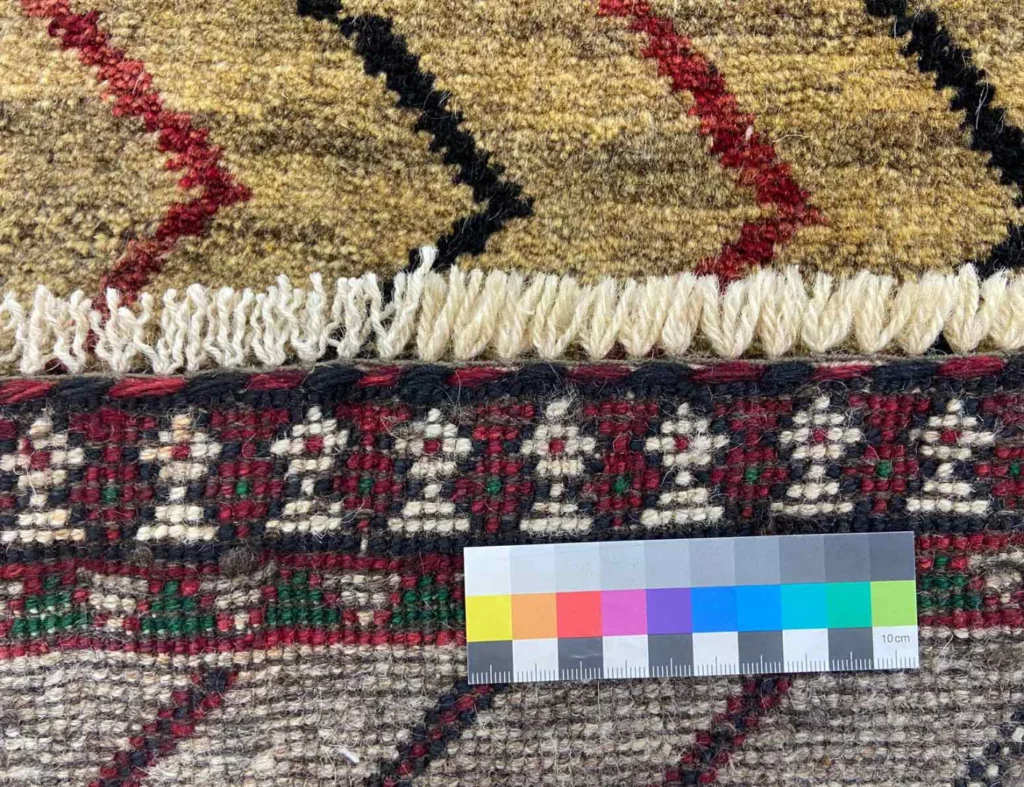
This Gabbeh Shuli is a hand-knotted Persian rug made from high-quality virgin wool. The wool forms the pile and gives the surface its characteristic tactile quality. Virgin wool has a naturally pleasant texture and provides a warm feel underfoot. In a hand-knotted rug, individual knots are worked into the foundation one by one. The finished surface therefore develops through the interaction of fibre, colour, knotting and the decisions made during the making of the design.
The knot density of this Gabbeh Shuli is between 90,000 and 180,000 knots per square metre. This density supports a differentiated treatment of the imaginative forms and irregular details found in the design. The high-quality wool combines a comfortable handle with the resilience associated with wool pile. It gives the rug a sense of natural warmth and comfort while preserving the visible character of a hand-knotted textile.
Origin and Tradition
This Gabbeh Shuli comes from the Fars region of Persia, south of Persia and near the city of Shiraz. Fars is associated with an independent tradition within Persian carpet making, shaped by the region’s cultural history and nomadic life. The rugs connected with Fars bring practical textile craftsmanship together with a direct and individual approach to decoration. A Gabbeh is understood not only through its regional origin, but also through the freedom with which its design is developed.
The Gabbeh tradition is known for an expressive form of knotting that does not depend entirely on the formal systems used by more strictly ordered classical rugs. Instead of repeating a courtly pattern with exact symmetry, the maker can shape a design through personal choices of colour, proportion and motif. Nomadic weavers have played an important role in forming this visual language. Their work allows the rug to retain a sense of individuality, with the human act of making remaining visible in the finished pattern.
Fars is closely linked to the cultural history of Persia. Shiraz serves as an important regional reference and represents a setting in which several artistic and craft traditions meet. Rugs from Fars are often associated with an immediate visual language and with designs that remain connected to the local environment and way of life. In the Gabbeh Shuli, that regional identity appears through the combination of hand-knotting, expressive colour and imaginative patterning.
Within the Gabbeh field, the name Shuli is associated with a freer treatment of unusual motifs. The regional tradition provides the foundation, while the precise arrangement can vary from one rug to another. This relationship between Fars heritage and individual interpretation is central to the character of Shuli rugs. Each hand-knotted piece is made as its own work, preserving the particular choices made by the weaver while the pattern was being formed.
The history of Gabbeh also explains why these rugs can feel different from more formal Persian designs. Their purpose is not to reproduce one fixed ornament in every example. Simplification, variation and personal expression are part of the tradition. The result is a carpet language in which a regional craft practice remains recognisable without suppressing the individuality of the person who knotted it.
Design and Pattern
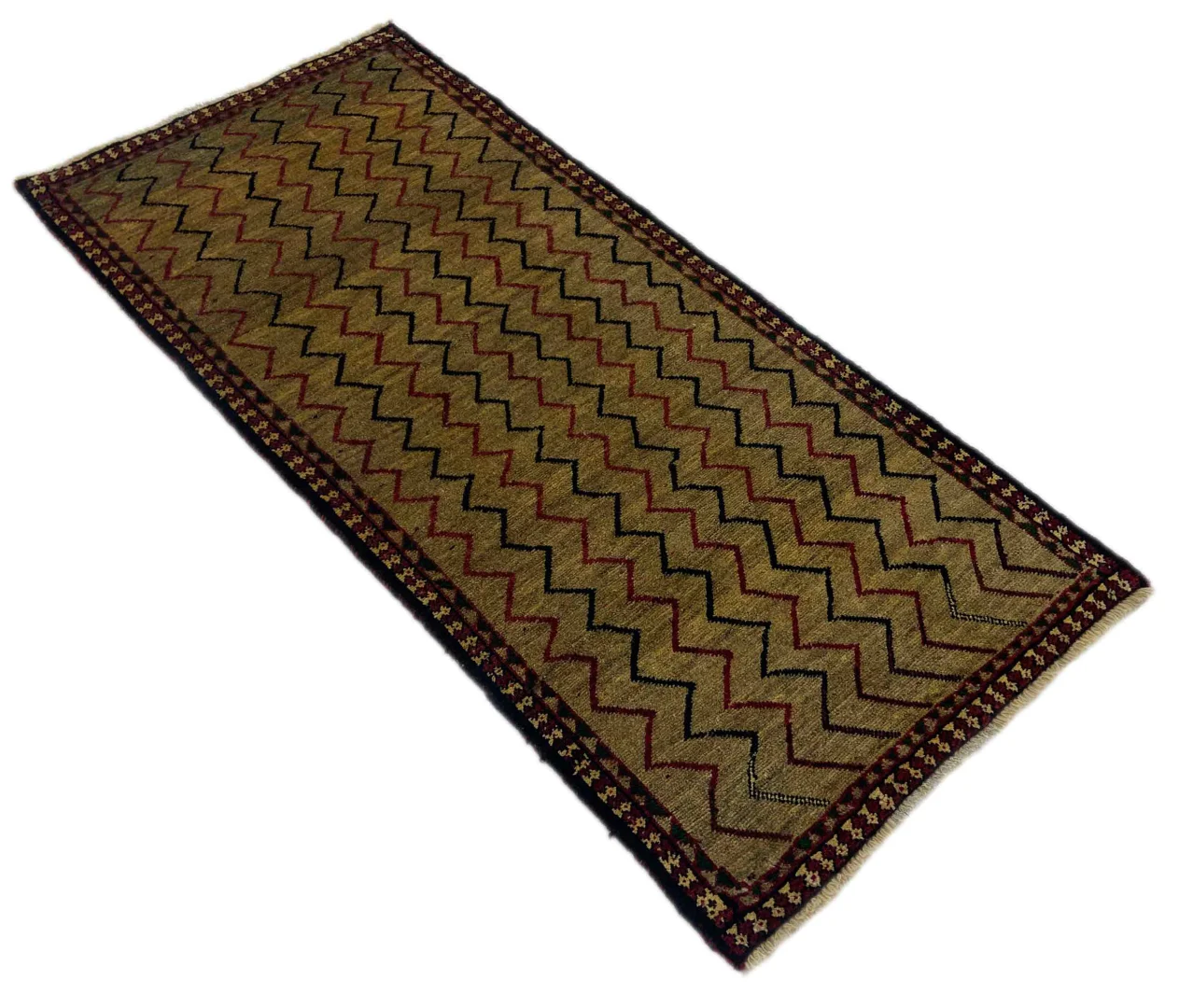
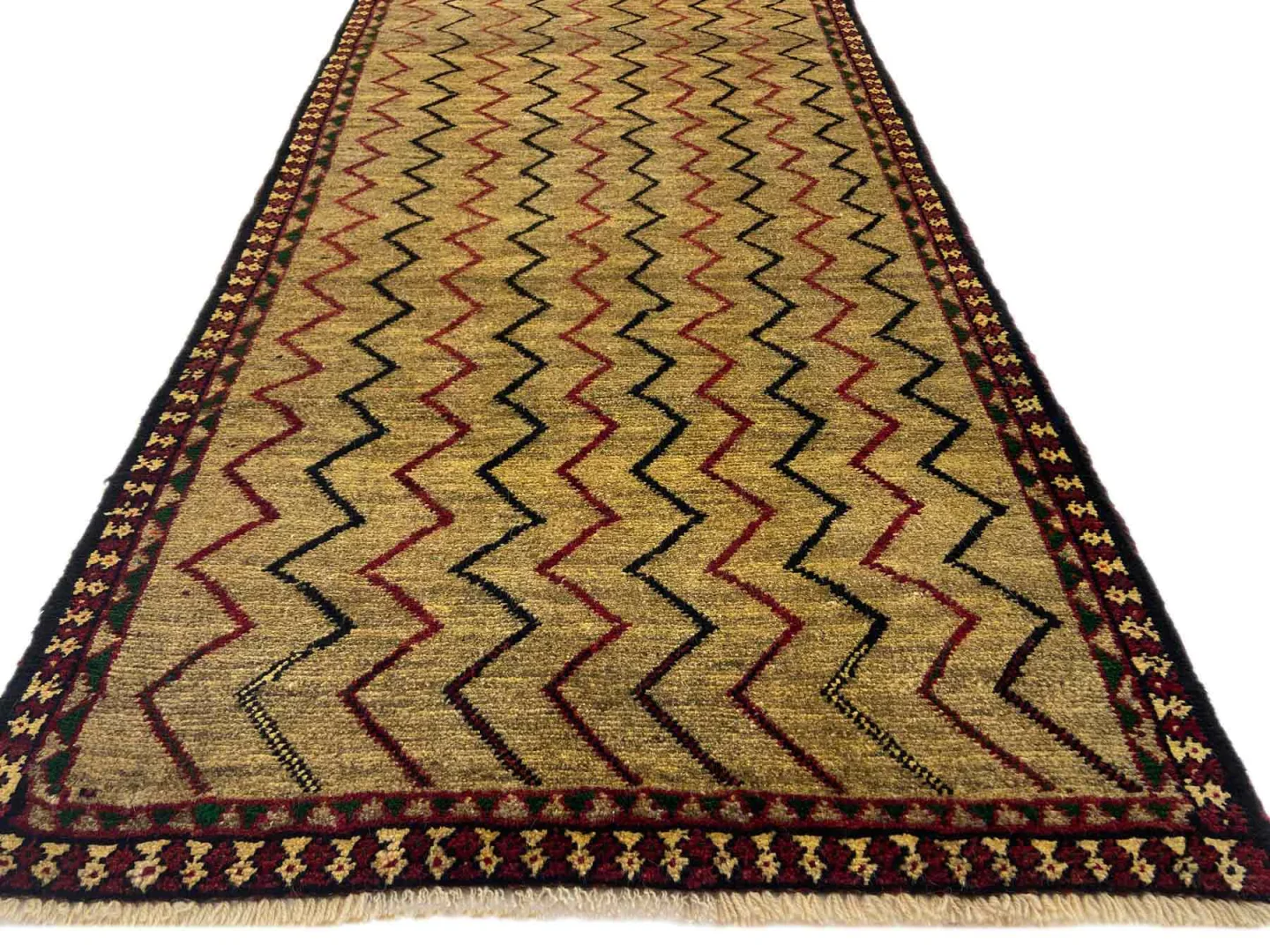
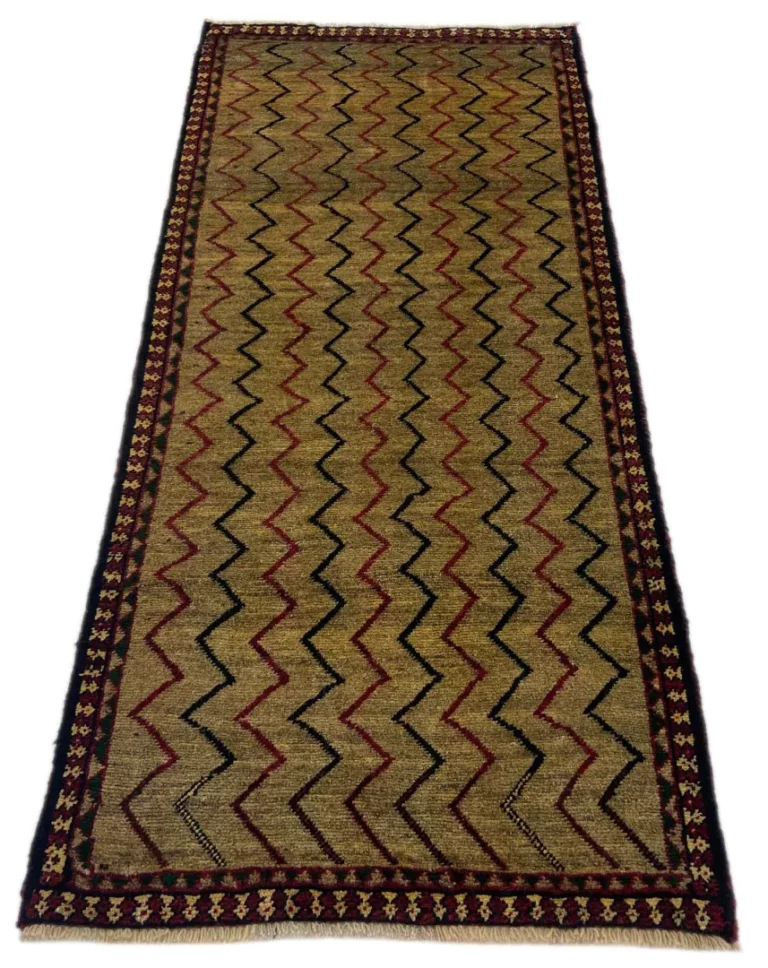
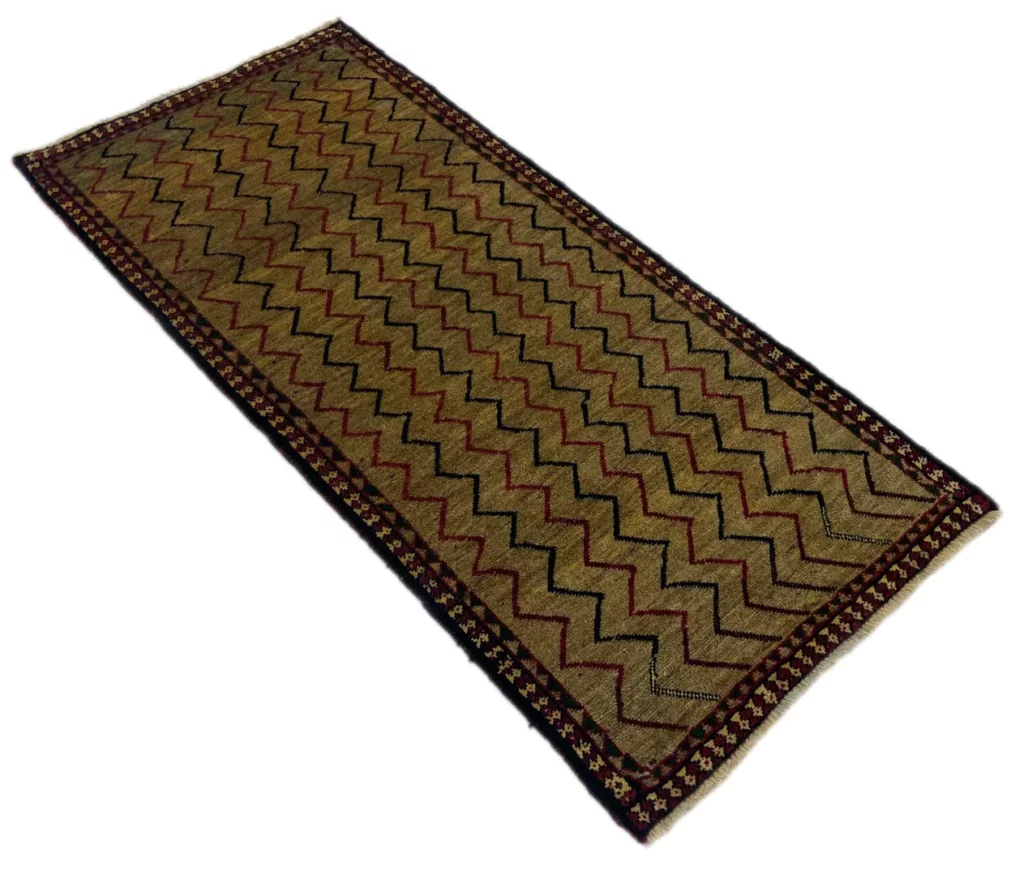
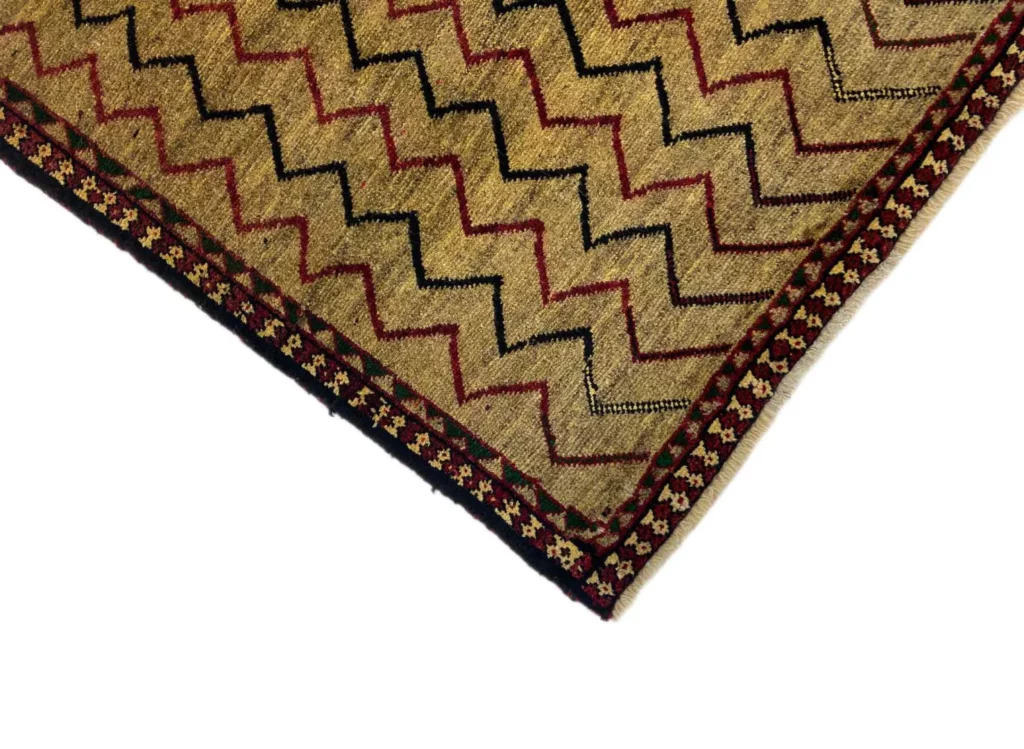
The design of this Gabbeh Shuli is described as unusual and imaginative. It does not rely on a narrowly regular sequence of repeated forms, but on irregular shapes and asymmetrical arrangements. Individual elements can therefore stand out in their own right. The composition remains clearly legible while retaining a sense of freedom, and the hand-knotted structure gives the design a textile depth that cannot be separated from its making.
The colour palette consists of red, beige, grey and brown. Together, these colours establish the visual framework for the lively designs. Red can provide a strong point of emphasis, while beige and brown create an earthy foundation. Grey introduces a quieter tone to the group. The character of the rug comes from the relationship between these colours rather than from a single uniform field. Their combination allows the imaginative pattern to remain vivid while retaining a connection to the natural colour world often associated with Fars Gabbeh weaving.
Gabbeh designs are traditionally less dependent on a fixed repertoire of precisely repeated ornaments than many highly formal Persian carpet patterns. Their visual effect can come from simplified forms, open arrangements and deliberate irregularity. In a Shuli composition, this freedom may be especially apparent: motifs need not be mirrored from one side to the other, and not every passage must follow the same geometric sequence. Such variation gives the design an individual rhythm without making it visually arbitrary.
The pattern language combines a nomadic mode of expression with a colour effect that can also be read in contemporary interiors. The rug remains a visibly hand-knotted one-off rather than becoming an anonymous decorative surface. Gabbeh-Fars rugs offer a related regional reference and are known for comparatively simple designs that are often connected with nature. Persian Kilims also provide a broad range of colours and patterns, but their flat-woven construction distinguishes them technically from a knotted Gabbeh.
Other Persian traditions should likewise be kept distinct from the Shuli design. Nain and Tabriz represent their own design languages and are not interchangeable with a Fars Gabbeh. This rug is defined by its Fars origin, its stated colours and its imaginative, irregular patterning. Those elements create a design in which regional tradition and the creative freedom of the weaver remain visible at the same time.
Special Features
The defining features of this rug are its high-quality virgin wool, its hand-knotted construction and its imaginative Shuli design. Red, beige, grey and brown establish the stated colour palette. The irregular and asymmetrical forms make each piece a one-of-a-kind rug and show the individual creativity of the weavers. It can be used as a focal point in a living room, as a soft surface in a bedroom or as a decorative element in a hallway.
Care should consist of regular vacuuming and, when necessary, cleaning with a damp cloth. Direct sunlight should be avoided in order to reduce the risk of the colours fading. The natural texture of the wool, its comfortable warmth and the visible handwork bring together everyday use and the recognisable craft tradition of a Persian Gabbeh.
FAQ
What makes the Gabbeh Shuli distinctive?
Its character comes from the combination of high-quality virgin wool, hand-knotted workmanship and unusual, imaginative patterns. The irregular and asymmetrical designs reflect the creativity of the weavers and set the Shuli apart from rugs based on strictly repeated decoration. Red, beige, grey and brown make up the stated colour palette. Because every piece is a one-of-a-kind rug, the particular arrangement of forms and colours also has its own visual identity.
How should a Gabbeh Shuli be cared for?
The rug should be vacuumed regularly so that loose dirt can be removed from the pile. If required, the surface may be cleaned with a damp cloth. Direct sunlight should be avoided because it can cause the colours to fade. Consistent, careful maintenance helps preserve the pleasant texture of the wool and the colour effect of the hand-knotted design without changing its regional and handmade character.
Which rooms suit a Gabbeh Shuli?
A Gabbeh Shuli can be used in several areas of the home. In a living room, its imaginative pattern can serve as a visual focal point. In a bedroom, the wool provides a soft surface with a naturally warm feel. It can also be placed in a hallway as a decorative textile. The lively colours and individual design allow the rug to work in different rooms while keeping the Persian origin and hand-knotted character clearly present.
To provide the best experiences, we use technologies like cookies to store and/or access device information. Consenting to these technologies will allow us to process data such as browsing behavior or unique IDs on this site. Not consenting or withdrawing consent, may adversely affect certain features and functions.
Functional Always active
The technical storage or access is strictly necessary for the legitimate purpose of enabling the use of a specific service explicitly requested by the subscriber or user, or for the sole purpose of carrying out the transmission of a communication over an electronic communications network.
Preferences
The technical storage or access is necessary for the legitimate purpose of storing preferences that are not requested by the subscriber or user.
Statistics
The technical storage or access that is used exclusively for statistical purposes.The technical storage or access that is used exclusively for anonymous statistical purposes. Without a subpoena, voluntary compliance on the part of your Internet Service Provider, or additional records from a third party, information stored or retrieved for this purpose alone cannot usually be used to identify you.
Marketing
The technical storage or access is required to create user profiles to send advertising, or to track the user on a website or across several websites for similar marketing purposes.

 SECURE PAYMENT
 SHIPPING PARTNERS


