
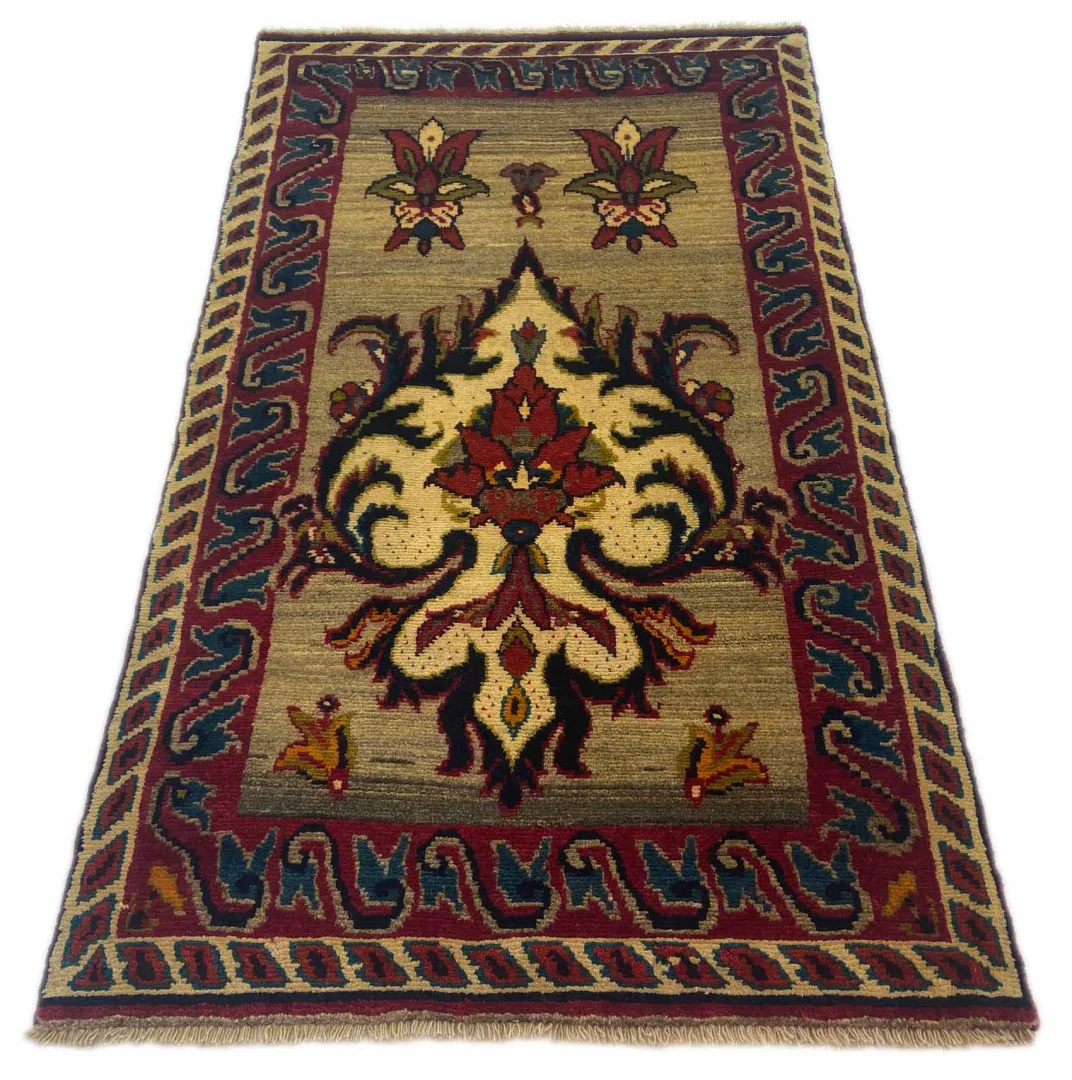
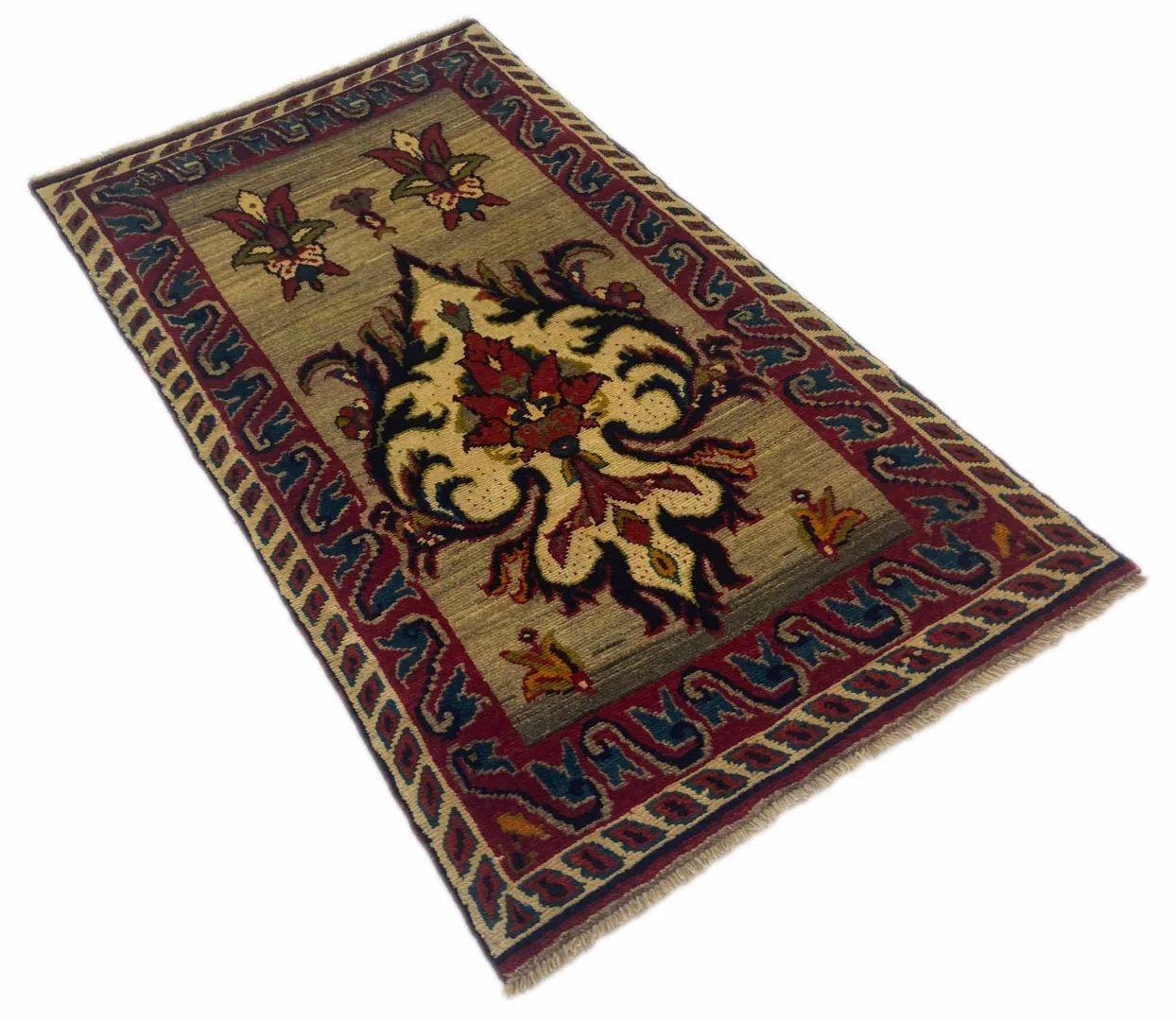
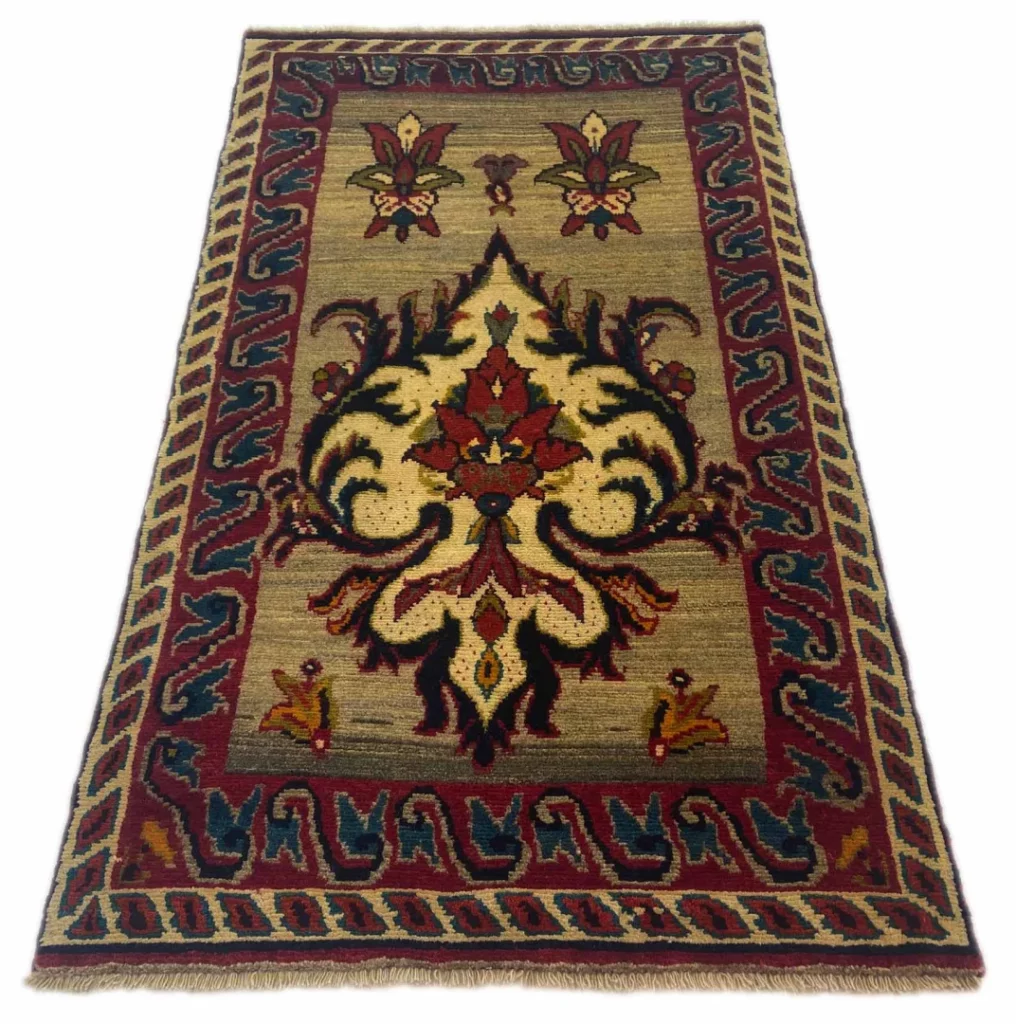
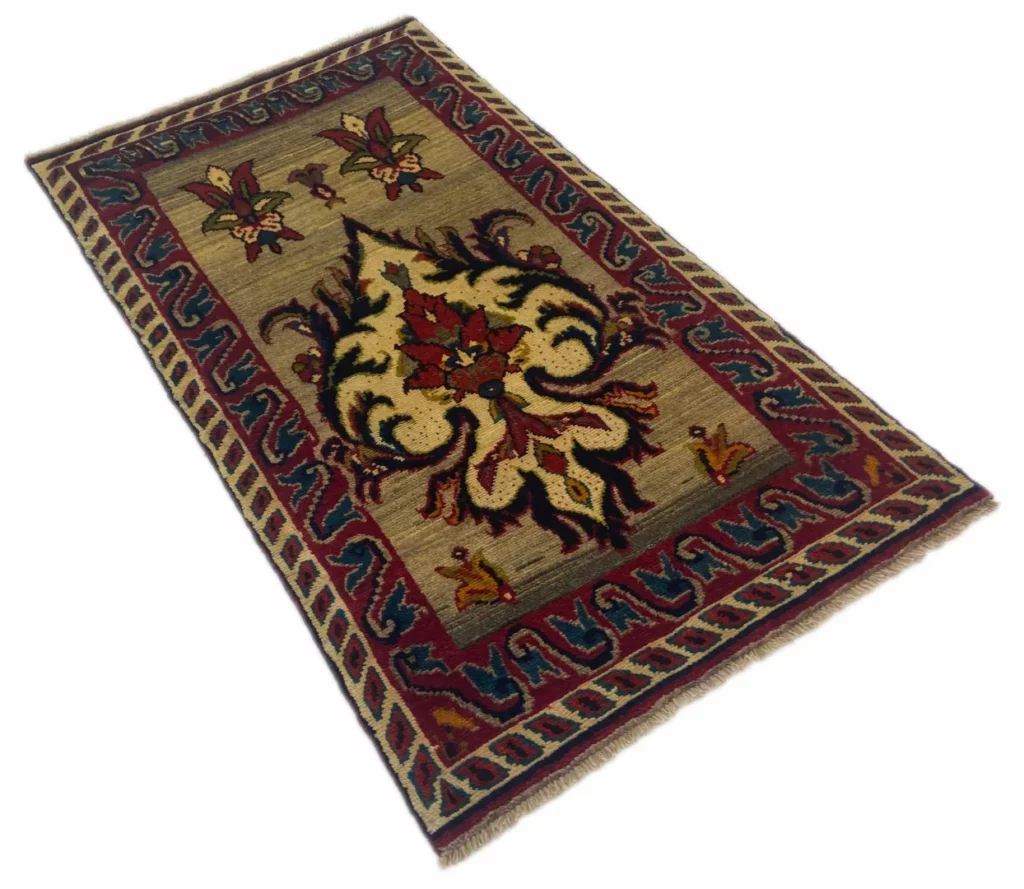
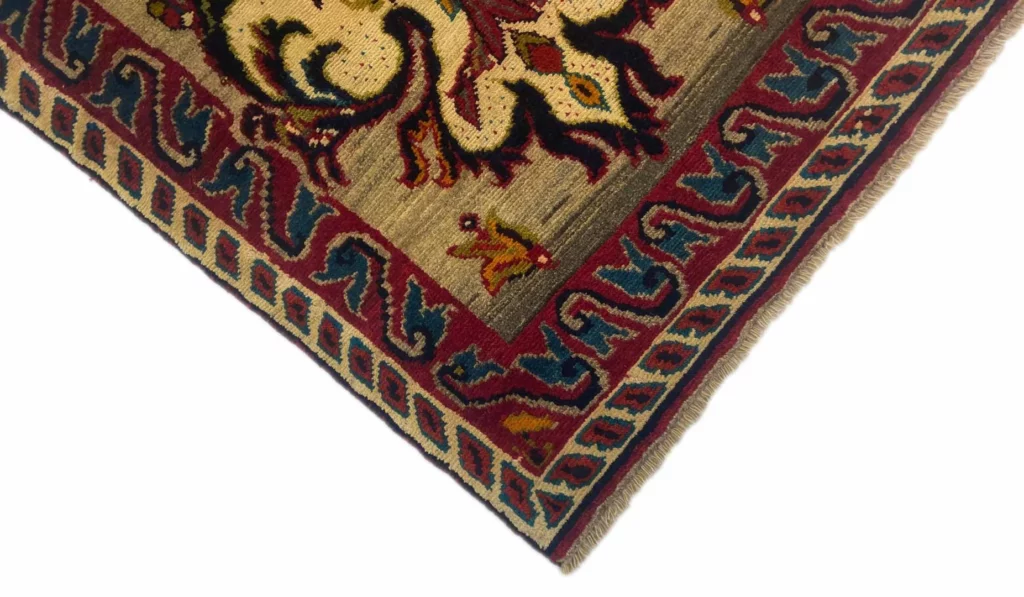
Persian Rug Fars 187 x 108 cm Wool Hand-knotted
€ 799
Hand-knotted Fars Persian Rug | Knot density: 90,000 – 180,000 knots/m² | Material: Pile virgin wool | Size: 187 x 108 cm | Pattern: Unusual, imaginative designs | Condition: New
1 available
- ✓Free Shipping in EU
- ✓2-5 Business Days Delivery
- ✓14-Day Return Policy
- ✓Worldwide Shipping on request
 SECURE PAYMENT
 SHIPPING PARTNERS
Inventory number: 87F63E2A
Description
Fars Persian Rug
Material and Craftsmanship
This Gabbeh Shuli is a hand-knotted Persian rug from the Fars region, made with high-quality virgin wool. Wool gives the rug a naturally pleasant handle and forms part of the long-established material tradition of Persian rug making. Its pile has a tactile, resilient character, allowing the material to serve both a decorative role and the practical requirements associated with a floor covering. The use of virgin wool is one of the defining material details of this particular Gabbeh Shuli.
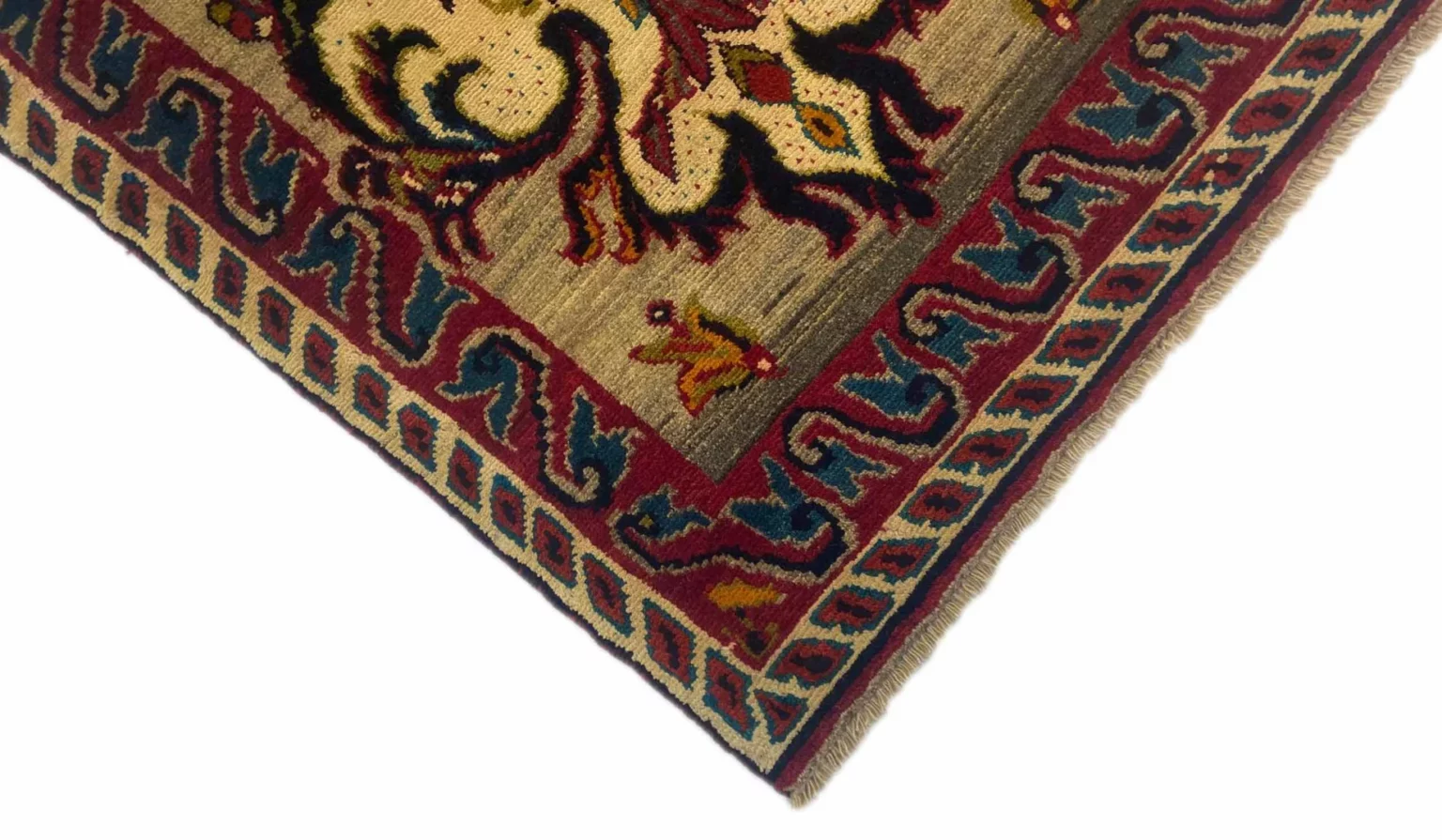
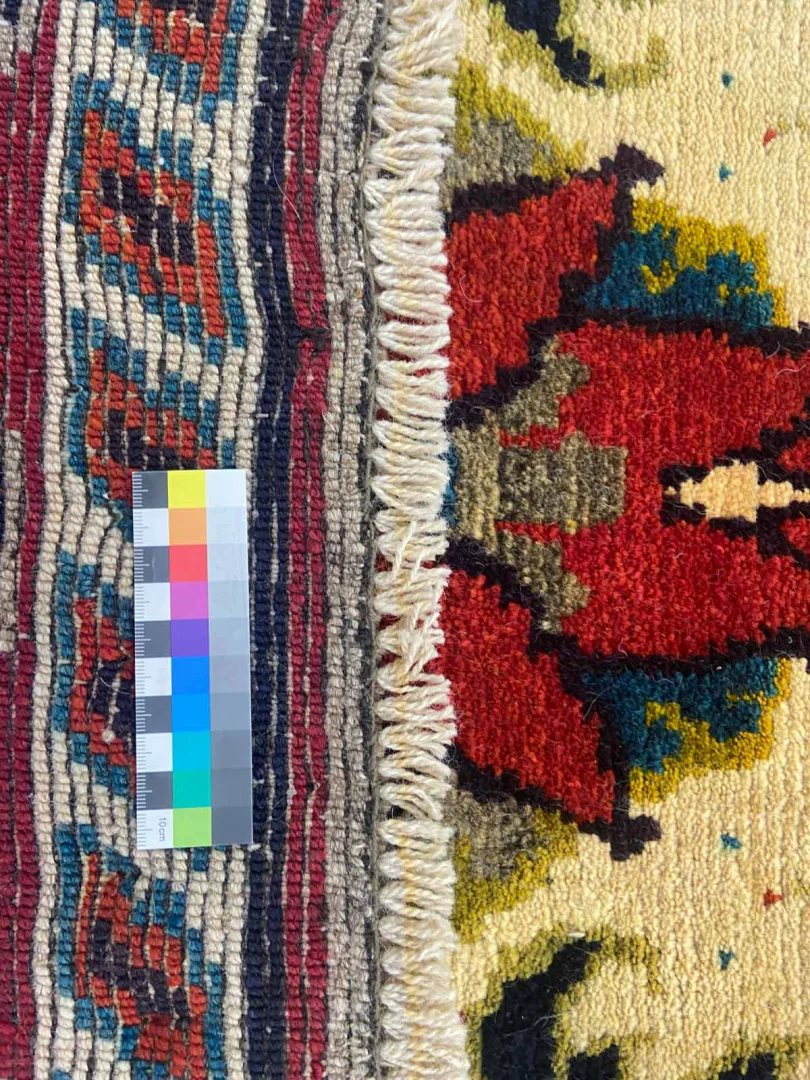
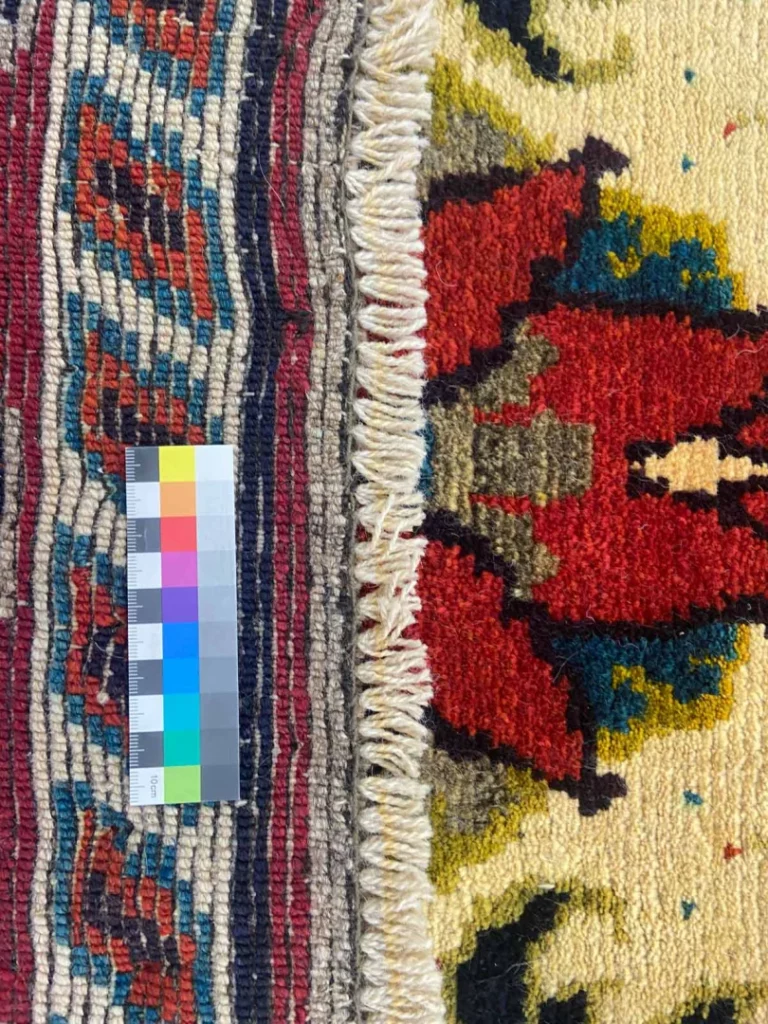
Hand knotting means that the design is built knot by knot rather than produced by a machine. The technique demands manual skill, concentration and a clear understanding of how a pattern develops across the woven surface. Small variations are part of the character of a handmade rug and distinguish it from an industrially uniform product. In this rug, the traditional technique is combined with unusual and imaginative designs.
The listed knot density ranges from 90,000 to 180,000 knots per square metre and indicates a carefully worked surface with room for differentiated pattern detail. The virgin-wool pile, manual construction and creative design belong together in the character of Gabbeh Shuli. The rug is described as new. Its construction therefore brings together a traditional Persian method, a natural wool material and a contemporary-looking freedom in the choice of motifs.
Gabbeh rugs are also associated with a practical, hard-wearing and easy-care character. The source description connects Gabbeh Shuli with durability and straightforward maintenance. Those qualities are presented alongside the pleasant feel of the wool and the individuality created by hand knotting. The result is a textile whose practical construction does not separate it from its artistic purpose.
Origin and Tradition
The Gabbeh Shuli comes from Fars in Persia, near the historic city of Shiraz. Fars is one of the Persian regions associated with a distinctive rug-making tradition and with the nomadic culture that forms an important background to Gabbeh production. These rugs are not defined solely by a rigid ornamental formula. Their designs can reflect the makers’ surroundings, experiences and imagination, creating a direct relationship between everyday life and the finished textile.
The nomadic roots of Gabbeh are central to its cultural context. Skills in spinning, preparing materials, knotting and composing patterns were passed from one generation to the next. The act of making a rug combined practical knowledge with personal interpretation. A weaver could draw on remembered forms, observations from the landscape or images connected with daily experience. This helps explain why Gabbeh designs can appear simple in structure while still carrying a strong individual identity.
Fars contains several related rug traditions rather than one single visual language. Gabbeh Fars is named alongside Gabbeh Shuli and is often associated with even simpler patterns. Shiraz rugs from the same broader region are known for more complex geometric designs. These related forms show how regional weaving traditions can produce different balances between structure, ornament and spontaneity. Gabbeh Shuli occupies the part of this tradition where a clear, reduced foundation meets a more imaginative pattern vocabulary.
Persian rug history also includes other centres with their own techniques and materials. Kashan, for example, is known for fine silk rugs. Mentioning such regional distinctions is useful because it places Fars within a wider Persian textile landscape without confusing the origins of the individual styles. This rug is a Fars Gabbeh Shuli, and its identity is connected to the hand-knotted traditions and natural materials associated with that region.
The cultural meaning of Gabbeh can extend beyond decoration. The source description connects these rugs with social and cultural significance and describes them as textiles that may become valued heirlooms for future generations. That meaning grows from the combination of manual work, regional knowledge and the personal ideas expressed in the design. Gabbeh Shuli therefore represents both a usable household textile and a form of Persian craft shaped by the people and traditions of Fars.
Design and Pattern
The pattern of this Gabbeh Shuli is described as unusual and imaginative. Gabbeh rugs are known for designs that may be simple in their basic arrangement while remaining expressive in their visual effect. Their appeal does not depend on an accumulation of fine ornament. Instead, the relationship between open areas, colour fields and clearly legible motifs can give the design its character. This allows the pattern to be read as a composed textile image rather than as a densely filled surface.
Imagination is an important part of the Gabbeh design tradition. Makers can respond to their surroundings, their experiences and their own ideas when forming motifs and colour combinations. As a result, two rugs within the same broad tradition need not present identical visual solutions. A familiar regional technique can support a very personal arrangement of shapes. The unusual designs of this Gabbeh Shuli express that connection between inherited craft and individual creativity.
Red, beige, grey and brown are identified as typical colours for Gabbeh Shuli. Here they are described as being combined harmoniously, creating a warm and inviting overall character. These colours can also establish clear relationships between the background and the motifs. The palette supports the imaginative quality of the pattern without removing the sense of balance associated with Gabbeh design.
Gabbeh pattern language can be understood as a more direct alternative to highly formalised compositions. Reduced forms and expressive arrangements leave space for the character of the hand-knotted surface to remain visible. Simplicity in this context does not mean a lack of thought. It means that the design can communicate through a limited number of strong visual decisions. The result is a pattern that remains distinctive while avoiding unnecessary complexity.
The regional comparison with Shiraz is helpful here. Shiraz rugs are described as having complex geometric patterns, while Gabbeh Shuli is identified through its unusual and imaginative designs. Both belong to the wider Fars tradition, but they make different use of form and ornament. The Gabbeh approach places greater emphasis on a clear visual idea, expressive colour relationships and the freedom to interpret motifs. This makes the rug suitable for interiors that combine traditional references with modern furnishings.
Special Features
The defining features of this rug are its Gabbeh Shuli type, its Fars origin and its Persian hand-knotted construction. It is made with high-quality virgin wool in the pile and is described as new. The pattern is unusual and imaginative, while red, beige, grey and brown form the named colour range. These details bring material, regional tradition and visual design together without separating the rug from its Gabbeh identity.
The knot density of 90,000 to 180,000 knots per square metre points to a differentiated, carefully worked construction. In combination with hand knotting and a wool pile, it forms the technical basis of the described rug. Gabbeh Shuli is also associated with a durable and easy-care character. This practical side complements the expressive pattern rather than competing with it.
Regular vacuuming is recommended for routine care, and occasional beating can help remove loose dirt. For larger stains, professional rug cleaning should be considered. These measures are suitable as general care guidance for a hand-knotted wool rug, while unusual stains should be assessed by a specialist. The rug’s new condition, natural wool material and handmade construction remain important considerations when choosing a cleaning method.
FAQ
What is a Gabbeh Shuli rug?
A Gabbeh Shuli is a hand-knotted Persian rug from the Fars region of Persia. It belongs to the Gabbeh tradition, which is known for simple yet expressive designs and for patterns shaped by the makers’ imagination. This version is made with high-quality virgin wool and is described through unusual, imaginative designs. Its identified colour range includes red, beige, grey and brown, and its knot density is 90,000 to 180,000 knots per square metre.
How should I care for my Gabbeh Shuli rug?
Routine care consists of regular vacuuming to remove dust and loose dirt from the pile. Occasional beating can also help release particles that have settled in the rug. If a larger stain occurs, professional rug cleaning should be considered. A specialist can select a method appropriate for hand-knotted virgin wool. The type of stain and the condition of the rug should be taken into account before any intensive treatment is attempted.
Where do Gabbeh rugs come from?
Gabbeh rugs mainly come from the Fars region of Persia, an area known for traditional knotting techniques and the use of natural materials. Their history is closely connected with nomadic culture. Makers may draw inspiration from the surrounding landscape, personal experiences and imagination, which gives the patterns their distinctive character. Gabbeh Fars and Shiraz rugs are also associated with the region; Shiraz rugs are known for complex geometric designs, while Gabbeh Shuli is recognised for its imaginative pattern language.
Additional information
| Design Style | |
|---|---|
| Color | |
| Size | |
| Shape | |
| Origin | |
| Knot Density | |
| Material |
Related products

Persian Rug Qashqai 286 x 200 cm Wool Hand-woven
€ 798
Persian Rug Gabbeh 270×83 cm Hand-knotted
€ 755
Persian Rug Fars 293 x 186 cm Wool Hand-woven
€ 798
Oriental Rug Loribaft 200 x 300 cm Wool Hand-knotted
€ 1800
Persian Rug Qashqai 288 x 193 cm Wool Hand-woven
€ 798
Persian Rug Tabriz approx. 350 x 245 cm Wool Hand-knotted
€ 1280
Oriental Rug Ushak ca 420 x 296 cm Wool Hand-knotted
€ 2250
Persian Rug Qashqai 290 x 192 cm Wool Hand-woven
€ 798