
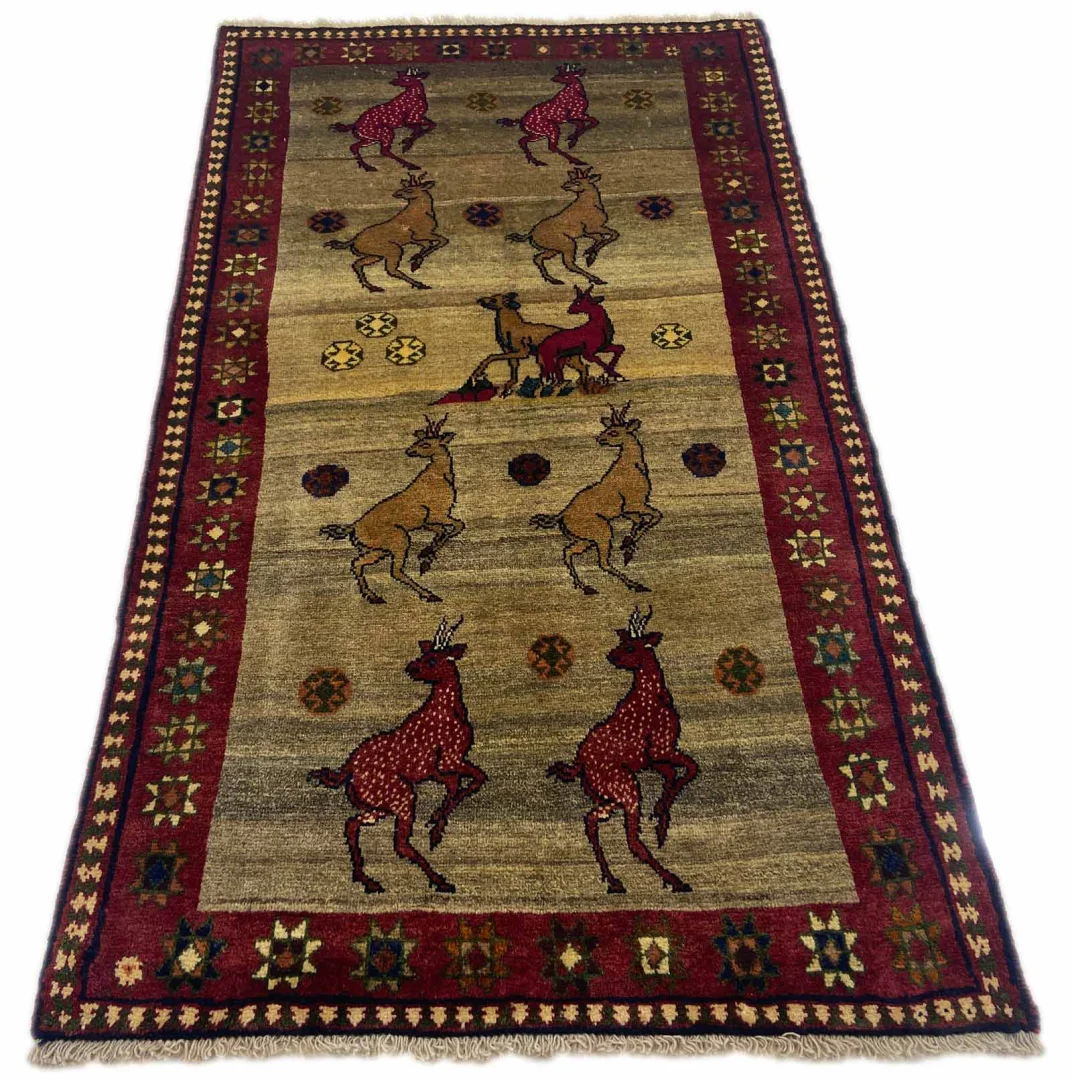
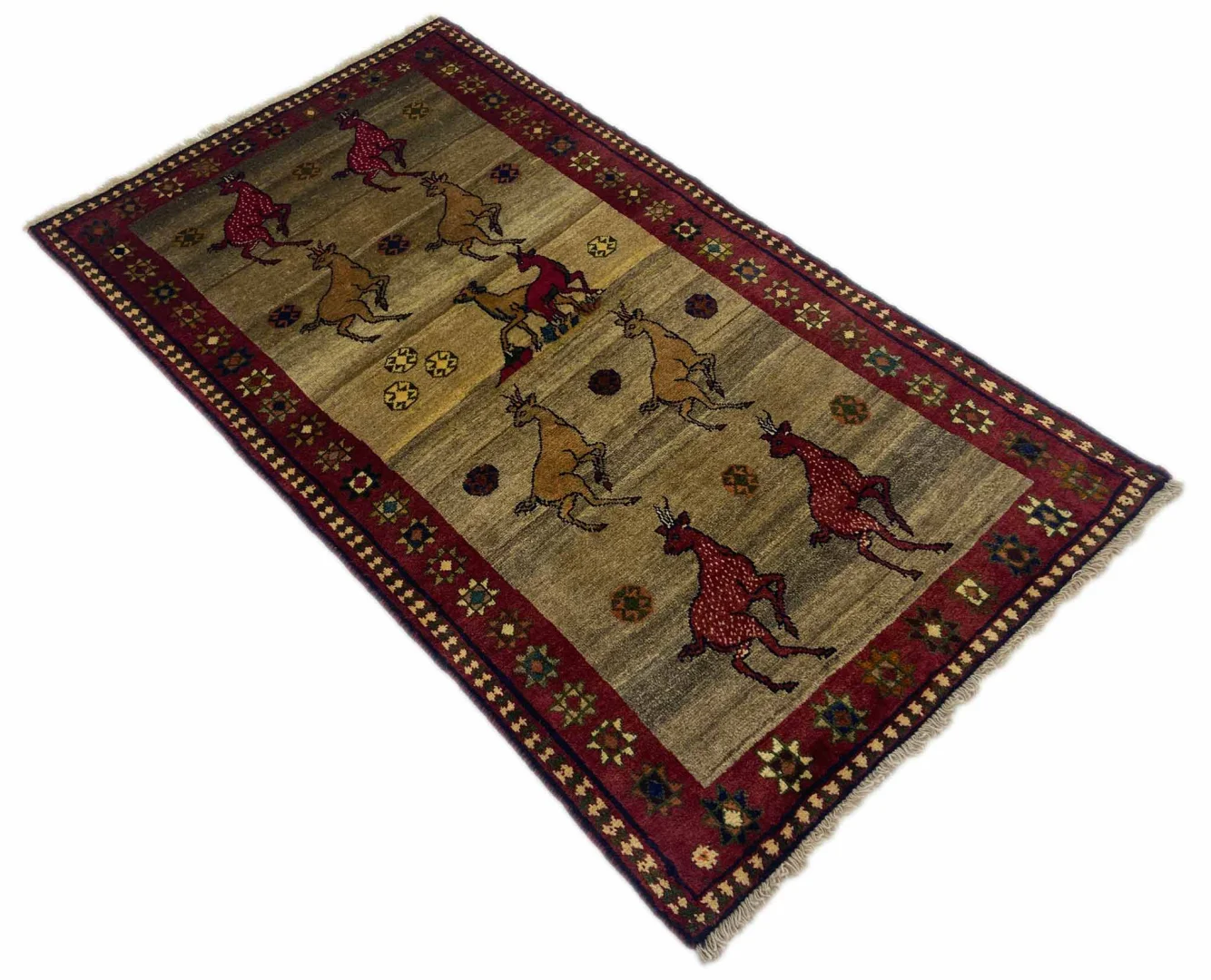
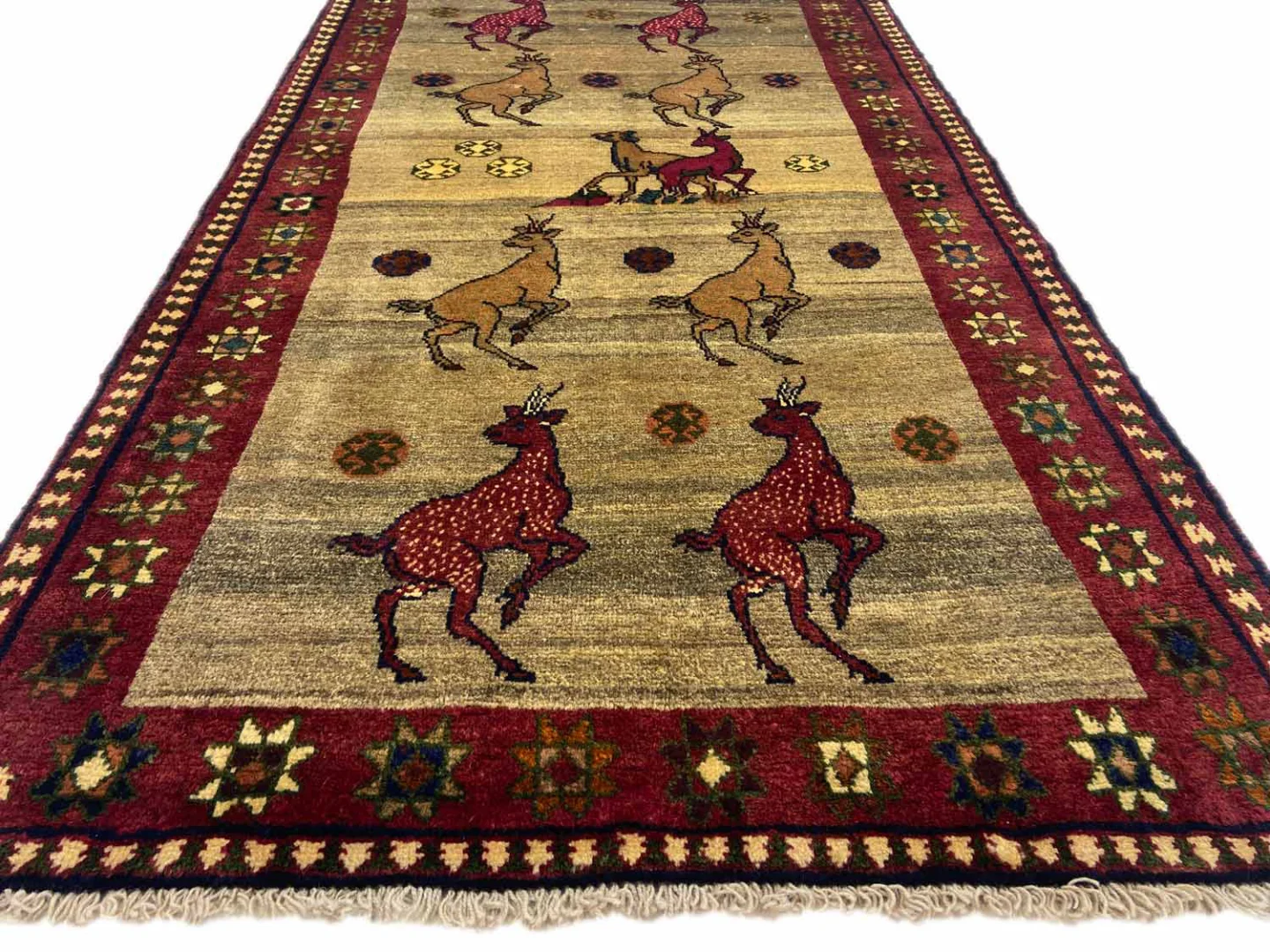
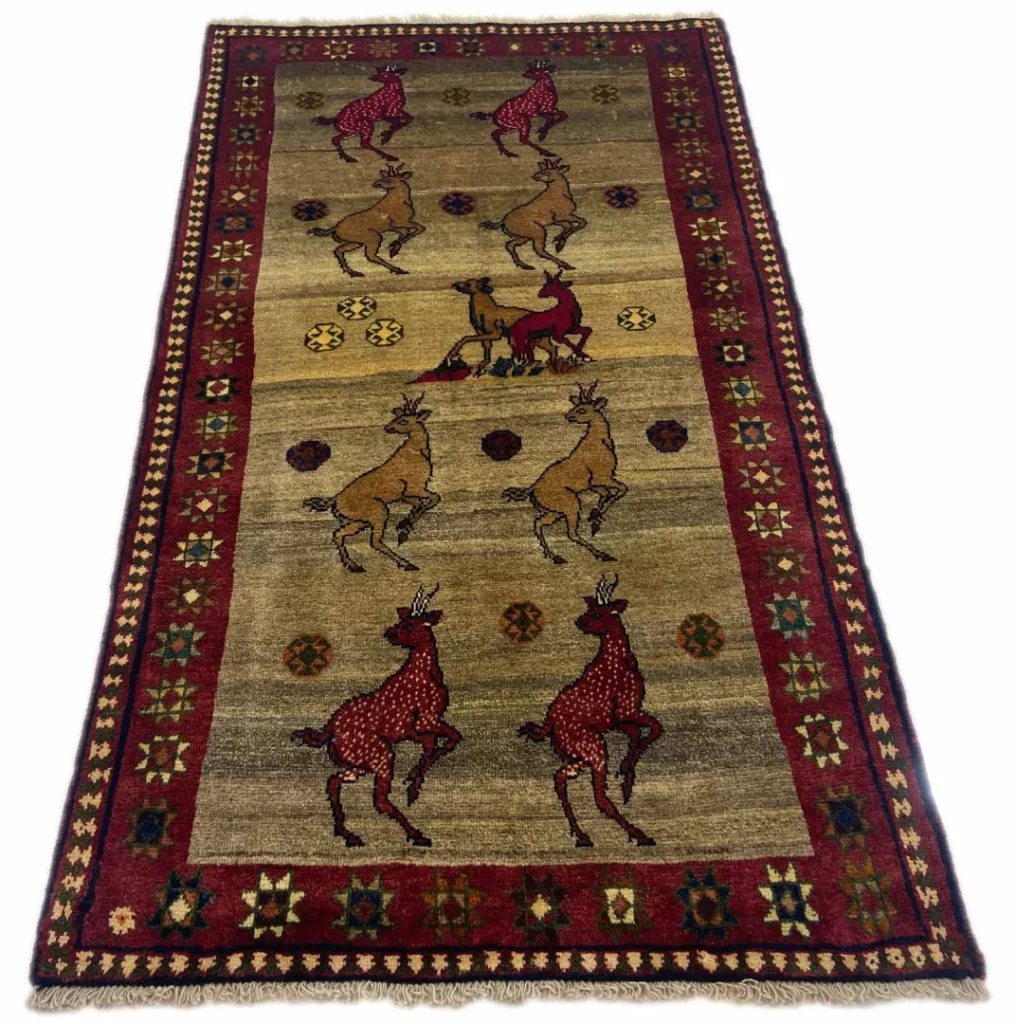
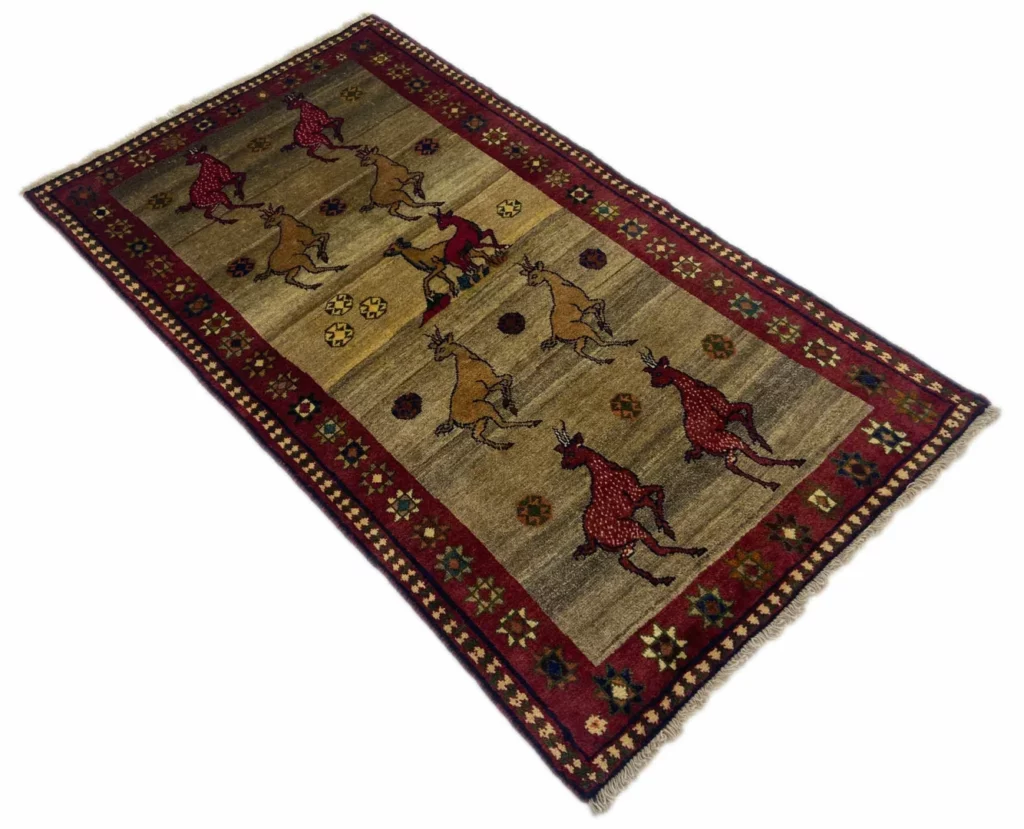
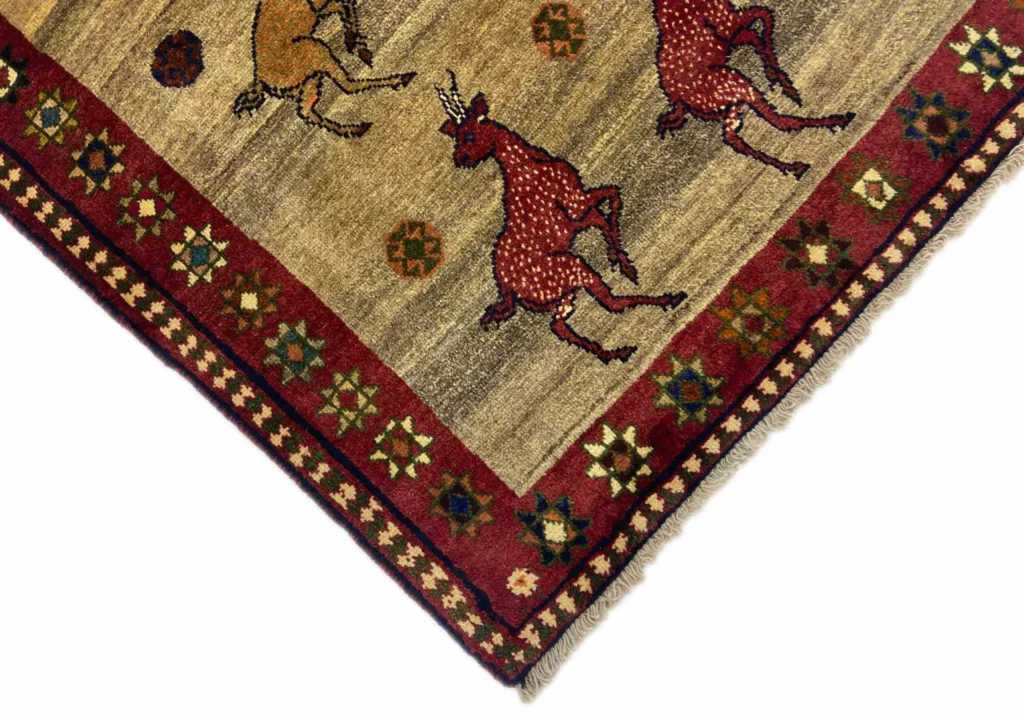
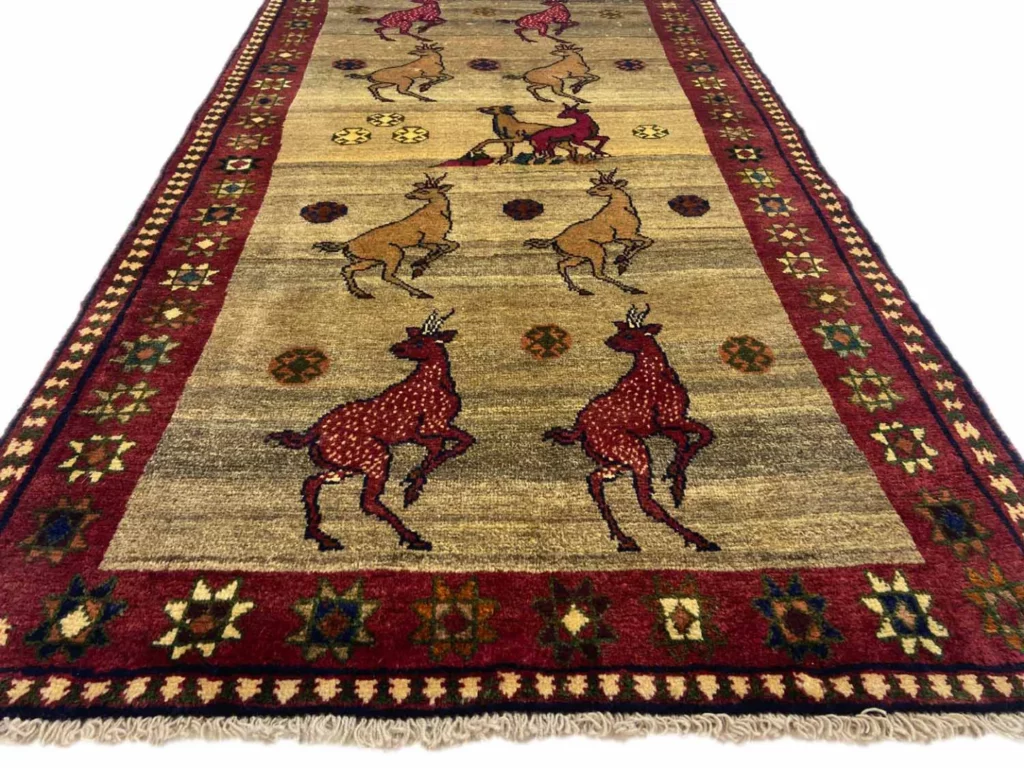
Persian Rug Fars 187 x 105 cm Wool Hand-knotted
€ 799
Hand-knotted Fars Persian rug | Knot density: 90,000-180,000 knots/m² | Material: pile virgin wool | Size: 187 x 105 cm | Pattern: imaginative designs
1 available
- ✓Free Shipping in EU
- ✓2-5 Business Days Delivery
- ✓14-Day Return Policy
- ✓Worldwide Shipping on request
 SECURE PAYMENT
 SHIPPING PARTNERS
Inventory number: 46BC117F
Description
Fars Persian Rug
Material and Craftsmanship
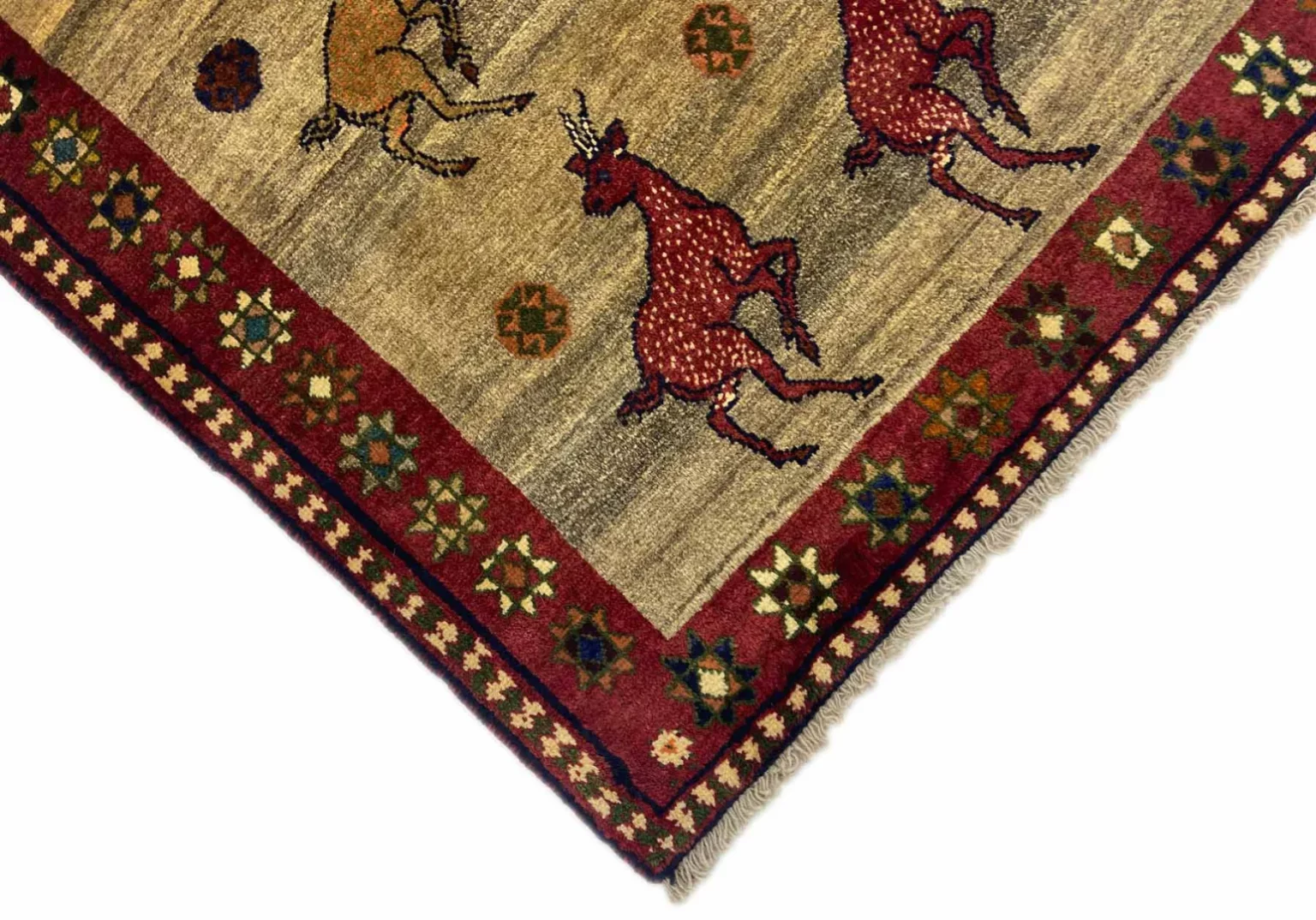
This Gabbeh Shuli is a hand-knotted Persian rug made with virgin wool in the pile. Virgin wool is valued in rug making for its soft handle as well as for its durability and resistance in everyday use. The material gives the surface a naturally substantial character while allowing the colours and irregular design ideas associated with Gabbeh Shuli to remain clearly visible. Wool has long been used by Persian weavers because it combines practical resilience with a pleasant tactile quality.
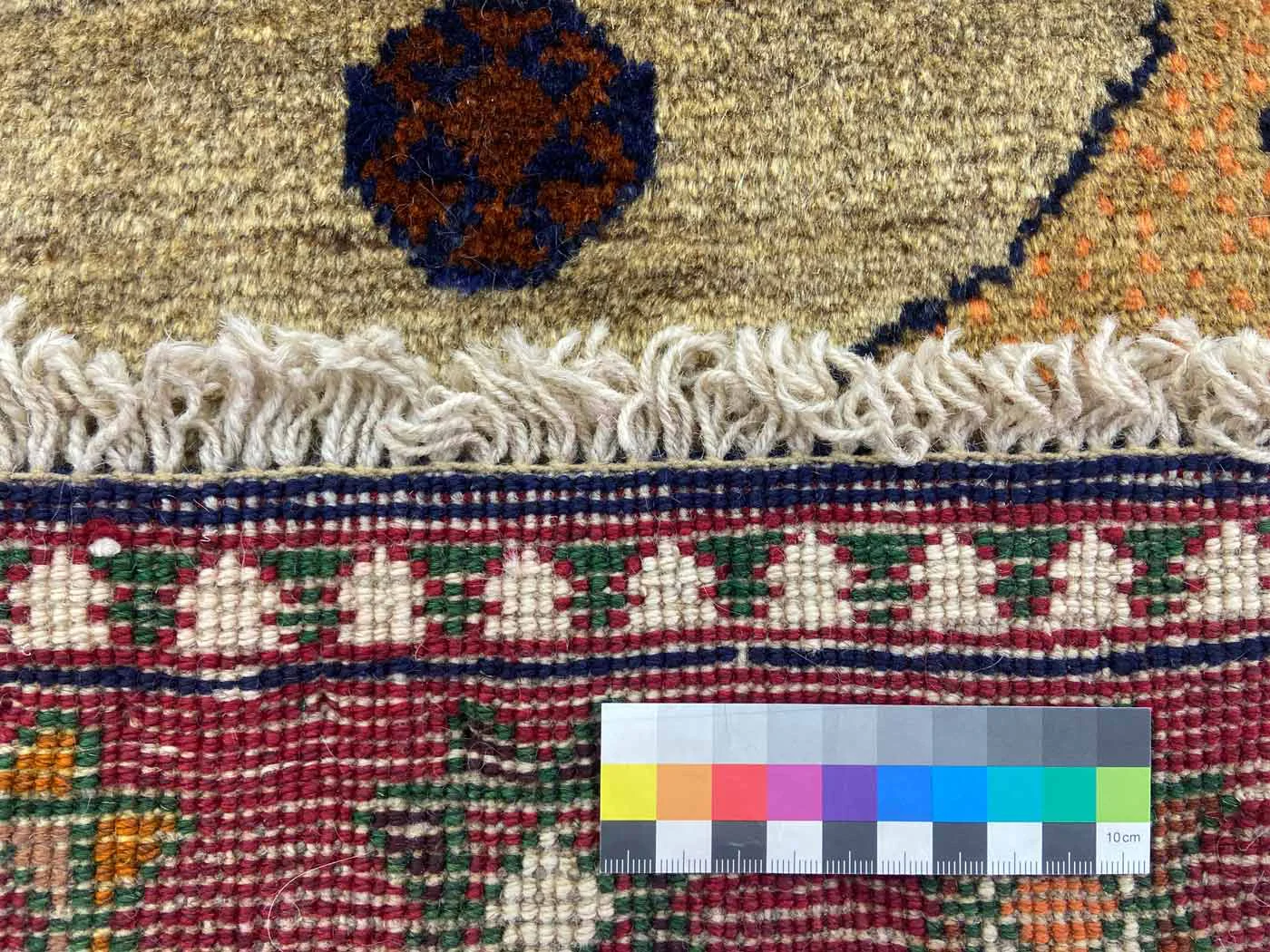
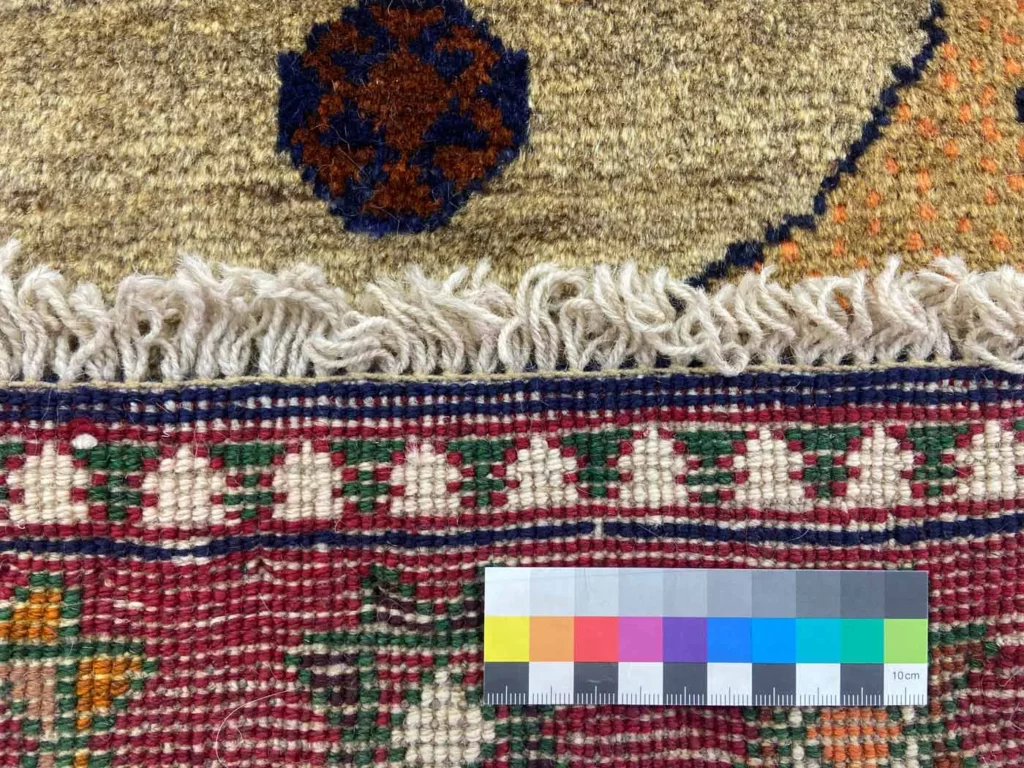
The knot density of this rug is between 90,000 and 180,000 knots per square metre. A density in this range reflects the work invested in the construction and the care required from the weaver. Hand-knotting is a gradual process in which the design is built through individual knots rather than produced as a printed or mechanically repeated surface. The result is an individually made textile whose pattern carries the decisions and skill of the person who created it.
Gabbeh weaving is associated with a direct approach to material and pattern. The wool is not merely a technical component: its softness, strength and ability to accept colour are part of the visual and practical identity of the rug. The Shuli designation is presented together with fanciful, unusual designs, giving the piece a character that differs from more formally ordered Persian carpet patterns. Its construction and material therefore belong together: the hand-knotted technique supports the individual pattern, while the virgin wool provides the durable pile.
Origin and Tradition
The Gabbeh Shuli comes from Fars, a region in southern Persia near the historic city of Shiraz. Fars has an important place in the history of Persian carpet weaving. Its landscape, communities and long textile tradition have influenced the forms and colours found in carpets from the region. Weaving in Fars is connected with the knowledge passed through generations, where useful household textiles and expressive works of craftsmanship developed alongside one another.
Shiraz is often regarded as a cultural reference point for southern Persian arts and trade. The region around it has brought together different weaving traditions and has helped transmit carpets from rural and tribal environments to wider markets. In this setting, the individuality of a Gabbeh is especially significant. Rather than depending entirely on a strict pattern scheme, the weaver can allow the design to develop through personal ideas, memories and observations of the surrounding world.
Fars is also associated with weaving groups such as the Qashqai and Bakhtiari. Their carpets are known for distinctive designs and for the use of carefully chosen materials, and they form part of the broader textile heritage of the region. Mentioning these traditions does not assign this particular rug to one of those groups; it places Gabbeh weaving within the wider cultural environment of Fars. The rug is identified as a Gabbeh Shuli from Fars, and its hand-knotted character reflects the continuing importance of manual carpet production in southern Persia.
Persian rug traditions are shaped by both technical knowledge and local visual language. Weavers learn how to handle wool, create a stable knotted structure and balance colour across a field. At the same time, regional carpets preserve recognisable approaches to drawing and composition. Fars weaving allows a comparatively open relationship between the maker and the design. This helps explain why Gabbeh carpets can look spontaneous while still belonging clearly to a long-established Persian tradition.
The tradition is not limited to one decorative formula. Fars carpets may range from strongly geometric compositions to freer arrangements, and Gabbeh Shuli belongs to the more imaginative side of this spectrum. The connection to the region is therefore expressed through the weaving culture, the hand-made construction and the willingness to give the pattern an individual voice. Each piece stands as a separate work rather than as one identical example repeated from a standard industrial template.
Design and Pattern
The pattern of this Gabbeh Shuli is described as imaginative and unusual. Gabbeh Shuli designs are often less structured than those of many other Persian carpets. This does not mean that the surface lacks order. Instead, the composition gives the weaver more freedom to arrange forms and ideas without being bound to a rigidly repeating scheme. The resulting appearance can feel open, personal and deliberately different from conventional formal carpet layouts.
The creative character of Gabbeh Shuli is central to its visual identity. Weavers use their imagination to develop motifs and compositions that reflect their own artistic choices. Designs may appear simple in their outline while remaining expressive in their overall arrangement. The attraction lies in the balance between a clear hand-made structure and the freedom to depart from strict symmetry or predictable repetition.
The colour tradition described for Gabbeh Shuli includes vivid reds, gentle beige tones, restrained greys and warm browns. These colours are commonly combined in a harmonious way. Red can give a composition visual presence, while beige and brown create a natural warmth. Grey introduces a quieter note and can help connect stronger shades. The palette is not presented as a fixed formula, but as a group of tones frequently found in this type of rug and used to create an inviting interior atmosphere.
A Gabbeh pattern can be understood through the relationship between its field, its motifs and the spaces between them. When the design is less densely structured, open areas become an active part of the composition. They allow individual shapes and colour fields to remain legible instead of merging into a tightly packed ornament. This open quality is one reason Gabbeh carpets can work with both traditional and modern furnishings: the pattern carries a clear identity without requiring an entirely formal surrounding style.
In Persian carpet history, pattern is more than surface decoration. It records local preferences, the weaver’s knowledge and the relationship between inherited forms and personal expression. Fars Gabbeh weaving is particularly suited to this dialogue. Familiar ideas can be adapted rather than copied exactly, so two rugs within the same broad tradition need not have the same visual result. The imaginative Shuli approach preserves this sense of variation and makes the individual design an important part of the rug’s identity.
The pattern is therefore best described as fanciful rather than strictly ornamental. Its unusual quality comes from the creative freedom of the composition, while its Persian character comes from the regional weaving tradition and the hand-knotted execution. This combination allows the rug to sit comfortably in a room with traditional pieces or among contemporary furnishings. It can provide a distinct textile accent without depending on a narrowly defined decorative period.
Special Features
The defining features of this rug are its Gabbeh Shuli type, its origin in Fars, its hand-knotted construction and its virgin-wool pile. Its imaginative pattern distinguishes it from more strictly organised carpet designs. The rug is also described as versatile in use: it can be placed in living rooms, bedrooms or hallways and can accompany both traditional and modern interior styles.
The combination of unusual design and practical wool makes Gabbeh Shuli suitable for people looking for a Persian rug with an individual appearance. Each hand-knotted piece is unique, and the creative pattern reflects the weaver’s own decisions. The colour range associated with the type, including reds, beiges, greys and browns, provides several ways for the rug to relate to an interior without reducing it to a single decorative scheme.
For care, regular vacuuming helps remove loose surface dust. Occasional cleaning with a damp cloth is recommended in the source description. Direct sunlight should be avoided because prolonged exposure can cause the colours to fade. These simple measures support the appearance and service life of a virgin-wool, hand-knotted rug.
FAQ
What makes a Gabbeh Shuli distinctive?
A Gabbeh Shuli is distinguished by its imaginative, unusual designs and by the freedom given to the weaver when developing the composition. Compared with more strictly structured carpet patterns, the design can be less formal and more personal. The use of virgin wool is another important characteristic, combining a soft feel with durability and resistance. Because the rug is hand-knotted, every piece is individually made. Its design therefore reflects the creativity of the weaver rather than reproducing an entirely uniform industrial pattern.
How should a Gabbeh Shuli rug be cared for?
Regular vacuuming is recommended to remove everyday dust and loose particles from the surface. From time to time, the rug can be cleaned with a damp cloth. Care should be taken not to expose it to direct sunlight for long periods, since sunlight can lead to fading of the colours. Gentle, consistent maintenance is appropriate for the virgin-wool pile and helps preserve both the surface and the visual balance of the imaginative pattern. For more extensive cleaning, a professional rug cleaner familiar with hand-knotted Persian rugs is a sensible choice.
Where can a Gabbeh Shuli be used?
The Gabbeh Shuli is suitable for a living room, bedroom or hallway. Its visual character allows it to be combined with traditional furnishings as well as with modern interior styles. The less formal pattern can introduce an individual textile element without requiring the rest of the room to follow one historical design language. The colours commonly associated with the type, including red, beige, grey and brown tones, can be coordinated with a variety of interior palettes. Its use is therefore not limited to one particular room concept.
Additional information
| Design Style | |
|---|---|
| Color | |
| Size | |
| Shape | |
| Origin | |
| Knot Density | |
| Material |
Related products

Persian Rug Tabriz 388 x 295 cm Wool Hand-knotted
€ 1440
Persian Rug Fars 292 x 206 cm Wool Hand-woven
€ 798
Persian Rug Qashqai 286 x 200 cm Wool Hand-woven
€ 798
Persian Rug Fars 240 x 150 cm Cashmere Hand-knotted
€ 1118
Oriental Rug Qashqai 292 x 193 cm Wool Hand-woven
€ 798
Persian Rug Heriz 340 x 254 cm Wool Hand-knotted
€ 1438
Oriental Rug Ushak ca 420 x 296 cm Wool Hand-knotted
€ 2250
Persian Rug Gabbeh 270×83 cm Hand-knotted
€ 755