
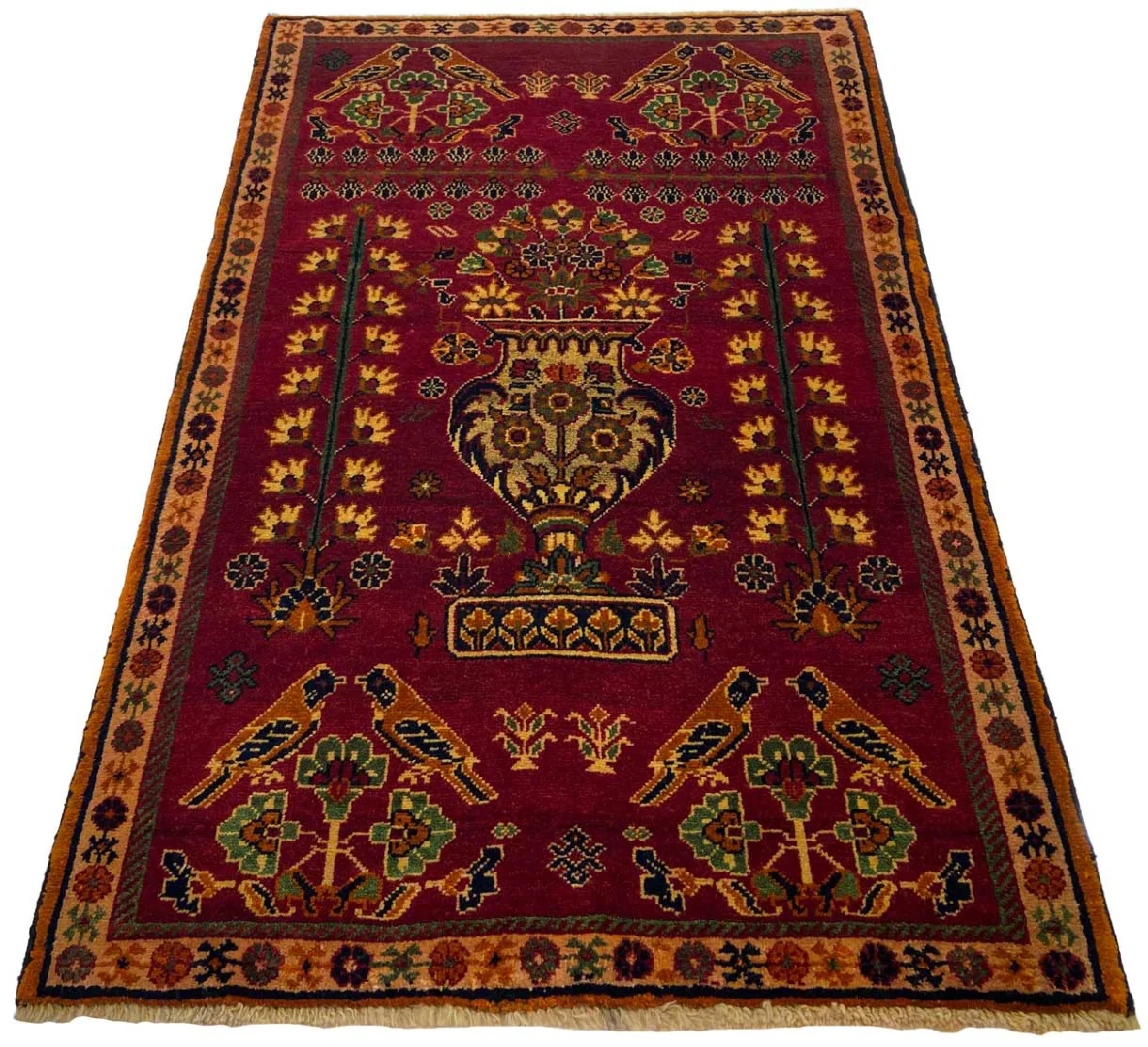
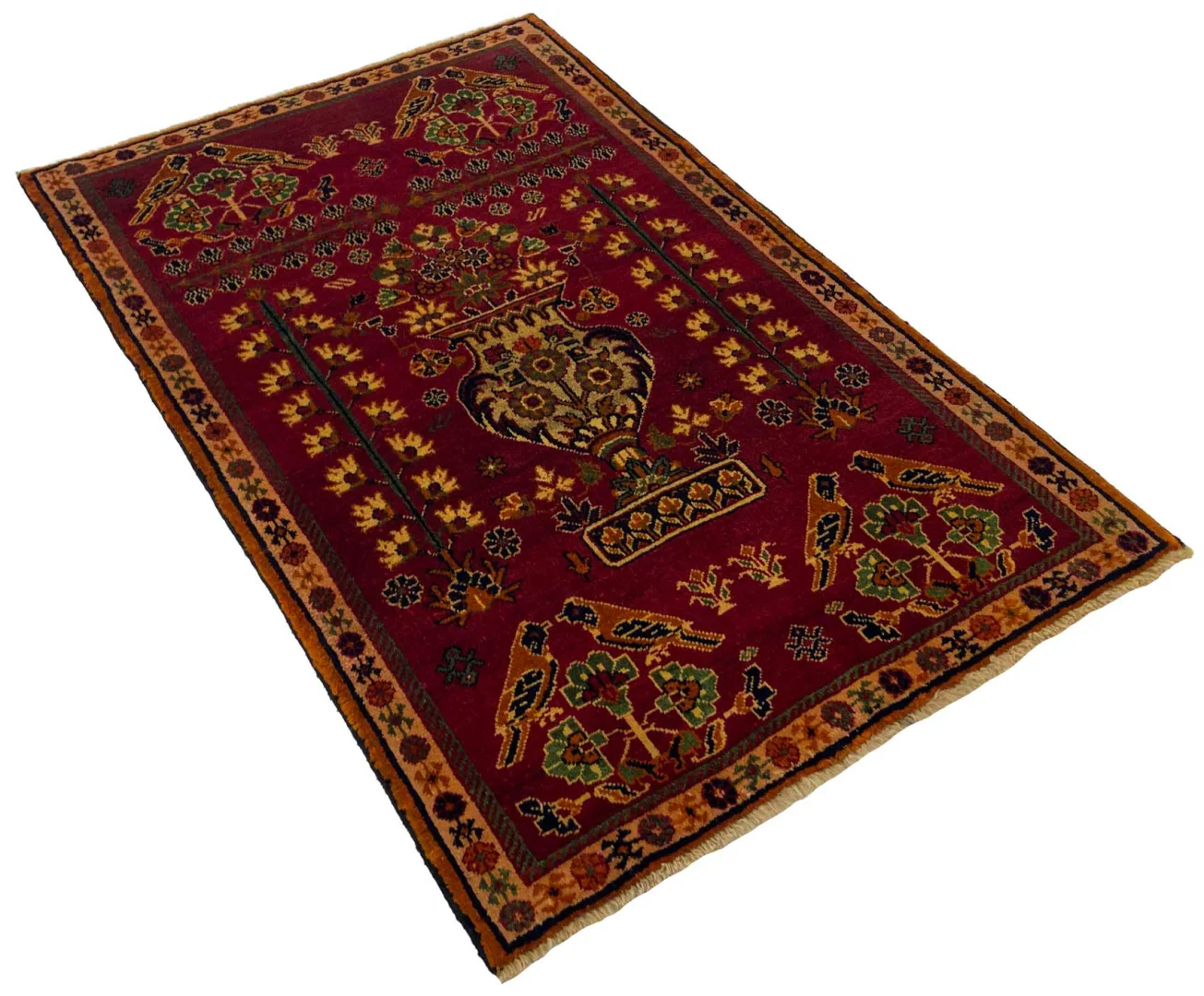
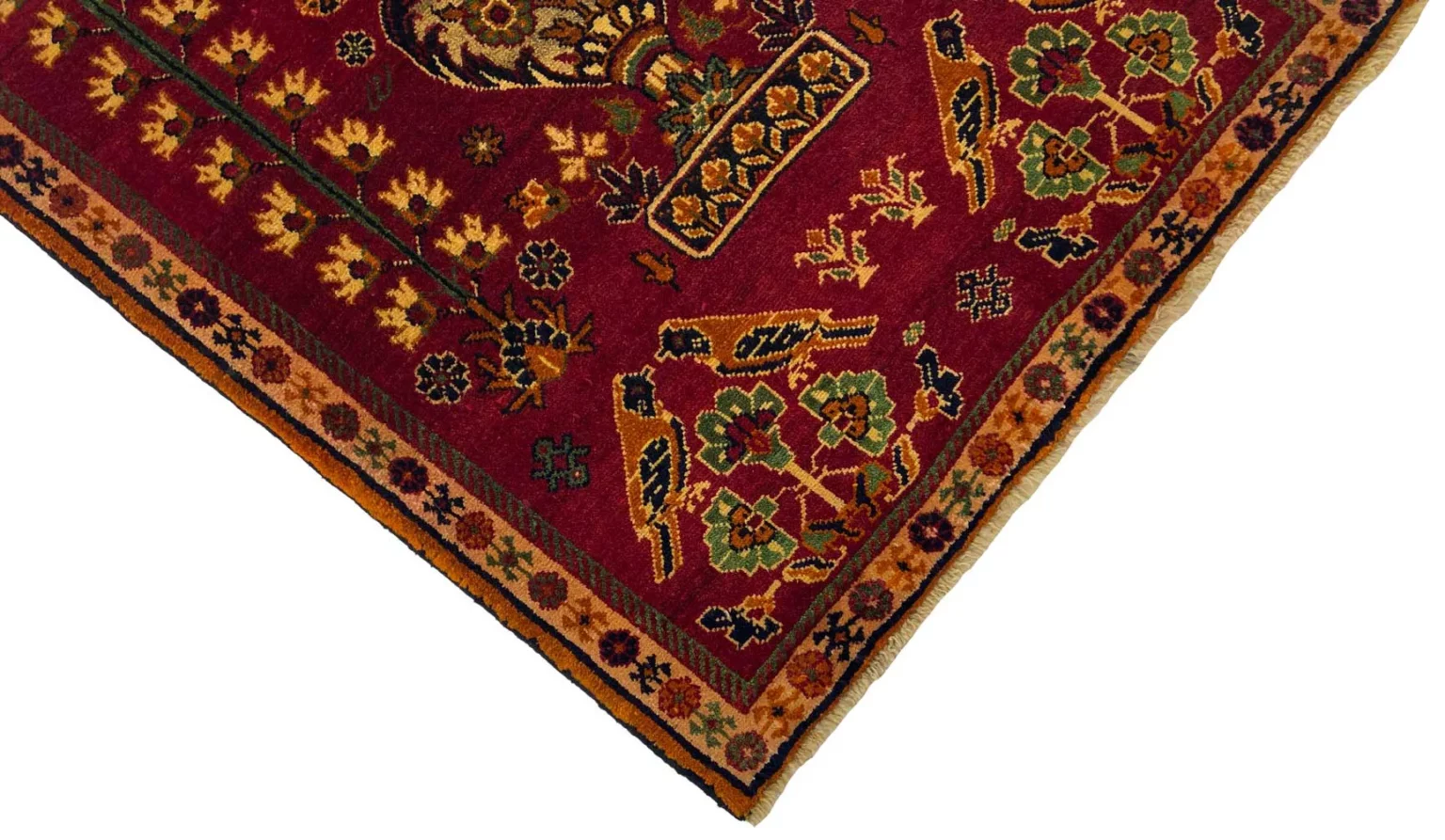
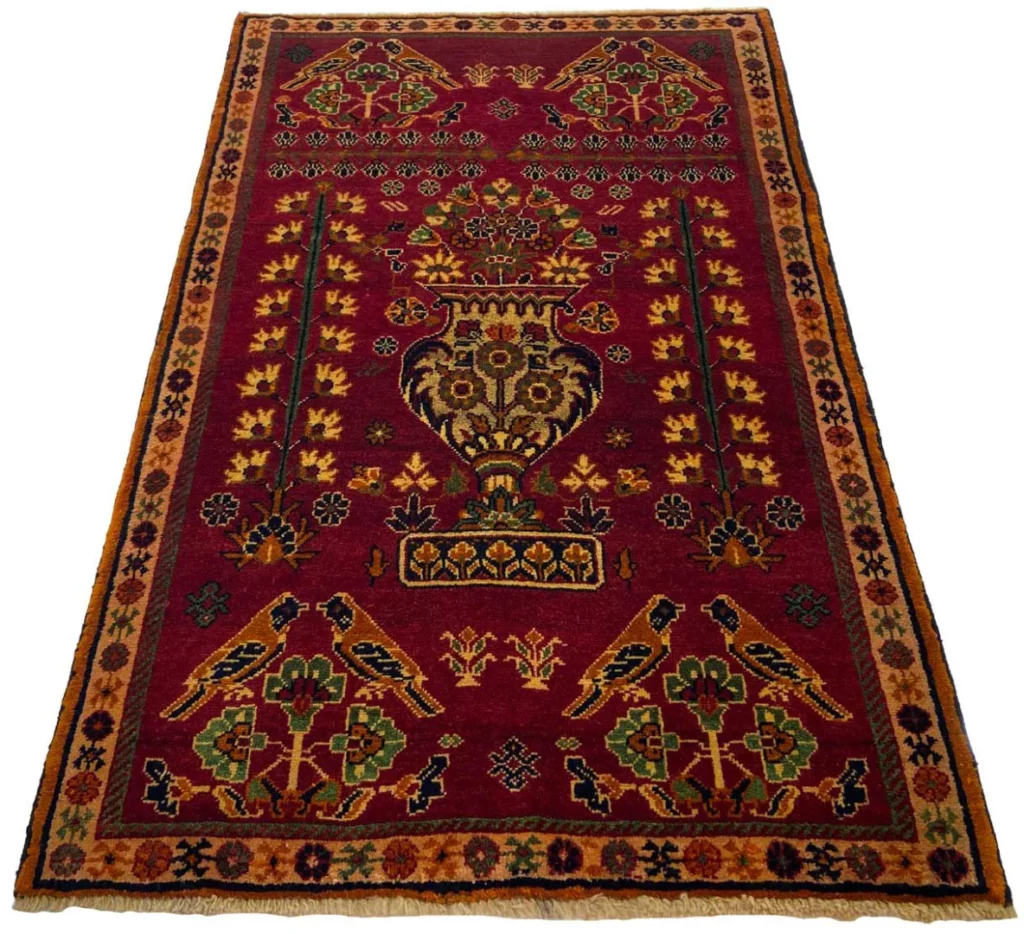
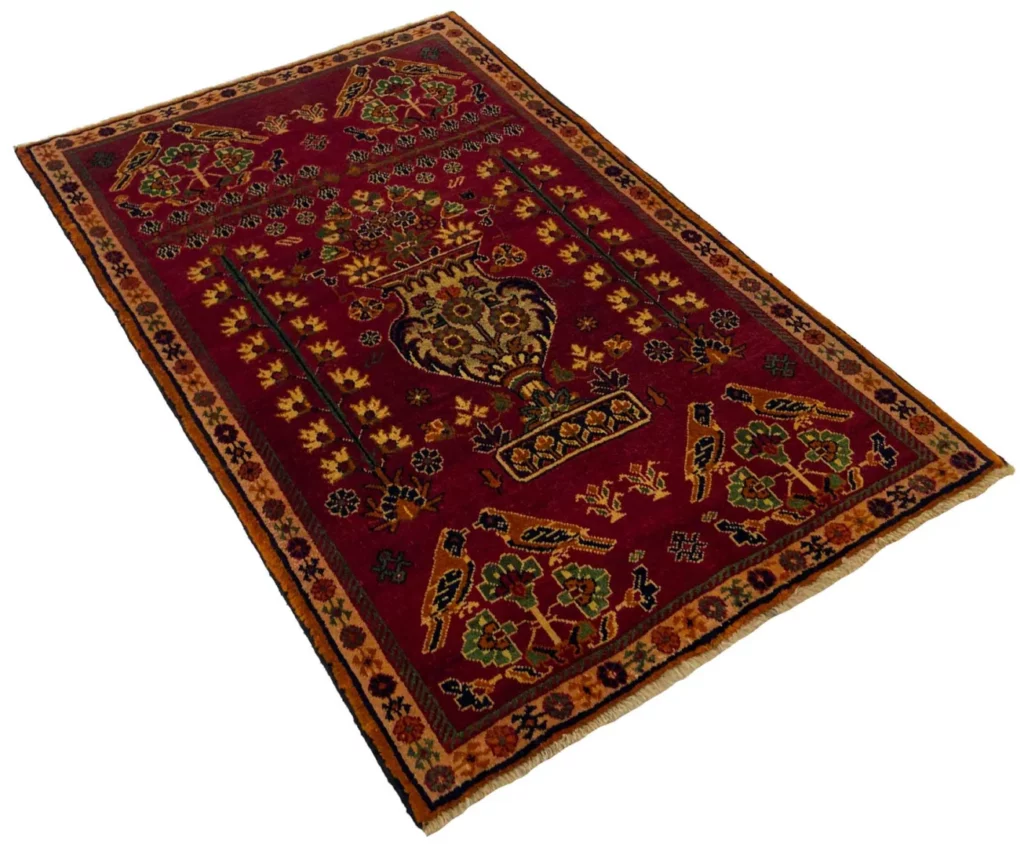
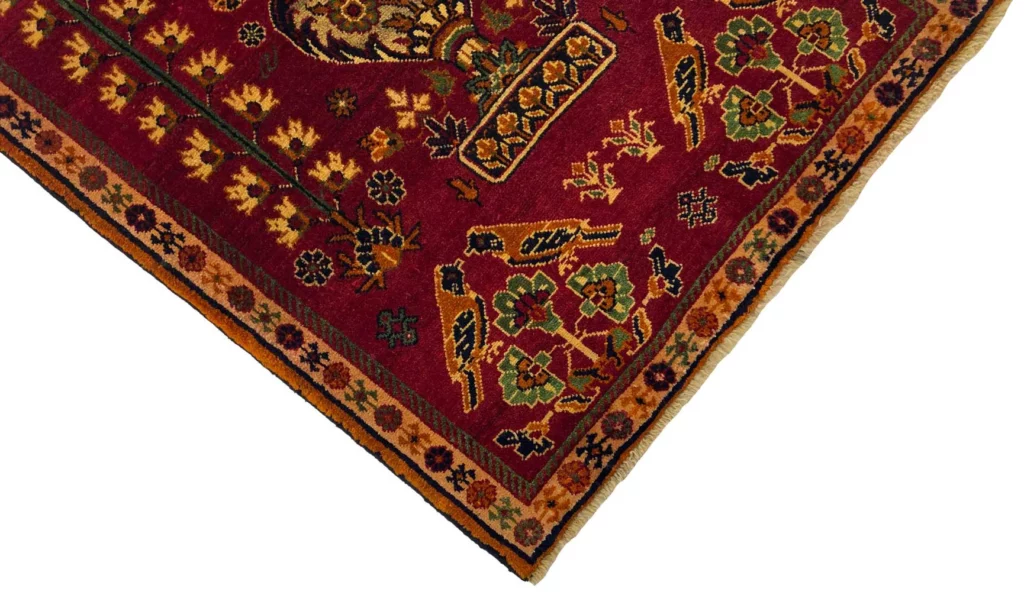
Persian Rug Fars 184 x 115 cm Wool Hand-knotted
€ 817
Hand-knotted Fars Persian rug | Knot density: 90,000 – 180,000 knots/m² | Material: Pile glossy virgin wool | Size: 184 x 115 cm | Pattern: Unusual, imaginative designs | Condition: New, artfully crafted
1 available
- ✓Free Shipping in EU
- ✓2-5 Business Days Delivery
- ✓14-Day Return Policy
- ✓Worldwide Shipping on request
 SECURE PAYMENT
 SHIPPING PARTNERS
Inventory number: CAA9DC1A
Description
Fars Persian Rug
Material and Craftsmanship
This Gabbeh-Shuli Persian rug from the Fars region is hand-knotted in glossy virgin wool. The wool gives the rug a soft and warm handle while also contributing to the hard-wearing character associated with this type of weaving. As a natural fibre, virgin wool has a lively surface and a tactile quality that remains visible in the finished pile. Its sheen brings out the hand-made structure without taking away from the rug’s distinctly textile appearance.
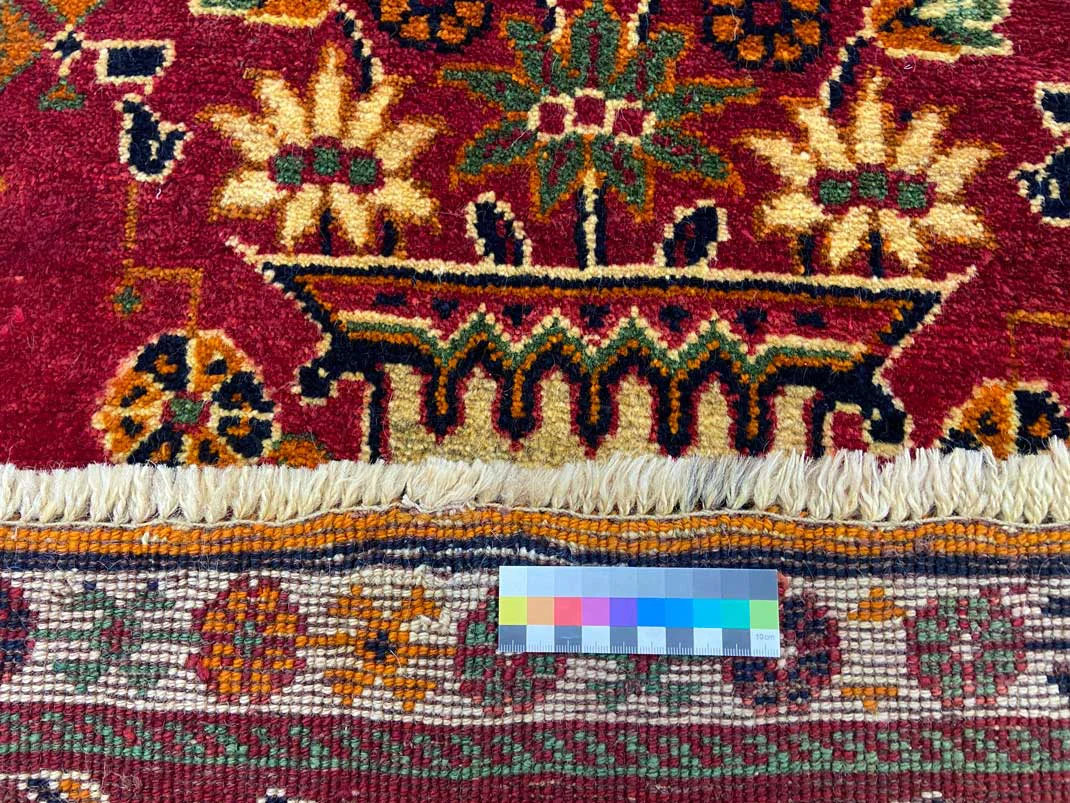
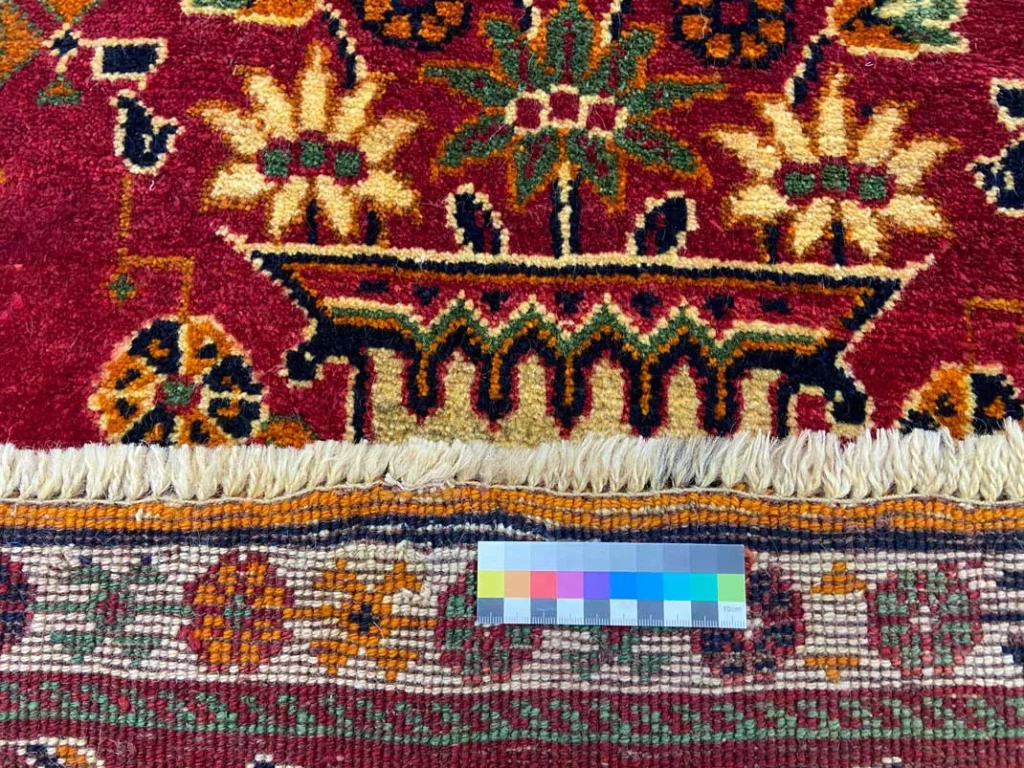
The knot density of this rug is 90,000 to 180,000 knots per square metre. In a hand-knotted Gabbeh, each knot is inserted individually into the foundation. Knot density therefore indicates the amount of knotting work and the level of detail that can be achieved. Gabbeh-Shuli rugs combine this construction with imaginative designs that are not limited to one fixed geometric formula.
The rug is new and artfully crafted. Its construction follows the traditional hand-knotting process, in which pile yarn is tied by hand and built up row by row into a coherent surface. Virgin wool gives the pile warmth and softness, while the dense workmanship supports the use of Gabbeh-Shuli rugs as practical floor coverings. The material and the technique work together rather than being separate decorative features.
Origin and Tradition
Gabbeh-Shuli rugs come from the Fars region in southern Iran, near the city of Shiraz. Fars is one of the important landscapes in the history of Persian carpet weaving. Its cultural setting has been shaped by different ways of life, including nomadic communities. Within this environment, weaving developed as a craft in which useful textiles and individual visual expression remained closely connected.
Gabbeh refers to a Persian rug tradition known for a direct, handmade visual language. Unlike courtly carpets or highly elaborate ornamental traditions, Gabbeh leaves room for simplified forms, spontaneous ideas and personal interpretation. Designs may include geometric signs, stylised figures or imaginative arrangements. The Shuli type places particular emphasis on this free and expressive approach to pattern.
Fars weaving is often associated with nomadic peoples. For these communities, rugs were not merely decorative objects; they also served practical purposes in everyday life. This background helps explain why Gabbeh tradition places importance on both durability and a clearly individual design. The making of each rug depends on the experience of the weavers, who bring together the quality of the wool, the colour effect and the composition in one textile.
Shiraz is identified as a nearby city and an important cultural reference point within the southern Persian setting. Fars has a long history in which several regional influences meet. Persian rugs from the area therefore do not follow one single, unchanging visual model. The range includes simpler Gabbeh compositions as well as designs with more developed internal structure.
Other rug traditions from the wider Persian world are also mentioned alongside Gabbeh-Shuli. Gabbeh-Fars rugs often have a simpler appearance, while Täbriz rugs belong to a different tradition known for artistic patterns and colours. Nain and Kashan likewise represent their own hand-knotted rug traditions. These names refer to different regional and stylistic contexts; the rug described here is a Gabbeh-Shuli from Fars.
Design and Pattern
The pattern of this rug is described as unusual and imaginative. Gabbeh-Shuli designs move beyond a purely schematic repetition of conventional geometric ornament. They can make room for unexpected signs, freely arranged forms and a personal textile image. The result is not a rigidly prescribed decoration, but an individual composition with a clear handmade character.
Gabbeh designs may simplify motifs into forms that are immediately readable. Lines, shapes and figures can be presented with a deliberately direct clarity. The visual effect does not depend only on a large number of ornamental details; it also comes from the relationship between the design and the surrounding ground. Even a restrained arrangement can give a rug a distinct identity.
Gabbeh-Shuli rugs are often described with rich red, beige, grey and brown tones. These colour ranges belong to a warm, earthy approach to design and bring out the natural appearance of the wool. They may be combined in different ways to create either calm fields or stronger contrasts. This palette is described as adaptable to both traditional and contemporary interiors.
The imaginative designs are closely related to the way the rugs are made. Because the weavers are generally associated with nomadic communities and the designs are not reduced to an industrial, fixed repeat, individual pieces can have their own interpretation. This does not mean that every Gabbeh-Shuli follows one mandatory motif. Rather, the character of the tradition lies in the meeting of inherited technique and free pattern development.
A Gabbeh-Shuli can be used in a living room, bedroom or hallway. Its design works in rooms with traditional elements as well as alongside modern furniture. The pattern is therefore more than a surface decoration: it also functions as a distinctive interior accent. At the same time, the rug remains connected to the practical role of a woven floor covering.
Special Features
The defining features of this rug are its hand-knotted construction, glossy virgin wool and knot density of 90,000 to 180,000 knots per square metre. The unusual and imaginative Gabbeh-Shuli pattern adds another clear characteristic. The rug is new and artfully crafted. Its material quality and open-ended design bring practical use together with an individual appearance.
Virgin wool is described as soft, warm and durable. Combined with hand-knotting, this makes the rug suitable for more frequently used living areas. Its pattern tradition also allows several possible settings, including living rooms, bedrooms and hallways. It can therefore serve as a functional floor covering as well as a decorative feature.
FAQ
What makes a Gabbeh-Shuli distinctive?
A Gabbeh-Shuli combines the traditional Persian hand-knotting of the Fars region with an unusual and imaginative approach to design. Its compositions are not restricted to a strictly repeated geometric ornament, but can include free signs, unexpected arrangements and image-like ideas. This rug also has a hand-knotted construction, glossy virgin wool and a knot density of 90,000 to 180,000 knots per square metre. It is new and artfully crafted. Its individuality comes from the relationship between the material, the knotting work and the pattern.
How should a Gabbeh-Shuli be cared for?
For regular care, vacuum the rug carefully with a soft brush attachment. This removes loose dirt while treating the wool pile gently. Any spill or mark should be dabbed immediately with a damp cloth. Mild soap may be used for this purpose. Vigorous rubbing should be avoided, as it can put unnecessary strain on the fibres and affect the appearance of the colours. Professional cleaning is recommended for a thorough treatment that protects both the wool and its colours.
Which rooms suit a Gabbeh-Shuli?
A Gabbeh-Shuli works in both traditional and contemporary interiors. Suitable settings named for this type include the living room, bedroom and hallway. In a living room it can define an area while adding a patterned textile accent. In a bedroom, the warm and soft virgin wool supports a comfortable layered interior. In a hallway, its hand-crafted construction can provide a clear decorative element. The flexible design allows it to be combined with different furnishing styles while retaining the identity of a Persian Gabbeh rug.
Additional information
| Design Style | |
|---|---|
| Color | |
| Size | |
| Shape | |
| Origin | |
| Knot Density | |
| Material |
Related products

Persian Rug Heriz 340 x 254 cm Wool Hand-knotted
€ 1438
Oriental Rug Kelim 240 x 180 cm Wool Hand-woven
€ 2249
Persian Rug Qashqai 288 x 193 cm Wool Hand-woven
€ 798
Persian Rug Gabbeh 305×260 cm Wool Hand-knotted
€ 2307
Persian Rug Heriz ca 341 x 242 cm Wool Hand-knotted
€ 1800
Persian Rug Gabbeh 200 x 300 cm Cashmere Hand-knotted
€ 1325
Persian Rug Qashqai 286 x 200 cm Wool Hand-woven
€ 798
Persian Rug Qashqai 293 x 198 cm Wool Hand-woven
€ 798