This Gabbeh Shuli is a hand-knotted Persian rug from the Fars region. Its pile is made from high-quality virgin wool. Virgin wool is valued for its pleasant feel and durable nature. It can retain warmth and therefore contributes to the comfortable textile character of the surface. The material combines a soft tactile quality with the resilience required for use in living spaces.
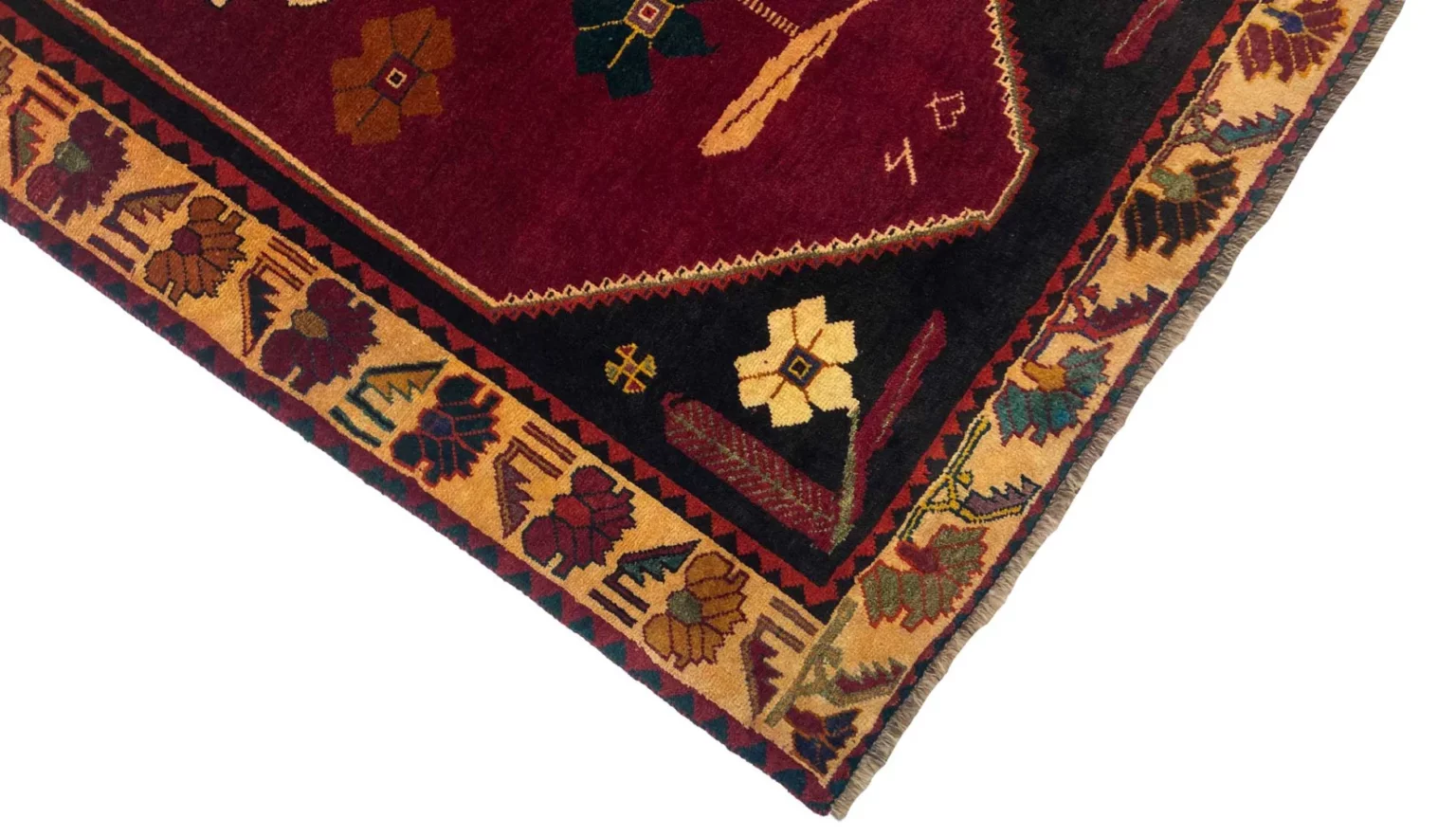
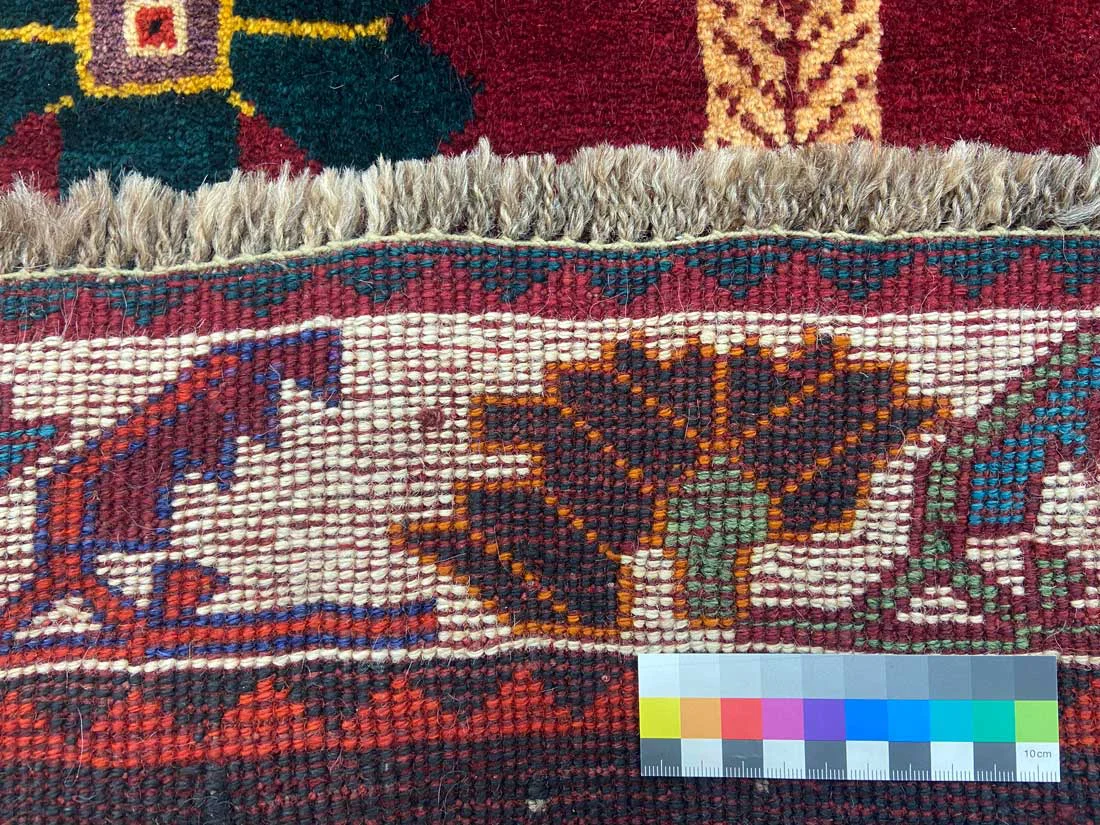
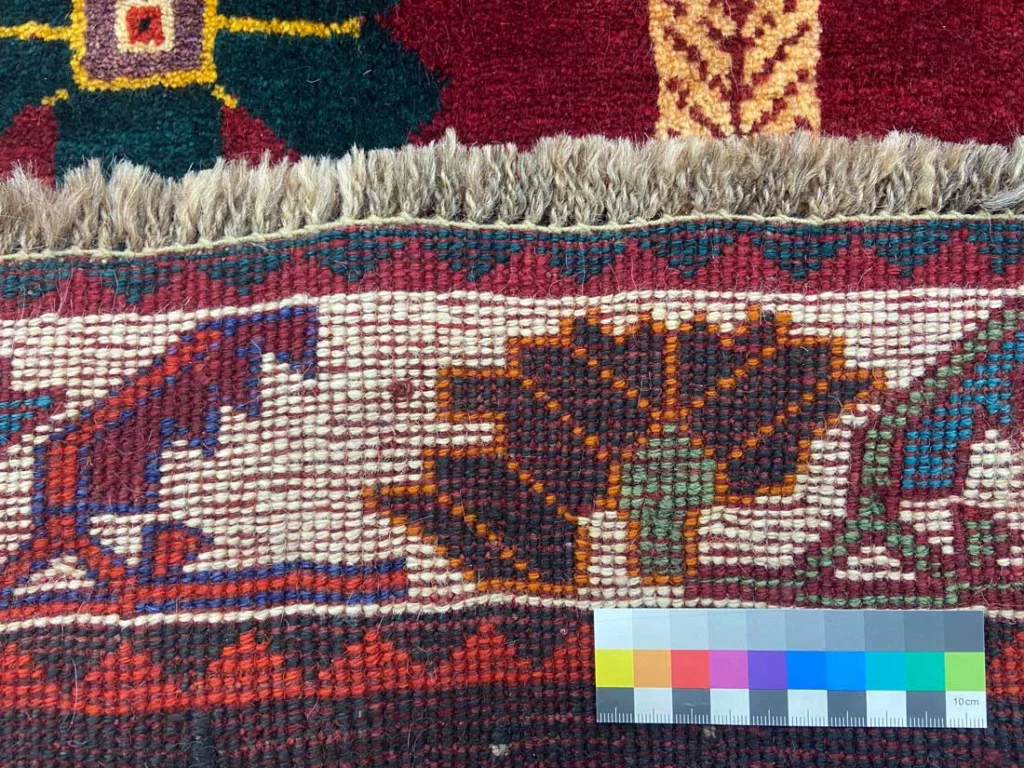
A hand-knotted rug is not made by applying a finished image to a completed surface. The design takes shape during the knotting process, as individual knots are placed in rows and secured within the structure of the rug. This requires concentration, experience and a clear understanding of the intended arrangement. In a Gabbeh Shuli, these technical foundations are combined with a pattern that is described as unusual and imaginative.
The knot density given for this rug is 90,000 to 180,000 knots per square metre. Knot density records how many knots are made within a defined area. It is related to the way the surface is worked and to the degree of differentiation that can be achieved in shapes and transitions. A higher density can support finer detail, although density must always be considered alongside the material, knotting method and design. Here, the stated range forms part of the rug’s technical description.
The rug is described as new and as a one-off piece. Its individual character comes from the combination of manual production and a design created by the knotters themselves. High-quality virgin wool, hand-knotting and imaginative pattern work are therefore central features of this particular rug. The wool also influences how the surface feels and how it contributes to the warmth of an interior.
Origin and Tradition
The rug comes from the Fars region in southern Persia. Fars is an important area within Persian carpet culture and has a weaving tradition that has developed over many centuries. The source places the region near Shiraz. This geographical setting provides the cultural background for the Gabbeh Shuli and distinguishes it from rugs made in other Persian centres.
The traditions of Fars are associated with the way of life of nomadic peoples. For communities with a nomadic background, carpets and other textiles could have practical uses in everyday life. They could provide a floor covering, warmth or protection, while also creating a surface for colour and visual expression. Practical purpose and artistic freedom were therefore not separate ideas. They developed together within a craft that served daily needs and allowed makers to express their own understanding of forms and surroundings.
Carpet traditions are passed on through more than the repetition of one fixed pattern. They include knowledge of preparing wool, arranging the warp, placing knots, building rows and finishing the edges. They also involve decisions about colour, proportion and the relationship between individual motifs. A skilled maker can work within inherited methods while giving a particular rug its own arrangement. This relationship between continuity and personal interpretation is important to the Gabbeh tradition connected with Fars.
Gabbeh rugs are often understood through a direct and individual visual language. Their designs do not have to reproduce the strictly prescribed organisation associated with some courtly or urban carpet traditions. Instead, they may allow simplified forms, open areas and personal interpretations. This freedom does not mean that the work is technically unstructured. It depends on knowledge of the craft, control of the knotting process and a conscious decision about how the design should develop across the rug.
Fars is also linked with several Gabbeh designations, including Gabbeh Fars. Other Persian carpet centres have developed their own approaches to ornament and construction. The source names Tabriz and Kashan as further names associated with rugs known for artistic motifs and high knot densities. These references illustrate the variety of Persian carpet culture. A Gabbeh Shuli from Fars belongs to a tradition in which nomadic heritage, hand production and individual pattern design are closely connected.
The reference to Shiraz adds a cultural point of orientation to the regional origin. Shiraz is a recognised city of southern Persia and is closely associated with the history and cultural importance of the wider Fars landscape. The Fars origin provides the historical setting in which the rug’s form and design can be understood. It explains why Gabbeh is considered not only as a technical product, but also as a textile connected with landscape, community and personal expression.
Persian carpet traditions have developed through long periods of transmission and exchange. Designs can change, colours can be combined in different ways and working methods can respond to new circumstances. At the same time, the making of an individual rug remains tied to the knowledge and judgement of the knotter. A one-off result is therefore compatible with a long-established tradition. The Gabbeh Shuli carries this balance of continuity and personal interpretation through its regional identity and handmade construction.
Design and Pattern
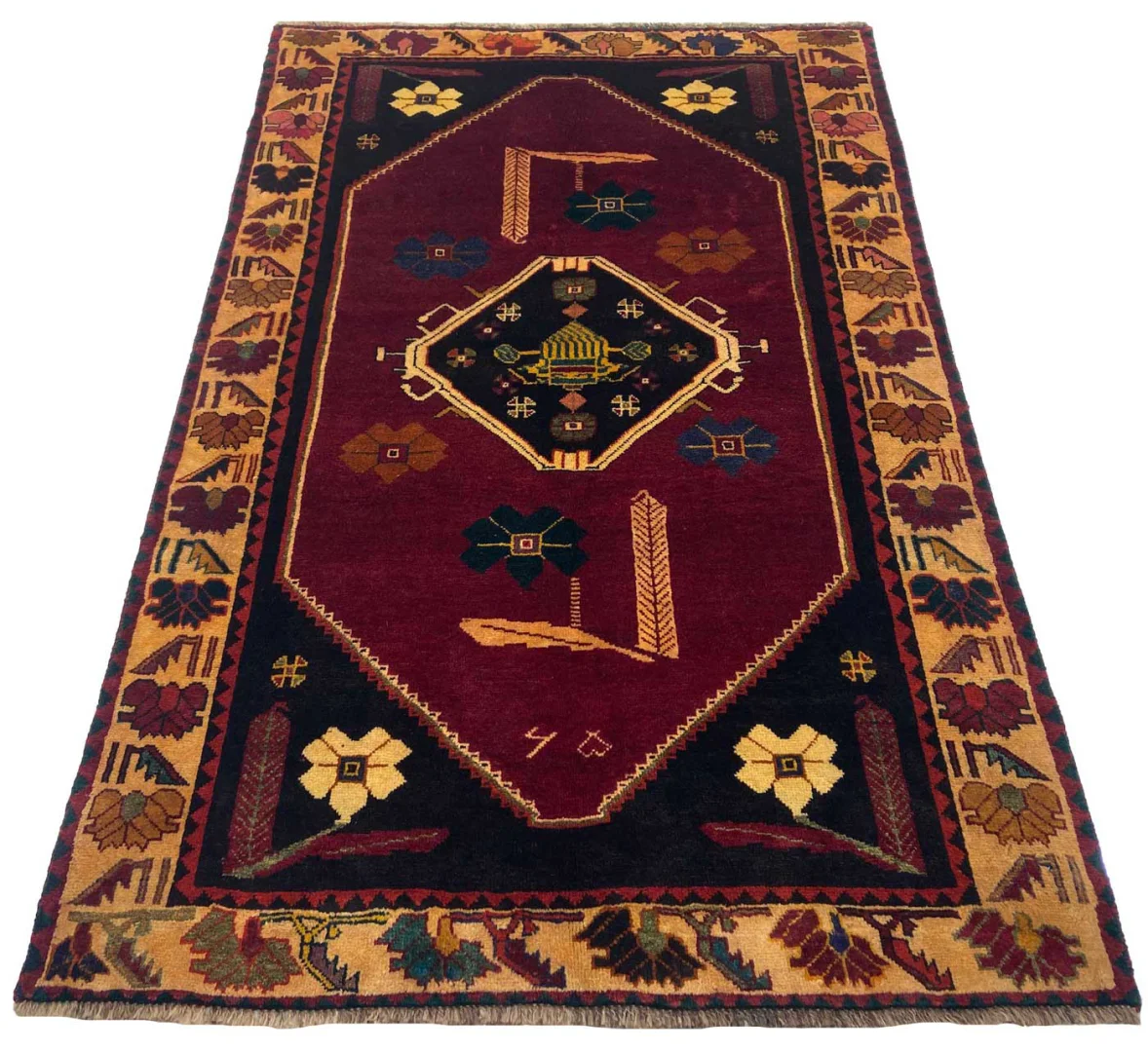
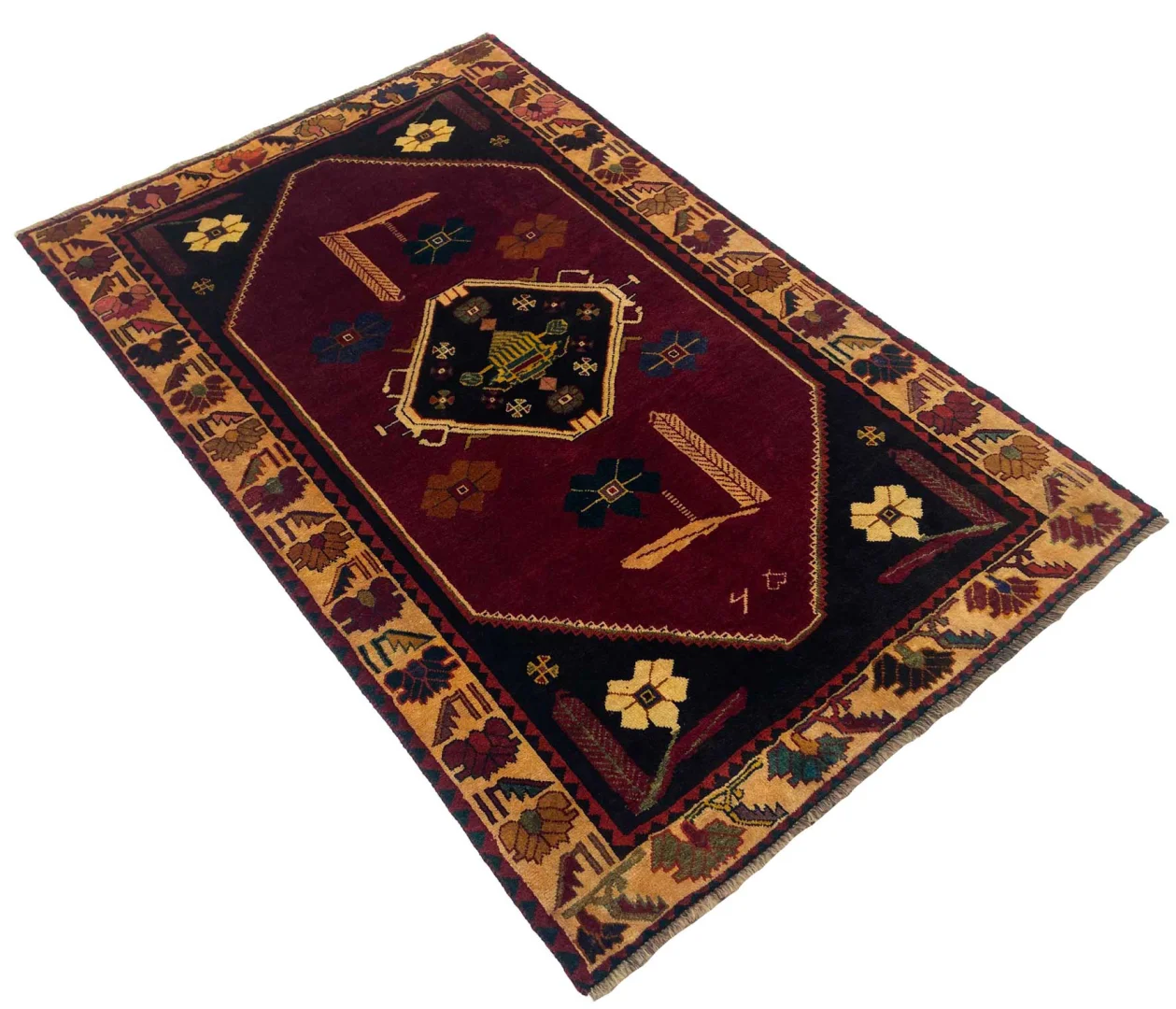
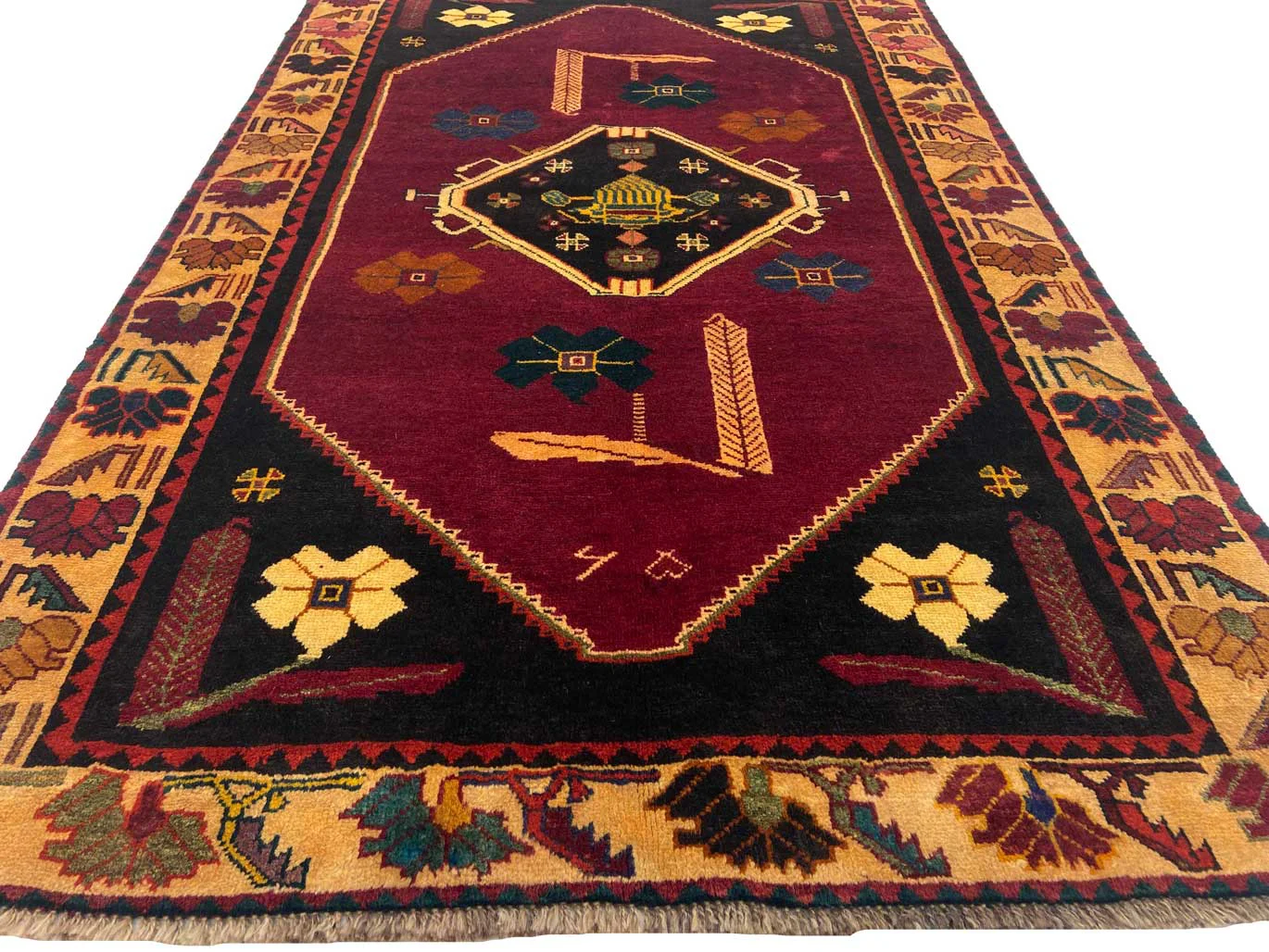
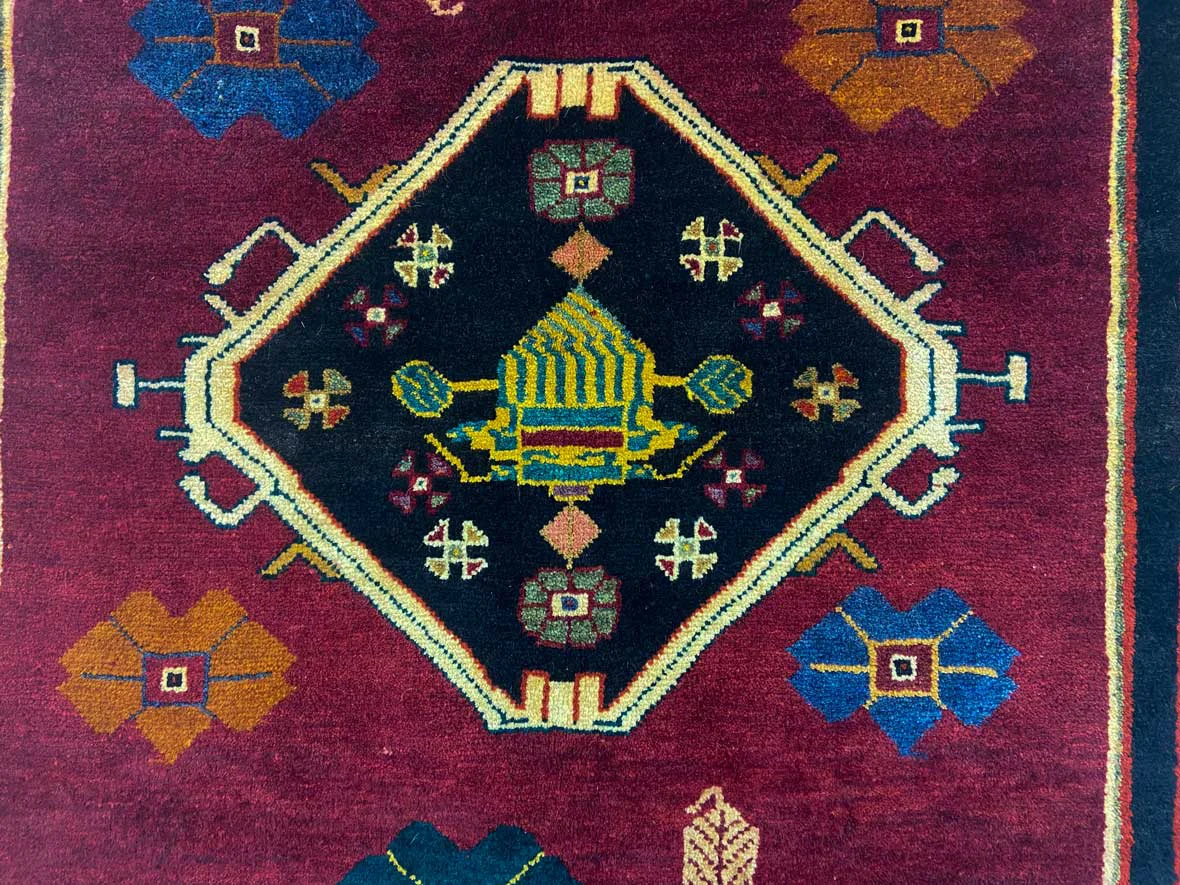
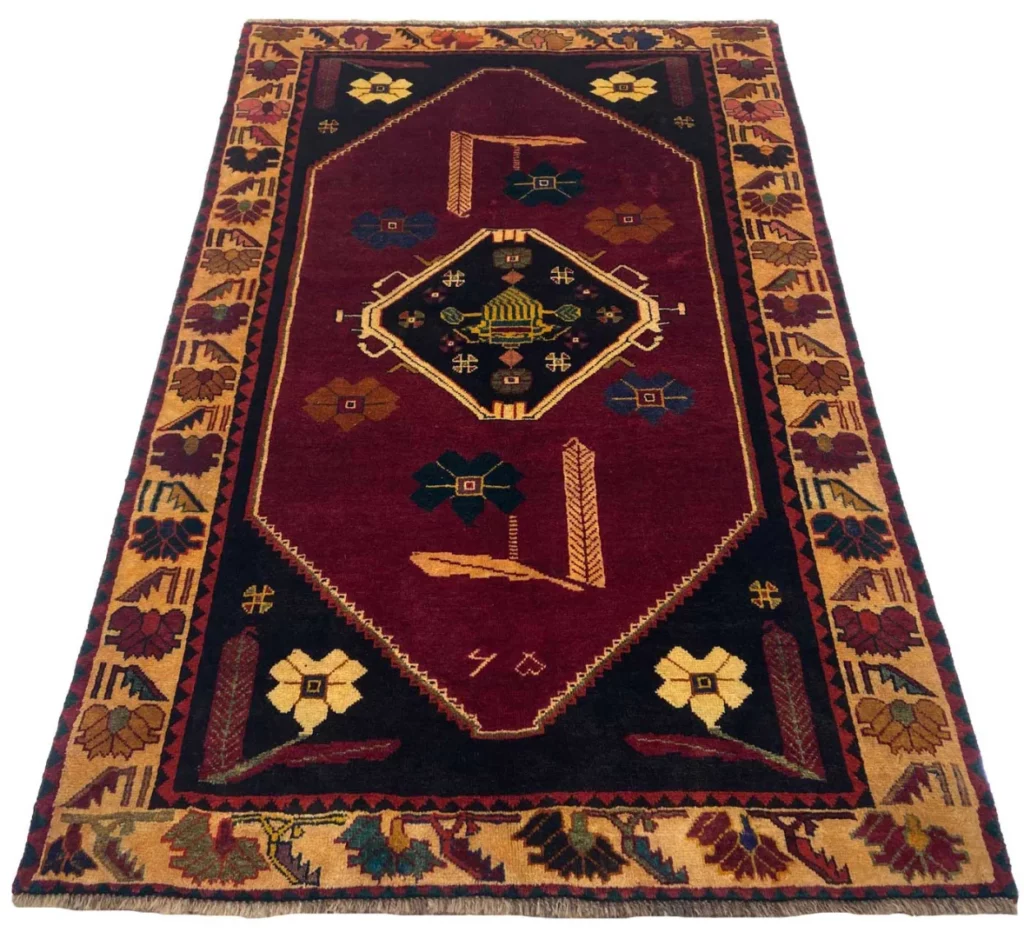
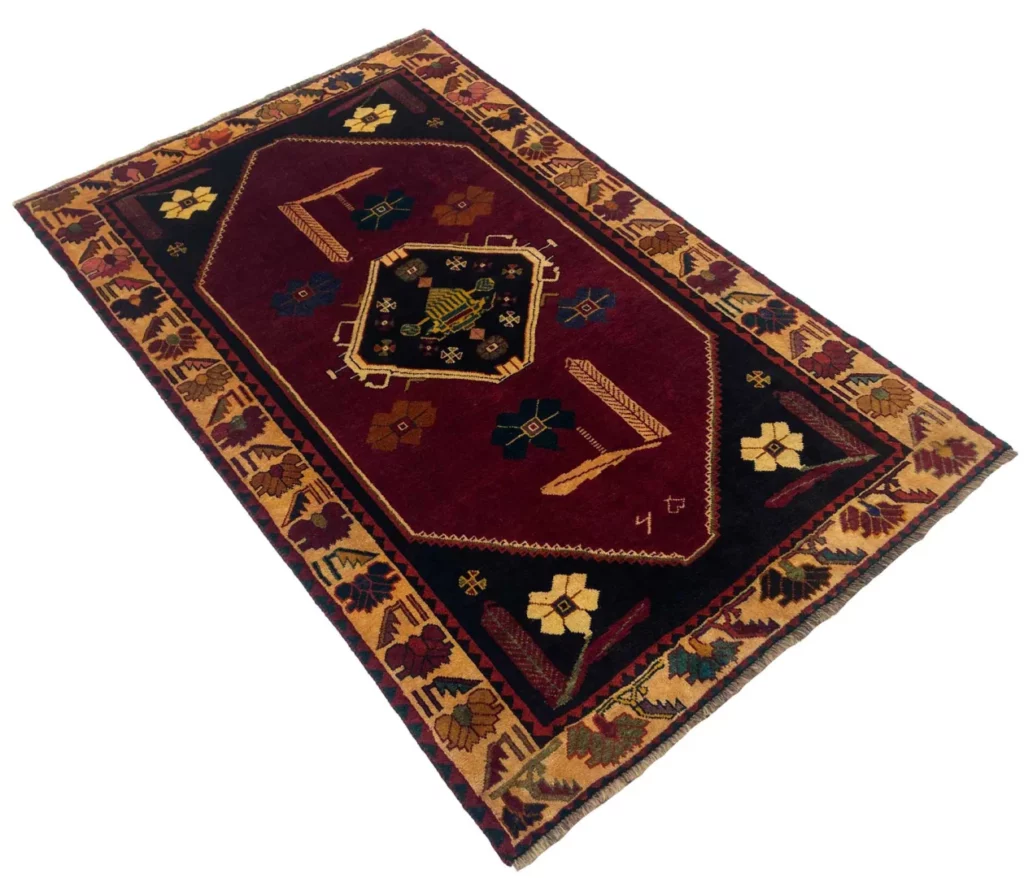
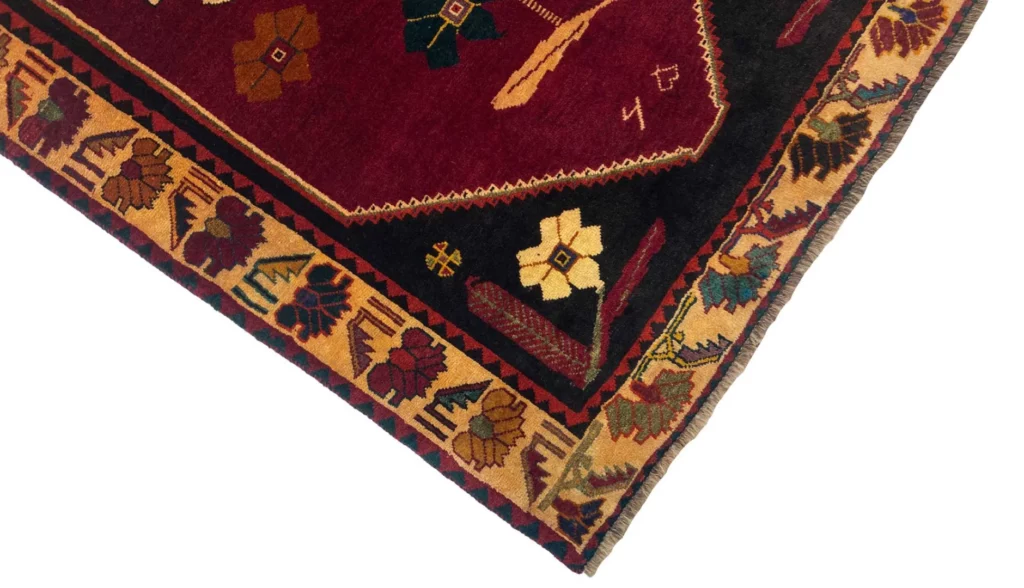
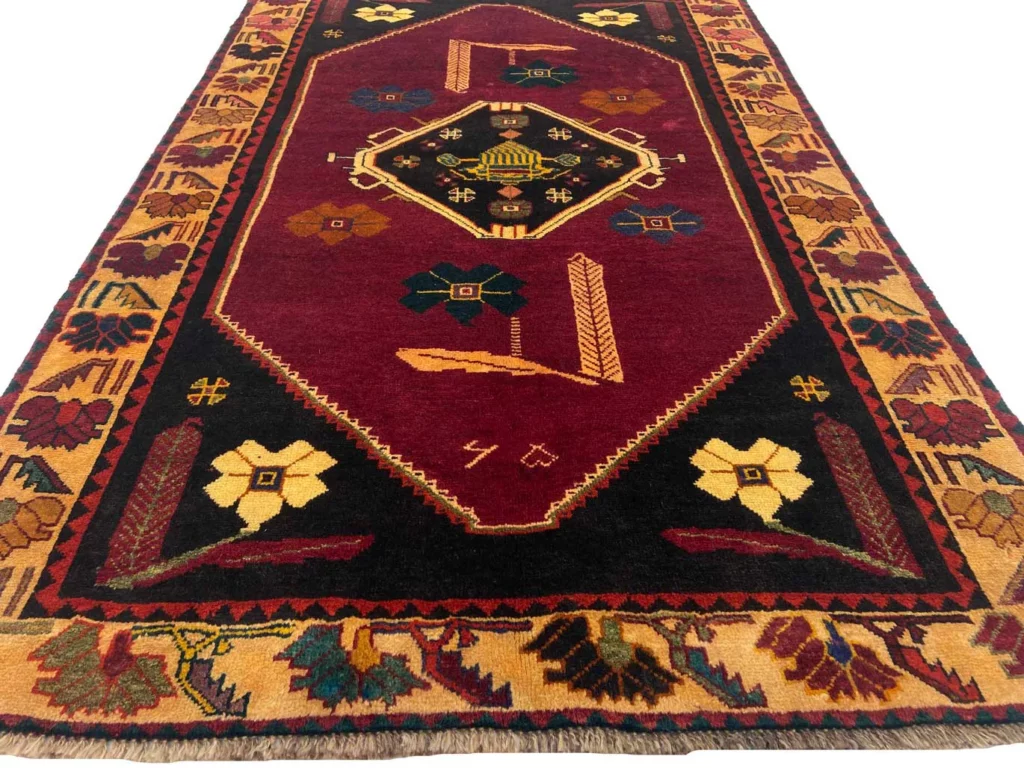
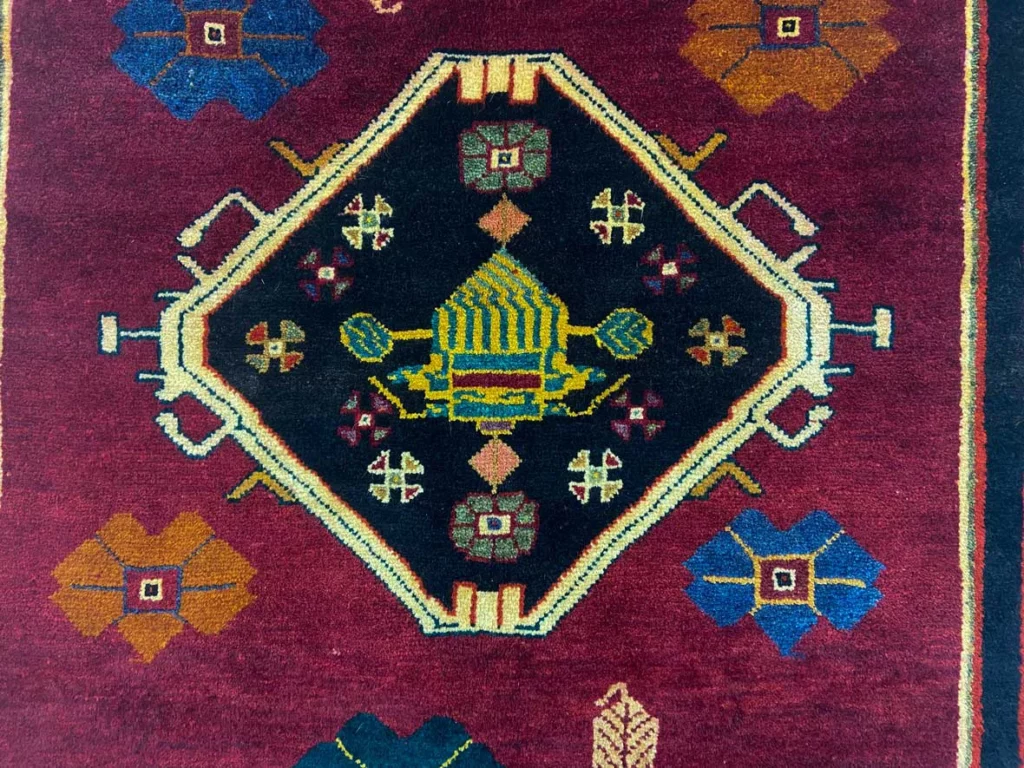
The main visual characteristic of this Gabbeh Shuli is its unusual and imaginative design. The patterns are described as unique and as being created by the knotters themselves. The design is therefore a direct expression of the handmade process. It does not simply reproduce an unchanged template; it combines traditional knowledge with the maker’s creative decisions. Each individual piece can consequently have its own arrangement of shapes and colour areas.
Gabbeh design is closely connected with the regional traditions of Fars. Forms may be simplified, spaciously arranged or interpreted in an unconventional way. The important relationship is between sign, field, colour and rhythm rather than a strictly naturalistic representation of a subject. Because the design is knotted, every shape is built from the arrangement of the knots. The surface structure and the visual composition are thus inseparable.
The colours named for this rug are lively red, soft beige, elegant grey and earthy brown. They are combined harmoniously and create a warm, welcoming effect. Red can provide a strong accent, while beige and brown establish an earthy foundation. Grey adds a quieter note and can balance the more vivid tones. Together, these colours support the imaginative designs and allow the rug to be used alongside both calm interiors and modern furnishings.
In a Gabbeh, colour and pattern are more than decorative additions. They can preserve impressions of the environment, memories or ideas held by the maker. In a nomadic craft tradition, the design was not necessarily determined by one central pattern plan. Personal observation could influence the choice and placement of elements. Imaginative motifs can therefore be understood as part of a visual language in which the individual knotter remains visible through the work.
The pattern can be used with contemporary furniture because it creates a connection between traditional handwork and a modern interior. In a living room it can define a particular area; in a dining room it can provide a textile foundation; in a study it can introduce a concentrated area of colour and form. These uses follow from the described palette and individual designs. They do not alter the rug’s origin or its classification as a hand-knotted Persian Gabbeh.
Unlike a design based solely on strict symmetry and a high number of small details, a Gabbeh can derive its rhythm from individual forms and deliberate spaces between them. Larger colour fields and clearly recognisable signs may be just as important as finely worked passages. The given knot density supports careful surface construction, while the design itself retains its imaginative and personal direction. Technical precision and visual freedom can therefore exist within the same rug.
The name Gabbeh Shuli consequently refers here to more than a preference for a particular colour arrangement. It brings together Fars origin, hand-knotted production and a design developed by the makers. The patterns do not represent one fixed story with one standard meaning. They do carry the cultural setting of Fars and the creative work of the knotters into the appearance of this unique piece.
Special Features
The special features of this rug are the combination of its Fars origin, hand-knotted construction, virgin wool pile and individually created pattern. It is identified as a Gabbeh Shuli from southern Persia and is described as new. Its designs are unusual and imaginative, and the source describes each piece as unique. These characteristics give it an individual visual identity within the broader Gabbeh tradition.
The virgin wool also shapes its practical qualities. It is described as high-quality, pleasant to touch, hard-wearing and able to retain warmth. The rug is suitable for rooms with underfloor heating. Its lively combination of red, beige, grey and brown can be paired with modern furniture, while the freely designed pattern provides a distinct accent in living rooms, dining rooms or studies.
FAQ
How should I care for the Gabbeh Shuli rug?
Regular vacuuming with a gentle brush is recommended for routine care. This helps keep the surface clean while treating the pile carefully. Direct sunlight should be avoided so that the colours do not fade. If a stain occurs, it should be treated promptly with a damp cloth and a mild cleaning product. Work gently rather than rubbing forcefully, so the virgin wool and the individually designed colour composition are treated with care.
Can the rug be used over underfloor heating?
Yes. The Gabbeh Shuli is suitable for rooms with underfloor heating. Its virgin wool pile provides a pleasantly warm surface and is also described as breathable. This combination supports comfortable use in a heated room while retaining the natural textile character of the rug. It should lie flat, allowing the heat to be distributed evenly through the room and avoiding unnecessary stress on the rug’s surface.
Where is the Gabbeh Shuli best placed?
The rug is suitable for living rooms, dining rooms and studies. In these settings it can define a particular zone, connect colours within the furnishings or introduce a separate visual accent. The lively palette of red, beige, grey and brown can be combined with modern furniture. Its unusual pattern is not restricted to one furnishing style, so it can function either as a linking element or as an independent feature within the room.
To provide the best experiences, we use technologies like cookies to store and/or access device information. Consenting to these technologies will allow us to process data such as browsing behavior or unique IDs on this site. Not consenting or withdrawing consent, may adversely affect certain features and functions.
Functional Always active
The technical storage or access is strictly necessary for the legitimate purpose of enabling the use of a specific service explicitly requested by the subscriber or user, or for the sole purpose of carrying out the transmission of a communication over an electronic communications network.
Preferences
The technical storage or access is necessary for the legitimate purpose of storing preferences that are not requested by the subscriber or user.
Statistics
The technical storage or access that is used exclusively for statistical purposes.The technical storage or access that is used exclusively for anonymous statistical purposes. Without a subpoena, voluntary compliance on the part of your Internet Service Provider, or additional records from a third party, information stored or retrieved for this purpose alone cannot usually be used to identify you.
Marketing
The technical storage or access is required to create user profiles to send advertising, or to track the user on a website or across several websites for similar marketing purposes.

 SECURE PAYMENT
 SHIPPING PARTNERS


