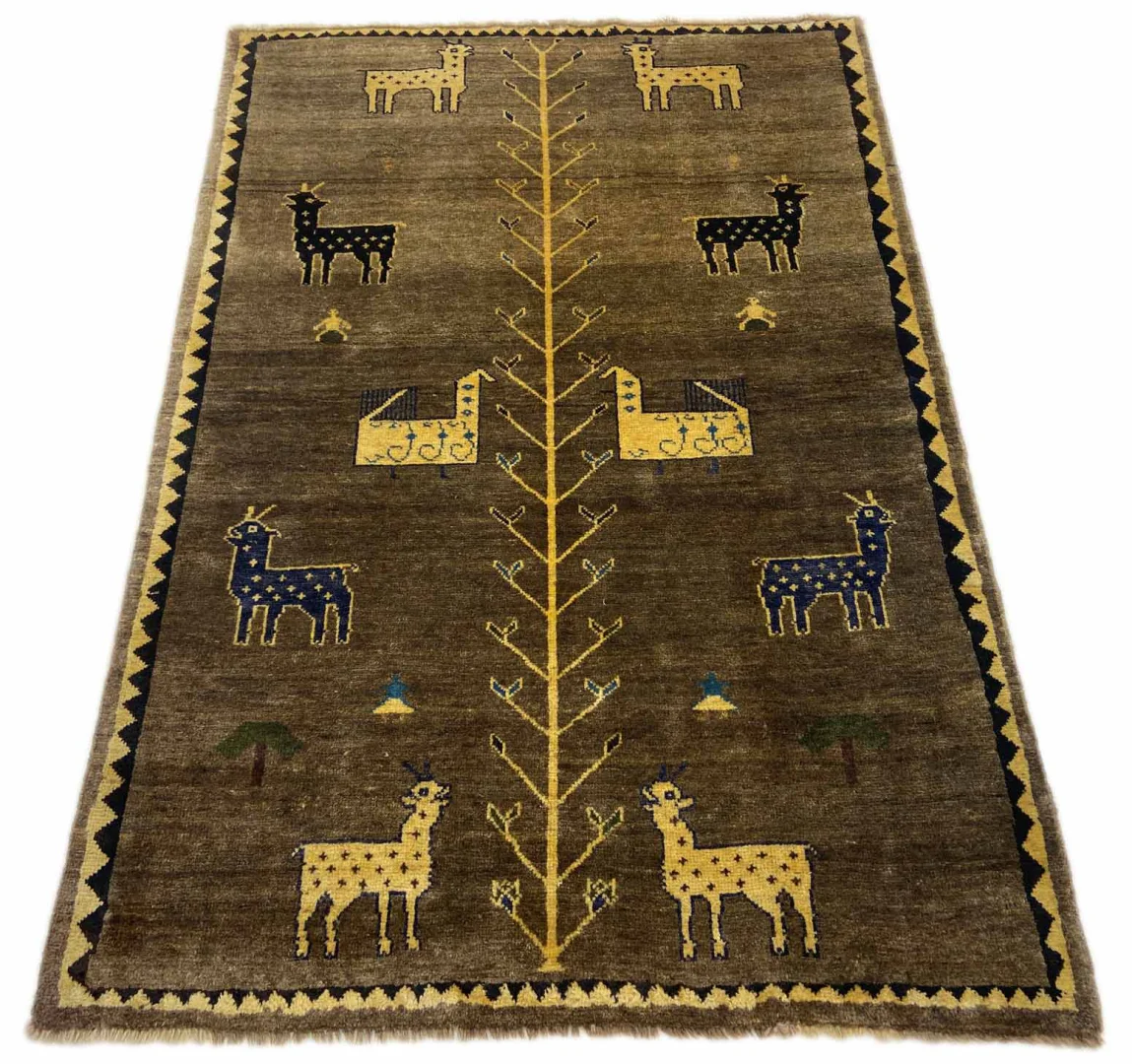
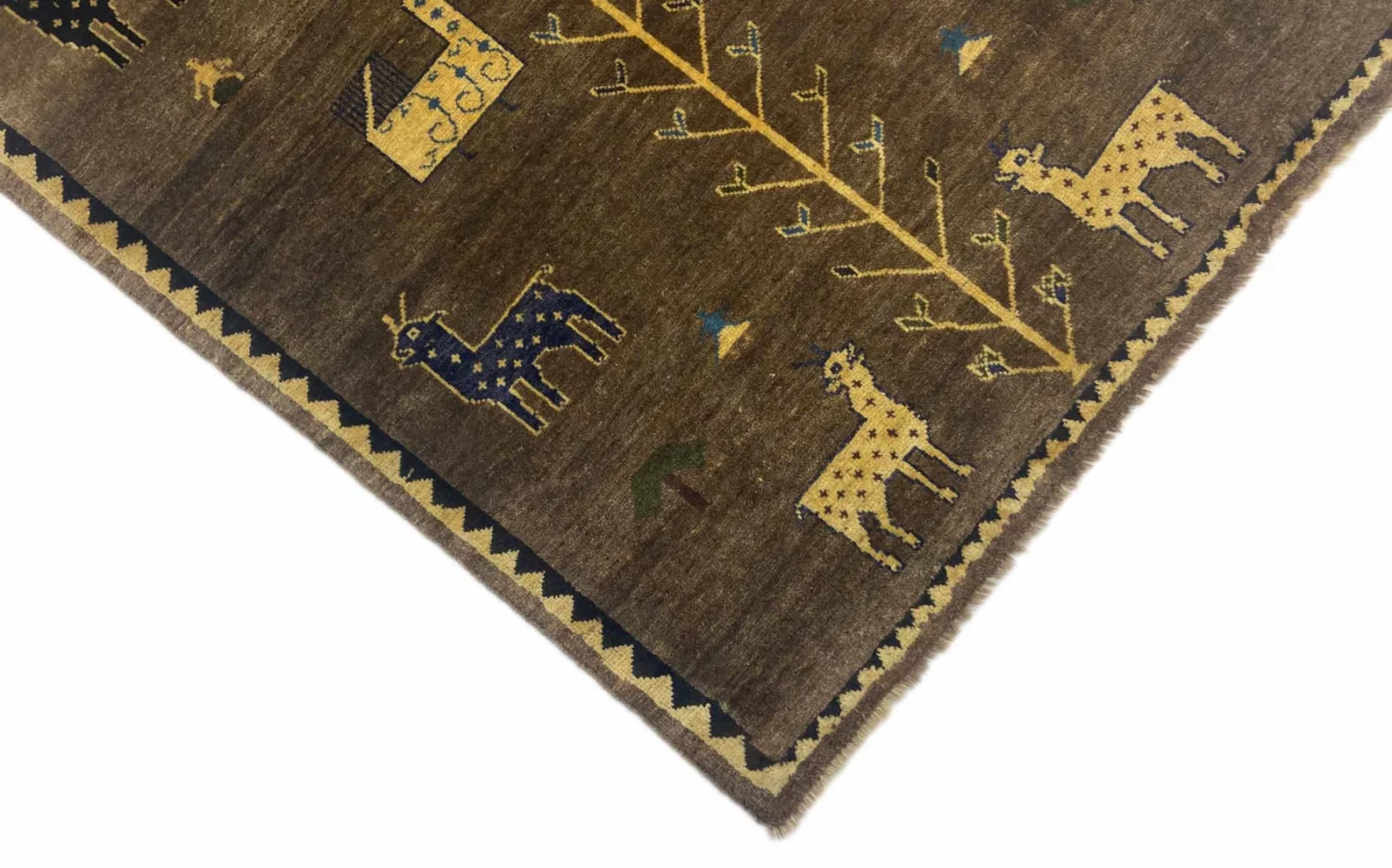
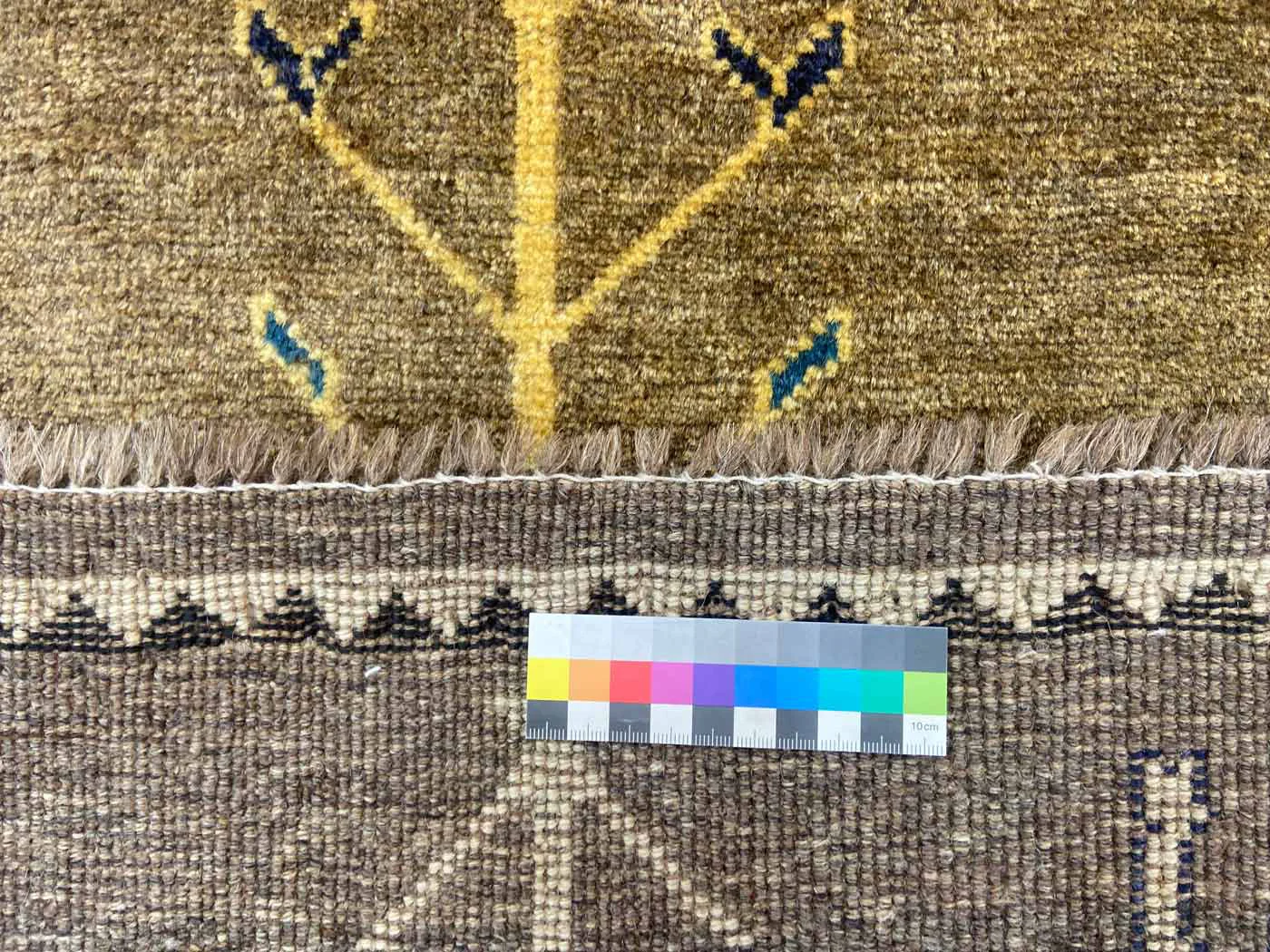
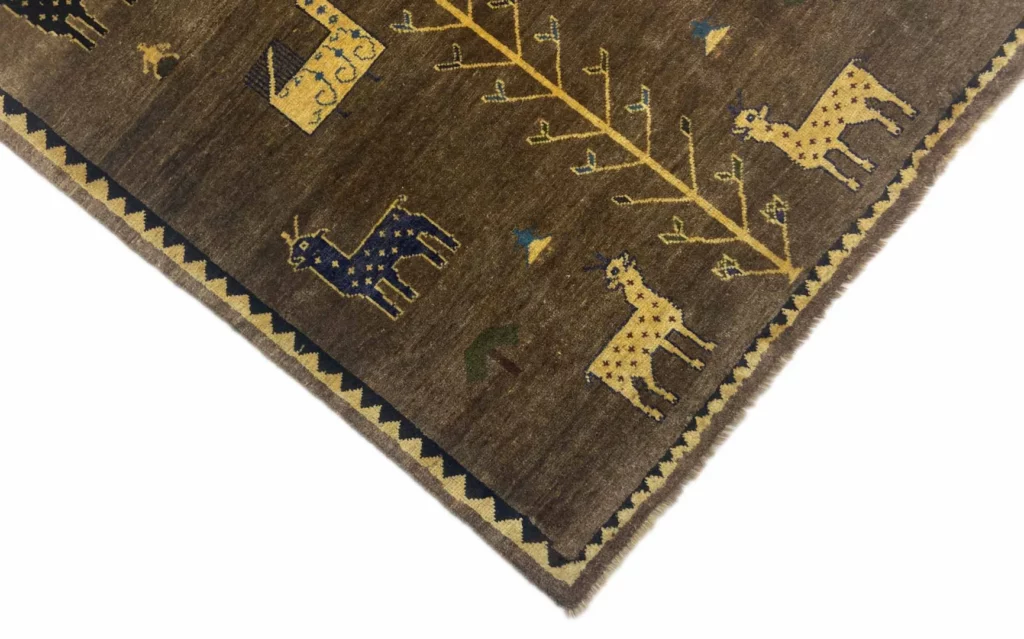
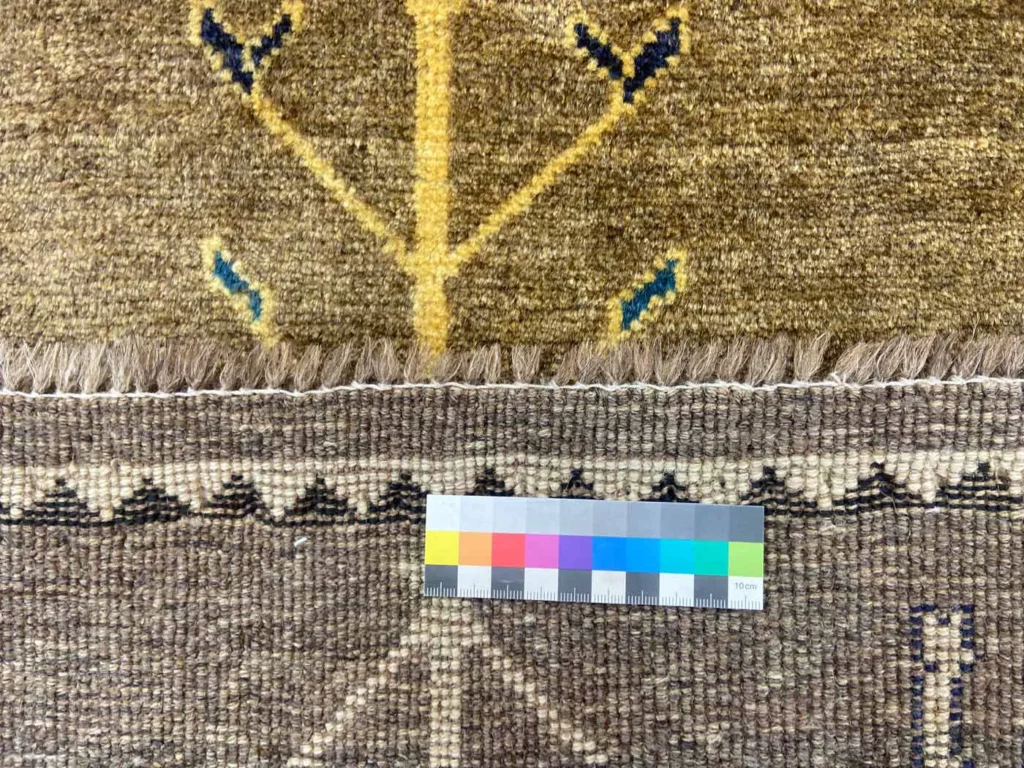
This Gabbeh Shuli Persian rug is hand-knotted with a pile made from pure, lustrous new wool. The wool gives the surface its natural sheen and a soft tactile quality. Its production combines a natural fibre with a time-intensive craft in which the design is formed knot by knot. The listed density is 90,000 to 180,000 knots per square metre, an aspect that belongs to the character of this particular piece.
Hand-knotting means that a Gabbeh is not produced as an identical industrial article. The pattern is built directly into the textile structure, allowing colours, lines and individual figures to develop their own relationship. On this rug, the sheen of the new wool complements the imaginative design. The rug is new and unused, so its surface has not been altered by everyday wear.
Origin and Tradition
The rug comes from the Fars region in southern Persia, near the city of Shiraz. Fars is one of the important landscapes of Persian carpet culture and is closely associated with nomadic and rural textile traditions. Within these traditions, rugs have served not only as practical furnishings but also as carriers of memory, observation and ideas. Gabbeh rugs represent a direct and distinctive form of expression within this wider regional heritage.
The name Gabbeh is associated with rugs from the Persian cultural sphere that often have a strong textile presence and an immediately readable visual language. Gabbeh Shuli rugs place particular emphasis on the maker’s freedom of expression. Their compositions do not have to follow a rigid, predetermined scheme. Simplified forms, open fields and unexpected colour relationships may work together, allowing the connection to a living craft tradition to remain visible while ensuring that each rug has its own identity.
Fars lies in the south of Persia and has a close connection with Shiraz. The region brings together nomadic ways of life, impressions of the surrounding landscape and long experience in textile making. Its carpet traditions include many forms, from restrained compositions to colourful and more narrative designs. The Gabbeh Shuli type belongs to the part of this tradition in which the individual outlook of the knotter is especially apparent.
Hand production preserves the character of a one-off work. Each knot becomes part of the rug’s structure, and the design develops through the interaction of material, colour and rhythm. The Fars origin therefore identifies more than a place: it places the rug within a regional setting where carpets are connected with everyday life and cultural identity. The result is a piece whose character comes from both its material construction and its place in the Fars tradition.
Design and Pattern
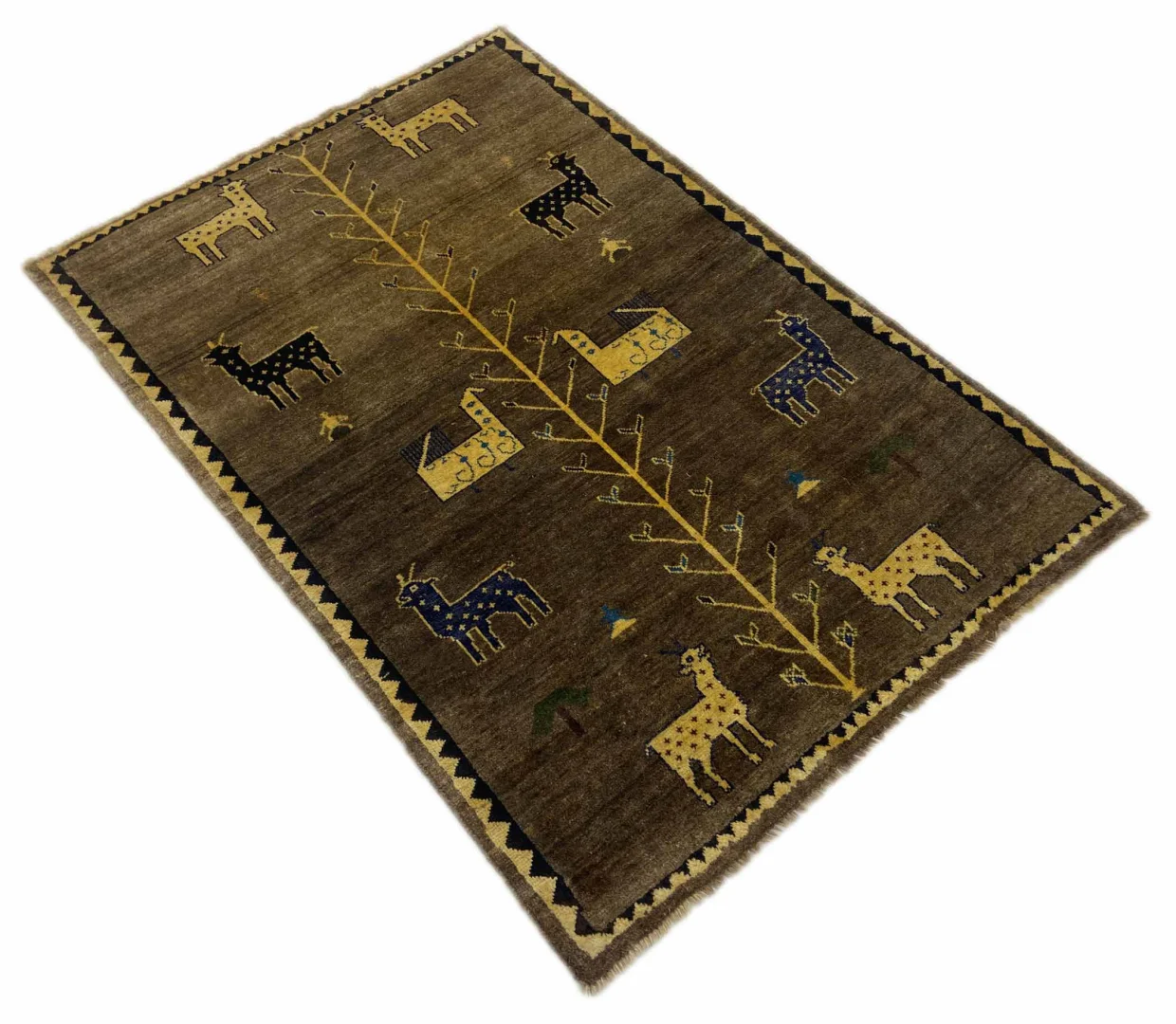
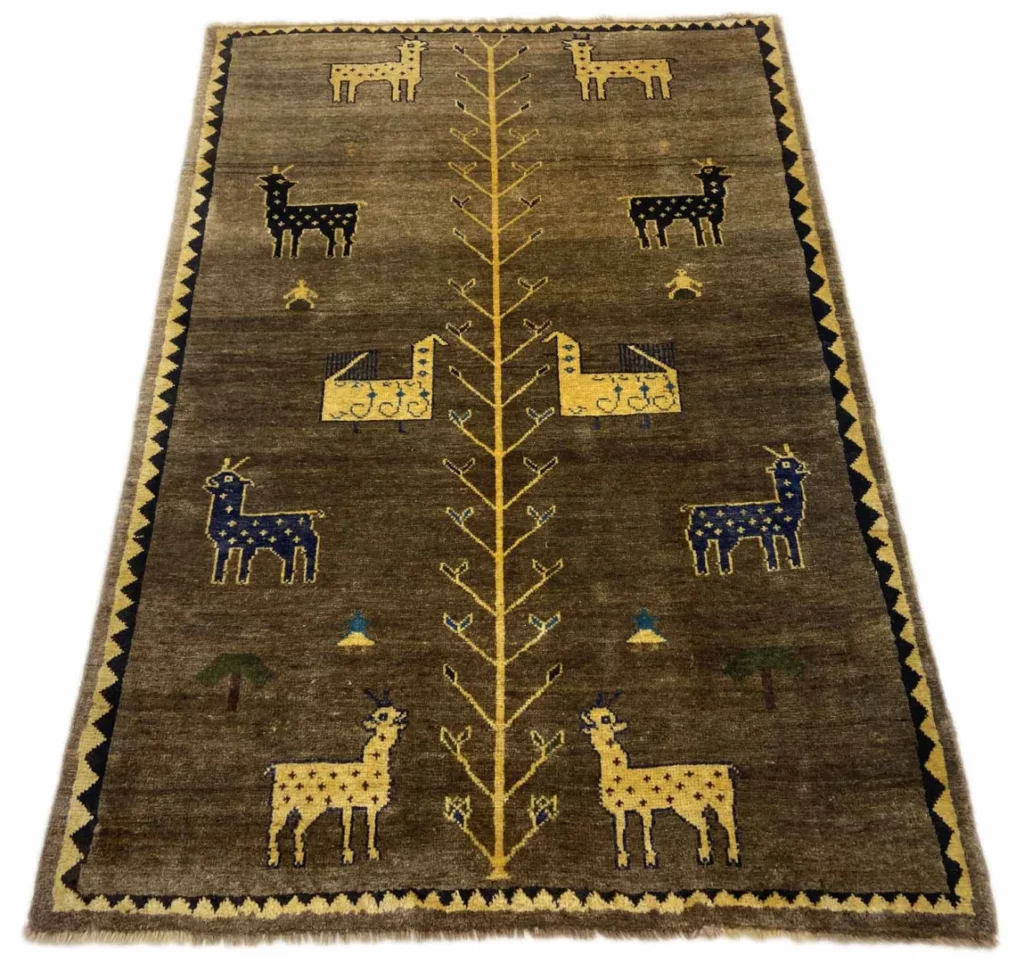
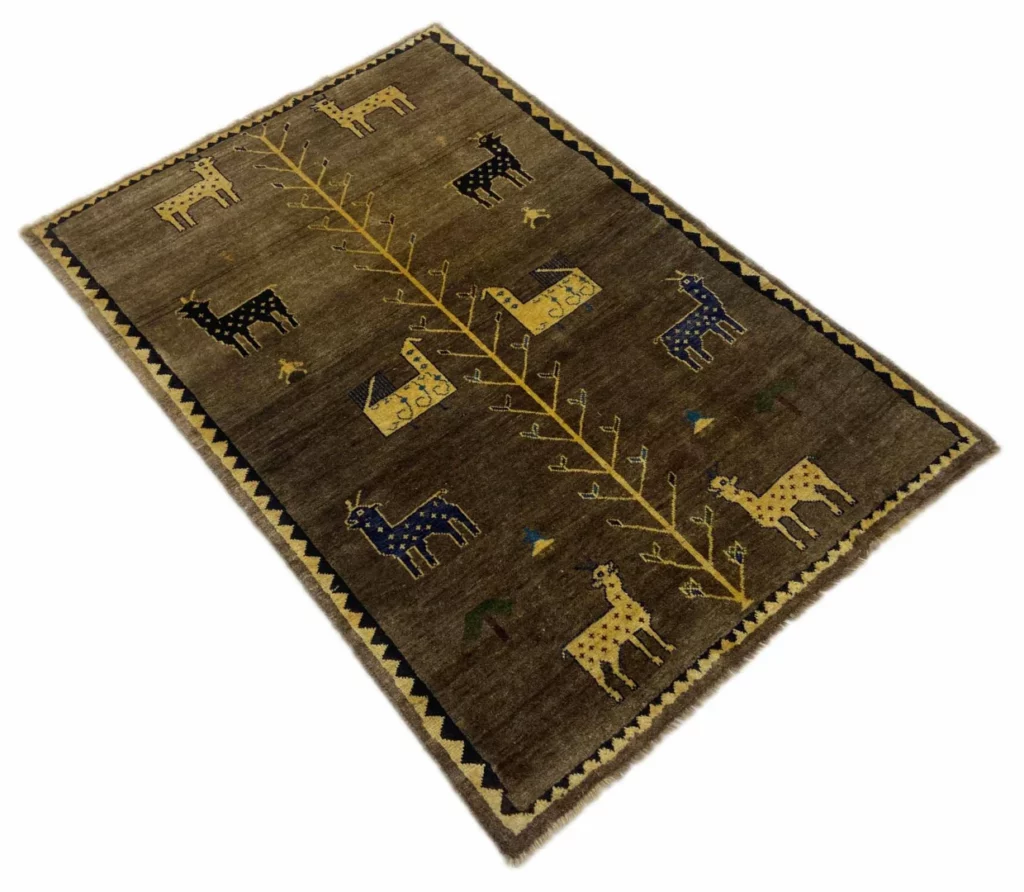
The pattern of this Gabbeh Shuli rug is described as unusual and imaginative. Its composition has an artistic, individual quality rather than a purely functional order. Gabbeh designs may draw on nature, animals, human figures or impressions from everyday nomadic life. Their effect often comes from simplification. A form does not need to be rendered in detail; clear outlines and concentrated colour areas can be enough to make an image recognisable.
The visual language of Gabbeh Shuli therefore leaves room for many different ideas. A motif may suggest a memory, a landscape or a scene from daily life without attempting to provide a literal depiction. This freedom gives every example a distinct presence. The imaginative designs are more than surface decoration: they express the creative approach that has an important place in the knotting traditions of Fars.
Warm reds, earthy beige tones and gentle greys and browns are commonly associated with Gabbeh Shuli rugs. These colour families combine a natural impression with a clear decorative quality. They can sit comfortably alongside rustic interiors as well as contemporary rooms. The important point is not a single fixed palette, but the individual balance of shades within each rug and the way those shades support its design.
The open character of the design also permits more than one way of displaying the rug. Used on the floor, a Gabbeh brings together a tactile textile surface and a pictorial composition. Hung on a wall, it can be read as a textile artwork. In either setting, the relationship between handwork, colour and independent form remains central to the piece.
Special Features
This rug combines pure, lustrous new wool, hand-knotting and an unusual Gabbeh Shuli design. Its imaginative pattern has an individual character, making the rug read as a handmade one-off rather than a uniform decorative product. It is offered in new and unused condition. In addition to being used as a floor covering, it can also be displayed as wall decoration, highlighting its textile and pictorial qualities.
Gabbeh Shuli rugs are associated with the creative hand of their makers. Their designs are not necessarily based on strict repetition, and this gives them a different character from rugs built around a tightly prescribed pattern. This piece brings that independent quality together with its Fars origin and the Persian knotting tradition of the region.
FAQ
What makes a Gabbeh Shuli rug distinctive?
Its distinctive character comes from the combination of imaginative designs and pure new wool. The patterns feel individual because they reveal the personal approach of the makers. Hand-knotting turns the rug into an independent textile work from the Fars region. It can therefore be understood both as a practical floor covering and as a decorative piece with a strong handmade identity.
How should I care for a Gabbeh Shuli rug?
Regular vacuuming is recommended for routine care. If a mark or spill occurs, it should first be treated carefully with a damp cloth. For more substantial cleaning, professional cleaning is advisable so that the wool and the knotted structure receive appropriate treatment. This approach helps preserve the surface and its natural appearance without subjecting the handmade textile to unsuitable cleaning methods.
Which rooms suit a Gabbeh Shuli rug?
Gabbeh Shuli rugs are suitable for living rooms and bedrooms. Their imaginative patterns and woollen surface can create a warm, welcoming presence in either setting. They can complement a rustic interior or add a hand-crafted element to a modern room. The rug may also be used as wall decoration when its textile design is intended to be viewed as an artwork.
To provide the best experiences, we use technologies like cookies to store and/or access device information. Consenting to these technologies will allow us to process data such as browsing behavior or unique IDs on this site. Not consenting or withdrawing consent, may adversely affect certain features and functions.
Functional Always active
The technical storage or access is strictly necessary for the legitimate purpose of enabling the use of a specific service explicitly requested by the subscriber or user, or for the sole purpose of carrying out the transmission of a communication over an electronic communications network.
Preferences
The technical storage or access is necessary for the legitimate purpose of storing preferences that are not requested by the subscriber or user.
Statistics
The technical storage or access that is used exclusively for statistical purposes.The technical storage or access that is used exclusively for anonymous statistical purposes. Without a subpoena, voluntary compliance on the part of your Internet Service Provider, or additional records from a third party, information stored or retrieved for this purpose alone cannot usually be used to identify you.
Marketing
The technical storage or access is required to create user profiles to send advertising, or to track the user on a website or across several websites for similar marketing purposes.

 SECURE PAYMENT
 SHIPPING PARTNERS


