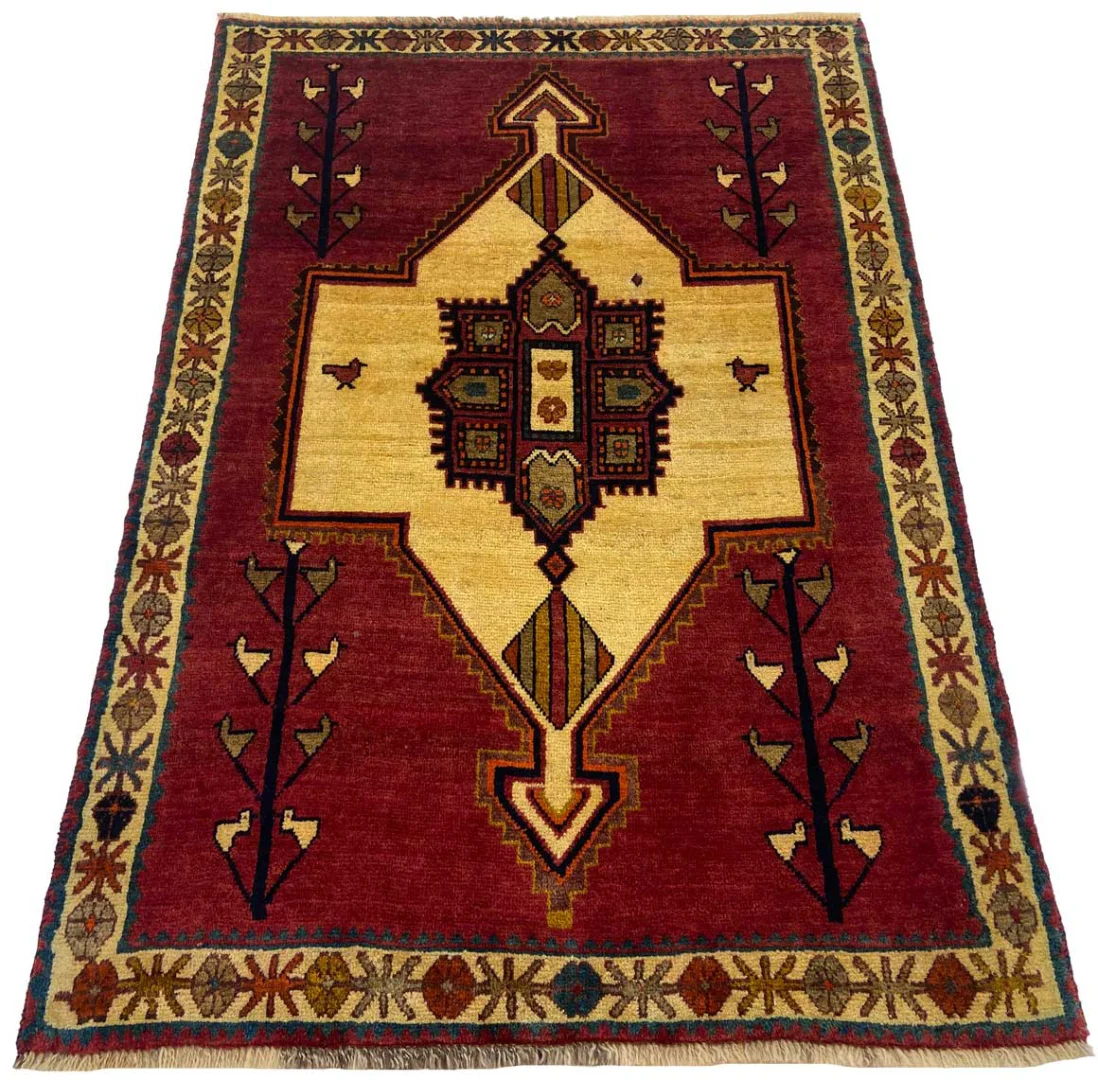
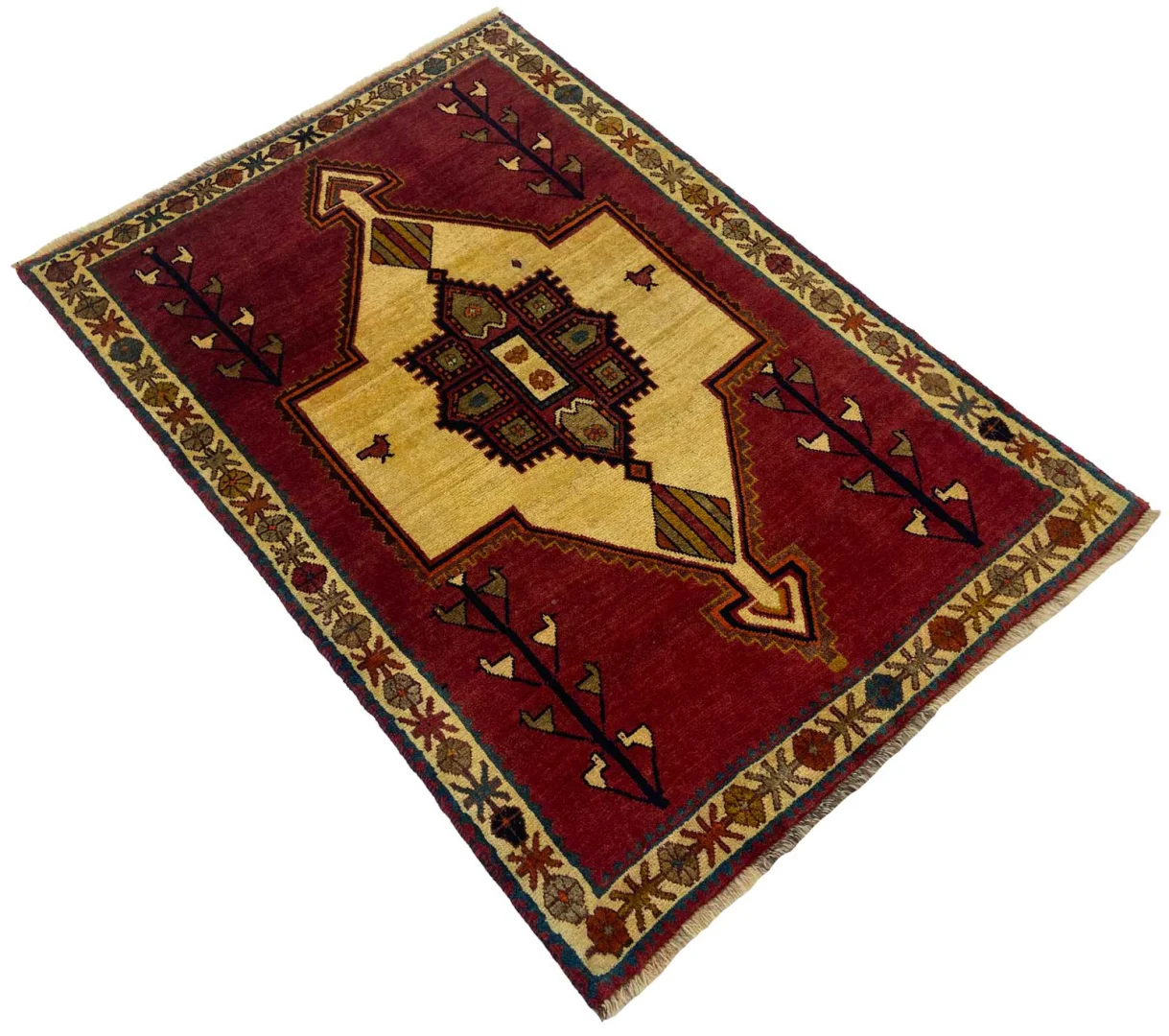
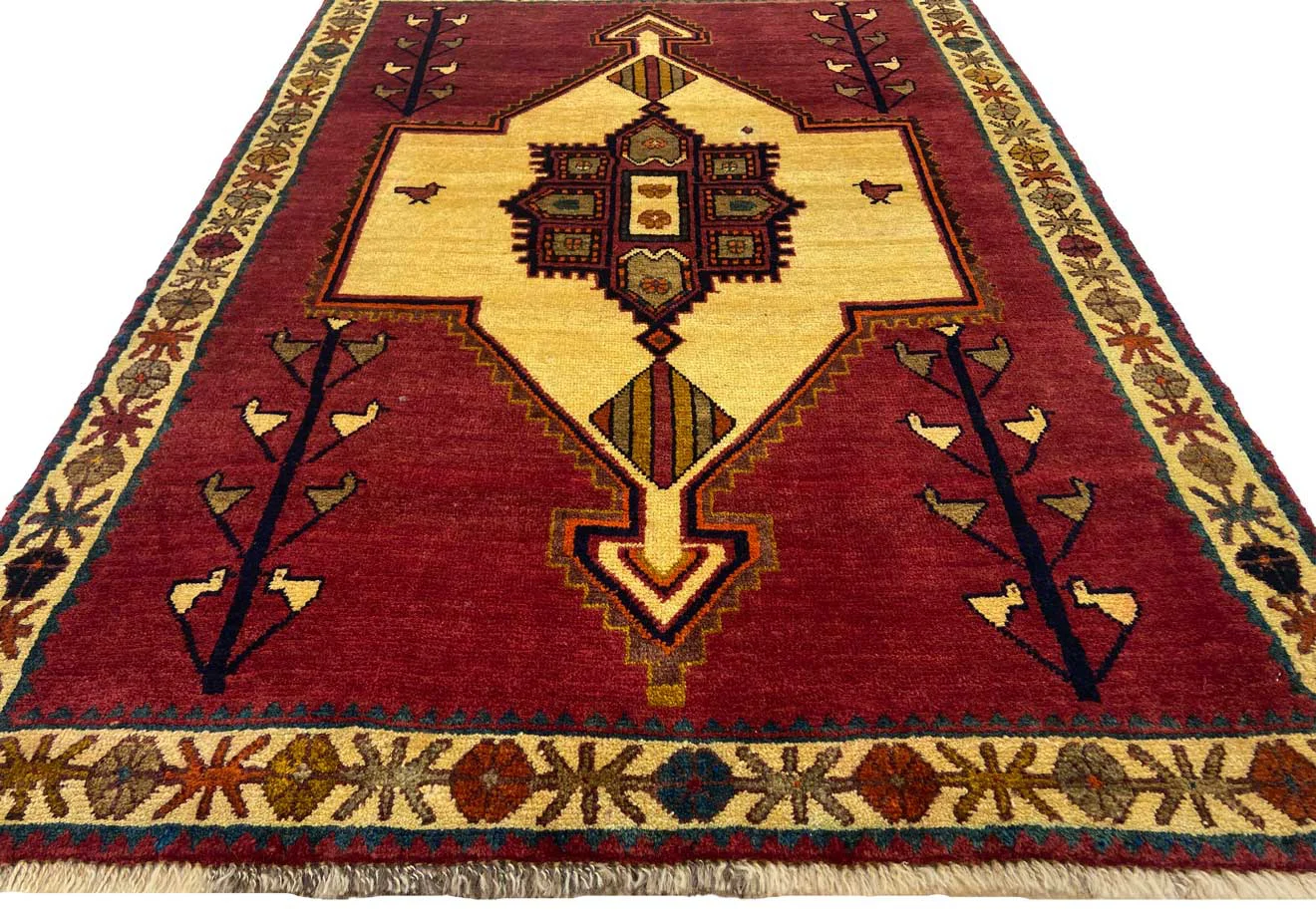
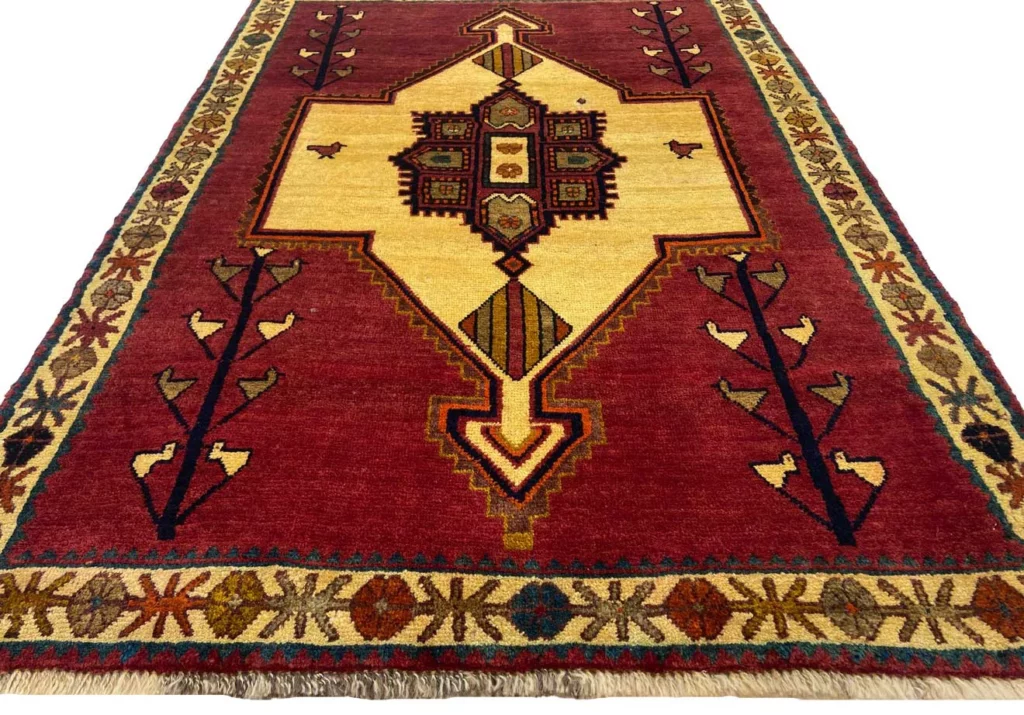
This Gabbeh Shuli is a hand-knotted Persian rug from the Fars region. Its pile is made from high-quality virgin wool, described as having a lustrous appearance. The wool gives the surface its stated sheen as well as its tactile character. In Gabbeh weaving, virgin wool is traditionally valued for its natural feel and its suitability for a durable textile. Here, the material, the hand-knotting and the free design language form one coherent craft tradition.
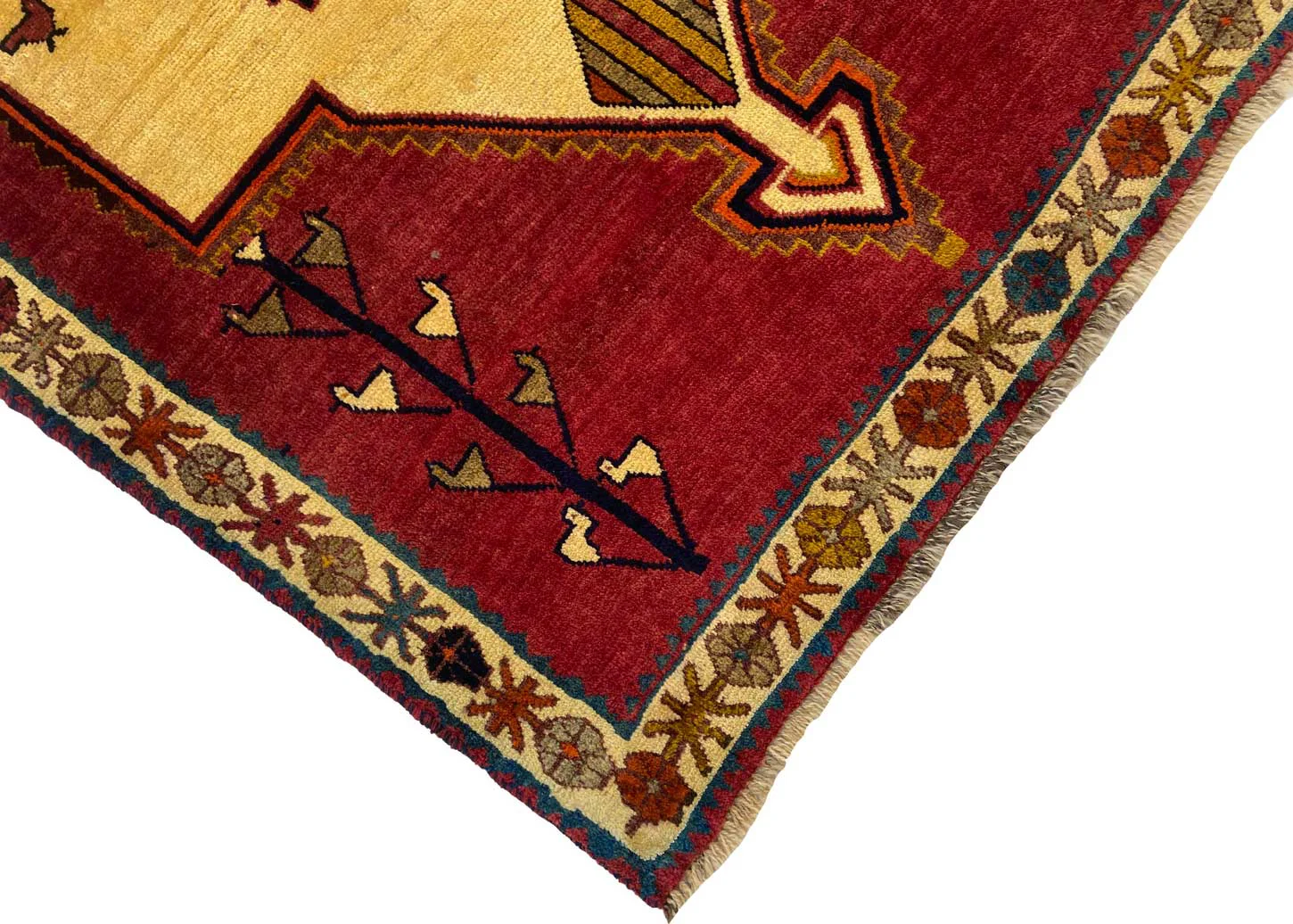
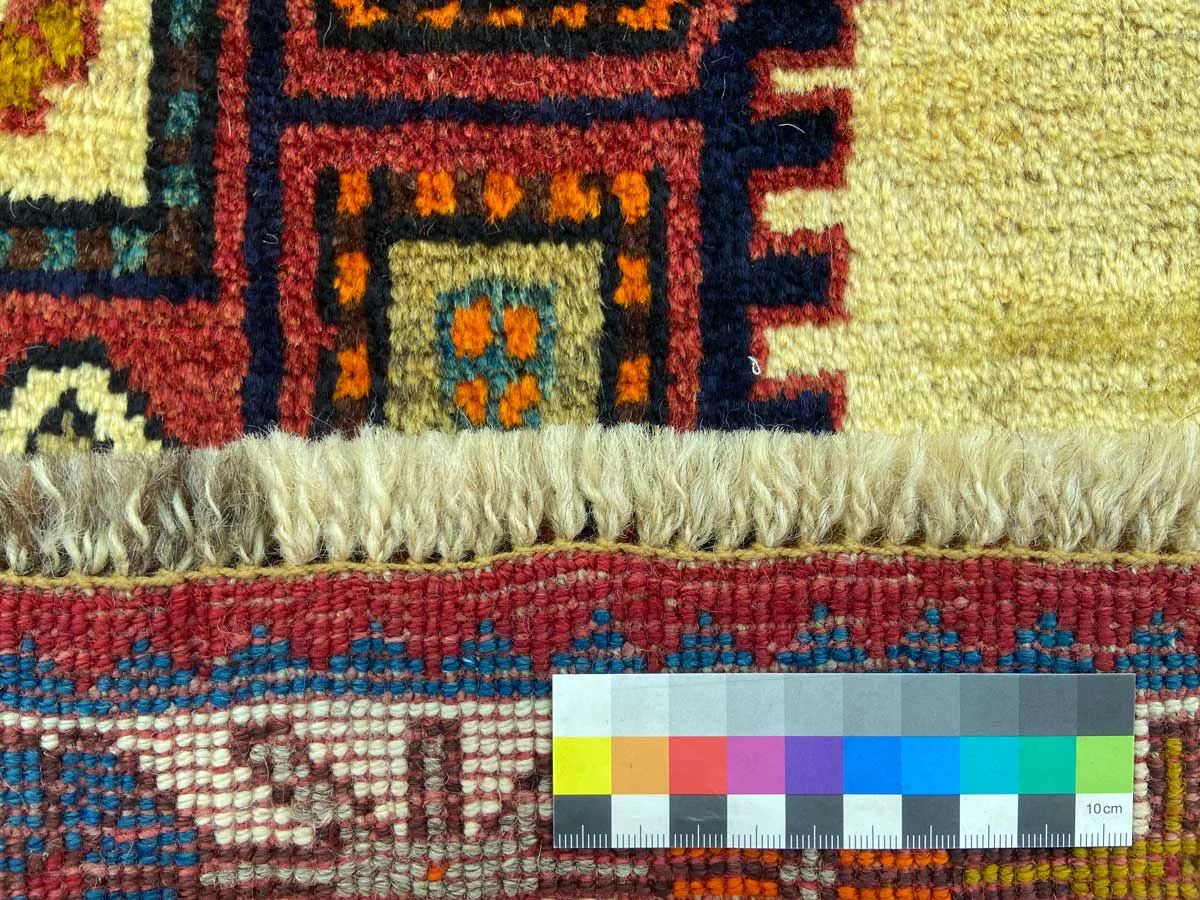
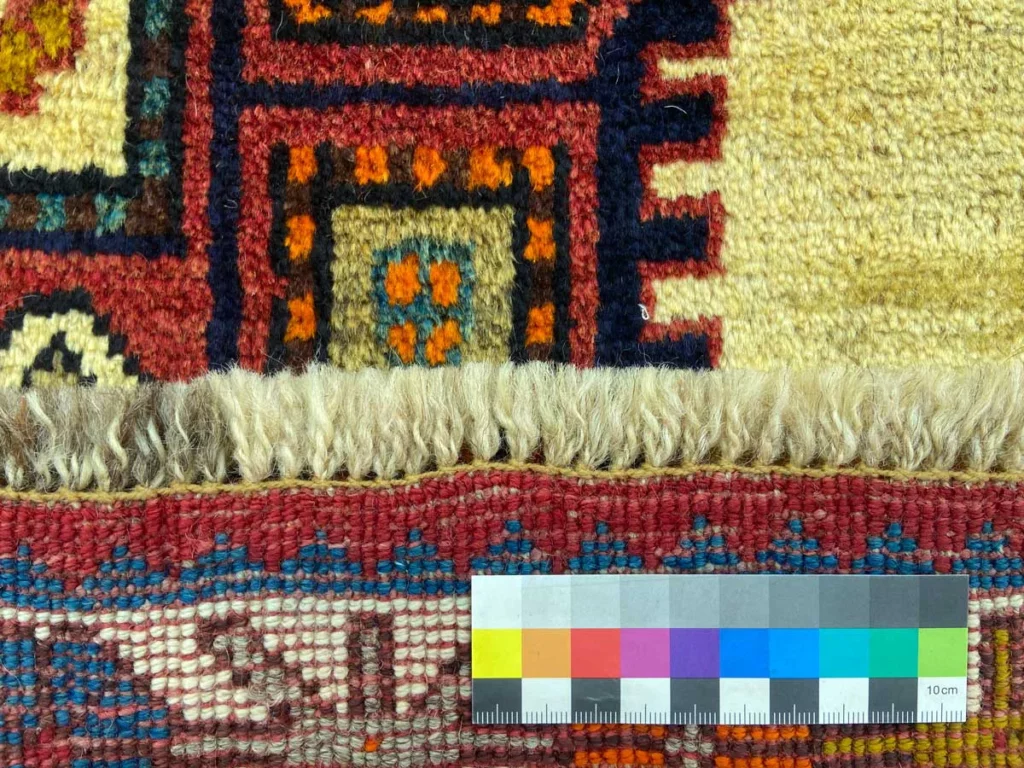
A hand-knotted rug is built gradually rather than produced as an identical industrial surface. The weaver places knots in successive rows and develops the textile structure and pattern together. Each knot contributes to the stability of the field and to the definition of the design. The knot density listed for this rug reflects careful and precise work. Attention is required not only when placing the knots, but also when arranging colours, shaping forms and maintaining the intended relationship between the individual sections.
The virgin wool is described as soft in texture, long-lasting and resistant to wear. This makes Gabbeh Shuli rugs suitable for areas with heavier foot traffic. Their structure and materials are also described as easy to care for. Regular vacuuming is recommended, while a damp cloth can be used when further cleaning is needed. Harsh cleaning products should be avoided so that the colours and the wool are treated gently. This rug is listed as new.
In a hand-knotted Gabbeh, the material is not merely a ground for decoration. The wool itself becomes the visible and usable surface in which the design is formed. This gives the rug a cohesive textile quality. The piece described here combines a virgin-wool pile, careful manual knotting and an imaginative pattern. Its construction therefore connects practical use with the visual language of the Gabbeh tradition.
Origin and Tradition
This Gabbeh Shuli comes from the Fars region in southern Persia. Fars is an important landscape within Persian rug culture and is associated with long-standing nomadic, village and family-based traditions of weaving and knotting. In this setting, textile work has been closely connected with everyday life, local materials and the passing down of practical knowledge. The term Gabbeh identifies a particular rug tradition within this wider culture, one that is known for an individual and often less formal visual language.
The history of Gabbeh rugs is connected with mobile and rural ways of life. Materials available within the surrounding environment and inherited working methods played an important role in their production. Wool was prepared and spun before being turned into a woven or knotted textile surface. Knowledge of preparing the pile, placing knots and combining colours was passed through families and communities. This transmission included more than a set of technical steps. It also preserved ways of simplifying forms, organising a composition and giving a design its own identity.
Gabbeh is therefore more than a name for a functional rug. It also describes an approach to making and designing. A composition does not have to follow a rigid pattern book in every detail. The weaver can bring memory, simplified forms and personal ideas into the work. This creates a relationship between the stability of inherited technique and the freedom of an individual design. Each rug remains a handmade object within the tradition while retaining the character of its own interpretation.
The rug culture of Fars includes many different forms and regional expressions. Gabbeh Shuli represents one part of this variety, with imaginative and frequently abstracted patterns. Its visual effect depends less on detailed representation than on the relationship between fields, colours and shapes. These qualities place the rug within a southern Persian knotting tradition without reducing the region to one single appearance or one fixed formula.
The passing on of knowledge is central to this tradition. Family workshops and local working groups preserve understanding of wool preparation, knotting methods and the organisation of a design. Learning takes place through observation, repetition and practical participation. Alongside technical skill, the weaver develops a sense of proportion, colour balance and rhythm. This enables the tradition to continue while allowing individual makers to develop their own treatment of a motif.
Gabbeh Shuli can also be considered alongside other rugs from Fars. These are likewise associated with craftsmanship and robustness. A comparison with Shiraz rugs shows a difference in visual emphasis: Shiraz rugs are often connected with more complex and symmetrical compositions, while Gabbeh Shuli is associated with freer and more imaginative designs. Both belong to the broader culture of southern Persian rugs, but they express their patterns in different ways.
The Fars origin therefore refers to more than a place on a map. It points to an environment in which handwork, knowledge of materials and traditions of design have developed together. A Gabbeh Shuli carries this relationship through its making and through its open visual language. It remains a useful household textile, while also expressing a regional craft culture whose knowledge has been maintained across generations.
Design and Pattern
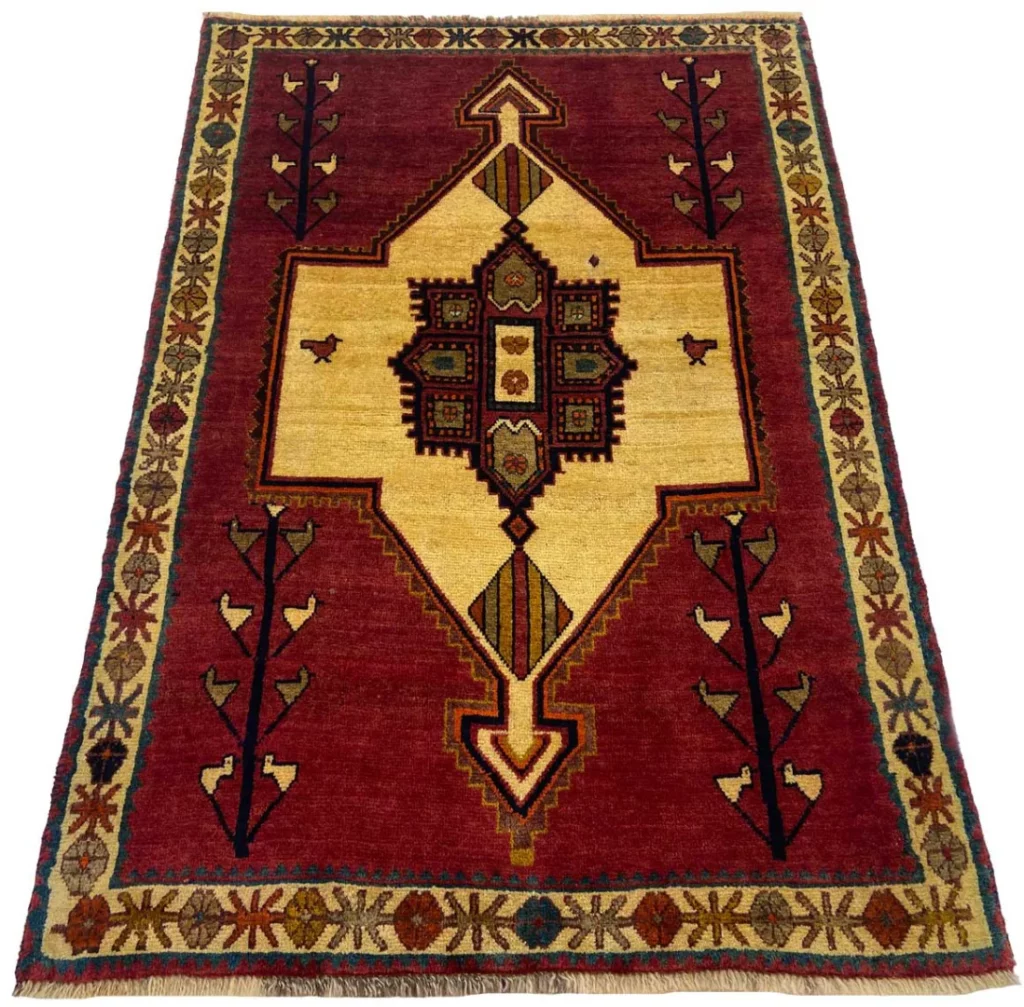
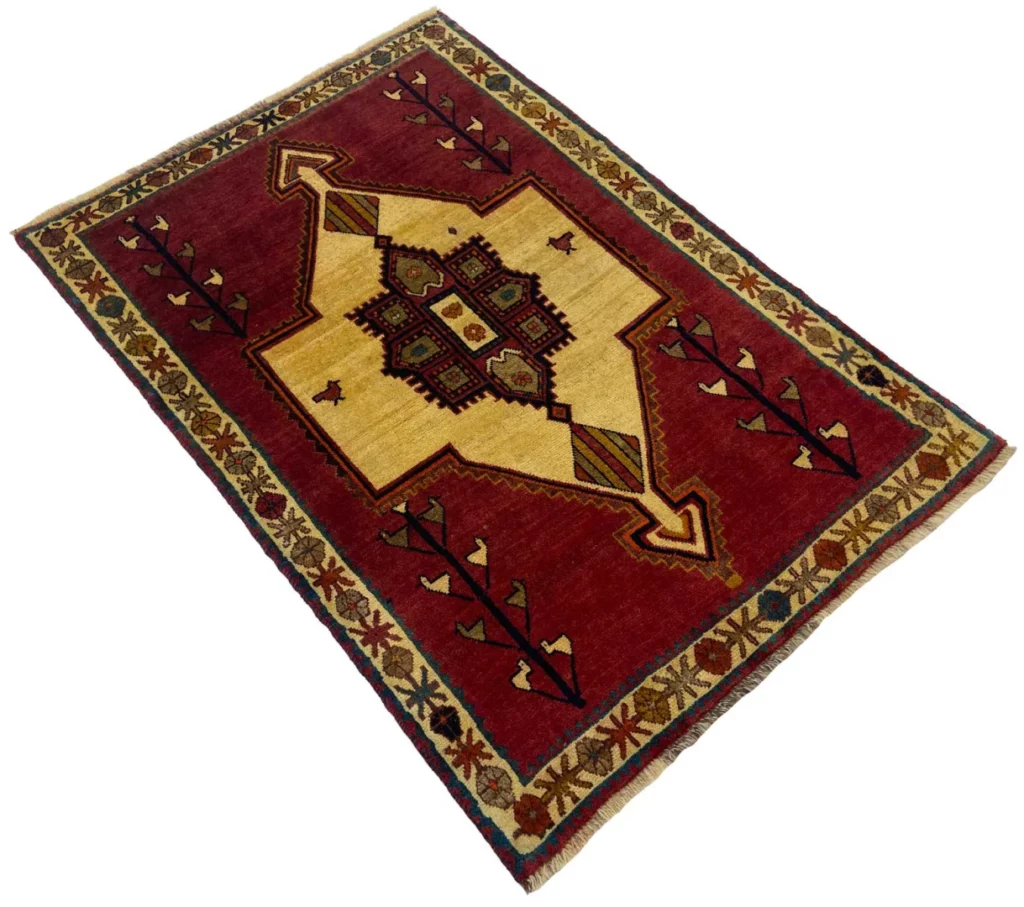
The pattern of this rug is described as unusual and imaginative. Gabbeh Shuli designs may be abstract and allow considerable room for the weaver’s visual ideas. Rather than depending on a completely predetermined and strictly symmetrical composition, they often use a freer arrangement of forms. Simplified shapes, colour fields and recurring lines can be combined into an individual visual language. The design does not need to reproduce one naturalistic model. Its character comes from reduction, selection and the personal development of the motif.
The pattern is integrated directly into the knotted structure. Colours and shapes are not printed onto a completed surface; they are developed through the placement of the material during the making process. This gives the design a direct relationship with craftsmanship. The rhythm of the knots, the edges of the colour fields and the transitions between forms all contribute to the finished appearance. The decorative effect is therefore inseparable from the way the rug has been made.
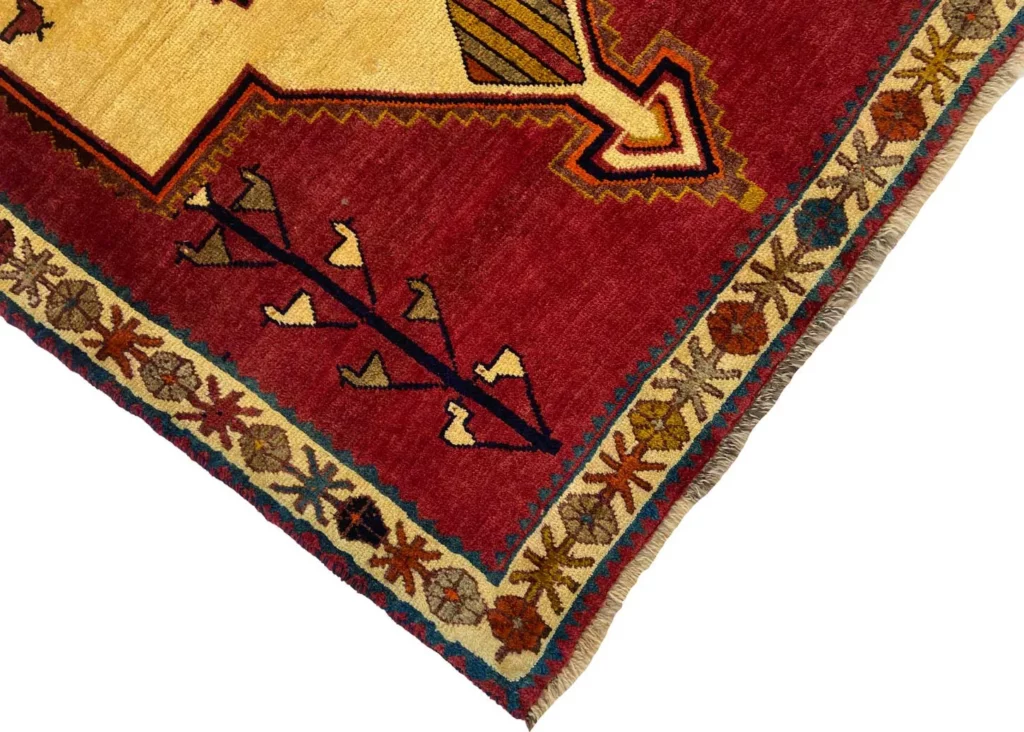
The colours named for this piece are red, beige, grey and brown. Red introduces a strong and warm note. Beige provides a light, quiet counterpoint, while grey adds a restrained shade. Brown gives the palette an earthy connection. Together, these colours create a warm yet varied basis for the unusual designs. Their effect remains connected with the natural character of the virgin wool described for the pile.
Imaginative patterns can be read in different ways. One viewer may recognise figures, signs or landscape-like impressions in an abstract form, while another may respond mainly to the balance of fields and colours. This openness is part of the appeal of the Gabbeh design tradition. It does not mean the composition is without structure. Its order develops through the relationship between selected forms, colour distribution and the sequence of the hand-knotting.
A freer Gabbeh design differs from a rug whose composition is governed by strict symmetry. In a symmetrical pattern, motifs are often repeated or mirrored according to a fixed arrangement. Gabbeh Shuli may instead establish balance through variation. Individual elements can carry different visual weight while remaining connected through colour, spacing and rhythm. The result is an individual design that retains coherence without looking mechanically repeated.
The pattern language can be used with both traditional and modern interiors. Warm red and brown tones can complement classic furnishings and natural materials. Beige and grey can create a quieter connection with contemporary rooms. This flexibility comes from the combination of reduced forms and expressive colour rather than from a change in origin or rug type. The Gabbeh Shuli remains a Persian rug from Fars with a free and imaginative design approach.
The contrast with Shiraz patterns is also visible in the treatment of form. Shiraz rugs are often associated with more elaborate structures and pronounced symmetry, whereas Gabbeh Shuli places greater emphasis on freedom, abstraction and imagination. The identity of the weaver can therefore remain more apparent in the composition. The pattern reads as a crafted interpretation rather than as the exact repetition of a standard scheme.
Special Features
The special features of this Gabbeh Shuli include its hand-knotted construction, pile of high-quality virgin wool and lustrous surface. Its unusual, imaginative designs are complemented by the colours red, beige, grey and brown. The combination of precise knotting and a free visual language is characteristic of the described type of rug. The rug is listed as new and is described as robust and easy to care for.
Its material qualities make it suitable for rooms with heavier foot traffic. Regular vacuuming and gentle cleaning with a damp cloth are recommended for care. Harsh cleaning products should be avoided. This keeps the treatment of the colours and virgin wool as gentle as possible. The distinctive character of the rug therefore lies both in its pattern and in the combination of manual workmanship, natural wool and practical use.
FAQ
What makes Gabbeh Shuli rugs distinctive?
Gabbeh Shuli rugs combine the Persian knotting tradition of Fars with unusual and imaginative designs. Their patterns can be free and abstract, reflecting the weaver’s own visual imagination. The hand-knotted construction, pile of high-quality virgin wool and durable, easy-care character are additional features. For this rug, red, beige, grey and brown are named as its colours.
How should I care for a Gabbeh Shuli rug?
Careful regular vacuuming is suitable for routine maintenance. If additional cleaning is required, a damp cloth can be used on the affected area. Harsh cleaning products should be avoided so that the colours and virgin wool are not unnecessarily stressed. The structure and materials are described as easy to care for, making the Gabbeh Shuli suitable for straightforward use in a living space.
Which interior style suits a Gabbeh Shuli?
Gabbeh Shuli rugs can be combined with both traditional and modern interior styles. Red and brown may complement classic furniture and natural materials, while beige and grey can create a calmer connection with contemporary furnishings. The unusual pattern provides an independent textile accent. Because the design is free and imaginative, the rug is not limited to one period of interior design or one particular decorating style.
To provide the best experiences, we use technologies like cookies to store and/or access device information. Consenting to these technologies will allow us to process data such as browsing behavior or unique IDs on this site. Not consenting or withdrawing consent, may adversely affect certain features and functions.
Functional Always active
The technical storage or access is strictly necessary for the legitimate purpose of enabling the use of a specific service explicitly requested by the subscriber or user, or for the sole purpose of carrying out the transmission of a communication over an electronic communications network.
Preferences
The technical storage or access is necessary for the legitimate purpose of storing preferences that are not requested by the subscriber or user.
Statistics
The technical storage or access that is used exclusively for statistical purposes.The technical storage or access that is used exclusively for anonymous statistical purposes. Without a subpoena, voluntary compliance on the part of your Internet Service Provider, or additional records from a third party, information stored or retrieved for this purpose alone cannot usually be used to identify you.
Marketing
The technical storage or access is required to create user profiles to send advertising, or to track the user on a website or across several websites for similar marketing purposes.

 SECURE PAYMENT
 SHIPPING PARTNERS


