
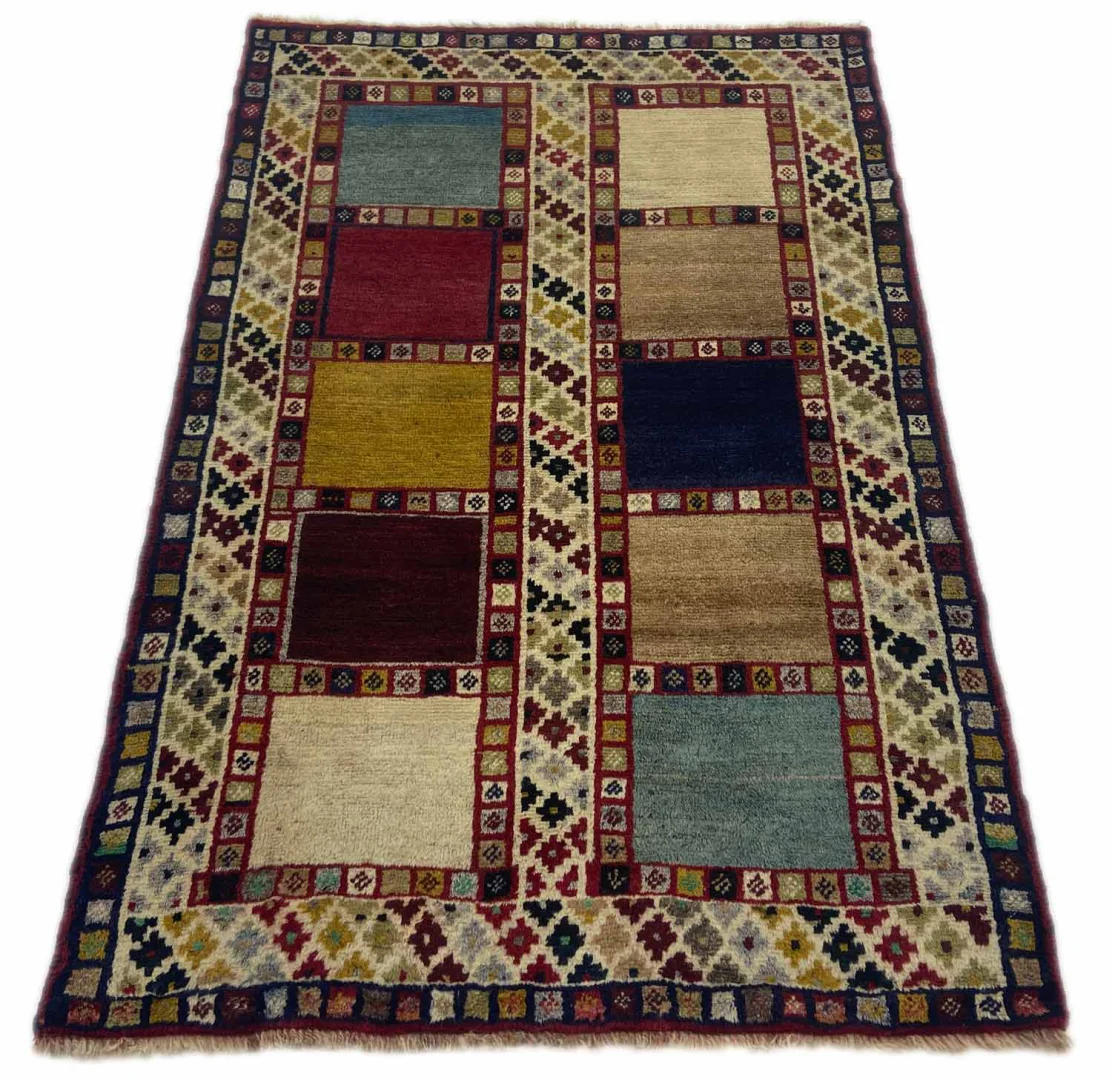
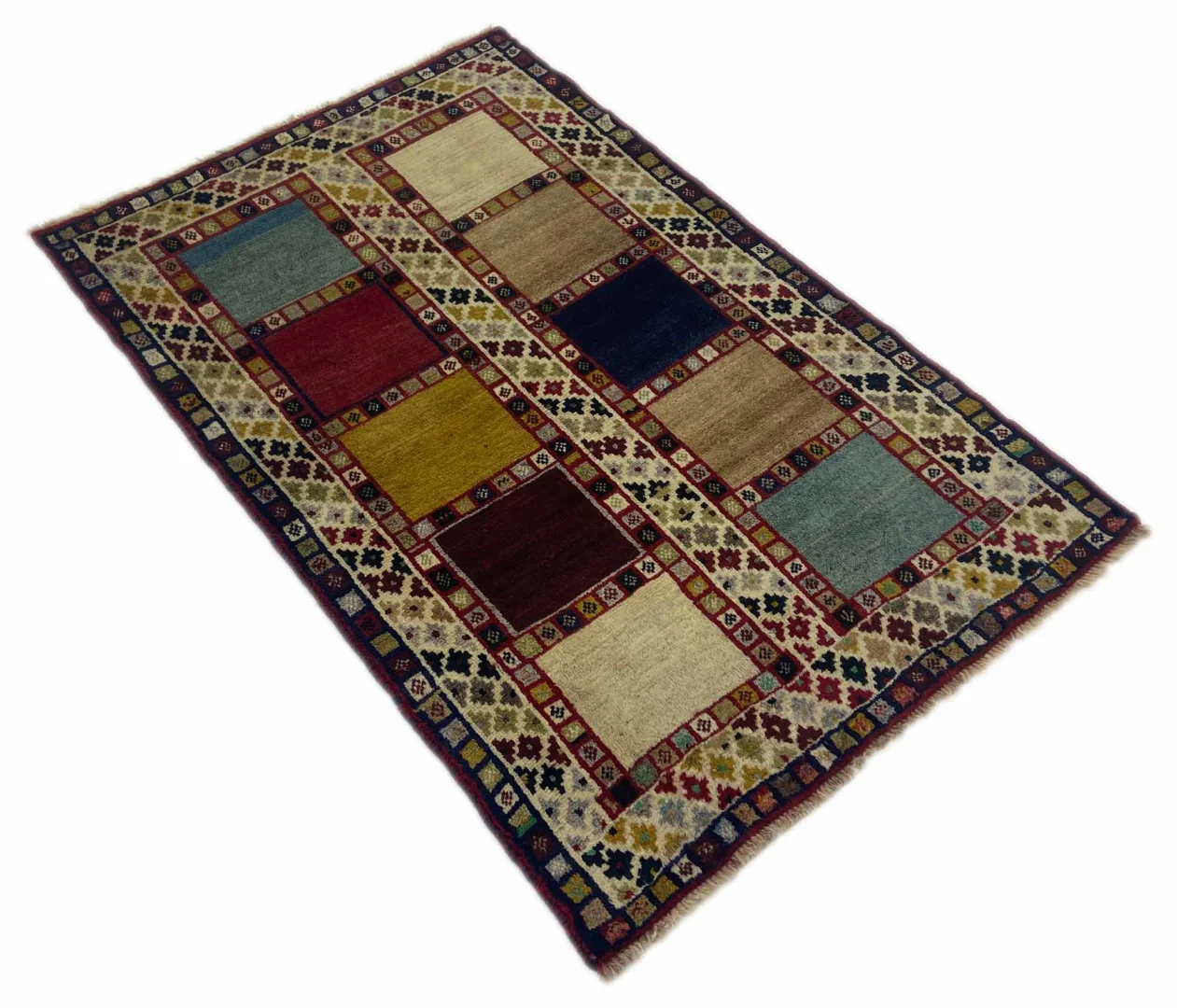
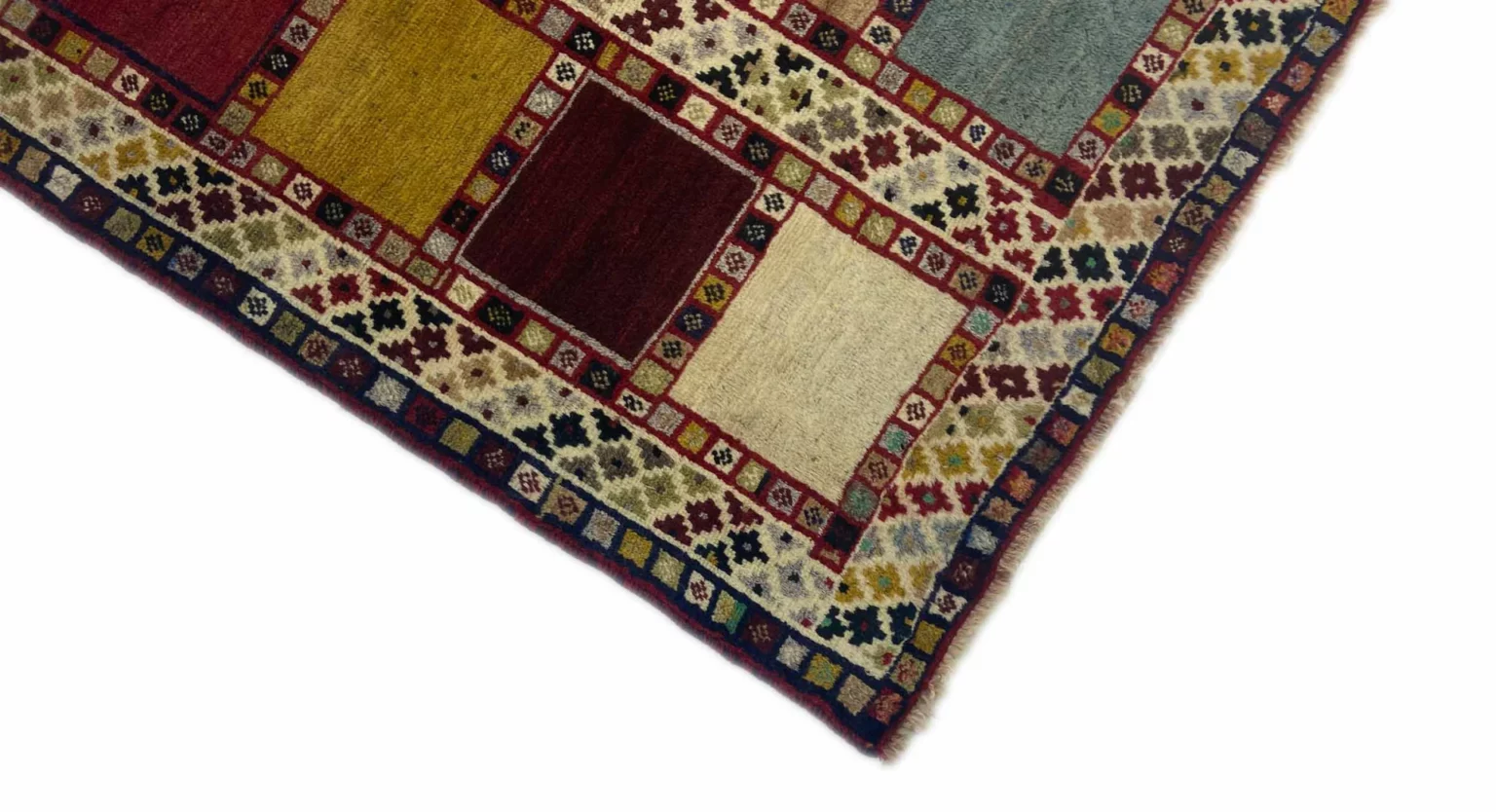
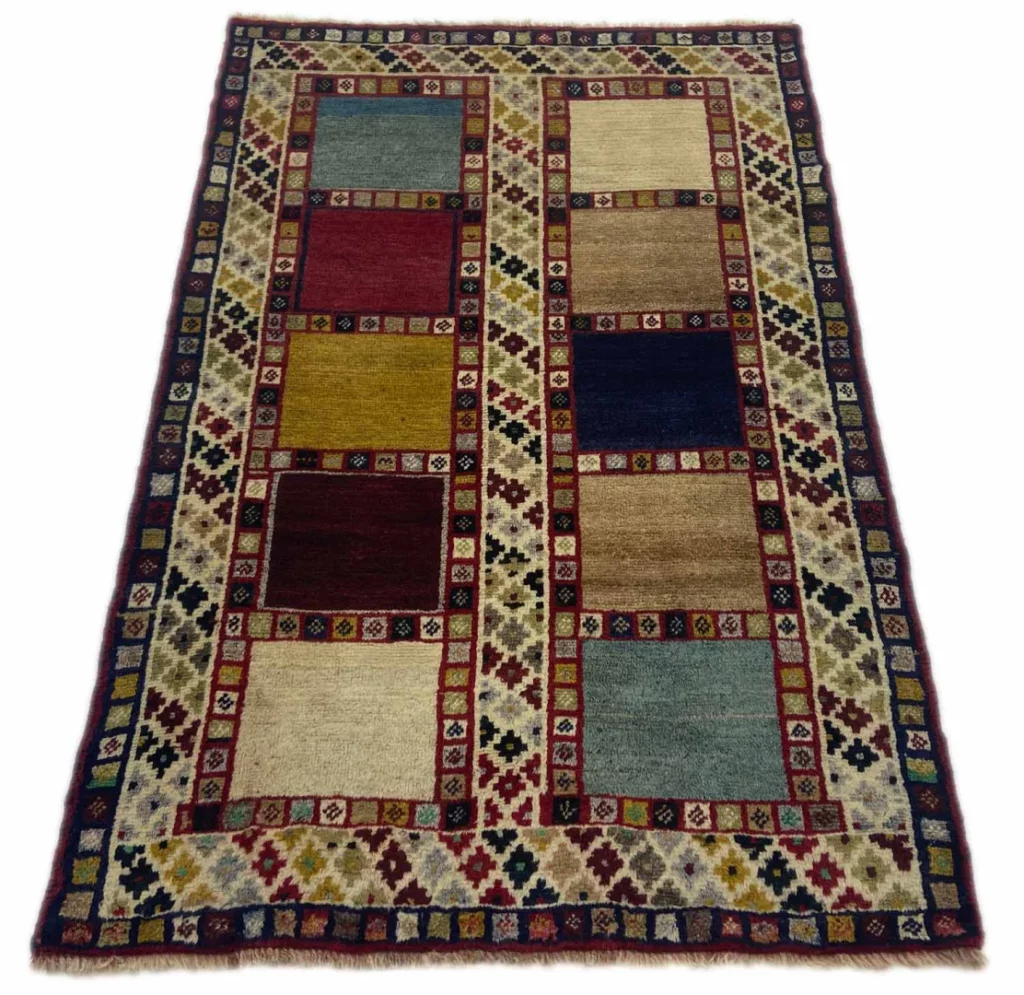
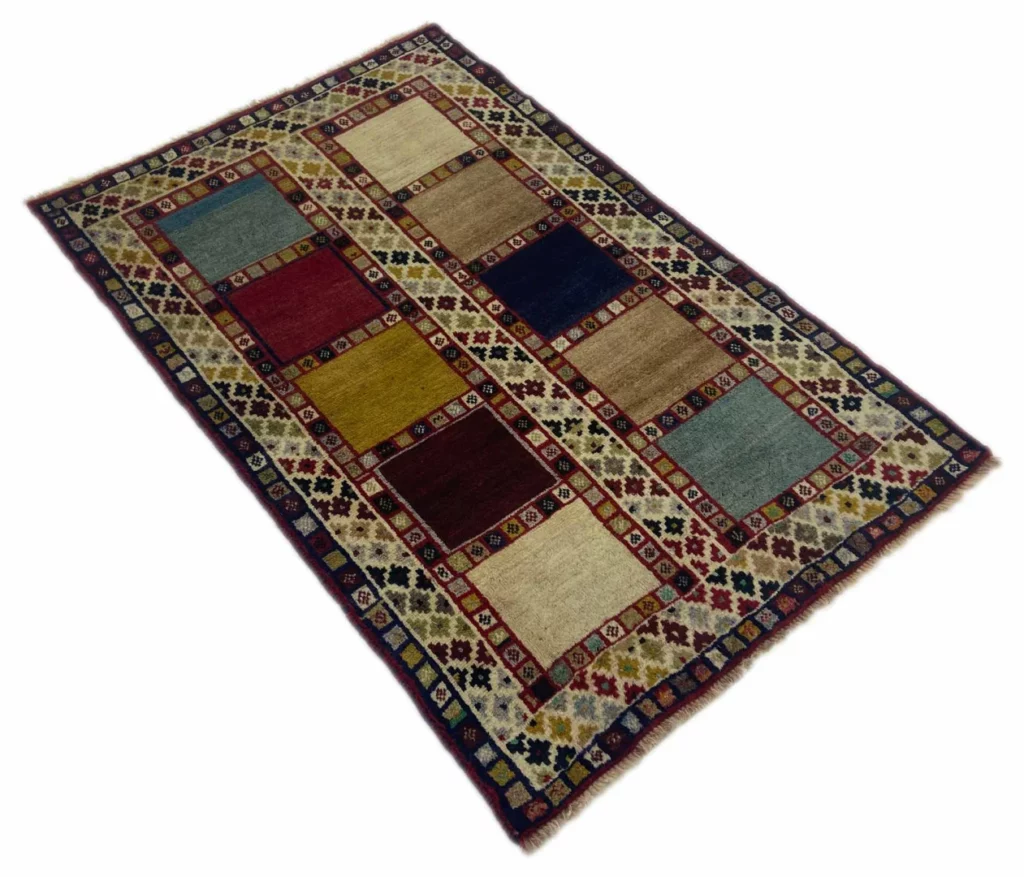
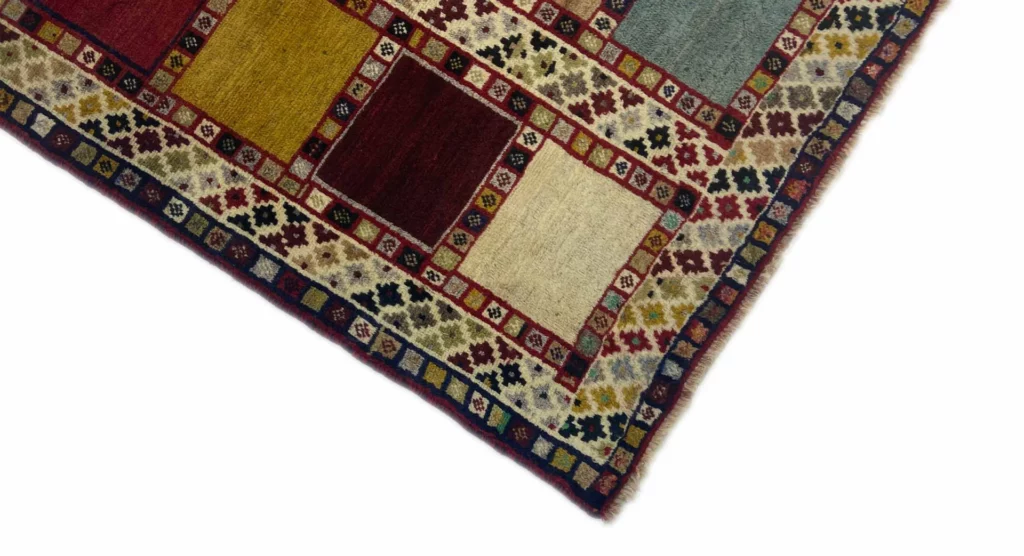
Persian Rug Fars 153 x 100 cm Wool Hand-knotted
€ 763
Hand-knotted Fars Persian Rug | Knot density: 90,000 – 180,000 knots/m² | Material: Pile high-quality virgin wool | Size: 153 x 100 cm | Pattern: Unusual, imaginative designs | Condition: New
1 available
- ✓Free Shipping in EU
- ✓2-5 Business Days Delivery
- ✓14-Day Return Policy
- ✓Worldwide Shipping on request
 SECURE PAYMENT
 SHIPPING PARTNERS
Inventory number: BD037EE8
Description
Fars Persian Rug
Material and Craftsmanship
This Gabbeh Shuli is a hand-knotted Persian rug from the Fars region. Its pile is made of high-quality virgin wool. Wool has long been used in rug making for its soft handle, natural resilience and comfortable warmth. In this Gabbeh Shuli, the material is combined with a hand-knotting process in which individual knots form the structure of the rug and support the character of its freely conceived design.
The knot density is between 90,000 and 180,000 knots per square metre. This density allows the surface to carry clearly worked details while retaining the distinctive character associated with Gabbeh weaving. The knotted construction also makes the rug suitable for everyday residential settings. Virgin wool contributes a pleasant feel and is valued for durability and warmth insulation, qualities that complement the visual language of the piece.
The rug is new. Its construction brings together handcraft, wool and an individual approach to pattern making. Rather than relying on a rigidly repeated ornament, a Gabbeh Shuli derives its identity from the relationship between the woven structure and an imaginative drawing. The result is a rug whose material and craftsmanship remain visible in the finished surface.
Origin and Tradition
This Gabbeh Shuli comes from the Fars region in southern Persia. Fars is one of the established rug-making regions of the country and is closely associated with the history of Persian weaving. Over many generations, knowledge of wool preparation, colour, knotting and rug construction has been passed on within the region. Gabbeh rugs form a distinctive part of this tradition because they combine practical textile work with a direct and personal visual language.
The history of carpet weaving in Fars reaches back to ancient times. Weaving developed in connection with nomadic and rural life, where rugs served practical purposes while also recording the ideas and observations of their makers. The work required knowledge of available wool, the handling of tools and the organisation of a design. Such knowledge could be transmitted through families and communities, allowing regional craft traditions to endure while leaving room for individual interpretation.
Gabbeh is not defined by one fixed pattern. The category is known for restrained elegance and for designs that can be invented freely rather than copied from a strict ornamental scheme. A Gabbeh Shuli therefore belongs to a tradition in which the knotter’s personal expression has an important role. This explains why rugs sharing the Gabbeh name may still differ considerably in their imagery, colour balance and arrangement of forms.
Fars is also associated with other rug types. Gabbeh Fars are known for creative designs and the use of natural materials. Shiraz rugs and Luri rugs from the region likewise have their own character and are appreciated for quality materials and traditional knotting methods. These related traditions share an understanding of weaving as both useful craft and artistic work. The Gabbeh Shuli reflects that broader regional setting while retaining the simpler, more freely imagined character of Gabbeh design.
The term Persian rug is appropriate here because the rug is assigned to Persia and specifically to Fars. It identifies the cultural and geographic tradition behind the piece, not merely a decorative look. Persian weaving includes many regional approaches, each with its own balance of materials, construction, colour and pattern. Fars is the named regional origin of this Gabbeh Shuli, while Shuli describes its place within the Gabbeh design tradition.
Design and Pattern
The pattern of this Gabbeh Shuli is described as unusual and imaginative. Gabbeh designs often begin with a simple visual idea, but simplicity does not mean a lack of character. Free shapes, simplified figures and individually developed signs can be arranged without the strict repetition found in highly formalised ornamental rugs. The design may suggest a person, animal, plant or abstract form while remaining deliberately reduced rather than naturalistic.
Personal expression is central to the Gabbeh approach. The knotter’s interpretation can be seen in the way forms are simplified, spaced and combined. A motif does not have to follow a precisely prescribed model. This open method gives the surface a direct, handmade quality and allows the viewer to engage with the shapes in different ways. It also distinguishes Gabbeh Shuli from rugs whose visual effect depends primarily on dense, regularly repeated borders and medallions.
Gabbeh Shuli rugs occur in a broad range of colours. Red, beige, grey and brown are among the colours commonly associated with them. Colour may be used in broad fields or paired with straightforward figurative and abstract motifs. The balance between colour areas and drawn elements is often more important than elaborate ornament. This creates a design that can be clear at a distance while still offering details to discover at closer range.
The Shuli designation relates to a Gabbeh variation recognised for its distinctive and imaginative patterns. It does not change the stated origin of this rug: the piece comes from Fars in Persia. The pattern name identifies a design direction within the Gabbeh family, whereas Fars identifies the regional source. Keeping these two meanings separate is important when describing an oriental rug accurately.
Gabbeh designs can work in both traditional interiors and more restrained contemporary settings. Their open visual language can be placed alongside different types of furniture and decoration. In a living room, the rug can function as a central textile element; in a bedroom or study, it can provide colour and texture without requiring a formal ornamental scheme. These uses arise from the adaptable nature of the design category rather than from one particular motif.
The stated knot density also contributes to the appearance of the pattern. A denser knot structure supports the rendering of distinctions between lines, colour fields and smaller signs. Alongside the virgin wool, it gives the rug a surface in which construction and design are closely connected. The unusual pattern remains the visual focus, while the knotting provides its material foundation.
Special Features
This rug combines the Gabbeh Shuli type with hand-knotting, high-quality virgin wool and an unusual imaginative design. Its pattern gives it an individual identity, while its origin in Fars places it within the Persian weaving tradition. The natural wool material adds a tactile element to the visual design and is valued for its softness, durability and warmth insulation.
The knot density of 90,000 to 180,000 knots per square metre is another specified feature. It indicates a carefully knotted surface with room for detailed pattern work. The rug is new and can be used in a range of residential spaces. Regular gentle vacuuming and prompt attention to spills support its care. Direct sunlight should be avoided so that the colours are less likely to fade over time.
FAQ
How should I care for a Gabbeh Shuli rug?
Regular vacuuming helps remove loose dust and everyday dirt from the rug. Spills and marks should be treated promptly and gently rather than being left to settle into the wool. Direct sunlight should be avoided because prolonged exposure can contribute to colour fading. Careful maintenance helps preserve the feel of the virgin-wool pile and keeps the imaginative pattern clearly visible. If the rug needs more extensive cleaning, professional rug cleaning is advisable so that the wool and hand-knotted structure are not subjected to unnecessary stress.
What are the advantages of Gabbeh Shuli rugs?
Gabbeh Shuli rugs combine an individual, imaginative appearance with the craftsmanship of a hand-knotted textile. High-quality virgin wool is valued for its soft feel, durability and ability to provide warmth insulation. The stated knot density supports a detailed surface, while Gabbeh rugs are also regarded as easy to care for and versatile in use. Their open patterns offer an alternative to tightly ordered ornamental designs and allow the rug to work with a range of interior styles.
Where can I use a Gabbeh Shuli rug?
A Gabbeh Shuli can be used in several rooms. In a living room, it can serve as a central textile feature; in a bedroom, it can add warmth and texture. It can also be used in a study, where its imaginative colours and forms provide visual interest without depending on a formal decorative layout. Because Gabbeh designs are varied and adaptable, they can be combined with different furniture and interior schemes. The rug is therefore not tied to one particular room or furnishing concept.
Additional information
| Design Style | |
|---|---|
| Color | |
| Size | |
| Shape | |
| Origin | |
| Knot Density | |
| Material |
Related products

Persian Rug Tabriz approx. 350 x 245 cm Wool Hand-knotted
€ 1280
Persian Rug Qashqai 284 x 183 cm Wool Hand-woven
€ 798
Oriental Rug Qashqai 292 x 193 cm Wool Hand-woven
€ 798
Persian Rug Heriz ca 341 x 242 cm Wool Hand-knotted
€ 1800
Persian Rug Tabriz 388 x 295 cm Wool Hand-knotted
€ 1440
Persian Rug Heriz 340 x 254 cm Wool Hand-knotted
€ 1438
Persian Rug Qashqai 290 x 192 cm Wool Hand-woven
€ 798
Persian Rug Qashqai 286 x 192 cm Wool Hand-woven
€ 944