
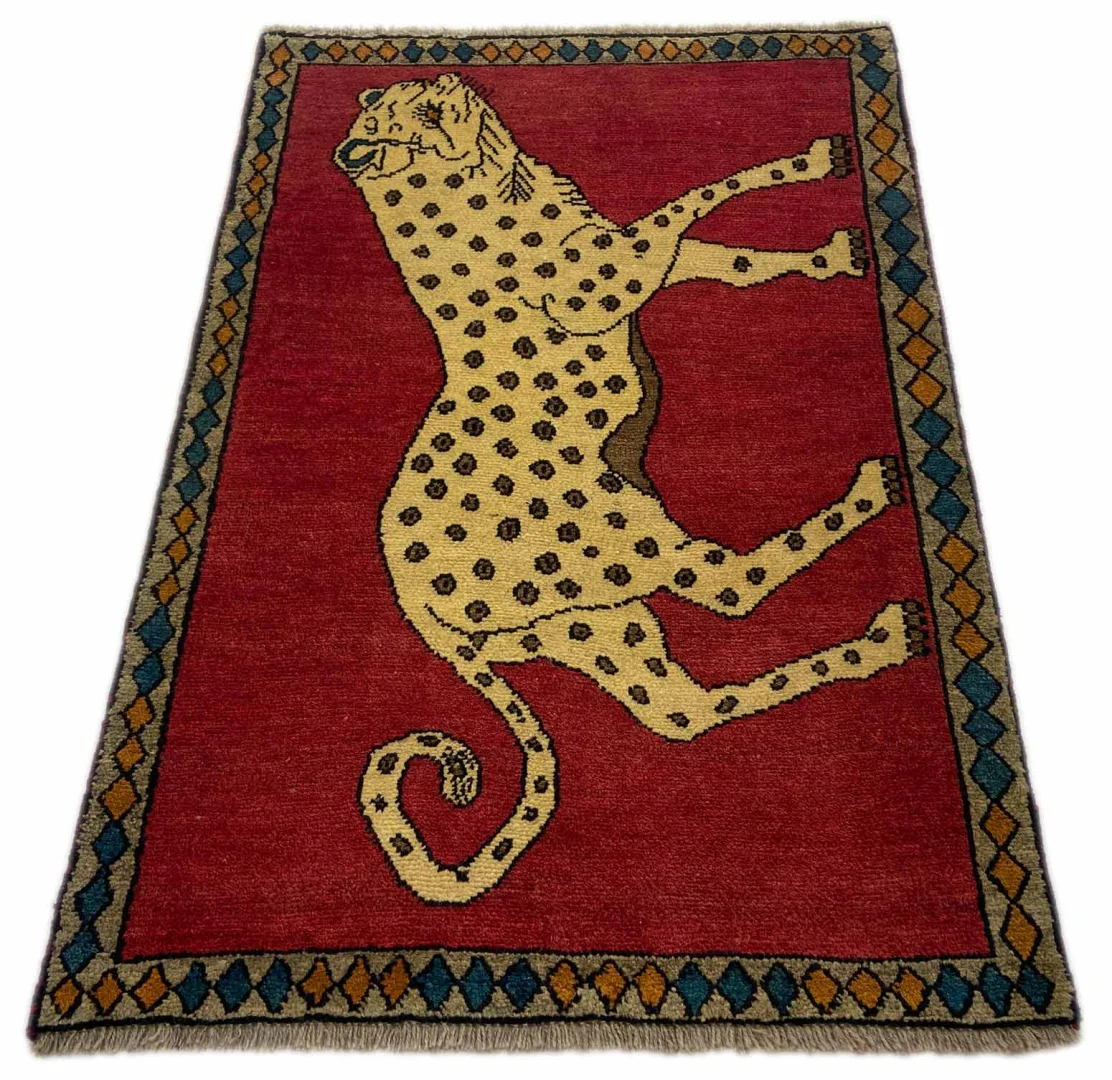
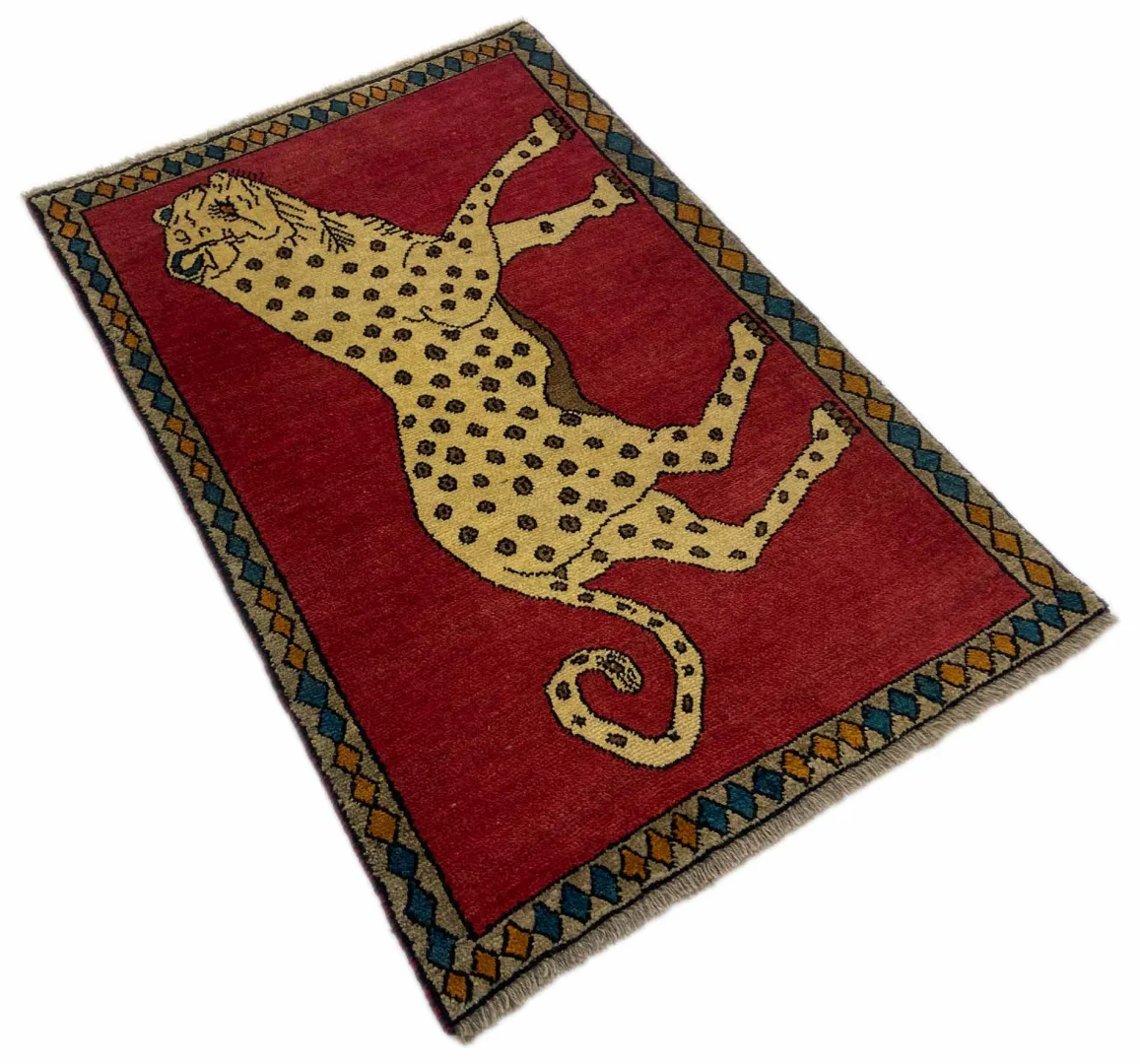
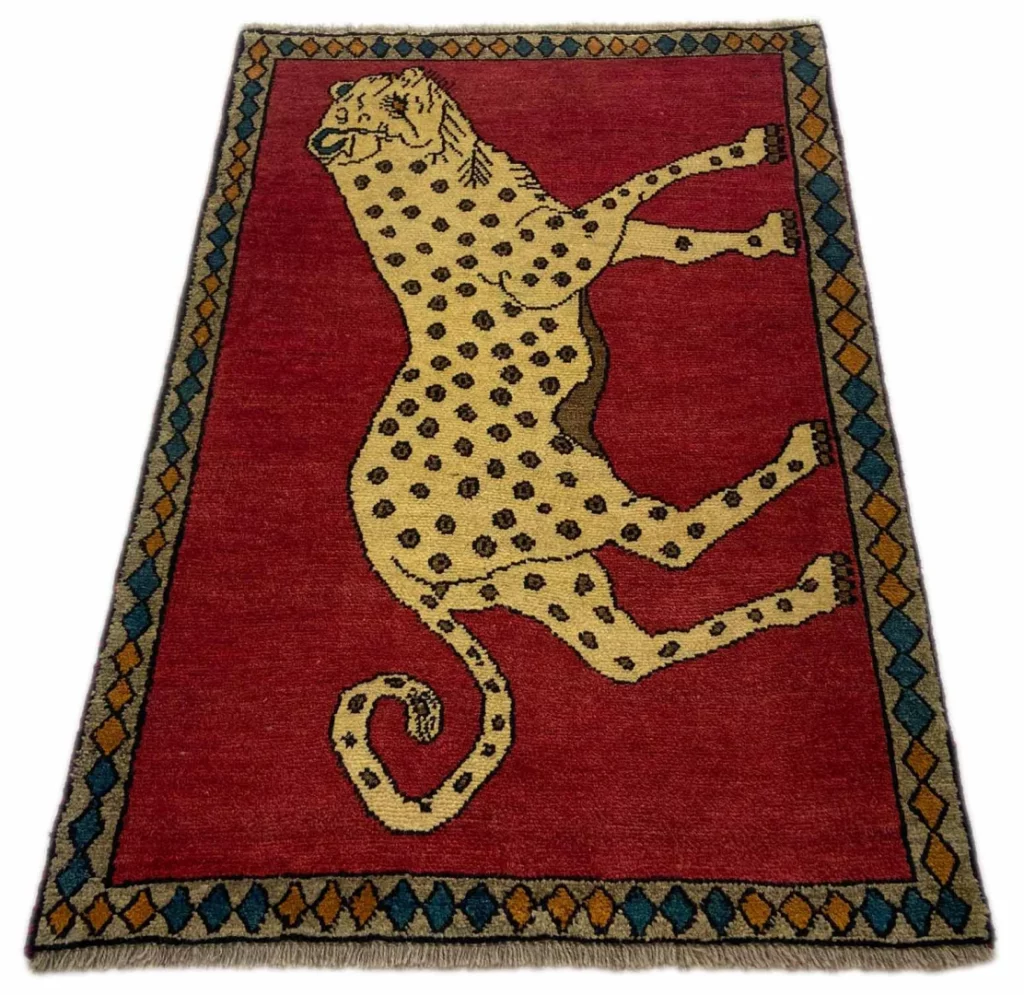
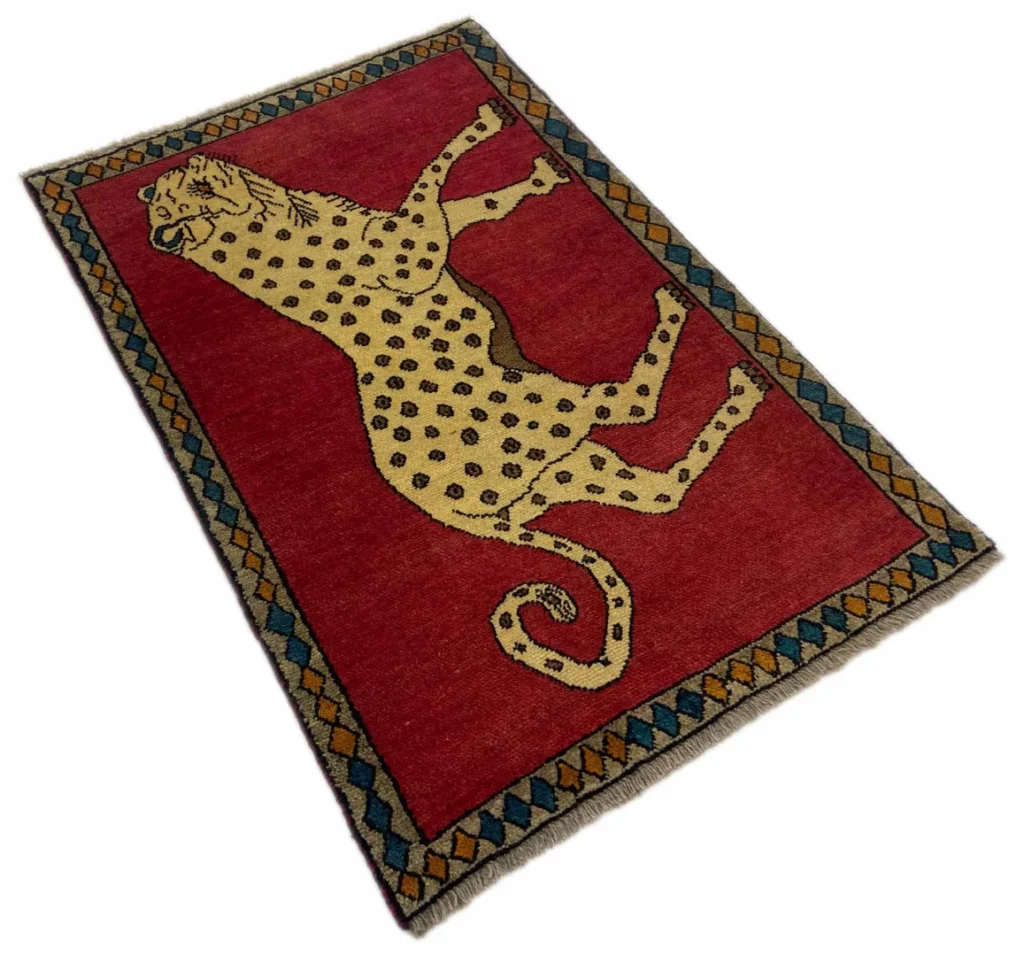
Persian Rug Fars 150 x 100 cm Wool Hand-knotted
€ 855
Hand-knotted Fars Persian rug | Knot density: 90.000 – 180.000 knots/m² | Material: pile lustrous virgin wool | Size: 150 x 100 cm | Pattern: Unusual imaginative designs | Condition: New or well preserved
1 available
- ✓Free Shipping in EU
- ✓2-5 Business Days Delivery
- ✓14-Day Return Policy
- ✓Worldwide Shipping on request
 SECURE PAYMENT
 SHIPPING PARTNERS
Inventory number: 582B300B
Description
Fars Persian Rug
Material and Craftsmanship
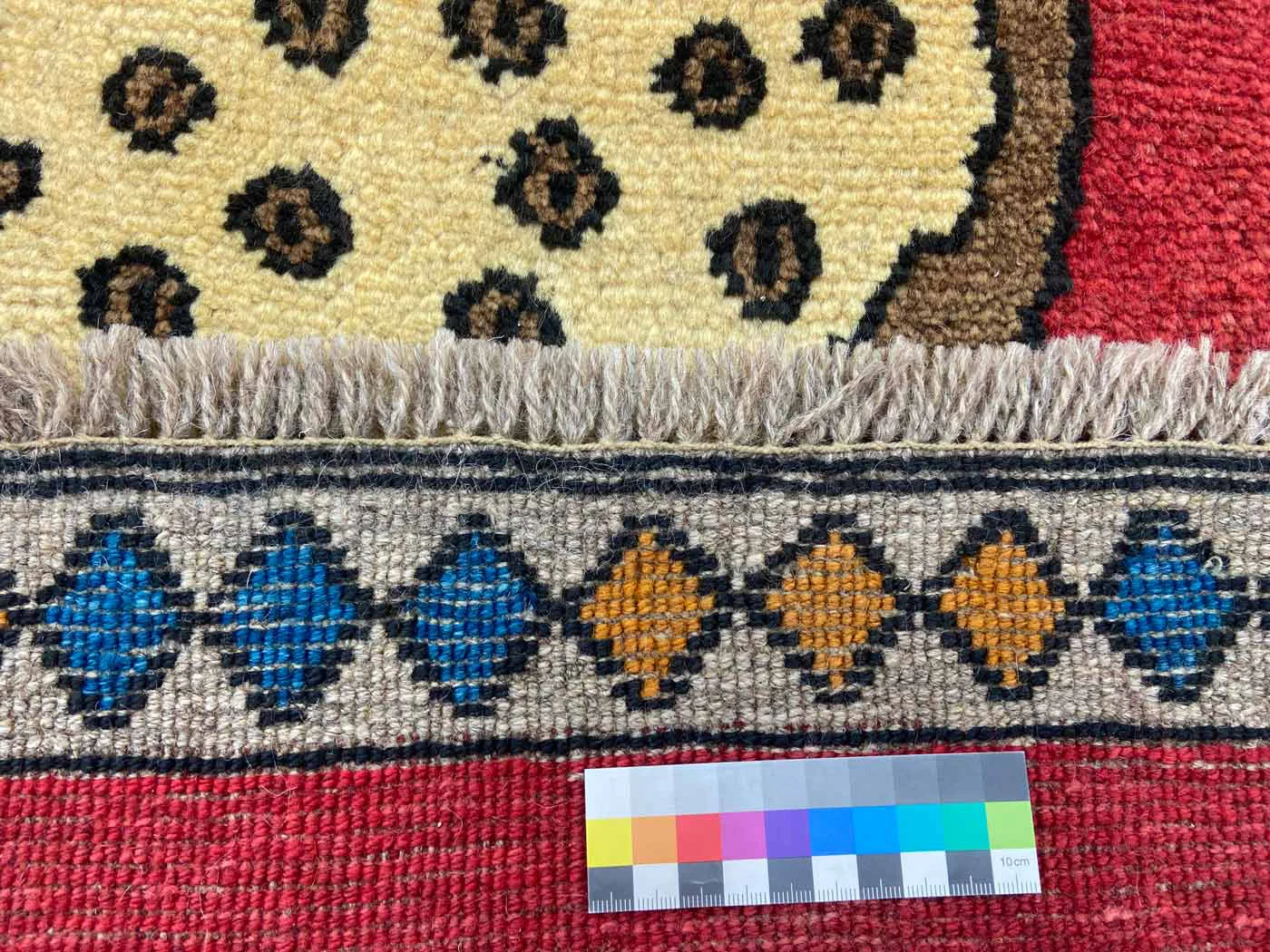
This Gabbeh – Shuli is hand-knotted with a pile made from lustrous virgin wool. The wool gives the rug a soft handle and is known as a material valued for durability. Its natural textile character suits the established Gabbeh tradition, where the surface and the hand of the wool form an important part of the rug’s appearance.
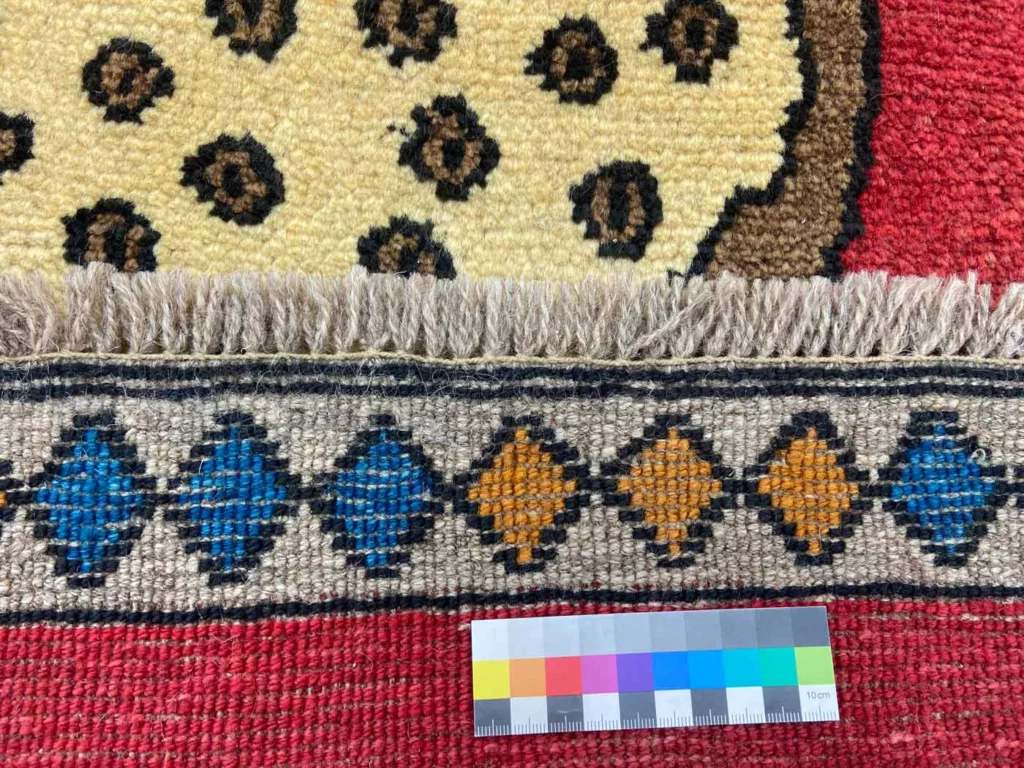
The knot density of this rug ranges from 90.000 to 180.000 knots per square metre. It reflects the careful manual work involved in its making. In hand-knotting, the design is built knot by knot rather than through a completely uniform machine process. This method is well suited to the individual, imaginative character associated with Shuli Gabbeh designs.
Gabbeh rugs are associated with a direct, handcrafted presence. In the Shuli form, that presence is combined with lustrous virgin wool and a design that is not confined to a rigidly repeated ornamental scheme. The material and the making therefore point both to established craft skills and to the personal expression of the individual weaver.
Origin and Tradition
The Gabbeh – Shuli comes from the Fars region in southern Persia, near the city of Shiraz. Fars is one of the important landscapes in Persian rug culture. The region has long been connected with nomadic and rural weaving and knotting traditions. Within this setting, textile work served practical purposes while also providing a way to express memories, surroundings and individual ideas through pattern.
Gabbeh rugs from Fars are particularly associated with nomadic weavers. Their compositions often do not follow the tightly prescribed structure found in many formal Persian carpets. Instead, they allow simplified forms, lively colour relationships and motifs drawn from the weaver’s imaginative world. This meeting of everyday experience, memory and free design is central to the tradition.
Shiraz and the wider Fars region represent more than a place of origin. They also indicate a distinctive approach to making rugs. A Gabbeh can be a useful textile, a personal artistic statement and a record of cultural practice at the same time. The nomadic background helps explain why Gabbeh imagery often uses a direct and readily understood visual language instead of the elaborate courtly ornament found in other Persian traditions. Geometric forms and abstract images may appear together in a coherent composition.
Fars can be distinguished from other Persian weaving centres by this freer approach. Rugs from Nain or Tabriz are often more closely linked to established pattern systems and symbolic ornament. Gabbeh from Fars instead favours a more immediate and open vocabulary. Persian Kelims are another important textile tradition, but they are flat-woven and consequently differ from the hand-knotted Gabbeh in both construction and texture.
The Gabbeh – Shuli retains this regional connection without being reduced to one fixed decoration. Its imaginative patterns reflect the creative perspective of the weavers. In this way, the rug remains rooted in Fars while showing how flexible a regional craft tradition can be. Each piece is regarded as unique and carries an individual character within the broader language of Gabbeh.
Design and Pattern
The defining feature of this Gabbeh – Shuli is its unusual, imaginative design. The pattern is individual rather than tied to one compulsory template. Unlike many traditional rugs whose identity depends on the exact continuation of inherited ornament, Gabbeh – Shuli compositions leave room for a freer arrangement. Their effect comes from the relationship between colour, shape and the weaver’s personal visual idea.
Geometric forms may occur alongside abstract representations. Clear lines, simplified figures and unexpected combinations give the designs an open quality. The motifs do not need to be read as literal pictures. Instead, they invite interpretation and show how the pattern grows from the thoughts and imagination of the people who make the rug.
Gabbeh – Shuli rugs are associated with vivid colours, including red, beige, grey and brown. Together, these tones can create a balanced and welcoming effect while allowing the pattern to retain its distinctive character. Red contributes a stronger accent, beige provides a calm base, and grey and brown give the palette an earthy balance. These colours belong to the visual vocabulary commonly connected with this type of rug.
The imaginative design gives every piece its own identity. In a rug based on a strict and established ornamental system, accurate repetition of a recognised pattern may be central. In a Gabbeh – Shuli, the individual arrangement of the elements is more important. Two rugs of the same type can therefore share a related visual language while presenting clearly different compositions.
This open pattern language allows Gabbeh rugs to work in different interior settings. Their origin remains visible in the colours, the handcrafted presence and the character of the motifs, but the design is not limited to one historical style of furnishing. The rug can stand beside simple contemporary furniture or form part of a more traditional room. Its pattern introduces colour and a personal textile element without requiring a formal ornamental setting.
The designs are decorative as well as suggestive of a story. They recall the creative freedom associated with nomadic weavers and are often described as having a childlike directness. This does not mean a lack of care. Rather, it describes a deliberate departure from overly intricate ornament. Simplified and abstract forms keep the process of hand-making visible and make each rug an independent textile statement.
Special Features
The Gabbeh – Shuli is distinguished by the combination of lustrous virgin wool, hand-knotting and imaginative design. It connects the tradition of Fars with a visual language that is lively and individual. Red, beige, grey and brown are among the colours commonly found in this type, while the patterns can range from geometric forms to abstract representations.
Each piece is unique and is understood as an expression of the weavers’ creativity. This gives the Gabbeh – Shuli a particular place within Persian rug making. It can be used in a living room, bedroom or hallway and suits both modern and traditional interior styles. The condition of this example is described as new or well preserved.
For care, regular vacuuming is recommended. If more thorough cleaning is needed, professional cleaning should be used. Direct sunlight should be avoided because it can encourage the colours to fade. These simple measures help preserve the wool, the colour effect and the handcrafted surface of the Gabbeh – Shuli.
FAQ
What makes the Gabbeh – Shuli distinctive?
Its distinctive qualities are the individual, unusual patterns and the lively colour palette. Geometric forms and abstract representations are combined in an imaginative visual language associated with the creative thinking of nomadic weavers. The hand-knotted construction in lustrous virgin wool connects the rug with the traditional craftsmanship of the Fars region. Every piece is unique, so each one has its own expression within the Gabbeh tradition.
How should I care for my Gabbeh – Shuli?
The rug should be vacuumed regularly so that loose dirt does not remain in the surface. When a more intensive cleaning is required, professional rug cleaning is recommended. Direct exposure to sunlight should be avoided, as it can contribute to fading. Regular, careful maintenance helps retain the appearance of the virgin wool, the colour effect and the handcrafted character of the Gabbeh – Shuli.
Where can I use the Gabbeh – Shuli?
The rug works well in a living room, bedroom or hallway. Its imaginative designs and lively colours suit modern as well as traditional interiors. In a restrained contemporary setting, the pattern and colour can be clearly noticed; in a traditionally furnished room, the regional and handcrafted character can become part of the wider arrangement. The Gabbeh – Shuli adds colour and a welcoming textile presence to the room.
Additional information
| Design Style | |
|---|---|
| Color | |
| Size | |
| Shape | |
| Origin | |
| Knot Density | |
| Material |
Related products

Persian Rug Gabbeh 270×83 cm Hand-knotted
€ 755
Persian Rug Heriz ca 341 x 242 cm Wool Hand-knotted
€ 1800
Persian Rug Gabbeh 200 x 300 cm Cashmere Hand-knotted
€ 1323
Persian Rug Gabbeh 250 x 180 cm Cashmere Hand-knotted
€ 1118
Persian Rug Qashqai 293 x 198 cm Wool Hand-woven
€ 798
Persian Rug Tabriz 388 x 295 cm Wool Hand-knotted
€ 1440
Persian Rug Qashqai 290 x 200 cm Wool Hand-woven
€ 798
Persian Rug Gabbeh 200 x 300 cm Cashmere Hand-knotted
€ 1325