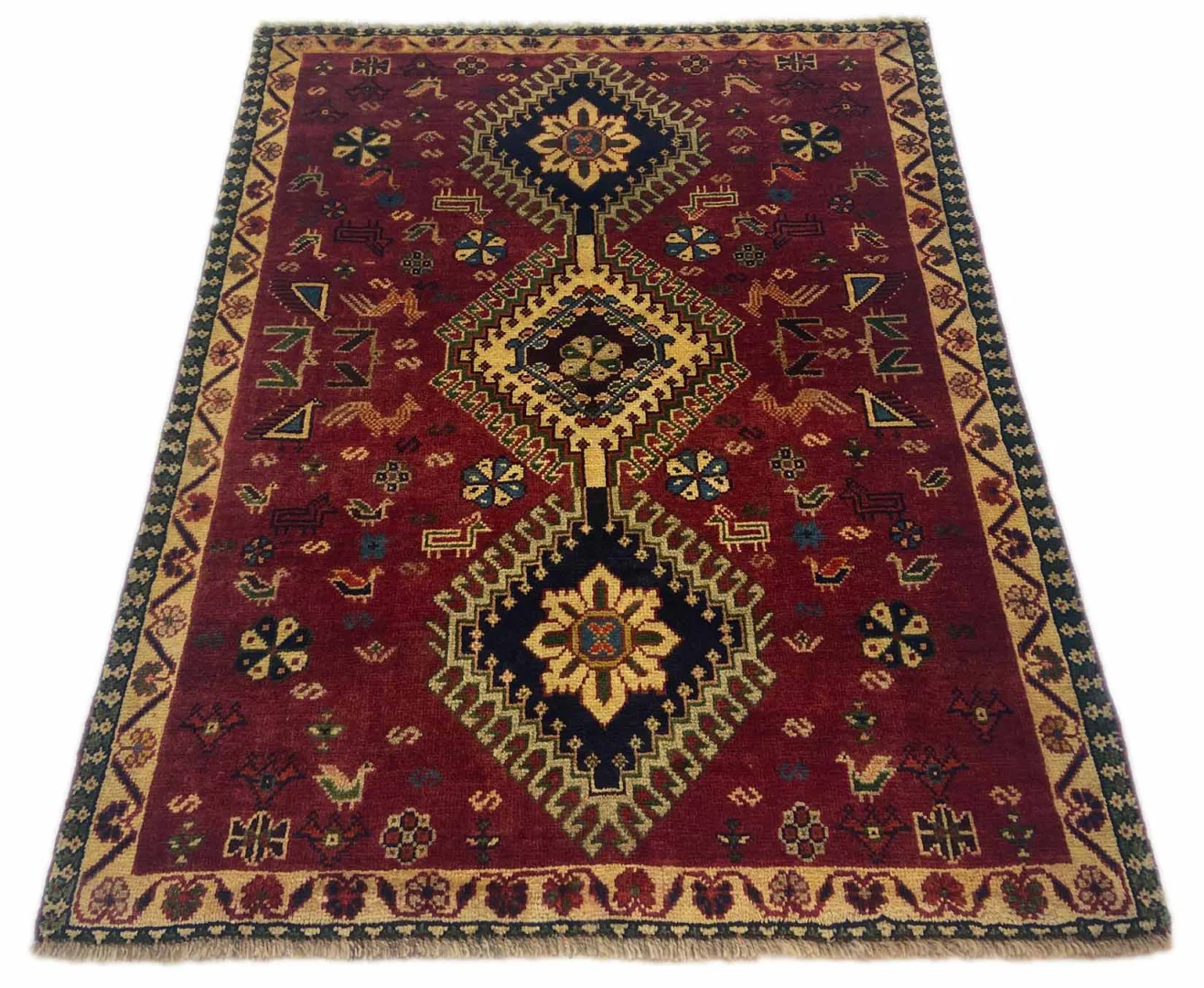
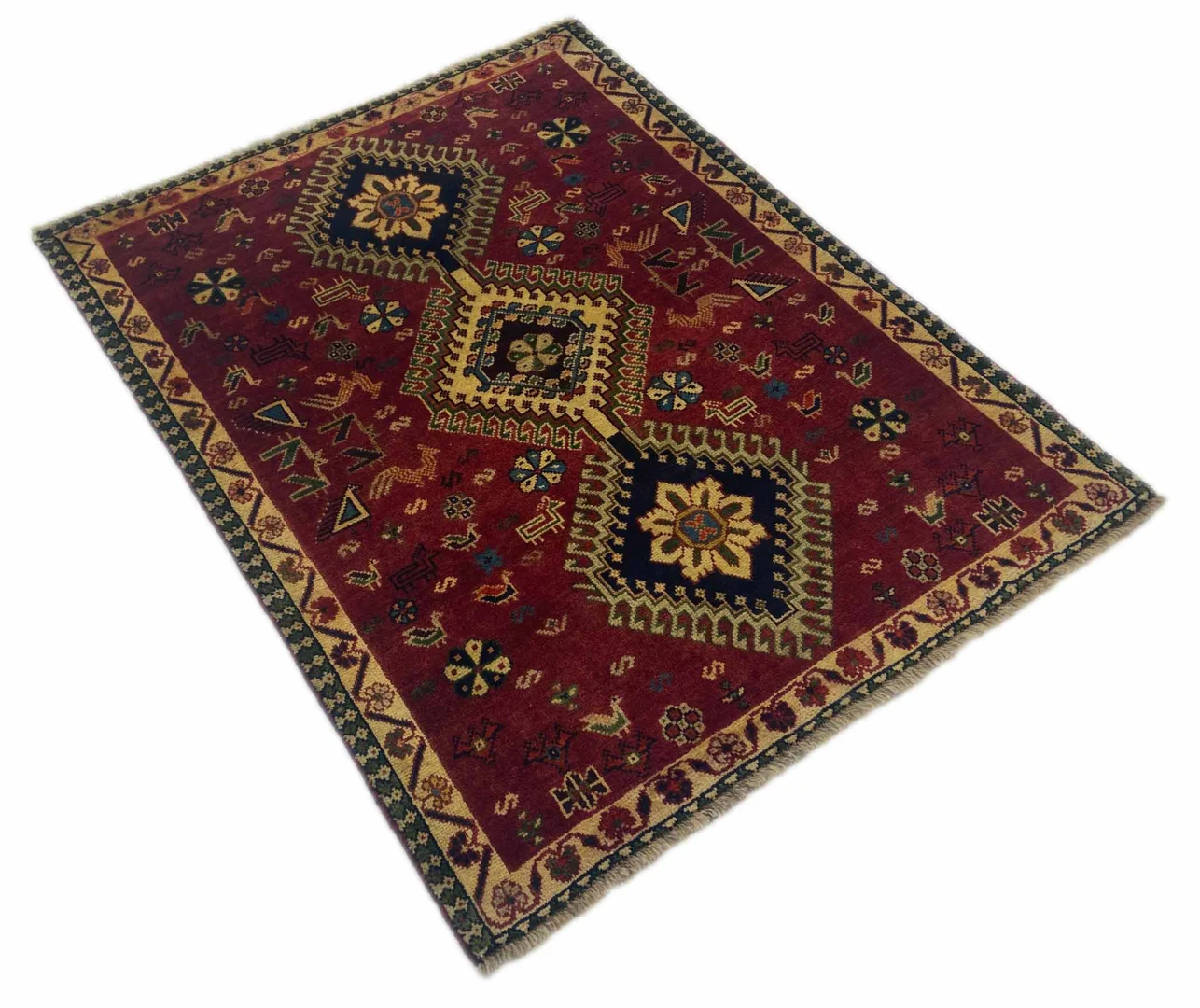
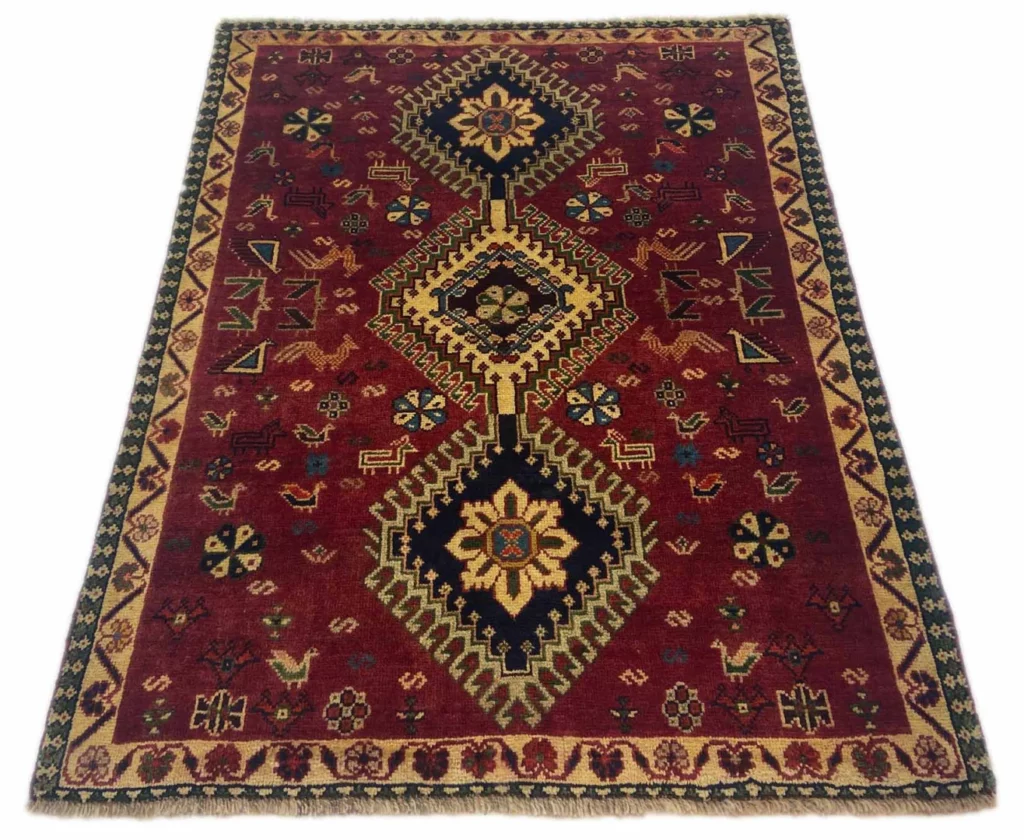
This Gabbeh Shuli is a hand-knotted Persian rug from the Fars region. Its pile is made from glossy virgin wool. Virgin wool is obtained from a living sheep and prepared as yarn for textile production. It is valued for natural warmth, softness, and durability. In this Gabbeh, those qualities are combined with a handmade process in which the knots are placed by hand and gradually form the rug’s surface, structure, and design.
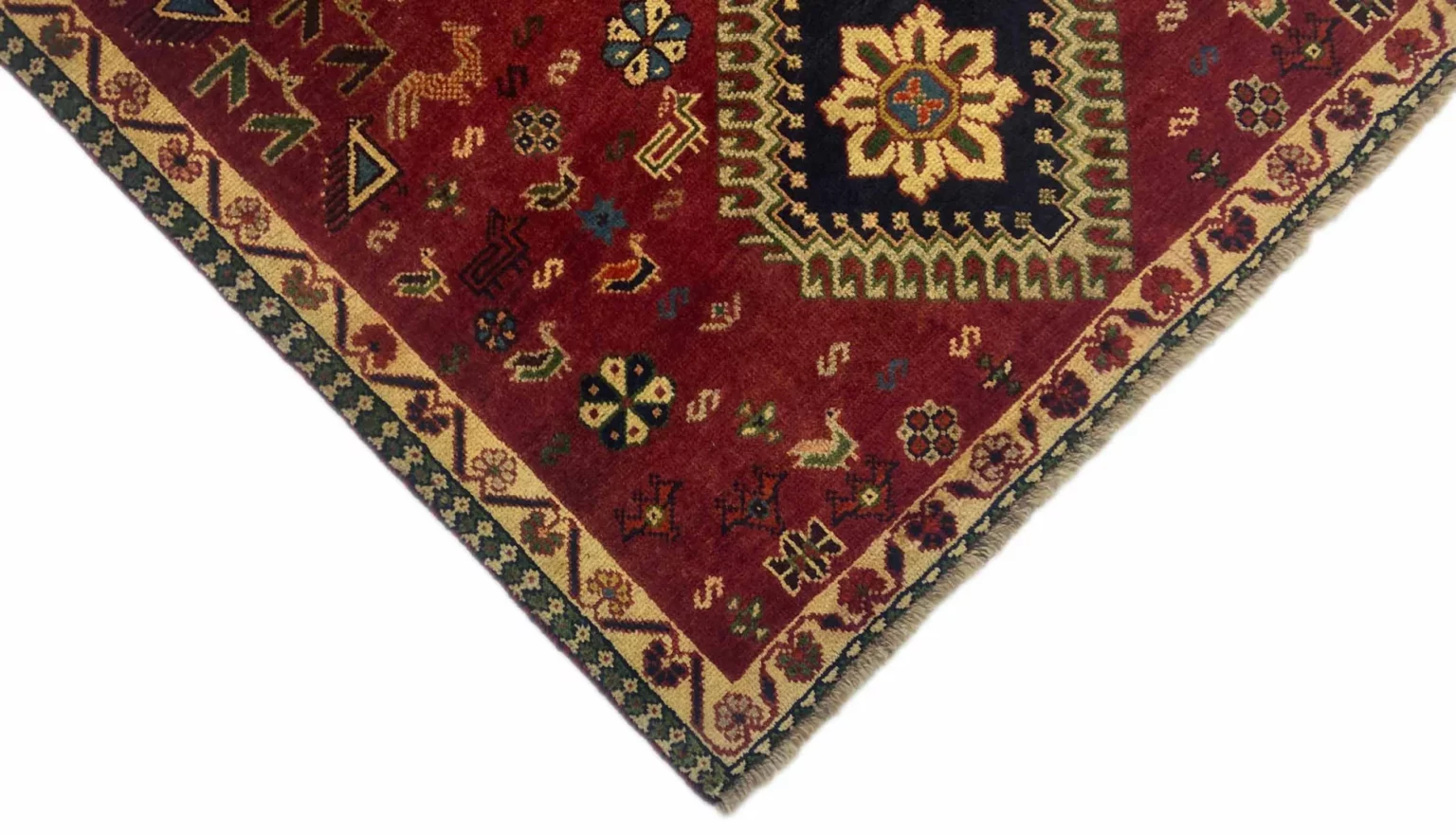
The wool is carefully selected so that its natural character remains apparent in the finished piece. Depending on the light, its sheen can make the surface appear subtly different from one moment to the next. The fibre also gives the rug a soft textile feel. The listed knot density indicates a carefully worked hand-knotted construction. It is a feature of this individual rug and should not be confused with the uniform production of a machine-made floor covering.
Hand knotting is a gradual process. The maker works with the foundation yarns, places one knot after another, and builds the pile across the planned area. This requires control of yarn, tension, rows, and design. Minor variations in a hand-knotted textile are part of the making process rather than evidence of a repeated industrial product. The Gabbeh Shuli is described as a unique piece, bringing together virgin wool, manual craftsmanship, and a freely conceived pattern.
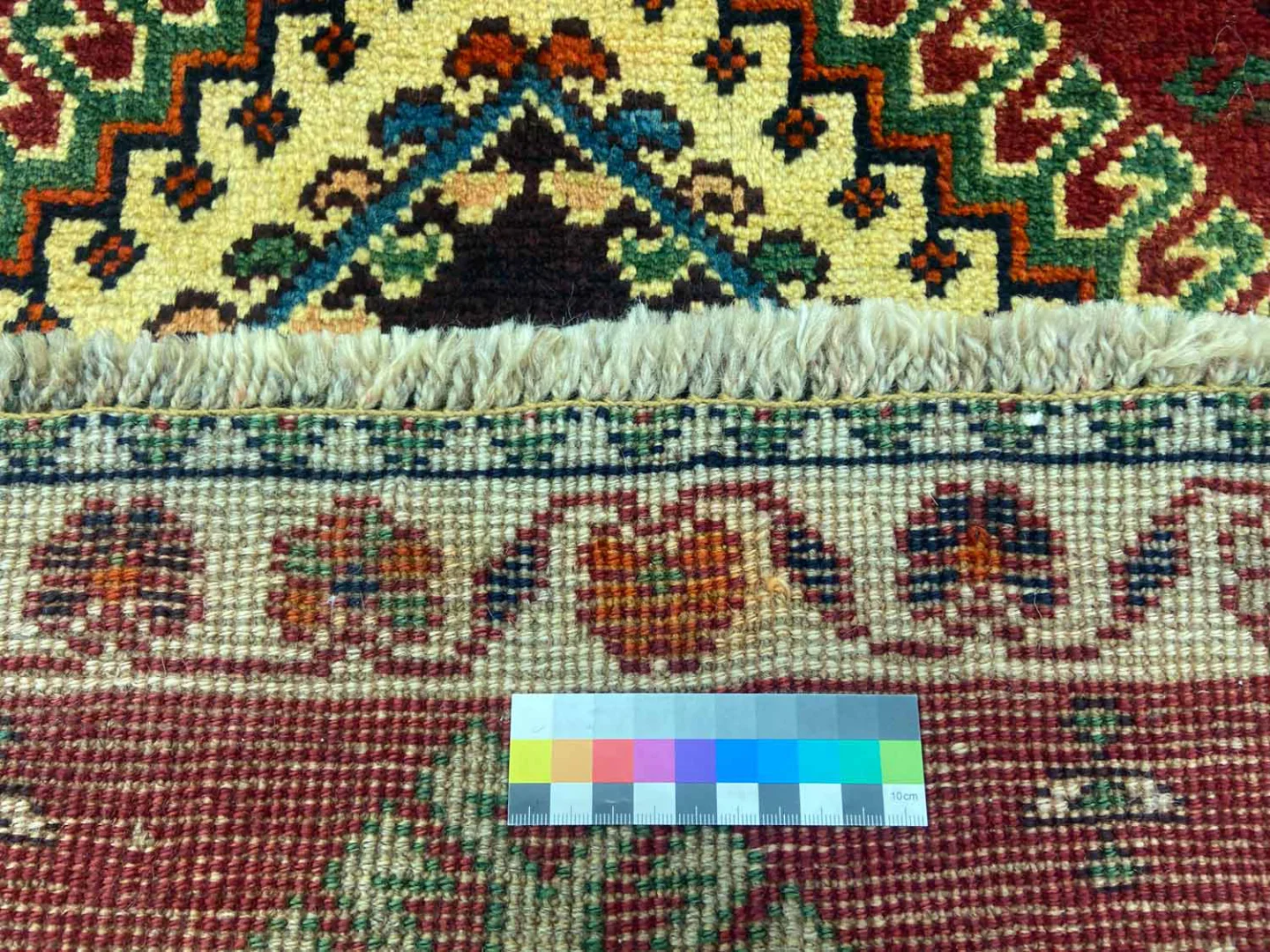
The rug is new. No additional information is given about its warp, weft, or the construction of the back, so those details are not added here. The material and workmanship can be described precisely through the facts provided: glossy virgin wool in the pile, hand knotting, and the stated knot density. These characteristics distinguish the rug’s documented make without attributing any unlisted technical feature to it.
Origin and Tradition
This Gabbeh Shuli comes from the Fars region of southern Persia, in Iran. Fars is one of the important cultural areas associated with the southern Iranian plateau. Its carpet traditions developed across a varied landscape and among communities with different ways of life. Rural and nomadic production forms an important part of the background to Gabbeh weaving. Within that setting, rugs were made as useful household textiles while also expressing the individual approach of the people who produced them.
Gabbeh rugs are traditionally associated with the nomadic peoples of Persia. For nomadic families, a rug had to serve practical purposes and remain suitable for changing living conditions. The textile could provide a floor covering, a warm surface, or part of the furnishing of a temporary home. Such use encouraged sturdy materials and clear, direct construction. Over time, these practical requirements became part of the identity of Gabbeh, while the designs retained room for personal interpretation.
The Fars region is also home to Shiraz, a city widely known for its importance in Persian culture. Shiraz is frequently mentioned in discussions of southern Iranian carpets, but the origin of this particular rug is stated as Fars. That regional designation should not be replaced by an unsupported claim about a specific city workshop. The terms in the product description work together: Fars identifies the region, Gabbeh Shuli identifies the rug type and named version, and the imaginative pattern describes its visual character.
Regional carpet traditions are not fixed formulas. Within Fars, Gabbeh Fars and Shiraz rugs are also known. They may share aspects of local craftsmanship, yet their patterns and colour variations can differ. This variety reflects the fact that weaving and knotting traditions are shaped by materials, local practice, intended use, and the choices of individual makers. A Fars Gabbeh therefore belongs to a broad regional culture without needing to reproduce one single design scheme.
The tradition is transmitted through practical knowledge. Makers learn how to handle wool, prepare the textile foundation, control the tension, place knots, and keep the emerging surface coherent. They also learn how a design can be developed through simple forms and colour relationships. A freely imagined pattern does not mean a lack of skill. It means that established techniques provide the framework within which an individual idea can be given a textile form.
Persian carpet history includes many other celebrated centres. Kashan, Isfahan, and Tabriz are known for their own approaches to knotting, drawing, and detailed design. They are not the stated origin of this rug. Its origin is Fars in southern Persia. Mentioning these other centres serves only to place the rug within the wider diversity of Iranian carpet culture, where regional identities developed alongside one another rather than forming one uniform style.
The connection between Fars and Gabbeh is therefore both geographical and traditional. It refers to a southern Persian environment in which hand-made rugs, wool, daily use, and personal imagery have long been connected. The Gabbeh Shuli follows that background while being presented as an individual contemporary offering. Its regional identity remains Fars, and its handmade character is expressed through wool, knotting, and imaginative design rather than through a claim to an unrecorded workshop or maker.
Design and Pattern
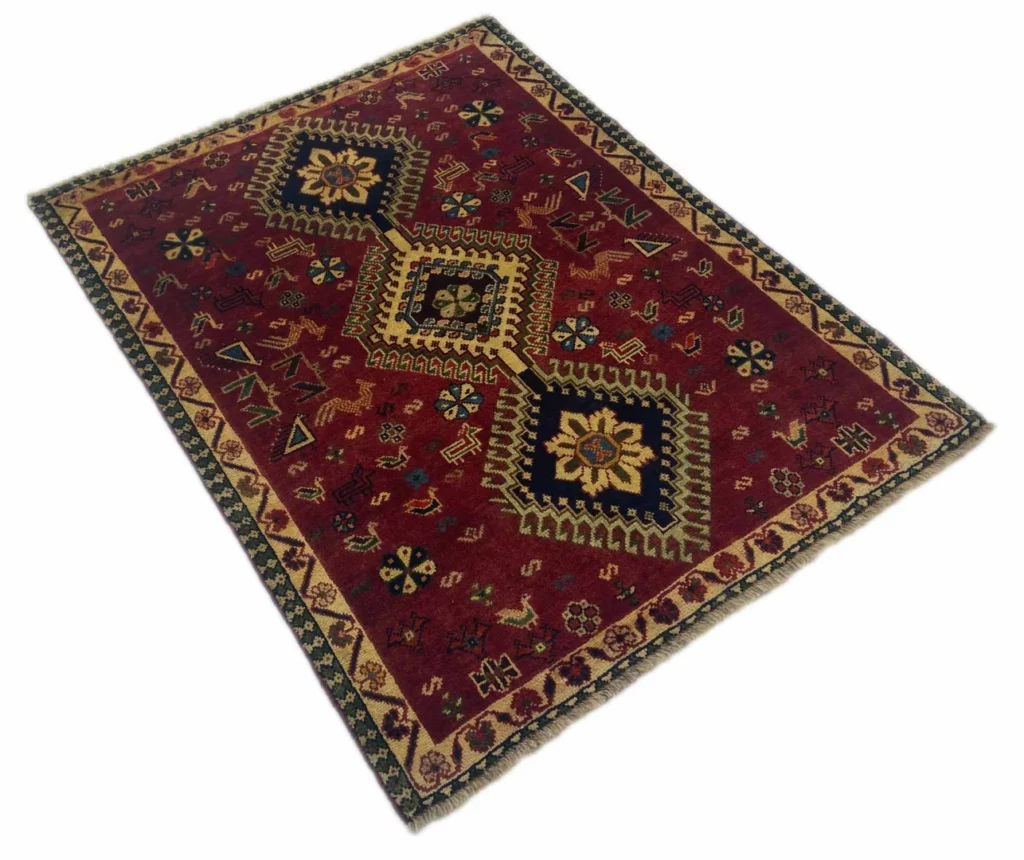
The design of this Gabbeh Shuli is described as unusual and imaginative. It is freely conceived rather than presented as a strict, repeated template. The patterns of such rugs are often connected with the stories, observations, and ideas of the people who knot them. A maker may bring together shapes and signs according to personal imagination, allowing the finished textile to become an individual interpretation of the Gabbeh tradition.
Gabbeh design is often associated with a direct and clearly legible visual language. Its effect need not depend on a large number of minute details. Instead, the relationship between open ground, individual forms, outlines, and colour can carry the composition. Simplified shapes may be placed apart from one another or grouped into a balanced arrangement. This creates a design that can be understood as an image while remaining closely tied to the structure of a hand-knotted wool rug.
Colours typically associated with Gabbeh include strong red, soft beige, elegant grey, and earthy brown. These colours describe the palette named in the source text for Gabbeh rugs generally; they are not treated here as a complete inventory of every colour in this particular piece. In Persian textile design, colour relationships are affected by the yarn, the surrounding field, the pattern, and the way light meets the pile. Natural-looking shades may be used beside more intense accents to create contrast or quiet transitions.
Imaginative patterning gives the maker scope to transform an idea into a woven or knotted image. A story does not have to be represented literally. It can appear through an arrangement of forms, a suggestion of movement, or the contrast between an open field and a concentrated motif. This freedom is one reason Gabbeh rugs can look different from one another even when they share a regional and technical background. The technique remains traditional, while the visual solution can be personal.
The word Shuli is used here as part of the named Gabbeh version in the product description. It does not change the origin into another province or city. Fars remains the regional designation, while Gabbeh Shuli identifies the type and named form. Keeping origin, rug type, and pattern description separate is important when describing oriental rugs accurately. The phrase imaginative designs tells us about the character of the pattern, not about a different place of manufacture.
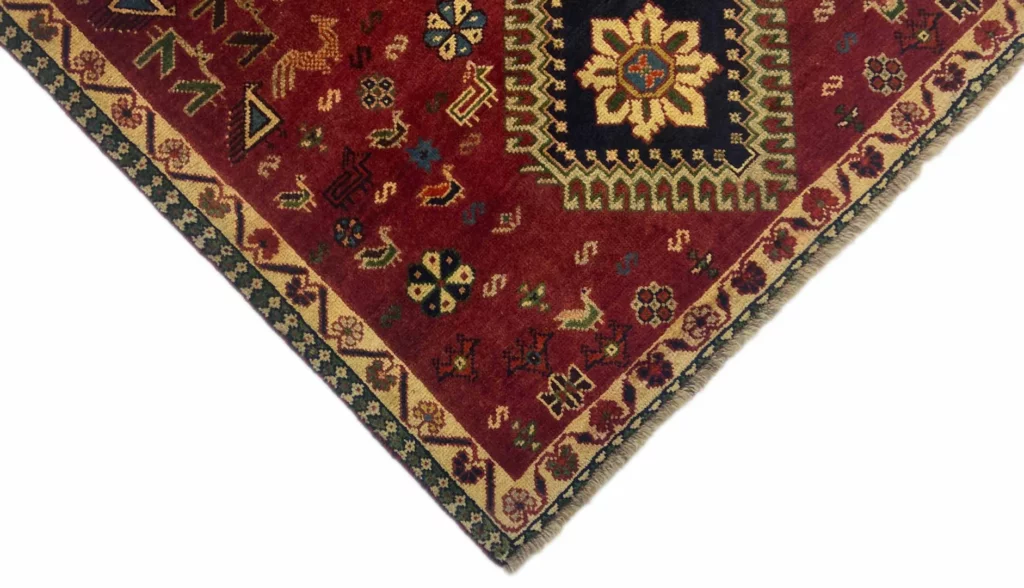
Hand knotting gives the pattern a physical dimension as well as a visual one. The knots create the pile, and the pile catches light according to the direction and sheen of the wool. As a result, contours may look more or less pronounced when the surface is viewed from different angles. This is a natural aspect of a woollen hand-knotted textile. The pattern is still an intentional composition; the material simply adds texture and changing surface definition to the drawn idea.
A freely arranged Gabbeh design does not have to be defined by a formal central medallion, a strictly mirrored layout, or a fixed border system. The description of this rug instead emphasises unusual and imaginative designs. That openness links an established Persian knotting tradition with a more contemporary sense of individual composition. The rug remains rooted in Fars while allowing the pattern to speak through its own arrangement of forms and colours.
Special Features
The Gabbeh Shuli is a one-off piece. Its unusual and imaginative designs are presented as individually conceived rather than as a standard pattern repeated across identical rugs. It is new, hand-knotted, and made with glossy virgin wool in the pile. These details bring together the rug’s documented condition, material, technique, regional identity, and freely designed character.
Gabbeh rugs are described as functional as well as decorative textiles. Virgin wool is associated with natural warmth, softness, and durability. The product description also characterises Gabbeh rugs as easy to care for, able to retain their appearance over many years, and suitable for households with children or pets. Their hypoallergenic quality is likewise stated. These points describe the Gabbeh type and accompany the specific facts given for this new Fars rug.
The description presents this kind of rug as suitable for different living situations, including use in a living room or as a comfortable rug in a bedroom. Its special character does not depend on an unsupported claim about a particular interior. It lies in the combination of hand knotting, virgin wool, Fars origin, and an imaginative pattern that makes the individual piece distinct.
FAQ
How should I clean my Gabbeh Shuli rug?
Regular vacuuming helps remove dust and loose dirt from the pile. If a spill or mark occurs, it should be treated promptly with a damp cloth and a mild cleaning product. Harsh chemicals should be avoided because they can affect the wool and the appearance of the colours. For a more thorough cleaning, professional rug cleaning is recommended. A specialist can take the properties of virgin wool into account and choose a process that protects the material and the colours. Excessive rubbing, soaking the rug, or using unsuitable household products is not an appropriate method for a hand-knotted wool rug. Gentle, careful treatment is the practical way to keep the textile clean while respecting its handmade construction.
Where can I buy a high-quality Gabbeh Shuli rug?
High-quality Gabbeh Shuli rugs can be found in specialist rug shops and on online platforms. When choosing a seller, look for clear information about origin, material, technique, condition, and the individual design. A certificate of authenticity can provide additional guidance when the seller offers one. It is useful to make sure that the description refers to the actual rug being offered, since every hand-knotted Gabbeh is a unique piece. Specialist advice can be valuable when questions arise about the Fars tradition, virgin wool, knotting, or care. A reliable description should distinguish the rug’s regional origin from the name of its design and should not assign it to another Persian centre without evidence.
How can I tell whether my Gabbeh Shuli is authentic?
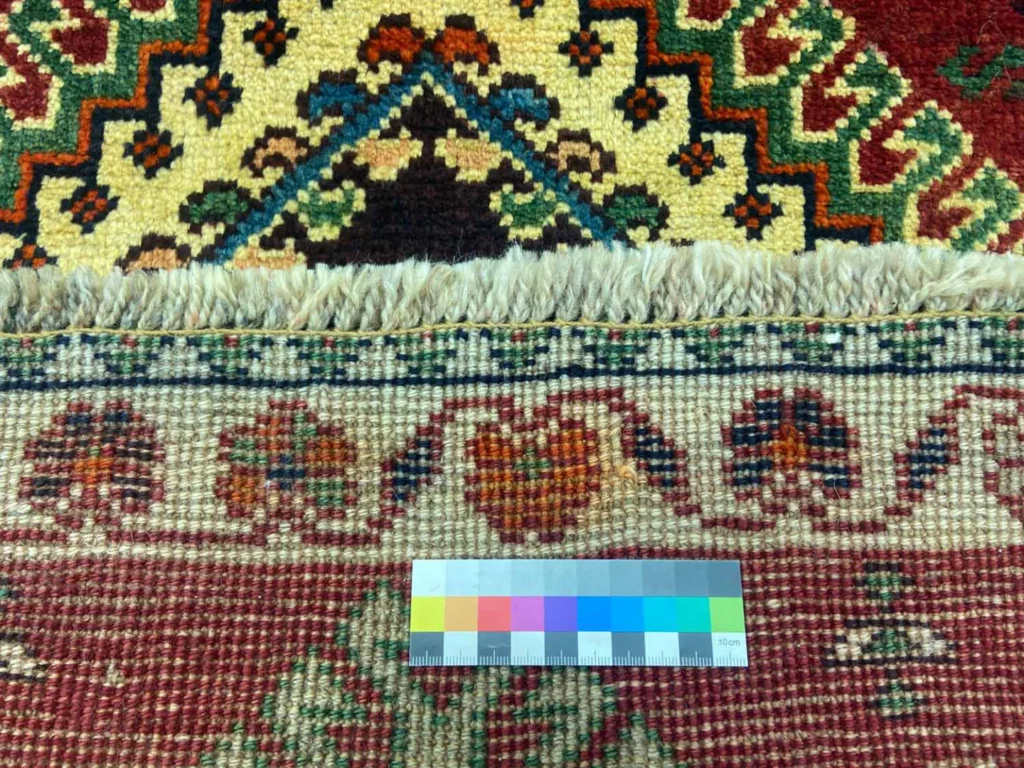
Several features can be considered when assessing an authentic Gabbeh Shuli. The knot density, the quality of the wool, and the originality of the design are identified as important points of reference. The workmanship should also be examined. A hand-knotted rug has a different knot structure and back from a machine-made floor covering. The Fars origin, the Gabbeh Shuli designation, and the imaginative pattern description should form a consistent overall picture. If uncertainty remains, an expert assessment is recommended. A specialist can examine the material, knotting technique, and design and can evaluate the stated information in a factual way. No single visual impression should replace a considered look at all available characteristics of the individual rug.
To provide the best experiences, we use technologies like cookies to store and/or access device information. Consenting to these technologies will allow us to process data such as browsing behavior or unique IDs on this site. Not consenting or withdrawing consent, may adversely affect certain features and functions.
Functional Always active
The technical storage or access is strictly necessary for the legitimate purpose of enabling the use of a specific service explicitly requested by the subscriber or user, or for the sole purpose of carrying out the transmission of a communication over an electronic communications network.
Preferences
The technical storage or access is necessary for the legitimate purpose of storing preferences that are not requested by the subscriber or user.
Statistics
The technical storage or access that is used exclusively for statistical purposes.The technical storage or access that is used exclusively for anonymous statistical purposes. Without a subpoena, voluntary compliance on the part of your Internet Service Provider, or additional records from a third party, information stored or retrieved for this purpose alone cannot usually be used to identify you.
Marketing
The technical storage or access is required to create user profiles to send advertising, or to track the user on a website or across several websites for similar marketing purposes.

 SECURE PAYMENT
 SHIPPING PARTNERS


