This Gabbeh Shuli is a hand-knotted Persian rug made from shiny virgin wool. The wool gives the pile a lively surface and is valued for its softness and durability. In a hand-knotted rug, the design is built knot by knot rather than applied as a separate printed or industrial surface. That process brings the material, the construction and the visual composition together, making each individual piece distinct.
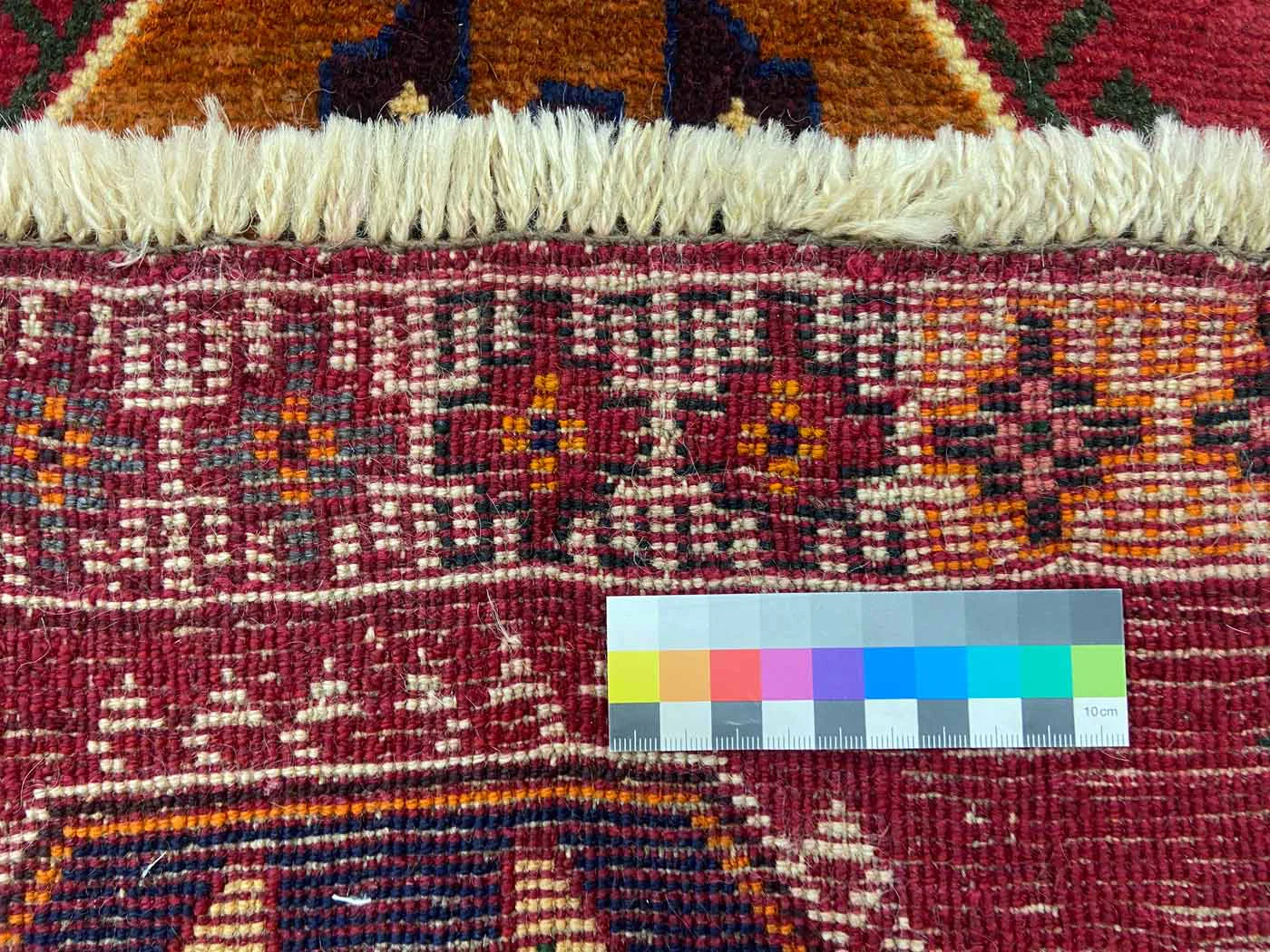
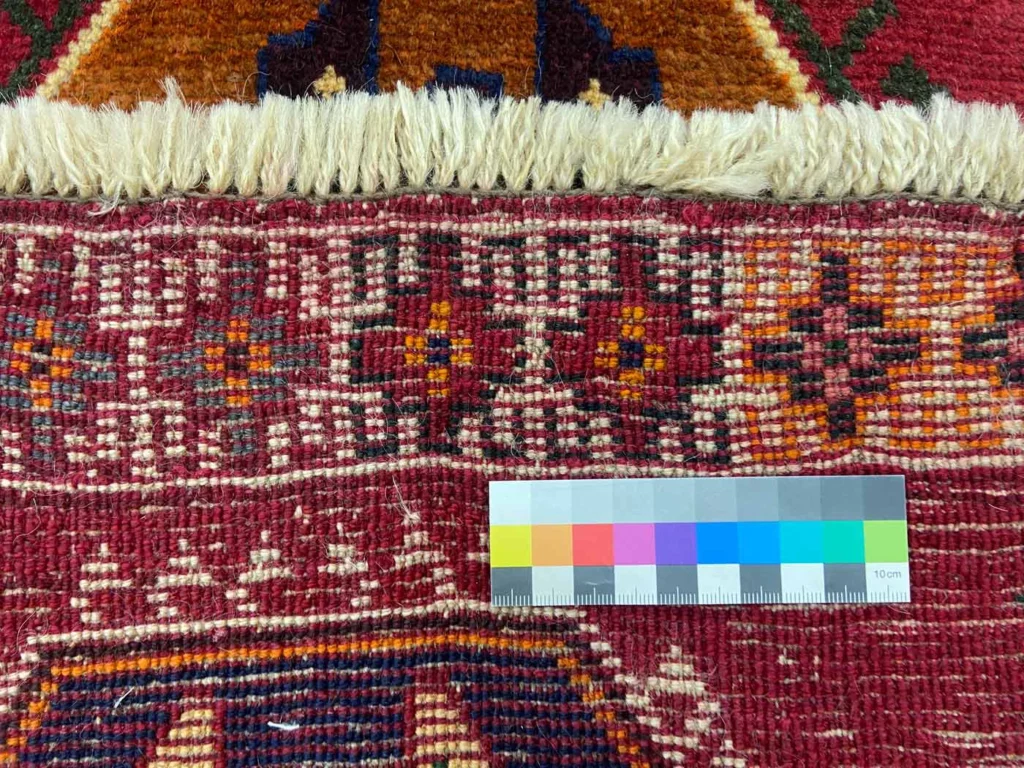
The knot density of this Gabbeh Shuli is between 90,000 and 180,000 knots per square metre. This density represents considerable manual work and allows the design to be worked with precision. The closely knotted construction also supports the rug’s durability. The shiny virgin wool adds a soft handle and a characteristic response to light, so the material remains an important part of the rug’s appearance.
The rug is made according to a handcraft tradition. The wool is processed by hand, while the knotters develop the design freely. The result is not a completely standardized product, but a rug in which the material, knotting and personal pattern idea meet. This particular rug is new. The stated material is shiny virgin wool; no additional material is specified.
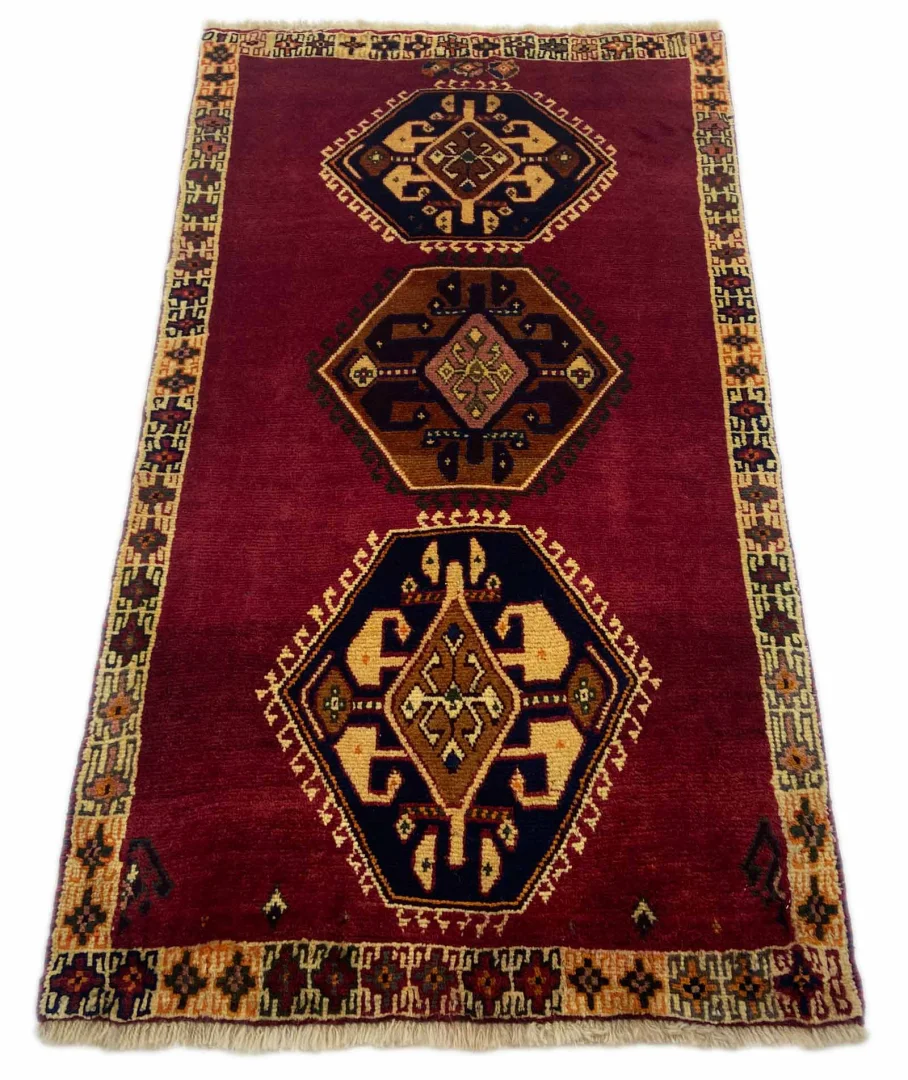
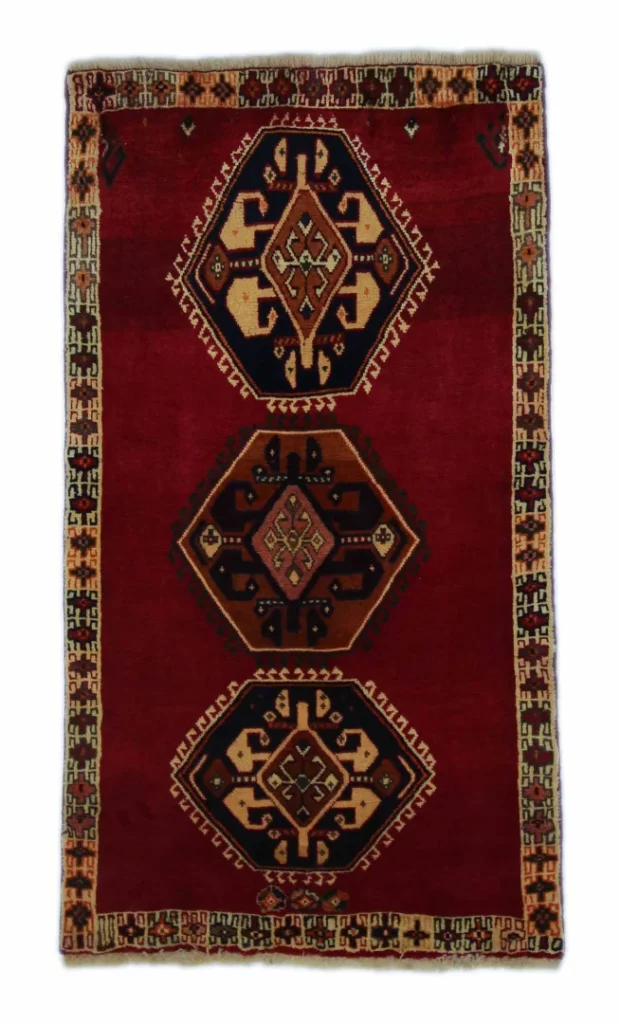
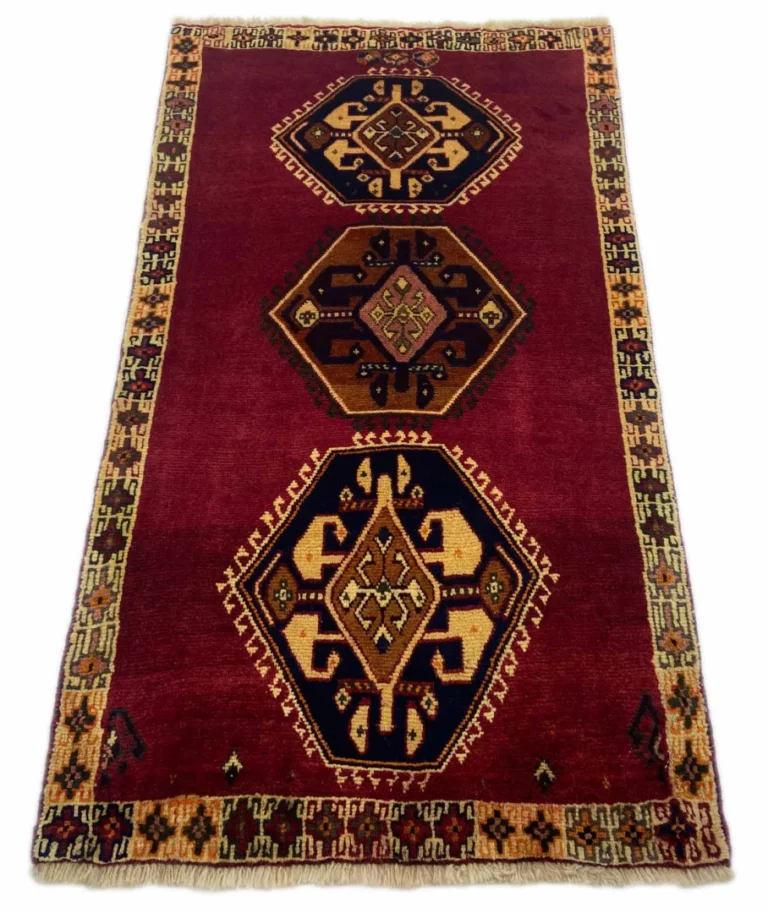
The named colours are red, beige, grey and brown. Together they form a warm palette for Gabbeh Shuli designs. Individual areas may give one colour greater emphasis than another, but the colour information for this rug is limited to these four tones. Its hand-knotted construction, wool pile and imaginative drawing work together to define its craft character.
Origin and Tradition
This Gabbeh Shuli comes from the Fars region in southern Persia. Fars is one of Iran’s historic carpet areas and is closely associated with rural and nomadic weaving and knotting traditions. Rugs from the region are not limited to one rigid visual formula. Established techniques meet the individual imagination of the knotters, which is why Gabbeh rugs from the same broad region can differ noticeably in their designs.
Fars lies near the historic city of Shiraz. Shiraz is known as a cultural centre of southern Persia and provides an important geographic reference for Fars rugs. The regional designation does not imply that the rug was made in a specific urban workshop. Fars includes different craft communities and traditions, and their rugs can express a direct, freely developed visual language.
Gabbeh is often associated with a clear and direct form of Persian carpet making. Knotters work with inherited skills without having to reproduce every field from one fixed drawing. Hand production therefore maintains a close relationship between the person making the rug and the finished object. In a Gabbeh Shuli, this traditional approach is combined with unusual and imaginative designs.
Fars is not known only for one Gabbeh designation. Related types from the region are also referred to as Gabbeh Fars or Gabbeh Shiraz. These names connect the rugs with the same southern Persian cultural and craft landscape. They show how origin, local practice and pattern tradition are linked. Gabbeh Shuli identifies the particular expression named in the source, while the origin of this rug remains the Fars region.
Gabbeh rugs are also found in other parts of Iran, including Kurdistan. Those areas likewise have craft traditions that place value on individual knotting and inherited knowledge of materials. This regional variety is one reason Gabbeh should not be understood as a completely uniform style. Differences in drawing, colour arrangement and execution belong to its history. The rug described here is nevertheless specifically assigned to Fars.
Persian carpet tradition depends on skills passed from one generation to the next. These skills include handling wool, organizing a design field, placing knots and creating a coherent sequence of colours. With freely invented Gabbeh designs, the knotter also makes creative decisions during the process itself. The finished rug therefore grows from both regional knowledge and manual interpretation, rather than being limited to a mechanical repetition.
The connection with Fars also places the rug within the broader cultural history of southern Persia. The nearby reference to Shiraz helps situate the region historically, while the Gabbeh name points to a distinctive carpet tradition within it. Such a background explains why a Gabbeh can be plainly rooted in an established regional practice and still have a highly individual surface. Tradition here is carried by technique and knowledge, not by the requirement that every rug look identical.
Design and Pattern
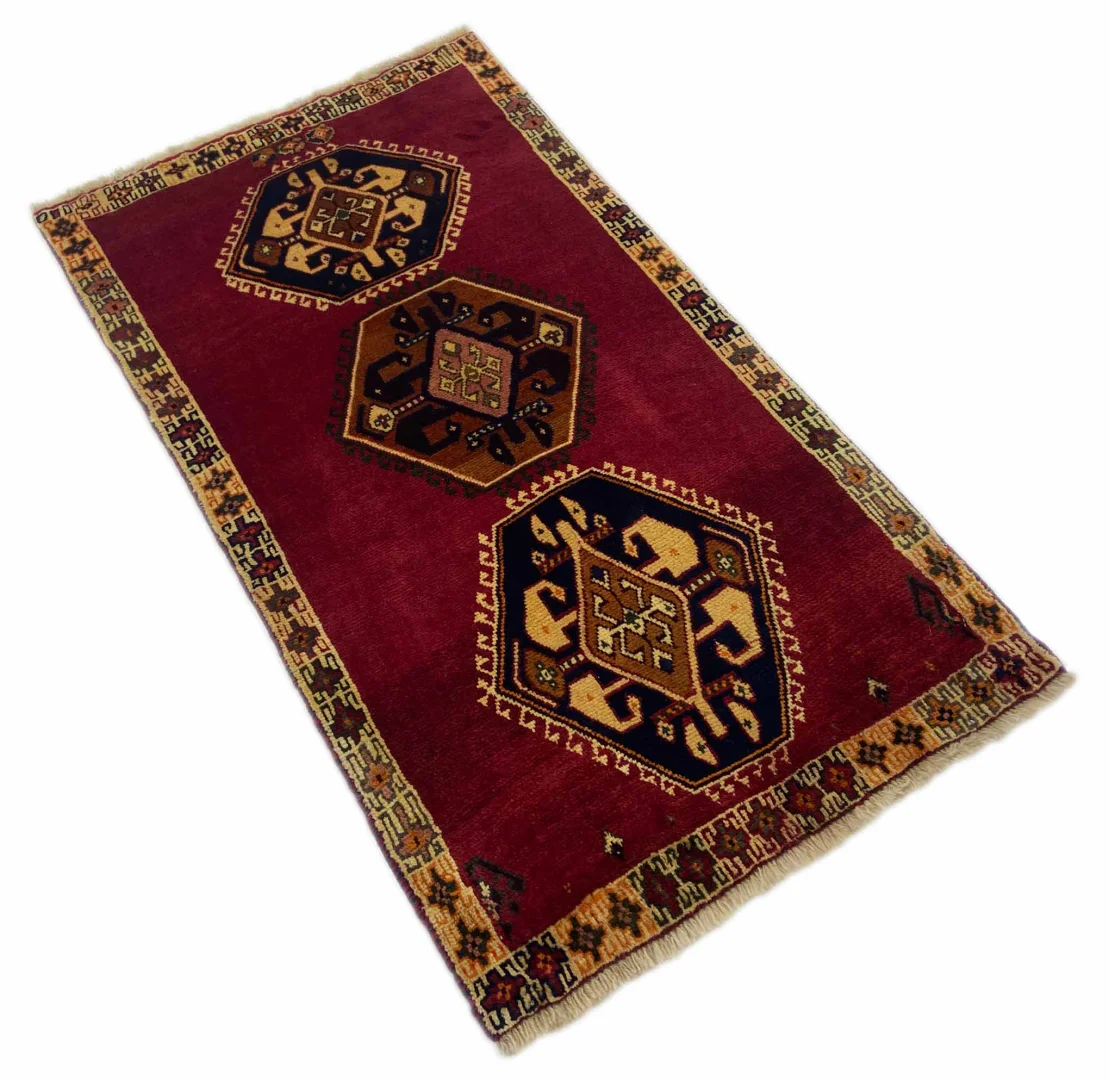
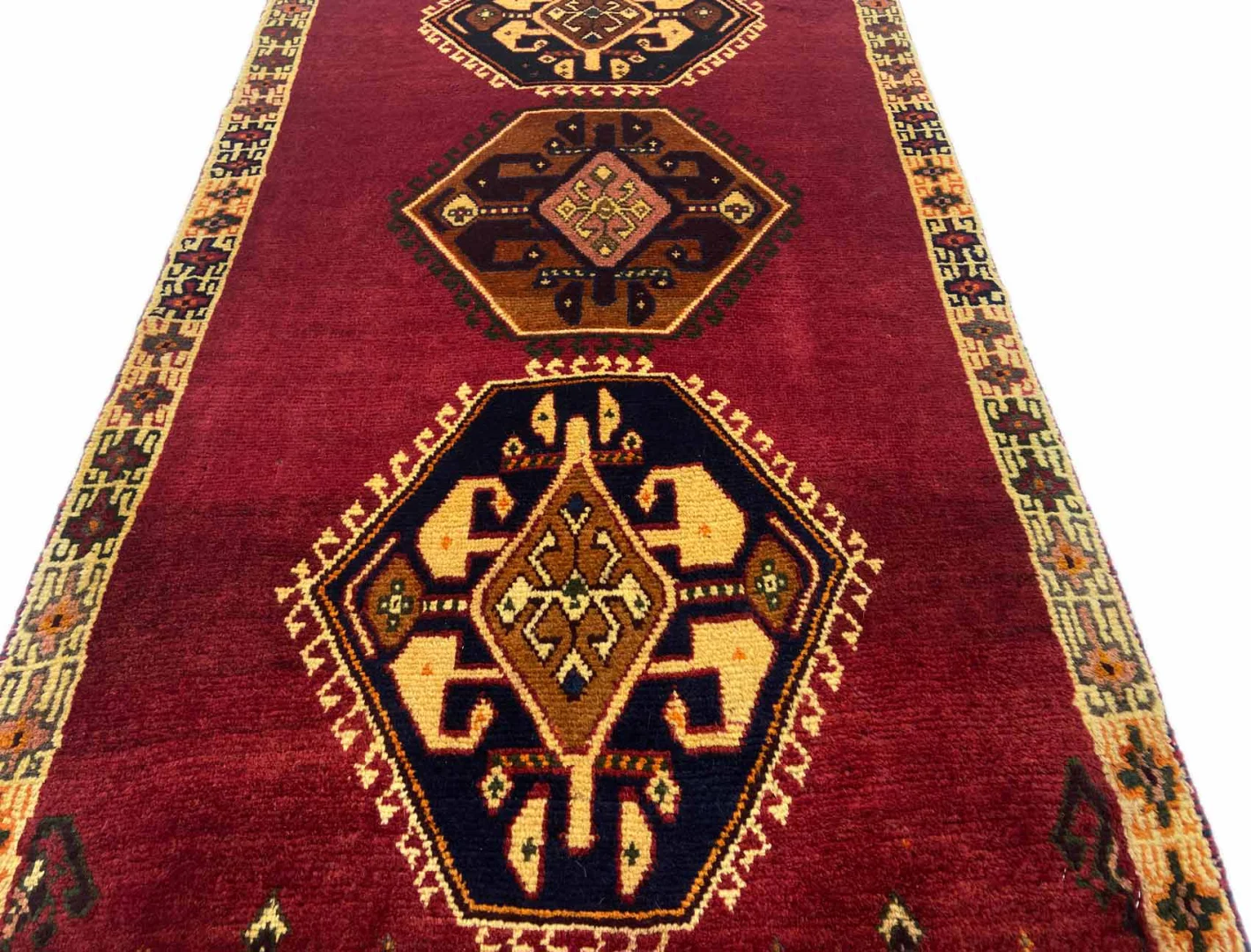
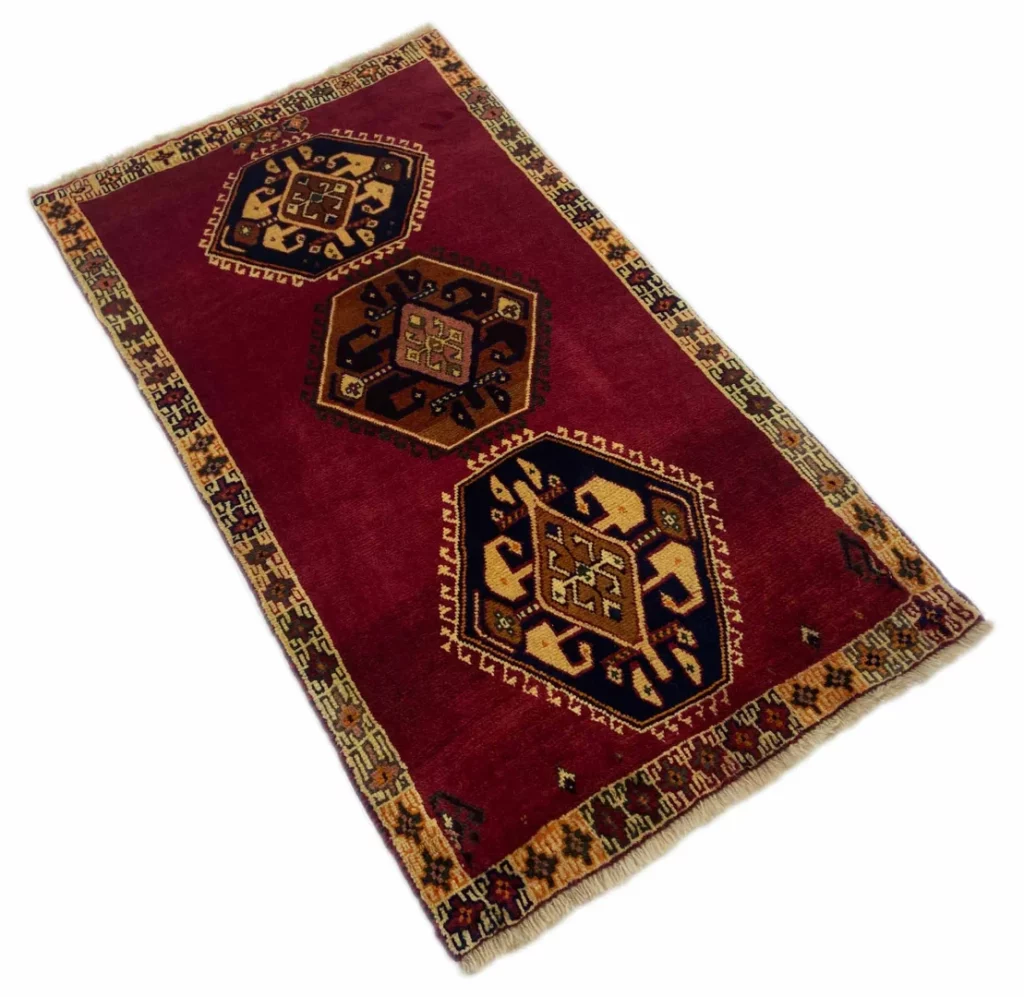
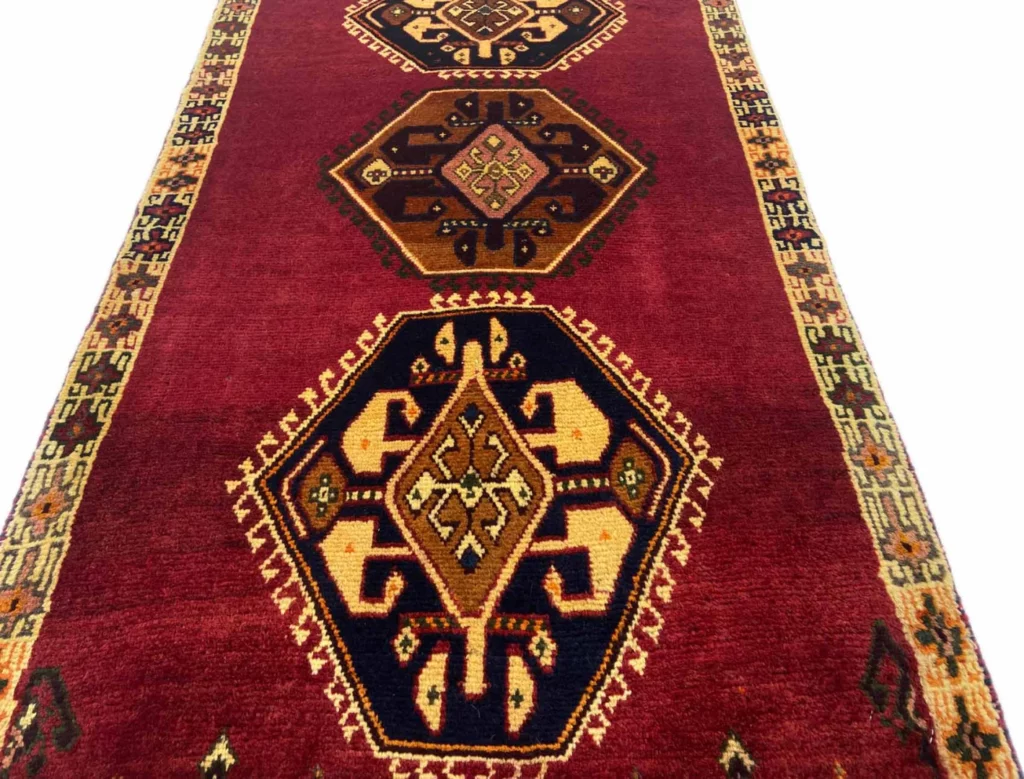
The pattern of this Gabbeh Shuli is described as unusual and imaginative. Its focus is therefore not a strictly prescribed ornament, but an open design reflecting the knotters’ own ideas. Gabbeh compositions may use simplified forms, unexpected arrangements and areas that are intentionally left visually open. What matters is the individual concept transferred into the rug through handwork.
Red, beige, grey and brown form the stated palette. Red may provide a clear accent, while beige, grey and brown can create quieter contrasts within a composition. This explains the colour direction without claiming an exact distribution that has not been specified. The appearance comes from the relationship between colour areas, drawn elements and the natural surface of the wool pile.
Gabbeh designs are traditionally associated with a reduced visual language. Rather than relying on dense, highly repetitive ornament, a composition may allow one form to stand out or may use only a small number of clearly placed elements. This openness is connected with the knotters’ imagination and helps explain why each rug develops its own character. The unusual designs of this Gabbeh Shuli make that individuality an explicit part of its description.
In this context, Shuli identifies a Gabbeh expression with a creative and not strictly predetermined design approach. It should not be read as an additional place of origin. The origin of this rug is Fars, while Shuli names the Gabbeh variation given in the source. Keeping those two functions separate is important: a pattern or style name does not automatically identify a different production region.
Traditional craft techniques can be combined with more contemporary-looking designs in Gabbeh rugs. The contemporary impression concerns the visual language, not industrial manufacture. This rug remains hand-knotted and shaped by the individual work of the knotters. Its design can therefore preserve a regional tradition while presenting an imaginative and independent arrangement of forms and colours.
The palette of red, beige, grey and brown can be placed within a range of interior concepts. Gabbeh Shuli rugs are described as suitable for both traditional and modern interiors. Their designs are not limited to one particular room. A rug of this type can be used in a living room, bedroom or hallway. This versatility is a general feature of the described Gabbeh designs and does not add another claim about the rug’s origin.
The patterns do not communicate one prescribed story. Instead, they reflect the imagination and personal ideas of the knotters. That open quality distinguishes this kind of Gabbeh from a decoration that is simply repeated without variation. Decisions about shape, colour and placement become part of the handcraft statement. For that reason, the Gabbeh Shuli is described as a unique Persian rug and as an expression of a regional design tradition.
Special Features
The Gabbeh Shuli combines shiny virgin wool, hand-knotted construction and unusual, imaginative designs. Its named colours are red, beige, grey and brown, giving it a clearly defined palette. The knot density indicates laborious execution and supports the rug’s durability. The rug is offered in new condition.
Its design is individual. The patterns are freely invented and reflect the knotters’ ideas, so each piece is understood as unique. At the same time, the rug belongs to the tradition of the Fars region in southern Persia. It therefore joins a clearly identified regional origin with a personal pattern concept that is not completely standardized.
Gabbeh Shuli can be used in several interior settings. The living room, bedroom and hallway are named as possible locations. Traditional and modern furnishing styles are also suitable contexts. These uses relate to the warm colour palette and independent design. The rug is thus described both as a functional textile and as a decorative element.
FAQ
How should I care for my Gabbeh Shuli rug?
Regular cleaning helps remove dust and dirt from the rug. Professional carpet cleaning is recommended for this Gabbeh Shuli in order to preserve the colours and the quality of the wool. Specialist treatment takes the hand-knotted construction and the properties of the material into account. During ordinary care, loose dirt should therefore be removed regularly, while more demanding cleaning should be entrusted to a professional cleaner. This helps maintain the visual effect of the red, beige, grey and brown palette and the character of the wool pile.
Can I use the Gabbeh Shuli in a modern home?
Yes. Because of its unique design and warm colours, the Gabbeh Shuli can be used with both traditional and modern interior styles. Its unusual, imaginative pattern provides an individual decorative accent without being restricted to one particular room. It can be placed in a living room, bedroom or hallway. The combination of Persian craft tradition, virgin wool and freely developed pattern work allows the rug to sit in a variety of domestic settings.
Where can I buy Gabbeh Shuli rugs?
Gabbeh Shuli rugs can be found at specialist rug shops, in online stores and at carpet fairs. These sources offer a selection of designs and sizes. A buyer can compare the pattern, colour combination and handcraft execution of the available pieces. Specialist shops allow direct contact with the rug, online stores provide access to digital selections, and carpet fairs bring different pieces and styles together. The Gabbeh Shuli belongs to the Persian Gabbeh tradition associated with the Fars region.
To provide the best experiences, we use technologies like cookies to store and/or access device information. Consenting to these technologies will allow us to process data such as browsing behavior or unique IDs on this site. Not consenting or withdrawing consent, may adversely affect certain features and functions.
Functional Always active
The technical storage or access is strictly necessary for the legitimate purpose of enabling the use of a specific service explicitly requested by the subscriber or user, or for the sole purpose of carrying out the transmission of a communication over an electronic communications network.
Preferences
The technical storage or access is necessary for the legitimate purpose of storing preferences that are not requested by the subscriber or user.
Statistics
The technical storage or access that is used exclusively for statistical purposes.The technical storage or access that is used exclusively for anonymous statistical purposes. Without a subpoena, voluntary compliance on the part of your Internet Service Provider, or additional records from a third party, information stored or retrieved for this purpose alone cannot usually be used to identify you.
Marketing
The technical storage or access is required to create user profiles to send advertising, or to track the user on a website or across several websites for similar marketing purposes.

 SECURE PAYMENT
 SHIPPING PARTNERS


