This Gabbeh – Shuli rug is made from fine, glossy virgin wool. Virgin wool is valued in Persian rug making for its pleasant handle, warmth and resilience. Here, the wool is also part of the rug’s visual character: its natural sheen allows the surface to respond differently as light falls across it, giving the coloured pattern a changing presence without altering the design itself.
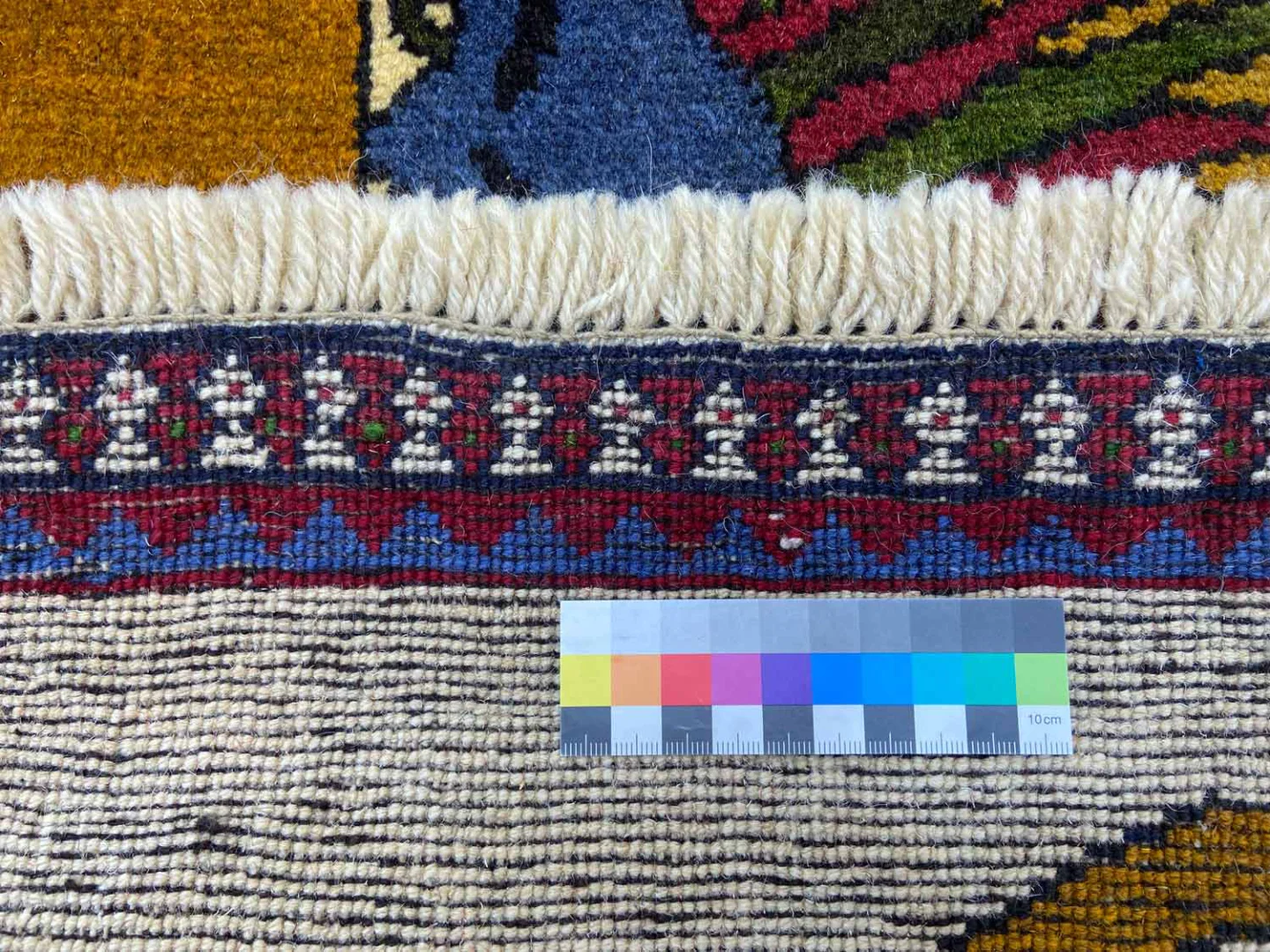
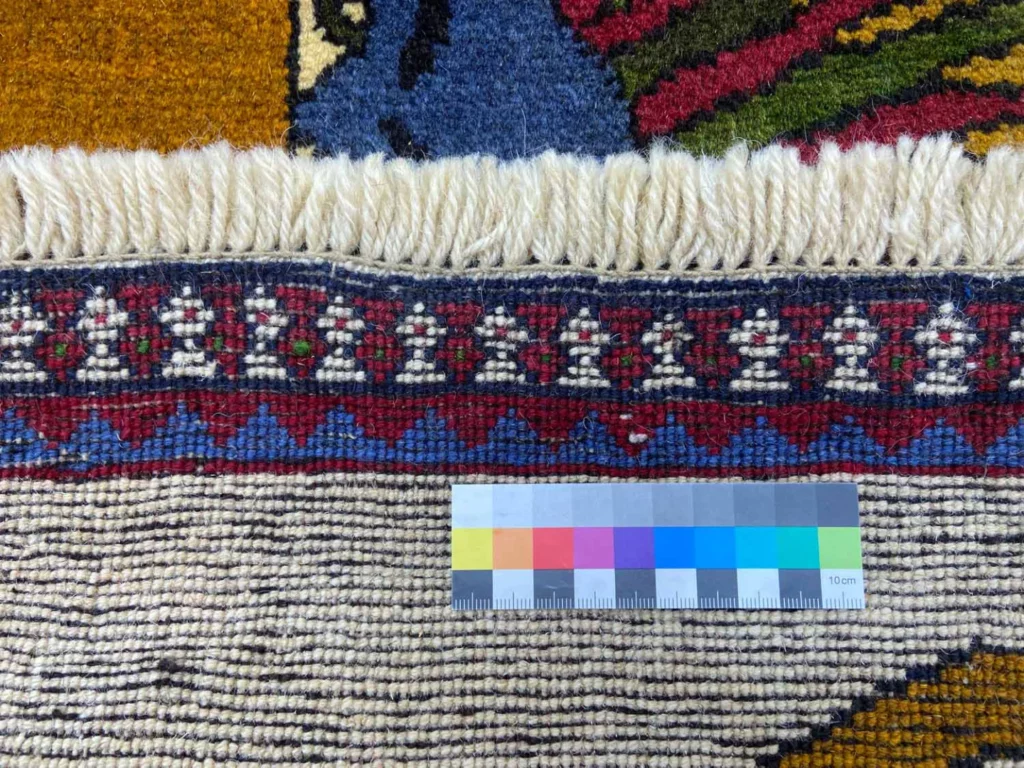
The rug is hand-knotted. Its pattern is formed knot by knot rather than printed or applied by an industrial process. The stated knot density ranges from 90,000 to 180,000 knots per square metre. This dense construction supports a clearly worked surface and allows the design to appear rich in detail while retaining the direct, handmade character associated with Gabbeh weaving.
Gabbeh – Shuli rugs bring together the sturdy wool tradition of Gabbeh with more freely developed decoration. The virgin wool, handwork and dense knotting define the material and technical character of this particular piece. It is described as new, combining an unused condition with a traditional method of Persian rug production.
Origin and Tradition
The Gabbeh – Shuli rug comes from the Fars region in southern Persia. Fars is one of the historic landscapes of Persian carpet culture. It lies in the wider area around Shiraz, a city known for its rich cultural life and artistic heritage. Within this setting, wool, manual skill and individual pattern making have long been closely connected.
Gabbeh rugs are associated with the nomadic and rural weaving traditions of Fars. Their visual language often differs from the strictly organised compositions of court or urban carpets. Rather than relying on one fixed arrangement repeated in exactly the same way, Gabbeh work can preserve a direct and personal quality. Weavers work within an inherited technique while retaining room to make decisions about the individual design.
The name Gabbeh – Shuli identifies a variant in which imaginative and unusual decoration has a central role. It represents a form of Persian craftsmanship in which tradition is not preserved only through the repetition of established classical ornaments. A freely developed image, an unexpected arrangement of forms or a lively distribution of colour can also belong to this regional design culture.
In Fars, weaving knowledge has often been passed on within families. Such family workshops preserve knowledge of wool selection, preparation of the materials, the structure of the knotting and the development of patterns. Transmission across generations is an important part of handmade rug culture. It helps explain how rugs from the region can share a recognisable technical background while still allowing individual pieces to look distinct.
Related rug types from Fars include Gabbeh – Fars and traditional Shiraz rugs. They likewise represent handmade designs and the cultural variety of the region. Shiraz rugs are often associated with geometric patterns and vivid colours, while Gabbeh traditions allow a more immediate and changeable approach to composition. The Gabbeh – Shuli variant continues this relationship between regional origin, wool and independent pattern making.
Design and Pattern
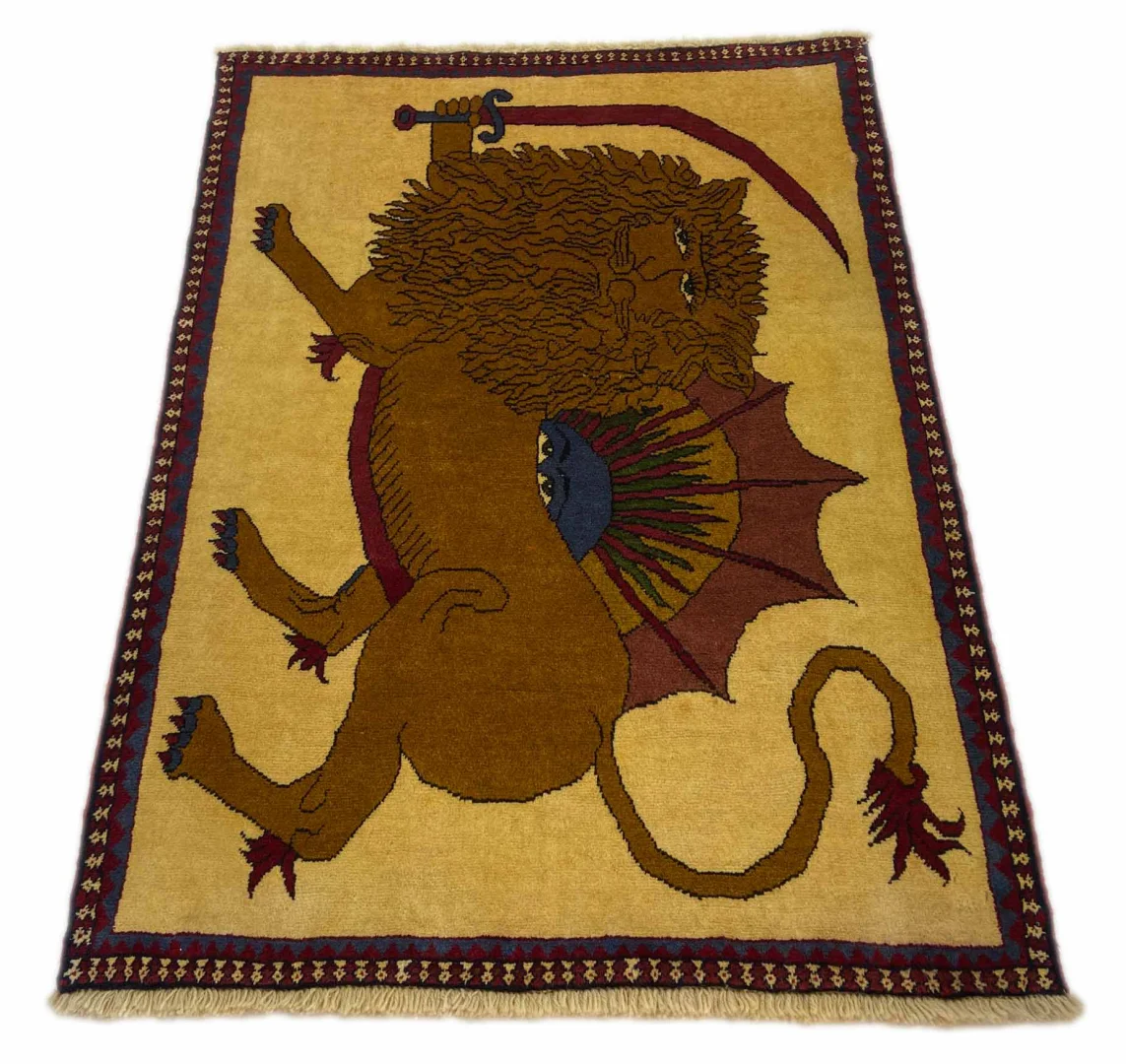
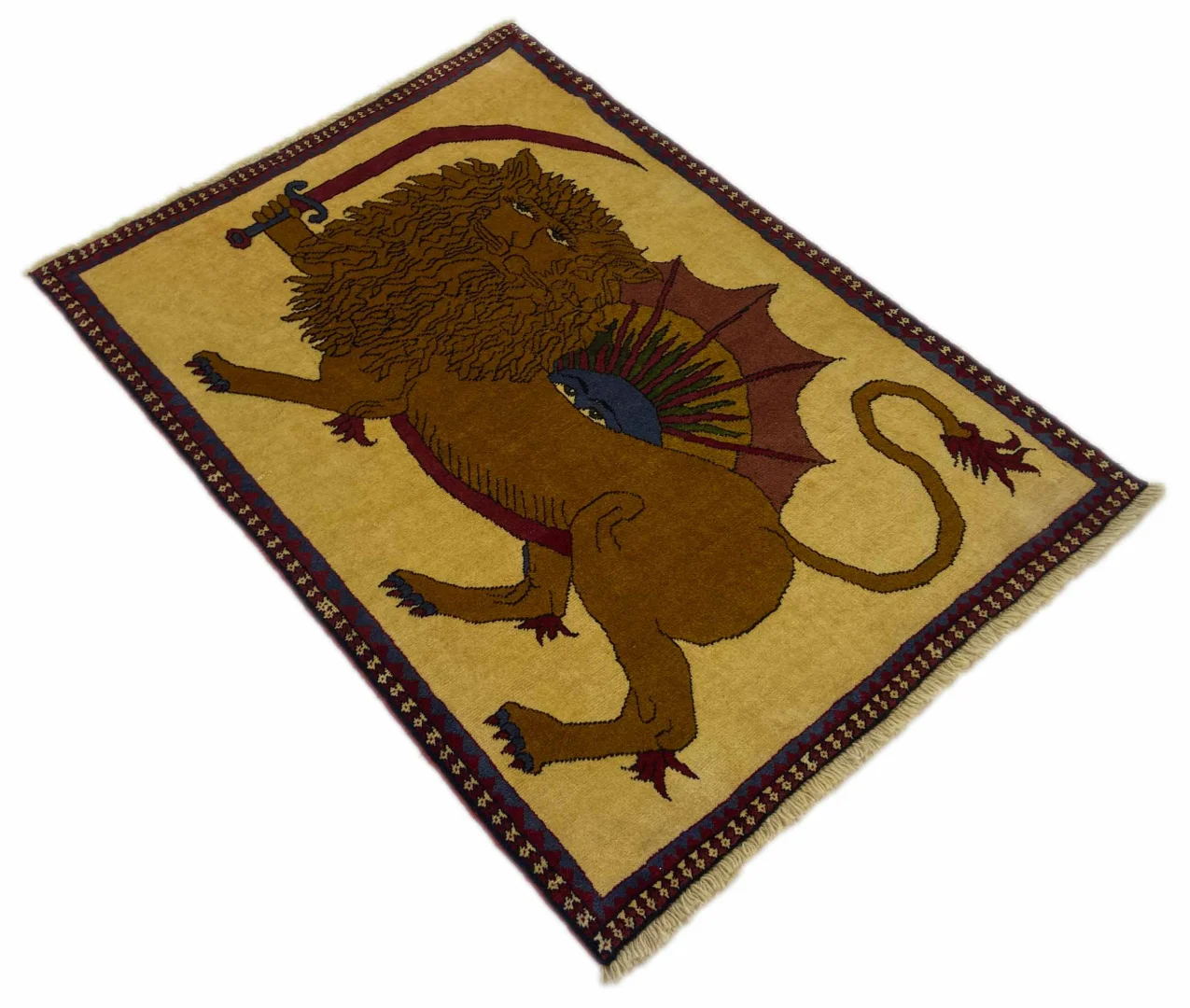
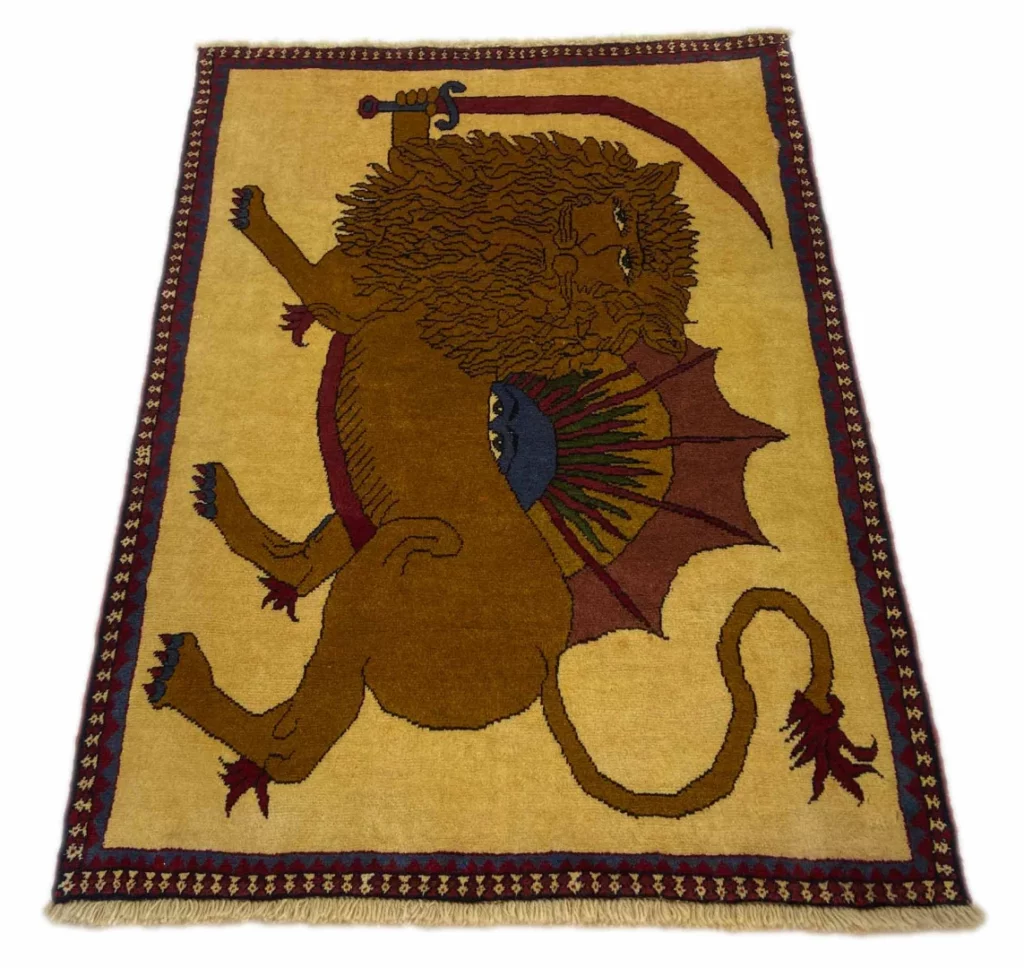
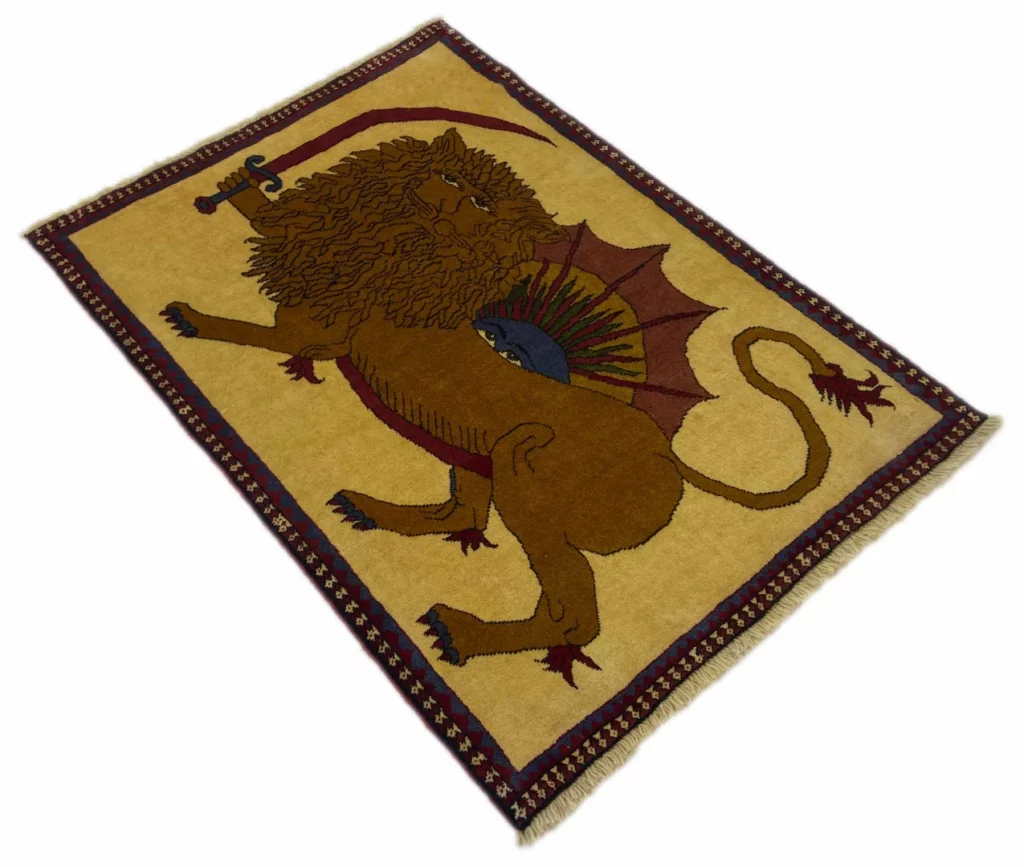
The defining visual feature of this Gabbeh – Shuli rug is its unusual, imaginative design. The pattern is not presented as a simple repetition of one rigidly prescribed scheme. Instead, it reflects a style in which the weaver’s imagination has room to shape the composition. Each individual rug can therefore have its own arrangement and decorative character.
Compared with classic or single-colour Gabbeh rugs, which are often associated with a reduced and minimalist appearance, Gabbeh – Shuli allows for more animated compositions. Unusual forms, freely developed ornaments and varied arrangements belong to the design environment of this rug type. This describes the Shuli tradition and style; it does not assign an additional, unmentioned motif to this specific piece.
The colours named for this rug are red, beige, grey and brown. Red can provide a warm and clearly defined accent in Persian textile design, while beige helps connect stronger and more restrained areas. Grey contributes a quieter, more neutral note, and brown introduces an earthy quality. Together, these colours form a palette that can be used alongside both traditional interiors and more contemporary furnishings.
The glossy virgin wool also affects how the design is perceived. Depending on the light, colour fields and pattern areas may come forward differently. This is an effect of the wool surface and its reflection of light, not a change to the actual pattern. The dense hand-knotting supports the articulation of the decoration and links the colour arrangement to the textile structure of the rug.
Gabbeh patterns from Fars often show how closely material and design can work together. Wool provides a tactile ground on which colours and shapes appear as handmade areas rather than mechanically reproduced graphics. In the Shuli variant, imaginative interpretation takes priority. The decorative effect comes from the unusual pattern language, the warm and earthy colour group and the visible evidence of hand craftsmanship.
Special Features
This piece is distinguished by the combination of a Gabbeh – Shuli design, glossy virgin wool and dense hand-knotted construction. Its pattern is unusual and imaginative, and its colours extend from red and beige to grey and brown. These qualities give the rug an individual language of colour and form without requiring a claim about any particular motif that is not named in the product information.
The rug is described as new. Its Fars origin, Persian classification, hand-knotted production and use of virgin wool are the principal characteristics of this offering. The individual rug’s size is provided in the product data; in an interior it can serve as a distinct decorative accent. Gabbeh – Shuli rugs are also available in different variants, with other pieces varying in pattern, colour and size.
FAQ
What are the main features of a Gabbeh – Shuli rug?
Gabbeh – Shuli rugs combine the Gabbeh tradition of the Fars region with imaginative and unusual designs. The features of this rug include hand-knotting, glossy virgin wool and the stated dense construction. Its colour scheme includes red, beige, grey and brown. Unlike classic single-colour or strongly reduced Gabbeh versions, Shuli rugs leave more room for lively, freely developed patterns. The result can have an individual character while remaining rooted in Persian wool weaving and the handmade traditions of Fars.
Where do Gabbeh – Shuli rugs come from?
Gabbeh – Shuli rugs come from the Fars region in southern Persia, near the historic city of Shiraz. Fars is known for its important carpet and artistic traditions. Knowledge of weaving is often passed down within families across generations, preserving the skills connected with materials, knotting and pattern making. Related rugs from the region include Gabbeh – Fars and traditional Shiraz rugs. This origin describes the cultural and technical setting of the rug, while the freer Shuli design allows individual pieces to differ from one another.
How should I care for a Gabbeh – Shuli rug?
For routine care, vacuum the rug carefully to remove loose dust and everyday dirt while treating the wool surface gently. Occasional professional cleaning can help preserve the appearance and service life of the virgin wool. Do not use harsh chemicals, as they may damage both the colours and the wool fibres. If the rug has a more substantial stain or if the appropriate method is unclear, professional rug cleaning is the safer approach. Care should always respect the hand-knotted structure and the coloured design rather than subjecting them to aggressive treatment.
To provide the best experiences, we use technologies like cookies to store and/or access device information. Consenting to these technologies will allow us to process data such as browsing behavior or unique IDs on this site. Not consenting or withdrawing consent, may adversely affect certain features and functions.
Functional Always active
The technical storage or access is strictly necessary for the legitimate purpose of enabling the use of a specific service explicitly requested by the subscriber or user, or for the sole purpose of carrying out the transmission of a communication over an electronic communications network.
Preferences
The technical storage or access is necessary for the legitimate purpose of storing preferences that are not requested by the subscriber or user.
Statistics
The technical storage or access that is used exclusively for statistical purposes.The technical storage or access that is used exclusively for anonymous statistical purposes. Without a subpoena, voluntary compliance on the part of your Internet Service Provider, or additional records from a third party, information stored or retrieved for this purpose alone cannot usually be used to identify you.
Marketing
The technical storage or access is required to create user profiles to send advertising, or to track the user on a website or across several websites for similar marketing purposes.

 SECURE PAYMENT
 SHIPPING PARTNERS


