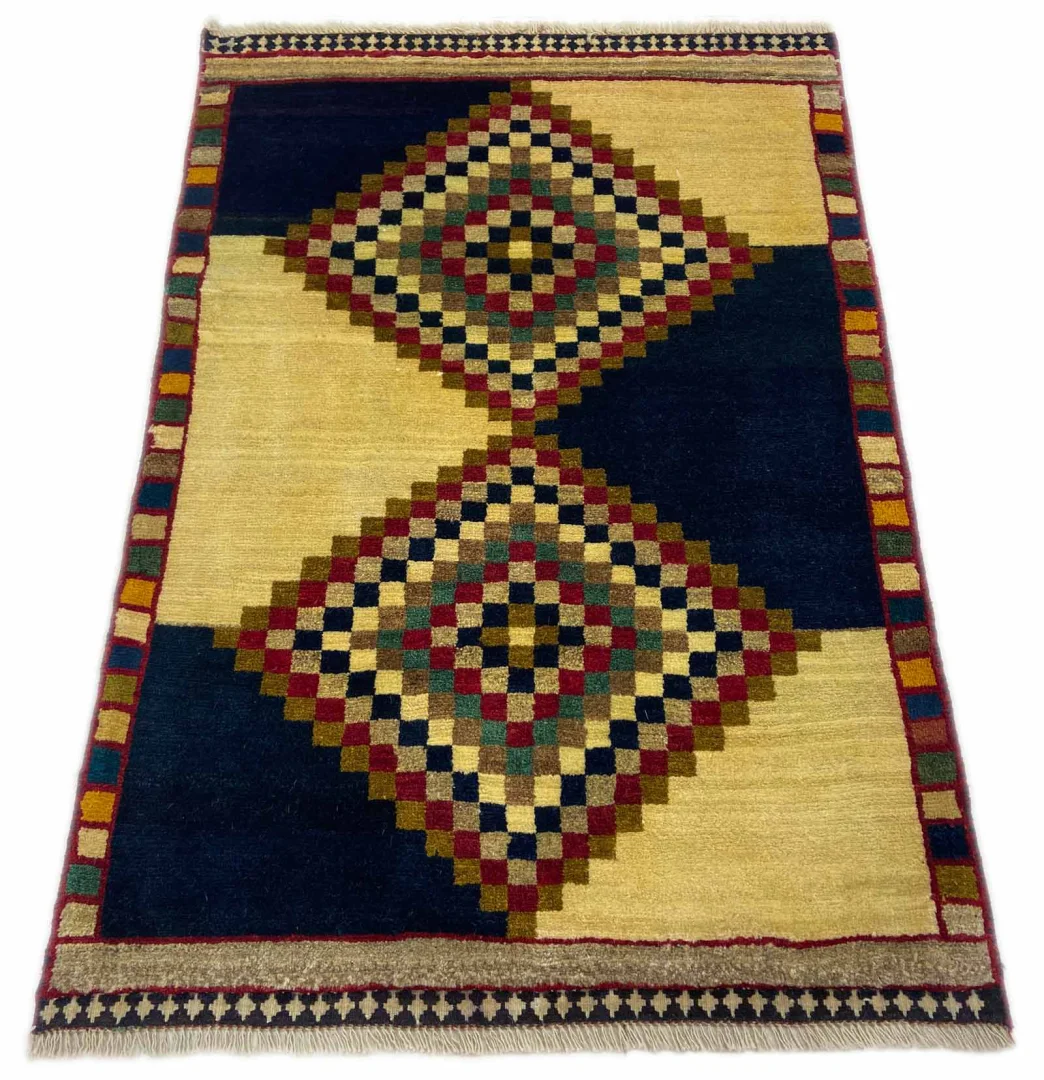
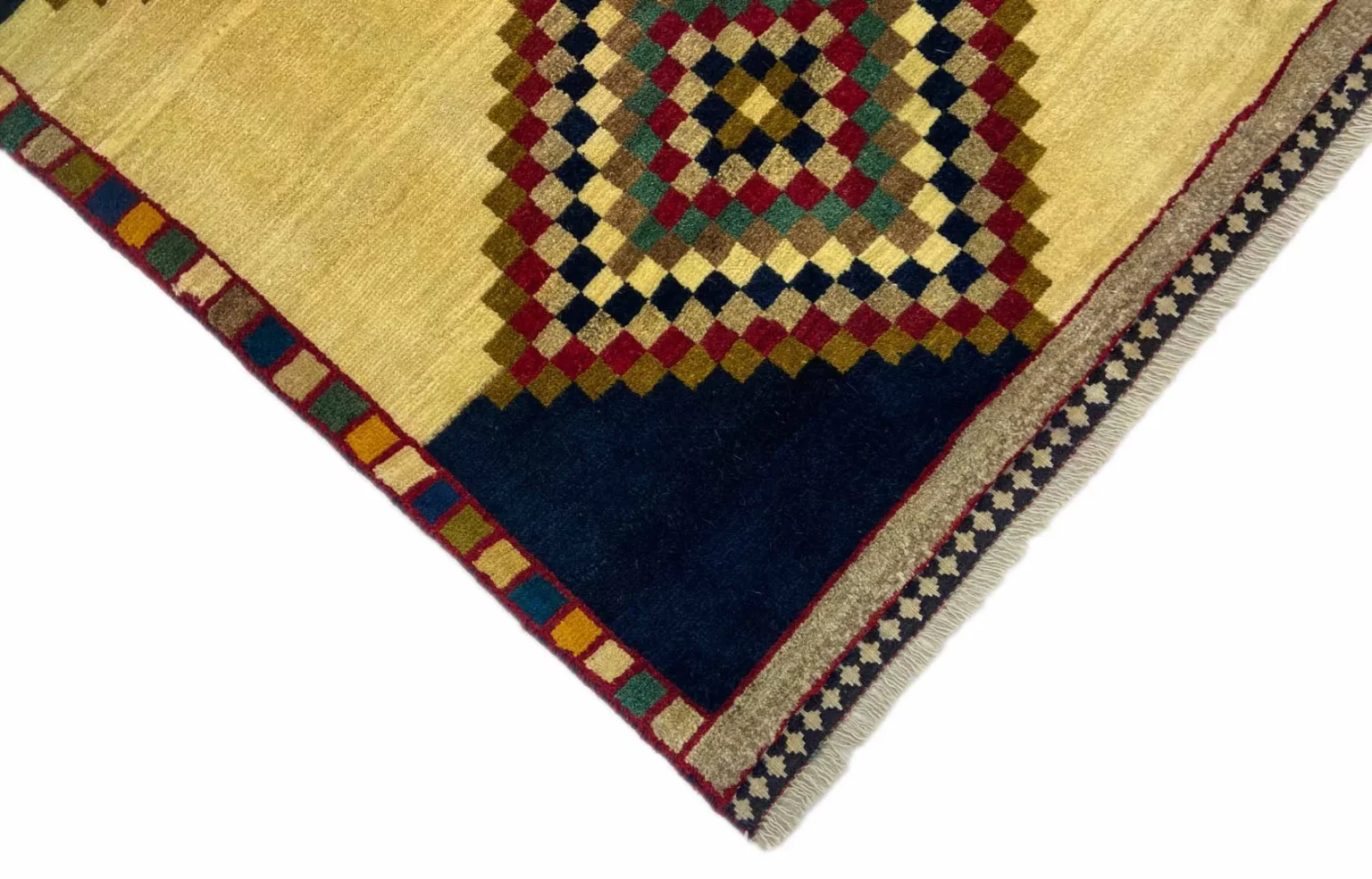
This Gabbeh Shuli is a hand-knotted Persian rug from the Fars region of Persia. Its pile is made of lustrous virgin wool. Wool gives the surface its tactile and visual presence, while also reflecting the material tradition associated with Gabbeh rugs. Virgin wool has long been used in hand-knotted rugs because it can be formed into a resilient pile and, when carefully worked, provides a pleasantly substantial surface.
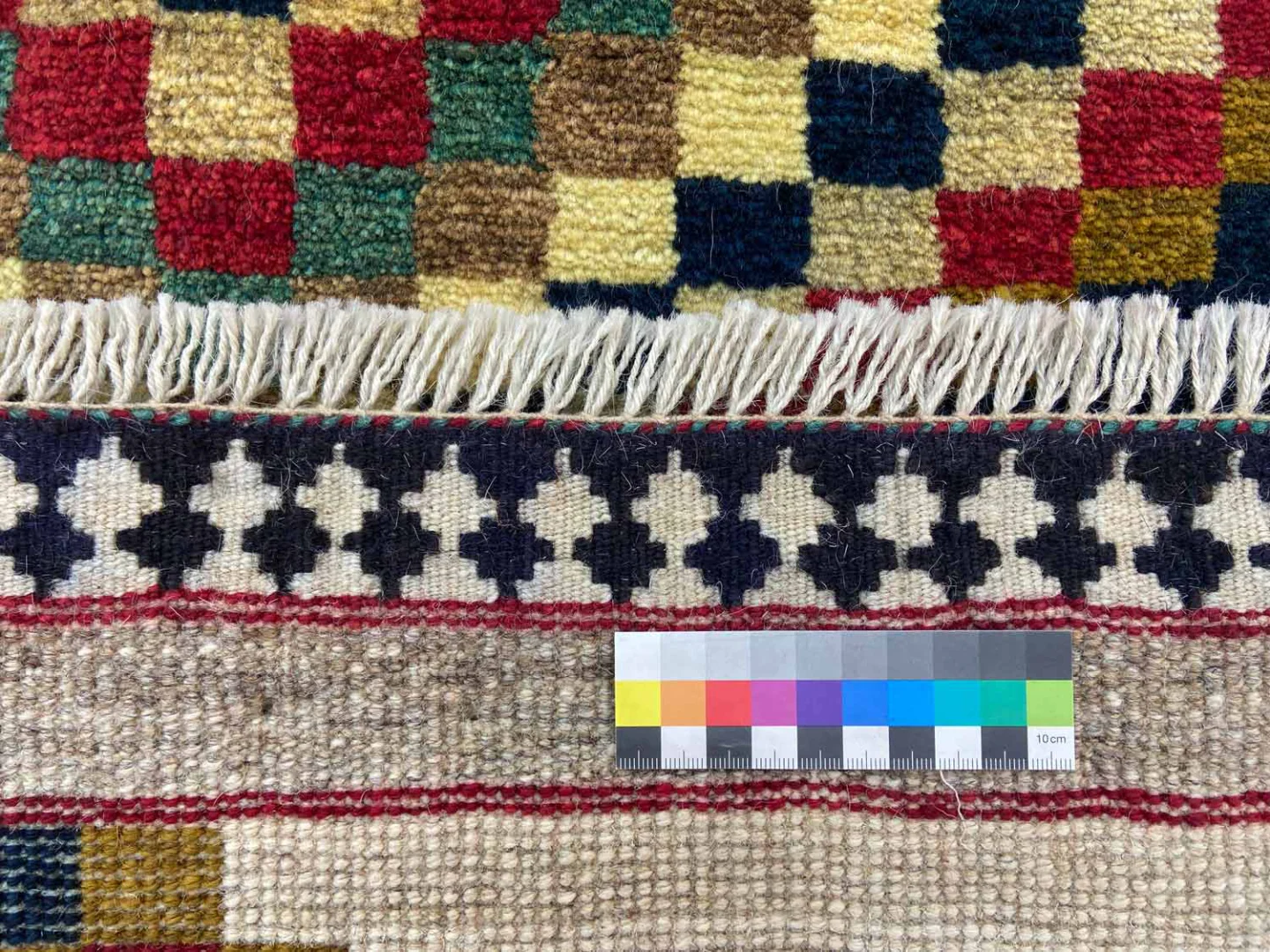
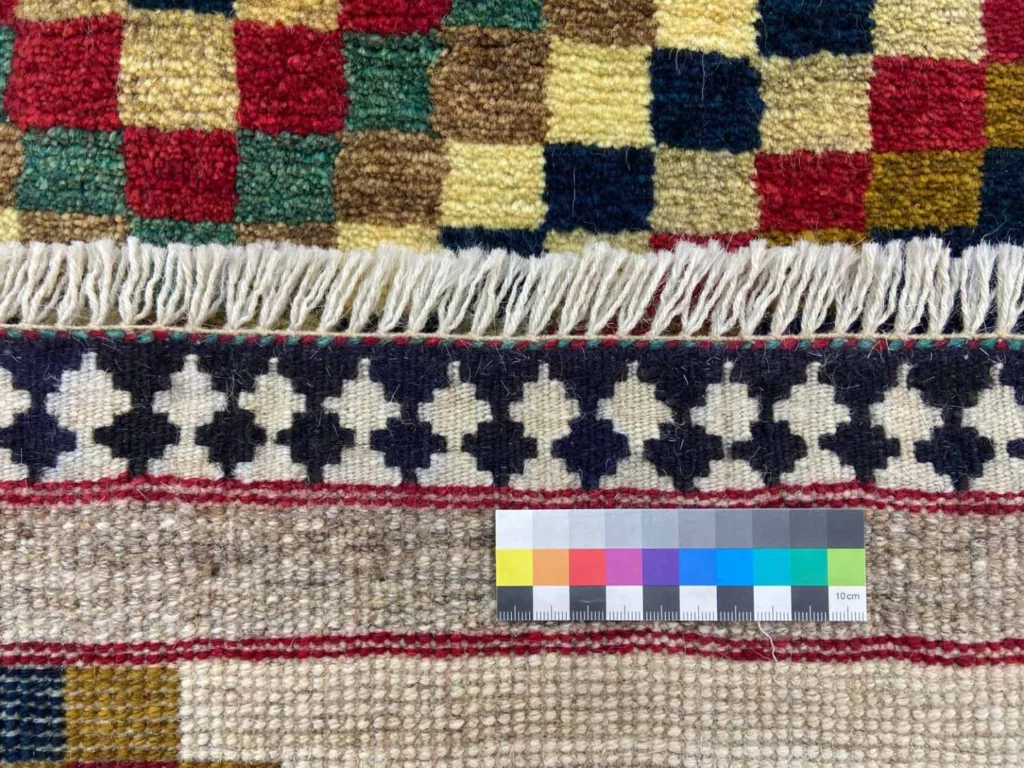
The knotting process joins individual knots into a continuous textile field. This Gabbeh Shuli has a knot density of 90,000 to 180,000 knots per square metre. That figure describes the density of its hand-knotted structure. It is a technical feature that complements the visible qualities of the wool, the colour arrangement and the pattern.
Gabbeh rugs are made by hand and therefore belong to a form of craft in which the making of each piece remains visible. With the Shuli type, traditional construction is combined with a freer and more imaginative approach to design. The material is not merely a base for the pattern; the wool surface also contributes to the way the design is experienced.
Origin and Tradition
The Gabbeh Shuli comes from the Fars region of Persia. Fars is one of the historic landscapes of Persian rug culture and is associated with a long tradition of nomadic and village weaving and knotting. In this setting, rugs developed whose designs could remain closely connected to the makers’ daily lives, inherited forms and individual perceptions of the world around them.
Gabbeh rugs are widely associated with the nomadic peoples of Fars. Their history represents a rug tradition that does not depend solely on a fixed, courtly pattern system. Personal ideas, remembered motifs and practical experience can all influence the finished composition. This relationship between use, craftsmanship and individual expression is an important part of the cultural background of Gabbeh.
The Shuli Gabbeh continues that tradition in a more colourful and expressive direction. Gabbeh rugs are often known for their simple appearance and reduced visual language, whereas Shuli designs offer an unusual and imaginative alternative. The name therefore indicates a design approach in which the maker’s imagination has a visible role. It remains rooted in the Fars tradition while allowing more freedom in the arrangement of forms and colours.
The association with the city of Shiraz is also part of the rug’s stated regional context. Shiraz is a significant cultural reference point within Fars and represents the historical diversity of Persian arts and crafts. This places the rug within the Persian rug culture of Fars rather than within an interchangeable international decorative style.
Persian rugs include many regional approaches. Gabbeh Fars is a related example from the same broader cultural landscape and is likewise associated with creative designs and colours. Tabriz rugs, by contrast, are known for detailed patterns and fine knotting techniques. The comparison shows that Persian rug-making has no single visual formula. Gabbeh Shuli represents the freer, more imaginative side of the Fars tradition.
Design and Pattern
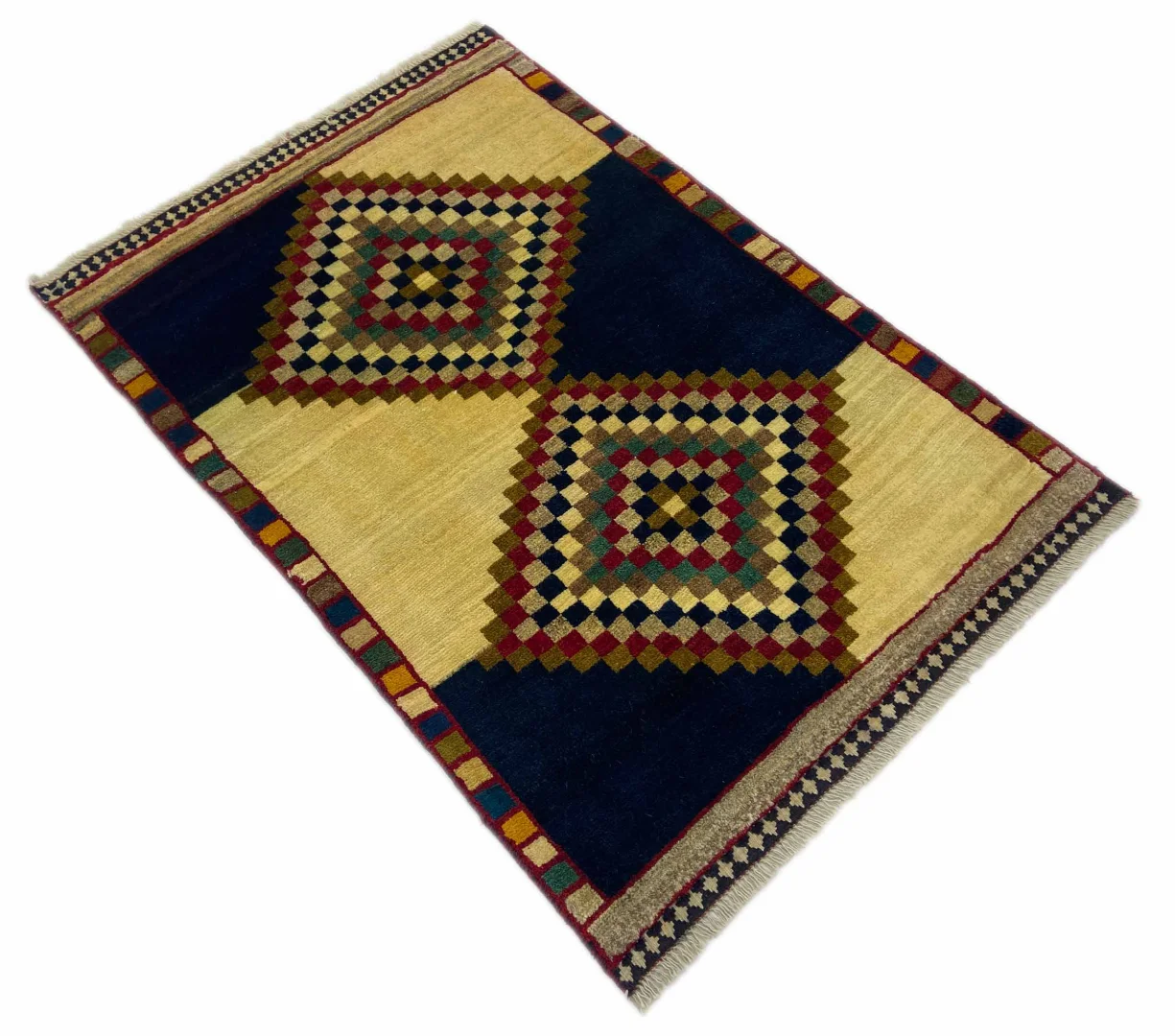
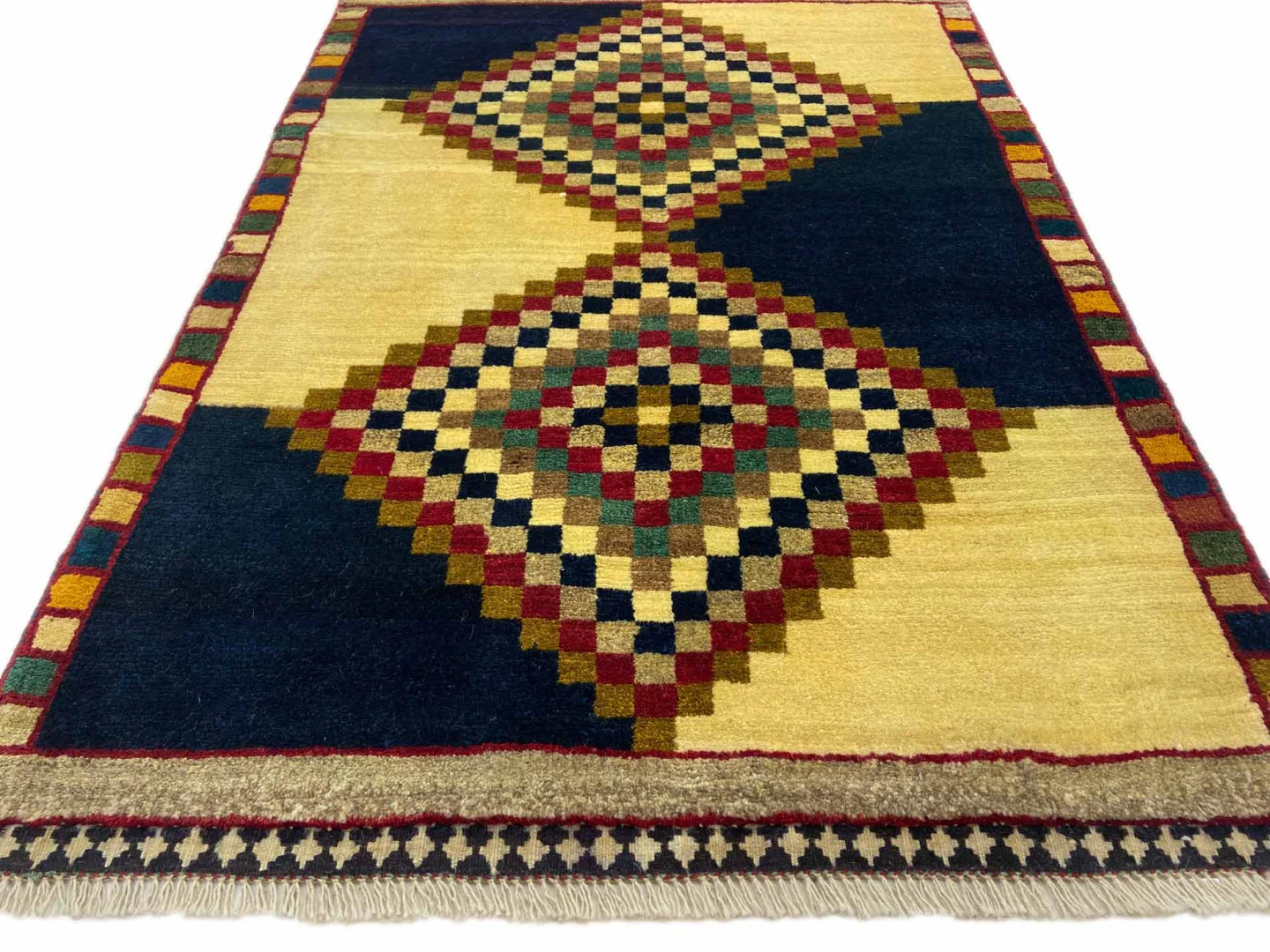
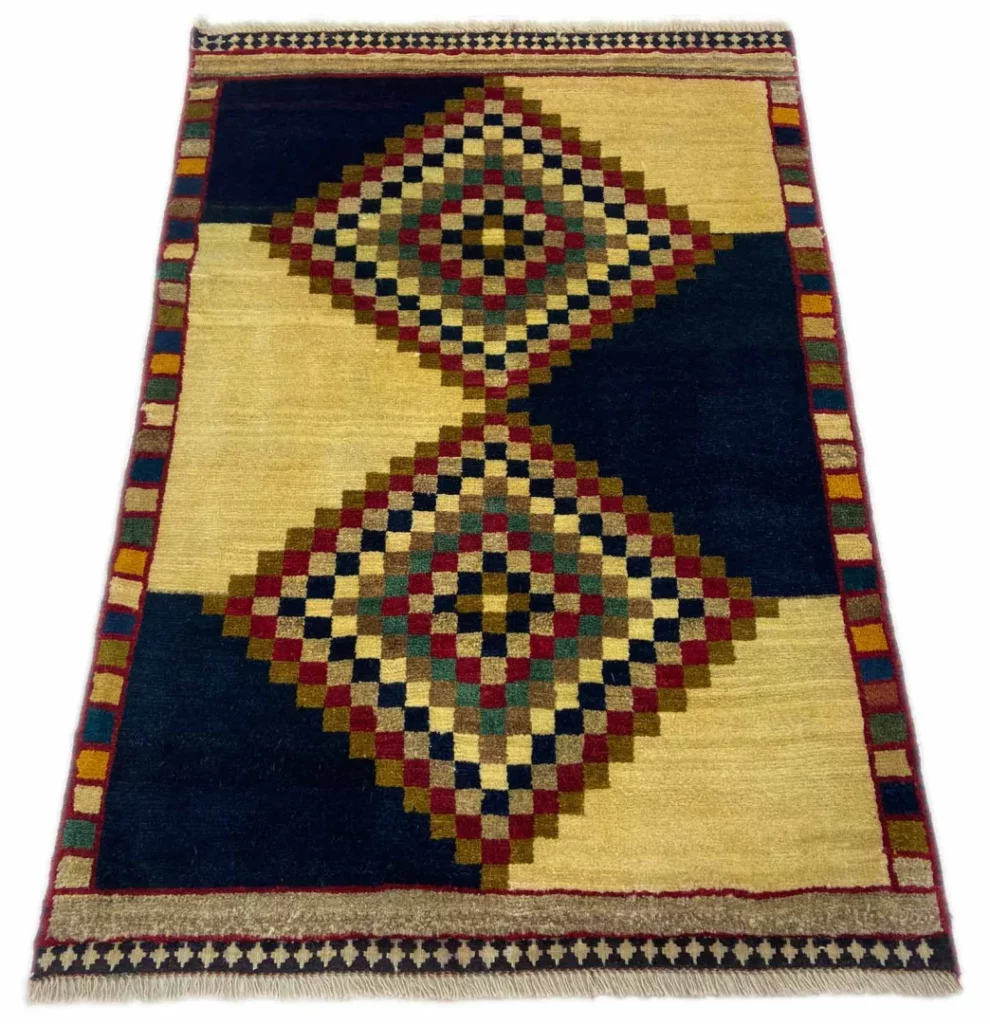
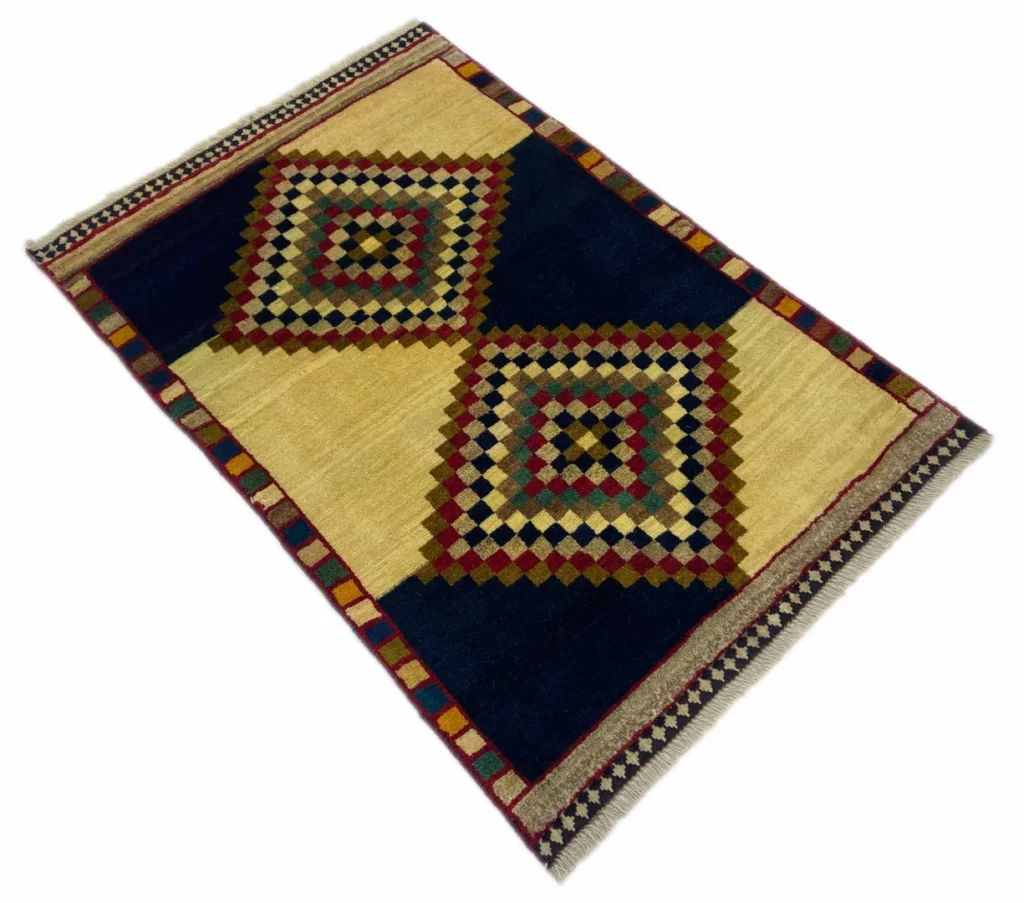
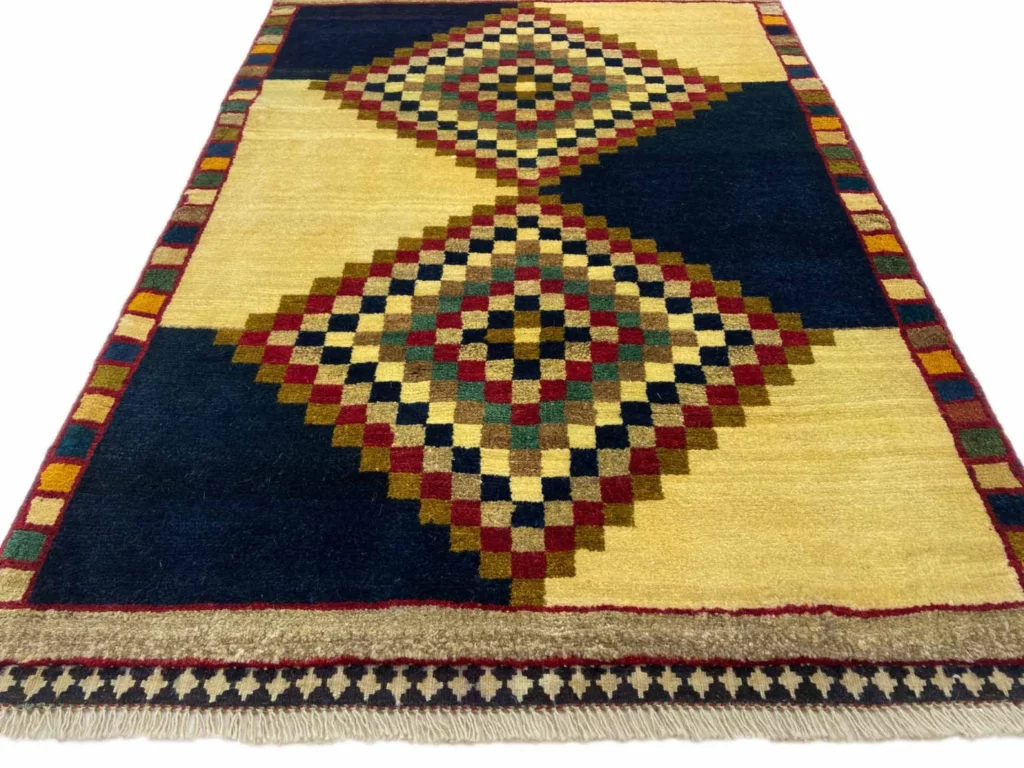
The defining feature of a Gabbeh Shuli is its unusual and imaginative patterning. The design may be inspired by the personal ideas of the person who knotted it. This creates a visual language that is not purely schematic: shapes, colours and open areas work together as an individual composition. Its character comes from the meeting of inherited handcraft and personal imagination.
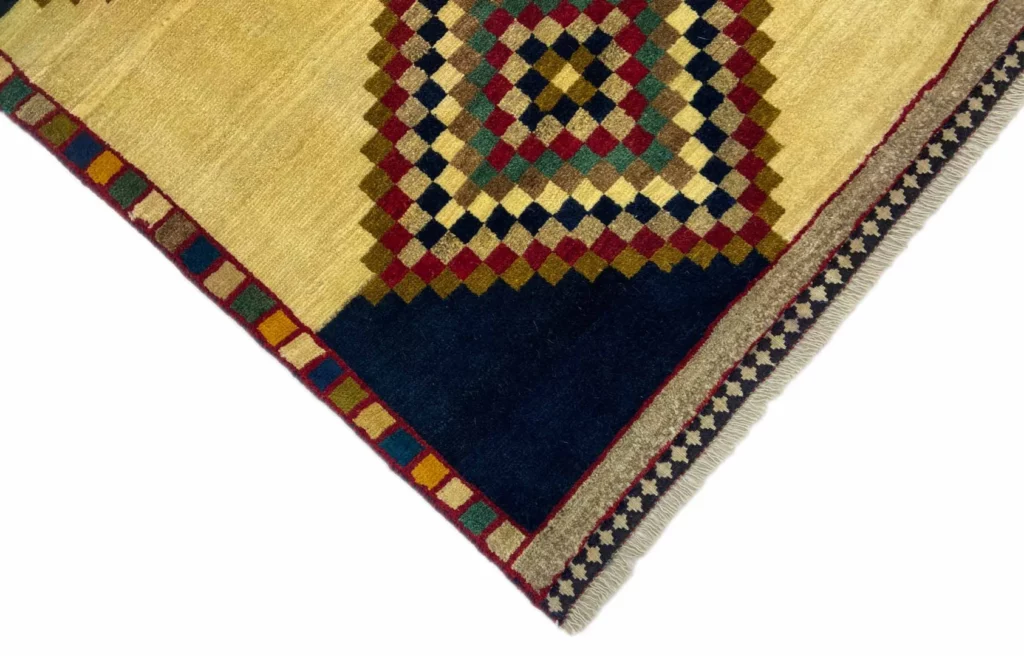
The colour palette includes red, beige, grey and brown. These colours can establish different relationships and give the composition changing points of emphasis. Red provides a strong accent, while beige, grey and brown create an earthy range. Together they remain connected to the visual environment of Gabbeh while moving beyond the restrained effect often associated with simpler Gabbeh compositions.
Gabbeh patterning is not limited to one ornamental formula. Simplified geometric forms, freely interpreted signs and areas of varying scale may exist together. In a Shuli Gabbeh, this openness is especially apparent: the design can feel imaginative without needing to resemble a fully symmetrical pattern repeated in minute detail. This freedom of composition is a central part of the type.
In an interior, a rug of this kind functions as an independent graphic and colour field. It can give structure to a room without relying on formal ornament arranged with strict regularity. Red, beige, grey and brown also provide several visual links to furniture and other textiles. This describes the design logic of the type; the precise effect of this one-off rug comes from its own distribution of colours and its individual pattern.
The contrast with Tabriz is mainly a contrast of design language. Tabriz rugs are known for detailed patterns and fine knotting techniques and often appear more strongly governed by developed ornamental schemes. Gabbeh Shuli follows a freer visual idea, leaving greater room for imagination and personal interpretation. Both forms demonstrate the range of Persian rug-making, while the Shuli Gabbeh retains its own distinctive design emphasis.
Special Features
This Gabbeh Shuli is described as a high-quality artwork. Its special character rests in the combination of hand-knotted construction, lustrous virgin wool and unusual pattern design. Red, beige, grey and brown contribute to the independent identity of the composition. Because the designs may be inspired by the maker’s personal ideas and imagination, each piece carries an individual artistic character.
Gabbeh rugs are also known for robust quality and rustic charm. These are general features of the type and help explain why Gabbeh has traditionally been regarded as suitable for everyday use. In this rug, that robust Gabbeh tradition is joined by the colourful Shuli approach. Each rug is one of a kind and tells its own story.
FAQ
What makes the Gabbeh Shuli distinctive?
Its unusual and imaginative patterns are the most distinctive feature of the Gabbeh Shuli. They may draw on the personal ideas of the maker and give the rug an individual visual character. The lustrous virgin wool used for the pile is another defining element. Hand-knotting, the palette of red, beige, grey and brown, and the combination of Fars tradition with freer design all shape its identity.
How should I care for my Gabbeh Shuli?
Regular care consists of gentle vacuuming and occasional beating to release loose dirt. If a mark appears, use a damp cloth and dab the affected area carefully rather than rubbing it firmly. This provides a restrained way to treat the wool surface and helps preserve its appearance. More intensive treatment should be carried out with appropriate care for a hand-knotted wool rug.
Where does the Gabbeh Shuli come from?
The Gabbeh Shuli comes from the Fars region of Persia, near the city of Shiraz. Its origin is traditionally associated with the handcraft of nomadic peoples. It belongs to the Persian Gabbeh tradition, known for handmade rugs, robust quality and designs that can be developed with considerable individual freedom.
To provide the best experiences, we use technologies like cookies to store and/or access device information. Consenting to these technologies will allow us to process data such as browsing behavior or unique IDs on this site. Not consenting or withdrawing consent, may adversely affect certain features and functions.
Functional Always active
The technical storage or access is strictly necessary for the legitimate purpose of enabling the use of a specific service explicitly requested by the subscriber or user, or for the sole purpose of carrying out the transmission of a communication over an electronic communications network.
Preferences
The technical storage or access is necessary for the legitimate purpose of storing preferences that are not requested by the subscriber or user.
Statistics
The technical storage or access that is used exclusively for statistical purposes.The technical storage or access that is used exclusively for anonymous statistical purposes. Without a subpoena, voluntary compliance on the part of your Internet Service Provider, or additional records from a third party, information stored or retrieved for this purpose alone cannot usually be used to identify you.
Marketing
The technical storage or access is required to create user profiles to send advertising, or to track the user on a website or across several websites for similar marketing purposes.

 SECURE PAYMENT
 SHIPPING PARTNERS


