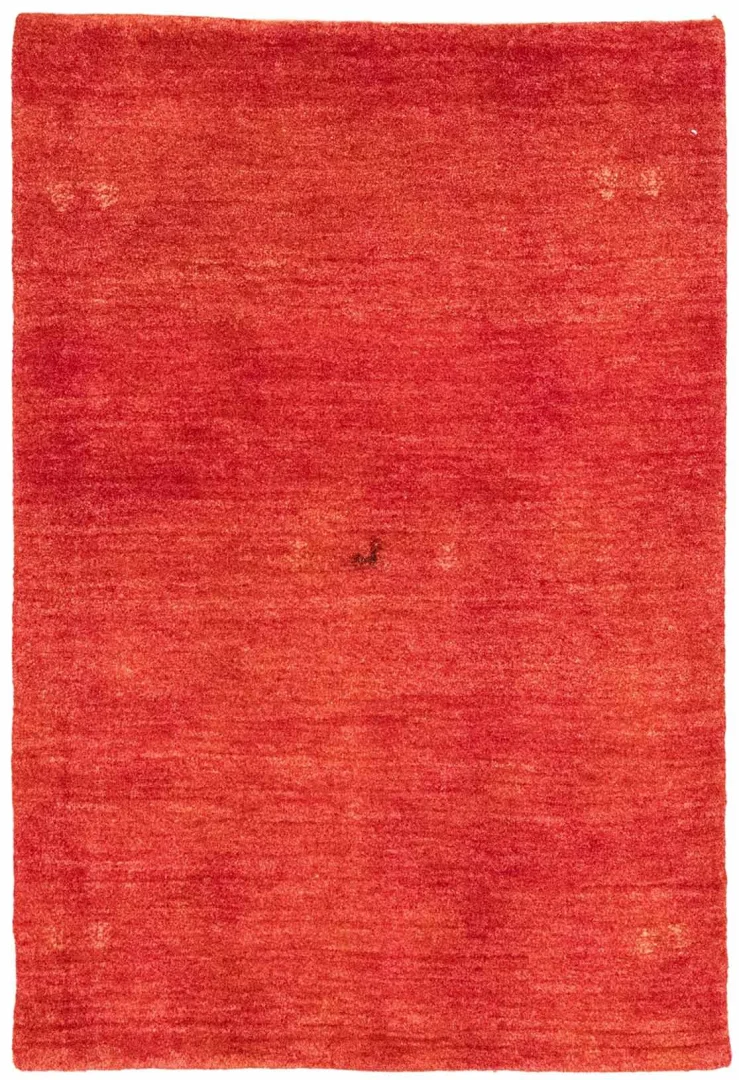
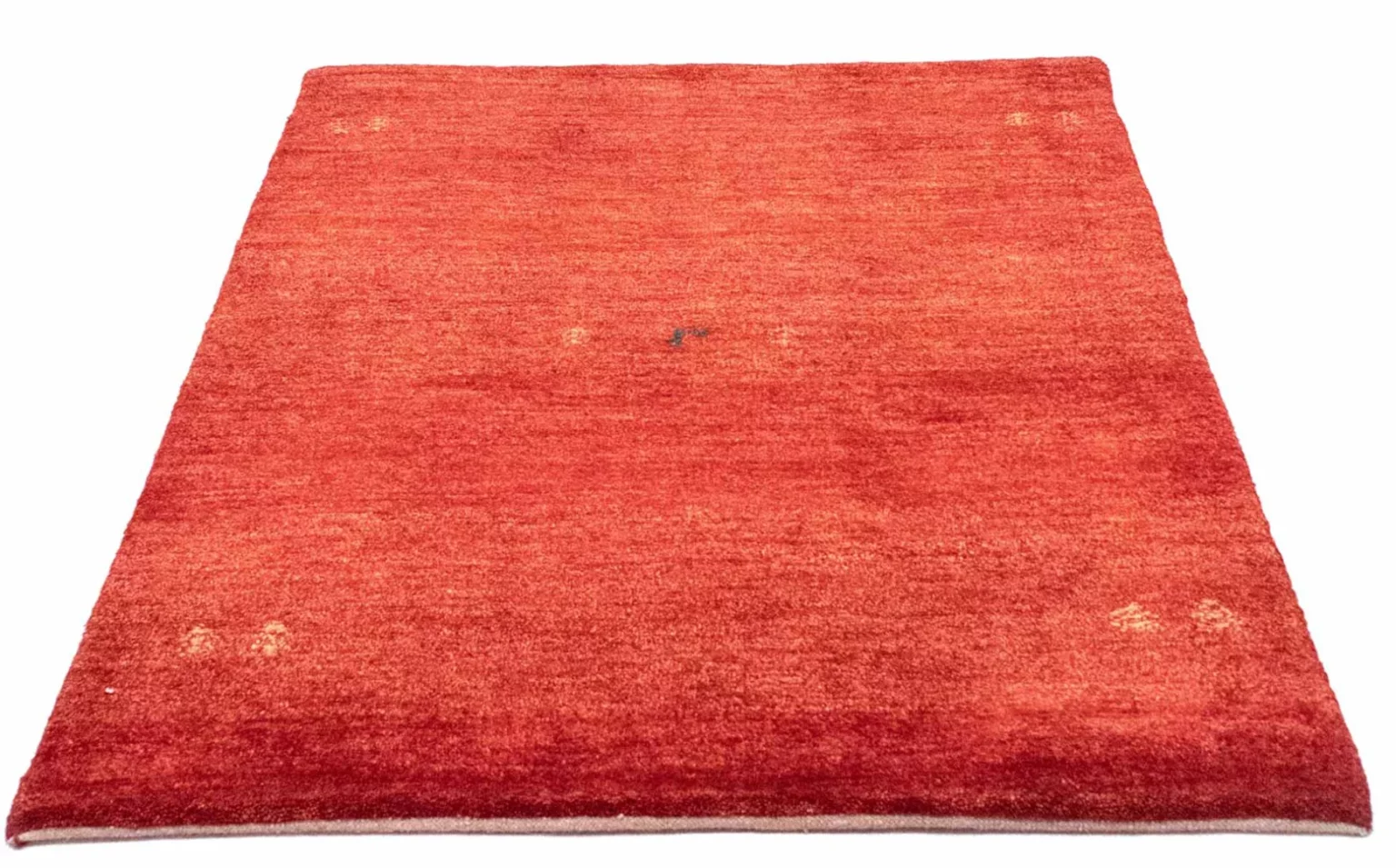
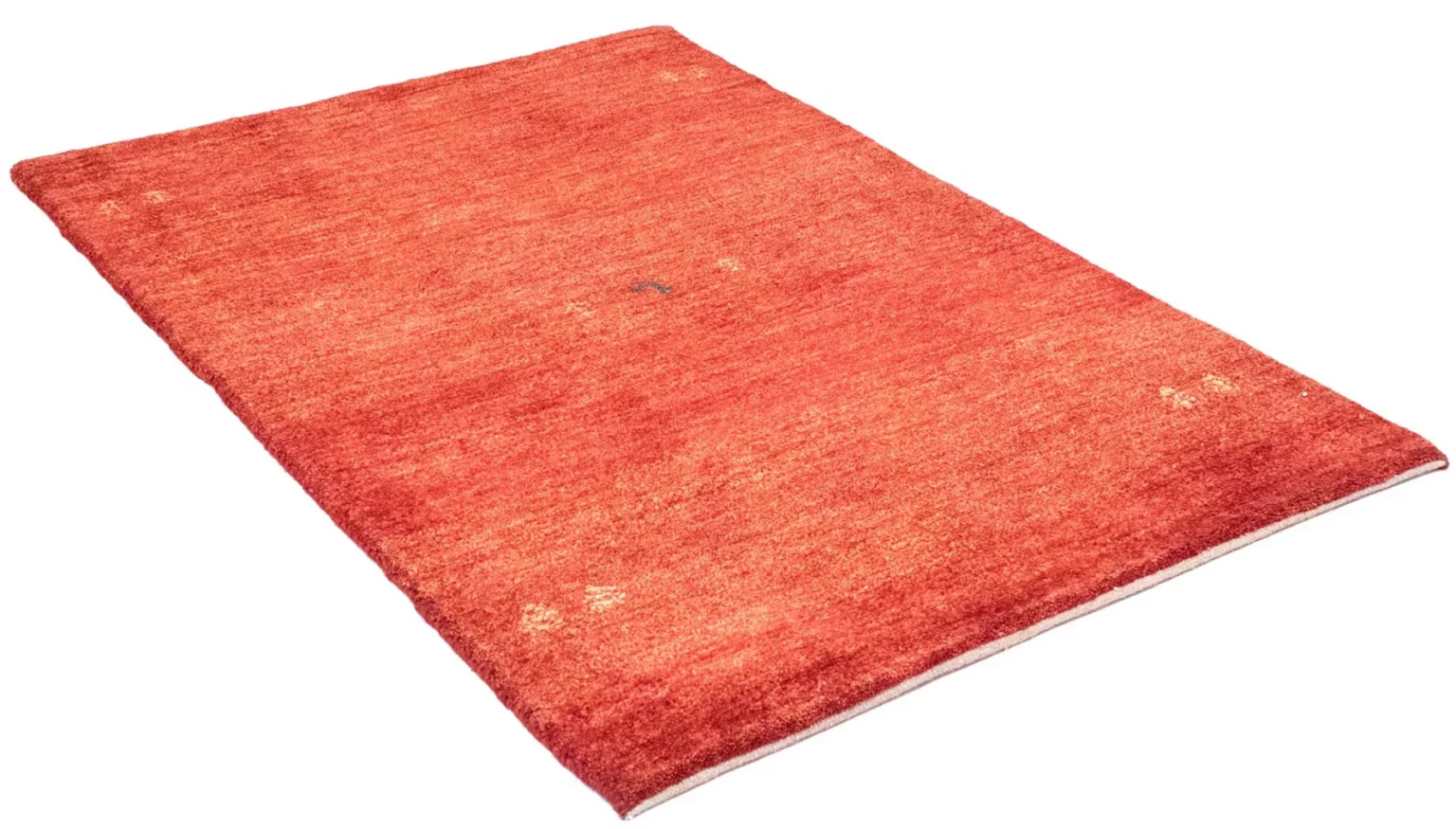
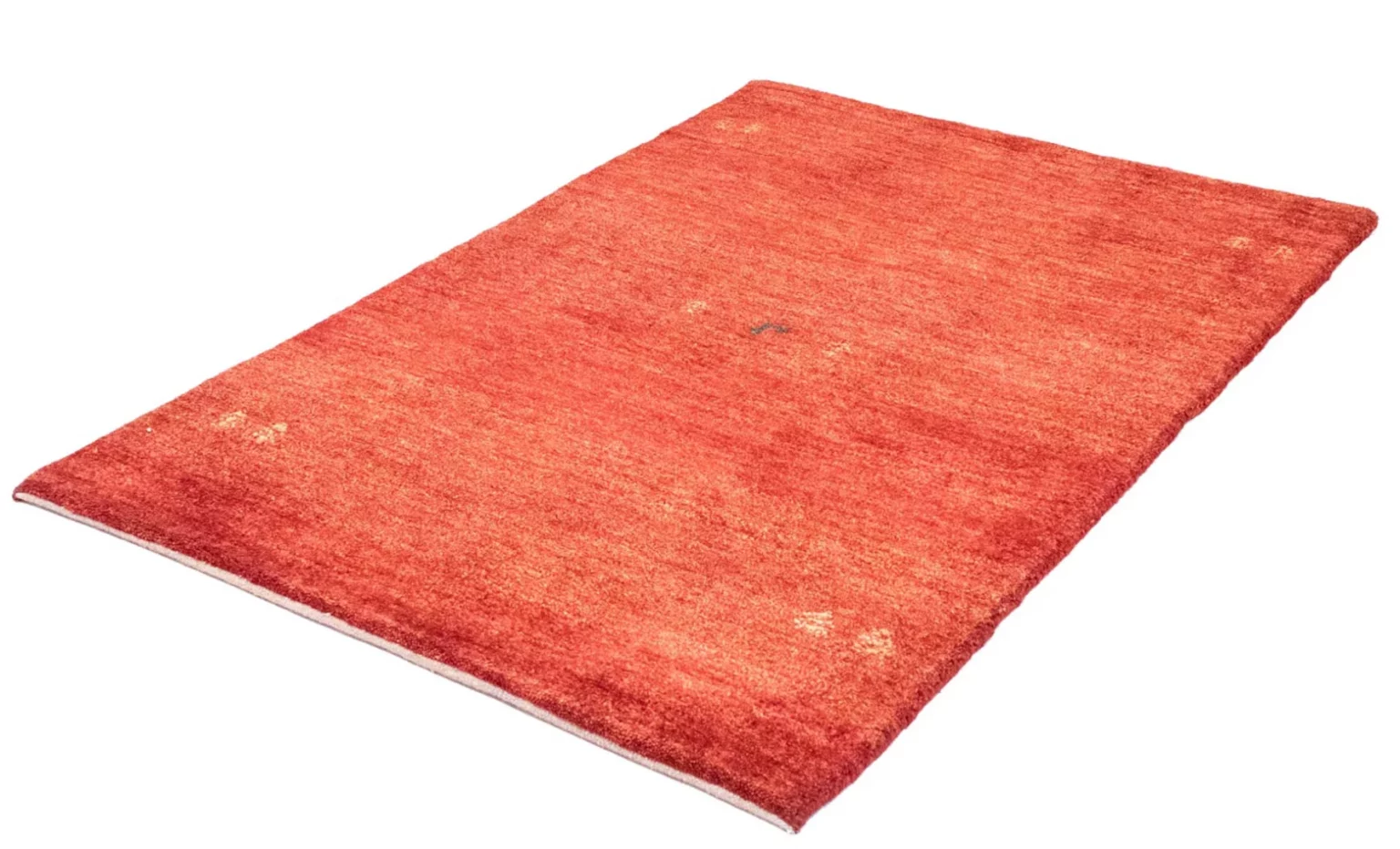
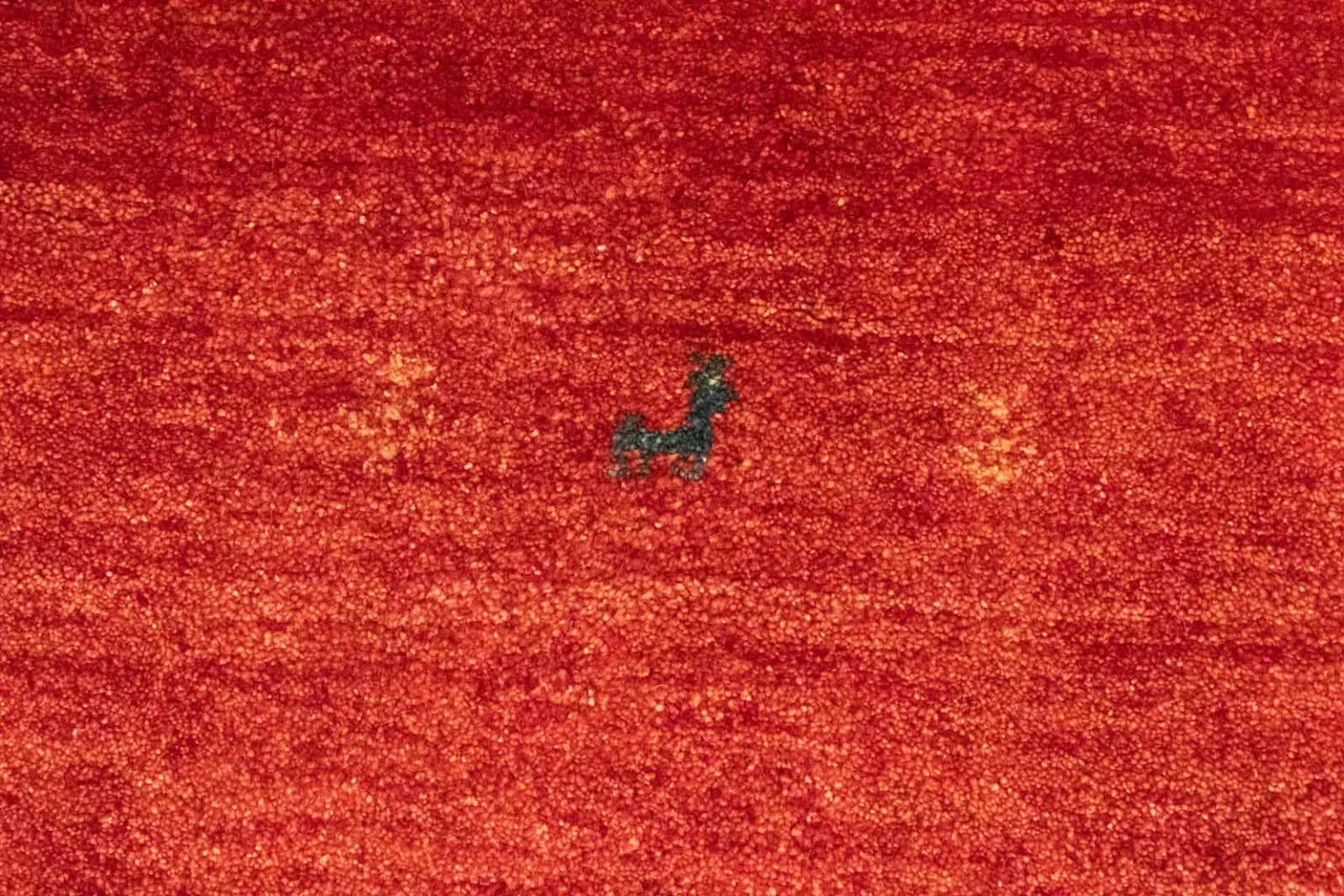
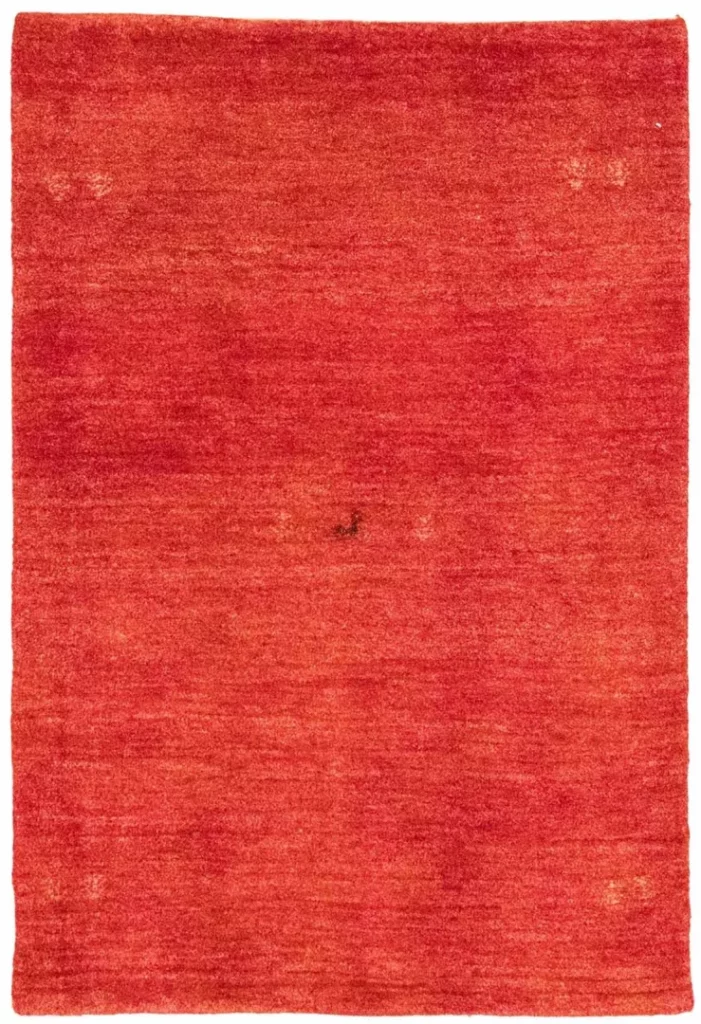
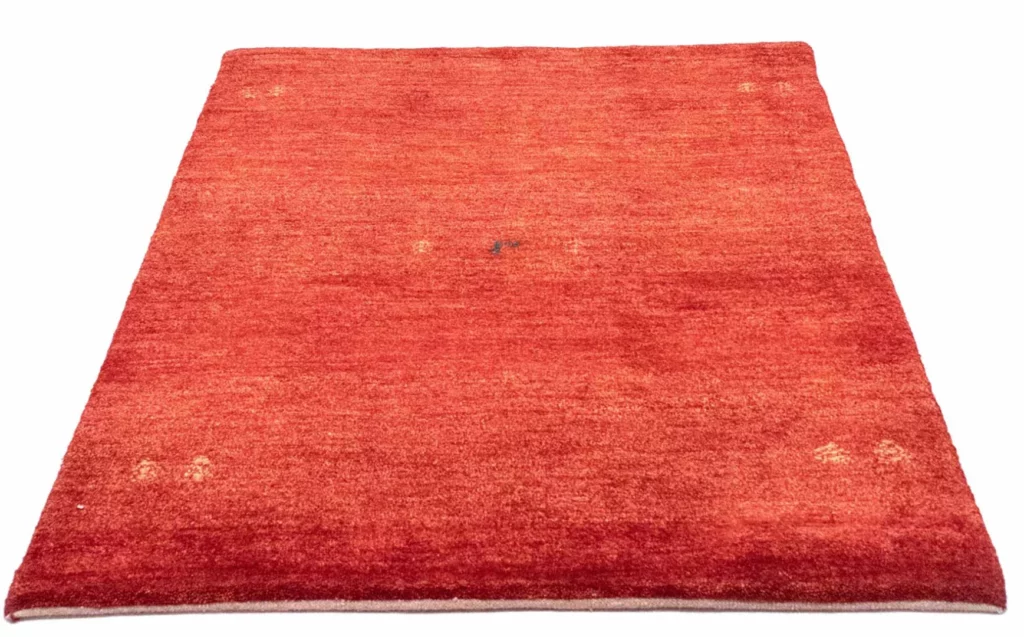
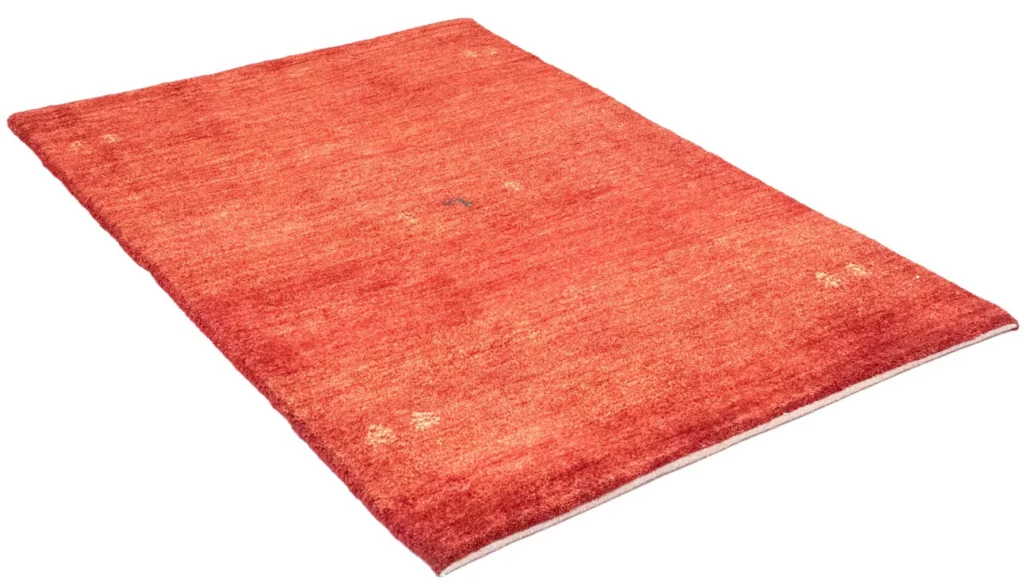
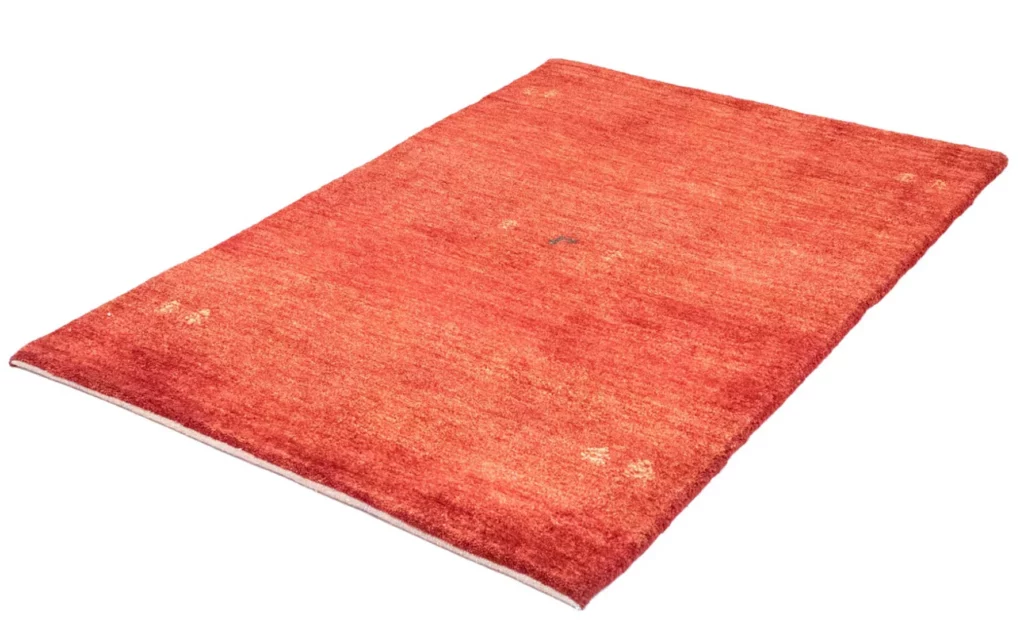
Hand-knotted Fars Persian Rug | Knot density: 50.000 – 150.000 knots/m² | Material: Pile hand-spun sheep and goat wool | Size: 144 x 100 cm | Pattern: Abstract designs with large colour fields | Condition: New
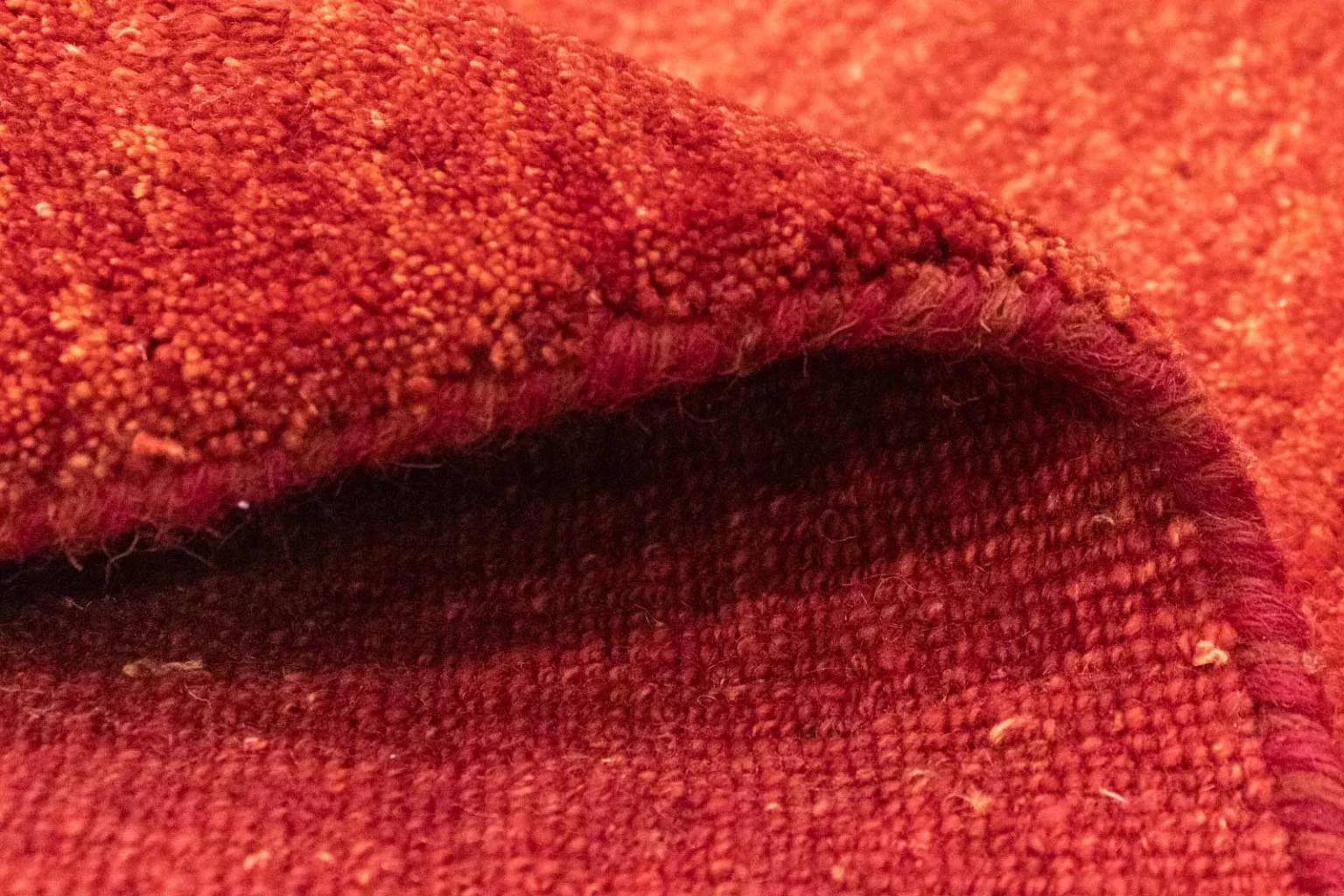
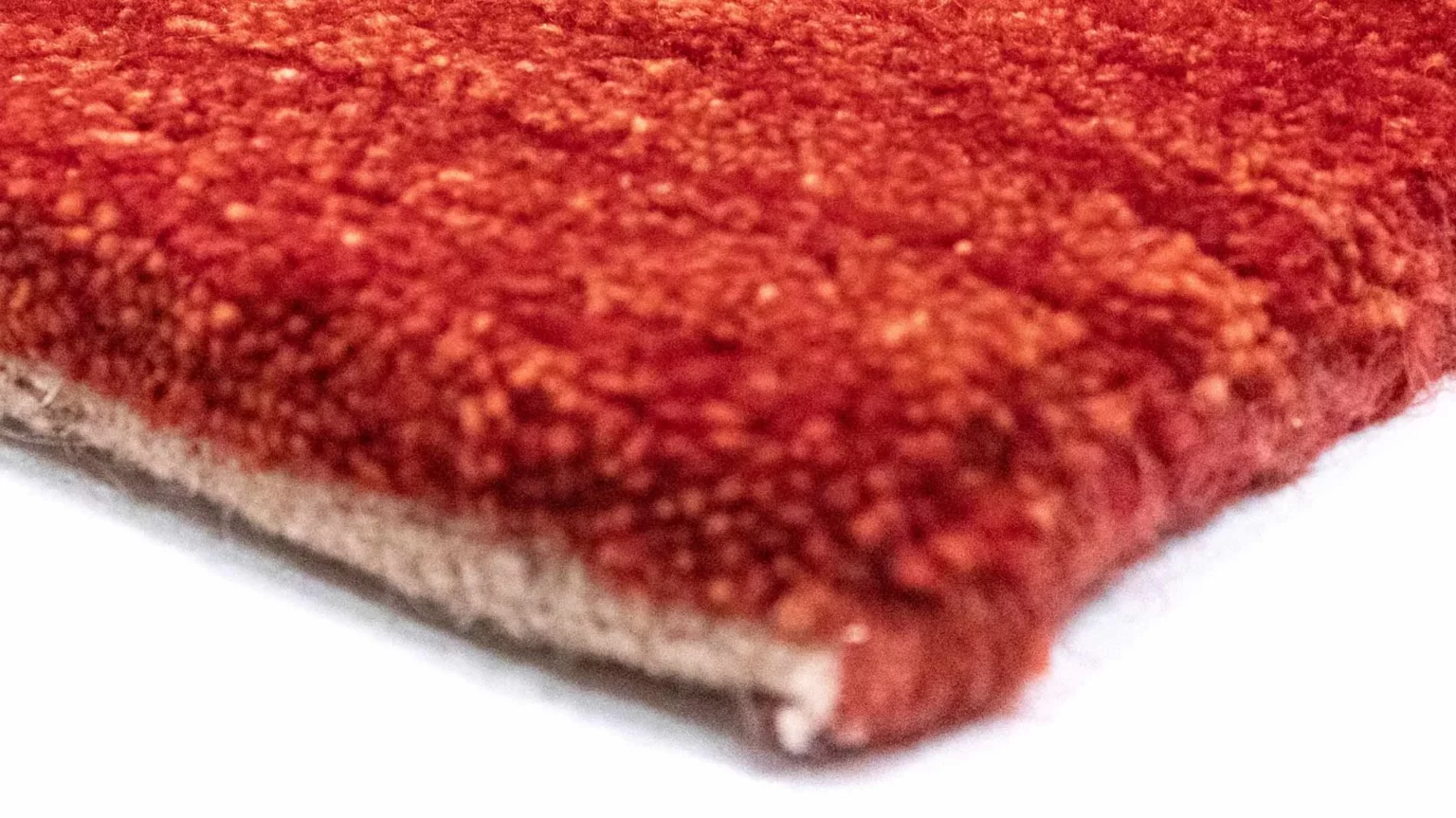
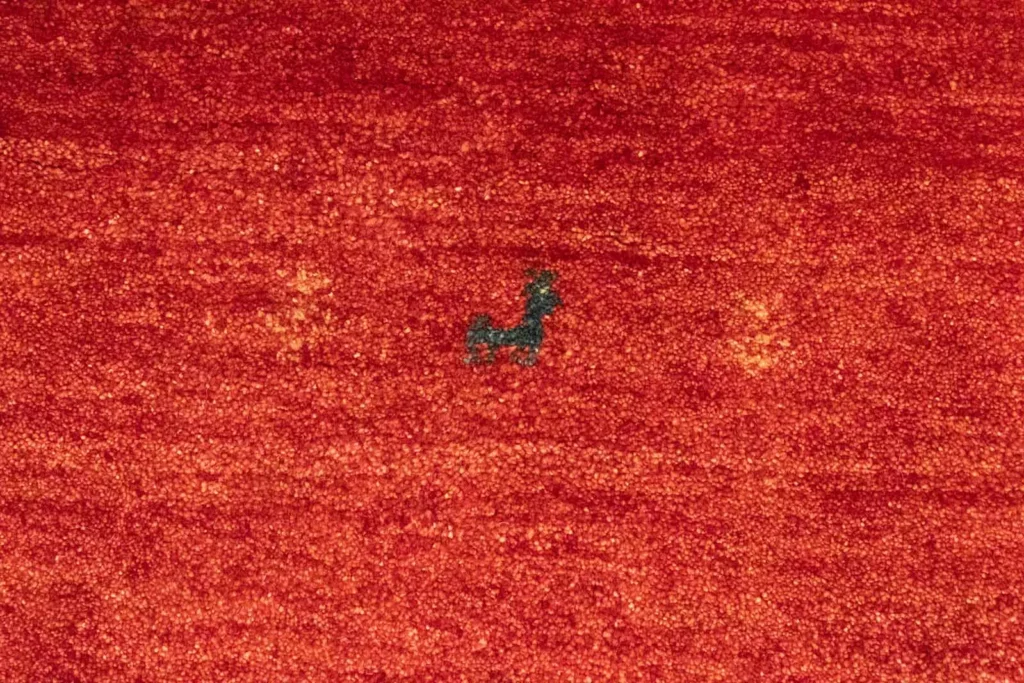
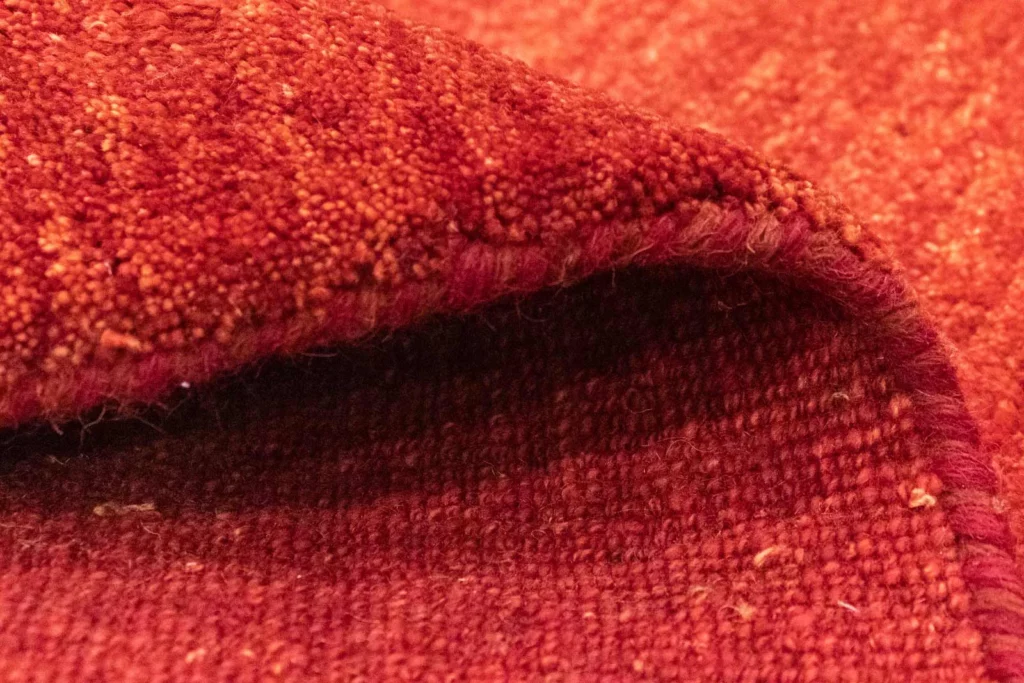
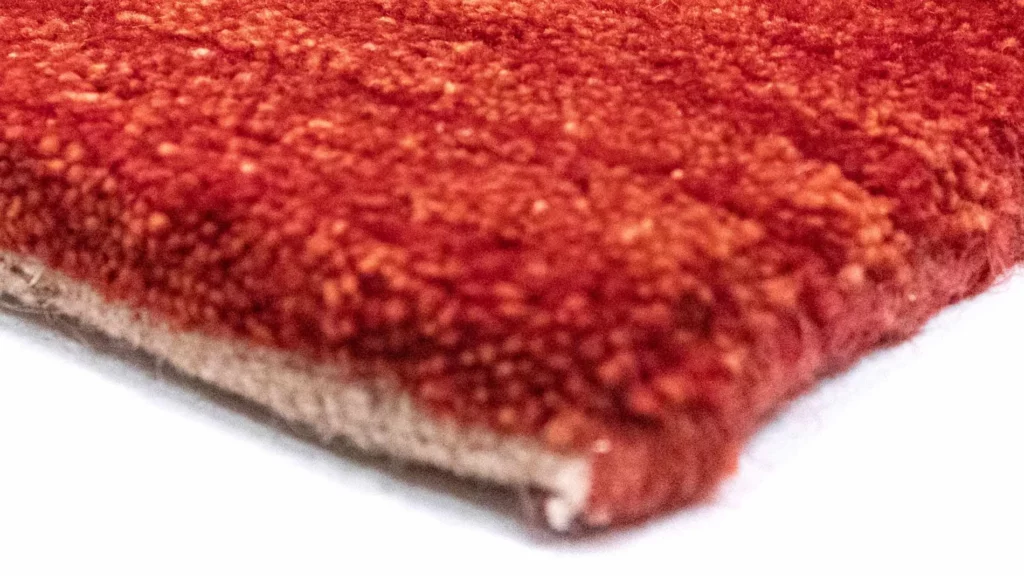
This Gabbeh is hand-knotted and has a soft pile. Its material is described as hand-spun sheep and goat wool; the extended description also identifies the rug as made from 100% virgin wool. Wool defines both the tactile quality and the character of the surface. The soft pile is one of the specifically stated features of this rug and makes its textile structure immediately perceptible.
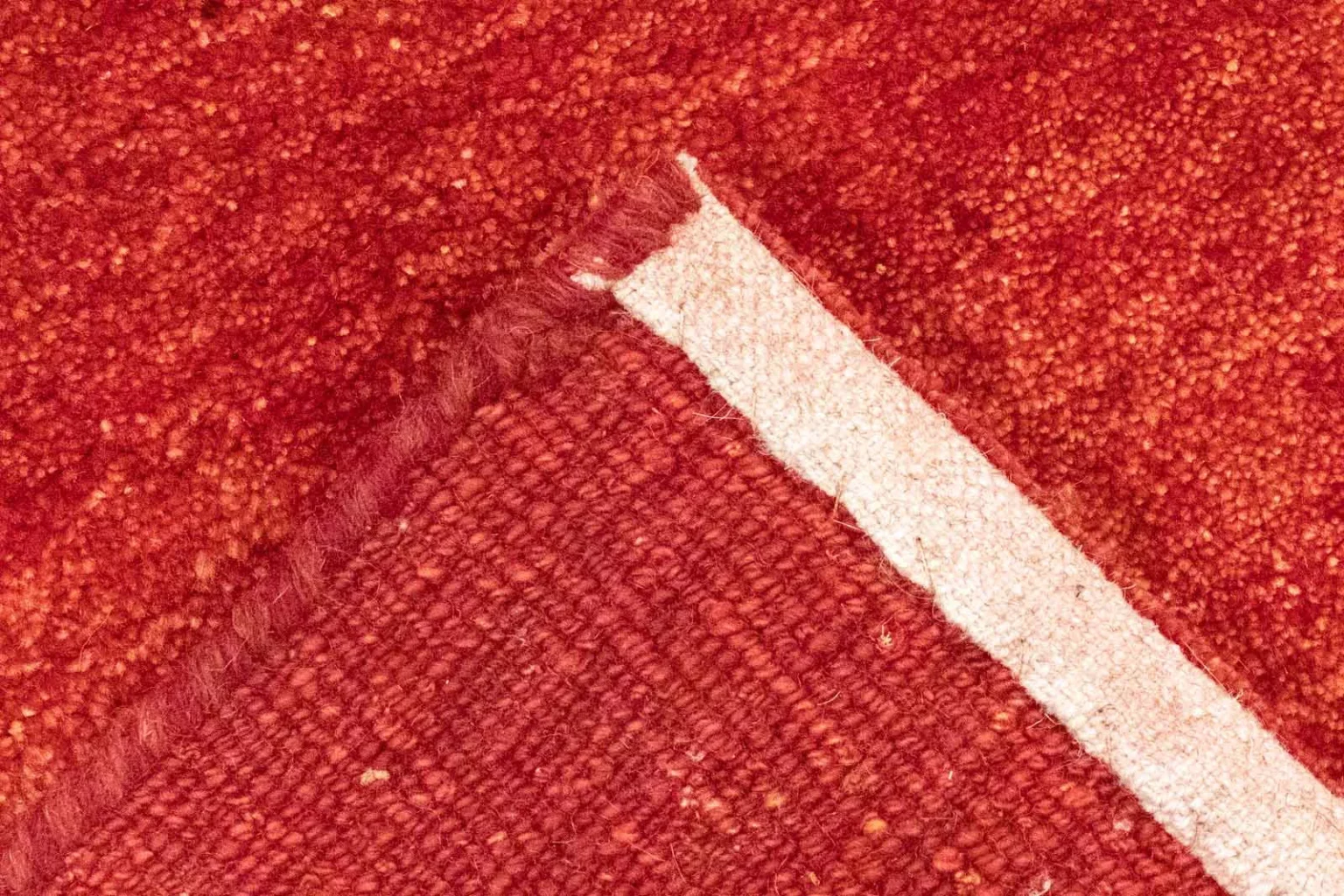
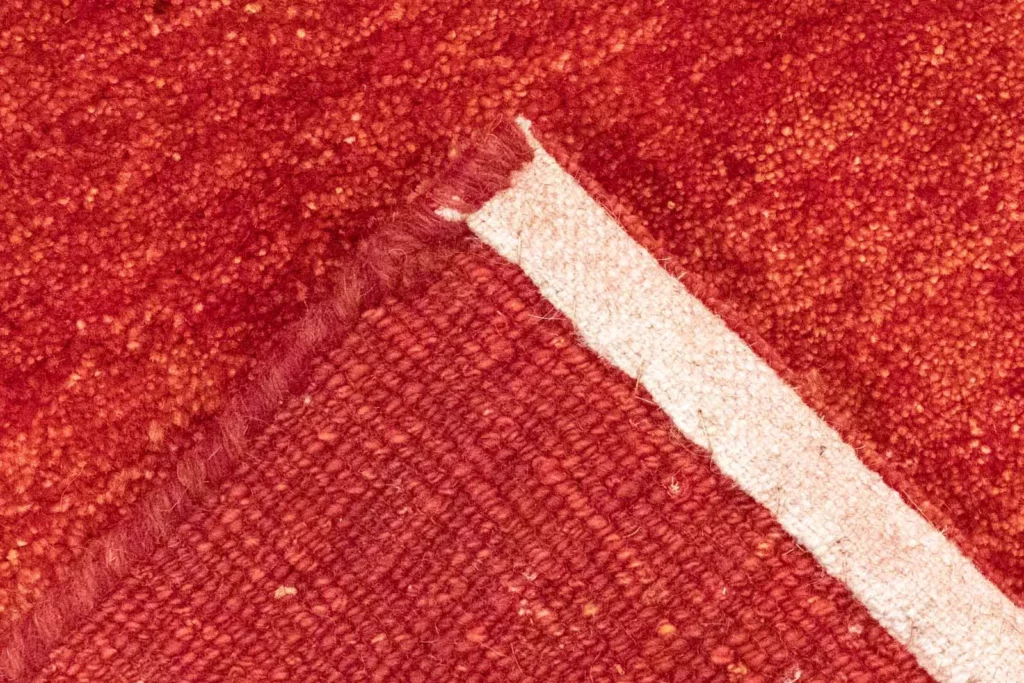
The rug is made by hand. In a hand-knotted Persian rug, the pattern is built knot by knot as pile yarn is attached to the foundation and arranged across the surface. This Gabbeh has a knot density of 50.000 – 150.000 knots per square metre. The product information therefore identifies both the construction method and the density of the knotting, alongside the soft pile and the stated wool materials.
Sheep wool used as virgin wool has a long place in traditional carpet making. In a Gabbeh, wool is not intended to create an entirely flat or rigid surface; it contributes to the clearly tactile character associated with this rug type. The description also attributes softness, durability, insulating qualities and ease of care to the wool. These material properties help explain why Gabbeh rugs have traditionally served as practical textiles as well as decorative pieces.
Origin and Tradition
This rug comes from the Ghashghai nomads of the Fars region. Fars is in Iran and is one of the areas associated with the Gabbeh tradition. The origin therefore identifies more than a location: it points to a nomadic culture of making rugs for everyday use. Within Persian carpet production, Gabbeh represents a distinct approach in which the material, the handwork and the clarity of the design remain readily visible.
Persian rugs are part of a long history of regional craftsmanship. Knowledge of wool preparation, spinning, dyeing, knotting and pattern construction has been passed through generations in Iranian weaving areas. Gabbeh expresses this tradition in a comparatively spare visual language. Instead of relying on a large number of finely drawn ornaments, Gabbeh designs can be built from broad fields, simple forms and a direct arrangement. This gives the type a recognisable place within Persian rug culture.
The word Gabbeh is commonly rendered from Persian as “untidy”. In this context, the term does not describe careless workmanship. It refers to the coarse structure and rustic finish traditionally associated with the type. The name distinguishes Gabbeh from more formal and densely ornamental urban or courtly carpets. Its character comes from a straightforward relationship between wool, surface, colour and simplified design.
The Ghashghai nomads of Fars are particularly associated with Gabbeh rugs. Nomadic carpets were traditionally made from materials available within the surrounding way of life. Wool was a practical fibre because it could be spun, dyed and worked by hand. A Gabbeh could function as a floor covering, a warm textile and an expression of the maker’s own visual tradition at the same time. Its usefulness and its design were therefore not separate concerns.
Hand-knotted production requires a continuous relationship between material and working process. Wool is prepared and spun, knots are placed according to the developing composition, and the pile is organised as the work progresses. A nomadic Gabbeh is not defined by industrial uniformity. Its handwork belongs to a tradition in which inherited methods are combined with broad forms and clear colour decisions. The result is a textile whose construction remains part of its appearance.
Design and Pattern
The pattern of this Gabbeh is described as an abstract design with large colour fields. The composition is therefore based on the interaction of areas, colour and simplified form rather than on a detailed depiction of individual objects. Large fields establish the visual divisions across the rug. Abstraction gives the design a calm, contemporary reading while retaining its connection to the traditional Gabbeh vocabulary.
Gabbeh patterns are often associated with simple geometric shapes and clear lines. This reduction is an important design device within the rug type. Forms may appear as separate fields, repeat in a regular order or stand as individual elements within a wider ground. For this particular rug, the source specifies abstract designs and large colour fields; no more specific individual motifs are identified.
The extended description also places Gabbeh designs in the range of earthy colours and harmonious arrangements of geometric forms. Earth-related tones connect the palette with the landscape and craft tradition of Fars. Areas of related colour can make the composition feel cohesive, while clear divisions between fields give the surface structure. The visual effect is created through the balance of colour and area, rather than through a dense collection of small ornamental details.
Traditionally, Gabbeh designs are influenced by the surroundings and daily life of the nomadic cultures with which the type is associated. Their forms are not necessarily exact reproductions of a fixed template. In hand production, shapes may be simplified, altered and placed into a new arrangement. Symmetrical and geometric elements can reflect impressions of nomadic life and the natural environment. The resulting pattern remains legible while retaining its cultural context.
The description names natural dyes from plants, roots and minerals as traditional sources for Gabbeh colouring. Such dyes connect the palette with materials found in the natural world and can contribute depth to the colours. Colour is considered together with the geometric elements and broad fields, not as an isolated decorative feature. The soft pile also affects how those fields are perceived, adding a distinctly textile quality to the surface.
This reduced design language explains why Gabbeh rugs occur in both traditional interiors and modern room settings. An abstract pattern made from large colour fields does not necessarily compete with other furnishings. At the same time, the origin remains visible through the wool, the hand-knotted technique and the Gabbeh tradition. The combination of inherited craft and clear formal structure is central to the type’s identity.
Special Features
The rug is new and is described as having a soft pile. Its hand-knotted construction, hand-spun sheep and goat wool, and abstract designs with large colour fields are specifically stated features. The extended description lists living rooms, dining rooms and bedrooms as suitable settings, and also mentions use as an accent piece in hallways. Its space-saving size allows it to be used effectively in smaller rooms.
The extended description further states that the high virgin-wool content makes the rug hypoallergenic and suitable for allergy sufferers. It also describes the Gabbeh as suitable for rooms with underfloor heating because of its wool and specific construction. Recommended care consists of regular vacuuming and professional cleaning when needed. Direct sunlight should be avoided in order to reduce the risk of the colours fading.
How should I care for my Gabbeh rug?
Regular vacuuming helps remove loose dust and everyday dirt from the soft pile and keeps the surface clean. When a deeper cleaning is needed, professional rug cleaning is recommended. Direct sunlight should be avoided because it can cause the colours to fade. This approach combines routine maintenance with protection of the rug’s colour appearance.
Can the Gabbeh rug be used over underfloor heating?
Yes. The product description states that this Gabbeh is suitable for rooms with underfloor heating because of its wool and its specific construction. It is described as providing pleasant warmth without impairing the heating performance. The rug can therefore also be placed in a room where underfloor heating is installed.
Where do Gabbeh patterns and colours come from?
Gabbeh patterns and colours are traditionally inspired by the regions where these rugs are made. For this rug type, the Fars region and the Ghashghai nomads are specifically associated with the tradition. Natural dyes made from plants, roots and minerals are described as common sources of colour. Symmetrical and geometric forms reflect aspects of the life and surroundings of the nomadic cultures that make Gabbeh rugs.
To provide the best experiences, we use technologies like cookies to store and/or access device information. Consenting to these technologies will allow us to process data such as browsing behavior or unique IDs on this site. Not consenting or withdrawing consent, may adversely affect certain features and functions.
Functional Always active
The technical storage or access is strictly necessary for the legitimate purpose of enabling the use of a specific service explicitly requested by the subscriber or user, or for the sole purpose of carrying out the transmission of a communication over an electronic communications network.
Preferences
The technical storage or access is necessary for the legitimate purpose of storing preferences that are not requested by the subscriber or user.
Statistics
The technical storage or access that is used exclusively for statistical purposes.The technical storage or access that is used exclusively for anonymous statistical purposes. Without a subpoena, voluntary compliance on the part of your Internet Service Provider, or additional records from a third party, information stored or retrieved for this purpose alone cannot usually be used to identify you.
Marketing
The technical storage or access is required to create user profiles to send advertising, or to track the user on a website or across several websites for similar marketing purposes.
 SECURE PAYMENT
 SHIPPING PARTNERS


