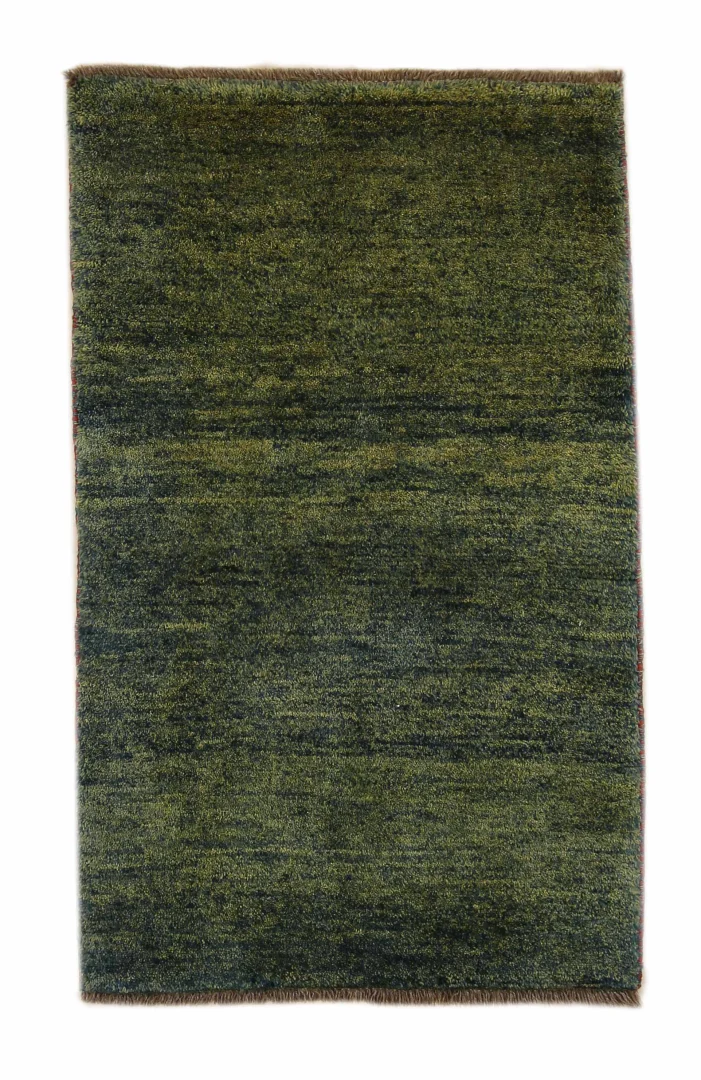
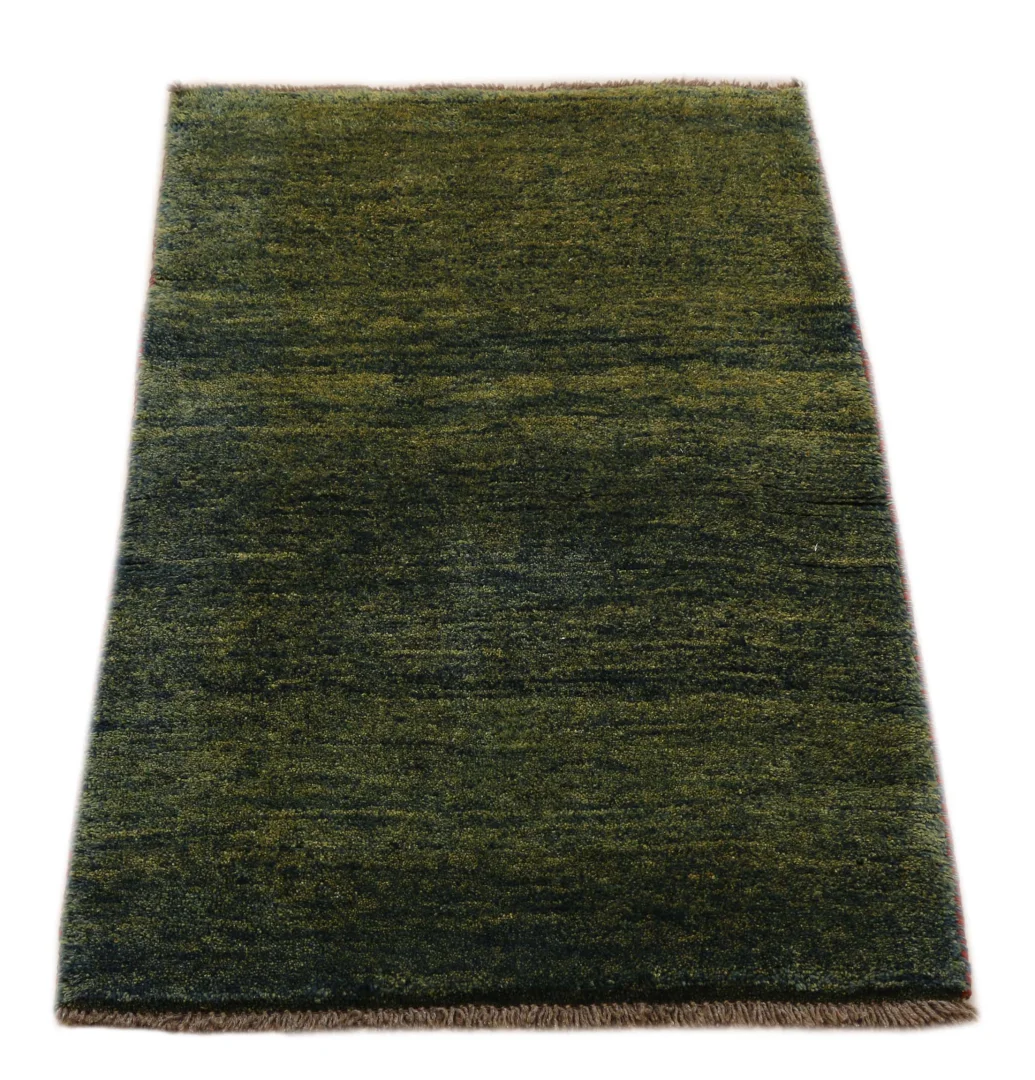
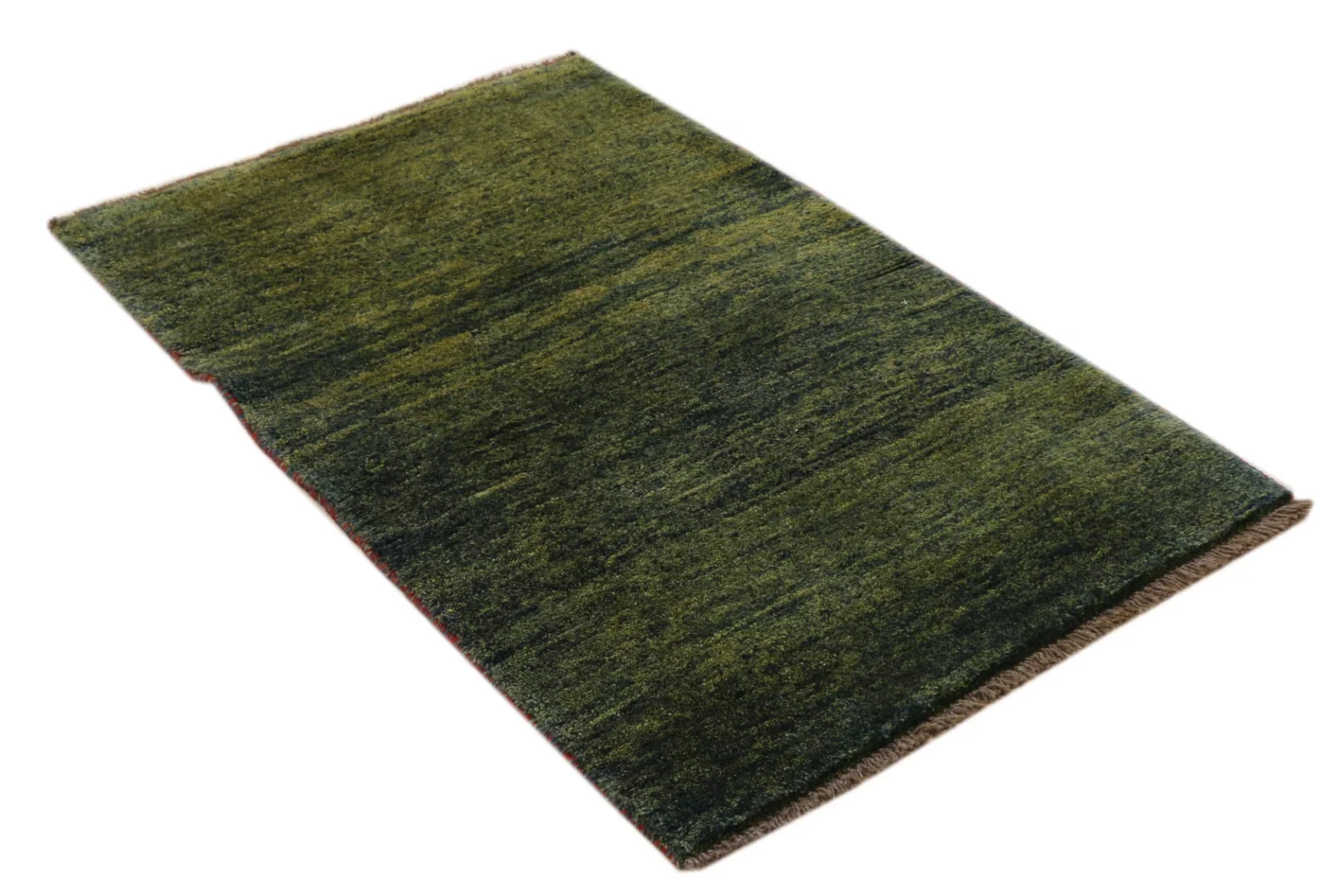
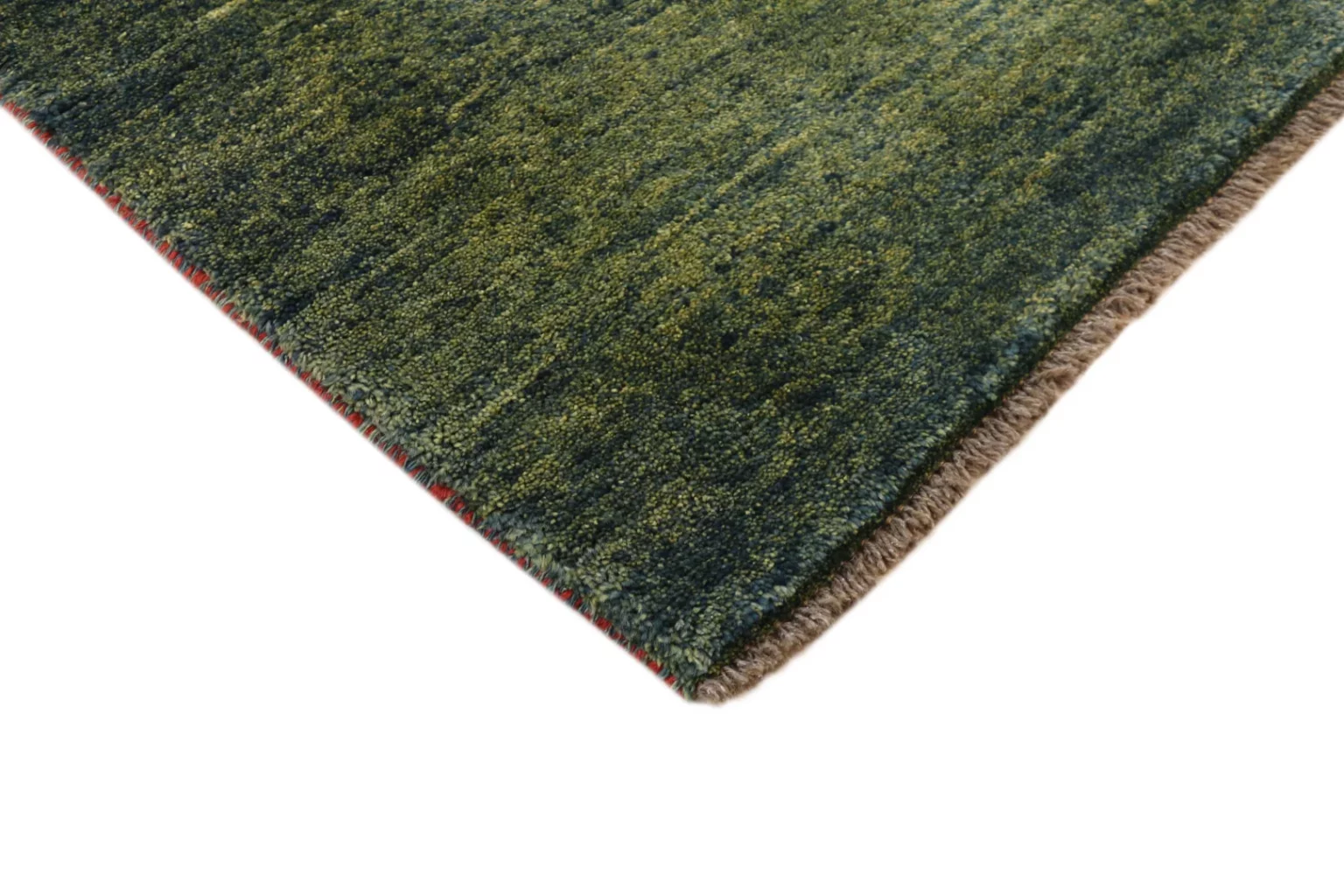
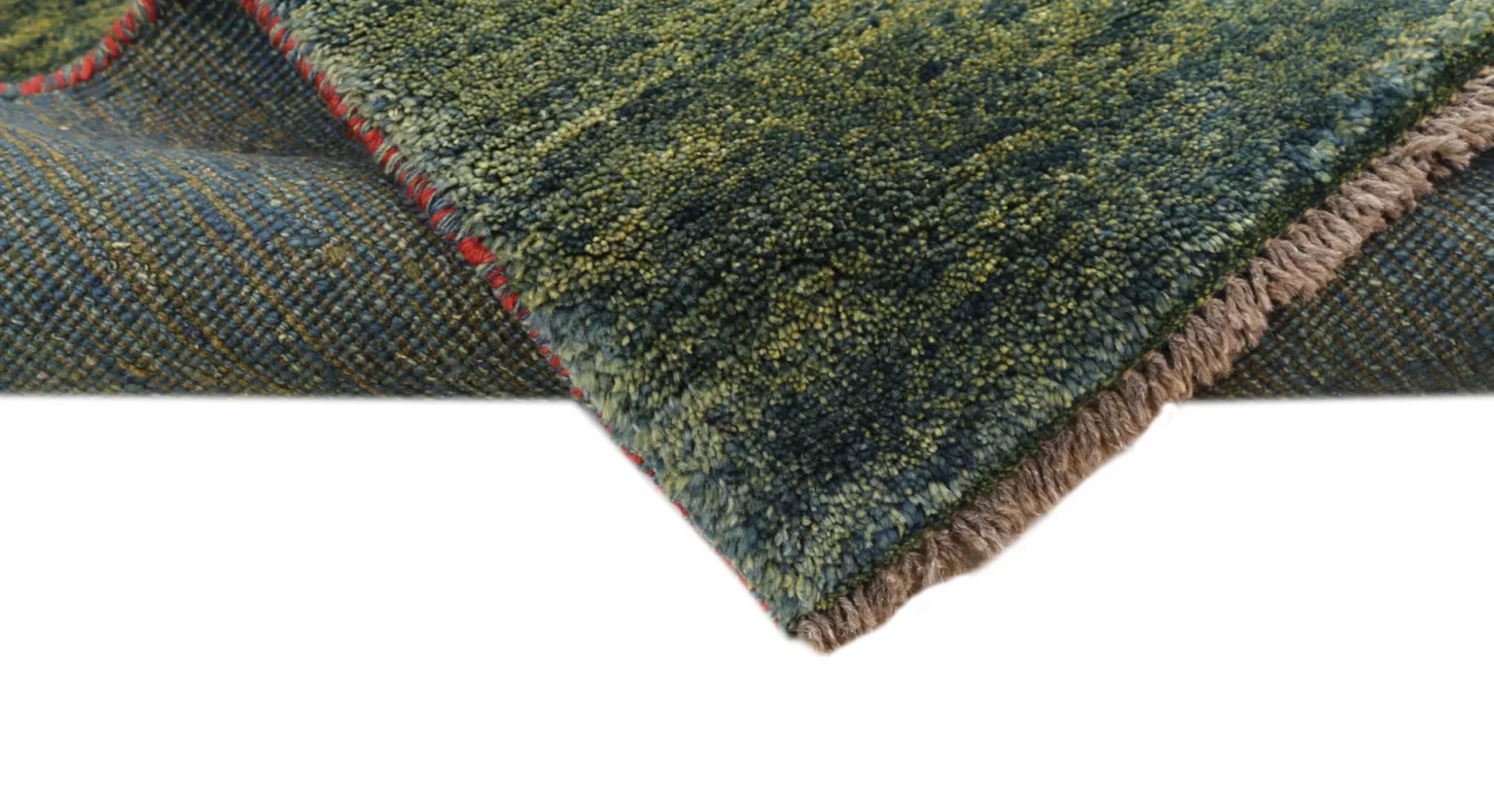
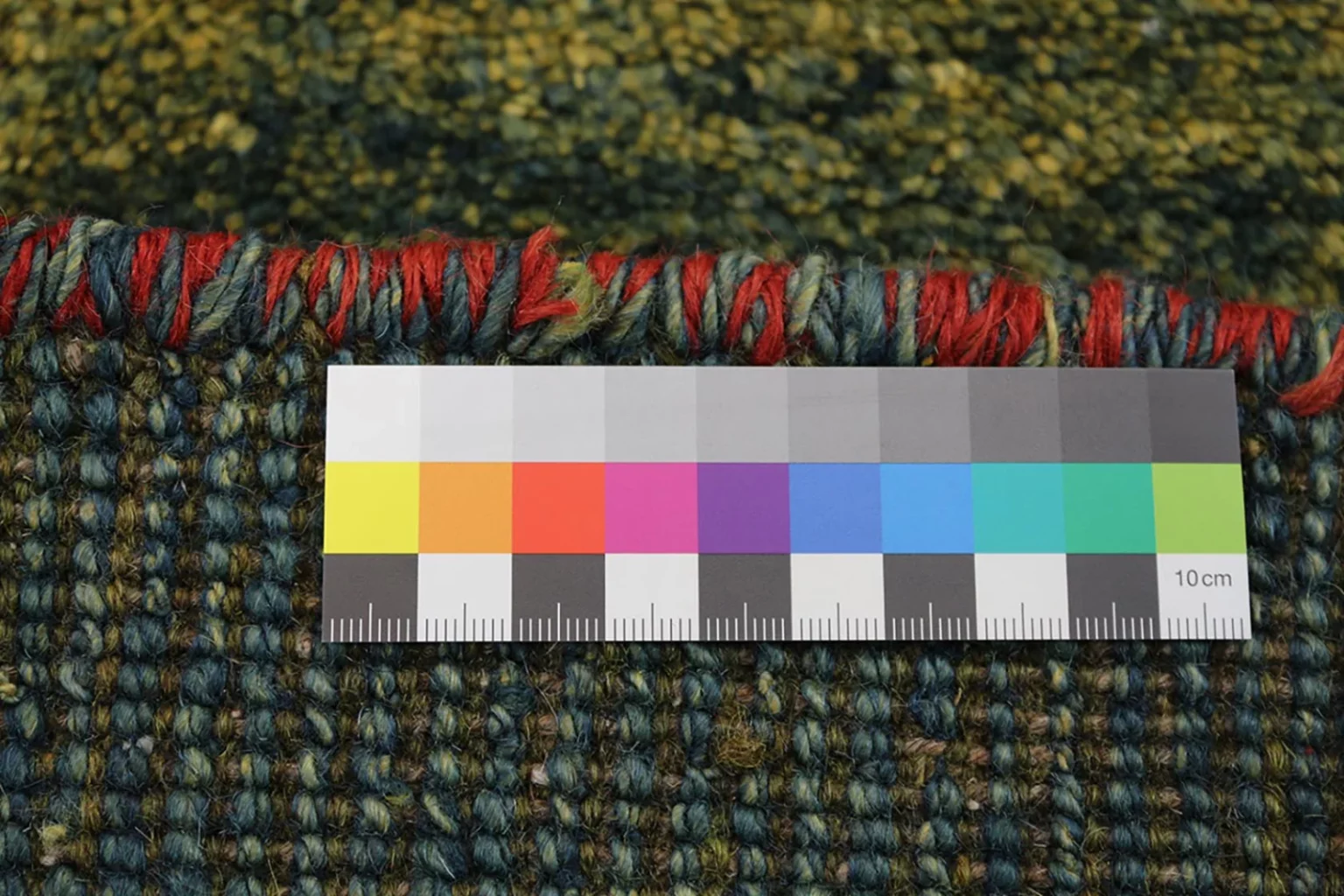
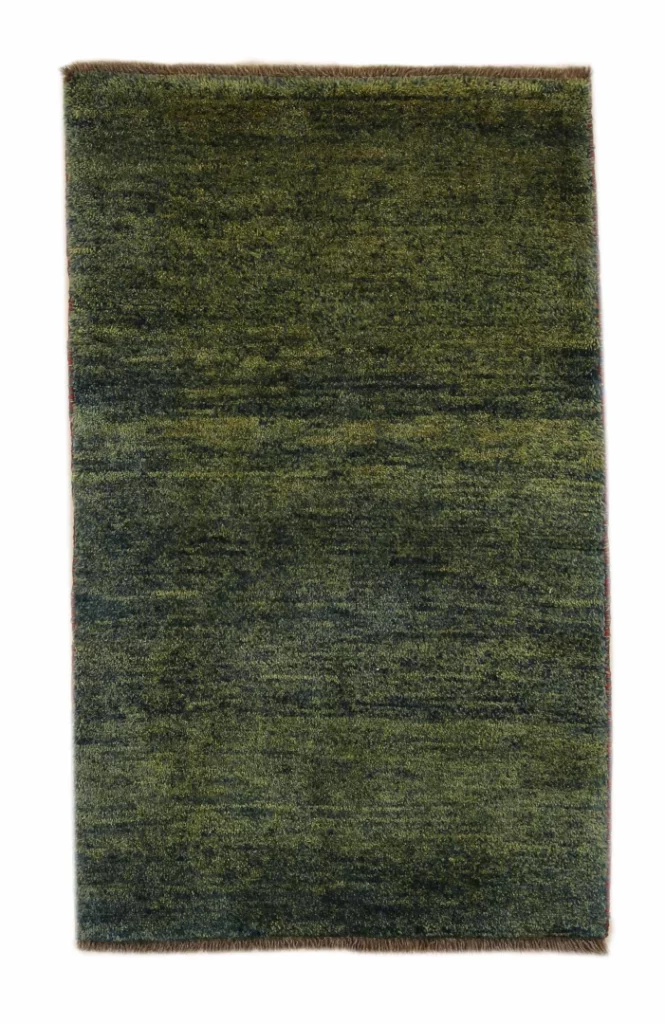
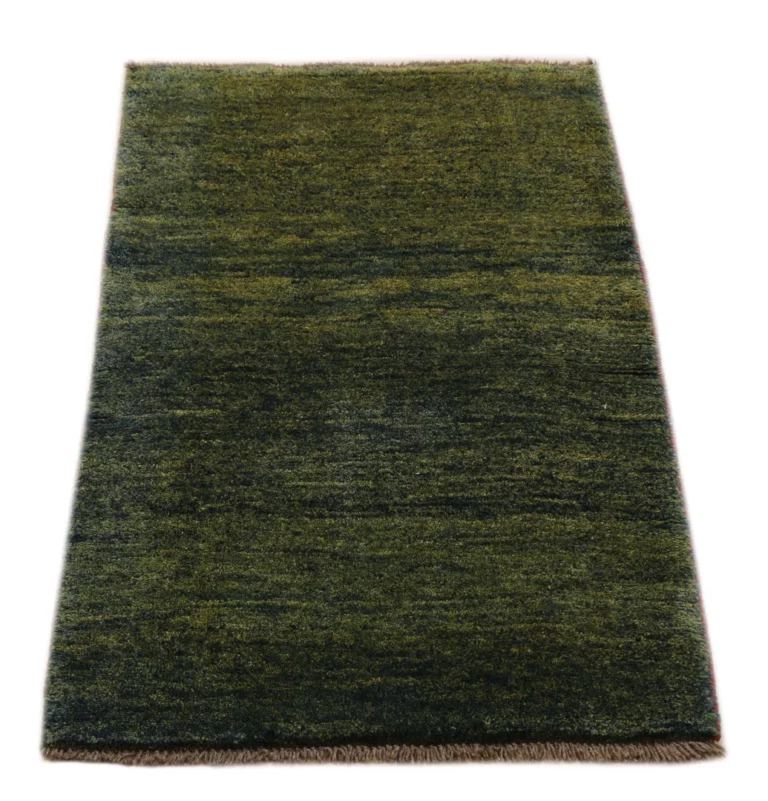
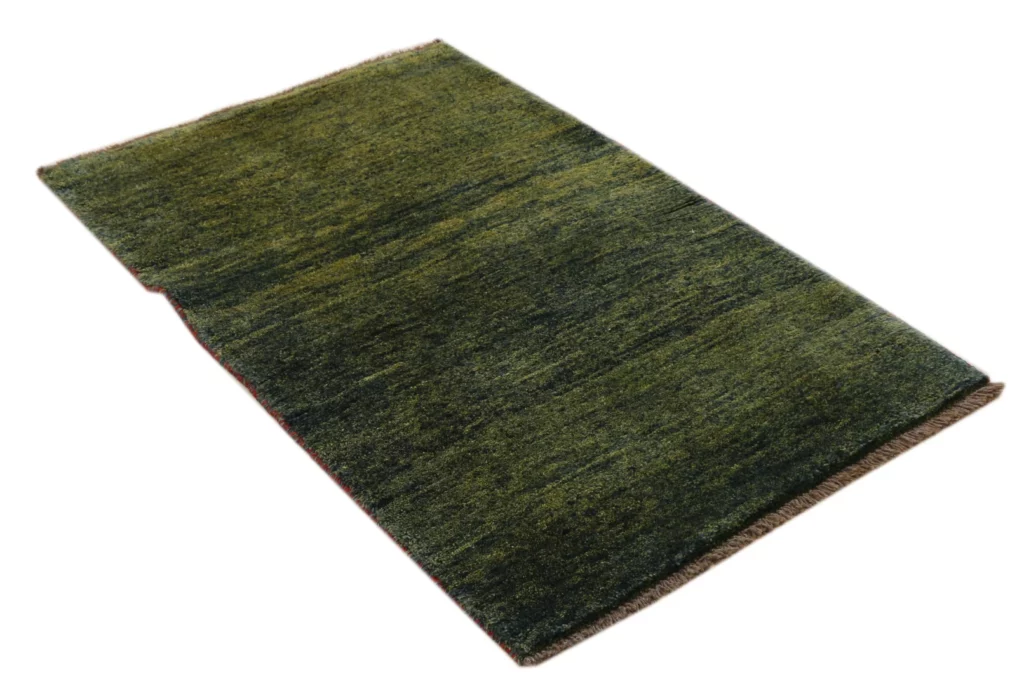
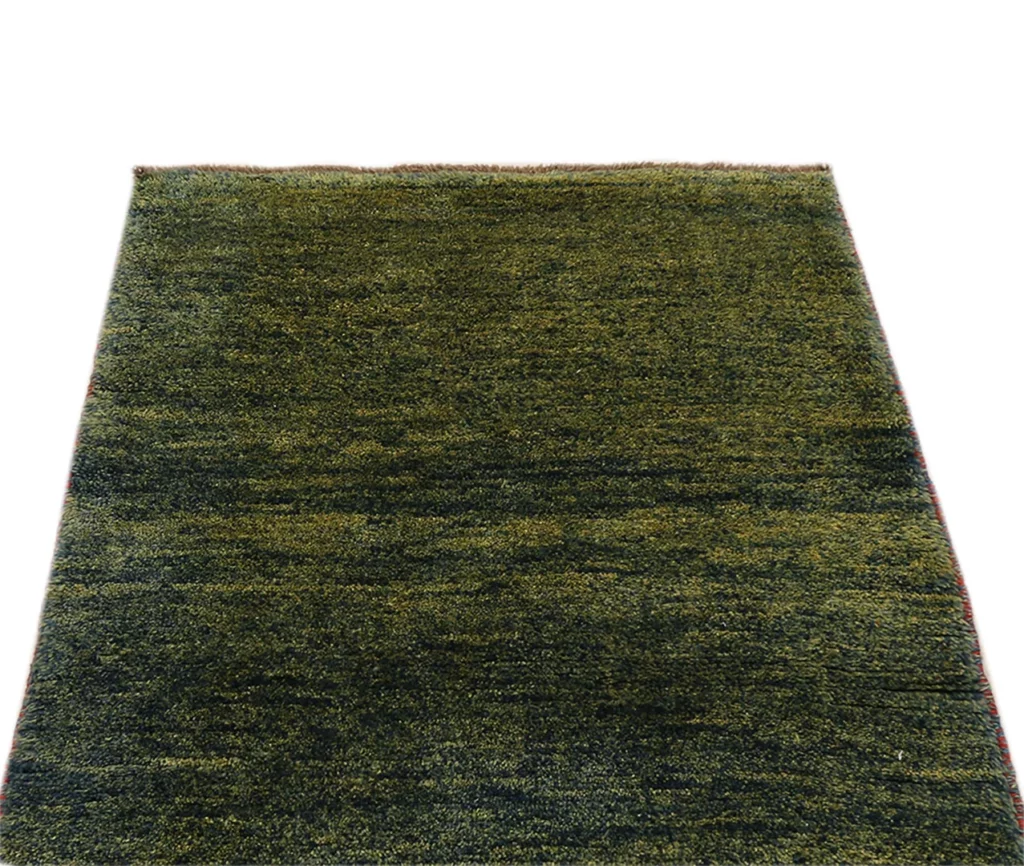
Hand-knotted Fars Persian Rug | Knot density: 50,000 – 150,000 knots/m² | Material: hand-spun sheep and goat wool pile | Size: 143 x 90 cm | Pattern: abstract design with large colour fields and playful figures | Condition: New
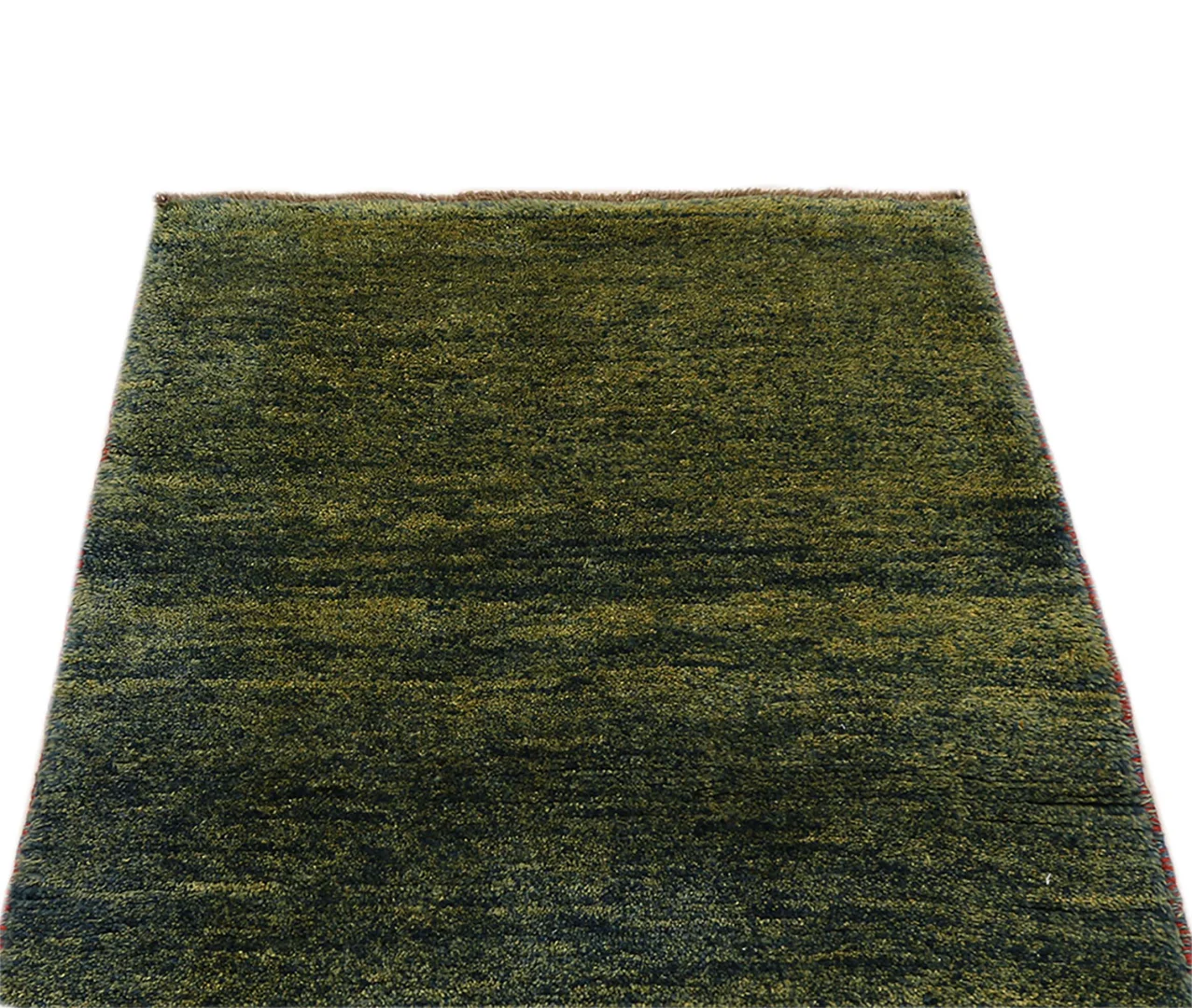
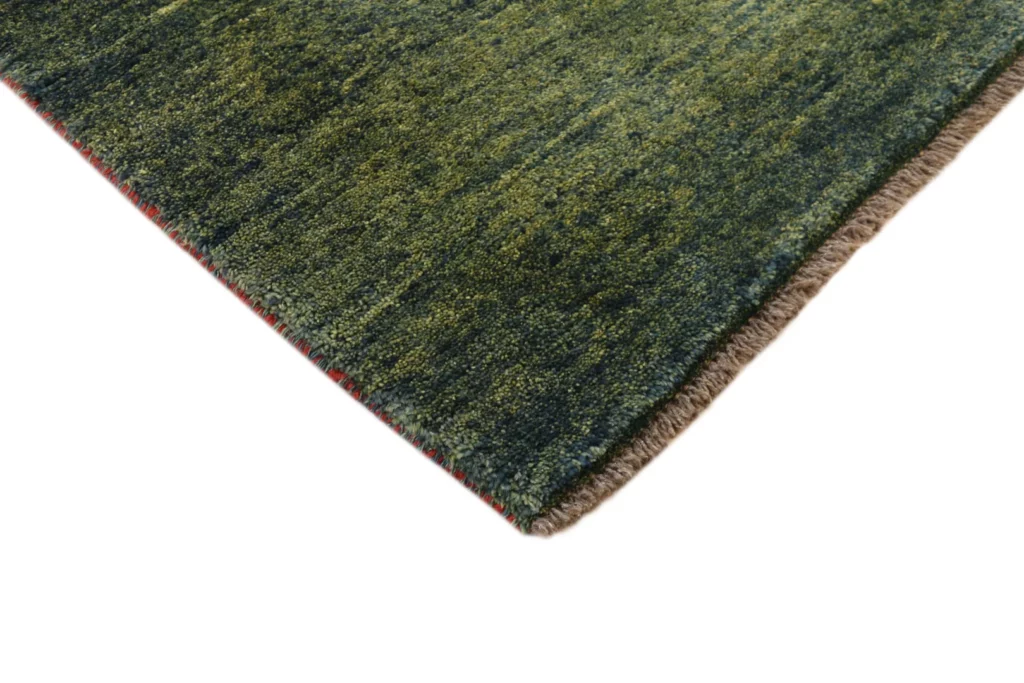
This Gabbeh rug is hand-knotted from hand-spun sheep and goat wool. The wool gives this piece the soft, plush surface described for it. It feels gentle underfoot and is associated with warmth and insulation. Wool has traditionally been used in rug making because of its resilient textile qualities. Its natural handle and visible fibre character contribute to the rug’s tactile presence and help explain the comfortable impression of a Gabbeh surface.
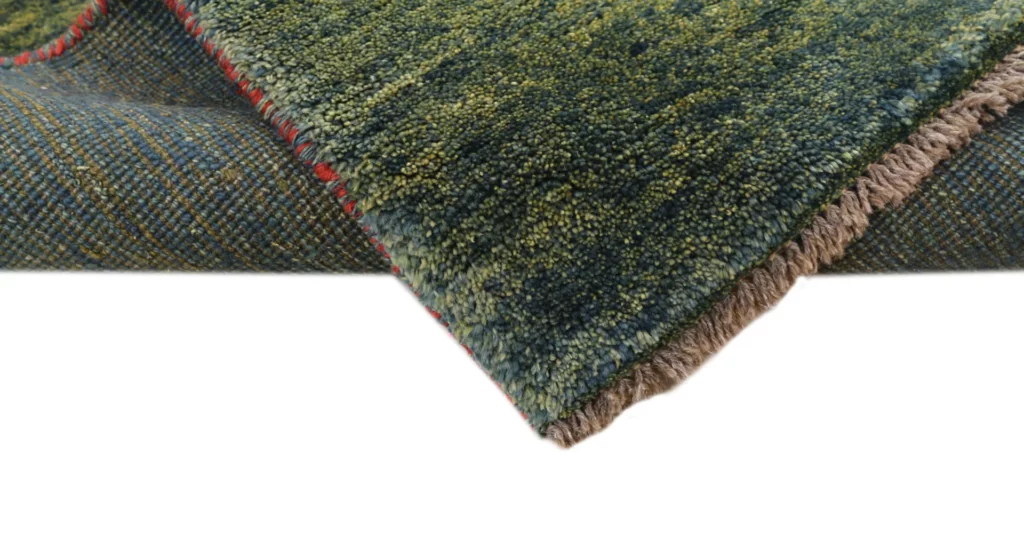
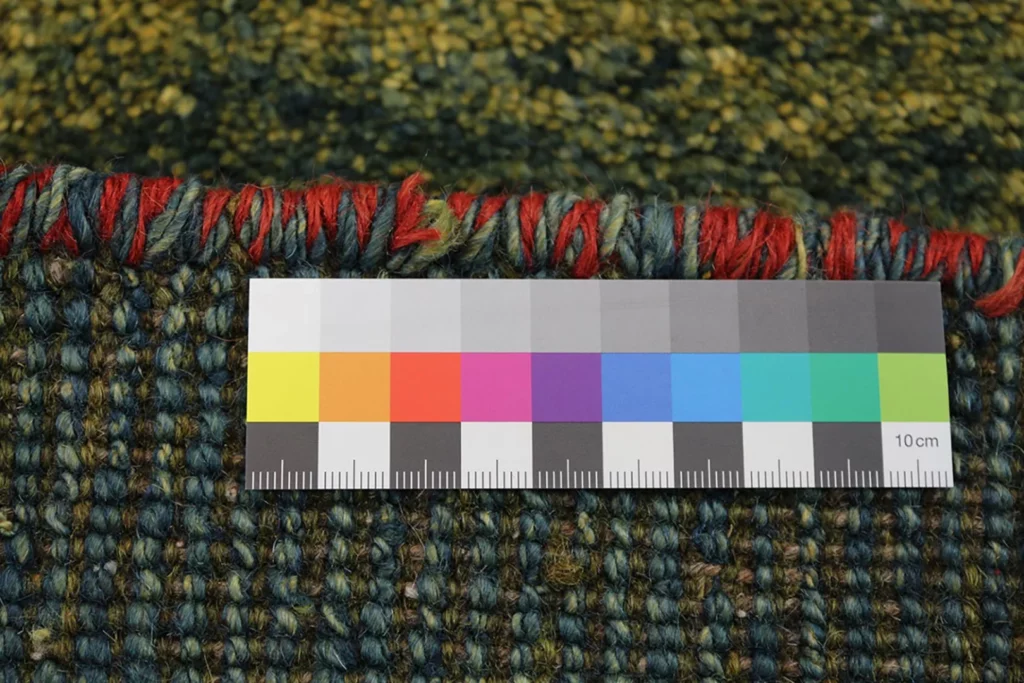
In hand-knotting, individual knots are worked into the foundation one by one. The finished textile is therefore built through a sequence of separate manual actions rather than through a single industrial process. This method takes many hours of work and gives each rug an individual character. Hand-spun sheep and goat wool adds a direct connection to the material, from the preparation of the fibre to the finished pile.
The knotting provides a stable textile structure, while the wool gives the pile its soft quality. Gabbeh rugs are known for bringing these two characteristics together. Their surfaces can feel substantial without losing their comfort. The construction also allows the pattern to be formed through the relationship between colour, line and individual knots. Handwork remains visible in the way the textile combines a practical purpose with a distinct visual identity.
This rug’s material and construction are part of its regional tradition. Hand-spun wool, hand-knotting and a clear design language belong together in the history of Gabbeh production from Fars. The result is not only a floor covering but also a textile object whose character depends on the fibre, the work of the knotter and the arrangement of the design. Its soft surface and colourful pattern are closely related to this method of making.
Origin and Tradition
This rug comes from Fars Province in Iran and belongs to the tradition of the Ghashghai, also known as Qashqai, nomads. Fars has a long and well-established history of rug making. In this region, weaving and knotting were closely connected with the everyday life of nomadic communities. Gabbeh rugs were made as functional as well as decorative textiles. Their use and appearance developed together, so practical textile knowledge and visual expression were not separate activities.
Nomadic rug making forms part of a wider culture of working with wool. Fibre is spun into yarn and then transformed into a textile through knotting. Each stage requires knowledge of the material and an understanding of how it will behave in the finished piece. The Gabbeh tradition keeps this relationship with the material especially clear. Soft wool, strong colour and simplified forms create a textile whose appearance is direct rather than dependent on dense ornament.
Gabbeh rugs are especially associated with the Qashqai nomads of Fars. For these communities, rugs were important parts of daily life and cultural identity. A rug could be useful in the household while also carrying memories of places, animals, plants and ways of living. The craft therefore served more than one purpose. It produced a durable textile and provided a way to preserve and communicate elements of the community’s visual culture.
The landscape of Fars and the experience of nomadic life often enter Gabbeh design indirectly. Motifs may refer to animals, plants or the surrounding environment, but they are commonly simplified rather than depicted naturalistically. A figure can become a clear sign, a plant a reduced outline and a landscape an arrangement of colour. Such reduction is a defining part of the tradition because it gives the design clarity while leaving room for individual interpretation.
Traditional Gabbeh rugs are often described through lively colours, simple geometric arrangements and a free composition. Their layouts may be asymmetrical and need not follow a strict repeated border or ornament system. The order is found in the balance of the composition and in the precision of the handwork, not necessarily in mirror-like symmetry. Large areas of colour can stand alongside a small number of clearly recognisable figures.
The history of the Gabbeh is consequently tied to the relationship between everyday use and handmade production. The people who made these rugs worked within a nomadic way of life, using local knowledge and available materials. Their designs could be inspired by the immediate environment and by shared experiences. These references were translated into a reduced textile vocabulary of shapes, figures and colours. A Gabbeh does not have to present one literal story to preserve a sense of place and tradition.
Fars is therefore more than a place name in the history of this rug type. It is the regional setting for a particular approach to material, construction and design. The association with the Ghashghai or Qashqai nomads helps explain the importance of wool, handwork and a direct visual language. Gabbeh represents an Iranian rug tradition in which the functional role of the textile and its decorative character developed side by side.
Modern interiors can accommodate the reduced Gabbeh vocabulary without removing it from its historical context. Tradition can continue through the method of production, the use of wool and the treatment of colour and form. The result is a rug type that remains connected to Fars while its simplified shapes and lively surfaces can be read in a contemporary setting. Its background is found in the continuity of craft rather than in an imitation of a single historical pattern.
Design and Pattern
The pattern of this rug is described as an abstract design with large colour fields and playful figures. Broad areas of colour structure the composition and give it a clear visual rhythm. The figures provide individual points of interest within those areas. Instead of relying on a dense sequence of repeated ornaments, the design works through the relationship between open space, colour and simplified form.
Gabbeh patterns are often asymmetrical and may include stylised animals, plants and abstracted shapes. These motifs are not intended to reproduce their subjects in a naturalistic way. Their strength comes from reduction: an animal can be shown as a simple silhouette, a plant as a few organised lines and an impression of the landscape as a block of colour. The result is a visual language that is easy to recognise while remaining distinctly handmade.
The large colour fields and playful figures in this rug connect traditional Gabbeh references with a modern appearance. The broad fields create structure without filling every part of the surface. The figures add movement and informality. This balance gives the composition a lively quality while keeping its forms clear. The design is colourful and abstract, but it remains anchored in the regional vocabulary associated with Gabbeh rugs from Fars.
Animals, plants and abstract forms can refer to the surroundings and to nomadic life. Within the Gabbeh tradition, such references are part of a transmitted language rather than a fixed illustrated narrative. They may suggest experiences, customs or observations without requiring one single explanation. In this rug, the references are brought together through playful figures and large fields of colour, making the overall pattern both open and recognisable.
Clear lines reinforce the informal character of the figures. A Gabbeh composition often gains its effect from a limited number of visible shapes rather than from a multitude of small details. Colour consequently plays an important structural role. The fields relate to one another across the surface, while the figures interrupt and animate them. The design remains accessible because its principal elements can be understood without close inspection of intricate ornament.
Abstraction does not separate this design from its origin. It is one of the ways in which regional observations and cultural memories can be transferred into a textile. Natural forms and everyday impressions are simplified into signs that work within the geometry of the rug. This creates a connection between the nomadic background of Gabbeh making and a visual effect that also suits contemporary interiors.
The lively colours give the pattern a warm and cheerful character, while the playful figures make it individual. The design can function as a colour accent, but it also demonstrates the restraint of the Gabbeh form. Its visual identity comes from broad areas, distinct outlines and a free arrangement rather than from a densely filled ornamental field. This treatment of pattern is central to how Gabbeh rugs are recognised.
The design therefore combines traditional and current impressions without needing to copy a formal historical model. Its regional character appears in the simplified motifs, the references to animals and plants and the open geometric organisation. Its contemporary effect comes from abstraction and the confident use of colour fields. In this Gabbeh, both aspects belong to the same composition.
Special Features
This rug is new and made as a hand-knotted one-off. Its distinctive qualities are the use of hand-spun sheep and goat wool, its soft surface and its colourful abstract design. The traditional production associated with Fars can work with both classic and contemporary interiors. The source describes natural dyes in the wool as giving the colours a warm and lively appearance and as helping them retain their radiance over the years.
The combination of large colour fields and playful figures gives the piece an individual visual identity. Hand-knotting means that every rug is a unique work rather than an entirely identical repetition. The Gabbeh consequently combines a practical textile role with decorative expression. It also preserves a connection to the culture and history of the Fars region.
FAQ
How should I care for my Gabbeh rug?
Vacuum the rug regularly to remove dust and loose dirt from the pile. Protect it from direct sunlight so that the lively colours can remain stable for as long as possible. Treat spills immediately with a damp cloth. Professional rug cleaning is recommended for more thorough care and helps preserve the colours and the soft texture. Cleaning should take the hand-knotted wool construction into account rather than treating it like a flat industrial textile.
Where is the Gabbeh rug best used?
The Gabbeh rug is suitable for living rooms and bedrooms, for hallways or as an accent piece in a living room. Its warm colours and soft material can create a comfortable atmosphere in different spaces. Used as a colour accent, the abstract pattern brings broad fields and playful figures into the room. It can therefore be combined with classic furnishings as well as with a contemporary interior style.
What makes a Gabbeh rug special?
Its special character comes from the combination of hand-knotted tradition, hand-spun sheep and goat wool and an individual design. Gabbeh rugs from Fars represent the craft culture of the Qashqai nomads and unite practical textile use with decorative expression. The abstract pattern of large colour fields and playful figures gives this piece its own identity. Since every rug is hand-knotted, each example is a one-off.
To provide the best experiences, we use technologies like cookies to store and/or access device information. Consenting to these technologies will allow us to process data such as browsing behavior or unique IDs on this site. Not consenting or withdrawing consent, may adversely affect certain features and functions.
Functional Always active
The technical storage or access is strictly necessary for the legitimate purpose of enabling the use of a specific service explicitly requested by the subscriber or user, or for the sole purpose of carrying out the transmission of a communication over an electronic communications network.
Preferences
The technical storage or access is necessary for the legitimate purpose of storing preferences that are not requested by the subscriber or user.
Statistics
The technical storage or access that is used exclusively for statistical purposes.The technical storage or access that is used exclusively for anonymous statistical purposes. Without a subpoena, voluntary compliance on the part of your Internet Service Provider, or additional records from a third party, information stored or retrieved for this purpose alone cannot usually be used to identify you.
Marketing
The technical storage or access is required to create user profiles to send advertising, or to track the user on a website or across several websites for similar marketing purposes.
 SECURE PAYMENT
 SHIPPING PARTNERS


