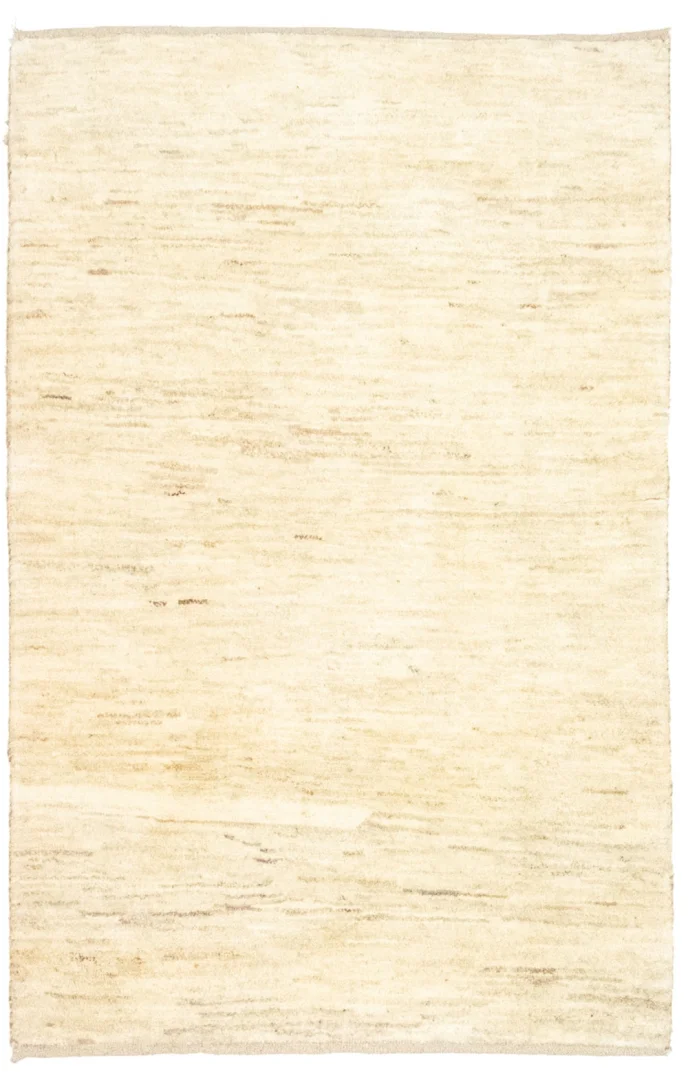
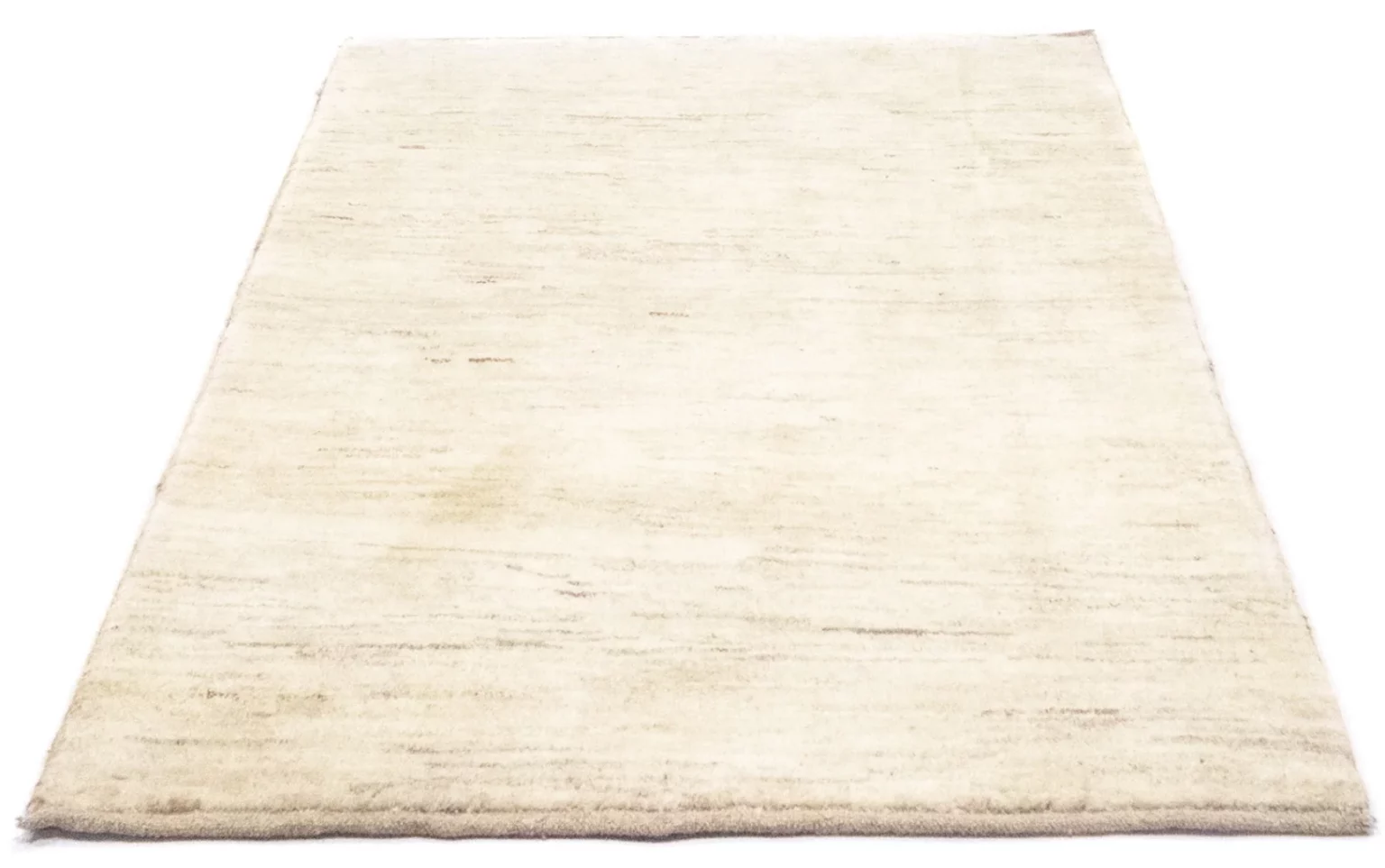
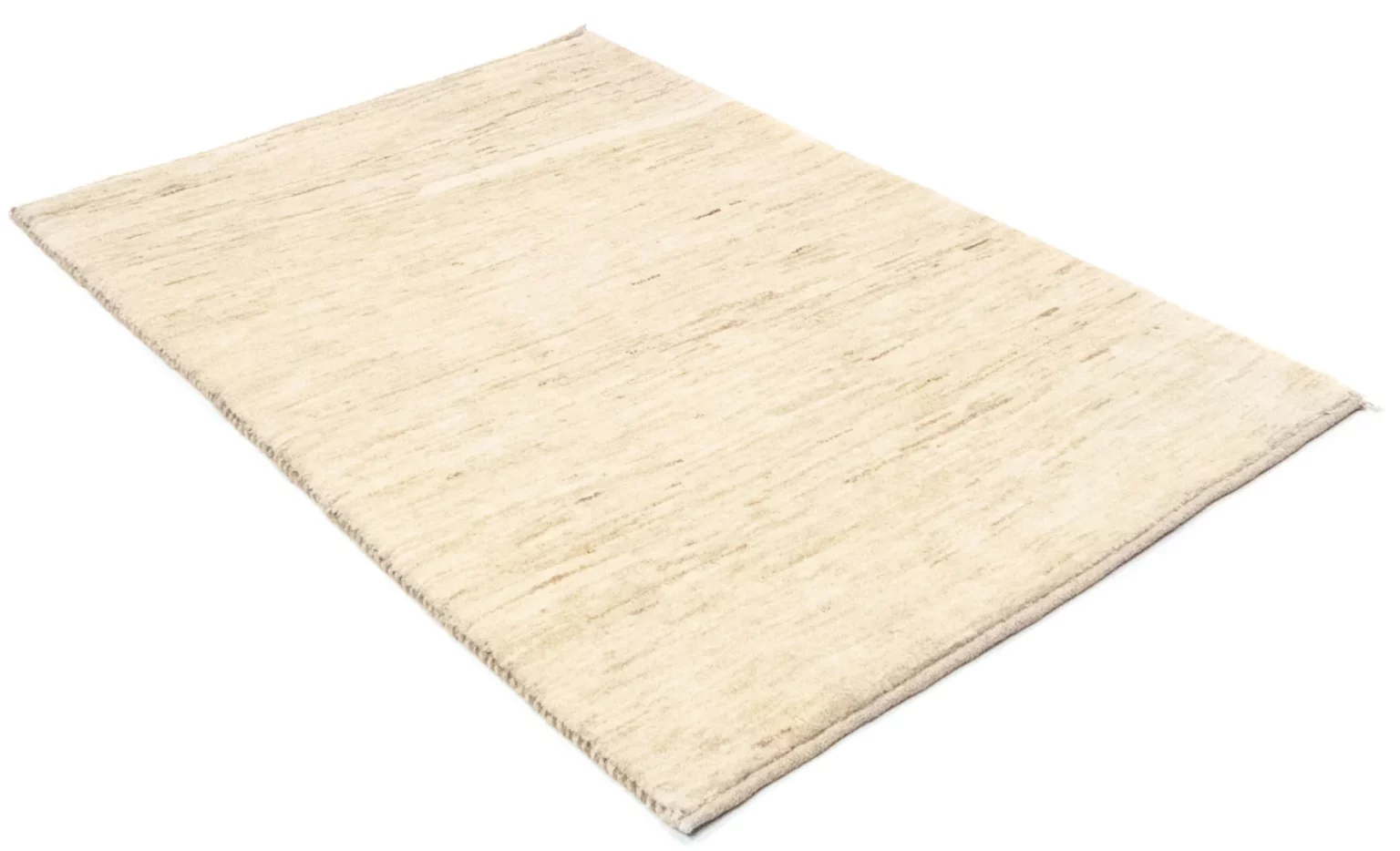
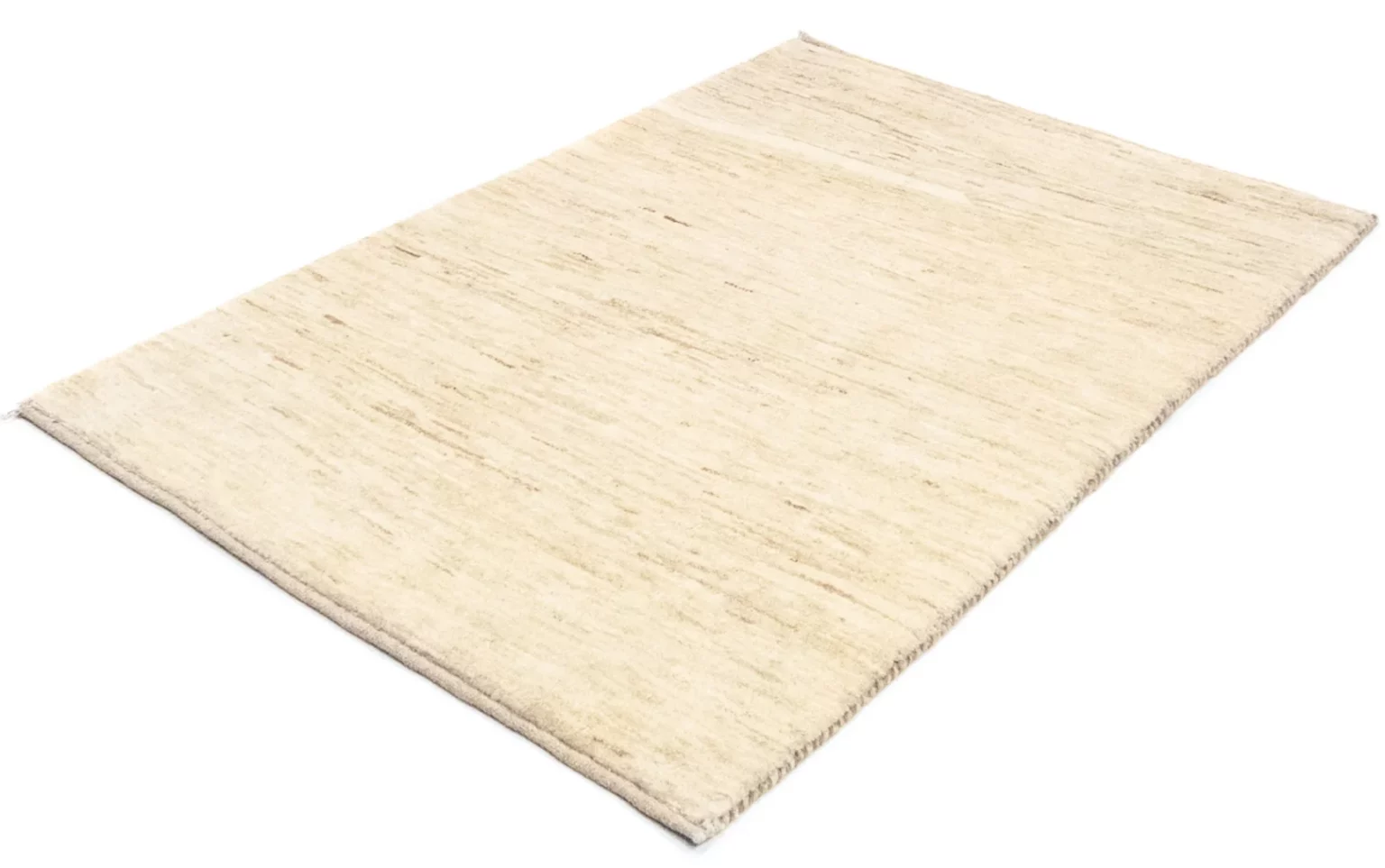
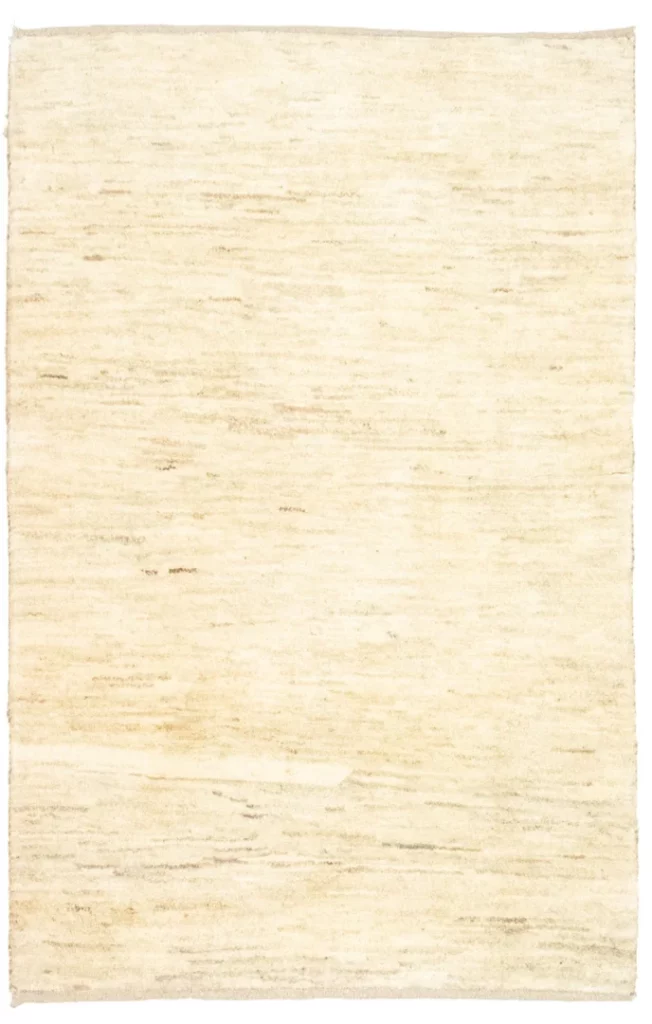
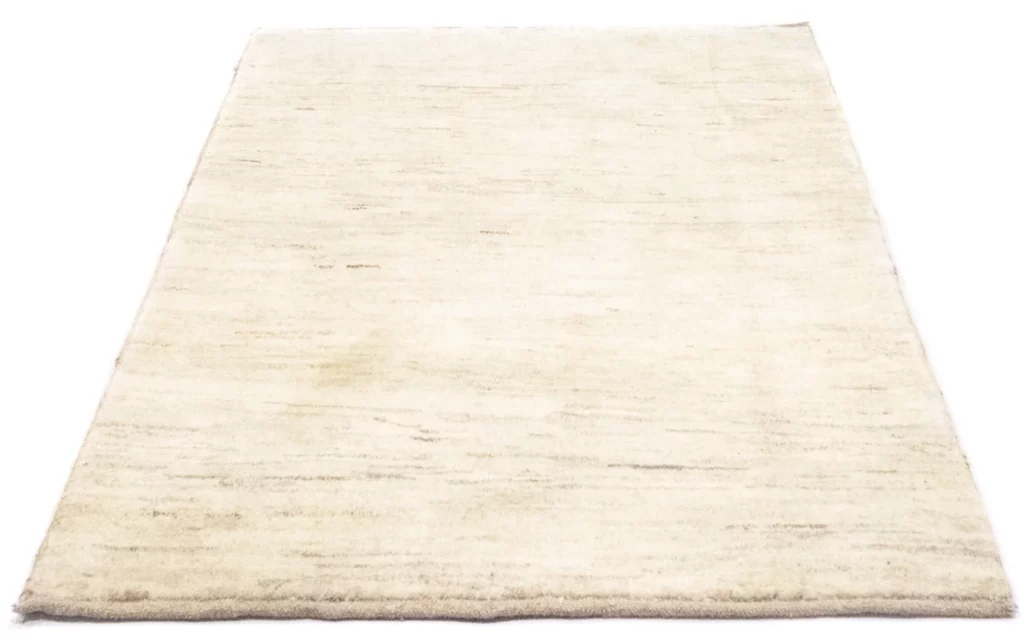
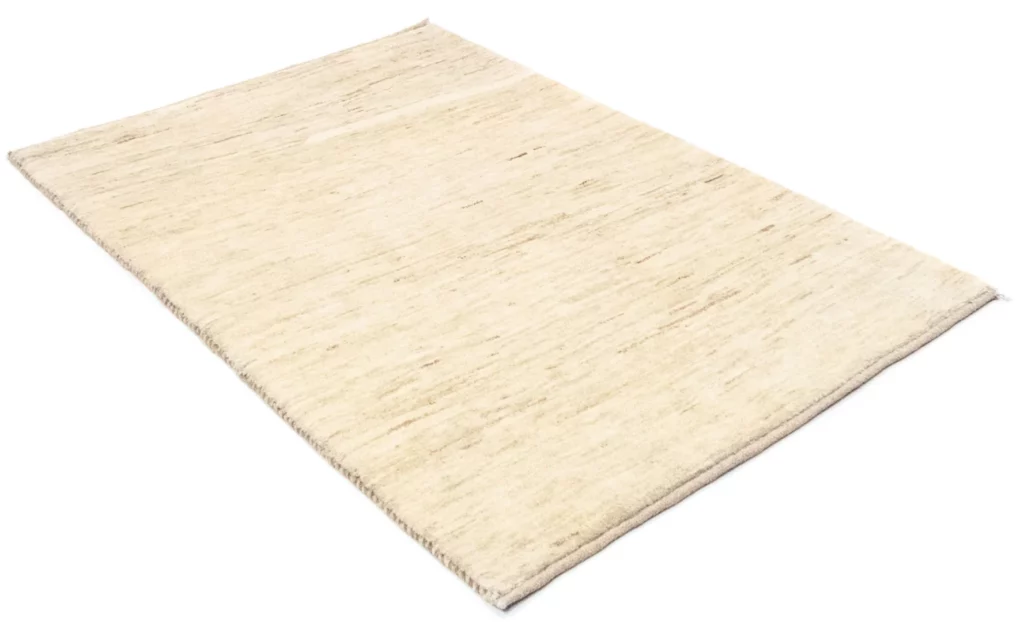
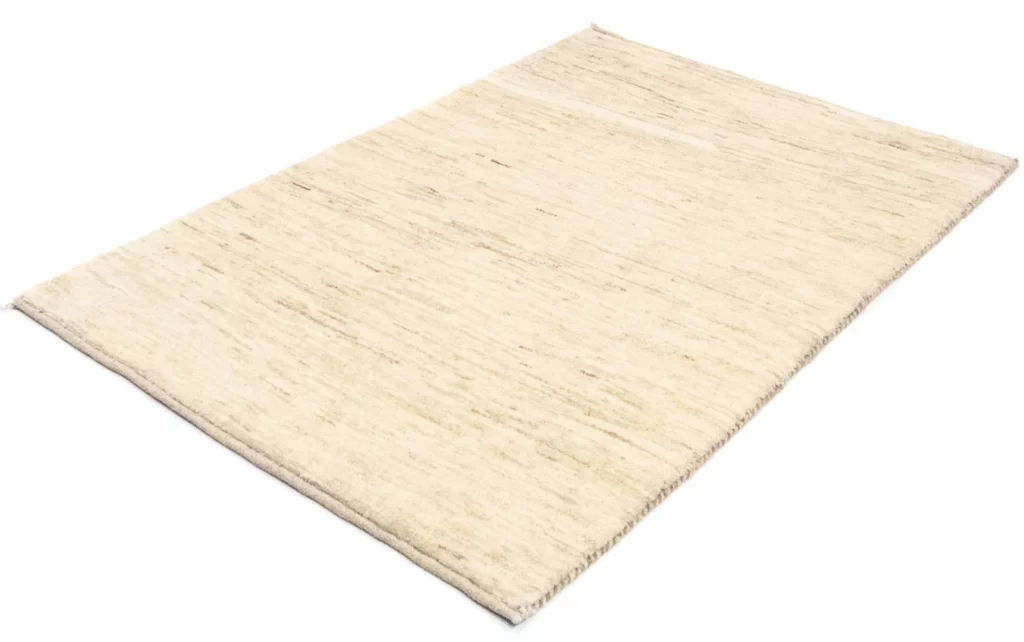
Hand-knotted Fars Persian rug | Knot density: 50,000 – 150,000 knots/m² | Material: Pile hand-spun sheep and goat wool | Size: 142 x 95 cm | Pattern: Abstract design with large colour fields and figures | Condition: New with a soft pile
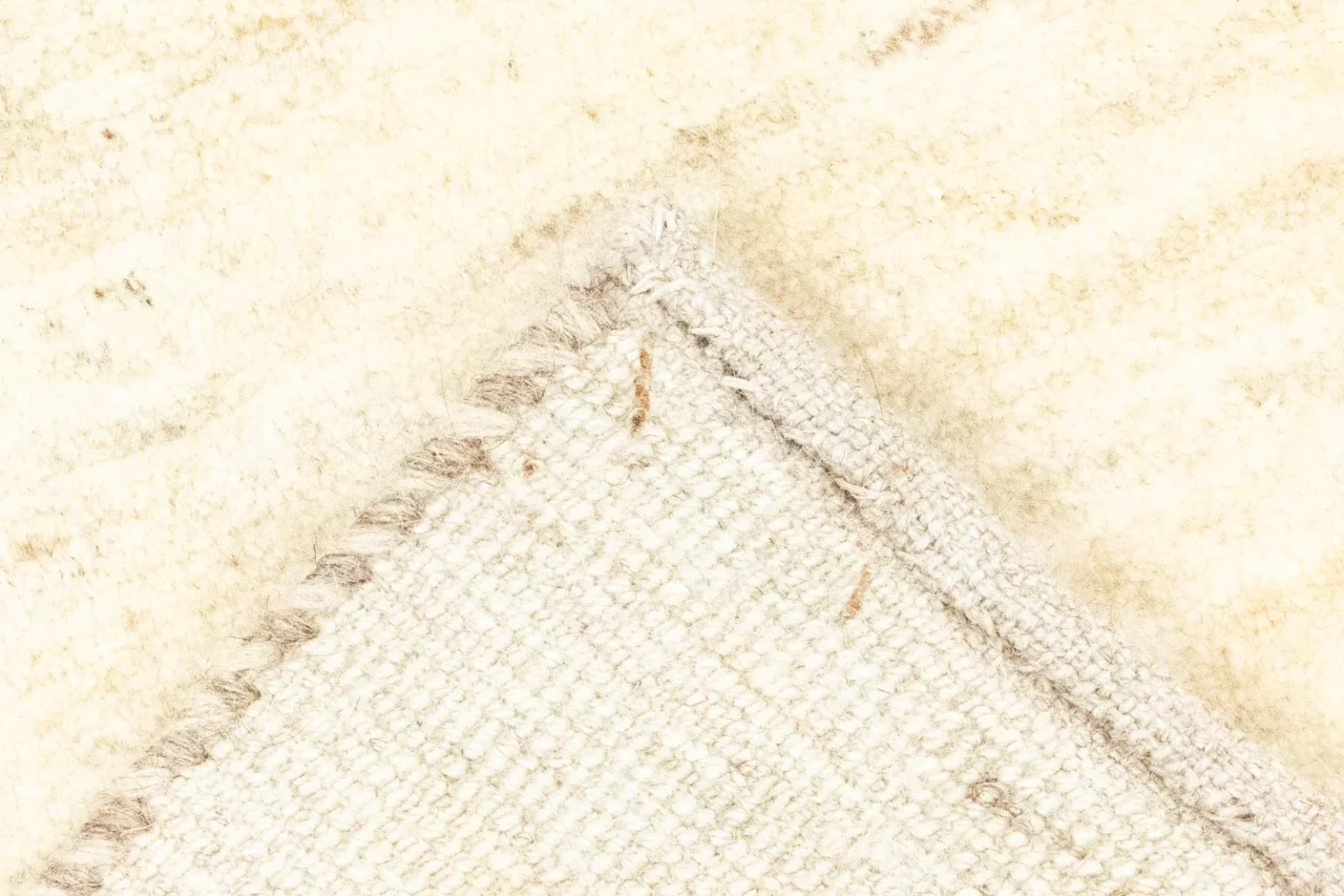
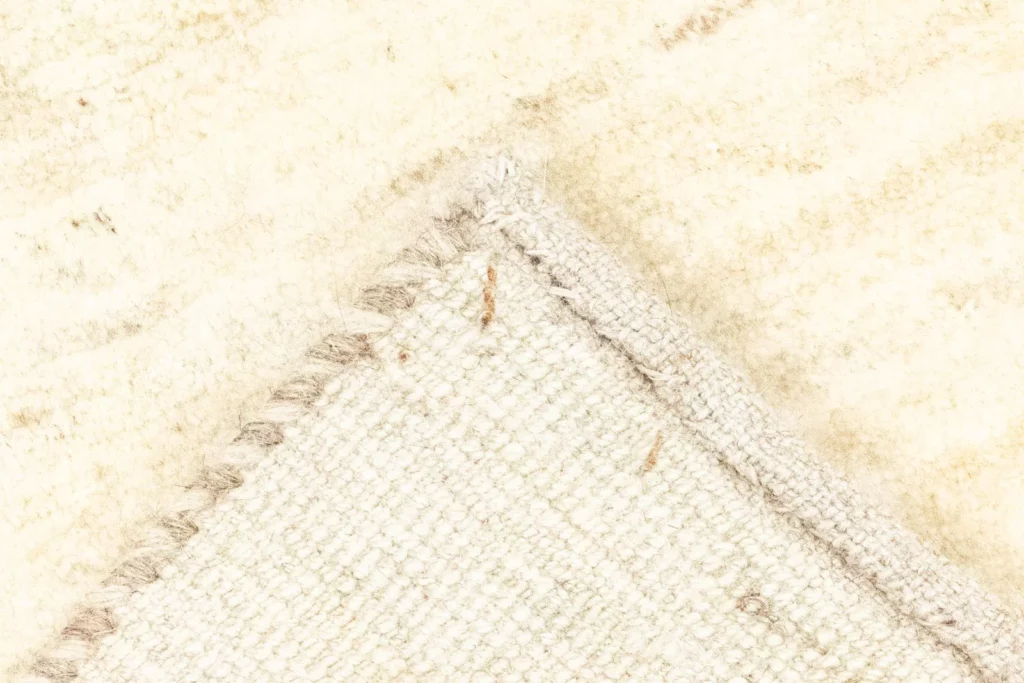
This Gabbeh is hand-knotted from hand-spun sheep and goat wool. The wool forms the pile and gives the rug its tactile character. Its pile is higher and soft, creating a full, substantial surface underfoot. In a hand-knotted rug, each knot is placed by hand into the foundation. The process requires patience and consistent manual work, since the visible surface develops gradually from many individual knots rather than from a mechanically produced fabric.
The knot density of this rug is between 50,000 and 150,000 knots per square metre. Knot density is one of the technical features that determines how closely the construction is built. The higher pile remains an equally important part of the Gabbeh character, giving the surface volume and softness. Hand-spun wool naturally shows variations in fibre thickness and direction. These variations belong to the material and help distinguish a hand-made textile from a perfectly uniform industrial surface.
Gabbeh weaving and knotting traditionally favour a sturdy yet tactile construction. Wool is valued in rug making for its resilience, its ability to absorb moisture and its contribution to a balanced sense of warmth across changing seasons. Once spun and knotted, the fibres create a floor covering whose appearance depends on the relationship between material, knotting and pile height. Here, the hand-knotted technique, the hand-spun sheep and goat wool and the soft higher pile are central to the way the rug is made and experienced.
Origin and Tradition
This rug comes from Fars province in Iran and was made by Ghashghai nomads. Fars is one of the significant regions in the history of Persian rug making. In southern Iran, varied landscapes and long-established nomadic ways of life shaped a textile tradition in which practical objects could also carry visual meaning. Gabbeh belongs to that tradition. Its character is connected with direct forms, handwork and the use of wool, while its design reflects the freedom associated with nomadic weaving.
The Ghashghai are known for a nomadic culture with strong weaving and knotting traditions. A rug made within such a culture was not conceived only as an ornamental object. It could serve an everyday purpose and had to be made from materials that were available to the community. Knowledge of preparing wool, spinning yarn, arranging a foundation and forming knots was passed from one generation to the next. Alongside these practical skills, colour relationships, signs and simplified motifs were also preserved and adapted.
Fars provided a cultural setting in which the surrounding landscape and daily movement could influence textile design. Nature, animals, people and familiar events could be translated into signs rather than copied as detailed pictures. A nomadic weaver did not necessarily work from a rigid pattern chart. Forms could be recalled, altered and recombined during the process. This helps explain why Gabbeh designs can appear simple while still suggesting stories, symbols or scenes from the makers’ environment.
The Gabbeh tradition is therefore closely tied to the relationship between use and expression. Its comparatively high pile, direct composition and clear forms are associated with a type of rug that developed within nomadic communities. The hand-knotted construction records the time and labour of its maker, while the design allows a personal interpretation within a recognised regional language. The Fars origin and Ghashghai manufacture are essential to the identity of this Persian rug and distinguish its background from that of rugs made in other weaving areas.
Persian rug history includes many different regional approaches, from densely ornamented urban carpets to more open nomadic compositions. Gabbeh occupies a distinct place among them because it does not depend on a large number of finely repeated details to create structure. Area, colour and individual signs can work as primary design elements. That does not make every Gabbeh identical. Each hand-made example results from the interaction of inherited knowledge, available wool, the weaver’s decisions and the particular execution of the piece.
The tradition also shows how a textile can preserve cultural memory without being a literal document. A simplified figure or a field of colour may recall a familiar object, an animal or a landscape, while remaining part of an abstract arrangement. This balance between recognition and reduction is one reason Gabbeh is treated as a distinctive Persian rug type. Its history lies not only in a place name, but also in the continued practice of making a useful textile through communal knowledge and handwork.
Design and Pattern
The pattern of this Gabbeh is described as an abstract design with large colour fields and figures. The broad fields give the composition visual space and make the distribution of colour immediately apparent. Figures provide defined accents within that open arrangement. The design is not dependent on a densely packed ornamental surface; instead, it is organised through the relationship between larger areas, distinct shapes and the texture of the pile.
Abstraction in Gabbeh design often grows from the simplification of forms seen in the natural and social world. A figure may suggest a person, an animal or another familiar sign without attempting a detailed, naturalistic depiction. The purpose is not necessarily to create perspective or a fully described scene. A shape can function as a symbol, a decorative mark or part of a repeated visual rhythm. Its reduced outline remains legible as an element of the overall field.
Large colour fields are an important means of creating order in this rug tradition. They may be set against one another for contrast or brought together through related tones. Colour consequently does more than fill a drawn outline: it establishes proportion, rhythm and visual weight. Combined with a higher pile, broad fields can also appear subtly tactile, because the surface catches light differently across the wool. The design is therefore experienced both as a graphic arrangement and as a woven textile.
The nomadic background of Gabbeh helps explain the openness of its pattern language. Designs were not restricted to the exact repetition of an urban workshop drawing. Memory, observation and personal invention could all have a role in the formation of a composition. Geometric signs, stylised figures and abstract forms belong to the wider vocabulary of this tradition. For this particular rug, the concrete description remains an abstract design with large colour fields and figures; no additional specific motif is asserted.
Gabbeh rugs are often associated with warm, earthy colour relationships and vivid accents. Such combinations can recall terrain, animals, vegetation and the everyday surroundings of nomadic communities. The visual effect comes from a balance between quiet zones and marked figures rather than from a complex hierarchy of narrow borders and minute ornaments. Colour and form are allowed to remain clear, while the hand-made surface keeps the composition connected to the physical work of the knotter.
This reduced language also explains why Gabbeh patterns can sit comfortably beside different forms of interior design. Their structure is not tied to one elaborate decorative scheme, and the broad fields can be read without specialist knowledge of classical ornament. That is a general characteristic of the Gabbeh approach, not an additional claim about this individual rug. Its stated design consists of abstraction, large colour fields and figures, supported by the soft higher pile and hand-knotted construction.
Special Features
The rug is new and has a soft pile. Its higher pile gives the surface a noticeably full structure and a comfortable feel underfoot. Hand-spun sheep and goat wool contributes the natural tactile quality associated with a woollen Gabbeh. The abstract arrangement of large colour fields and figures provides a clear pattern structure rather than a densely filled ornamental design.
This is a one-off hand-knotted rug. Its individual character comes from the combination of a knot density of 50,000 – 150,000 knots per square metre, a higher pile and an abstract composition. Gabbeh rugs are also valued for the practical qualities of wool and can be used in more frequently occupied areas. They are suitable for living spaces as well as offices. A higher pile can additionally help dampen sound within a room.
FAQ
How should I care for my Gabbeh?
Vacuum the rug regularly to remove dust and loose dirt from the pile. Treat spills as soon as possible. For heavier soiling, professional cleaning or careful hand cleaning is recommended. Keep the rug out of direct sunlight to reduce the risk of the colours fading.
Where can Gabbeh rugs be purchased?
Gabbeh rugs are available from specialist rug shops, craft markets and online retailers. Choose a dealer who describes the origin and making process transparently. This makes it easier to understand the regional background and to distinguish a hand-knotted rug from an industrial imitation.
How do Gabbeh rugs differ from other Persian rugs?
Gabbeh rugs are commonly distinguished by their higher pile, simpler patterns and more intense colours. Other Persian rugs often use intricate ornament and a dense field of fine details, whereas Gabbeh relies on a more reduced visual language and a rustic form of elegance. This makes the type particularly suitable for modern and minimalist interiors.
To provide the best experiences, we use technologies like cookies to store and/or access device information. Consenting to these technologies will allow us to process data such as browsing behavior or unique IDs on this site. Not consenting or withdrawing consent, may adversely affect certain features and functions.
Functional Always active
The technical storage or access is strictly necessary for the legitimate purpose of enabling the use of a specific service explicitly requested by the subscriber or user, or for the sole purpose of carrying out the transmission of a communication over an electronic communications network.
Preferences
The technical storage or access is necessary for the legitimate purpose of storing preferences that are not requested by the subscriber or user.
Statistics
The technical storage or access that is used exclusively for statistical purposes.The technical storage or access that is used exclusively for anonymous statistical purposes. Without a subpoena, voluntary compliance on the part of your Internet Service Provider, or additional records from a third party, information stored or retrieved for this purpose alone cannot usually be used to identify you.
Marketing
The technical storage or access is required to create user profiles to send advertising, or to track the user on a website or across several websites for similar marketing purposes.
 SECURE PAYMENT
 SHIPPING PARTNERS


