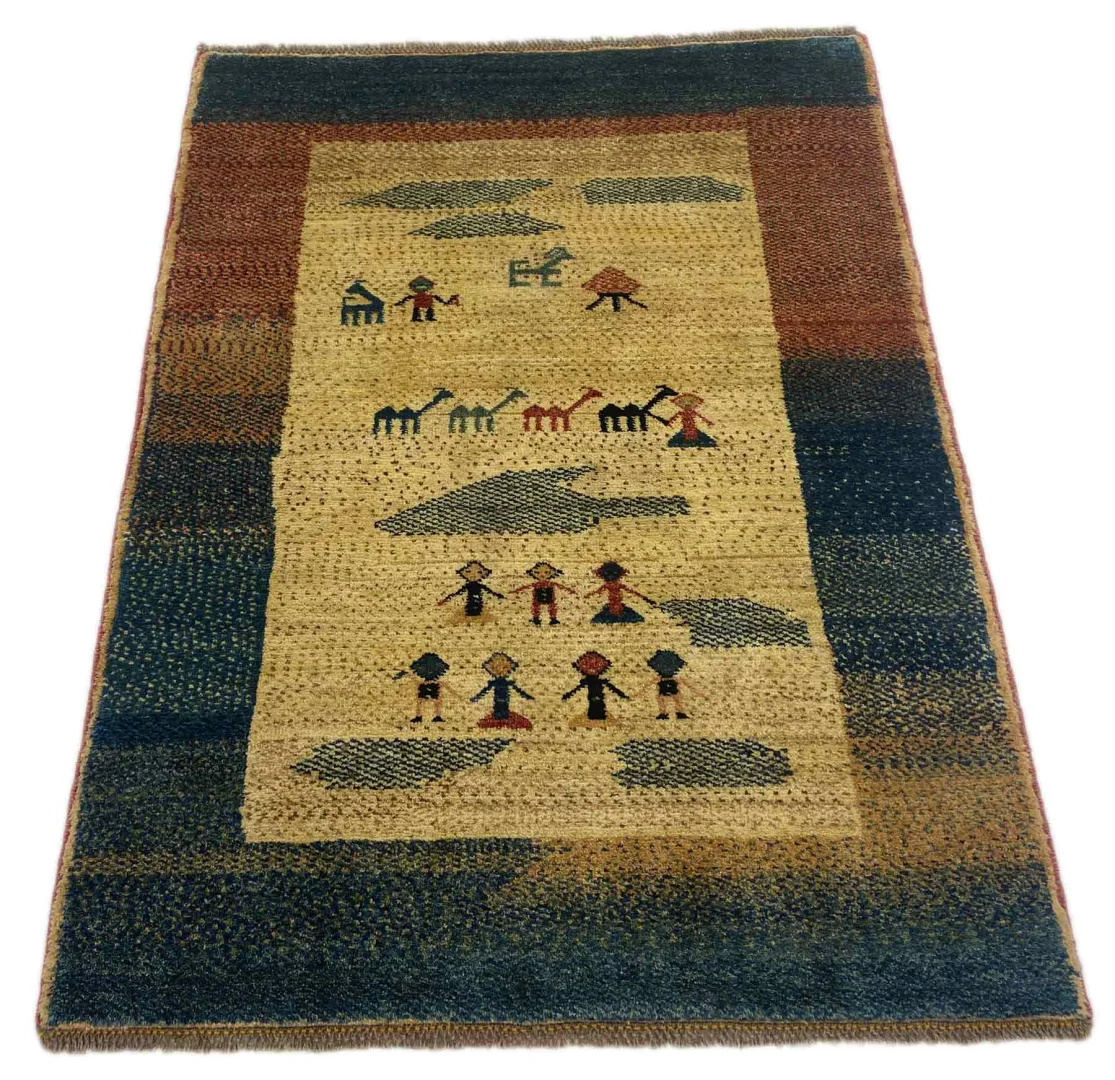
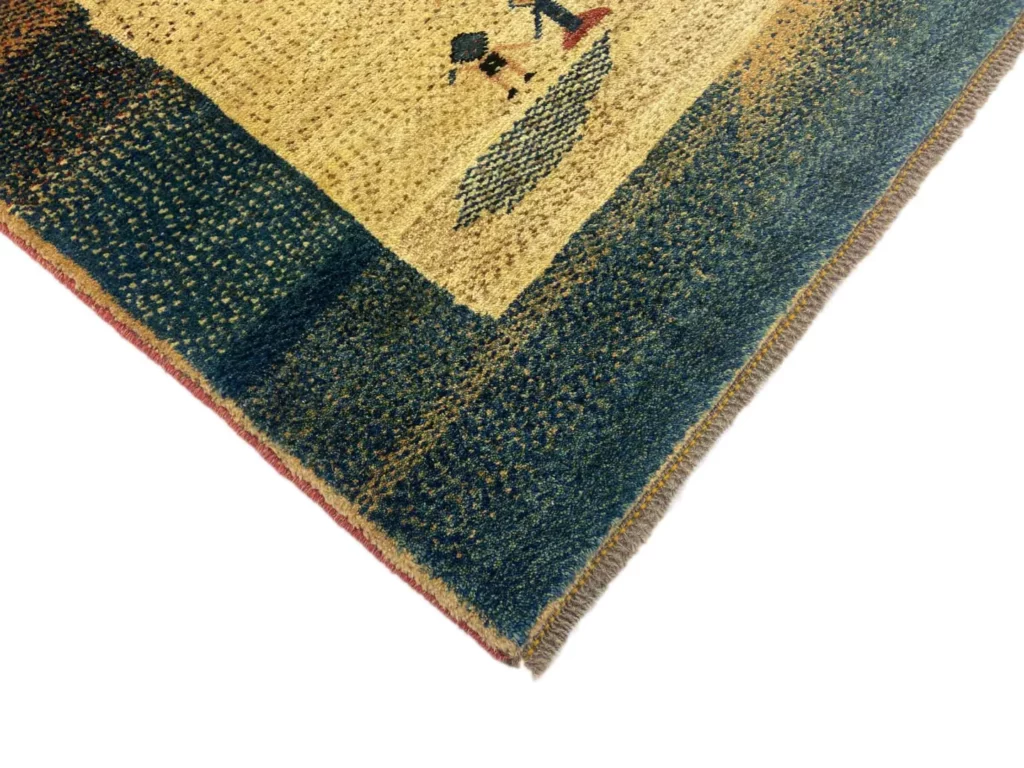
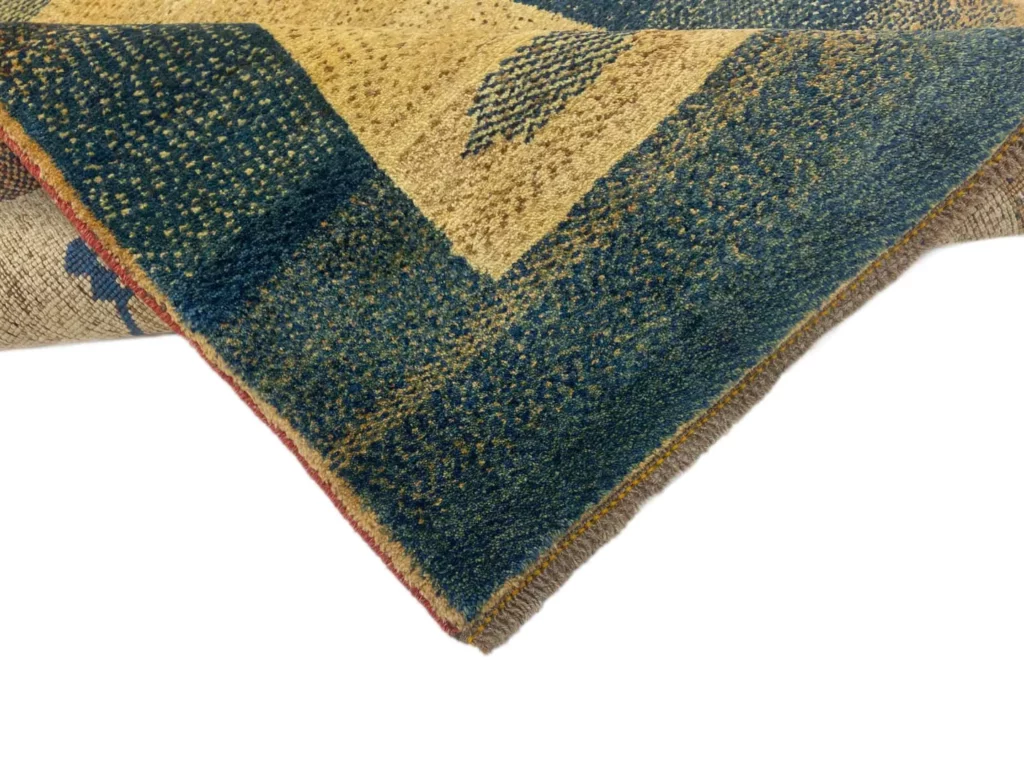
Hand-knotted Fars Persian rug | Knot density: 50,000 – 180,000 knots/m² | Material: Pile hand-spun sheep and goat wool | Size: 138 x 103 cm | Pattern: Abstract design with large colour fields and playful figures | Condition: High-quality and soft
This Gabbeh rug is made from hand-spun sheep and goat wool. The wool forms the pile and gives the surface its soft handle. Sheep and goat wool have long been used in Gabbeh weaving because they combine a pleasant feel with natural resilience. Hand-spun fibres may retain a subtly varied character, which is part of the visual and tactile presence of a handmade textile. Wool also provides natural insulation and has traditionally served practical purposes in the furnishings of nomadic households.
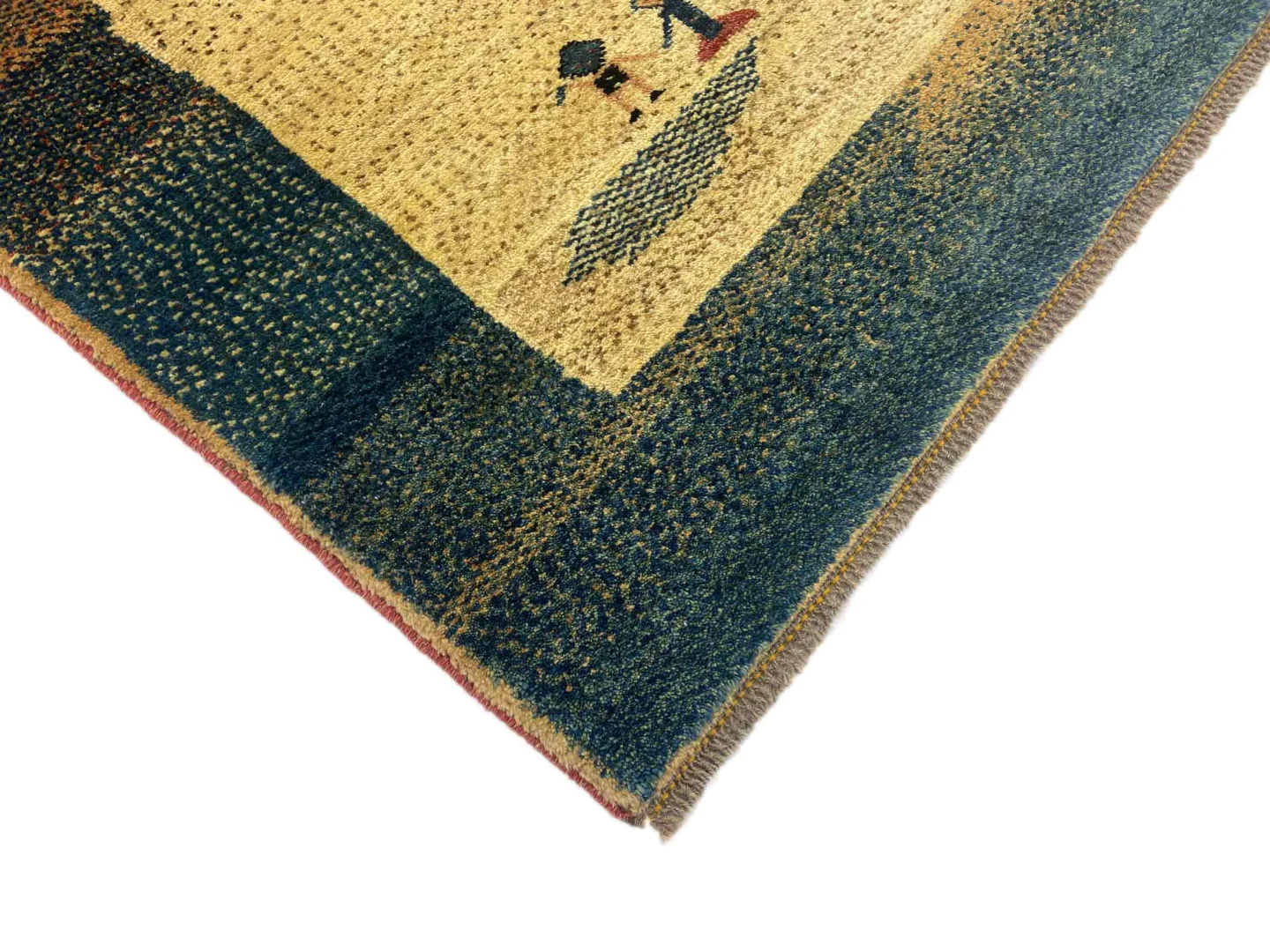
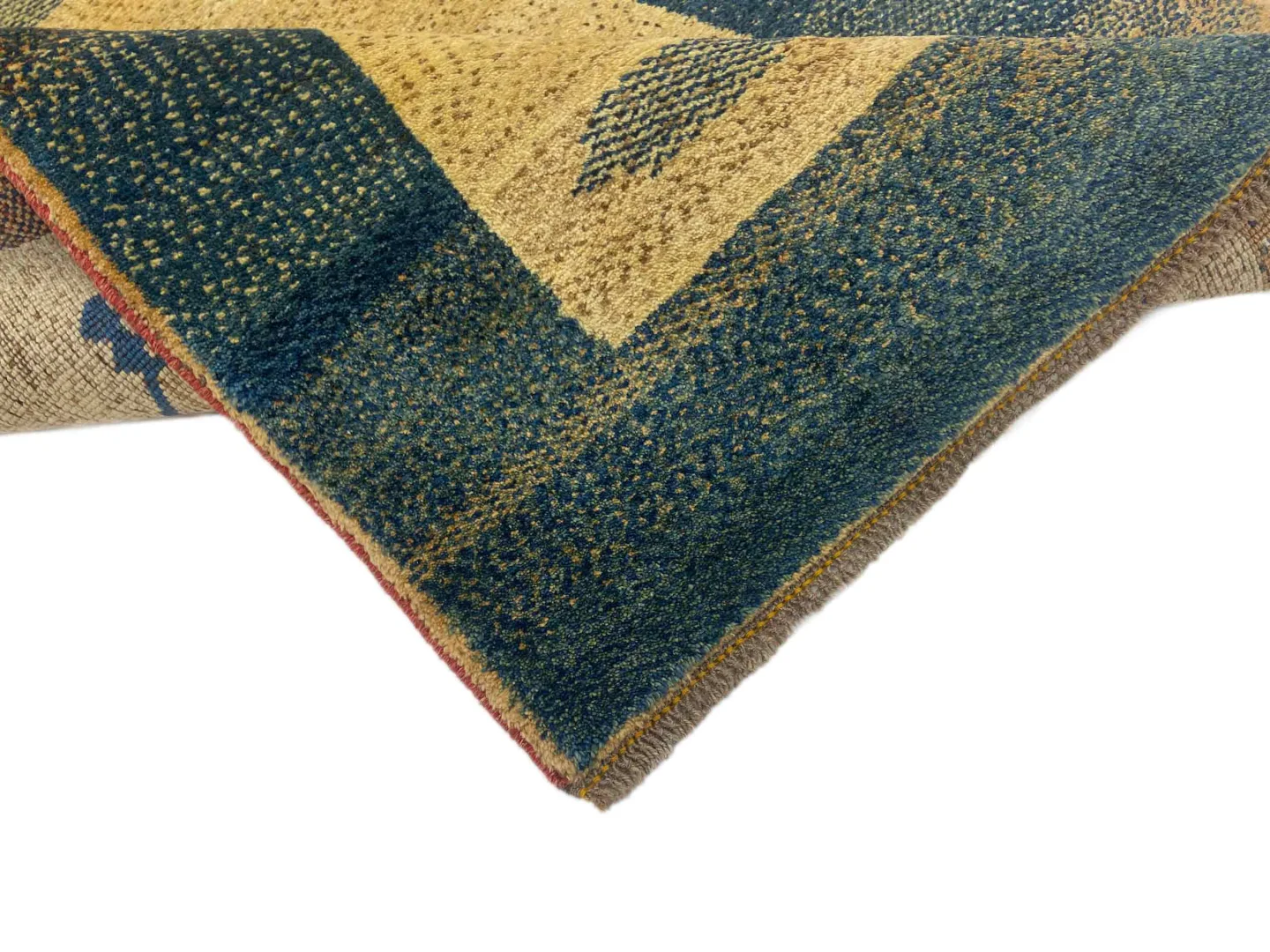
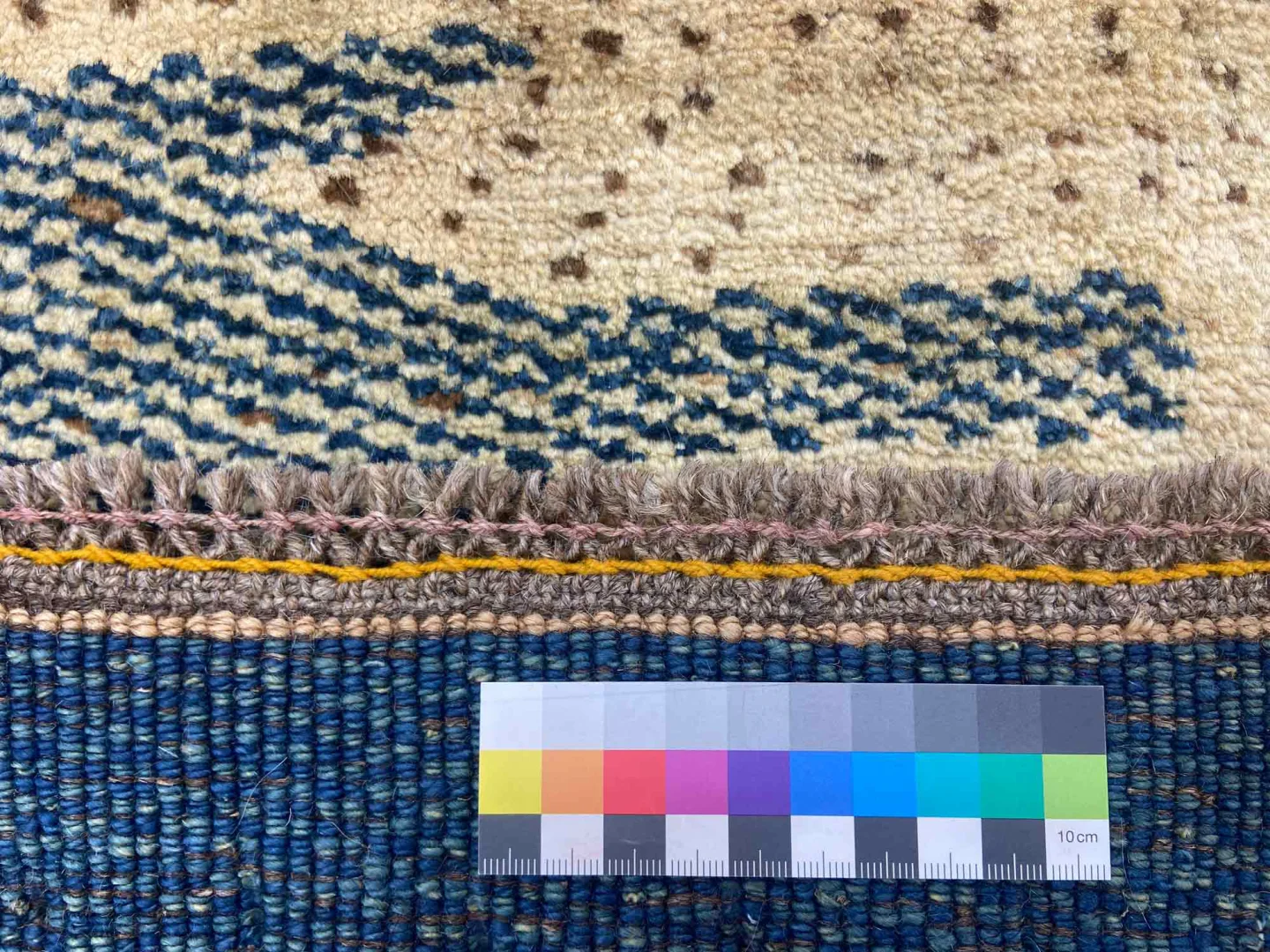
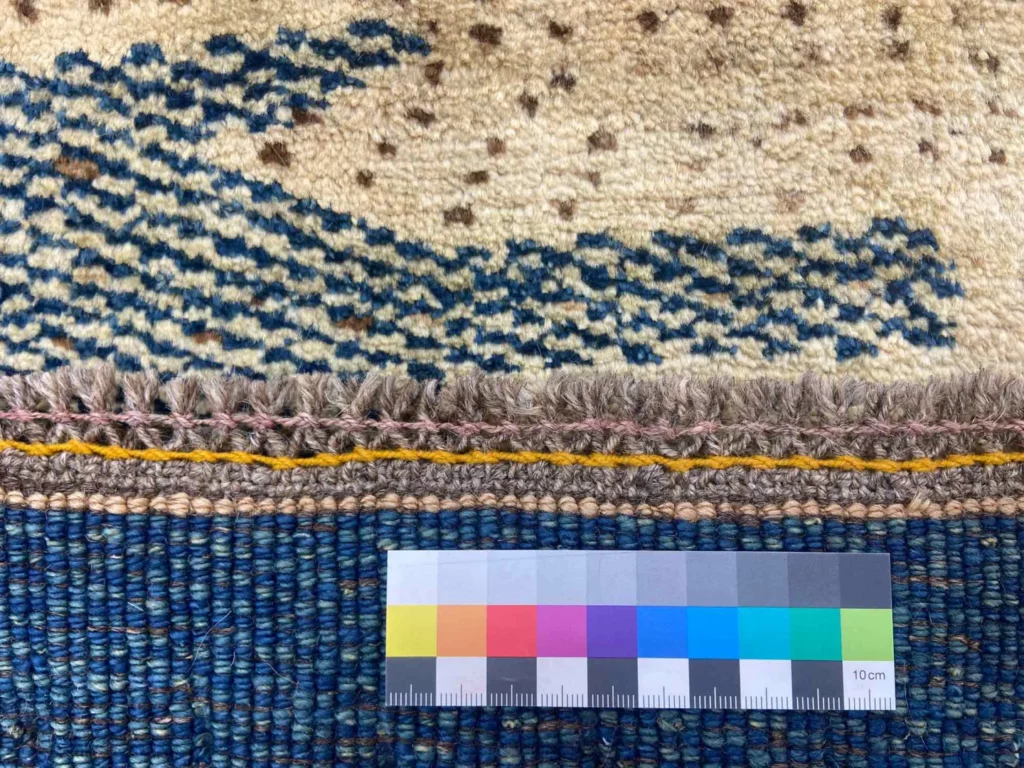
The rug is hand-knotted. In this method, individual knots are placed by hand into the foundation and secured through successive rows before the pile is trimmed and finished. Its stated knot density is 50,000 – 180,000 knots/m². This range identifies a high density without suggesting the completely uniform surface of a machine-made product. Hand knotting gives every individual piece its own execution. Minor variations in tension, fibre and colour placement are part of the process and help distinguish a hand-knotted rug from an industrially repeated design.
The combination of wool pile and hand knotting creates a surface that is soft to touch while remaining suited to durable textile use. The pile is described as soft, and the wool itself is described as robust. Careful workmanship and the high knot density influence both the feel and the appearance of the rug. In a Gabbeh, the character does not depend only on a finely drawn outline. The wool, the pile and the directness of the knotting are equally important parts of the finished surface.
Origin and Tradition
This rug comes from Iran and is associated with the Ghashghai nomadic peoples of Fars. Fars in southern Iran is closely linked with the Gabbeh tradition. Nomadic weavers produced these rugs over many generations for everyday life. Their work was not based on a single industrial standard. It drew on available wool, inherited skills and the individual decisions of the person weaving the piece. This background helps explain why Gabbeh rugs can share a recognizable character while remaining individual objects.
In rug terminology, Gabbeh refers to a group of rugs often associated with a simple, spacious composition and a softer or deeper pile. The tradition developed in connection with the living conditions of nomadic communities in Fars. Wool was a practical local material that could be spun and woven into a warm, serviceable textile. The rugs served useful purposes in the home and also provided a surface for personal visual expression. Their identity therefore comes from the meeting of function, material and design rather than from ornament alone.
The Ghashghai are known for their nomadic textile traditions. Their woven work shows how closely material, daily life and surroundings can be related. Designs were not always copied from a rigid, fixed template. Established forms left room for choices in colour, scale, spacing and the treatment of figures. This flexibility distinguishes the tradition from strictly symmetrical workshop patterns. A Gabbeh can appear restrained while still carrying a strong individual visual language.
Iranian carpet making includes many regional traditions, each with its own approaches to pile, structure, colour and drawing. Gabbeh rugs from Fars represent a direct, nomad-influenced form of hand knotting. The technique makes the sequence of work tangible: wool is prepared, yarn is knotted, rows are secured and the surface is finished. These steps take time and rely on manual judgement. As a result, two rugs from the same broad tradition do not have to be identical in their details.
Colour can also connect Gabbeh design with nomadic life. Strong tones, natural wool shades and clearly separated areas are often brought together in an uncomplicated arrangement. The effect comes from the relationship between fibre and motif rather than from dense, layered ornament. This rug combines its Fars origin with an abstract design, large colour fields and playful figures. The result keeps a connection with the tradition while presenting its pattern in a form that can be read within a contemporary interior.
Design and Pattern
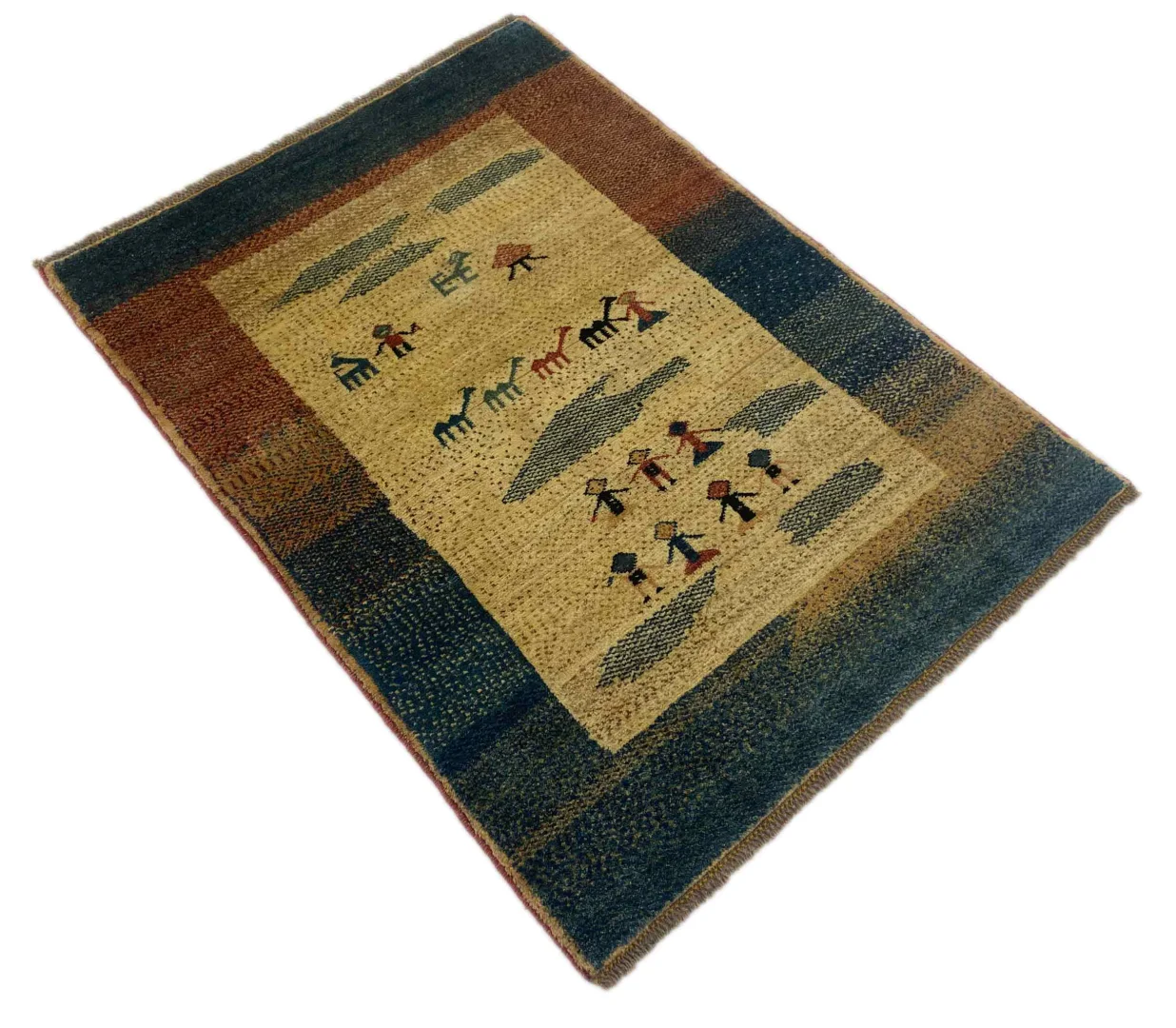
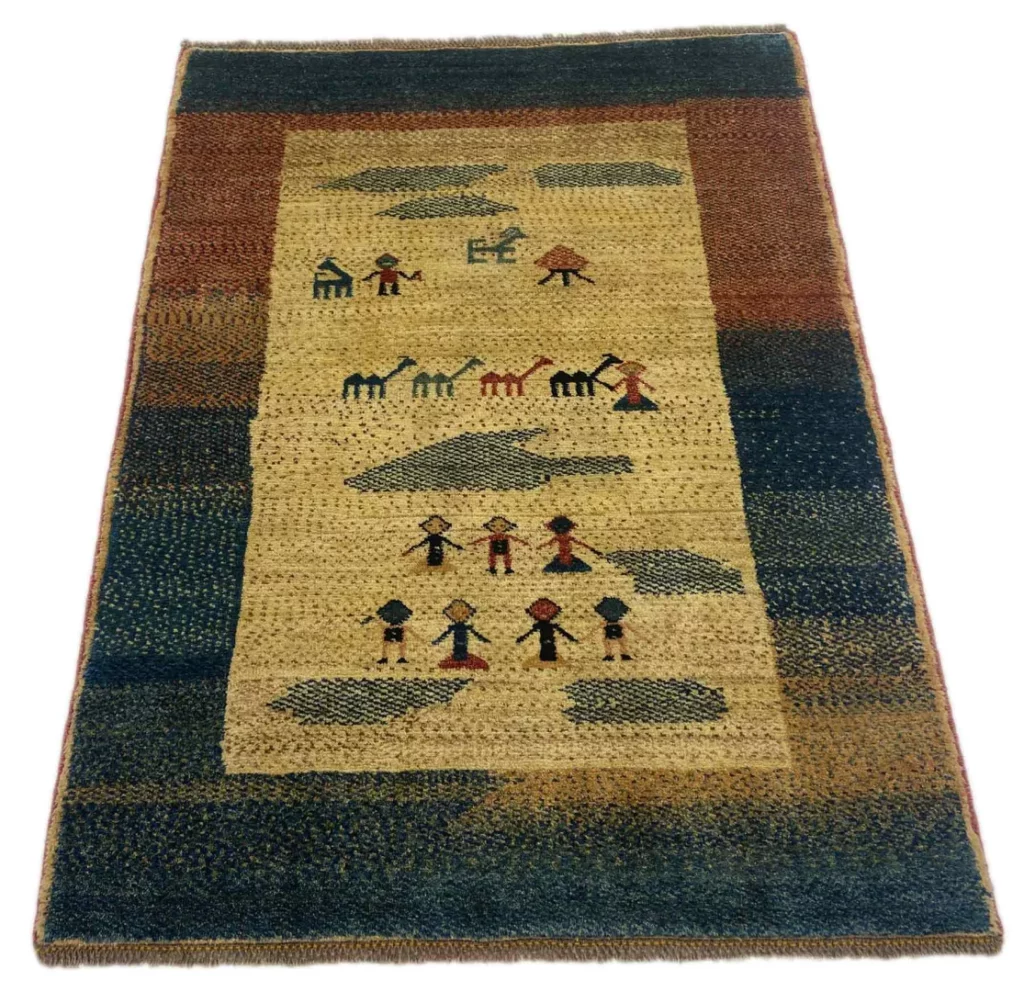
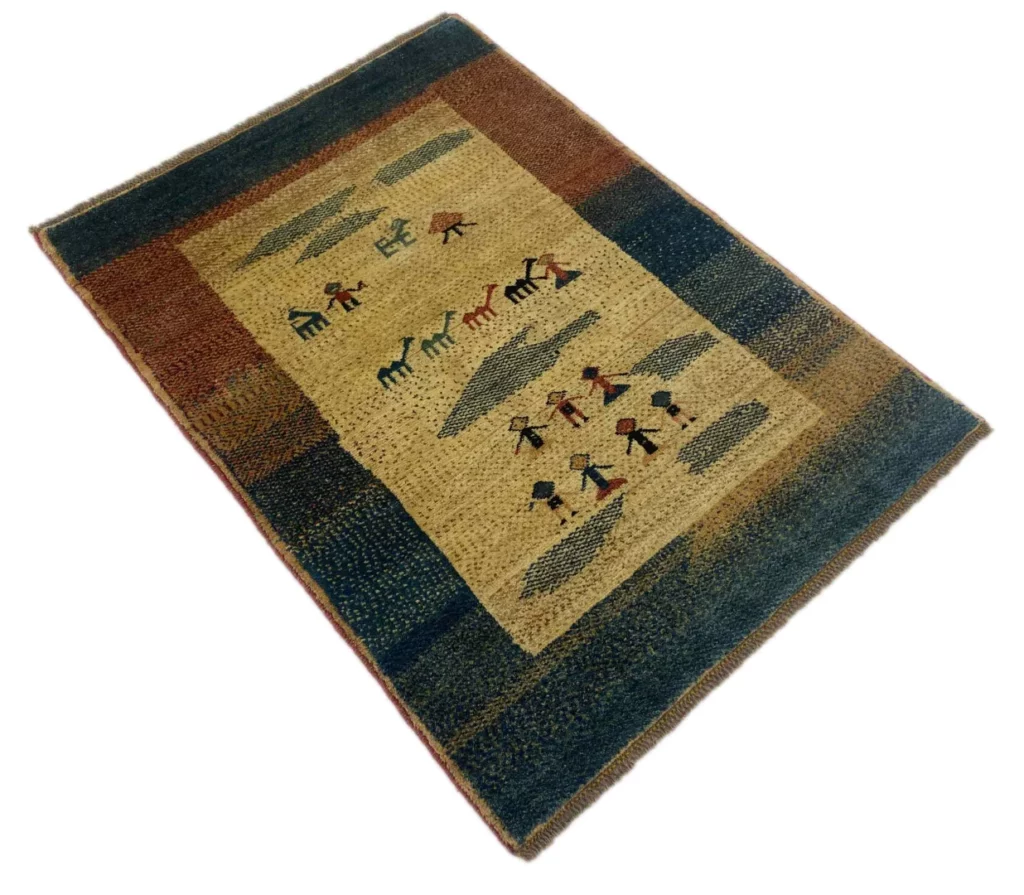
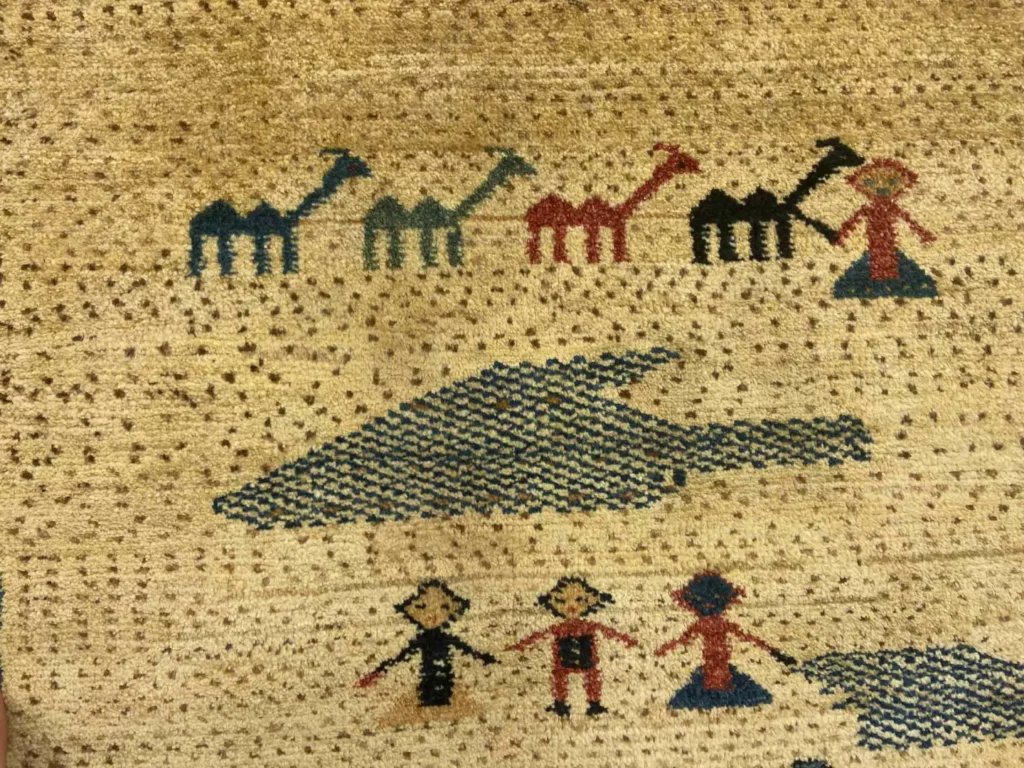
The pattern of this Gabbeh is abstract and organised around large colour fields. These fields create a clear visual structure and allow the wool surface to participate in the design. Instead of filling the entire ground with closely packed ornament, the composition relies on the relationship between colour, shape and open space. This gives the rug a calm framework in which the individual graphic elements remain visible.
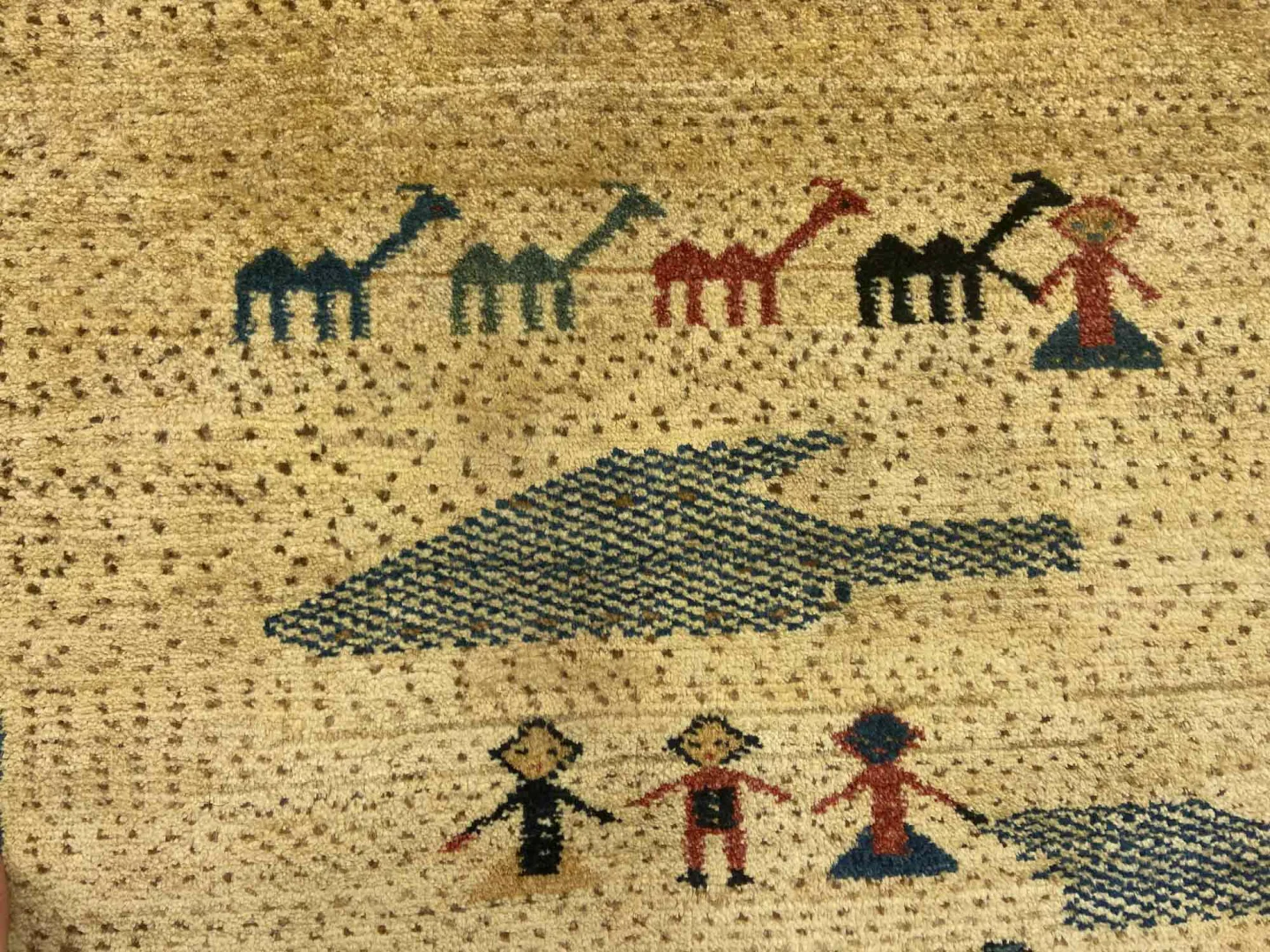
Playful figures are integrated into the design as additional visual signs. In Gabbeh weaving, figures are often connected with everyday experience and the imaginative world of nomadic communities. They need not be rendered in a naturalistic manner. A simplified outline may suggest a person, an animal or a scene without attempting a precise depiction. This reduction is part of the abstract quality of the pattern and leaves room for the viewer to read the forms in more than one way.
The large colour areas provide a setting for the figures. Strong colours and simple shapes are frequently used in Gabbeh designs so that the composition remains legible even when viewed from a distance. At the same time, wool, pile and handwork affect how colour is perceived under changing light and from different directions. A hand-knotted pile does not reflect light with the perfectly even behaviour of a smooth manufactured textile. Its structure can therefore add subtle variation while the basic arrangement remains clear.
The design brings an inherited textile language together with a modern abstract approach. The figures retain the narrative potential associated with nomadic carpet art, while the generous colour blocks establish a reduced contemporary order. This allows the rug to work with both classic and contemporary furnishing styles. That design description does not alter its origin: it remains an Iranian Gabbeh associated with the Ghashghai tradition of Fars.
Handwork is particularly apparent in a pattern of this kind because the visual result is not governed by mechanical repetition. Spacing, contours and transitions between colours are shaped during the knotting process. The finished composition consequently combines clear basic forms with individual details. The figures appear playful without disturbing the graphic structure, and the soft wool adds a tactile dimension to the visual language. The pattern is therefore experienced through both image and surface.
Special Features
The listed features include a high knot density, a soft pile and hand-knotted construction. The material is hand-spun sheep and goat wool. Together, these characteristics give the rug a soft tactile quality while supporting robust everyday use. Its condition is described as high-quality and soft. The interaction of wool, workmanship and abstract design defines the character of this individual Gabbeh.
The making is traditional, while the large colour fields and playful figures give the design a contemporary appearance. This meeting of inherited technique and reduced form is characteristic of the way Gabbeh rugs are understood. Regular vacuuming is recommended to remove dust and dirt from the pile. If a mark occurs, it should be dabbed promptly with a damp cloth rather than rubbed. Thorough cleaning should be entrusted to professional carpet cleaners.
FAQ
How can I recognise a high-quality Gabbeh rug?
High knot density and careful workmanship are important indicators. This rug is hand-knotted and has a stated density of 50,000 – 180,000 knots/m². Material quality also matters; this piece uses hand-spun sheep and goat wool. The pattern should have a coherent colour arrangement and clearly readable forms. Here, those characteristics appear in the large colour fields, the abstract composition and the playful figures.
Can I use a Gabbeh rug in a room with underfloor heating?
Yes. Wool Gabbeh rugs are suitable for rooms with underfloor heating. Wool can absorb warmth and release it gradually, while the hand-knotted construction provides a durable textile surface. The high knot density complements these qualities. Correct laying and regular care are still important so that dust does not remain in the soft pile over time.
How long does a Gabbeh rug last?
With proper care, a Gabbeh rug can remain in use for many years and potentially decades. Hand craftsmanship, high knot density and hard-wearing wool fibres support its longevity. Regular vacuuming removes loose dust and dirt. Spills should be dabbed without rubbing, while a professional carpet cleaner should handle thorough cleaning. This approach allows the pile, colours and hand-knotted structure to be treated carefully.
To provide the best experiences, we use technologies like cookies to store and/or access device information. Consenting to these technologies will allow us to process data such as browsing behavior or unique IDs on this site. Not consenting or withdrawing consent, may adversely affect certain features and functions.
Functional Always active
The technical storage or access is strictly necessary for the legitimate purpose of enabling the use of a specific service explicitly requested by the subscriber or user, or for the sole purpose of carrying out the transmission of a communication over an electronic communications network.
Preferences
The technical storage or access is necessary for the legitimate purpose of storing preferences that are not requested by the subscriber or user.
Statistics
The technical storage or access that is used exclusively for statistical purposes.The technical storage or access that is used exclusively for anonymous statistical purposes. Without a subpoena, voluntary compliance on the part of your Internet Service Provider, or additional records from a third party, information stored or retrieved for this purpose alone cannot usually be used to identify you.
Marketing
The technical storage or access is required to create user profiles to send advertising, or to track the user on a website or across several websites for similar marketing purposes.

 SECURE PAYMENT
 SHIPPING PARTNERS


