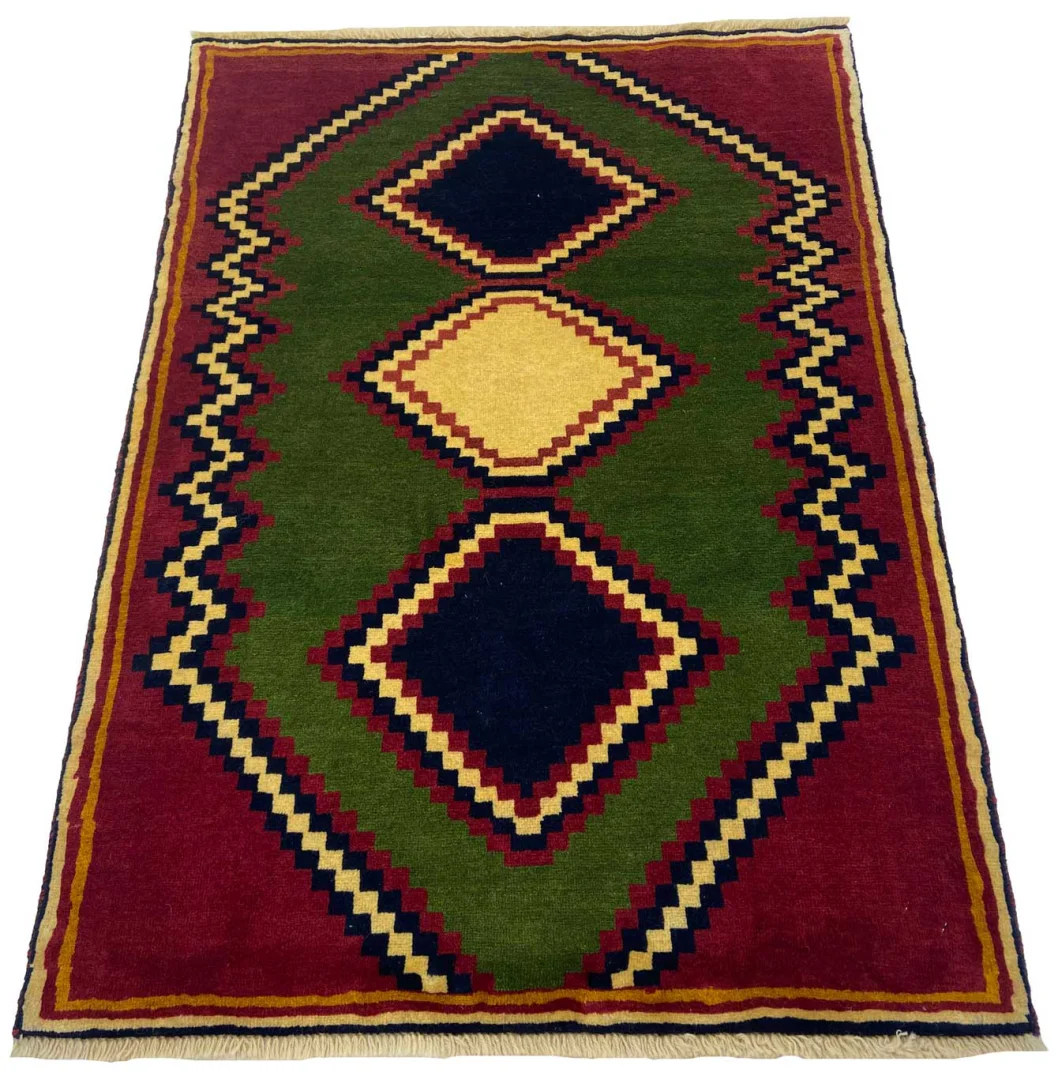
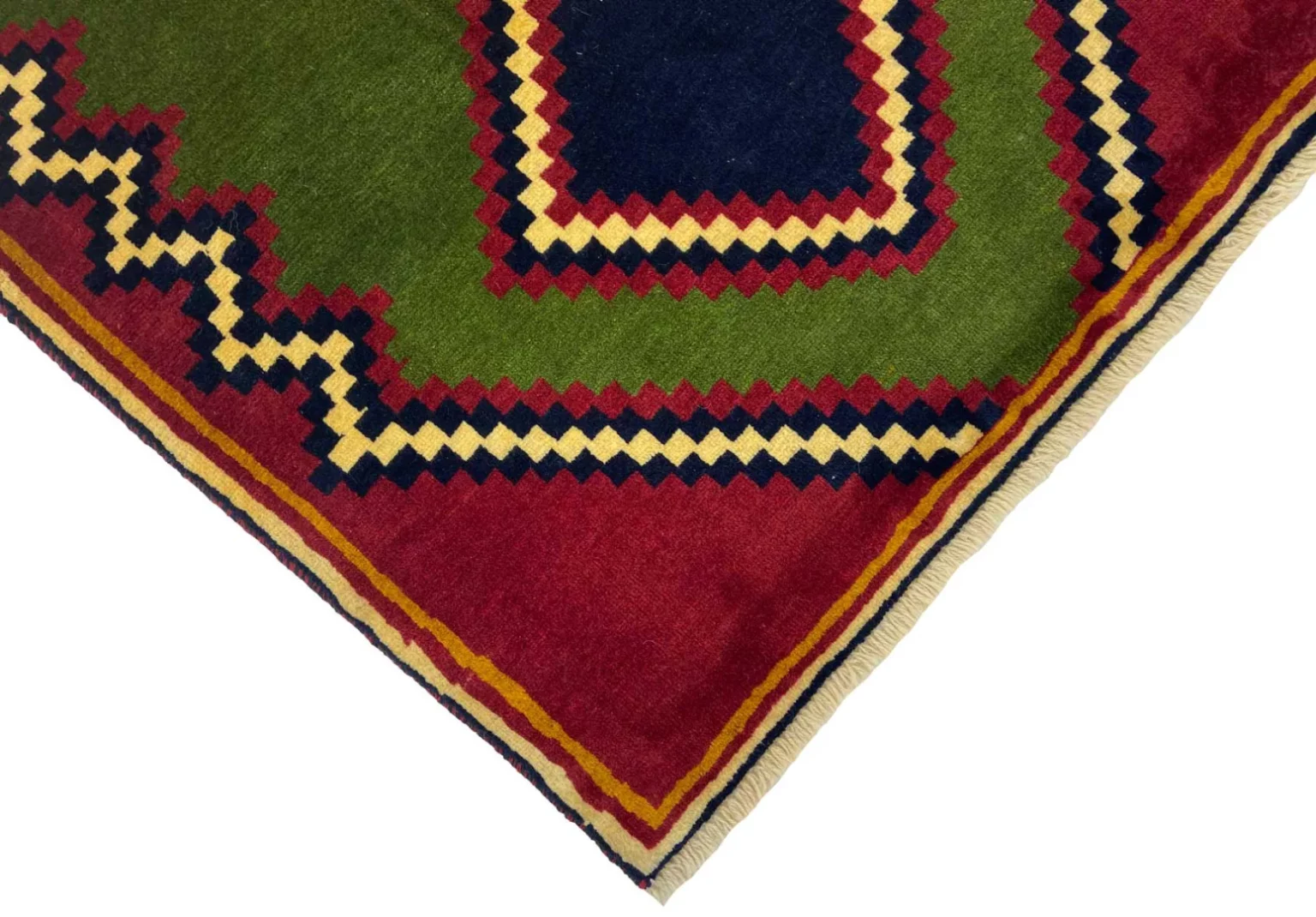
This Gabbeh – Shuli is a hand-knotted Persian rug from the Fars region. Its pile is made of shiny virgin wool. The wool determines the character of the visible surface and gives the rug a distinct textile presence. Handwork is central to its construction: the rug is knotted by hand rather than produced by machine. Each piece can therefore be understood as an individual work created through the work of the knotters.
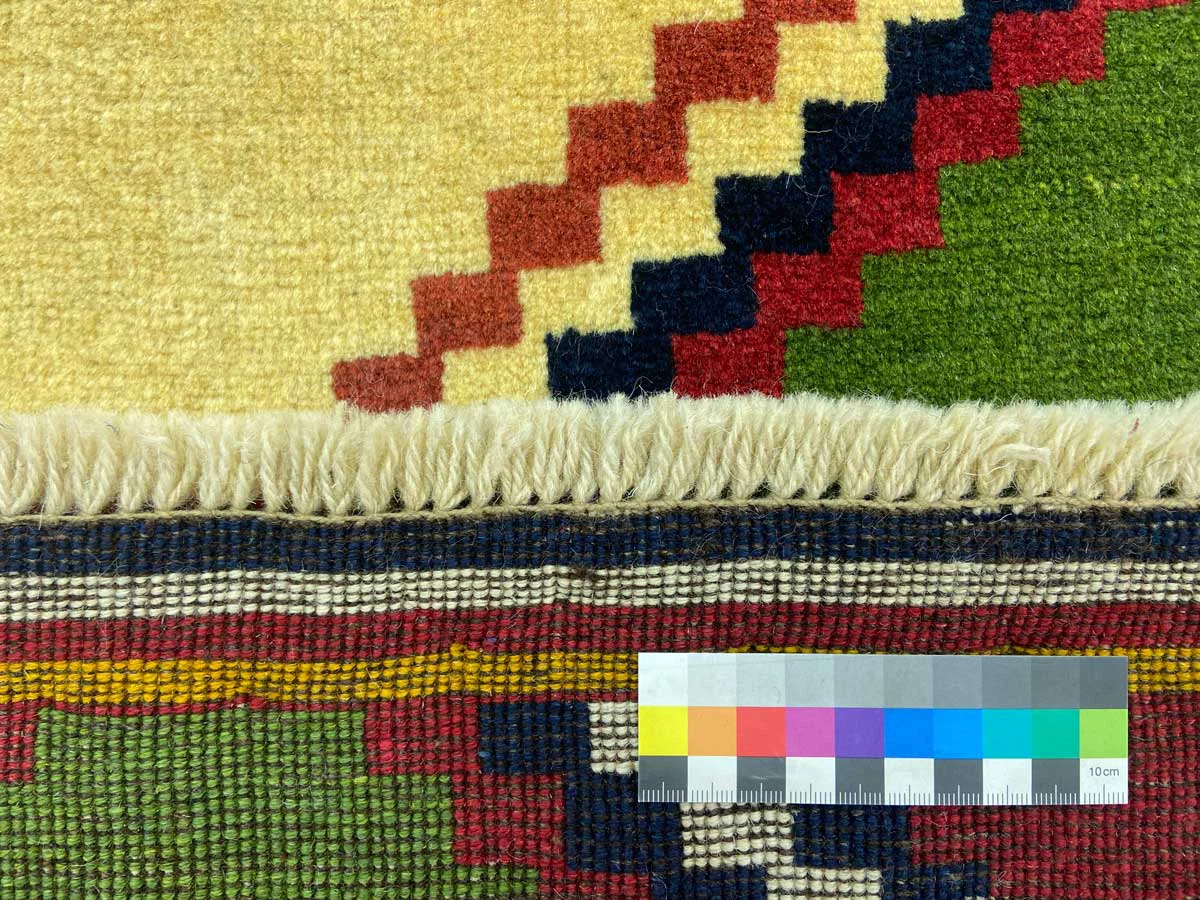
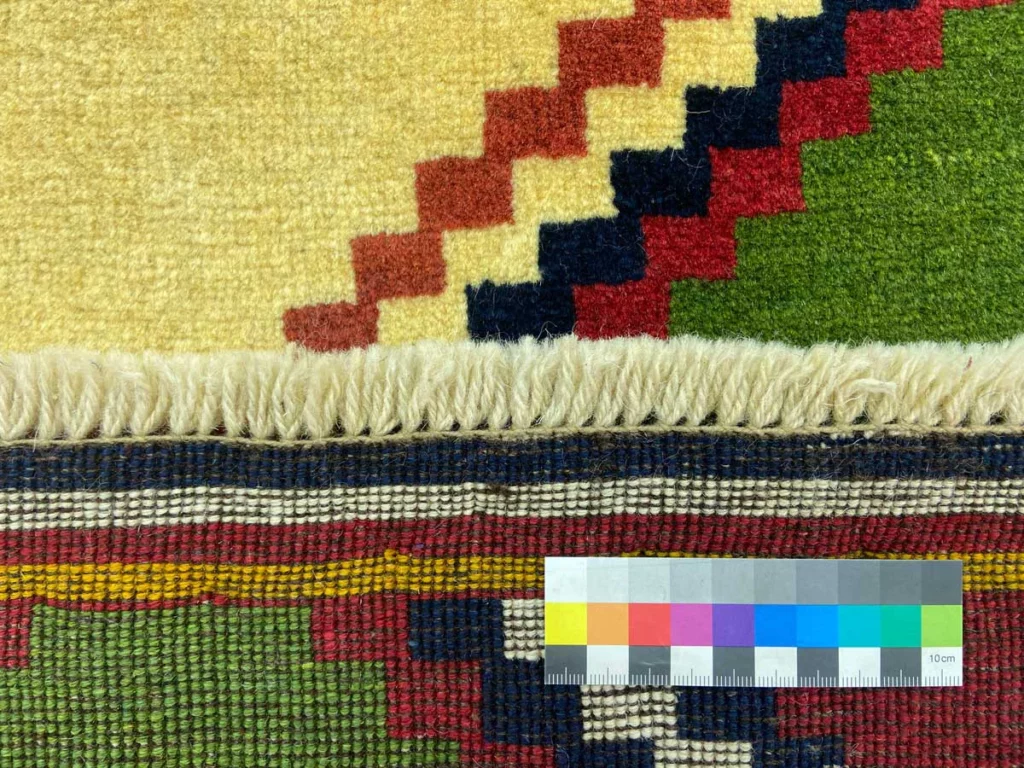
The knotting is dense. For this rug, the specified density lies between 90.000 and 180.000 knots per square metre. The dense construction is described together with high quality, durability and resistance to wear. Combined with the virgin wool, it gives the rug a structure intended for everyday use. Its making thus brings together a natural material and a traditional hand-knotting technique.
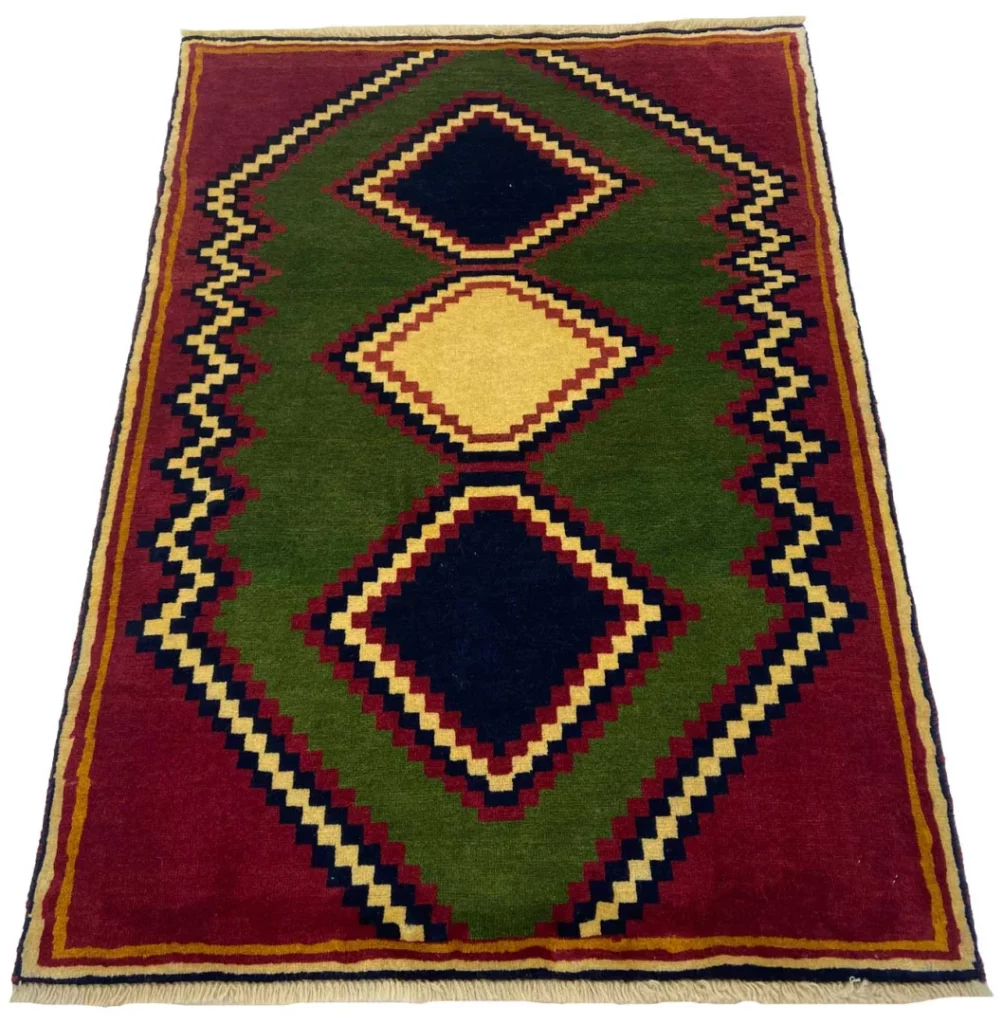
The virgin wool is described as both high-quality and lustrous. This material information concerns the pile and explains the lively appearance of the surface. The stated colours are red, beige, grey and brown. Their interaction with the hand-knotted construction and dense knotting forms the material basis of the Gabbeh – Shuli’s appearance.
Origin and Tradition
The Gabbeh – Shuli comes from the Fars region in southern Persia, near the historic city of Shiraz. Fars is an established carpet-producing region whose weaving and knotting traditions are closely associated with rural and nomadic ways of life. The name Gabbeh refers to a carpet tradition in which handmade production and distinctive patterns play an important role. Here, that tradition is combined with the model designation Shuli.
Fars is home to several types of carpets. Alongside Gabbeh – Shuli, the region also produces Gabbeh – Fars rugs. These likewise feature traditional patterns and vivid colours, although they may be somewhat simpler in design. This places the Gabbeh – Shuli within a broader regional tradition without equating its individual design with another model.
The nomadic Qashqai and Bakhtiari tribes are among the well-known carpet producers of Fars. Their rugs are valued for artistic design and robust construction. The combination of practical use and visual composition is part of the reputation associated with carpets from this region. A Fars rug can therefore be viewed both as a useful household textile and as a crafted piece with its own design language.
The proximity to Shiraz provides an important geographic reference for the rug’s origin. Fars lies in southern Persia and forms the cultural setting for the Gabbeh tradition. The passing on of knotting skills, the use of virgin wool and the development of individual patterns are among the foundations of this regional carpet culture. In the Gabbeh – Shuli, this connection appears through its hand-knotted construction, material and imaginative motifs.
The term Persian rug describes the origin here. It is not merely a decorative style label. The Gabbeh – Shuli is presented as a product of the Fars region and therefore belongs to the tradition of Persian rugs from the south of the country. Its regional classification remains distinct from its colours and from the individual arrangement of its pattern.
Design and Pattern
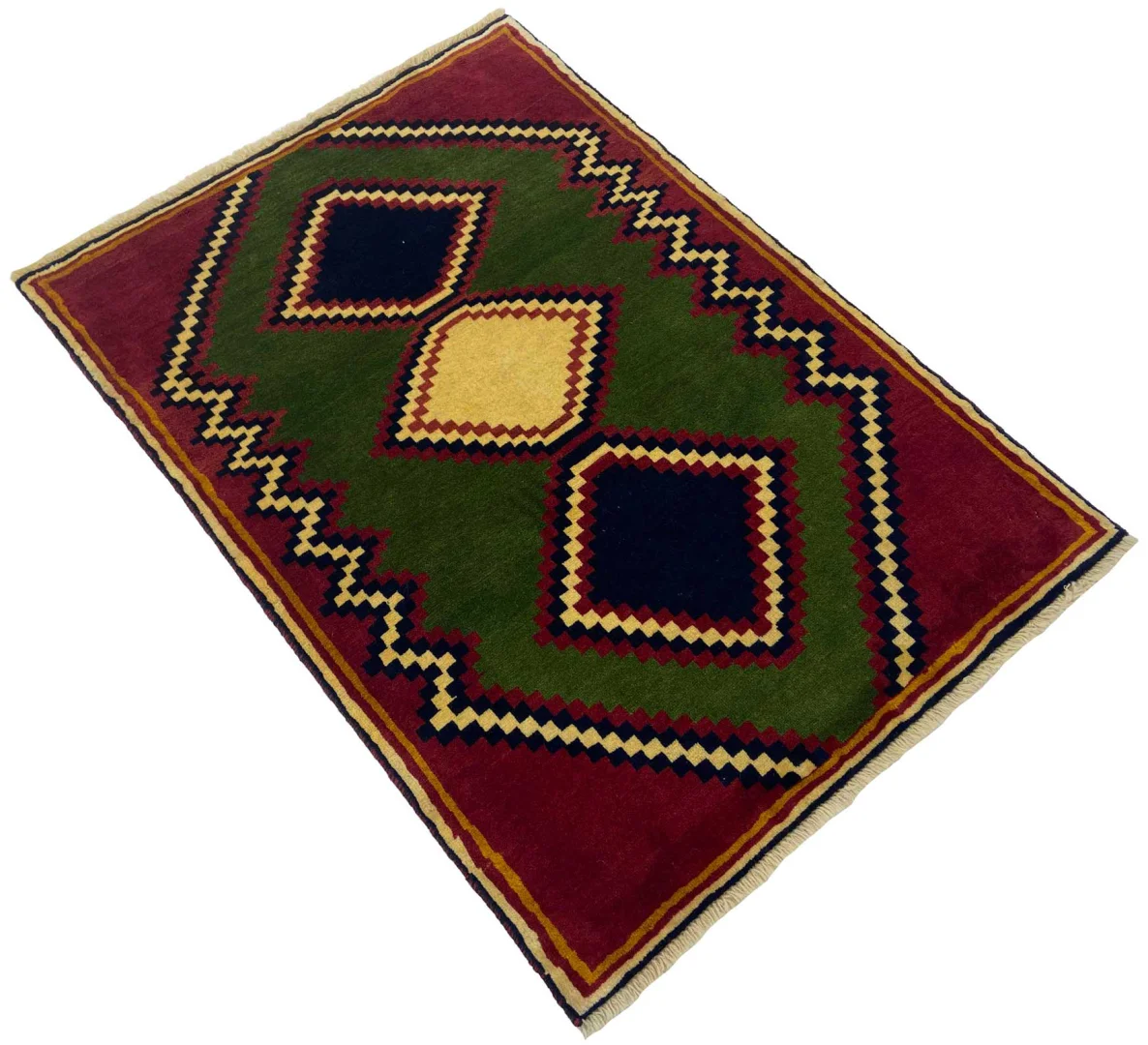
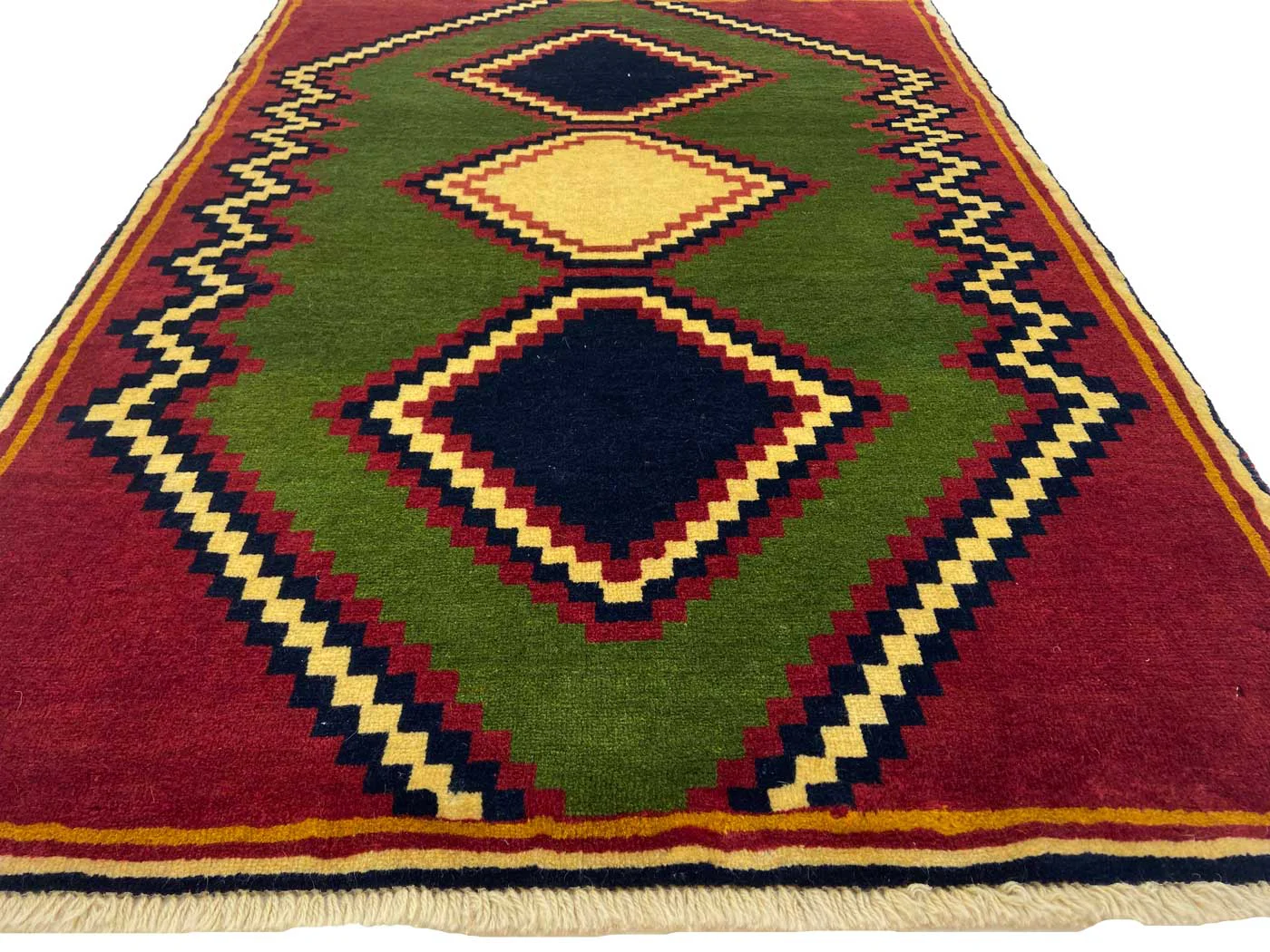
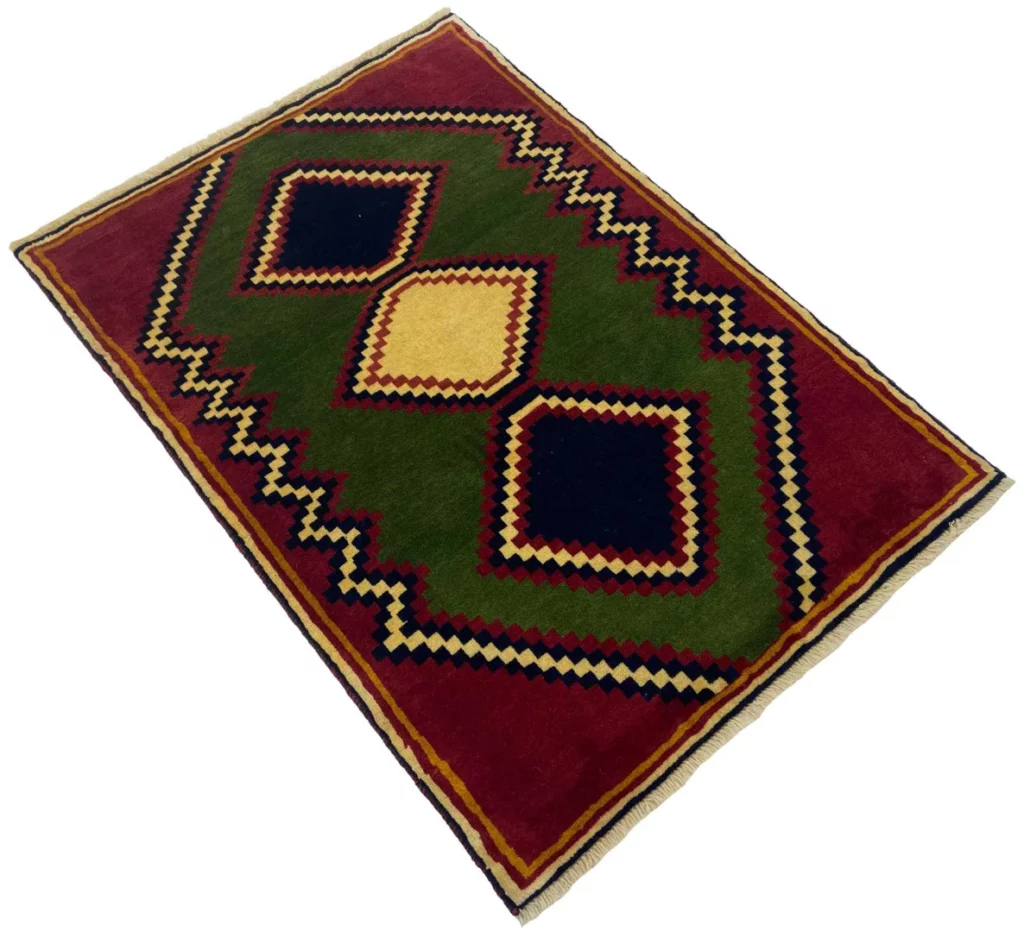
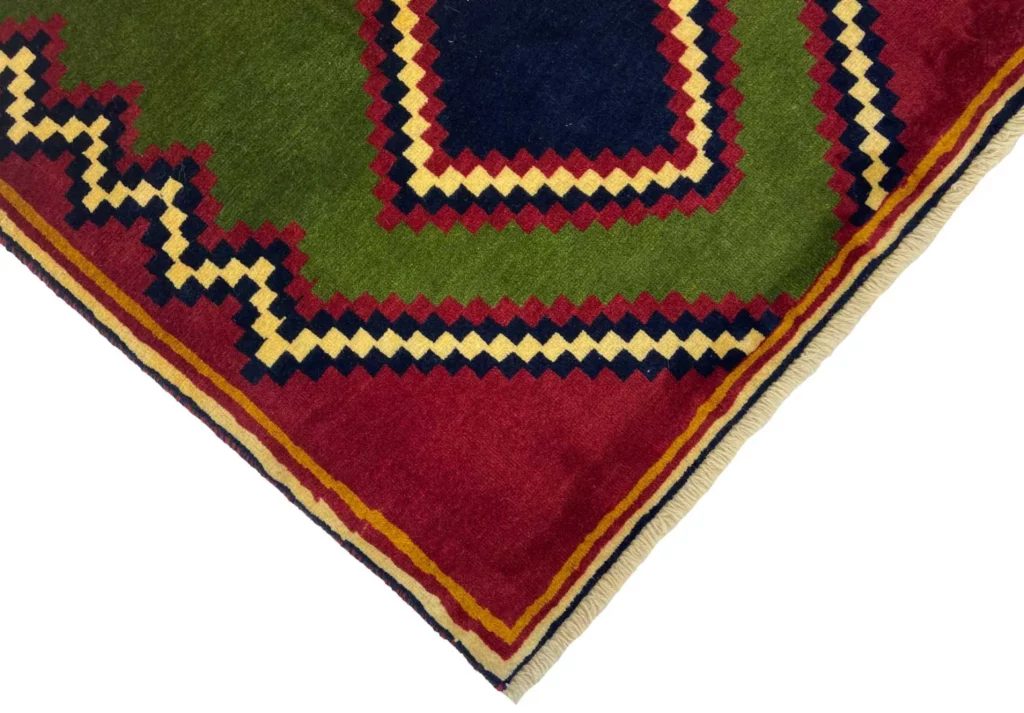
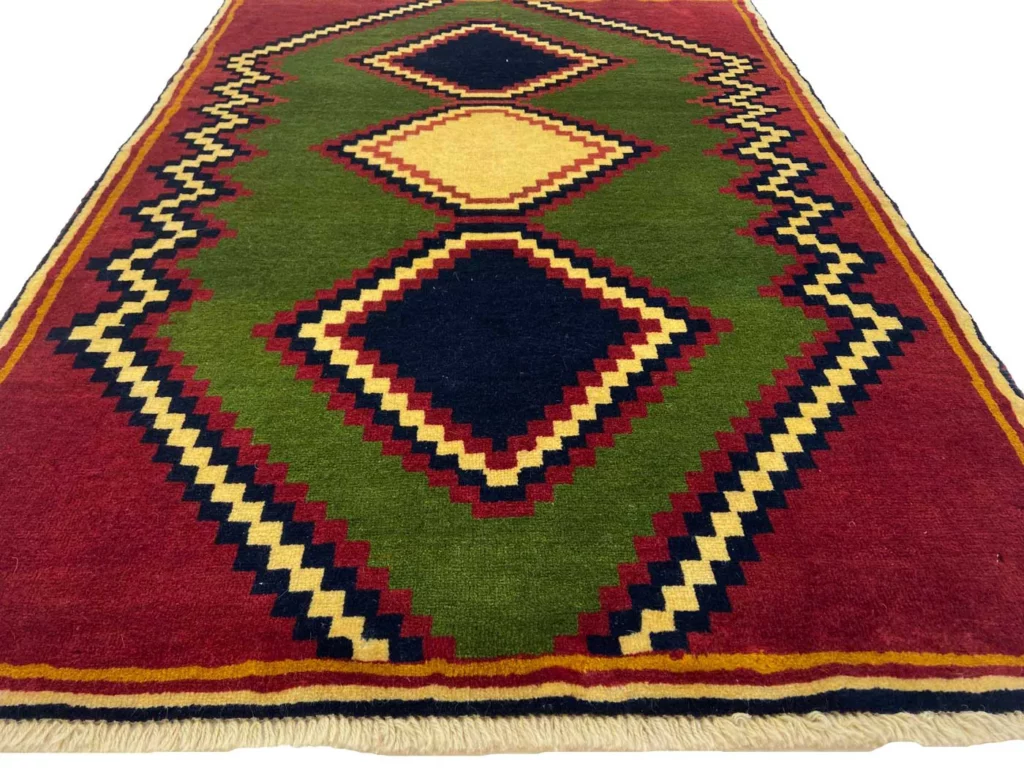
The pattern of this Gabbeh – Shuli is described as unusual and imaginative. Its design is therefore not based on a restrained or uniform decorative effect, but on distinctive compositions. The motifs are described as old nomadic patterns and reflect a visual language associated with the carpet tradition of Fars. Each design can develop its own arrangement and character.
The stated palette consists of red, beige, grey and brown. Red introduces warmth, while beige, grey and brown provide an earthy and quieter foundation. Depending on their arrangement, the colours can contrast with one another or merge into a softer composition. The important point is not a single fixed colour formula, but the relationship between these tones and the particular imaginative design.
Old nomadic patterns are often associated with a direct and clearly readable visual language. In Gabbeh rugs, motifs may be simplified, placed freely or combined with unusual forms. Together with Gabbeh, the word Shuli forms the model designation of this piece. The source emphasises unusual and imaginative designs rather than identifying one single, fixed motif.
The design is also shaped by the handmade process. Experienced knotters are described as giving their creativity room to create patterns that tell stories and reflect traditions. This connects the individual design with its regional background without reducing it to an industrially repeated decoration. The rug consequently has its own visual identity within the Gabbeh tradition.
The colour selection also supports a range of interior uses. Red, beige, grey and brown can be combined with different furnishing colours. The pattern can serve as a central feature in a living room or as an accent in a bedroom. In a hallway, the rug can combine decorative and practical functions. It can therefore work with many interior styles while retaining its Fars origin and Gabbeh character.
Special Features
A defining feature of the Gabbeh – Shuli is the combination of shiny virgin wool, dense knotting and imaginative design. The rug is new and is described as robust and resistant to wear. This makes it suitable for busier areas such as living rooms and hallways. Its practical role remains connected to the decorative effect created by its colours and patterns.
Routine care consists of regular vacuuming and occasional airing. If a stain occurs, it should be dabbed immediately with a damp cloth. This simple care routine helps preserve the surface. The rug can also be used in a bedroom. Its size allows it to be placed in different room settings, either as a design feature or as an accent.
FAQ
What makes the Gabbeh – Shuli special?
The Gabbeh – Shuli combines unusual, imaginative designs with a hand-knotted construction in shiny virgin wool. Its patterns are described as old nomadic designs and are connected with the carpet tradition of the Fars region in southern Persia. The colour scheme of red, beige, grey and brown supports its individual character. Its dense knotting also contributes to the robust and hard-wearing construction described for the rug. This Persian rug therefore brings together handmade production, regional tradition and a distinctive design.
How should I care for my Gabbeh – Shuli rug?
Regular vacuuming is recommended for everyday care. The rug should also be aired from time to time so that its surface can be maintained in good condition. If a stain appears, it should be dabbed immediately with a damp cloth. The recommended approach is gentle dabbing rather than vigorous rubbing. Care is therefore straightforward and directed towards preserving the shiny virgin wool and the visible pattern.
Which rooms are suitable for the Gabbeh – Shuli rug?
The Gabbeh – Shuli can be used in a living room, hallway or bedroom. In a living room it can serve as a central feature, while in a bedroom it can provide a colour and design accent. In a hallway, it combines its decorative appearance with the robustness described for the rug. Its dense knotting and resistant virgin wool make it suitable for busier areas. The imaginative designs and the colours red, beige, grey and brown also allow it to work with many interior styles.
To provide the best experiences, we use technologies like cookies to store and/or access device information. Consenting to these technologies will allow us to process data such as browsing behavior or unique IDs on this site. Not consenting or withdrawing consent, may adversely affect certain features and functions.
Functional Always active
The technical storage or access is strictly necessary for the legitimate purpose of enabling the use of a specific service explicitly requested by the subscriber or user, or for the sole purpose of carrying out the transmission of a communication over an electronic communications network.
Preferences
The technical storage or access is necessary for the legitimate purpose of storing preferences that are not requested by the subscriber or user.
Statistics
The technical storage or access that is used exclusively for statistical purposes.The technical storage or access that is used exclusively for anonymous statistical purposes. Without a subpoena, voluntary compliance on the part of your Internet Service Provider, or additional records from a third party, information stored or retrieved for this purpose alone cannot usually be used to identify you.
Marketing
The technical storage or access is required to create user profiles to send advertising, or to track the user on a website or across several websites for similar marketing purposes.

 SECURE PAYMENT
 SHIPPING PARTNERS


