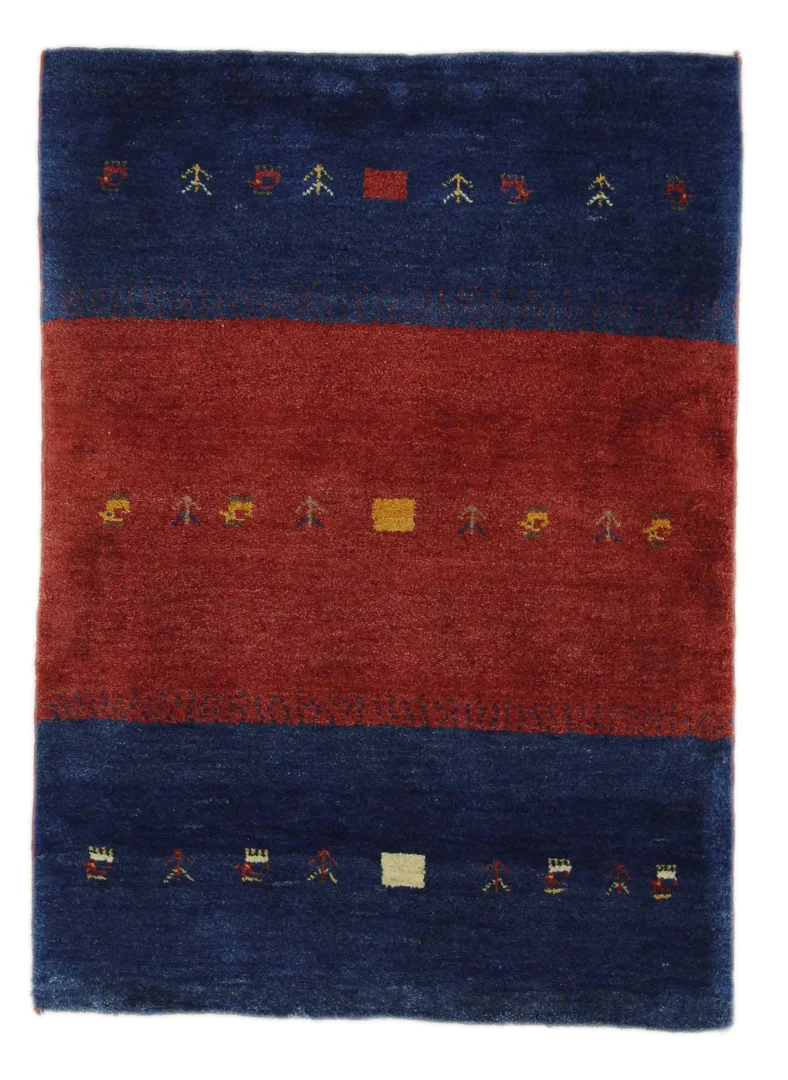
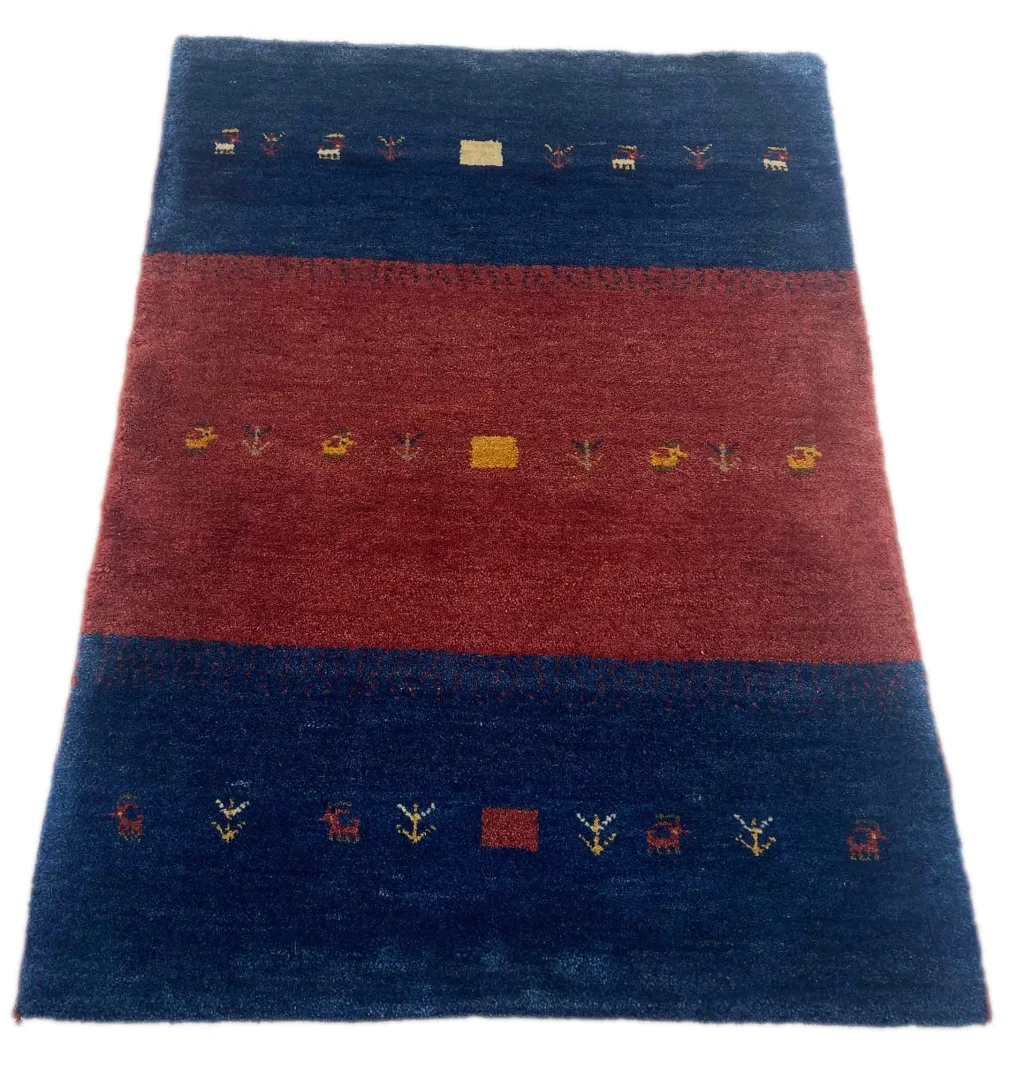
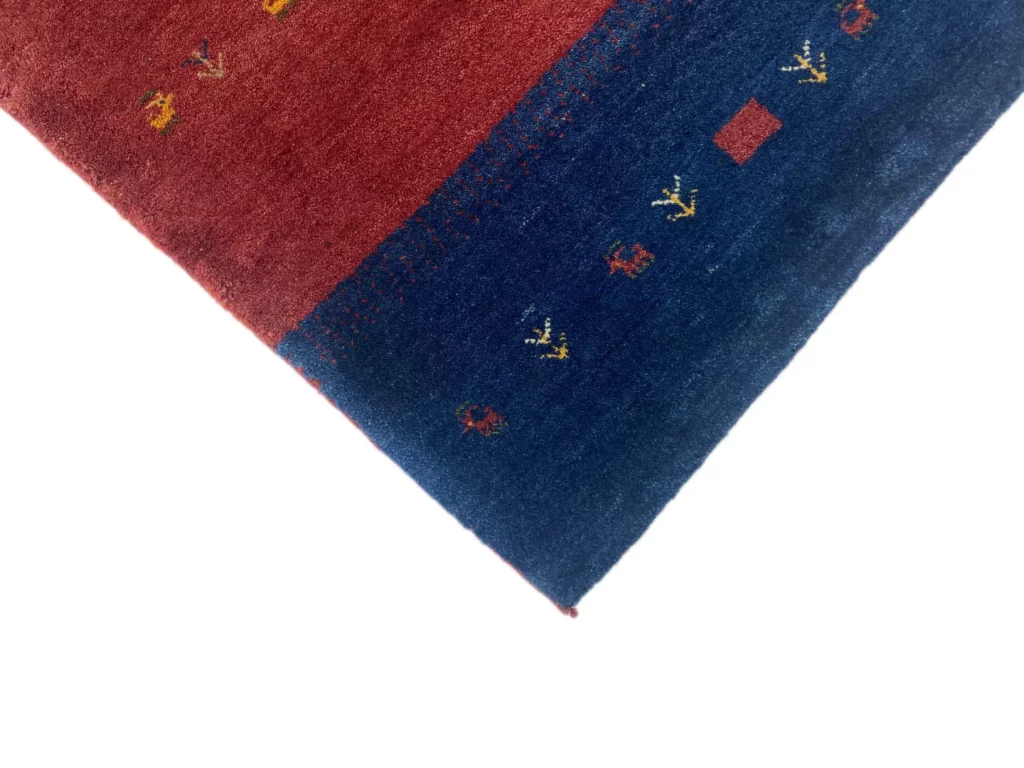
Hand-knotted Fars Persian rug | Knot density: 50.000 – 180.000 knots/m² | Material: pile hand-spun sheep and goat wool, cotton backing | Size: 120 x 87 cm | Pattern: abstract designs with large colour fields | Condition: New
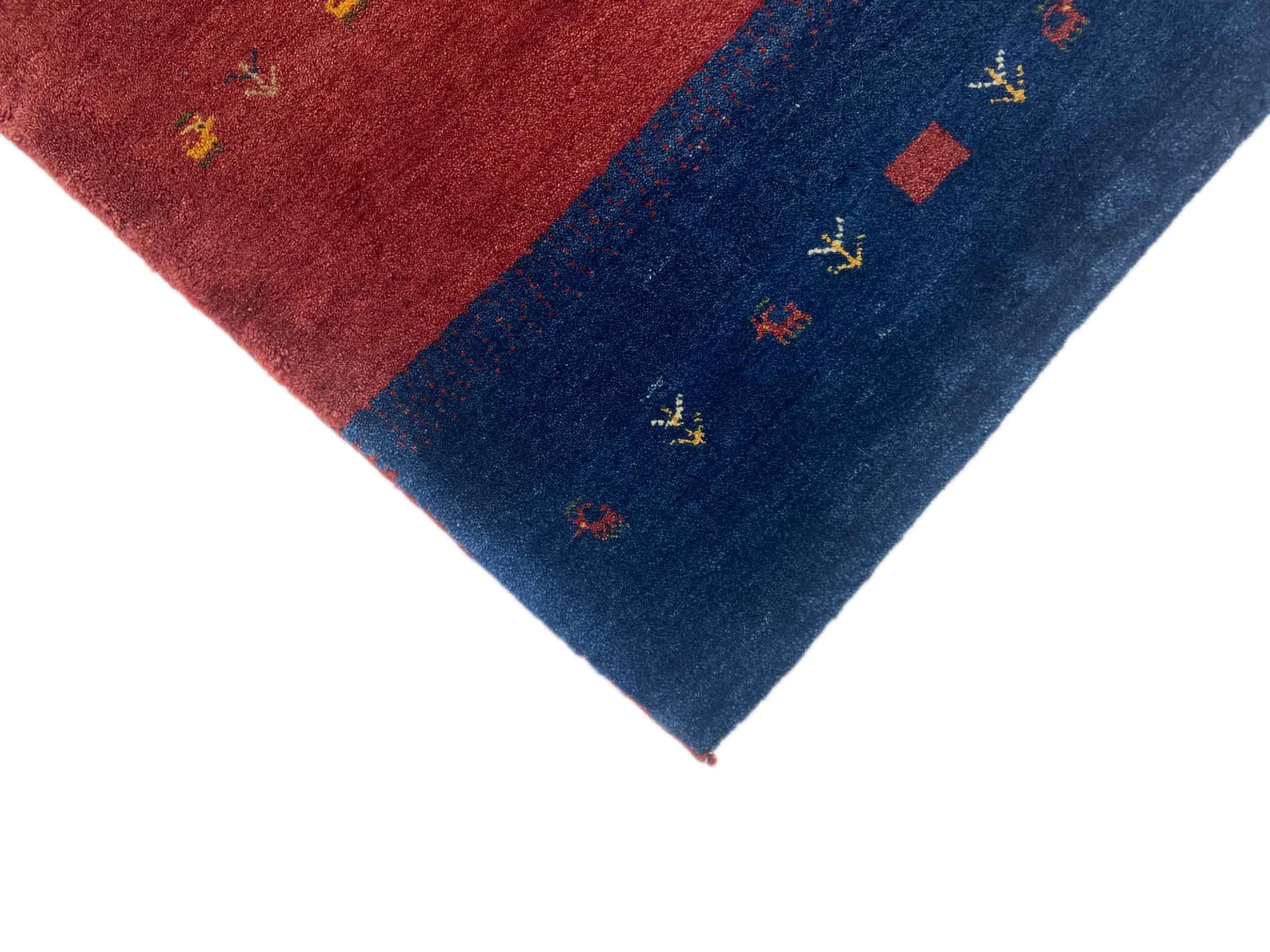
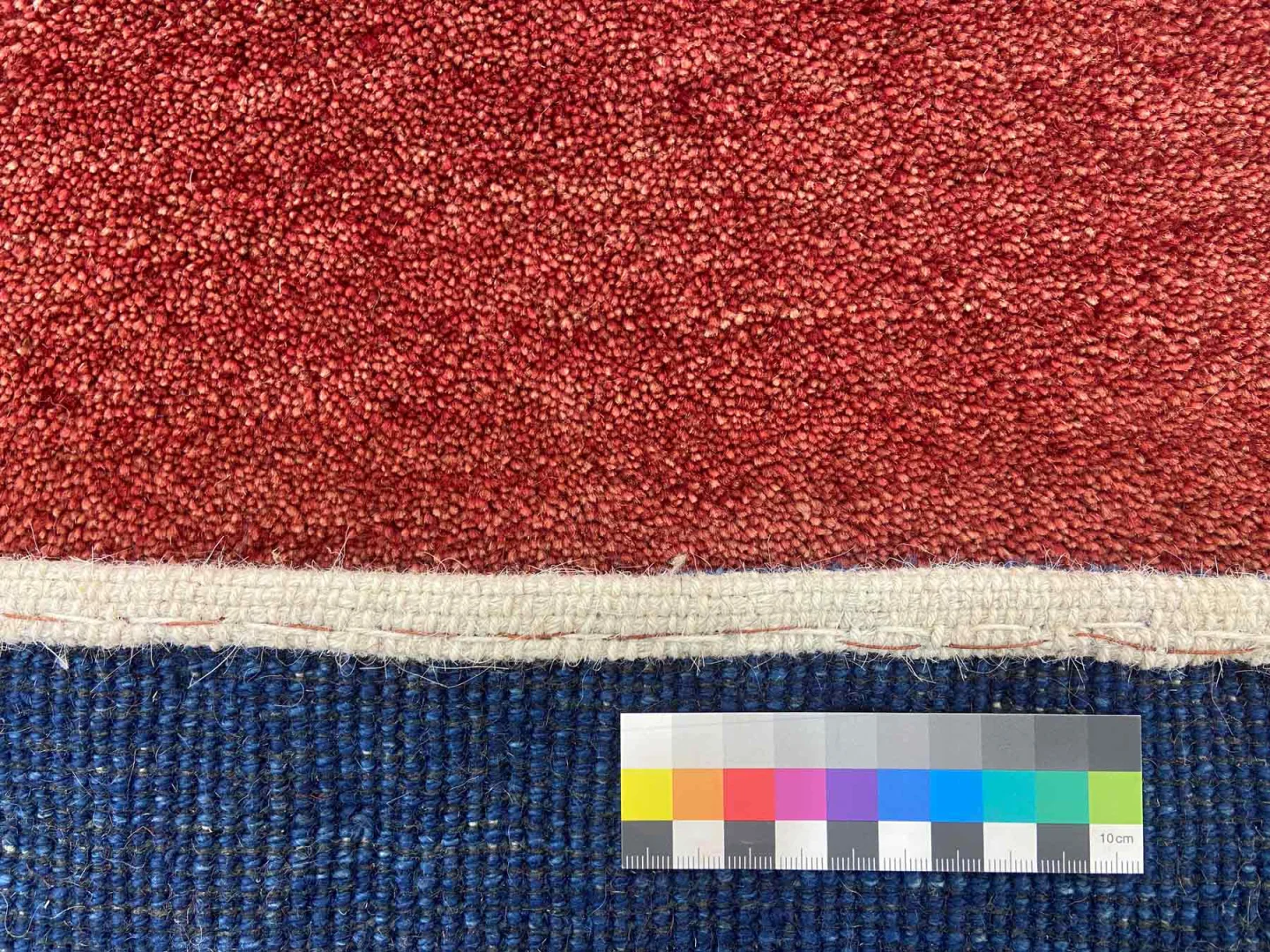
This Gabbeh is hand-knotted and has a soft pile. The pile is made from hand-spun sheep and goat wool. Natural wool gives the surface its pleasant handle and contributes to the hard-wearing character described for the rug. Its soft, tactile pile creates an inviting surface, while the wool construction makes it suitable for everyday use. The source description identifies the wool fibres as naturally dirt-repellent and easy to care for. In this way, the material combines a comfortable feel with practical qualities.
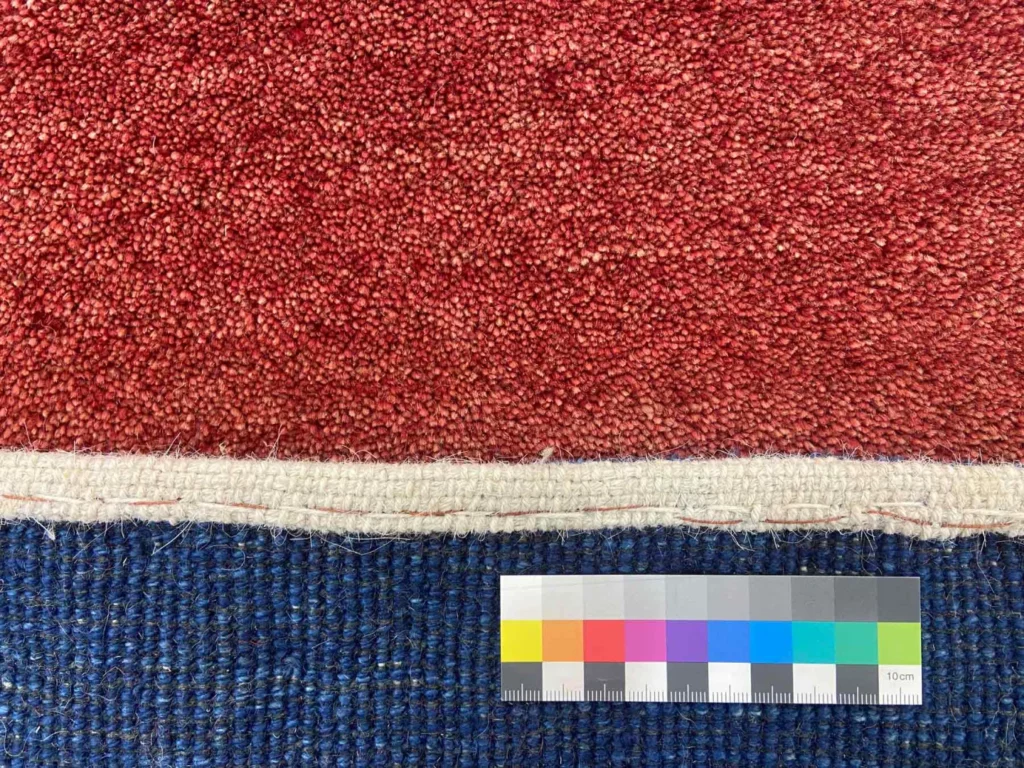
A sturdy cotton backing is located on the underside. It provides additional stability and is intended to help prevent the rug from slipping on smooth floors. The rug is made using traditional hand-knotting. Its pile is built knot by knot, preserving the individual character associated with this method. The stated knot density is 50.000 – 180.000 knots/m². This knotting technique contributes to the rug’s robustness and visual appearance. A hand-knotted Gabbeh is presented here as a unique piece: the manual process makes each rug an individual object.
The soft pile is one of the defining features of this Gabbeh. It gives the surface a gentle, welcoming feel and makes it comfortable under bare feet. Hand-spun sheep and goat wool, the cotton backing and traditional hand-knotting form the material and construction combination described for this rug. The result is a textile whose character comes from both its natural wool surface and the visible individuality of handmade work.
Origin and Tradition
Gabbeh belongs to the Persian rug tradition and is associated with Iran. This rug is assigned to the Ghashghai nomads of Fars, Iran. Nomadic communities have an important place in the wider history of Gabbeh weaving. The Qashqai in particular are closely associated with Gabbeh rugs. Their way of life is connected with the mountainous regions of Iran, and Gabbeh was not created solely as a decorative floor covering.
In nomadic households, Gabbeh could serve several purposes. Rugs were used on floors, as wall hangings and as coverings for tents. This practical range of uses helps explain the combination of strength and direct visual expression associated with the type. Weaving was part of community life and was connected to available natural materials as well as to the knowledge of the makers. The rug therefore reflects a tradition in which utility and visual design developed alongside one another.
The history of rug weaving in these regions reaches back several centuries and is deeply rooted in Persian culture. Gabbeh is not defined only by a strict, repeated ornament. Colours and motifs may refer to the surrounding landscape, nature and the life of the community that made the rug. The tradition is therefore both technical and cultural. A reduced design can carry meaning through the selection of colour and form without depending on the densely detailed compositions found in many other Persian rugs.
The Ghashghai and the communities also known as Qashqai are frequently mentioned together in discussions of Gabbeh tradition. Their rugs are known for simple yet expressive designs. Natural wool, manual workmanship and colour choices connected with the landscape form part of the established image of Gabbeh. Historically, this produced a rug type in which everyday function and symbolic design could coexist. Motifs may include references to nature, geometry or nomadic daily life, but they do not need to follow a single fixed pattern.
Fars provides an important regional setting for this tradition. Its landscape and nomadic way of life form the cultural background of the Gabbeh associated with the area. Regional identity is expressed less through one compulsory decoration than through the combination of hand craftsmanship, strong colour effects and simplified forms. These qualities explain why Gabbeh is recognised both as a traditional rug type and as a design that can appear in contemporary interiors.
Design and Pattern
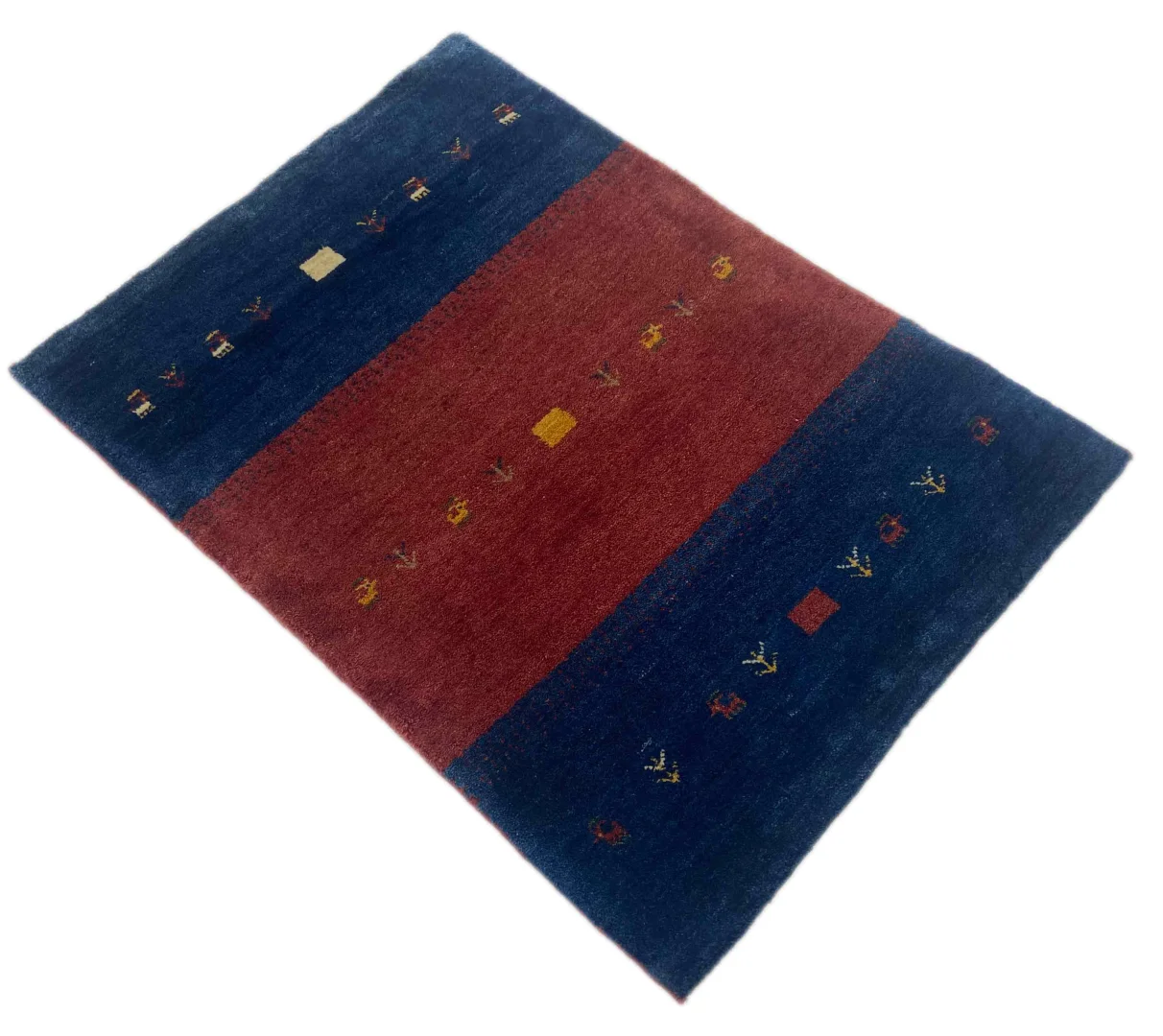
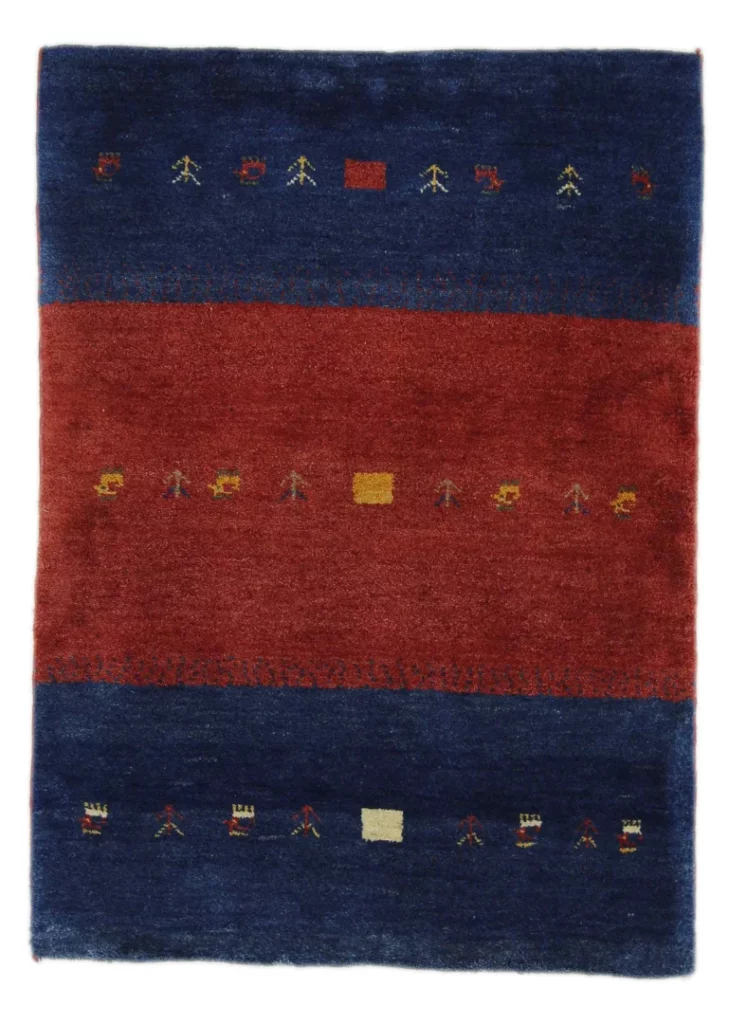
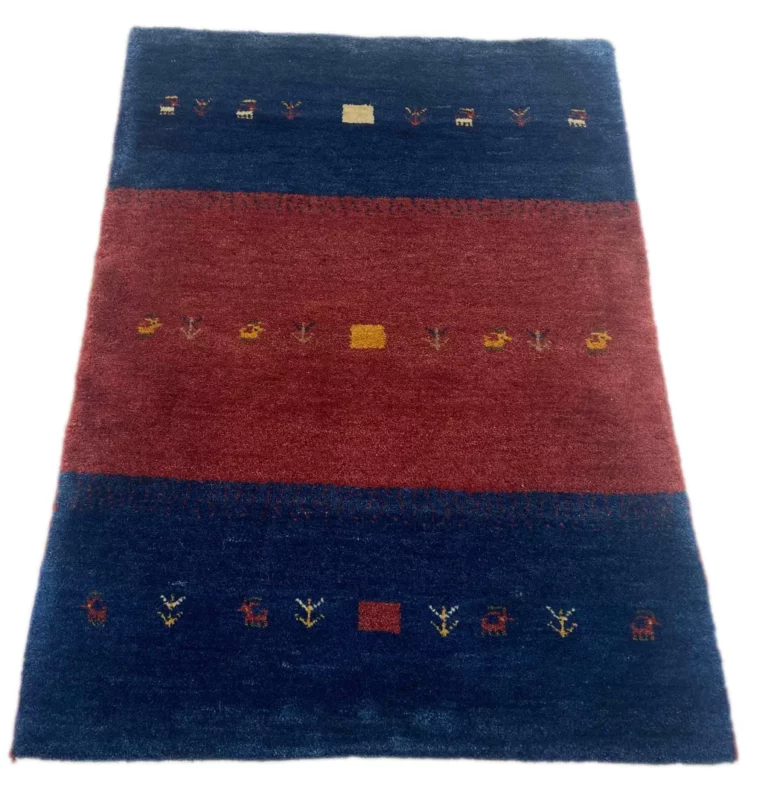
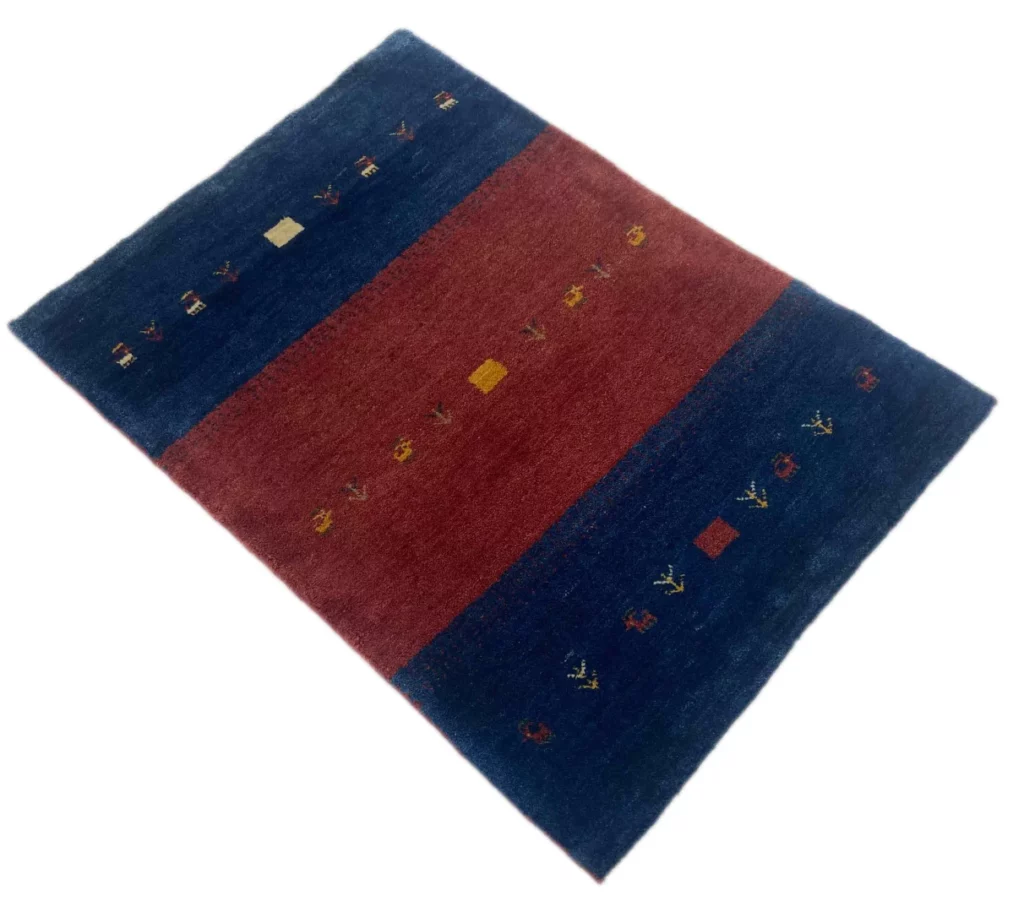
The pattern of this Gabbeh is described as an abstract design with large colour fields. The broad areas of colour take precedence over small, densely arranged ornament. They give the composition a clear visual structure and allow individual areas to be read as distinct elements. Rather than forming a highly detailed all-over repeat, the design relies on the relationship between simplified forms and larger sections of colour.
Gabbeh designs are often geometric and structured. Within the tradition, geometric shapes can be simplified and used with an immediate, clearly legible effect. This creates a contrast with the fine, highly articulated patterns of other Persian rugs. The abstract character of this rug follows that reduced visual language. Large fields bring calm to the composition, while changes of colour provide its internal organisation.
Gabbeh palettes are often associated with earthy tones that can be enlivened by accent colours. These colour ideas are connected in general terms with the natural surroundings of nomadic communities. Landscape and earth may influence the palette without being copied literally. The design is better understood as a concentrated interpretation of natural impressions, using colour and form selectively rather than attempting a detailed pictorial representation.
Abstract pattern also has a functional role. Simple motifs can provide a quiet background for furniture and other interior elements. Large colour fields can organise a room visually without filling it with numerous small details. The geometric structure keeps the design clear, while the soft pile adds a tactile dimension to the overall impression. Drawing and surface therefore work together, giving the rug a coherent identity.
The restrained design can be used with both classical and modern interiors. In a traditional setting, it can make the connection with Persian rug culture visible. In a contemporary room, its abstraction can act as a clear structuring element. This adaptability is one of the qualities commonly associated with Gabbeh. The pattern remains distinct: it is not described as a detailed copy of another Persian provincial design, but as an abstract composition based on large colour fields.
Gabbeh tradition also allows for a broad range of visual references. Nature, geometric ideas and aspects of nomadic daily life may be expressed in simplified form. The motifs do not necessarily tell a linear story. Their meaning can emerge through the interaction of colour, shape and open space. In this rug, the abstract character is central, so the large colour areas and their arrangement provide the main guide to the design.
Special Features
This Gabbeh combines a soft pile, hand-spun sheep and goat wool and an abstract design. Its hand-knotted construction makes it a unique piece, while the large colour fields give the pattern a clear and reduced appearance. The sturdy cotton backing adds stability to the construction. The rug is described as new.
Gabbeh is versatile in use. It is suitable for living rooms and bedrooms, as well as for a music room or a creative studio. Its hard-wearing qualities also allow use in busier areas such as hallways or entrance areas. Its practical role remains connected with its cultural origin and its artistic design.
FAQ
How should I care for my Gabbeh?
For routine care, vacuum the Gabbeh without a brush attachment so that the soft pile is not damaged. Blot spills immediately with a damp cloth. Blotting lifts the mark while placing less stress on the surface than vigorous rubbing. For a more thorough cleaning, it is advisable to consult a specialist. This care approach takes both the soft pile and the hand-knotted construction into account.
Where can I use a Gabbeh?
A Gabbeh is suitable for living rooms, bedrooms and creative work areas. Its hard-wearing qualities also make use in busier spaces such as hallways or entrance areas possible. A music room or creative studio is another suitable setting. The large abstract colour fields can provide a calm background for furniture, work materials and other interior elements.
What makes Gabbeh rugs special?
Gabbeh rugs combine traditional craftsmanship, natural materials and a cultural background within the Persian rug tradition. Their particular character comes from hand-spun sheep and goat wool, a soft pile, hand-knotting and simplified abstract designs. Large colour fields distinguish them from the highly detailed ornament found on many other Persian rugs. Each hand-knotted piece is unique, connecting individual workmanship with the tradition of the Ghashghai nomads of Fars.
To provide the best experiences, we use technologies like cookies to store and/or access device information. Consenting to these technologies will allow us to process data such as browsing behavior or unique IDs on this site. Not consenting or withdrawing consent, may adversely affect certain features and functions.
Functional Always active
The technical storage or access is strictly necessary for the legitimate purpose of enabling the use of a specific service explicitly requested by the subscriber or user, or for the sole purpose of carrying out the transmission of a communication over an electronic communications network.
Preferences
The technical storage or access is necessary for the legitimate purpose of storing preferences that are not requested by the subscriber or user.
Statistics
The technical storage or access that is used exclusively for statistical purposes.The technical storage or access that is used exclusively for anonymous statistical purposes. Without a subpoena, voluntary compliance on the part of your Internet Service Provider, or additional records from a third party, information stored or retrieved for this purpose alone cannot usually be used to identify you.
Marketing
The technical storage or access is required to create user profiles to send advertising, or to track the user on a website or across several websites for similar marketing purposes.
 SECURE PAYMENT
 SHIPPING PARTNERS


