Persian Rug Ekbatan 310 x 210 cm Wool Hand-knotted
€ 1438
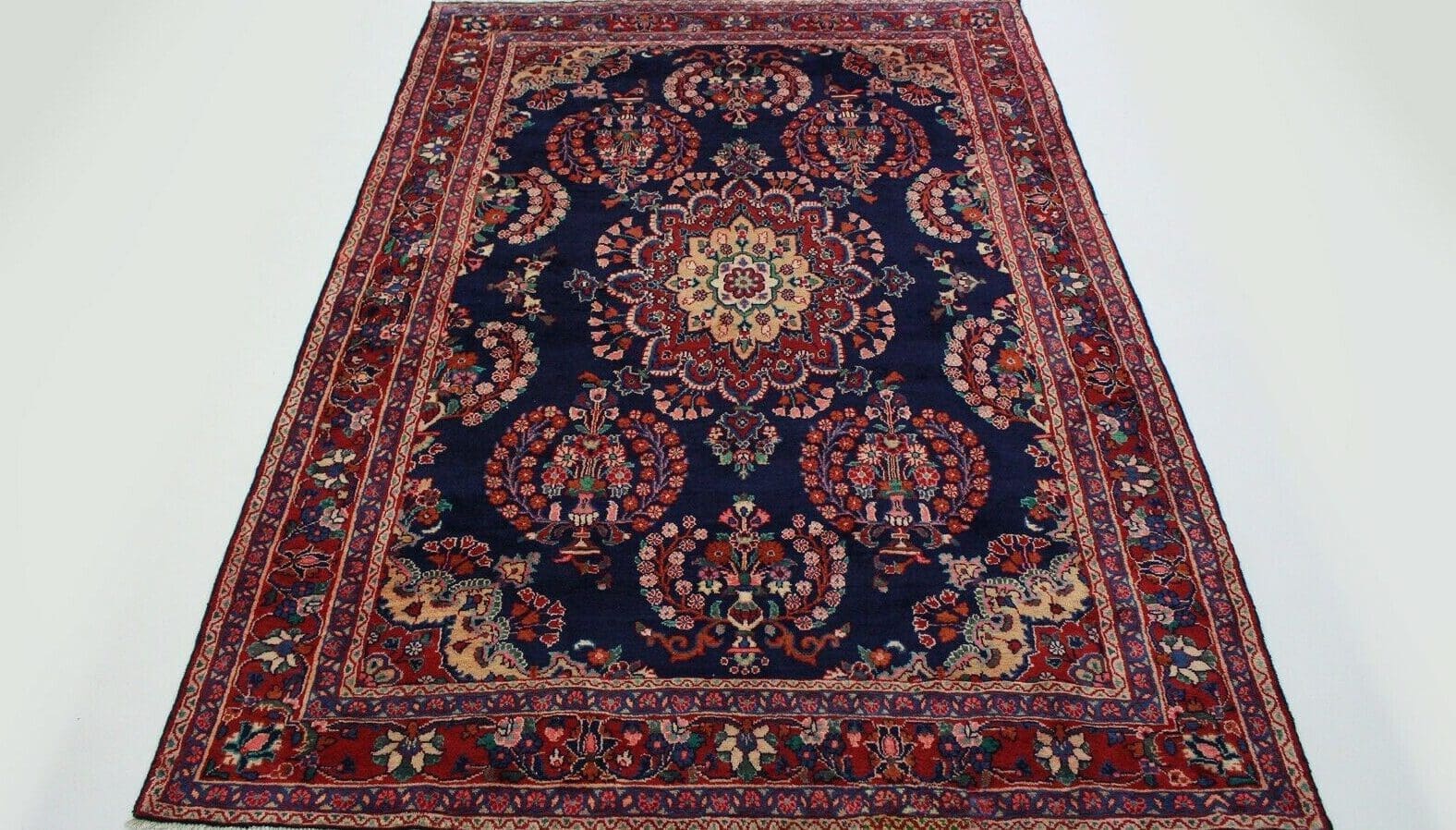
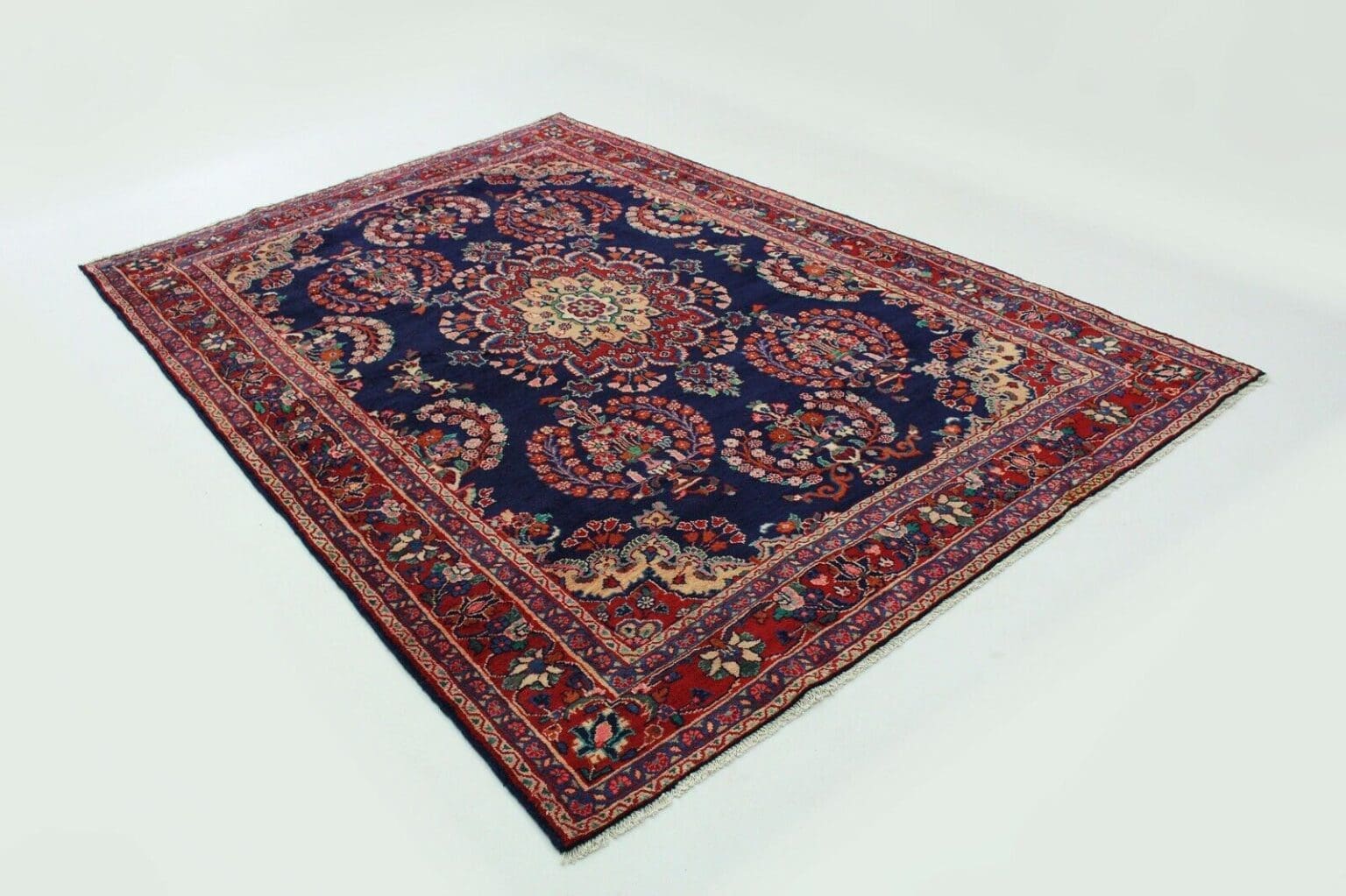
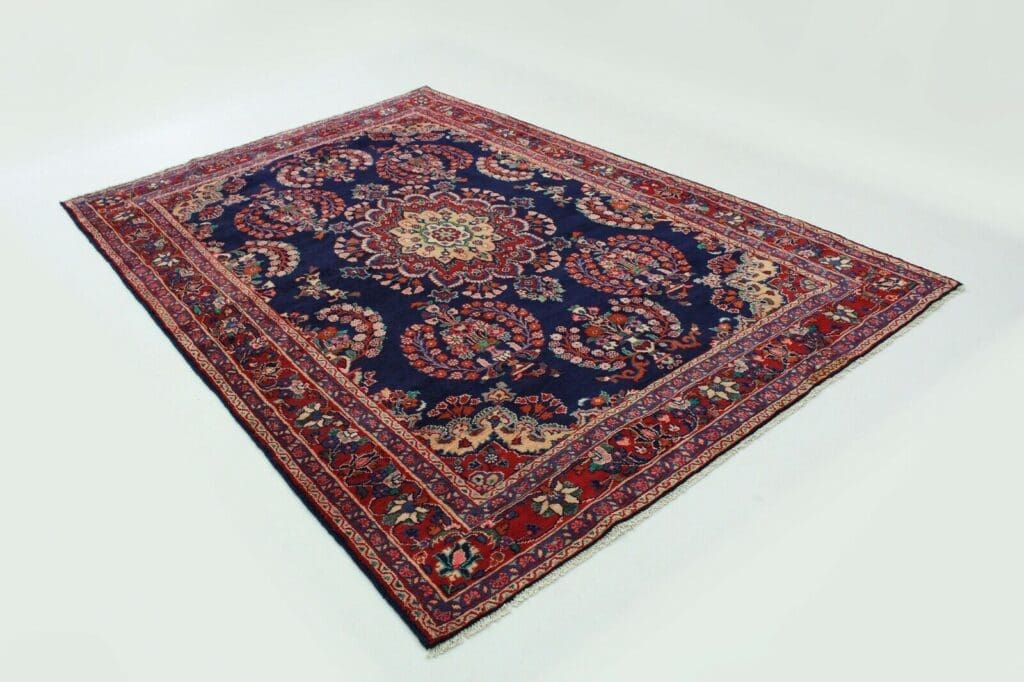
Hand-knotted Ekbatan Persian Rug | Size: 306 x 207 cm | Material: Pile 100% wool | Pile height: 10 mm | Pattern: Oriental | Condition: New without label
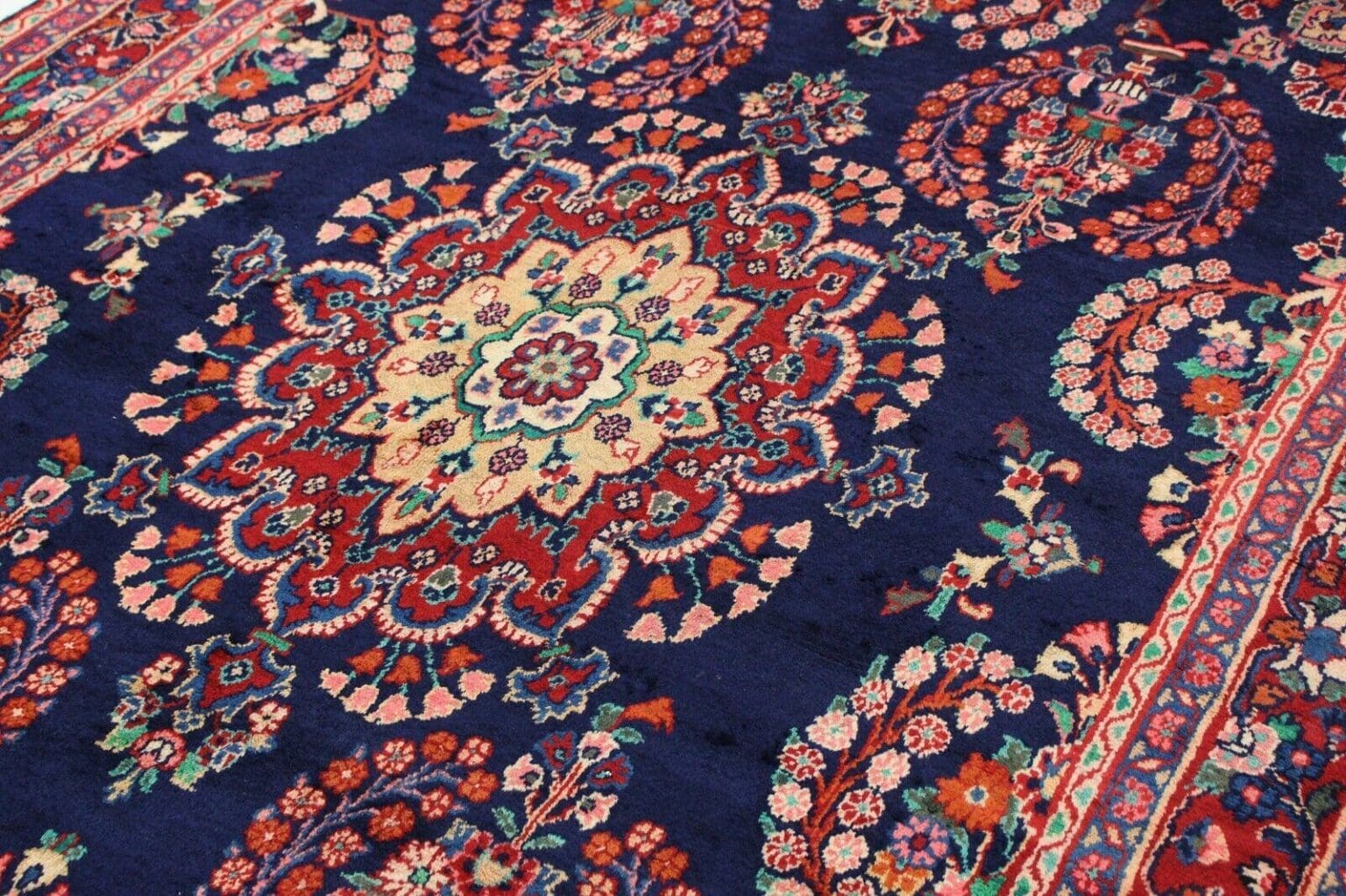
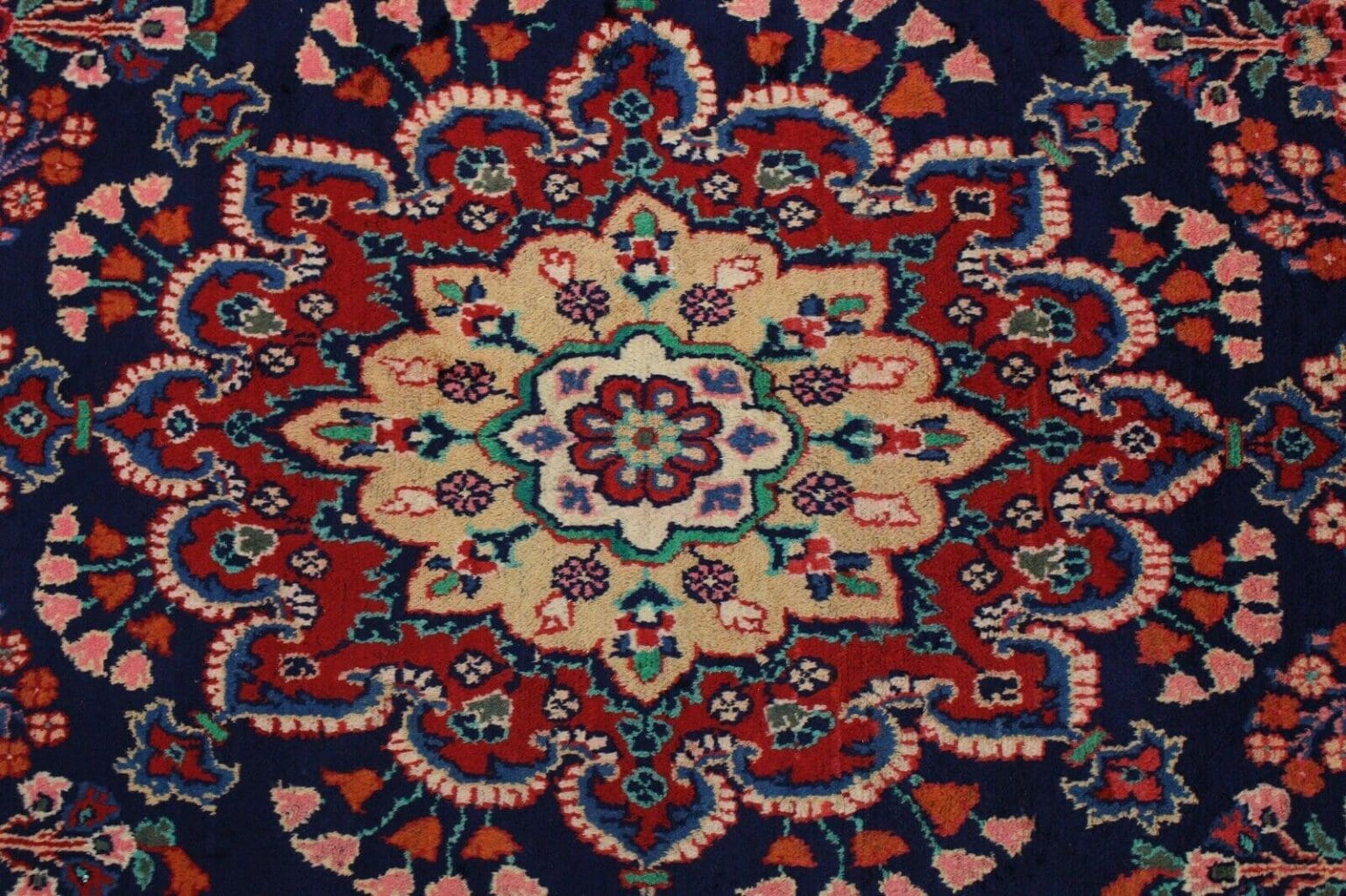
This Ekbatan Persian rug is hand-knotted and has a pile made from 100% wool. Hand-knotting creates the surface gradually by inserting individual knots into a prepared textile foundation. Each row follows the previous one, allowing the pattern to emerge through a sequence of manual operations. Unlike a machine-made floor covering, a hand-knotted rug is built knot by knot, with the maker controlling the progression of outlines, colour changes and decorative areas.
Wool is a traditional material in Oriental rug making. It can be spun and worked into a durable pile and accepts colour in a way that supports clear patterning. Its natural fibre structure also gives the surface a textile character rather than a completely uniform appearance. For this rug, the pile height is given as 10 mm. The description further states that the rug was carefully made by experienced craftspeople whose knowledge and skills were passed down through generations.
The term hand-knotted describes the construction of this rug, not simply its visual style. Every knot becomes part of the sequence that forms the pile, the outlines and the colour fields. The wool is therefore both the named pile material and an established part of the Persian rug tradition. The material information refers to the wool pile; no additional material is specified in the source description.
Manual production also explains why a traditional pattern is assembled in small, connected sections rather than applied as a printed image. The maker follows the intended design while building the textile surface. The process joins practical construction with decorative work. In this piece, the stated wool pile, hand-knotted technique and traditional workmanship are the relevant material and production features.
Origin and Tradition
This rug is identified as an Ekbatan Persian rug from the Ekbatan region of Iran. It therefore belongs to the Iranian tradition of Persian carpet making. Persian rugs do not form a single uniform category of design. Different centres and weaving areas developed their own approaches to drawing, colour organisation and workshop practice. Regional names connect a rug with a cultural and technical context, while the particular pattern still needs to be described separately.
Ekbatan is presented as a region known for high-quality rugs and artistic patterns. In Persian carpet culture, a design is more than a surface decoration. A rug often organises a field through a central arrangement, surrounding borders and repeated signs. These elements may be geometric or floral, and they are translated into textile form through the work of the knotter. Design knowledge was traditionally passed through workshops and families, where established compositions could be retained while being adapted through handwork.
Persian carpet production includes urban workshops as well as regional and village traditions. Urban weaving centres often became associated with precise drawing, carefully planned borders and controlled colour relationships. Other areas maintained more direct or simplified forms that were shaped by local practice. The Ekbatan rug described here is associated with a classic geometric appearance. Its regional name therefore places it within an Iranian weaving tradition without turning it into a rug from another Persian centre.
Tabriz, Isfahan and Kashan are also widely recognised Persian carpet regions. Tabriz is often associated with floral compositions and the use of silk. Isfahan is known for complex motifs and a differentiated colour palette. Kashan has its own long-established carpet tradition. Qom is frequently connected with detailed drawing and demanding standards of execution. These examples demonstrate the variety within Persian rugs, but they do not change the origin of this piece: this rug is identified as Ekbatan from Iran.
Persian carpet making is part of Iranian cultural and artistic history. Borders, medallion structures, repeated motifs and colour relationships can be developed over long periods while the basic hand-knotting method remains recognisable. A rug can consequently function as a practical textile and as a carrier of inherited design knowledge. The term Persian rug states the Iranian origin of this item, while Ekbatan provides the more specific regional designation used for it.
The history of a weaving region should not be confused with unverified claims about an individual object. The source identifies this rug with Ekbatan and describes its traditional Persian setting. It does not provide a date, a workshop name, a signature or a knot-density figure. Those details are not needed to explain the regional tradition. The origin, technique and design category can be stated clearly without adding unsupported provenance.
Design and Pattern
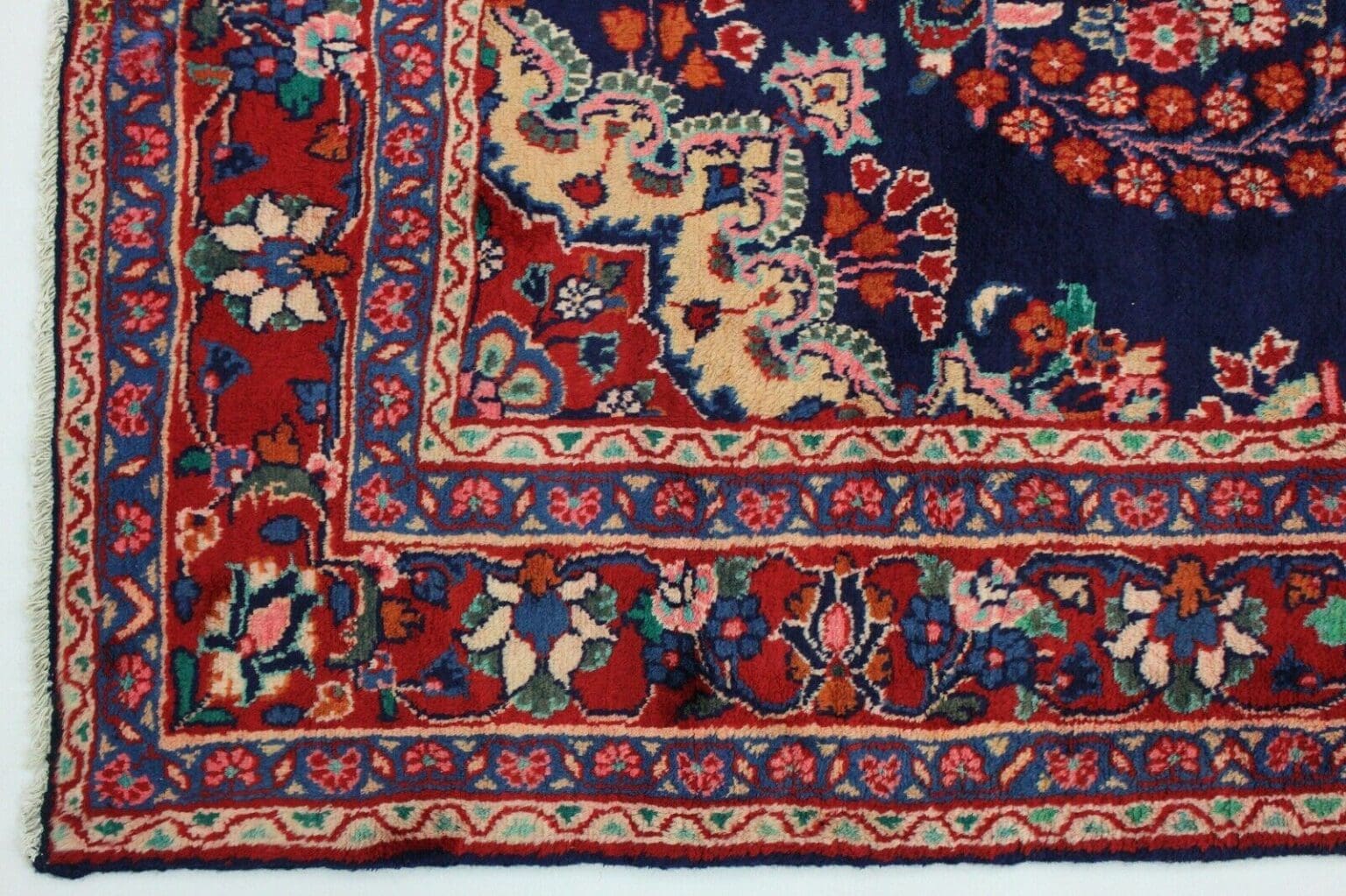
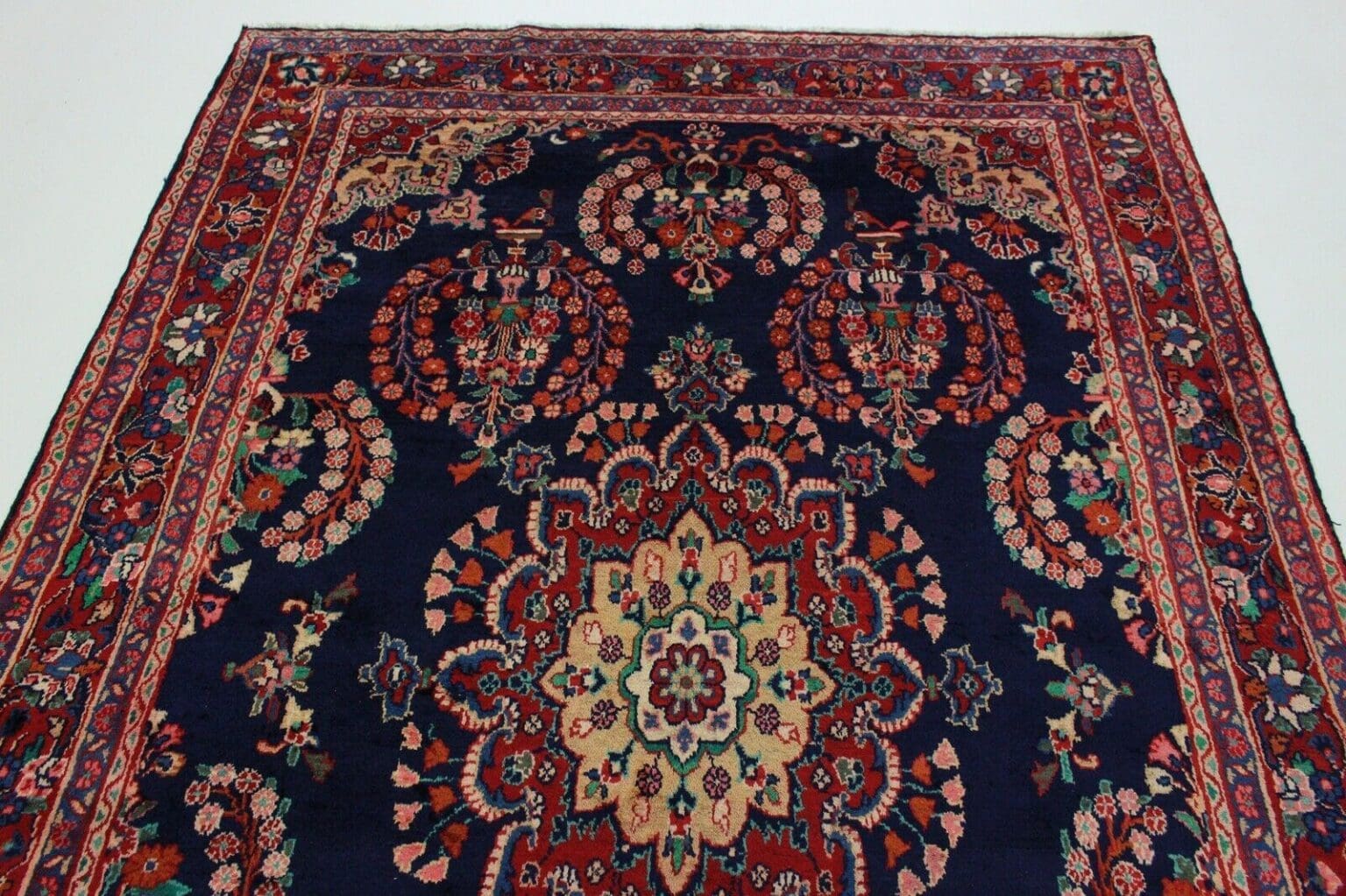
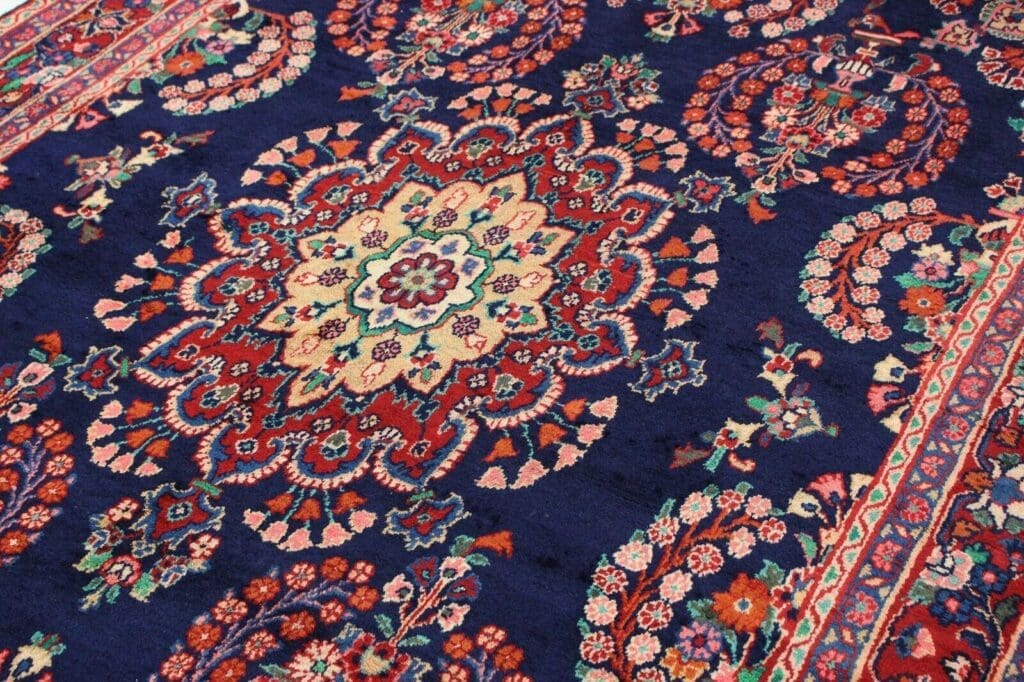
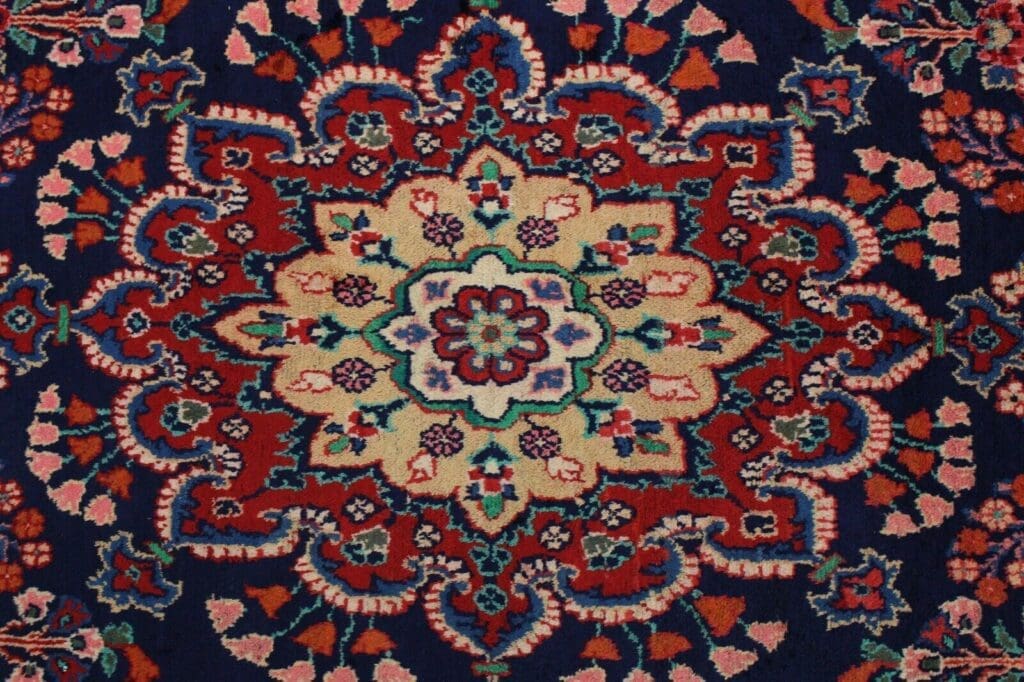
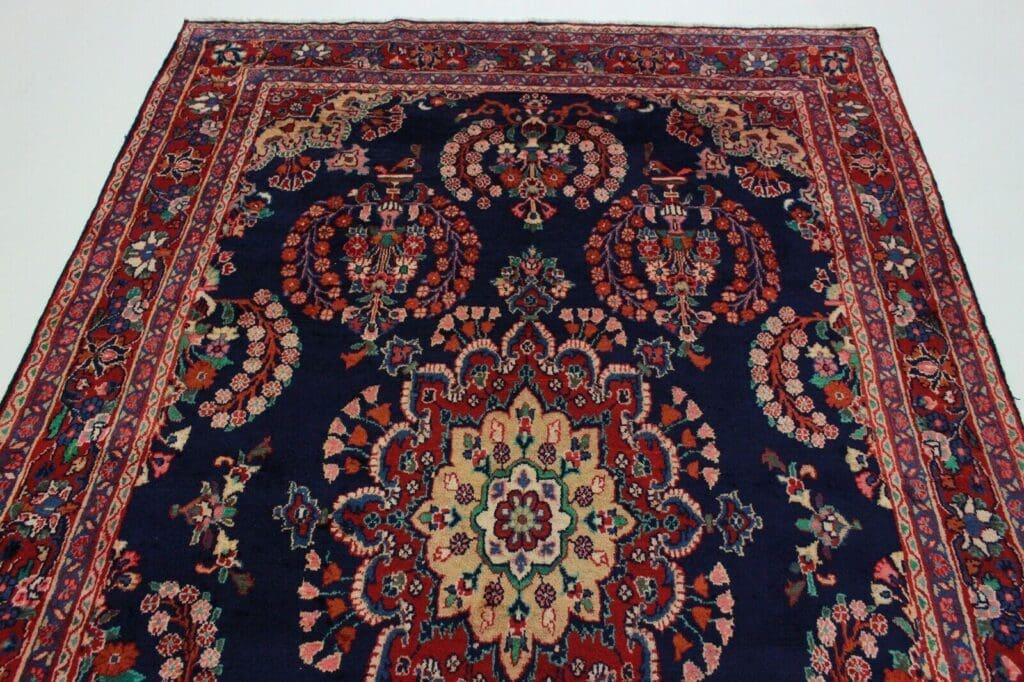
The pattern of this rug is described as Oriental, classic and geometric. Geometric rug designs use lines, angles, repeated shapes and defined areas to organise the field. A composition may establish a central focus, arrange motifs along an axis or create rhythm through repetition. Fine details are produced through many small decisions in colour and shape. As a result, a design can remain clearly geometric while still containing visual variation within its contours.
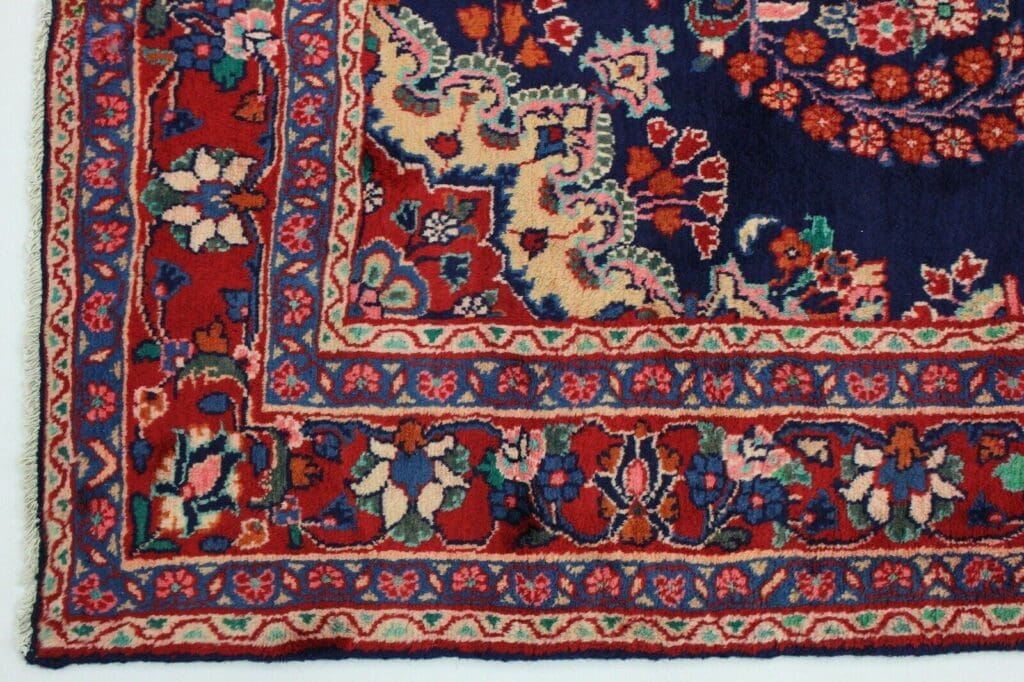
The named colour range includes shades of red, deep blue and gold tones. Red may occupy important areas of a Persian composition and give the field a strong warm presence. Deep blue provides a darker counterpoint and can separate or frame other parts of the drawing. Gold tones introduce lighter accents into the arrangement. These colour references describe the visual language of the design; they do not indicate any additional fibre or material.
Classic geometric patterns often depend on the relationship between a main field and surrounding border zones. The centre may contain repeated forms or a structured arrangement, while the borders contain and frame the central drawing. Even when the shapes appear regular, hand-knotting gives the textile surface a humanly assembled character. Small differences in the handling of lines and colour transitions belong to the making process and support the connection between the pattern and the craft.
Oriental pattern language is not restricted to one period or one workshop. Motifs have been adopted, simplified and recombined in many weaving areas. Persian rugs may bring together geometric signs, stylised vegetation and architectural-looking lines. For this particular rug, however, the description specifically emphasises a classic geometric pattern. Floral or figurative individual motifs are not separately stated and are therefore not assigned to this piece.
A rug’s colour effect depends on more than isolated colour names. It also comes from the balance between light and dark passages, the frequency of recurring tones and the way one outline is separated from another. Deep blue can create a quiet contrast with red areas, while gold tones can act as lighter points within the pattern. Handwork transfers these relationships into the wool pile. The resulting appearance is traditionally Oriental because it combines a structured composition with the stated Persian colour world.
The style is given as traditional Oriental and Persian. This describes the design vocabulary and its cultural setting rather than a temporary interior trend. A classic geometric arrangement can be used in varied rooms because its visual order comes from the composition itself. The source names the living room, dining area and study as possible settings, and also mentions the bedroom and hallway. These possible uses do not alter the rug’s Ekbatan origin or its Persian identity.
Special Features
The specific features named for this rug are its hand-knotted construction, wool pile, stated pile height of 10 mm and classic geometric pattern. Its described colour world includes reds, deep blue and gold tones. Ekbatan is given as the provenance. The condition is listed as “New without label”; the extended description also calls the condition excellent. No signature, age, knot density or restoration is stated for this piece.
Ekbatan rugs should not be reduced to the claim that they always use one single motif. Here, regional classification and pattern classification are separate points. The rug is identified by its Iranian origin and by a traditional Oriental geometric design. It is a hand-knotted wool textile rather than a machine-printed decorative surface. Its appearance is defined by the relationship between the classic drawing, the stated colours and the visible character of hand production.
Care should include regular vacuuming to remove dust and loose particles from the wool pile. Occasional professional cleaning is recommended for more thorough maintenance. Direct sunlight should be avoided because it may cause colours to fade over time. Care for a hand-knotted wool rug should be gentle and should take the structure of the pile into account. Cleaning should not place unnecessary mechanical or moisture-related stress on the textile surface.
The source also presents Ekbatan rugs in relation to Persian cultural history and art. That context explains why regional names and established patterns matter in Oriental rug description. It does not add an individual date or a specific workshop history to this item. The documented special features remain the material, technique, pattern, colour range, provenance and stated condition.
FAQ
What makes the Ekbatan Persian rug distinctive?
Its distinctive character comes from the combination of Iranian Ekbatan provenance, hand-knotted construction, wool pile and a classic geometric pattern. The design is described with reds, deep blue and gold tones and includes fine details. Ekbatan places the rug within a Persian regional tradition, while the geometric drawing identifies its visual language. Its cultural significance lies in the relationship between inherited Iranian craft, textile use and established Oriental pattern design.
How should I care for my Ekbatan rug?
Vacuum the rug regularly so that dust and loose particles do not remain in the wool pile. Occasional professional cleaning is recommended for more extensive care. Keep the rug away from direct sunlight to help prevent the colours from fading. A hand-knotted wool rug should be treated gently during cleaning, without unnecessary force or excessive moisture. Suitable care preserves the textile surface and respects the way the rug was made.
In which rooms can the Ekbatan rug be used?
The rug is described as suitable for a range of living spaces. The living room, dining area, study, bedroom and hallway are named as possible locations. Its traditional Oriental design can serve as a structured textile element in each of these settings. The effect in a particular room depends on the surrounding furnishings and the placement of the furniture. These suggested uses do not change its Ekbatan provenance or its hand-knotted Persian construction.
To provide the best experiences, we use technologies like cookies to store and/or access device information. Consenting to these technologies will allow us to process data such as browsing behavior or unique IDs on this site. Not consenting or withdrawing consent, may adversely affect certain features and functions.
Functional Always active
The technical storage or access is strictly necessary for the legitimate purpose of enabling the use of a specific service explicitly requested by the subscriber or user, or for the sole purpose of carrying out the transmission of a communication over an electronic communications network.
Preferences
The technical storage or access is necessary for the legitimate purpose of storing preferences that are not requested by the subscriber or user.
Statistics
The technical storage or access that is used exclusively for statistical purposes.The technical storage or access that is used exclusively for anonymous statistical purposes. Without a subpoena, voluntary compliance on the part of your Internet Service Provider, or additional records from a third party, information stored or retrieved for this purpose alone cannot usually be used to identify you.
Marketing
The technical storage or access is required to create user profiles to send advertising, or to track the user on a website or across several websites for similar marketing purposes.
 SECURE PAYMENT
 SHIPPING PARTNERS


