This Bidjar Persian rug is hand-knotted. Wool forms the pile, while cotton is used for the warp. These two materials perform different functions within the construction. The warp provides the supporting textile framework, and the individual knots are secured around it to create the visible pile. Wool is traditionally used for the pile of Persian rugs because it combines a resilient fibre structure with a distinct, tactile surface. The material description of this rug therefore separates the wool pile from the cotton foundation.
Hand-knotting is carried out on a prepared loom. The warp threads are held under tension, and knots are placed individually around them. Weft threads are inserted between rows and compacted as the work progresses. In this way, the rug develops gradually as a textile surface rather than being formed in one industrial operation. Once the knotting is complete, the pile is trimmed and the surface is prepared for use. The pile height of this rug is described as normal, referring to the height of its visible wool surface.
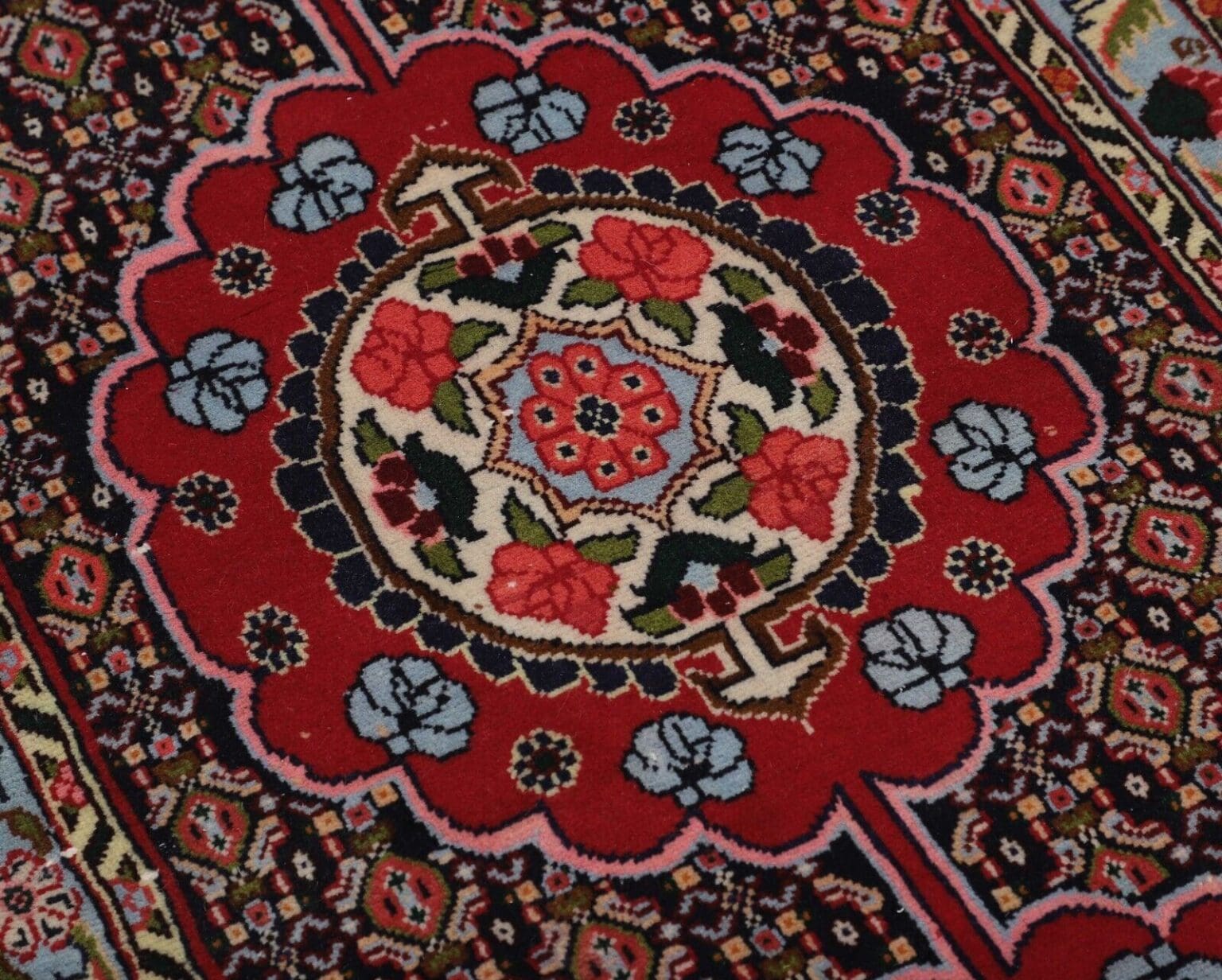
The hand-knotted method allows geometric designs to be built directly into the structure. Lines, angles, repeated compartments and other shapes are created through the placement of differently coloured knots. The clarity of a contour depends on the arrangement and consistency of the knot rows. This is one reason why geometric designs are closely linked to the technical discipline of hand-knotting. The pattern is not simply placed on top of the rug; it is formed as part of the rug itself.
Wool has long been valued in rug making for its practical qualities. It can provide a durable pile and accepts dyes in a way that gives the surface a characteristic textile depth. The fibres also create a particular feel underfoot. Cotton, meanwhile, is commonly used for structural threads in hand-knotted rugs because it can provide a regular foundation. For this individual rug, cotton is specifically identified as the warp material, while wool is specified for the pile.
The rug is described as used and in top quality. This is the condition description of this particular piece and should be distinguished from general statements about the durability of wool or the hand-knotted technique. Its construction is clearly defined by the combination of wool pile, cotton warp and individual knotting. These technical details explain how the rug was made without adding any unrecorded claim about its knot count, age or workshop.
Origin and Tradition
The rug comes from Iran and is identified as a Senneh Bidjar Persian rug. Bidjar is associated with the Kurdish-influenced west of Iran, and the source places this tradition in the Kurdistan region. The term Senneh refers to the regional Kurdish context of related rug traditions. Iranian rugs are not produced according to one single pattern language. Different towns and regions developed their own approaches to structure, colour, ornament and the organisation of the field.
Rug making in Kurdistan is connected with techniques transmitted across generations. This knowledge includes preparing the loom, arranging the warp, forming the knots, inserting the wefts and translating a design into a finished textile. The maker must understand both the visual plan and the practical sequence of the work. A drawn motif has to be converted into rows of knots, with proportions and repetitions maintained as the rug progresses.
Bidjar rugs are traditionally associated with durable construction and established regional designs. Kurdish rug making has its own visual identity, in which geometric and floral forms can appear. Motifs may carry cultural or spiritual associations, although their meaning depends on the particular form, placement and context. A geometric composition can express this regional tradition through ordered fields, repeated shapes and balanced borders without relying on a single universal symbol.
The history of Iranian rugs is also connected with the preparation of colour. Traditional regional weaving refers to dyes derived from plants and minerals. Producing a consistent colour requires knowledge of the fibre, the dye material, the water and the treatment of the yarn. Colour is therefore part of the technical heritage of rug making as well as a visual choice. It links the finished textile with the natural resources and working methods available to the makers.
Kurdistan has a long tradition of textile production in which practical use and decoration exist together. Rugs could be made for domestic interiors and could also occupy a visible role in more formal spaces. Their importance rests on the combination of a useful floor covering, a durable textile structure and a regional design vocabulary. The craft is preserved through repeated methods and through the continued use of forms that are recognisable within the local tradition.
A hand-knotted rug from the Bidjar context consequently belongs to a history in which material knowledge and visual design are inseparable. The Iranian origin defines the geographic setting. The Senneh Bidjar name identifies a Kurdish and west Iranian relationship, while the hand-knotted construction identifies the traditional working method. These facts place the rug within a specific type of Persian rug without assigning it an unrecorded date, workshop, signature or historical provenance.
Design and Pattern
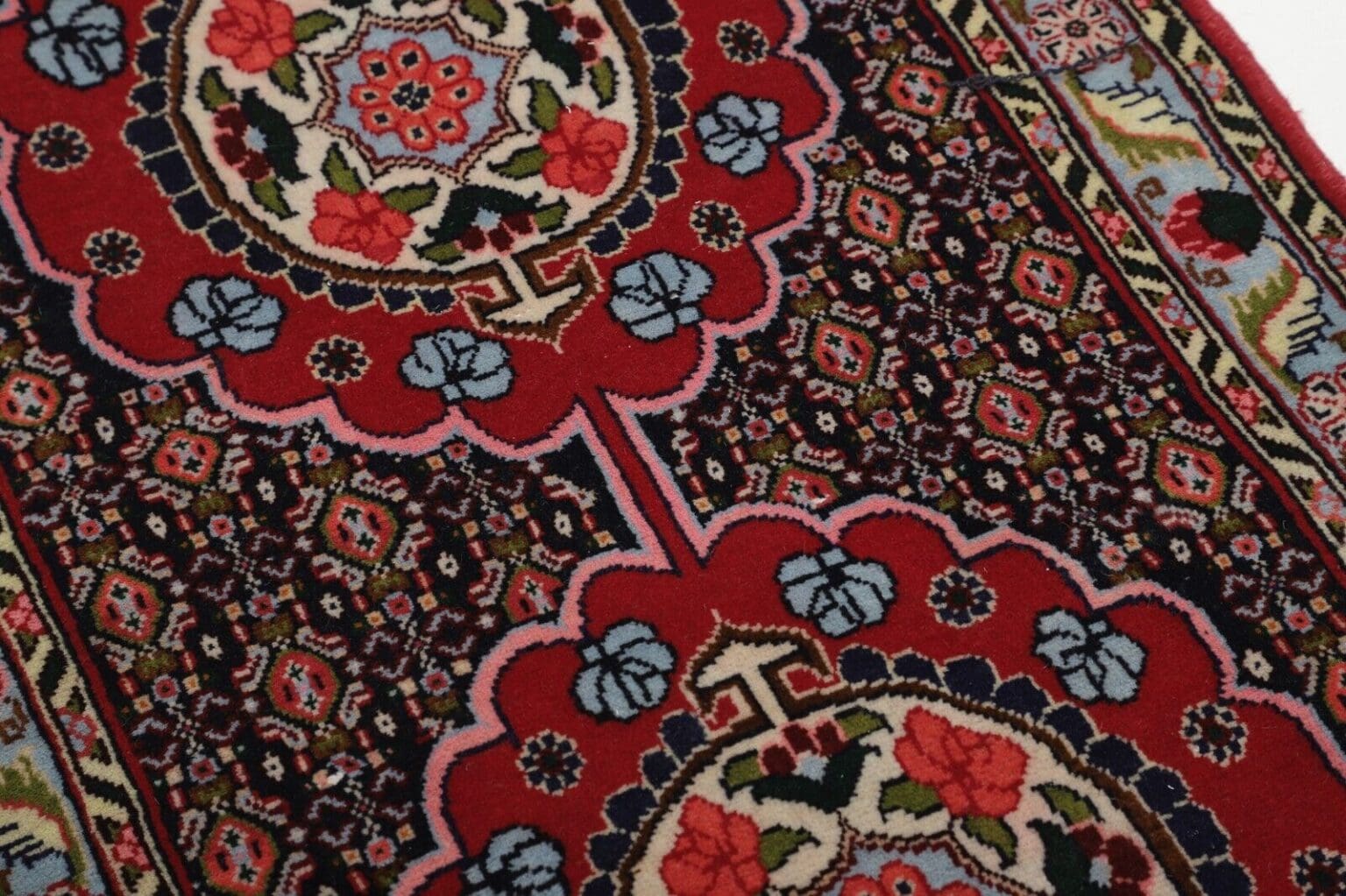
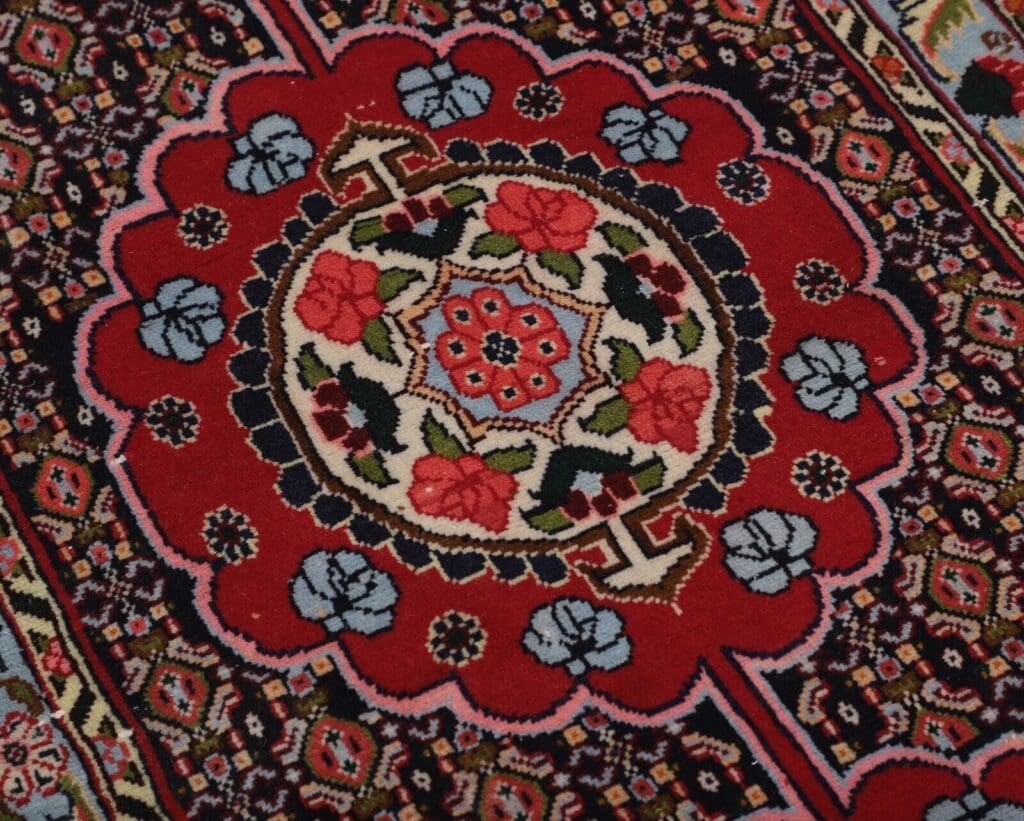
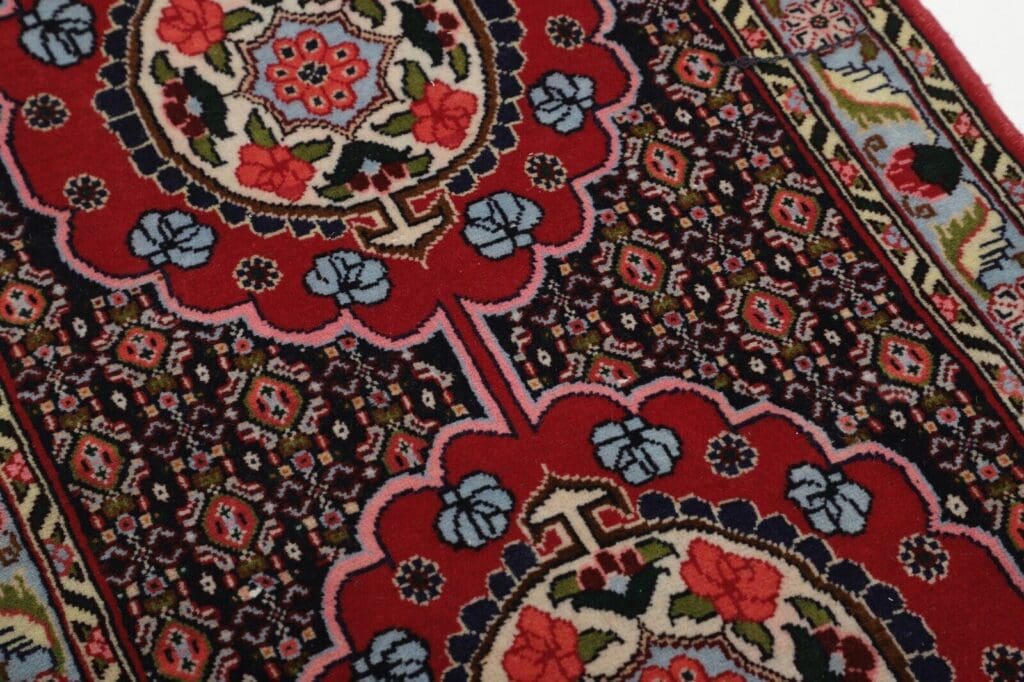
The pattern of this rug is geometric. Geometric rug designs use lines, angles, repeated shapes, compartments and ordered intervals. They may be arranged around a central axis or developed through a repeated sequence. In a hand-knotted rug, each part of the drawing is built into the textile through the placement of individual knots. The finished design is therefore both an image and a record of the construction process.
The Senneh Bidjar is described as combining traditional and modern elements. Traditional aspects may be expressed through regional ornaments, structured borders or a balanced division between field and surrounding bands. A more modern appearance can result when familiar forms are simplified, spaced more openly or placed in a current interior setting. This combination describes the design background of the type; it does not require any additional attribution to a particular historical pattern or named motif.
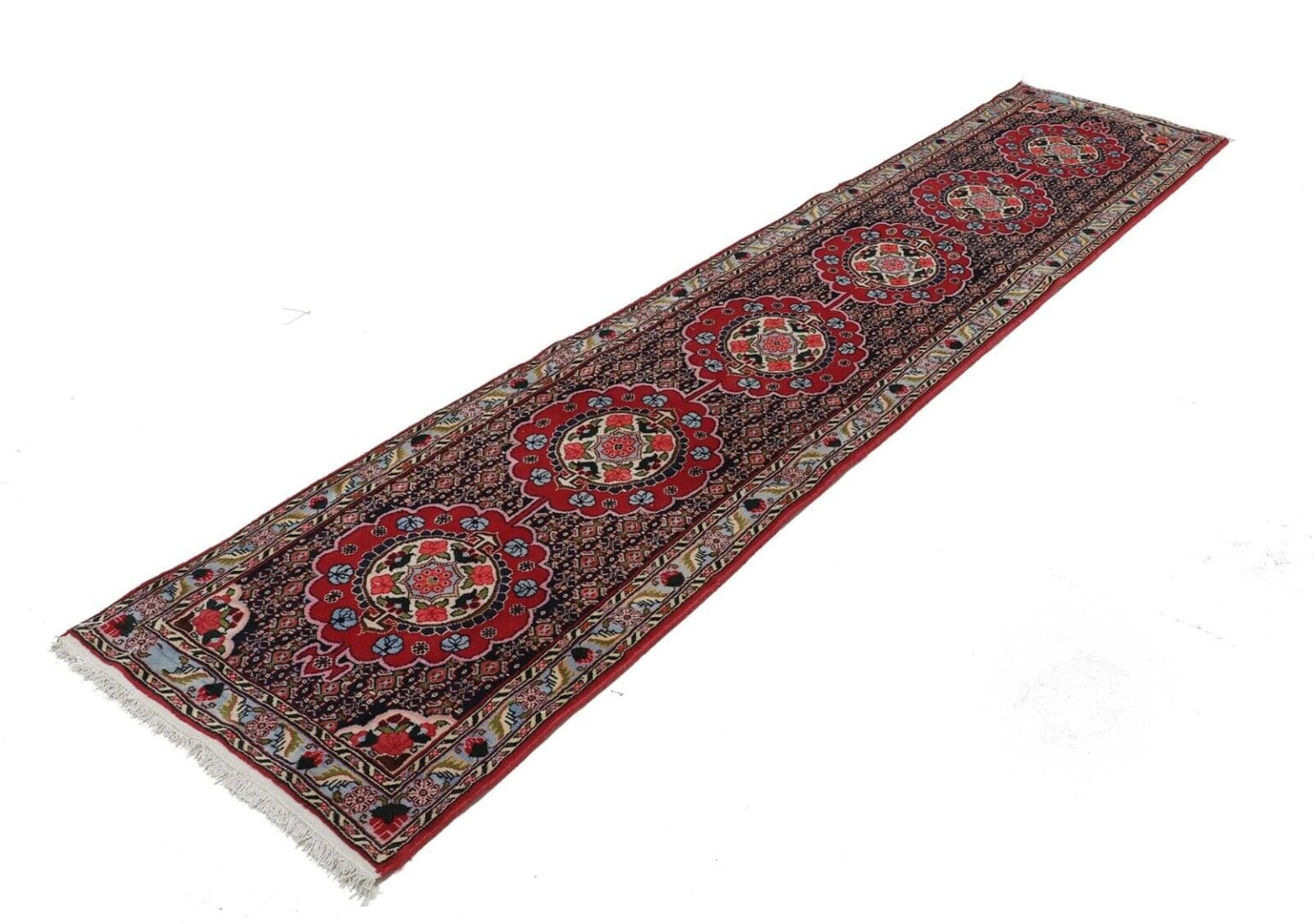
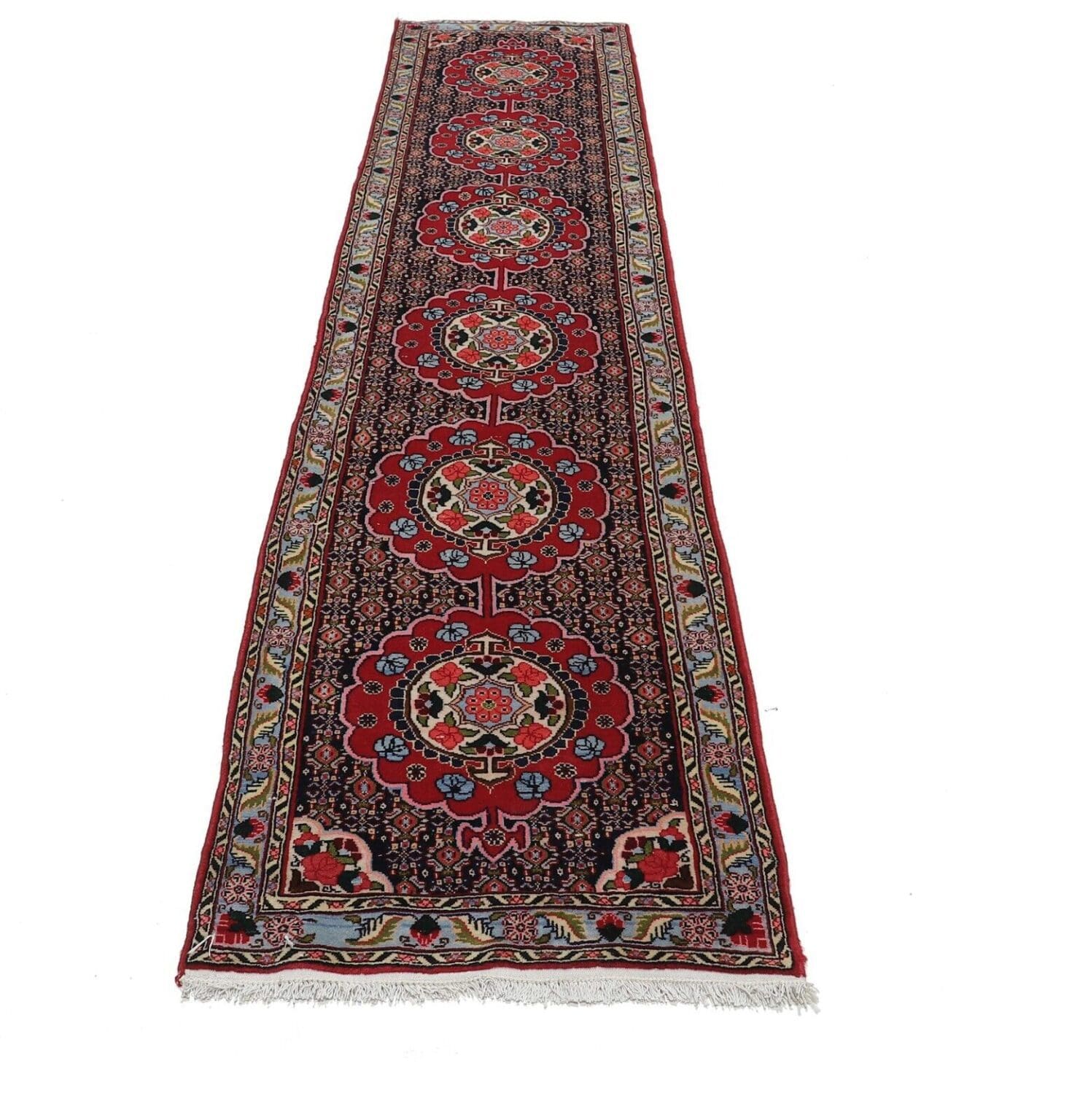
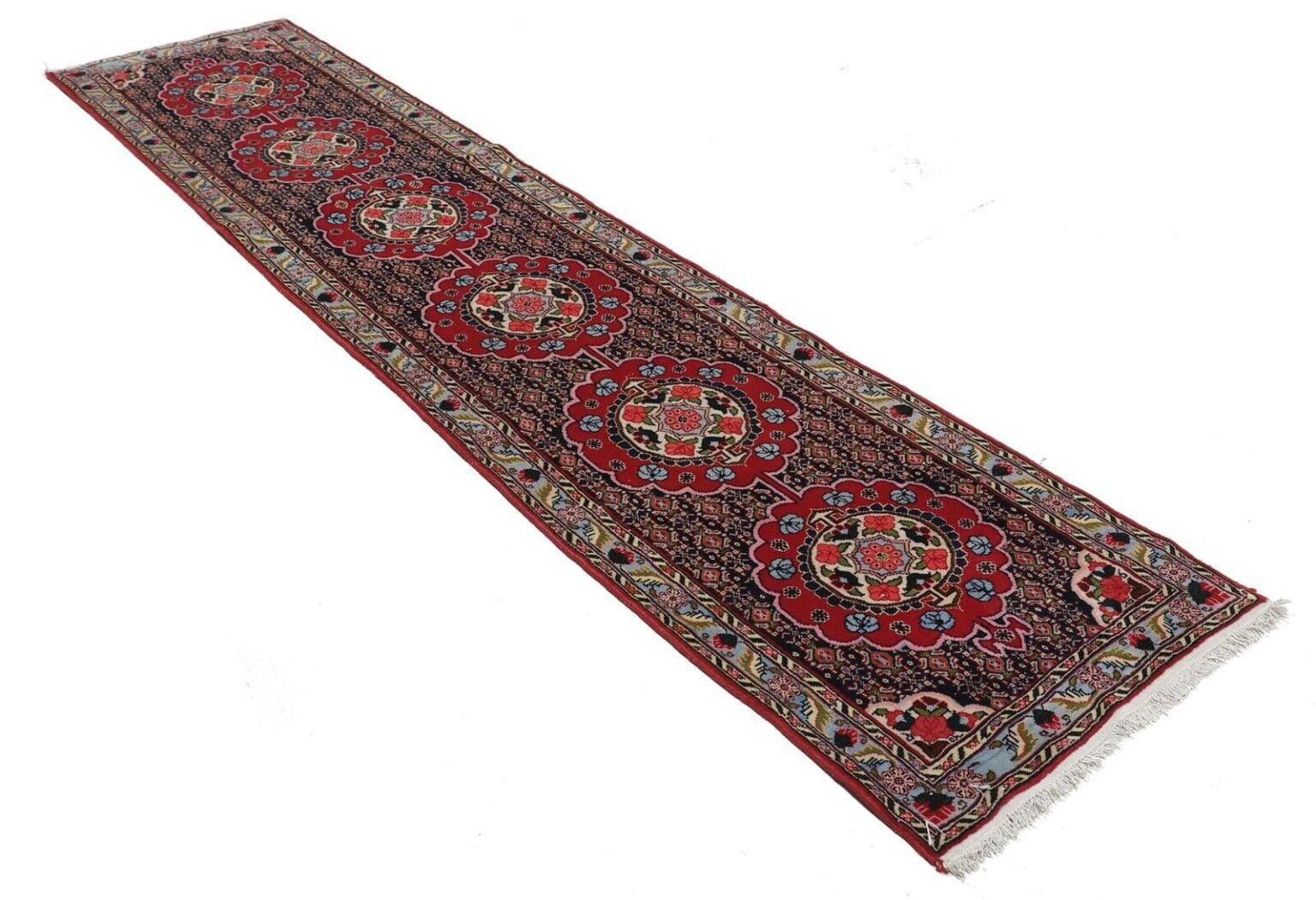
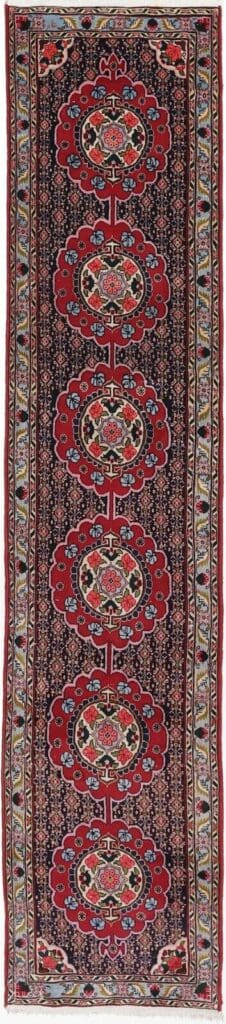
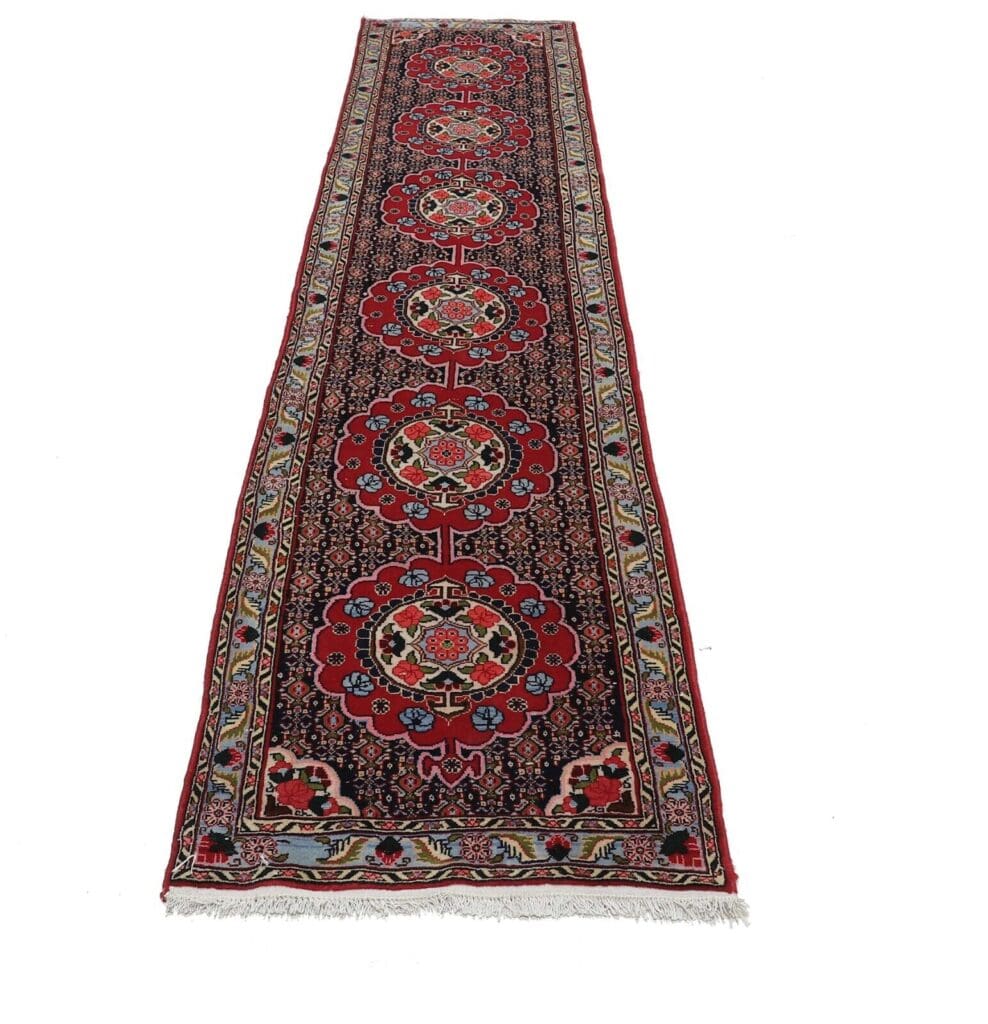
Red tones dominate the colour impression of this rug. Soft blue and gold nuances provide additional colour areas. Red establishes the main visual character, while blue and gold create contrast and variation within the composition. In Persian rug design, colour can distinguish a field from its border, separate adjacent shapes and emphasise repeated accents. The effect depends on how the colours are distributed and how they interact with the geometry of the design.
Symmetry is a familiar organising principle in many Persian rug compositions. A central axis can allow forms to correspond from one side to the other. Repeated motifs can also create balance through a regular or semi-regular sequence. Rhythm comes from the return of shapes, spaces and colour accents. These devices make a pattern coherent and allow the eye to follow the structure across the surface.
West Iranian and Kurdish rug traditions include both strongly geometric and more stylised designs. A geometric rug can be highly detailed even when its basic forms are clear. Small stepped lines, hooked shapes, diamonds, angular leaves or repeated panels can be combined into a complex overall arrangement. The particular selection and placement of those elements varies from one design to another. General regional knowledge explains the design language, but does not identify an individual motif that is not named for this piece.
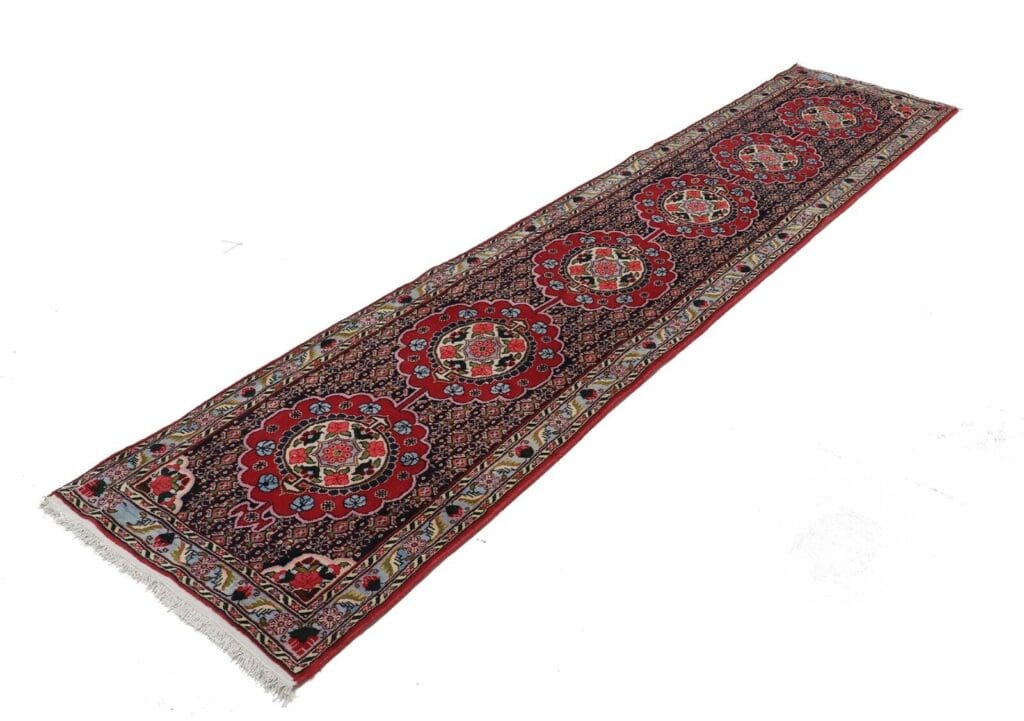
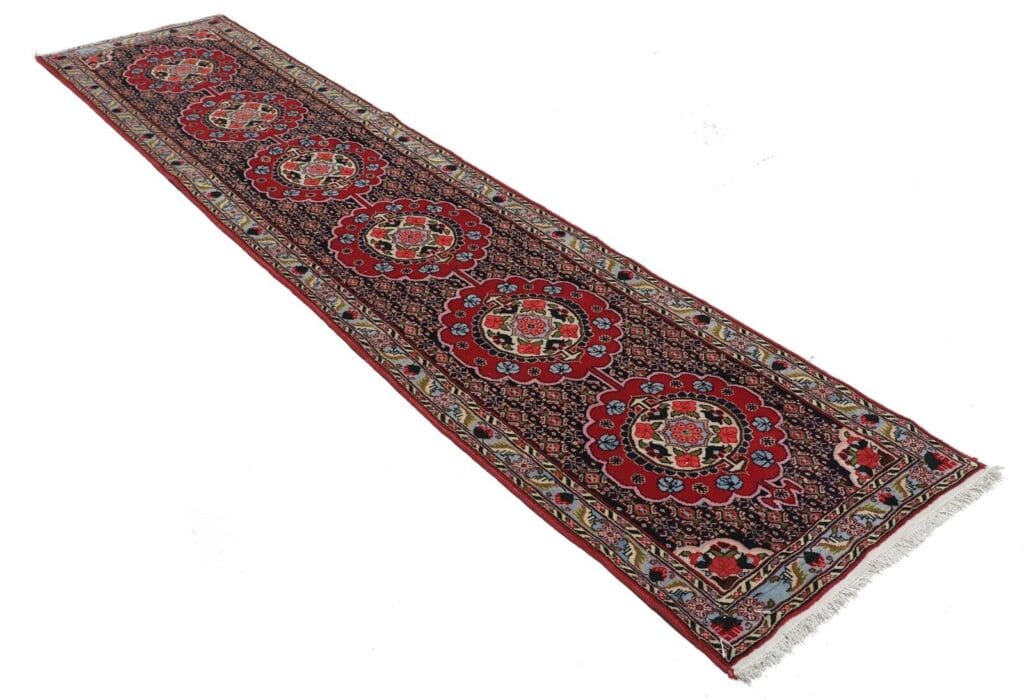
The runner format gives a long rug a naturally directional field. A border may frame the sides, while a central sequence carries the main visual rhythm along the length. Repetition helps connect the separate sections into one composition. Because the rug is hand-knotted, the pattern is integrated with the pile and warp rather than printed onto a finished surface. Manual work can produce small variations in the execution, which are part of the character of a handmade textile.
The design of this individual rug can therefore be described through the facts provided: it has a geometric pattern, red as the dominant colour family, and soft blue and gold nuances, and it is identified with the Senneh Bidjar tradition. These details indicate an ordered regional Persian design. They do not establish an unstated medallion, border type, floral symbol, knot density or historical source. The visible pattern remains grounded in the specific description of this one rug.
Special Features
This rug is made as a runner, giving it an elongated format suited to living areas and passageways. It is described as versatile for both classic and modern interior styles. Its hand-knotted construction, wool pile and stated robust quality support its use as a floor covering rather than restricting it to decorative display.
Additional features stated for this piece are that it is allergy-friendly, has an anti-slip property and is suitable for underfloor heating. Its condition is described as used and in top quality. These details belong to this individual rug and complement its Iranian origin, Bidjar designation, material composition and geometric pattern.
FAQ
How should I care for the Persian rug?
For regular care, vacuum the rug without using a brush attachment. This removes loose dirt while avoiding unnecessary mechanical action on the wool pile. Fresh spills should be dabbed carefully with a clean, damp cloth. Rubbing can work moisture or dirt further into the fibres and may place additional strain on the affected area. Professional rug cleaning may be considered every few years to refresh the colours and help preserve the fibre structure. Any cleaning method should take the hand-knotted construction into account, including the wool pile and cotton warp. Strong treatments should not be applied without checking that they are suitable for the materials.
Can I use the rug in a living room?
Yes. The hand-knotted Senneh Bidjar is suitable for living spaces and can be used as a runner in an elongated area. Its geometric pattern and combination of red, blue and gold tones can be placed with both classic and contemporary furnishings. The stated robust quality and hand craftsmanship also support use in a room where the floor covering is used regularly. This piece is additionally described as anti-slip and suitable for underfloor heating. The exact position should be selected according to the room layout, the available floor area and the way the space is used.
How can I distinguish an original Persian rug from a fake?
Hand-knotted construction is an important feature to examine. Looking at the back of a rug can reveal the knot structure and show how clearly the pattern appears through the foundation. The materials are also relevant: this rug has a wool pile and a cotton warp. Natural dyes and textile materials are traditionally associated with Persian rugs, although no single visual sign should be treated as proof on its own. If origin, construction or authenticity cannot be assessed securely, advice from an experienced specialist can be useful. For this piece, Iran and Bidjar identify the stated origin context and should be considered together with the visible handwork.
To provide the best experiences, we use technologies like cookies to store and/or access device information. Consenting to these technologies will allow us to process data such as browsing behavior or unique IDs on this site. Not consenting or withdrawing consent, may adversely affect certain features and functions.
Functional Always active
The technical storage or access is strictly necessary for the legitimate purpose of enabling the use of a specific service explicitly requested by the subscriber or user, or for the sole purpose of carrying out the transmission of a communication over an electronic communications network.
Preferences
The technical storage or access is necessary for the legitimate purpose of storing preferences that are not requested by the subscriber or user.
Statistics
The technical storage or access that is used exclusively for statistical purposes.The technical storage or access that is used exclusively for anonymous statistical purposes. Without a subpoena, voluntary compliance on the part of your Internet Service Provider, or additional records from a third party, information stored or retrieved for this purpose alone cannot usually be used to identify you.
Marketing
The technical storage or access is required to create user profiles to send advertising, or to track the user on a website or across several websites for similar marketing purposes.

 SECURE PAYMENT
 SHIPPING PARTNERS


