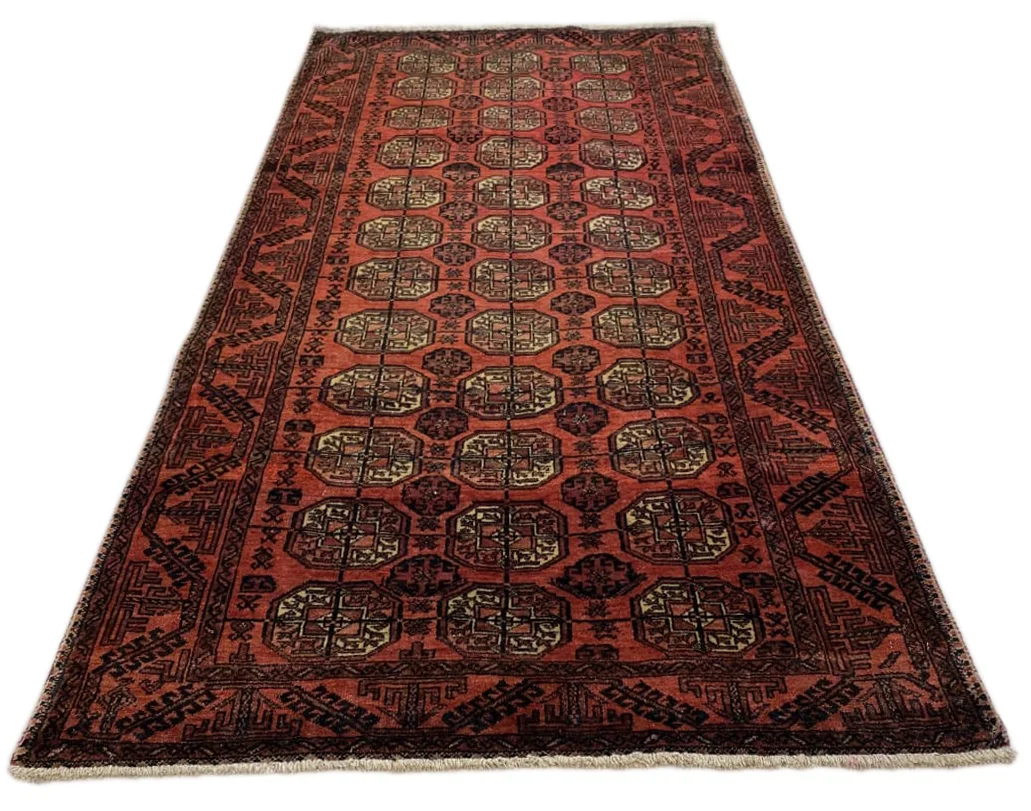
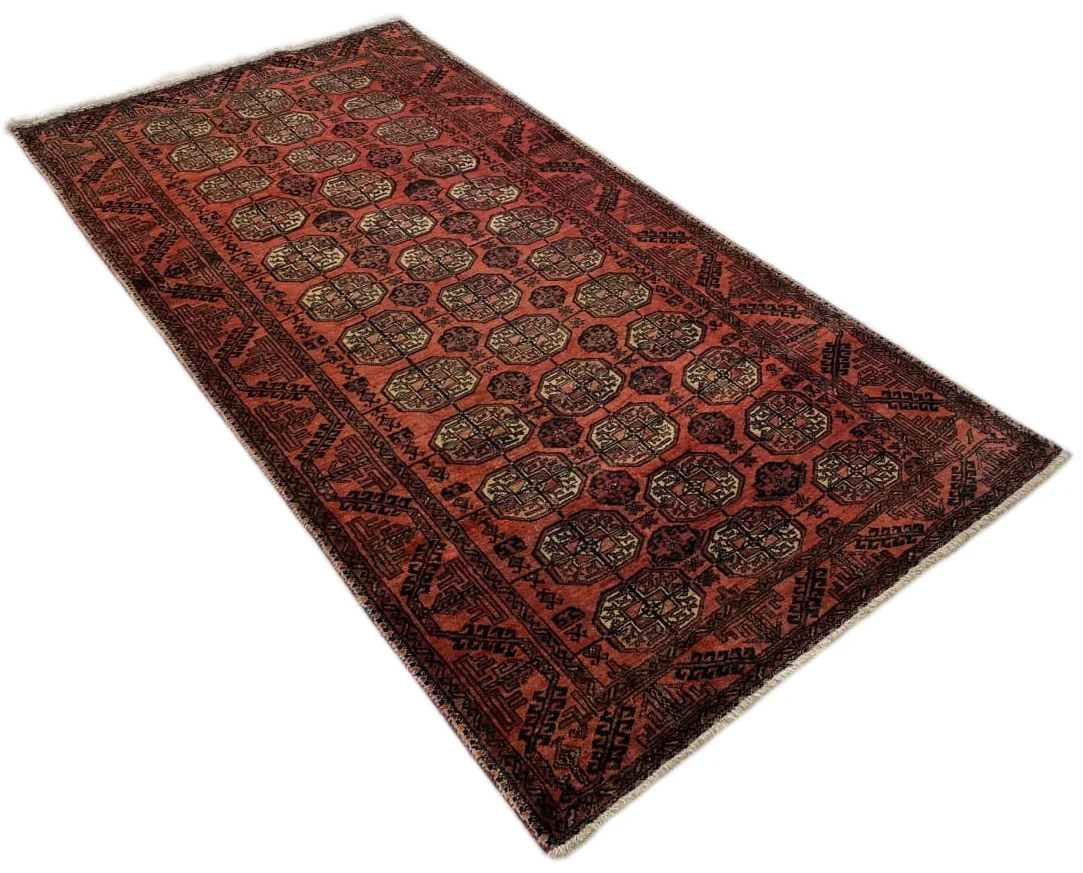
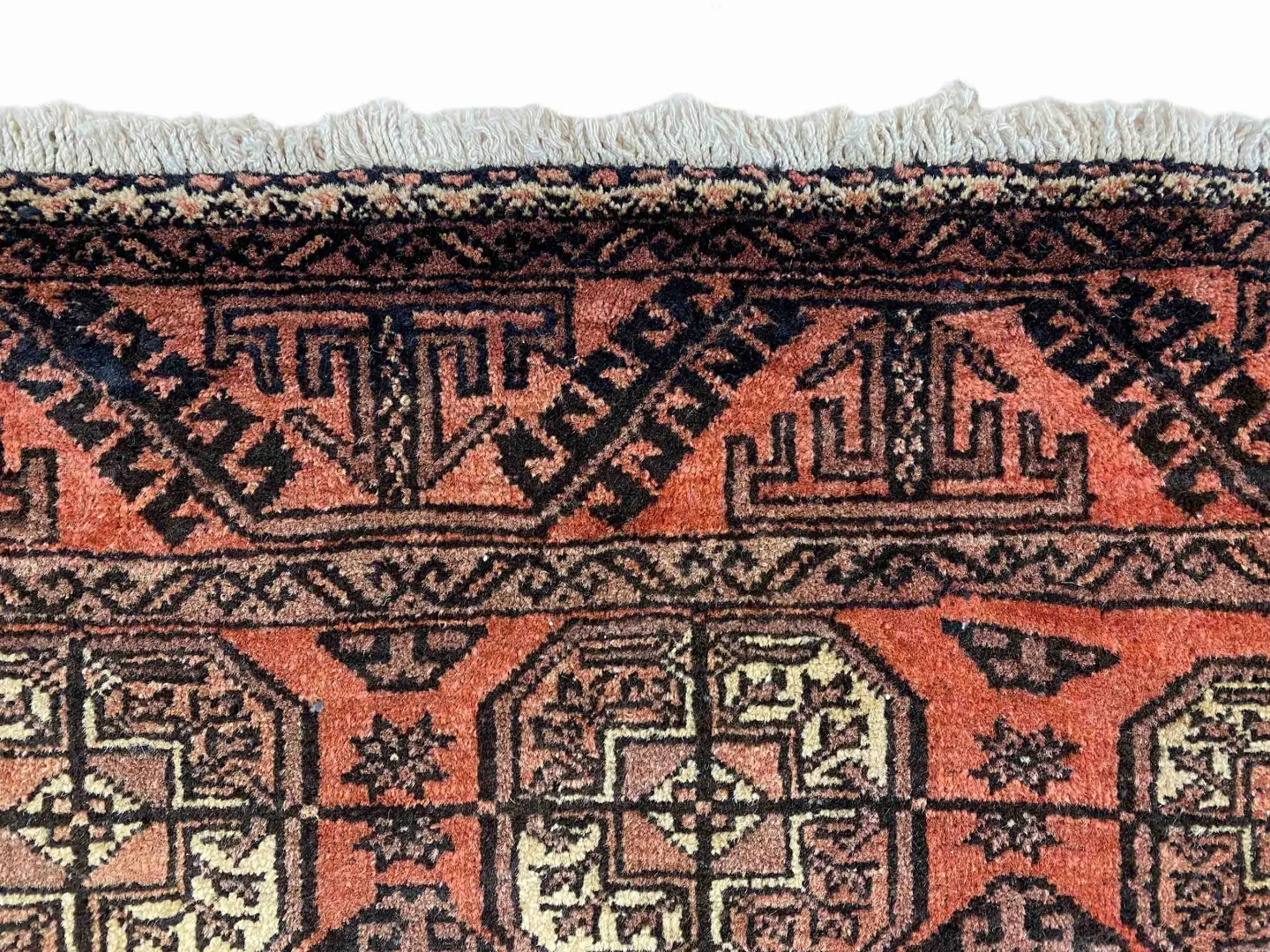
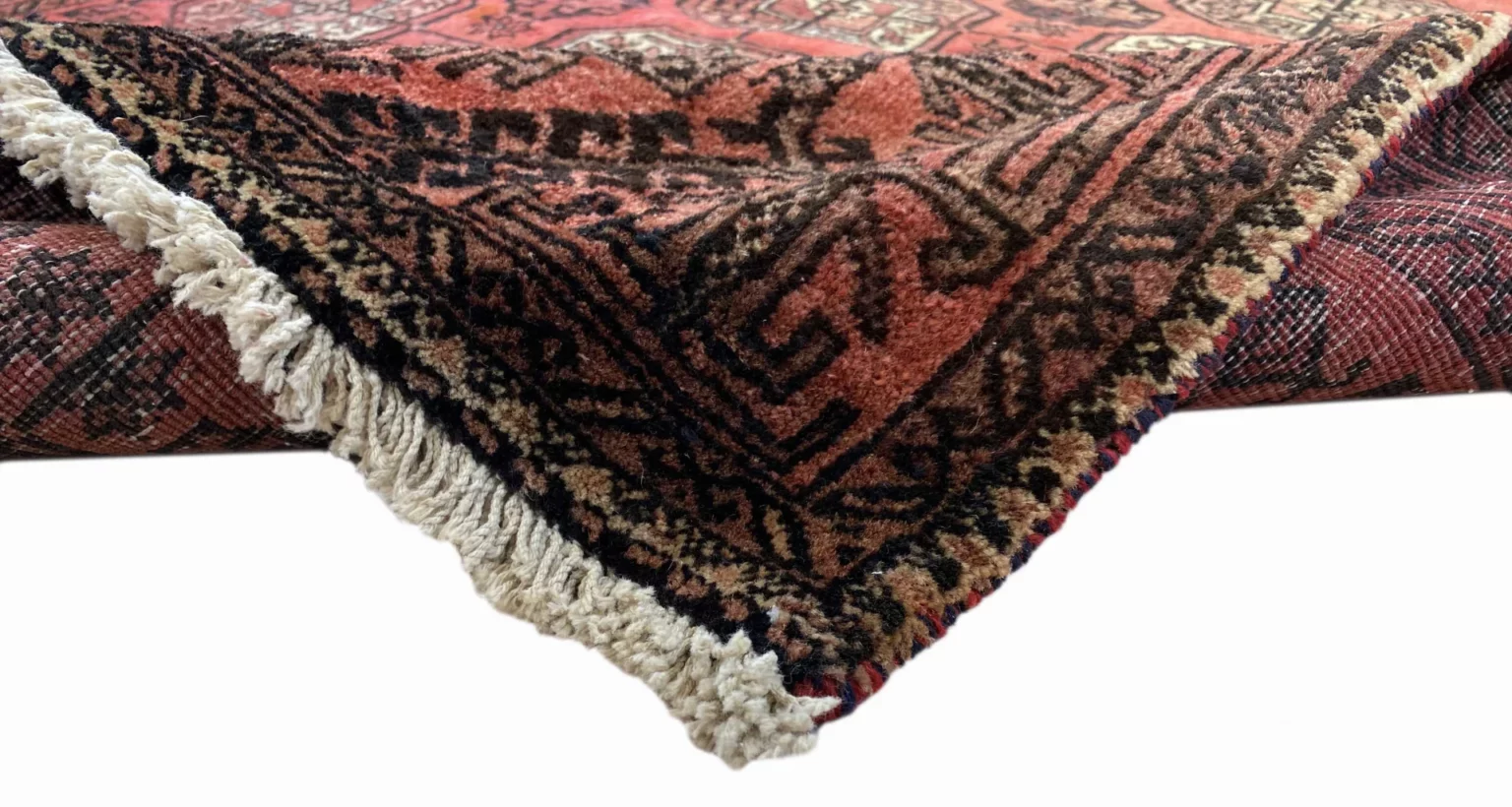
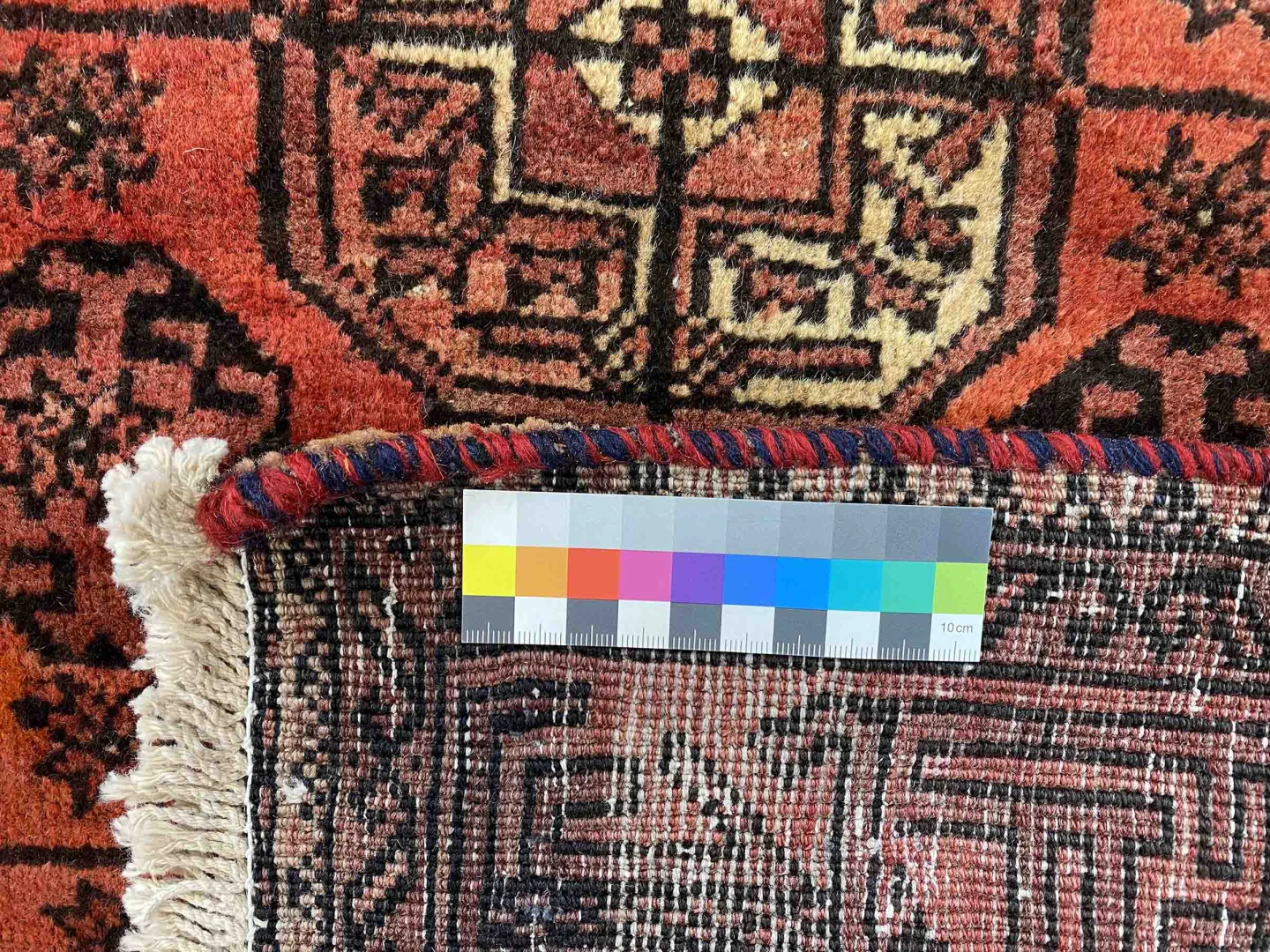
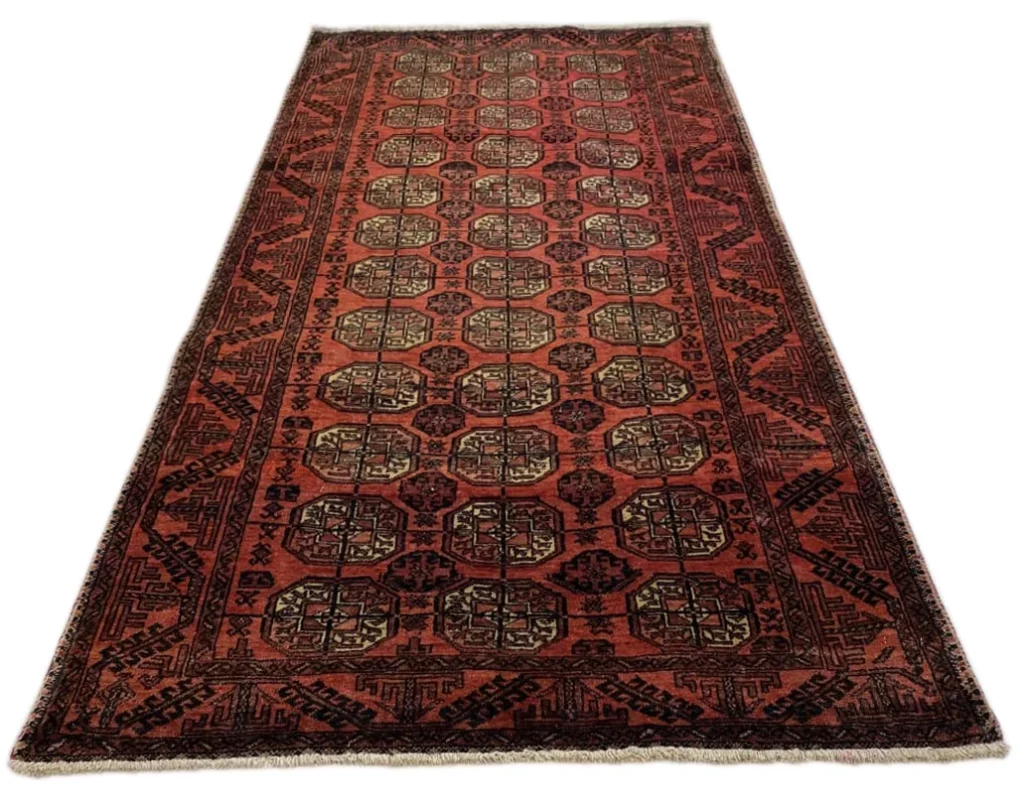
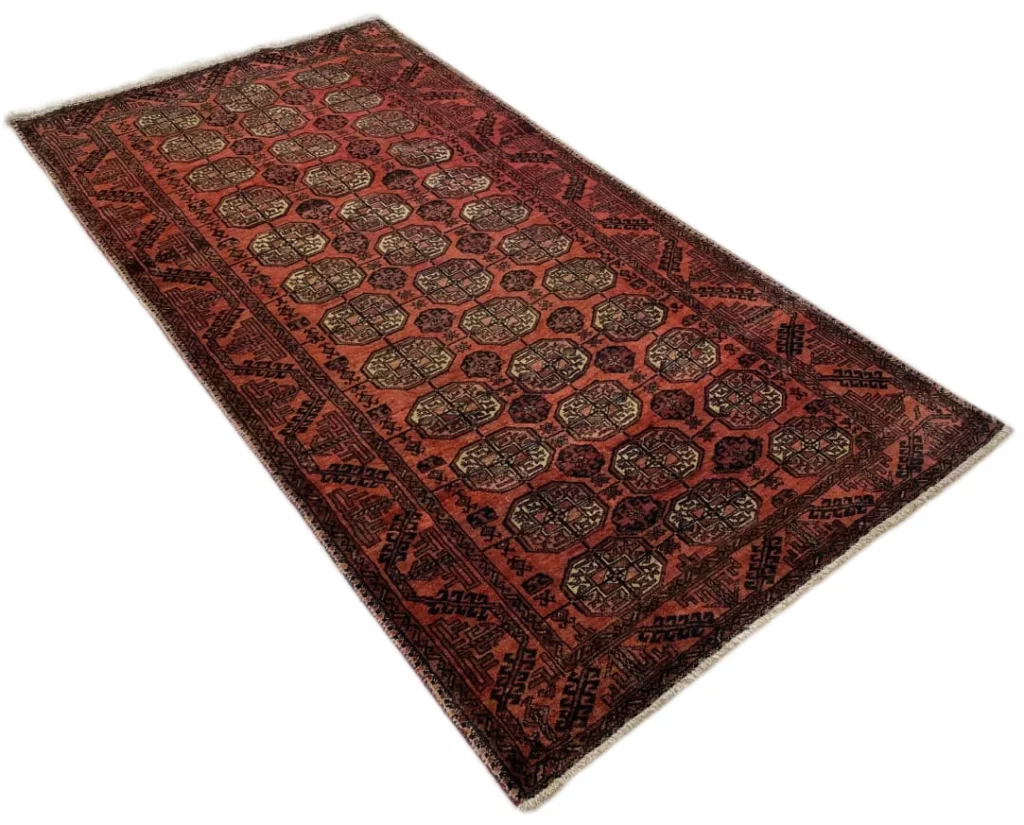
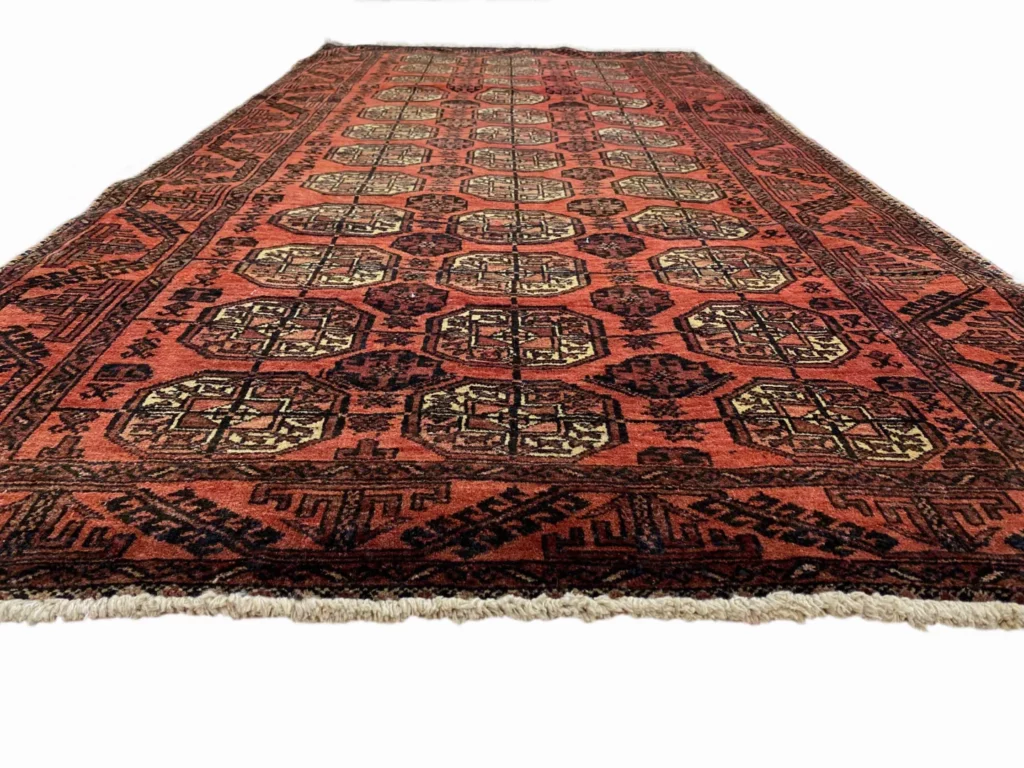
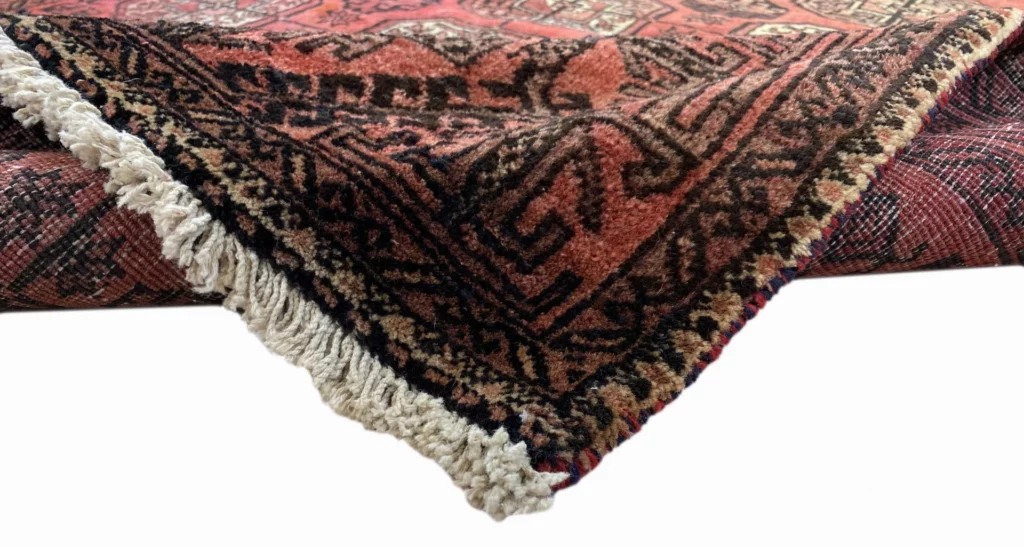
This Belutsch Persian rug is hand-knotted and has a pile made from natural wool. Hand-knotting combines knowledge of the material with steady, painstaking manual work. Each knot becomes part of the visible pile, so the finished surface is the result of many individual operations rather than an automated production process. The method gives the rug its distinctly crafted textile character.
Natural wool is widely used in rug making because it can be formed into a resilient pile while retaining a soft, comfortable feel. In a wool rug, the fibre, the knots and the direction of the pile work together to shape the surface. The natural qualities of the material are therefore not incidental; they are central to how the rug is made and experienced as a textile.
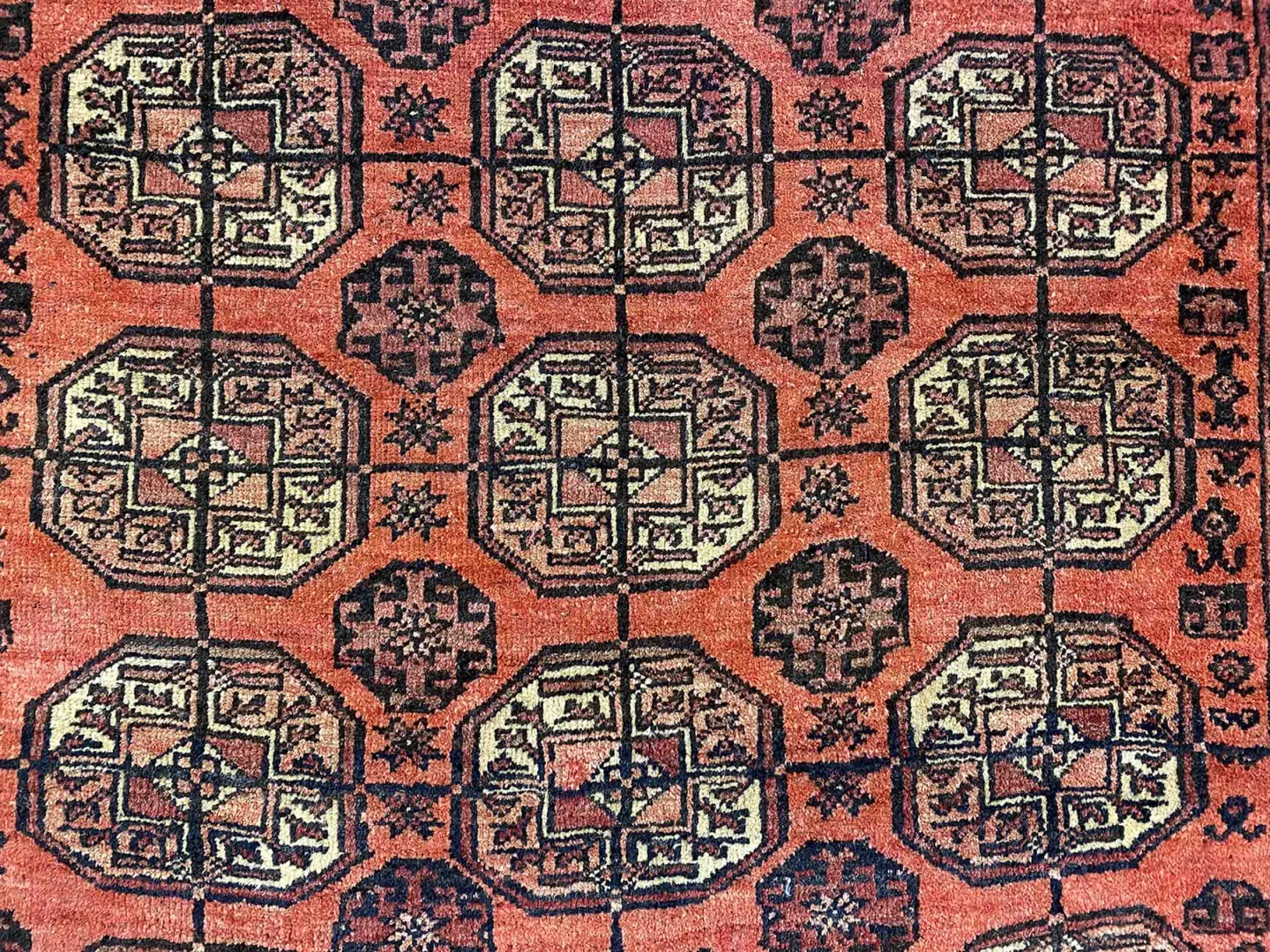
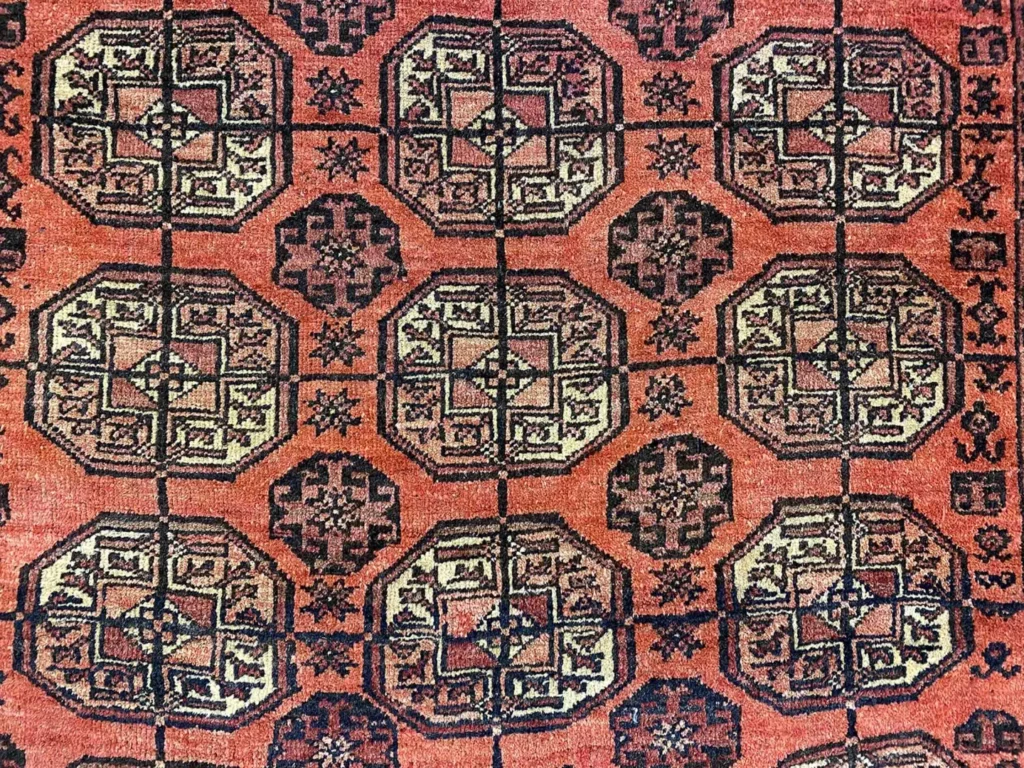
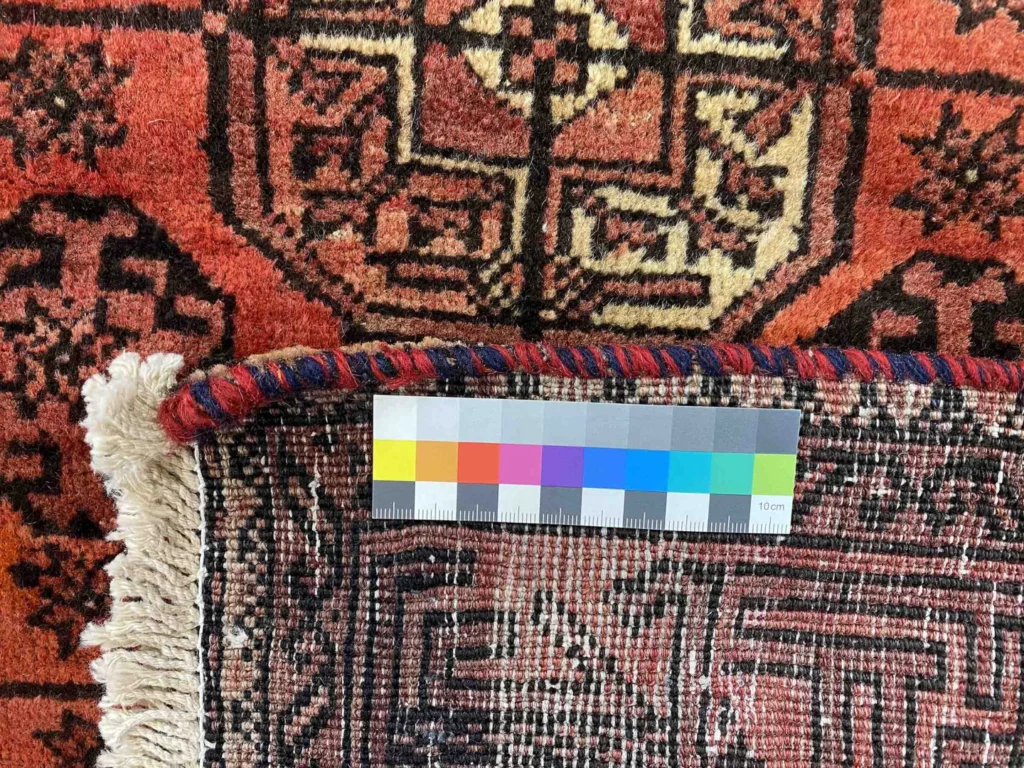
The stated knot density is between 120.000 and 250.000 knots per square metre. Knot density records the number of individual knots worked into a defined area. It relates to the fineness of the construction and to the degree of detail that can be expressed in a design. Hand-knotting requires sustained concentration, since every knot contributes to the structure and appearance of the completed field.
The rug is in good condition. Its hand-knotted construction and natural wool pile form a connected handmade surface in which the pile, knots and foundation work together. Regular, careful maintenance helps preserve wool and colour. For cleaning, a product intended for hand-knotted wool rugs is appropriate rather than a harsh general-purpose treatment.
Origin and Tradition
The name Belutsch refers to a distinct rug tradition shaped by regional life, inherited symbols and the practical knowledge of generations of weavers. Belutsch rugs are commonly associated with broad cultural and settlement areas extending across Afghanistan, Persia and Pakistan. These three origins are given for this rug. The designation therefore points to a tradition that cannot be reduced to one modern national border.
In the weaving regions of these areas, rug making has long been passed on as skilled textile work. Knowledge of wool, colour, knotting, structure and pattern was preserved in families and workshops. A hand-knotted rug does not come into being in one operation. Materials are prepared, the foundation is established, and the design grows as individual knots are added row by row. This process explains the important place of handmade rugs within Oriental textile history.
The Persian rug tradition is one major reference point in the history of Oriental rugs. Iranian centres such as Isfahan, Tabriz and Kashan are known for their distinct design languages and developed knotting cultures. Afghanistan and Pakistan, meanwhile, have their own regional expressions, in which geometric order, strong contrasts and recurring ornament can play an important role. Historical weaving areas did not always correspond to political boundaries, and related techniques could travel between neighbouring communities.
For Belutsch rugs, regional tradition is closely connected with the handmade process. Designs are not merely surface decoration; they form part of an inherited visual vocabulary. Repeated motifs may divide the field, create visual direction or build small repeating sequences. Handwork also allows individual variations, because the weaver is not following a perfectly identical mechanical cycle. Such variations belong to the nature of a hand-knotted textile.
The origin of an Oriental rug is consequently understood through several elements: the tradition named for it, its materials, its construction and its design. Here, the Belutsch designation, the listed connection with Afghanistan, Persia and Pakistan, the natural wool and the hand-knotting belong together. These details place the rug within the wider history of handmade rugs from the Oriental world without assigning every Belutsch piece to one workshop or one fixed pattern.
Design and Pattern
The inherited design vocabulary of Persian and Oriental rugs includes floral motifs, geometric forms and complex medallions. These elements may appear separately or be combined within one composition. Floral forms bring an organic rhythm to a field, while straight lines, repeated shapes and measured ornament create structure. A medallion can act as a central focus and may be supported by borders or smaller surrounding motifs.
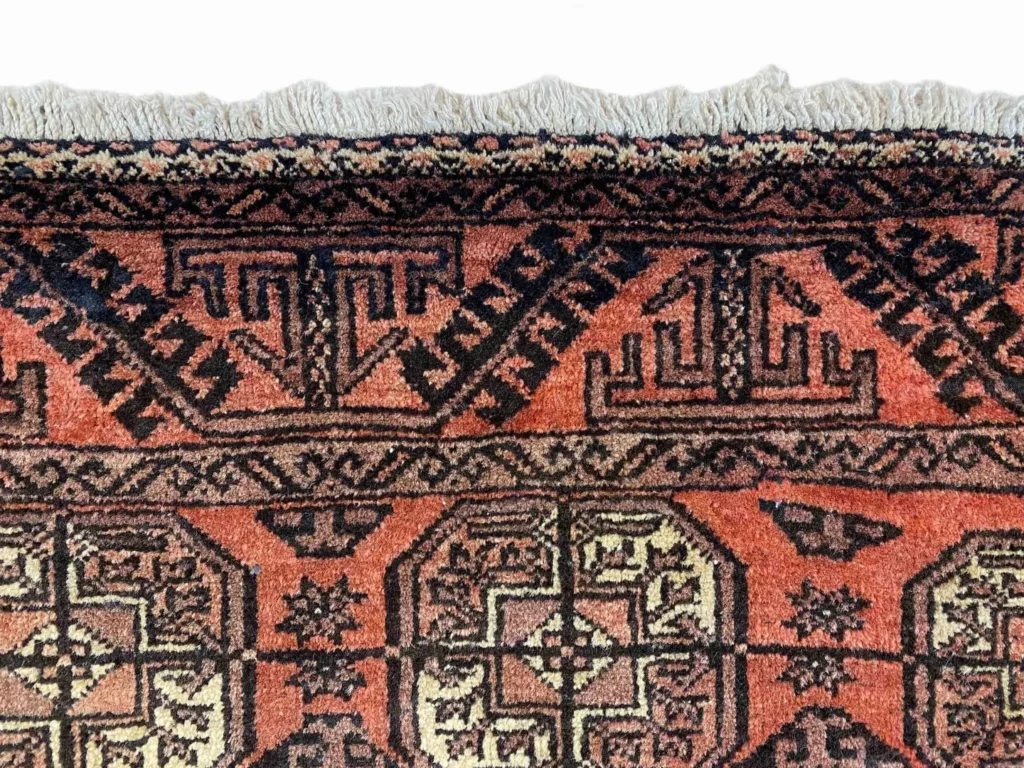
In Belutsch rugs, geometric language is particularly important when considering the tradition. Straight contours, diamonds, hooked forms and stepped ornaments can be arranged in many different ways. The result may alternate between clearly defined compartments and repeated sections of pattern. Perfect symmetry is not required: hand-knotted designs can retain a personal textile irregularity because they develop through manual work rather than through an identical printed or machine-made sequence.
Ornaments perform several functions in a rug. They organise the field, guide the eye from the centre toward the edges and establish a relationship between the main field and its borders. Repetition creates visual continuity, while contrast can make individual motifs more legible. Across Oriental rug traditions, patterns have often been inherited over generations while also being adapted to local preferences, available materials and the working methods of particular weavers.
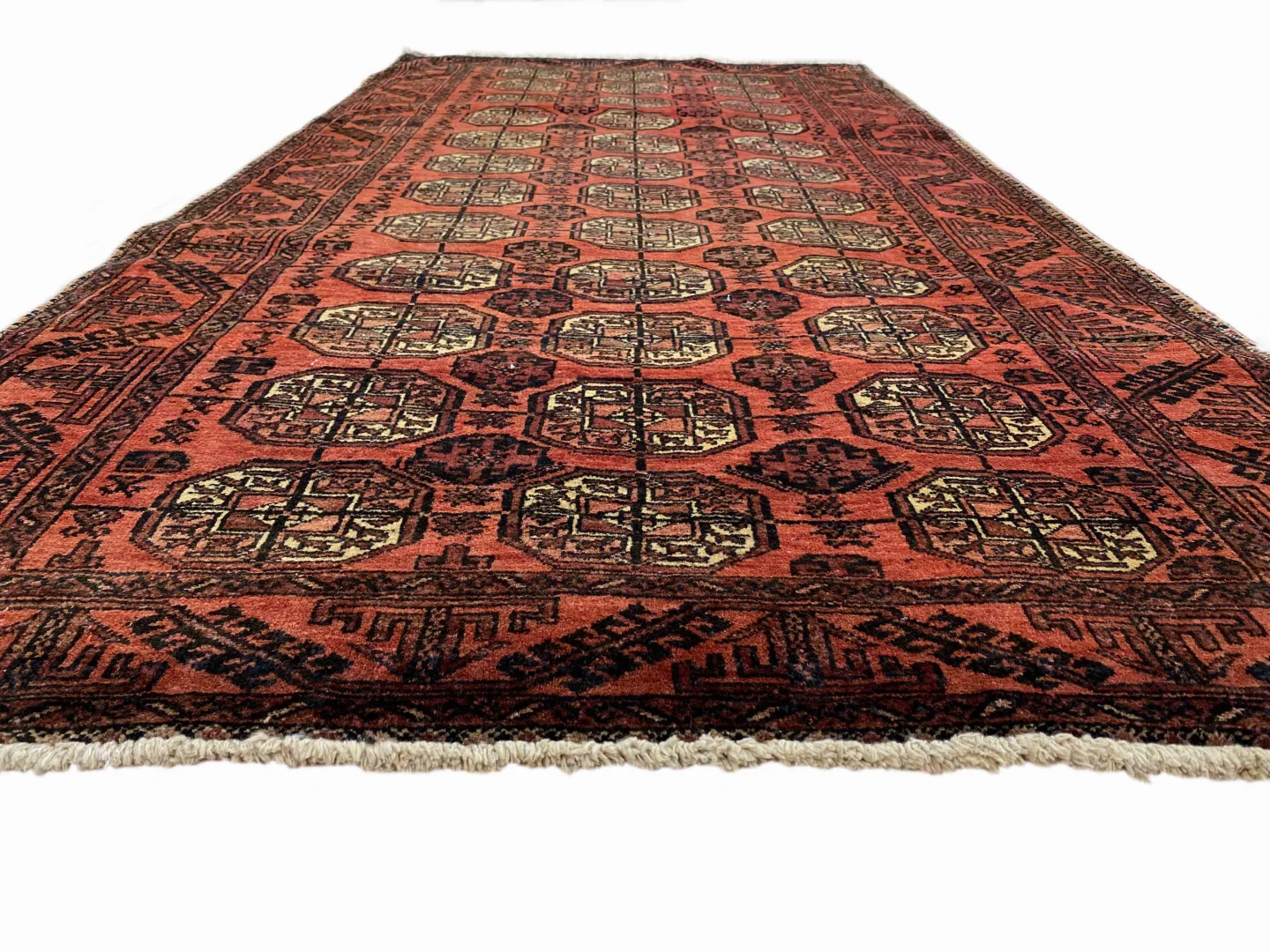
Colour and pattern are closely linked to the way a rug’s surface is seen. With natural wool, light is affected not only by the colour itself but also by the direction of the pile and the density of the knots. Areas can therefore appear to change subtly as the viewing angle changes. This textile variation is part of a handmade surface and differs from a flat, printed image or a uniformly manufactured floor covering.
The term Persian rug covers a wide range of designs. It includes the fine floral compositions associated with well-known Iranian centres as well as more strongly geometric systems from other Oriental regions. Afghanistan and the Caucasus are also known for rugs with complex geometric patterns. A motif alone does not establish origin: a design can be adopted in several regions and rendered according to each area’s own visual language and weaving practice.
For this Belutsch rug, the hand-knotted construction and the regional design tradition provide the relevant framework. The available description does not name one specific pattern such as a particular medallion, floral scheme or formal repeat. The rug is therefore presented through its Belutsch and Persian rug context, with the broader possibilities of floral, geometric and complex Oriental ornament kept distinct from an invented pattern attribution.
Special Features
This one-off piece combines a Belutsch designation with hand-knotted construction and a natural wool pile. Its knot density of 120.000 to 250.000 knots per square metre describes the technical density of the surface. The condition is recorded as good. Every hand-knotted rug is unique because its appearance develops through individual working steps, the weaver’s hand and the particular behaviour of the textile structure.
Careful handling is useful for preserving a wool rug. Regular vacuuming removes loose dirt without placing unnecessary strain on the pile. Occasional cleaning should use a specialist rug cleaner suitable for natural wool and hand-knotted construction. Prolonged direct sunlight should be avoided so that the colours remain as even as possible over time.
FAQ
How should I care for my Belutsch Persian rug?
Regular vacuuming is suitable for everyday care when carried out with an appropriate setting that removes loose dirt without putting unnecessary stress on the wool pile. Occasional cleaning can be done with a specialist rug cleaner. Because this is a hand-knotted rug made with natural wool, cleaning should be gentle and appropriate for the material. Harsh products and vigorous rubbing should be avoided, as they can affect the pile and the colour. Direct sunlight may cause colours to fade over time, so a position away from continuous, intense sun helps preserve an even appearance. For heavier soiling or any uncertainty about the correct method, professional rug cleaning is the suitable choice.
What makes a Persian rug distinctive?
Its distinctive character comes from the combination of handwork, natural wool and inherited design traditions. The knots are made individually, so the surface is not the result of an industrially reproduced pattern. The stated knot density also indicates the fineness of the construction. The Belutsch designation connects this rug with a regional Oriental tradition that can include geometric ornaments, repeated structures and more complex pattern arrangements. Since a hand-knotted rug is built through many separate operations, each piece develops its own textile expression. The good condition recorded for this one-off rug is an additional feature of the particular example rather than a general characteristic of every Belutsch rug.
How does a Persian rug differ from other rugs?
A hand-knotted Persian rug differs from a machine-made rug primarily through its method of construction. The knots are formed individually instead of being produced by an automated process. Natural wool creates the pile and gives the surface its textile handle. The stated density of 120.000 to 250.000 knots per square metre reflects the density of the handmade construction. The rug also belongs to the long tradition of Oriental rug making, where regional patterns, floral forms, geometric structures and medallions have been preserved and developed over time. The Belutsch reference points to a particular regional visual tradition. Together, material, construction and pattern heritage give the rug a handcrafted character distinct from an industrial floor covering.
To provide the best experiences, we use technologies like cookies to store and/or access device information. Consenting to these technologies will allow us to process data such as browsing behavior or unique IDs on this site. Not consenting or withdrawing consent, may adversely affect certain features and functions.
Functional Always active
The technical storage or access is strictly necessary for the legitimate purpose of enabling the use of a specific service explicitly requested by the subscriber or user, or for the sole purpose of carrying out the transmission of a communication over an electronic communications network.
Preferences
The technical storage or access is necessary for the legitimate purpose of storing preferences that are not requested by the subscriber or user.
Statistics
The technical storage or access that is used exclusively for statistical purposes.The technical storage or access that is used exclusively for anonymous statistical purposes. Without a subpoena, voluntary compliance on the part of your Internet Service Provider, or additional records from a third party, information stored or retrieved for this purpose alone cannot usually be used to identify you.
Marketing
The technical storage or access is required to create user profiles to send advertising, or to track the user on a website or across several websites for similar marketing purposes.

 SECURE PAYMENT
 SHIPPING PARTNERS


