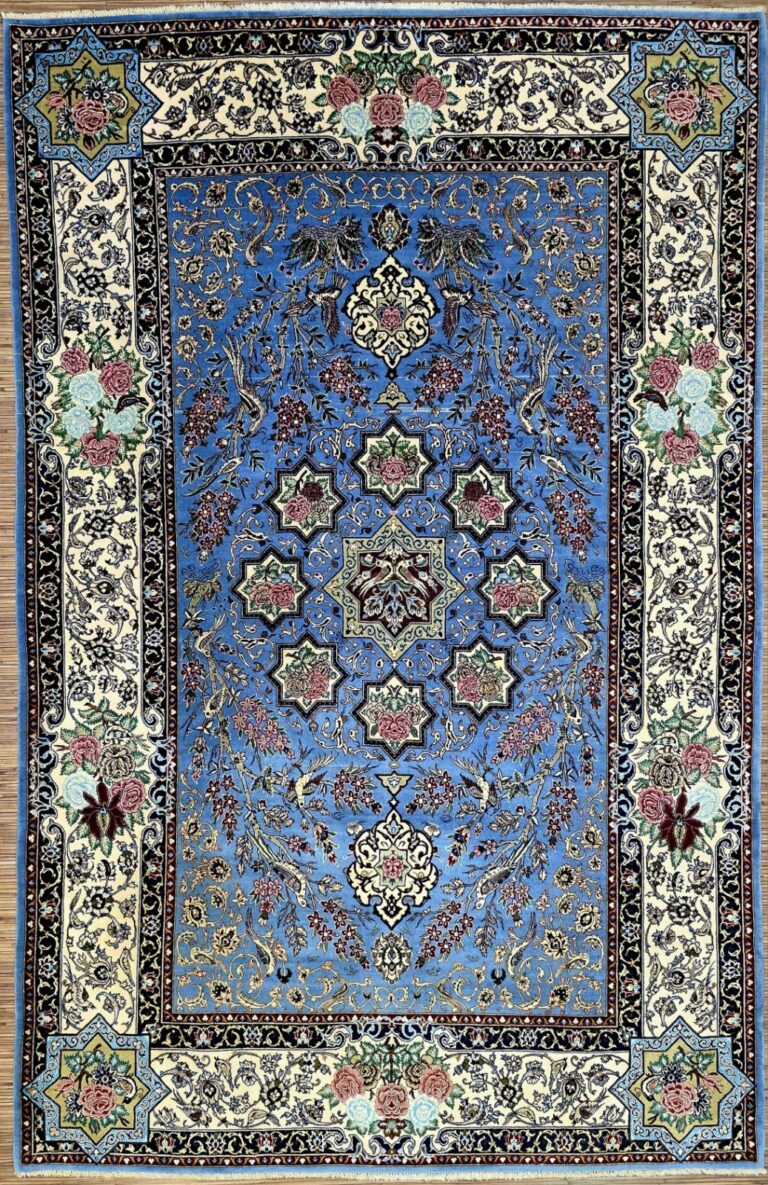
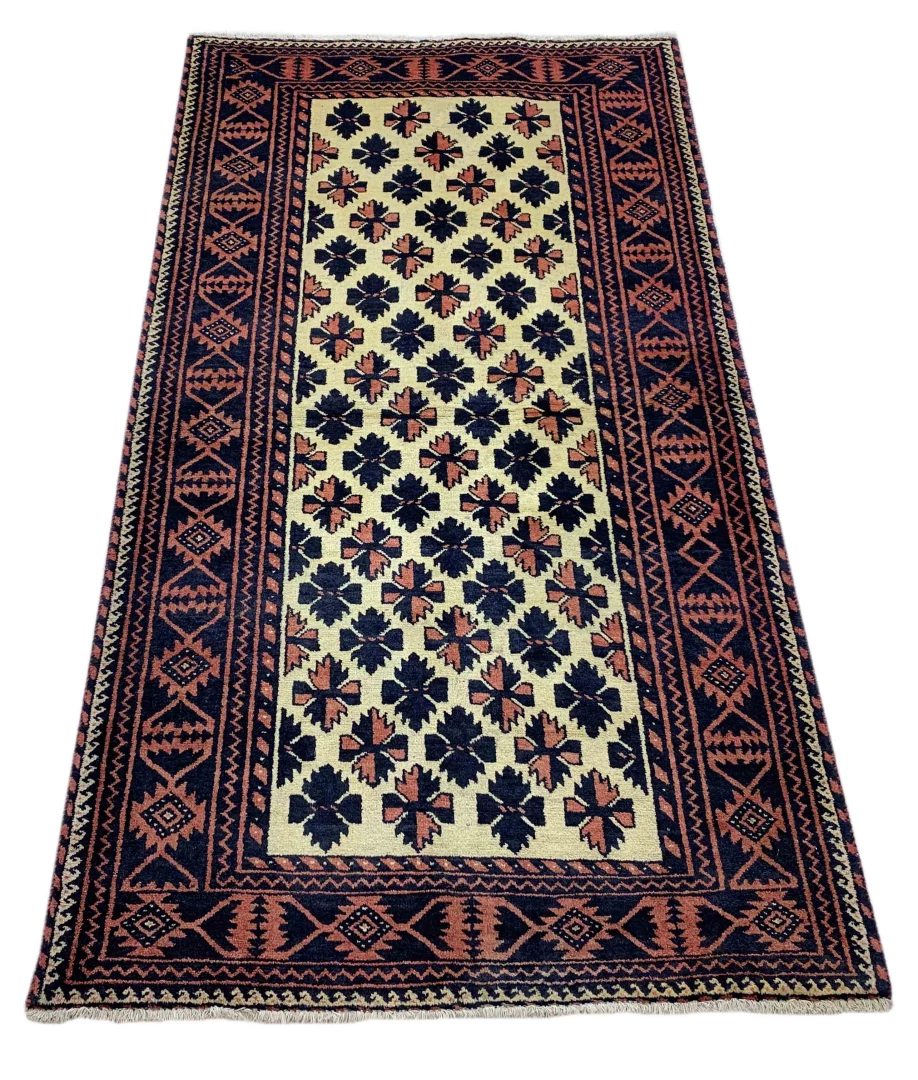
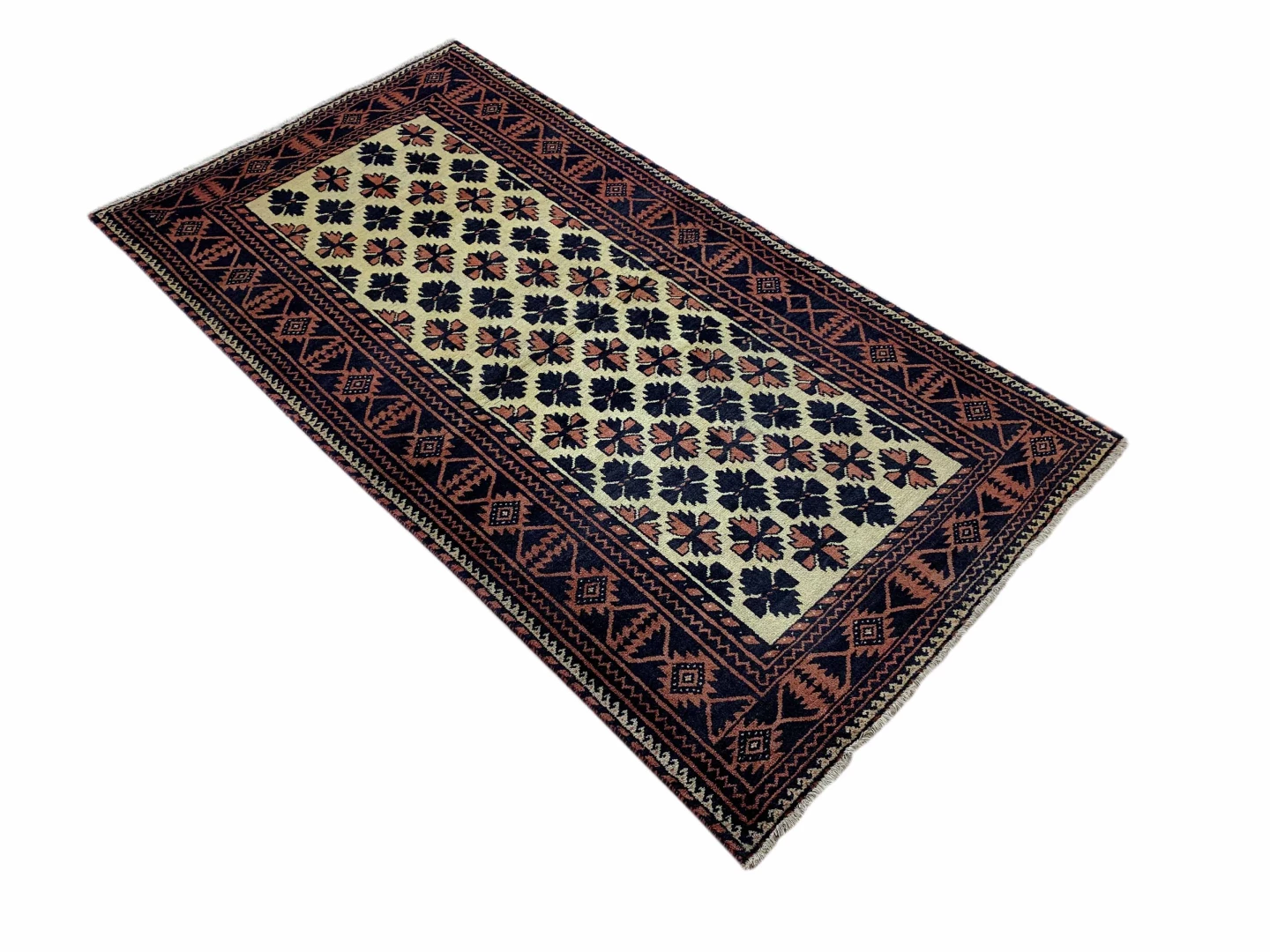
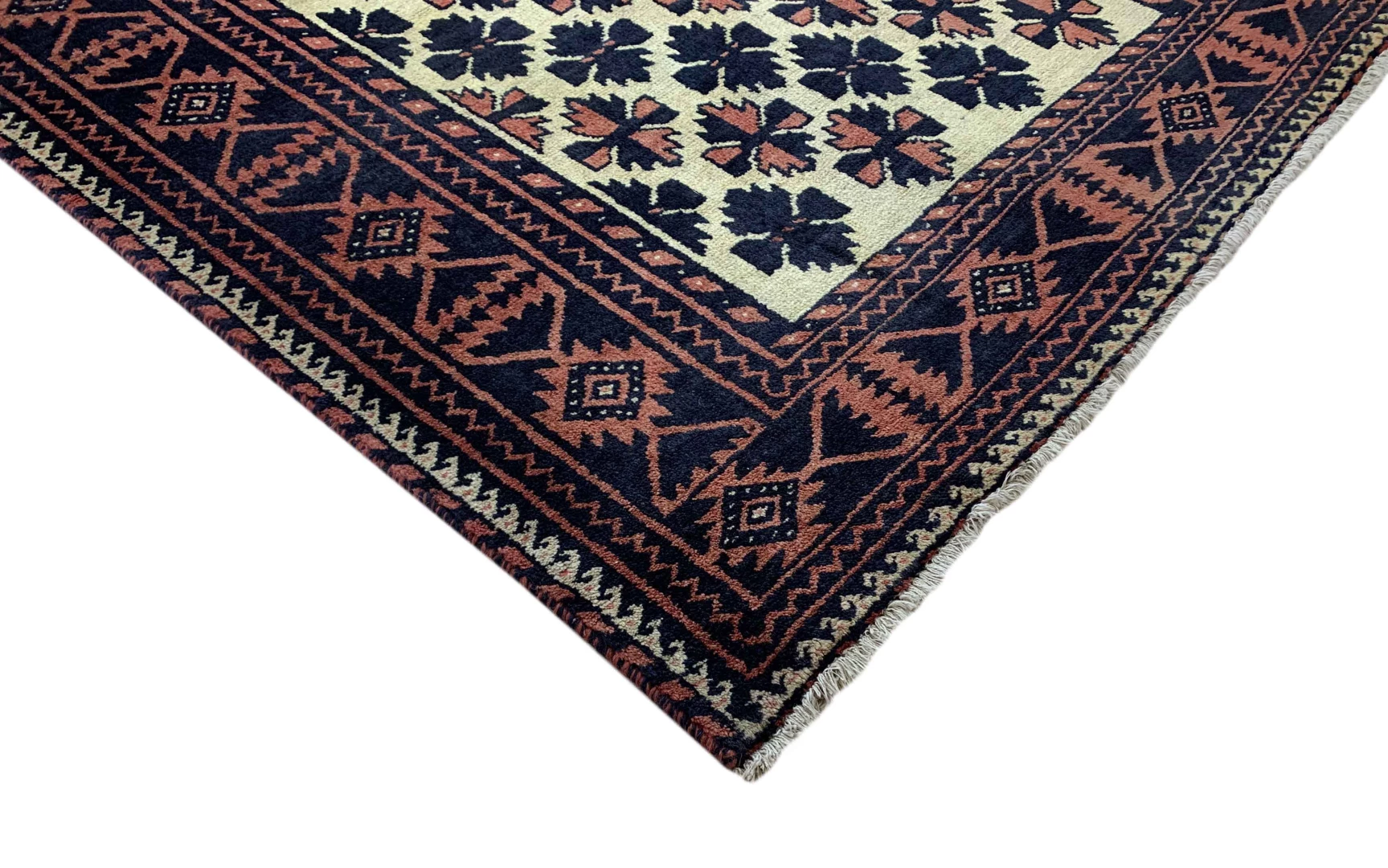
Hand-knotted Balutsch Persian Rug | Knot density: 120.000 – 250.000 knots/m² | Material: pile natural wool | Size: 192 x 102 cm | Pattern: geometric forms and floral motifs in red and brown tones | Condition: stain resistant
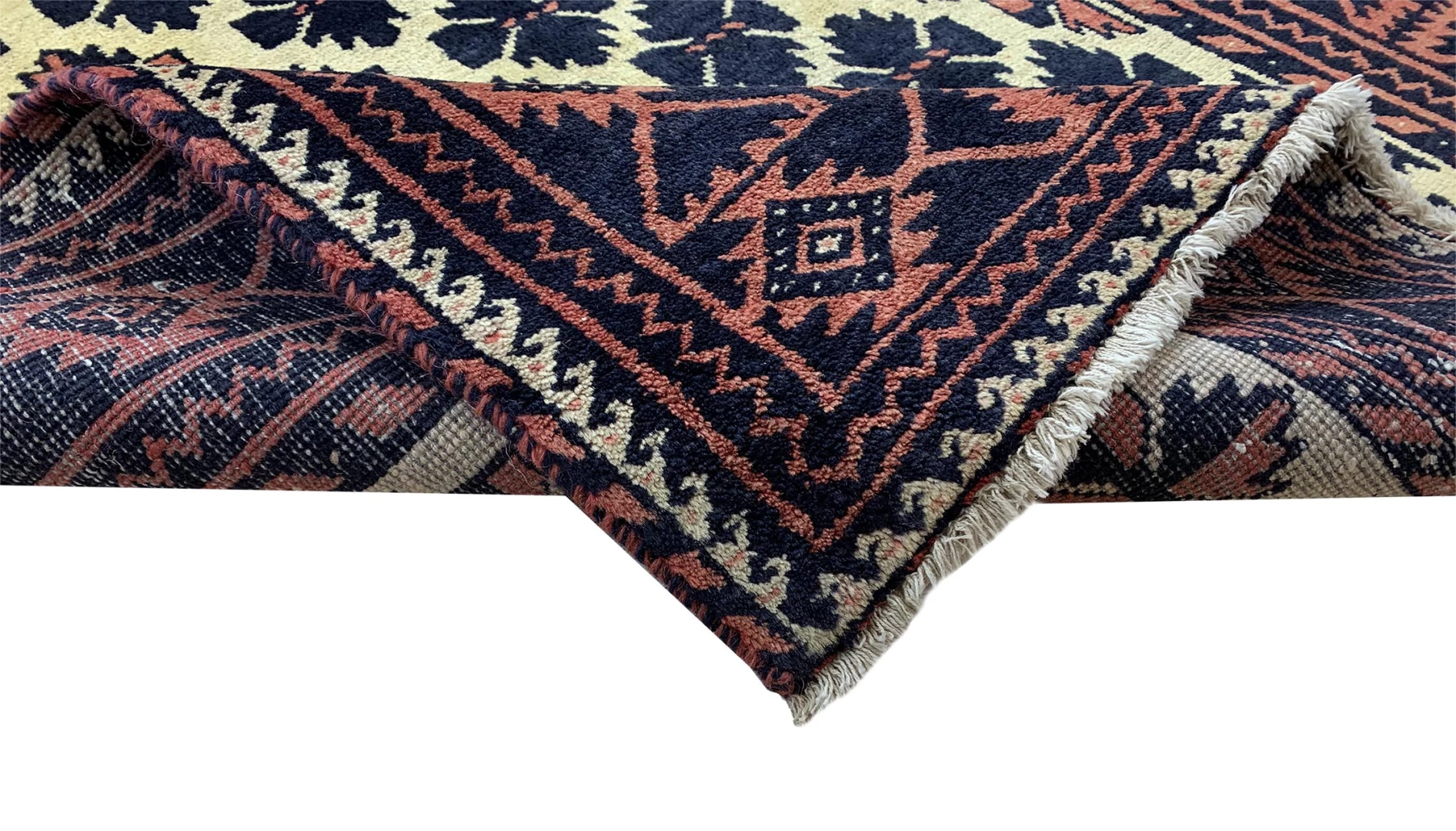
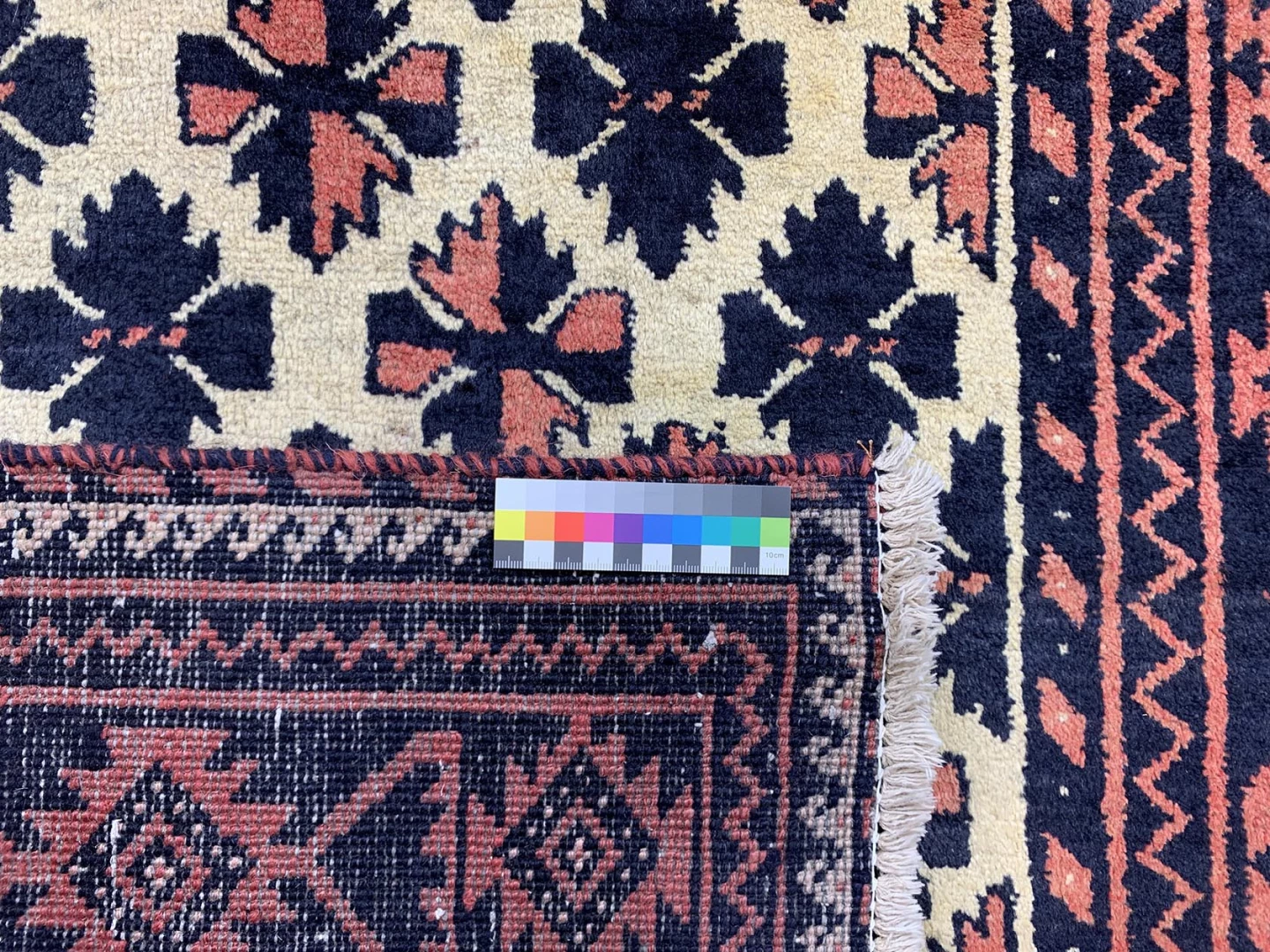
This Balutsch Persian rug is hand-knotted with a pile made from natural wool. Wool is a traditional textile material in the Balutsch weaving tradition, valued for its substantial feel and natural resilience. Here it gives the rug a tactile surface as well as a clearly textile appearance. Hand knotting means that the design is built through individual knots and areas of coloured wool rather than being printed onto a finished surface. The result is a piece with its own character and visible depth.
The wool pile also affects the way the colours are perceived. Depending on the direction of the fibres and the light in the room, the surface can appear slightly varied while retaining its main colour impression. This is part of the nature of a hand-knotted wool rug. The knot density of this rug is between 120.000 and 250.000 knots per square metre. Its stain-resistant quality adds a practical aspect to the traditional construction and makes it suitable for parts of the home that are used regularly.
Origin and Tradition
Balutsch rugs are associated with the Baluch people, a traditionally nomadic population whose cultural region extends between Afghanistan, Iran and Pakistan. This area is not defined by one single landscape or one uniform weaving method. Instead, it contains a range of local textile practices shaped by different communities and surroundings. The Balutsch name therefore points to a cultural and weaving tradition connected with this border region.
Rug making in such traditions combines practical knowledge with visual expression. Preparing wool, choosing colours, arranging motifs and tying knots all require familiarity with the material and patience during the work. Wool has long been an important fibre for rugs because it is naturally suited to durable textiles. Hand weaving and hand knotting also allow a design to be developed directly on the loom, with the maker responding to the emerging balance of colour and form.
The nomadic background associated with the Baluch people has influenced the character of many regional textiles. Rugs and other woven objects could serve everyday needs while also carrying patterns and colour combinations from one generation to the next. Their designs were not necessarily governed by one universal template. Regional preferences, individual skill and the purpose of a particular textile could all affect the final appearance. This helps explain why Balutsch rugs can show considerable variation while remaining recognisable as part of a shared tradition.
Geometric forms and floral motifs are among the design elements commonly associated with Balutsch rugs. They can be arranged in medallion-like structures, repeated fields or more freely balanced compositions, depending on the specific tradition and the maker’s approach. The patterns are often stylised rather than naturalistic. Their importance lies in the relationship between outline, repetition, colour and the overall organisation of the rug’s surface.
Other regional rug traditions provide useful context without being identical to Balutsch weaving. Gabbeh rugs are also hand-knotted and are often associated with simple but expressive designs. Serapi rugs are commonly linked with vivid colours and more elaborate patterning. Tabriz and Kashan rugs are likewise well-known traditions from the broader region, recognised for skilled craftsmanship and the use of quality materials. Each of these names refers to its own history and visual language; they should not be confused with the Balutsch origin of this rug.
Design and Pattern
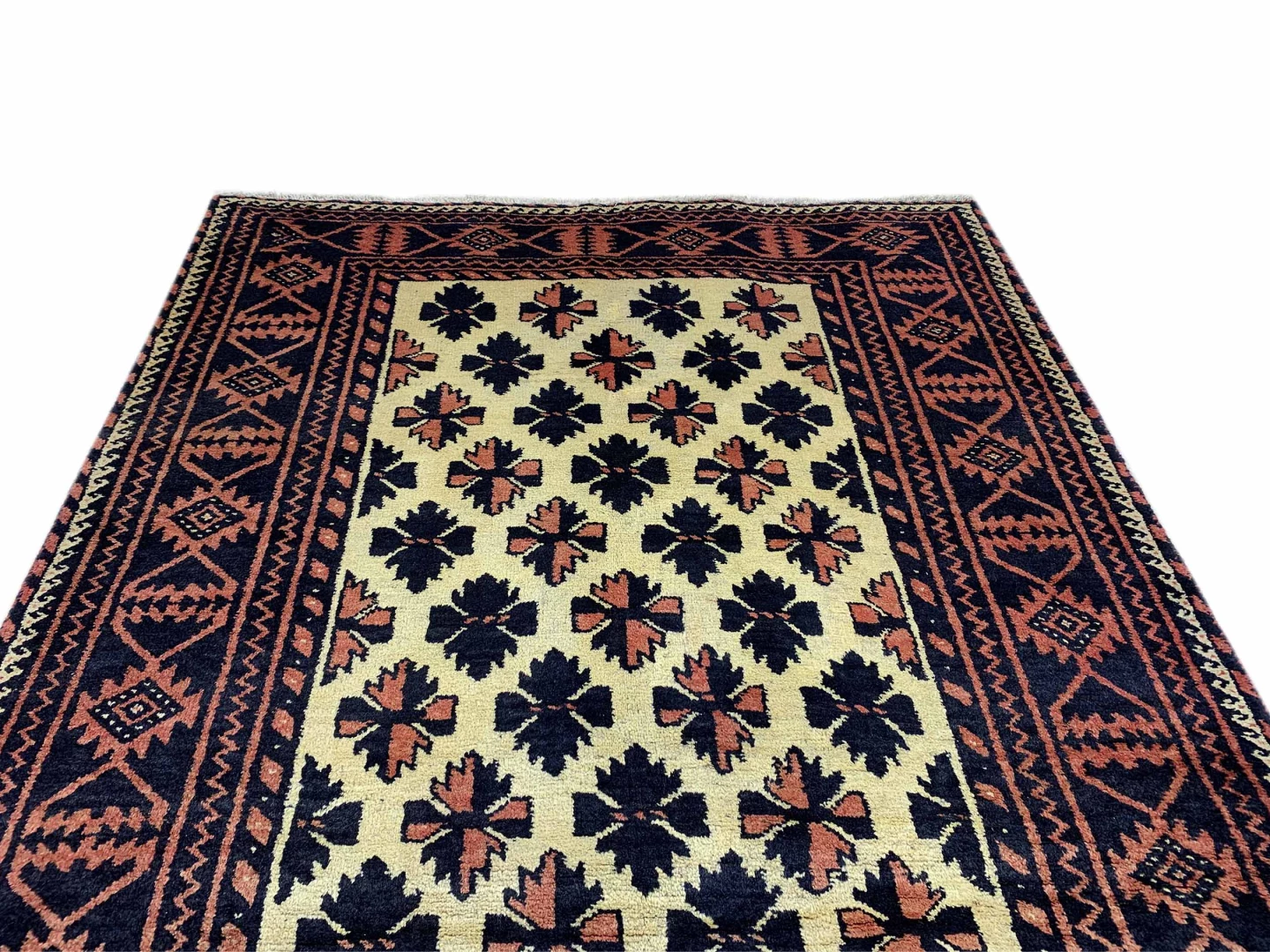
The colour scheme of this rug is dominated by red and brown tones. Deep reds can give a traditional rug composition a strong visual foundation or provide concentrated accents within the field. Warm browns add an earthy counterpoint and soften the relationship between the stronger and quieter areas of colour. Together, these tones create a warm palette that can work with traditional furnishings as well as with more restrained contemporary interiors.
The pattern tradition described for Balutsch rugs includes geometric shapes and floral motifs. Geometric elements may be built from angular outlines, repeated shapes, linear divisions or compact fields. Floral elements can appear as stylised leaves, blossoms or plant-like forms rather than as literal botanical images. In many oriental rug traditions, this degree of stylisation allows motifs to function both as recognisable references and as part of an ordered decorative structure.
A composition may place emphasis on a central form, distribute motifs across the field or combine larger shapes with smaller repeated details. The relationship between these elements determines whether the surface reads as open, dense, regular or varied. Since a hand-knotted rug is made individually, the balance of the pattern belongs to the particular piece rather than to a mechanically repeated print. Differences in line, spacing and colour concentration are therefore part of its handmade appearance.
Patterns in Balutsch weaving are often understood as expressions of a continuing cultural memory. They draw on forms that have been used and adapted within regional textile traditions. That does not mean that every motif has one fixed interpretation or that every Balutsch rug tells the same specific story. The cultural character emerges through the combination of inherited forms, colour choices, arrangement and the practical knowledge of the maker. In this rug, that character is expressed through the contrast of red and brown tones with geometric and floral patterning.
The palette gives the rug several possible relationships with its surroundings. Brown can connect with wood, leather and other natural materials, while red can echo accent pieces or provide definition in a quieter room. Geometric motifs may reinforce a structured interior, whereas floral details can introduce a softer counterpoint. These effects depend on the surrounding furnishings and light, but the rug’s regional pattern language remains legible in both traditional and modern settings.
Special Features
This rug is described as stain resistant, which is an important practical feature for everyday use. It is particularly suitable for busy areas such as hallways and kitchens. The quality does not remove the need for care, but it can make the rug a practical choice where dust and occasional soiling are part of normal use. Its natural wool pile, hand-knotted construction and stain-resistant character belong together in the description of this individual Balutsch rug.
The rug’s distinctive appearance comes from the combination of its material, technique, colour palette and pattern tradition. Natural wool gives the surface its textile body. Hand knotting makes the construction artisanal, while the red and brown colours establish its visual identity. Geometric forms and floral motifs connect the design with Balutsch rug traditions. As a handmade piece, it has an individual presence rather than the uniform appearance of a mass-produced floor covering.
FAQ
What makes Balutsch Persian rugs distinctive?
Balutsch Persian rugs bring together a hand-knotted construction, natural wool and a regional design tradition associated with the Baluch people between Afghanistan, Iran and Pakistan. Their patterns may include geometric shapes and floral motifs, while warm reds and browns are characteristic colours in this description. This rug also has a stain-resistant quality, making it particularly suitable for frequently used areas such as hallways and kitchens.
Which colours are typical of Balutsch rugs?
Warm red and brown tones are typical of the colour palette described for Balutsch rugs. On this rug, reds provide the stronger colour presence and browns add an earthy balance. The combination creates a warm interior effect without limiting the rug to one furnishing style. It can complement traditional furniture, natural wood and darker accents, while also adding a defined oriental textile element to a more modern room.
How should I clean my Balutsch Persian rug?
Regular vacuuming is recommended to remove dust and loose dirt from the surface of the Balutsch Persian rug. Care should be taken while vacuuming so that the wool pile is treated gently. If a more thorough cleaning becomes necessary, professional rug cleaning can be considered. This can help preserve the colours and the structure of the rug. Its stain-resistant quality is useful in everyday care, but it does not replace regular cleaning or careful handling.
To provide the best experiences, we use technologies like cookies to store and/or access device information. Consenting to these technologies will allow us to process data such as browsing behavior or unique IDs on this site. Not consenting or withdrawing consent, may adversely affect certain features and functions.
Functional Always active
The technical storage or access is strictly necessary for the legitimate purpose of enabling the use of a specific service explicitly requested by the subscriber or user, or for the sole purpose of carrying out the transmission of a communication over an electronic communications network.
Preferences
The technical storage or access is necessary for the legitimate purpose of storing preferences that are not requested by the subscriber or user.
Statistics
The technical storage or access that is used exclusively for statistical purposes.The technical storage or access that is used exclusively for anonymous statistical purposes. Without a subpoena, voluntary compliance on the part of your Internet Service Provider, or additional records from a third party, information stored or retrieved for this purpose alone cannot usually be used to identify you.
Marketing
The technical storage or access is required to create user profiles to send advertising, or to track the user on a website or across several websites for similar marketing purposes.

 SECURE PAYMENT
 SHIPPING PARTNERS