Persian Rug Bakhtiari 303 x 228 cm Wool Hand-knotted
€ 1364
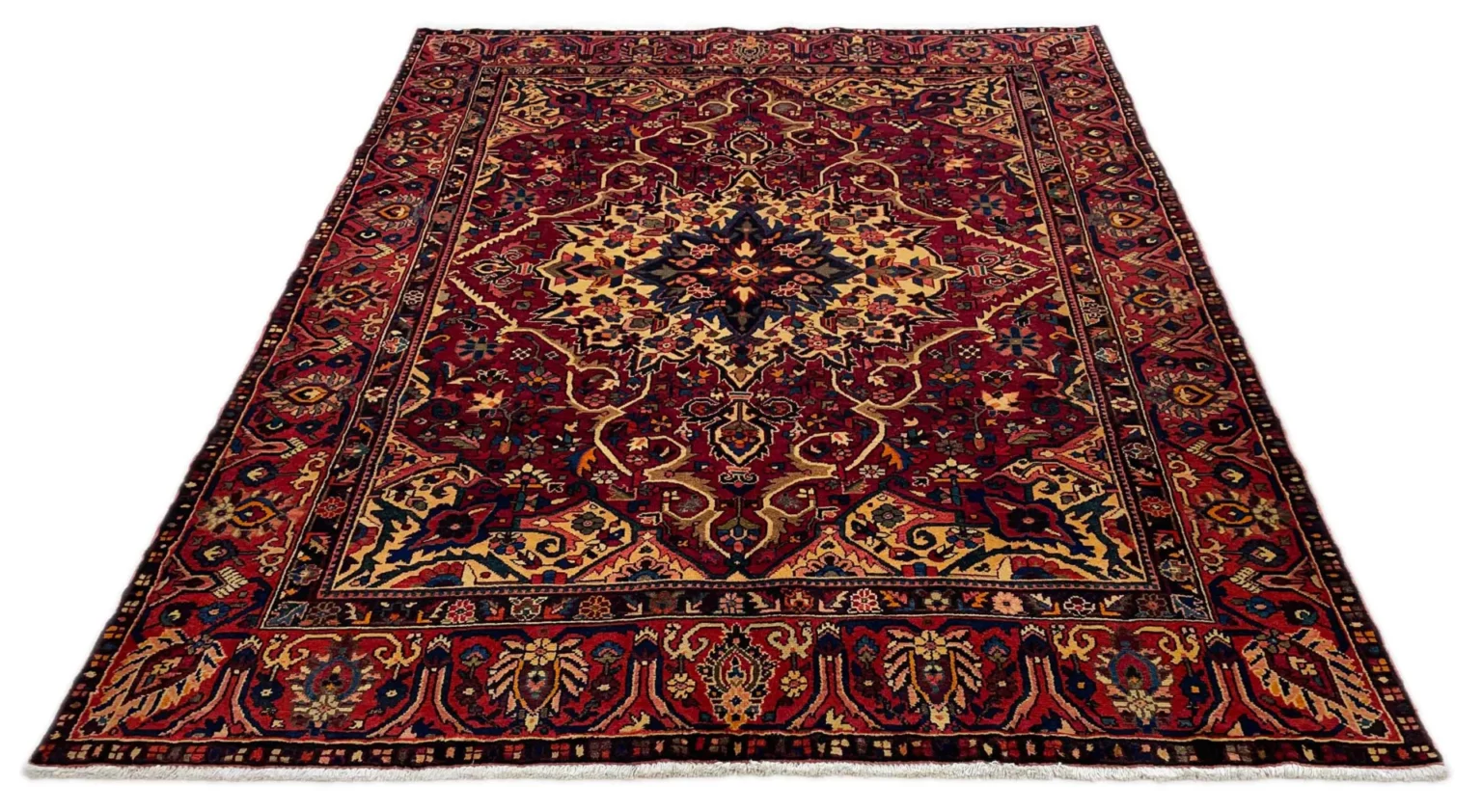
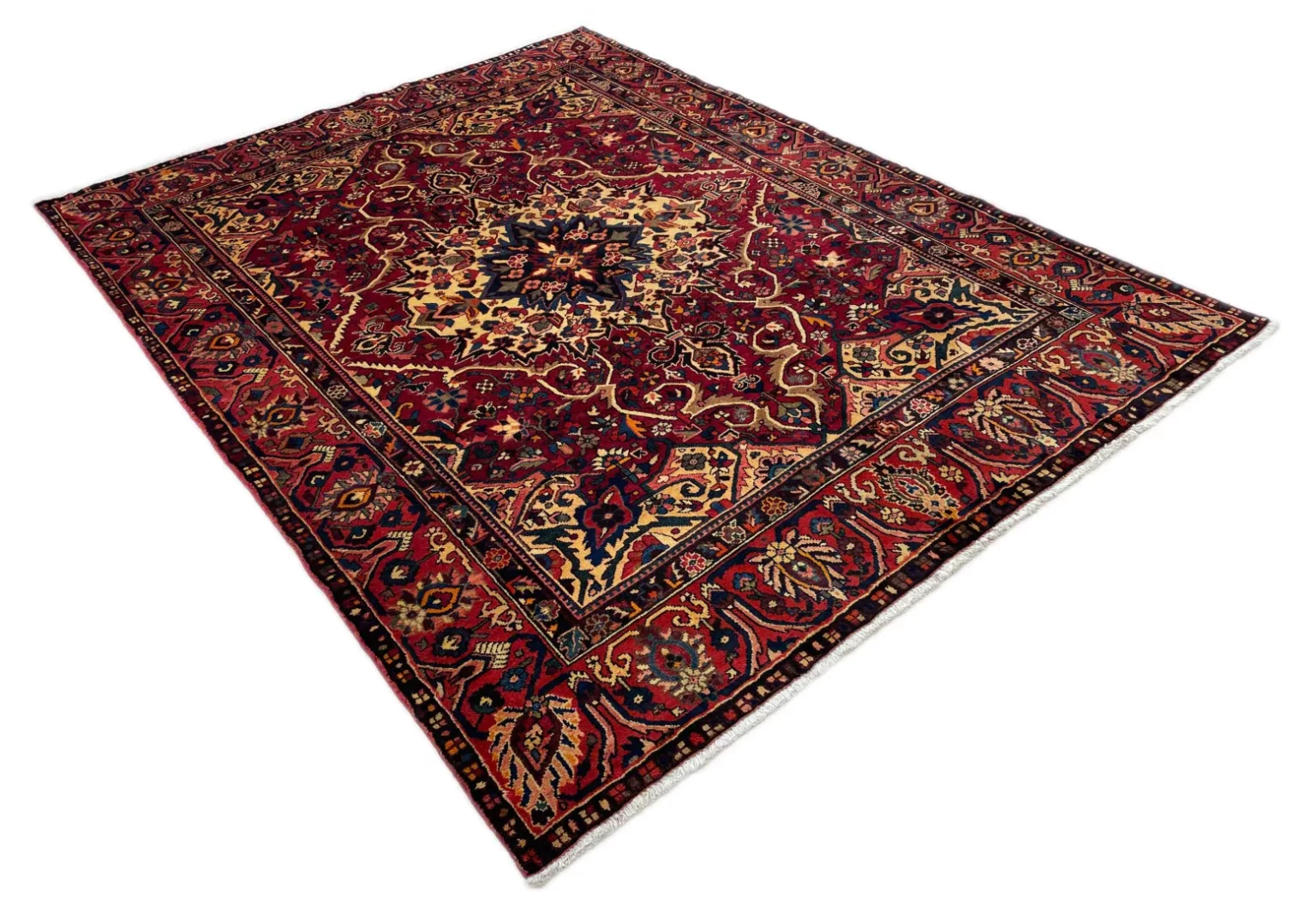
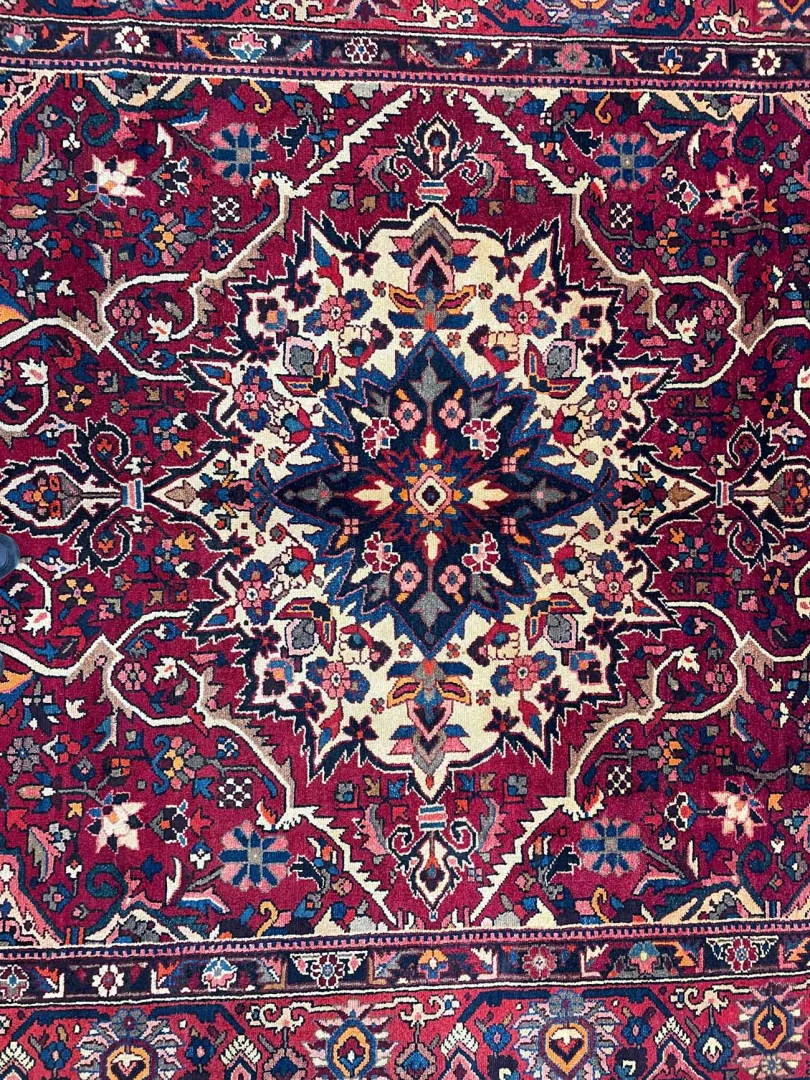
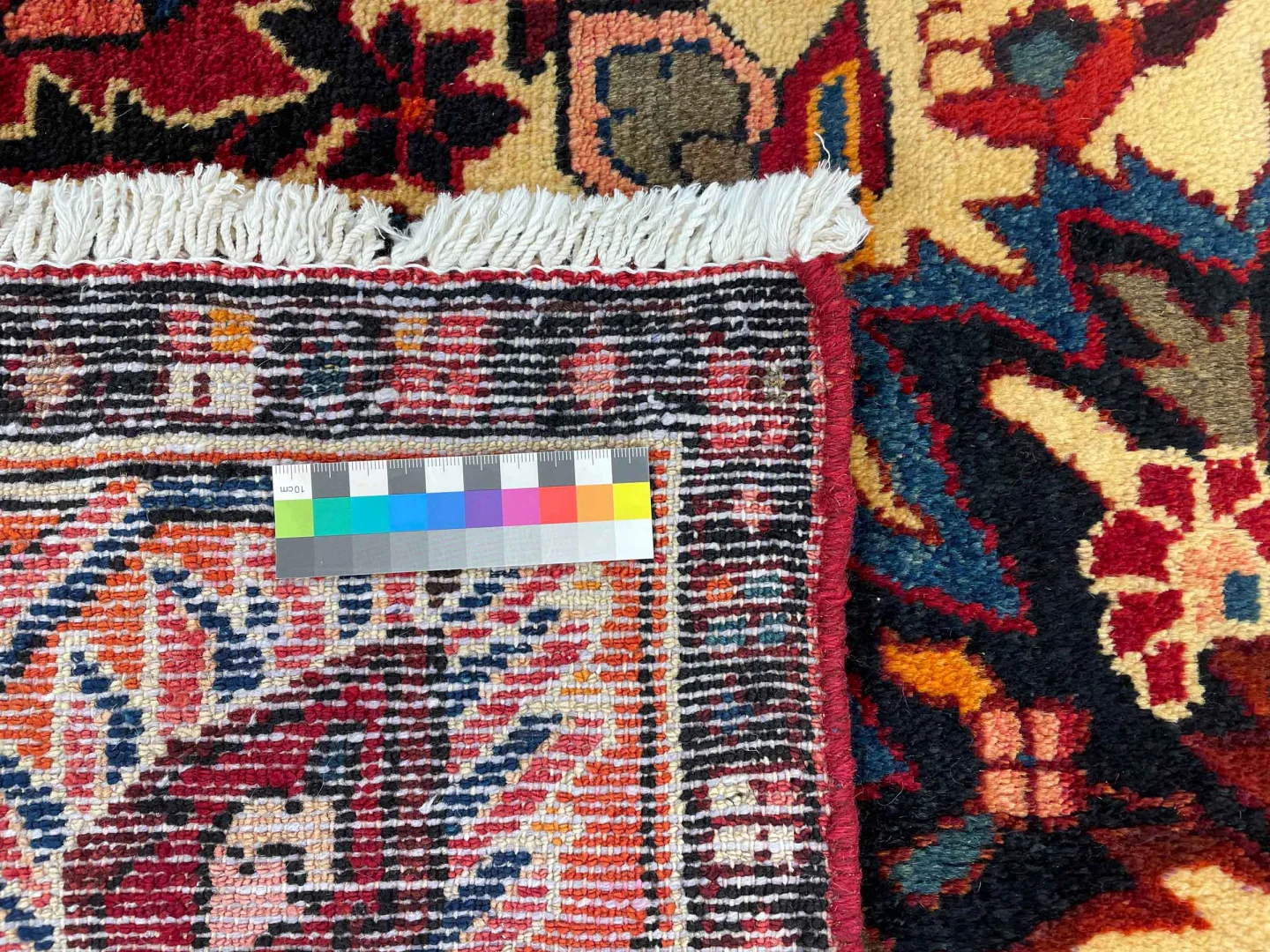
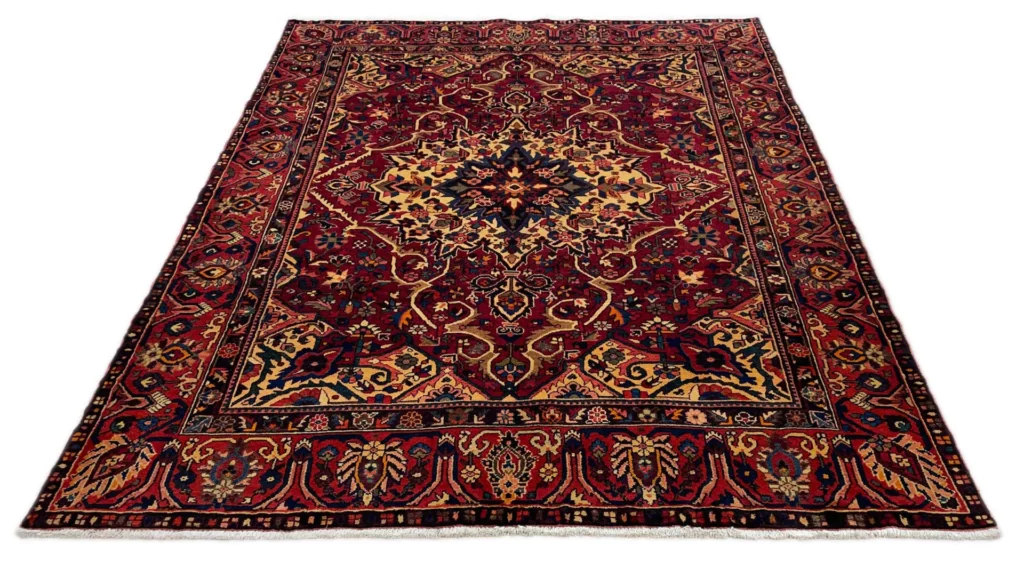
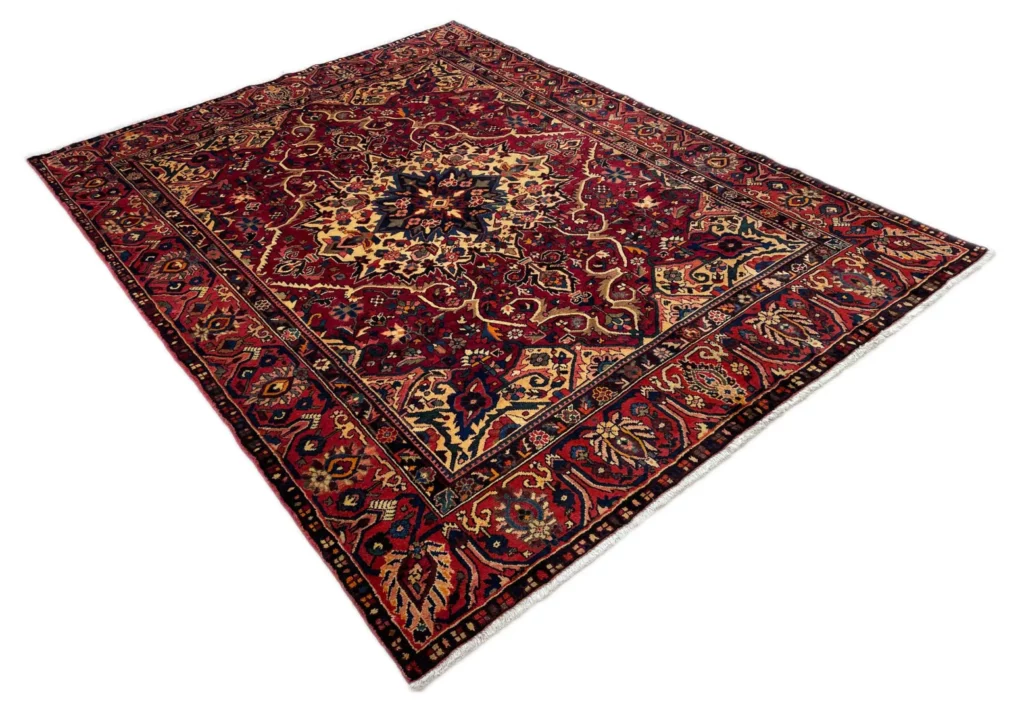
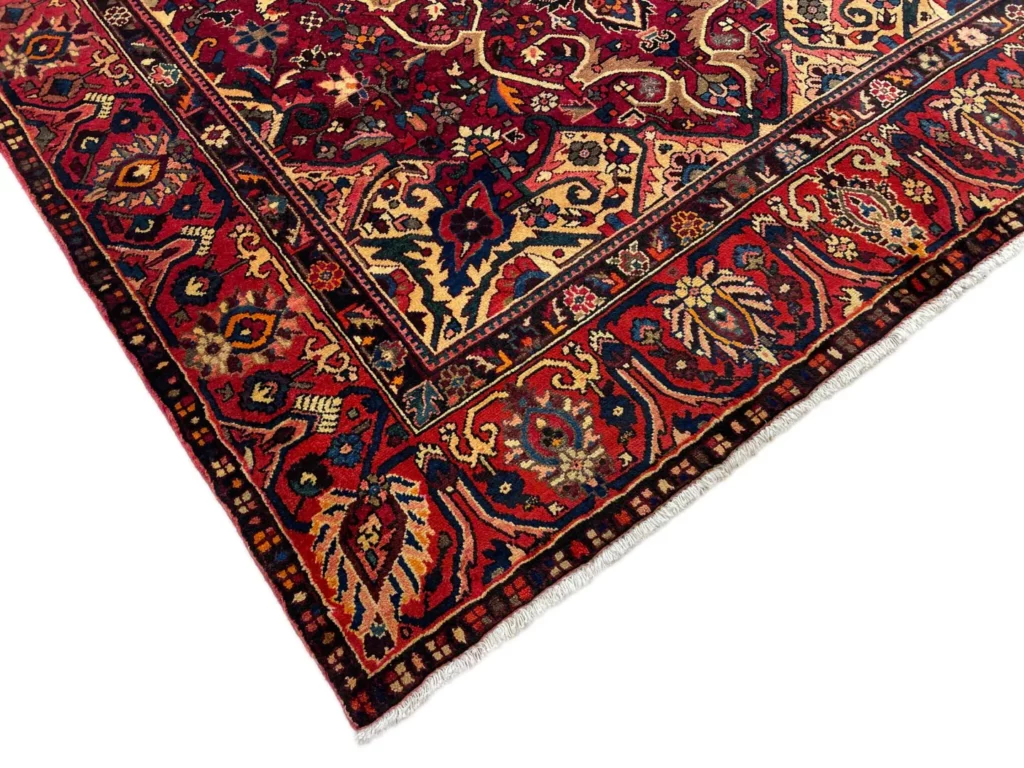
Hand-knotted Bakhtiar Persian rug | Knot density: 150.000 – 200.000 knots/m² | Material: pile wool | Size: 303 x 228 cm | Pattern: Kheshti garden design with plant and animal motifs | Condition: Very good
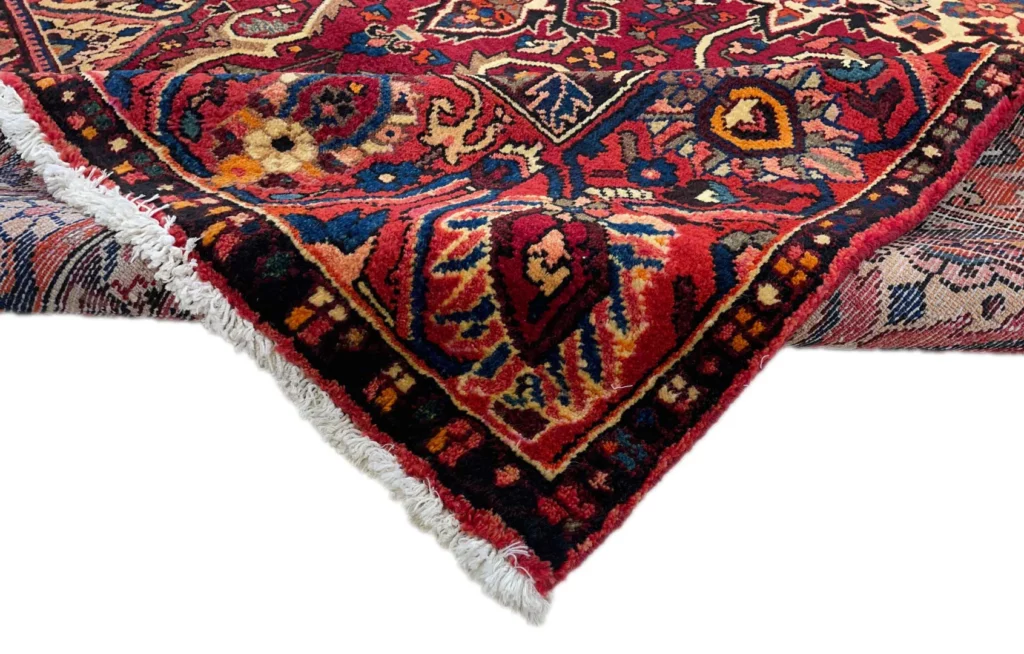
This Bakhtiar Persian rug is hand-knotted with a pile made from high-quality wool. Its making follows a traditional Iranian rug technique in which the design is built knot by knot. The resulting surface brings material, colour, structure and pattern together in one woven object. Wool forms the visible pile and gives the rug the practical character associated with Bakhtiar weaving.
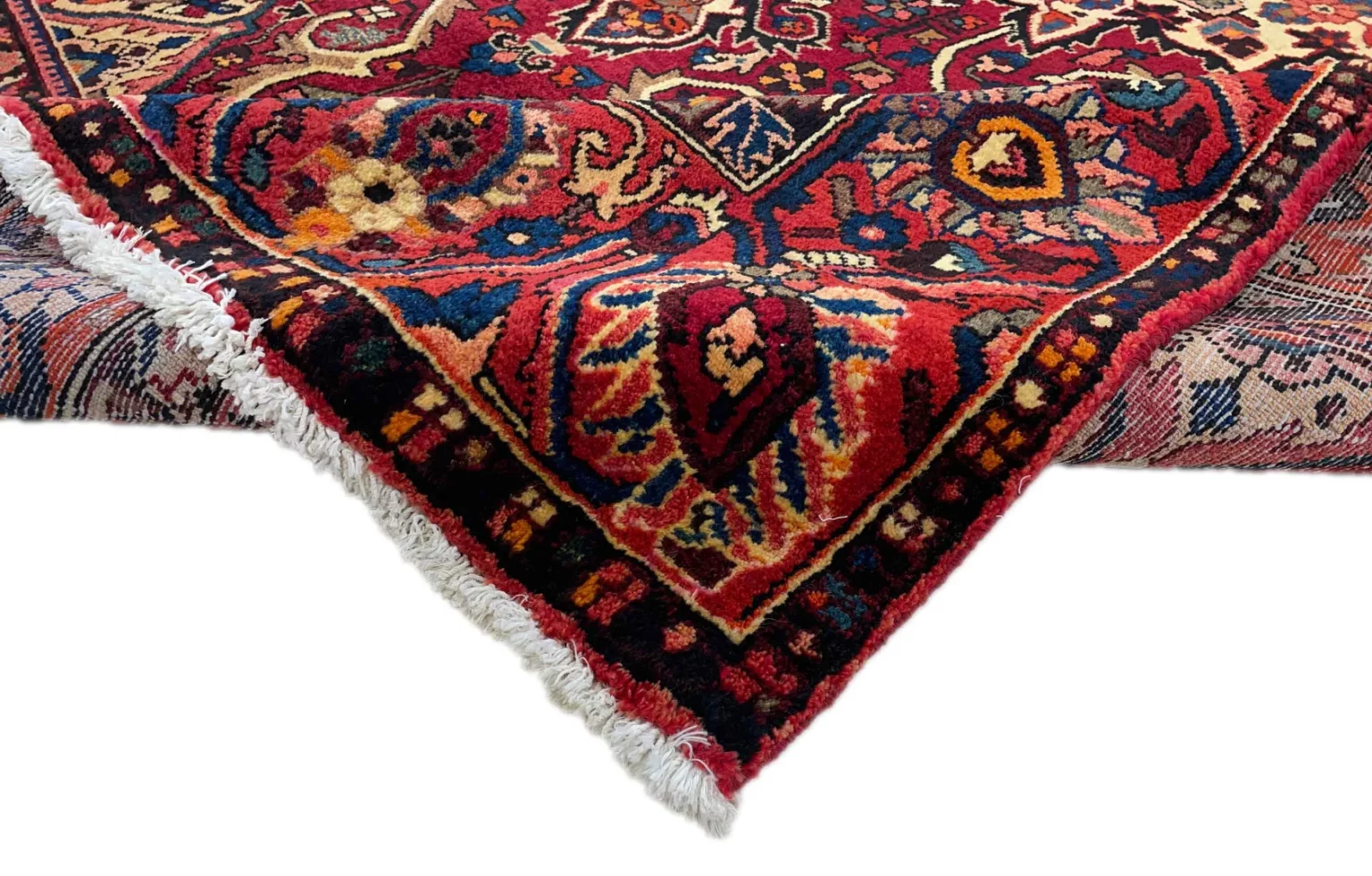
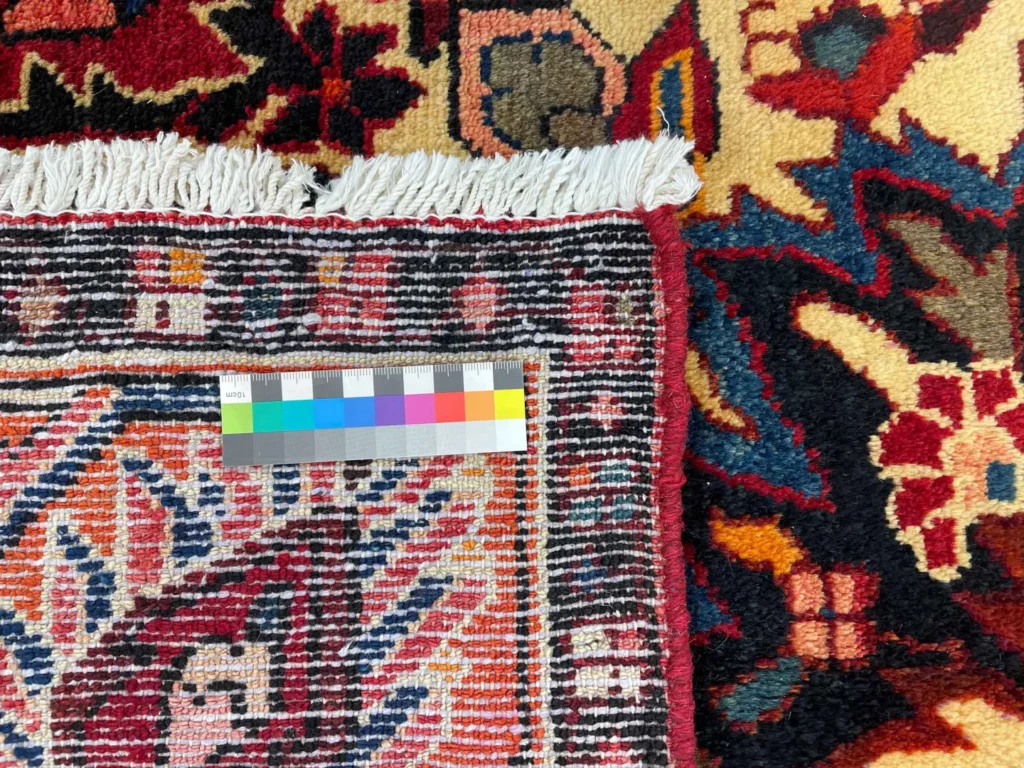
The rug has a knot density of 150.000 to 200.000 knots per square metre. This density describes the fineness of its knotted structure and supports the differentiated execution of plant and animal motifs within the garden design. The Kheshti pattern depends on a distinct division into fields, and careful knotting keeps those fields and their ornaments clearly readable across the surface.
High-quality wool is used in Bakhtiar rugs for its combination of a pleasant handle and resistance to wear. The material therefore suits a rug intended not only as a decorative object but also for use in a living space. Hand-knotting is a time-intensive form of production: every part of the pattern is transferred into the textile surface through the knotting process rather than being printed or mechanically imitated. This gives the construction its direct connection to the craft tradition.
The rug is described as being in very good condition. Together with the resilient wool and hand-knotted construction, this makes it a piece in which practical use and decorative design are closely connected. Its workmanship remains firmly associated with Bakhtiar tradition: a wool pile, a carefully formed knotted surface and a garden composition divided into recognisable areas define its character.
Origin and Tradition
Bakhtiar rugs come from western Iran. This rug is assigned to western Iran near Isfahan. The Bakhtiar nomads live west of the city of Isfahan in the Zagros Mountains, and their weaving is closely tied to this landscape and its established textile culture. The Zagros region has produced varied weaving traditions shaped by its settlements and nomadic routes. In Bakhtiar work, practical knowledge, regional pattern language and everyday use meet in a single handmade textile.
Bakhtiar rug making represents a form of weaving in which utility and ornament are not treated as separate ideas. A rug could furnish a living space while also making the visual language of its makers visible. Clearly divided fields, recurring botanical forms and animals are among the devices through which the regional identity of a rug can be expressed. The motifs are not simply added decoration; they form part of a recognisable local tradition.
The reference to Isfahan is important for the geographical setting, but it does not turn this rug into an Isfahan rug. Bakhtiar here names the distinct western Iranian tradition of the Bakhtiar nomads. Isfahan is a major centre of Persian rug culture with its own, more urban design language. Bakhtiar rugs, by contrast, retain a characteristic relationship between strong field organisation, expressive colour and a practical craft tradition that developed in the Zagros area.
Several other regional rug types stand alongside Bakhtiar weaving within the wider Iranian tradition. Gabbeh rugs from the region are also handmade, but are often associated with simple geometric designs and strong colours. Isfahan rugs are known for fine detail, high knot densities and elaborate floral-inspired compositions. These comparisons clarify the Bakhtiar identity: its garden design combines structured compartments with a robust and immediately legible arrangement of motifs.
The transmission of this craft depends on experience, practice and familiarity with regional designs. A weaving tradition is preserved not only through individual ornaments, but also through the way a pattern is distributed, balanced in colour and translated into knots. This rug belongs to that western Iranian development. Its origin is described as western Iran near Isfahan, while the Bakhtiar name connects it with the nomadic culture and weaving practice of the Zagros Mountains.
Design and Pattern
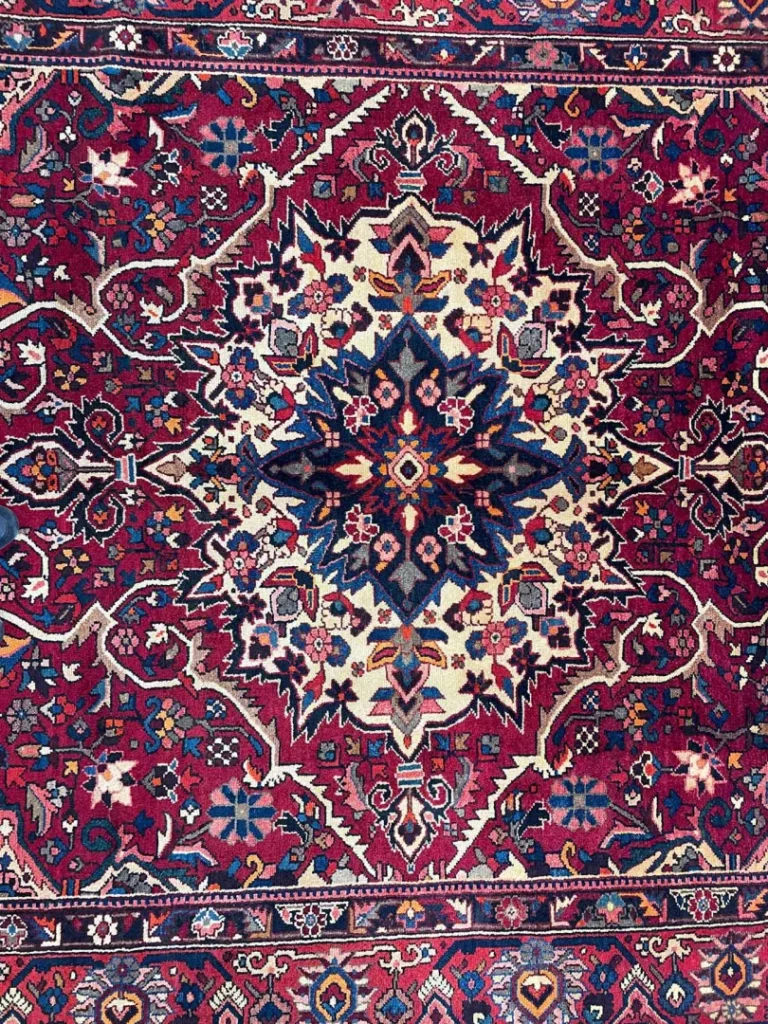
The rug carries a garden design known as Kheshti. Kheshti refers to a composition divided into separate compartments. The surface is organised into individual fields which together suggest a carefully arranged garden. Each compartment can contain its own botanical forms and animal motifs. Rather than presenting one uninterrupted ornament across the entire rug, the design creates a sequence of related visual areas.
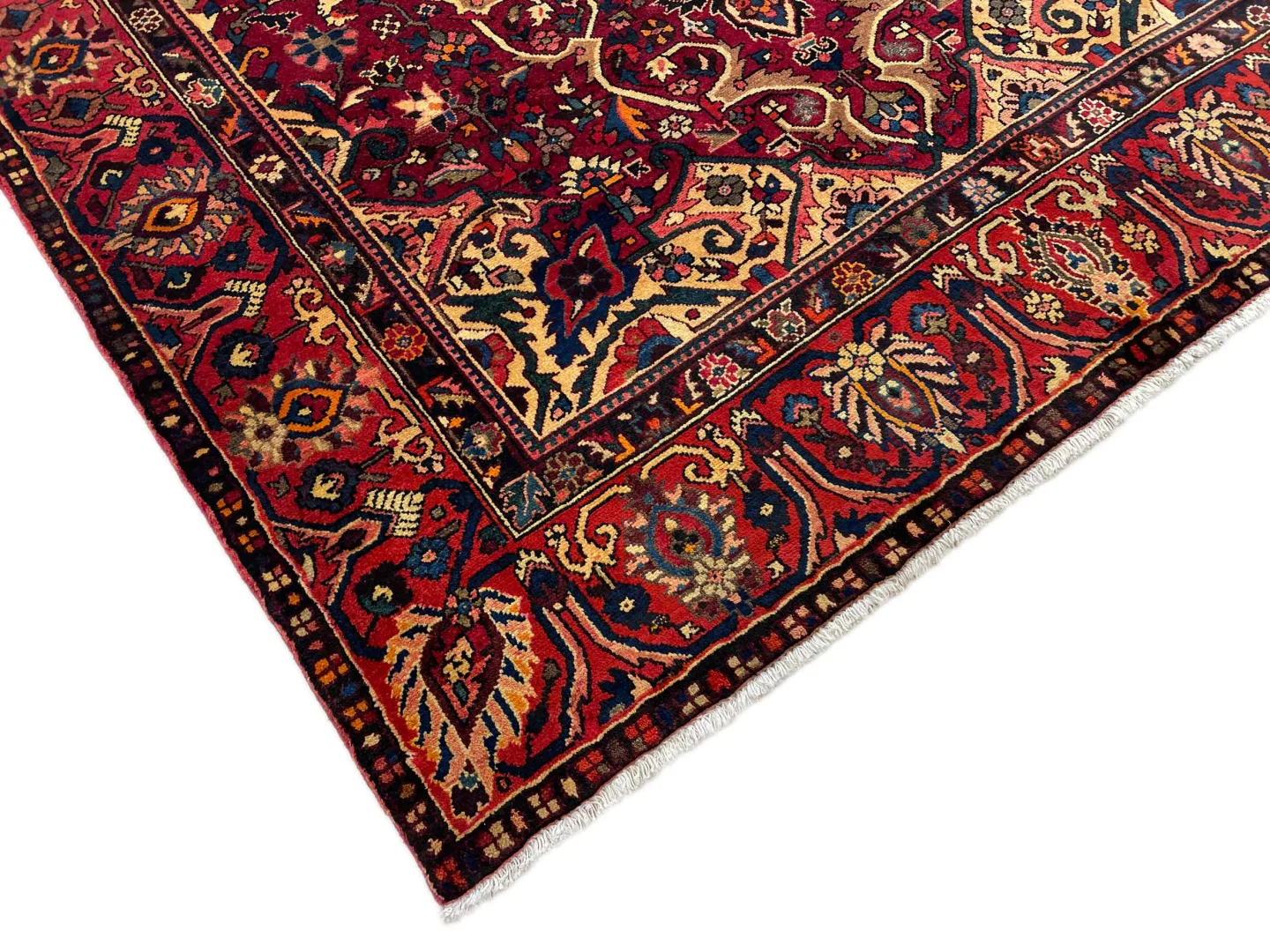
The botanical elements draw on forms found in nature. Flowers, leaves, branches and stylised plants may appear as recurring signs within the compartments. They are not intended as literal botanical illustrations. Instead, the forms are simplified, rhythmically arranged and adapted to the possibilities of knotting. Repetition turns individual plant shapes into a connected ornament, allowing the separate fields to relate to one another.
Animal motifs are also part of the visual vocabulary of Kheshti. They introduce figurative accents into the garden fields and broaden the composition beyond purely floral ornament. Plants and animals are placed within the same ordered framework. The design therefore gains its character from the relationship between borders, botanical shapes and smaller figurative signs. It remains varied while retaining the underlying discipline of the compartmental layout.
The colours named for this rug are red, brown and cream. Red gives the composition a strong base, brown adds an earthy note, and cream opens the design with lighter areas and contrast. Together, these colours support the warm, nature-related quality of the garden pattern. They also help separate the individual fields and make the plant and animal motifs easier to distinguish within the overall arrangement.
A Kheshti rug is viewed through the balance of repetition and variation. The compartments belong to one composition, but they do not have to function as exact copies of one another. Hand-knotting allows the natural forms to be interpreted within a living textile surface. The central principle remains the garden structure: a divided field in which plants, animals and colour are brought together in a regional design language.
This Bakhtiar garden design differs from the simpler geometric arrangements often associated with Gabbeh rugs. It also has a different relationship to the highly detailed floral ornament found in urban Isfahan rugs. The Kheshti pattern here combines compartmental order with botanical and animal imagery. It is therefore both structured and pictorial, expressing a design tradition associated with western Iran.
Special Features
The identifiable features of this rug are its hand-knotted construction, high-quality wool pile and Kheshti garden design. The knot density is 150.000 to 200.000 knots per square metre. The pattern includes plant and animal motifs and uses red, brown and cream. The condition is very good.
The wool is described as resistant to wear. This connects the detailed decorative pattern with a practical material quality. Its origin in western Iran near Isfahan and its association with Bakhtiar nomadic tradition provide a clear regional classification as well. The distinctive character of the rug therefore lies in the combination of origin, material, technique and garden composition.
FAQ
How should a Bakhtiar Persian rug be cared for?
Regular vacuuming removes dust and dirt from the pile. If a stain occurs, it should be dabbed promptly with a damp cloth rather than rubbed. Rubbing can work the dirt further into the wool or place unnecessary stress on the surface. Professional rug cleaning is recommended for a thorough treatment. Care should take the high-quality wool and the hand-knotted construction into account.
Where do Bakhtiar rugs come from?
Bakhtiar rugs come from western Iran and are associated with the Bakhtiar nomads who live west of Isfahan in the Zagros Mountains. This origin explains the connection between nomadic weaving practice, practical wool work and regional pattern design. This particular rug is assigned to the area near Isfahan. It is a Bakhtiar Persian rug rather than an Isfahan rug; the two names describe different regional traditions.
What distinguishes a Bakhtiar rug?
The defining combination is high-quality wool, hand-knotted workmanship and the Kheshti garden design. Its divided fields contain plant and animal motifs, while red, brown and cream shape the colour scheme. The material is also described as resistant to wear. Together, these features give the rug a clear western Iranian identity and join practical use with an independent, nature-related ornamental language.
To provide the best experiences, we use technologies like cookies to store and/or access device information. Consenting to these technologies will allow us to process data such as browsing behavior or unique IDs on this site. Not consenting or withdrawing consent, may adversely affect certain features and functions.
Functional Always active
The technical storage or access is strictly necessary for the legitimate purpose of enabling the use of a specific service explicitly requested by the subscriber or user, or for the sole purpose of carrying out the transmission of a communication over an electronic communications network.
Preferences
The technical storage or access is necessary for the legitimate purpose of storing preferences that are not requested by the subscriber or user.
Statistics
The technical storage or access that is used exclusively for statistical purposes.The technical storage or access that is used exclusively for anonymous statistical purposes. Without a subpoena, voluntary compliance on the part of your Internet Service Provider, or additional records from a third party, information stored or retrieved for this purpose alone cannot usually be used to identify you.
Marketing
The technical storage or access is required to create user profiles to send advertising, or to track the user on a website or across several websites for similar marketing purposes.

 SECURE PAYMENT
 SHIPPING PARTNERS


