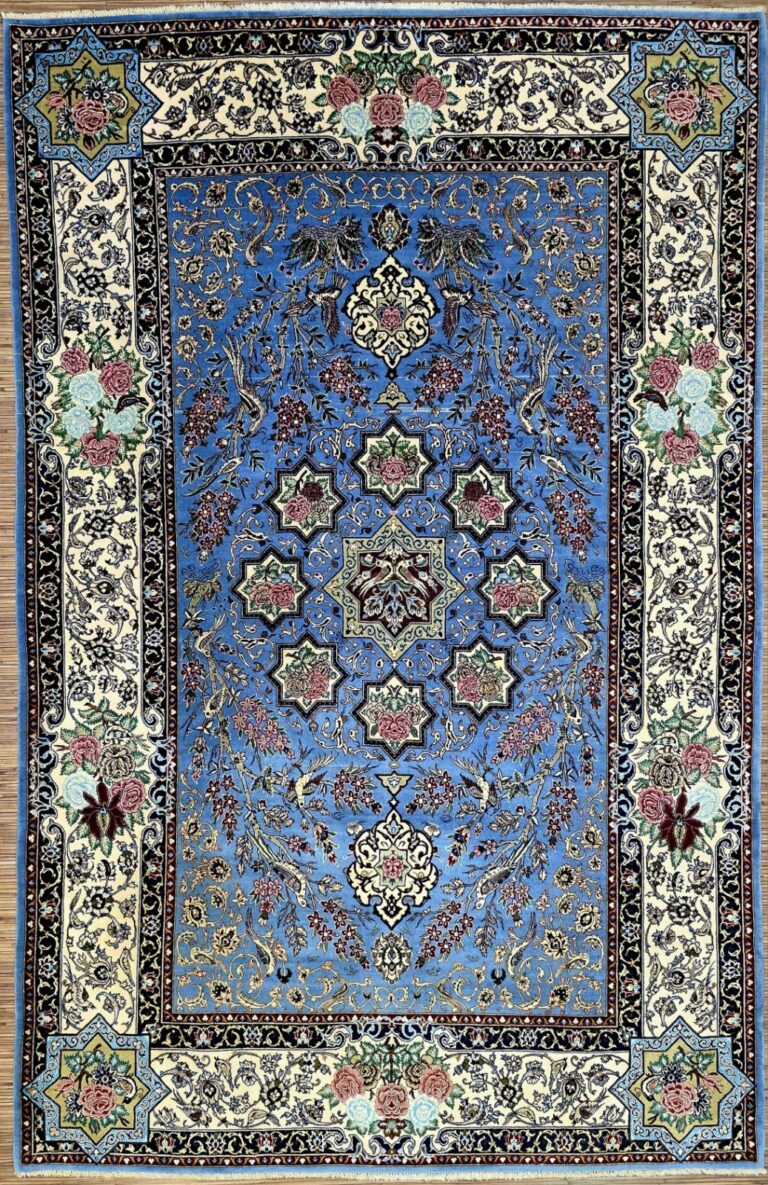
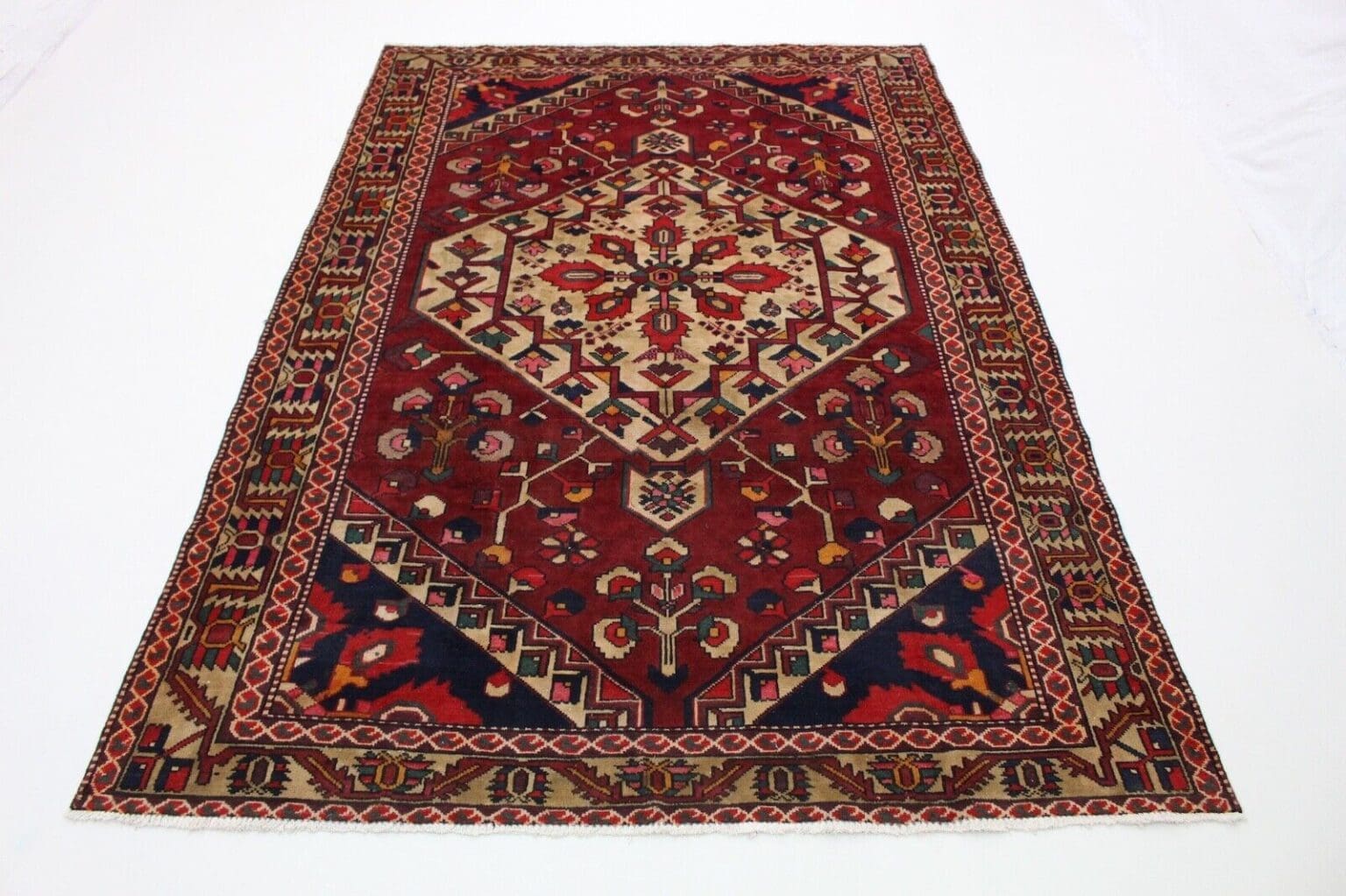
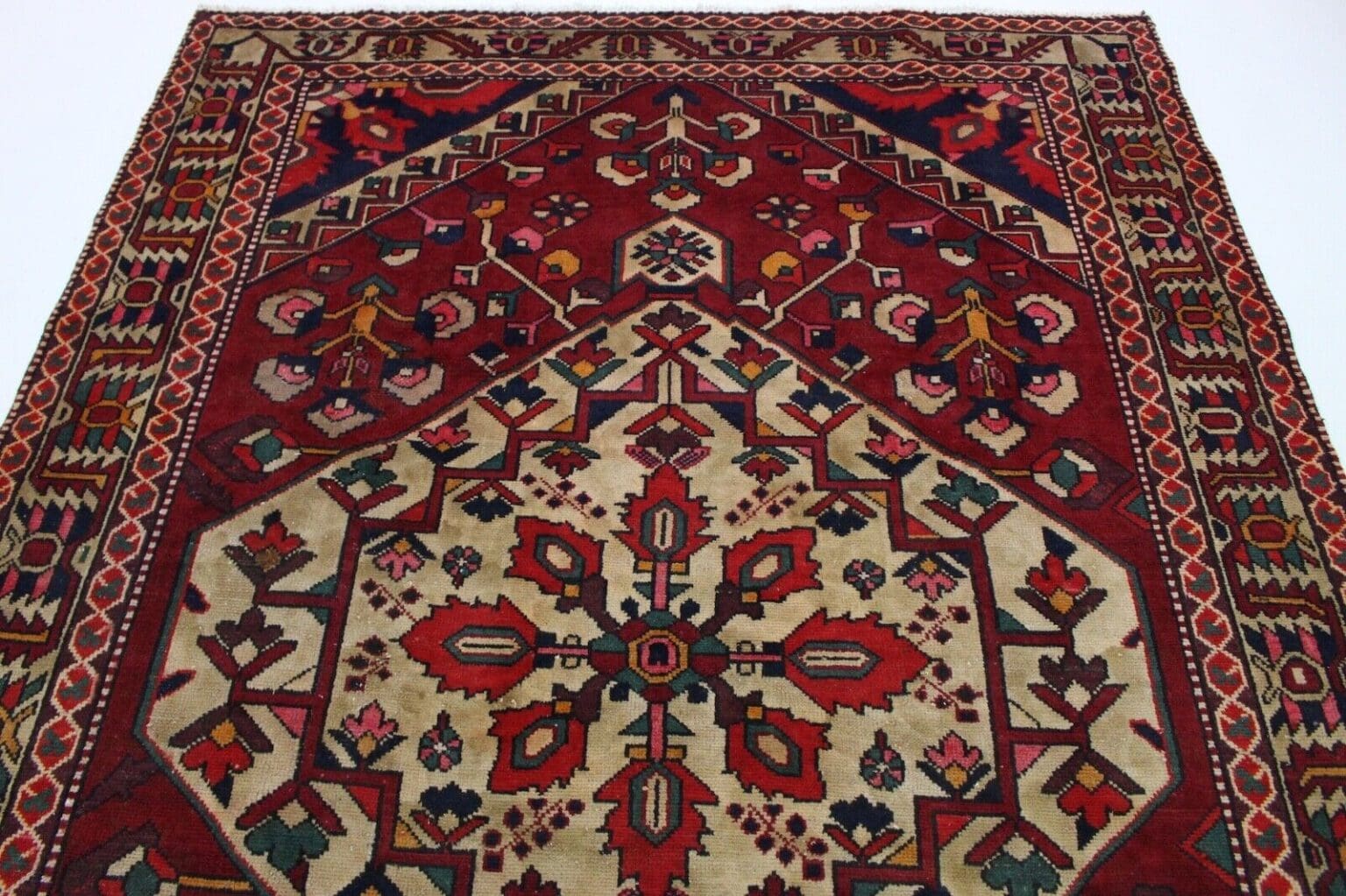
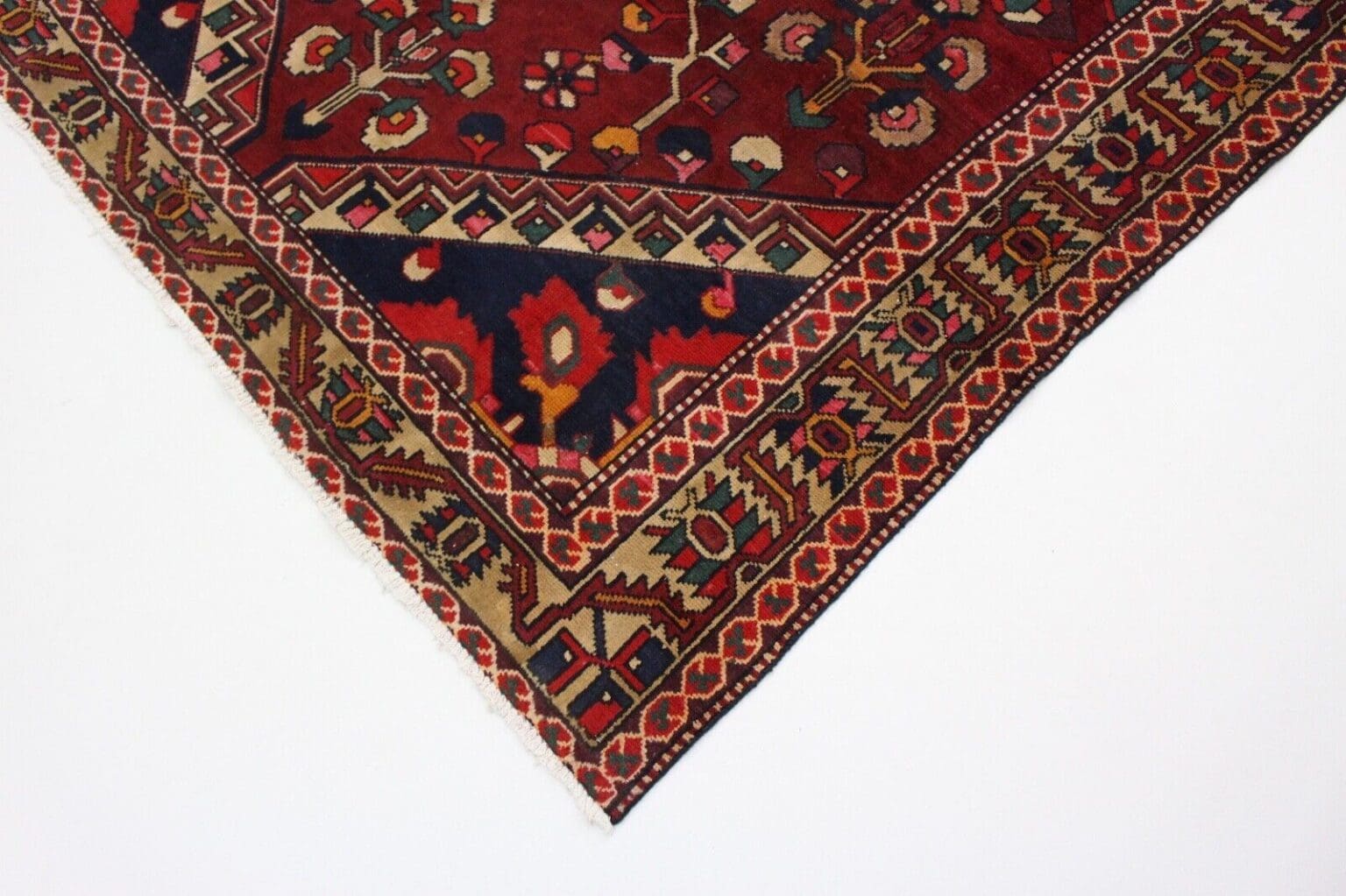
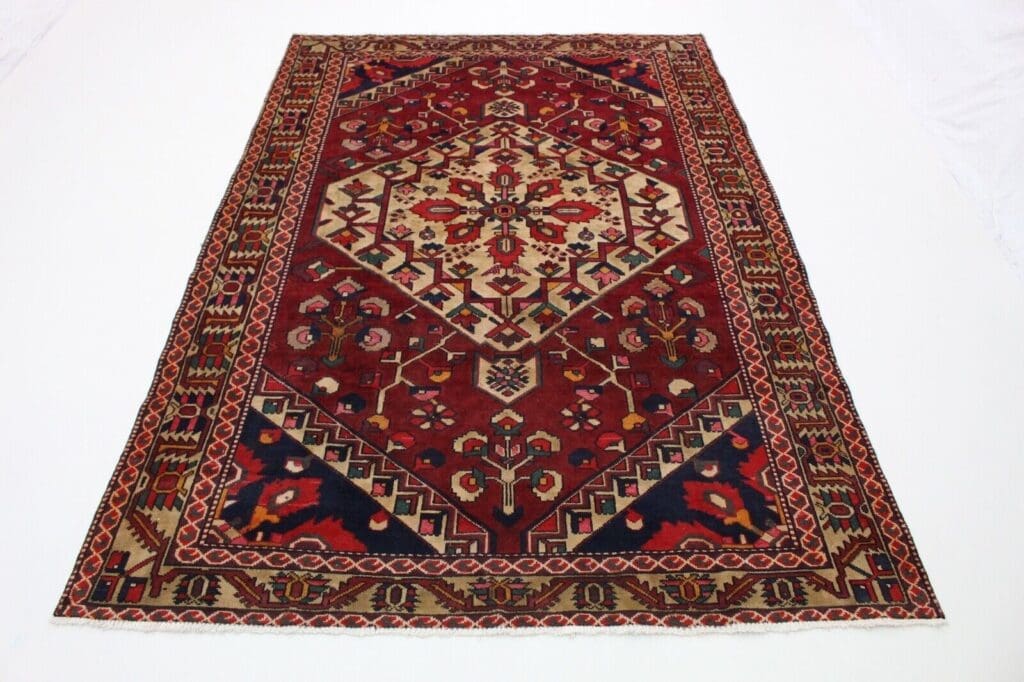
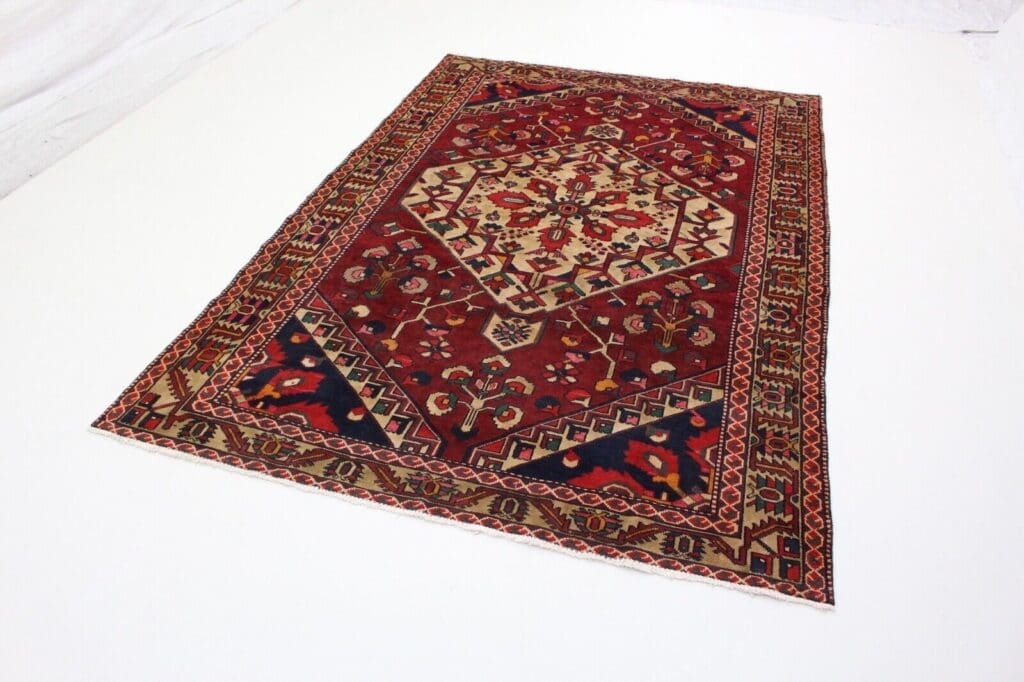
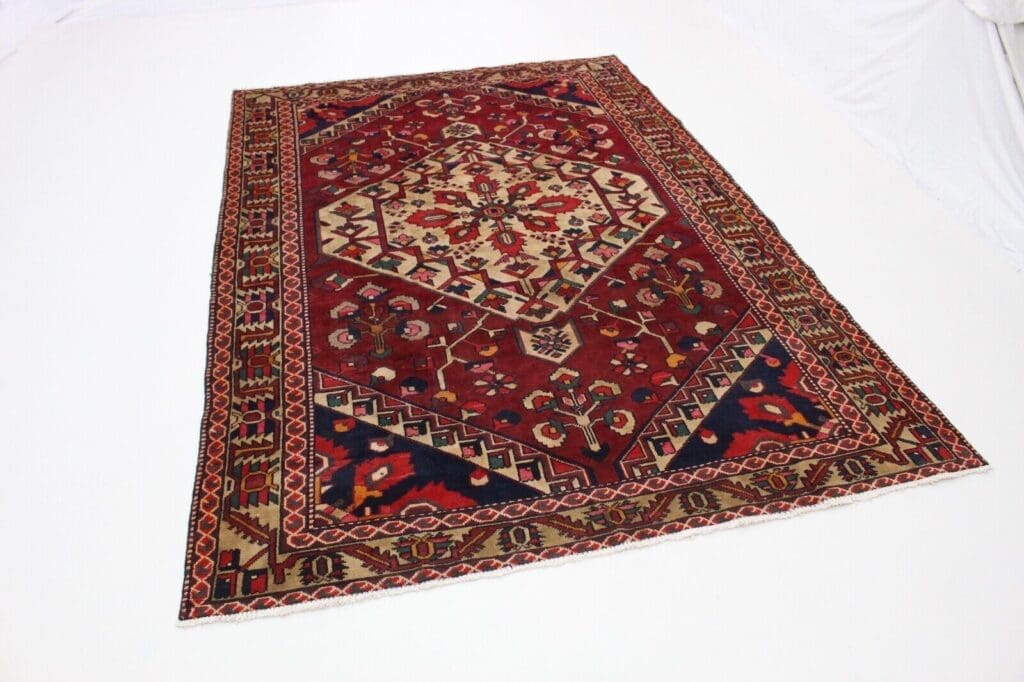
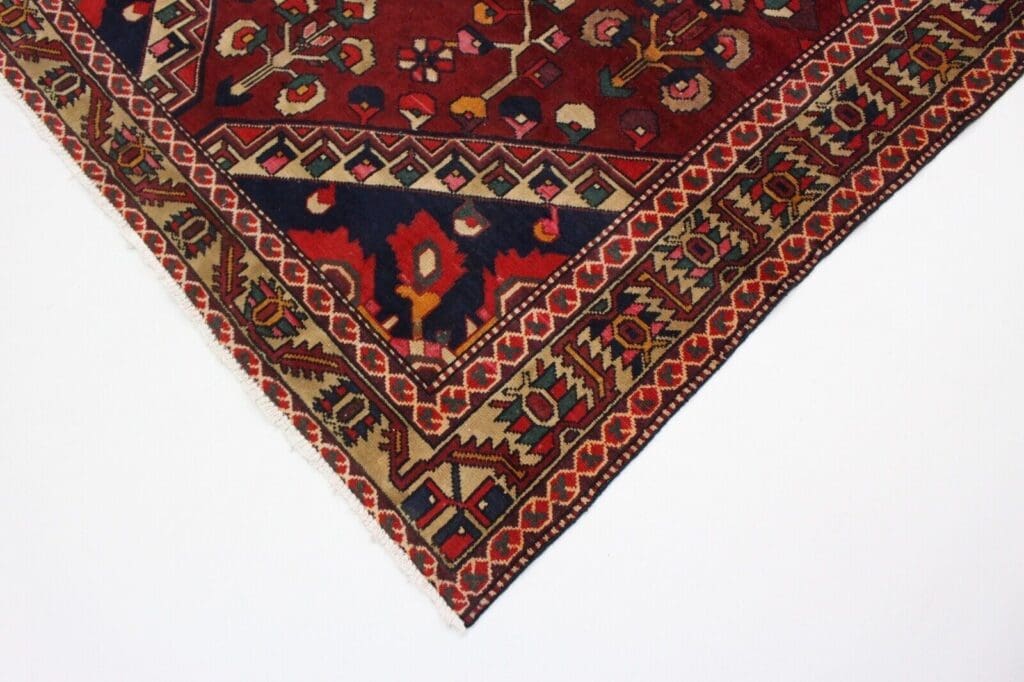
This Bakhtiar Persian rug is hand-knotted and made from 100% wool. Its workmanship is described as high quality. The pile has a height of approximately 10 mm, giving the surface a distinct tactile structure typical of a traditional rug. In a hand-knotted rug, the pile is built up knot by knot within the foundation. The result is not an industrially uniform textile, but a piece whose appearance reflects the principles of traditional workshop craftsmanship.
Wool is a classic material in the production of Oriental rugs. Its natural fibre structure combines a comfortable feel with good durability. Bakhtiar rugs use wool as a material suited to a resilient pile and to the clear presentation of hand-knotted designs. This particular rug has a wool pile and was made entirely by hand knotting. The material and technique therefore define much of its visible character.
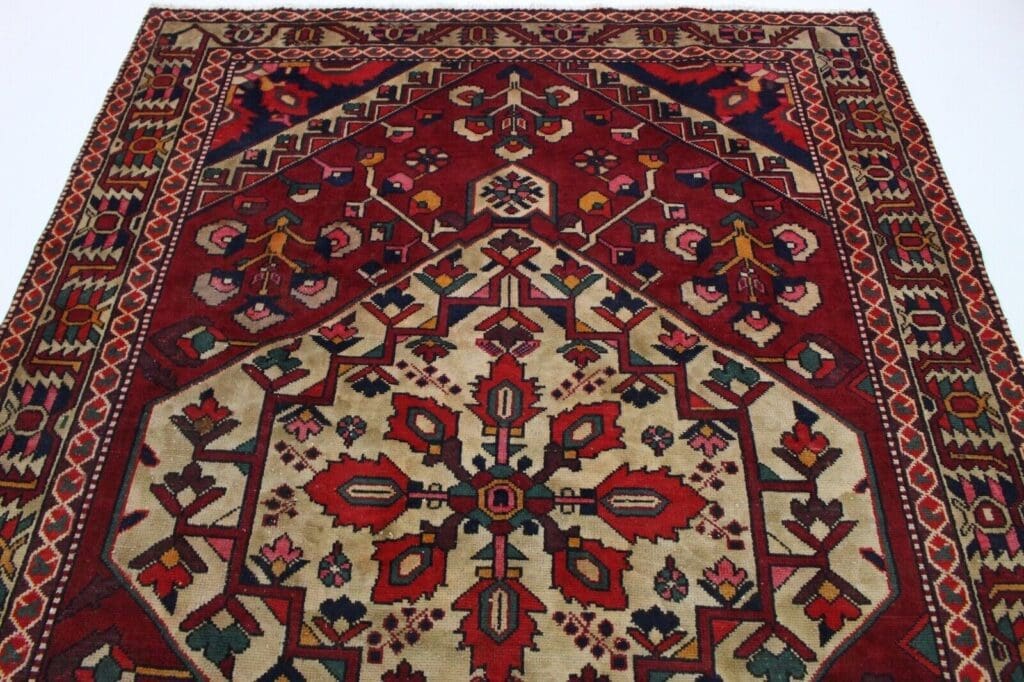
The pile height of approximately 10 mm indicates the construction of the surface without making any additional claim about the design. A pile of this type can present traditional motifs with clear contours and creates a compact textile feel underfoot. In a hand-knotted rug, craftsmanship is expressed through the relationship between the knots, the pile and the pattern. The workmanship of this rug is classified as high quality, and the rug has also been professionally inspected.
Origin and Tradition
This Bakhtiar Persian rug comes from the Bakhtiar region of Iran. Bakhtiar refers both to a region and to an established tradition of rug making. Rugs from this area are connected with the cultural identity and accumulated craft knowledge of their place of origin. Their design tradition brings practical use and inherited ornament together rather than treating them as separate aspects of the rug.
The making of a Bakhtiar rug is traditionally based on handwork. Knotting requires sustained and careful labour because the pile is formed one knot at a time. Unlike machine production, the surface is not created in one uniform operation. The hands of the weavers determine the structure of the rug while the design gradually emerges from the sequence of knots. This method is central to the regional character of Bakhtiar weaving.
Bakhtiar rugs are often associated with the landscape and rural surroundings of their region. Natural forms, defined geometry and stylised representations are among the ideas that can appear in this tradition. There is not one single obligatory Bakhtiar pattern, however. Regional weaving includes different compositions in which fields, ornaments and colour areas can be arranged in their own distinct order.
The Bakhtiar tradition stands alongside other important Iranian weaving centres. Isfahan is known for detailed designs and fine weaving techniques. Tabriz also has a long rug-making history and is often associated with artistic floral patterns and lively colours. Qum is known for distinctive designs and the use of silk. These places have different visual languages and technical emphases, while all contributing to the broader diversity of Iranian rug culture.
A Bakhtiar Persian rug can therefore be understood as part of Iran’s wider history of knotting without losing its specific regional identity. The combination of inherited handcraft and regional materials reflects the cultural character of Bakhtiar. Each hand-knotted rug develops its own textile expression through the making process. Its craft origin is as important as its practical role as a traditional floor covering.
Design and Pattern
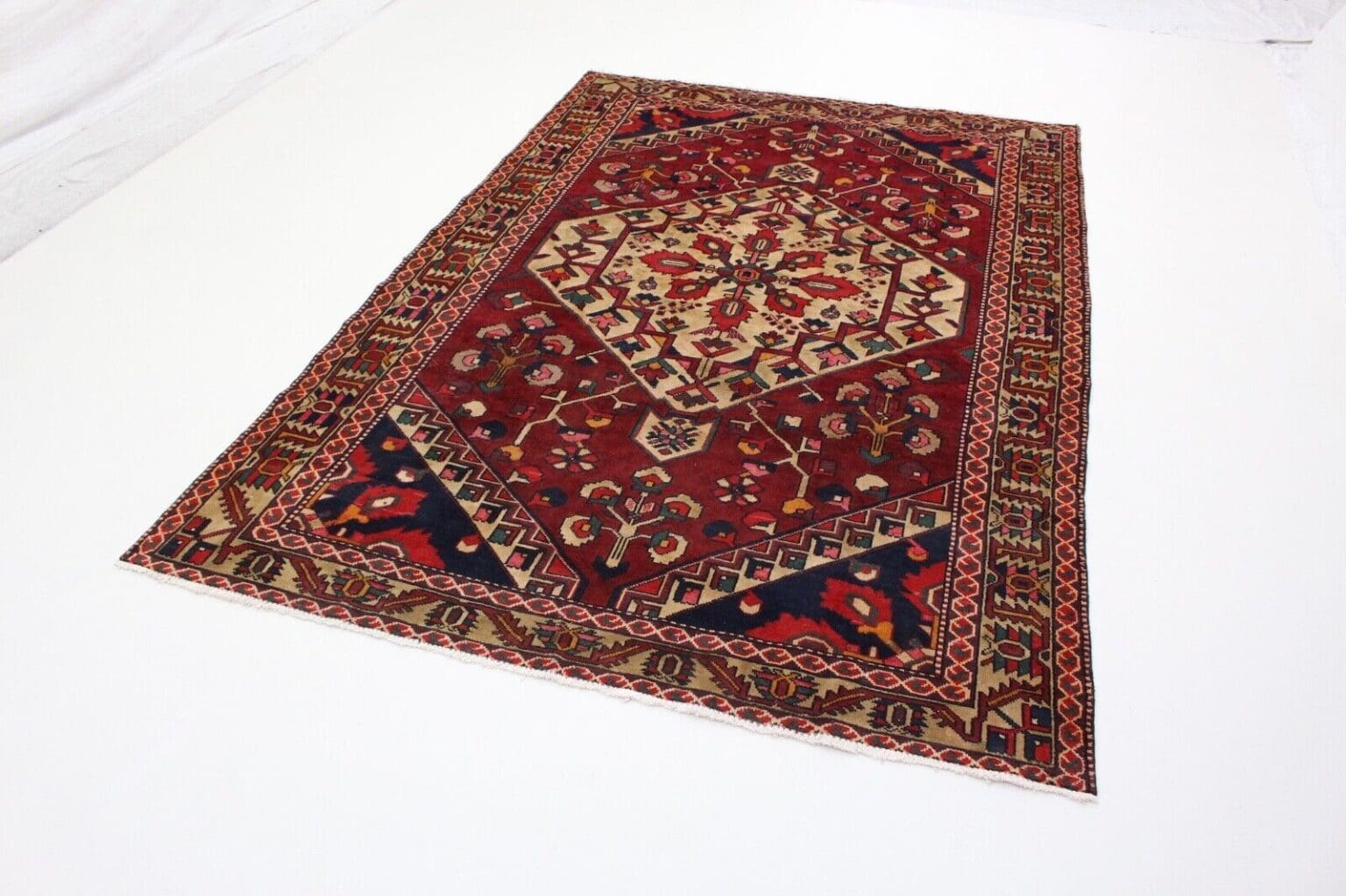
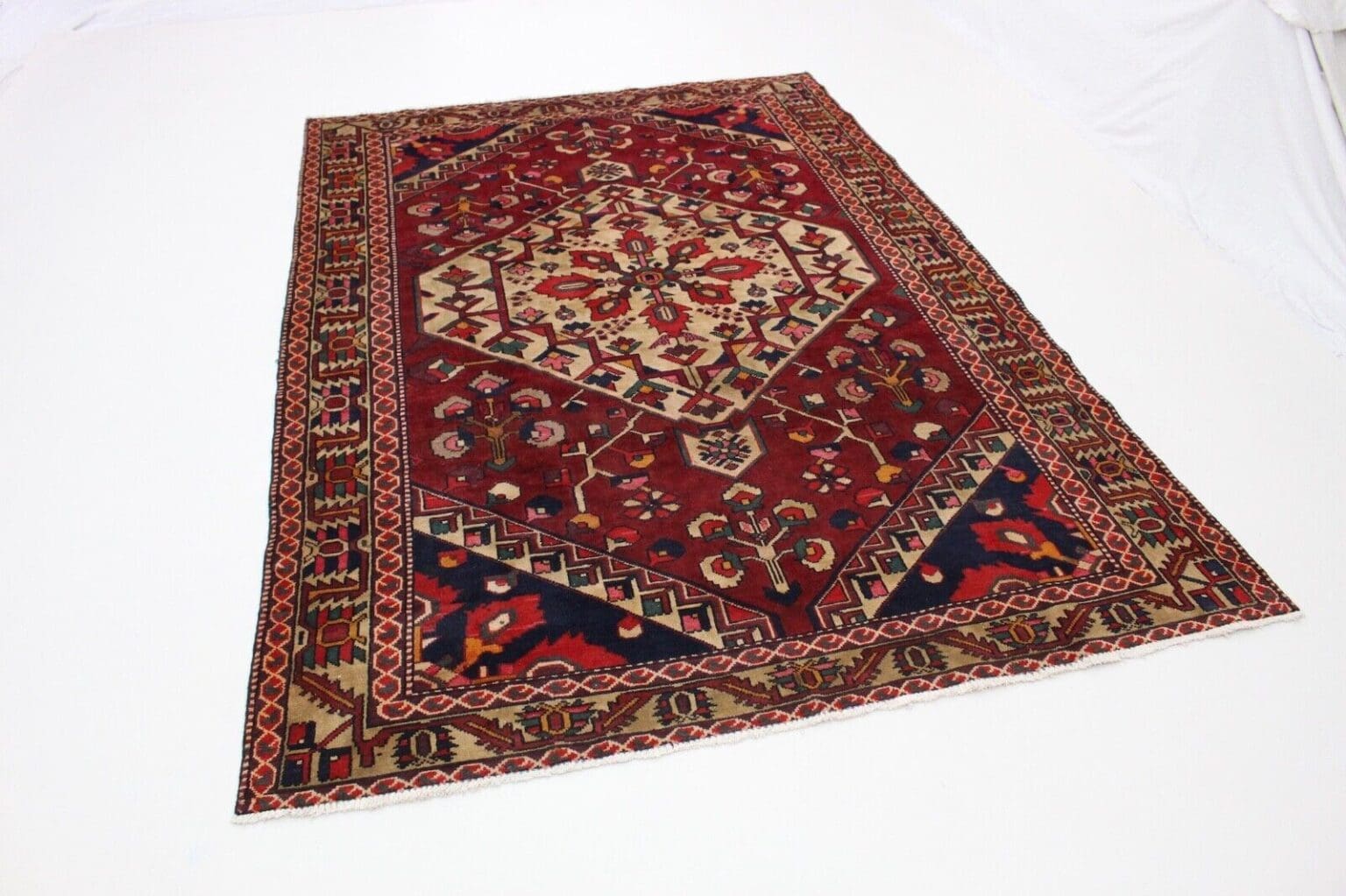
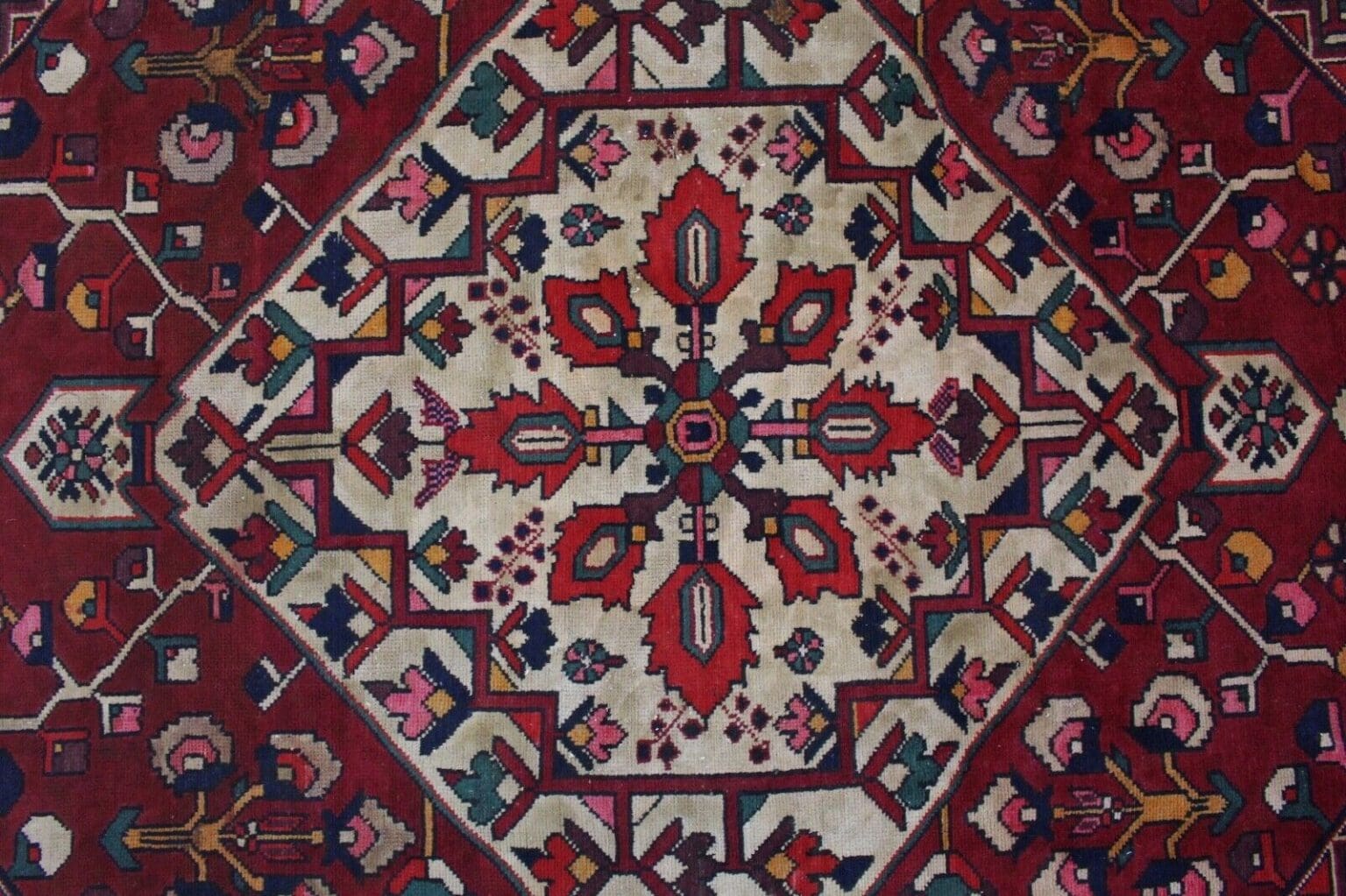
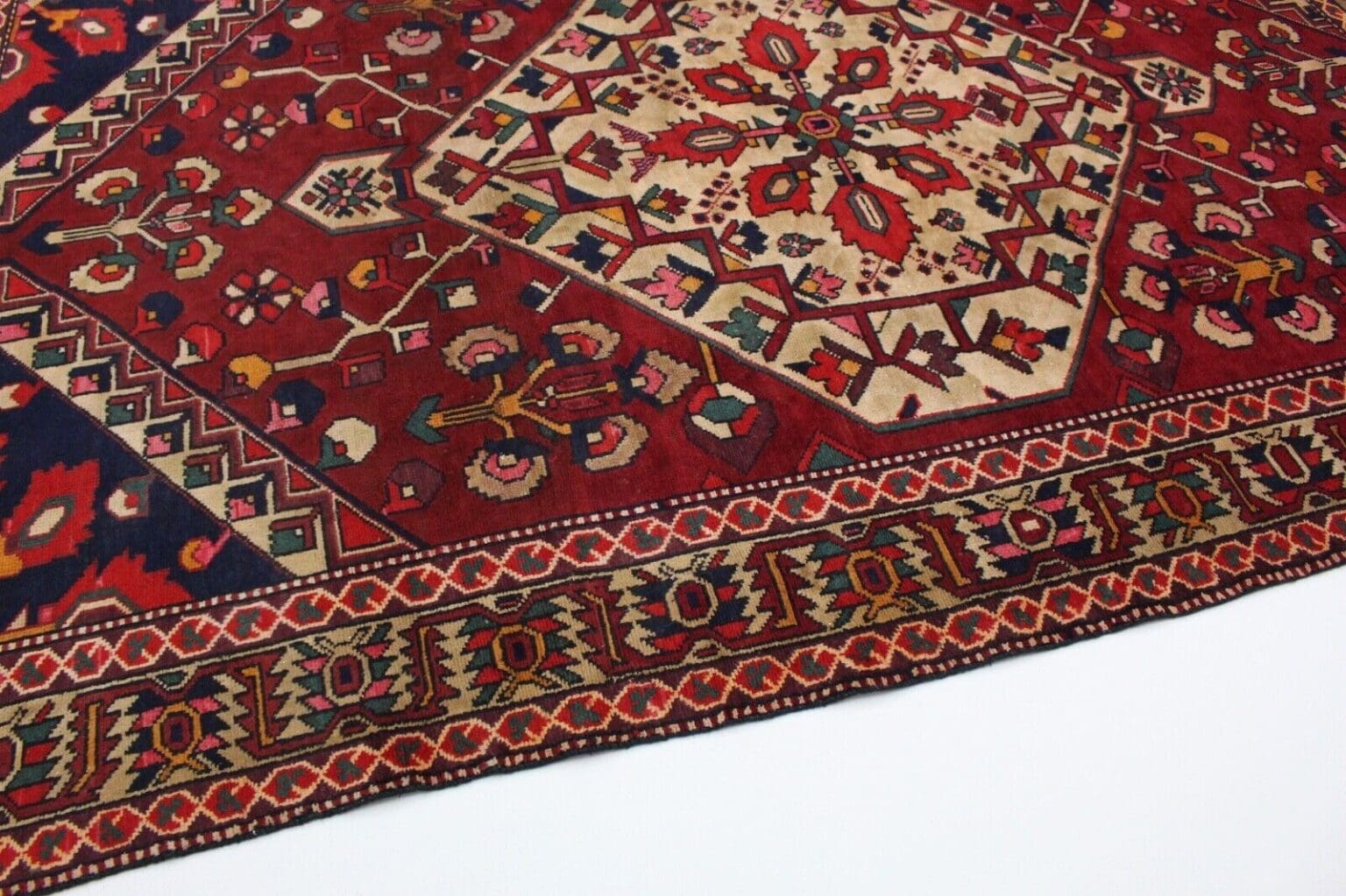
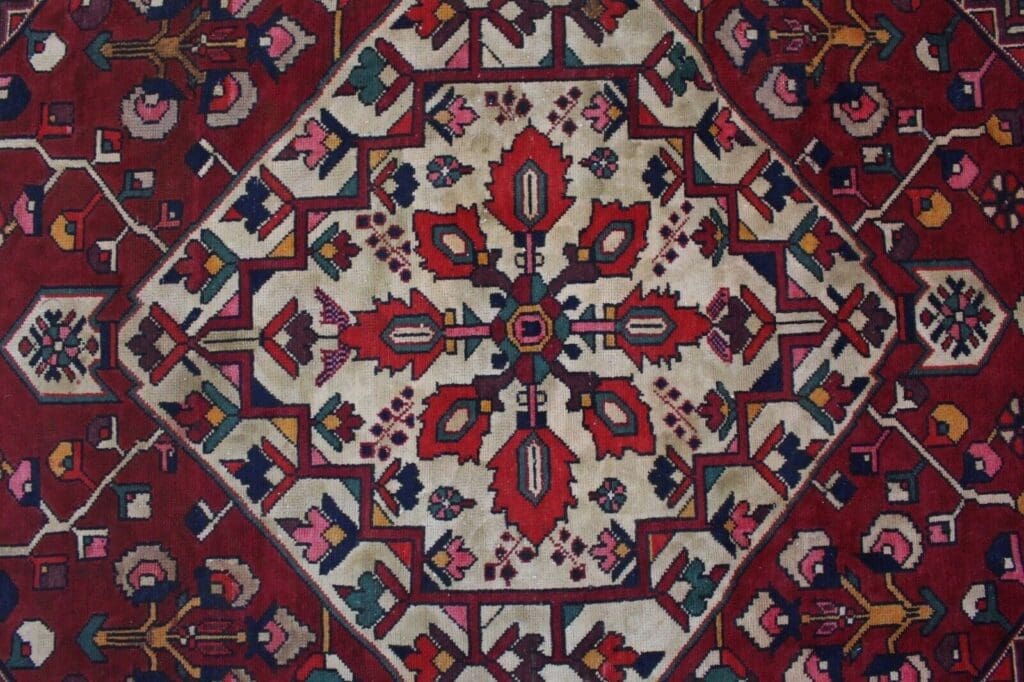
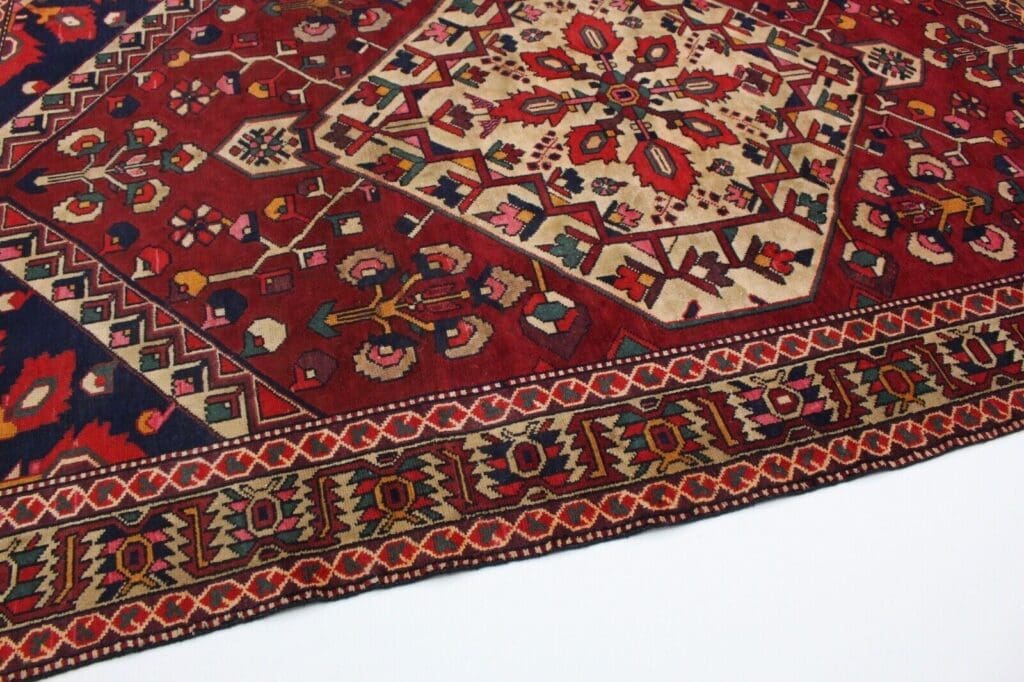
The pattern of this rug is described as Oriental and is associated with a traditional design. Oriental rug patterns often rely on an organised structure in which floral forms, geometric elements and stylised figures are brought together. In the Bakhtiar tradition, ideas drawn from the surrounding natural environment can play an important part. Flowers, leaves and other plant forms may appear alongside animals that are represented in simplified or stylised rather than strictly naturalistic ways.
Geometric forms provide a pattern with rhythm and structure. They can appear as individual ornaments, repeated units or divisions within larger fields. Floral motifs add a more flowing movement to the composition. The interaction between these principles is characteristic of many traditional Oriental rugs: repetition creates order, while small variations and the handworked surface give the design a textile vitality.
Bakhtiar rugs may be organised around a central field or around repeated ornaments. The precise arrangement depends on the design of each individual rug. This rug is described in general terms as having an Oriental pattern; no more specific designation for a particular border, medallion or named decoration is given. The focus therefore remains on the traditional overall design rather than on assigning an unsupported specialist pattern name.
The colour effect of traditional Bakhtiar designs comes from the relationship between the ground, the ornaments and the recurring motifs. The source description refers to lively colours as typical of these rugs. They help distinguish floral and geometric forms and allow the separate pattern areas to remain legible. Colour cannot be considered separately from technique: the knotted pile carries the design, while the arrangement of knots shapes the outlines of the motifs.
Nature is a recurring theme in Bakhtiar design, but it does not create one fixed pattern category. Stylised animals, plant motifs and geometric forms can receive different emphasis from rug to rug. Traditional Bakhtiar design thus combines regional imagery with an ordered ornamental structure. In this case, the design is identified as Oriental and traditional. It remains clearly within the inherited Bakhtiar rug tradition without attributing an unconfirmed individual motif.
Isfahan and Tabriz rugs are often mentioned for comparison. Isfahan designs are regarded as detailed and complex, while Tabriz rugs frequently display artistic floral forms and lively colours. Qum rugs, in turn, may be distinguished by individual designs and silk. These comparisons illustrate the variety of Iranian design traditions. They do not change the origin or pattern description of this rug: it is a Bakhtiar Persian rug with a traditional Oriental design.
Special Features
The distinctive features of this rug include its hand-knotted construction, its pile of 100% wool and its traditional Bakhtiar origin. The combination of regional craftsmanship and natural material reflects the cultural identity of the place where the tradition developed. As a hand-knotted individual piece, the rug has its own textile expression and is not described as an identical industrial production item.
The condition is stated as excellent, and the rug has been professionally inspected. Regular vacuuming is recommended as part of its care. It should be protected from direct sunlight, while professional cleaning is recommended for stains. Wool is described as naturally dirt resistant and easy to clean. Appropriate, consistent care therefore supports the preservation of the colours and fibres.
The description names living rooms, dining rooms and bedrooms as suitable settings. Bakhtiar rugs are also available in different sizes, ranging from small runners to large area rugs. This variety belongs to the general tradition of the rug type and allows it to serve different interior areas.
FAQ
How should I care for my Bakhtiar Persian rug?
Regular vacuuming is the basic care routine. The rug should also be protected from direct sunlight. If stains occur, professional cleaning is recommended so that the pile and colours can be treated appropriately. Wool is naturally dirt resistant and comparatively easy to clean. Calm, regular maintenance helps keep the fibres in good condition and the colours lively.
What makes a Bakhtiar Persian rug unique?
Its character comes from the combination of hand-knotting, a traditional Oriental pattern and a high-quality material. The pile is made from 100% wool, the workmanship is described as high quality, and the rug originates in the Bakhtiar region of Iran. Traditional patterns may include floral forms, geometric elements and stylised animals. Together with the individual expression created by handwork, these features give the rug its own character.
What sizes are available for Bakhtiar rugs?
Bakhtiar rugs are available in different sizes. The range extends from small runners to large area rugs, allowing them to be used in different rooms such as living rooms, dining rooms and bedrooms. The appropriate size depends on the available floor area and the intended use. This general variety of sizes is part of the practical role of Bakhtiar rugs.
To provide the best experiences, we use technologies like cookies to store and/or access device information. Consenting to these technologies will allow us to process data such as browsing behavior or unique IDs on this site. Not consenting or withdrawing consent, may adversely affect certain features and functions.
Functional Always active
The technical storage or access is strictly necessary for the legitimate purpose of enabling the use of a specific service explicitly requested by the subscriber or user, or for the sole purpose of carrying out the transmission of a communication over an electronic communications network.
Preferences
The technical storage or access is necessary for the legitimate purpose of storing preferences that are not requested by the subscriber or user.
Statistics
The technical storage or access that is used exclusively for statistical purposes.The technical storage or access that is used exclusively for anonymous statistical purposes. Without a subpoena, voluntary compliance on the part of your Internet Service Provider, or additional records from a third party, information stored or retrieved for this purpose alone cannot usually be used to identify you.
Marketing
The technical storage or access is required to create user profiles to send advertising, or to track the user on a website or across several websites for similar marketing purposes.

 SECURE PAYMENT
 SHIPPING PARTNERS