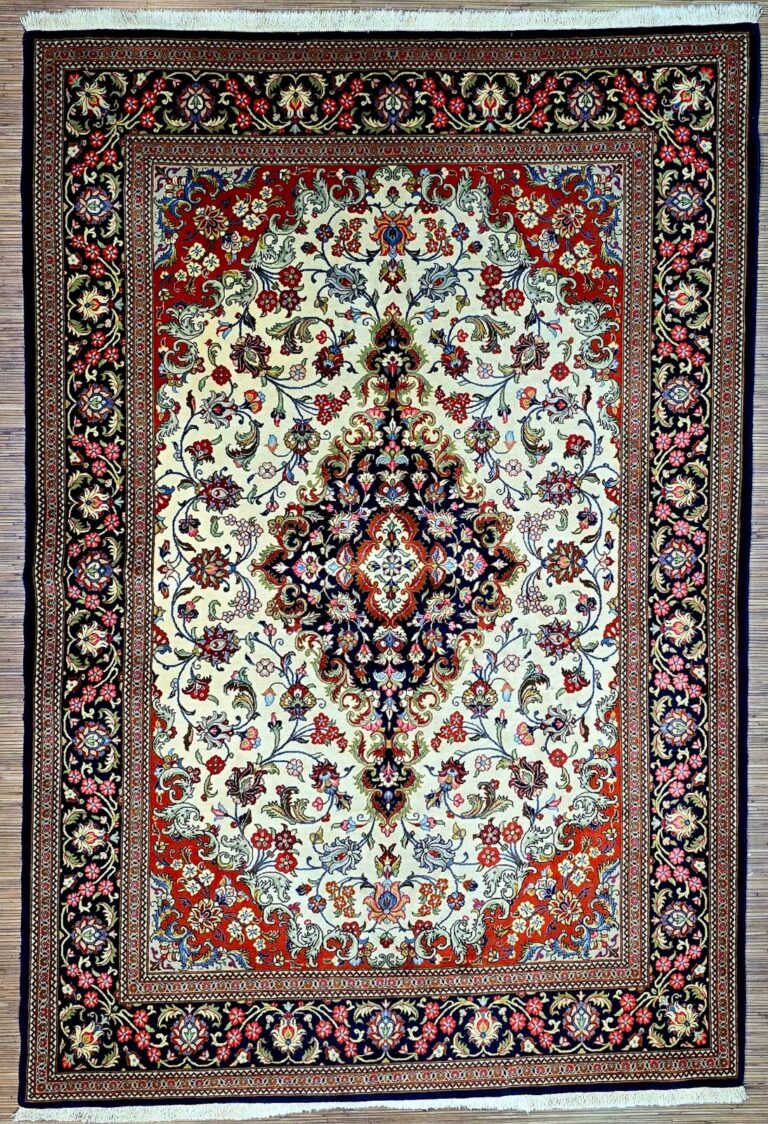
Persian Rug Bakhtiari 291 x 204 cm Wool Hand-knotted
€ 1196
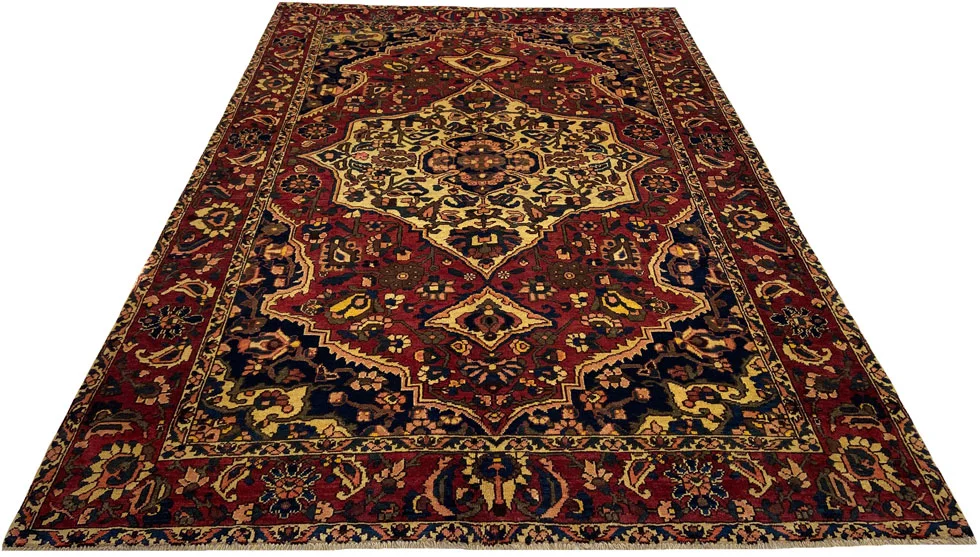
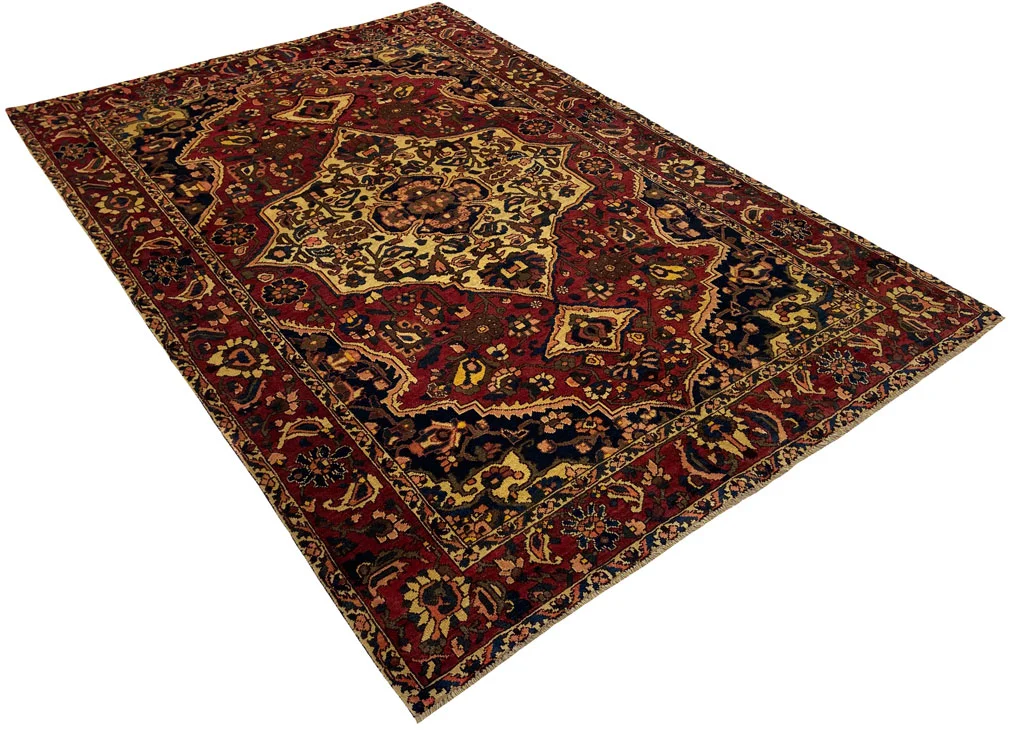
Hand-knotted Bakhtiar Persian Rug | Knot density: 150.000 – 200.000 knots/m² | Material: pile Wool | Size: 291 x 204 cm | Pattern: Kheshti garden design with plant and animal symbols | Condition: Very good
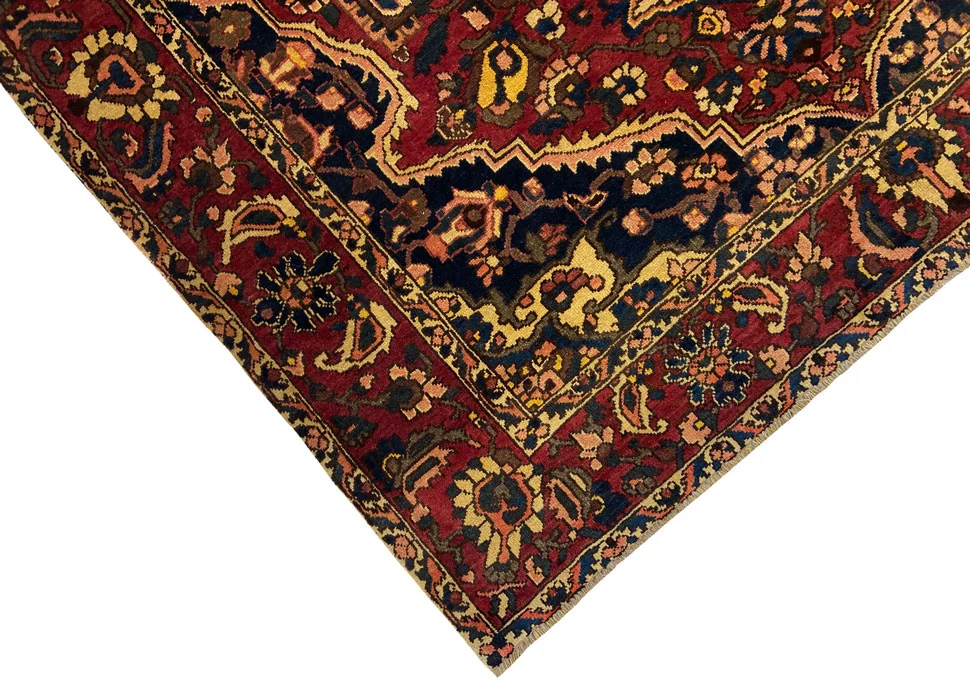
This Bakhtiar Persian rug is hand-knotted in high-quality wool. Strong wool is one of the defining materials associated with Bakhtiar rugs, giving the pile a substantial feel and supporting the practical character of the weaving tradition. Because the rug is made by hand, its surface is the result of an individual knotting process rather than industrial repetition. The wool, the outlined fields and the arrangement of the motifs therefore come together as one crafted textile.
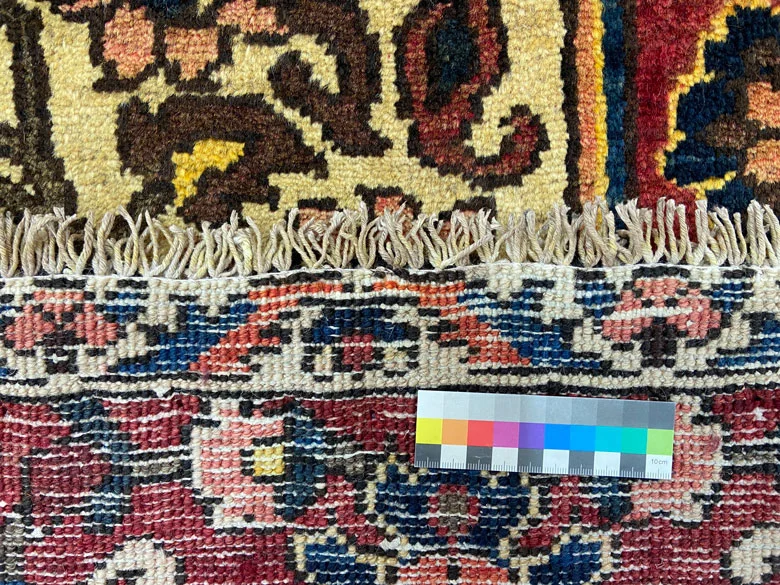
The knot density is between 150.000 and 200.000 knots per square metre. This level of knotting supports a clearly articulated pattern while retaining the visible character of a handmade rug. Bakhtiar weaving combines a sturdy wool quality with careful work at the knot level. The material shapes the way the surface feels and looks, while the hand-knotted construction gives the garden composition its defined boundaries.
The workmanship serves the Kheshti garden design. Its separate fields provide room for plant and animal symbols, and the hand-knotted outlines keep those areas visually distinct. The result is a meeting of useful wool craftsmanship and an ornamental concept rooted in the Bakhtiar tradition. The rug is described as robust, so its making is suited to a textile intended to function in a lived-in interior as well as to carry a traditional design.
Hand-knotted rugs are built knot by knot. The weaver follows a planned arrangement, places colours in sequence and gradually develops the drawing across the field. Unlike a printed or machine-made pattern, the surface arises directly from the material and the succession of knots. This method is central to the technical identity of a Bakhtiar rug. It also means that the pattern, the wool and the structure of the pile are considered together during production.
Origin and Tradition
This rug comes from western Iran, from the area west of Isfahan and close to the Zagros Mountains. It belongs to the Bakhtiar tradition, which is closely connected with the Bakhtiar nomadic people. The Zagros landscape provides an important geographical and cultural setting for this group and for the rugs associated with it. Bakhtiar weaving developed within a world in which portable textiles, wool and inherited patterns were part of everyday life and cultural expression.
Bakhtiar rugs are part of Iranian Persian carpet culture. Their identity is shaped by regional knowledge passed through generations of weavers. Knotting a rug involves more than building a durable surface: it also requires choices about the division of the field, the selection of colours and the treatment of symbols. A hand-knotted Bakhtiar rug brings these decisions together in a textile whose character comes from its western Iranian setting.
The area around the Zagros Mountains forms a meaningful background for the motifs used in Bakhtiar weaving. References to plants, animals and cultivated garden spaces can be understood within a landscape where nature and human settlement meet. The Kheshti design turns that idea into a planned arrangement of compartments. Each compartment can carry its own sign or figure, while the complete field remains connected through the repeated structure.
The Bakhtiar are among the nomadic peoples of western Iran. In nomadic communities, textile techniques, patterns and knowledge of colour were passed on over long periods. Rugs could serve practical purposes while also preserving ideas about place, nature and inherited symbols. The regional tradition is therefore not limited to one single pattern. It includes a way of working in which material, making and design are closely related.
Bakhtiar is one of several important traditions found within Iranian carpet making. Isfahan rugs are known for fine designs and intricate compositions. Tabriz rugs are likewise associated with refined workmanship and high knot densities. Kerman is connected with distinctive colours and complicated motifs. These centres help place Bakhtiar weaving within the wider history of Persian carpets, but they do not change the origin of this rug. This piece is a Bakhtiar rug from western Iran, not an Isfahan, Tabriz or Kerman rug.
The tradition also shows why place names in Persian carpet culture represent more than a decorative label. A region can influence the preferred materials, the visual language and the balance between geometry and natural forms. Bakhtiar rugs are recognised here through their connection with the western Iranian Zagros area and through the garden-field concept of Kheshti. The combination of a structured layout and nature symbols gives the tradition a distinct place within Persian weaving.
Regional knowledge is also visible in the way a design is transferred into a knotting sequence. An idea must be translated into rows, colour changes, outlines and repeated fields. Bakhtiar tradition therefore concerns both the appearance of the rug and the practical skill needed to produce it. The connection between landscape, community and handwork explains why similar Persian patterns can still have different regional identities.
Design and Pattern
The pattern is a garden design known as Kheshti. In carpet terminology, Kheshti refers to a field divided into individual compartments, commonly read as garden plots or sections of a cultivated garden. Instead of placing one isolated image at the centre, the design distributes a sequence of related spaces across the rug. Each field can contain its own plant or animal symbol, creating variety within a visibly ordered composition.
The garden is a longstanding idea in Persian visual culture. It can represent a shaped, enclosed and balanced space in which different forms of life have their place. Kheshti translates that idea into a textile arrangement through repetition and division. The compartments make the design easy to follow, while the motifs inside them prevent the surface from becoming purely mechanical. Order comes from the framework; visual variety comes from the natural symbols.
This rug combines the Kheshti structure with plant and animal imagery. The symbols refer to the flora and fauna associated with the region and bring representations of nature into the geometric field. Traditional carpet motifs are generally stylised so that they can fit within a repeated compartment rather than imitate a natural scene literally. The important feature here is the stated design language: garden fields populated by plant and animal symbols, not a separately documented list of individual figures.
Red, brown and cream form the stated colour palette. Red gives the composition a warm presence, brown reinforces its earthy connection, and cream creates lighter areas against the deeper tones. Together, these colours support the impression of a traditional garden design while keeping the field legible. No additional colours are assigned to this particular rug beyond the three named shades.
Kheshti is both decorative and organisational. The repeated fields create a rhythm across the surface, and the plant and animal signs invite the eye to move from one compartment to the next. A garden pattern differs from a freely scattered design because its elements are governed by a framework. It also differs from a strictly geometric pattern because the symbols introduce references to living forms. In Bakhtiar weaving, this balance allows regional nature imagery and a clear layout to coexist.
The field structure is essential to the way a Kheshti design is read. Repeated units create a rhythm and allow each motif to appear as part of a larger order. Individual compartments may vary in their internal drawing, while the principle of division remains recognisable. This gives the pattern a balance between regularity and variation, a quality that distinguishes a garden-field composition from a single central medallion or an unstructured scattering of motifs.
Persian carpet traditions include many other approaches, including floral arrangements, geometric compositions and finely detailed designs. Isfahan, Tabriz and Kerman each have their own place in that broader history. The design of this piece remains specifically Bakhtiar Kheshti: its identity rests on the garden compartments, the plant and animal symbols and the red, brown and cream colour scheme. The pattern name refers to the design tradition, not to a different place of origin.
Special Features
The distinguishing features of this one-off rug are its hand-knotted construction, its high-quality wool and its robust Kheshti garden pattern. The combination of red, brown and cream gives the surface a warm and clearly defined appearance. Plant and animal symbols bring variation to the separate garden fields, while the repeated compartments preserve the overall order of the composition.
The rug is in very good condition. Its robust character makes it suitable for living spaces that receive regular use. As a Bakhtiar rug from western Iran, it joins a specific regional tradition with a recognisable Persian design language. Its identity is therefore carried by the material, the handmade construction, the Kheshti pattern and the Bakhtiar origin.
FAQ
How should I care for my Bakhtiar Persian rug?
Vacuum the rug regularly to remove loose dirt from the wool pile. For deeper cleaning, have it treated occasionally by a professional cleaner. Direct sunlight should be avoided so that the red, brown and cream colours are less likely to fade. Professional care is preferable for a hand-knotted wool rug because the treatment can take its construction and material into account.
Where can I use a Bakhtiar rug?
A Bakhtiar rug can be used in several living areas, including a living room, dining room or bedroom. Its robust character also makes it suitable for spaces with heavier foot traffic. The Kheshti garden design adds a structured decorative surface, while the red, brown and cream palette maintains the rug’s connection with its Persian and Bakhtiar background.
What makes a Bakhtiar rug unique?
Its individuality comes from the combination of hand craftsmanship, high-quality wool, Bakhtiar regional tradition and the Kheshti garden design. Plant and animal symbols are arranged within separate fields and expressed in red, brown and cream. The western Iranian origin near the Zagros Mountains adds the geographical and cultural context. Together, these elements give each hand-knotted Bakhtiar rug its own relationship between material, pattern and tradition.
To provide the best experiences, we use technologies like cookies to store and/or access device information. Consenting to these technologies will allow us to process data such as browsing behavior or unique IDs on this site. Not consenting or withdrawing consent, may adversely affect certain features and functions.
Functional Always active
The technical storage or access is strictly necessary for the legitimate purpose of enabling the use of a specific service explicitly requested by the subscriber or user, or for the sole purpose of carrying out the transmission of a communication over an electronic communications network.
Preferences
The technical storage or access is necessary for the legitimate purpose of storing preferences that are not requested by the subscriber or user.
Statistics
The technical storage or access that is used exclusively for statistical purposes.The technical storage or access that is used exclusively for anonymous statistical purposes. Without a subpoena, voluntary compliance on the part of your Internet Service Provider, or additional records from a third party, information stored or retrieved for this purpose alone cannot usually be used to identify you.
Marketing
The technical storage or access is required to create user profiles to send advertising, or to track the user on a website or across several websites for similar marketing purposes.

 SECURE PAYMENT
 SHIPPING PARTNERS