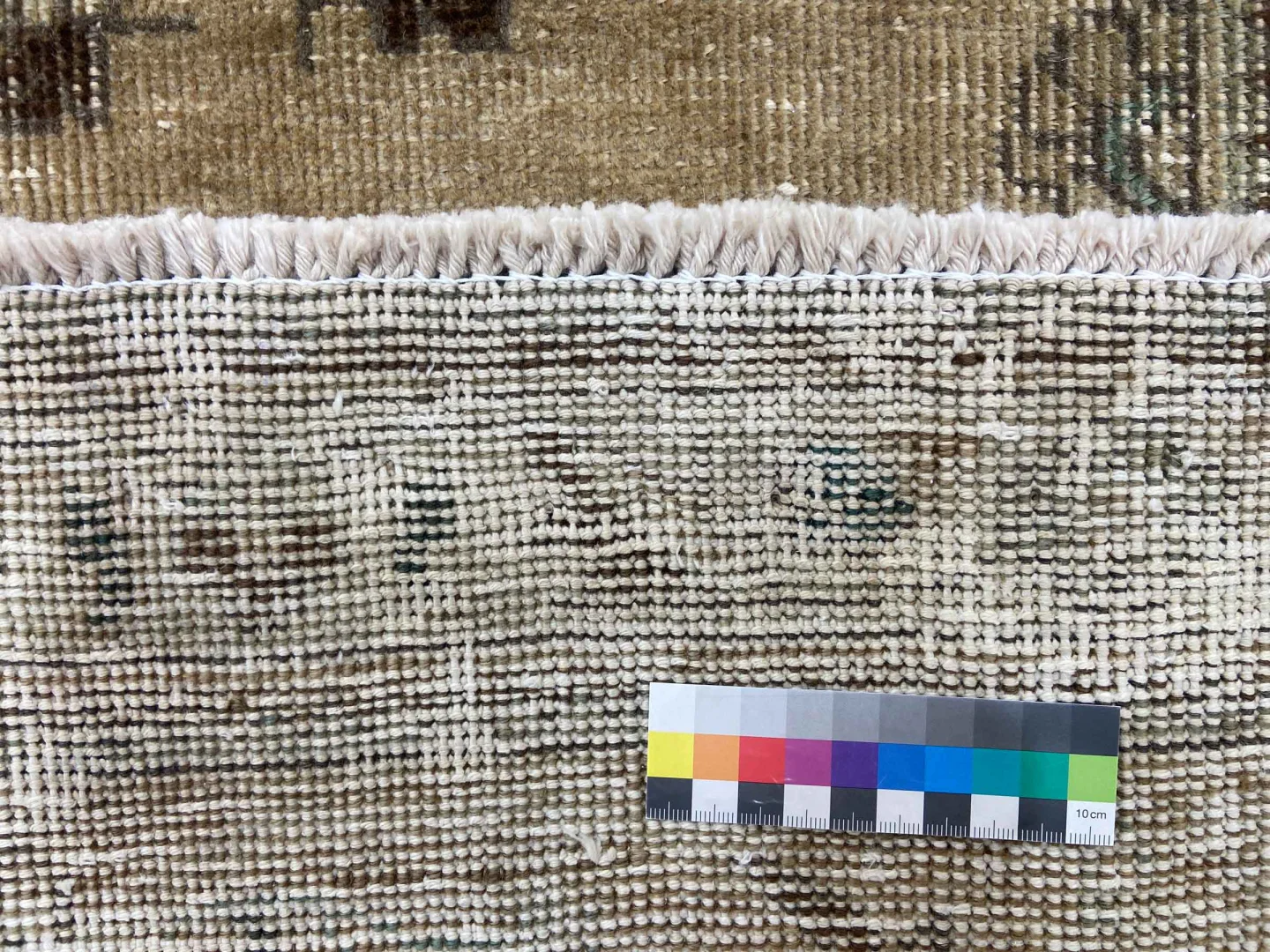
This Persian rug is hand-knotted and described as a wool rug. Wool has been one of the central materials in Oriental carpet making for centuries. It is well suited to pile because the fibre is resilient, tactile and able to retain its shape. In a hand-knotted rug, the material is inserted knot by knot into a prepared foundation. The resulting surface is shaped by the density of the knots, the height of the pile and the direction in which the fibres lie.
The description refers to high-quality craftsmanship but does not provide a numerical knot count. That wording is therefore retained without converting it into a figure. A hand-knotted carpet is not produced through a mechanically repeated surface; it is built through a sequence of individual manual operations. Knots, rows and pile are joined by hand. This process gives every piece its own textile execution, even when the design is based on an established Oriental pattern.
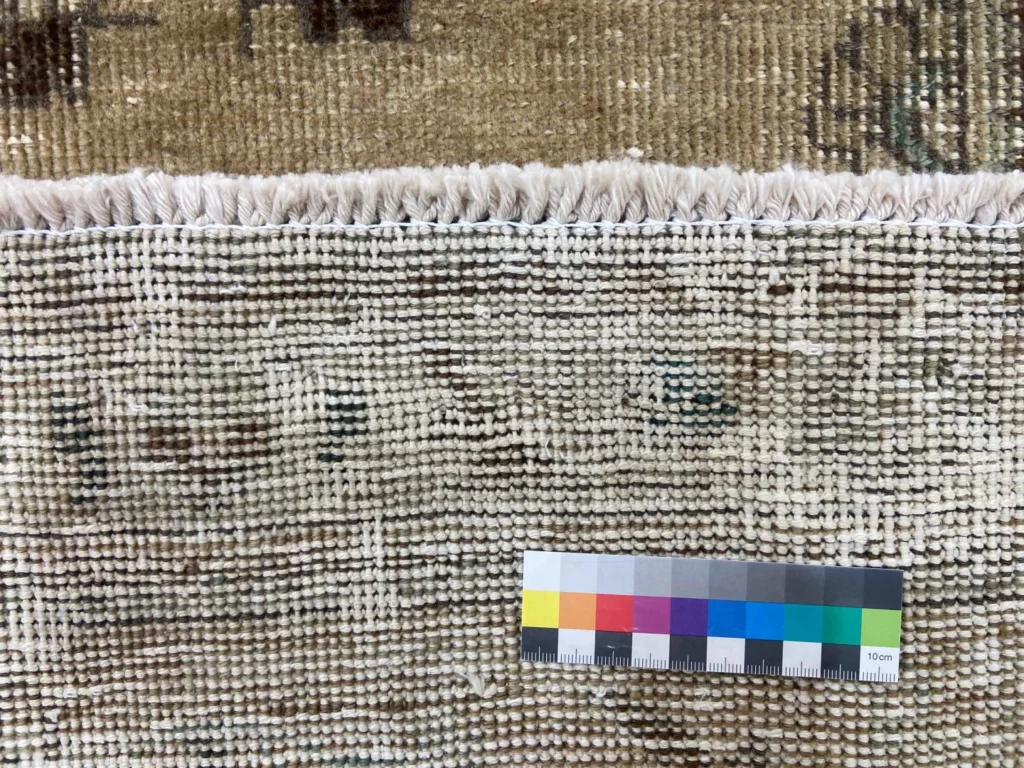
Persian carpets are traditionally made with wool and, in some forms, silk. Wool is commonly used for pile, while silk may be selected for finer details or areas where a smoother sheen is wanted. This particular rug is described as hand-knotted wool. Its surface has also been treated by shortening and dyeing the pile. These processes alter the way the material reflects light and give the traditional carpet design a more contemporary appearance.
Origin and Tradition
Persian rugs belong to the long tradition of Iranian carpet making. Iran contains many historically established weaving and knotting areas, each with its own approaches to structure, ornament, colour and workmanship. The term Persian rug refers to the Persian or Iranian tradition and does not, by itself, identify one particular town or province. No specific province or regional centre is given for this individual rug.
Carpet making in Iran combines practical use with a highly developed language of ornament. Weavers work from inherited pattern traditions, while adapting them to the loom, the available wool and the intended format. The design is transferred to the foundation before the individual knots are inserted and the rows are compacted. Depending on the rug, further stages can include shearing, washing, drying and stretching. This sequence explains why a hand-knotted carpet is the result of several distinct craft processes rather than one manufacturing step.
Many Iranian carpets use a central medallion, a repeating field or a composition structured by scrolling foliage. Geometric forms are equally part of the regional vocabulary. Floral ornaments may be naturalistic, stylised or reduced to lines and repeated shapes. Regional distinctions are expressed not only through the choice of motif, but also through contour work, the filling of open areas and the relationship between colours. Tabriz, Isfahan and Kashan are named in the general description as recognised carpet regions; they are not stated as the origin of this particular rug.
The tradition also continues through contemporary treatments. Vintage Persian rugs retain references to older Oriental patterns while changing the appearance of the textile surface. Shortening the pile reduces part of the original relief and can make the ornament read more as a broad field of colour. Dyeing can unify, deepen or deliberately soften the existing palette. These methods reinterpret a traditional carpet image for more current interiors. The historic design language remains present as a visual reference, while the treatment gives it a different surface character.
Iranian carpet history is therefore not limited to one fixed appearance. Knotting traditions developed alongside local materials, regional tastes and changing domestic uses. Some designs favour precise symmetry, while others depend on repeated motifs and balanced colour fields. The continuing value of hand-knotting lies in the way a design is translated into a physical surface through many manual decisions. A vintage treatment adds another layer to that history by preserving the structure of an Oriental design while changing how its pile and colour are perceived.
Design and Pattern
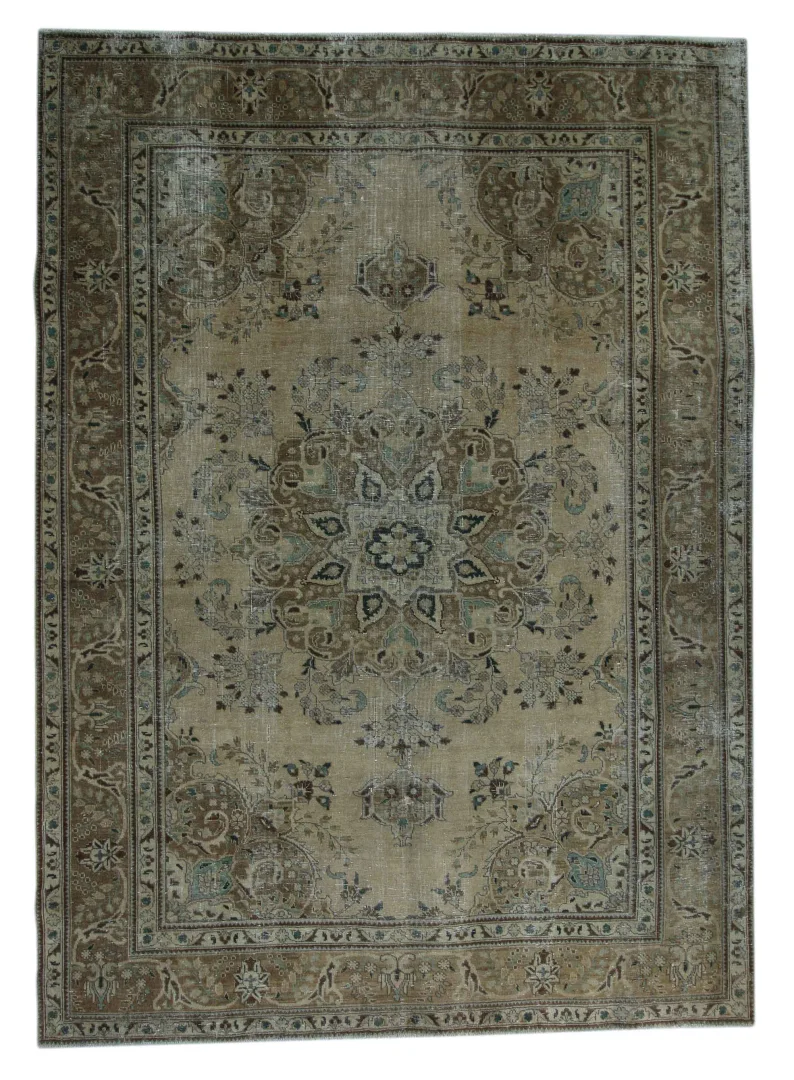
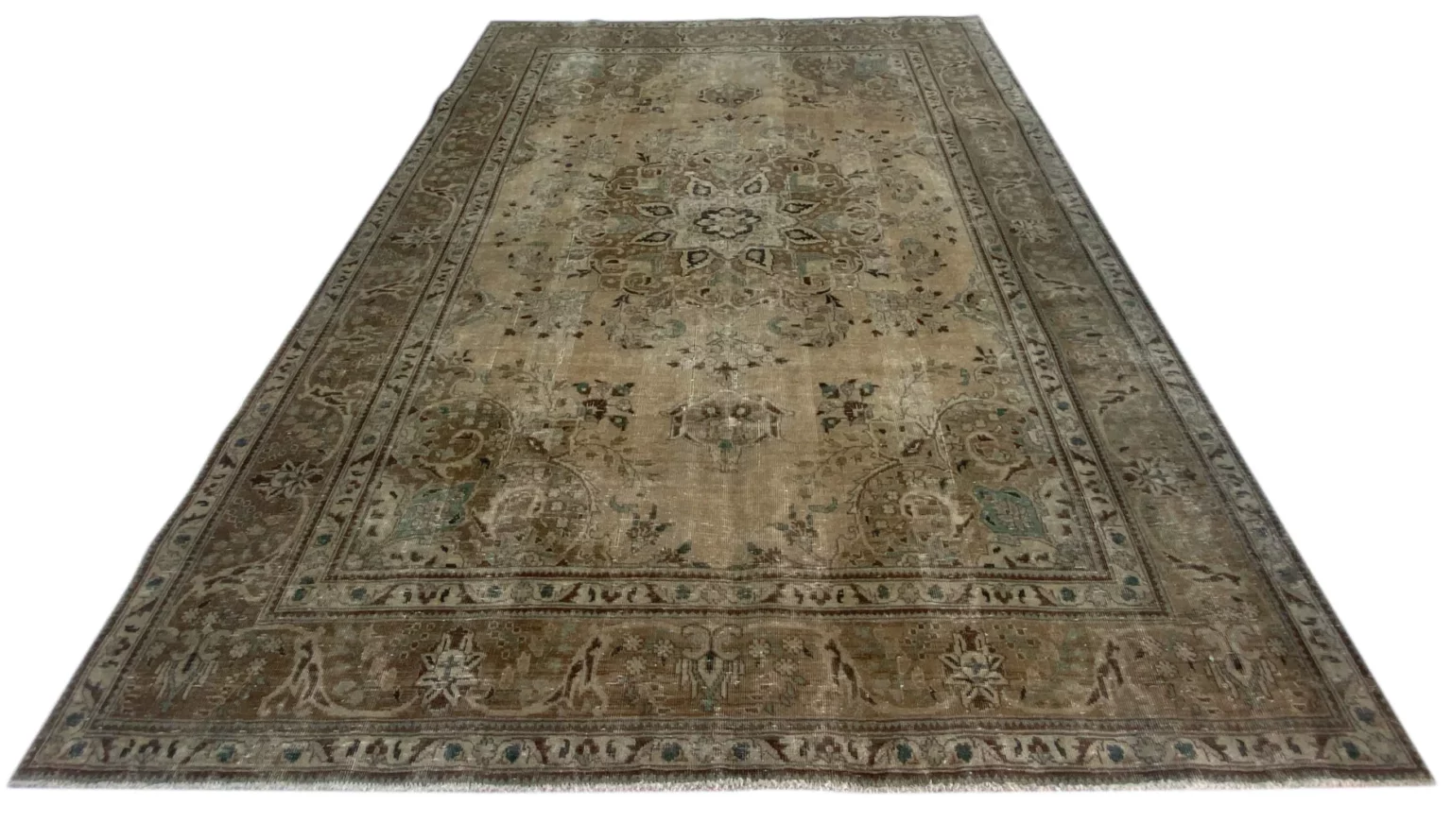
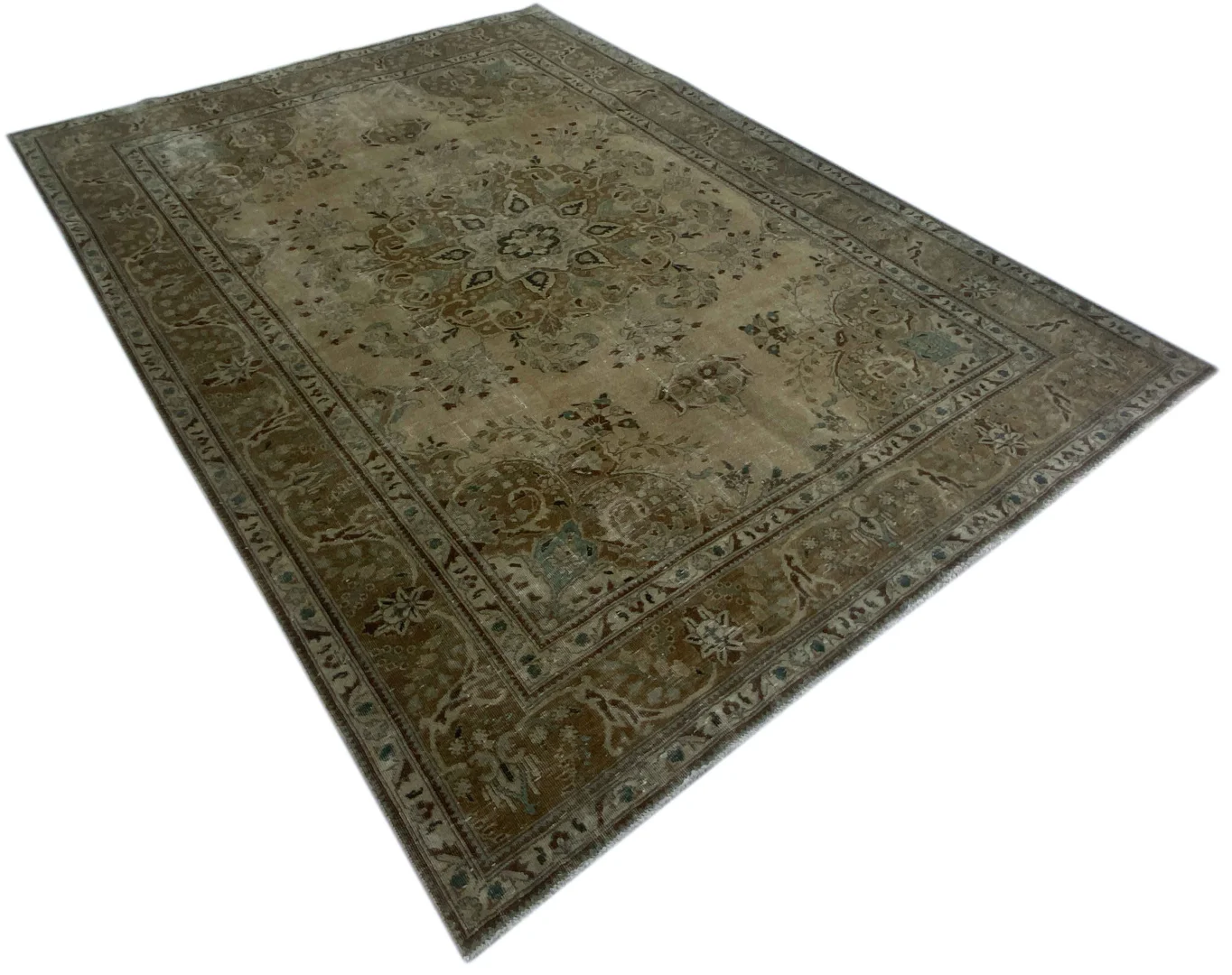
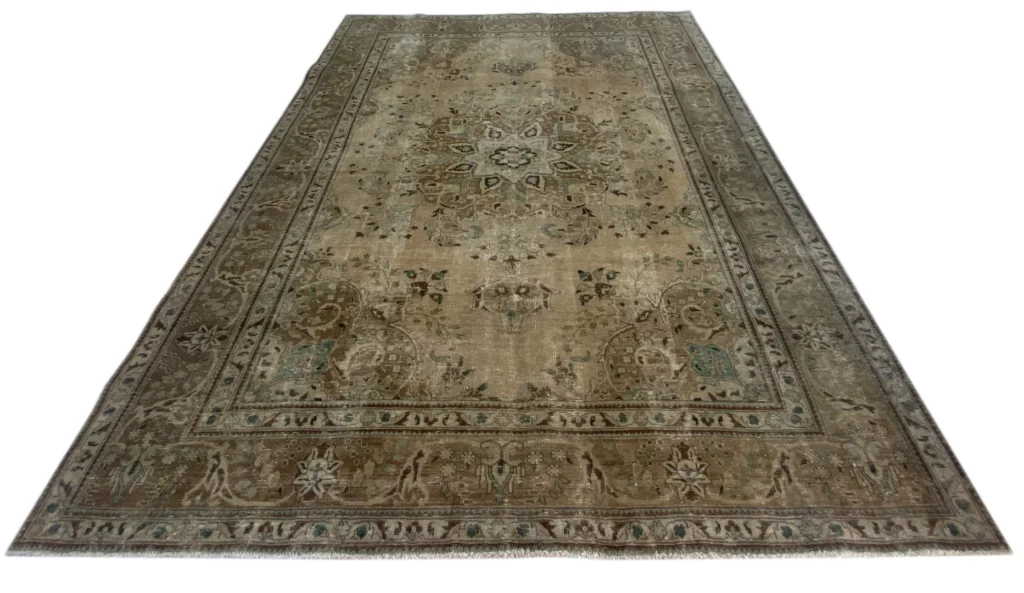
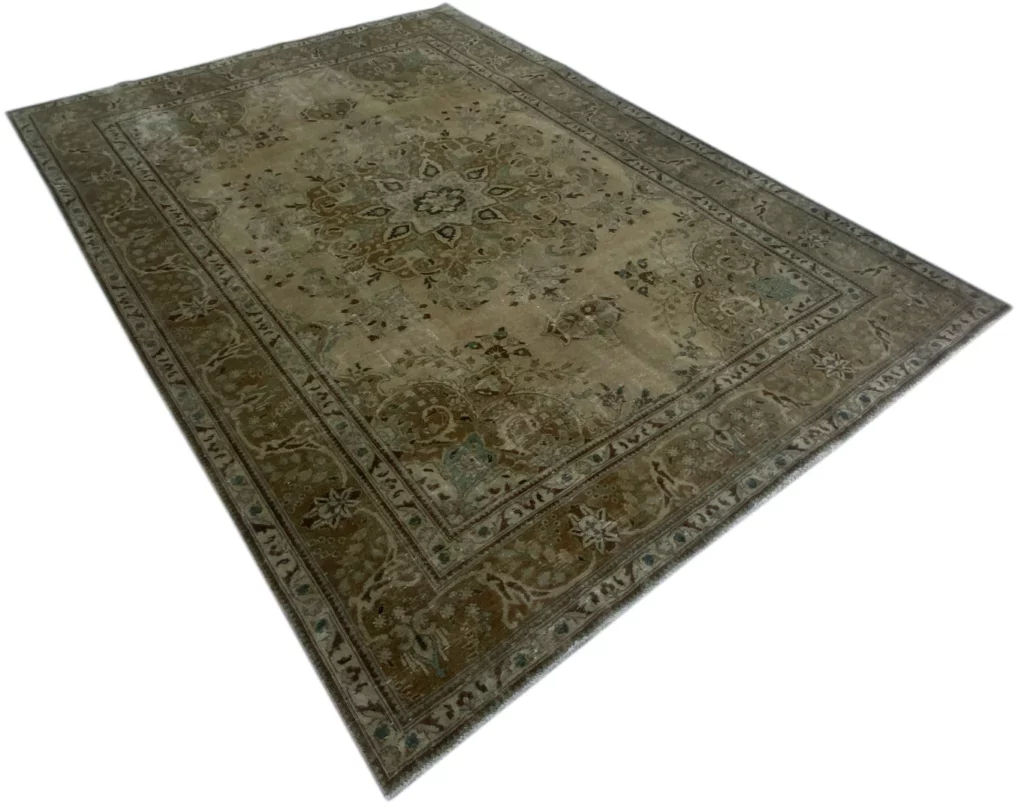
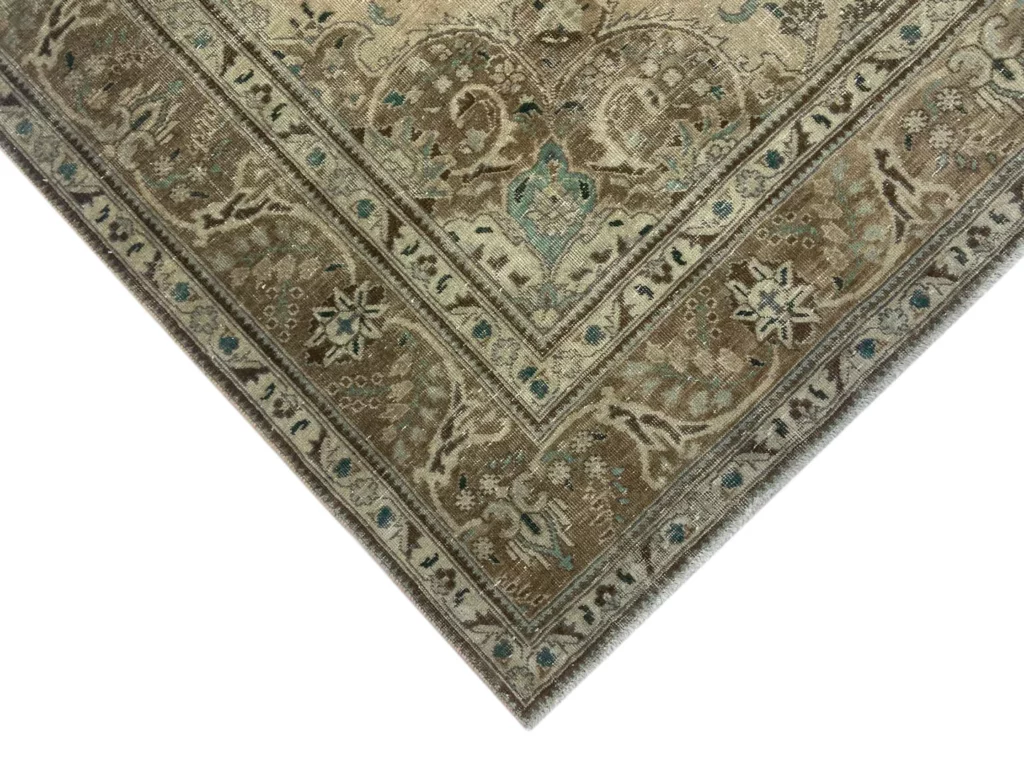
The pattern of this rug is described as a classic Oriental design with a modern touch. Classic Oriental designs often organise the surface through repeated ornaments and a clear relationship between the central field and the border. Depending on the individual design, the visual vocabulary may include scrolling flowers, palmettes, geometric forms, stylised boteh shapes or other inherited motifs. No single named ornament is specified for this rug, so its pattern is best described in the broader terms supplied: classic Oriental design with a modern interpretation.
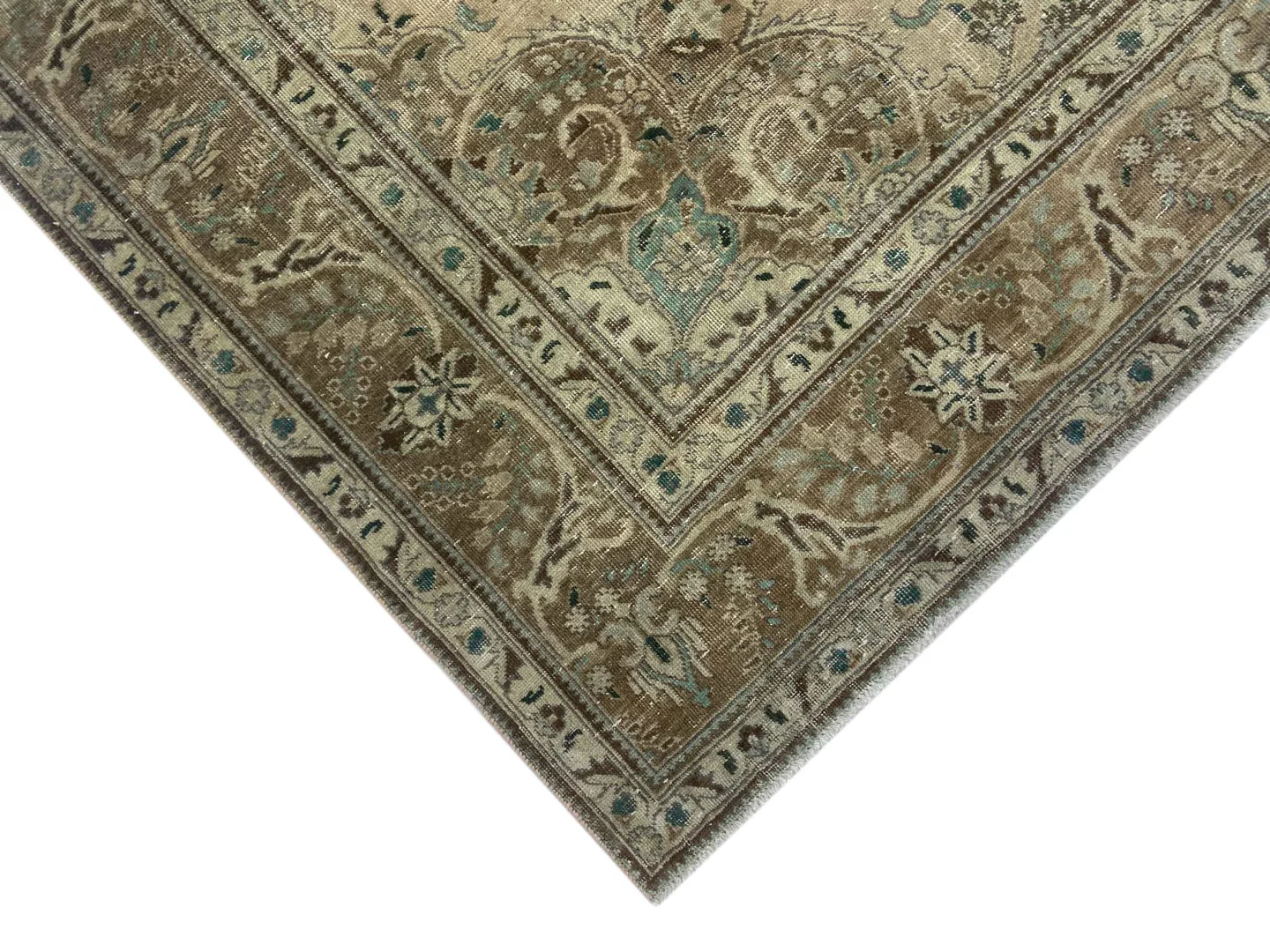
The contemporary quality comes chiefly from the treatment of the pile. Shortening the pile reduces its height and can make the ornament appear flatter and more unified. Dyeing changes the relationship between the original colours and the visible surface. Vintage rug finishing uses these methods to reinterpret older patterns rather than replacing them with a completely new design. The ordered structure of the Oriental composition remains a point of reference, while the altered pile and colour give the rug a more restrained present-day appearance.
In Persian carpet design, colour and contour perform several functions at once. They separate the field from the border, define individual ornaments and establish a rhythm across the composition. Traditional carpets may use deep reds, blues and earthy shades, among many other colour families. The general description gives this broad range for Persian rugs but does not establish a precise palette for this piece. What is specifically described is the combination of a classic Oriental pattern and a modern effect created through reworking.
A pattern can also change in appearance according to pile height, light and viewing distance. A shortened pile may cause larger colour areas and outlines to read more continuously. Fine transitions can appear calmer, while contrasting lines may become more noticeable. Subsequent dyeing overlays the existing ornamentation and changes the balance between its parts, without necessarily removing the original design. This visible relationship between an inherited pattern and an altered surface is central to the rug’s vintage character.
Oriental rugs are traditionally assessed through the interaction of composition, colour and knotting technique rather than through one motif alone. A classic design may be strictly symmetrical or based on a freer repetition of elements. Vintage reworking shifts some of the emphasis from finely drawn detail to the overall plane of the rug. That makes a traditional Persian design compatible with rooms that use a simpler, more contemporary interior language, while the underlying connection to Iranian ornament remains legible.
Special Features
The principal special feature of this rug is its extensive reworking. The pile has been shortened and dyed, giving the surface a newly interpreted appearance. This treatment does not turn a classic Oriental design into an entirely different pattern; instead, it changes how the existing design is seen. The traditional ornament remains the reference, while the work on the pile and colour establishes the modern touch.
The rug is also a one-off example of hand-knotted production. Its combination of wool, a classic Oriental design and subsequent surface treatment distinguishes it from an untreated standard carpet. The description identifies high-quality craftsmanship and a carefully reworked condition. No further details about age, signature, exact regional origin or the extent of restoration are provided, so none are added here.
FAQ
What makes a Persian rug special?
A Persian rug brings together handwork and an established tradition of ornament. Its character can come from the structure of the pattern, the relation between field and border, and the use of wool or, in certain forms, silk. Every hand-knotted rug is built through its own sequence of knots and craft operations. A vintage Persian rug adds the treatment of the pile to this tradition. In this case, the pile and colour have been altered so that a classic Oriental design takes on a more modern appearance.
How should I care for my Persian rug?
Regular, careful vacuuming helps remove dust and loose particles before they settle into the pile. Spilled liquids should be absorbed promptly, without aggressive rubbing. Professional cleaning at suitable intervals can help preserve the wool, colours and surface. Strong direct sunlight should be avoided because textile dyes may fade over time. With a vintage rug that has been dyed after the original knotting, specialist cleaning is particularly appropriate so that the treated surface is handled correctly.
Which pattern should I choose for my room?
The right pattern depends on the existing furnishings and the atmosphere intended for the room. Geometric or restrained designs can work well with modern spaces built around clear lines. Floral and more detailed Oriental patterns often relate naturally to traditional interiors. A classic Oriental design with a modern touch can bridge both approaches: the inherited ornament remains visible, while the shortened and dyed pile gives the surface a quieter and more contemporary reading.
To provide the best experiences, we use technologies like cookies to store and/or access device information. Consenting to these technologies will allow us to process data such as browsing behavior or unique IDs on this site. Not consenting or withdrawing consent, may adversely affect certain features and functions.
Functional Always active
The technical storage or access is strictly necessary for the legitimate purpose of enabling the use of a specific service explicitly requested by the subscriber or user, or for the sole purpose of carrying out the transmission of a communication over an electronic communications network.
Preferences
The technical storage or access is necessary for the legitimate purpose of storing preferences that are not requested by the subscriber or user.
Statistics
The technical storage or access that is used exclusively for statistical purposes.The technical storage or access that is used exclusively for anonymous statistical purposes. Without a subpoena, voluntary compliance on the part of your Internet Service Provider, or additional records from a third party, information stored or retrieved for this purpose alone cannot usually be used to identify you.
Marketing
The technical storage or access is required to create user profiles to send advertising, or to track the user on a website or across several websites for similar marketing purposes.
 SECURE PAYMENT
 SHIPPING PARTNERS


