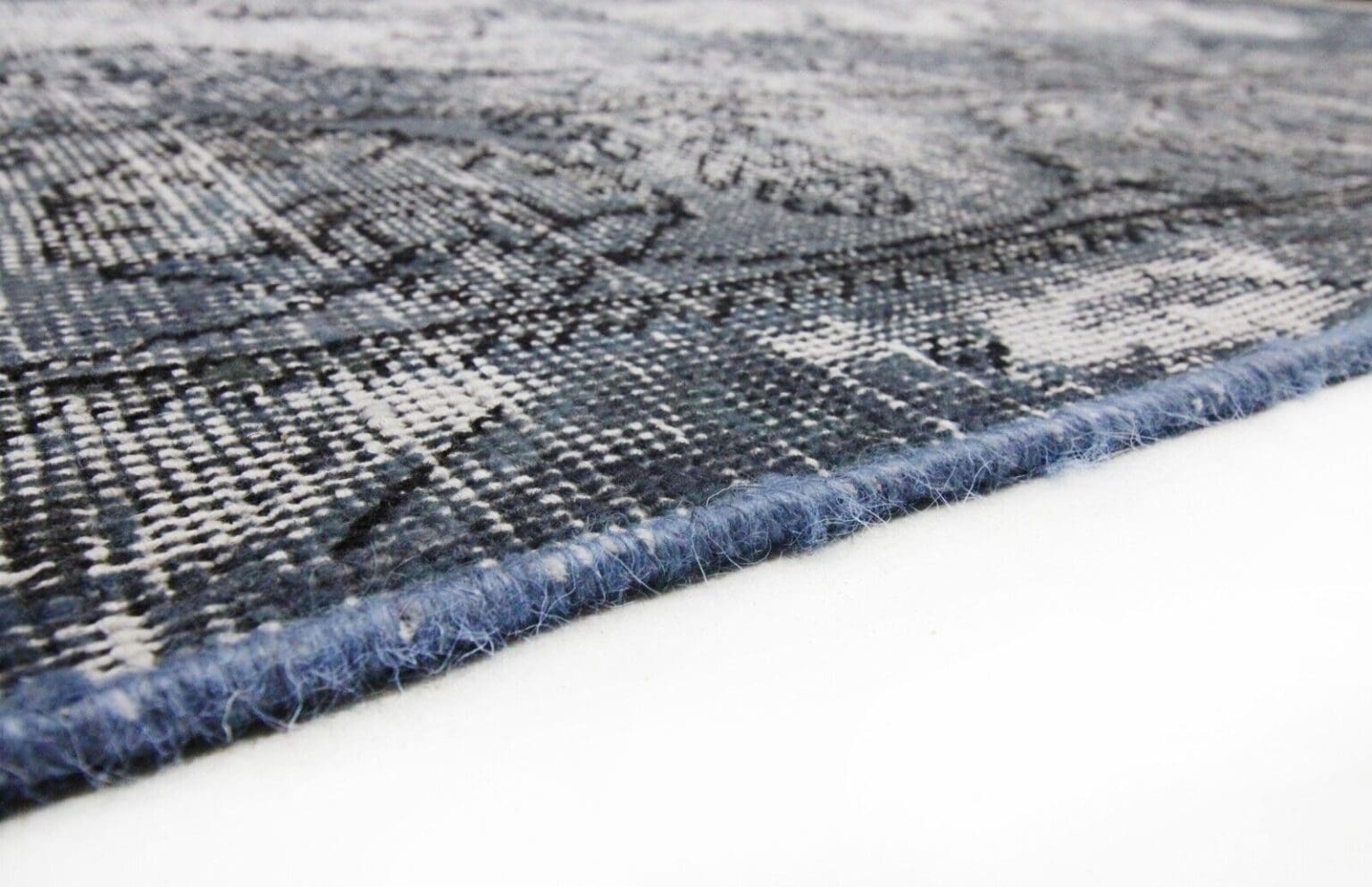
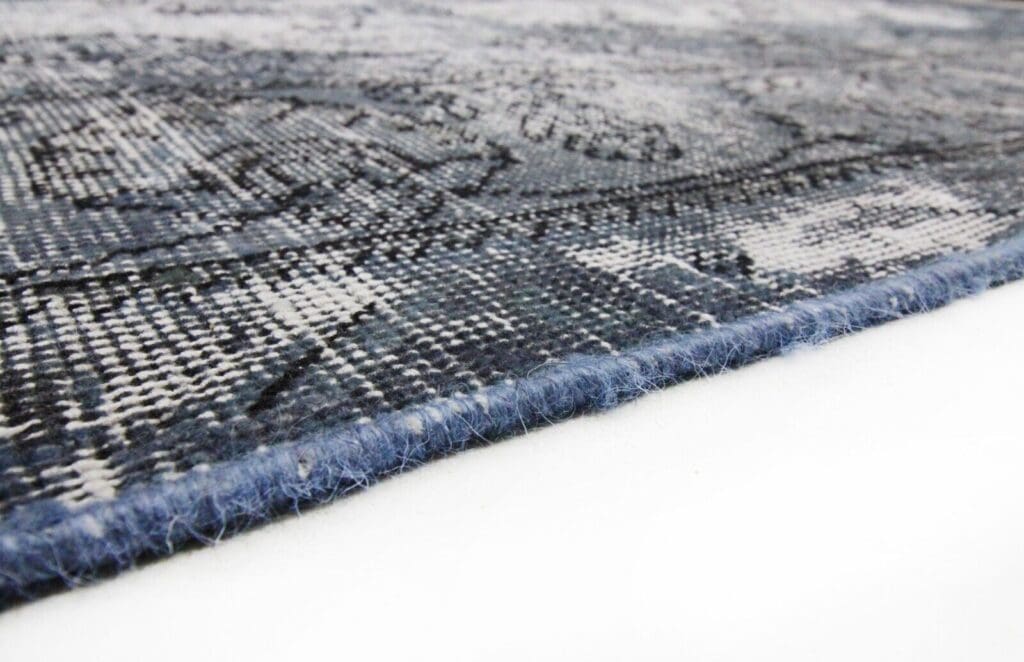
This Persian rug is hand-knotted. The pile is specified as 100% wool, while the warp is made from 100% cotton. Wool has been used for the pile of Persian rugs for centuries because it can be spun, dyed and prepared in different yarn weights. Cotton is commonly chosen for the warp because its regular structure creates a consistent foundation for the rows of knots. The combination of a wool pile and cotton warp belongs to established Iranian rug-making practice.
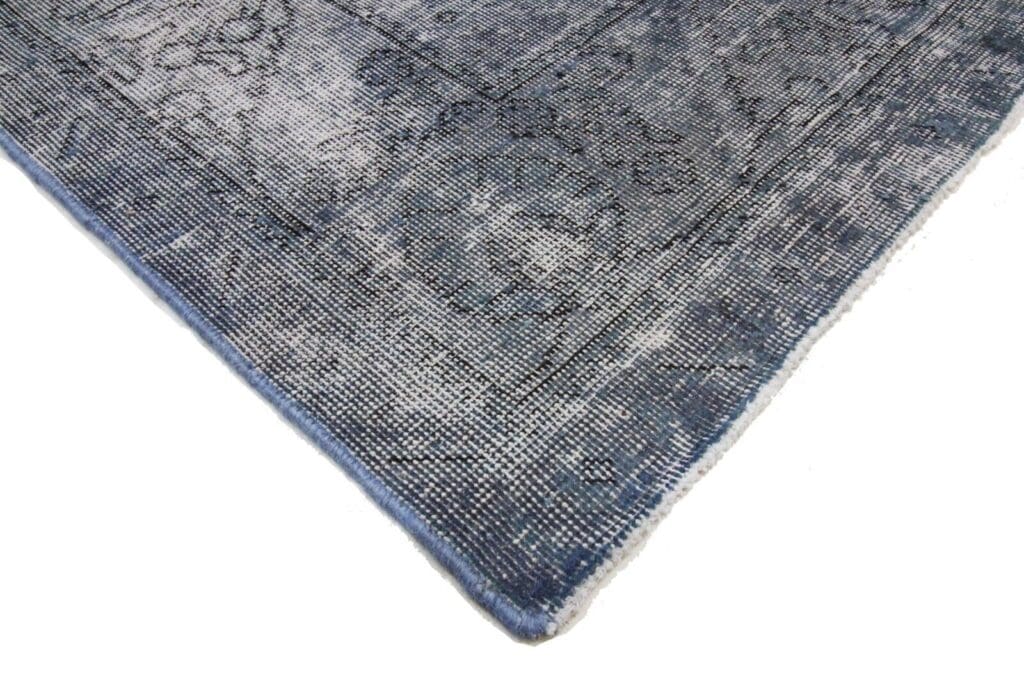
Hand-knotting is a process in which each knot is tied individually around the warp threads. After a row has been completed, weft threads are inserted and compacted to secure the construction. The knots create both the pile and the coloured design. The surface is then trimmed or finished so that the pile has an even appearance. Unlike a machine-made rug, a hand-knotted rug does not receive its pattern from a mechanical printing or tufting process. The design is formed through the placement of individual knots.
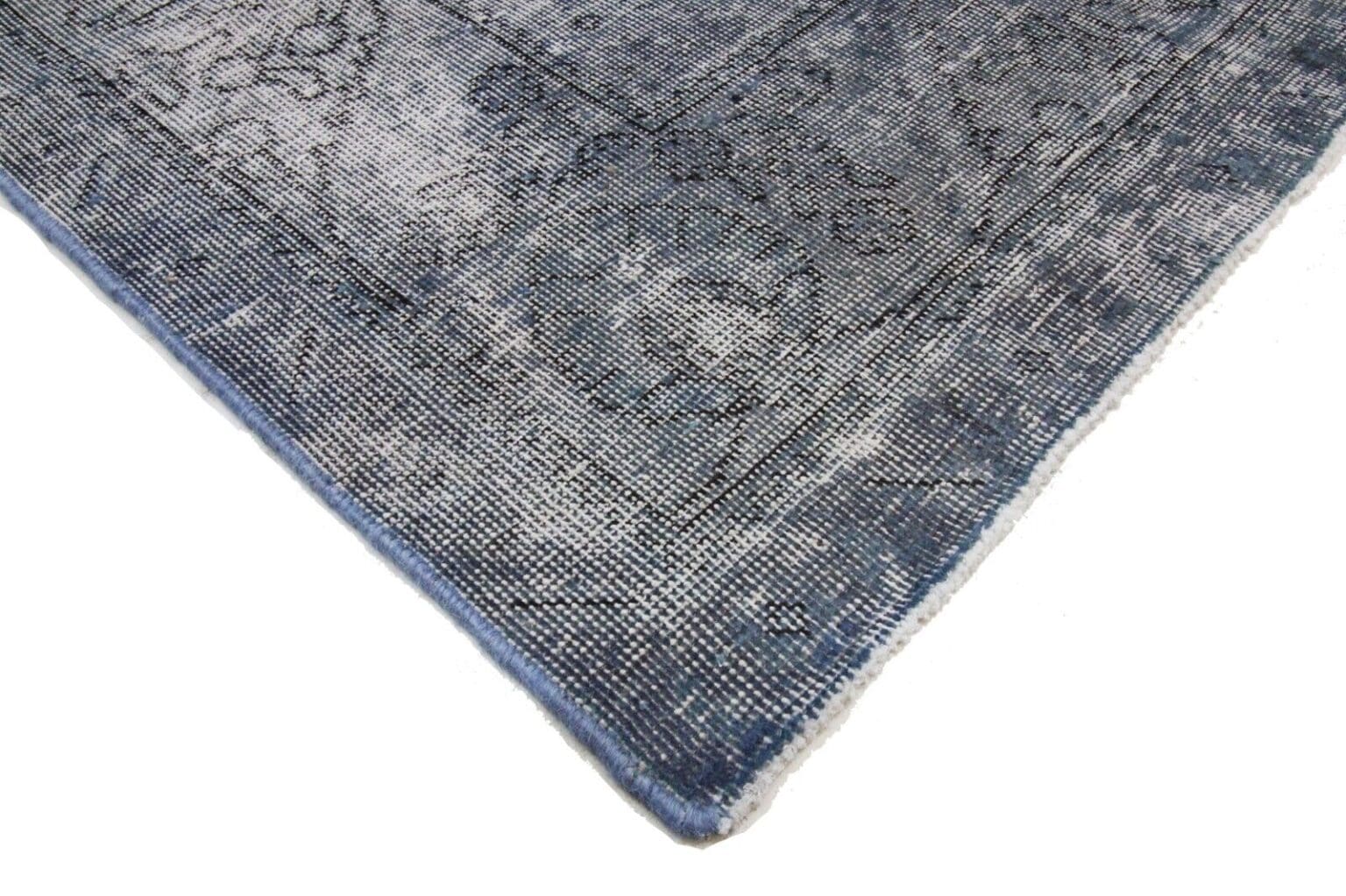
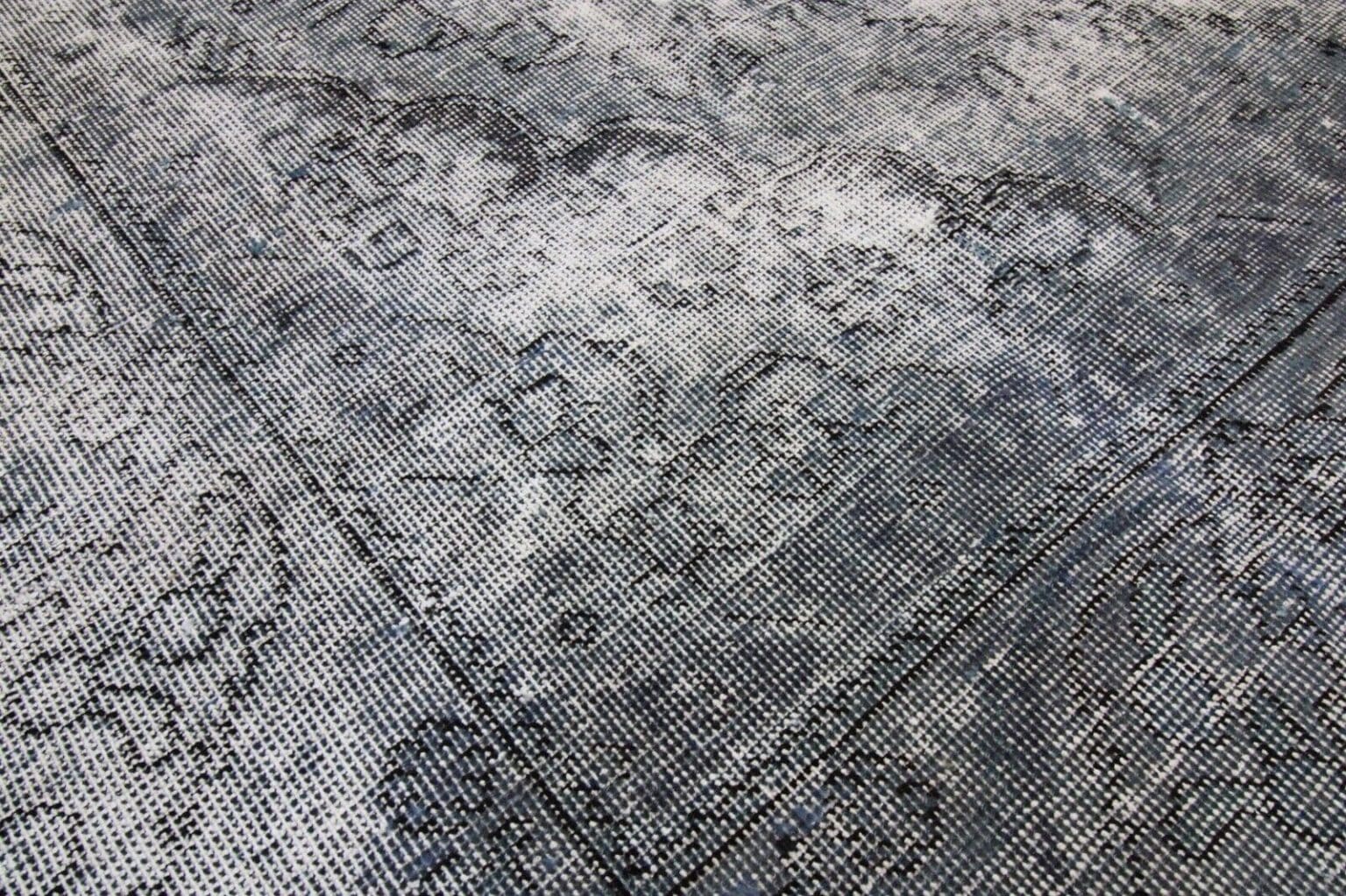
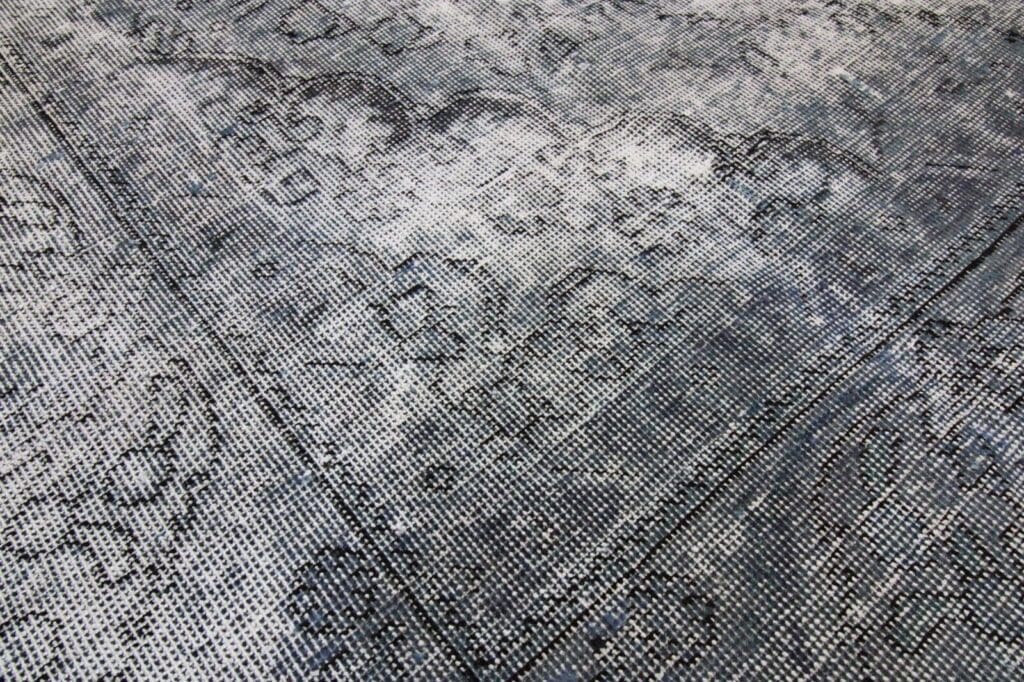
The knot density of this rug is described as high. In general, high knot density means that a large number of individual knots has been worked into a defined area. A closely knotted surface allows outlines, transitions and smaller ornamental areas to be rendered with greater precision. Knot density is one technical aspect of a rug, alongside the regularity of the knots, the quality of the yarn, the tension of the warp and the finishing of the pile. It is therefore an important description of the construction without being the only measure of workmanship.
Wool can produce different surface effects depending on its preparation, spinning and finishing. It may appear more clearly defined or softer to the touch according to the yarn and the knotting method. Cotton has a comparatively even fibre structure and is well suited to the supporting foundation of a rug. The material information for this piece states 100% wool and 100% cotton. No silk or additional fibre is specified.
The making of a hand-knotted rug involves many repeated and precise operations. The foundation is prepared, the knots are placed according to the intended pattern, weft threads secure the rows and the surface is subsequently levelled. A high knot density generally involves a closely worked field and considerable manual effort in the execution of the design. The finished appearance is therefore the result of the relationship between the yarn, the foundation, the knotting and the surface finishing.
Origin and Tradition
The country of manufacture for this Persian rug is Iran. Iran is one of the historically important centres of Oriental rug weaving. In different parts of the country, methods of knotting, dyeing, pattern planning and textile finishing were developed and passed down through generations. A Persian rug is therefore connected not only with a decorative vocabulary, but also with a long craft tradition in which rugs function as useful textiles and designed surfaces.
Iranian rug production includes a number of regional traditions rather than one single uniform style. Regional workshops and weaving communities developed preferences for floral ornament, geometric structure, central compositions, border arrangements and colour relationships. The choice of yarn, the fineness of the knotting and the way a pattern is drawn can also vary. Isfahan, Tabriz and Kashan are often named among the important centres of Persian rug history, each associated with recognisable approaches to design and craftsmanship.
Isfahan is frequently associated with finely drawn floral compositions, balanced proportions and detailed ornament. Tabriz is often linked with clearly organised layouts, strong forms and prominent medallion designs. Kashan is known in many accounts for classical Persian patterns, rich ornament and carefully executed rugs. These regional examples illustrate the range of Iranian weaving traditions. They do not provide a more specific place of origin for this individual rug, since the source identifies Iran as the country of manufacture but does not name a city or province.
The technical basis of hand-knotting is a prepared framework of warp threads. The warp runs lengthwise and supports the rows of knots. Weft threads are inserted across the width to consolidate the structure. The weaver follows a planned arrangement of colours and shapes, either from a drawn design or from an established pattern tradition. Once the knotting is complete, the pile can be trimmed, washed and finished. Exact procedures vary between workshops and regions, but the individual placement of knots remains central to the technique.
Persian rugs have traditionally been made for a range of interiors, from domestic rooms to reception and formal spaces. They can define an area, bring a group of furnishings together and add a textile layer to a floor. Their decorative role is closely connected with their construction: the arrangement of a central field, surrounding ornaments and borders gives the surface a visual order. This rug is blue and is described as vintage in style. The word vintage identifies the stated style; it does not specify a manufacturing year.
The wider textile traditions of the region also include hand-woven Kilims and Gabbehs. A Kilim is flat-woven rather than knotted, so it has no knotted pile. Its design is created by inserting coloured weft threads into the weave. Gabbehs are often associated with coarser wool, simpler compositions and a more rustic visual character. Both forms are part of the broader history of Oriental rugs, but their construction differs from that of a hand-knotted Persian rug. For this piece, the relevant traditional framework is its Iranian origin and hand-knotted technique.
Design and Pattern
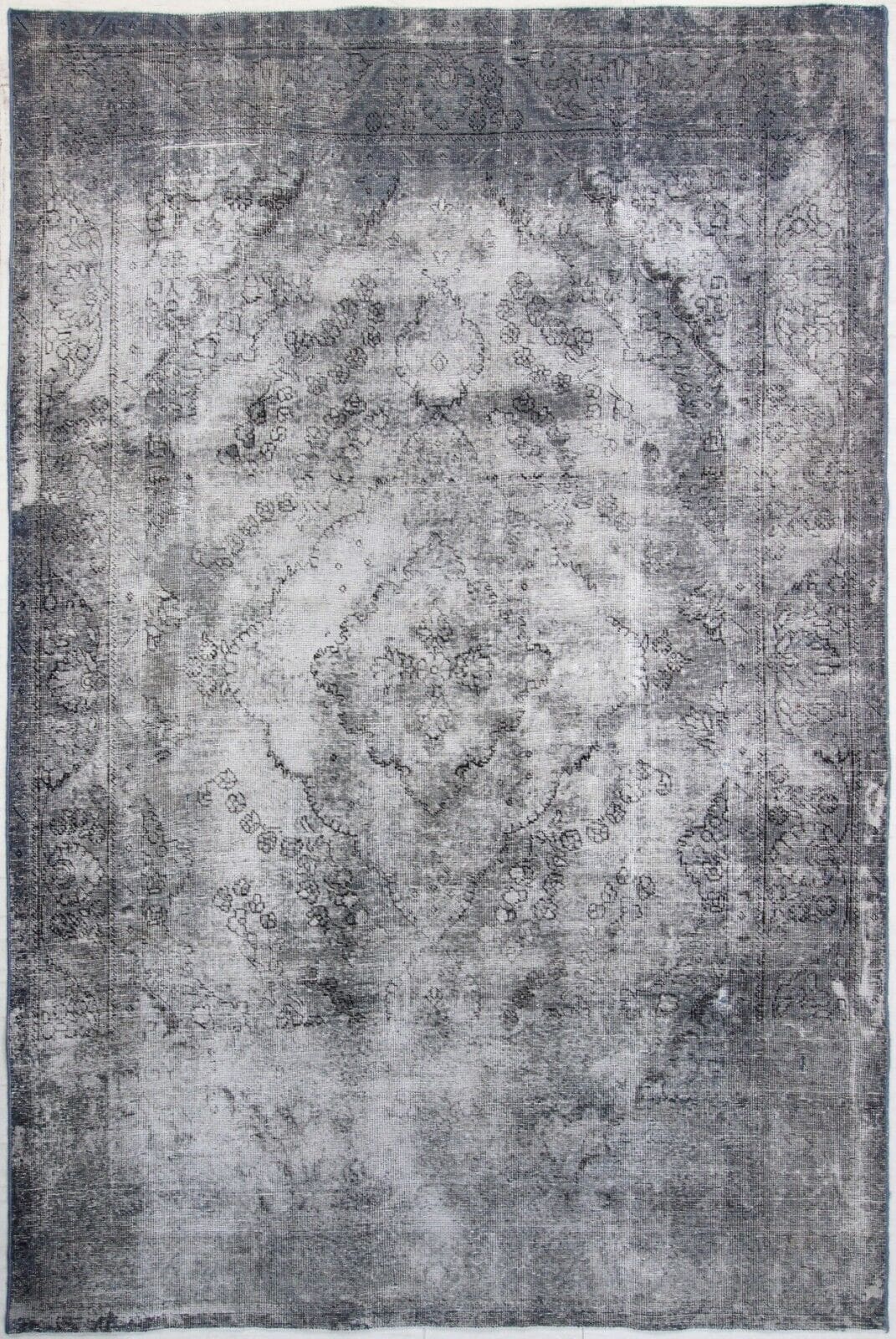
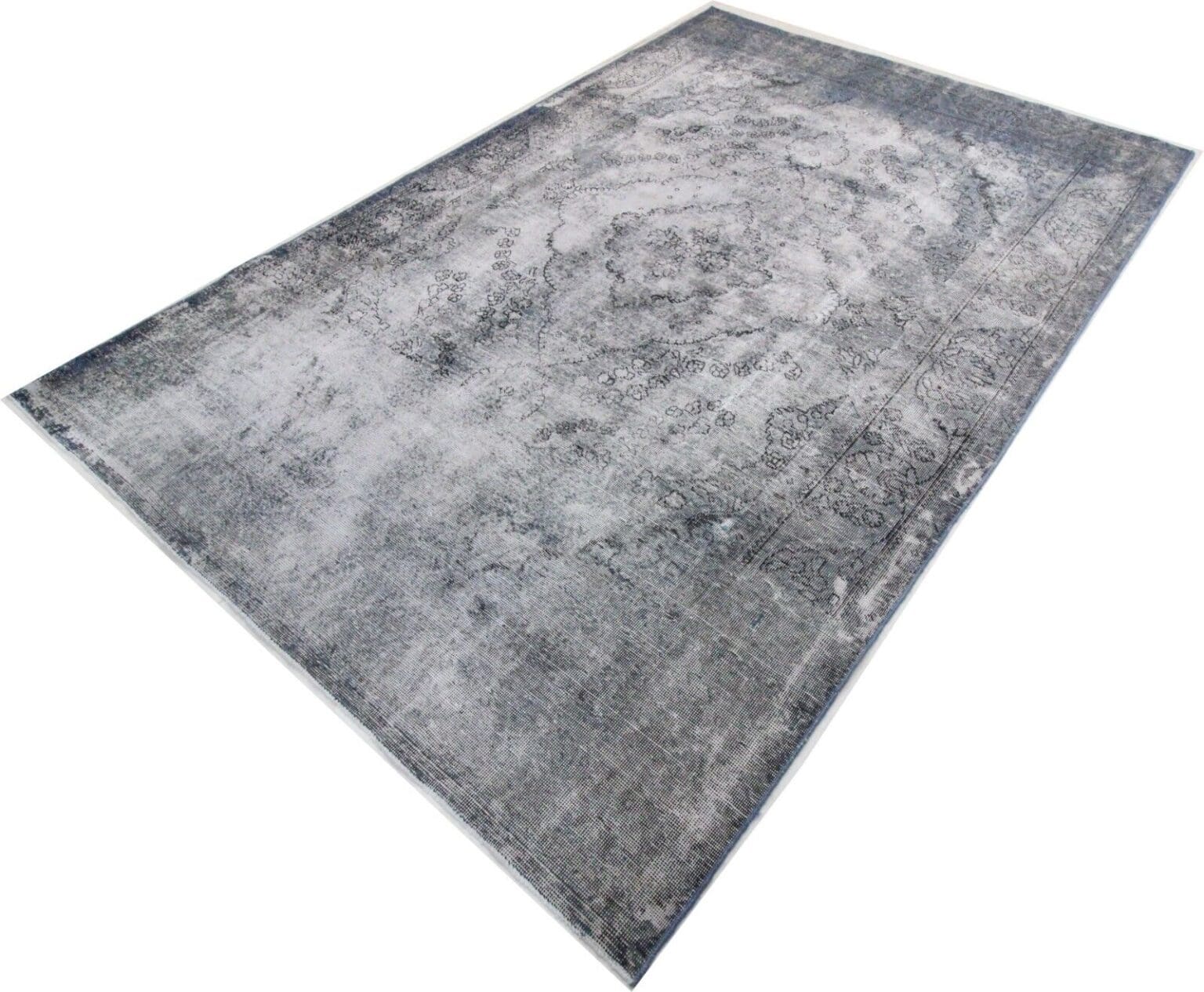
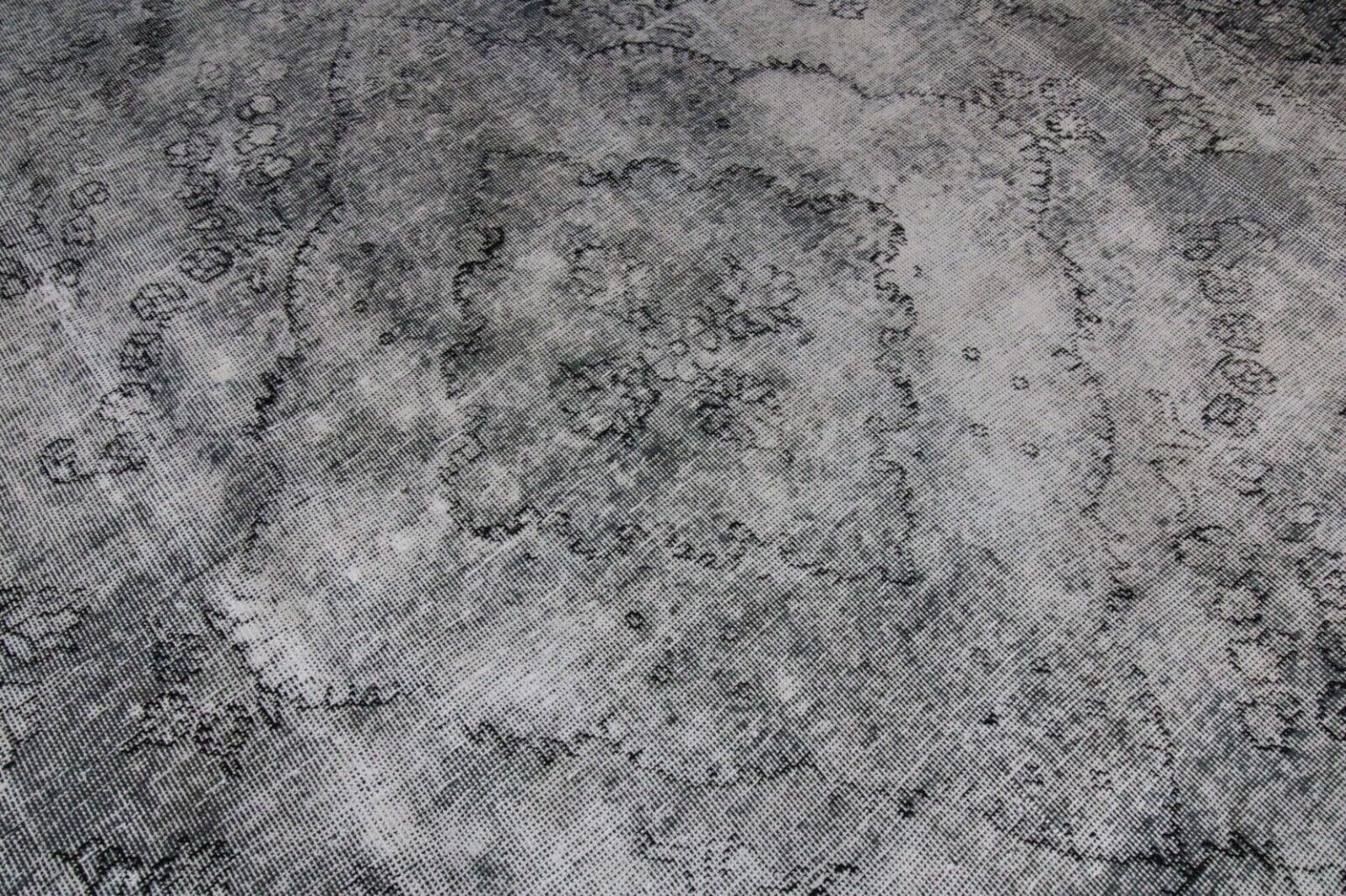
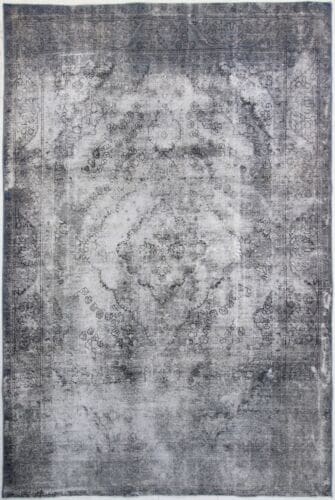
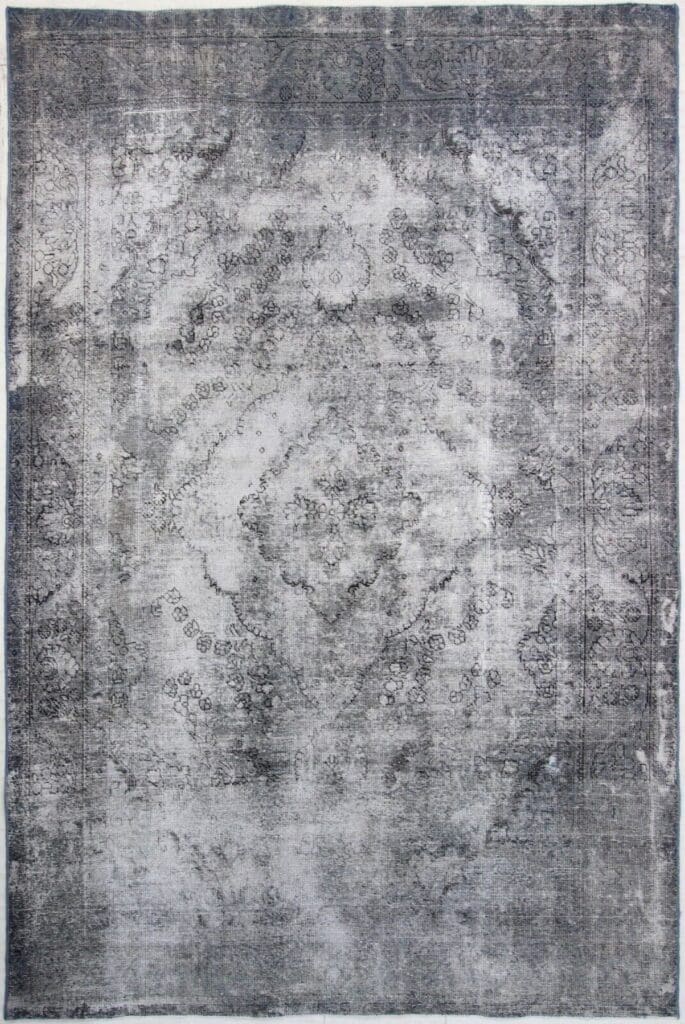
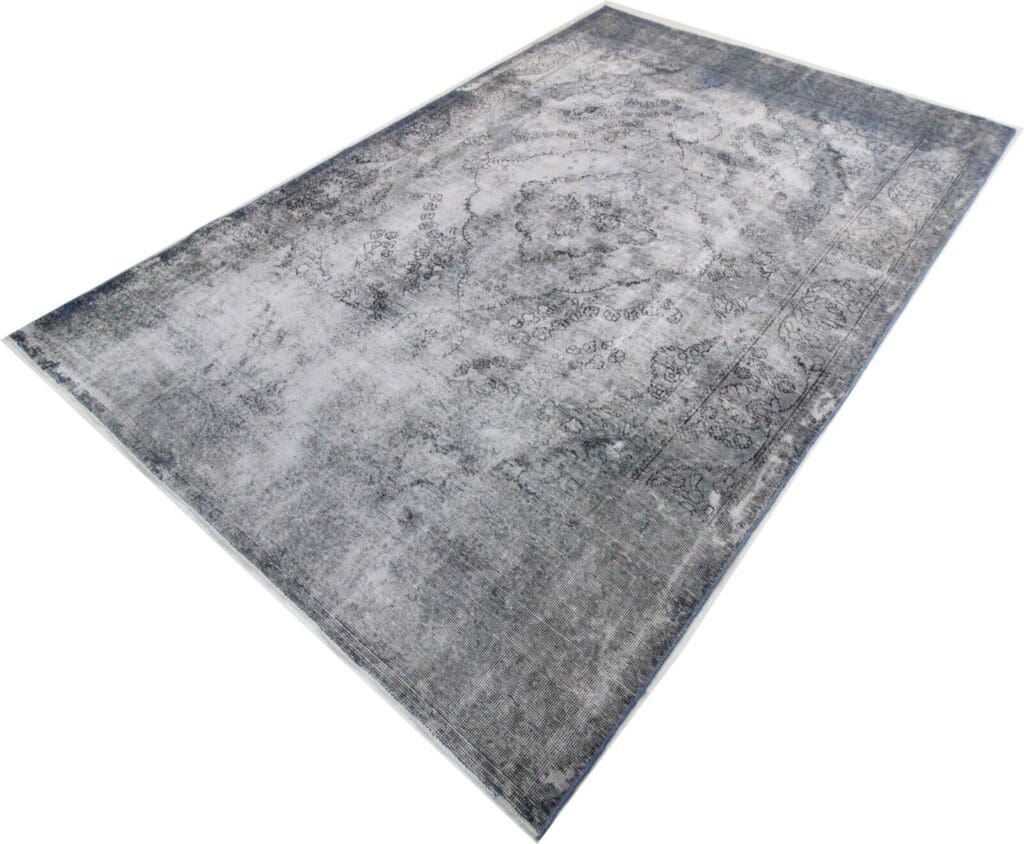
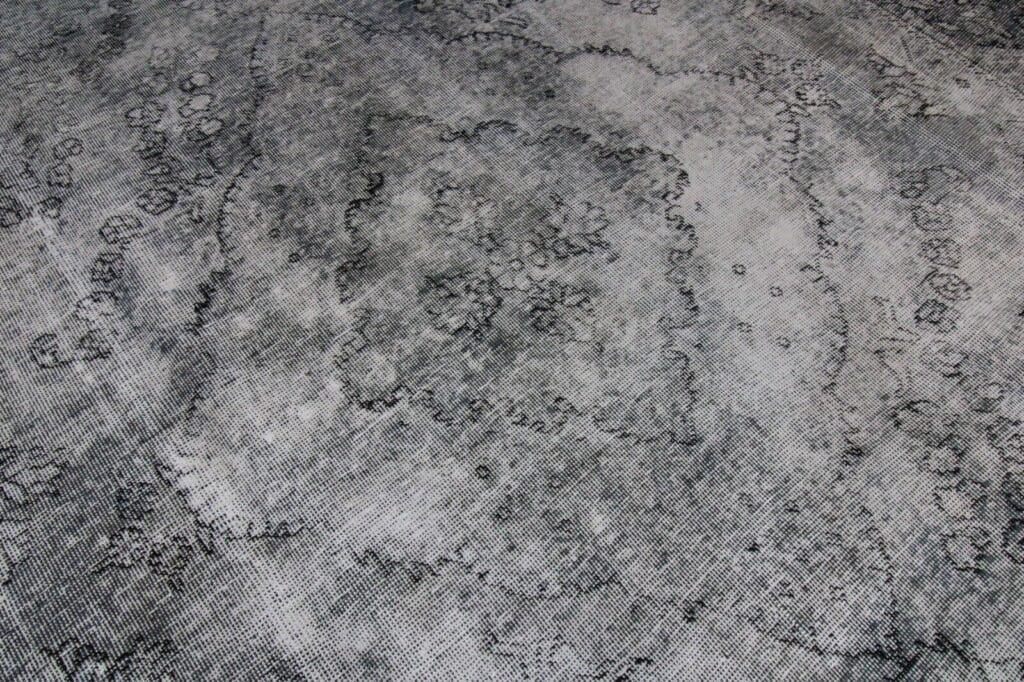
The pattern is described as a medallion. In rug design, a medallion is a clearly emphasised central element that organises the composition. It may be circular, oval, polygonal or made up of several connected forms. An inner field, secondary ornaments and one or more borders are often arranged around the centre. The exact shape of the medallion on this rug is not further specified. The stated design feature is a central medallion composition.
A medallion layout gives the rug a distinct visual centre. The central form becomes the starting point for the surrounding field and border areas. In classical Persian designs, a medallion may be accompanied by vines, leaves, rosettes, palmettes or geometric details. The choice and arrangement of these elements depend on the individual drawing. Since no additional motifs are named for this rug, the description remains limited to the specified medallion pattern rather than assigning particular floral or geometric ornaments.
The colour of the rug is blue. Blue has a long history in Persian and wider Oriental textile design. It can range from pale and subdued shades to deep, saturated tones, and it can be used as a field colour, an accent or part of a border system. The exact shade of this rug is not stated. In combination with a medallion, blue may emphasise the centre, provide a calm ground or create contrast between the inner field and the surrounding frame. The visual effect depends on the distribution of colour and the drawing of the motifs.
Persian rug compositions often balance symmetry, repetition and variation. Symmetry helps organise the central and surrounding areas. Repeated ornaments connect different sections of the design, while variations in scale and placement prevent the surface from appearing mechanically uniform. Hand-knotting can also produce small differences in tension, yarn direction and colour placement. These are general characteristics of handmade textiles and are not an additional statement about the condition of this particular rug.
Borders commonly serve a framing function in medallion rugs. They separate the main field from the outer edge and can provide a transition between the central composition and the room around it. A design may use a principal border together with narrower companion borders, with each band carrying its own sequence of ornaments. The source does not describe the borders of this rug in detail, so no specific border motif or structure is attributed to it.
The stated style is vintage. In rug retail, a vintage classification is often used for a design language connected with traditional or earlier furnishing schemes rather than contemporary minimalism. It may be associated with classical ornament, varied colour effects or a deliberately established appearance. The term itself does not establish a date of manufacture or a precise age. For this rug, vintage is therefore a style description and not an additional claim about its provenance.
High knot density can generally support the rendering of narrow lines, small colour fields and more differentiated contours. The medallion remains the principal organising feature, while the blue colour influences the overall reading of the design. Together, the specified features define the visual character of this piece: Iranian manufacture, blue colouring, a medallion pattern, vintage style and hand-knotted construction. No further regional or decorative attribution is added.
Special Features
The rug is described as being in top condition and top quality. It is also identified as suitable for underfloor heating. This suitability concerns its intended use in a room with that type of heating. In general, a rug placed over underfloor heating should lie flat and allow heat to be distributed evenly. The instructions for the particular heating system and an appropriate care routine should still be followed. The stated suitability does not establish any additional technical specification.
Other specified features are its Iranian manufacture, hand-knotted construction, high knot density, wool pile, cotton warp, blue colour and medallion pattern. The style is given as vintage. No information is provided about a named city or province, a signature, a manufacturing year or restoration work. Those details are therefore not added to the description.
FAQ
What are the main features of a high-quality Persian rug?
Commonly considered features include good-quality materials, careful hand-knotting and a precise pattern drawing. The regularity of the foundation, the way the knots are formed, the tension of the warp and the finishing of the pile are also relevant. A high knot density is often associated with more detailed execution, although it should not be considered the only measure of quality. For this rug, the stated features are 100% wool, 100% cotton, high knot density and hand-knotted construction. The product description also calls it top quality.
How should I care for a Persian rug?
Regular, gentle vacuuming helps remove dust and loose dirt. If a spill occurs, the affected area should be blotted promptly with a damp cloth rather than rubbed. Rubbing can strain the fibres and push the substance further into the textile. Professional cleaning at suitable intervals may be useful for a thorough treatment, especially when it is carried out by a service familiar with hand-knotted wool rugs. The cleaning method should take the cotton foundation into account. When the rug is used over underfloor heating, it should also lie evenly and be cared for according to the heating system’s instructions.
How can I tell whether a Persian rug is authentic?
Useful indications can include hand-knotted construction, the appearance of the knots on the reverse, the quality of the materials and clear information about origin and construction. Knot density is another feature that is often examined. High-quality Persian rugs are frequently described as having more than 150,000 knots per square metre. A knot count alone does not prove the origin or authenticity of an individual rug, however. For this piece, the stated information identifies Iran as the country of manufacture and specifies hand-knotting, high knot density, wool and cotton.
To provide the best experiences, we use technologies like cookies to store and/or access device information. Consenting to these technologies will allow us to process data such as browsing behavior or unique IDs on this site. Not consenting or withdrawing consent, may adversely affect certain features and functions.
Functional Always active
The technical storage or access is strictly necessary for the legitimate purpose of enabling the use of a specific service explicitly requested by the subscriber or user, or for the sole purpose of carrying out the transmission of a communication over an electronic communications network.
Preferences
The technical storage or access is necessary for the legitimate purpose of storing preferences that are not requested by the subscriber or user.
Statistics
The technical storage or access that is used exclusively for statistical purposes.The technical storage or access that is used exclusively for anonymous statistical purposes. Without a subpoena, voluntary compliance on the part of your Internet Service Provider, or additional records from a third party, information stored or retrieved for this purpose alone cannot usually be used to identify you.
Marketing
The technical storage or access is required to create user profiles to send advertising, or to track the user on a website or across several websites for similar marketing purposes.
 SECURE PAYMENT
 SHIPPING PARTNERS


