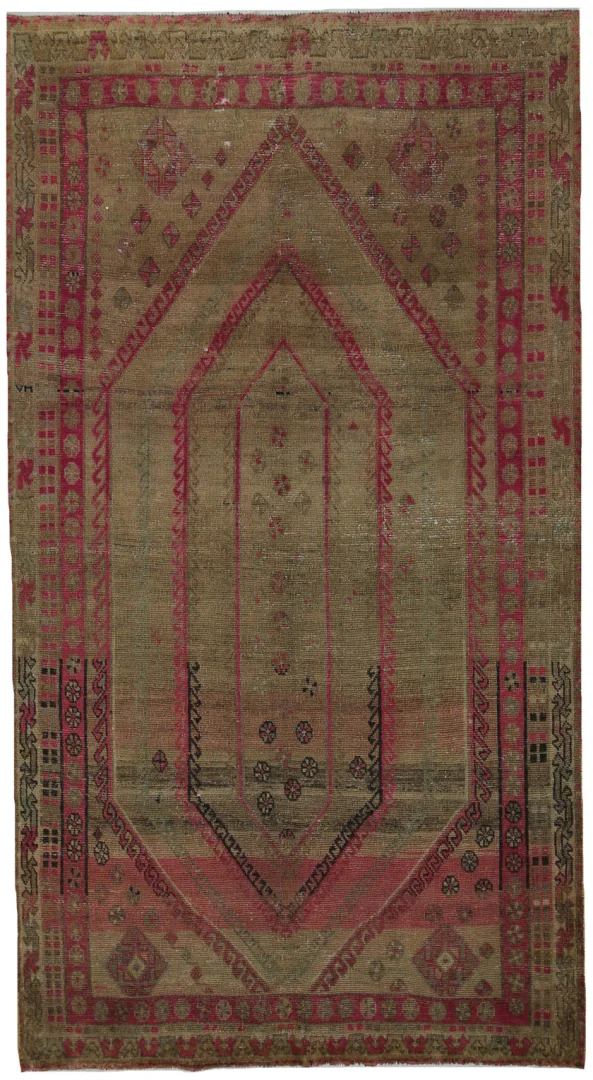
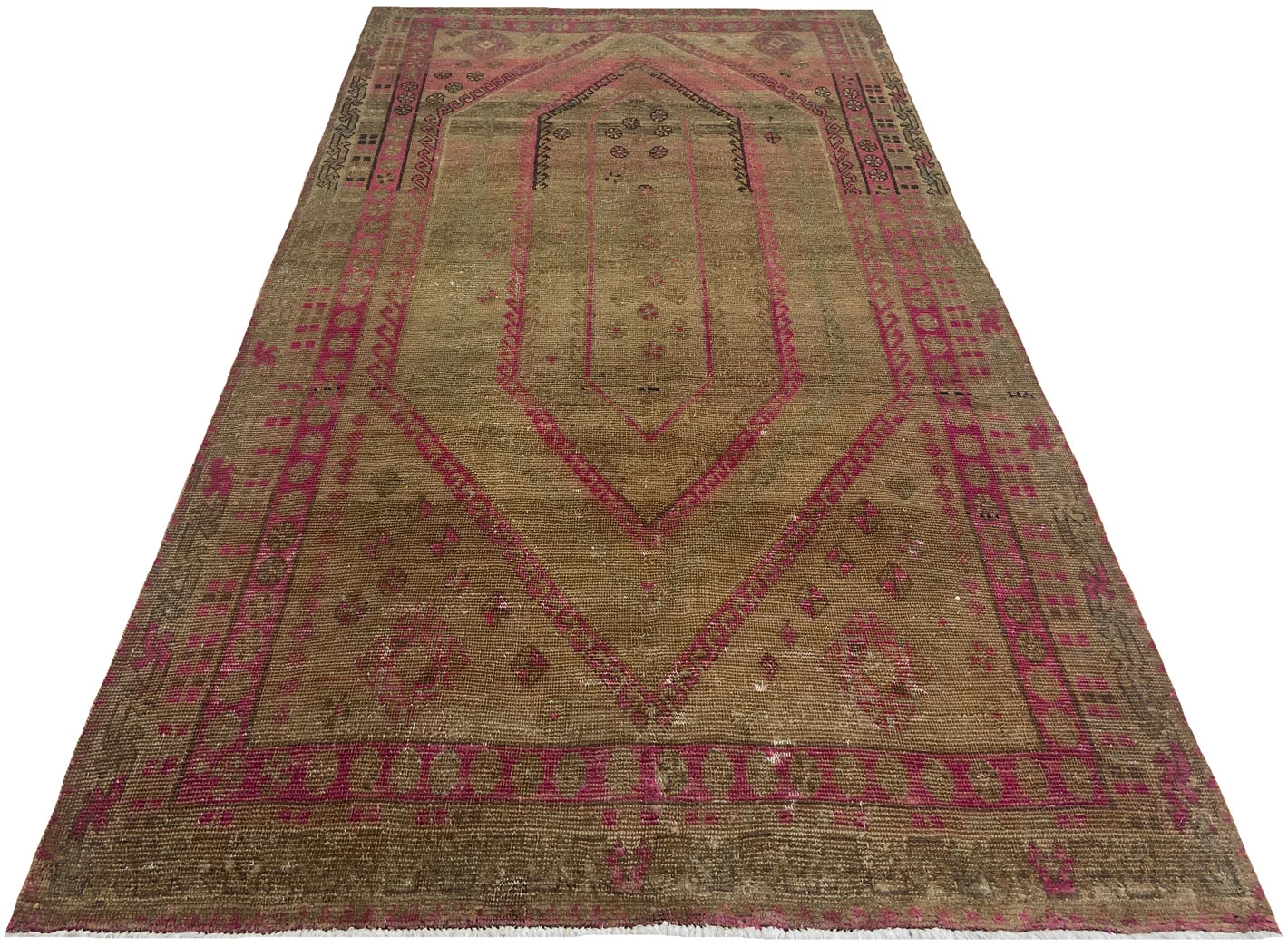
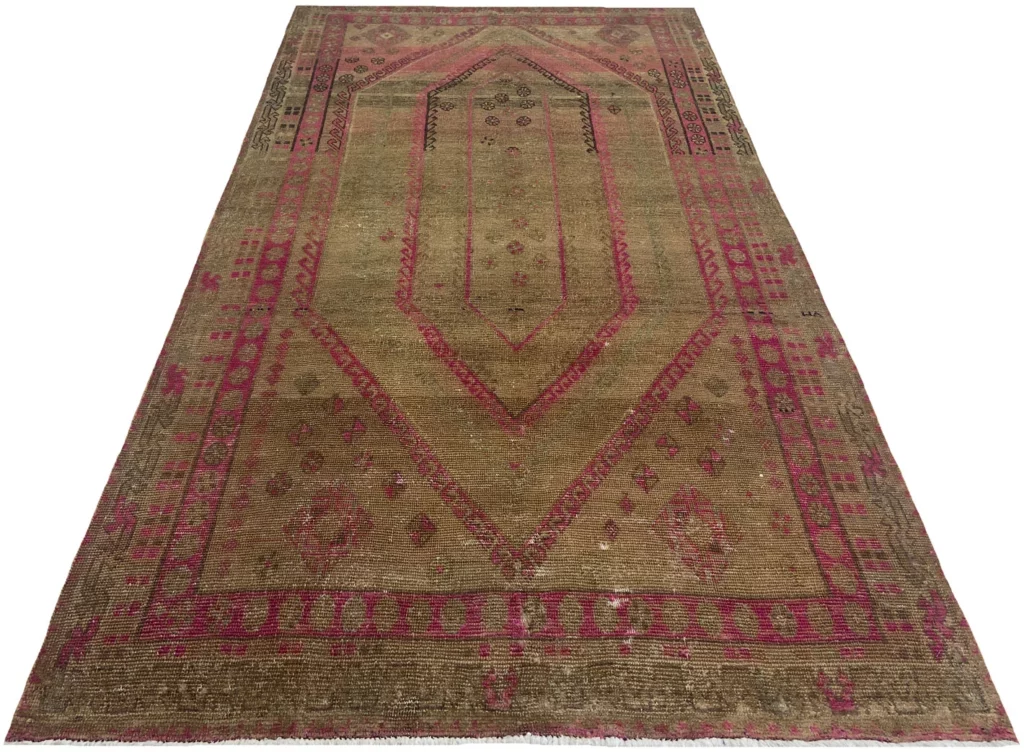
Hand-knotted Persian rug | Knot density: high | Material: pile wool | Size: 293 x 159 cm | Pattern: modern design with classic ornamentation | Condition: good
This Persian rug is hand-knotted and made from high-quality wool. In hand-knotting, each knot is placed individually into the foundation. The result is a textile surface in which the pile and the design are closely connected. Wool is the stated pile material of this piece. It has long been used in rug making because it offers a durable handle, a pleasant feel underfoot and a practical basis for regular use.
The rug has a high knot density, which supports the precise rendering of ornamental details. Closely placed knots allow lines, transitions and smaller elements to be worked out with greater definition. At the same time, the character of a hand-knotted rug remains visibly linked to manual production. Its structure is created knot by knot rather than by an industrial printing or mechanical surface process. The result is an individual woven construction with a clearly tactile quality.
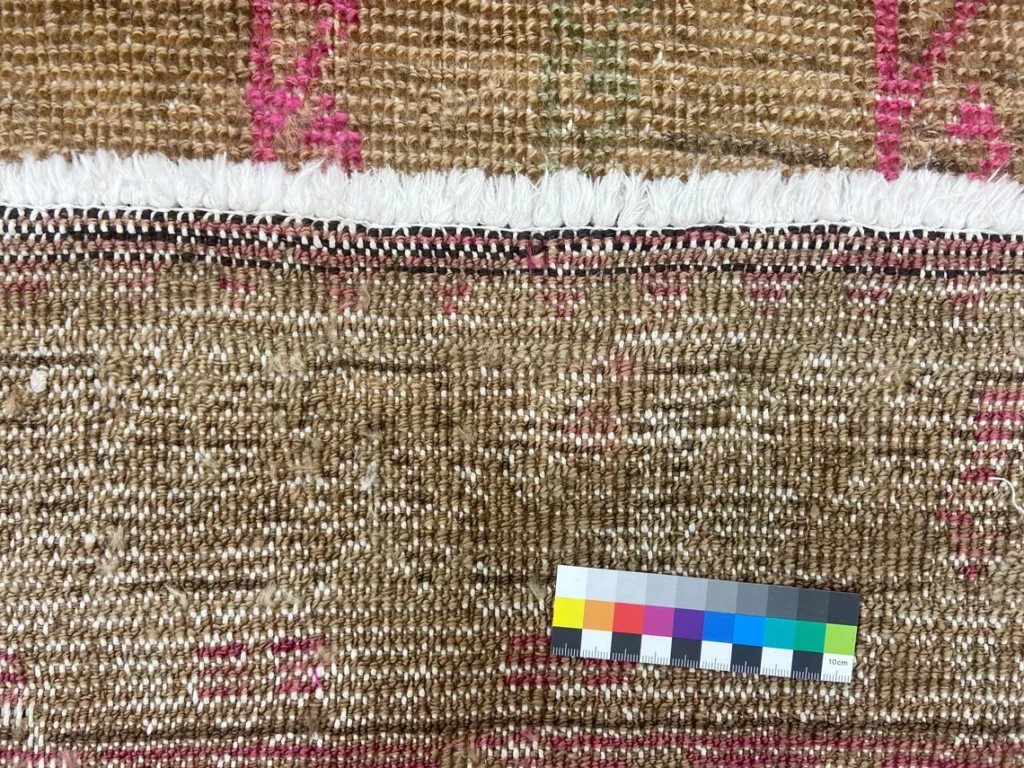
The piece has been extensively reworked. This reworking is part of its described condition and treatment, adding careful attention to the existing rug alongside its original hand-knotted construction. High-quality wool, hand-knotting and a high knot density combine a resilient surface with detailed pattern definition. No information about the warp material is provided for this rug, so no additional fibre is assigned to the foundation.
Origin and Tradition
The term Persian rug refers to the long rug-making tradition of Persia, now known as Iran. Persian rugs are produced in many regions and workshops, and local traditions can differ in their preferred colours, designs, construction methods and proportions. Their traditional manufacture follows a sequence of skilled operations: the foundation is prepared, knots are added row by row, and the pile is trimmed and checked as the work progresses.
Tabriz, Isfahan and Kashan are among the well-known names in the history of Persian rugs. Tabriz is associated with a broad range of compositions and carefully articulated ornament. Isfahan is often connected with balanced floral layouts, medallions and fine drawing. Kashan likewise has a strong place in rug history through classical arrangements and considered colour schemes. These examples illustrate the variety of Persian weaving traditions; they do not identify the origin of this individual rug.
The Persian rug tradition combines utility with an established visual language. A rug can define an area, organise the relationship between furnishings and floor, or provide a central textile composition. Its pattern functions as more than surface decoration: it is built from repeated forms, ordered borders and relationships between field and ornament. Floral scrolls, geometric devices and medallions have been adapted across generations, producing many distinct design families.
In a hand-knotted rug, the design is created directly through the making process. The weaver follows a drawn plan or a remembered pattern arrangement while placing the knots. The pile is then worked so that the contours and colour areas remain legible. A high knot density can help achieve more differentiated details, while wool provides a substantial and durable textile medium. The technical tradition therefore explains both the construction and the visual character associated with this type of rug.
Persian rugs are often described through regional names, pattern families or colour arrangements. These categories should not be confused with one another. A motif may appear in more than one area, and a contemporary composition may rearrange traditional elements without changing the broader category of Persian rug. This piece is described as having a modern design combined with classic ornamentation. No particular Iranian province or city is named, so no more specific place of origin is added here.
Design and Pattern
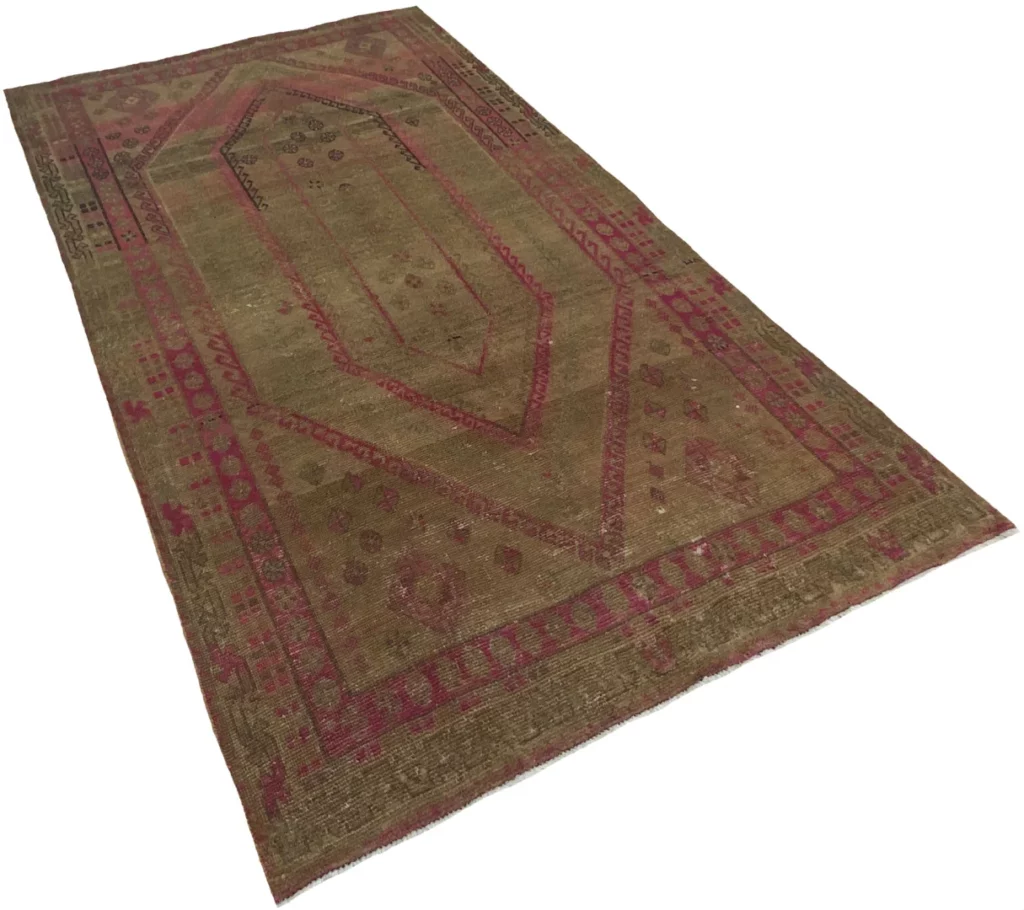
The design combines a modern approach with classic ornamentation. These two aspects create a meeting point between inherited decorative forms and a more contemporary overall arrangement. Classic ornamentation draws on established ideas of rhythm, repetition and visual balance. Modern design can alter the scale, emphasis or relationship between those elements. Here, the rug is described through that combination rather than through a single named regional pattern.
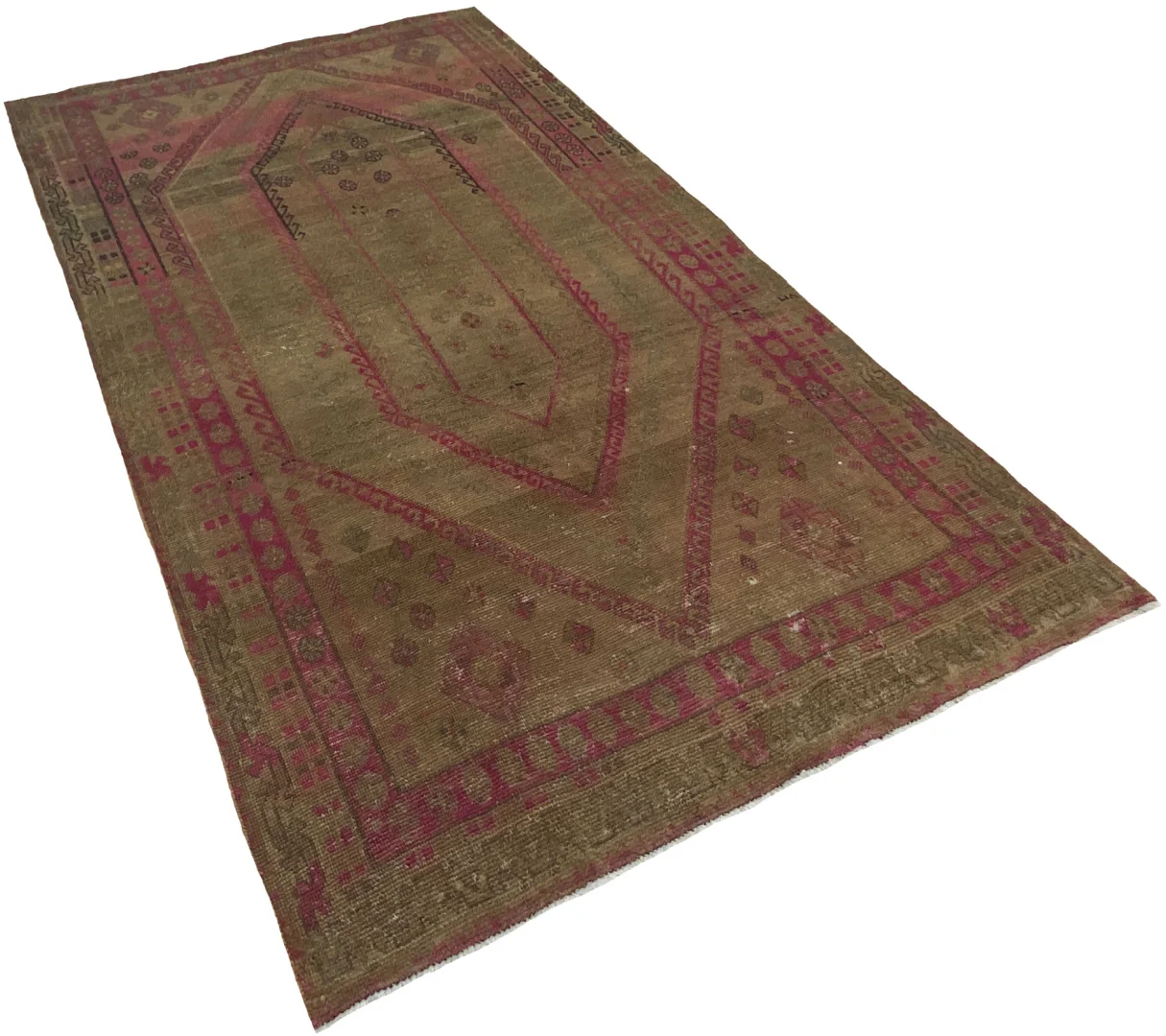
Its colour scheme brings together warm reds, soft blues and earthy beige tones. Warm reds can serve as strong fields or measured accents within an ornamental composition. Soft blues introduce a cooler counterpoint, while earthy beige tones connect the colour groups with a restrained, natural foundation. Together, the colours are described as a harmonious combination with a distinctive overall effect. The colour description does not establish a particular place of origin.
Classical Persian ornament can use several kinds of visual structure. Floral vines may guide the eye across a field, repeated flowers can create rhythm, and geometric lines can divide or frame a composition. A medallion may act as a centre, while a border can establish an outer boundary around the main field. Not every Persian rug contains all of these devices. They are, however, part of the broader vocabulary from which many Persian designs have developed. This rug is specifically characterised by classic ornamentation within a modern design.
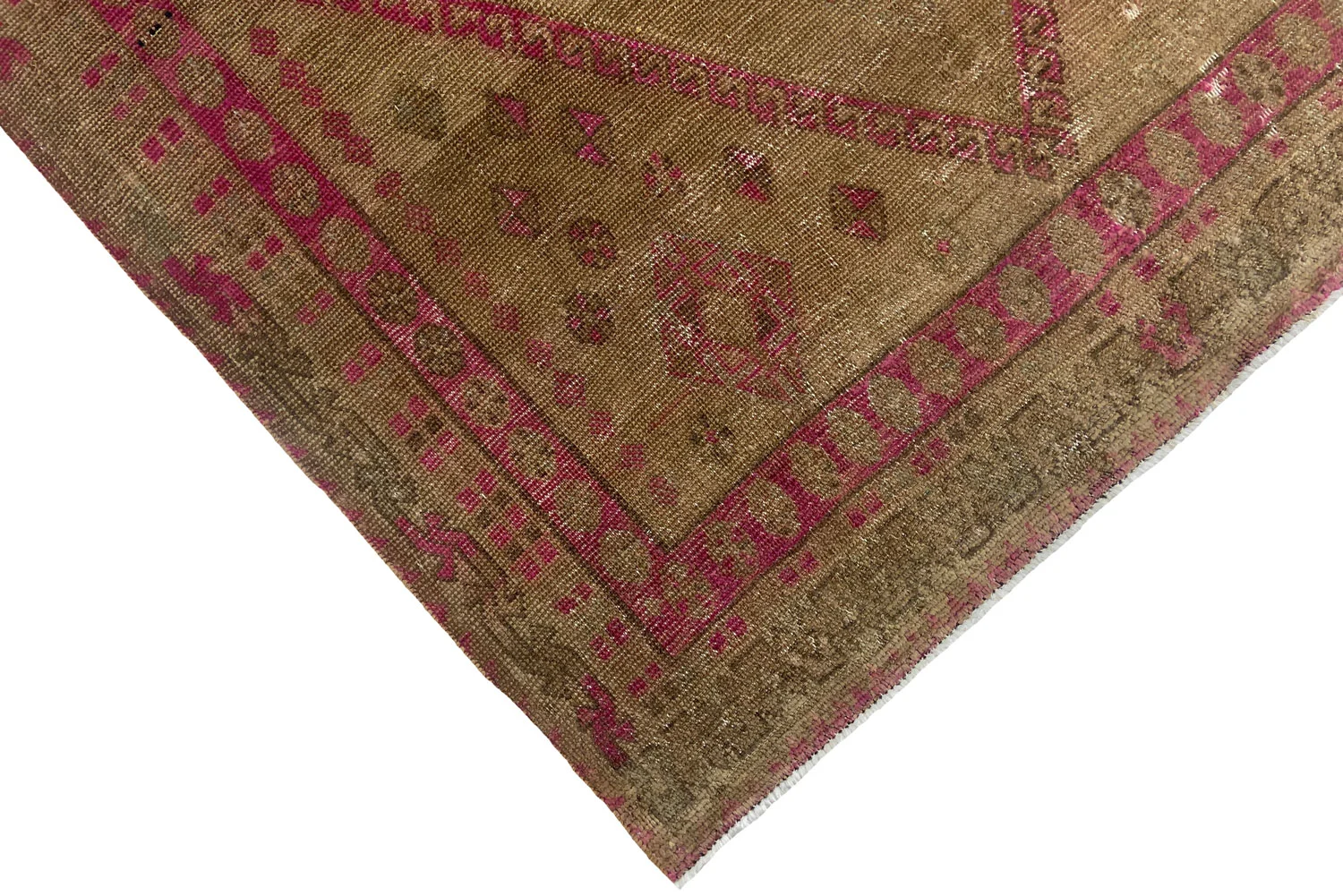
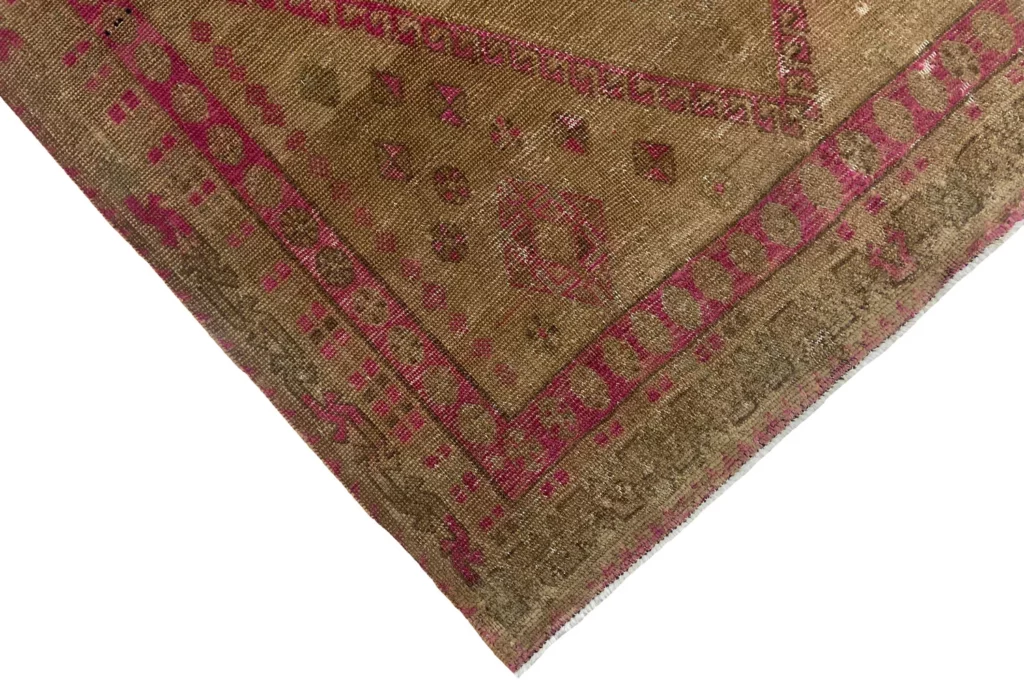
The high knot density contributes to the way such ornament can be read. More closely placed knots may make outlines clearer and allow smaller pattern components to be differentiated. Because the pile is wool, the result remains a textured textile surface rather than a flat printed image. Changes in light and viewing angle can affect the appearance of pile and colour slightly. The visual effect is therefore inseparable from the hand-knotted material and its surface structure.
The stated colour groups can work with a range of interior schemes. Red tones may relate to timber and warm neutrals, blue tones can sit beside cooler or quieter surfaces, and beige can provide a link between contrasting furnishings. This is a general description of the colours’ interior effect, not a claim about a particular room. The rug is described as suitable for living rooms, dining rooms or hallways, and as compatible with both modern and traditional furnishings.
Special Features
The notable features are its hand-knotted construction, high-quality wool, high knot density and extensive reworking. The piece also combines modern design with classic ornamentation and has a distinctive colour scheme. Warm reds, soft blues and earthy beige tones define the described palette. Its condition is good. Regular vacuuming and occasional professional cleaning are recommended to help preserve the colours and the textile structure.
Direct sunlight should be avoided where possible because it can cause colours to fade over time. Chemical cleaning products should not be used, as they may affect the material. Careful routine maintenance is appropriate for the hand-knotted wool surface and supports the condition of the reworked piece.
FAQ
What characterises a Persian rug?
A Persian rug belongs to a tradition in which skilled handwork, developed ornament and considered material selection come together. Depending on the region, Persian rugs can differ greatly in pattern, colour and construction. In a hand-knotted example, the surface is built one knot at a time. A high knot density can support a more detailed rendering of the design. This rug combines hand-knotting and high-quality wool with a modern composition and classic ornamentation.
How should I care for my Persian rug?
Regular vacuuming helps remove loose dirt and should be carried out with a setting suitable for rugs. Occasional professional cleaning can treat the wool, colours and textile structure appropriately. Direct sunlight should be limited because prolonged exposure may fade colours. Chemical cleaning products should not be applied. Consistent, careful maintenance is therefore the appropriate approach for a hand-knotted, reworked wool surface.
How can I recognise an authentic Persian rug?
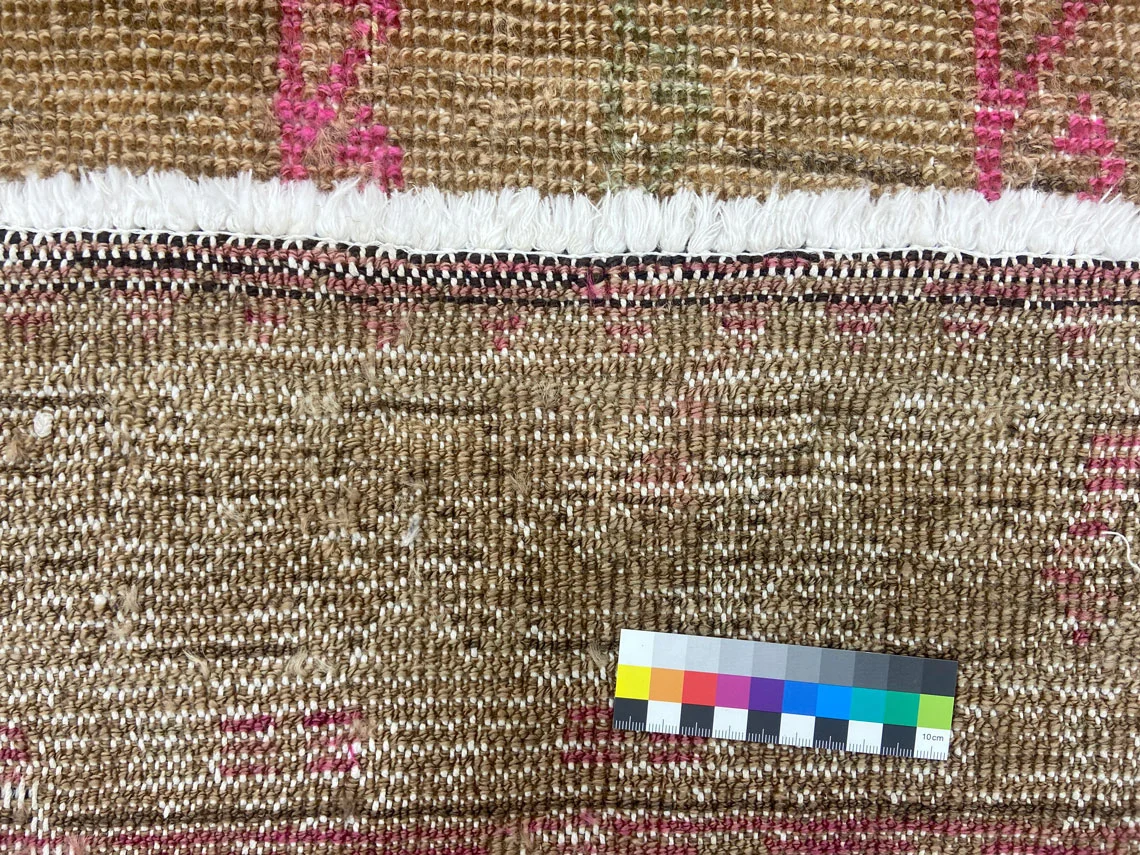
The reverse of a hand-knotted rug often provides useful visual information. In an authentic hand-knotted piece, the pattern is generally visible on the back as well, because it is formed by the knotted structure rather than simply printed onto the surface. A high knot density may also indicate detailed knotting work. Certificates of origin can provide further information. For a sound assessment, material, construction and condition should be considered together rather than relying on one feature alone.
To provide the best experiences, we use technologies like cookies to store and/or access device information. Consenting to these technologies will allow us to process data such as browsing behavior or unique IDs on this site. Not consenting or withdrawing consent, may adversely affect certain features and functions.
Functional Always active
The technical storage or access is strictly necessary for the legitimate purpose of enabling the use of a specific service explicitly requested by the subscriber or user, or for the sole purpose of carrying out the transmission of a communication over an electronic communications network.
Preferences
The technical storage or access is necessary for the legitimate purpose of storing preferences that are not requested by the subscriber or user.
Statistics
The technical storage or access that is used exclusively for statistical purposes.The technical storage or access that is used exclusively for anonymous statistical purposes. Without a subpoena, voluntary compliance on the part of your Internet Service Provider, or additional records from a third party, information stored or retrieved for this purpose alone cannot usually be used to identify you.
Marketing
The technical storage or access is required to create user profiles to send advertising, or to track the user on a website or across several websites for similar marketing purposes.
 SECURE PAYMENT
 SHIPPING PARTNERS


