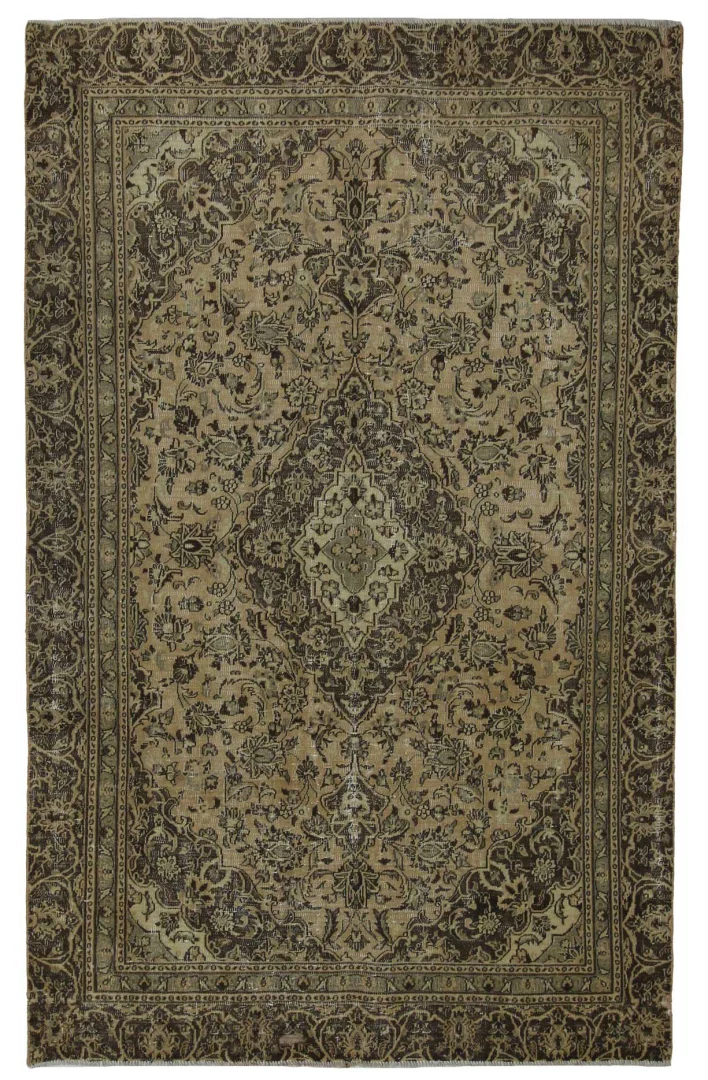
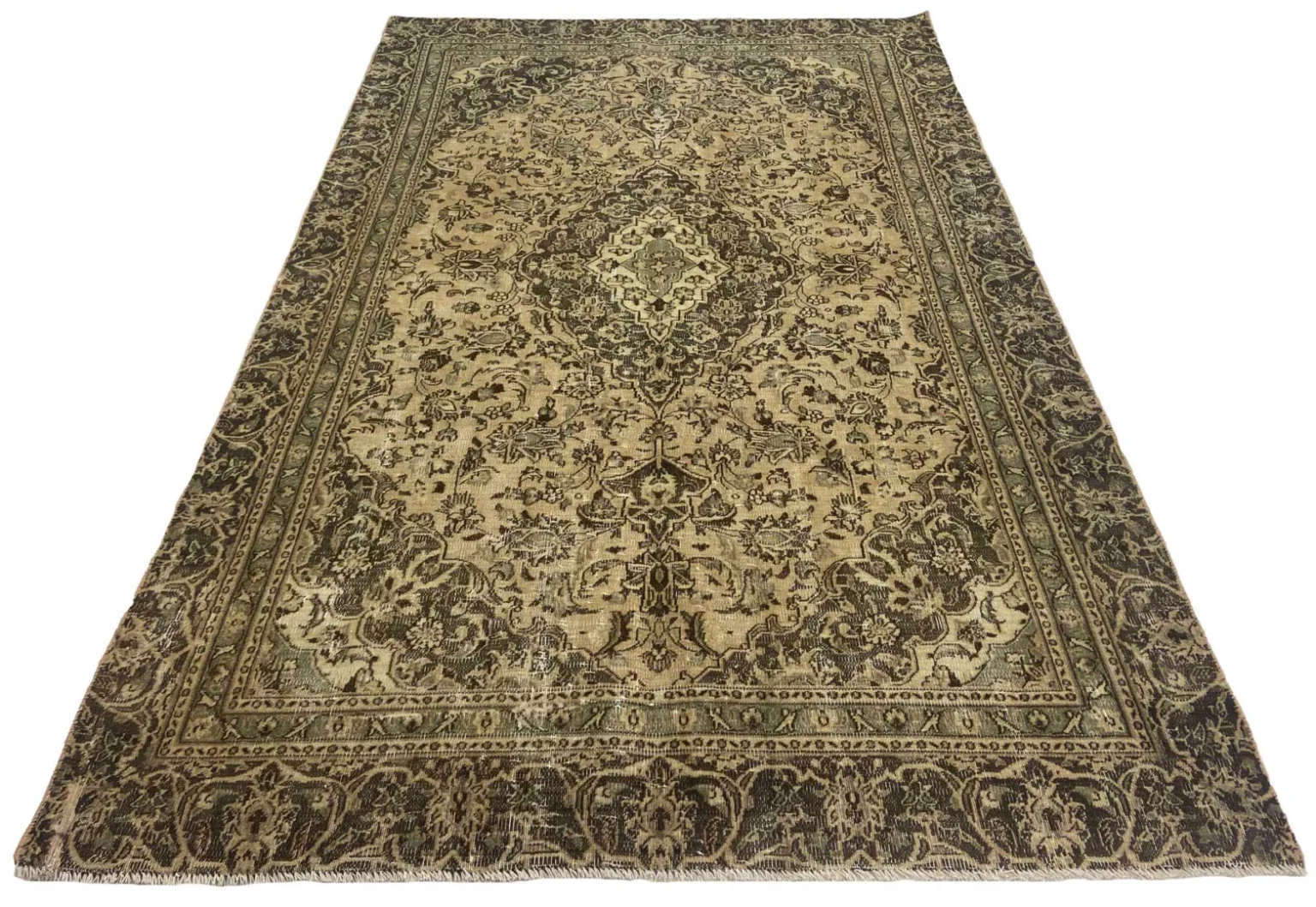
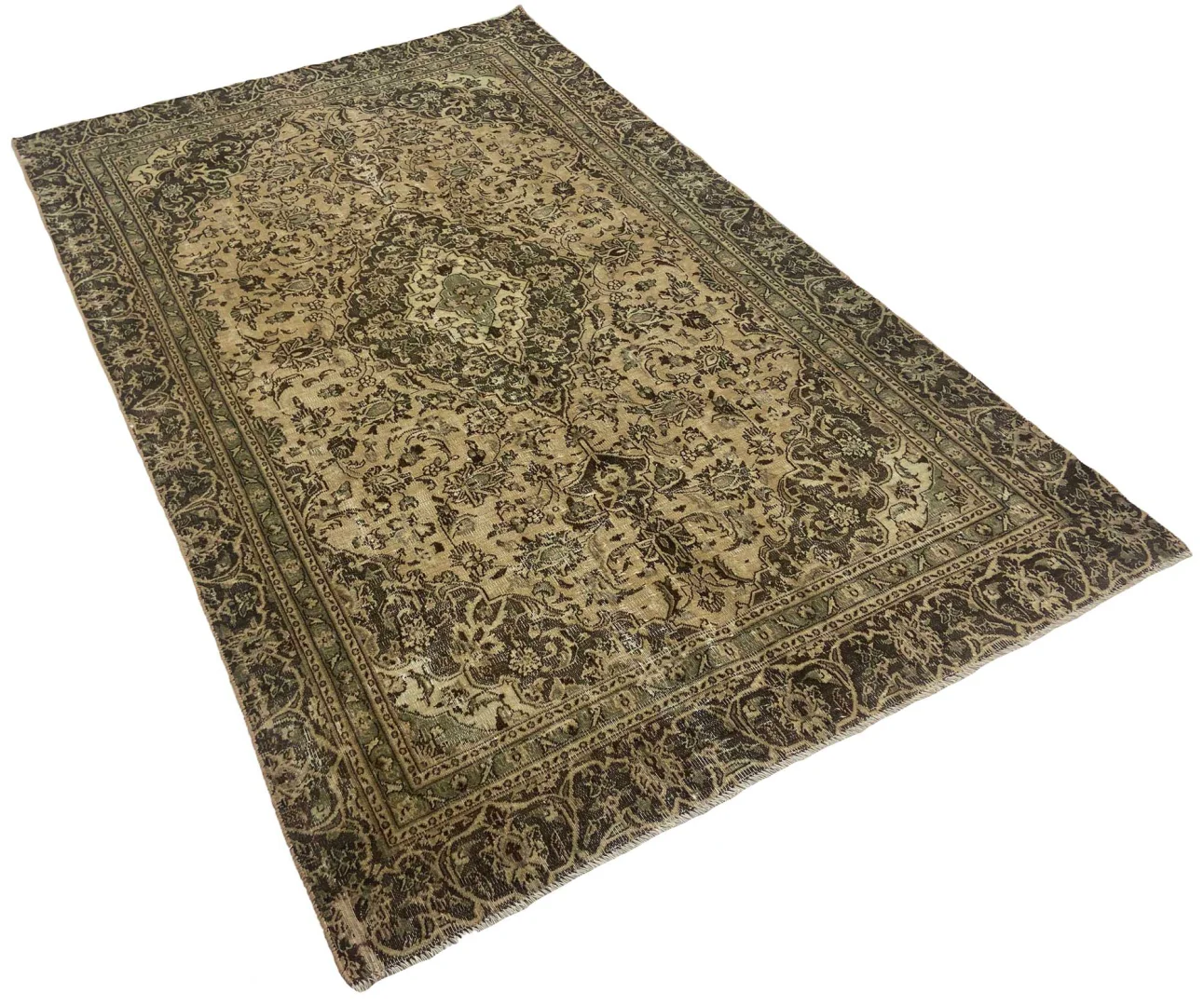
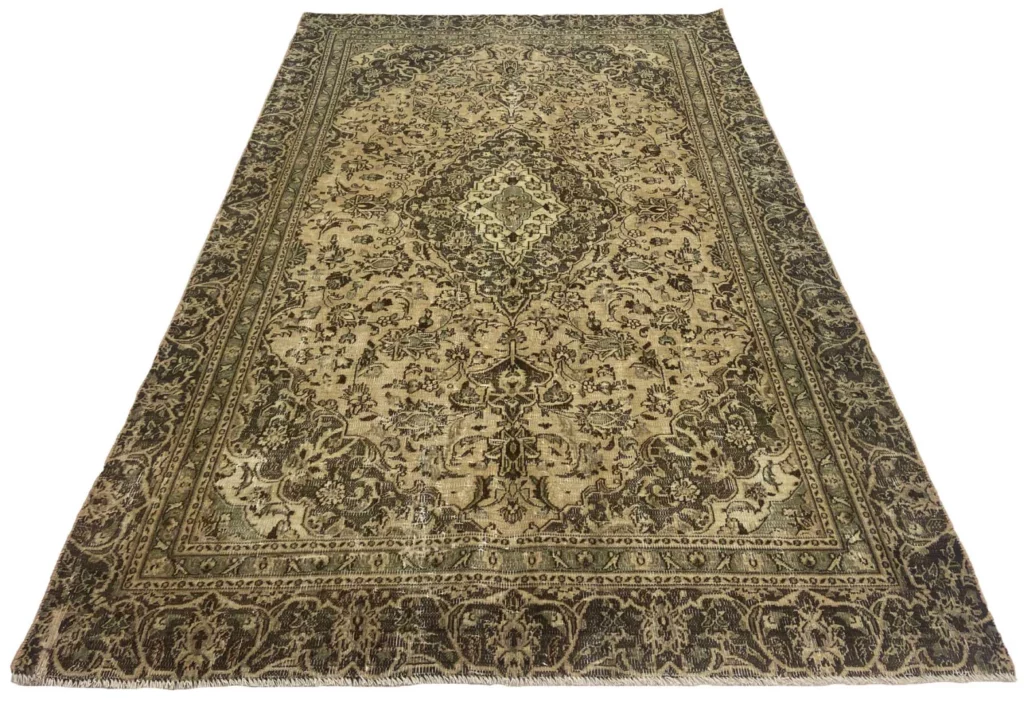
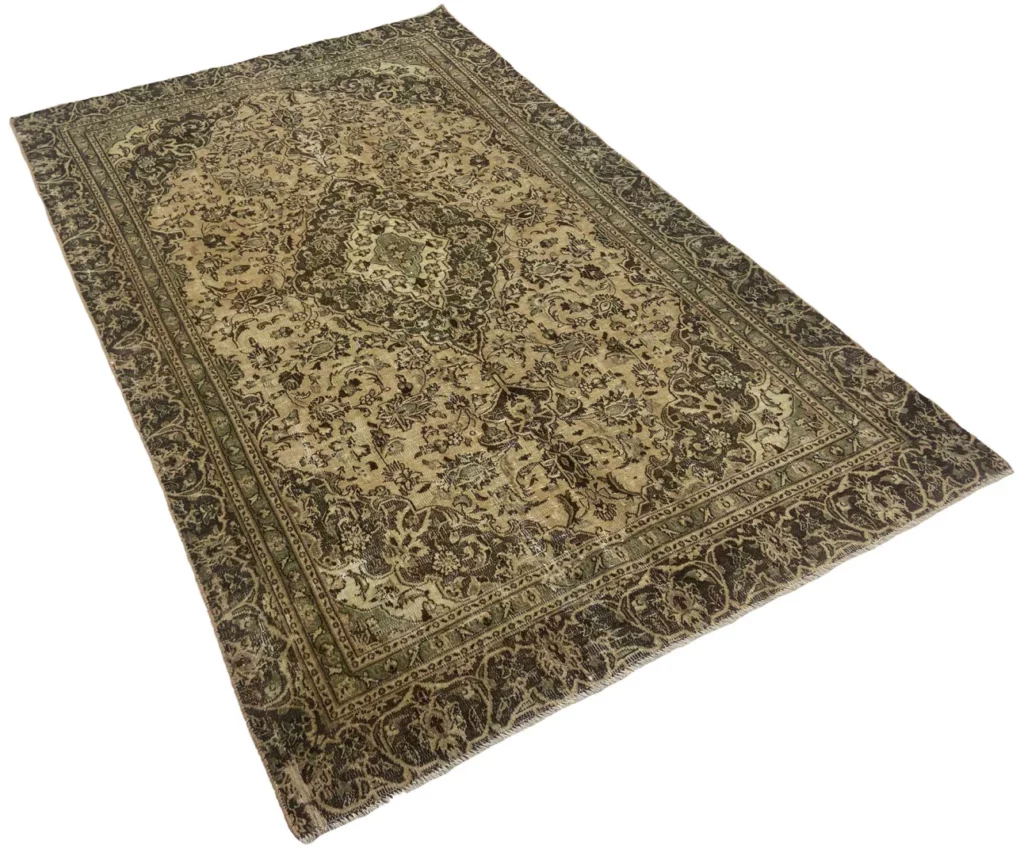
Hand-knotted Persian Rug | Material: Wool pile | Size: 270 x 168 cm | Pattern: Modern character with classic Oriental rug design | Condition: Good, reworked, dyed and with shortened pile
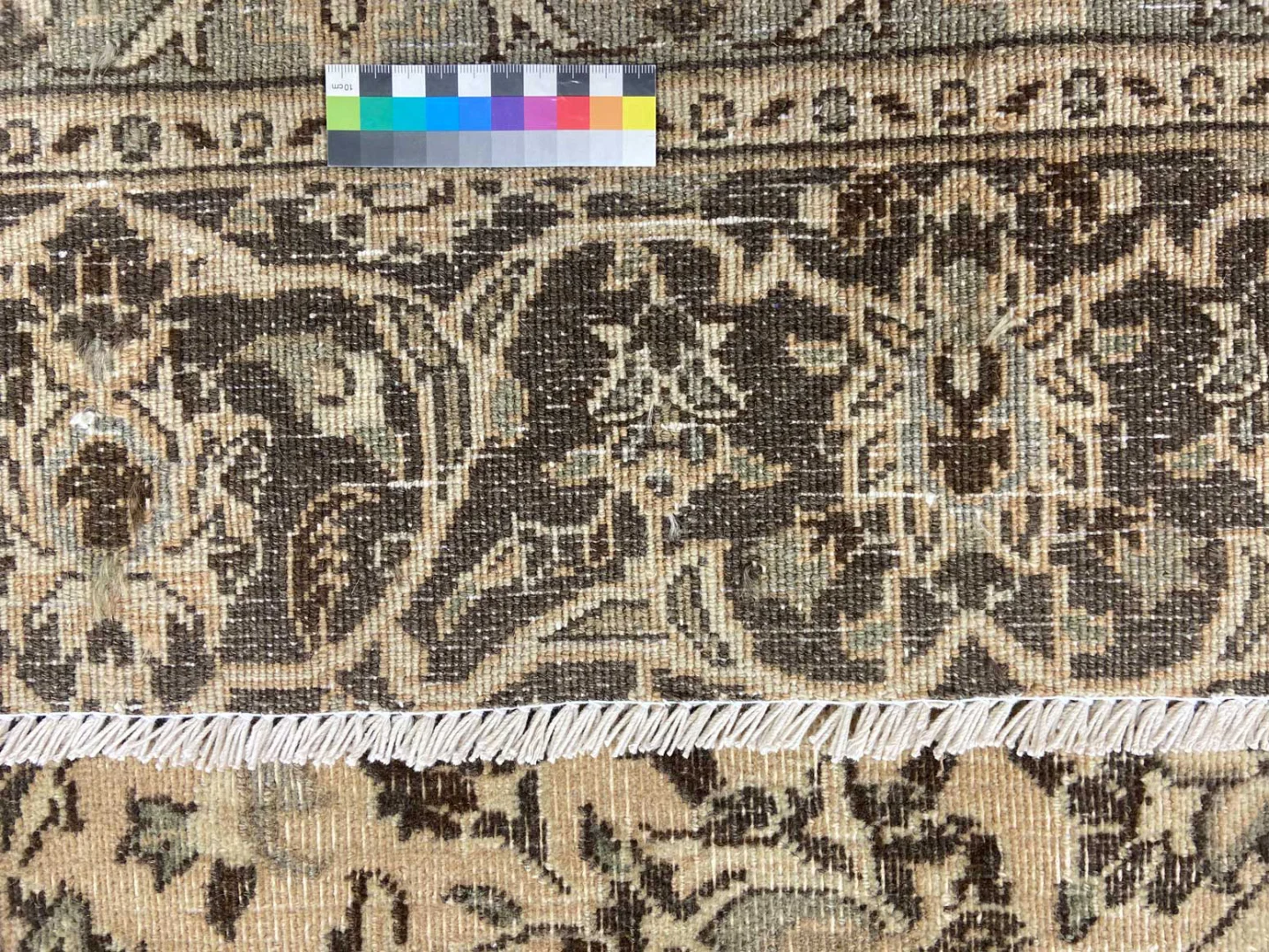
This Persian rug is hand-knotted and made with wool pile. Wool forms the visible textile surface and gives the rug its material character. A hand-knotted rug is created through manual knotting rather than through a printed or mechanically produced surface. This rug has also been reworked. That reworking is part of its present identity and distinguishes the piece from an untouched traditional example.
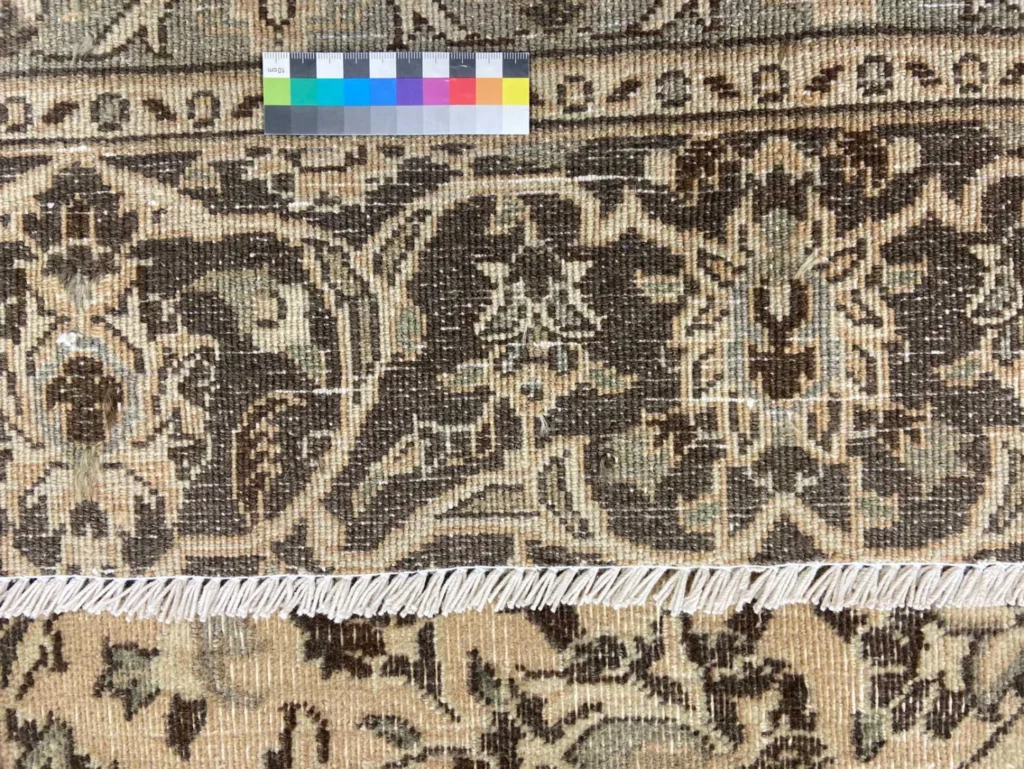
As part of the reworking, the rug was dyed and given a new design. Its pile was also shortened. These alterations affect both the appearance and the way the surface is perceived. The result combines a hand-knotted wool foundation with a deliberately changed visual treatment. The rug is therefore described through both its original craft technique and its later processing. The work carried out on it is not presented as a minor detail, but as an important part of the current design.
Wool has long been used for the pile of Persian rugs because it creates a substantial textile surface and can carry varied colour schemes. For this particular rug, the stated material is wool. The visible character also reflects the shortened pile and the dyeing process. The pile reduction changes the relationship between surface and pattern, while the colour treatment creates the new design noted in the description. The hand-knotted structure remains the basis of the rug, even though its surface has been intentionally revised.
Origin and Tradition
The term Persian rug places this piece within the Iranian or Persian rug tradition. Iranian carpet making includes a range of regional centres, each associated with its own approaches to drawing, colour and workmanship. Isfahan, Tabriz, Kashan and Nain are among the best-known production areas mentioned in connection with Persian rugs. No one of these places is given as the origin of this particular rug. It is therefore identified as a Persian rug without assigning it to a city or province that is not stated.
Persian carpet making developed through workshops and family-based craft traditions in which methods and designs were passed on over generations. The hand-knotted construction requires many individual operations, from preparing the material to forming the patterned textile surface. The character of a rug is shaped by its wool, its colour arrangement and its finishing. This combination of practical construction and decorative planning explains why Persian rugs are understood both as useful textiles and as examples of traditional craftsmanship.
The Iranian rug tradition is not a single uniform style. Regional schools and workshops have produced different approaches to composition, from tightly organised floral arrangements to geometric layouts and central medallion designs. Names associated with rugs may refer to a place, a pattern tradition or a particular visual language, so these references must be kept separate from the proven origin of an individual piece. For this rug, the documented classification is Persian rug. A more precise regional attribution is not part of its description.
Older or vintage rugs can also acquire a second visual history through later treatment. A hand-knotted rug may retain its traditional construction while being altered through dyeing, pile reduction or other restoration work. This piece represents that relationship between inherited craft and later design intervention. It is hand-knotted, has been reworked, and received a new appearance through dyeing and shortening of the pile. Its present character therefore reflects both Persian rug tradition and a subsequent update.
Persian rugs have been used in a wide range of interiors, from traditionally furnished rooms to more contemporary settings. Their established craft background allows classic design elements to remain legible, while later colour work can change the overall impression. In this case, the description specifically combines modern character with classic Oriental rug design. That wording conveys the intended relationship between tradition and revision without adding a specific motif or regional attribution that has not been supplied.
Design and Pattern
The design of this rug is described as modern in character while retaining a classic Oriental rug design. Its visual identity therefore comes from the contrast between an established Persian rug vocabulary and a later change in colour and surface. Dyeing gave the rug a new design, while the hand-knotted structure and classical basis remain part of its appearance. No particular medallion, floral arrangement, geometric emblem or named regional pattern is specified for this individual piece.
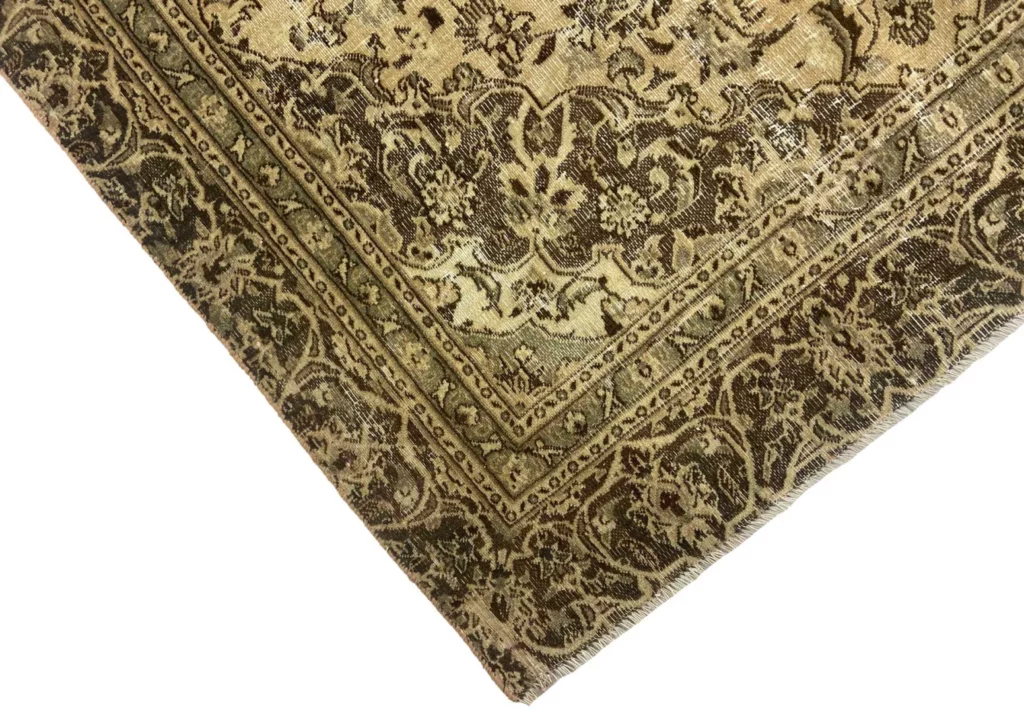
Persian rugs generally draw on a broad range of decorative ideas. Floral stems, leaves, blossoms, geometric forms and medallions are familiar elements within Iranian carpet design. Some compositions are densely arranged, while others use more open fields or stronger geometric order. Borders often frame the central field and establish a visual rhythm around it. These are general features of the Persian rug tradition and provide useful context for the category, but they should not be mistaken for a description of a motif that has not been identified on this rug.
Colour plays a central role in how a rug is read. Traditional Persian carpets are known for carefully organised palettes, while later treatments can alter the balance between field, border and ornament. The rug described here was dyed during its reworking, and the dyeing produced a new design. This means that its present colour impression belongs to its later history as well as to its hand-knotted foundation. The treatment does not turn it into a different type of textile; it changes the way the existing Persian rug structure is seen.
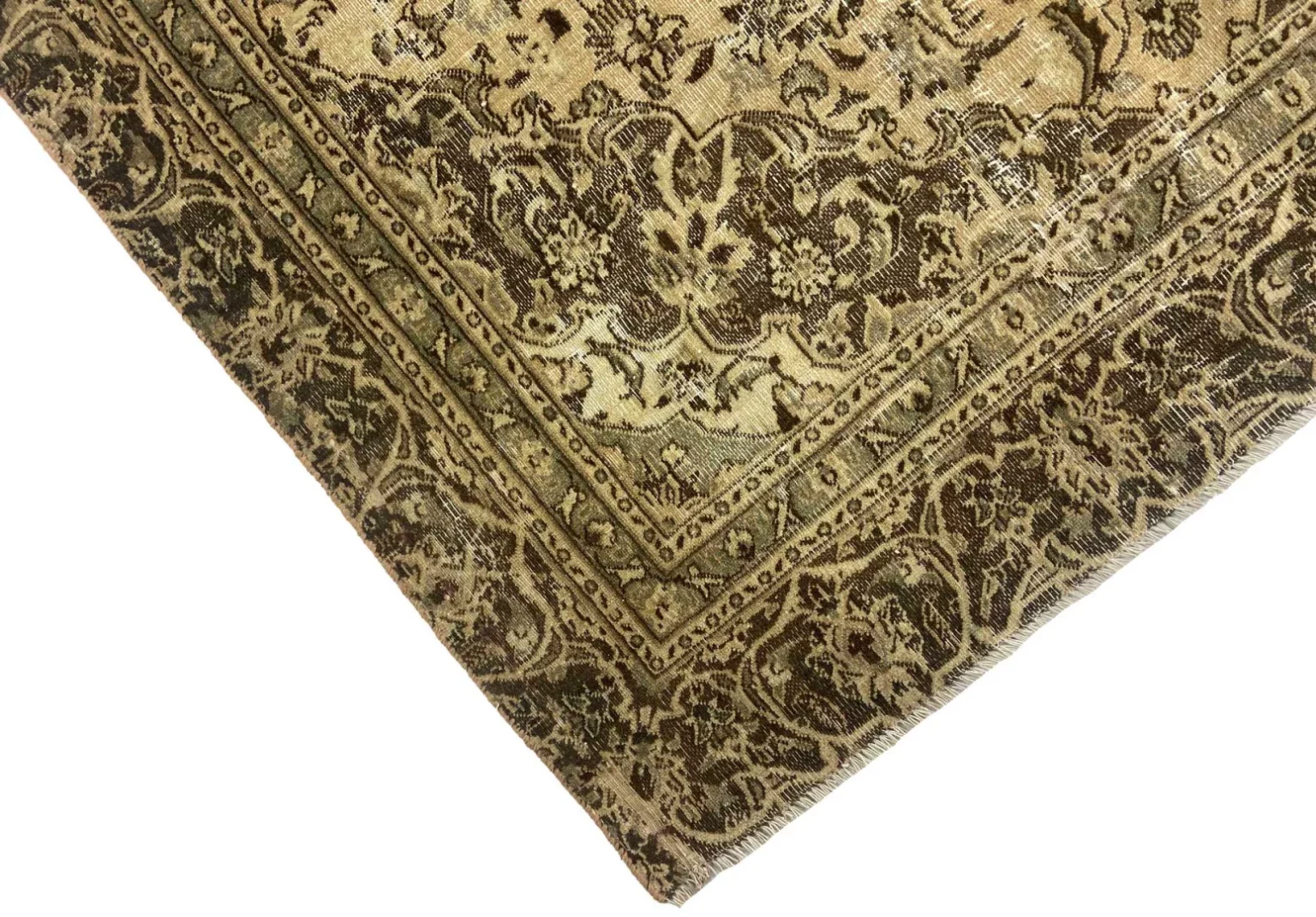
Shortening the pile also affects the visual presentation. A reduced pile can make the pattern appear more level and can direct attention toward the distribution of colour across the surface. In a reworked rug, the pattern is therefore experienced through more than the original knotting and drawing. The later surface treatment becomes part of the design language. Here, the classic Oriental rug character is paired with a modern effect created through dyeing and pile shortening.
That combination allows the rug to relate to both traditional and contemporary furnishing concepts. The classic side comes from the Persian and Oriental rug design tradition, while the modern side is connected with the new colouring and altered pile. The source description does not name an individual pattern, so the rug is best understood through this broader design relationship. Its stated visual qualities are the classic foundation, the modern character and the visible consequence of its reworking.
Special Features
This rug brings together several specifically described features. It is a vintage Persian rug, hand-knotted and made from high-quality wool. It has been reworked, dyed and given a shortened pile. The treatment created a new design, and the result is described as having modern character combined with classic Oriental rug design. Its condition is stated as good. These characteristics describe the piece as it is presented today, rather than as an unchanged example of an earlier state.
The reworking is especially significant because it links preservation with a new visual direction. The hand-knotted craft remains the foundation, while dyeing and pile shortening alter the surface impression. This makes the rug distinct from a purely traditional presentation without removing its relationship to Persian rug making. Its individuality comes from the combination of manual construction, wool, vintage character and the particular treatment applied during restoration.
FAQ
How can the quality of a Persian rug be assessed?
Several factors help assess the quality of a Persian rug. Knot density, the material used and the standard of workmanship are important points of reference. The hand-knotted construction, the character of the wool and the condition of the surface should be considered together rather than viewed separately. Any restoration or later treatment also matters because it affects the rug as it exists today. For this piece, the documented features are a wool pile, hand-knotting and reworking. Dyeing and pile shortening are part of its present appearance and should be included in any careful assessment.
How should I care for a Persian rug?
Regular gentle vacuuming is part of basic Persian rug care. The surface should not be subjected to unnecessary strain during cleaning. Direct sunlight should be avoided so that the colour impression remains as even as possible. Professional cleaning from time to time can help maintain the textile. With a reworked and dyed rug, cleaning should be adapted to the wool, the colour treatment and the shortened pile. These elements together define the current surface, so care should respect both the hand-knotted construction and the later restoration work.
What makes a vintage Persian rug distinctive?
A vintage Persian rug is distinctive because it can unite an earlier handcraft foundation with a later design treatment. In this example, that relationship is expressed through hand-knotting, wool, reworking, dyeing and a shortened pile. The result has a modern character while remaining connected to classic Oriental rug design. Each individually hand-knotted piece has its own combination of structure and treatment. This rug is described as being in good condition, and its character comes from the way traditional craftsmanship, vintage identity and a renewed surface are brought together.
To provide the best experiences, we use technologies like cookies to store and/or access device information. Consenting to these technologies will allow us to process data such as browsing behavior or unique IDs on this site. Not consenting or withdrawing consent, may adversely affect certain features and functions.
Functional Always active
The technical storage or access is strictly necessary for the legitimate purpose of enabling the use of a specific service explicitly requested by the subscriber or user, or for the sole purpose of carrying out the transmission of a communication over an electronic communications network.
Preferences
The technical storage or access is necessary for the legitimate purpose of storing preferences that are not requested by the subscriber or user.
Statistics
The technical storage or access that is used exclusively for statistical purposes.The technical storage or access that is used exclusively for anonymous statistical purposes. Without a subpoena, voluntary compliance on the part of your Internet Service Provider, or additional records from a third party, information stored or retrieved for this purpose alone cannot usually be used to identify you.
Marketing
The technical storage or access is required to create user profiles to send advertising, or to track the user on a website or across several websites for similar marketing purposes.
 SECURE PAYMENT
 SHIPPING PARTNERS


