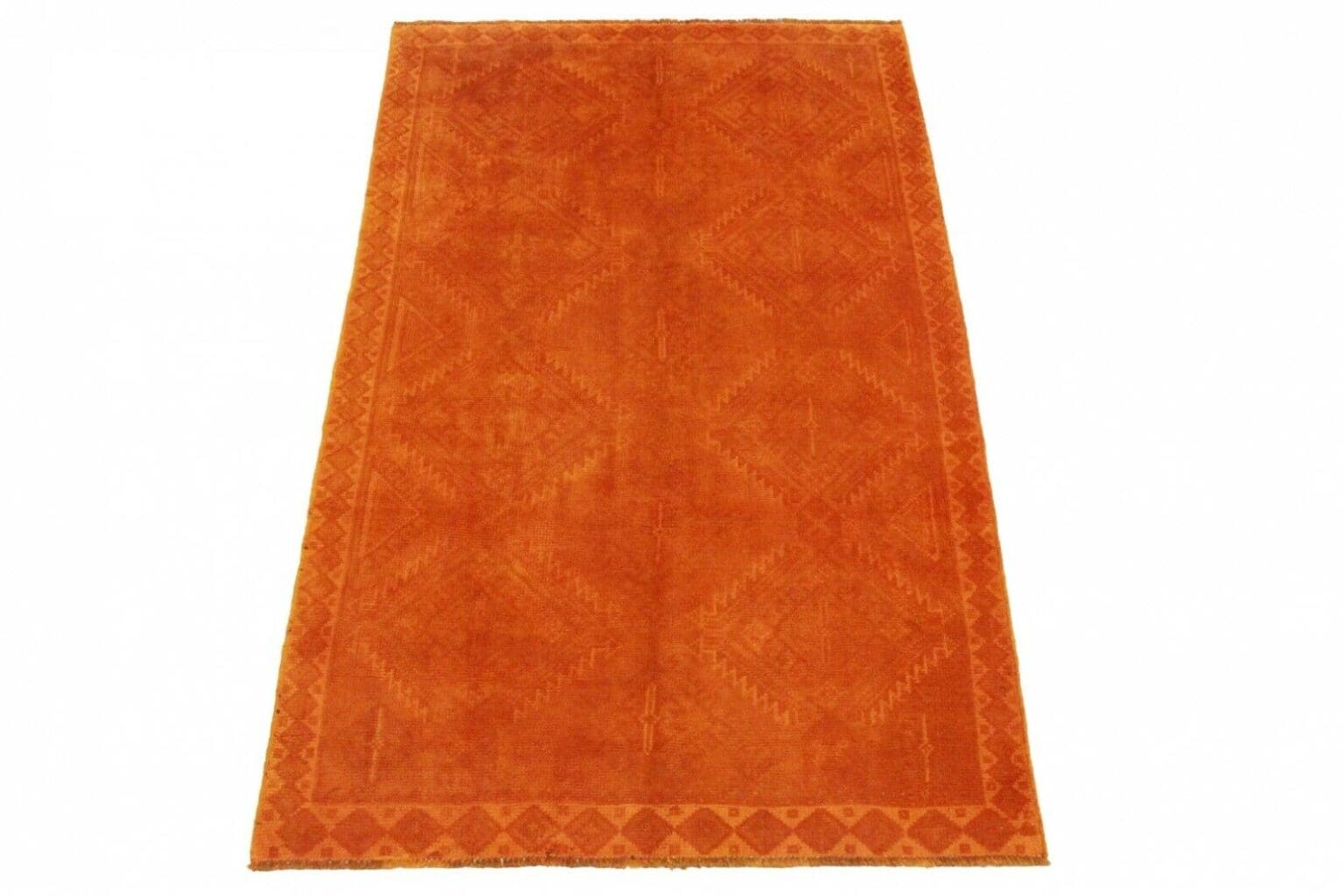
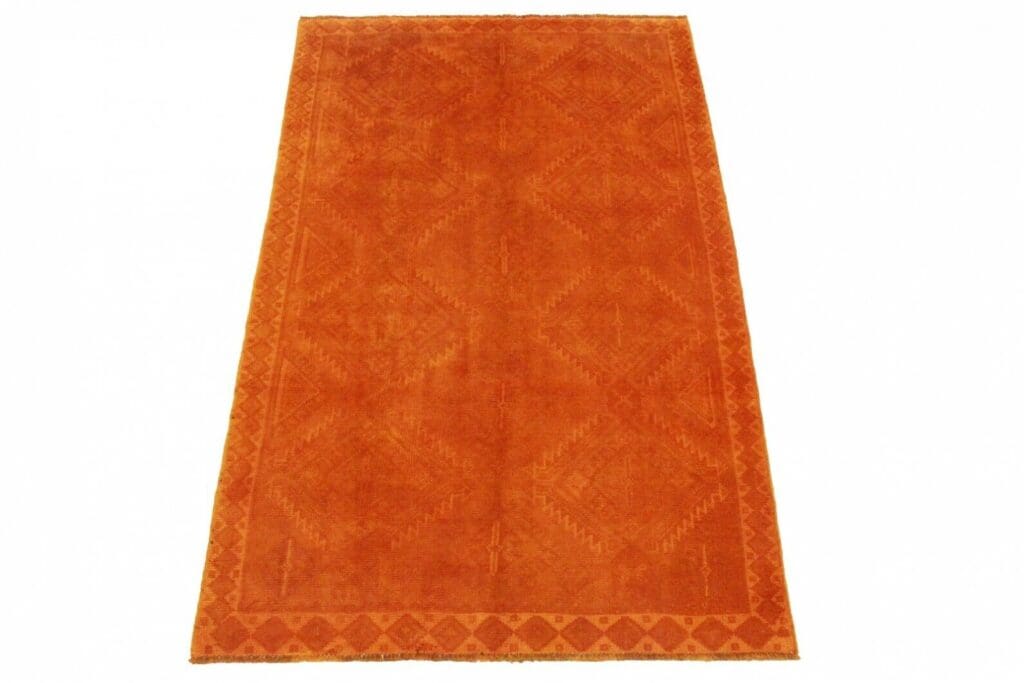
Hand-knotted Persian Rug | Knot density: Hand-knotted | Material: pile hand-spun wool | Size: 225 x 139 cm | Pattern: Overdyed designs with a unique appearance | Condition: New with tag
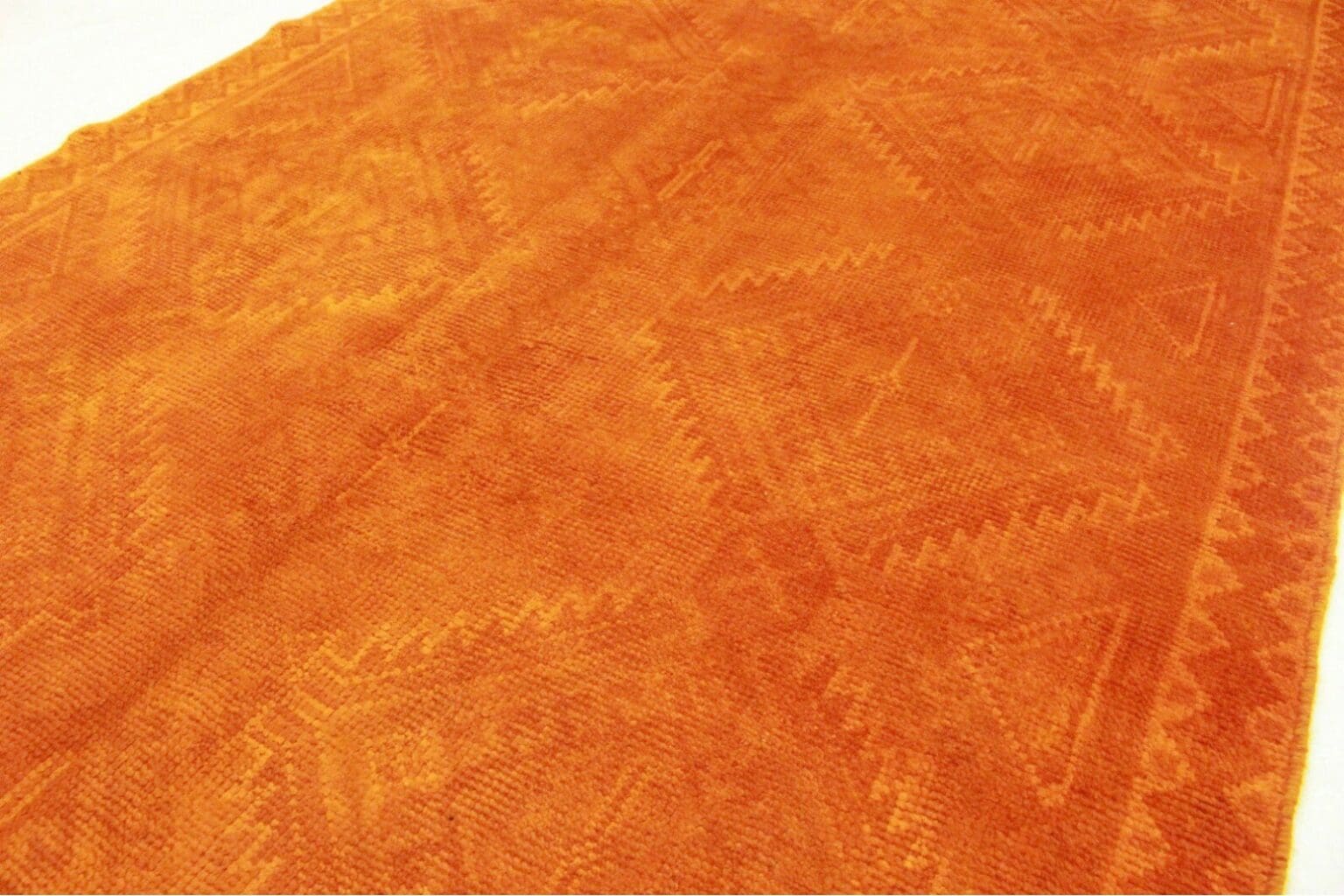
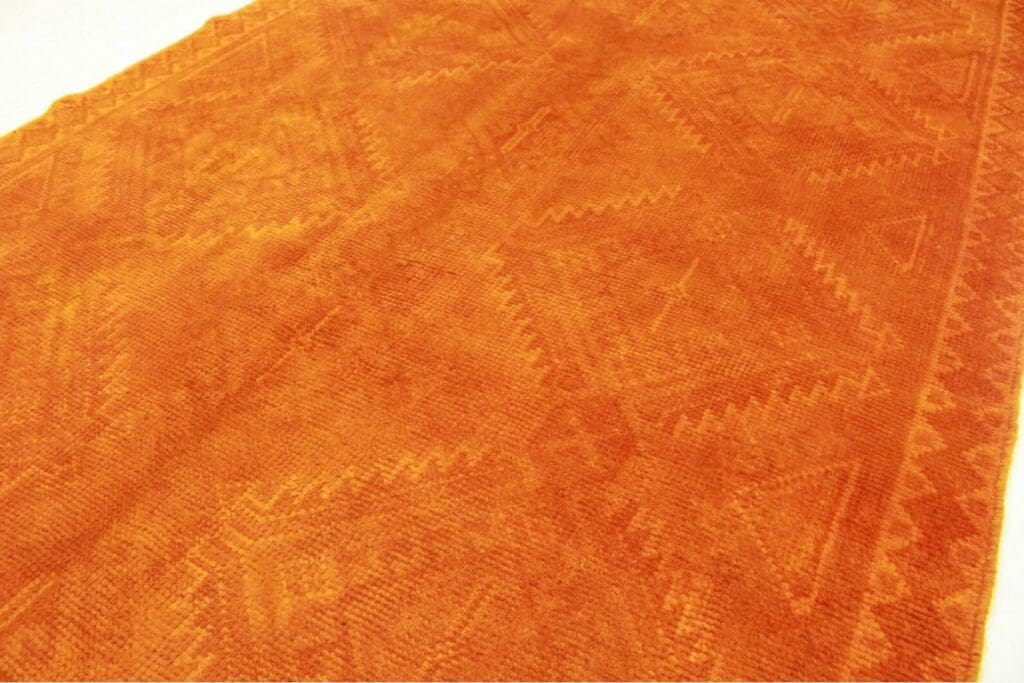
This Persian rug is hand-knotted and has a pile made of hand-spun wool. Its construction combines a traditional knotting method with a treated surface and a contemporary visual character. In hand knotting, the design is built knot by knot into the textile foundation. It is not produced as an identical industrial series item; it is a single piece with its own surface and visual effect. The hand-spun wool defines the character of the pile. As part of the described reworking process, the pile was shortened. This allows underlying shades to become more visible. The rug was then washed and treated several times. Its making therefore includes not only the original knotting but also a deliberate alteration of the visible surface. Wool remains the stated main pile material, while the later treatment determines much of the colour and vintage appearance. The rug is described as new with a tag and at the same time as a vintage rug aged 20 to 50 years. Hand-spun wool can retain a lively fibre structure created by the spinning process. In a knotted pile, such a structure contributes to the textile depth of the surface. The technique used here is not the flat-weaving of a Kilim, but the creation of a pile through individual knots. Washing, treatment and pile shortening then modify how the knotted surface is seen without changing the stated hand-knotted construction into another technique.
Origin and Tradition
The origin is given as Persia and the Orient. Persia is one of the historic centres of carpet knotting. Over many centuries, different regional working methods, ornaments and colour ideas developed there. Traditional hand-knotted rugs are made through a careful, gradual process. Knotting makes it possible to form lines, fields and repeated symbols in varied levels of detail. The design is not rapidly printed onto a finished textile surface; it is built as the structure is made. This relationship between material, manual work and pattern explains why each hand-knotted rug is regarded as an individual object. Persian carpet traditions include both strictly organised compositions and more open floral or geometric arrangements. They range from finely articulated medallion designs to broad, deliberately restrained fields. This rug does not present that craft heritage as an unchanged historical composition. Instead, its hand-knotted foundation is combined with later overdyeing and a modern interpretation. Overdyed rugs rely on an existing pattern that is not completely erased. Parts of it remain visible beneath the new colour and create a second visual layer. The method therefore depends on the earlier woven or knotted work while changing the way that work is perceived. It links the history of Persian carpet making with a present-day interior vocabulary. Tabriz, Isfahan and Kashan are also mentioned within the broader context of Persian rugs for detailed designs. Nain and Qom are likewise recognised names in the carpet world. These names represent different regional traditions of pattern and workmanship; they do not identify the origin of this individual rug. The origin of this piece is described as Persia and the Orient. Kilim rugs belong to the wider field of Oriental textile work as well. Unlike the hand-knotted rug described here, Kilims are flat-woven. The comparison shows that Oriental rugs and textiles are made through several different methods rather than one uniform process. Persian knotting knowledge has been passed down through generations. It includes the preparation of fibres, the organisation of patterns, the construction of the foundation and the treatment of the finished textile. Regional traditions differ in knotting, colour palettes, ornaments and the degree of detail. Persian Rug is therefore a term connected with a broad cultural area containing many local forms, not with one standard design used everywhere. The hand-knotted construction connects this piece with that tradition, while the modern overdye treatment adds a later design layer.
Design and Pattern
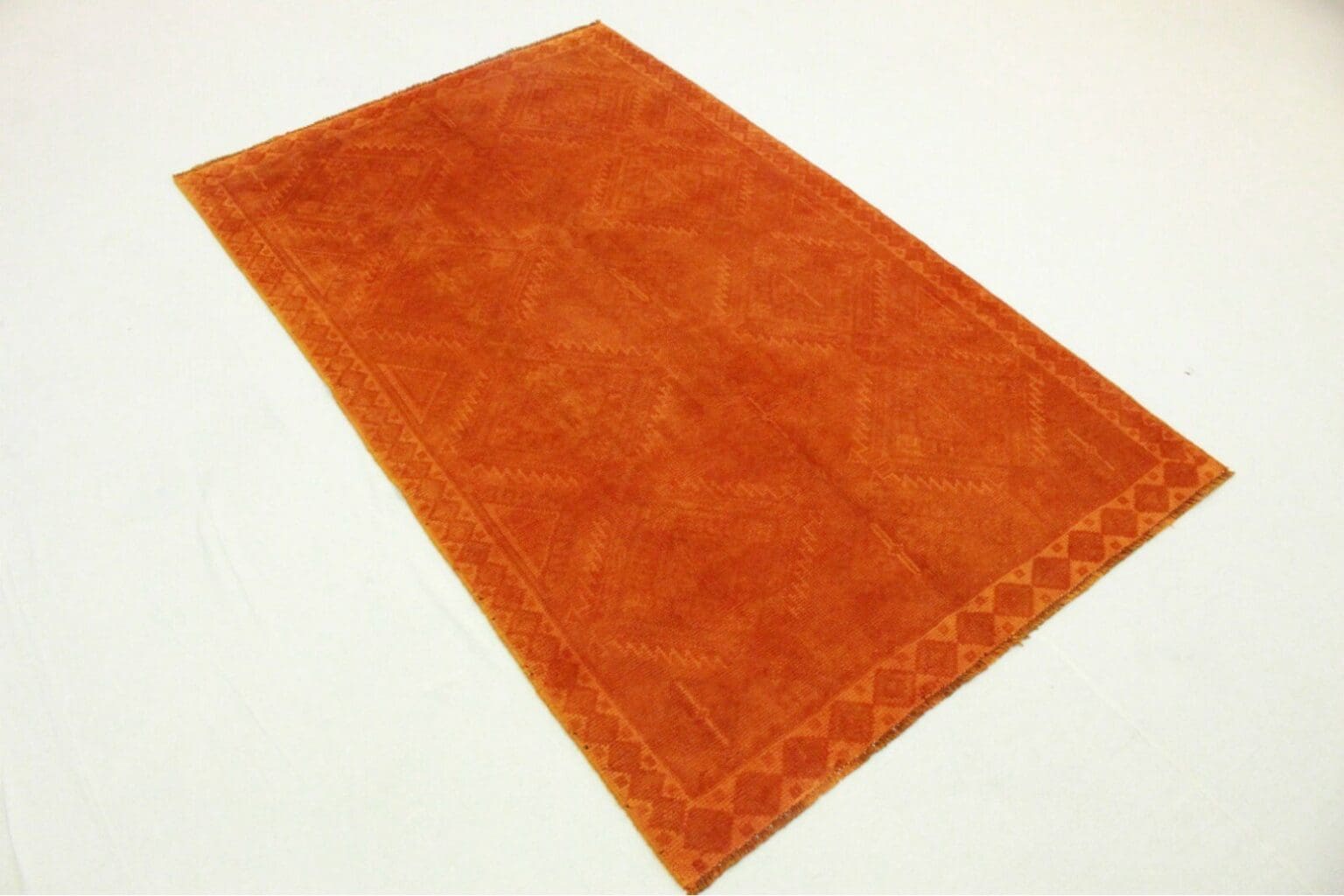
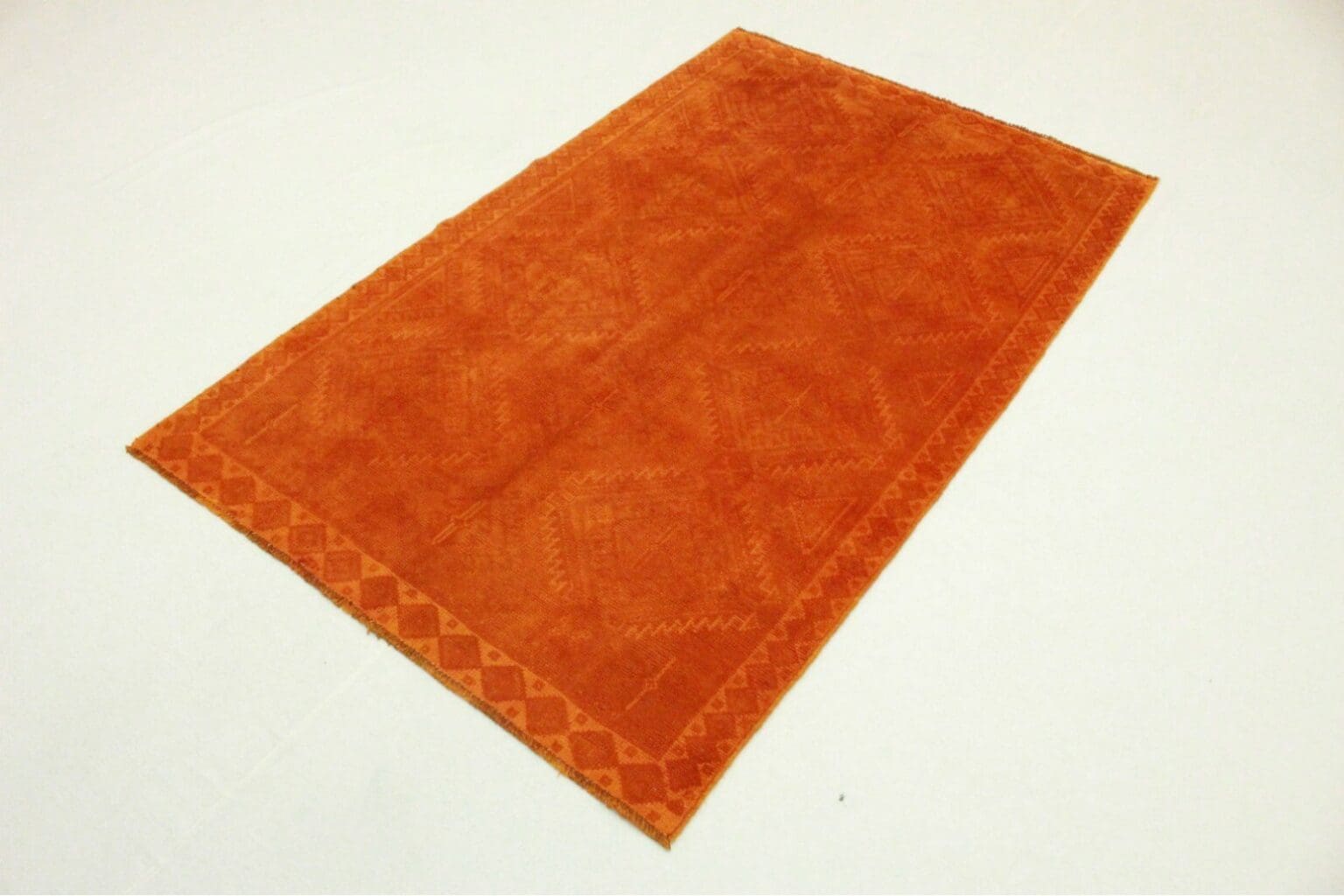
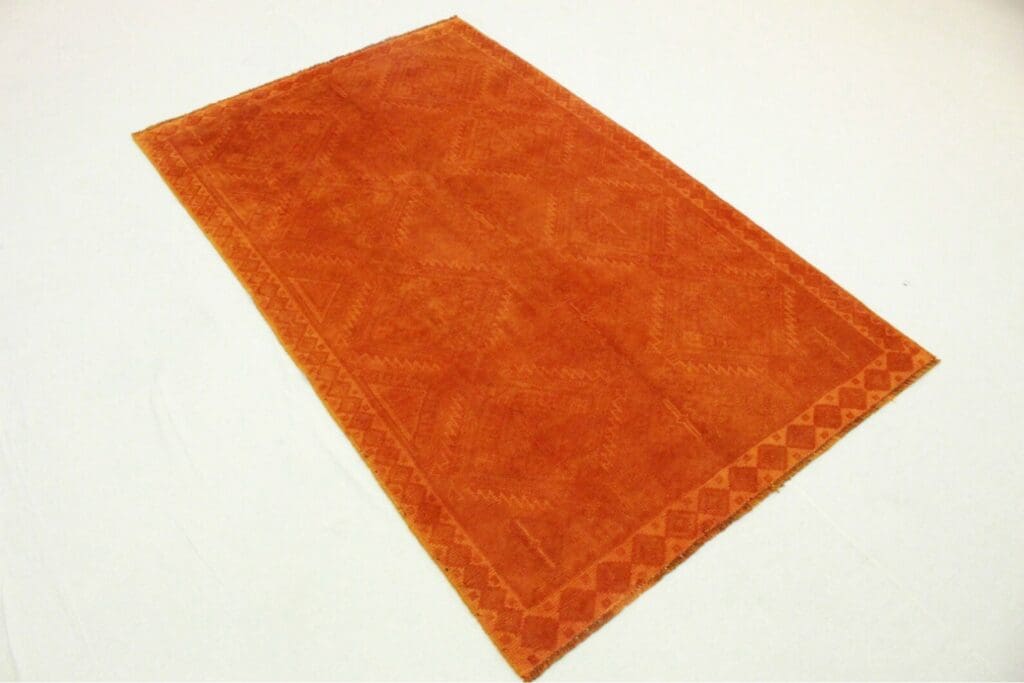
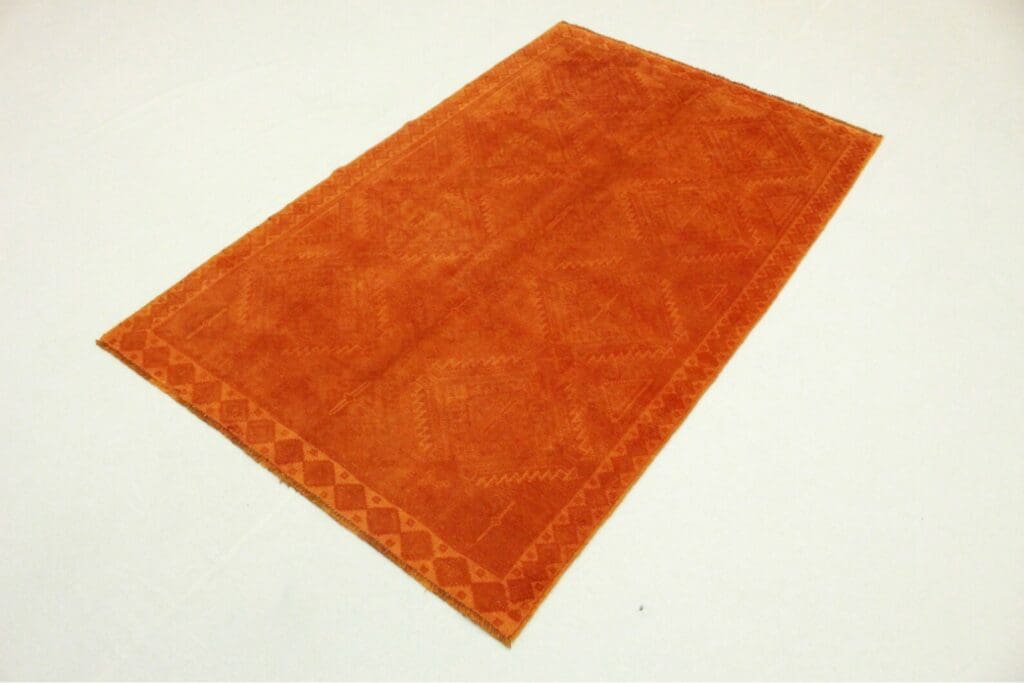
The pattern is described as an overdyed design with a unique appearance. Overdyeing is the defining visual treatment. An additional colour layer is applied over the existing pattern, while not every underlying line and field is completely covered. Earlier shades and parts of the original design can therefore show through lightly. The surface is not perceived as one entirely uniform field; it has differentiated transitions between visible and concealed areas. Warm orange tones provide the basic colour mood. In carpet design, orange can connect earthy shades with warmer and more pronounced colour notes. Depending on how the overdye lies across the surface, some areas can appear more unified while others remain structured by traces of the design beneath. The vintage look results from the combination of shortened pile, revealed shades and overdyeing. It is not simply a printed motif, but the visible result of several treatment steps. The pattern remains connected to the hand-knotted structure. Beneath the new colour lies a knotted design whose traces continue to animate the surface. The stated unique appearance comes from this coexistence of visible and partly covered elements. The style is described as modern. Here, modern does not mean that the traditional foundation is absent. It means that a handmade rug has been brought into a contemporary visual context through altered colour and surface treatment. An overdyed design can therefore work with different interior approaches. In a living room, bedroom or office, such a composition can function as a textile element with a strong colour presence. Its effect comes from the warm orange, the subdued vintage expression and the pattern traces that remain visible. Unlike a completely newly drawn design with sharply separated outlines, the visual structure here depends on layering. The pattern hints at its earlier form while the new colour gives the overall surface a coherent direction. The Persian traditions associated with Tabriz, Isfahan and Kashan also demonstrate the breadth of the design vocabulary, including floral and geometric patterns, detailed compositions and varied colour ranges. For this rug, however, the relevant description is specifically the overdyed design and its individual appearance. Carpet patterns may be built from repeated units, a central composition or a freer distribution of ornaments. Overdyeing changes how such structures are read. Contours may appear softer, selected areas may come forward, and the new colour may visually unite pattern zones that were previously more clearly separated. This is a technical consequence of the additional colour treatment and the shortened pile. It differs from a design created solely through new knots or weaving. The warm orange palette reinforces the overall sense of cohesion, while the visible traces provide variation across the surface.
Special Features
A notable feature is the combination of hand-knotted construction, hand-spun wool and an overdyed surface. The rug was washed and treated several times. During this process, the pile was shortened so that underlying shades could emerge and create the characteristic vintage look. The overdyeing creates a harmonious colour effect and allows parts of the design to remain faintly visible. Its condition is stated as new with a tag, while the rug is also identified as a vintage piece aged 20 to 50 years. It is suitable for underfloor heating, and its style is described as modern. These details define the combination of an older rug, deliberate reworking and present-day use. The rug is also described as easy to care for and suitable for straightforward cleaning. The reworking is therefore an essential part of its visible identity. It explains how the age description and the new-with-tag condition are presented together. The vintage appearance results from the treatment and does not require an unverified claim about a particular former use or provenance.
FAQ
How should I care for this Persian rug?
The rug should be vacuumed regularly so that ordinary dust does not remain in the pile. Spills and stains should be blotted promptly with a damp cloth. Harsh cleaning products should be avoided because they can affect the colour effect and the treated surface. Regular professional cleaning is recommended for thorough care. An overdyed vintage design benefits from gentle handling, allowing the visible colour transitions and the pattern traces beneath them to remain intact. Vacuuming should be carried out evenly and without unnecessarily aggressive treatment of the pile. Liquids should not be left on the surface for a long time, since they can penetrate the textile structure. Professional cleaning can take the wool and the overdyed surface into account. The recommended approach therefore combines regular household care with careful handling and specialist cleaning when a deeper treatment is needed.
Where do the materials for this Persian rug come from?
The pile is made of hand-spun wool. The rug’s origin is described as Persia and the Orient. Persia is known for the use of wool and for its long tradition of hand-knotting. The description associates natural colouring and artisanal construction with lasting durability. This piece also underwent washing, treatment, pile shortening and overdyeing. These steps determine the visible colour and surface effect of the wool. No additional material information is provided for this rug. The stated combination is therefore hand-spun wool in the pile and hand-knotted construction. In Persian carpet making, wool is a traditional fibre because it can be spun, coloured and formed into a resilient pile. The character of a particular rug depends on the fibre, the spinning, the knotting and the later surface treatment. For this piece, the reworking is especially important to its visible colour and vintage effect.
What makes this Persian rug distinctive as an interior piece?
Its distinctive character comes from the combination of handwork and an overdyed design. The hand-knotted construction provides the traditional foundation, while overdyeing creates a modern and individual appearance. Parts of the earlier pattern can remain visible through the new colour layer. Together with the warm orange tones and shortened pile, this produces the characteristic vintage look. The rug therefore connects the history of Persian knotting with a modern interior style. As a one-off, it brings its own pattern and colour effect into a room. It differs from a completely uniform newly made rug because the overlap of colour layers and pattern traces remains part of the visible design. At the same time, the hand-knotted textile foundation remains identifiable. Suitability for underfloor heating expands the stated uses, while the modern style classification describes its contemporary design direction. Its special character is thus based on the material, construction and deliberate reworking, not on an additional unverified claim about origin or history.
To provide the best experiences, we use technologies like cookies to store and/or access device information. Consenting to these technologies will allow us to process data such as browsing behavior or unique IDs on this site. Not consenting or withdrawing consent, may adversely affect certain features and functions.
Functional Always active
The technical storage or access is strictly necessary for the legitimate purpose of enabling the use of a specific service explicitly requested by the subscriber or user, or for the sole purpose of carrying out the transmission of a communication over an electronic communications network.
Preferences
The technical storage or access is necessary for the legitimate purpose of storing preferences that are not requested by the subscriber or user.
Statistics
The technical storage or access that is used exclusively for statistical purposes.The technical storage or access that is used exclusively for anonymous statistical purposes. Without a subpoena, voluntary compliance on the part of your Internet Service Provider, or additional records from a third party, information stored or retrieved for this purpose alone cannot usually be used to identify you.
Marketing
The technical storage or access is required to create user profiles to send advertising, or to track the user on a website or across several websites for similar marketing purposes.
 SECURE PAYMENT
 SHIPPING PARTNERS


