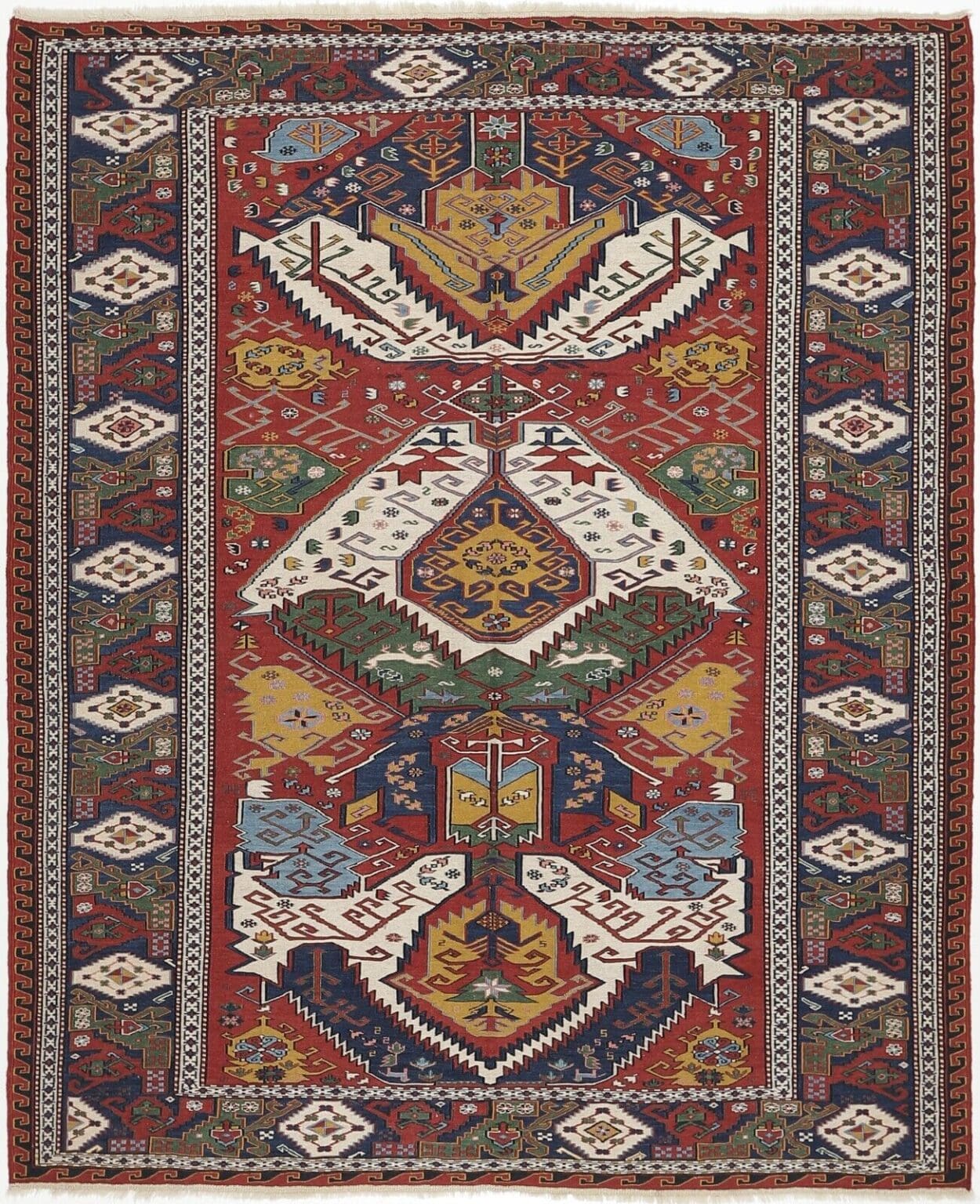
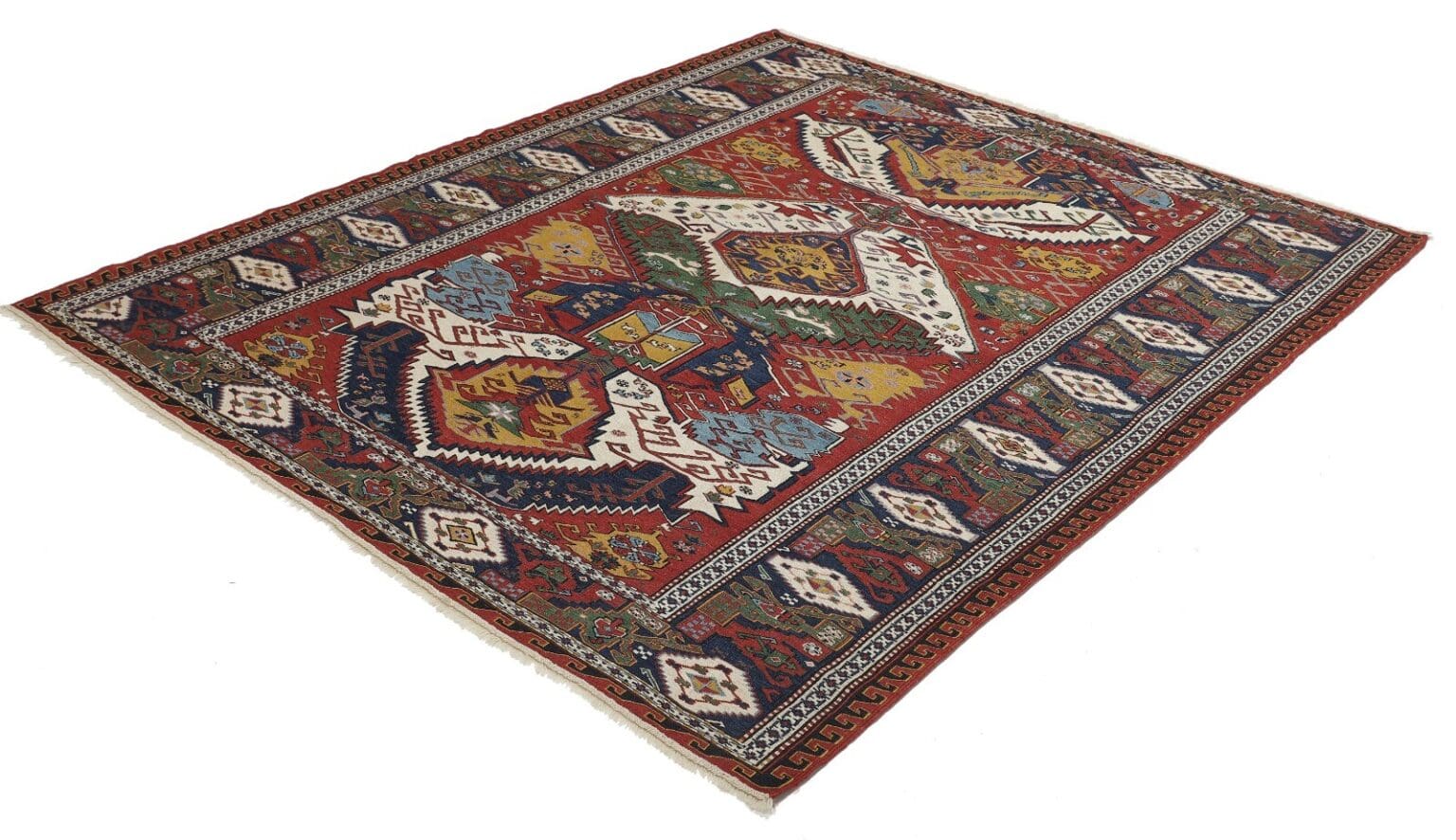
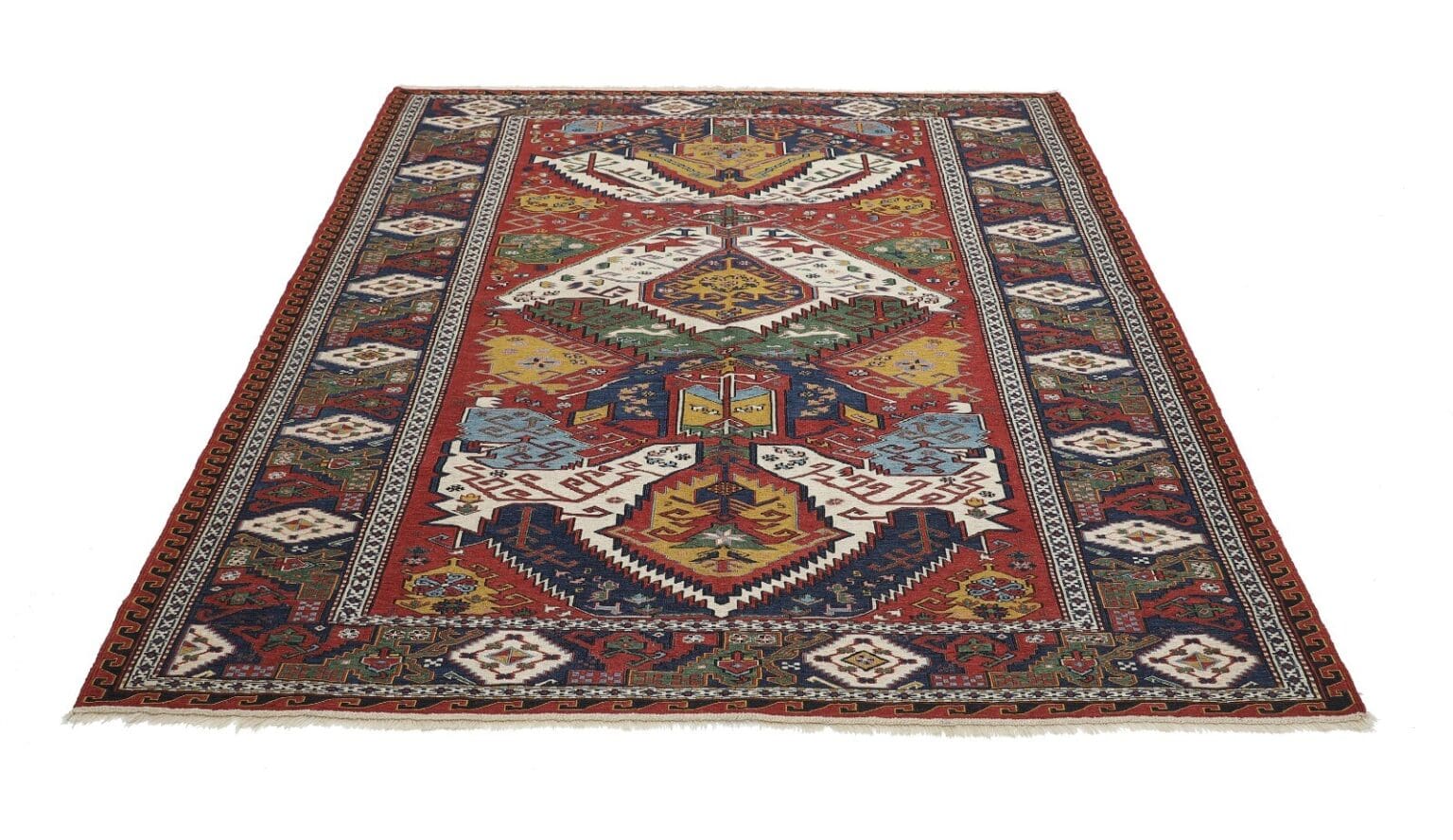
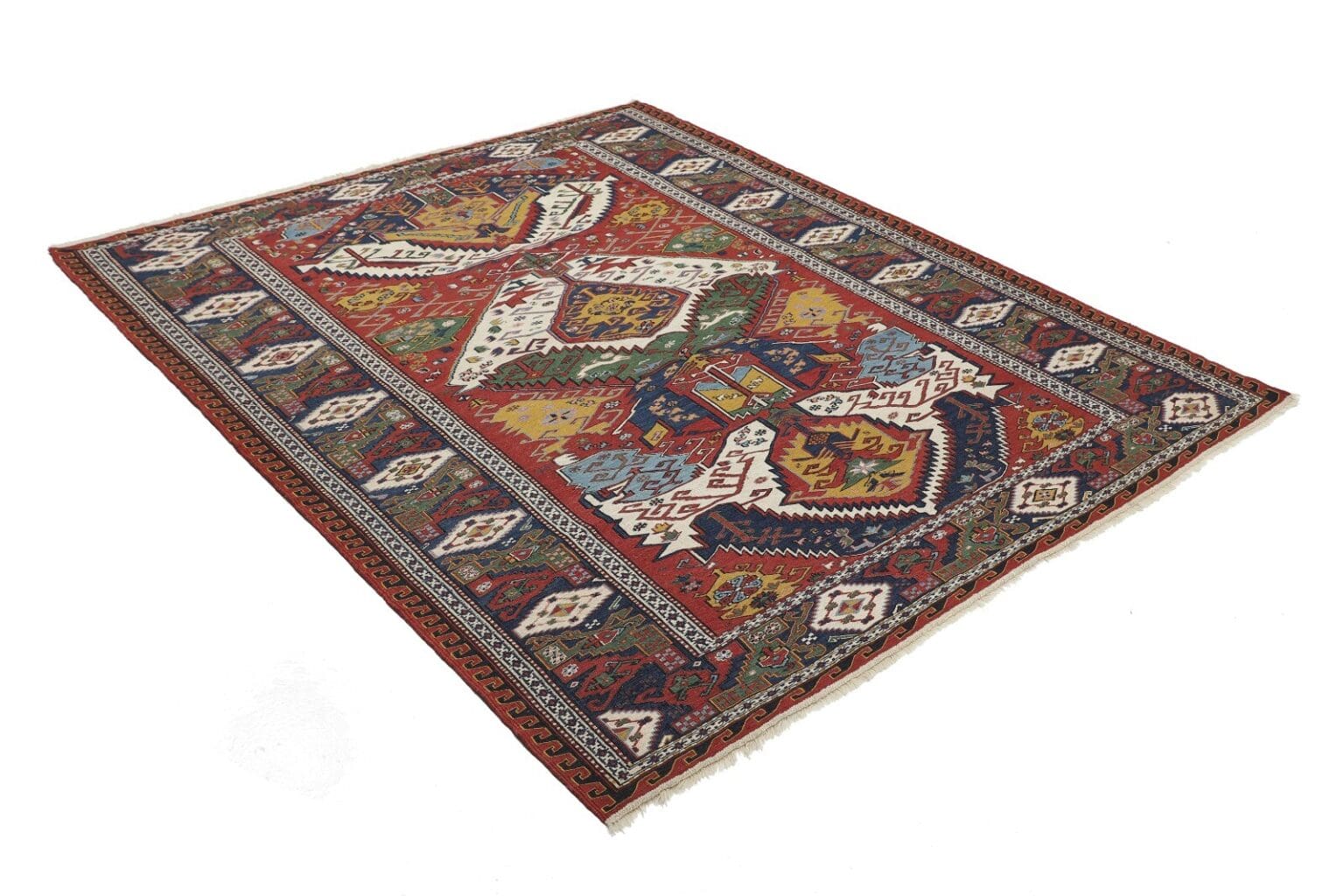
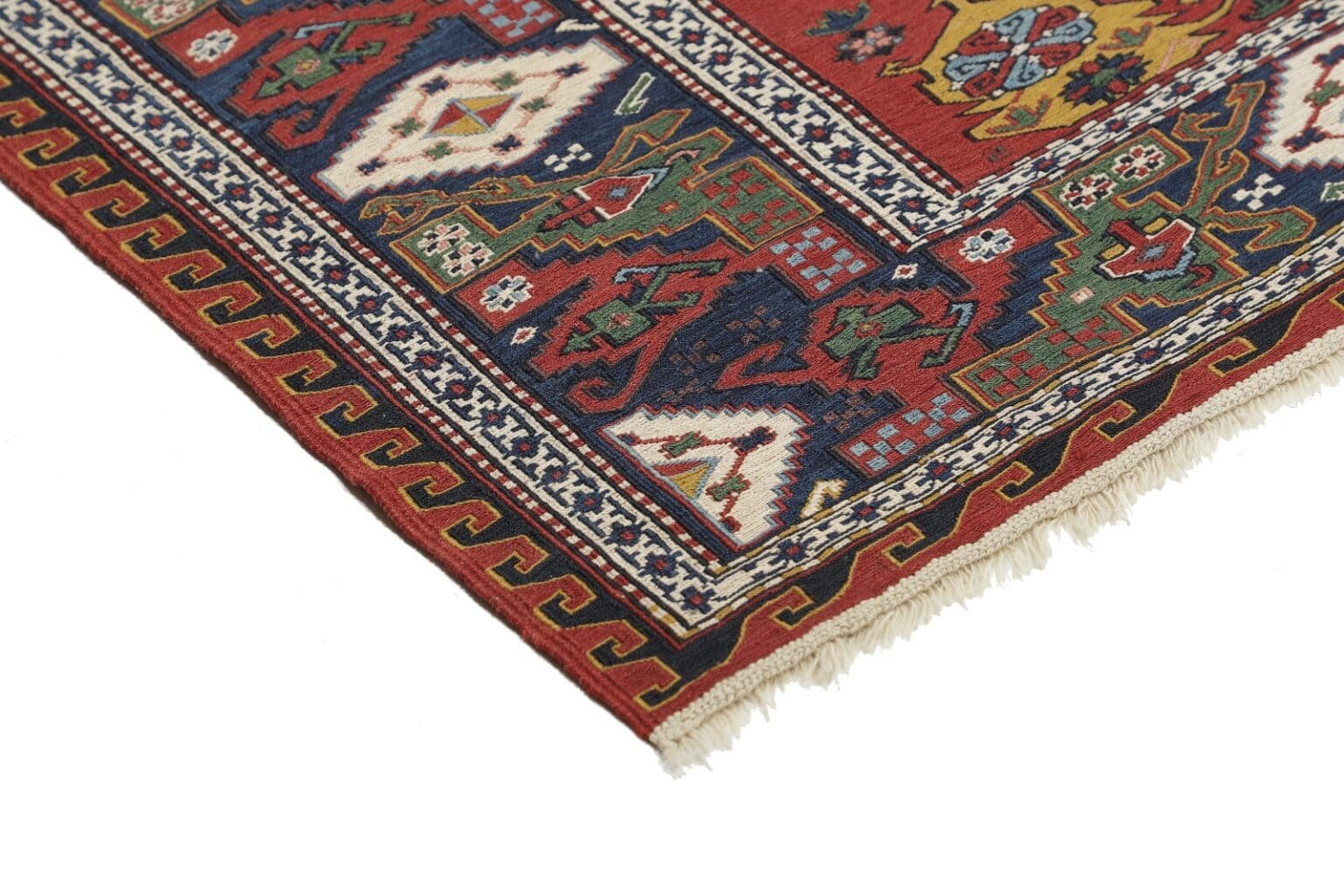
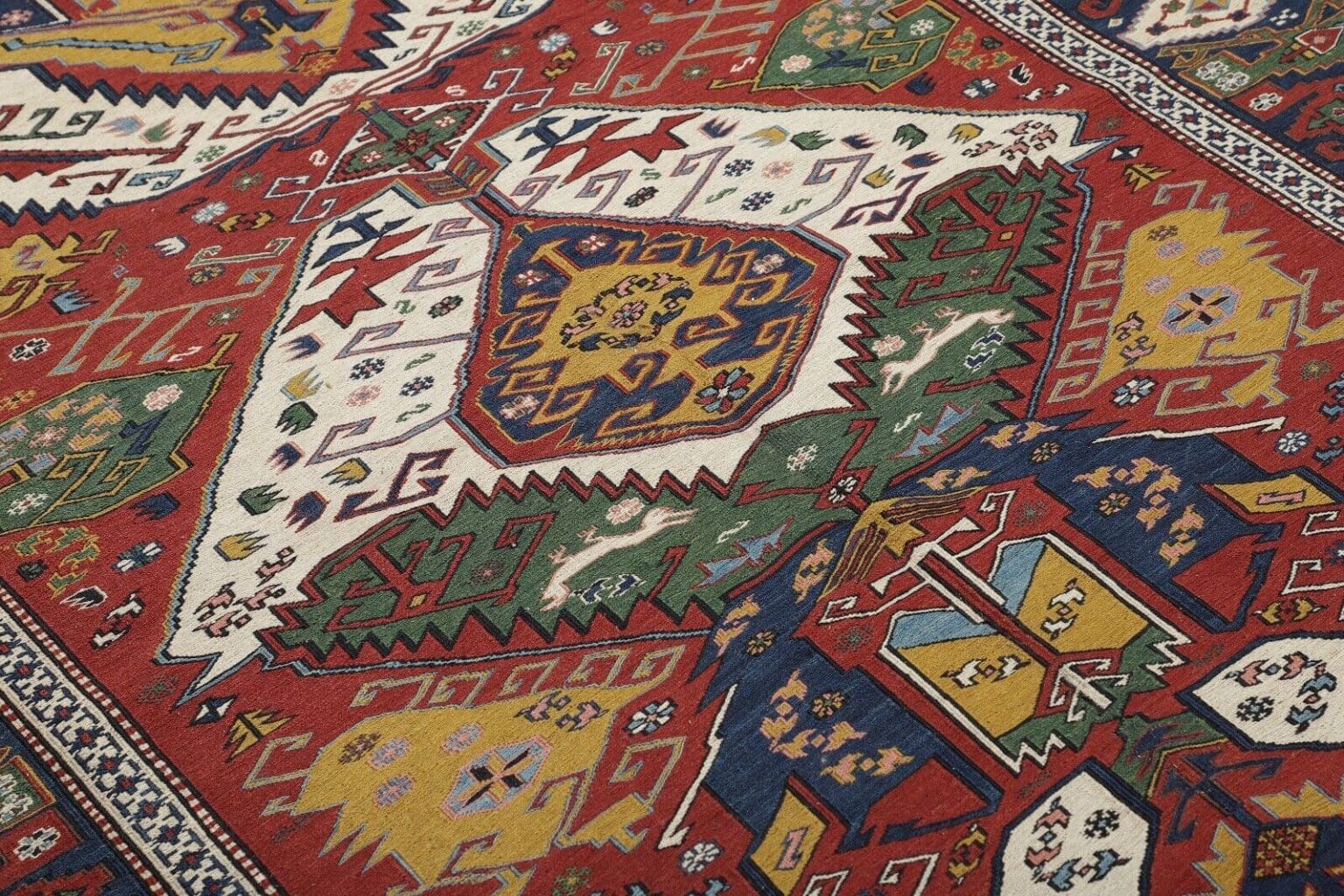
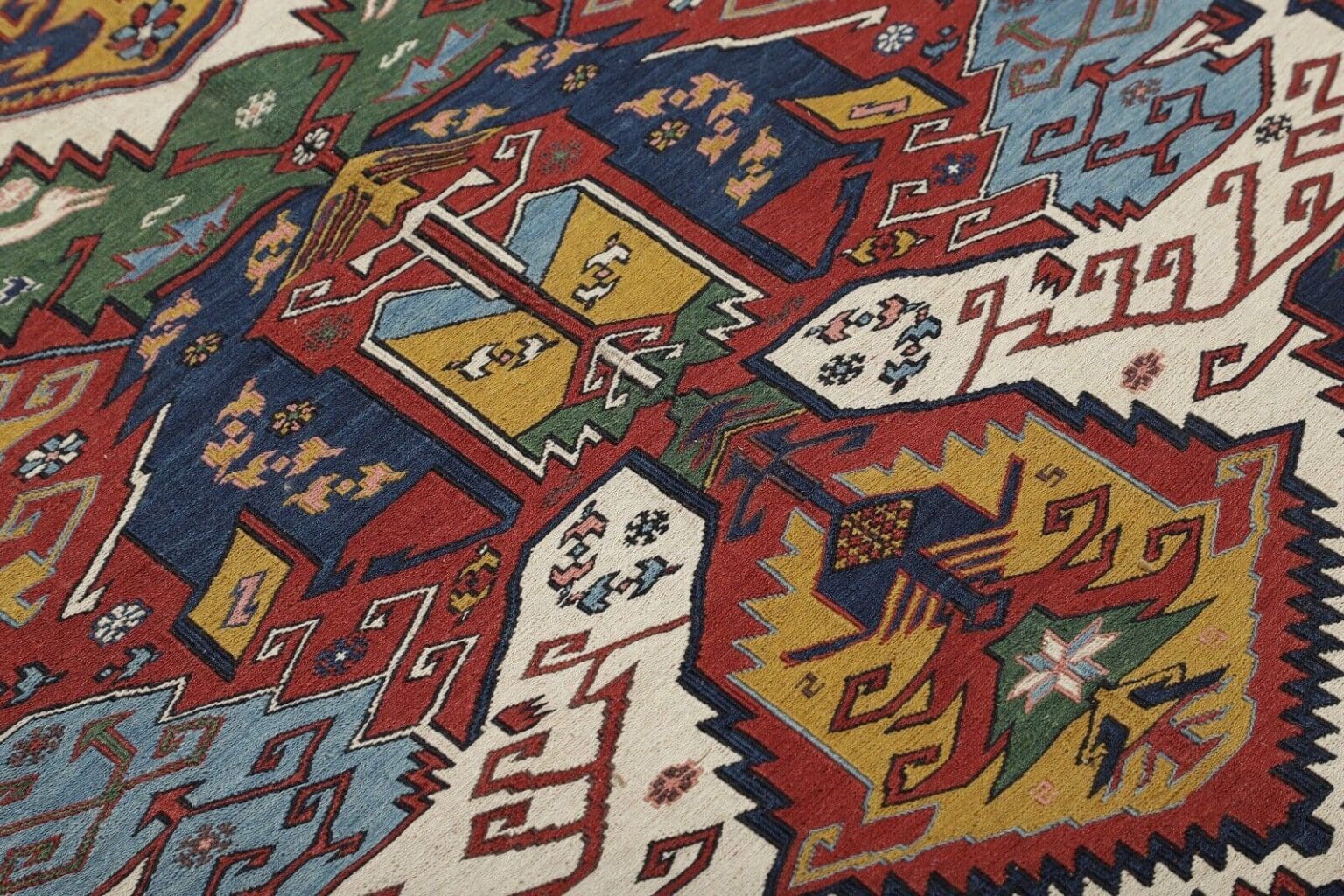
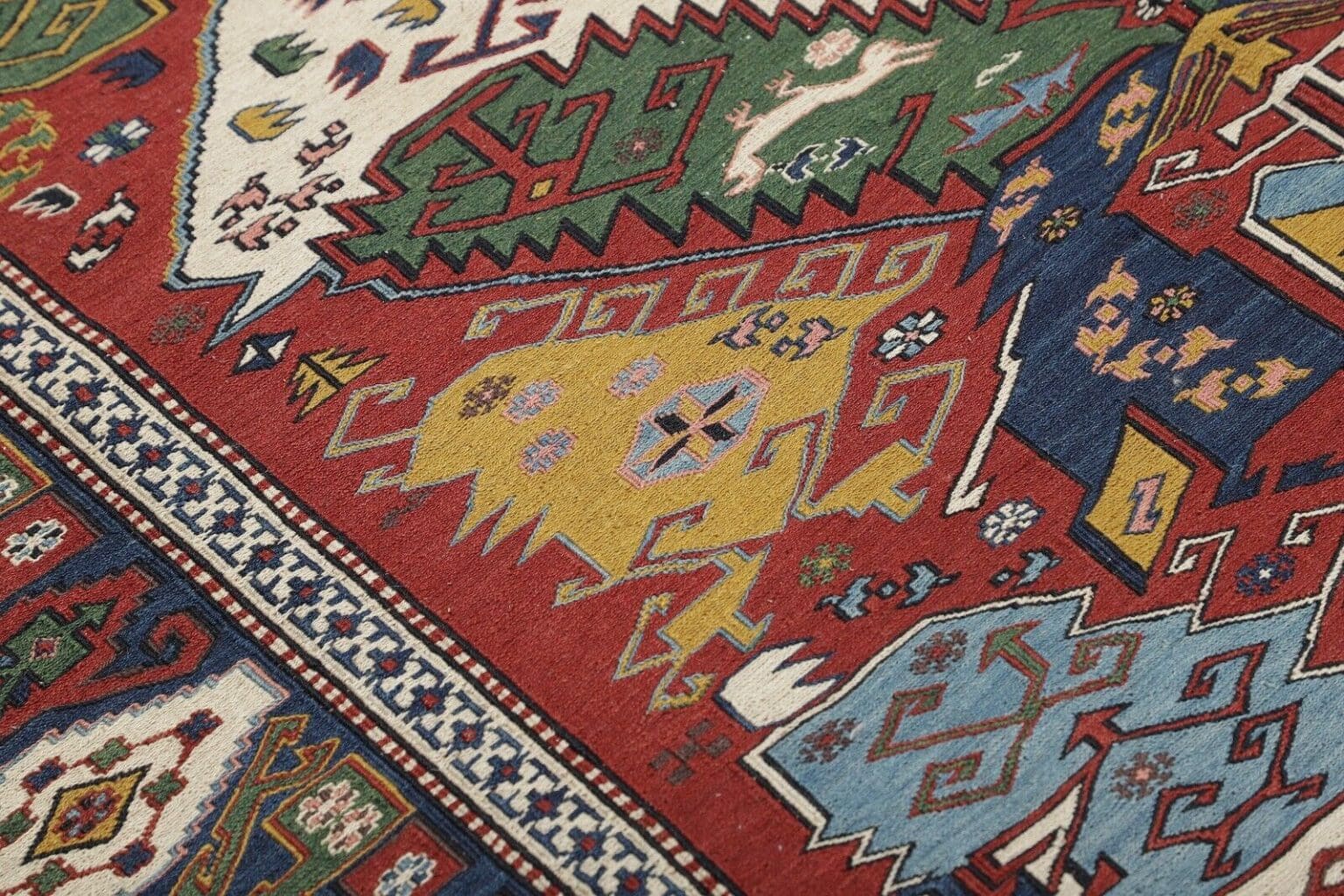

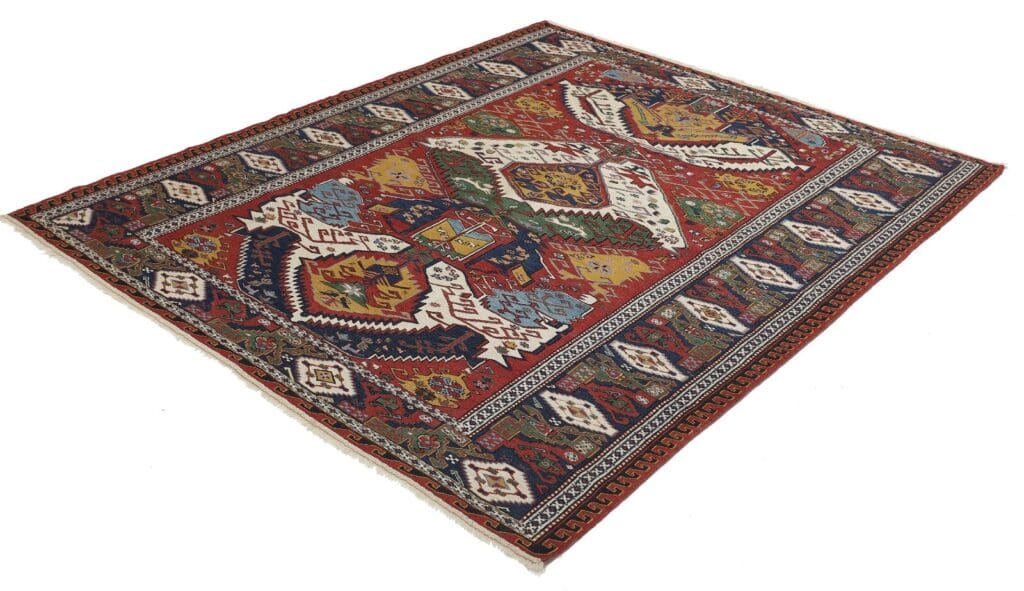
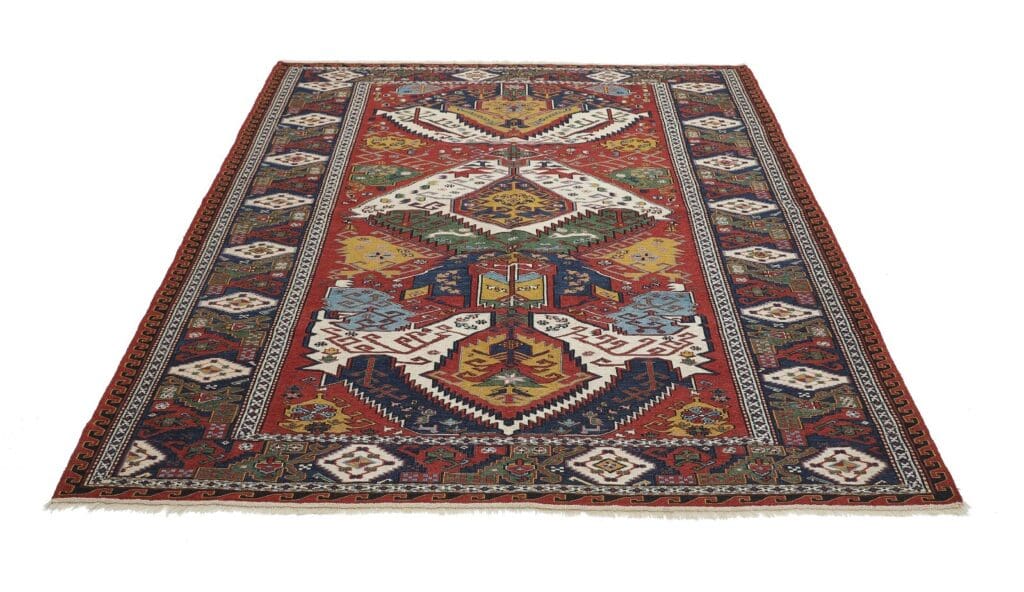
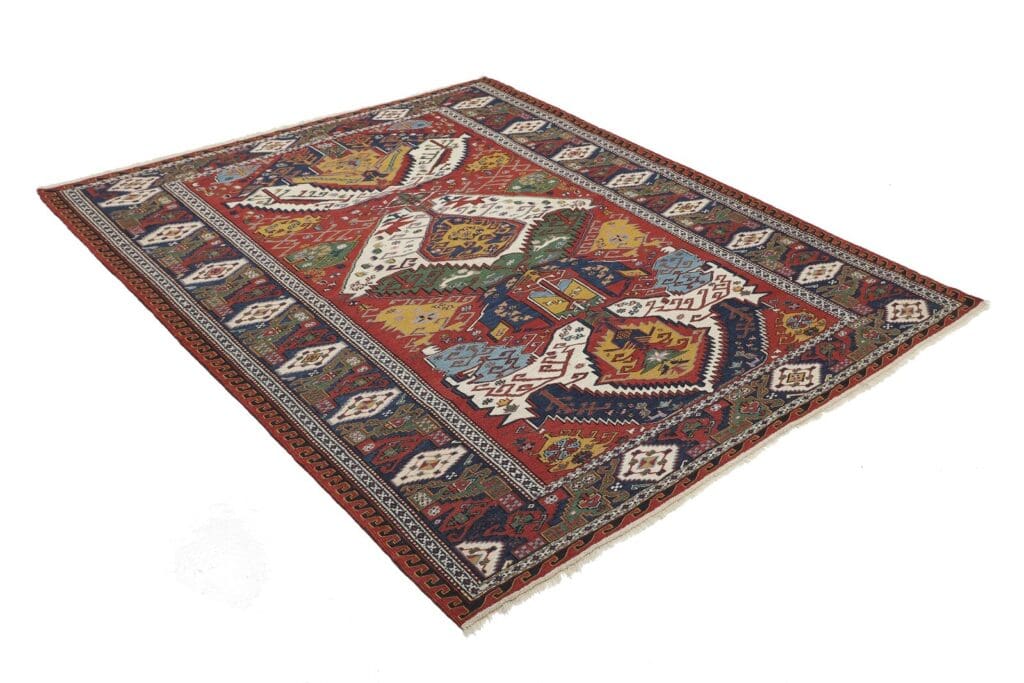
Persian Rug 210×172 cm Wool Hand-woven
€ 3018
Hand-woven Persian Rug | Material: Wool | Size: 210 x 172 cm | Pattern: Geometric | Condition: Used | Special features: Abrasion-resistant, non-slip, eco-friendly
1 available
- ✓Free Shipping in EU
- ✓2-5 Business Days Delivery
- ✓14-Day Return Policy
- ✓Worldwide Shipping on request
 SECURE PAYMENT
 SHIPPING PARTNERS
Inventory number: 9DAEAFCA
Description
Persian Rug
Material and Craftsmanship
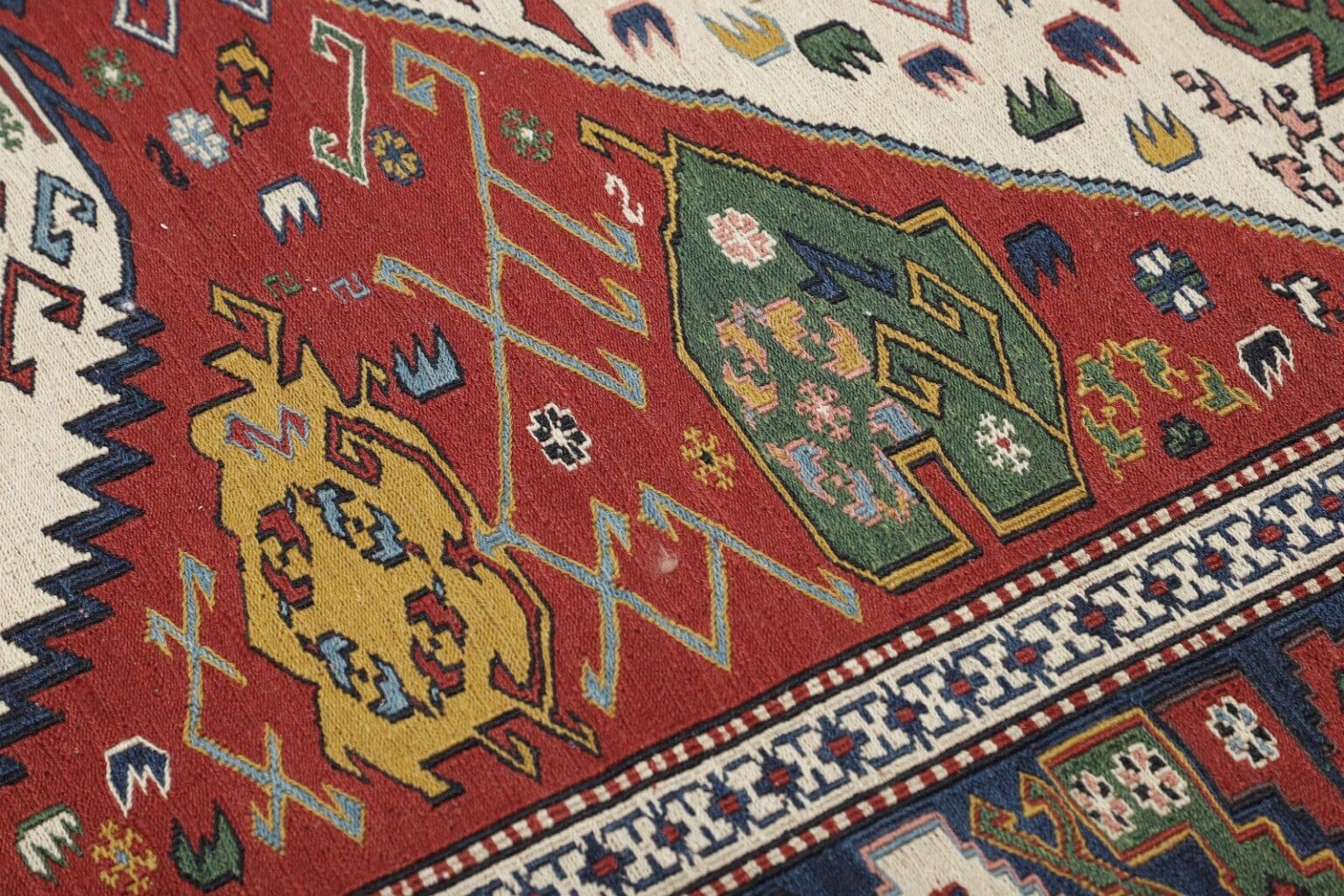
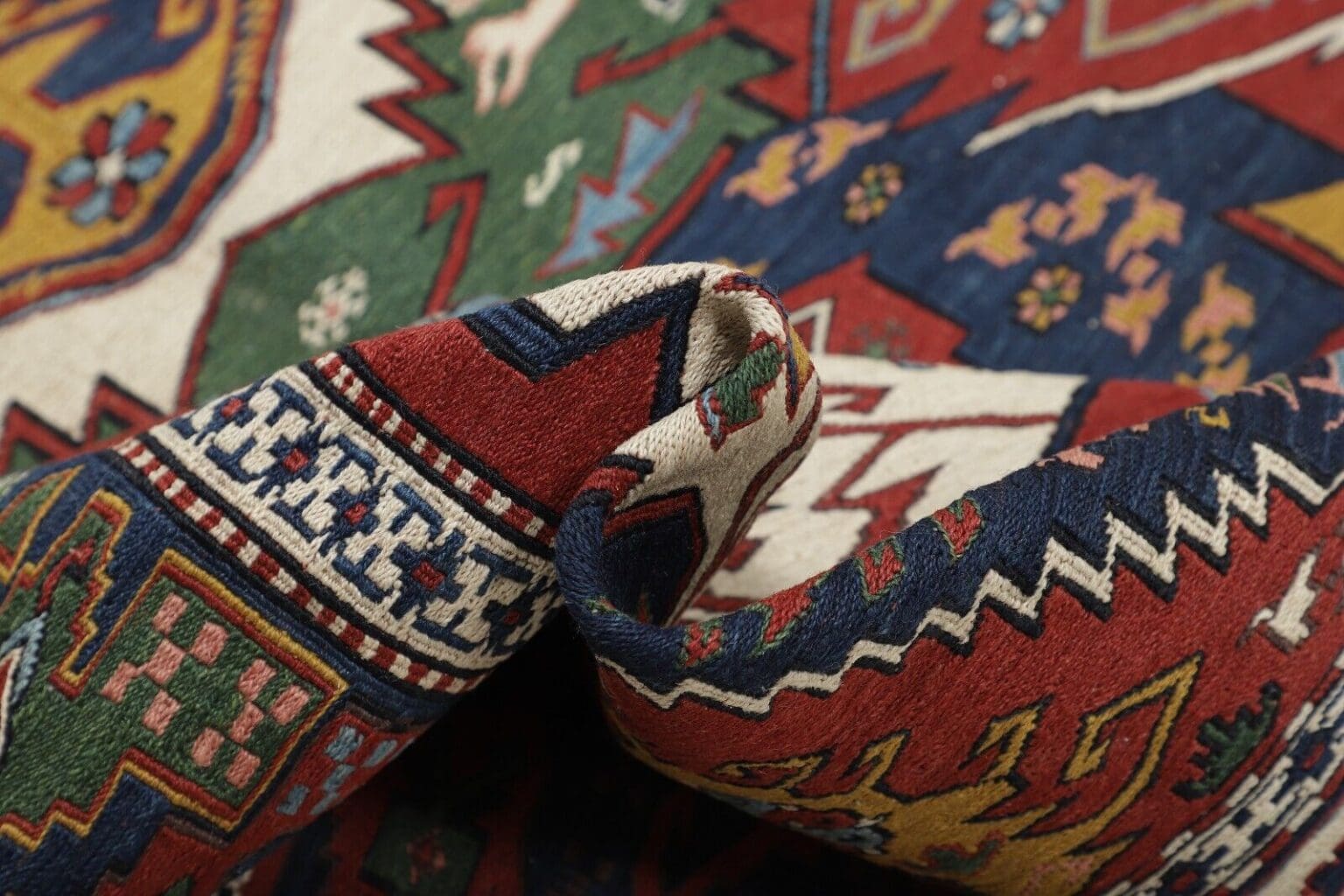
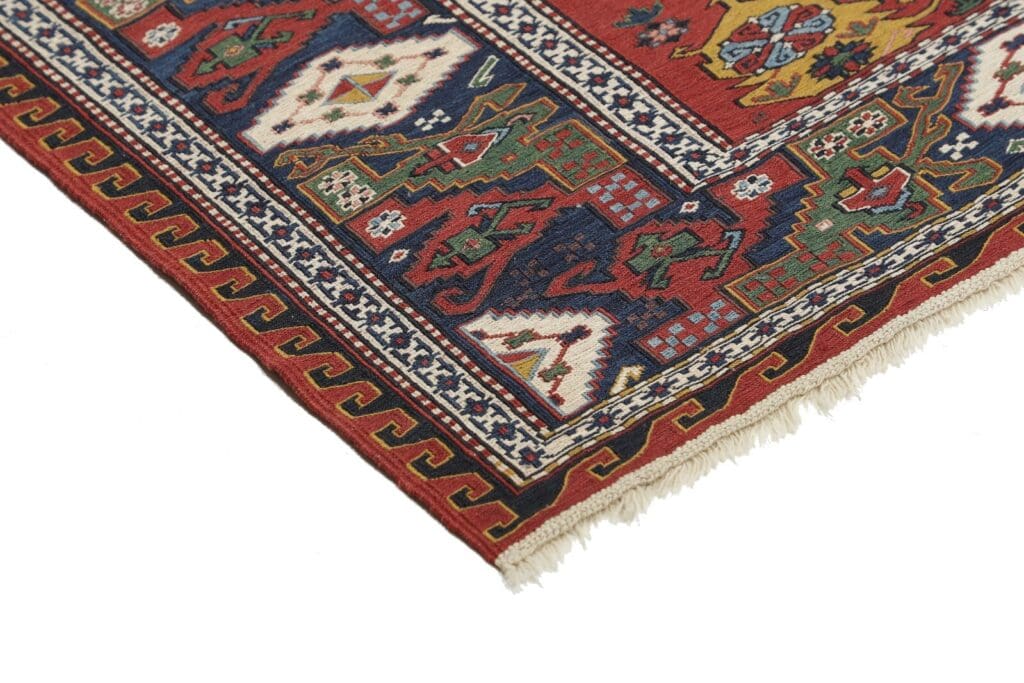
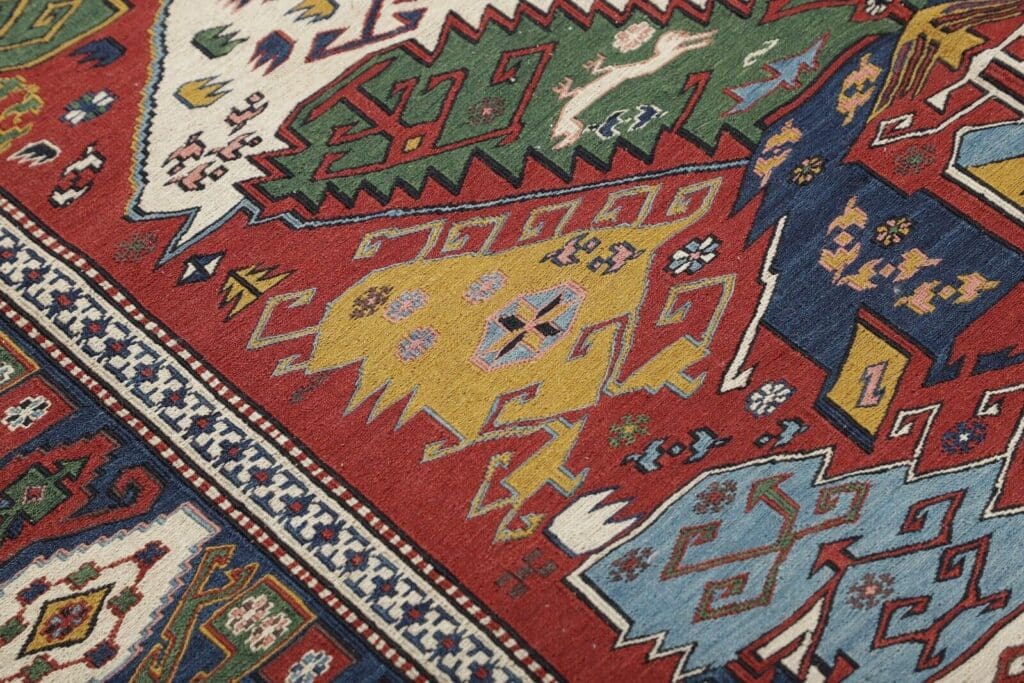
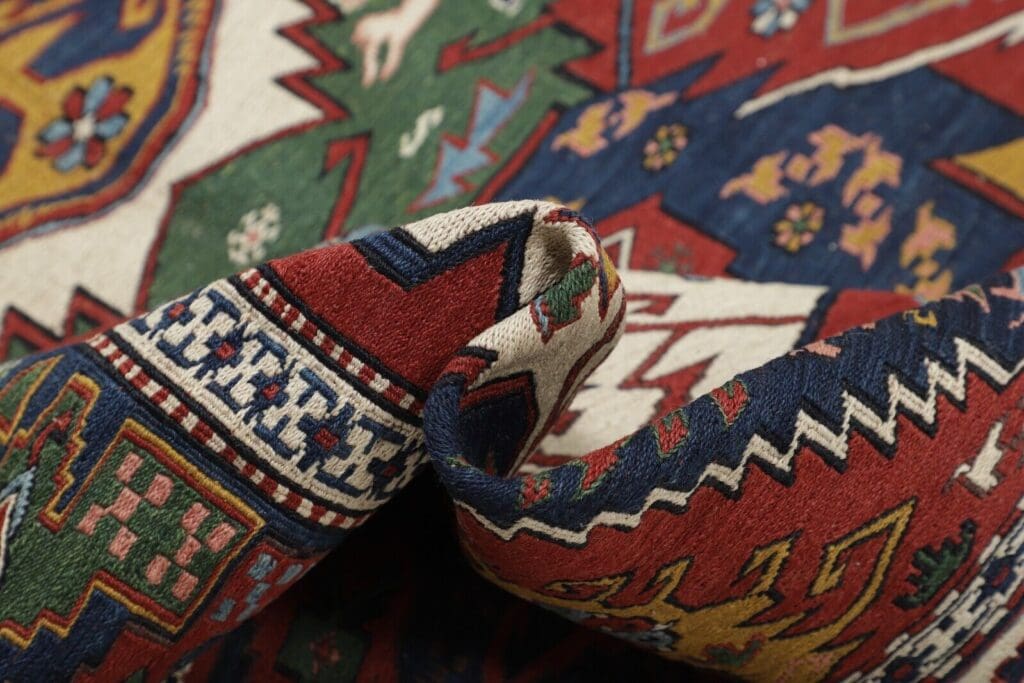
This Kelim is made of wool and hand-woven. In a hand-woven Kelim, the textile surface is created by interlacing warp and weft rather than by tying individual pile knots. Its construction is therefore fundamentally different from that of a conventional pile rug. Wool is the only material named for this piece. In Kelim making, it is traditionally used for its durable textile character and its naturally firm handle.
The name Sumach/Varni refers to a Kelim tradition in which the surface can be shaped through a particular weaving method and through inserted or interlaced weft threads. Depending on the execution, this produces a flat surface with a clearly readable structure. Handwork allows the textile to grow section by section during the weaving process. The result is not an industrially identical object, but a handmade one-off with its own woven character.
Wool gives the Kelim a natural textile feel. In a flat-woven piece, the focus is not on a deep pile but on the relationship between threads, colour and pattern. Hand-woven construction makes the structure directly understandable: warp and weft form the supporting surface together, while the design develops from the arrangement of coloured areas. No knot density or separate warp fibre is stated for this piece, so no such detail is added.
Origin and Tradition
Persian rugs originate in Persia, present-day Iran, and are closely connected with the history of Oriental textile art. Their importance extends beyond their practical use as floor coverings. Within rug culture, they combine manual skill, inherited design traditions and the everyday purpose of producing a useful textile surface. The term Persian rug covers a broad tradition in which different weaving and knotting methods, materials and patterns exist side by side.
The Kelim occupies a distinct place within that tradition. Unlike a knotted rug, it is built from threads on a loom. The weaver passes the weft through the warp and compacts the rows into a flat surface. The pattern is formed during the weaving itself rather than applied afterwards. This requires careful control of tension, colour sequence and motif structure. Each row must be placed so that the fabric remains stable while the design stays legible.
Sumach and Varni are used as names for particular Kelim forms. Their visual language centres on a woven surface in which geometric order and rhythmic repetition are important. Such techniques were passed down through generations. The knowledge includes preparing the wool, handling the loom, planning the pattern fields and finishing the edges cleanly. Hand weaving therefore joins technical discipline with an inherited vocabulary of forms.
Persian rug traditions are regionally diverse. Depending on the place of production, materials, colour ranges, weaving methods and ornaments may vary. The source for this piece does not name a specific province or town. The relevant context is therefore the broader Persian Kelim tradition rather than an assignment to a particular production centre. The secure description is that it is presented as a Persian rug, made as a Kelim and produced by hand weaving.
Historically, Kelims served several purposes. They could be used as floor textiles, room dividers, wall hangings or practical household furnishings. Their flat construction makes them versatile and allows the design to remain visible from different viewpoints. At the same time, Kelims carry design traditions. Geometric signs, repeated fields and recurring outlines could be developed within a family or a local weaving community and passed on in changing forms.
Design and Pattern
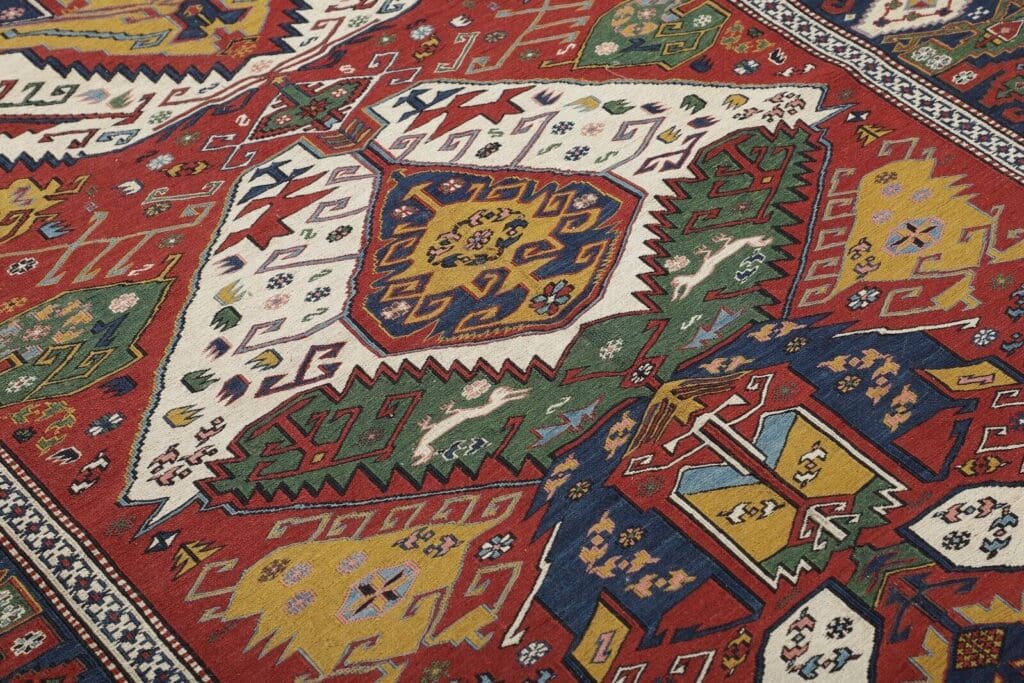
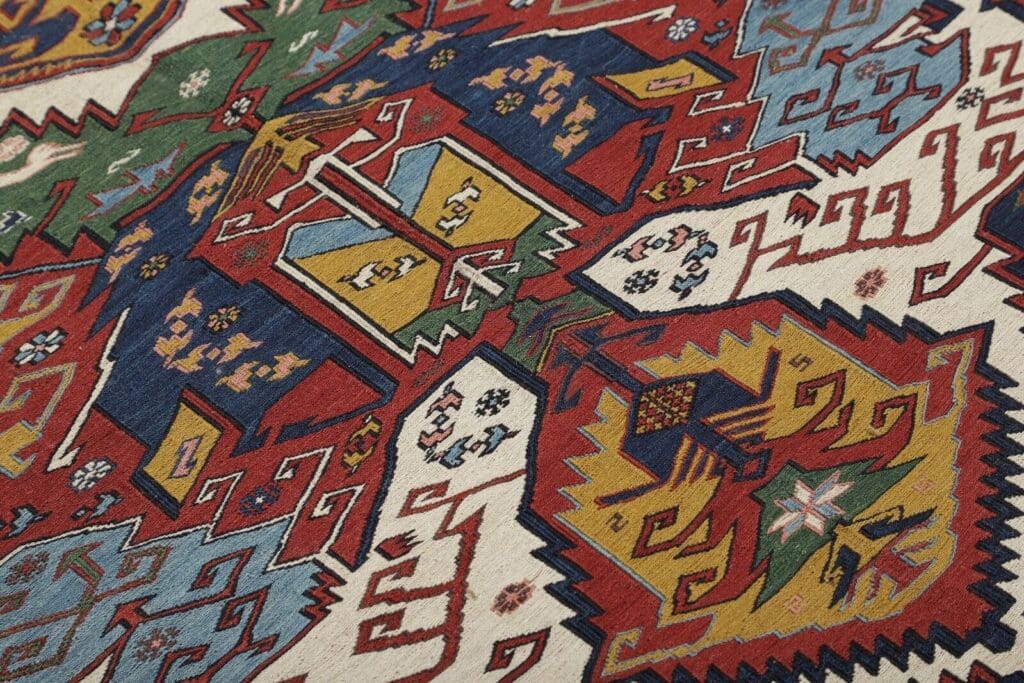
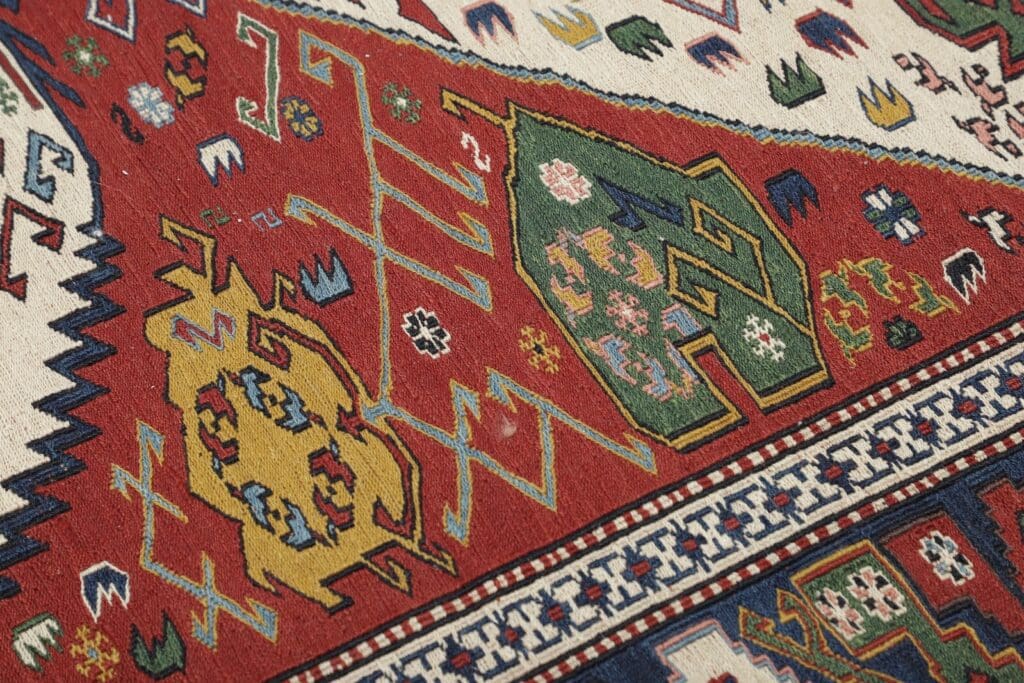
The pattern of this Kelim is geometric. Geometric design uses lines, angles, diamonds, stepped forms, hooked contours, bands and repeated areas. Unlike a naturalistic image, it does not need to reproduce plants or animals literally. Its effect comes from order, repetition and the relationship between filled areas and outlines. In a hand-woven Kelim, these elements are created directly through the sequence of weft threads.
The Sumach/Varni designation suits a design in which texture can form part of the appearance. Small variations in the weave, changes in the direction of the threads and clearly positioned colour zones may influence how the geometry is perceived. The pattern is not obscured by a raised pile. Lines and shapes remain visible as textile drawing. The result is a measured, rhythmic ornament that grows from the construction of the Kelim itself.
Geometric patterns are widespread in Oriental rug art. They may be arranged around a central sign, in rows of medallions, as a repeating rapport or in separate fields. Borders also play an important role. They enclose the inner area and provide the overall composition with a frame. In Kelims, such zones may be distinguished by contrasting bands or by motifs that recur along the edge.
Pattern traditions can also be understood as visual systems of order. A repeated motif establishes rhythm, while interruptions and changes of direction add structure to the field. Diamonds can organise a composition, zigzag lines can mark a boundary, and narrow stripes can divide larger areas. The meaning assigned to a particular sign depends on its cultural and design context, however. For this one-off, only the geometric character is expressly identified, so no additional interpretation of individual symbols is made.
The hand-woven technique directly affects the design. A woven pattern has to be translated into the sequence of thread rows. This produces clear forms built from the combination of horizontal and vertical structures. Wool supports the textile readability of the design through its natural, non-glossy surface. The Kelim therefore appears as a composition made from threads rather than as a printed image placed onto fabric.
As a classic Kelim, this piece combines an established weaving form with a clearly geometric design. It can be considered in a range of interior settings without assigning a particular style to the room. The defining points remain its flat-woven structure, geometric pattern and traditional Kelim format.
Special Features
The Kelim is described as used. It is also identified as abrasion-resistant, non-slip and eco-friendly. These are the special features explicitly named for this piece. Its flat, hand-woven construction shapes its textile appearance and distinguishes it from a deep-pile knotted rug. The used condition is part of the product description and should not be confused with a new condition.
The term eco-friendly is given as a feature in the source, without a particular certification or named production measure. No details are supplied about age, signature, production town, knot density or dyes, so they are not added here. The confirmed description covers the wool, the hand-woven Kelim technique, the geometric pattern and the used condition.
FAQ
How can the quality of a Persian rug be assessed?
Persian rugs are often assessed by considering knot count, materials and the fineness of the pattern. In a knotted rug, a high knot density can indicate a detailed execution. With a Kelim, the woven structure is also essential because its surface is formed by warp and weft rather than individual pile knots. For this piece, wool and hand-woven Kelim construction are stated. Its pattern is geometric, and its condition is described as used.
How should I care for my Persian rug?
A Kelim should be vacuumed gently on a regular basis so that dust does not remain in the textile structure. Spilled liquids should be blotted promptly with a damp cloth rather than rubbed vigorously. Professional cleaning may be appropriate at longer intervals when a more thorough treatment is needed. Since this piece is described as used, care should treat its existing woven surface gently.
Where does the term Persian rug come from?
The term Persian rug refers to rugs from Persia, present-day Iran. It represents a highly developed tradition of rug making with varied materials, techniques and patterns. This piece is described as a Persian rug and as a Kelim. No particular town or province is named for it; the confirmed details are its Persian classification, hand-woven construction and geometric design.
Additional information
| Design Style | |
|---|---|
| Color | |
| Size | |
| Shape | |
| Material |
Related products

Persian Rug Tabriz approx. 350 x 245 cm Wool Hand-knotted
€ 1280
Persian Rug Qashqai 284 x 183 cm Wool Hand-woven
€ 798
Persian Rug Qashqai 286 x 200 cm Wool Hand-woven
€ 798
Oriental Rug Ushak ca 420 x 296 cm Wool Hand-knotted
€ 2250
Persian Rug Heriz 340 x 254 cm Wool Hand-knotted
€ 1438
Persian Rug Qashqai 290 x 192 cm Wool Hand-woven
€ 798
Oriental Rug Qashqai 292 x 193 cm Wool Hand-woven
€ 798
Persian Rug Tabriz 388 x 295 cm Wool Hand-knotted
€ 1440