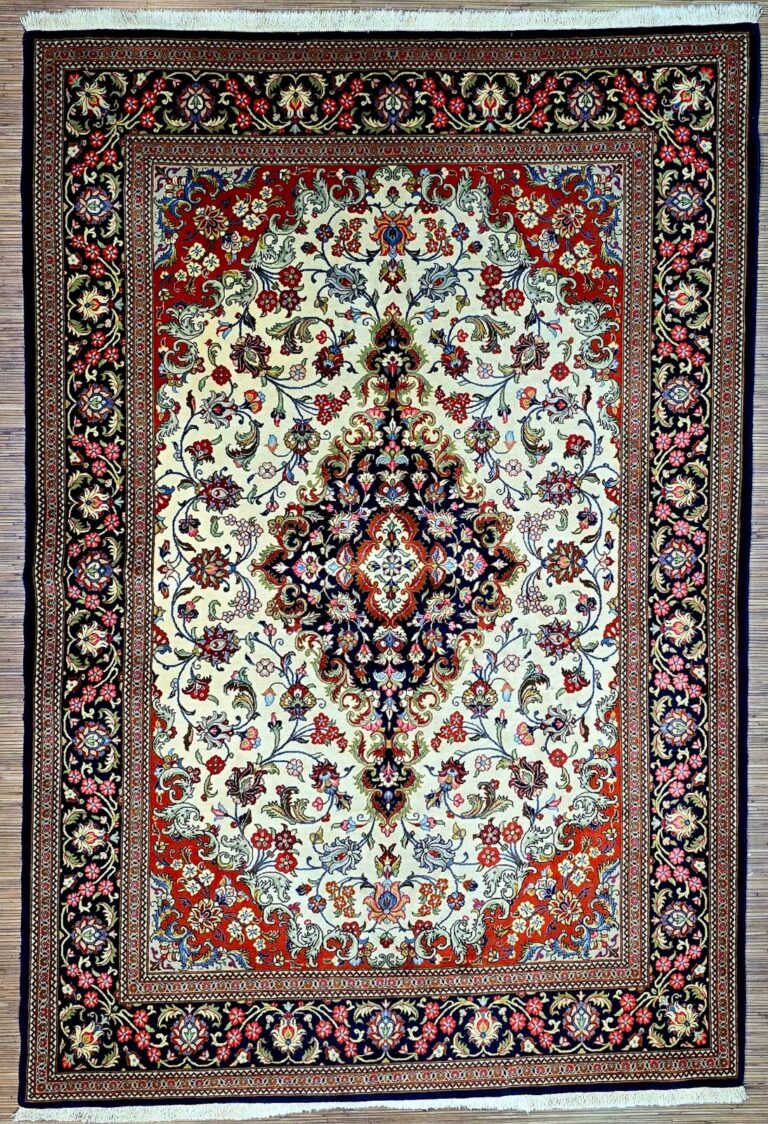
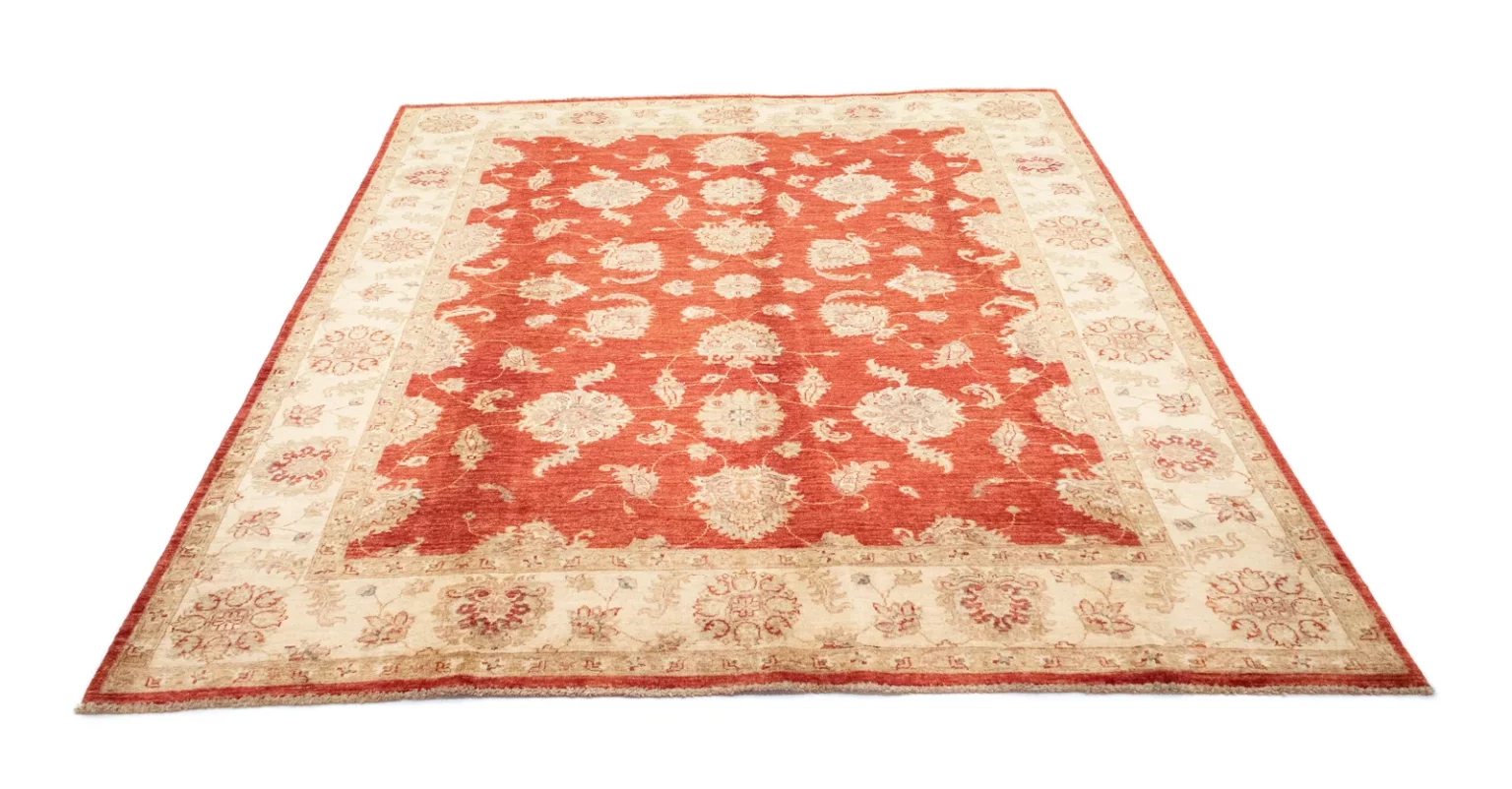
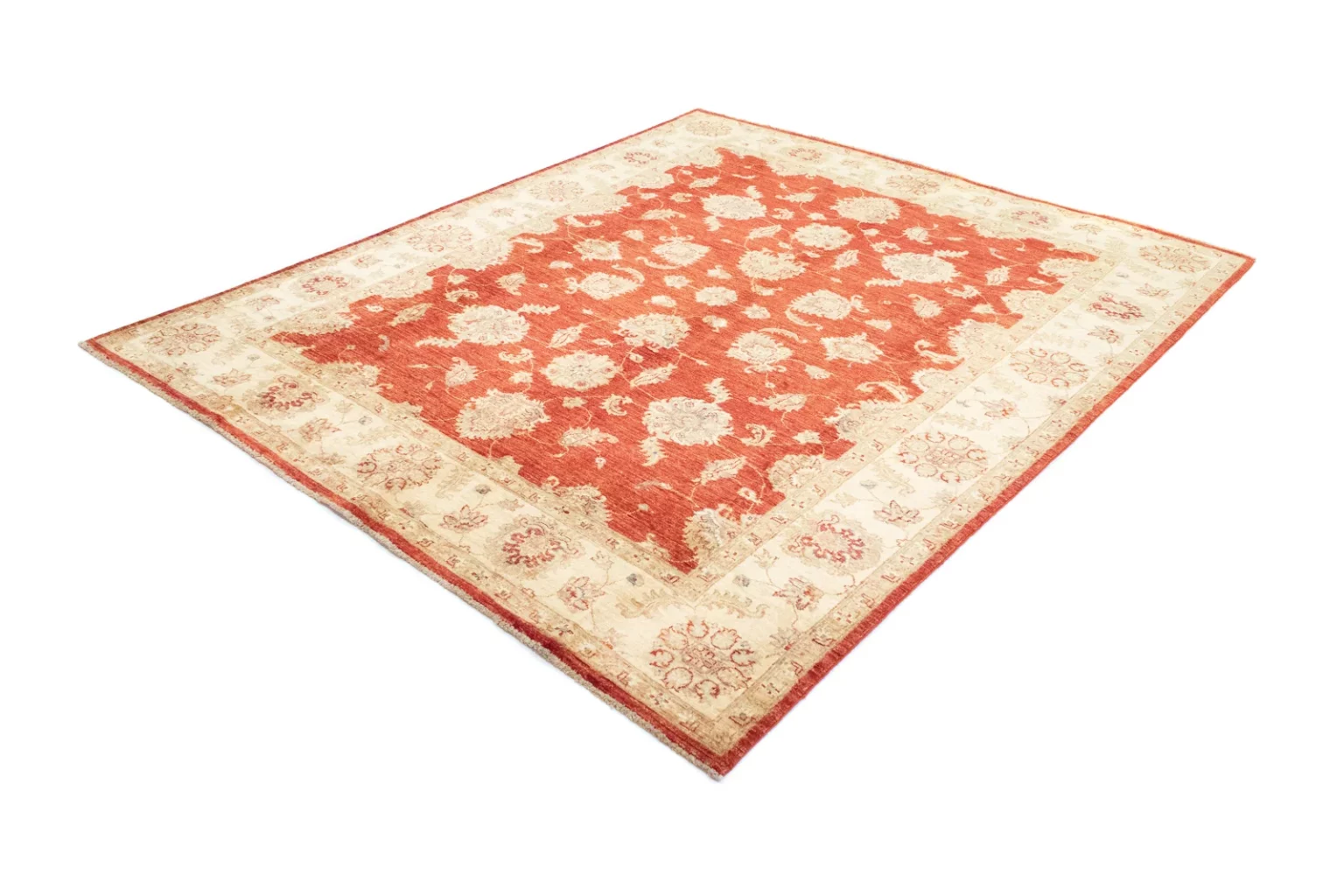
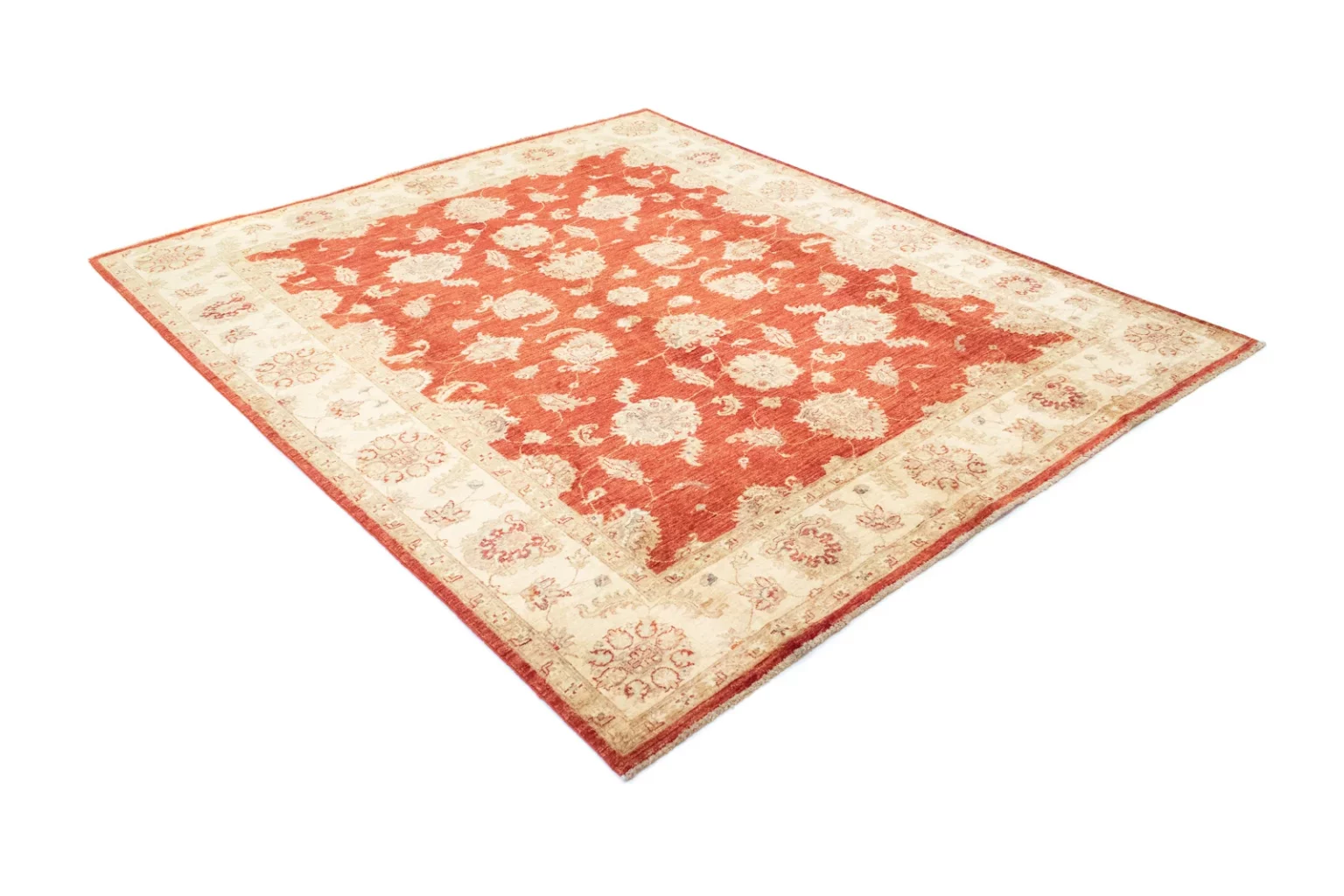
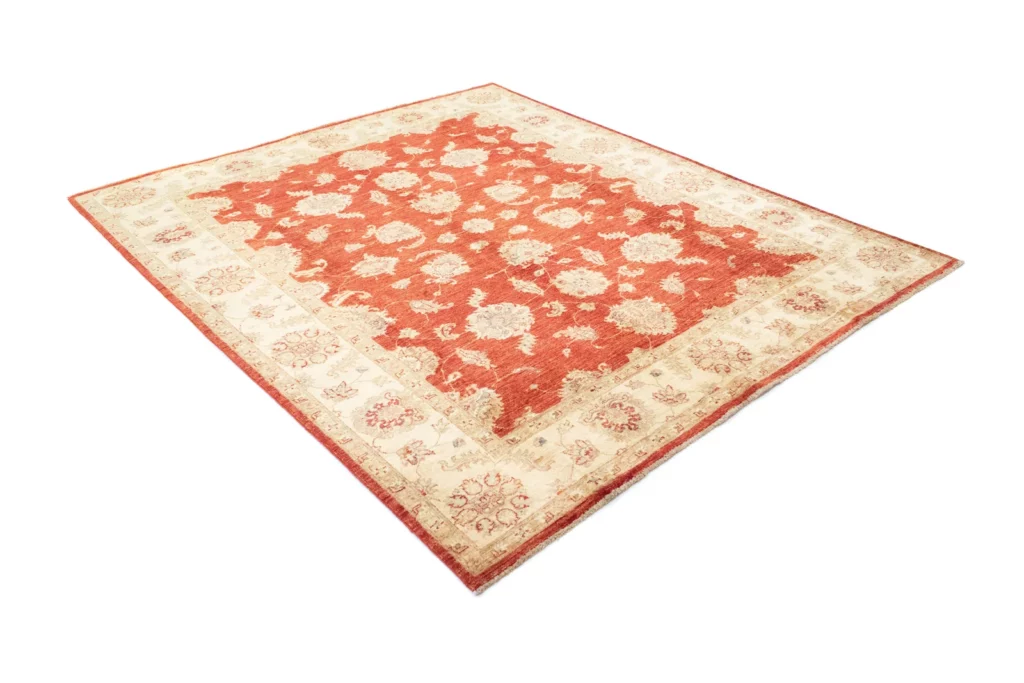
Oriental Rug Ziegler 237 x 203 cm Wool Hand-knotted
€ 2275
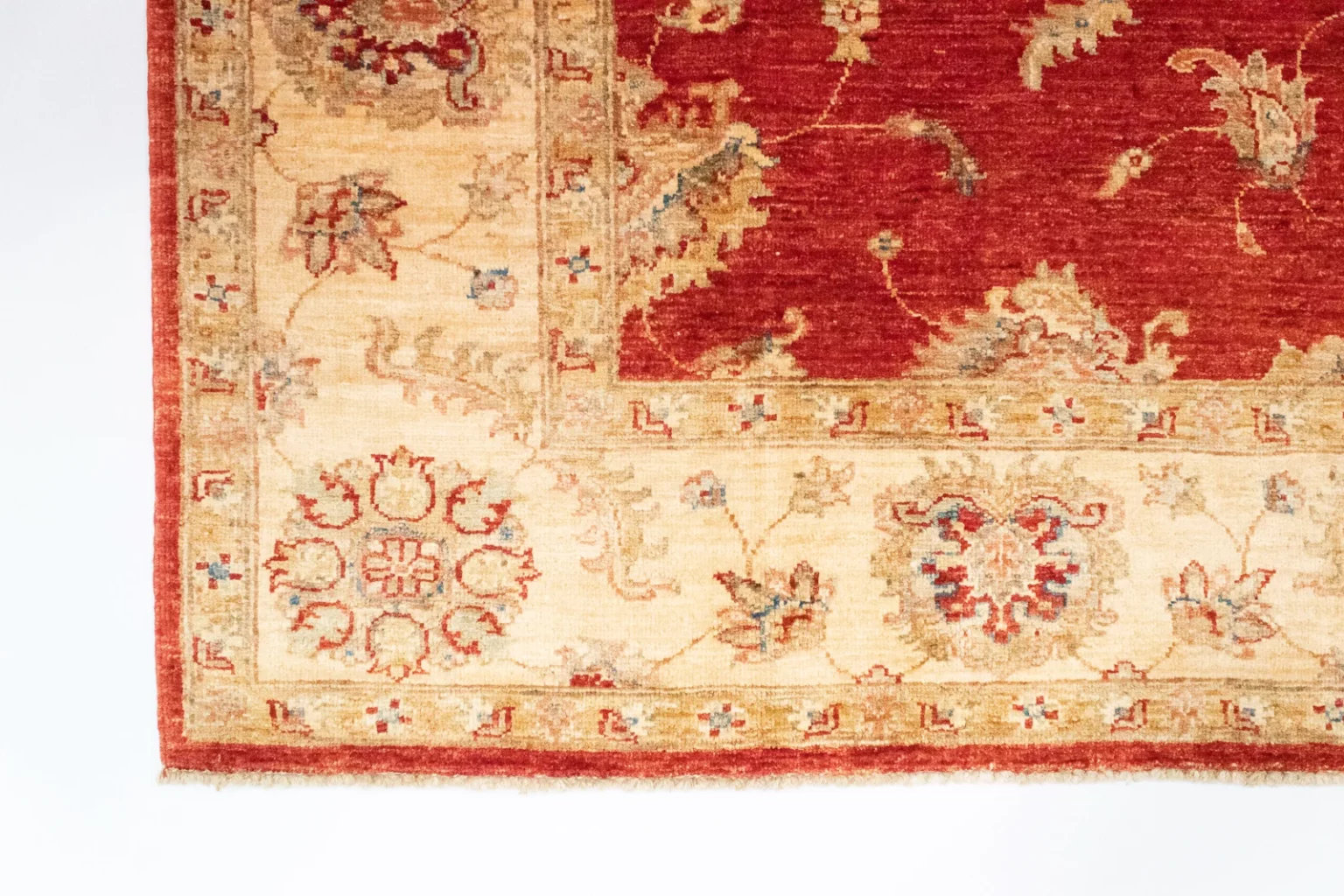
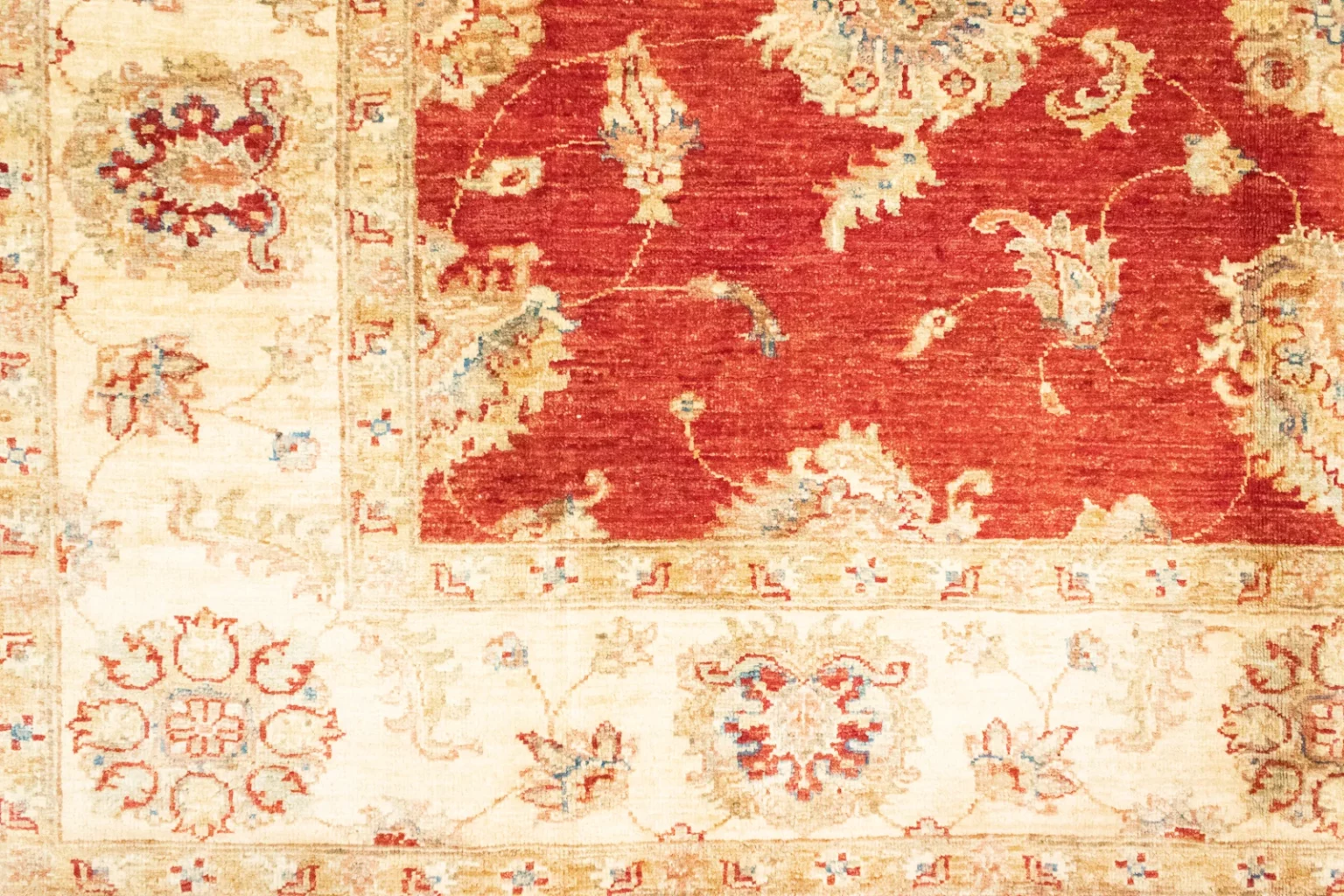
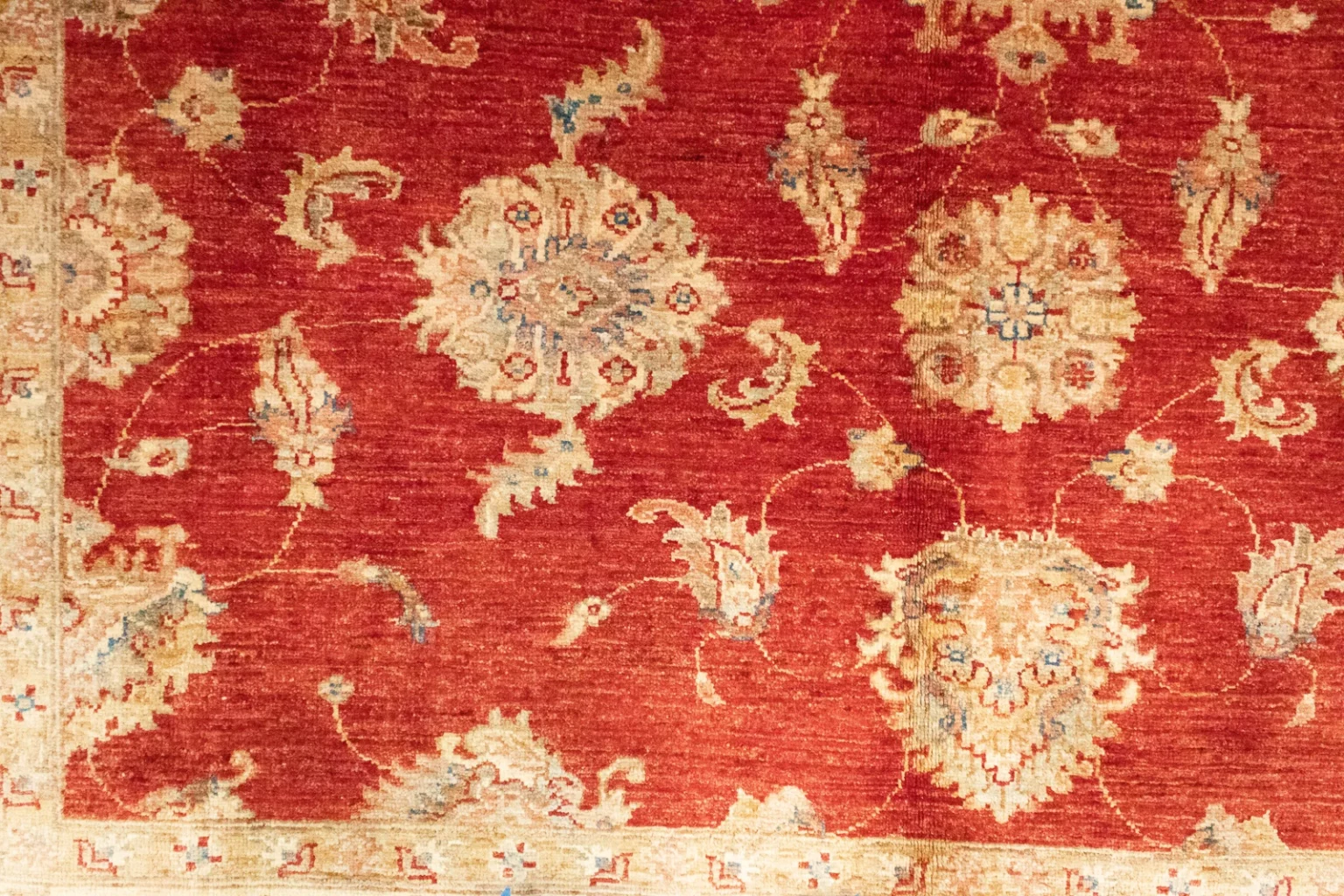
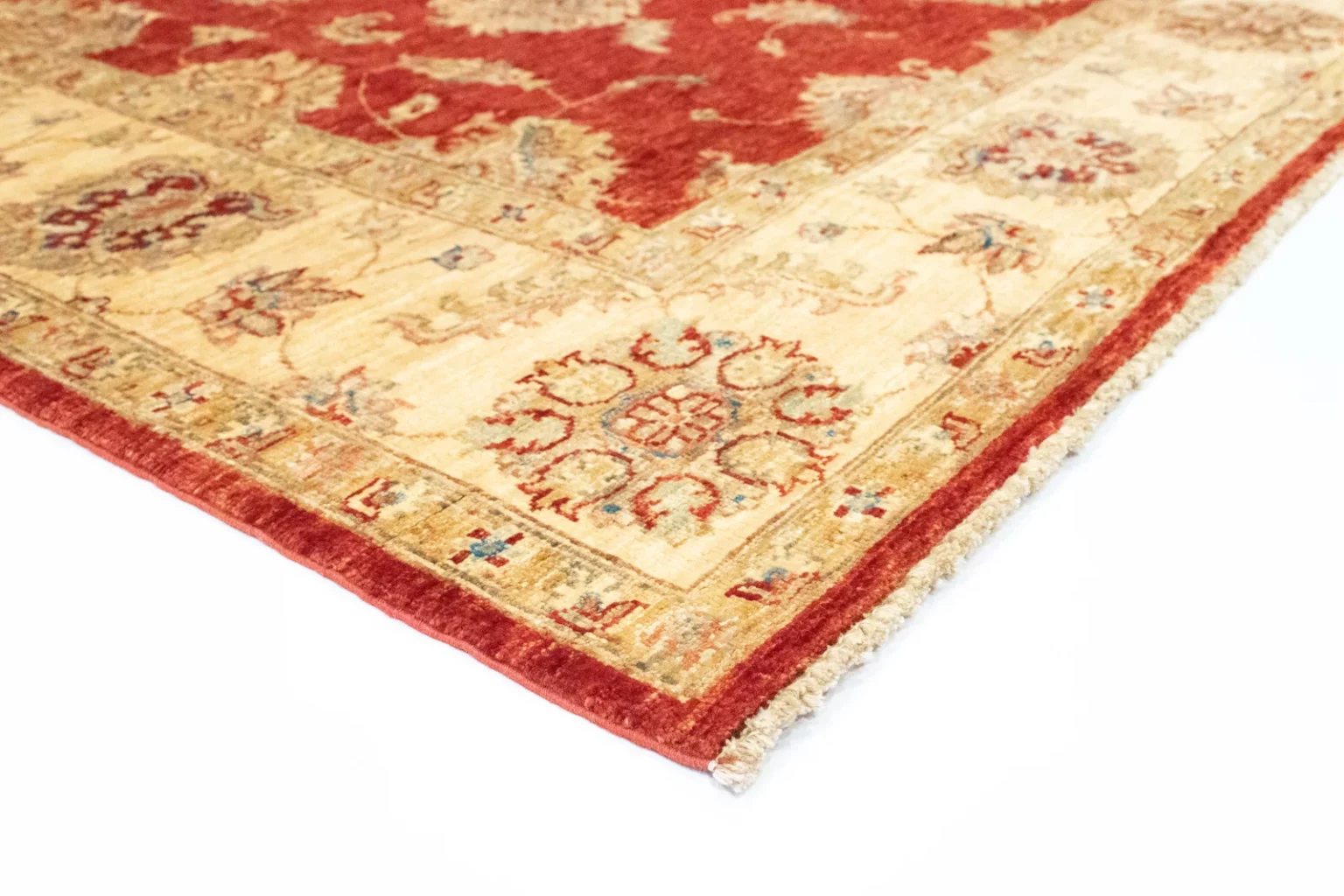
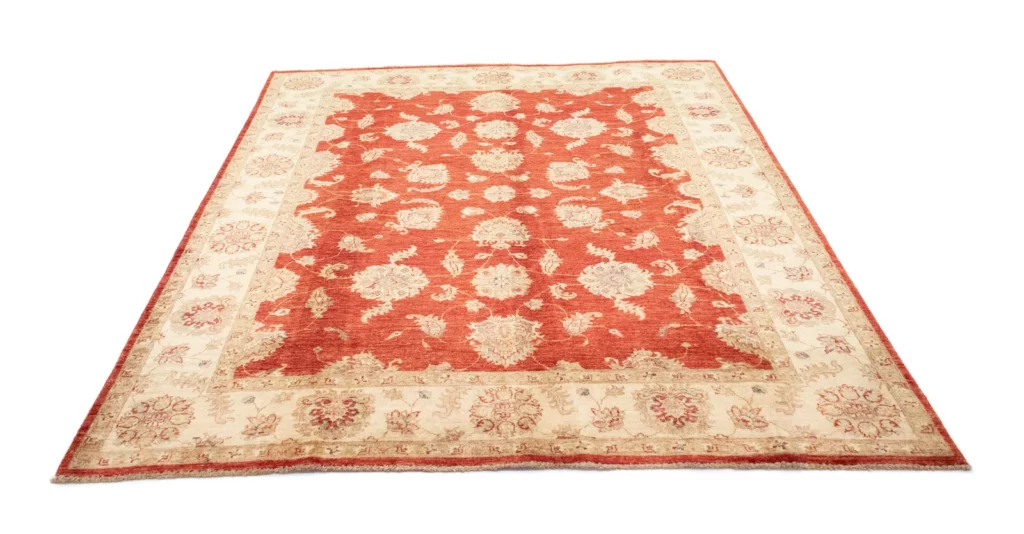
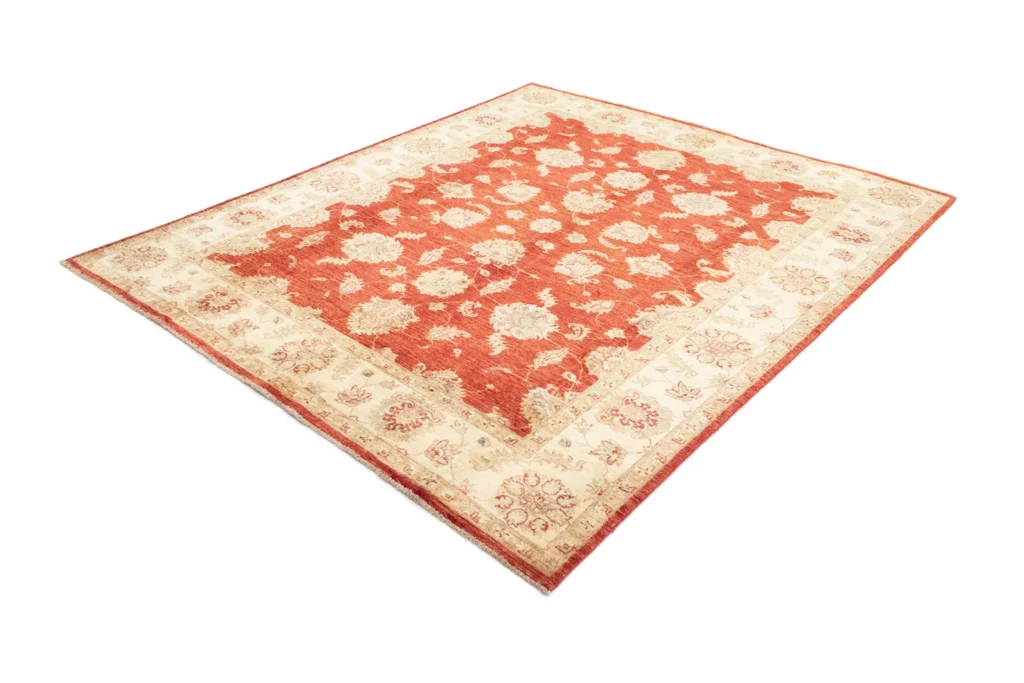
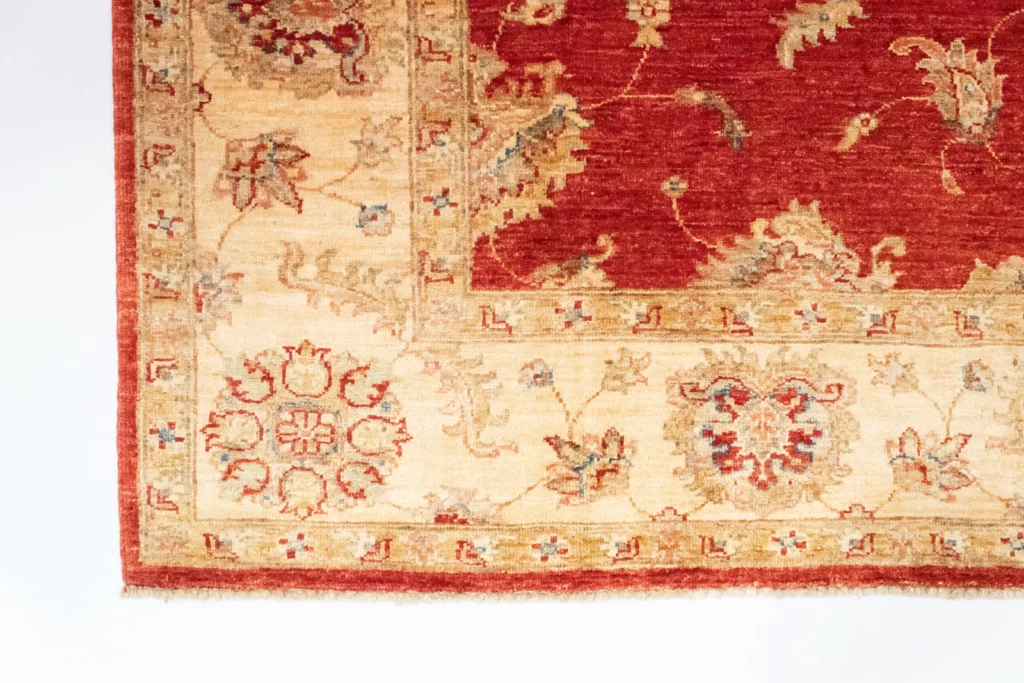
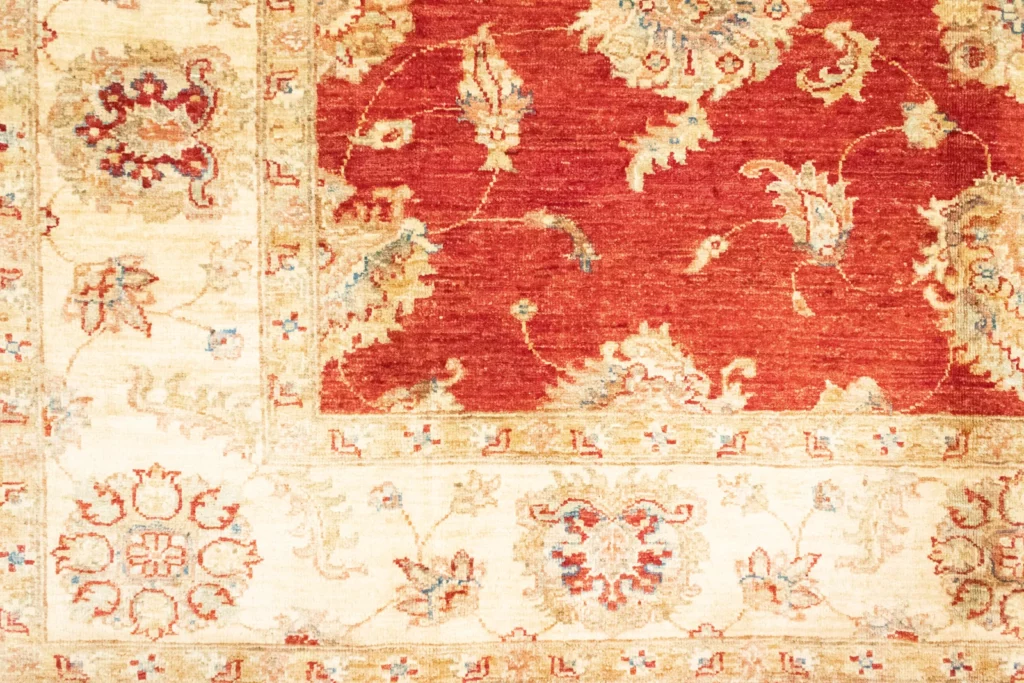
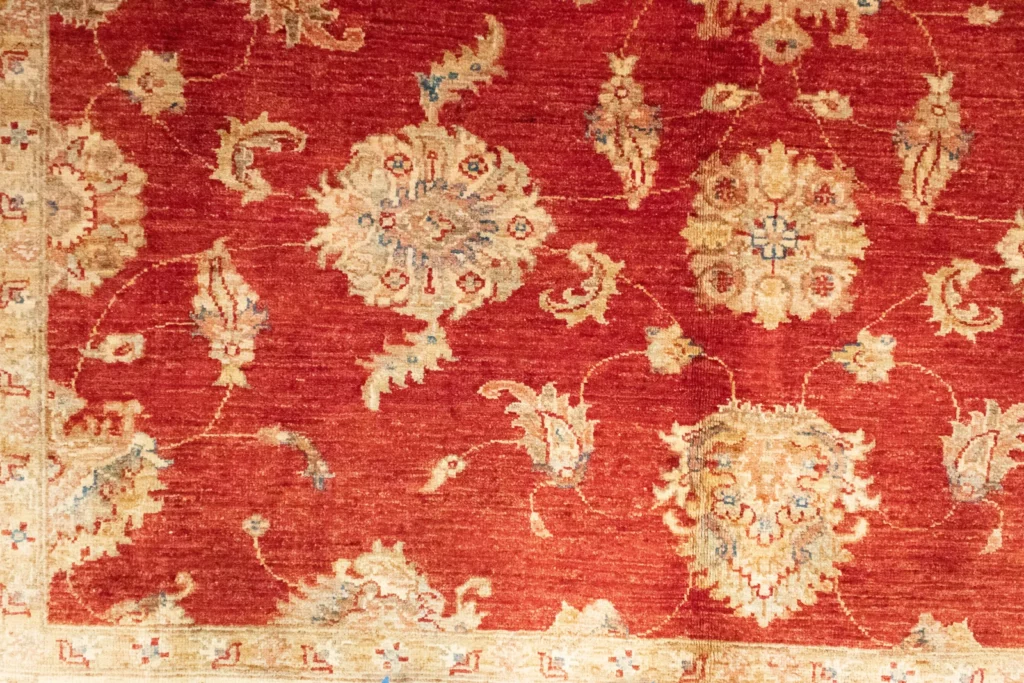
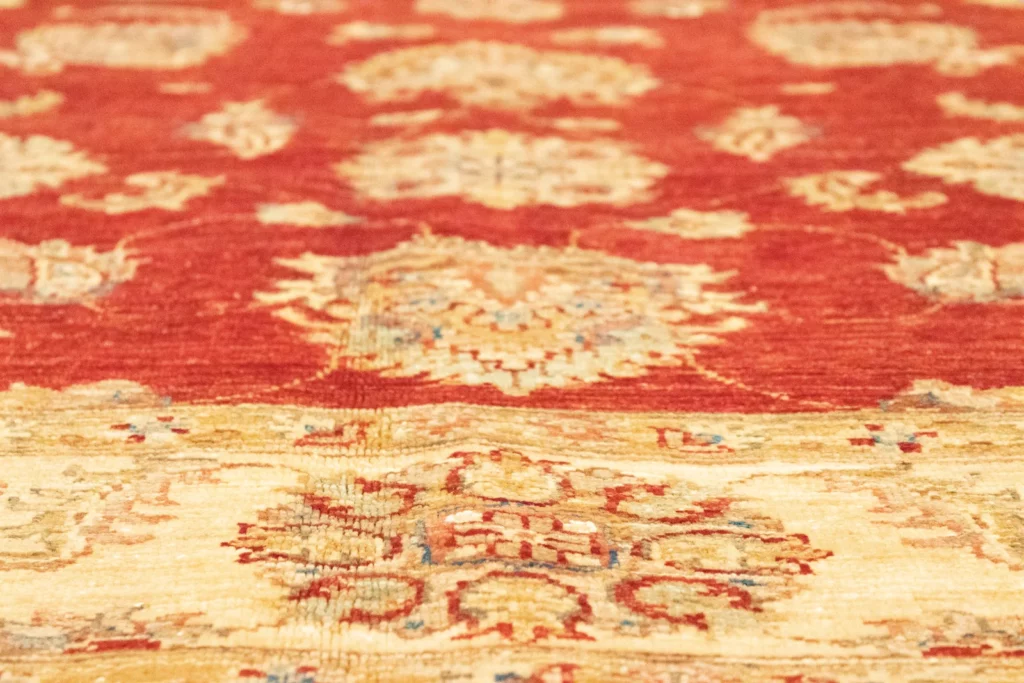
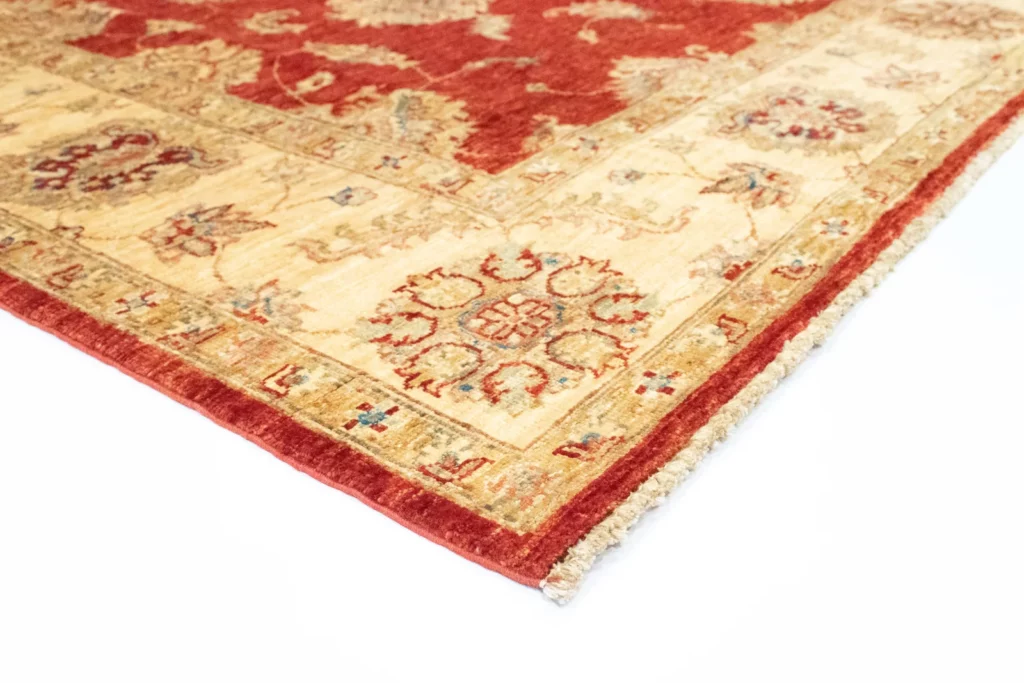
Hand-knotted Ziegler Oriental rug | Knot density: approx. 200,000 knots/m² | Material: Wool pile | Size: 237 x 203 cm | Pattern: varied colours and patterns, faded colour effect from special stone washing | Condition: Very good
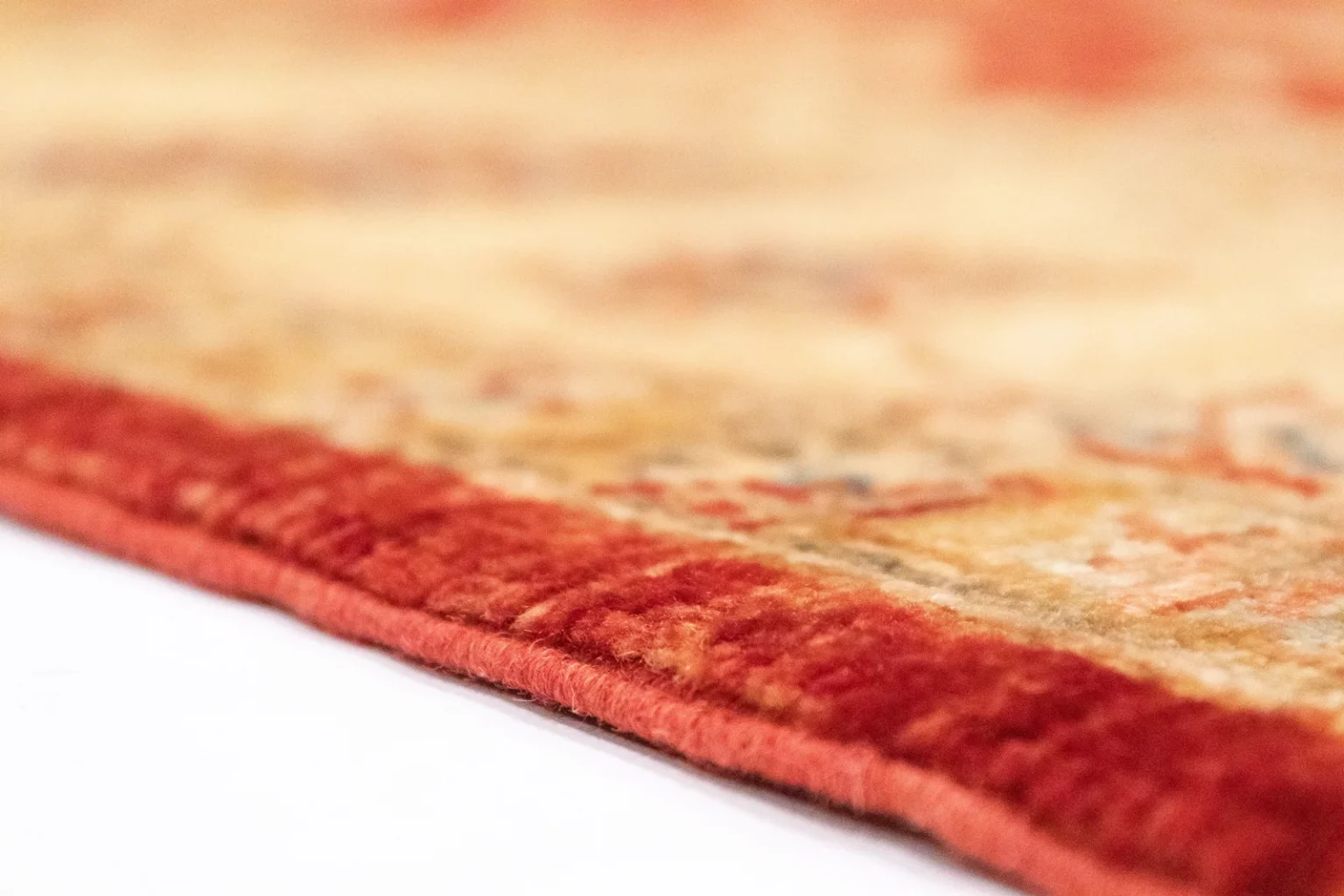
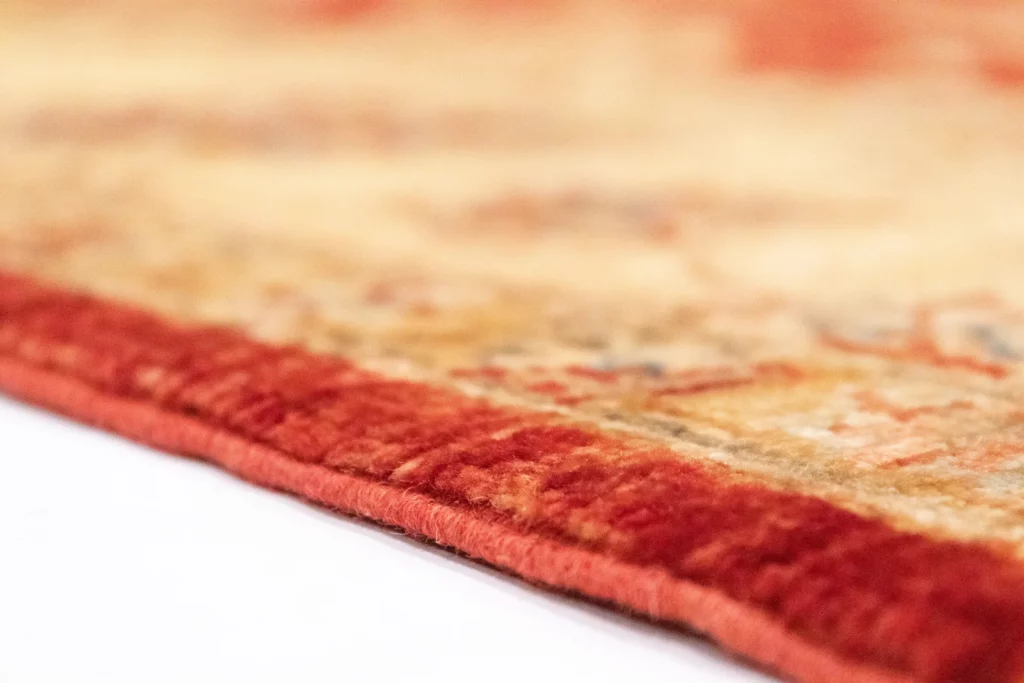
This Ziegler Oriental rug is hand-knotted with a pile made from high-quality wool. Hand knotting builds the surface one knot at a time. The design is therefore integrated into the structure of the rug rather than printed onto it. Its knot density is approximately 200,000 knots per square metre. Knot density indicates the number of individual knots worked into a defined area and is one of the central technical details used to describe a hand-knotted rug.
In hand knotting, the foundation is set up first, after which coloured yarn is tied according to the planned design. Each completed row is compacted before the work continues. Once the knotting is finished, the pile is brought to an even height and the rug receives further finishing treatment. The exact execution of every piece is part of the character of this traditional craft.
This rug has undergone special stone washing, which creates the described faded colour effect. The surface is treated in a controlled way so that the colours appear softer and more aged. The stone wash is specifically identified as a special feature of this rug and is therefore central to its appearance. High-quality wool, hand knotting and the surface treatment bring together the material, construction and finish.
The condition is very good. This describes the overall state in which the rug has been preserved. It complements the technical information about the wool pile, hand-knotting method and knot density with a statement about the rug’s current condition.
Origin and Tradition
The rug is identified as a Ziegler rug and originates from Pakistan and Afghanistan. It is therefore an Oriental rug rather than an Iranian Persian rug. The term Ziegler refers to a design tradition influenced by classical Persian carpet patterns, but it does not mean that every rug in this style was made in Iran. Ziegler designs have been adopted in different parts of the Orient and adapted to local weaving and knotting practices.
The historical Ziegler tradition developed in connection with European demand for spacious rugs with balanced ornamentation. In the late nineteenth century, trading companies such as Ziegler & Co. helped shape rugs that combined classical Persian-inspired decoration with a softer colour approach and a format suited to European interiors. The name consequently became a design designation. It primarily describes a visual direction, not automatically a place of manufacture.
Pakistan has an important rug-making tradition in which established Oriental knotting techniques are used for many different design languages. Workshops in Pakistan produce both traditional patterns and international interpretations of Ziegler designs. This production brings hand craftsmanship together with clearly legible ornament and often generously arranged compositions. Results can vary considerably according to the workshop, material and finishing process.
Afghanistan also has a long-standing carpet tradition. In many areas, rugs are made within craft-based structures where knowledge of knotting, wool, colour and pattern is passed between generations. Afghan carpets encompass a broad range of styles. Alongside strongly geometric compositions, there are floral designs and patterns influenced by Persian examples. The origin statement Pakistan and Afghanistan thus brings together two distinct Oriental production regions.
Oriental rugs are closely connected with regional materials, working methods and vocabularies of ornament. Wool is widely used for pile because it is suitable for a durable hand-worked surface. Hand knotting requires patience and constant coordination between the drawing, colour fields and placement of the knots. A pattern is not simply a decorative image; it is also the result of a process in which a design plan and manual execution are inseparable.
The Ziegler tradition can therefore be understood as a meeting point between historic Persian-inspired pattern language and later Oriental production. Its identity comes from familiar floral ornament, deliberate colour planning and a crafted surface. For a Ziegler rug made in Pakistan and Afghanistan, the name identifies this broader style, while the actual production is located in the countries named as its origin.
Design and Pattern
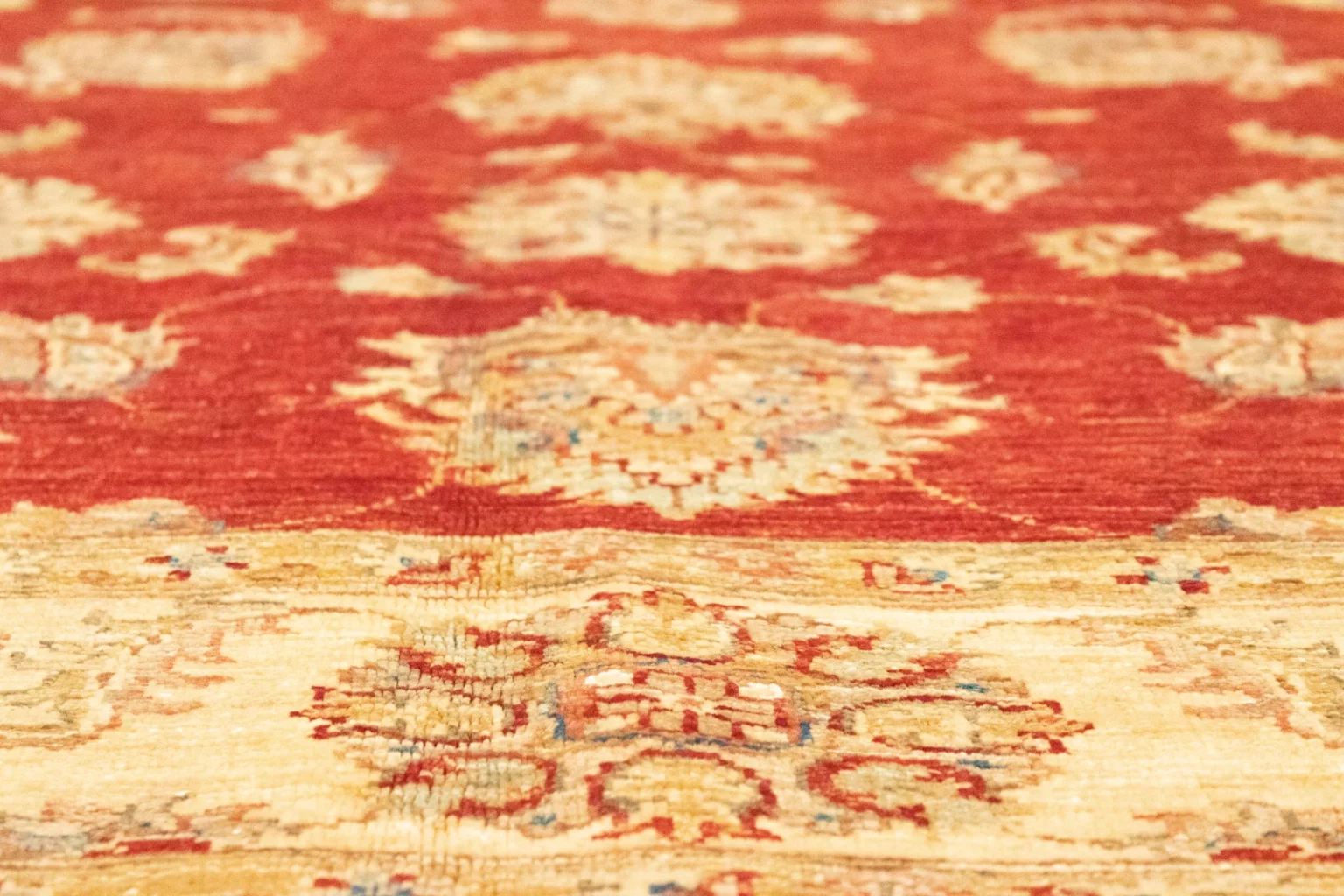
This rug is described as having varied colours and patterns. The special stone washing adds a faded colour effect to the surface. Its appearance therefore combines a varied ornamental and colour scheme with a deliberately softened, time-worn impression. The washing treatment does not change the hand-knotted character of the rug; it emphasises the intended surface appearance.
Ziegler design is generally associated with classical floral carpet patterns. A measured distribution of ornament across the field is often central to the composition. Vines, flowers and stylised leaves may repeat, interlace or gather into larger groups. Depending on the design, the field may contain a central medallion, or it may be arranged as a continuous pattern without one dominant centre. Ziegler is not the name of one fixed template but of a related family of designs.
Another foundation of this pattern language is the balance between decorative richness and clear division of space. Motifs are arranged so that the field, borders and surrounding areas remain connected. In floral designs, the arrangement can suggest continuous growth, while geometric elements may give the drawing additional structure. The precise appearance of any individual rug depends on its design and the workshop that executes it.
Borders play an important role in Oriental carpet design. They frame the central field and create a transition between the rug and its outer edge. A main border may be accompanied by narrower guard borders. In Ziegler-influenced designs, floral details are often repeated to establish a continuous rhythm. Colour and outline determine whether the pattern reads with strong contrast or flows together in a softer manner.
Colour has a major effect on how a rug’s pattern is perceived. Strong contrasts bring individual motifs forward, while related shades create a quieter overall reading. In this rug, the colour impression is described as faded because of the special stone washing. The result is an intentionally restrained appearance rather than an untreated, sharply saturated one. Combined with the stated variety of colours and patterns, it gives the design several interacting ornamental levels.
The pattern tradition of Ziegler rugs belongs to the wider history of Oriental ornament. Persian examples supplied many floral, scrolling and medallion-related forms that were later developed in other countries. Pakistani and Afghan workshops can interpret such motifs through their own craft practices. The historical reference remains recognisable, while material, colour selection, surface treatment and execution are connected with the place of manufacture.
Special Features
The distinctive features of this one-off rug include its hand-knotted construction, its pile of high-quality wool and its knot density of approximately 200,000 knots per square metre. Special stone washing is another defining element, producing the faded colour effect. These details make both the method of construction and the treatment of the surface part of the rug’s description.
The origin in Pakistan and Afghanistan and the Ziegler designation place the rug within an Oriental design tradition. Its varied colours and patterns are accompanied by the intentionally softer appearance created through stone washing. The condition is very good. As a hand-knotted individual rug, it brings together material, pattern, finishing treatment and state of preservation in a particular combination.
FAQ
What does the term Ziegler rug mean?
Ziegler rug mainly describes a style and pattern tradition influenced by classical Persian carpets. It is not automatically a statement that the rug was made in Iran. This piece originates from Pakistan and Afghanistan and is therefore an Oriental rug. Ziegler designs are often associated with floral ornament, generous field layouts and balanced colour planning. The exact drawing may differ from one workshop and one execution to another.
What effect does special stone washing create?
Special stone washing treats the surface in a controlled way and creates a faded colour effect. The colours consequently appear softer and less newly saturated than on an untreated surface with a stronger colour impression. For this rug, the stone wash is expressly part of the stated finish. It adds a deliberately subdued, aged-looking colour character to the varied colours and patterns.
How is the craftsmanship of this rug described?
The craftsmanship is defined by hand knotting, a pile made from high-quality wool and a knot density of approximately 200,000 knots per square metre. With hand knotting, individual knots are placed according to the intended pattern. Knot density is a technical measure showing how many knots are worked into a given area. The special stone washing and the very good condition are additional stated features of this particular rug.
To provide the best experiences, we use technologies like cookies to store and/or access device information. Consenting to these technologies will allow us to process data such as browsing behavior or unique IDs on this site. Not consenting or withdrawing consent, may adversely affect certain features and functions.
Functional Always active
The technical storage or access is strictly necessary for the legitimate purpose of enabling the use of a specific service explicitly requested by the subscriber or user, or for the sole purpose of carrying out the transmission of a communication over an electronic communications network.
Preferences
The technical storage or access is necessary for the legitimate purpose of storing preferences that are not requested by the subscriber or user.
Statistics
The technical storage or access that is used exclusively for statistical purposes.The technical storage or access that is used exclusively for anonymous statistical purposes. Without a subpoena, voluntary compliance on the part of your Internet Service Provider, or additional records from a third party, information stored or retrieved for this purpose alone cannot usually be used to identify you.
Marketing
The technical storage or access is required to create user profiles to send advertising, or to track the user on a website or across several websites for similar marketing purposes.

 SECURE PAYMENT
 SHIPPING PARTNERS