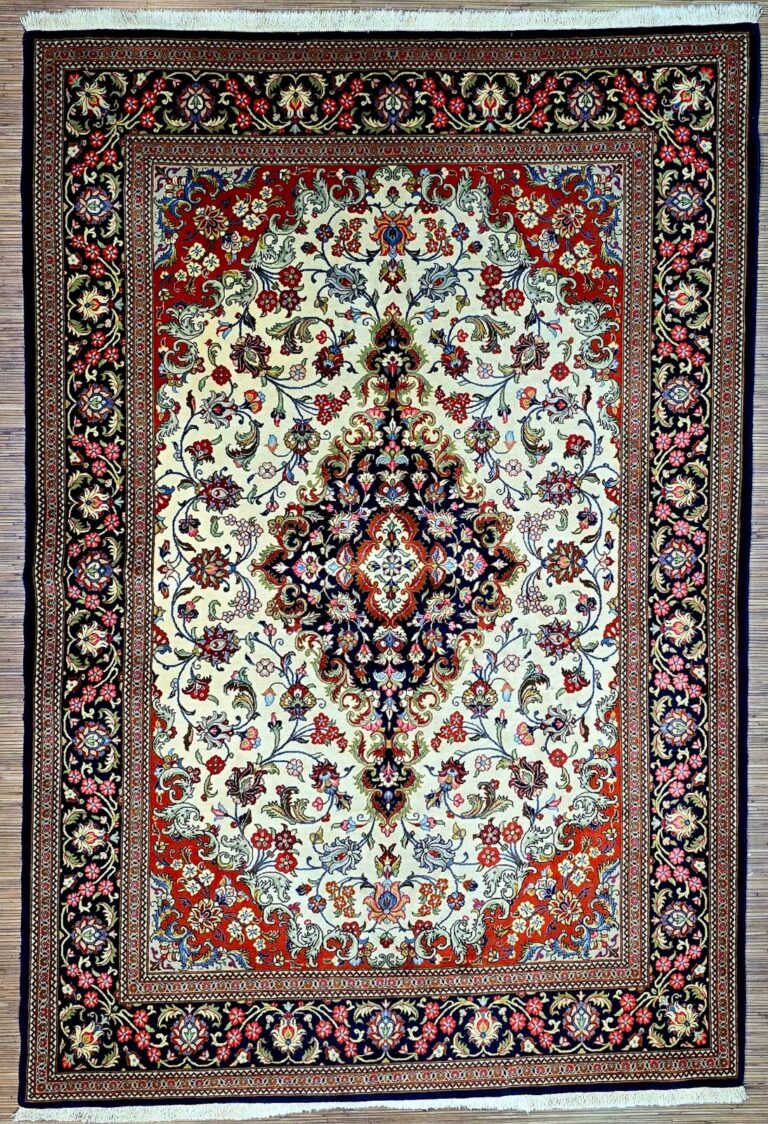
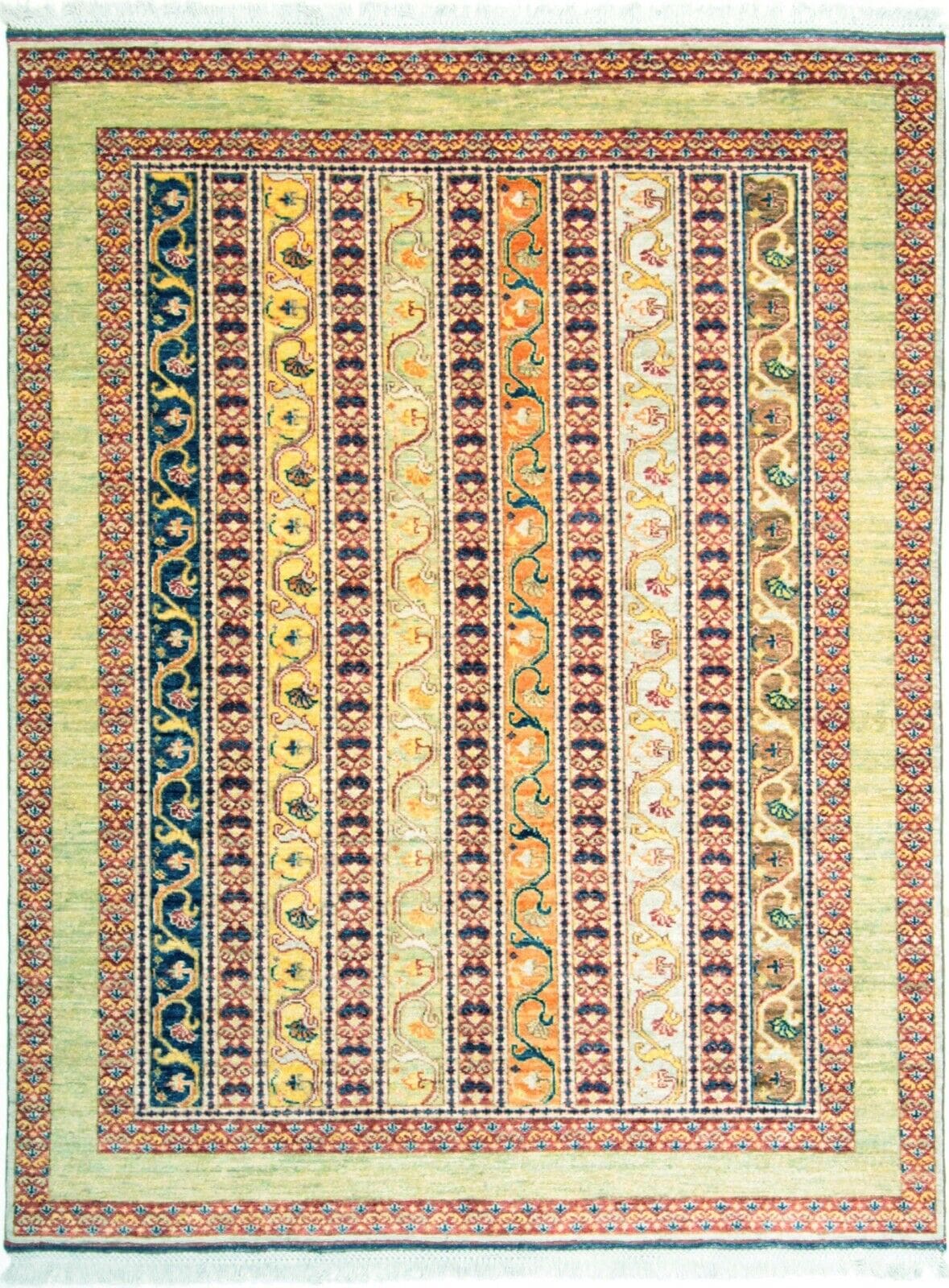
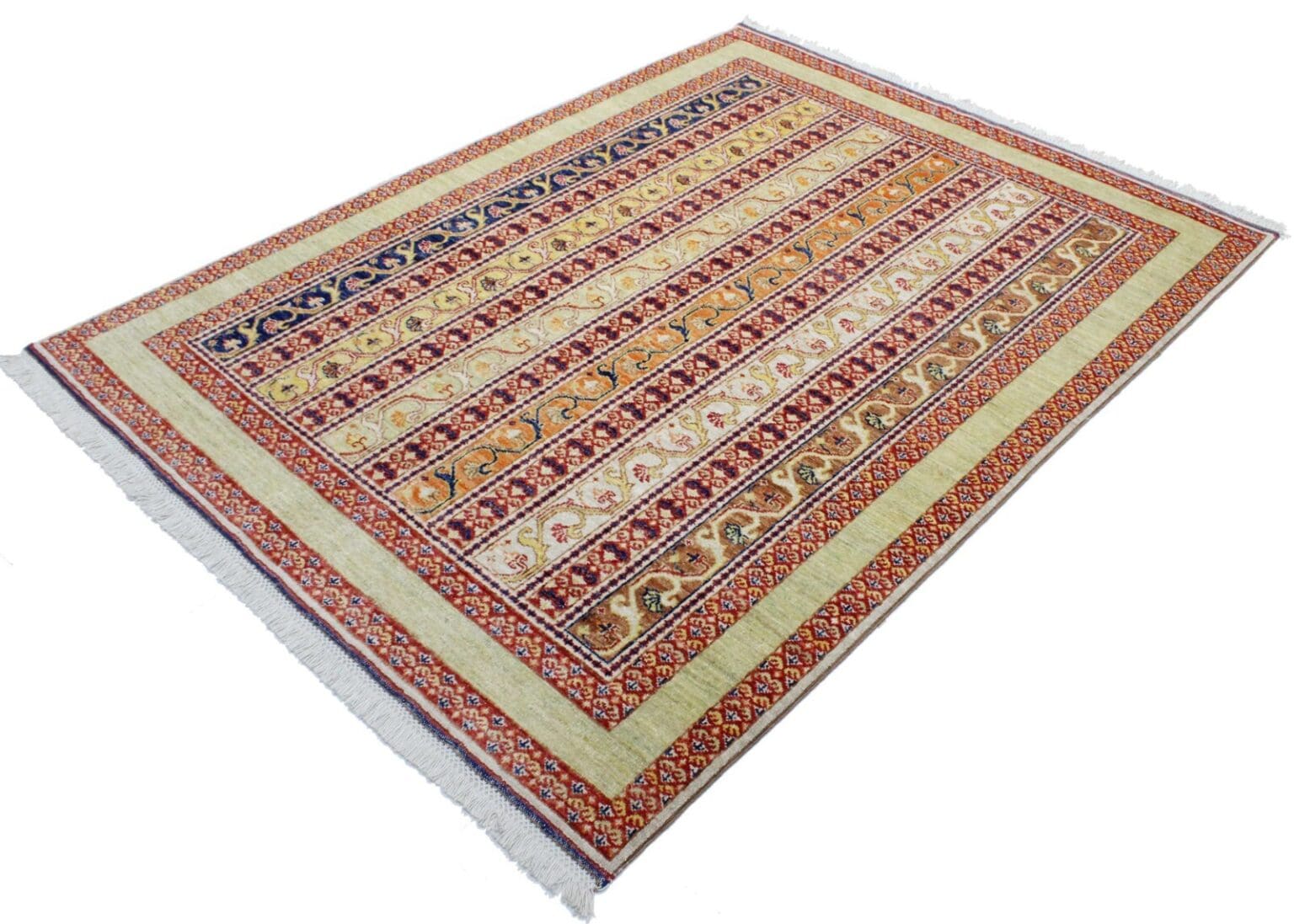
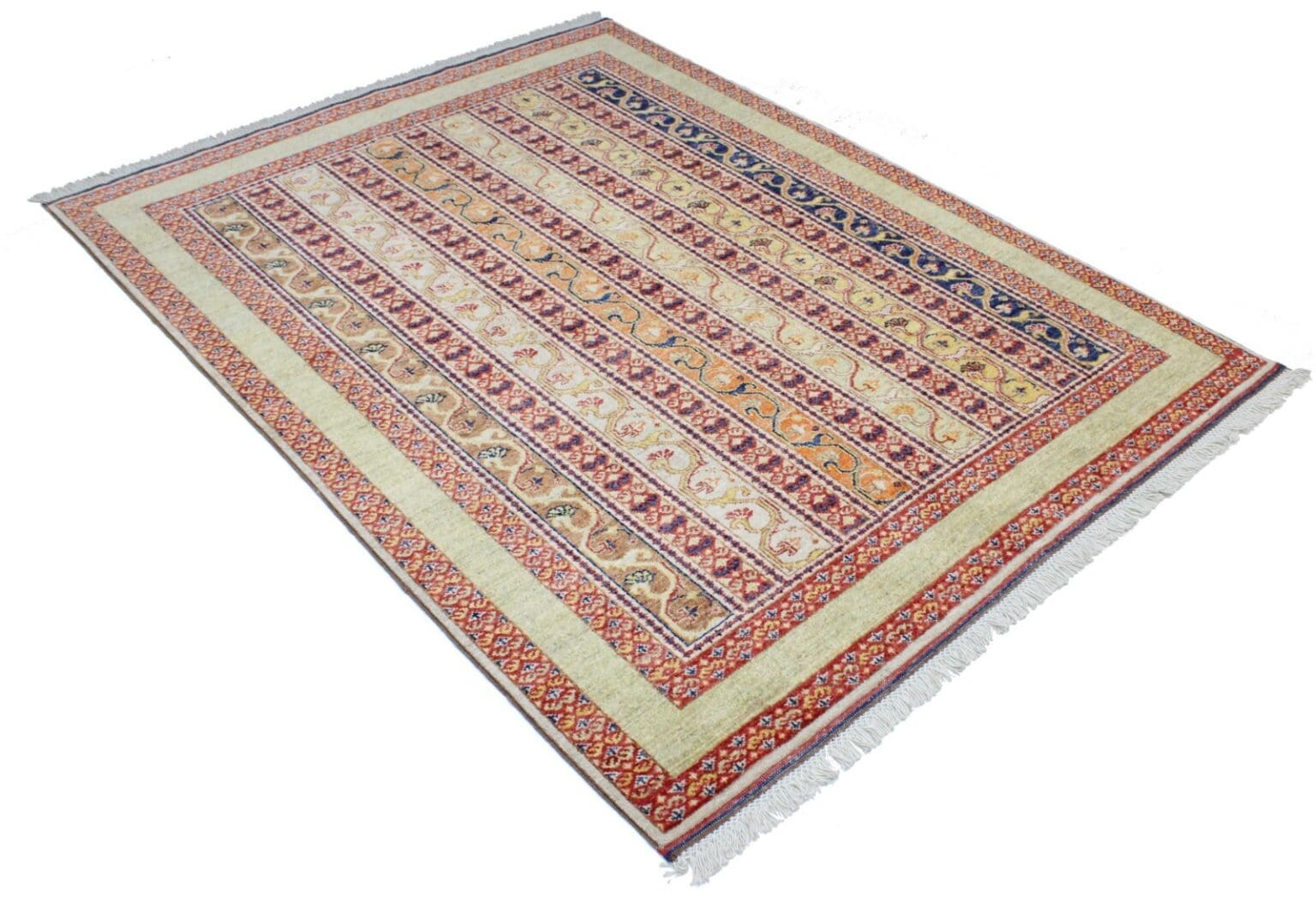
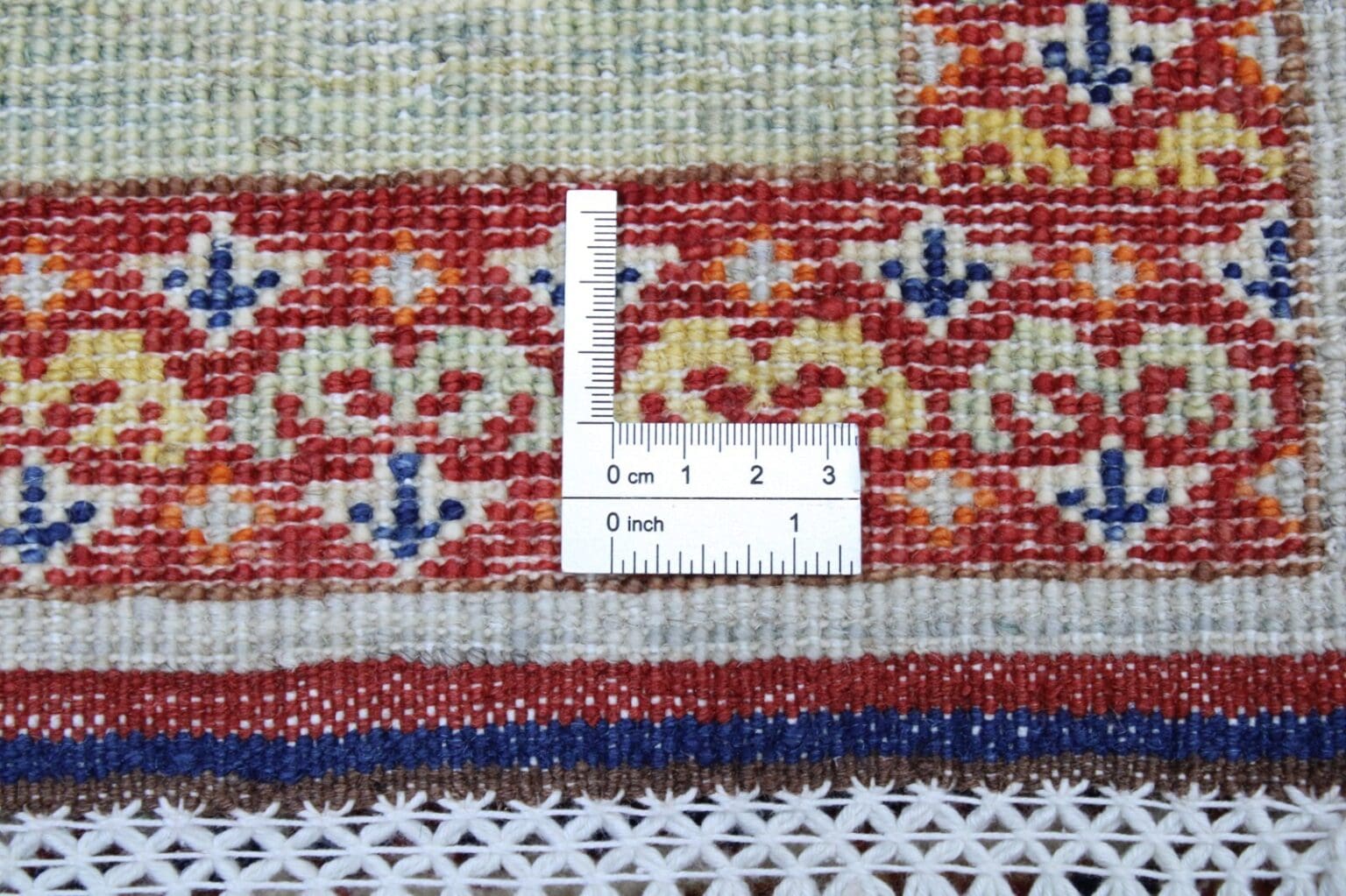
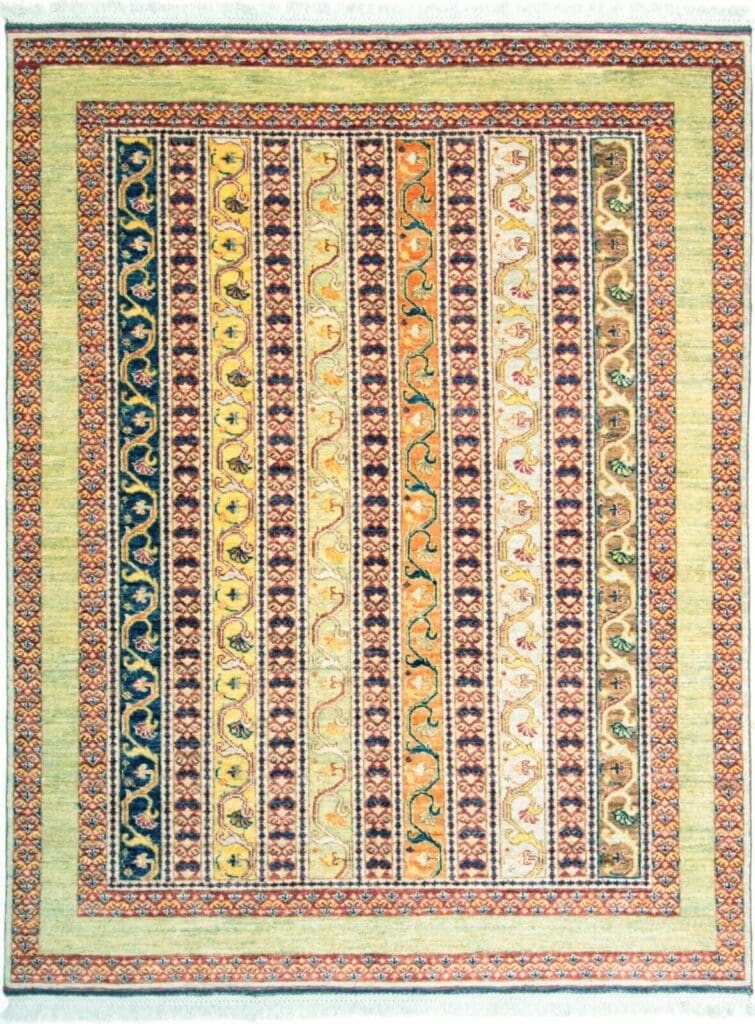
Hand-knotted Pakistan Oriental rug | Knot density: Hand-knotted | Material: pile wool, warp cotton | Size: 198 cm x 150 cm | Pattern: Geometric | Condition: New with tag
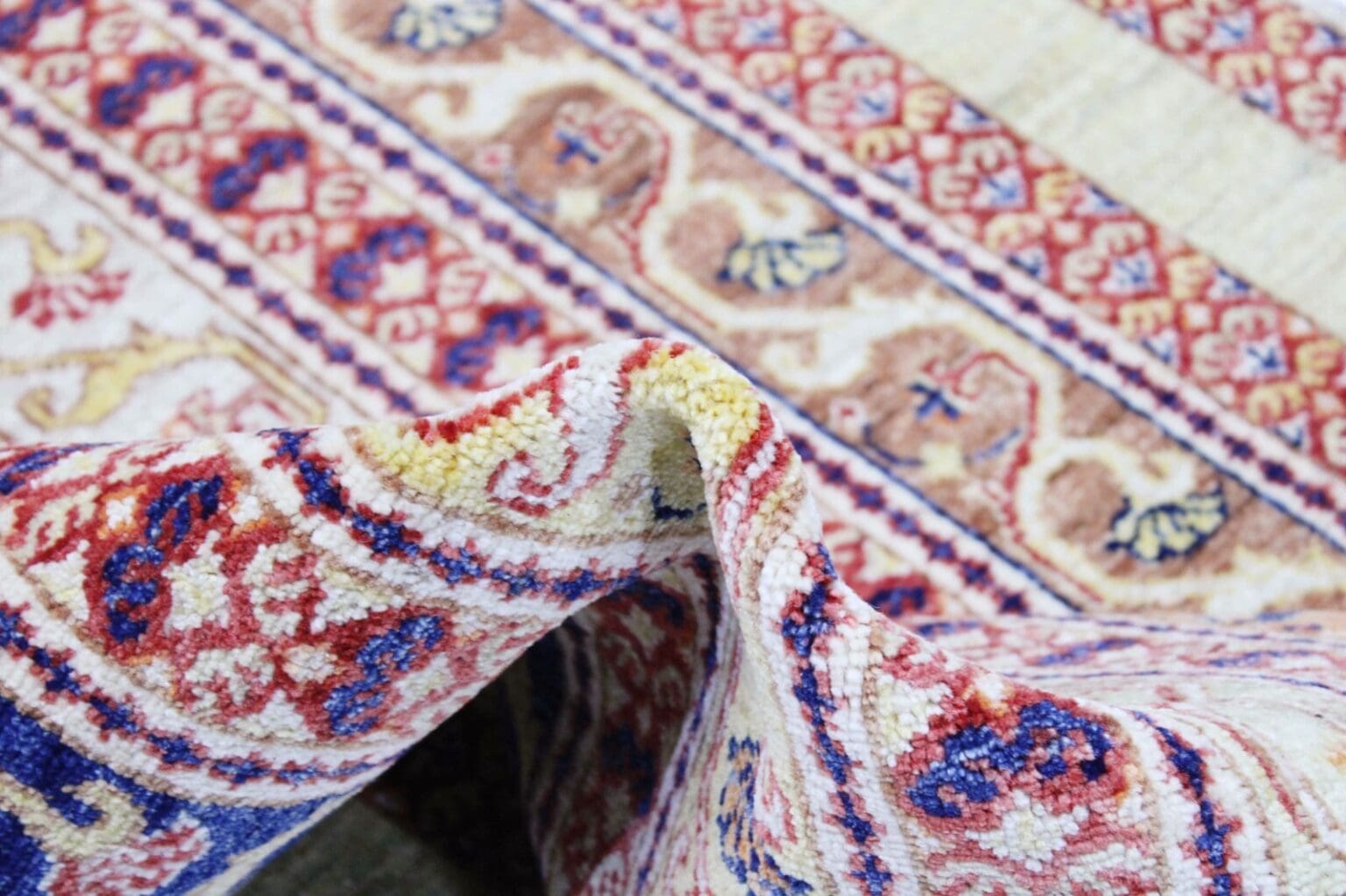
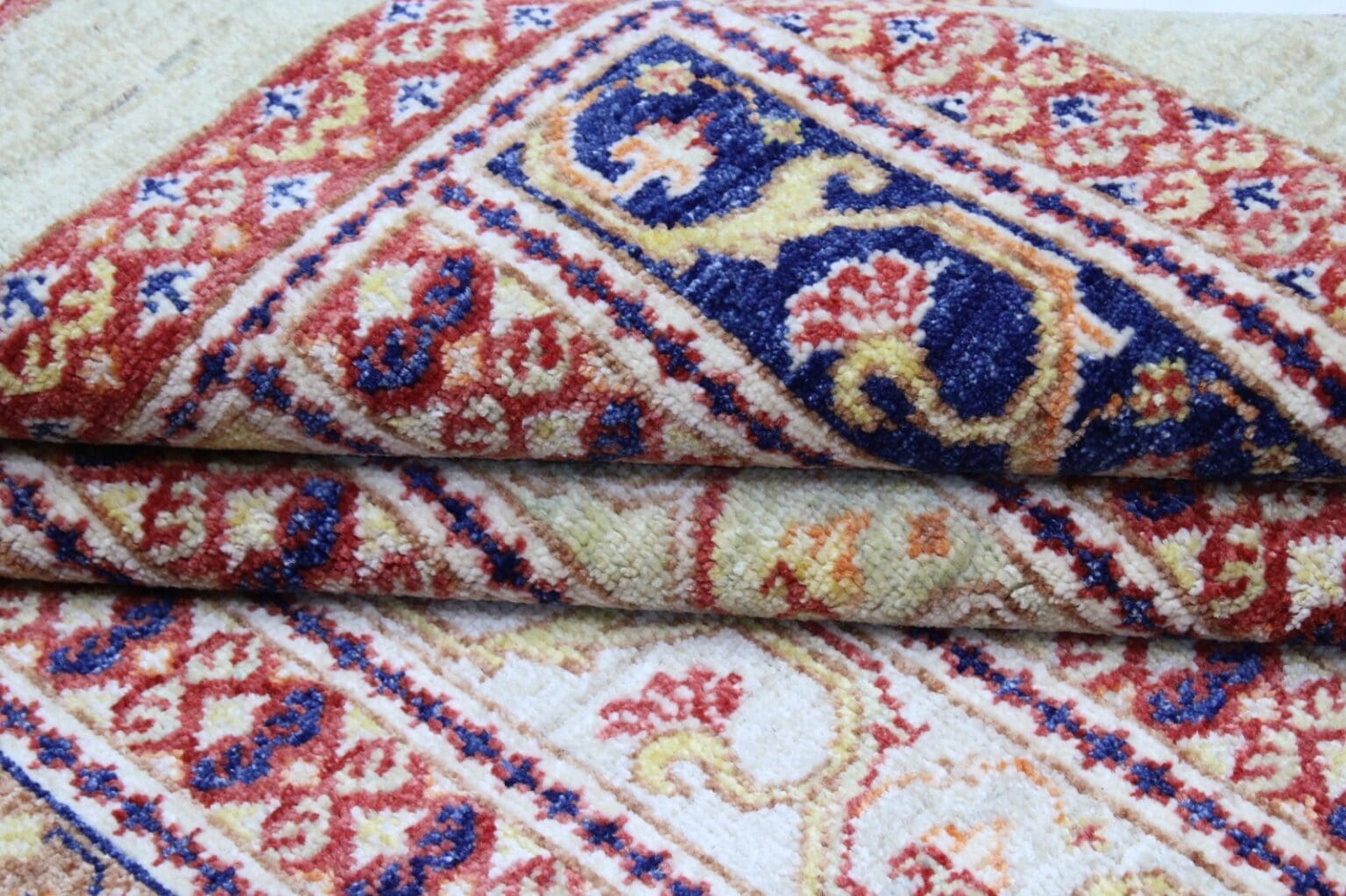
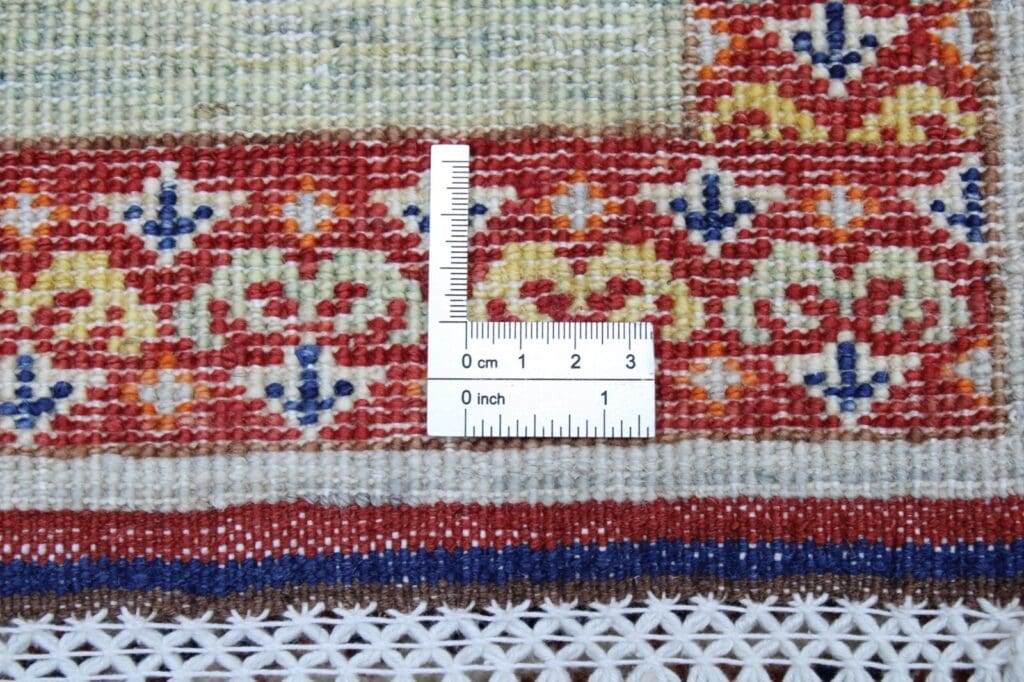
This Oriental rug is from Pakistan and is hand-knotted. Wool is specified for the pile and cotton for the warp. The pile creates the visible textile surface, while the warp provides the underlying structure to which the knots are attached. This combination of a wool pile and cotton warp is a clear material description for a hand-knotted rug, bringing together a resilient surface fibre and a firm foundation for the knotting process.
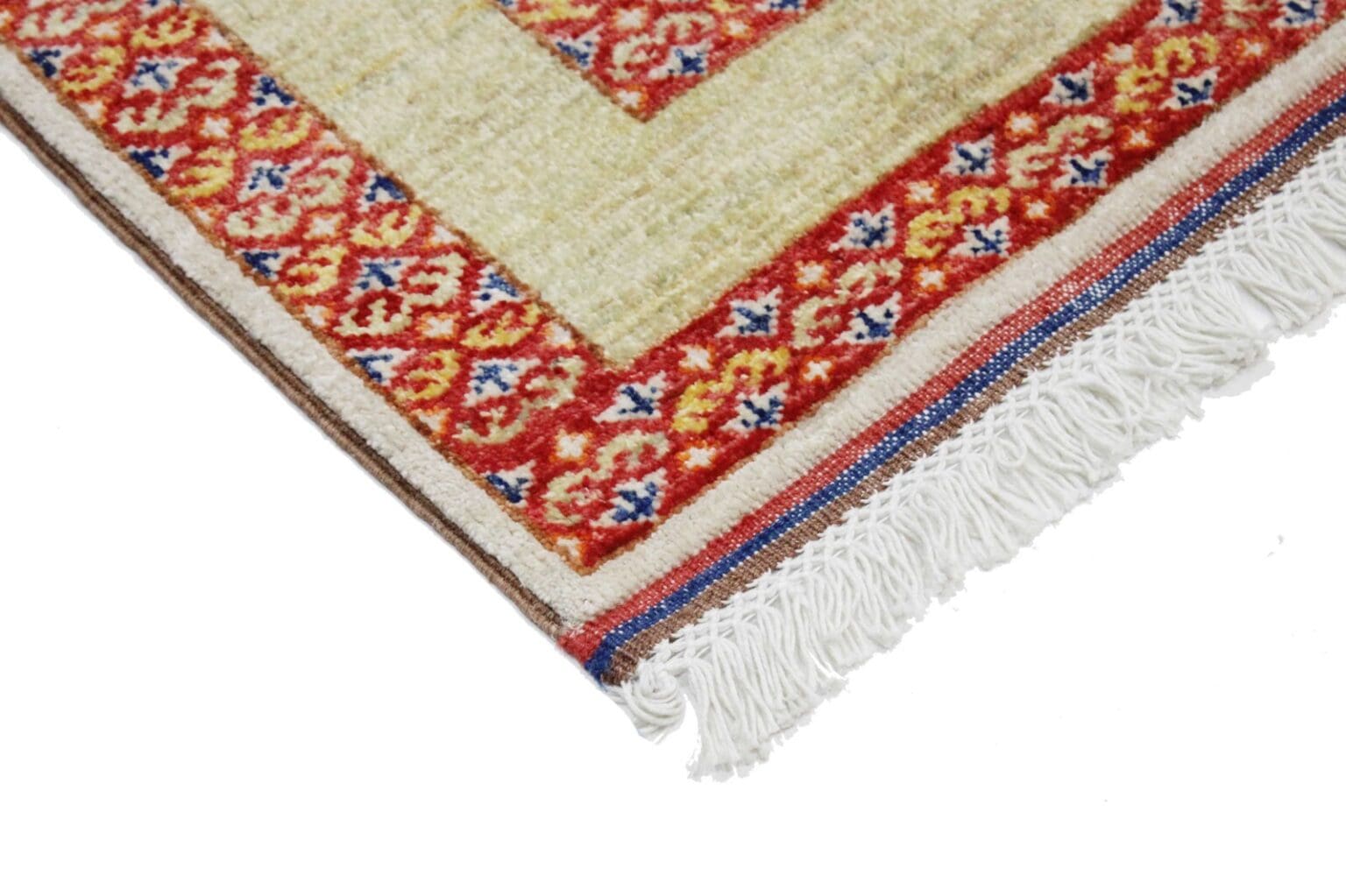
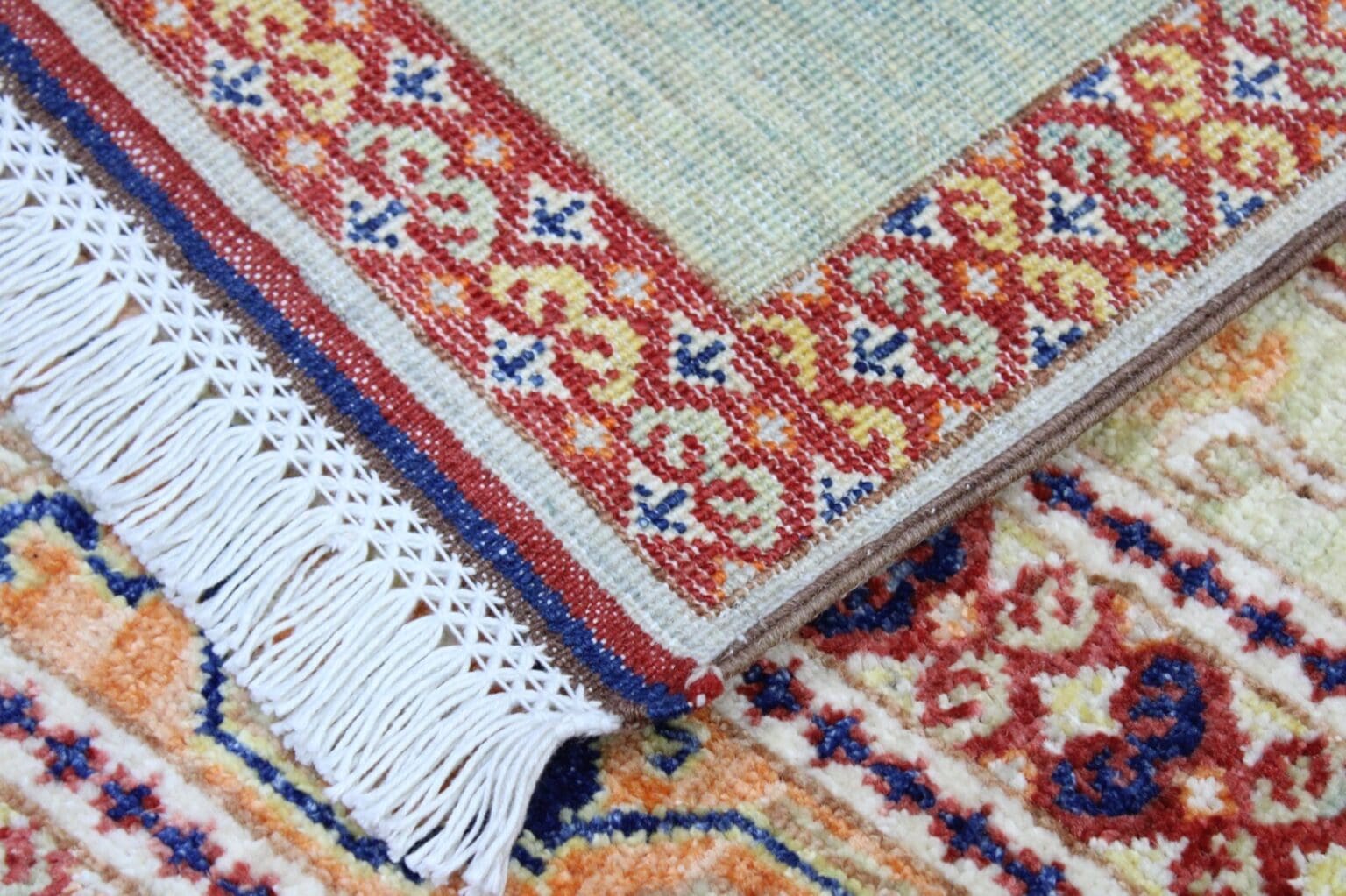
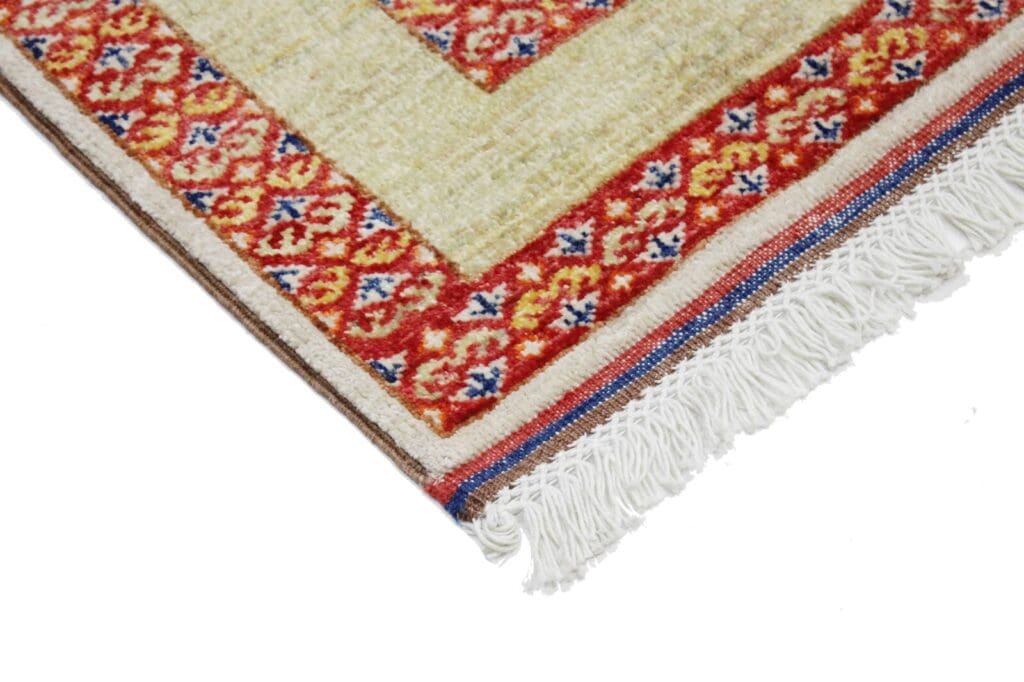
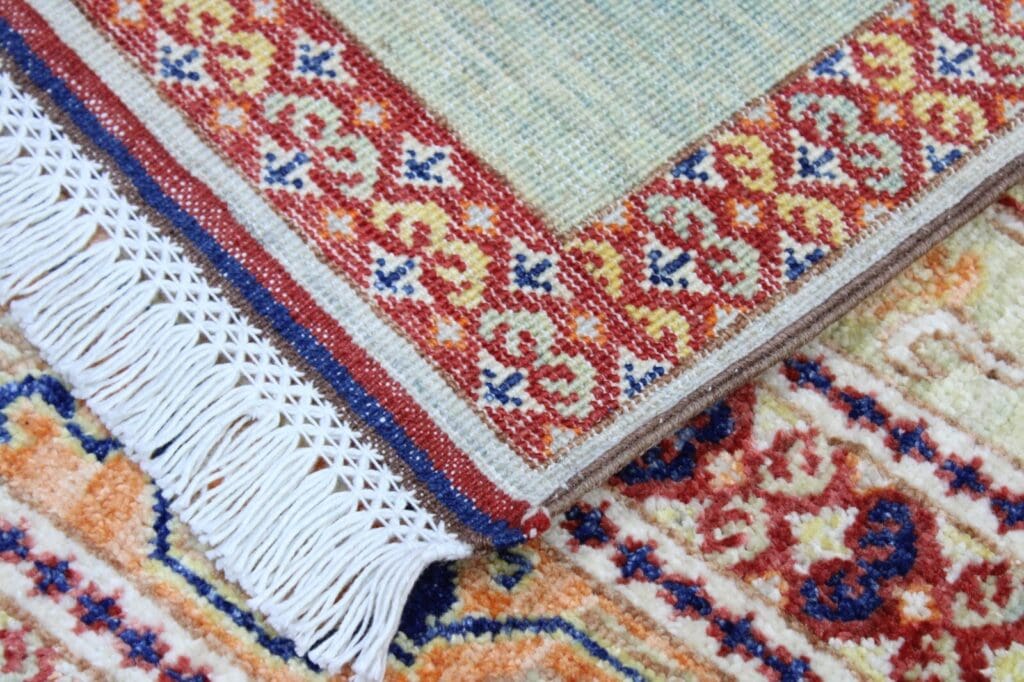
Hand-knotting is not a printed or fully mechanised method. Individual knots are tied into the prepared warp, row by row, and the structure is compacted as the work progresses. The design is therefore built into the rug during manufacture rather than applied afterwards to a finished surface. This gives a hand-knotted piece its characteristic textile construction. Minor variations are generally part of handmade production and distinguish it from a completely uniform machine-made product.
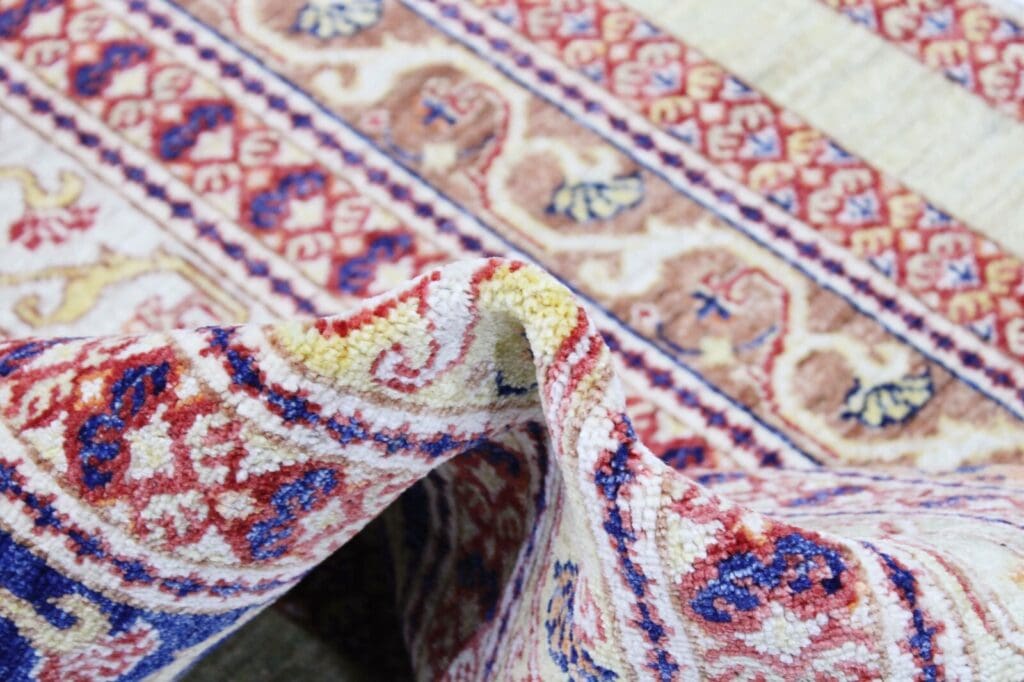
Wool has a long-standing role in rug making because its fibres are hard-wearing and pleasant to the touch. It also accepts colour well, allowing lines and blocks in a design to remain readable. Cotton is used here for the warp, where its ordered structure forms the basis for the knots. The materials recorded for this rug are wool in the pile and cotton in the warp. No additional fibre is stated for this individual piece.
The name Ziegler is part of the rug’s stated classification and design language. Ziegler-inspired rugs are commonly associated with a balance between traditional ornament and a calmer, more contemporary surface effect. The rug is also described as Modern. Its production therefore combines a traditional hand-knotting technique with a design classification suited to a current interior setting.
Origin and Tradition
The rug originates from Pakistan. Pakistan has its own established rug-making tradition, shaped by local workshop practice, inherited knotting skills and contact with wider Oriental design traditions. Workshops there produce both traditionally oriented rugs and pieces whose colours and layouts are adapted to contemporary interiors. The word Ziegler must be kept separate from the origin: Ziegler identifies the design or rug type, while Pakistan identifies the country of manufacture.
Hand-knotting is one of the more involved textile techniques used in rug making. A warp is first arranged under tension, after which knots are tied into it in successive rows. Each working sequence is secured and compacted so that the structure remains stable. The pattern is formed gradually from many individual operations. This process explains why craftsmanship is central to the identity of a hand-knotted Oriental rug.
Pakistani rugs can draw on a wide range of regional and historical influences. Workshop designs may include floral arrangements, medallions, borders or geometric ornament. The Ziegler tradition is often understood as a way of combining familiar carpet elements with a more balanced and less strictly historical appearance. This particular rug is expressly described as geometric. Its origin and its pattern classification are therefore two separate pieces of information that work together in describing it.
The history of Oriental rugs has always involved the movement and reinterpretation of motifs, colour schemes and techniques. Patterns may travel between regions, be reorganised by different workshops and be adapted to another method of production. A pattern name should therefore not automatically be treated as proof of a rug’s place of origin. This item is a Pakistani Oriental rug with a Ziegler designation, a Modern style and a geometric pattern. It is not described as a Persian rug from Iran.
Craft tradition is visible not only in the final appearance but also in the way a rug is made. Each row follows the prepared structure, while the drawing is built gradually through repeated manual steps. In modern Oriental rugs, this traditional process can be paired with a clearer, more spacious or more graphic design approach. Historical ideas may thus remain present as references without assigning the finished rug to a different country of origin.
Pakistan is also an important centre for rugs intended for varied interior styles. Alongside classically inspired pieces, workshops produce designs with reduced ornament, graphic structure or a broad range of colours. This rug combines Pakistani origin with the Ziegler designation, a geometric pattern description and a Modern style. Those elements provide a precise classification without adding an unsupported regional attribution.
Design and Pattern
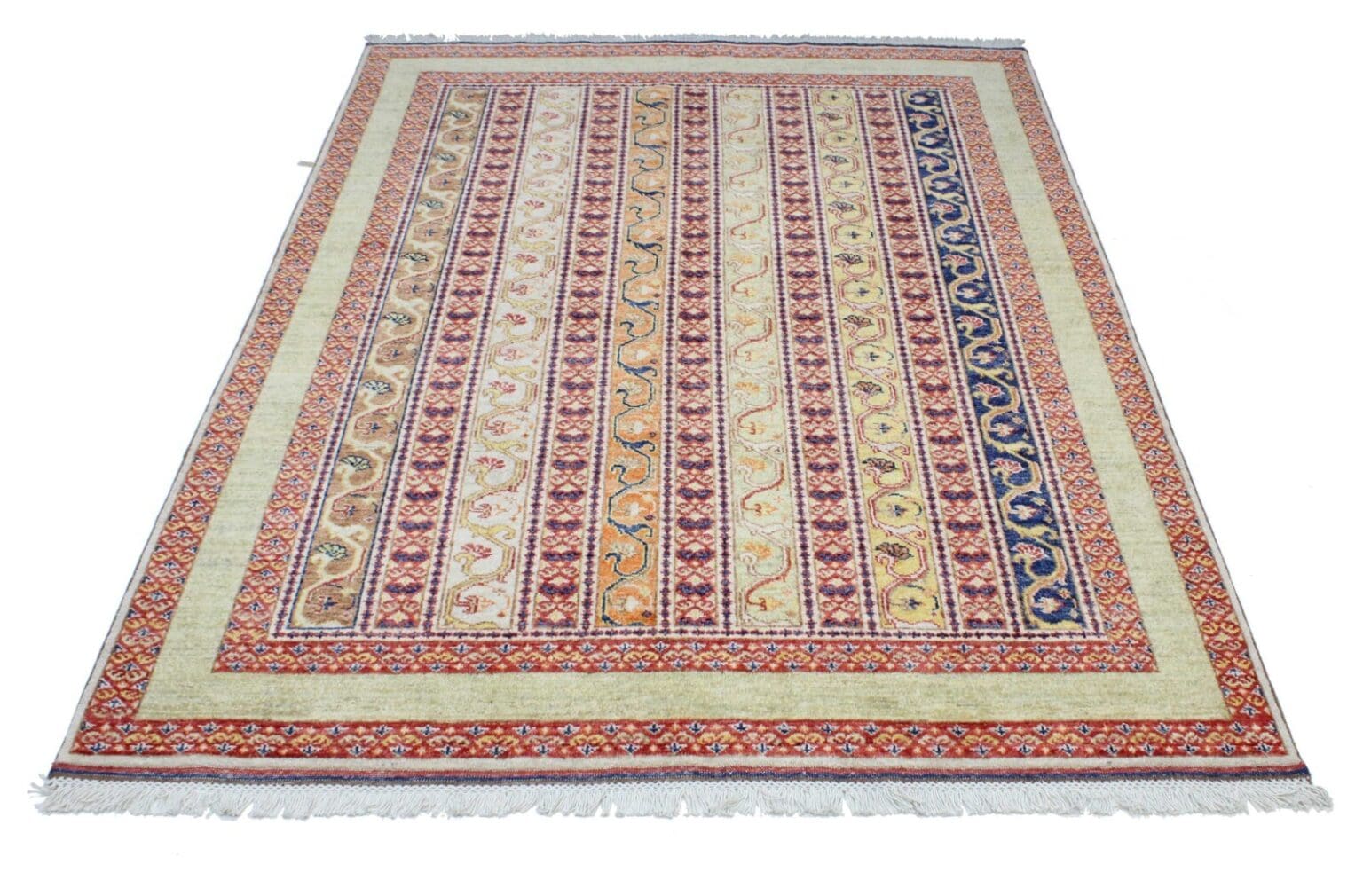
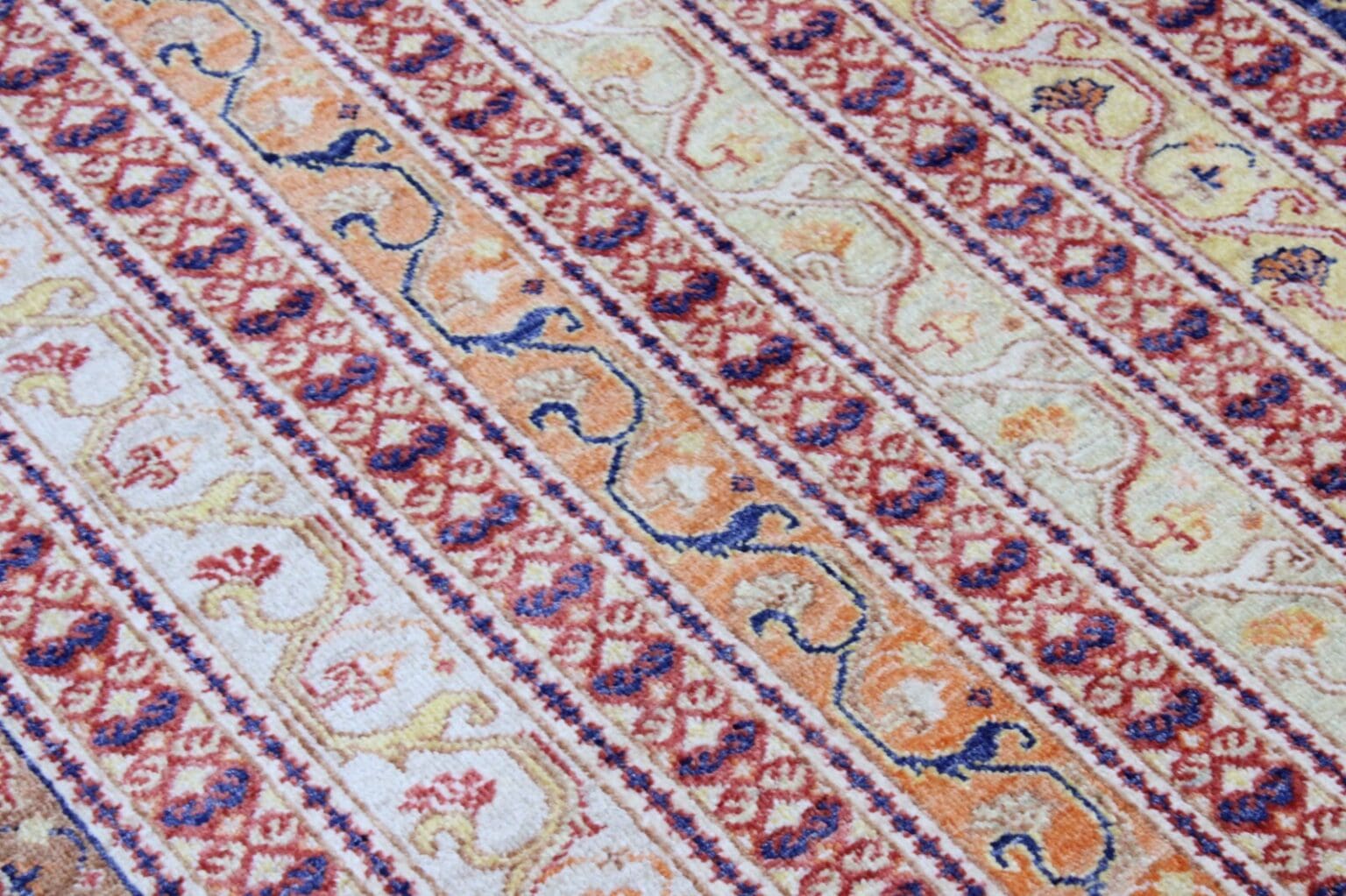
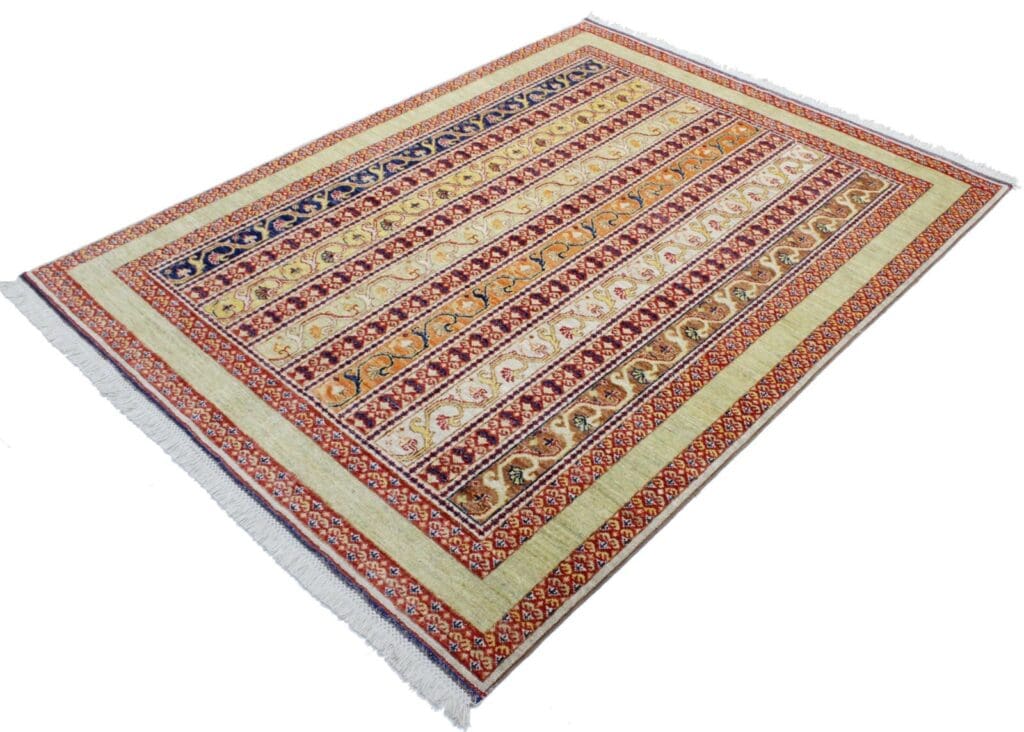
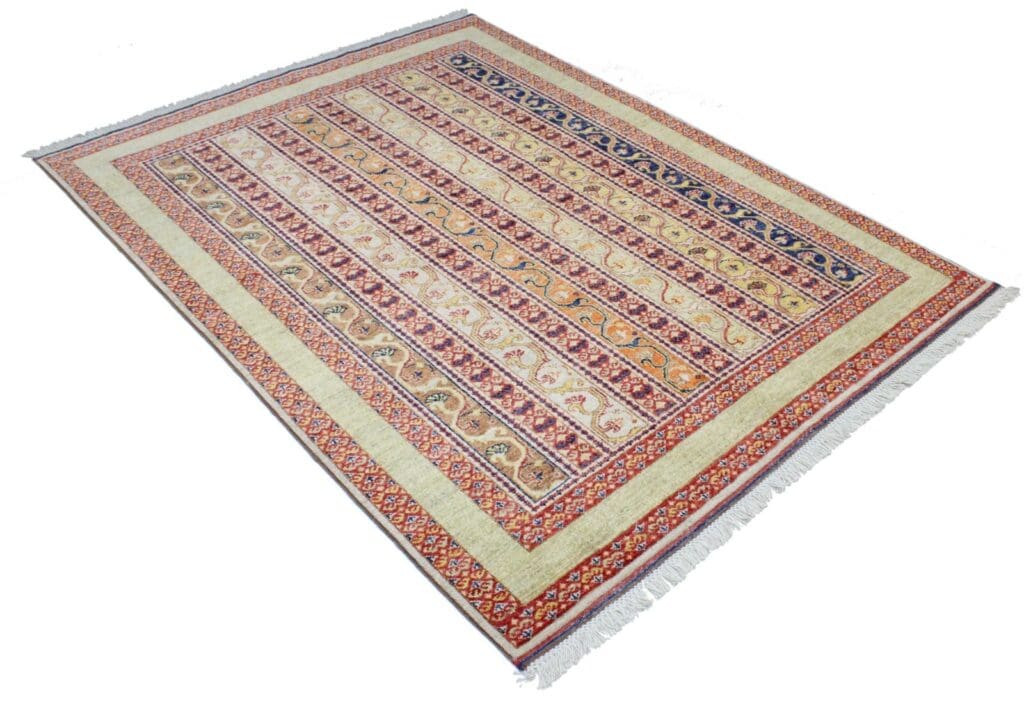
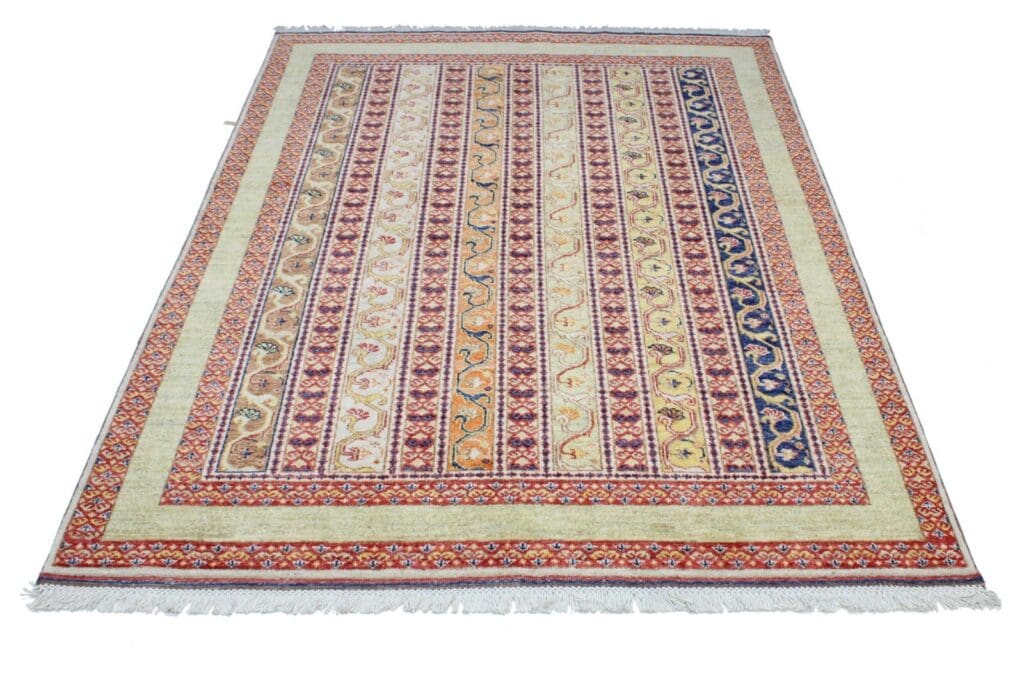
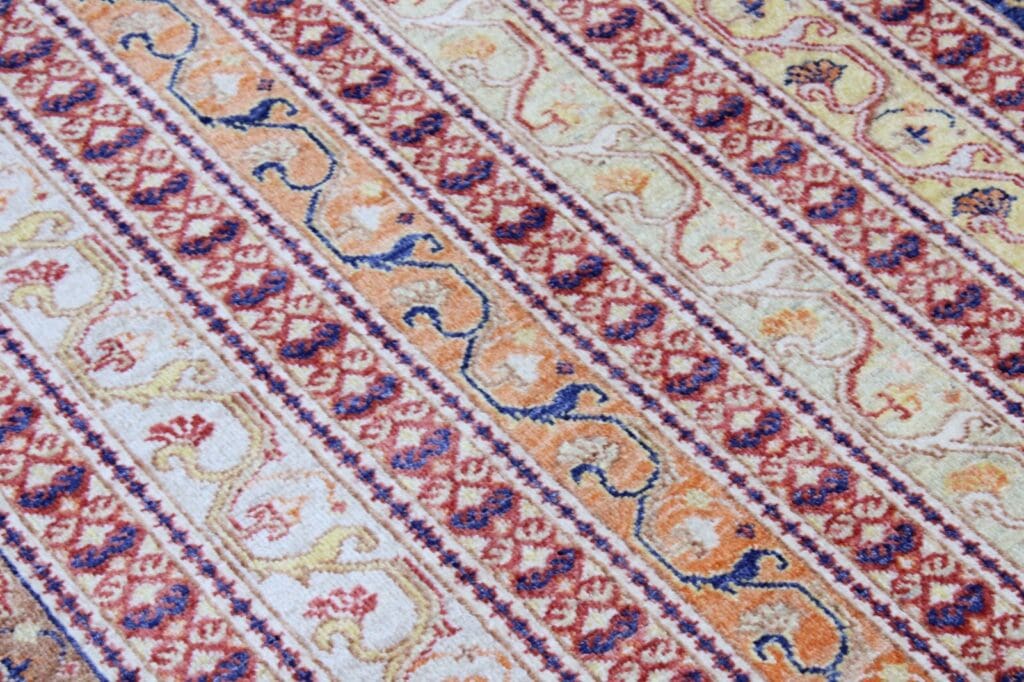
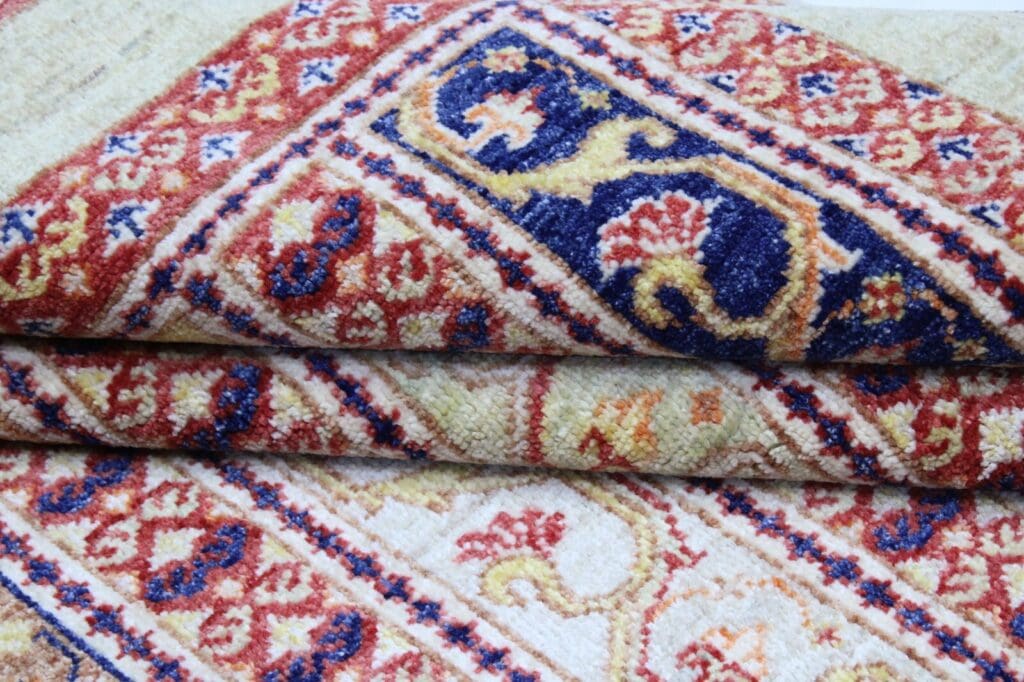
The pattern of this rug is geometric. Geometric rug designs use lines, angles, repeated units, divided fields and clearly defined shapes. Rather than relying only on free colour transitions, they create visual order through the arrangement and repetition of individual elements. Depending on the composition, such forms may create a border, emphasise a central field or continue rhythmically across the entire surface.
The Ziegler designation points to a design tradition that combines classically inspired ornament with a more restrained, contemporary appearance. Ziegler patterns are often arranged to create a balanced decorative field without depending solely on one dominant medallion. Clear contours and an orderly distribution of motifs are common aims within this design direction. For this rug, the documented pattern description is geometric; a more detailed breakdown of its individual shapes is not provided and is not added here.
The rug is described as multicoloured. A multicoloured design uses several tones rather than relying on one single dominant colour. In a geometric composition, colour changes can separate lines, fields or frames and make the underlying structure easier to read. The colours therefore contribute to the visual organisation of the pattern. The individual shades are not specified, so no particular colour names are assigned to this rug.
Modern describes the visual direction of the piece. Contemporary Oriental rugs often refer to established carpet structures while presenting them through a clearer drawing, a different distribution of colour or a less densely historical overall impression. The traditional hand-knotting method remains unchanged by that stylistic classification. Here, the hand-made construction, the Ziegler designation, the geometric pattern and the multicoloured appearance belong together.
Geometric ornament is not limited to one culture or one manufacturing country. It can be produced in many regions and interpreted differently by each workshop. The pattern description alone is therefore not an origin statement. For this rug, the relevant facts are that it comes from Pakistan, is identified as Ziegler, and has a geometric, Modern and multicoloured appearance. These points describe the actual design information without inventing further motifs.
In an interior, a geometric rug can act as a structuring element. Lines and repeated shapes provide visual order, while several colours can connect with different furniture and room tones. This is a general characteristic of geometric multicoloured design, not an additional claim about the condition or quality of this one-off rug. Its appearance will also depend on the surrounding furnishings and the available light.
Special Features
The rug is described as new with a tag. This clearly distinguishes its stated condition from that of a used or antique rug. The tag serves as an identifying label accompanying the item. It does not, by itself, establish a special provenance, previous ownership history or a particular place other than the Pakistan origin already stated.
The manufacturing period is given as from 2020 onward. The rug is therefore presented as a recent piece rather than an antique. Its Modern style is consistent with this contemporary classification, but the available information does not justify assigning a specific year. The rug is also suitable for use with underfloor heating. Installation and care should nevertheless follow the recommendations of the heating-system and rug specialists.
The multicoloured palette, geometric pattern and Ziegler designation give the piece its visible identity. Together with its Pakistani origin and hand-knotted construction, they form a clear product description. A numerical knot density, an exact production year, individual colour names and a signature are not specified. None of these details is assumed.
FAQ
How should I care for this Oriental rug?
A hand-knotted wool rug benefits from regular, gentle vacuuming with equipment suitable for a textile pile. Unnecessary rough treatment should be avoided. If a liquid is spilled, it should be blotted carefully rather than rubbed deeply into the pile. For a more thorough clean, a specialist familiar with Oriental rugs is the appropriate choice. As this rug is suitable for underfloor heating, it should also be installed correctly and used with the air circulation and operating guidance recommended by the heating and rug professionals. Strong direct sunlight can gradually alter textile colours; sensible protection from intense sunlight helps preserve the multicoloured design.
What makes this Ziegler Oriental rug distinctive?
Its classification comes from several specific features: it is from Pakistan, hand-knotted, made with a wool pile and cotton warp, and identified as a Ziegler rug. The pattern is geometric, the style is Modern and the overall colouring is multicoloured. It is also described as new with a tag, with a manufacturing period from 2020 onward. Its distinctive character therefore lies in the combination of a traditional hand-knotting method and a contemporary geometric Ziegler design. It is additionally suitable for use over underfloor heating.
Is this rug a Persian rug?
No. This piece is described as an Oriental rug from Pakistan. Ziegler refers to the rug type or design language and does not turn it into a Persian rug from Iran. Origin and design must be kept separate when describing Oriental rugs: Pakistan is the stated country of manufacture, while Ziegler, geometric and Modern describe its visual classification. The information about wool, cotton, hand-knotting, condition, manufacturing period and suitability for underfloor heating applies to this specific rug.
To provide the best experiences, we use technologies like cookies to store and/or access device information. Consenting to these technologies will allow us to process data such as browsing behavior or unique IDs on this site. Not consenting or withdrawing consent, may adversely affect certain features and functions.
Functional Always active
The technical storage or access is strictly necessary for the legitimate purpose of enabling the use of a specific service explicitly requested by the subscriber or user, or for the sole purpose of carrying out the transmission of a communication over an electronic communications network.
Preferences
The technical storage or access is necessary for the legitimate purpose of storing preferences that are not requested by the subscriber or user.
Statistics
The technical storage or access that is used exclusively for statistical purposes.The technical storage or access that is used exclusively for anonymous statistical purposes. Without a subpoena, voluntary compliance on the part of your Internet Service Provider, or additional records from a third party, information stored or retrieved for this purpose alone cannot usually be used to identify you.
Marketing
The technical storage or access is required to create user profiles to send advertising, or to track the user on a website or across several websites for similar marketing purposes.
 SECURE PAYMENT
 SHIPPING PARTNERS