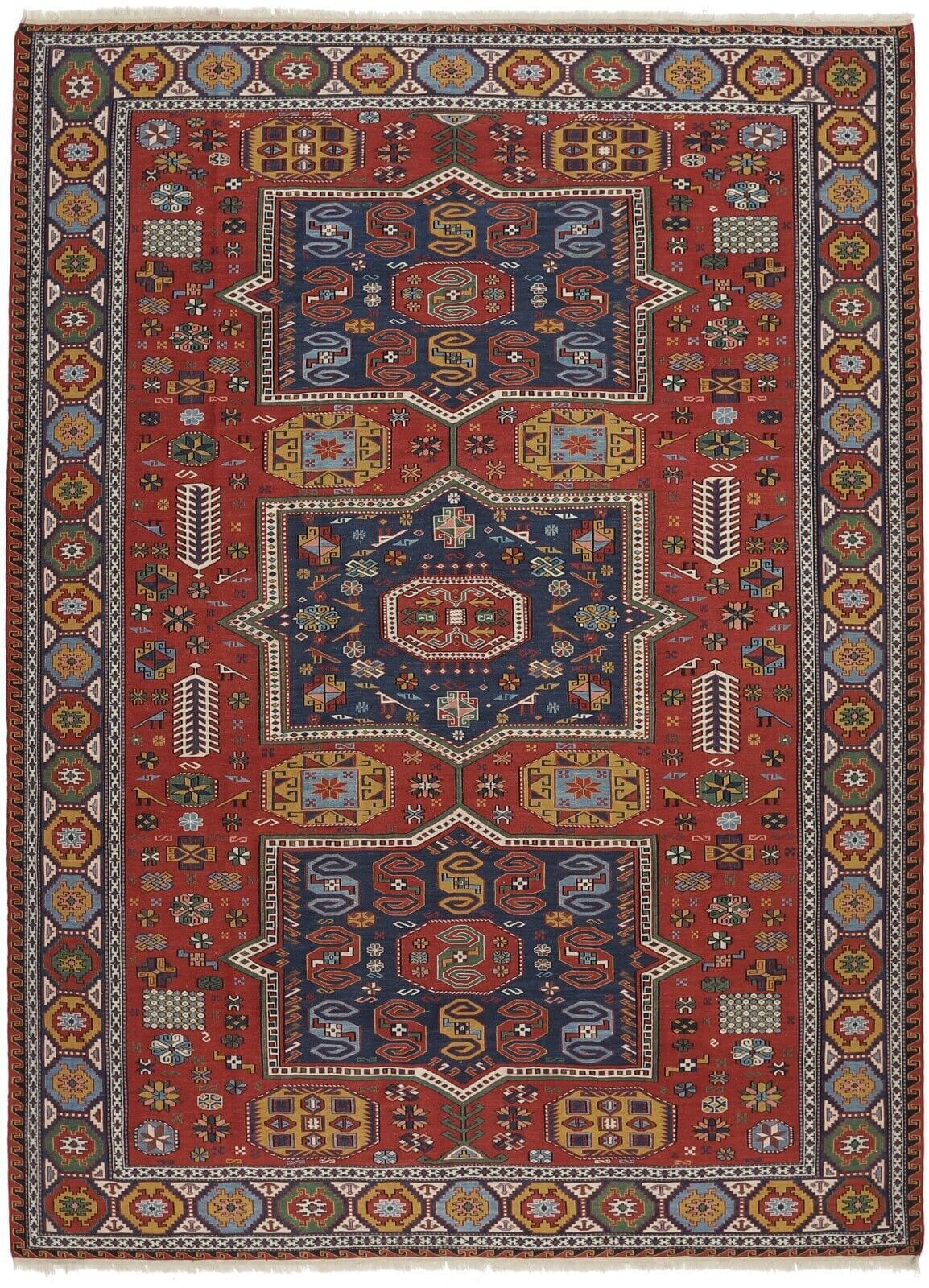
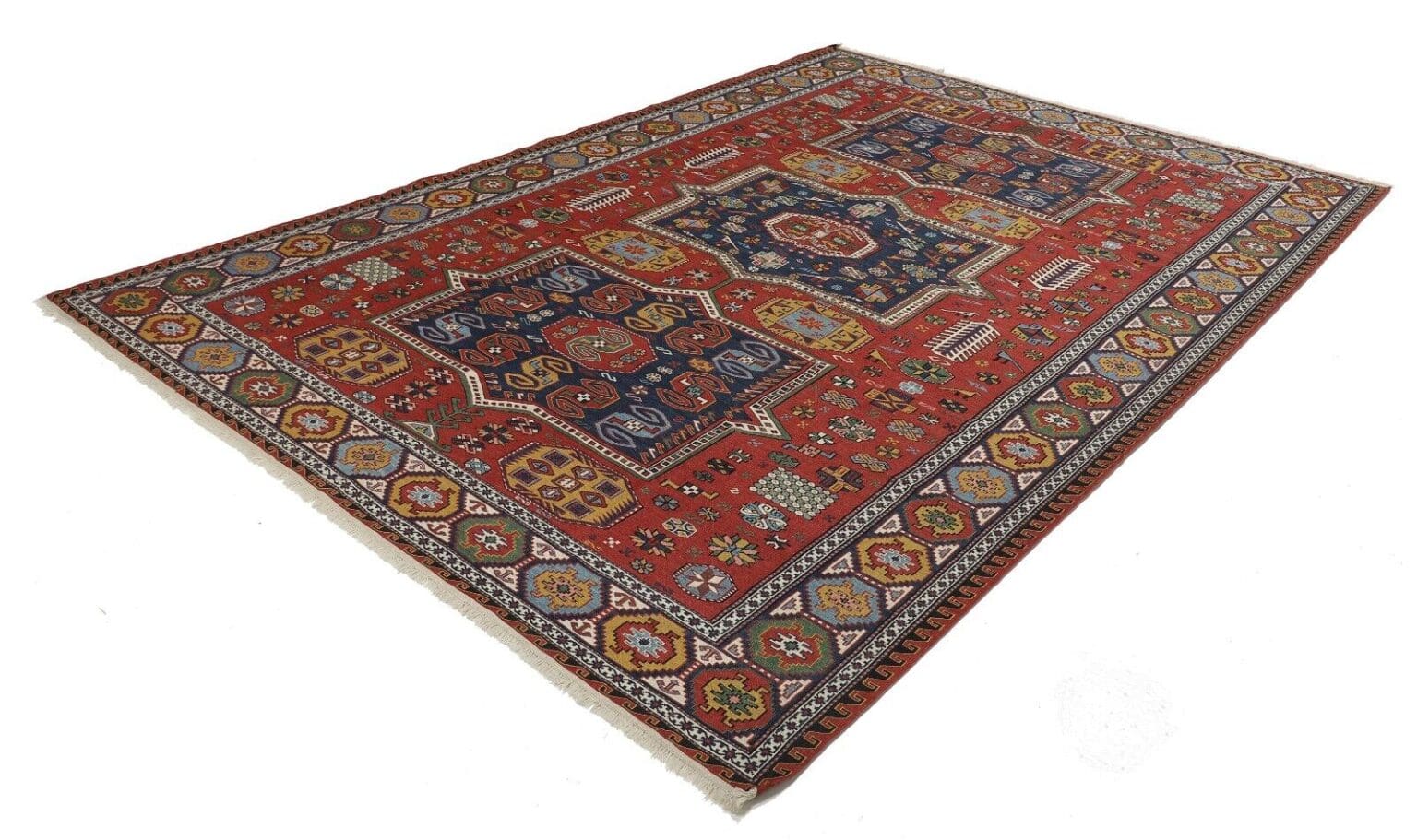
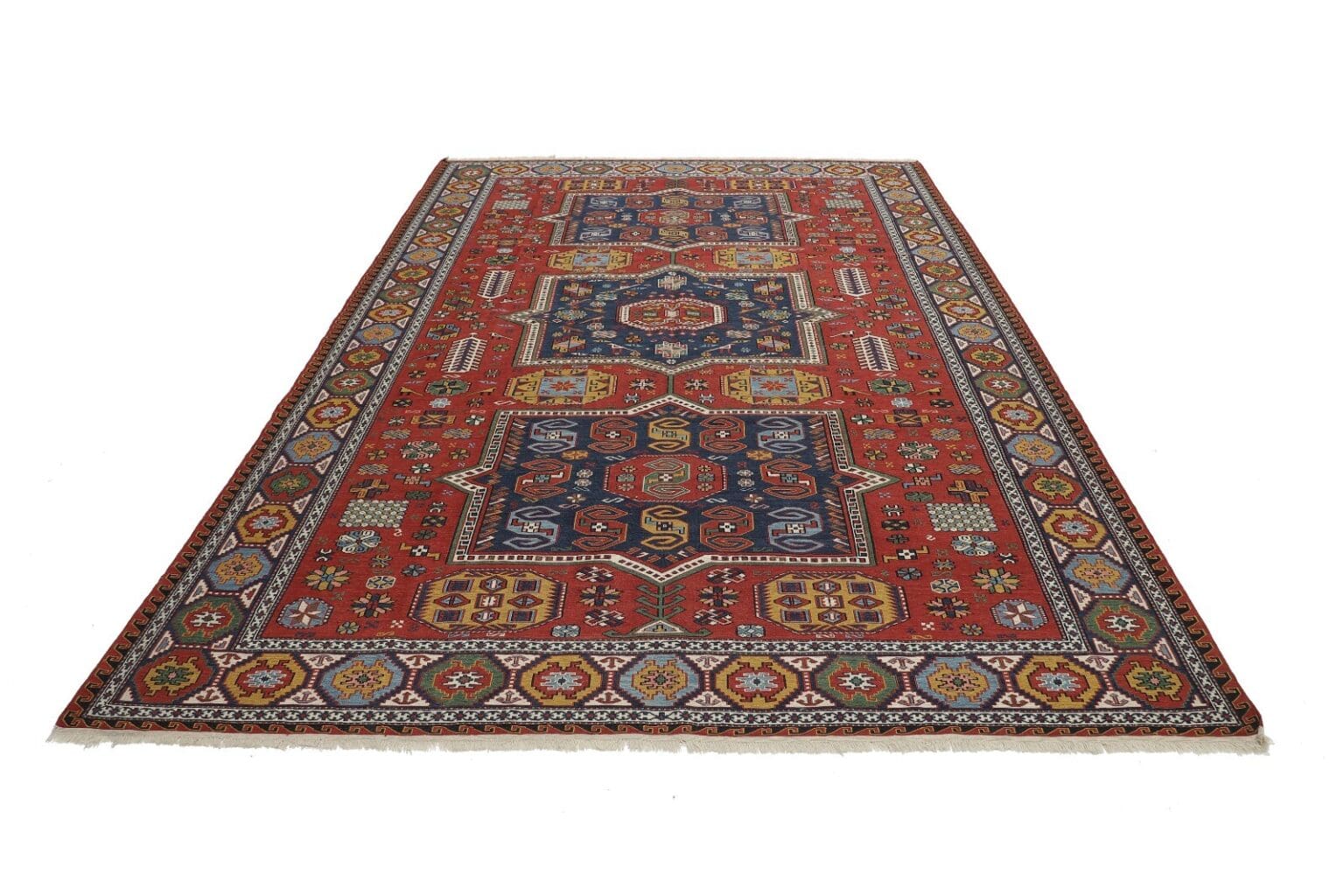
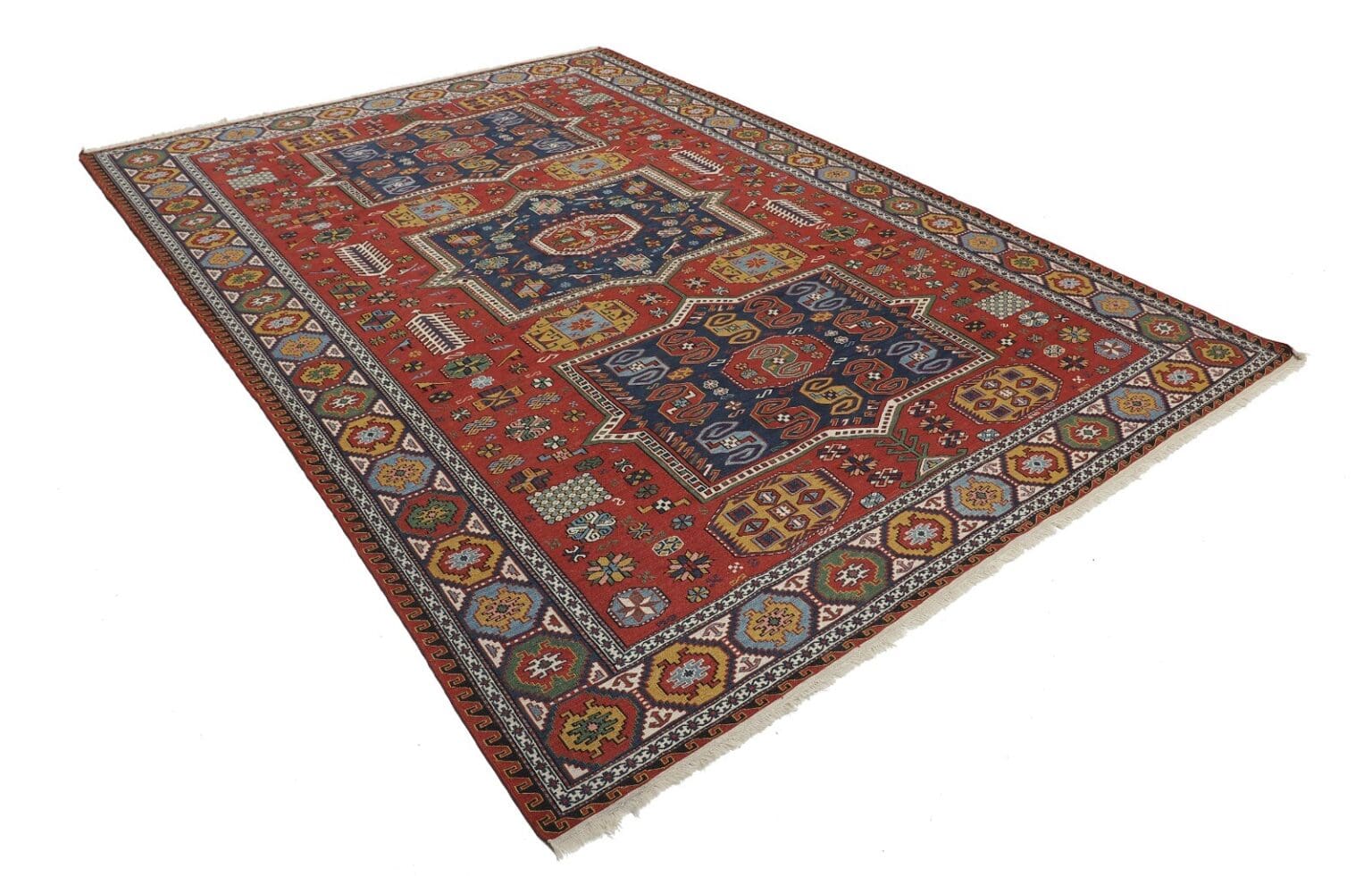
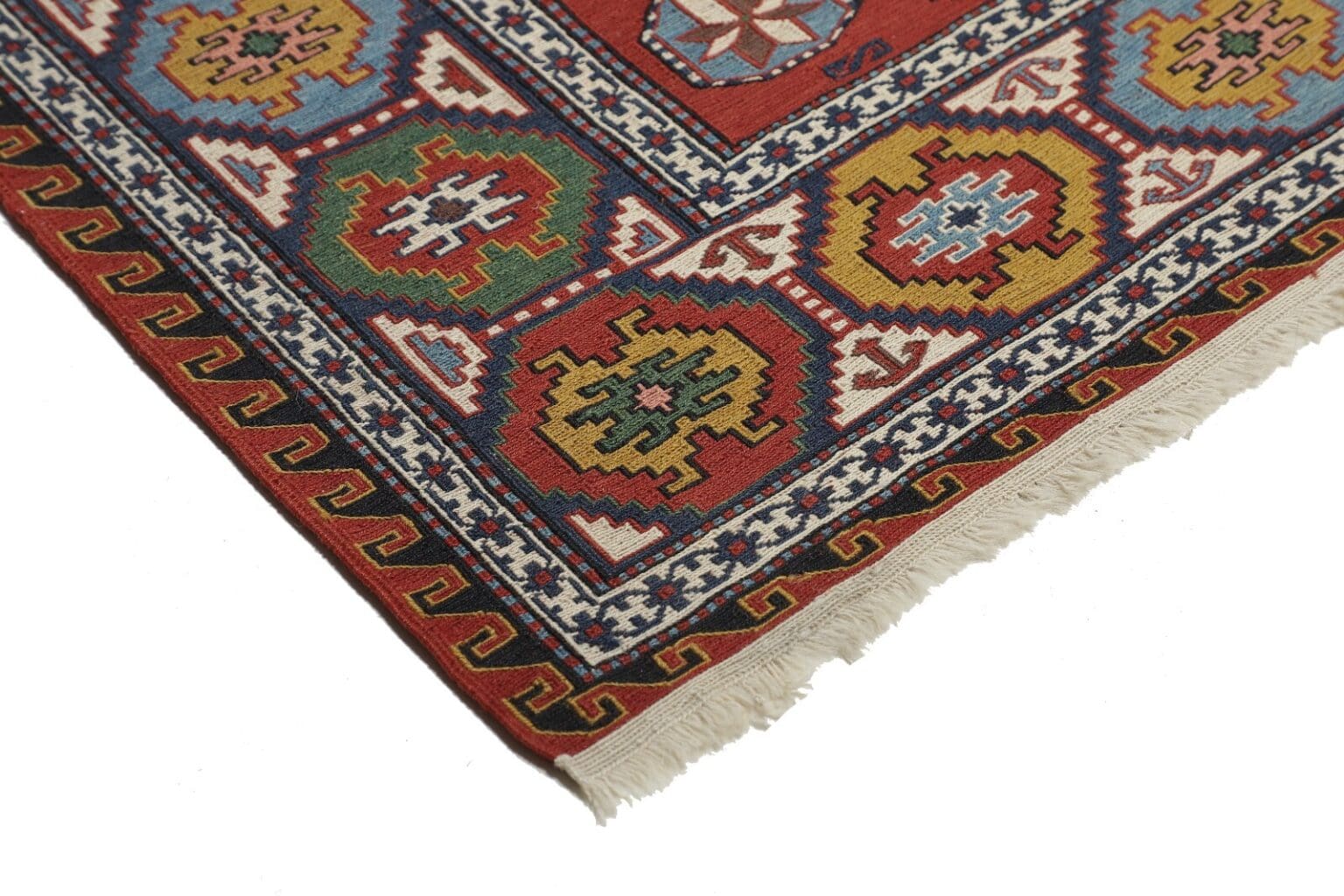
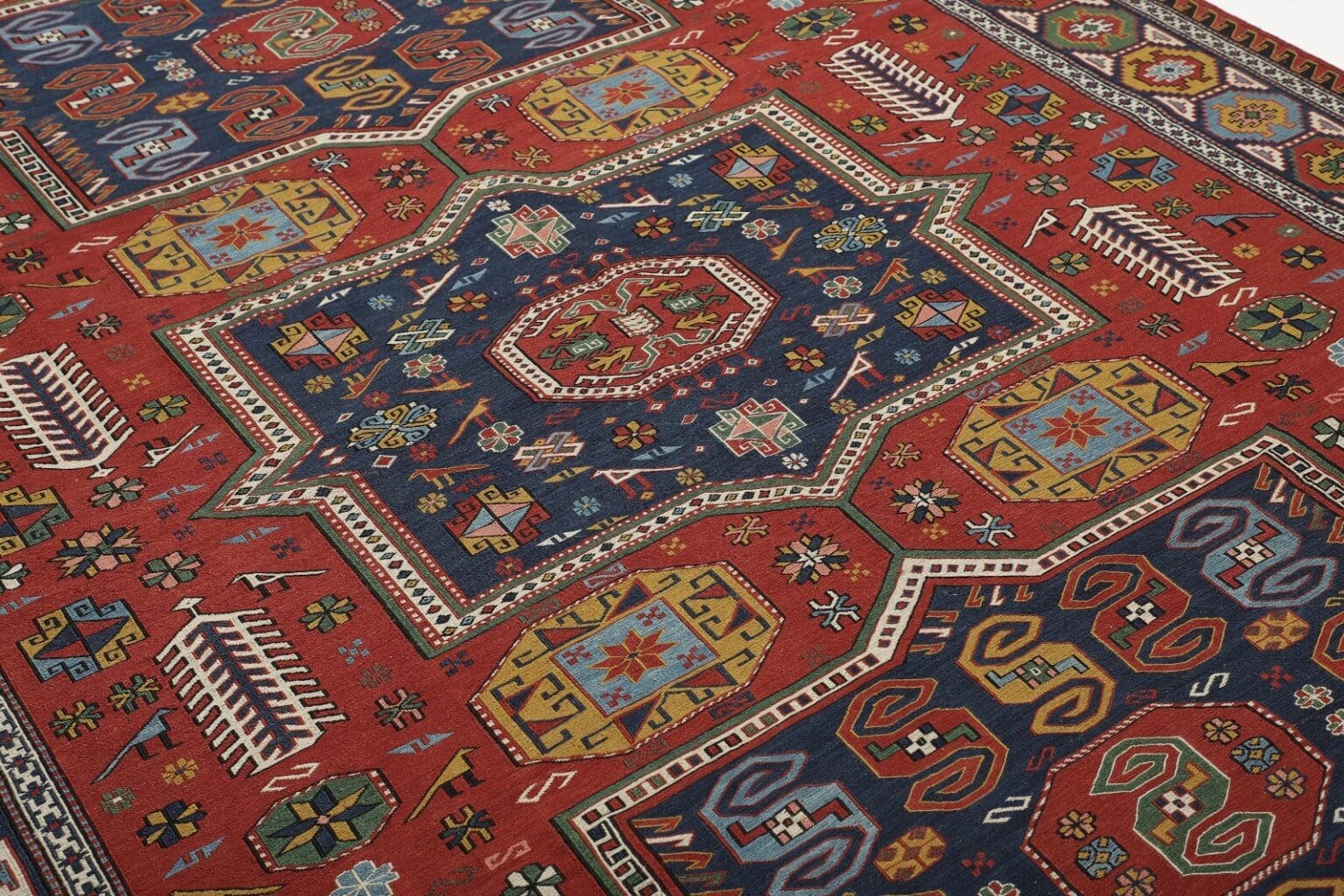
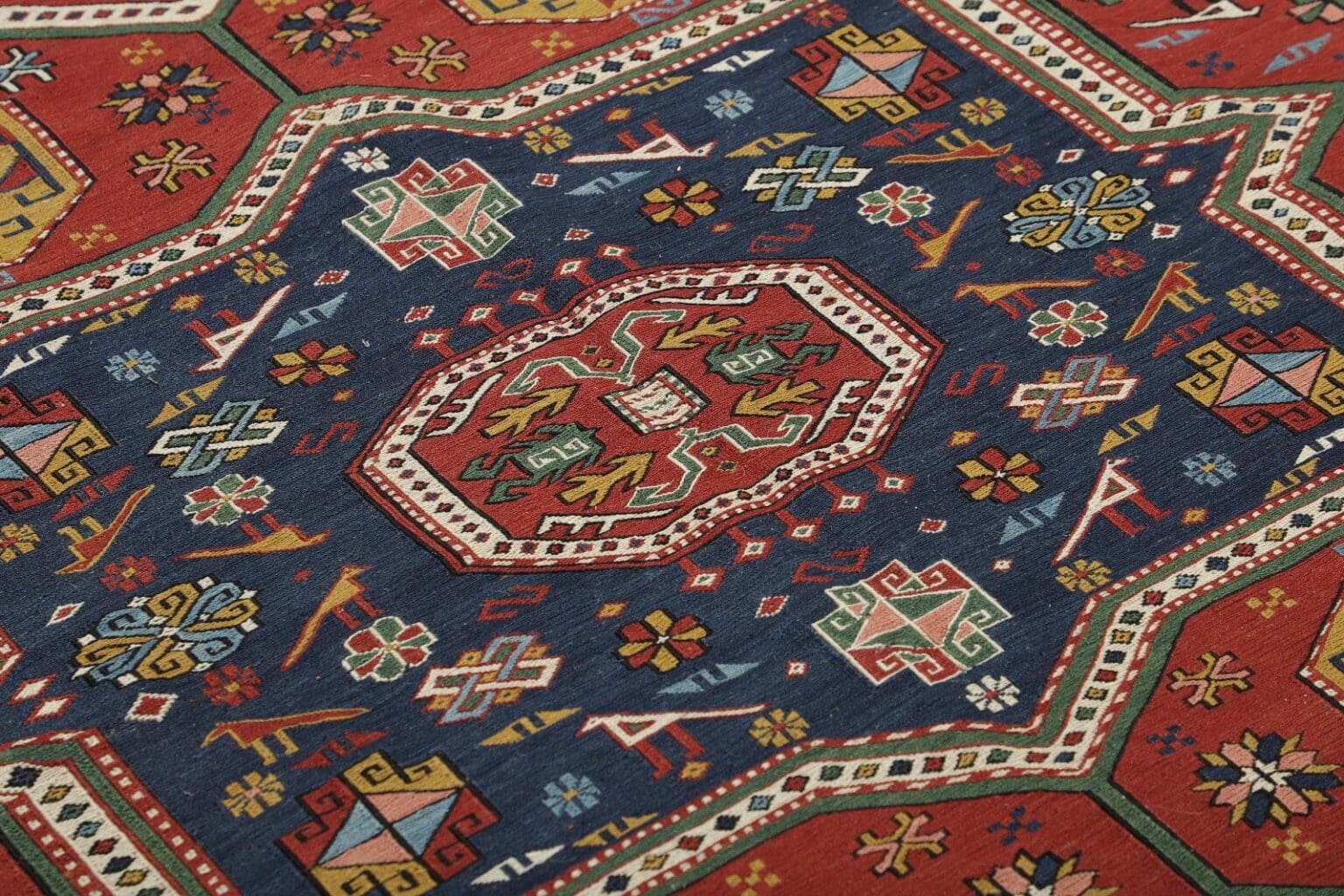
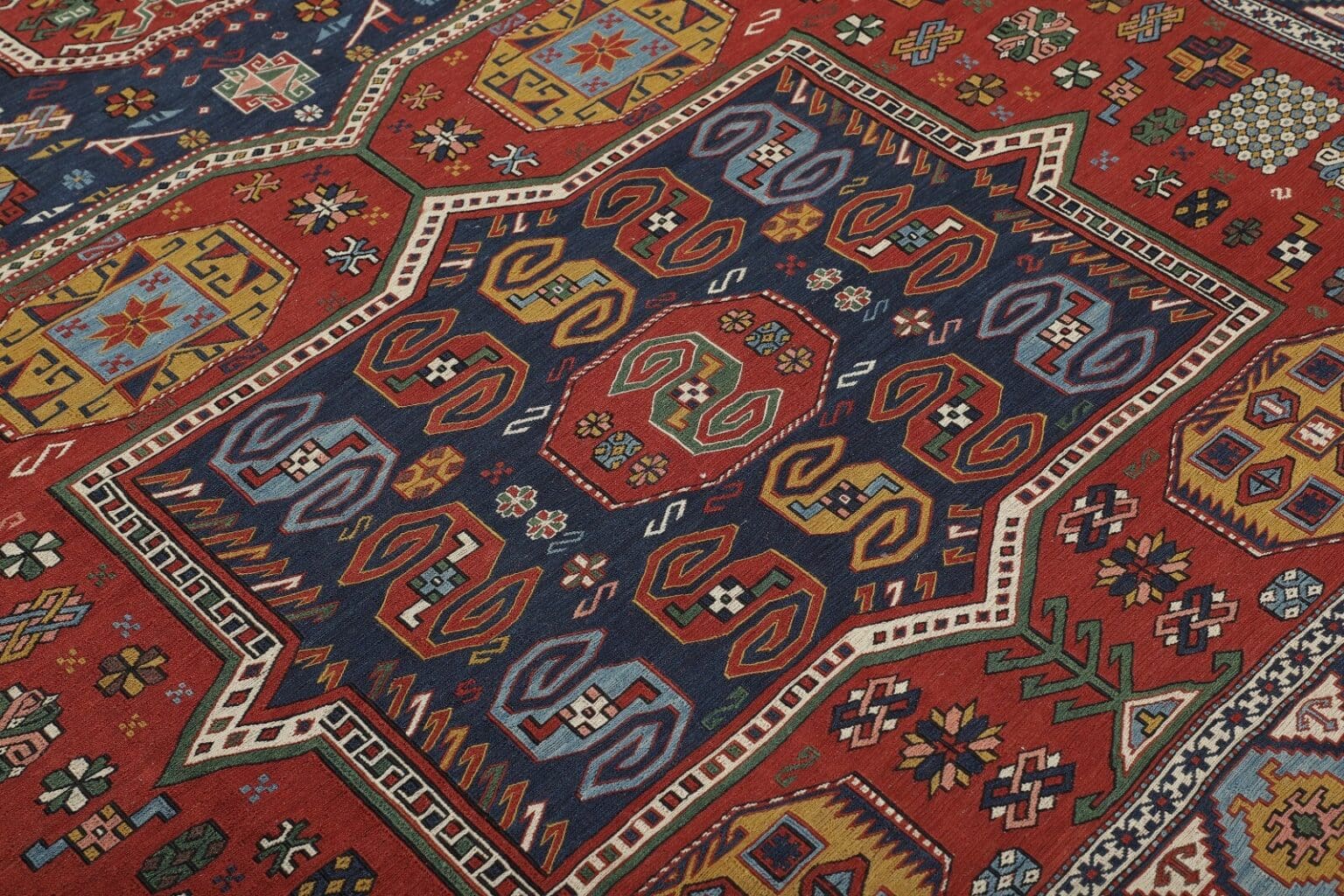
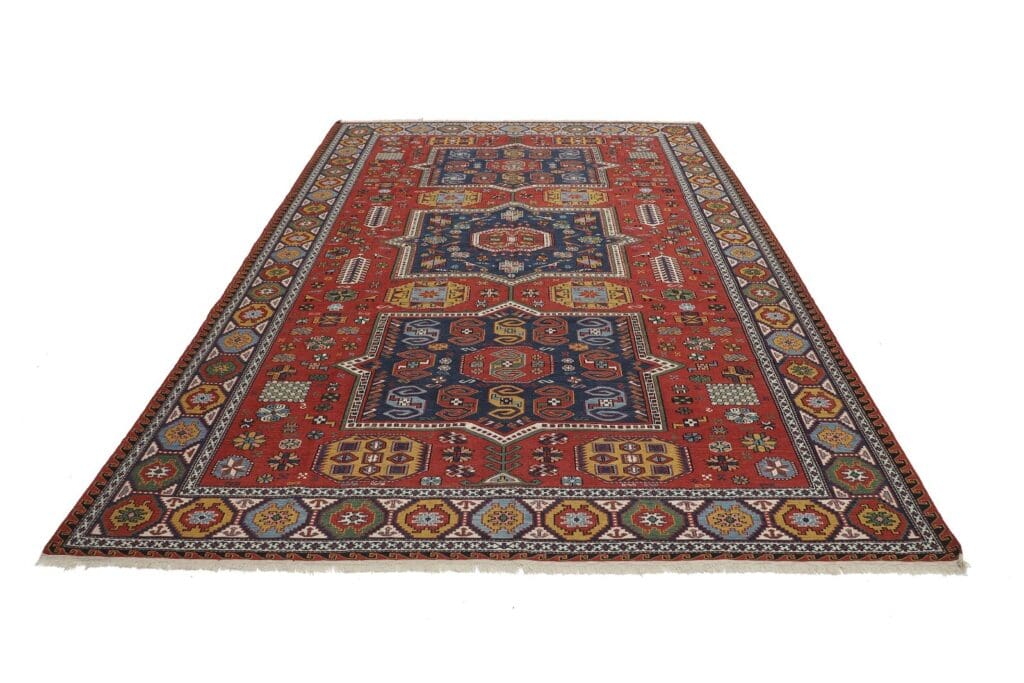
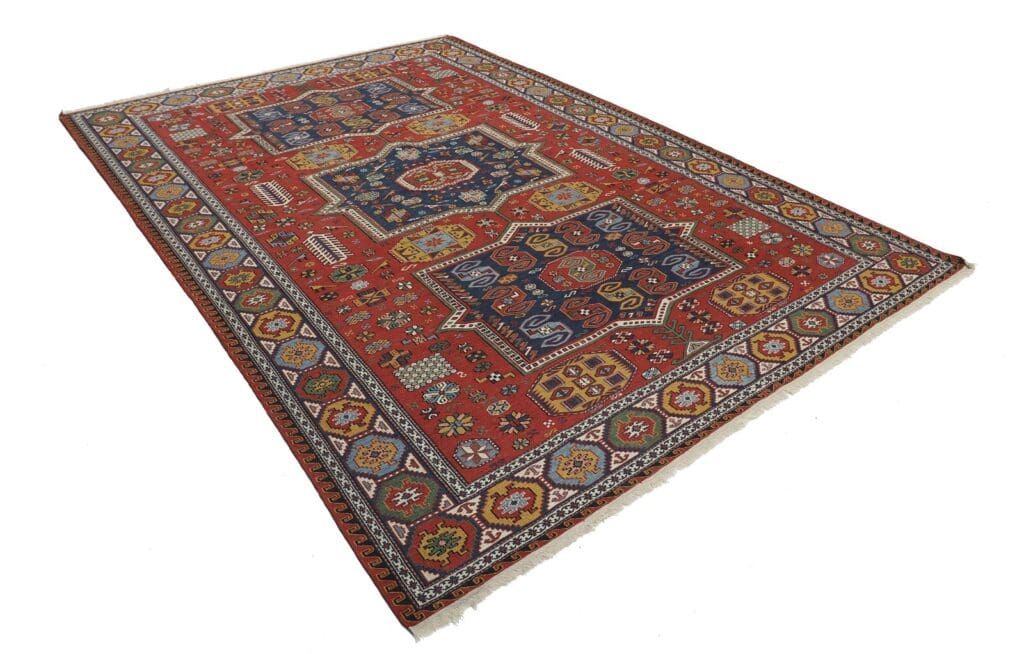
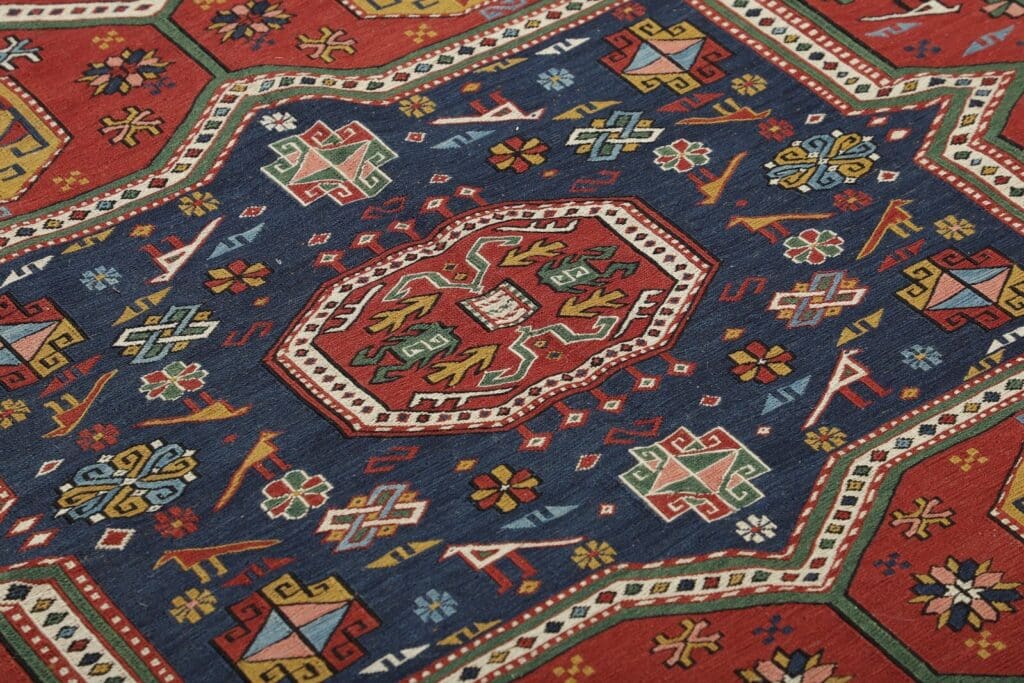
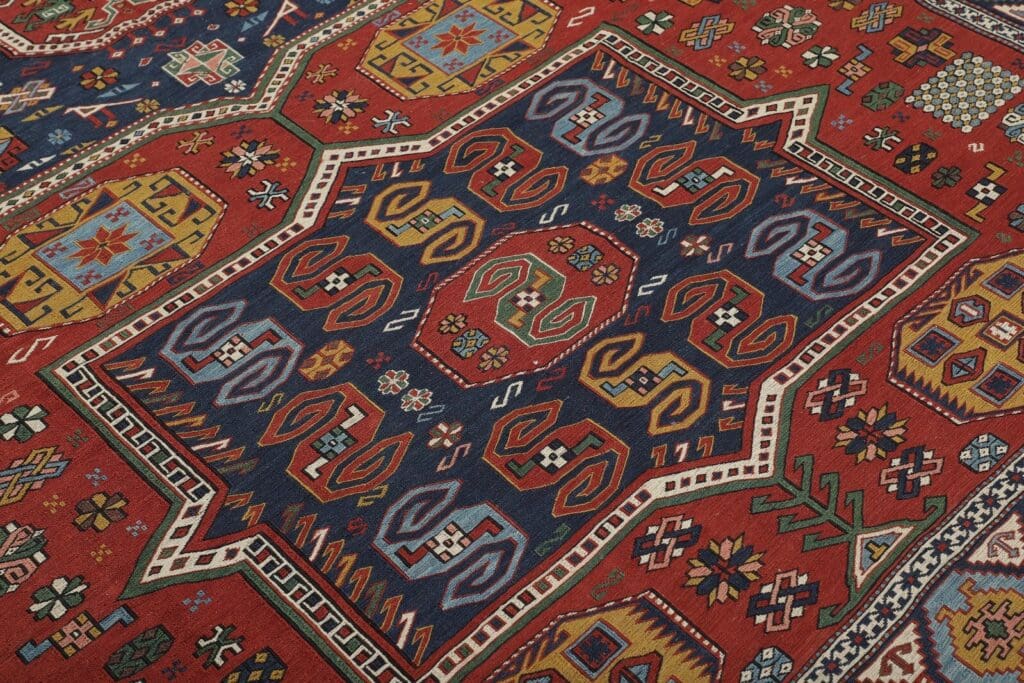
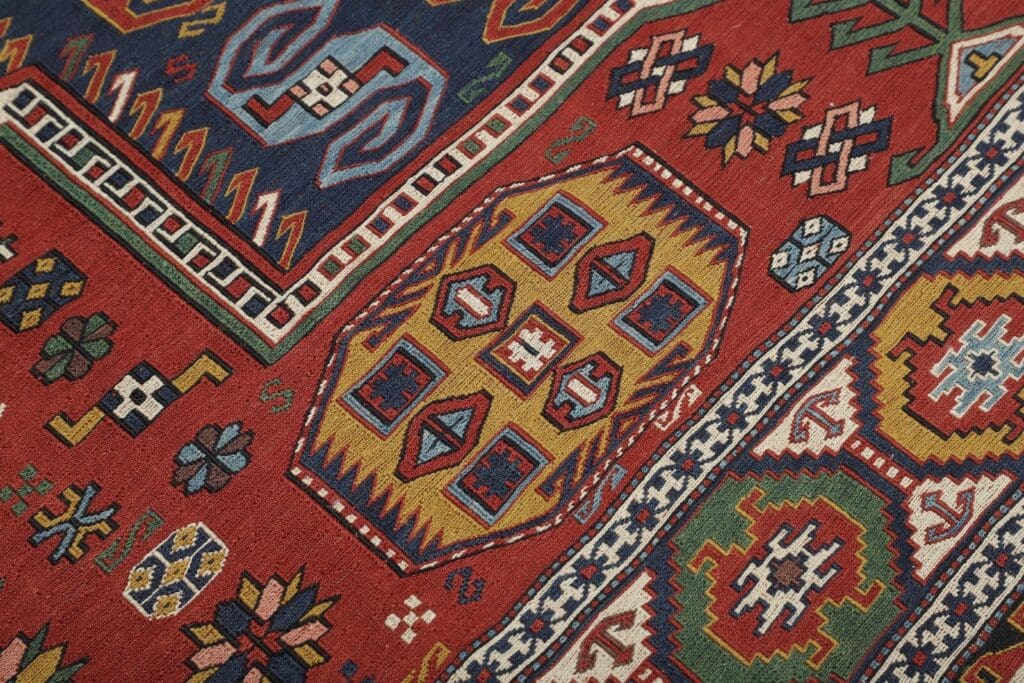
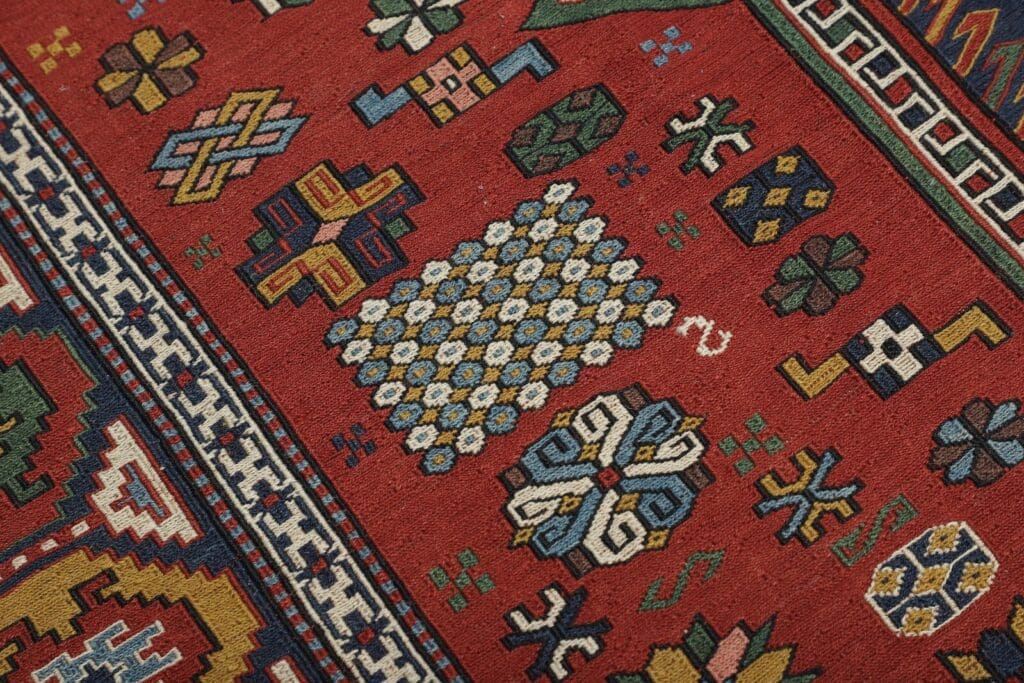
Oriental Rug Sumach Varni 310 x 220 cm Wool Hand-woven
€ 4200
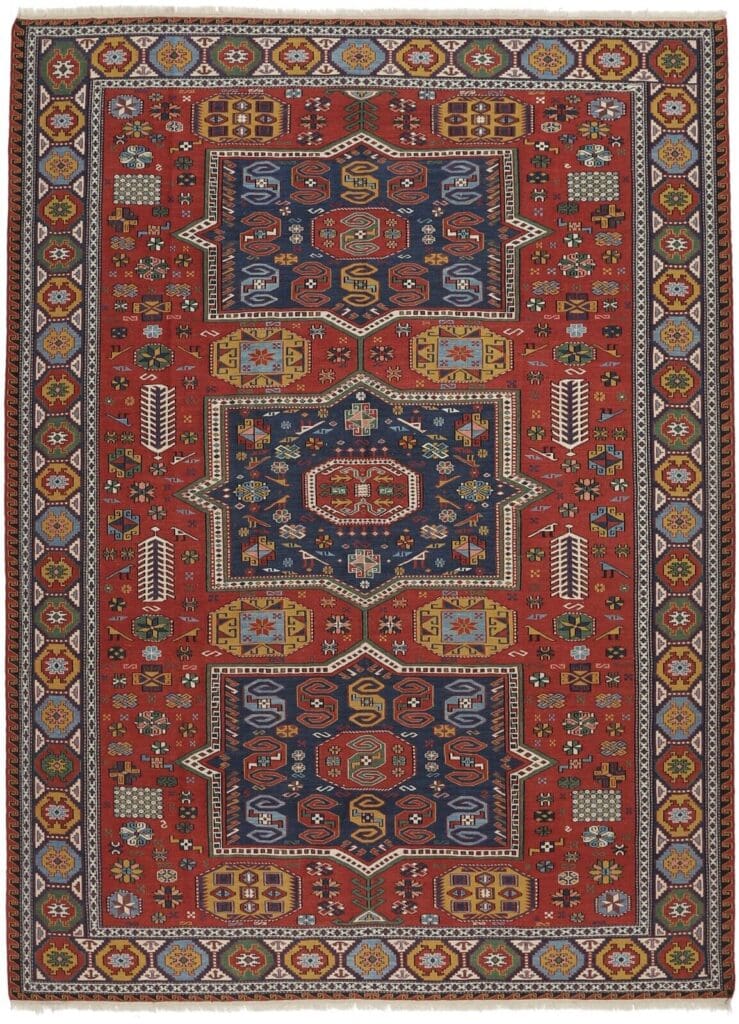
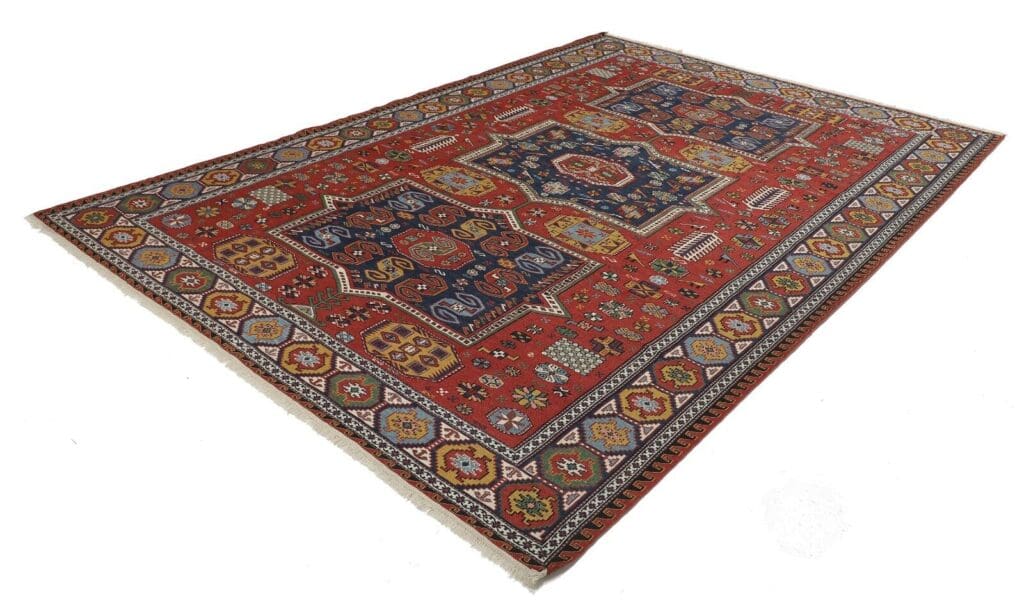
Hand-woven Sumach Varni Oriental rug | Knot density: High | Material: Pile 100% wool | Size: 310 x 220 cm | Pattern: Geometric | Condition: Used, but top quality
Sold out
- ✓Free Shipping in EU
- ✓2-5 Business Days Delivery
- ✓14-Day Return Policy
- ✓Worldwide Shipping on request
 SECURE PAYMENT
 SHIPPING PARTNERS
Inventory number: FB08F916
Description
Sumach Varni Oriental Rug
Material and Craftsmanship
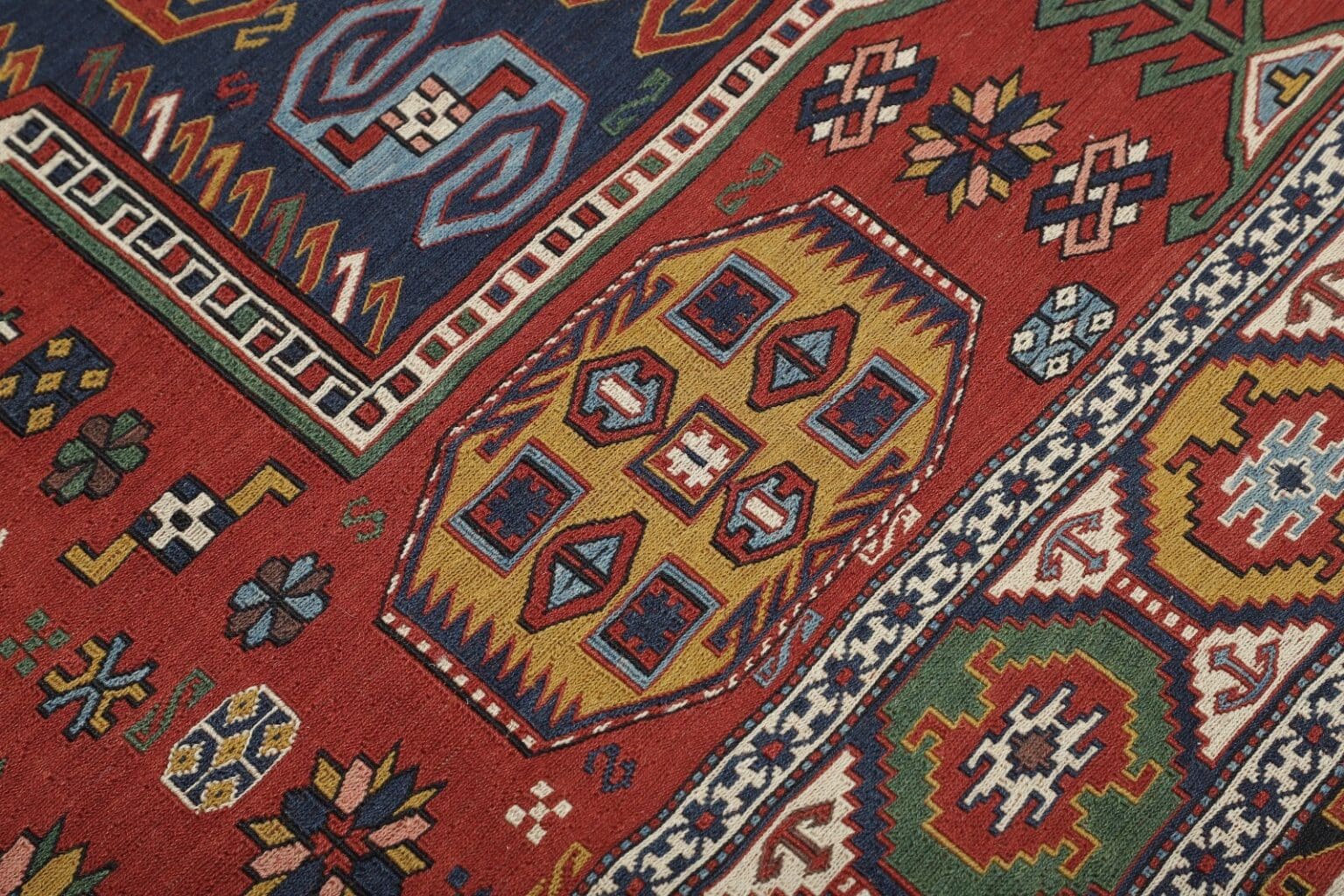
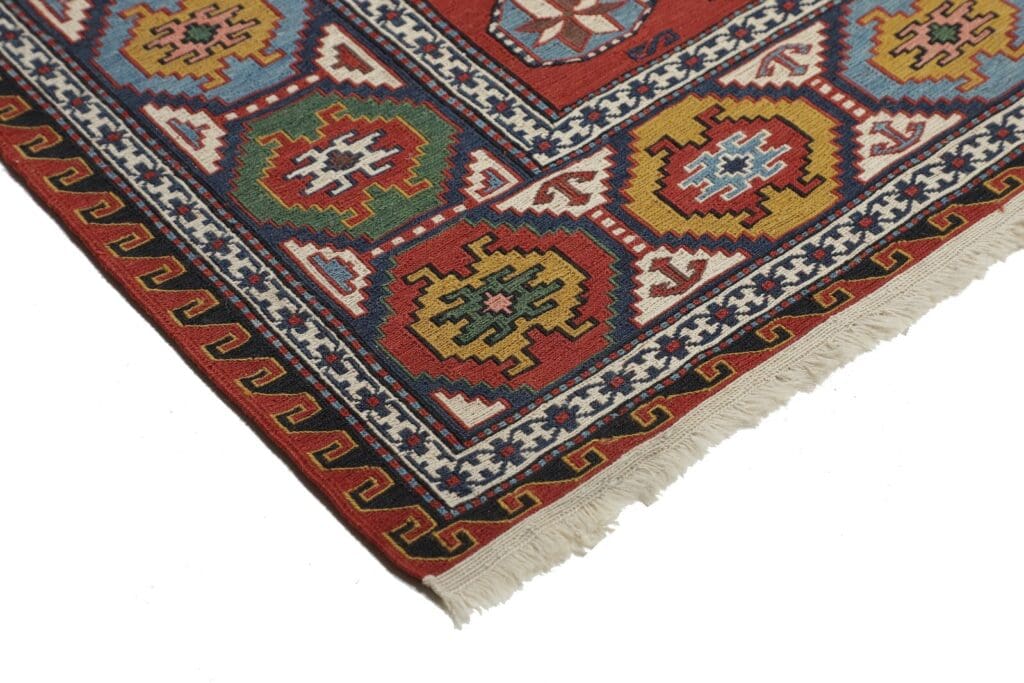
This Oriental rug is hand-woven and made from 100% wool. It is therefore a flatwoven kilim rather than a pile rug built from tied knots. In hand weaving, the pattern and surface are formed as the weft is worked through the warp. The design is created directly during the making of the textile instead of being applied to a completed foundation.
Wool is widely used in kilims because it offers a firm, resilient handle while remaining comfortable as a textile surface. It can provide the practical qualities expected from a floor covering intended for everyday interiors. The pile height of this piece is listed as short. That low surface profile is consistent with the flat character of a kilim and leaves the weave itself visible rather than concealing it beneath a deep pile.
The knot density is described as high. With a kilim, this wording should not be read in the same way as the visible knot count of a conventional pile carpet, since the surface is produced by weaving rather than by tying individual pile knots. The density of the textile depends on the relationship between warp and weft, the regularity of the weaving, and the way the geometric elements are built. Hand work gives each woven piece its own textile character.
Origin and Tradition
The origin of this kilim is unknown. No specific province or place of manufacture is assigned to it. Sumach Varni is the style description given for this offering, not documented proof of the rug’s origin. This distinction matters in Oriental rug terminology: a pattern name, a weaving method, and a place name can describe different aspects of a textile and should not be treated as interchangeable.
Kilims belong to the long tradition of Oriental flatweaving. Unlike a knotted carpet, a flatweave does not build a separate pile layer above the foundation. Its surface is made through the interlocking relationship of warp and weft. Depending on the method, the two sides may show closely related versions of the same design, while differences in finishing and tension can make one side clearer than the other. The restrained relief is one of the defining visual qualities of a kilim.
Sumach, also written Soumak, is used in rug terminology for a wrapping or looping method in which weft yarns are carried around warp elements. This can create a subtly structured surface and allows lines and contours to be developed with precision. Sumach work has been produced in several areas of the Caucasus, Anatolia, Iran and neighboring regions. The technique itself therefore cannot establish the provenance of one individual rug.
Varni refers to another tradition of decorative flatwoven textiles. Varni pieces are associated with strongly organized imagery and can feature geometric, stylized or rhythmically repeated forms. In a trade description, the combined phrase Sumach Varni identifies the stylistic framework assigned to this kilim. It does not turn the name into a province or provide a documented regional origin. The lack of a known origin remains part of the description of this particular piece.
Across Oriental weaving cultures, flatweaves have served practical, domestic and decorative purposes. Their low profile makes them easy to lay out, lift and store. Their appearance can vary considerably according to the wool, the density of the weave, the handling of the yarns and the arrangement of the pattern. A kilim is consequently defined by more than its visual motif: structure, material and the order of the woven elements all contribute to its identity.
This kilim is assigned to the 21st century, from 2000 onward. It combines a traditional form of textile production with a comparatively recent date. A time classification and a regional classification are separate matters. A textile may be placed in a modern period while its exact weaving location remains undocumented, as is the case here.
Design and Pattern
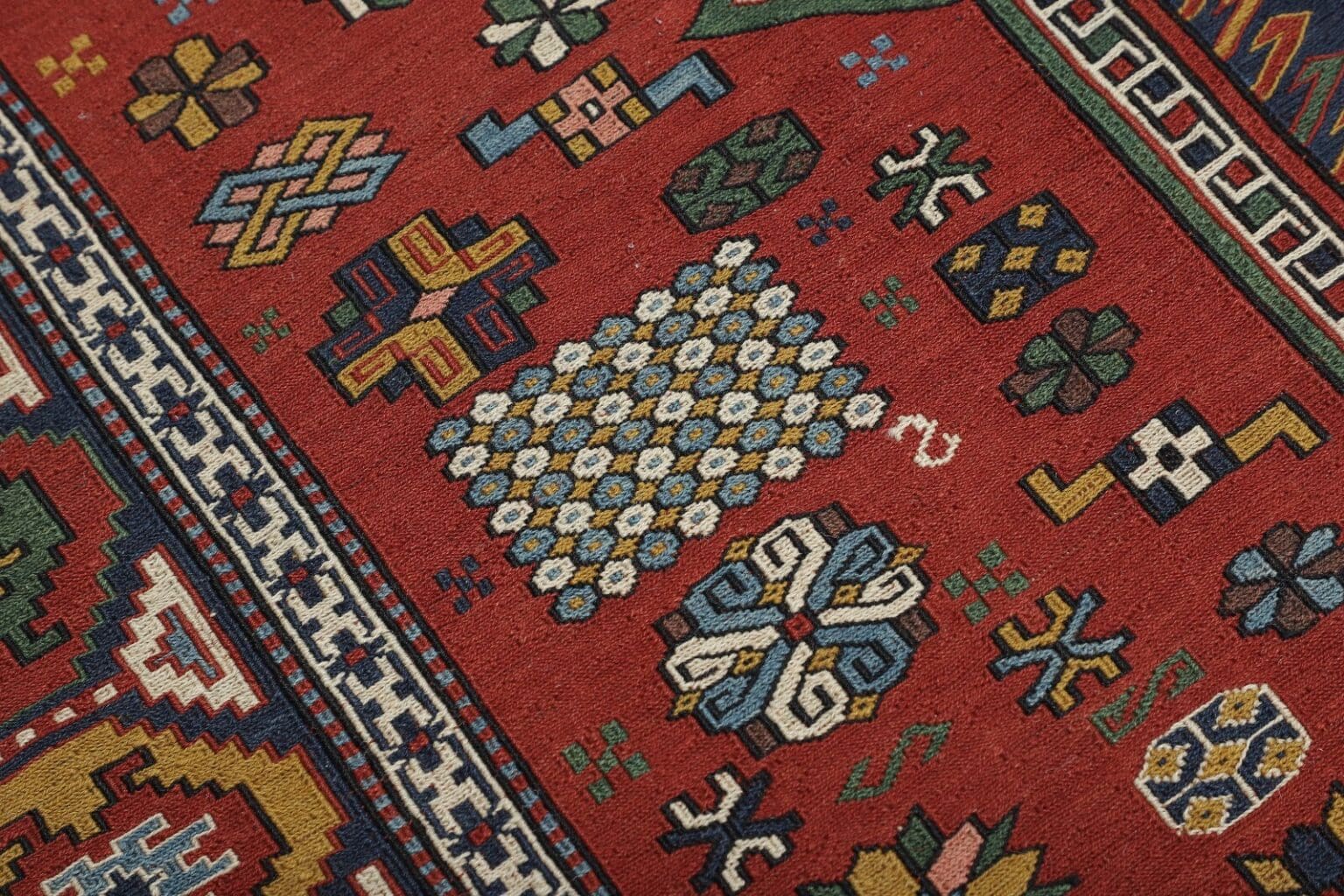
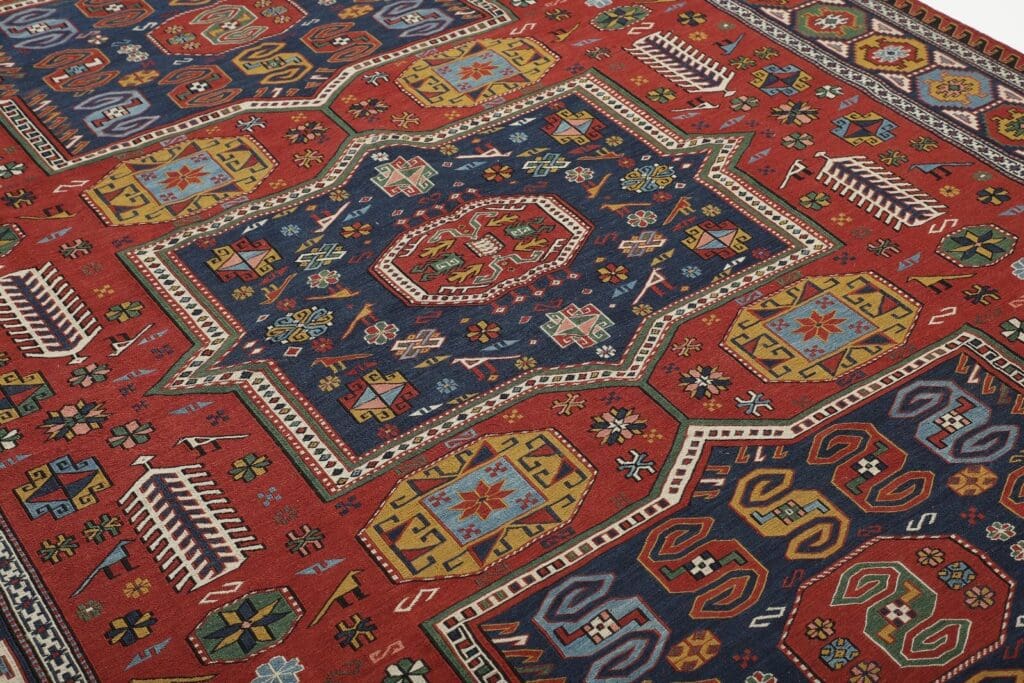
The pattern of this kilim is geometric. Geometric kilim designs are built from lines, angles, stepped shapes, diamonds, bands and repeated blocks. The flatweave technique supports this direct visual language because changes in color and weft direction form the outlines within the textile itself. Rather than relying on softly modeled floral drawing, geometric designs use rhythm, repetition and measured divisions.
In the wider vocabulary of kilim design, geometric forms may organize a central field, define a border or break a large area into smaller units. Zigzag lines can create movement, diamonds can act as repeated field elements, and hooked or stepped shapes can frame other motifs. These are general features of Oriental flatweave design. No specific symbolic interpretation is documented for the individual shapes in this kilim, so they are best described by their visible geometric role.
Sumach and Varni traditions illustrate how closely design and construction can be connected. The wrapped weft work associated with Sumach can give outlines a lightly raised or textured presence. Varni textiles can place greater emphasis on pictorial arrangement and clearly separated forms. In both cases, the visual result is produced through the sequence of yarns used by the weaver. Small variations in spacing, contour or color area are natural possibilities in a hand-woven textile.
A geometric pattern can give a room a clear visual structure without requiring a particular interior style. Repeated shapes can sit alongside restrained furniture or form part of a more traditional setting. The description lists this kilim as suitable for all rooms, including living rooms and bedrooms. That statement concerns the intended range of use and does not prescribe a specific decorative scheme.
The short pile height gives the surface a flat appearance compared with a deep-pile rug. The design is therefore experienced through the relationship between color, woven texture and shape rather than through a high three-dimensional pile. In a kilim, the pattern remains closely tied to the construction of the textile. This makes the method of weaving part of the visual character rather than merely a hidden technical detail.
Special Features
The kilim is used and is described as being in top quality. Its listed characteristics include resistance to abrasion, slip resistance, environmental friendliness and easy cleaning. These statements accompany the information about its wool material and handwoven construction. The flat structure, short pile height and geometric design are the main textile features given for this piece.
As a hand-woven kilim, it has a different construction from a hand-knotted Persian rug. Its origin is unknown, and no province is named. The relevant identifying information is therefore the Sumach Varni style description, the geometric pattern, the wool material, the handwoven technique and the classification in the period from 2000 onward.
Care should begin with regular, gentle vacuuming without a brush attachment. Fresh marks can be dabbed with a damp cloth rather than rubbed forcefully. Excess moisture and harsh cleaning agents may put unnecessary stress on wool and color. For a deeper cleaning, professional treatment is appropriate, particularly because the piece is used. The method should be selected according to the type of soiling and the condition of the woven textile.
FAQ
What distinguishes a hand-woven kilim?
A hand-woven kilim is formed by manually interlacing warp and weft rather than by tying a raised pile. This piece combines 100% wool, a short pile height, a high knot-density description and a geometric pattern. Sumach Varni identifies the stated style, not a documented province. Its defining quality is the flat woven structure, with the design developed directly through the order and movement of the threads.
How should this kilim be cared for?
Vacuum it regularly and gently, preferably without a brush attachment. Treat fresh stains promptly by dabbing with a damp cloth. Vigorous rubbing, excessive water and strong cleaning products can affect wool and dyes. A professional cleaner experienced with hand-woven wool textiles is the safer choice for thorough cleaning. Care should also take the used but top-quality condition described for this piece into account.
How can the origin of this kilim be verified?
The origin of this piece is unknown, and no particular region is provided. Sumach Varni should therefore be treated as a style designation rather than evidence of where the kilim was made. Material, weaving method, pattern construction and workmanship can be examined as descriptive clues. For a kilim, the flatwoven structure matters more than a conventional pile-rug knot count. A regional attribution would require supporting provenance records or additional documentation from the dealer.
Additional information
| Design Style | |
|---|---|
| Color | |
| Size | |
| Shape | |
| Origin | |
| Material |
Related products

Persian Rug Qashqai 293 x 198 cm Wool Hand-woven
€ 798
Persian Rug Gabbeh 250 x 180 cm Cashmere Hand-knotted
€ 1118
Persian Rug Tabriz 388 x 295 cm Wool Hand-knotted
€ 1440
Persian Rug Fars 240 x 150 cm Cashmere Hand-knotted
€ 1118
Oriental Rug Loribaft 200 x 300 cm Wool Hand-knotted
€ 1800
Persian Rug Fars 293 x 186 cm Wool Hand-woven
€ 798
Oriental Rug Ushak ca 420 x 296 cm Wool Hand-knotted
€ 2250
Persian Rug Qashqai 290 x 192 cm Wool Hand-woven
€ 798