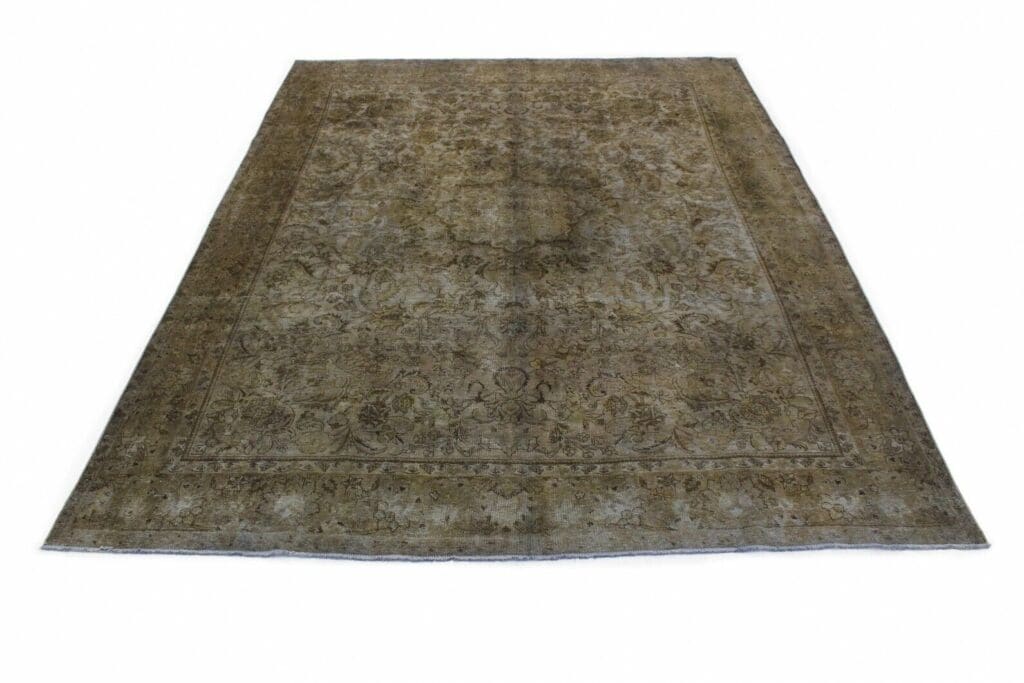
This hand-knotted Oriental rug is made from hand-spun wool. Its material and construction bring together a natural textile fibre and a traditional manual technique. In hand-knotting, the pile is not produced in one continuous industrial operation. Individual knots are inserted into the foundation, row by row, and then worked into a coherent surface. The manual process is therefore a defining part of the rug’s stated construction.
Wool has long been used in rug making because it can be spun, coloured, and formed into a resilient pile. Hand-spun wool may retain a lively textile character created by the variation of the spinning process. Wool fibres also have natural elasticity, which can support durable use when the rug is handled and maintained carefully. For this piece, hand-spun wool and hand-knotting are the documented material and production details. No additional fibre or foundation material is specified.
The wool in this rug is described as soft, pleasant, dirt resistant, and easy to care for. It is also described as robust and durable. These qualities explain its practical character without suggesting an unrecorded technical test or a particular level of traffic. A wool pile can retain its textile feel when loose dirt is removed regularly and cleaning is carried out with care. The stated easy-care quality does not eliminate the need for appropriate handling of a handmade surface.
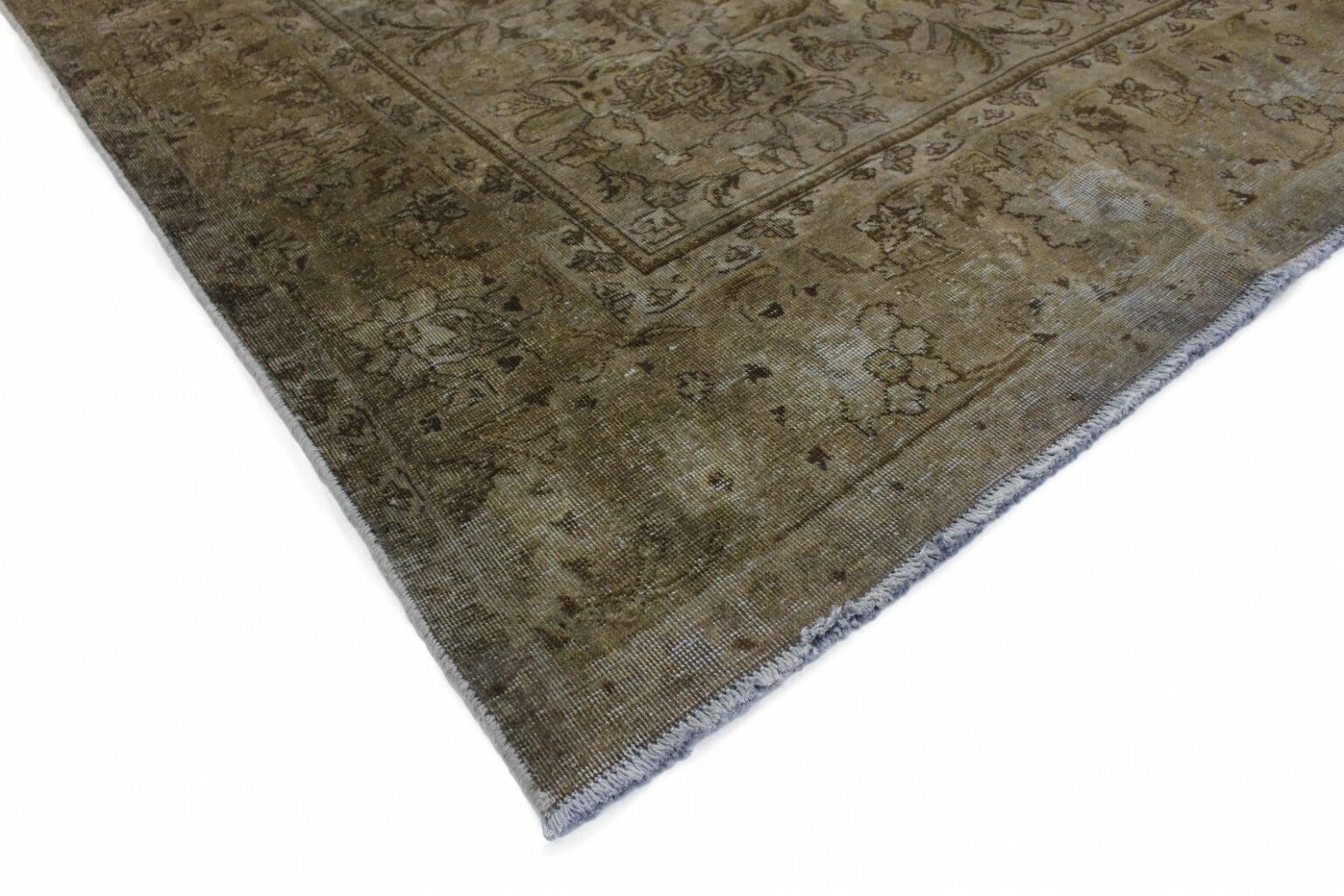
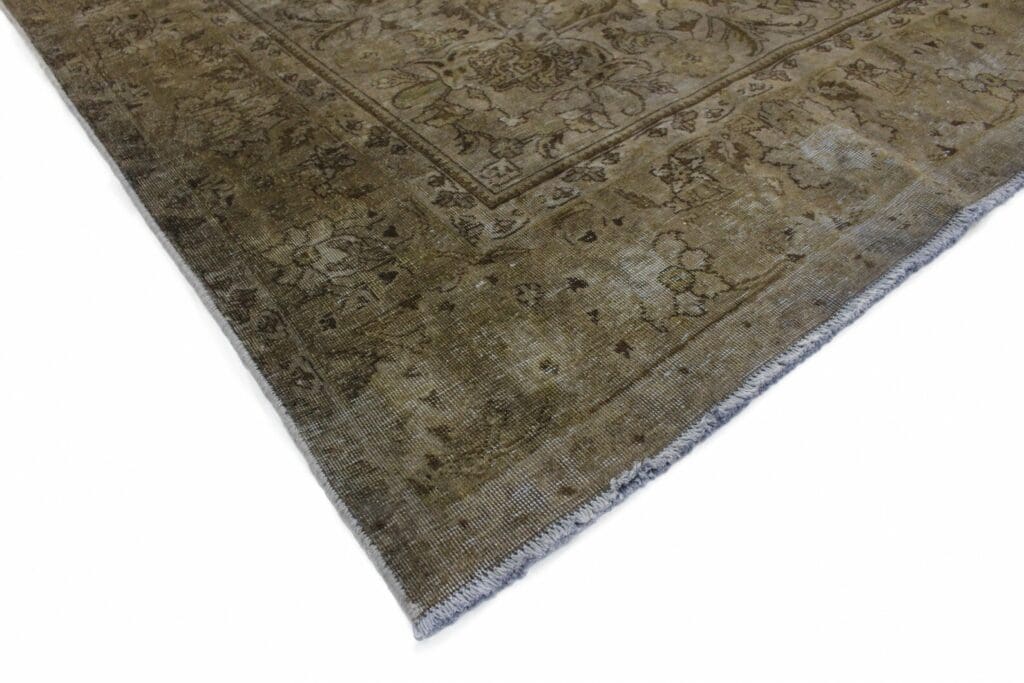
Knotting influences both the feel and the structure of an Oriental rug. In traditional production, knots are placed one line at a time. Their arrangement, regularity, and the later treatment of the pile affect how the surface is perceived and how a design is formed. This rug is described as hand-knotted in the knot-density information. No numerical knot count is supplied, so no numerical density is attributed to it.
Hand-knotted rugs are made through a sequence of separate craft stages. Wool is prepared and spun; during knotting, the tension of the material is controlled; after the knotting is complete, the pile may be trimmed, aligned, and cleaned. Regional traditions use different knots, tools, and working methods. These general processes explain why hand-knotting is associated with careful textile craftsmanship. For this individual rug, the concrete claims remain limited to hand-spun wool and hand-knotted construction.
Origin and Tradition
The rug is identified as an Oriental rug, with its origin given as the Orient. This is a broad cultural and geographical designation rather than the name of one city or province. Across this wide area, different communities developed their own approaches to spinning, dyeing, weaving, knotting, and design. Local climate, available fibres, trade routes, and patterns of settlement all influenced the way rugs were made. An Oriental rug can therefore belong to a broad family of traditions without being assigned to a particular regional school.
The history of Oriental rug making includes nomadic, village, and urban production. Nomadic weavers often worked with portable equipment and materials available in their surroundings. Village weavers developed local habits that could be repeated and modified within a community. Urban workshops tended to divide the work into more specialized stages, allowing experienced makers to focus on preparation, knotting, finishing, or inspection. These different settings created a wide range of knot structures, pile qualities, colour practices, and pattern arrangements.
Rug making has often been part of social and cultural life as well as a practical occupation. Knowledge of wool preparation, spinning, dyeing, knotting, and finishing was commonly learned through direct practice. Families and workshops could preserve established methods while adapting them to changing tastes and uses. This form of transmission helps explain why handmade rugs may combine inherited techniques with contemporary design choices. The present rug is described through that broad handmade tradition while also being assigned a modern style.
Traditional rug production was shaped by intended use. A rug made for everyday domestic life needed to withstand regular handling and be practical to maintain. Other pieces could place greater emphasis on fine detail, formal arrangement, or carefully controlled colour. In both cases, the result depended on the relationship between the foundation, the knots, the pile, and the finishing work. These technical relationships are part of the history of Oriental rugs in general and do not establish an undocumented workshop history for this rug.
The origin given for this piece is the Orient. No specific Iranian province, city, country, or workshop is named. It is therefore described as an Oriental rug rather than being assigned to a particular Persian weaving region. A pattern reference, if one existed, would not by itself prove where an individual rug was made. The documented identity here consists of the broad Oriental origin, hand-knotted construction, hand-spun wool, grey colour, modern style, and designation as a designer piece.
The product description calls the rug vintage and gives an age of 20 to 50 years. It also lists the condition as new with a tag. These details are retained together as supplied and are not replaced with an additional historical claim. The age does not identify a particular maker or workshop. The rug is consequently presented as a hand-knotted Oriental designer piece whose documented characteristics are its material, technique, colour, style, stated age, and stated condition.
Design and Pattern
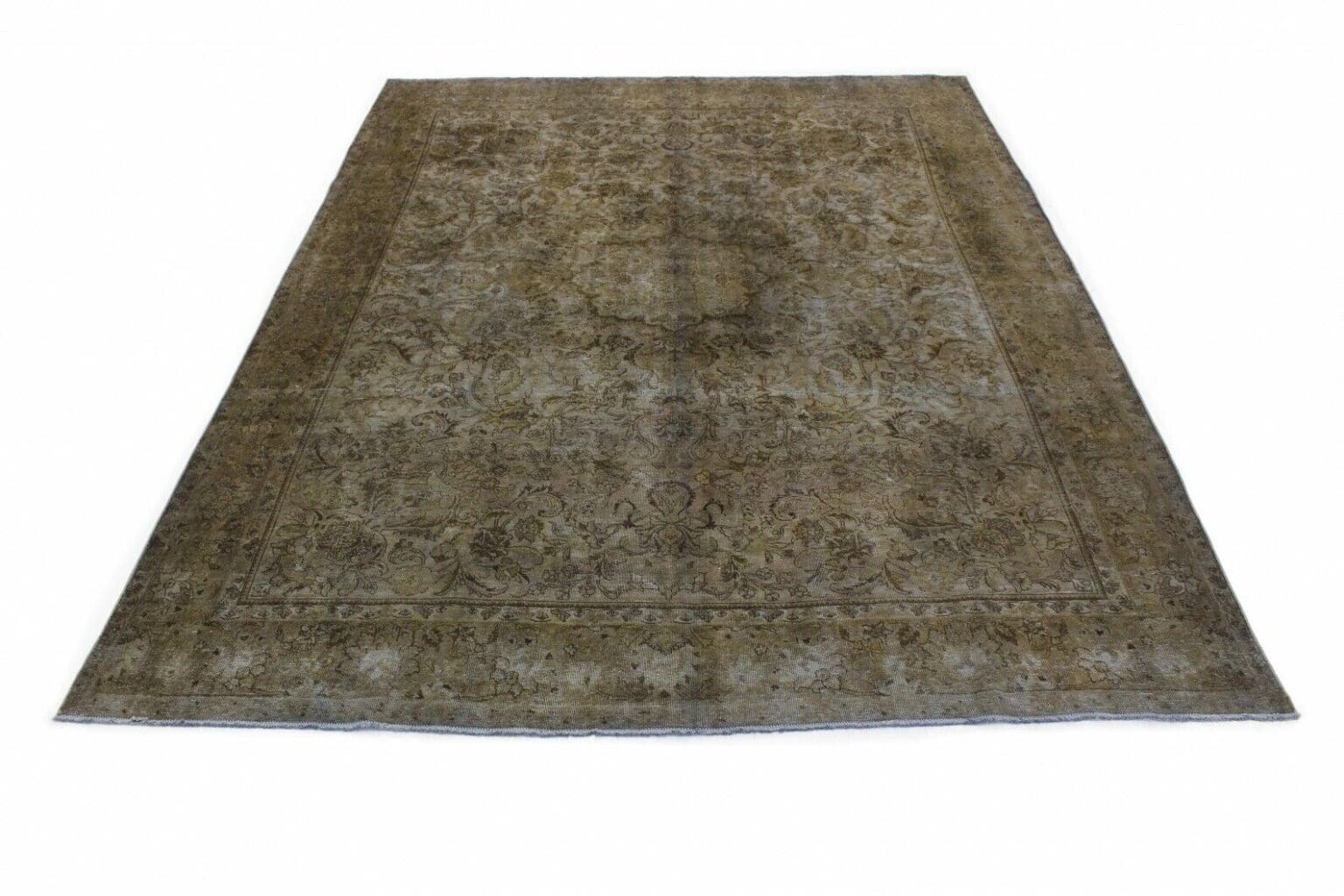
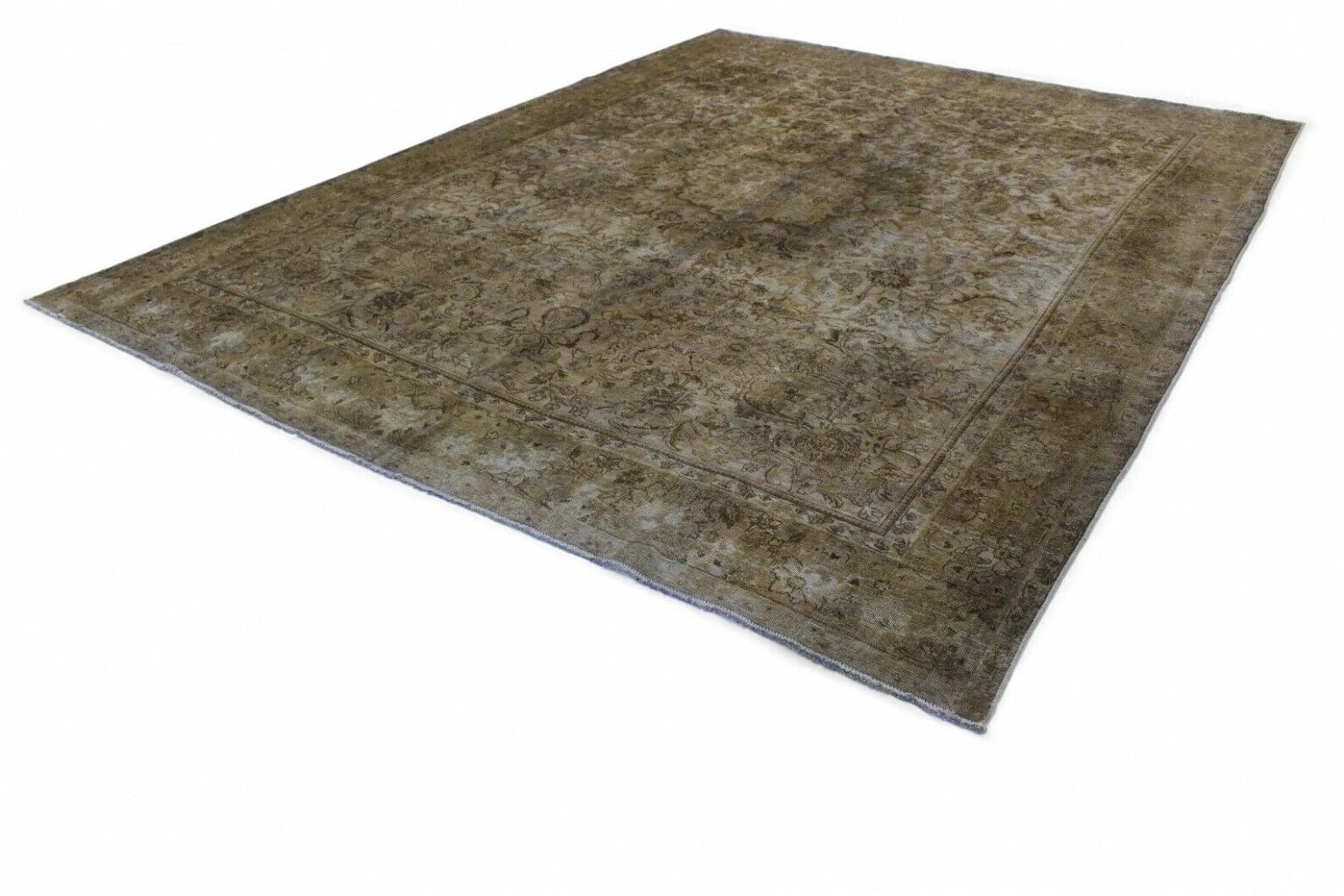
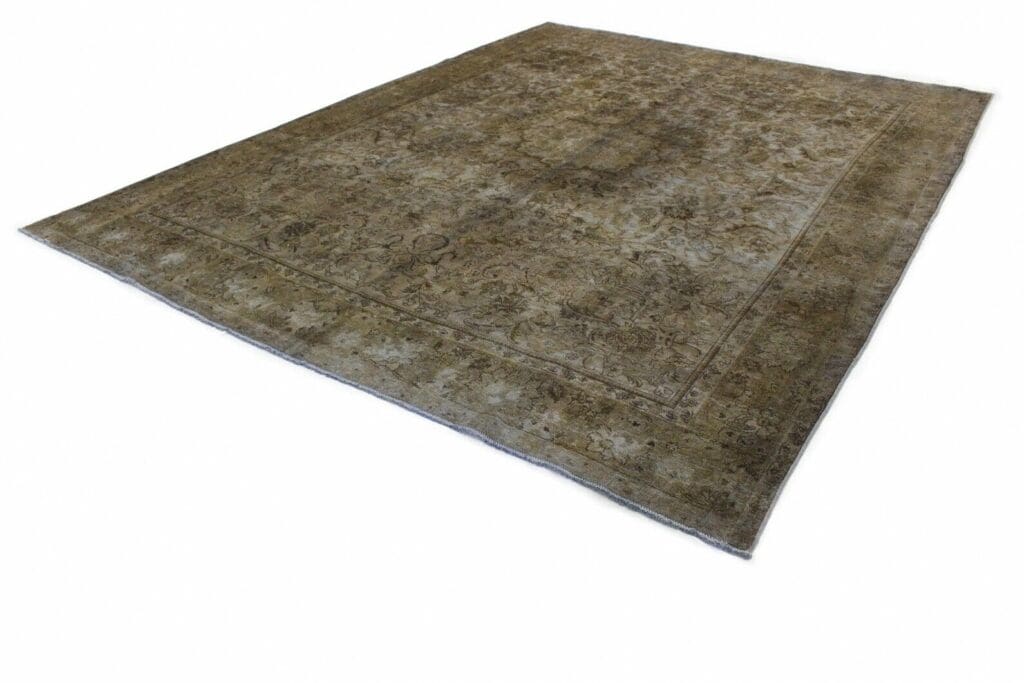
The rug is grey and is classified as modern in style. Grey is a restrained, neutral part of the interior palette and can sit alongside light, dark, or more colourful furnishings. Depending on the surrounding room and the available light, it may appear quiet, cool, or soft in effect. This helps explain why the stated colour can work with different interiors. No additional shade or colour combination is added to the description.
The modern styling is presented alongside traditional hand-knotted manufacture. A contemporary appearance does not require machine production; established craft methods can also be used for current, reduced, or clearly structured designs. The combination of hand-spun wool, individual knotting, and a grey colour places the rug between historic textile practice and present-day interior design. Its construction remains handmade even though its stated style is modern.
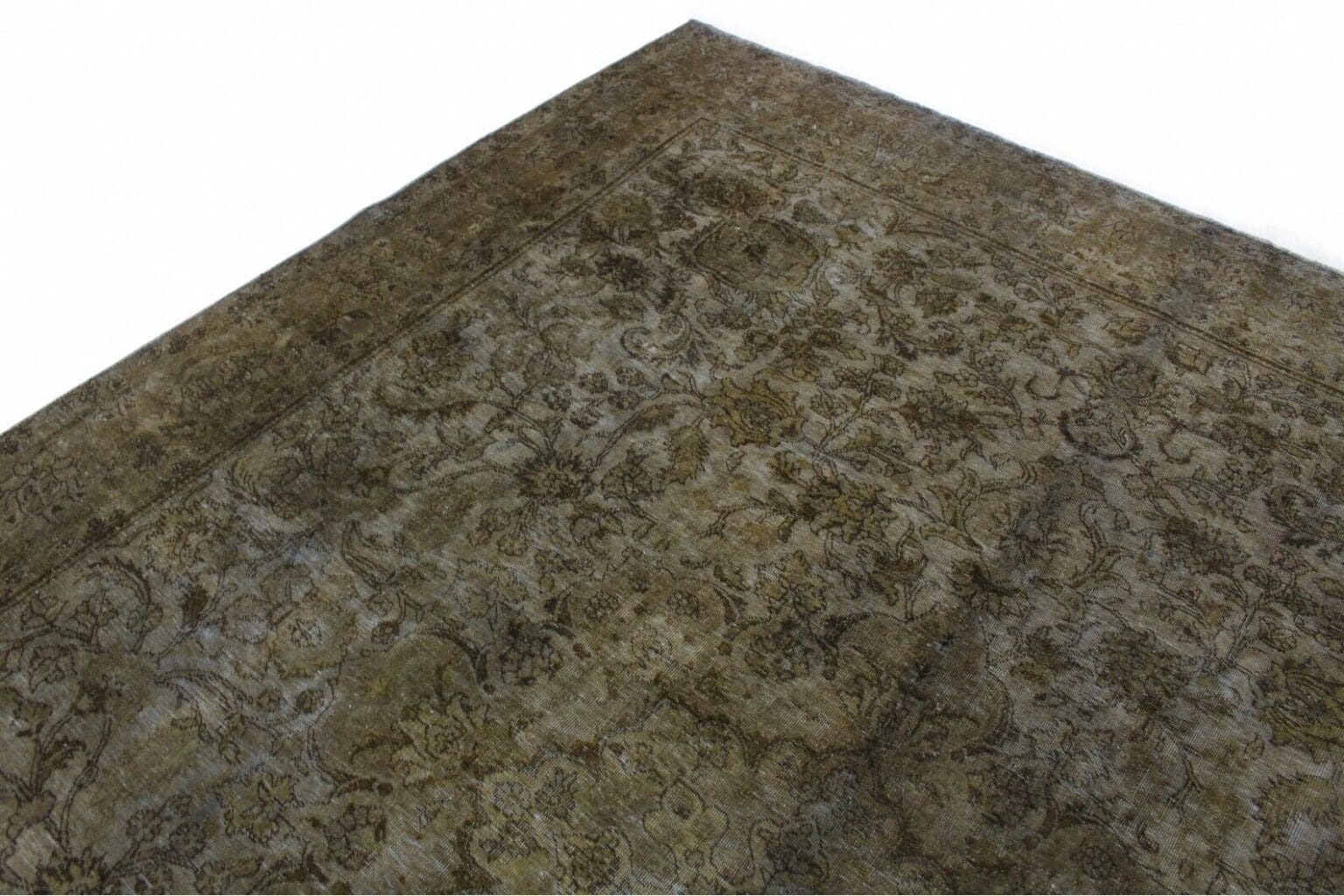
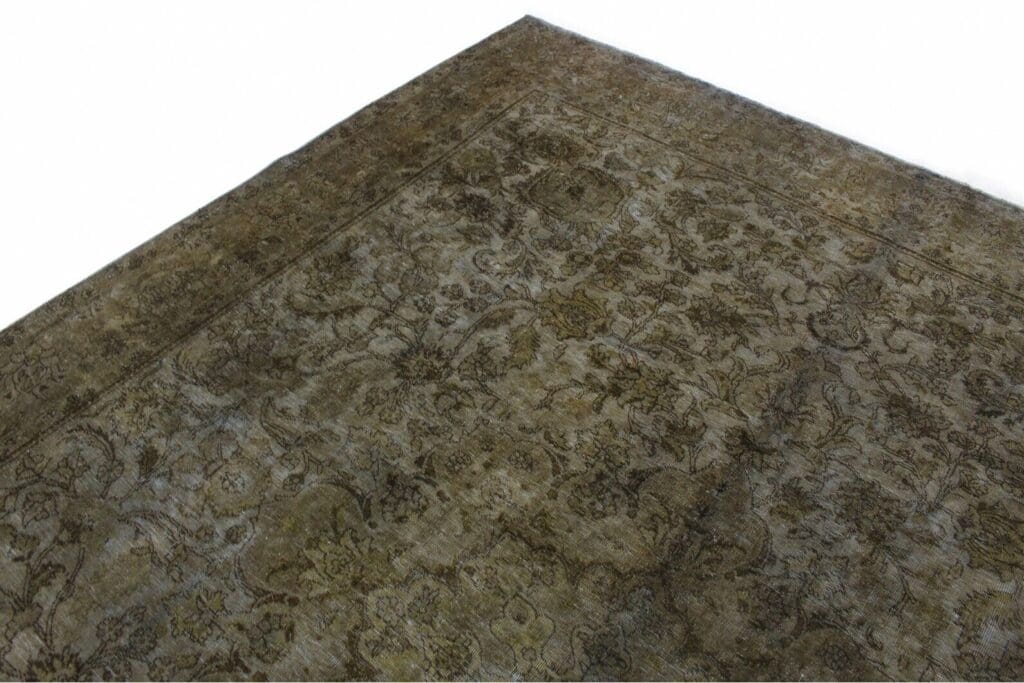
Oriental rugs in general may use many kinds of pattern organization. Common design resources include central medallions, surrounding borders, floral forms, geometric figures, and all-over arrangements. Some compositions rely on strict symmetry, while others use repeated small motifs, varied spacing, or open areas. The specific motif of this one-off rug is not named in the product information. It is therefore described as modern and grey without assigning a medallion, floral pattern, geometric scheme, or named regional design.
Patterns in rug making can provide visual order. Repetition creates rhythm, borders establish an outer frame, and the balance between dense and open areas affects how the field is read. A central arrangement can organize the eye around one area, while an all-over design distributes attention across the surface. These are general principles of Oriental textile design, not additional facts about an unrecorded motif in this individual rug.
A grey modern rug can connect different furnishings in a classic room or support the clean lines of a contemporary interior. It may serve as a quiet foundation where other materials and colours remain visible. In a more strongly decorated room, a neutral rug can provide balance without competing with other elements. The actual visual effect depends on lighting, furniture, and the surrounding palette. The adaptable character described here follows from the stated grey colour and modern style.
The description of the rug as a designer piece concerns its stylistic classification. It does not name a designer, signature, design school, or pattern source. None of those details is added. What can be stated is the combination of a contemporary grey presentation with a traditional hand-knotted method. This gives the piece a clear relationship to modern interiors while retaining the material and technical qualities associated with handmade Oriental rugs.
Oriental patterns may also carry symbolic meanings. Across different traditions, plant forms, geometric signs, protective motifs, and references to nature or everyday life have been interpreted in different ways. Such meanings depend on the motif, the region, the period, and the cultural context. Since no specific motif is documented for this rug, no particular symbolism is attributed to it. General knowledge about pattern traditions provides context but does not replace an actual description of the surface.
Special Features
The rug is suitable for use with underfloor heating. It is also described as versatile for private living spaces and commercial settings such as hotels or cafés. Its grey colour can be combined with different colour schemes and interior styles. The wool is described as robust, durable, and easy to care for, supporting the stated use in areas with heavier foot traffic. These are the supplied practical characteristics of the piece, with no additional performance claim added.
The condition is listed as new with a tag. At the same time, the product is called vintage and is given an age of 20 to 50 years. These details are presented together exactly as part of the product information. The rug is not intended for outdoor use. Moisture and ultraviolet radiation may damage a rug, so the recommended setting is indoors. Its stated compatibility with underfloor heating also concerns indoor use.
FAQ
What is the best way to clean this vintage Oriental rug?
For regular care, the rug should be vacuumed carefully to remove dust and loose dirt. If a mark appears, it is best to dab the area promptly with a clean, damp cloth. Vigorous rubbing can place unnecessary stress on the wool pile and should be avoided. For a more comprehensive cleaning, professional carpet cleaning is recommended. A specialist can select a method appropriate for a hand-knotted rug made from hand-spun wool and help preserve its surface. Although the wool is described as easy to care for, gentle treatment remains important for maintaining the handmade structure and appearance.
Where does this vintage Oriental rug come from?
The rug comes from, or is classified as coming from, the Orient. No particular city, province, country, or workshop is identified. It belongs to the broad tradition of Oriental rugs, in which knowledge of spinning, dyeing, and knotting has often been passed down through families and workshops. The individual facts supplied for this piece are its hand-knotted construction, hand-spun wool, grey colour, modern style, designer-piece designation, stated age, and stated condition. A more precise regional origin cannot be inferred from those details and is therefore not assigned.
Can the rug be used outdoors?
No. The rug is mainly designed for indoor use. Even though the wool is described as robust and durable, moisture and ultraviolet radiation can damage the material and affect its colour. It should therefore not be left outdoors or used as a permanent outdoor rug. Indoors, it is described as suitable for private living areas and commercial spaces such as hotels or cafés. The stated suitability for underfloor heating also relates to indoor use and does not change the recommendation to protect the rug from damp conditions and strong outdoor exposure.
To provide the best experiences, we use technologies like cookies to store and/or access device information. Consenting to these technologies will allow us to process data such as browsing behavior or unique IDs on this site. Not consenting or withdrawing consent, may adversely affect certain features and functions.
Functional Always active
The technical storage or access is strictly necessary for the legitimate purpose of enabling the use of a specific service explicitly requested by the subscriber or user, or for the sole purpose of carrying out the transmission of a communication over an electronic communications network.
Preferences
The technical storage or access is necessary for the legitimate purpose of storing preferences that are not requested by the subscriber or user.
Statistics
The technical storage or access that is used exclusively for statistical purposes.The technical storage or access that is used exclusively for anonymous statistical purposes. Without a subpoena, voluntary compliance on the part of your Internet Service Provider, or additional records from a third party, information stored or retrieved for this purpose alone cannot usually be used to identify you.
Marketing
The technical storage or access is required to create user profiles to send advertising, or to track the user on a website or across several websites for similar marketing purposes.
 SECURE PAYMENT
 SHIPPING PARTNERS


