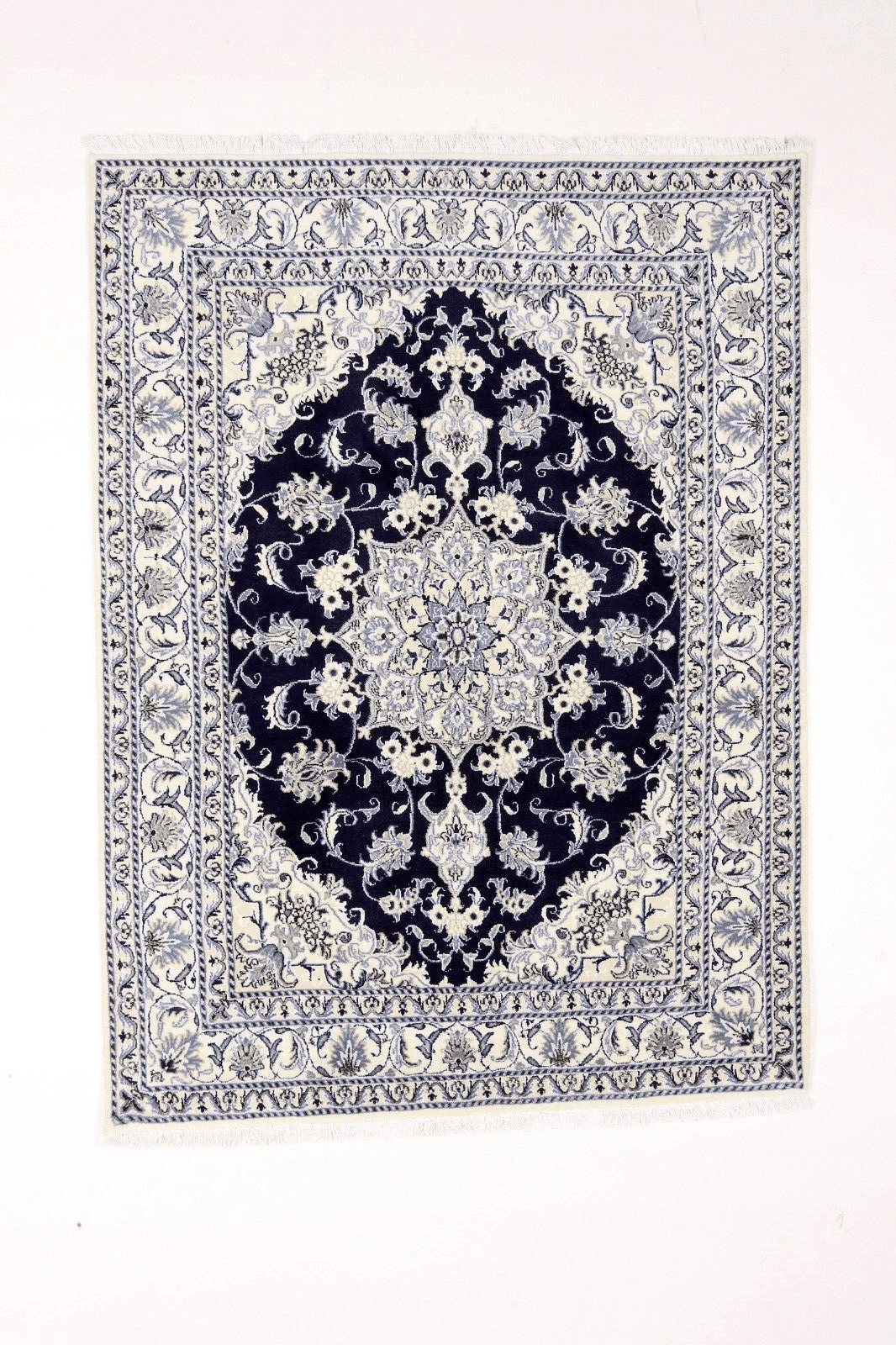
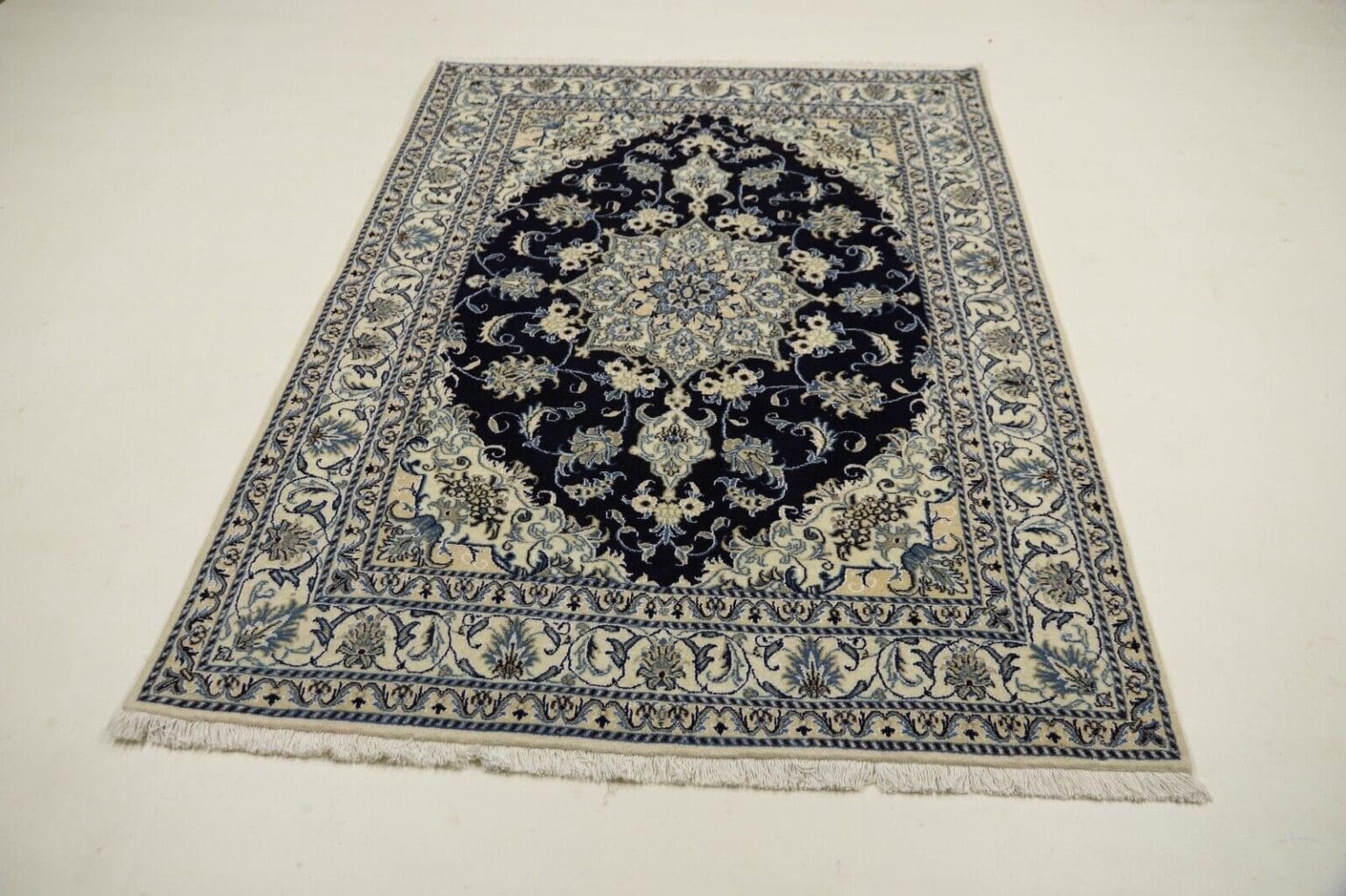
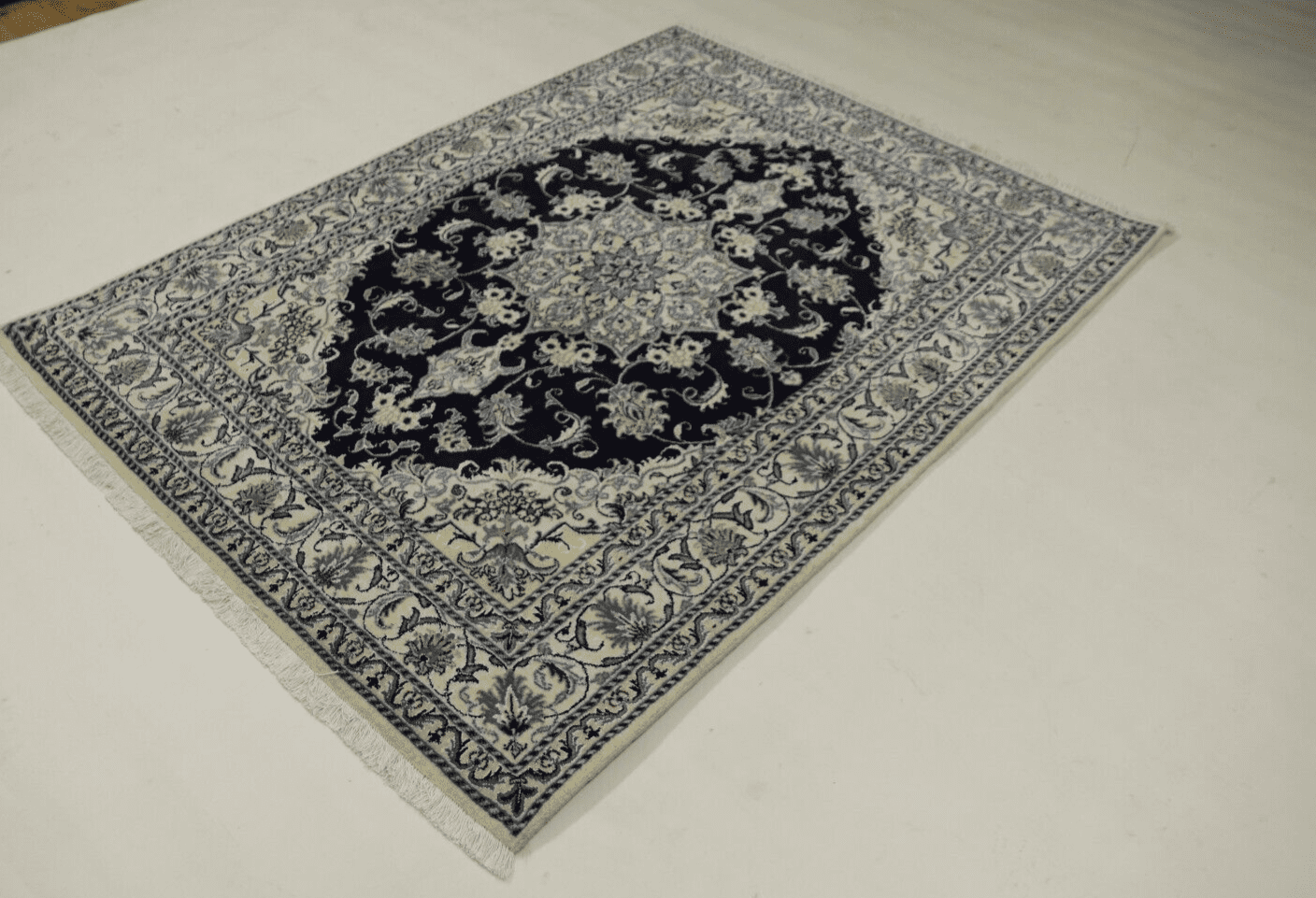
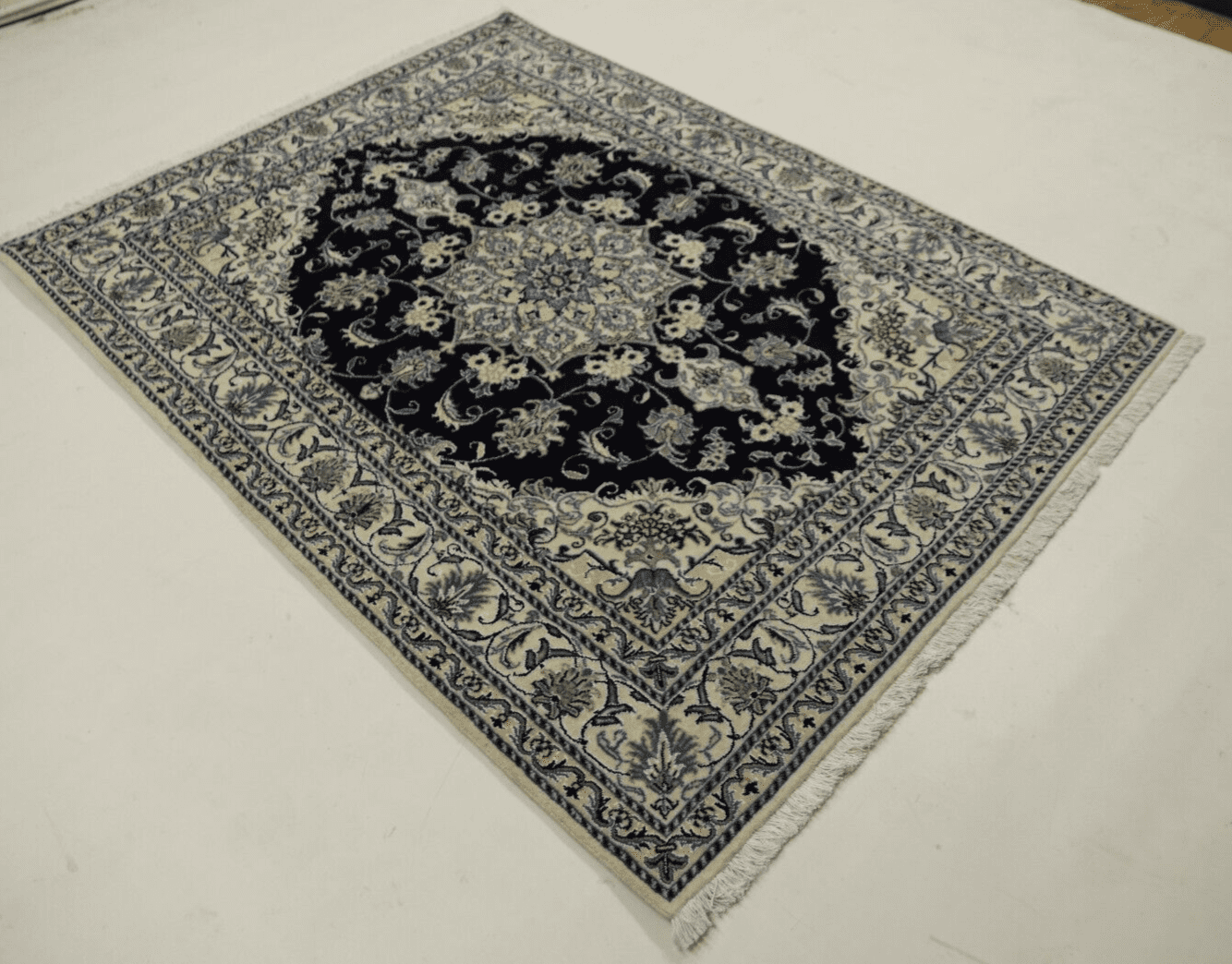
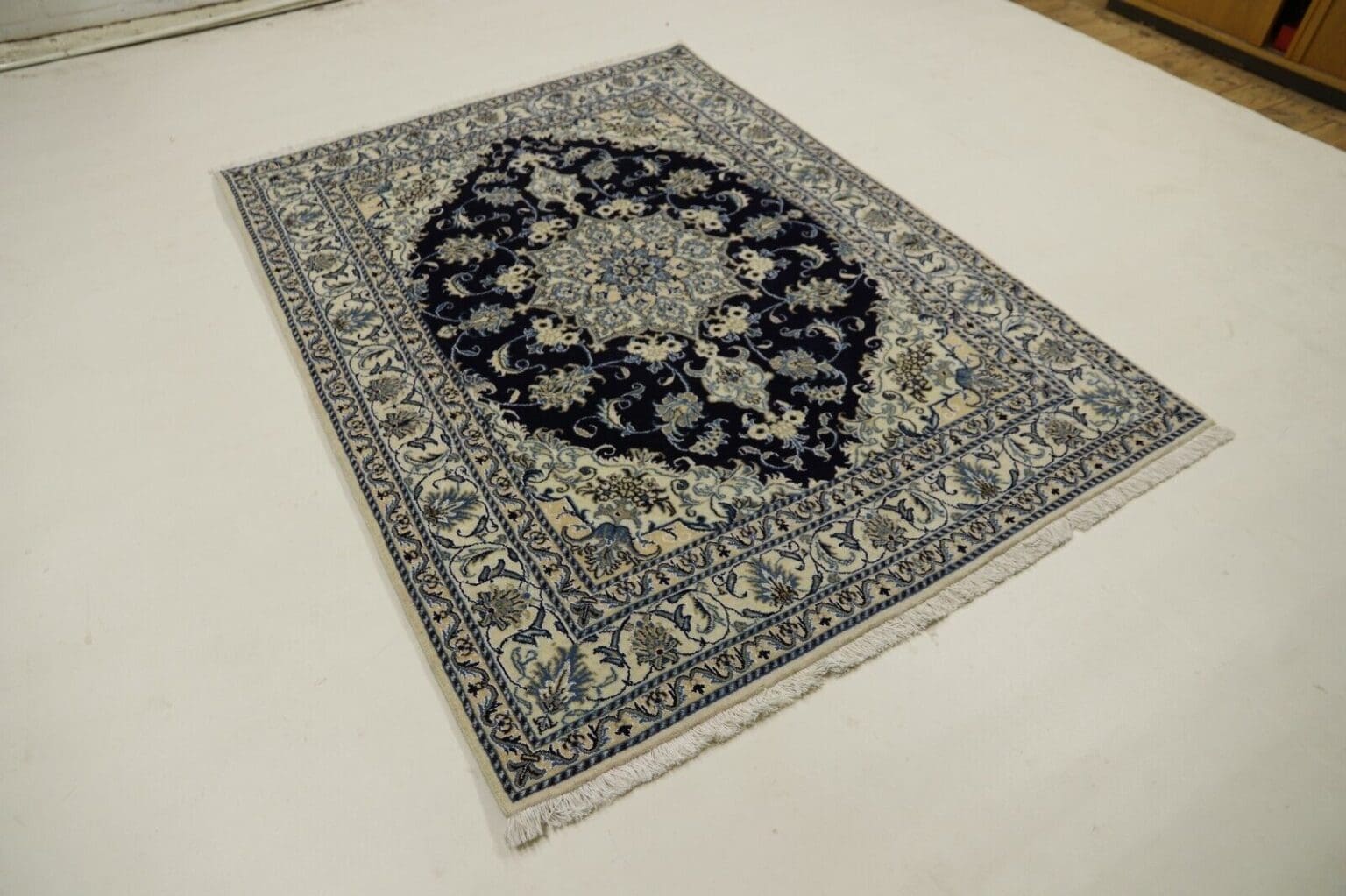
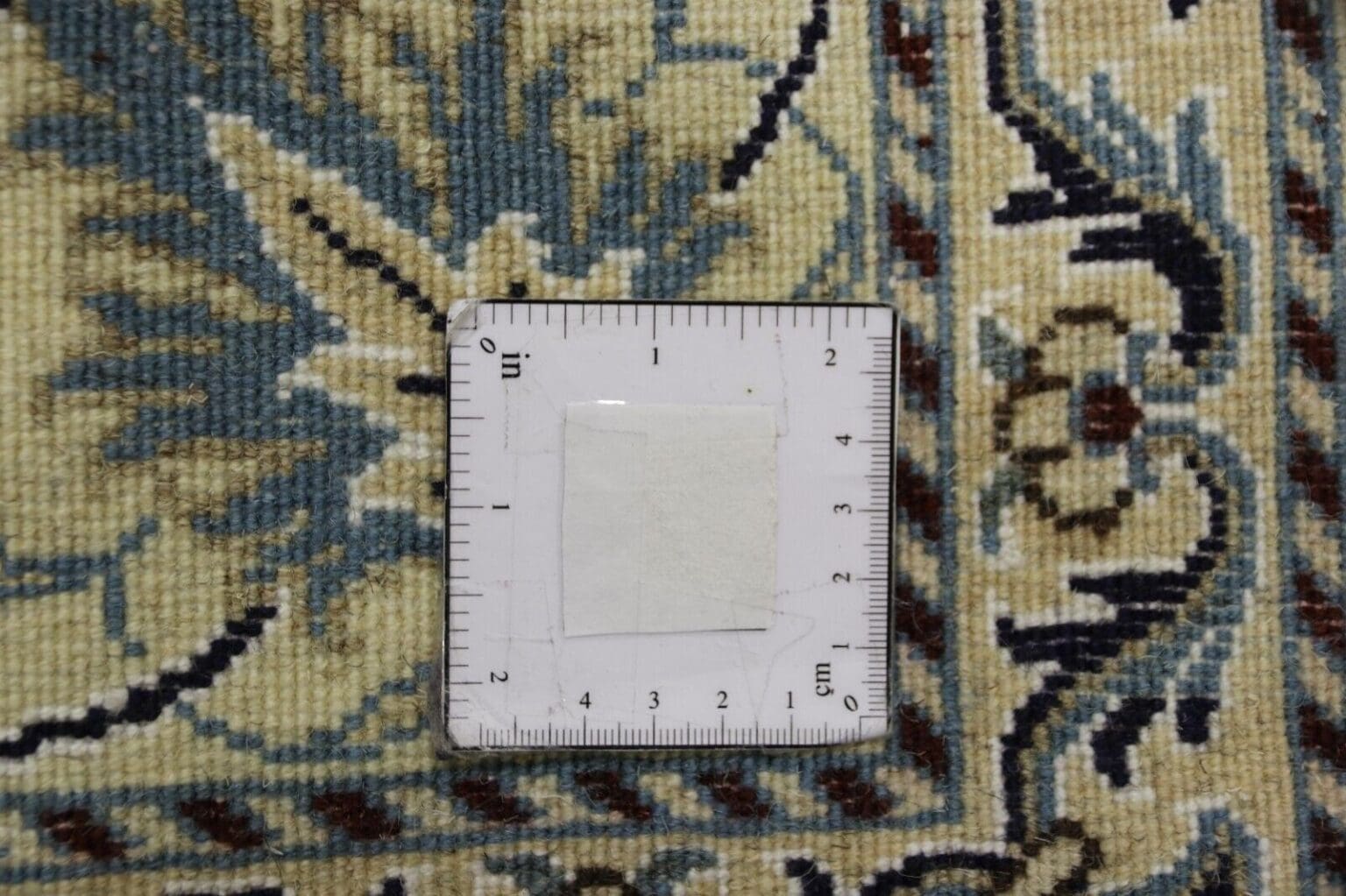
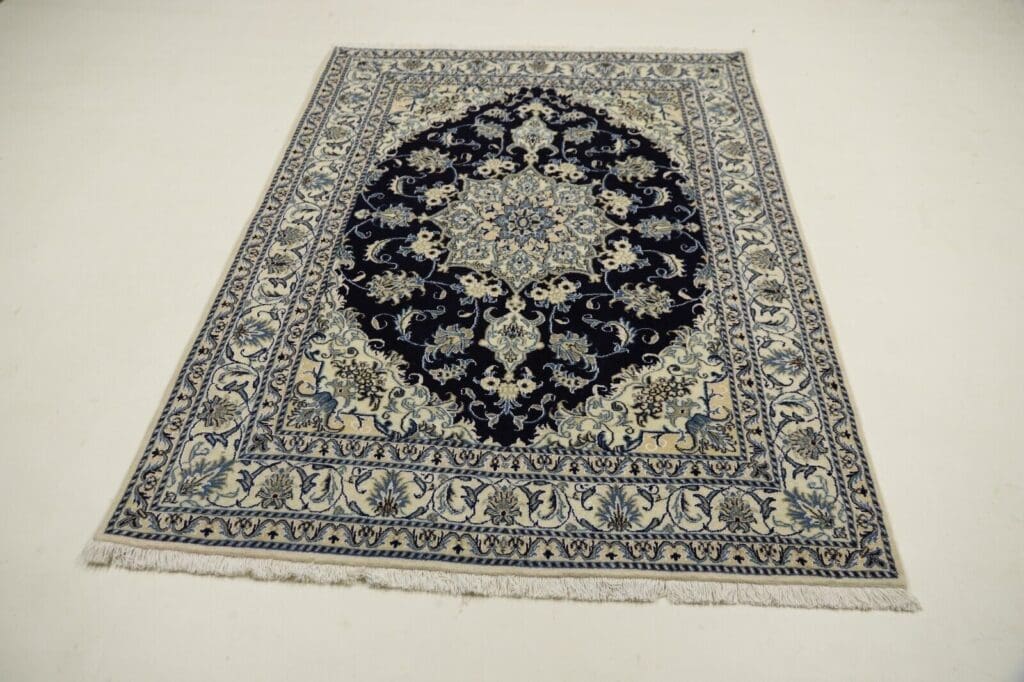
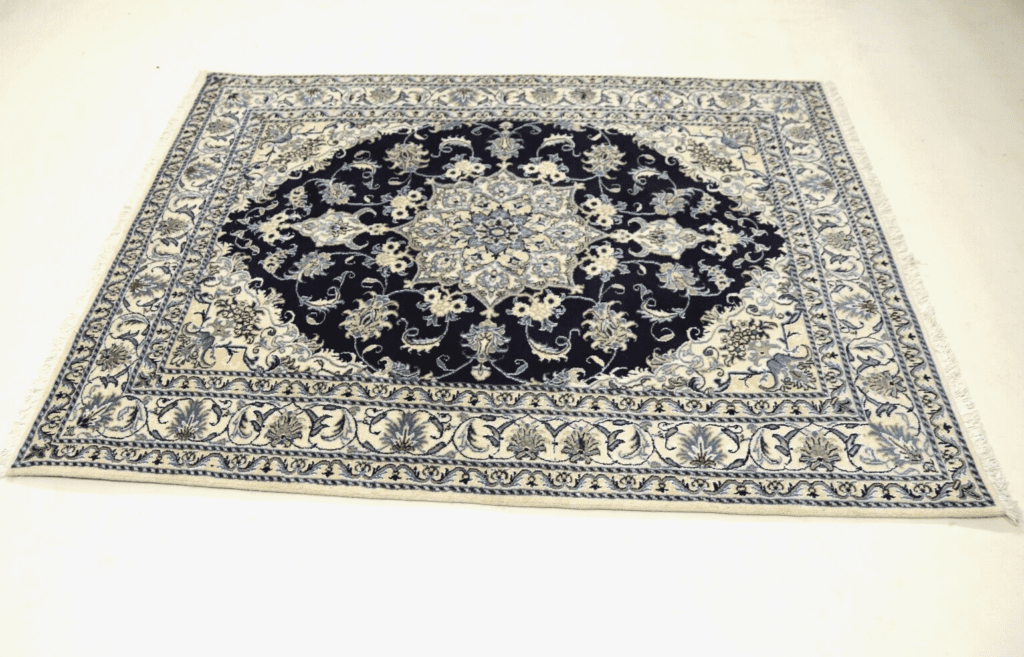
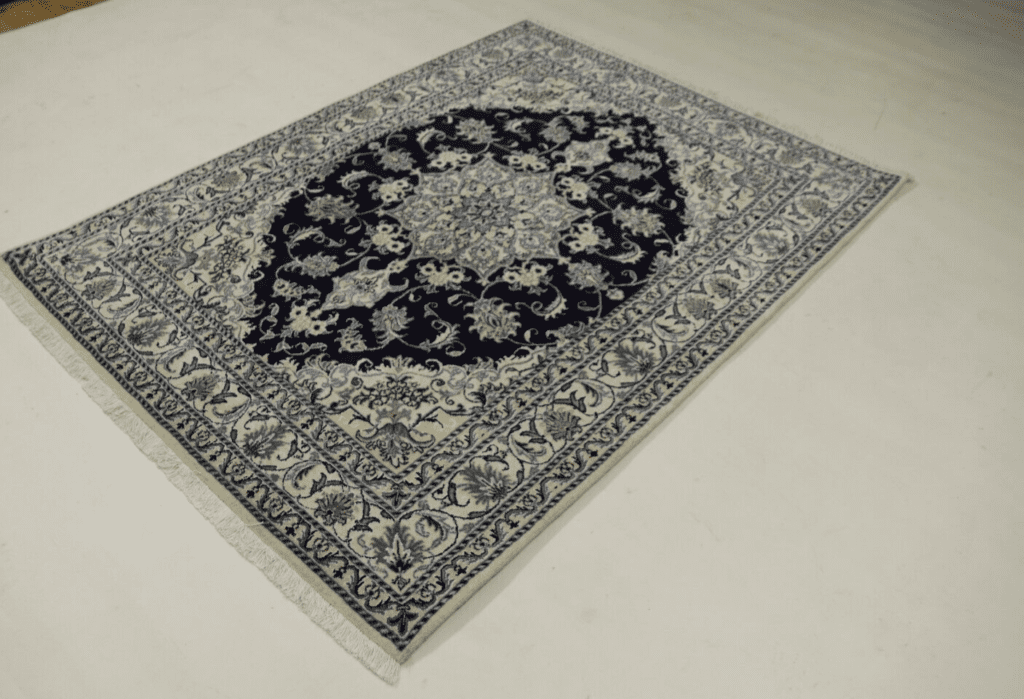
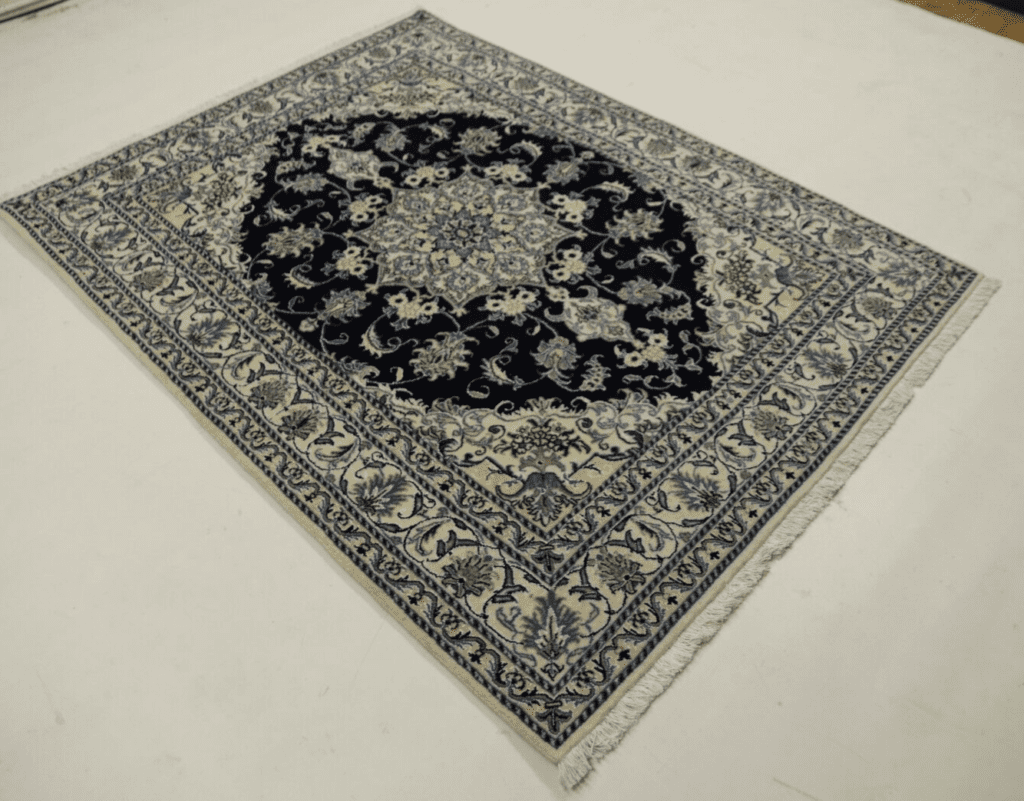
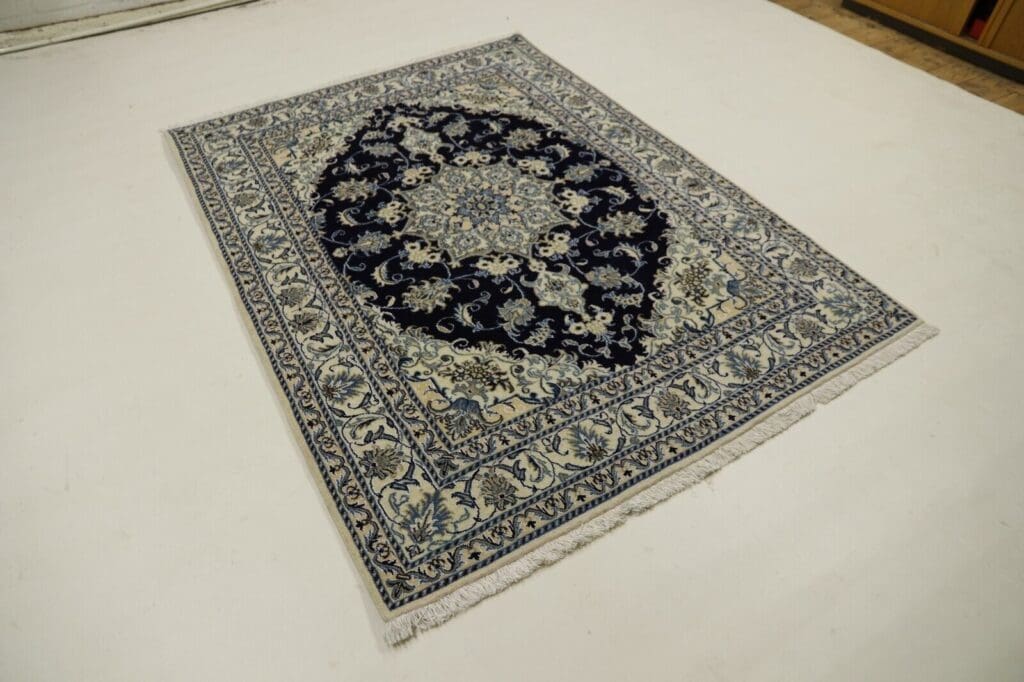
Hand-knotted Nain Oriental rug | Knot density: approx. 300,000 knots/m² | Material: pile 90% virgin wool, 10% silk | Size: 198 x 146 cm | Pattern: traditional Oriental and Persian | Condition: New, very good
This Super Nain Oriental rug is hand-knotted and made from virgin wool and silk. Wool forms a resilient pile with a pleasant tactile quality. It has long been used in hand-knotted rugs because it is hard-wearing and well suited to a dense yet comfortable surface. Silk adds a smoother texture and a restrained sheen to the wool. Together, the two fibres create a balance between everyday practicality and a refined appearance.
In hand-knotting, each knot is inserted individually into the foundation. The weaver follows the planned design while building the pile, rows and outlines step by step. Unlike machine production, this process creates a textile whose character comes from manual work and careful colour placement. The fine construction supports the precise rendering of lines, floral details and small ornaments. Patience and technical control are required to maintain the intended relationship between the many parts of the composition.
The wool and silk combination gives the rug a soft surface and a subtle change of tone as light moves across it. Wool contributes a comfortably warm feel underfoot, while silk reflects light more smoothly and can make selected areas of the pattern appear clearer. The rug is new and in very good condition. Its hand-knotted construction combines a traditional making process with a surface suited to both daily living and carefully arranged interiors.
Origin and Tradition
The rug is associated with Nain in Persia. Nain is one of Iran’s recognised carpet-producing regions and is known for finely made hand-knotted rugs with balanced compositions. The regional tradition combines exacting knotting with a strong interest in ordered ornament. In this carpet art, the relationship between the field, the border and the central drawing is as important as any individual motif. Proportion and continuity help the eye read the design as a whole.
Nain rugs are commonly linked with fine patterns and carefully controlled detail. Floral forms, geometric order and repeated symmetrical elements may be brought together within one composition. Such work requires the weaver to understand proportion and to translate a design accurately through many individual knots. Small variations are a natural part of hand production, while the overall arrangement is intended to remain clear and balanced.
The history of Persian rugs is closely connected with regional workshops, inherited designs and the transmission of practical knowledge from one generation to the next. Within that wider tradition, Nain is associated with a fine and disciplined visual language. Motifs are arranged in relation to one another rather than scattered across the surface without order. Borders contain the composition, while a central field or recurring ornament provides cohesion. These principles make Nain rugs suitable for interiors that call for a structured textile presence.
The name Nain describes a carpet tradition, not a machine-made imitation. Its significance lies in the hand-knotting method, the precision of the drawing and the use of materials associated with fine rug making. Persian carpets have often been treated as both useful household textiles and objects of cultural continuity. Their production depends on practice, concentration and the ability to transfer a design into a durable woven structure one knot at a time.
Design and Pattern
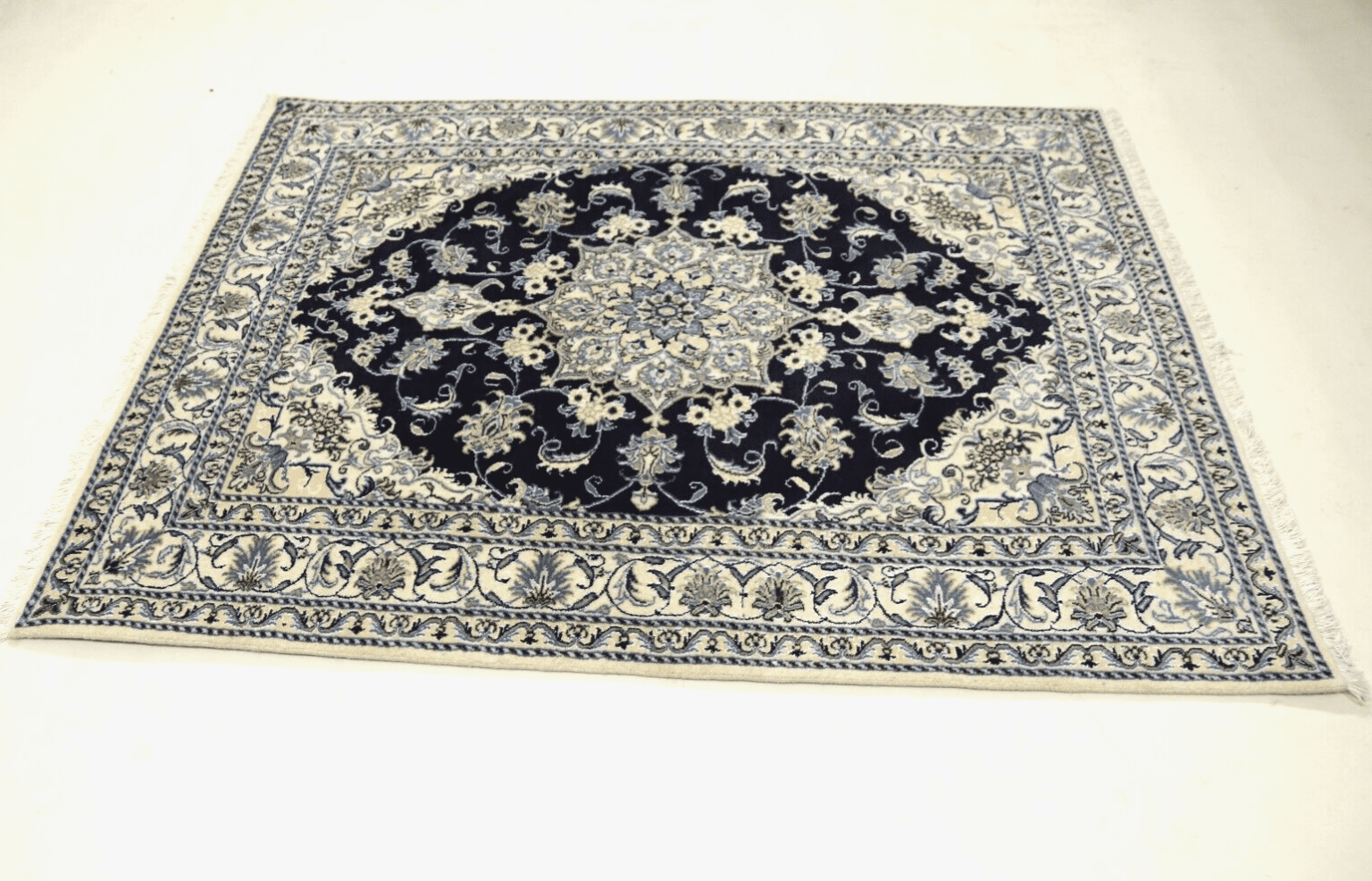
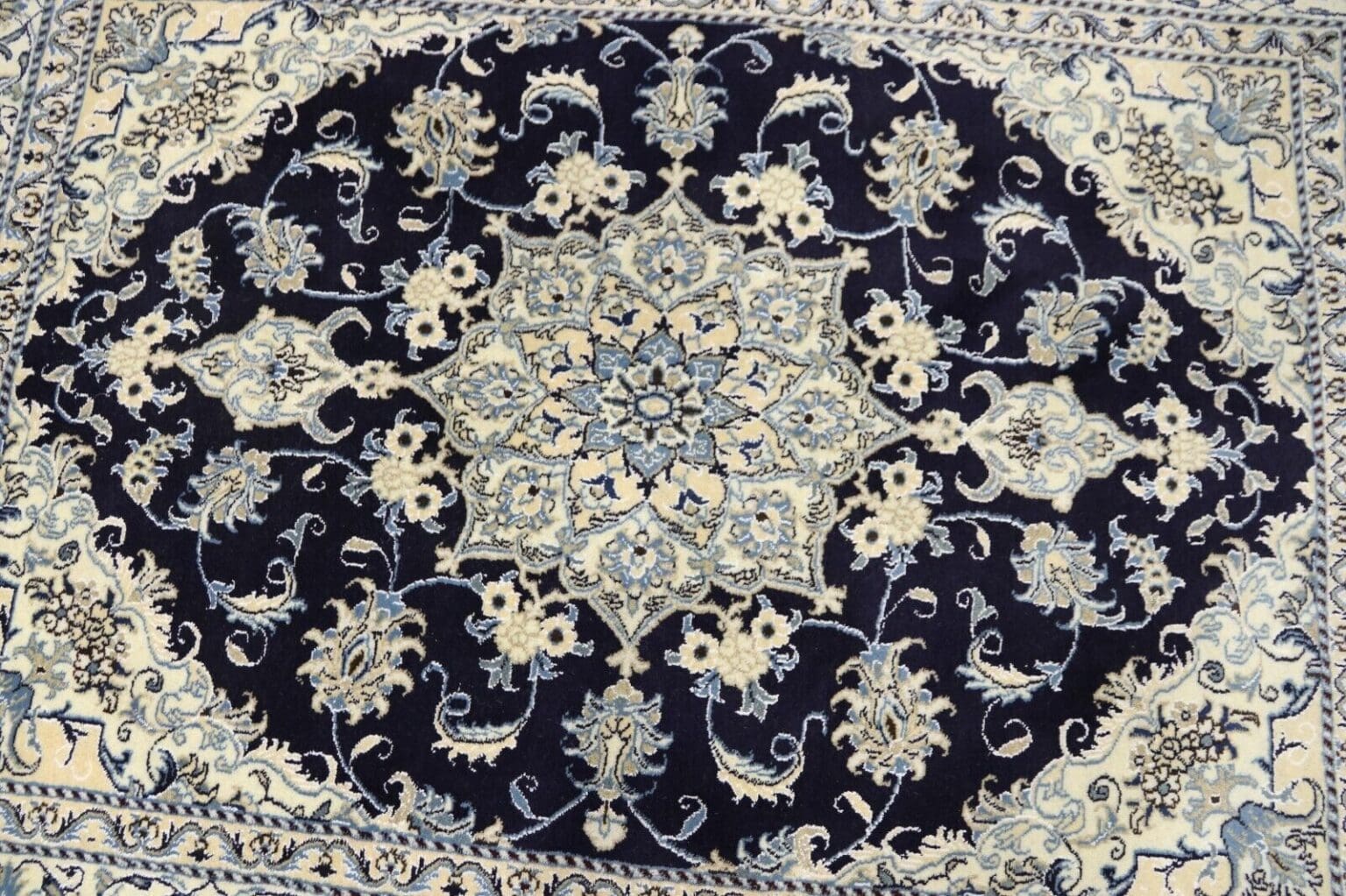
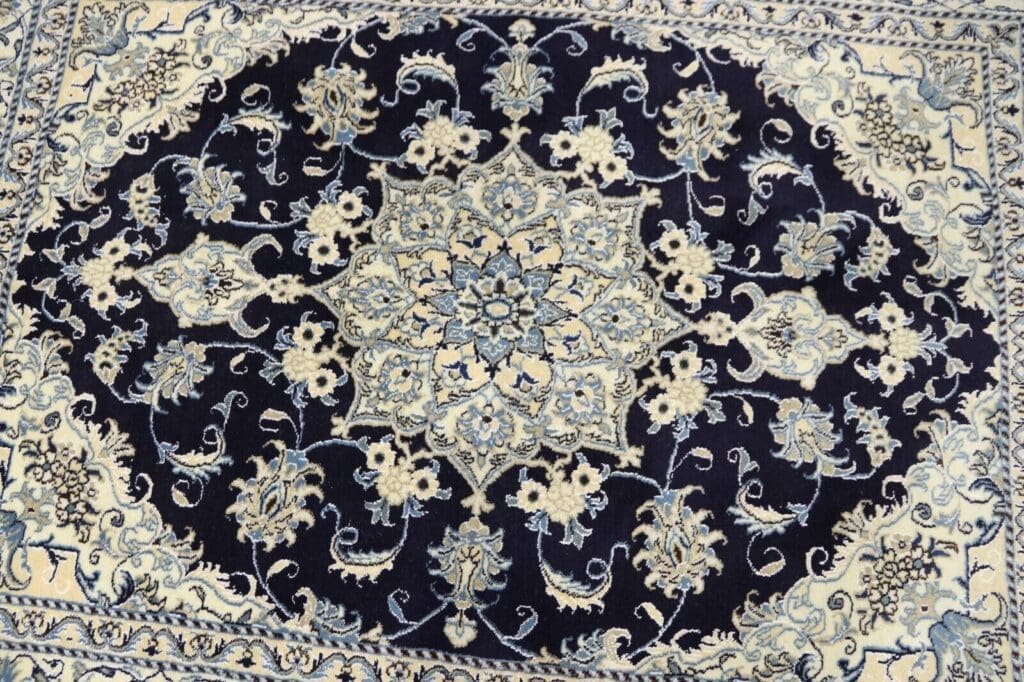
The design of this Super Nain follows a traditional Oriental and Persian direction. Floral and geometric elements are arranged into a harmonious overall composition. Floral ornaments may suggest leaves, blossoms or curling vines, while geometric shapes provide structure and rhythm. Combining these two groups of forms creates a pattern that is decorative without depending on one isolated symbol.
Nain compositions are known for controlled organisation. A central field, surrounding borders and smaller filling ornaments can be placed in relation to one another to divide the surface visually. The border acts as a frame for the inner field. Repeated vines or symmetrical forms create transitions between the different areas. The result is a design in which small details support the larger structure instead of competing with it.
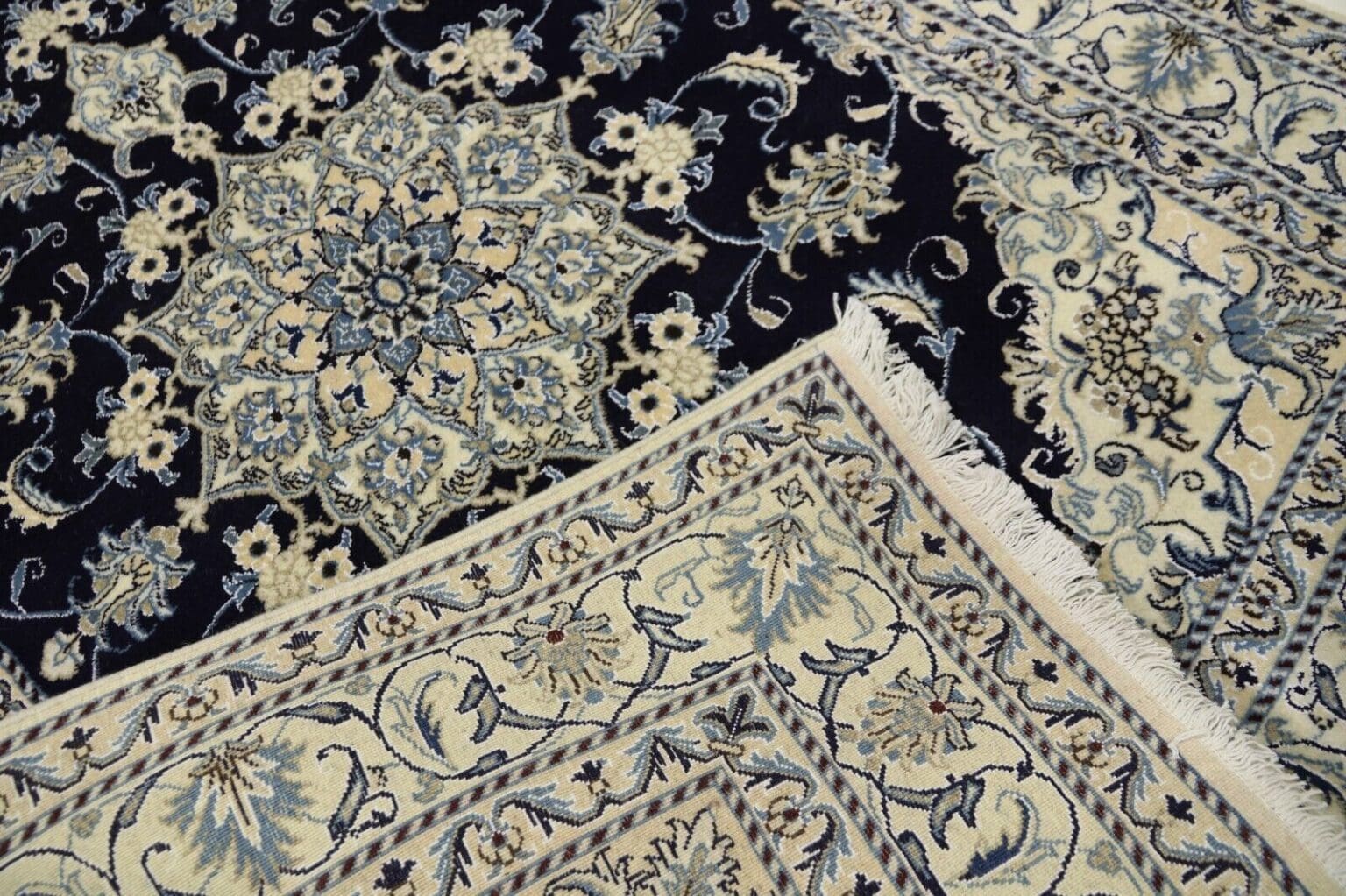
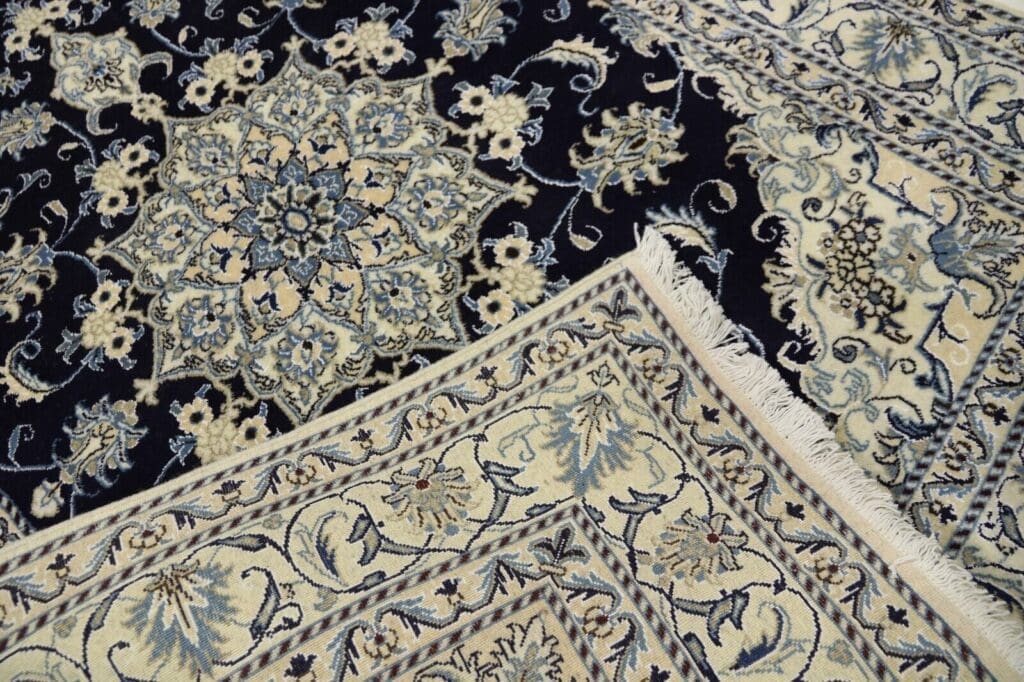
Fine knotting allows the drawing to be rendered with considerable differentiation. Narrow outlines can define floral shapes, and small ornaments can be positioned closely without losing the order of the composition. Wool gives the surface a soft textile depth, while silk can distinguish selected passages through its light reflection. The appearance therefore changes subtly with the viewing angle and the surrounding light. This interaction between fibre qualities and classical ornament is an important part of the rug’s visual character.
The colour impression is described as harmonious and gentle. This makes the pattern compatible with modern, classic and traditional interiors. In a restrained room, a traditional ornament can serve as a clearly organised focal point. In a more classic setting, it can relate to existing furniture, fabrics and architectural lines. The pattern is not merely an added decoration; it also influences how the floor area is perceived and how separate furnishings are visually connected.
Oriental rug designs are often discussed through a cultural language of symbols. Floral forms may be associated with beauty and growth, while geometric order can suggest balance and structure. These are general interpretations of Persian ornament and should not be assigned to one specific sign in this rug without evidence. Here, the defining qualities are the harmony of the arrangement and the careful treatment of detail. The design remains recognisably traditional while retaining enough flexibility for different interior settings.
Special Features
The rug is new and in very good condition. The listed features include suitability for underfloor heating and a pet-friendly description. Its character is defined by the hand-knotted construction and the combination of virgin wool with silk. Wool supports a durable and comfortably warm surface, while silk contributes a smooth feel and a fine sheen. These properties give the rug both a practical textile function and a more refined visual texture.
Hand-knotted rugs can remain in use for a long time when they receive suitable care. Regular removal of dust helps preserve the surface. The wool fibre is also described as relatively easy to maintain and resistant to dirt. These qualities make the rug appropriate as a functional home textile as well as a decorative element. Its traditional pattern adds a cultural reference to the room without restricting it to one particular furnishing style.
FAQ
How should I care for my Nain Oriental rug?
For routine care, vacuum on a low setting to remove dust and loose dirt without placing unnecessary strain on the pile. For more intensive stains, a mild carpet-cleaning solution may be used. Work it in carefully with a soft cloth rather than rubbing aggressively, so that the fibres and the pattern are treated gently. Regular, moderate cleaning helps preserve the appearance and long service life of a hand-knotted rug. For delicate or extensive soiling, professional rug cleaning is advisable.
Which room is best suited to the rug?
The Nain Oriental rug works well in a living room, dining room or as a focal element in a hallway. Its traditional Oriental and Persian design can be combined with modern, classic and traditional interiors. In a living room it can visually bring a seating arrangement together. In a dining room it supports an orderly composition, while in a hallway its ornament can provide a defined decorative accent. Its suitability for underfloor heating broadens the practical range of rooms in which it can be used.
How can I identify a genuine hand-knotted rug?
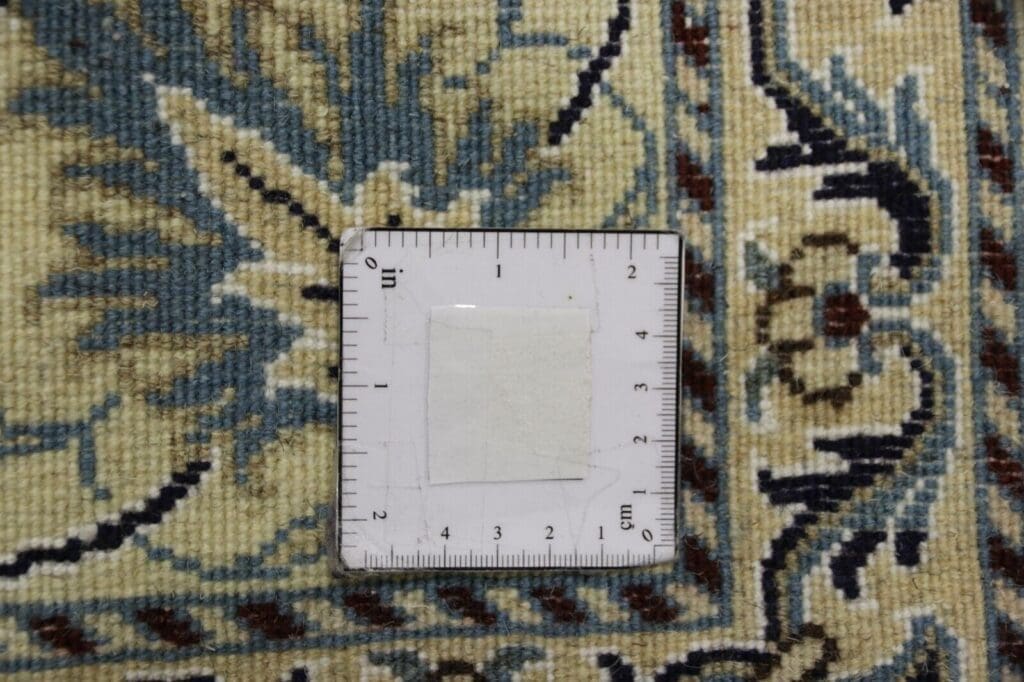
Several features can help when assessing whether a rug is hand-knotted. On a hand-knotted rug, the design is generally visible on the reverse and corresponds to the drawing on the front, whereas machine-made rugs often have a differently constructed backing. The knot structure, foundation material and quality of the fibres also provide indications of how the rug was made. High-quality wool and silk can be consistent with traditional handwork. A reliable assessment should consider the construction as a whole and, where necessary, include an examination by an experienced rug specialist.
To provide the best experiences, we use technologies like cookies to store and/or access device information. Consenting to these technologies will allow us to process data such as browsing behavior or unique IDs on this site. Not consenting or withdrawing consent, may adversely affect certain features and functions.
Functional Always active
The technical storage or access is strictly necessary for the legitimate purpose of enabling the use of a specific service explicitly requested by the subscriber or user, or for the sole purpose of carrying out the transmission of a communication over an electronic communications network.
Preferences
The technical storage or access is necessary for the legitimate purpose of storing preferences that are not requested by the subscriber or user.
Statistics
The technical storage or access that is used exclusively for statistical purposes.The technical storage or access that is used exclusively for anonymous statistical purposes. Without a subpoena, voluntary compliance on the part of your Internet Service Provider, or additional records from a third party, information stored or retrieved for this purpose alone cannot usually be used to identify you.
Marketing
The technical storage or access is required to create user profiles to send advertising, or to track the user on a website or across several websites for similar marketing purposes.
 SECURE PAYMENT
 SHIPPING PARTNERS


