
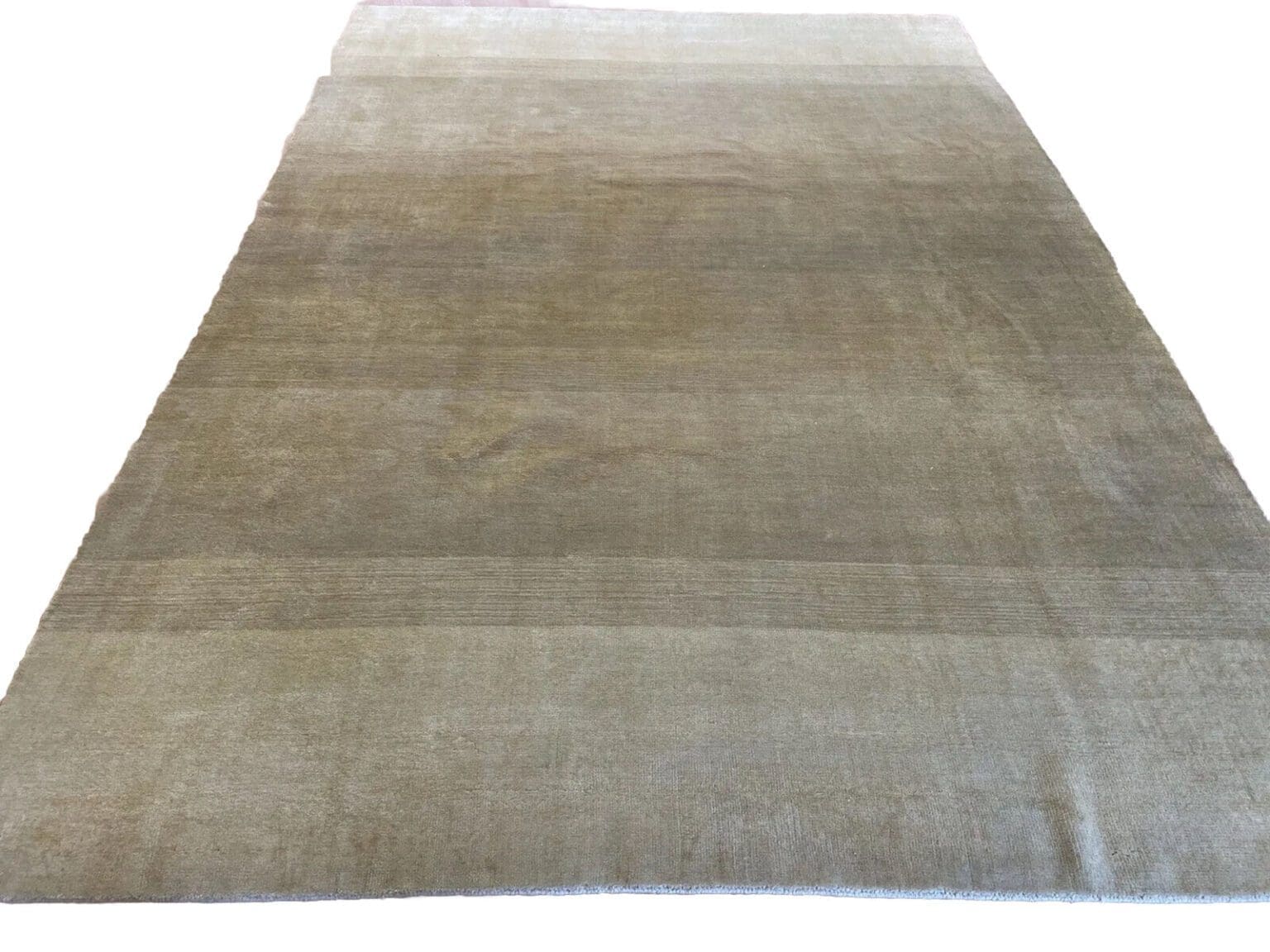
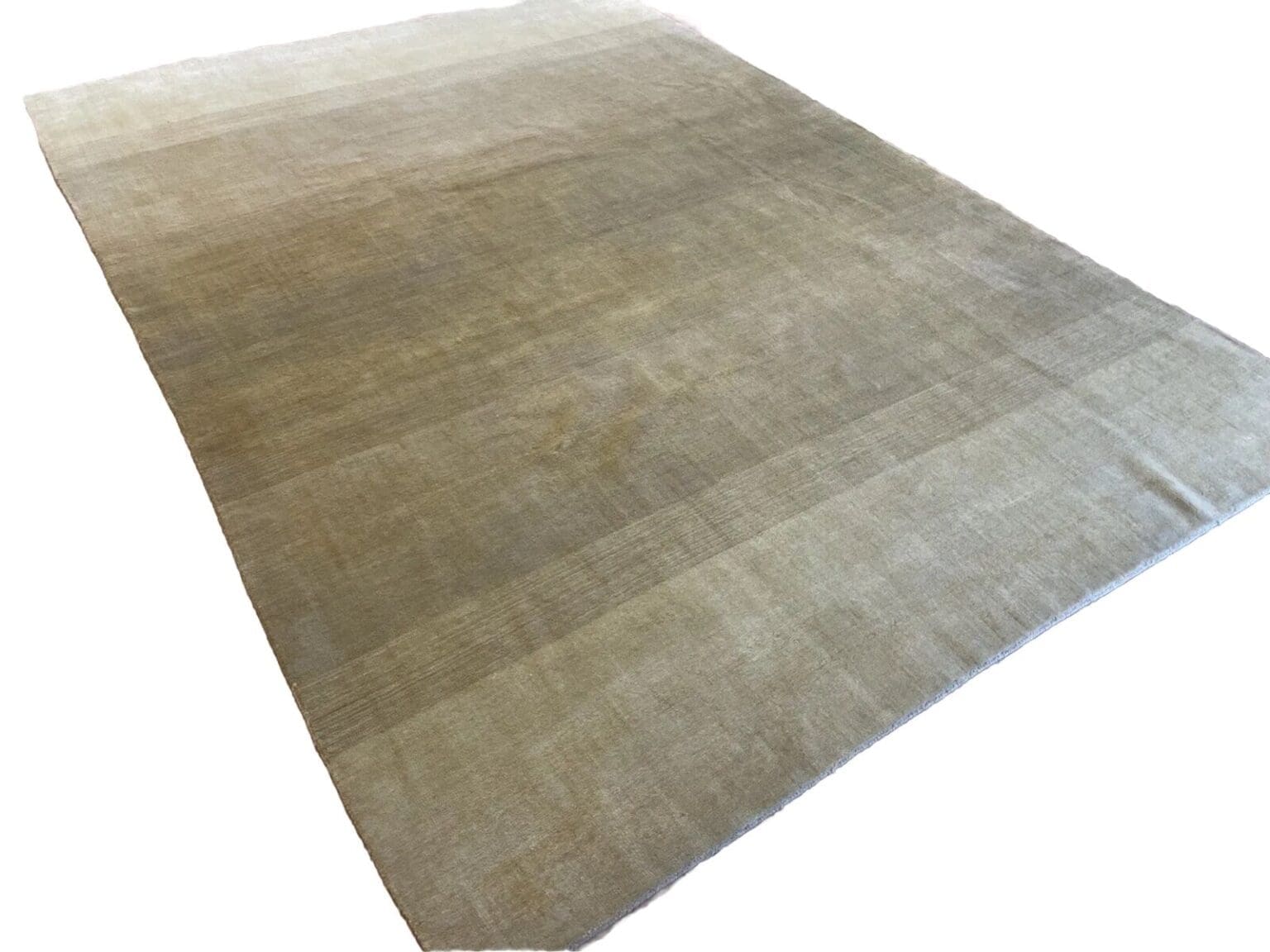
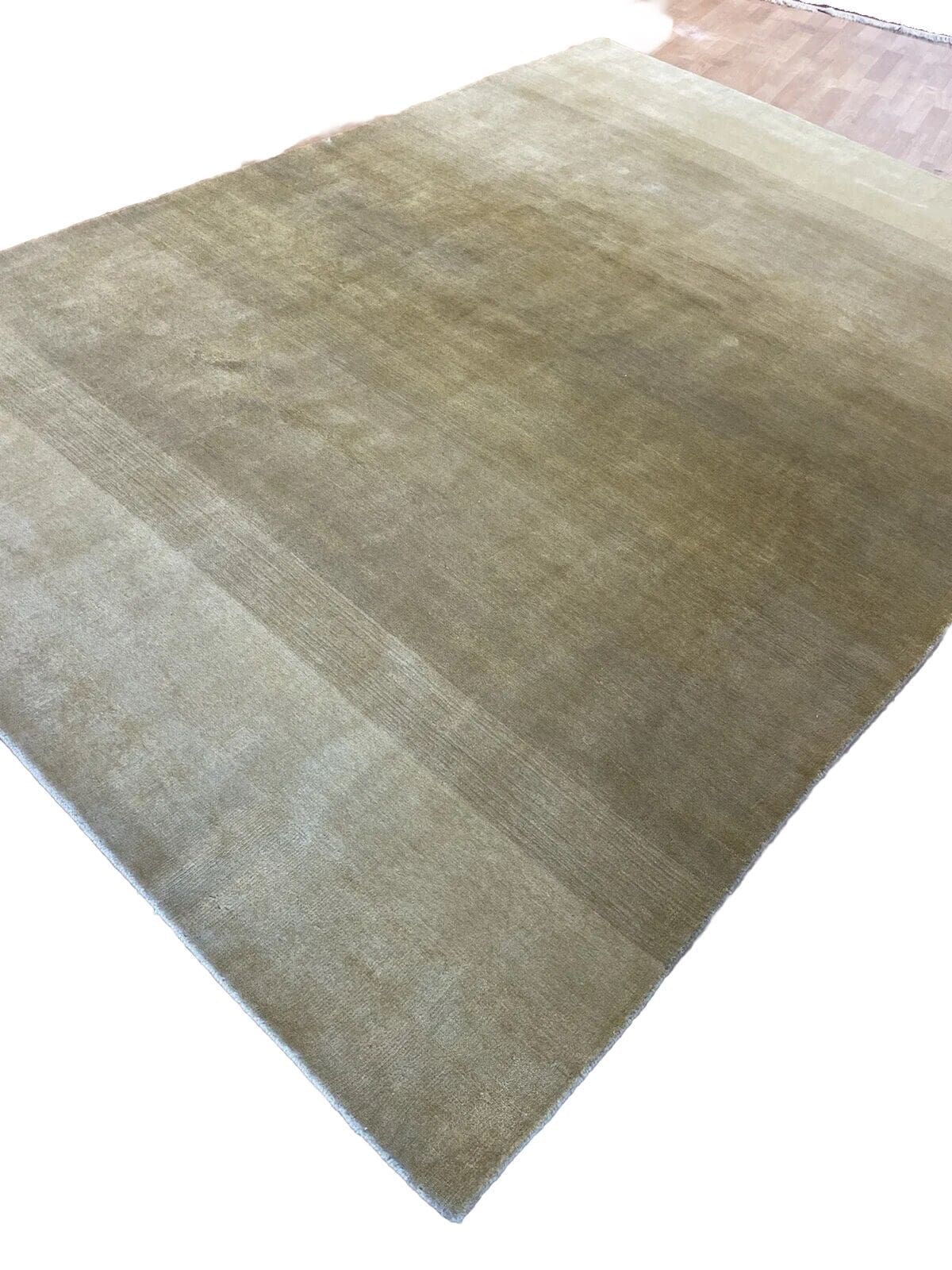
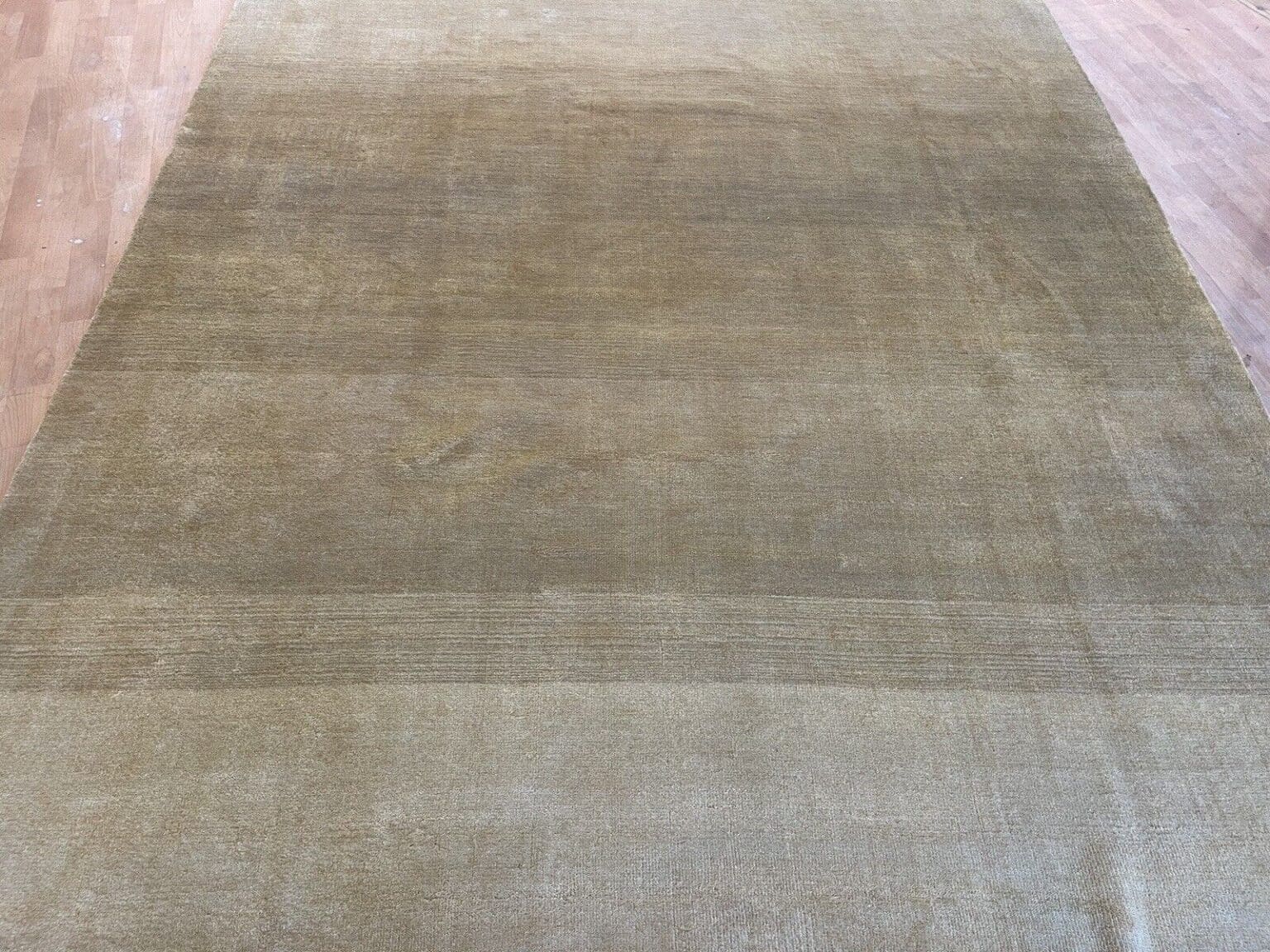
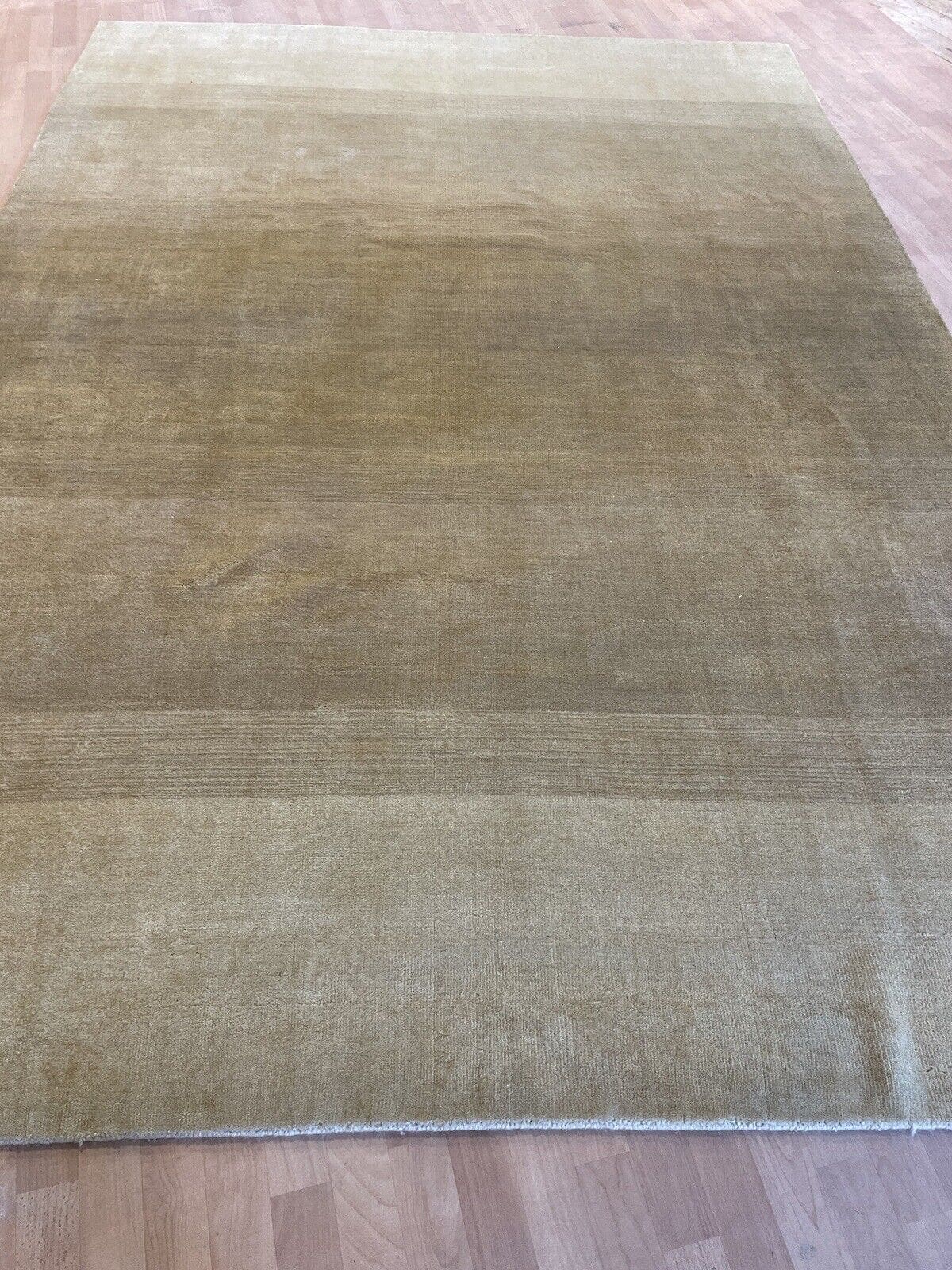
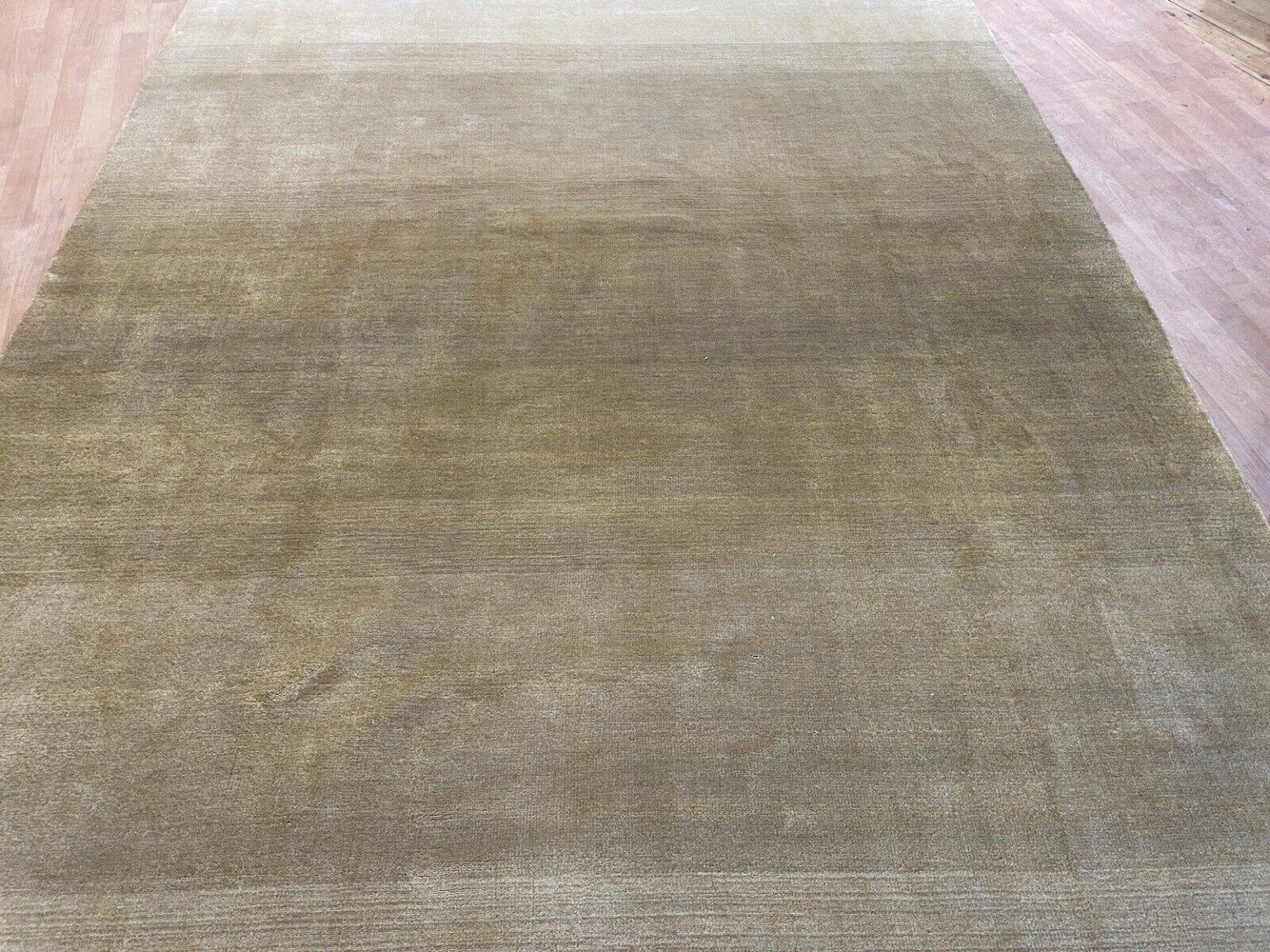
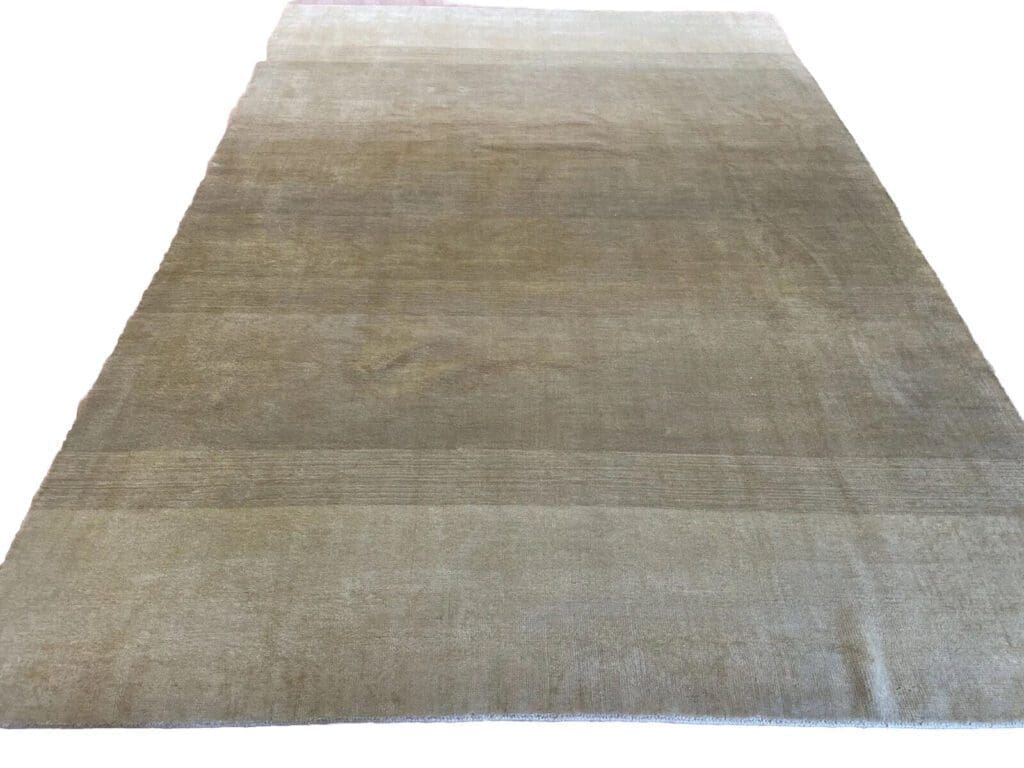
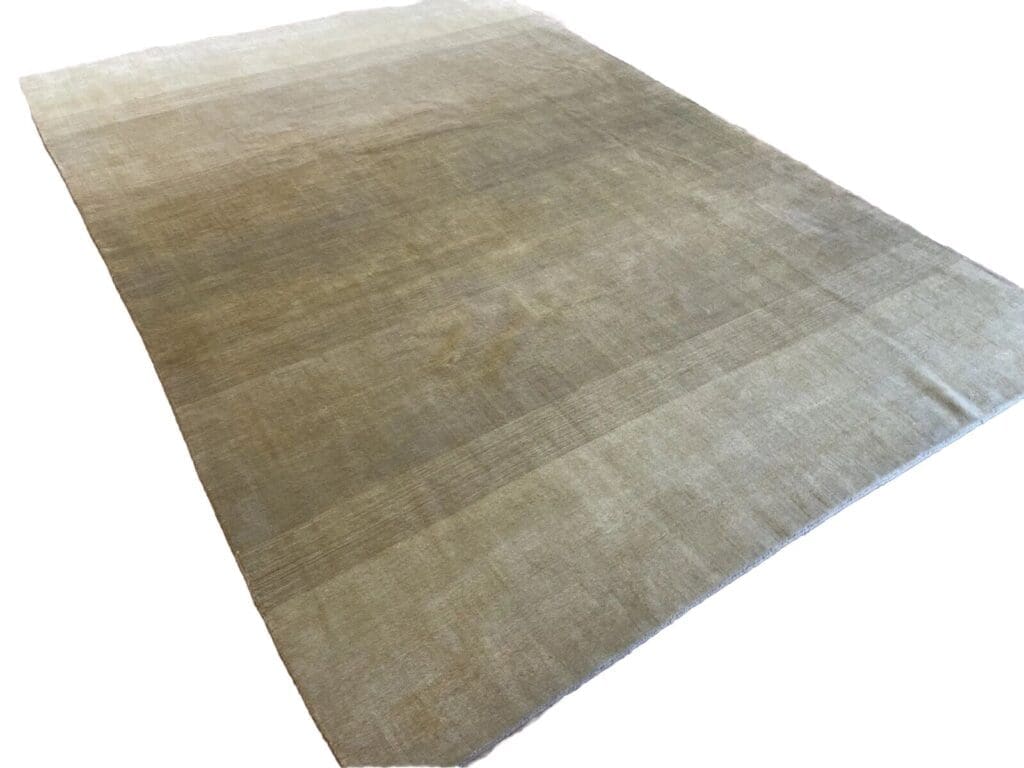
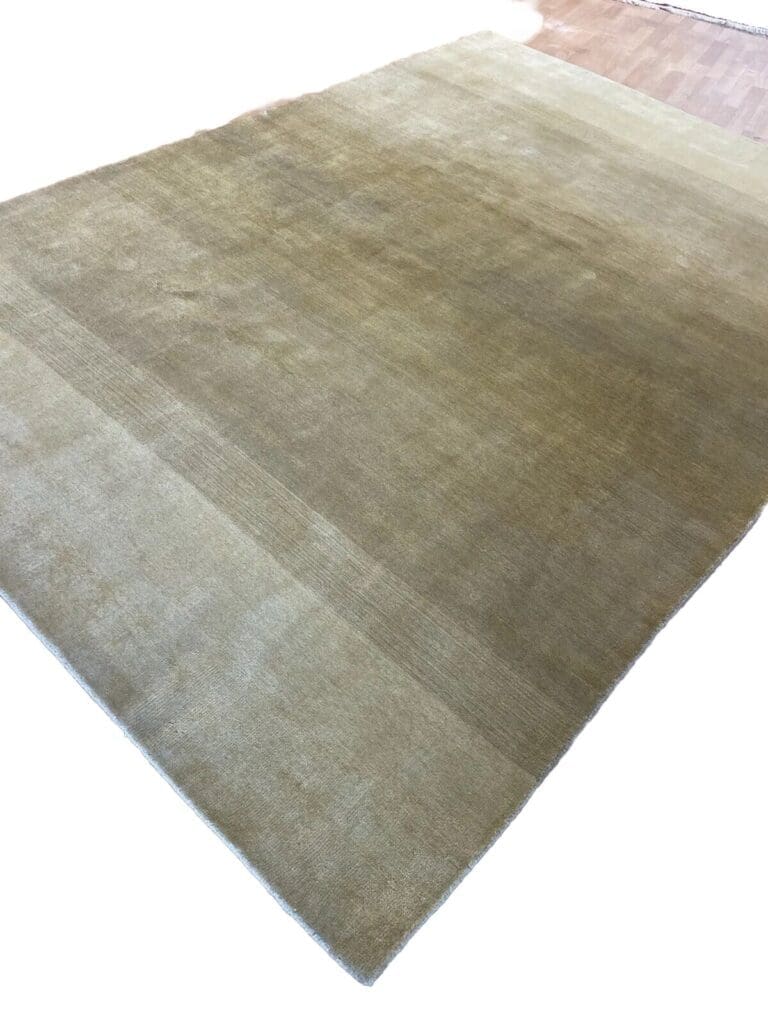
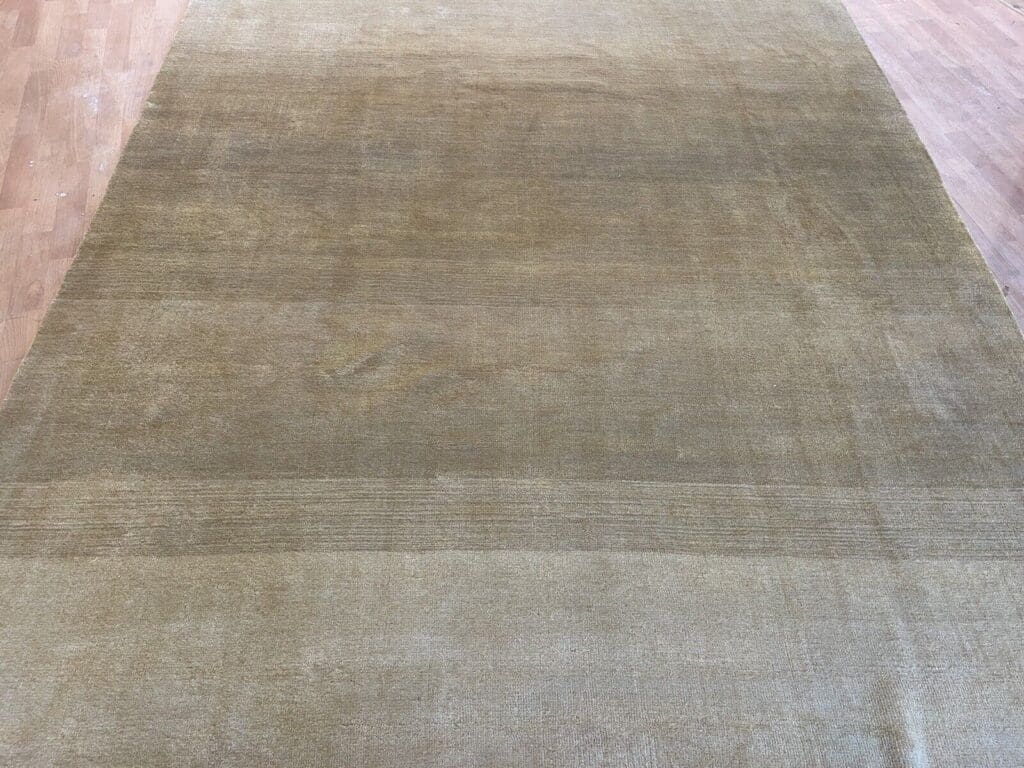
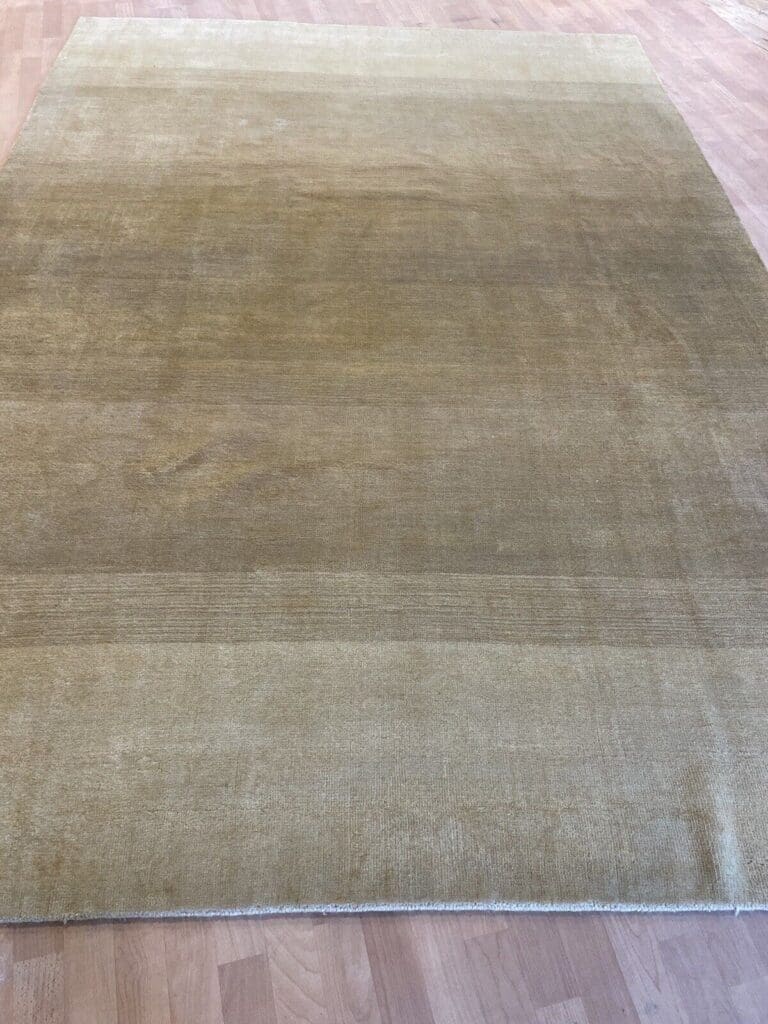
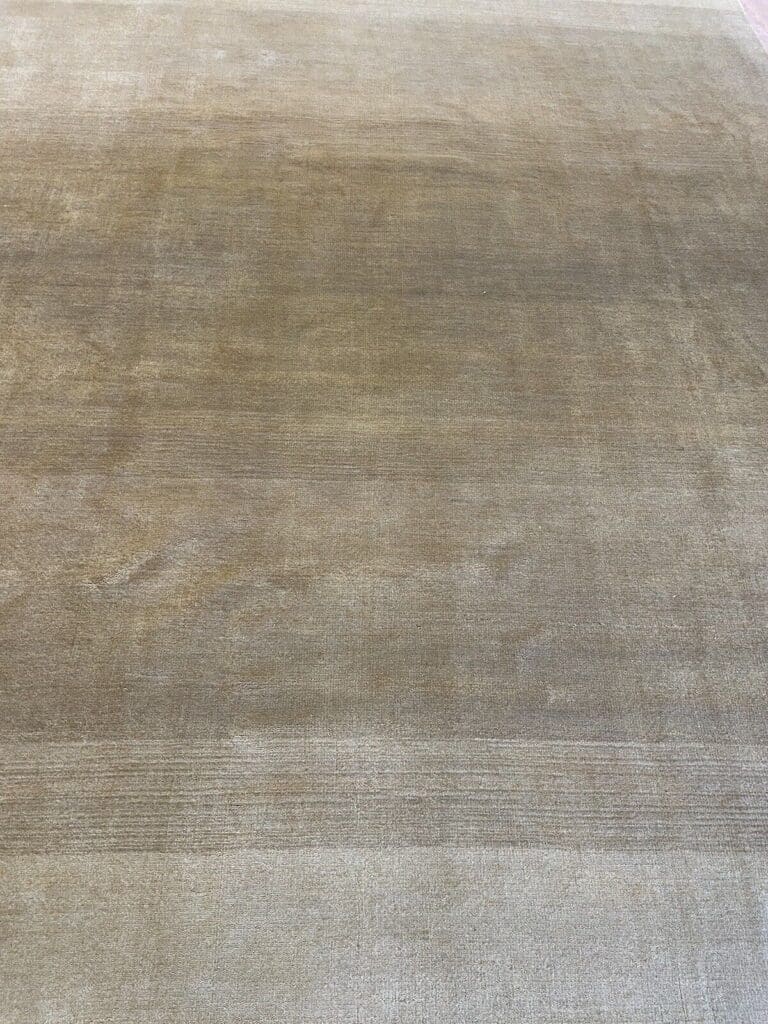
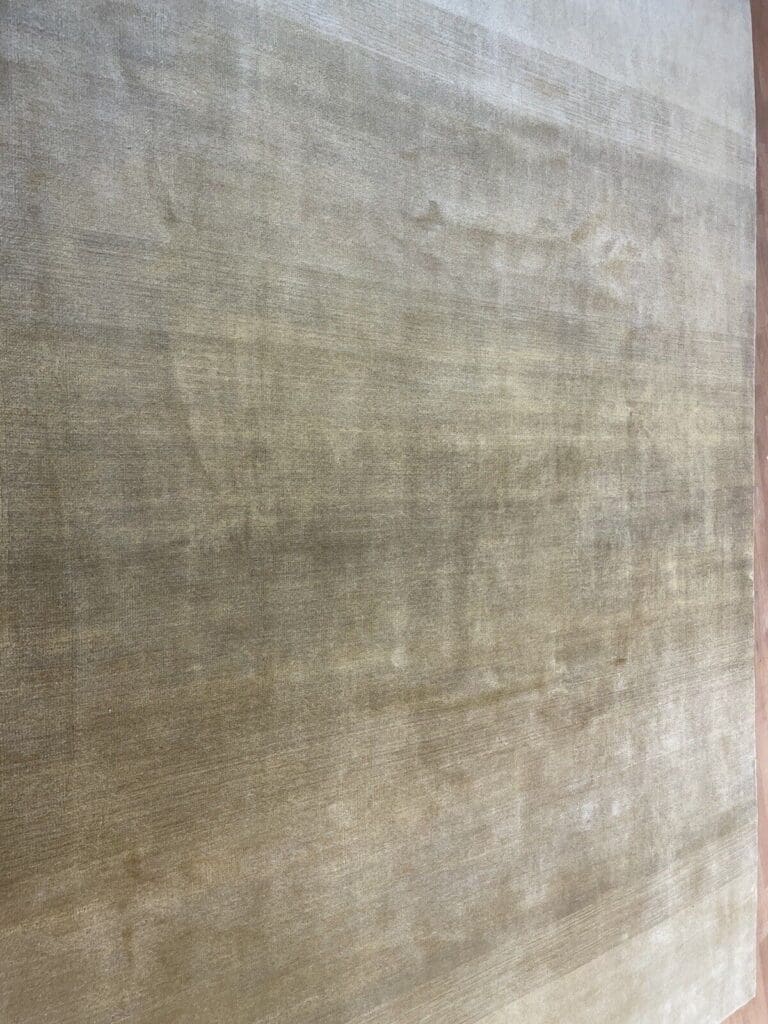
Oriental Rug Loribaft 305×215 cm Wool Hand-knotted
€ 1424
Hand-knotted Loribaft Oriental rug | Knot density: Fine knotting | Material: Pure new wool pile, cotton warp | Size: 305×215 cm | Pattern: Plain
1 available
- ✓Free Shipping in EU
- ✓2-5 Business Days Delivery
- ✓14-Day Return Policy
- ✓Worldwide Shipping on request
 SECURE PAYMENT
 SHIPPING PARTNERS
Inventory number: 728FA734
Description
Loribaft Oriental Rug
Material and Craftsmanship
This modern Loribaft Oriental rug is hand-knotted with pure new wool forming the pile. The wool provides a soft, pleasant surface while also being valued in rug making for its resilience. Cotton is specified for the warp. The construction therefore combines a wool pile with a cotton foundation, with the two materials serving different technical purposes in the finished textile.
Its knotting is described as fine. A hand-knotted rug is built one knot at a time on a prepared warp rather than assembled from an industrially uniform sheet. The warp provides the vertical structure, while the pile yarn is tied into it and secured through the rows. As the work progresses, the foundation, surface and pattern develop together. This is technically different from a hand-woven kilim, which does not have a knotted pile.
Pure new wool is described as durable and easy to care for, as well as soft to the touch. Wool is widely used in Oriental rugs because its fibres are resilient and can hold colour effectively. Its natural structure also gives a pile a distinct textile feel. These are general reasons for its use in both traditional and contemporary hand-knotted rugs, while the material of this particular rug is stated as pure new wool.
Hand-knotting requires a controlled sequence of operations. The maker follows the intended arrangement, places the pile yarn, works the rows and maintains the structure of the warp. Fine knotting allows a design to be handled with greater control than a very coarse construction. In a plain design, this can produce a calm, even visual field while leaving the character of the handmade surface present.
The pile is described as soft and has a pile height of ten millimetres. This creates a clearly tactile surface. The combination of wool pile, cotton warp and fine hand-knotting defines the technical character of the rug. The piece is new and is offered with its label. No additional construction details are assigned beyond the characteristics stated for it.
Origin and Tradition
The origin of this rug is given as the Orient, India. It is therefore classified as an Oriental rug. Loribaft identifies a rug type and an associated design language; it does not replace the stated origin of the individual piece. A rug made in India remains an Indian Oriental rug even when its appearance draws on Persian or other Oriental carpet traditions.
India has a substantial tradition of producing hand-knotted rugs. Workshops have developed through contact with international carpet markets, absorbing techniques, materials and design approaches and interpreting them within their own production environments. Indian rugs may consequently combine established handcraft methods with traditional, simplified or contemporary designs. Here, the Indian origin is paired with the Loribaft designation and a modern, plain appearance.
Oriental rugs are not a single uniform category. They are made in many countries and workshops, each with its own approaches to materials, colour, drawing and construction. Common technical principles may include a stretched warp, inserted wefts and a pile created through knotting. The results differ according to the knotting method, density, yarn preparation, colour system and the way a design is transferred to the foundation.
In the rug trade, Loribaft is commonly associated with hand-knotted pieces that have a direct, clear and relatively restrained visual character. The name does not automatically prove a particular country of manufacture. For this rug, the two details should remain distinct: India is the stated origin, while Loribaft describes the rug type and its design context. This distinction prevents a style name from being mistaken for geographical provenance.
The history of hand-knotting depends on practical knowledge passed through training and repeated work. Preparing and tensioning the warp, controlling the weft, placing the knots and finishing the pile all require a coordinated process. The preparation and colouring of yarns also belong to the wider technical tradition. Different workshops may use different tools and working rhythms, but the essential method remains the gradual formation of a textile through individually secured knots.
An Indian Loribaft rug therefore belongs to a broader international history of Oriental rug making. Its handmade method connects it with a long-standing craft, while its contemporary appearance allows the design to respond to modern interiors. Traditional technique and modern design are not contradictory: a reduced pattern can still be made through a detailed, patient knotting process. This particular rug is offered as an individual Indian-made piece rather than as an industrially produced floor covering.
The classification as an Oriental rug is important in this context. A Persian-influenced design term does not turn a rug made in India into a Persian rug. Pattern vocabulary, rug type and country of manufacture convey different information. In this case, India supplies the geographical classification and Loribaft supplies the product and design context. Both details can be stated accurately without assigning another origin.
Design and Pattern
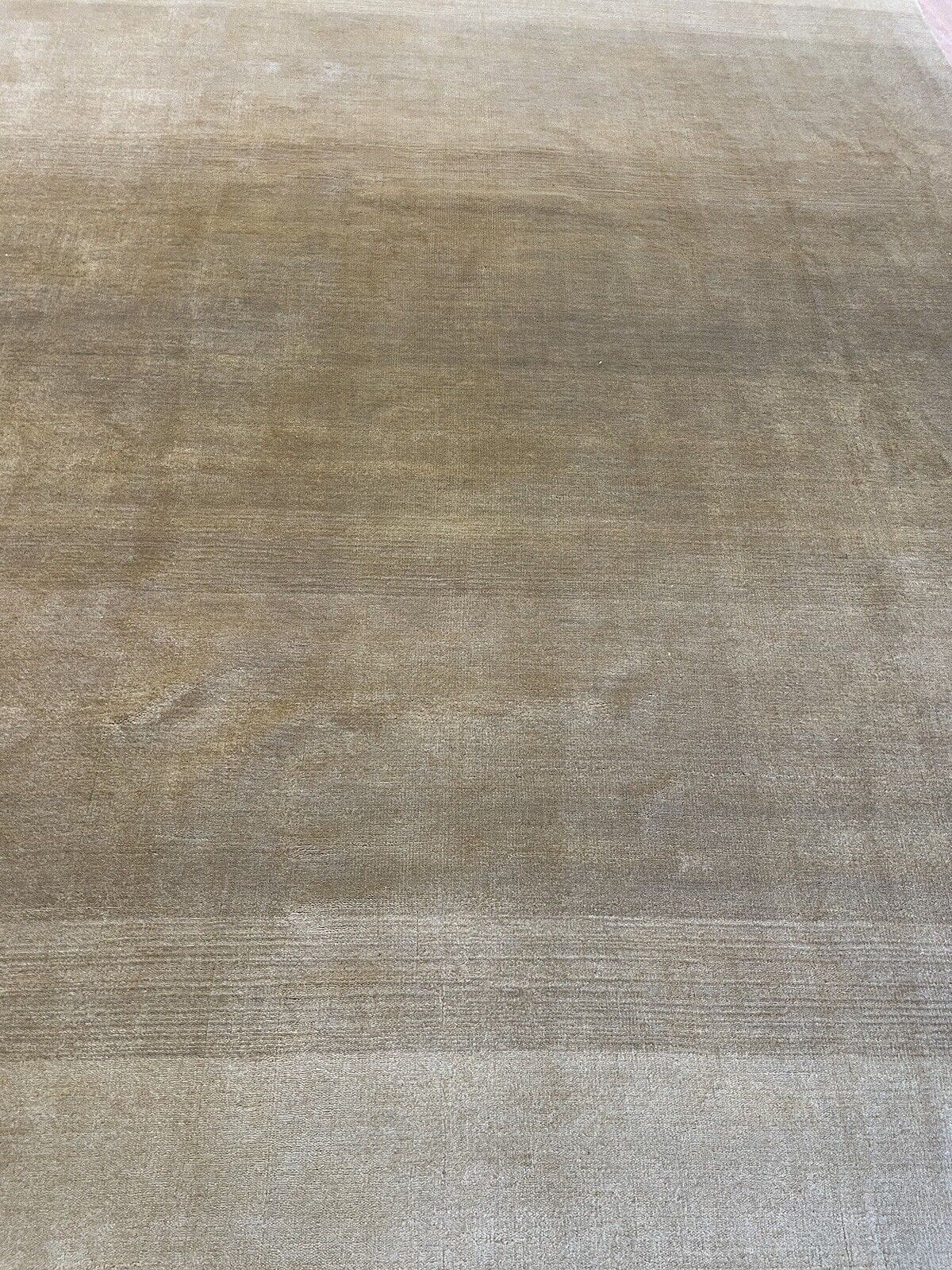
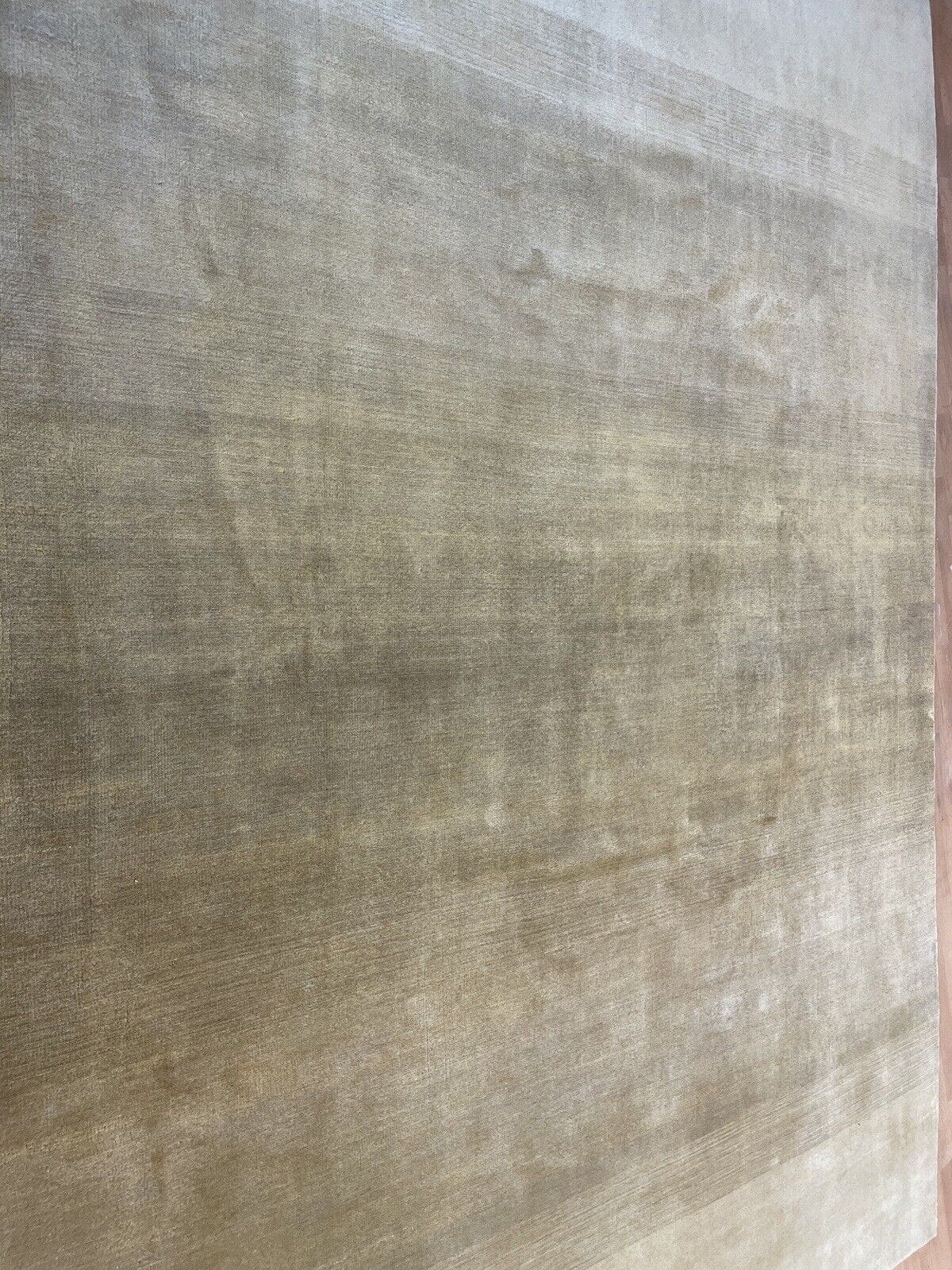
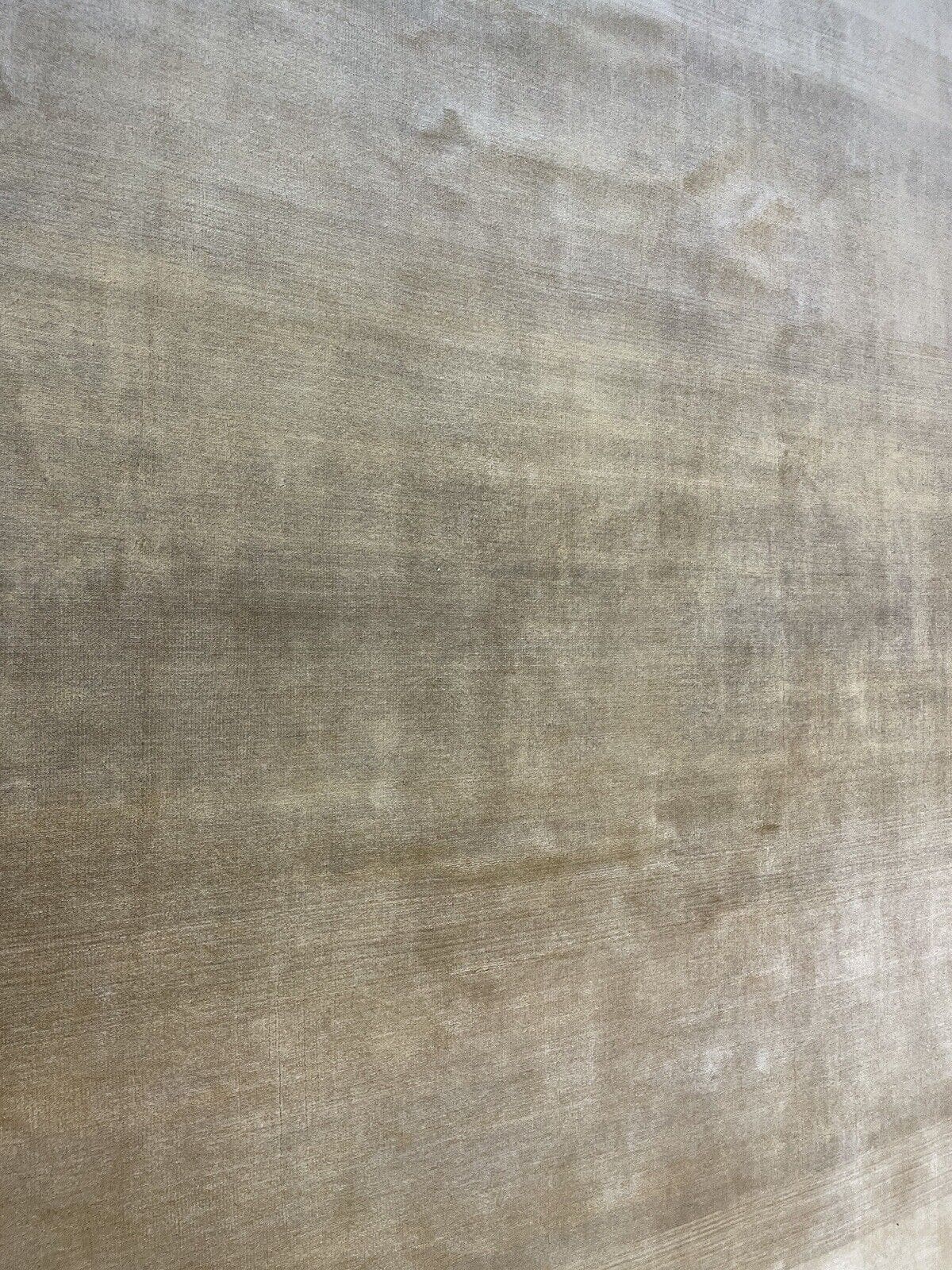
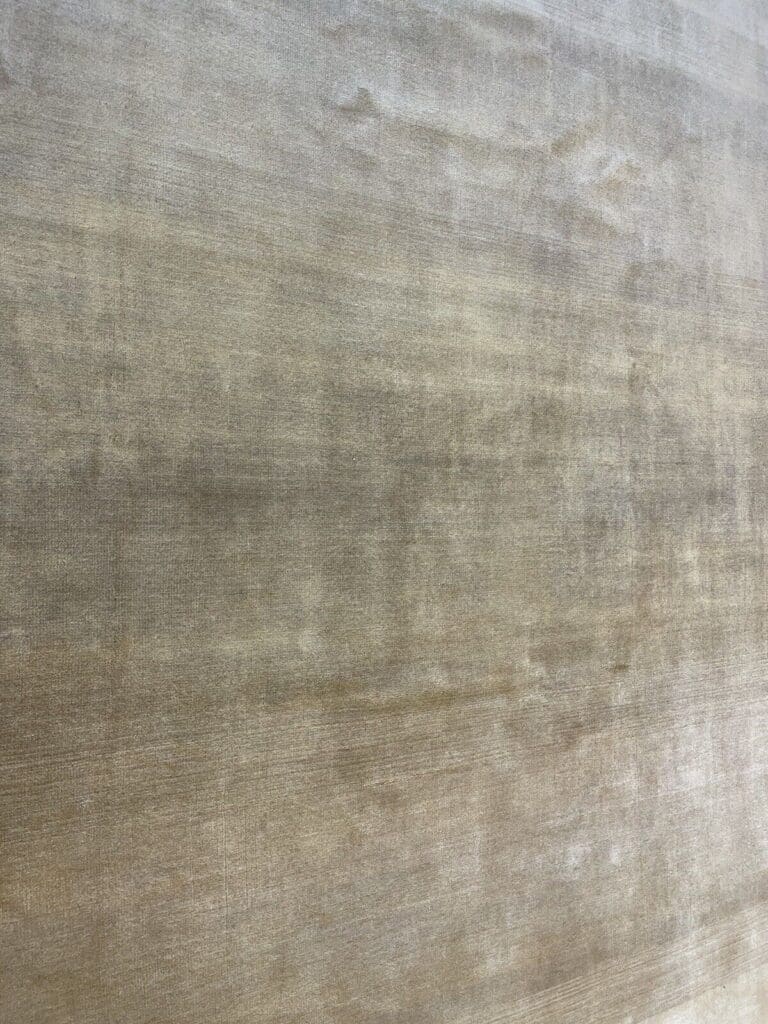
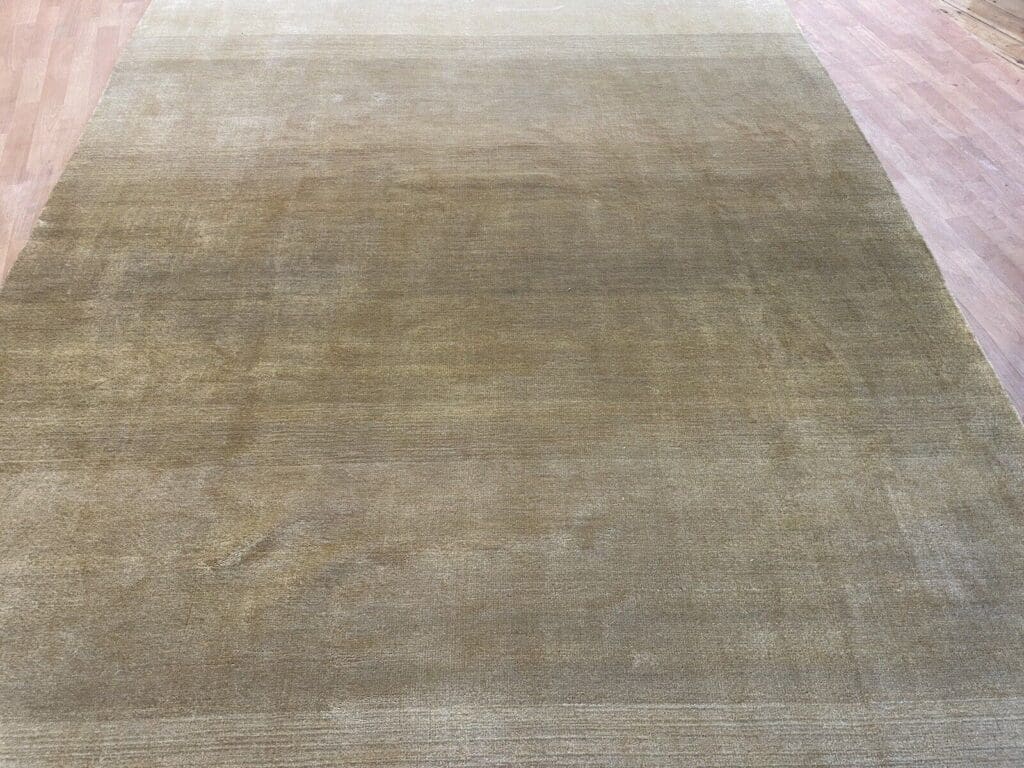
The design is modern, the colour is beige and the pattern is described as plain. These details indicate a restrained appearance without adding motifs that are not specified. A plain pattern may be expressed through a quiet field, limited drawing or a reduced arrangement of forms. It does not necessarily mean that the surface has no structure; it means that elaborate ornament is not the defining visual feature.
Beige is a neutral colour in interior design. It can be placed with pale or dark furniture, wood surfaces and a wide range of textiles. A neutral ground can connect existing elements without requiring a strong contrast. The plain design reinforces this adaptable quality because it does not depend on a particular decorative style or on a heavily ornamented setting.
Oriental rug design has often organised a textile into fields, borders and central compositions. Geometric forms, stylised vegetation, flowers and repeating ornaments can be arranged to create rhythm across the surface. Such devices serve more than a decorative purpose: they give the maker a structure to follow, divide the field into visual zones and balance repetition with variation. Designs are interpreted differently across regions, periods and workshops.
Modern rugs may simplify this inherited vocabulary. A central field can be opened up, a border reduced or an ornament abstracted until only its basic movement remains. A quiet surface can also be developed from the same principles of proportion, rhythm and balance. The pattern of this rug is specifically identified as plain. No medallion, floral motif, geometric symbol or other individual ornament is stated, so none is assigned here.
Loribaft is often connected in the trade with a straightforward, craft-led design language. Its effect can come from the relationship between colour, pile, surface and controlled drawing rather than from a large number of separate motifs. Fine knotting can support the orderly execution of lines and transitions. At the same time, the wool pile remains visible as a material surface, keeping the handmade character present within the modern composition.
The word modern refers to the appearance, not to an industrial manufacturing process. A contemporary design can be made using a traditional hand-knotting technique. This rug brings together a restrained pattern, beige colouring and a hand-knotted wool surface. Its rectangular form supports the use of a clearly defined textile area within different interior arrangements. The result is a meeting of established craft and current, uncomplicated design.
The description states that the rug is suitable for every room. It is therefore not limited to one named area of the home. In a living room, bedroom, hallway or another space, a plain rectangular rug can provide a visual link between furniture and textiles. These examples describe possible settings for the stated design; they do not add any unlisted performance claim about the individual rug.
Special Features
The rug is new and comes with its label. It is beige, rectangular and suitable for every room. It is also suitable for underfloor heating. That feature is relevant to contemporary homes in which heat is distributed through the floor. Its modern style and plain pattern support use in a range of interior settings.
The pure new wool is described as soft, resilient and easy to maintain. Odour-inhibiting properties are also stated, making the rug of interest to allergy sufferers. Other explicitly listed characteristics are the hand-knotted construction, fine knotting, cotton warp and wool pile. Together these details describe its material, construction and practical profile.
Regular vacuuming at low suction is recommended. Stains should be treated promptly with a damp cloth and mild cleaning agent. Professional rug cleaning is also recommended to help preserve the colour and structure. These care instructions relate to the stated pure new wool and the hand-knotted pile.
FAQ
How should I care for my Loribaft Oriental rug?
Vacuum the rug regularly using low suction. If a stain occurs, treat the affected area promptly with a damp cloth and a mild cleaning agent. Avoid rubbing the pile more strongly than necessary so that the surface is treated gently. Professional rug cleaning is also recommended over time to help preserve the colour and structure. These instructions are appropriate to the stated pure new wool and hand-knotted construction.
Where does the Loribaft Oriental rug come from?
The rug comes from India and is therefore an Oriental rug. Loribaft refers to its rug type and associated design and hand-knotting tradition, not automatically to the country of manufacture. Indian production forms part of a wider international history of hand-knotted Oriental rugs and may draw on Persian and other design languages. The origin and the rug designation should consequently be read as separate details.
Can I use this rug in every room?
Yes. The description states that it is suitable for every room. Its modern style, plain pattern, beige colour and rectangular shape can be incorporated into different interior arrangements. It may therefore be used in a living room, bedroom, hallway or another area of the home. It is also suitable for underfloor heating. The pure new wool is described as easy to care for, supporting everyday use.
Additional information
| Design Style | |
|---|---|
| Color | |
| Size | |
| Shape | |
| Origin | |
| Material |
Related products

Persian Rug Qashqai 290 x 192 cm Wool Hand-woven
€ 798
Oriental Rug Kelim 240 x 180 cm Wool Hand-woven
€ 2249
Persian Rug Qashqai 300 x 197 cm Wool Hand-woven
€ 798
Oriental Rug Qashqai 292 x 193 cm Wool Hand-woven
€ 798
Persian Rug Gabbeh 305×260 cm Wool Hand-knotted
€ 2307
Persian Rug Gabbeh 200 x 300 cm Cashmere Hand-knotted
€ 1325
Oriental Rug Loribaft 200 x 300 cm Wool Hand-knotted
€ 1800
Persian Rug Qashqai 286 x 200 cm Wool Hand-woven
€ 798