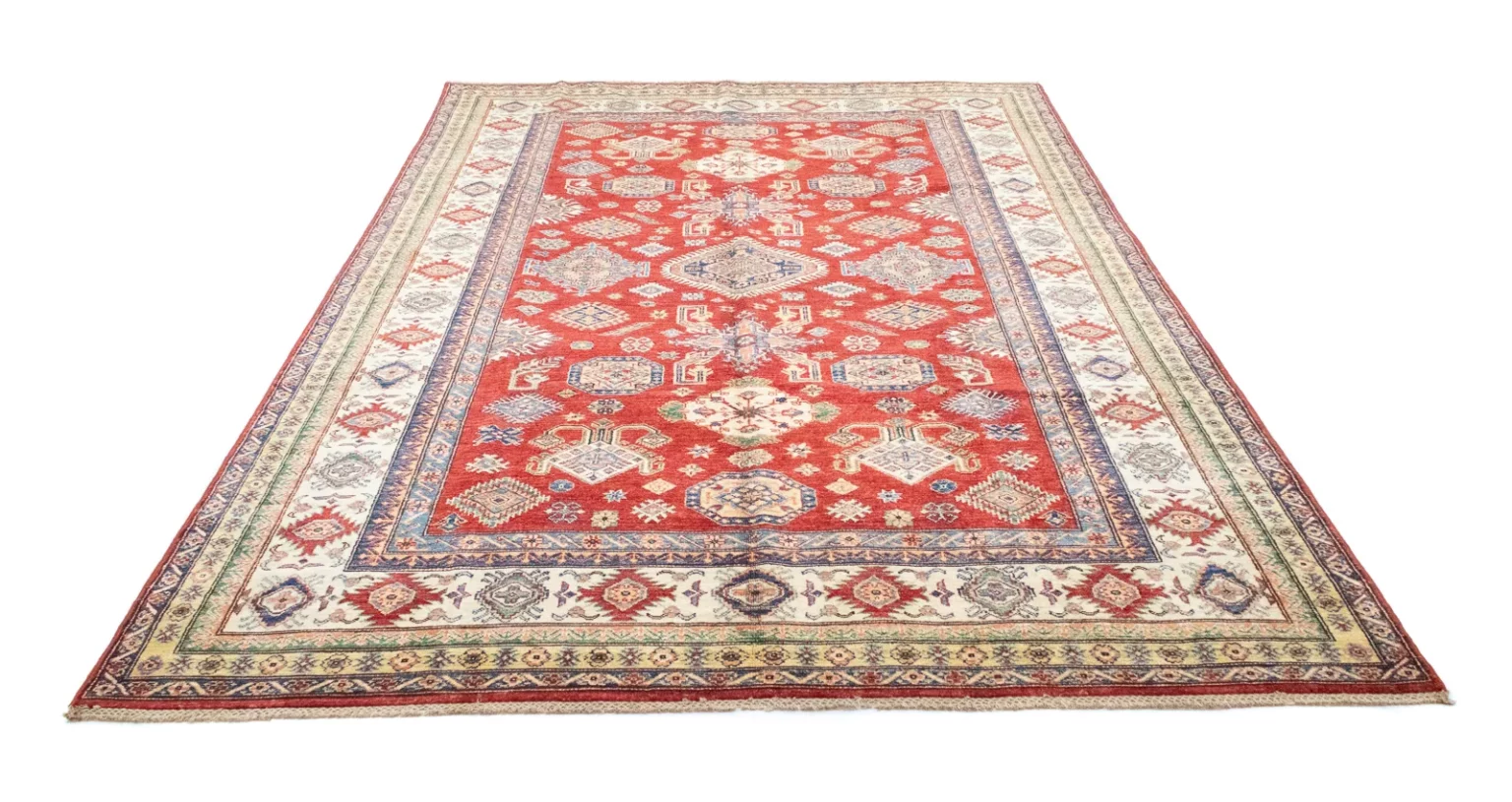
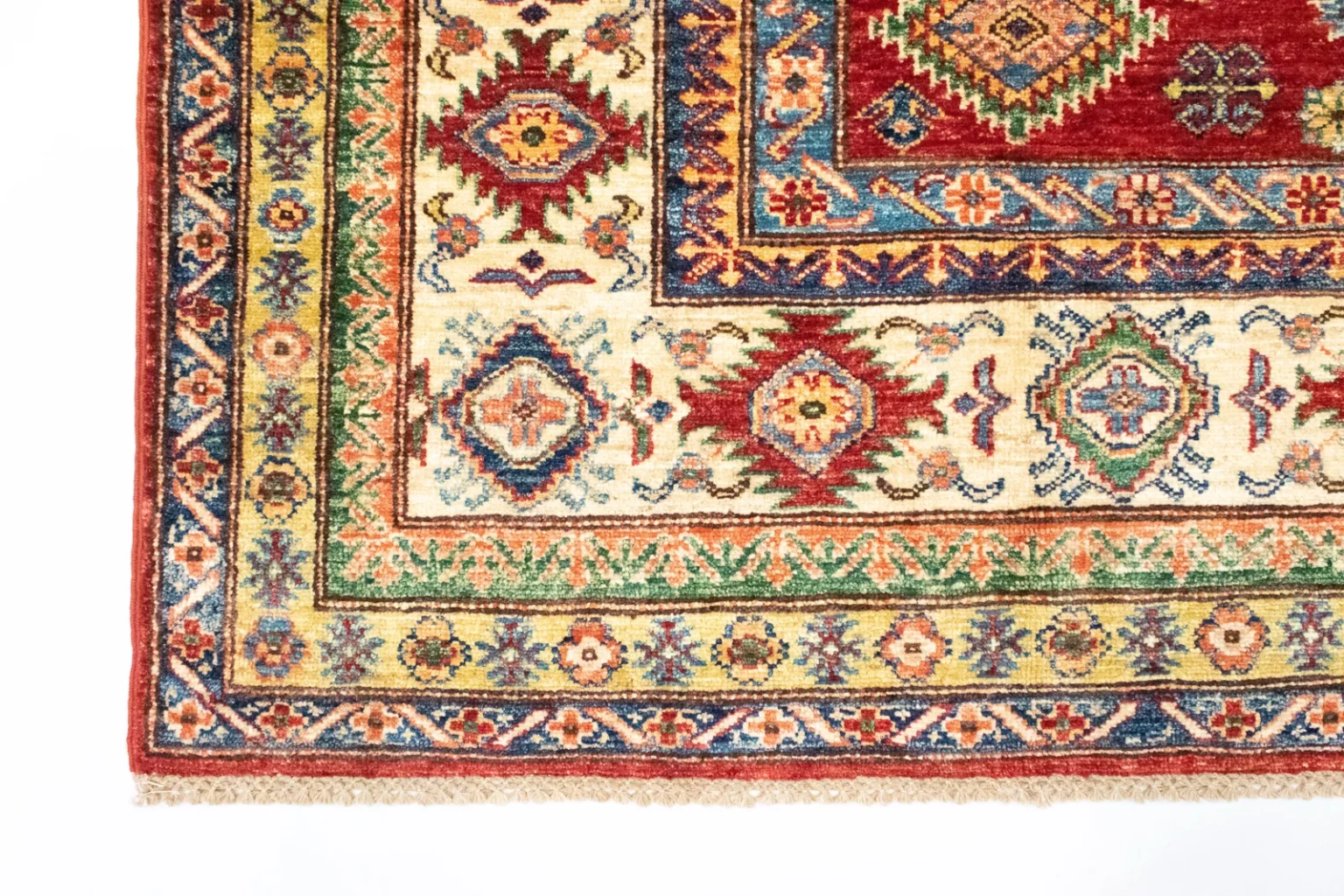
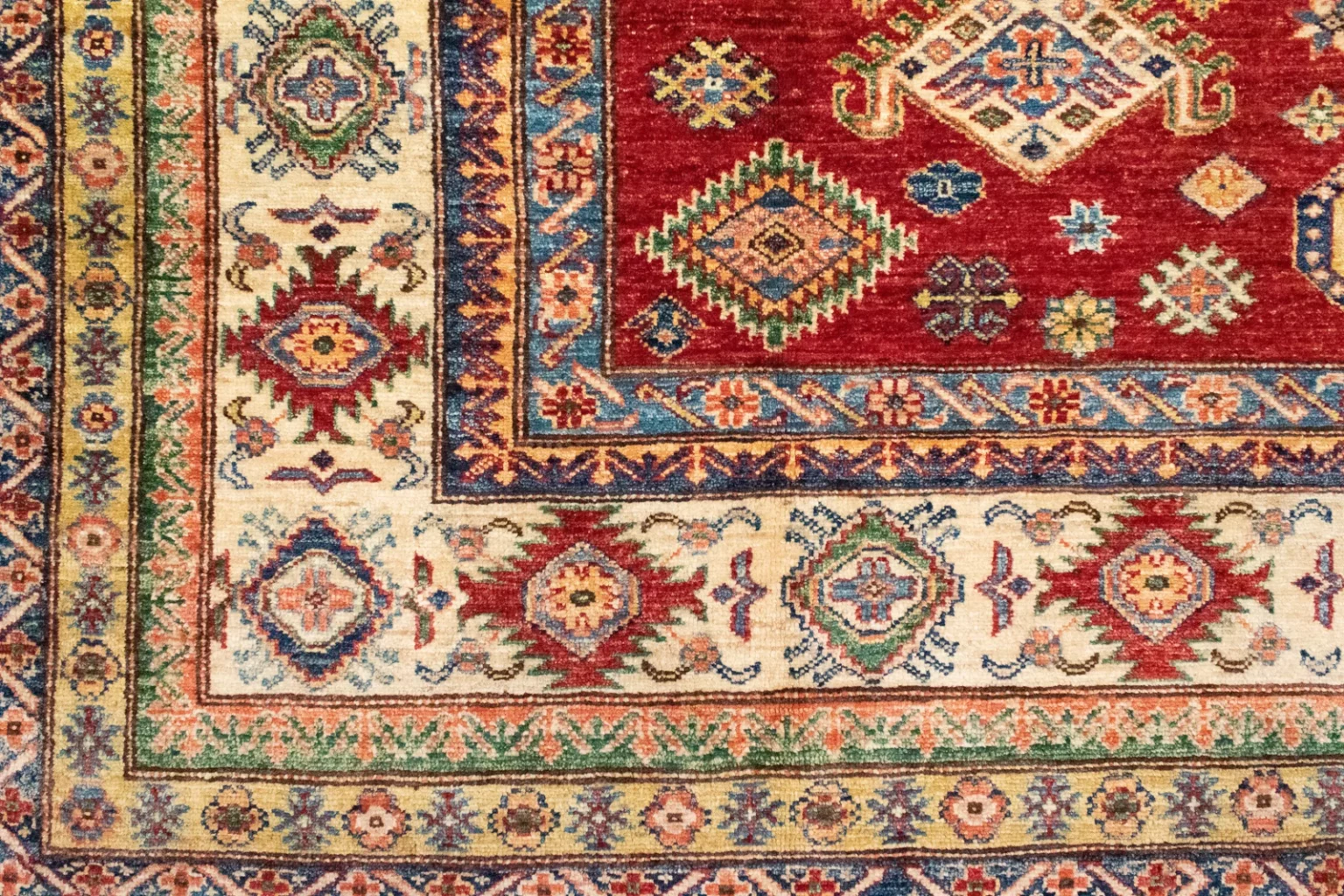
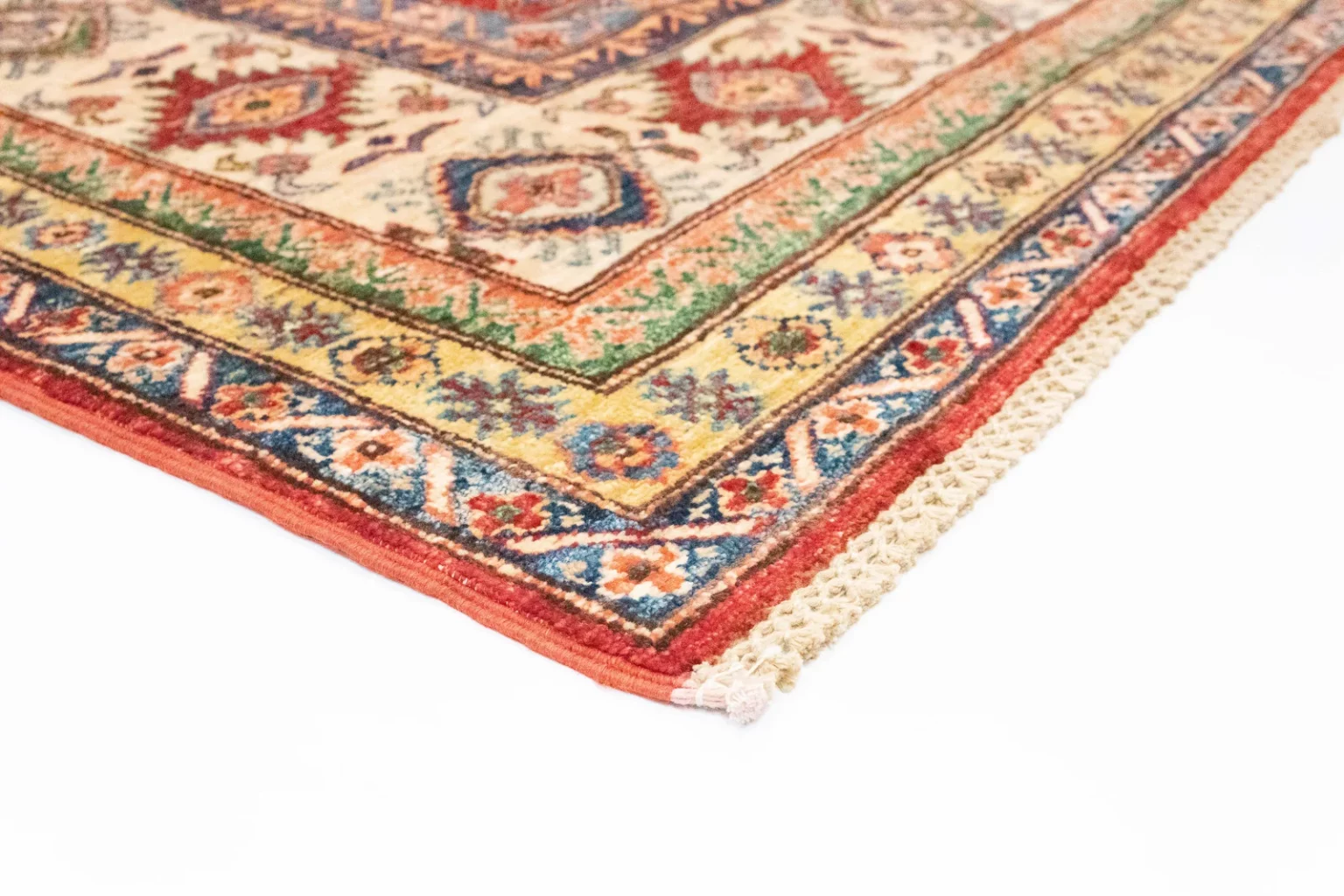
This Kazak Oriental rug is hand-knotted and has a wool pile. Its surface is created knot by knot, so the making of the rug and the drawing of its design are closely connected. The knot density is high. That is one of the stated features of this individual piece and indicates a closely constructed knotted surface.
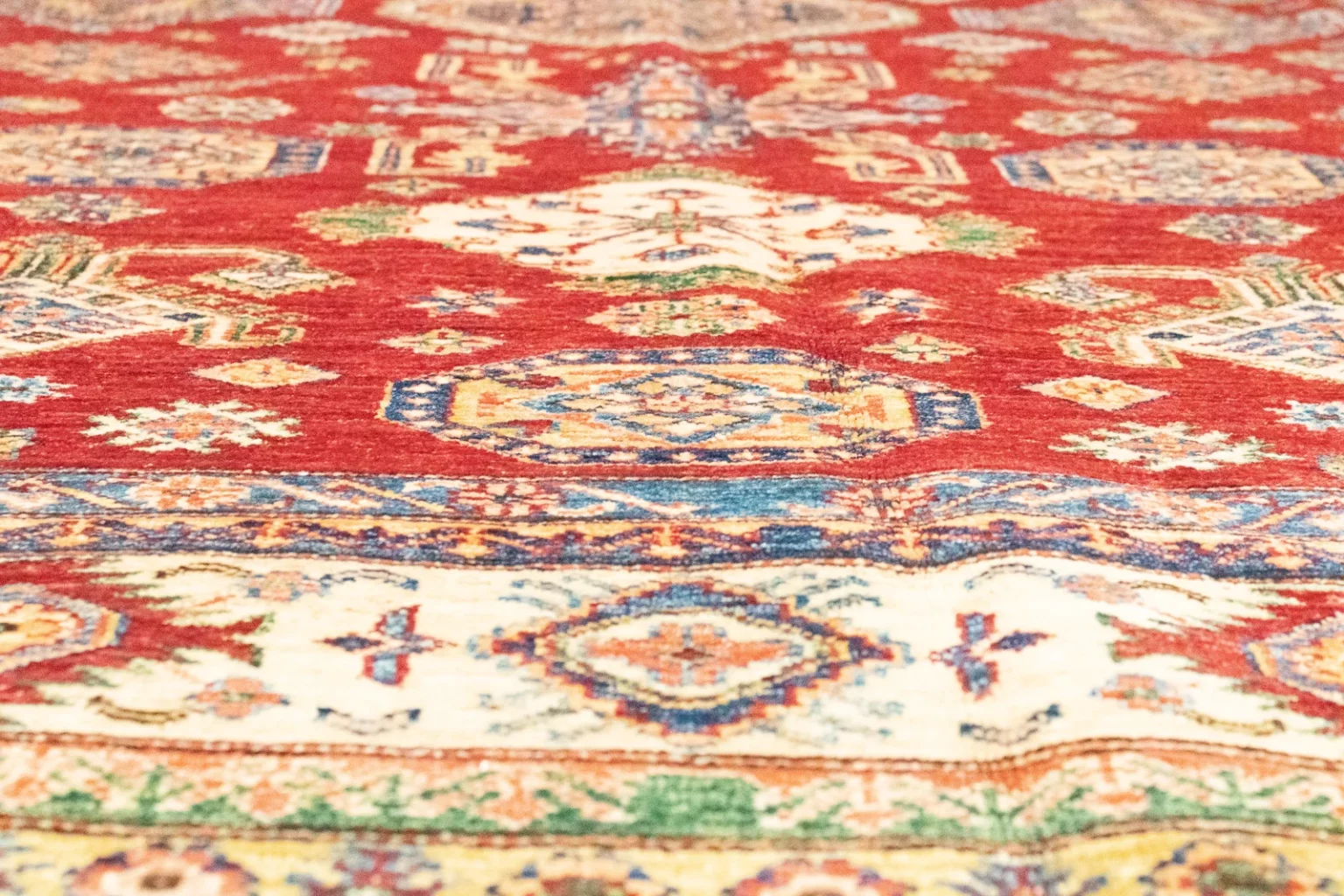
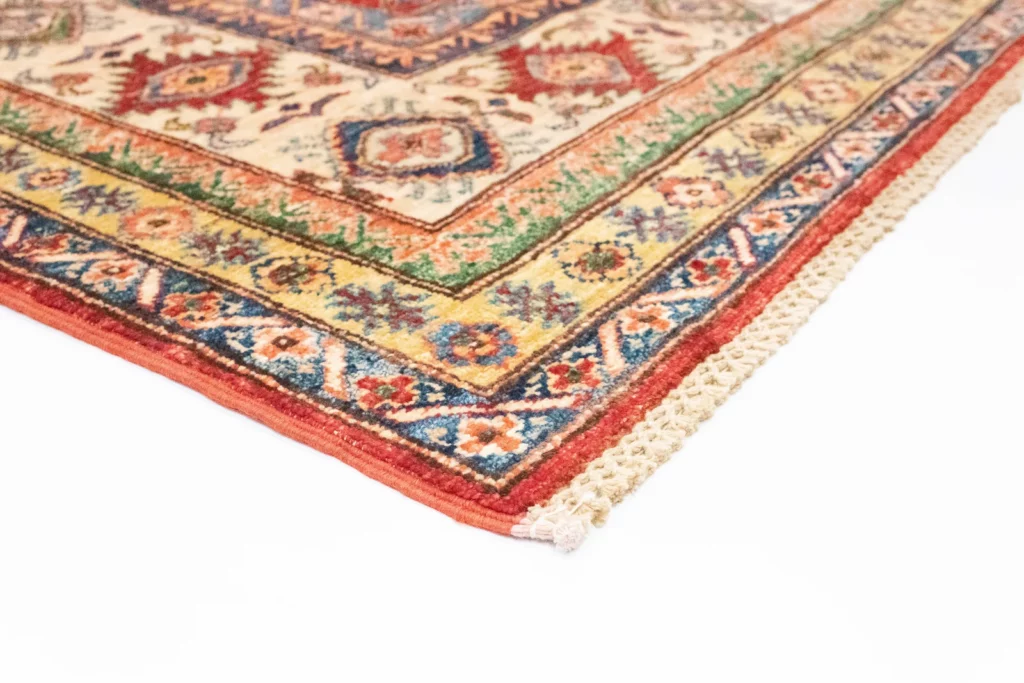
The rug has a short pile. This pile height works with the clear geometric design, allowing lines, shapes and contrasting areas to remain easy to read rather than being visually absorbed by a deep surface. Wool is traditionally used in Oriental rugs because its fibres can be spun, dyed and worked into a resilient pile. For this rug, wool is specified for the pile; no warp material is given.
Hand-knotting does not apply a pattern to an already finished surface. Individual knots build the pile and the visible design at the same time, while the underlying construction provides support. A high knot density can accommodate fine transitions, although the defining visual quality of this rug is its direct, geometric arrangement. No information is provided about silk, blended fibres, a particular knot count or a special weaving structure, so none is added here. The condition is very good.
Origin and Tradition
Kazak rugs are associated with the Caucasus. The Caucasus is a historically diverse mountain and cultural region between the Black Sea and the Caspian Sea. Its carpet traditions developed through the interaction of nomadic, village and urban communities. Kazak weaving traditions are particularly associated with strongly articulated fields, assertive outlines and geometry that can be read immediately. The name therefore points to a regional carpet tradition and a recognizable design vocabulary; it does not automatically identify the production place of every rug carrying the name.
This rug is assigned to the Caucasus and was knotted in Pakistan/Afghanistan. Both details are relevant and describe different aspects of the piece. The Caucasus identifies the tradition to which the Kazak rug belongs, while Pakistan/Afghanistan identifies where the rug was knotted. A Kazak rug made in Pakistan or Afghanistan is therefore not a Persian rug from Iran. It is an Oriental rug carrying a Caucasian design tradition while having a different stated place of manufacture.
Caucasian carpet history is marked by the transmission of shapes, colours and structural ideas. Designs could be passed from one generation to another, adapted in neighbouring villages and later taken up by workshops outside the original region. A motif can consequently retain its connection to a regional tradition even when the particular rug was made elsewhere. For that reason, the design tradition, the regional attribution and the actual production location should be kept separate when describing a Kazak rug.
Hand-knotting connects the rug with a working method in which design and manufacture develop together. The maker follows a planned arrangement and places knots one after another, gradually forming the surface. Different areas can develop their own preferences in proportion, outline and the distribution of colour. No further information is supplied for this example about a workshop, village, maker, age or year of manufacture. The stated facts are its Caucasian attribution, its manufacture in Pakistan/Afghanistan and its hand-knotted construction.
The word Kazak is commonly used in carpet trade and carpet study as a reference to this Caucasian design world. It should not be treated as a synonym for Iran or Persia. General examples of other origins do not alter the classification of this piece. A careful description keeps the history of the design visible while avoiding an unsupported claim of Iranian manufacture. That distinction is especially useful for rugs whose established regional patterns continue to be produced in more than one country.
The Caucasus has long been a meeting point of cultural routes, which helps explain the variety within its textile traditions. At the same time, a regional label is not a guarantee of one fixed palette, one exact layout or one single construction. Individual rugs can differ in scale, drawing and finish. The reliable description of this example remains limited to its Kazak attribution, Caucasian tradition, Pakistani/Afghan knotting, hand-knotted construction and clear geometric pattern.
Design and Pattern
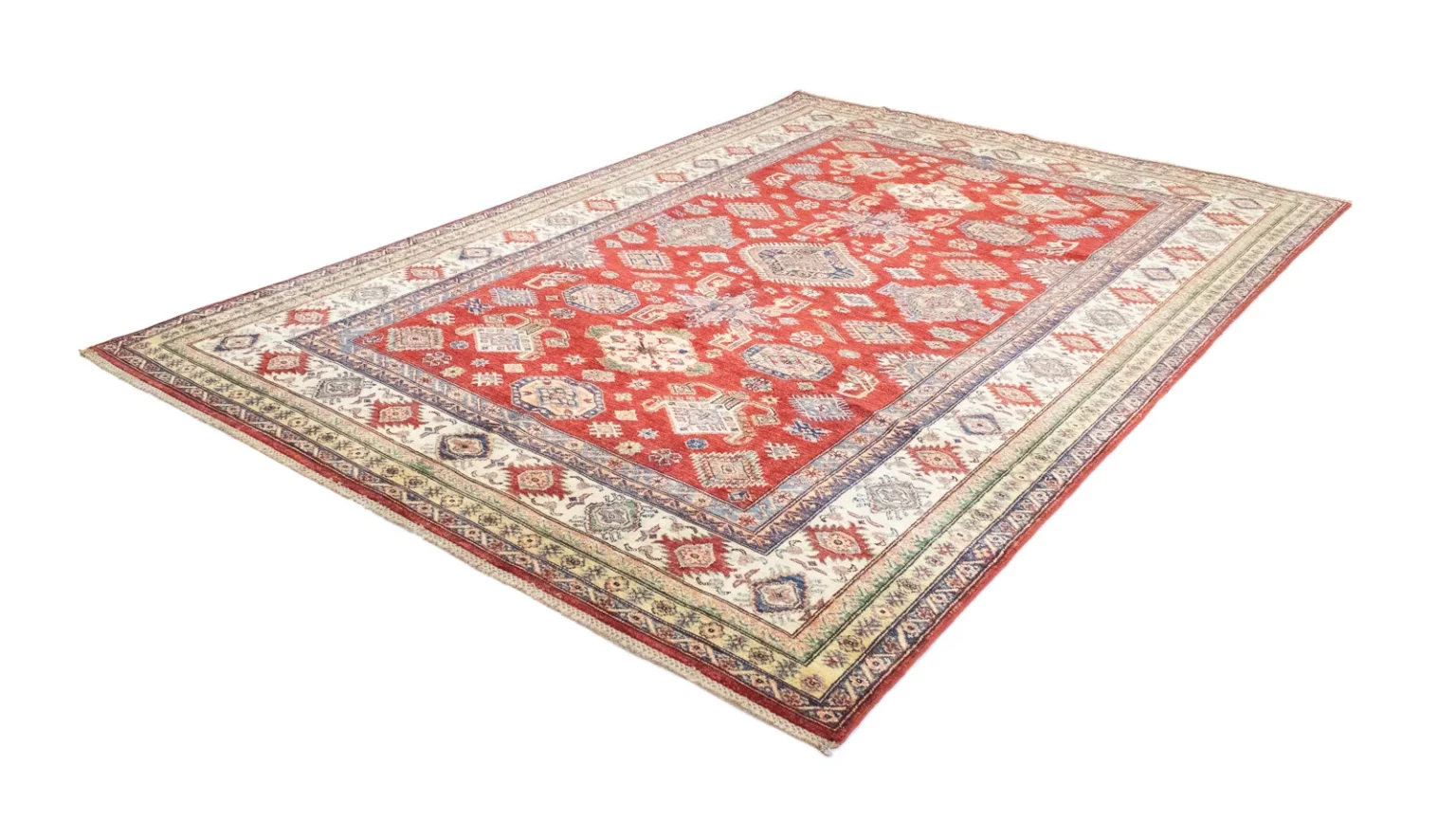
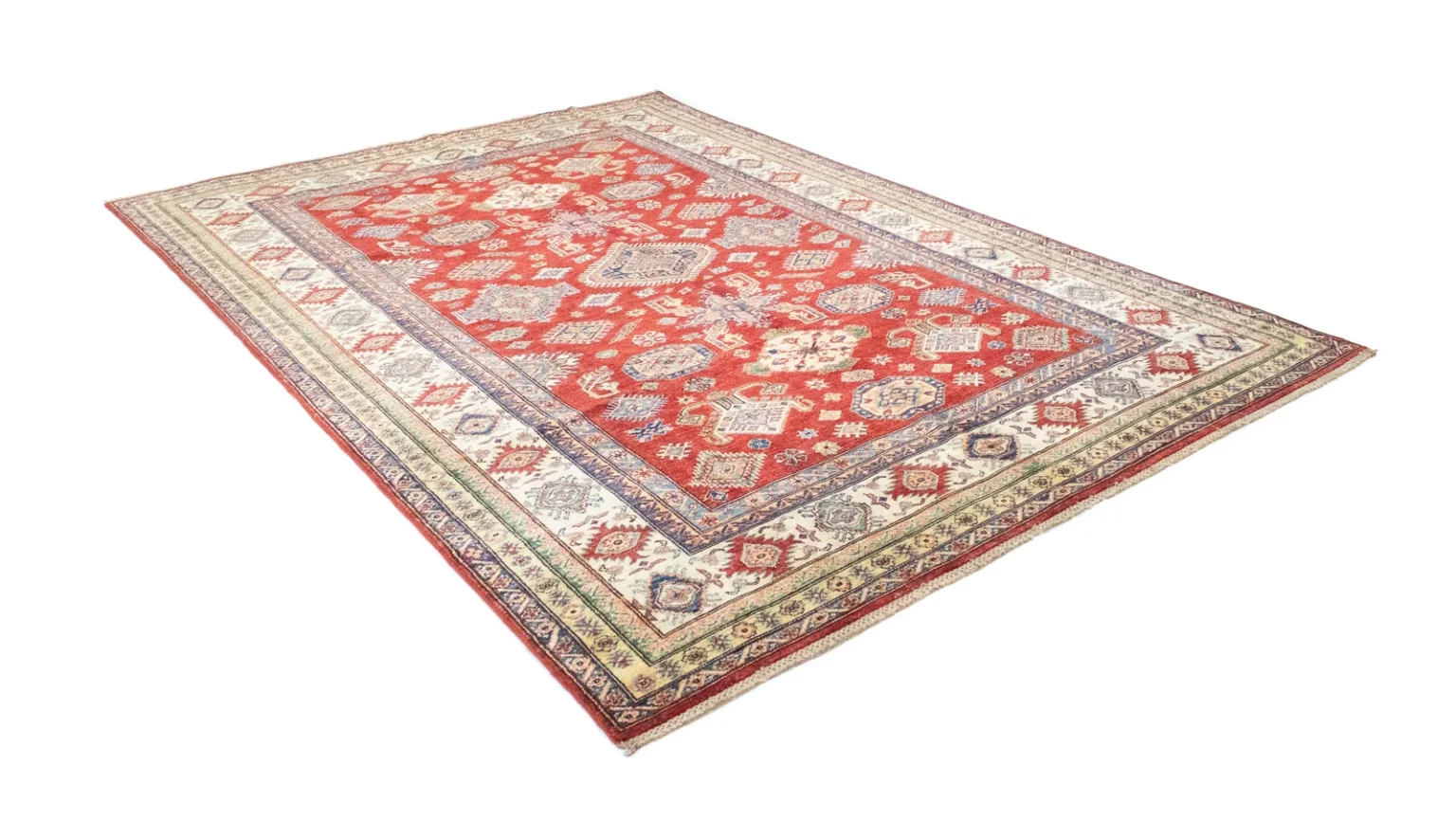
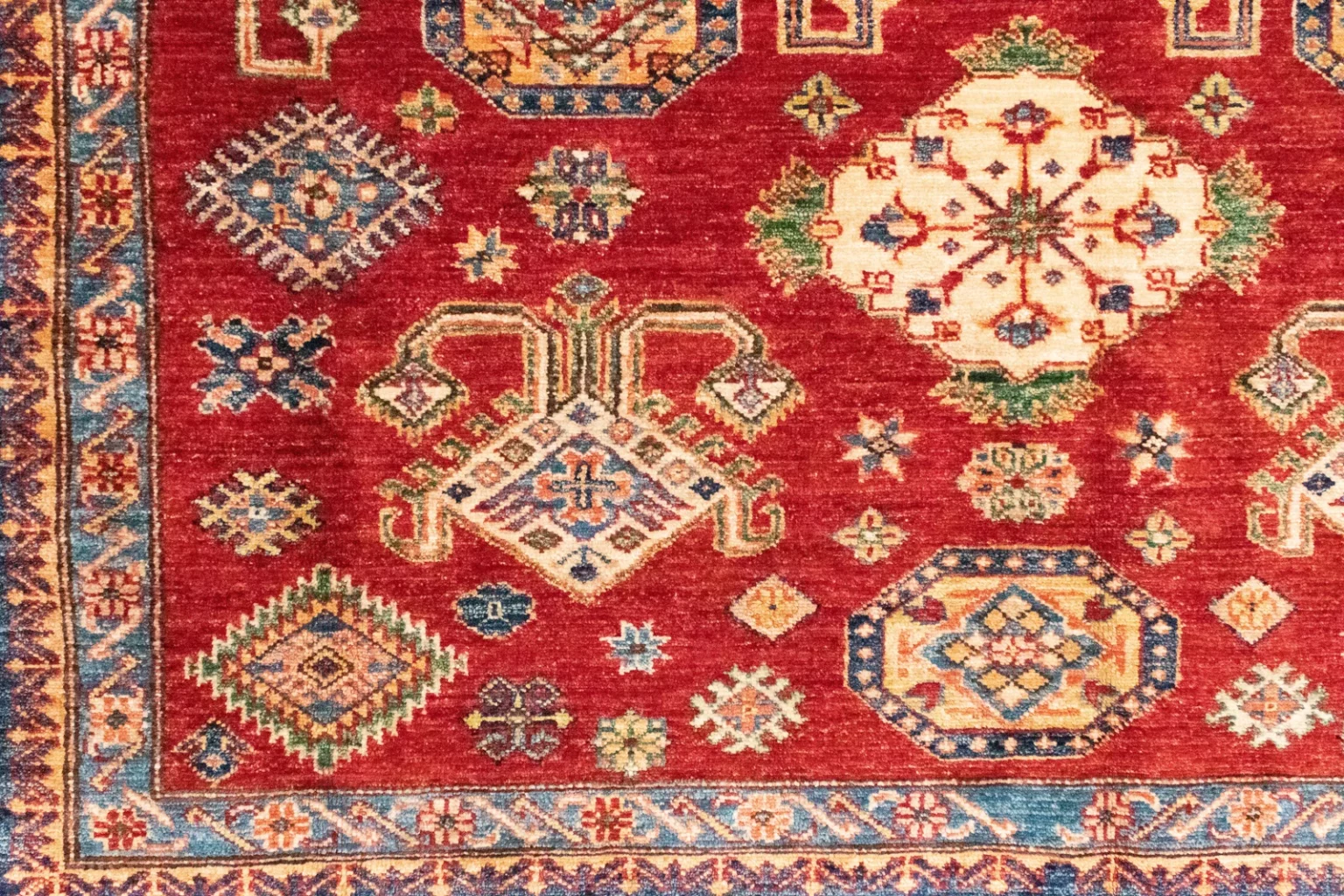
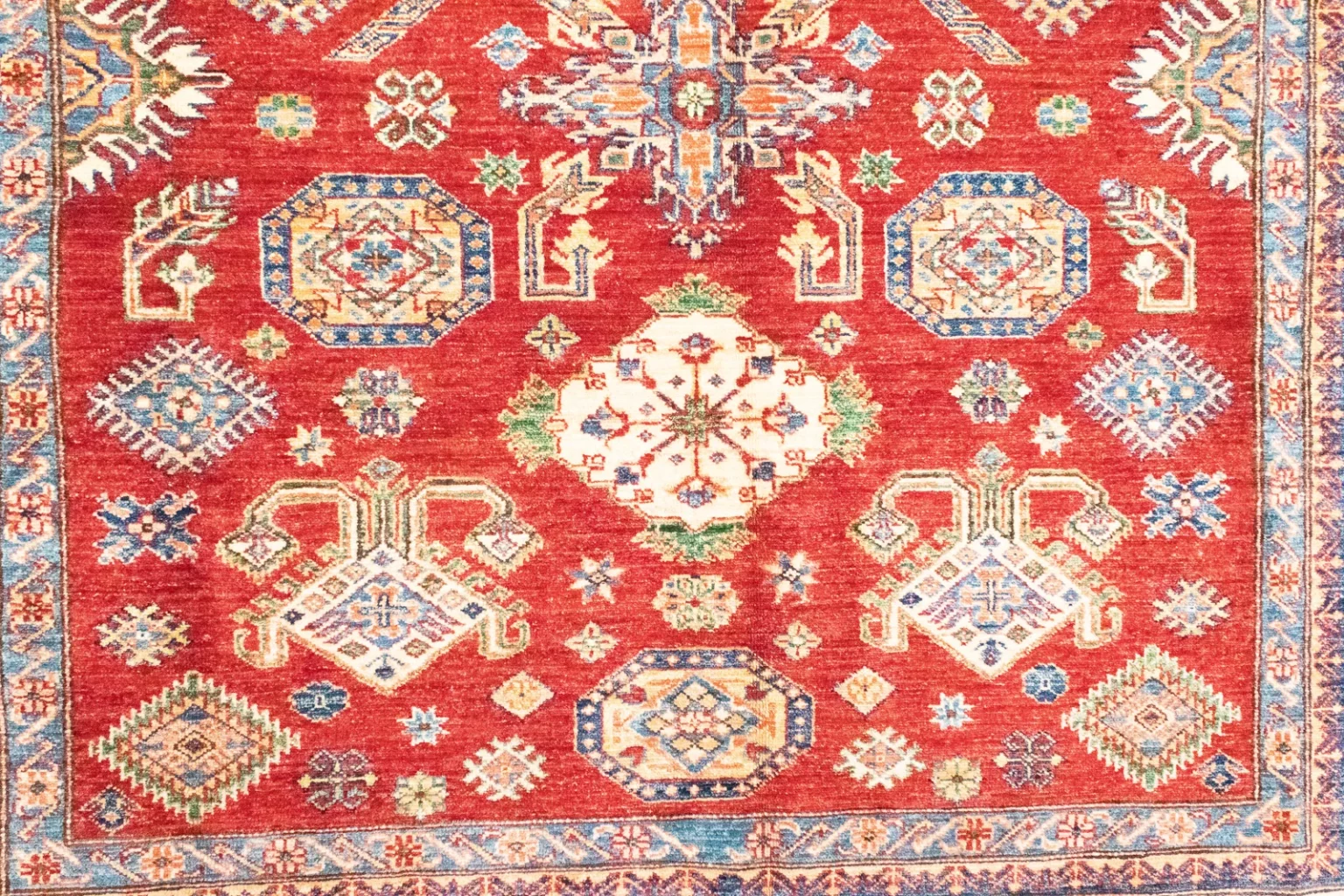
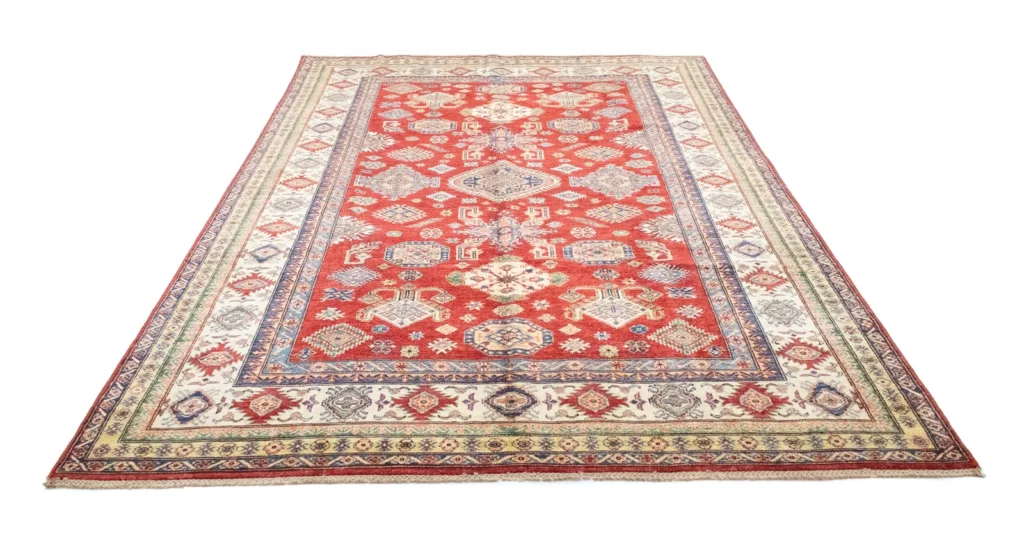
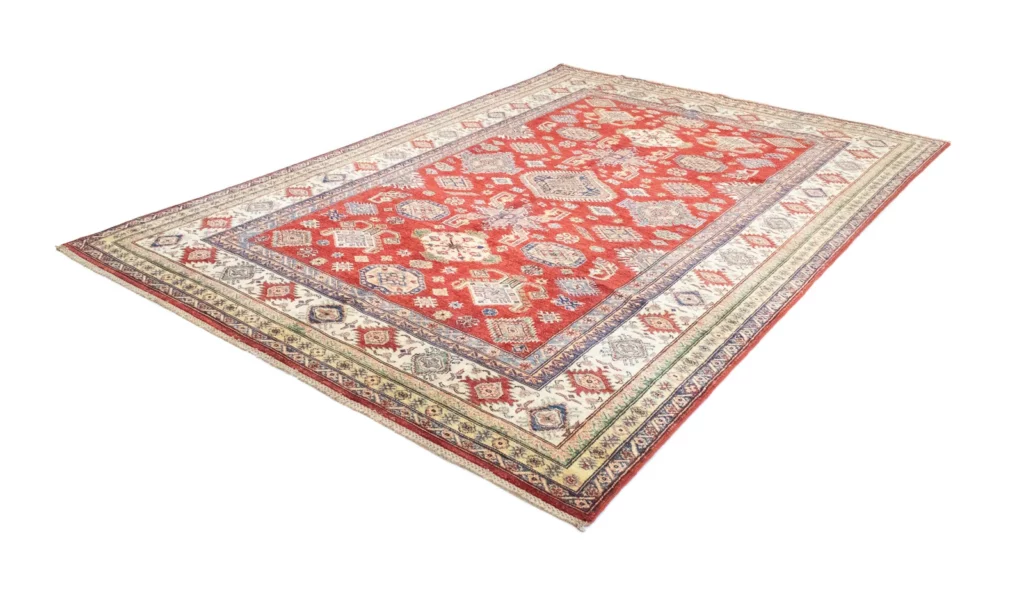
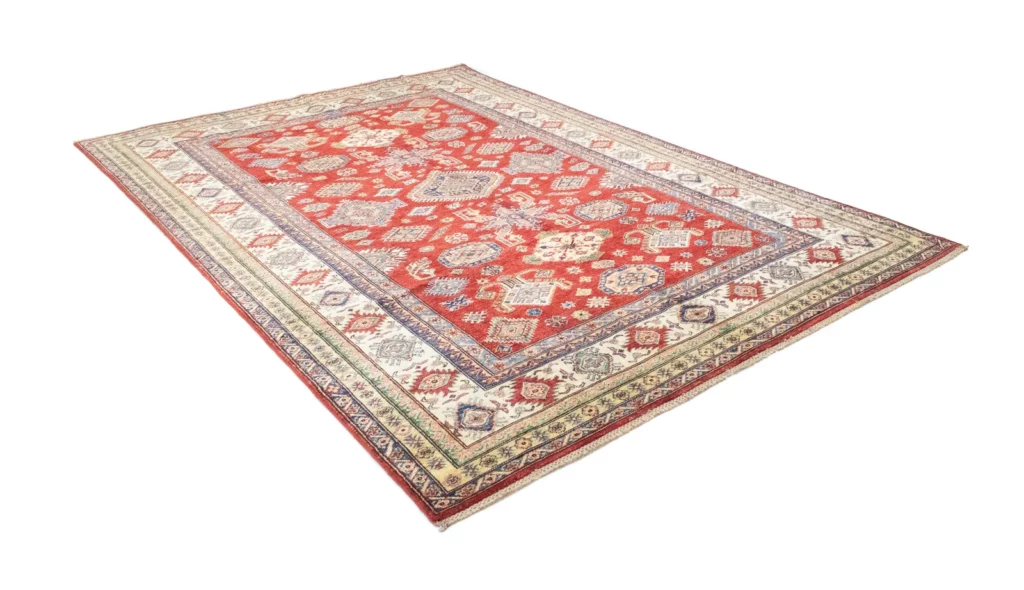
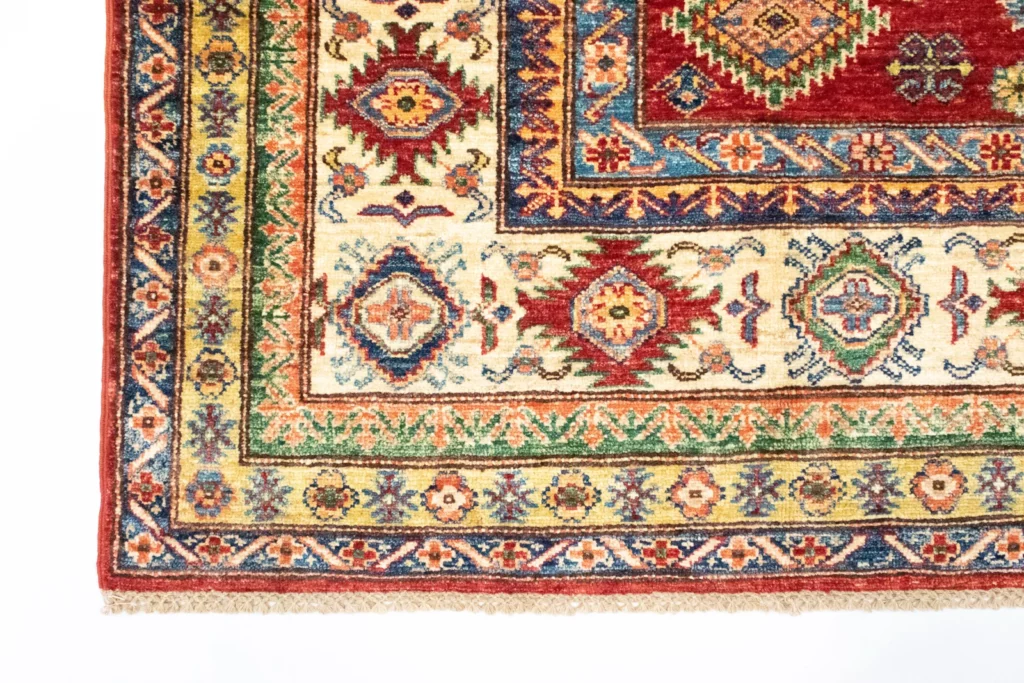
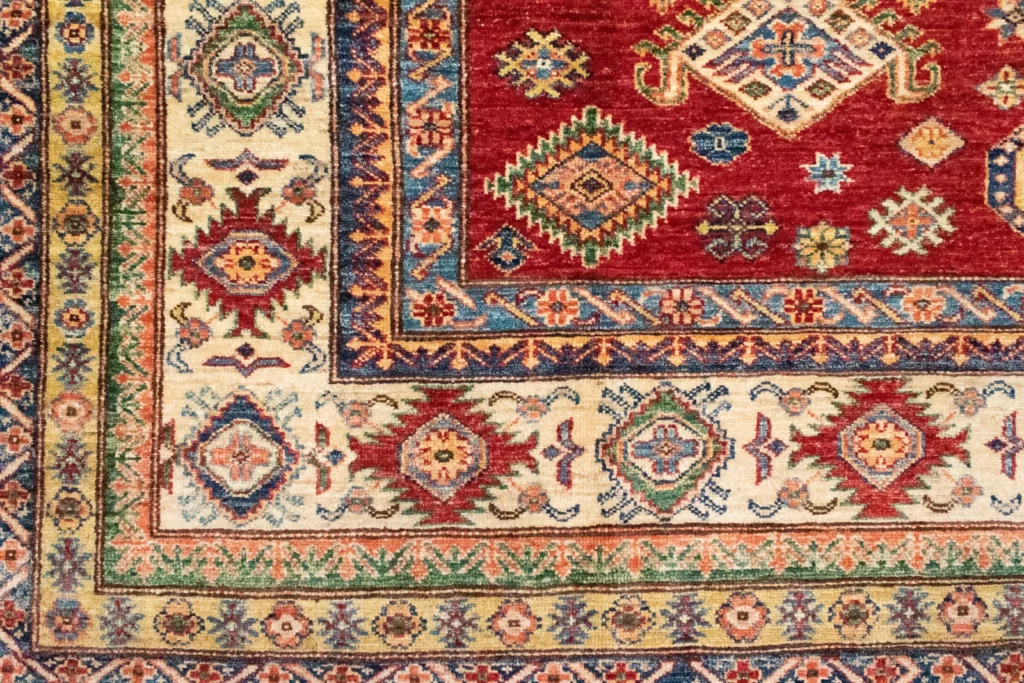
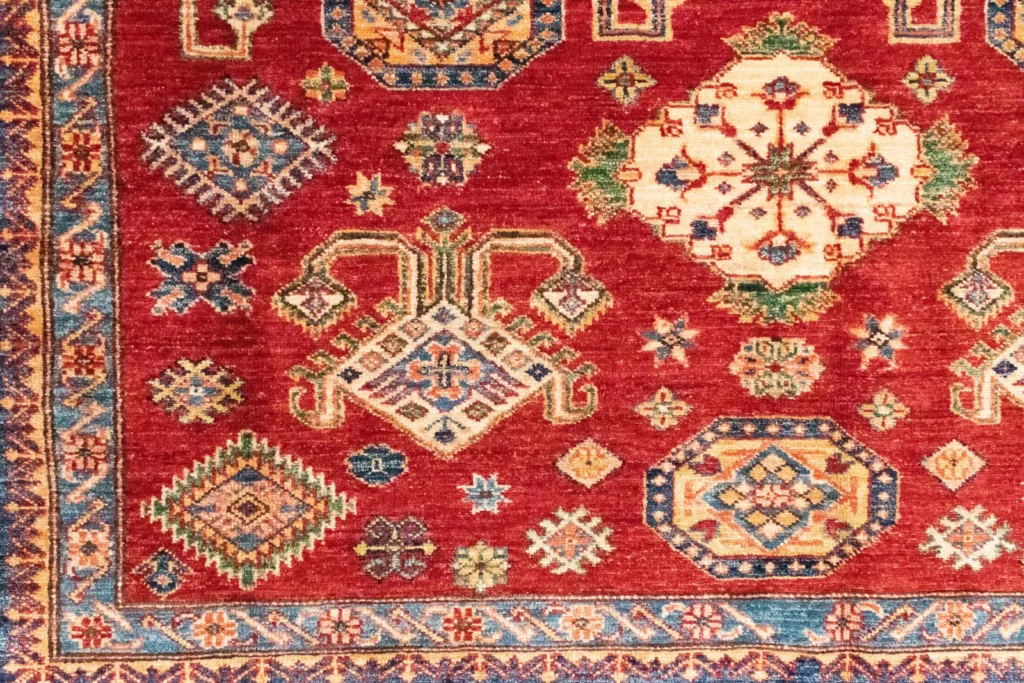
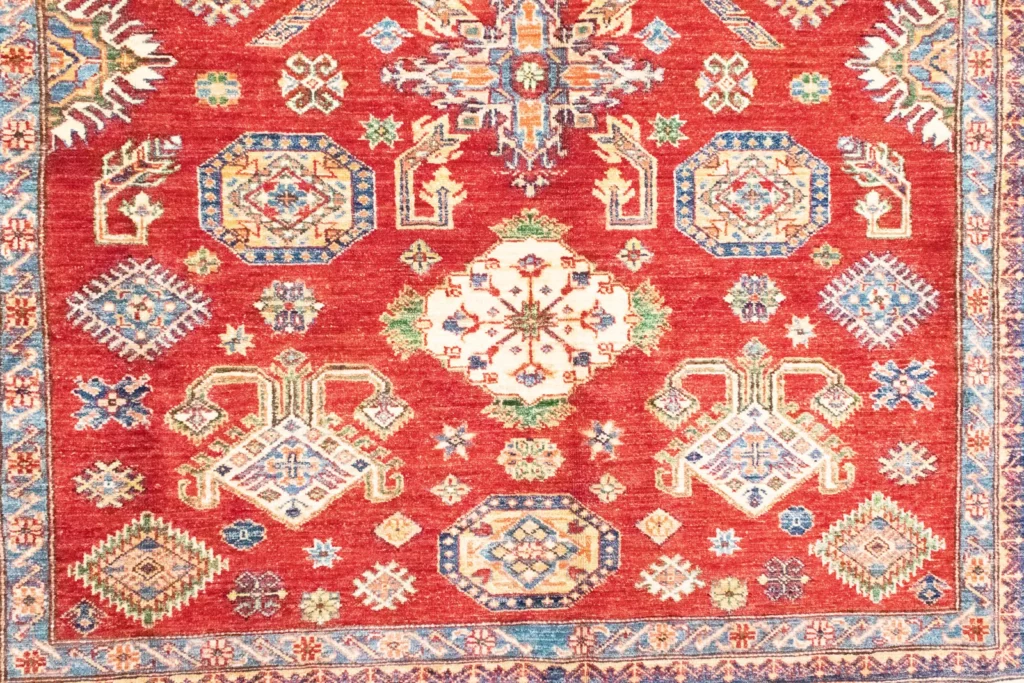
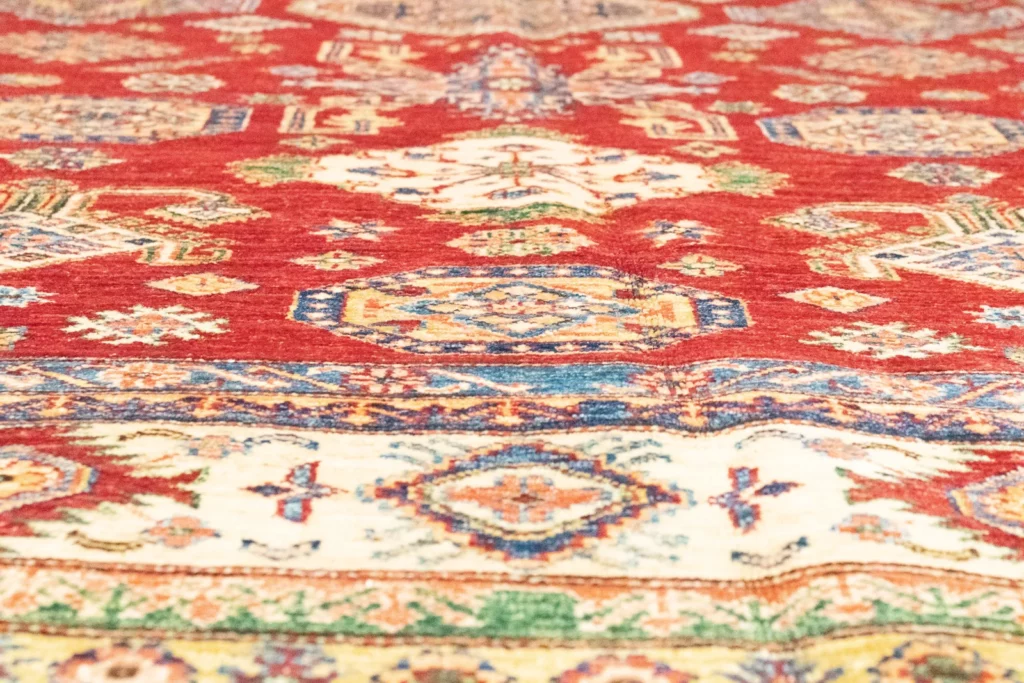
The pattern of this rug is geometric and clear. Its appearance is therefore based on lines, angles, defined areas and repeated forms rather than on a purely flowing floral composition. A clear geometric layout gives the eye an identifiable order: separate elements can be distinguished, repeated units can create rhythm, and outlines can establish the character of the motifs.
Kazak designs are generally known for geometric forms and lively, firmly placed compositions. The wider Kazak vocabulary can include large medallions, stylized plant forms, hooked devices, diamonds and borders. These are features of the broader tradition, not claims that each named element appears on this particular rug. The secure statement about this example is its overall geometric and clearly organized pattern.
In a geometric Oriental rug, much of the visual effect comes from the relationship between field and outline. Repeated signs may establish a measured rhythm, while a border can frame an inner area. Changes of direction make forms distinct, and smaller repeated units can organize transitions. In Caucasian design traditions, this direct legibility is an important means of expression. It does not exclude ornament; instead, ornament is presented through simplified signs and an articulated composition.
The Kazak design language often treats motifs as symbols rather than naturalistic pictures. A leaf, flower or animal may be reduced to a few planes, angles or hooks. Diamonds, stars and stepped forms can likewise function as independent ornamental building blocks. The colour palette of this rug is not specified. For that reason, no particular colours, medallion, border or individual motif is presented as a confirmed feature of this example.
The clear geometry corresponds well with a short pile and a hand-knotted surface, without requiring any additional claim about the rug. Its visual identity can be described precisely without over-interpreting the drawing: it belongs to the Kazak tradition and has a clear geometric pattern. The piece demonstrates how a regional design vocabulary can continue in a rug knotted outside the Caucasus while remaining connected to that tradition.
More generally, Kazak rugs can be distinguished from other regional design systems by their emphatic geometry and compact visual language. Tabriz, Nain and Isfahan, for example, belong to different historical and stylistic contexts and must not be read as the origin of this rug. Such comparisons only show the breadth of Oriental carpet traditions. The correct description here is a Kazak-design Oriental rug, associated with the Caucasus and knotted in Pakistan/Afghanistan.
Special Features
The specifically stated features are the high knot density, short pile and hand-knotted construction. The rug also has a wool pile, a clear geometric pattern and a very good condition. Together, the compact construction, the short pile and the legible geometry define the factual profile of this individual rug.
The distinction between attribution and production place is particularly important. The rug belongs to the Kazak tradition associated with the Caucasus, but it was knotted in Pakistan/Afghanistan. It is therefore described as an Oriental rug, not as a Persian rug from Iran. No information is given about its age, signature, exact workshop, colours, warp material or precise knot count.
FAQ
What does Kazak mean for this Oriental rug?
Here, Kazak refers to the Caucasian carpet tradition and its geometric design vocabulary. This rug is associated with the Caucasus, but it was knotted in Pakistan/Afghanistan. Kazak therefore does not mean that the piece was made in Iran. The term identifies the regional design tradition, while the stated knotting location identifies where this particular rug was produced.
How can its construction be described?
The rug is described as hand-knotted. Its other stated construction features are a high knot density, a short pile and wool in the pile. In a hand-knotted rug, the surface is built one knot at a time. No exact knot count or warp material is supplied. The very good condition is a condition statement, not evidence of a particular age or place of origin.
Is this a Persian rug from Iran?
No. The rug is associated with the Caucasus and was knotted in Pakistan/Afghanistan. The correct category is therefore Oriental rug. A Kazak pattern can belong to a Caucasian tradition without making the individual rug an Iranian Persian rug. Keeping the design origin separate from the actual production location gives the piece an accurate description.
To provide the best experiences, we use technologies like cookies to store and/or access device information. Consenting to these technologies will allow us to process data such as browsing behavior or unique IDs on this site. Not consenting or withdrawing consent, may adversely affect certain features and functions.
Functional Always active
The technical storage or access is strictly necessary for the legitimate purpose of enabling the use of a specific service explicitly requested by the subscriber or user, or for the sole purpose of carrying out the transmission of a communication over an electronic communications network.
Preferences
The technical storage or access is necessary for the legitimate purpose of storing preferences that are not requested by the subscriber or user.
Statistics
The technical storage or access that is used exclusively for statistical purposes.The technical storage or access that is used exclusively for anonymous statistical purposes. Without a subpoena, voluntary compliance on the part of your Internet Service Provider, or additional records from a third party, information stored or retrieved for this purpose alone cannot usually be used to identify you.
Marketing
The technical storage or access is required to create user profiles to send advertising, or to track the user on a website or across several websites for similar marketing purposes.

 SECURE PAYMENT
 SHIPPING PARTNERS


