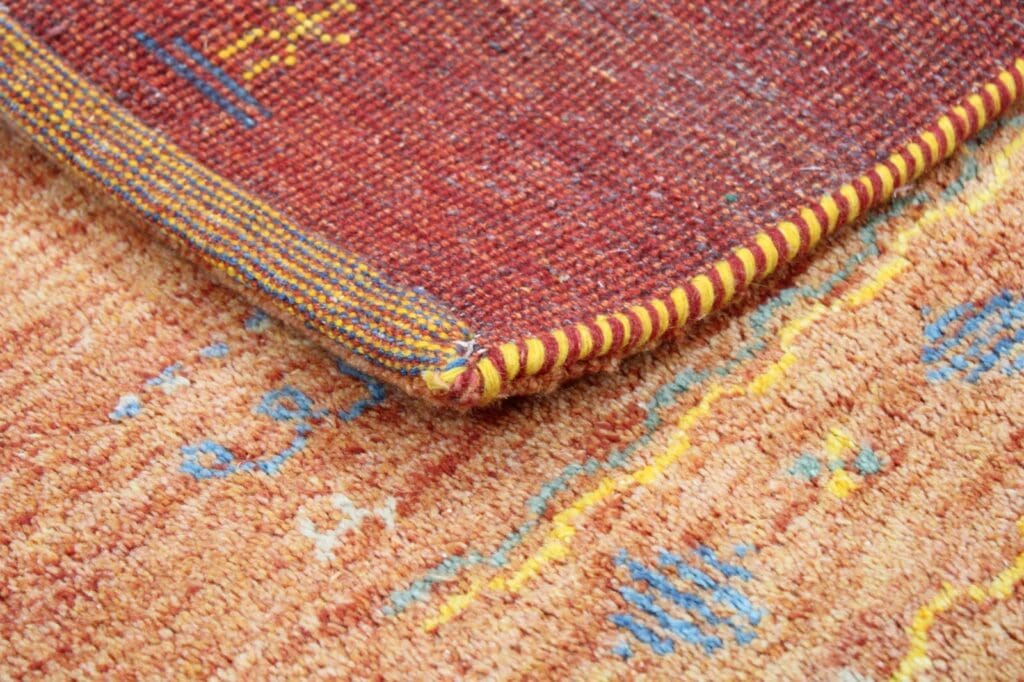
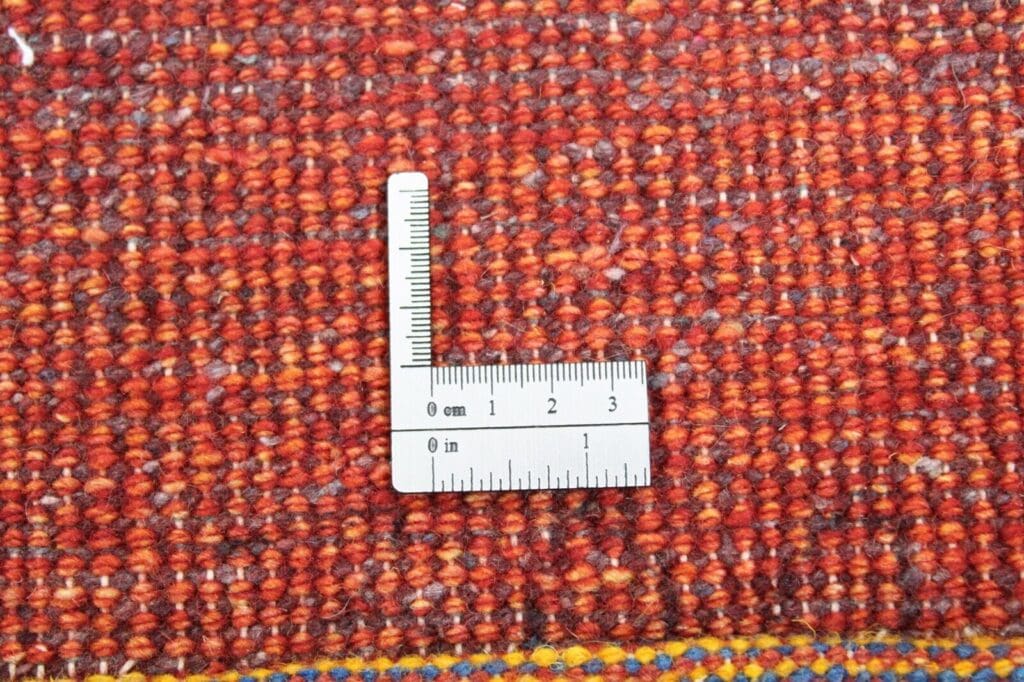
This Gabbeh Oriental rug is hand-knotted with a pile made of 100% wool. Its warp is made of 100% cotton. These materials have different roles within the rug’s construction. The wool forms the visible and tactile surface, while the cotton warp provides the foundation into which the knots are worked. This combination is established in the construction of many handmade Oriental rugs.
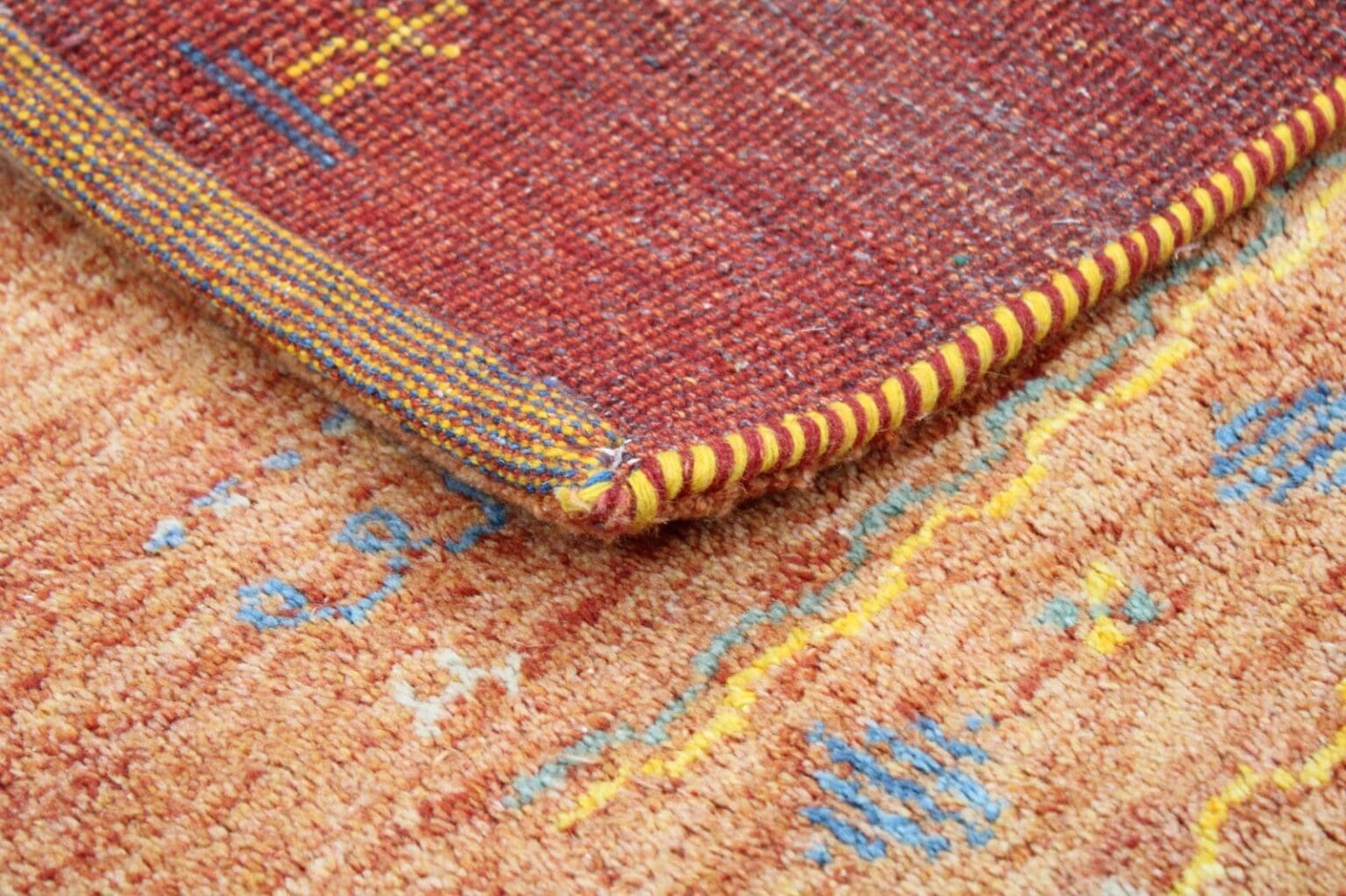
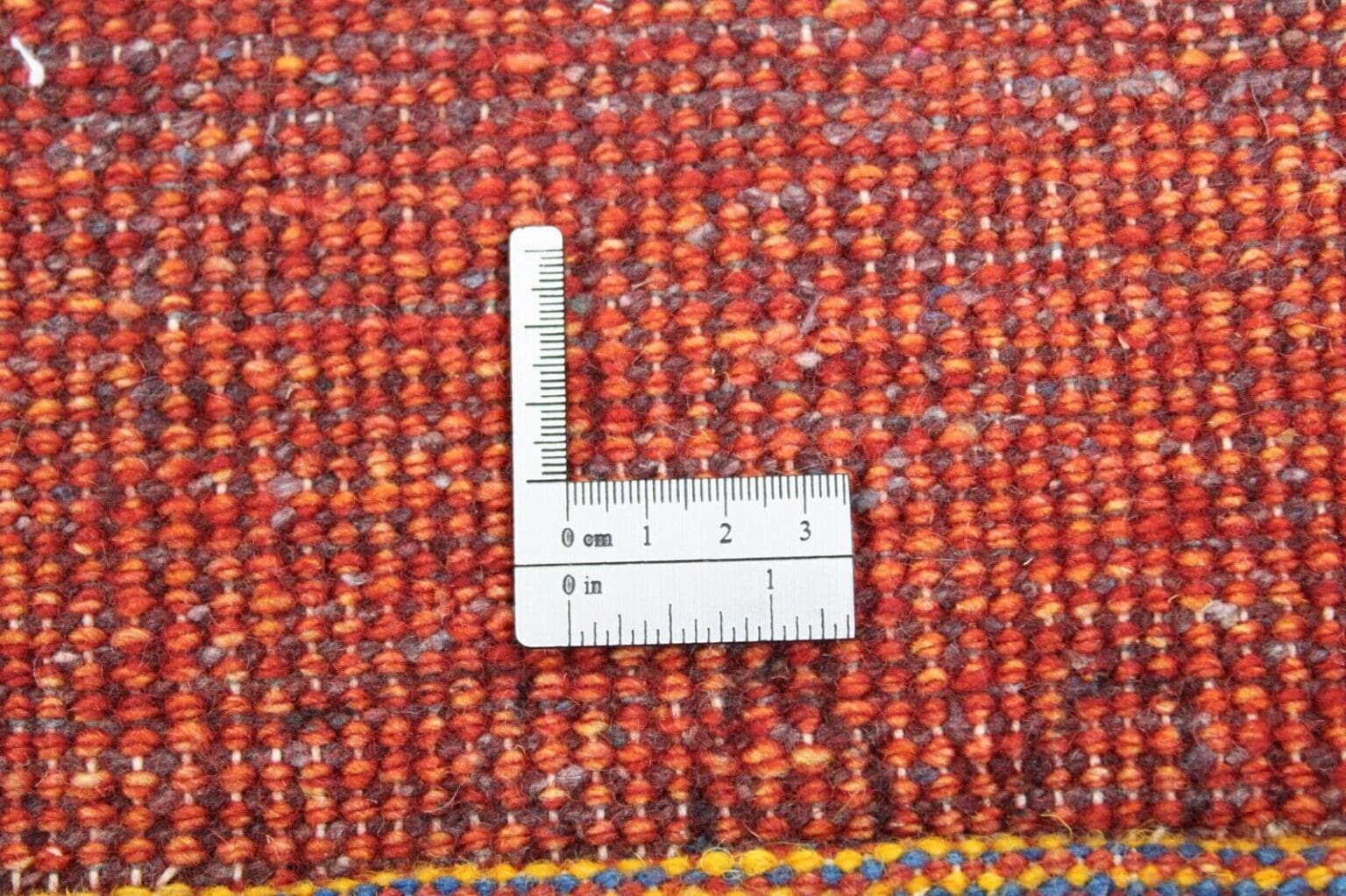
In hand-knotting, each knot is tied individually around the prepared warp. Weft material is then inserted and secured, and the pile is trimmed to shape the surface. This process distinguishes a hand-knotted rug from a machine-made floor covering. Subtle variations in texture can arise from the individual working process and are part of the character of handmade textiles. This particular rug is described as new without a label.
Wool is widely used in rug making because its fibres are resilient and flexible. It can be worked into a firm, tactile pile and gives a wool rug its characteristic textile feel. Cotton is often selected for a stable foundation. On this piece, the materials are clearly identified by function: wool is used for the pile and cotton for the warp. No other materials and no knot-density figure are stated.
Origin and Tradition
The term Gabbeh refers to a rug tradition associated with simple, hand-knotted wool rugs from the Iranian cultural sphere. Its best-known visual language is based on broad fields, simplified forms and a restrained use of ornament. Gabbeh rugs developed within nomadic and rural weaving traditions, where available materials, everyday use and the skills of individual weavers all influenced the finished textile.
The name therefore describes a rug type and a design tradition. It does not automatically identify the country in which every individual example was made. This rug originates from India. Indian rug production has adopted many Oriental rug traditions and interpreted them through its own workshops and craft practices. An Indian Gabbeh may therefore use familiar Gabbeh characteristics without being a Persian rug made in Iran.
Across the Oriental rug world, different regions developed their own ways of preparing the loom, tying knots, inserting wefts and finishing the pile. Gabbeh designs generally place less emphasis on densely filled ornament than many classical urban rugs. Instead, they allow larger areas of colour and form to remain clearly visible. The pile itself becomes an important part of the visual impression, alongside the drawn design.
Indian Oriental rug production includes both traditional interpretations and contemporary versions. Craftspeople work with established knotting methods while adapting colours, proportions and patterns to present-day interiors. This rug is described as contemporary. That classification concerns its design character and does not establish a production date. A more precise weaving region within India and an age for this individual rug are not given.
Gabbeh history can also be understood as a history of visual simplification. Many classical rugs are organised through elaborate borders, medallions and densely rendered floral ornament. Gabbeh compositions often rely on a more direct order that can be read at a glance. This quality has enabled the tradition to move between practical nomadic textiles and contemporary interior design while retaining its connection with hand-knotted Oriental rug making.
Design and Pattern
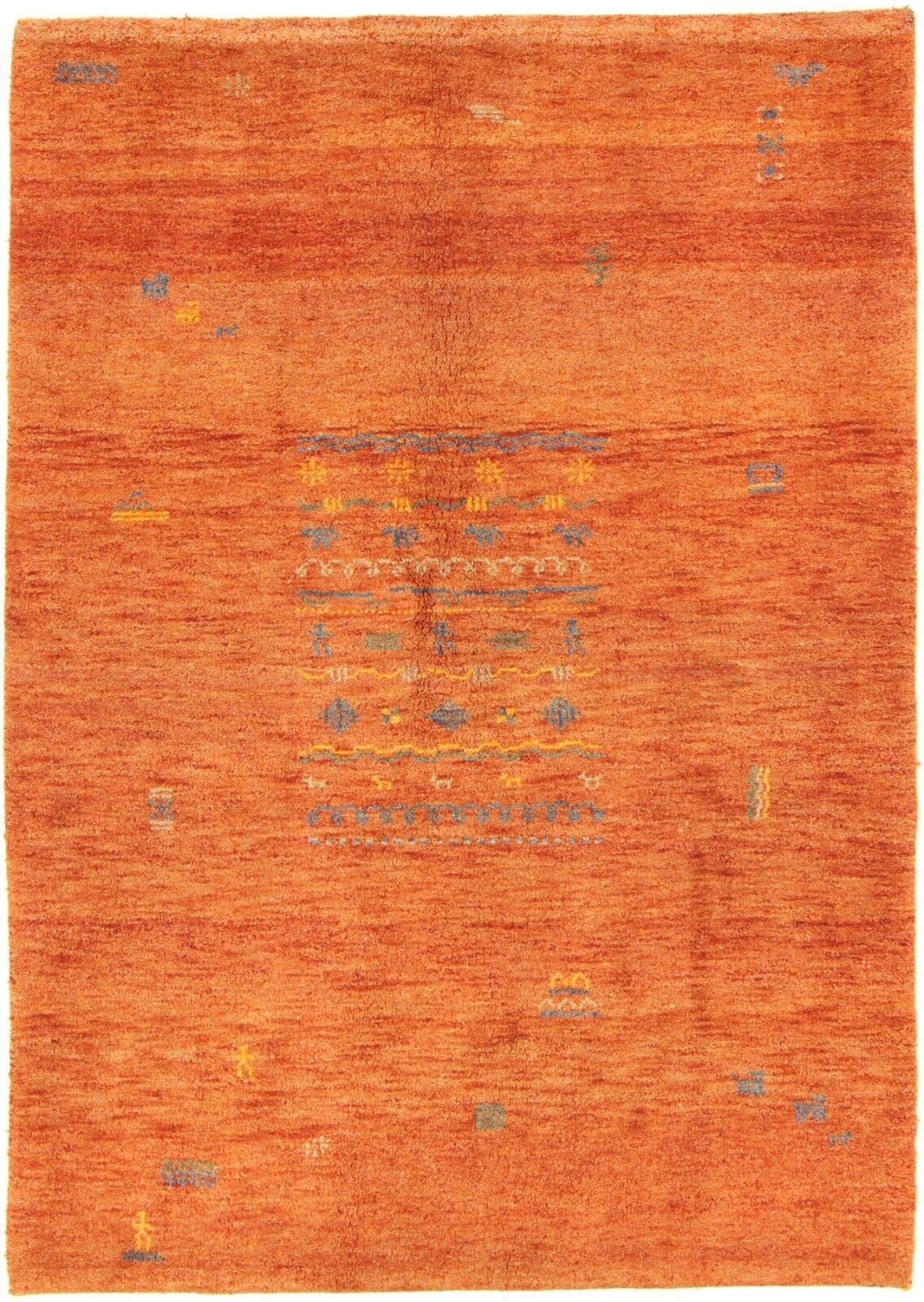
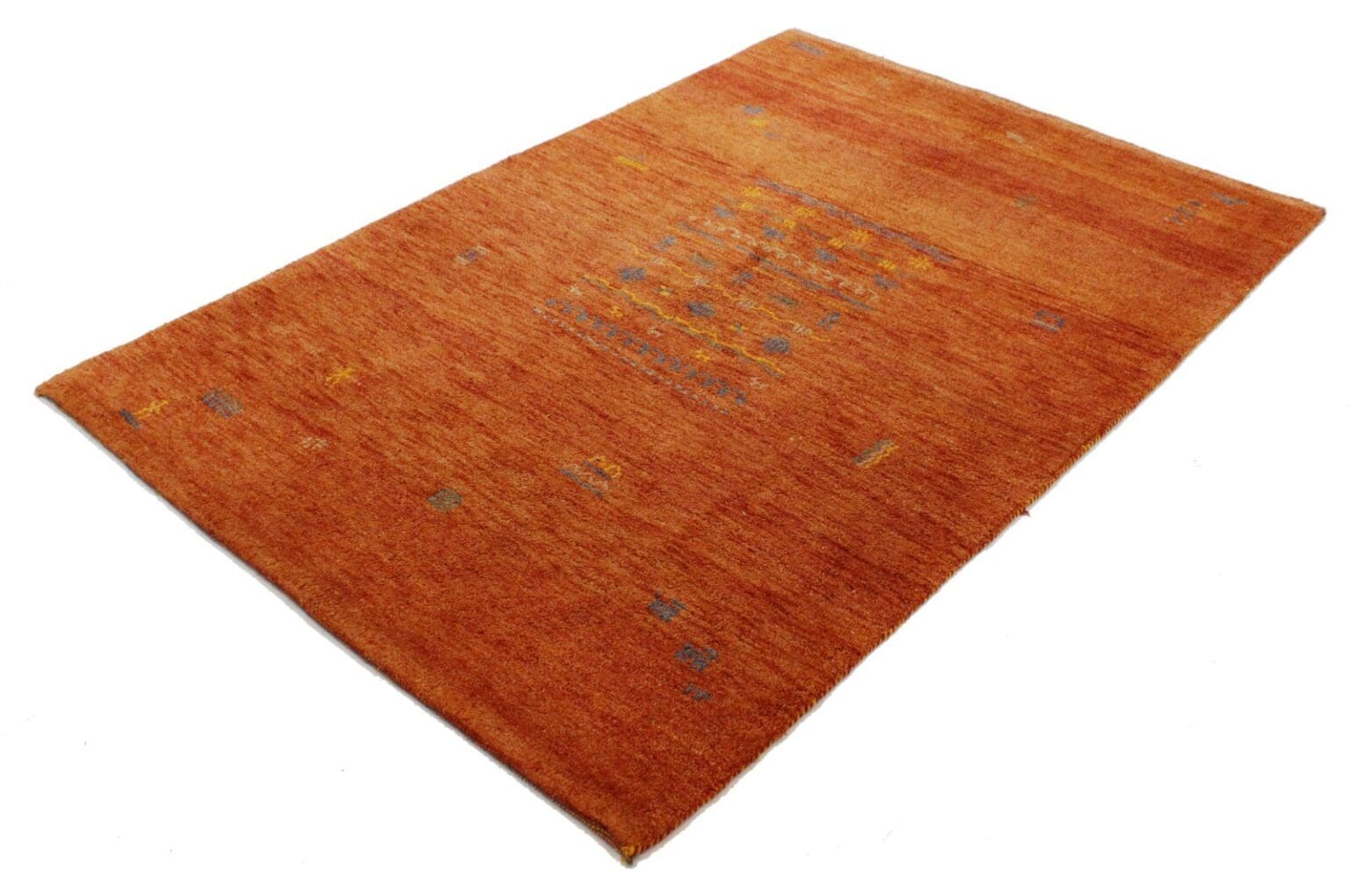
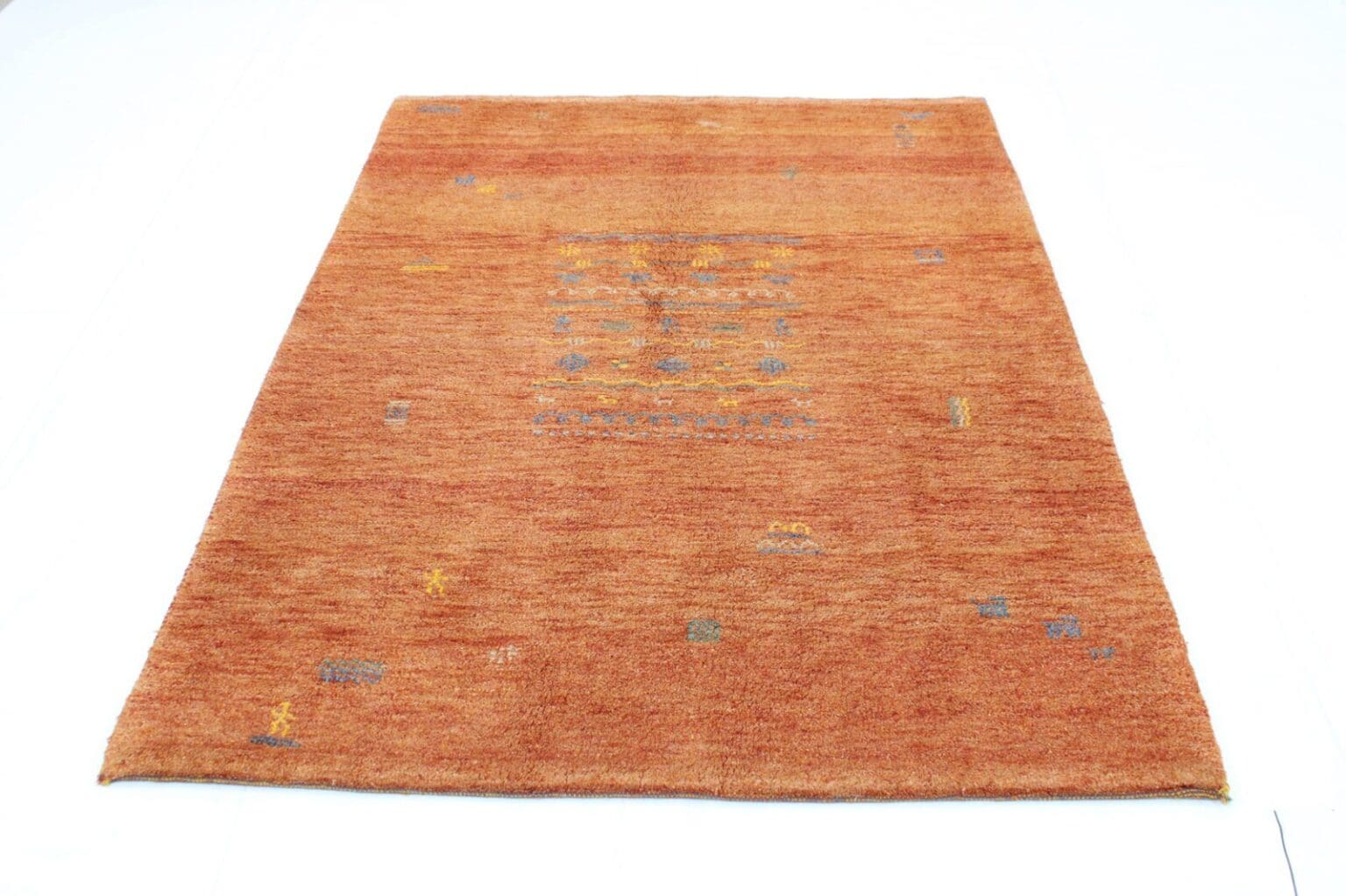
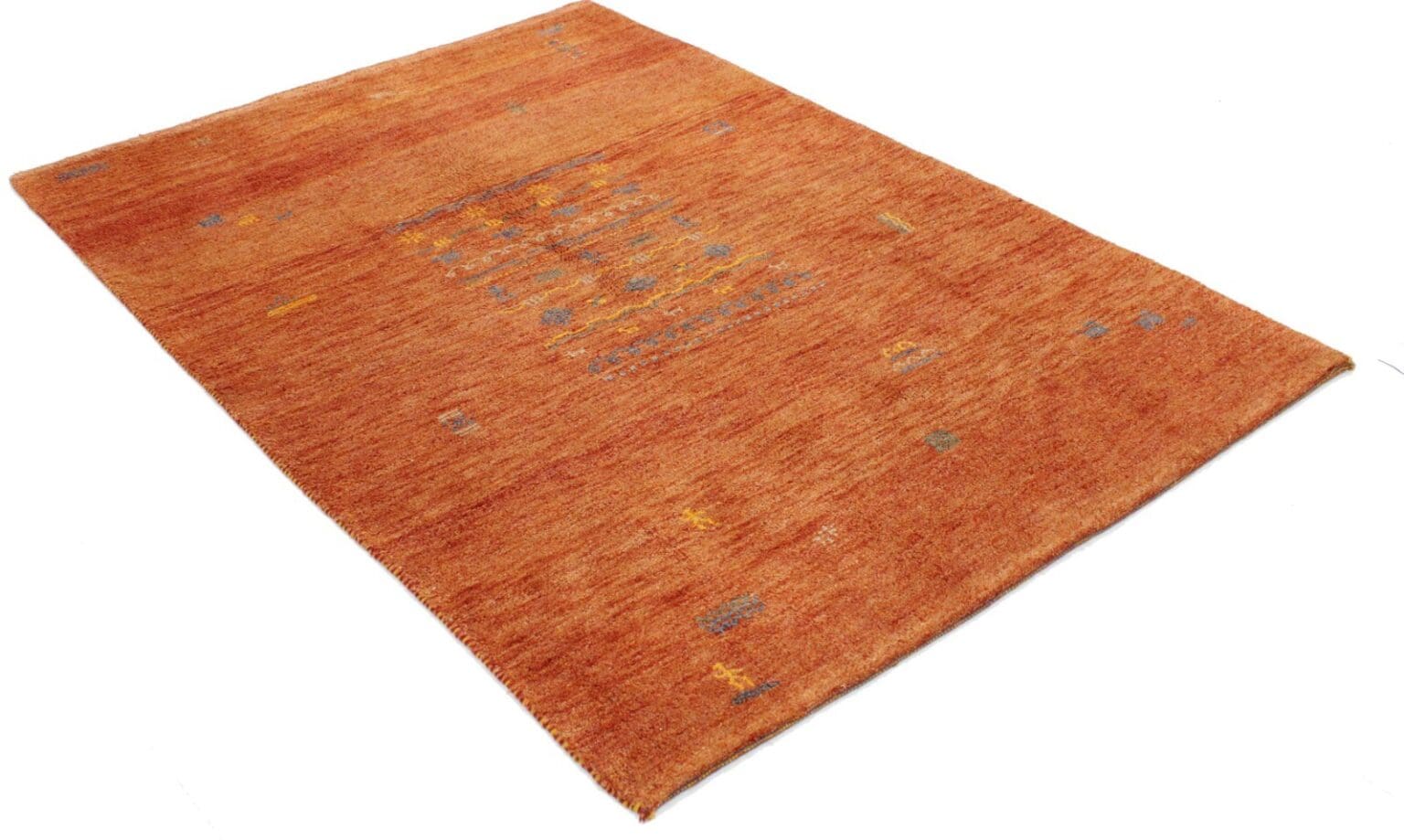
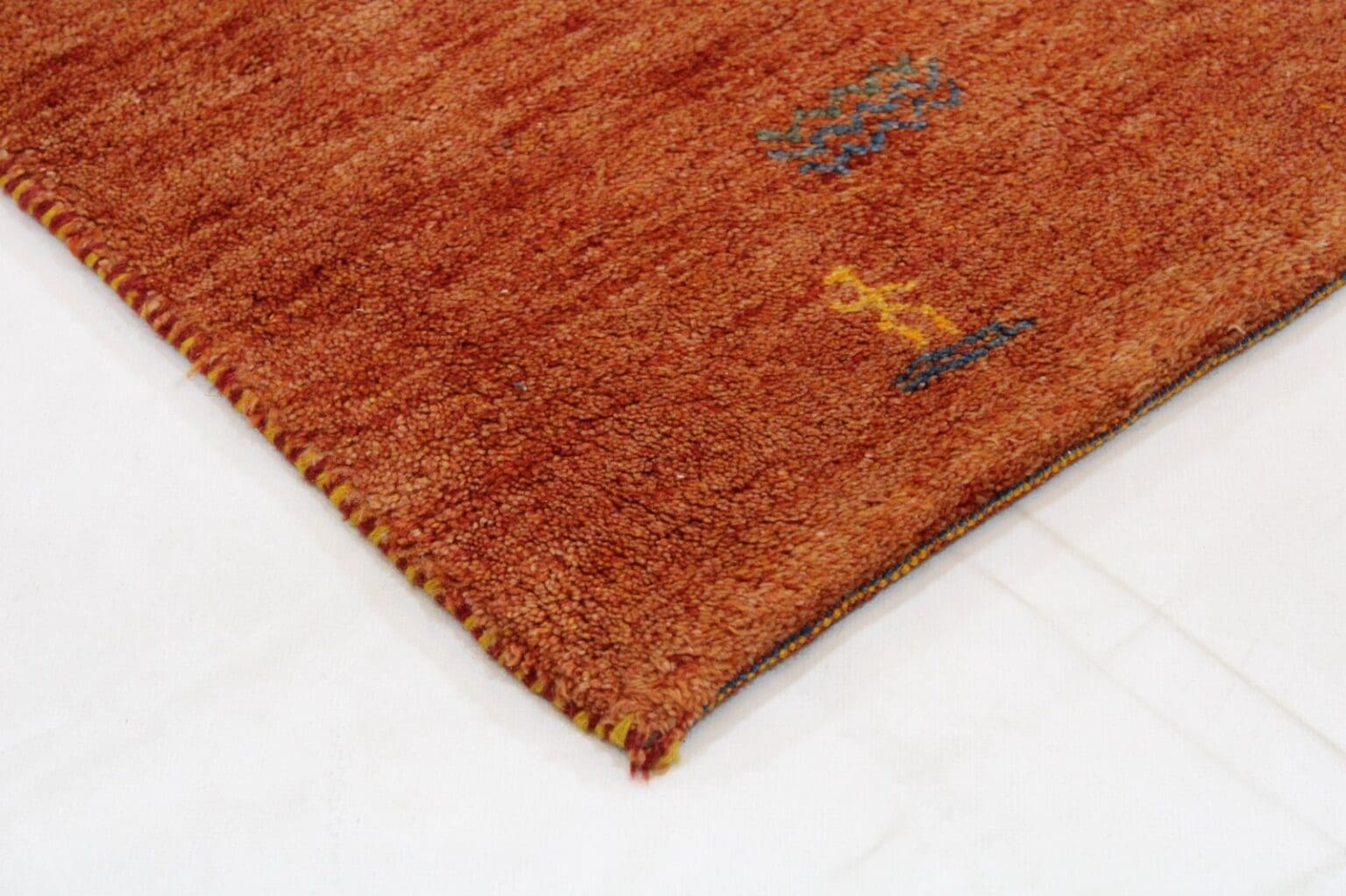
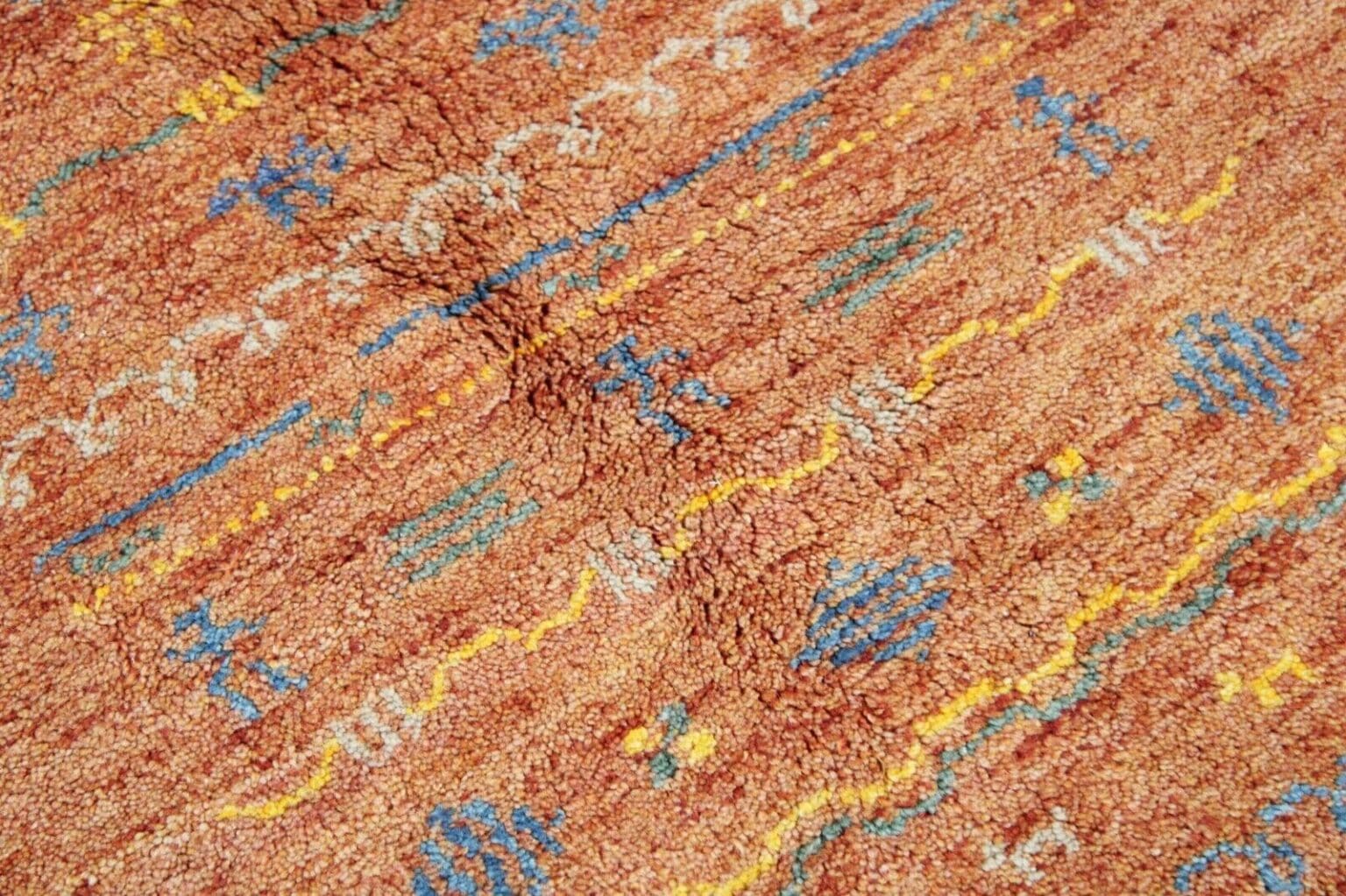
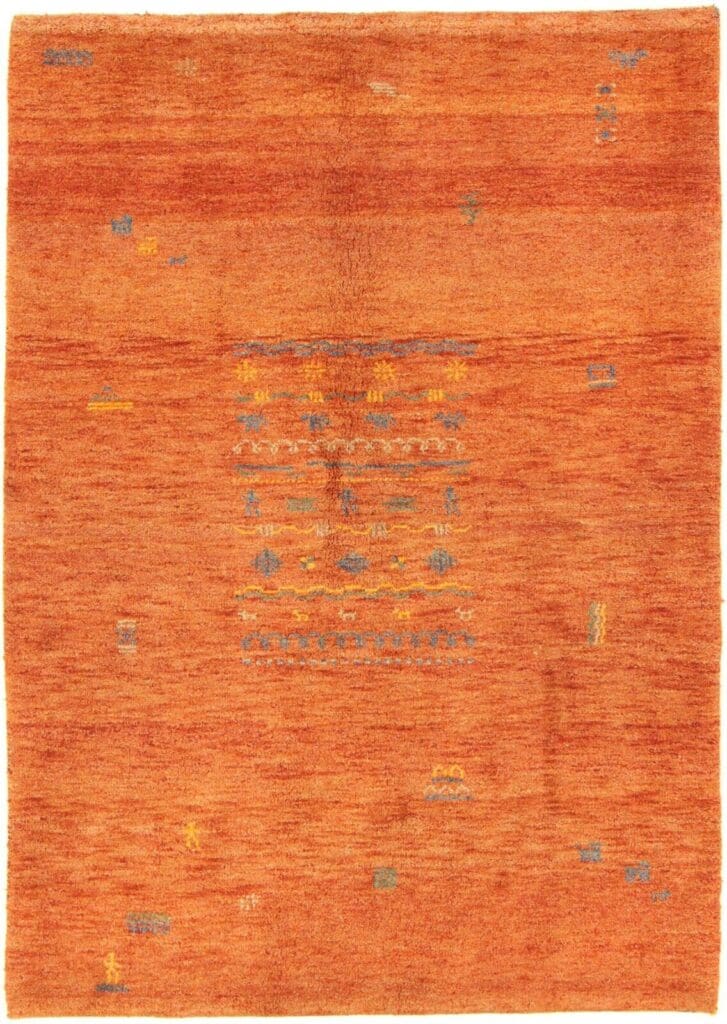
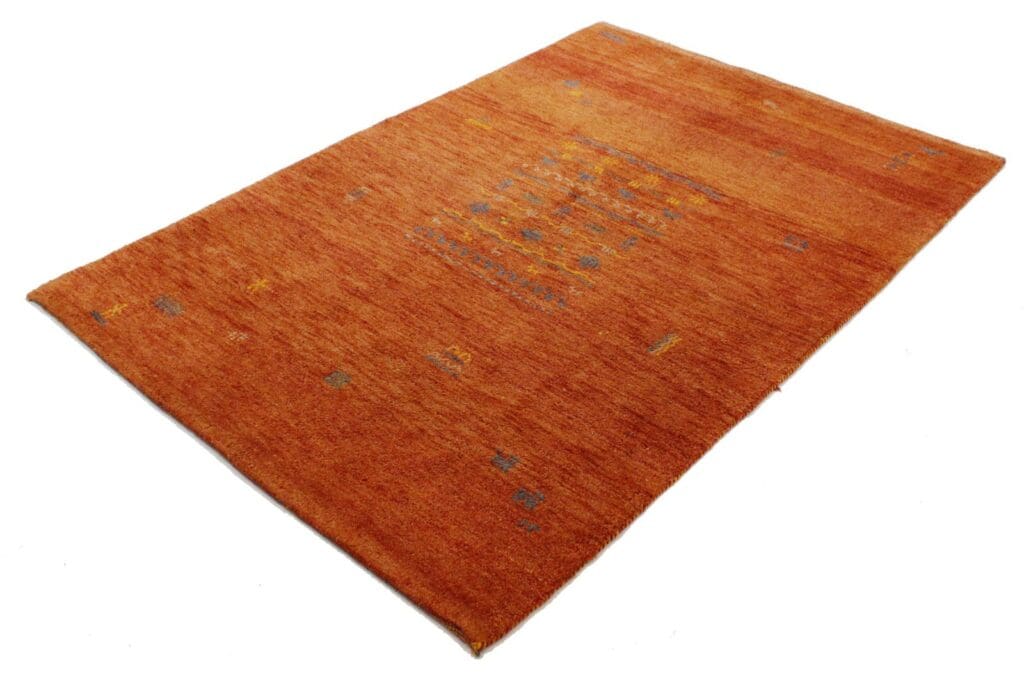
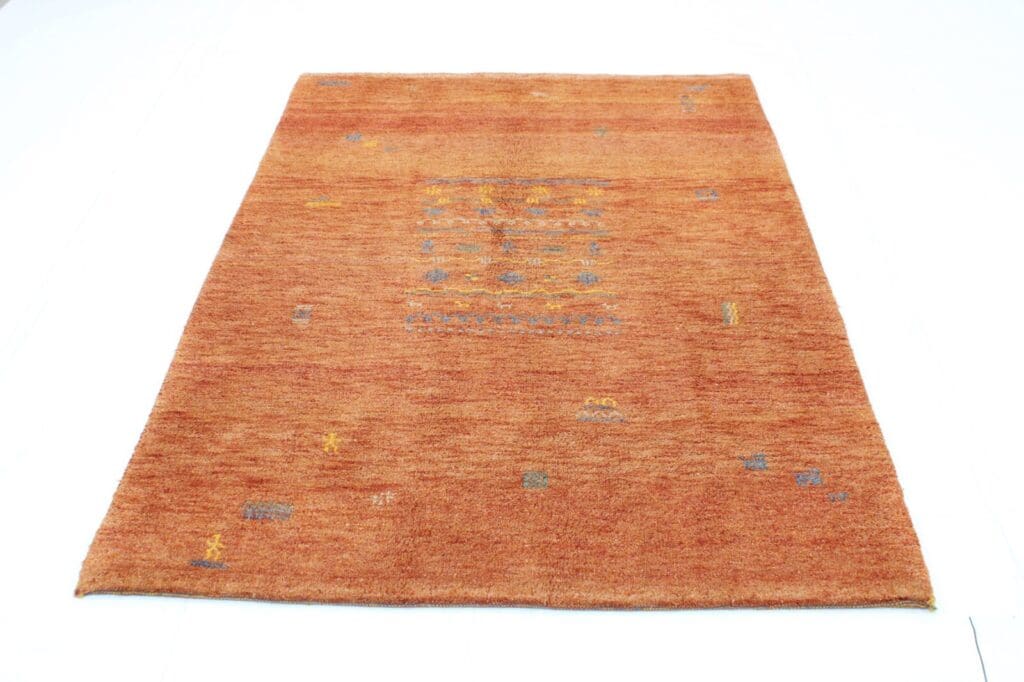
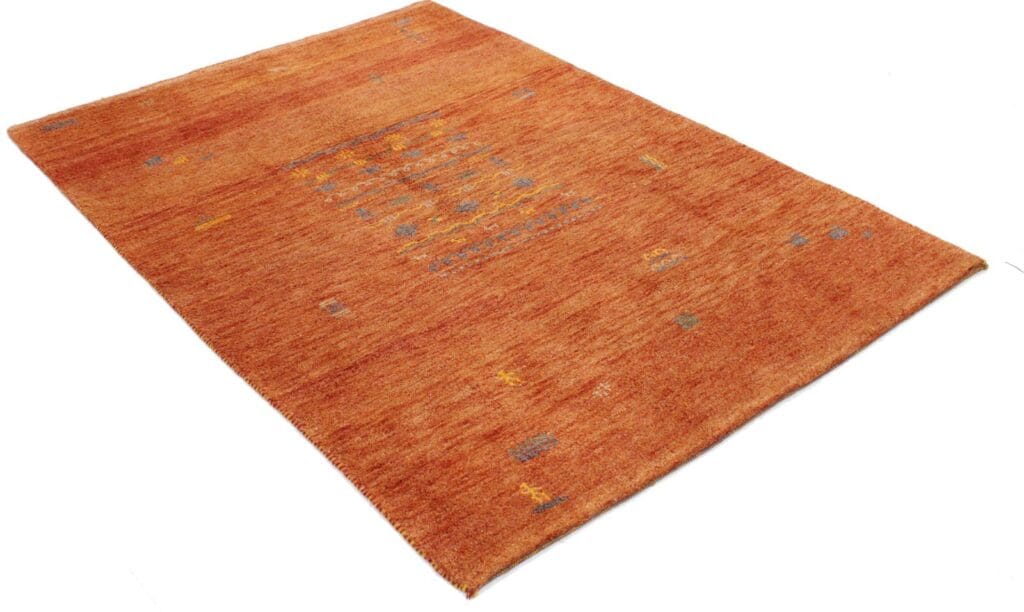
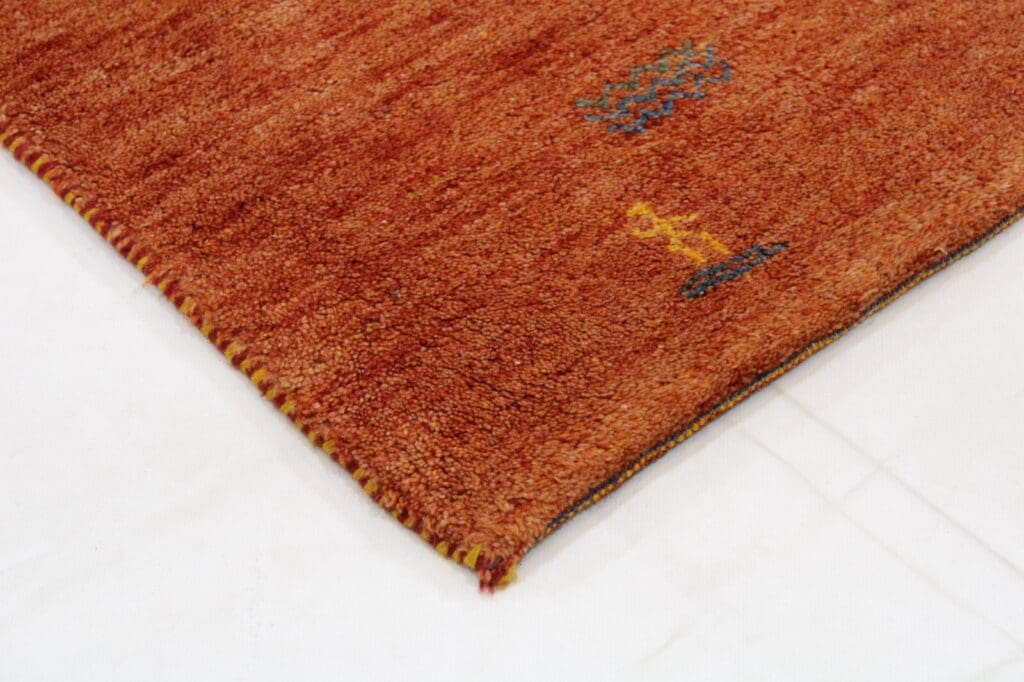
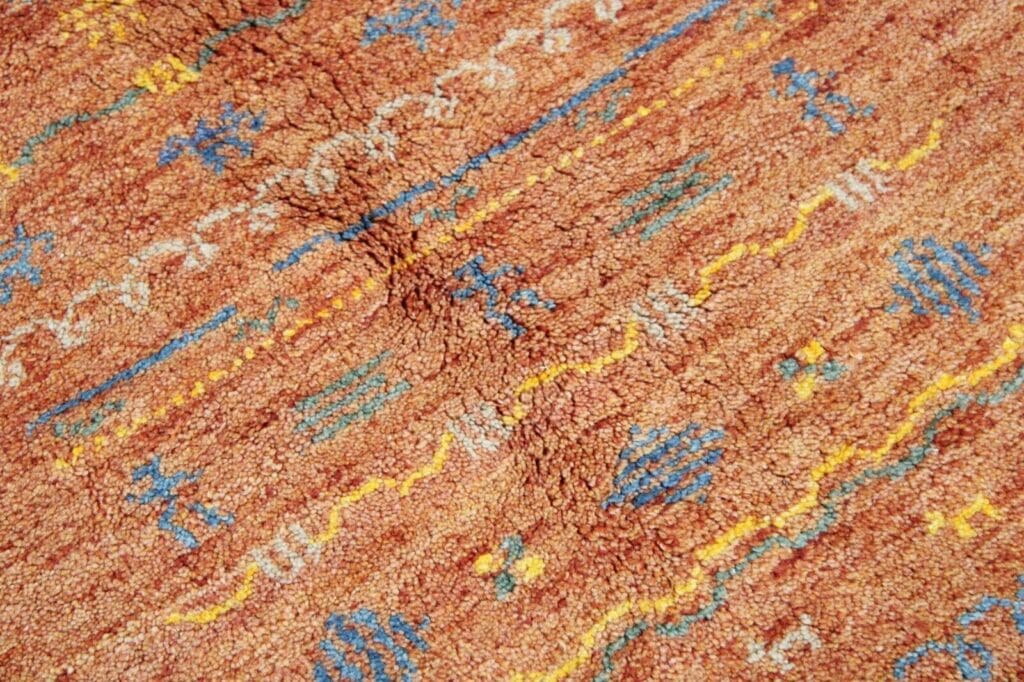
The pattern of this rug is identified as Gabbeh. It is also described as brown and contemporary. Gabbeh design is traditionally associated with simplified motifs, spacious fields and an uncomplicated visual structure. Rather than filling every area with ornament, the style often depends on the relationship between a ground colour, a limited number of signs and the visible texture of the pile.
Gabbeh motifs may include stylised animals, plants, human figures, diamonds, stepped shapes or uncomplicated geometric compartments. These signs do not have one fixed meaning that applies to every rug. Their treatment can range from recognisable geometry to highly abstract forms. Layouts may be balanced and symmetrical or intentionally free in appearance. The precise individual motifs on this rug are not described; the recorded characteristics are its Gabbeh classification, brown colour and contemporary style.
Brown belongs to the group of earthy colours often used in Gabbeh-inspired compositions to create a grounded and quiet impression. In a hand-knotted rug, a brown surface may show subtle variation as the wool changes direction or as the pile catches the light differently. Viewing angle and room lighting can therefore affect the appearance of a textile surface. A restrained colour description does not mean that the texture has to look visually flat.
The contemporary designation indicates a design that relates to Gabbeh tradition while using a reduced modern vocabulary. Contemporary Gabbeh interpretations often avoid the visual density of highly ornate city rugs. They may favour clear outlines, simplified symbols and an orderly colour effect. For this reason, the style can sit alongside simple furniture as well as in more layered interiors. This is background about the design tradition and does not add any unrecorded motifs to this individual rug.
In a hand-knotted rug, the design is not merely an image printed onto a finished surface. It is created through the sequence of knots, the placement of coloured yarns and the later finishing of the pile. Even a restrained composition depends on the interaction of contour, knot placement and pile direction. In Gabbeh rugs, this relationship between direct imagery and handmade texture is central to the visual identity of the type.
Special Features
The listed special features are an anti-slip property and suitability for underfloor heating. An anti-slip construction can help the rug move less easily across the floor during everyday use. When placing a rug over underfloor heating, the general instructions provided by the heating and rug manufacturers should be followed so that heat transfer and the materials are treated appropriately. The precise technical construction of these features is not specified.
The rug is rectangular and is described as new without a label. These details concern the form and recorded condition of this one piece. As a hand-knotted Oriental rug, its surface is defined by yarn, knots and finishing work. No information is provided about a signature, age, repairs, signs of use or knot density, so none of those details are added here.
FAQ
What defines a Gabbeh Oriental rug?
A Gabbeh Oriental rug is generally associated with hand-knotted construction, simplified imagery and broad colour fields. The tradition is connected with nomadic and rural rugs from the Iranian cultural sphere. The term identifies a rug type and design language rather than automatically naming the country of manufacture. This particular rug was made in India.
Which materials are used in this rug?
The pile is made of 100% wool and the warp is made of 100% cotton. Wool forms the visible surface, while cotton belongs to the structural foundation of the knotted rug. No knot-density figure or additional material is specified.
Can this rug be used in a modern interior?
The rug is described as contemporary and has a brown Gabbeh pattern. The reduced visual language associated with this rug type can generally work with modern, uncluttered interiors. It is also listed as anti-slip and suitable for underfloor heating.
To provide the best experiences, we use technologies like cookies to store and/or access device information. Consenting to these technologies will allow us to process data such as browsing behavior or unique IDs on this site. Not consenting or withdrawing consent, may adversely affect certain features and functions.
Functional Always active
The technical storage or access is strictly necessary for the legitimate purpose of enabling the use of a specific service explicitly requested by the subscriber or user, or for the sole purpose of carrying out the transmission of a communication over an electronic communications network.
Preferences
The technical storage or access is necessary for the legitimate purpose of storing preferences that are not requested by the subscriber or user.
Statistics
The technical storage or access that is used exclusively for statistical purposes.The technical storage or access that is used exclusively for anonymous statistical purposes. Without a subpoena, voluntary compliance on the part of your Internet Service Provider, or additional records from a third party, information stored or retrieved for this purpose alone cannot usually be used to identify you.
Marketing
The technical storage or access is required to create user profiles to send advertising, or to track the user on a website or across several websites for similar marketing purposes.
 SECURE PAYMENT
 SHIPPING PARTNERS


