
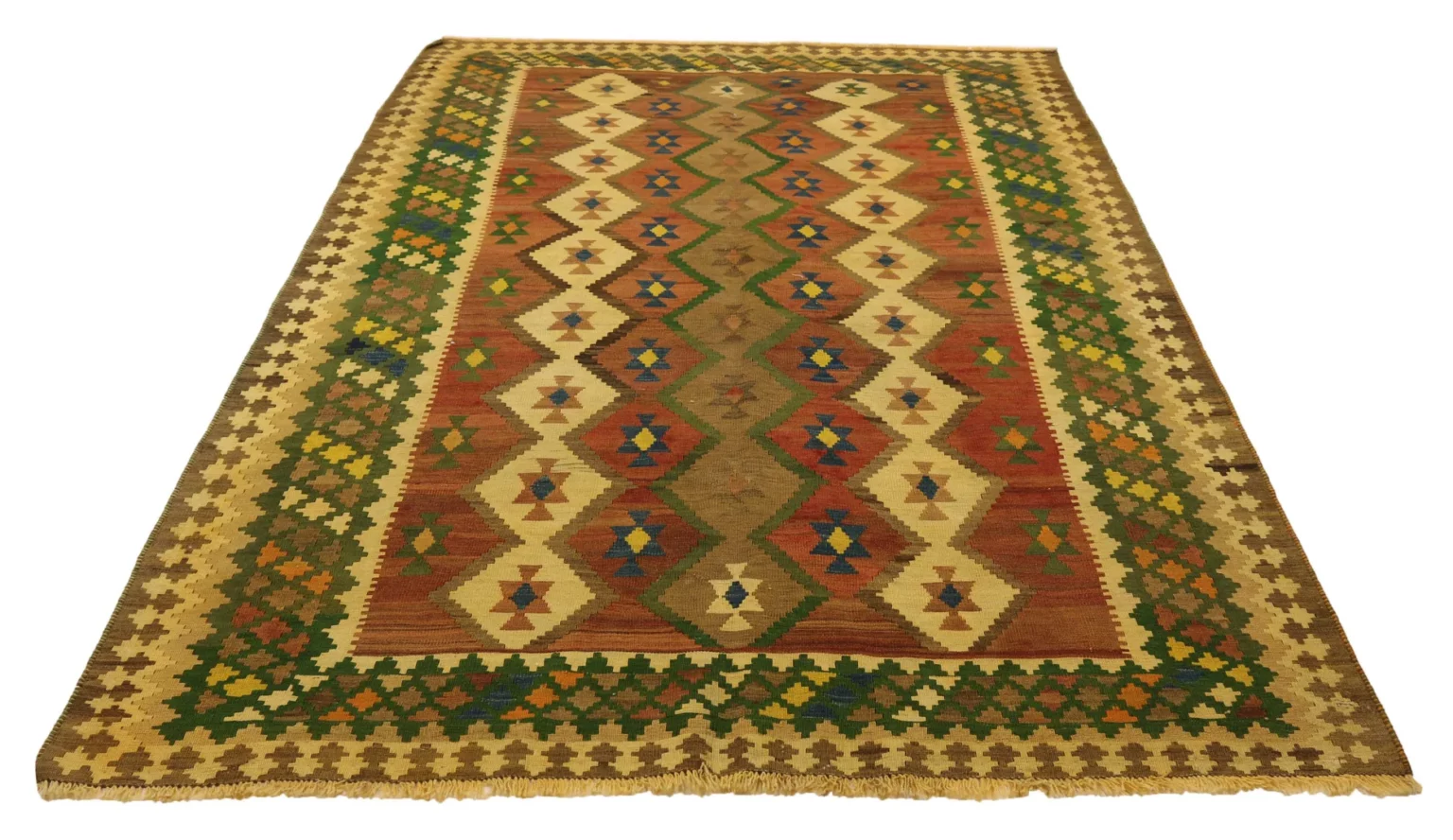
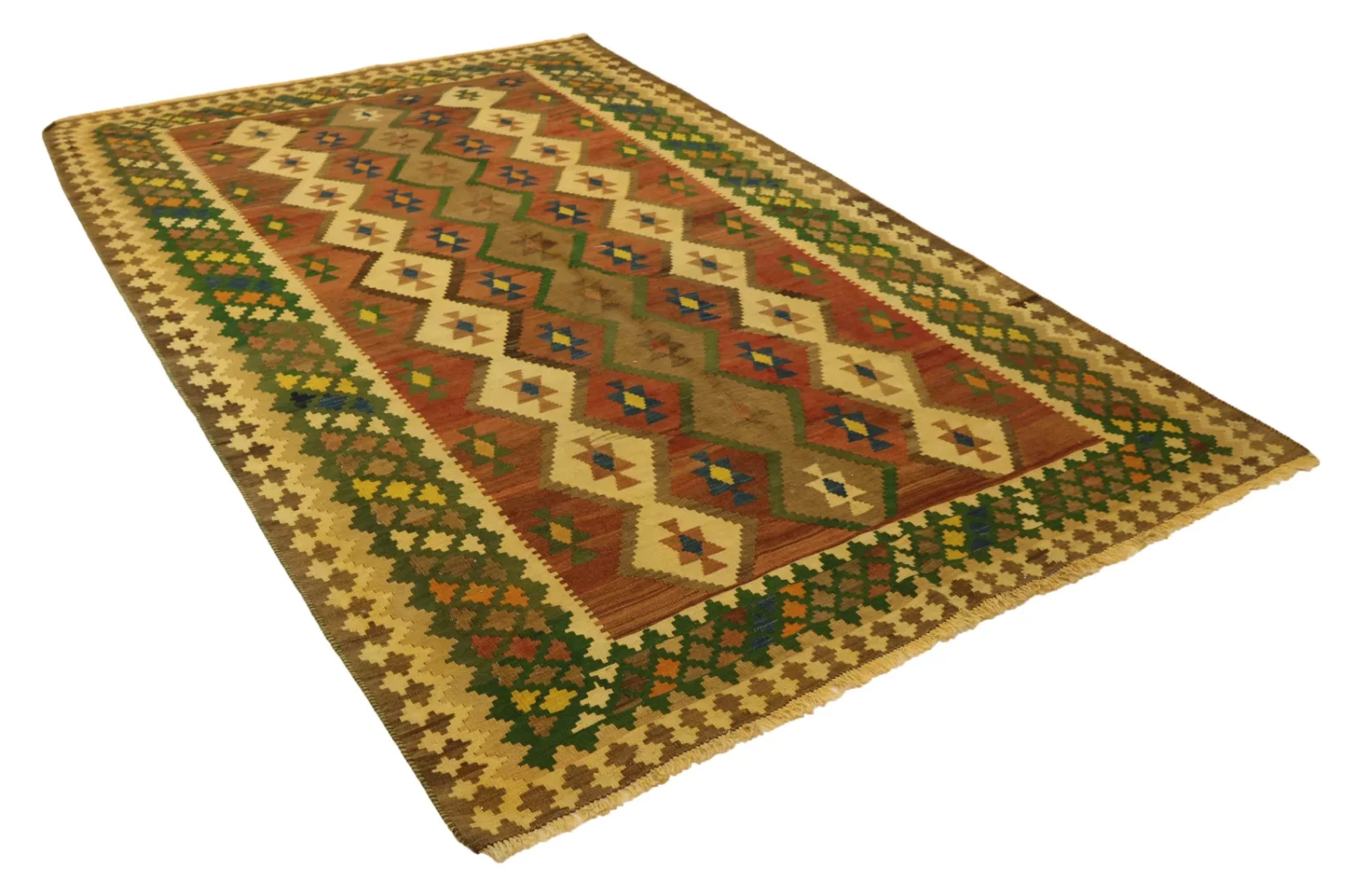
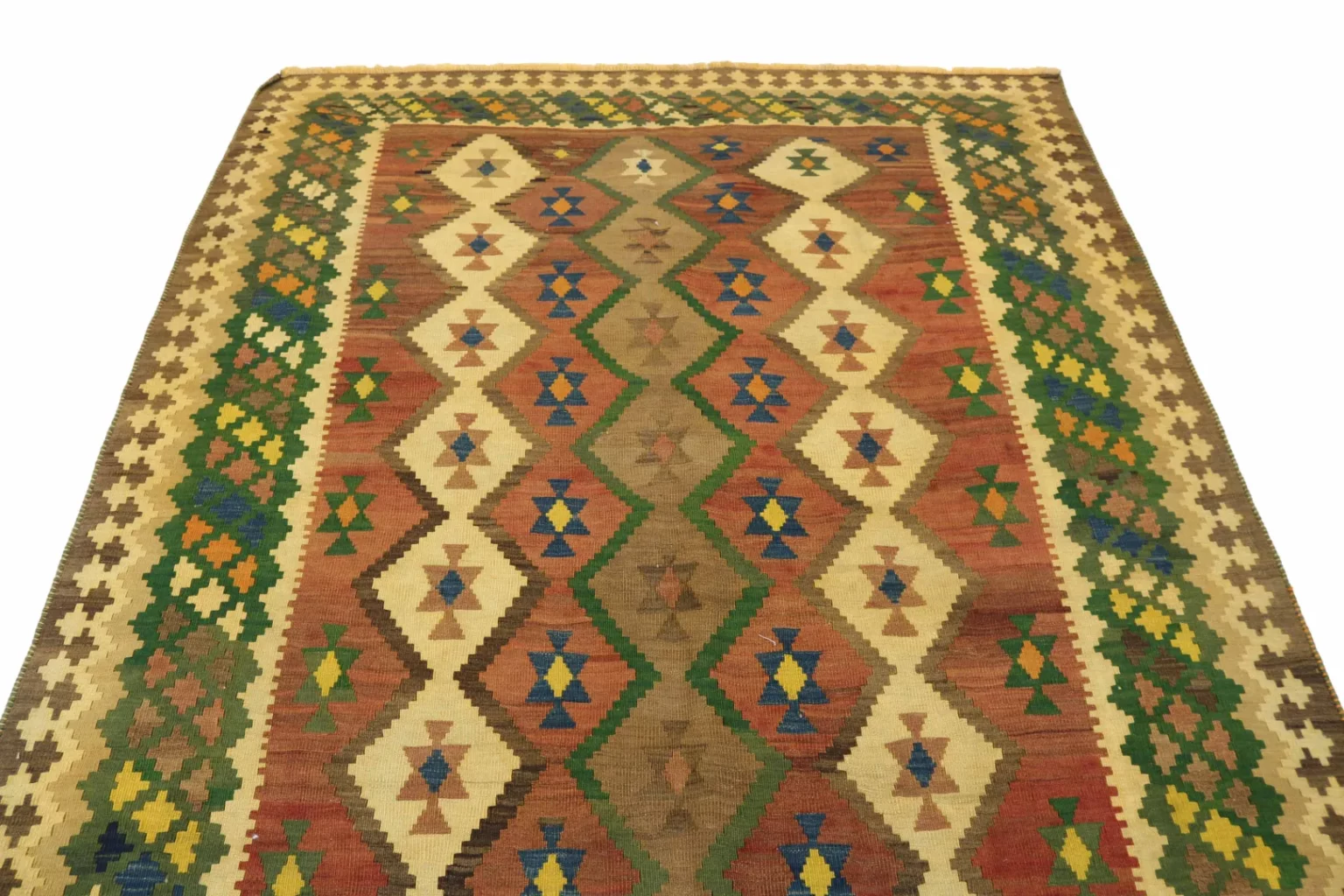
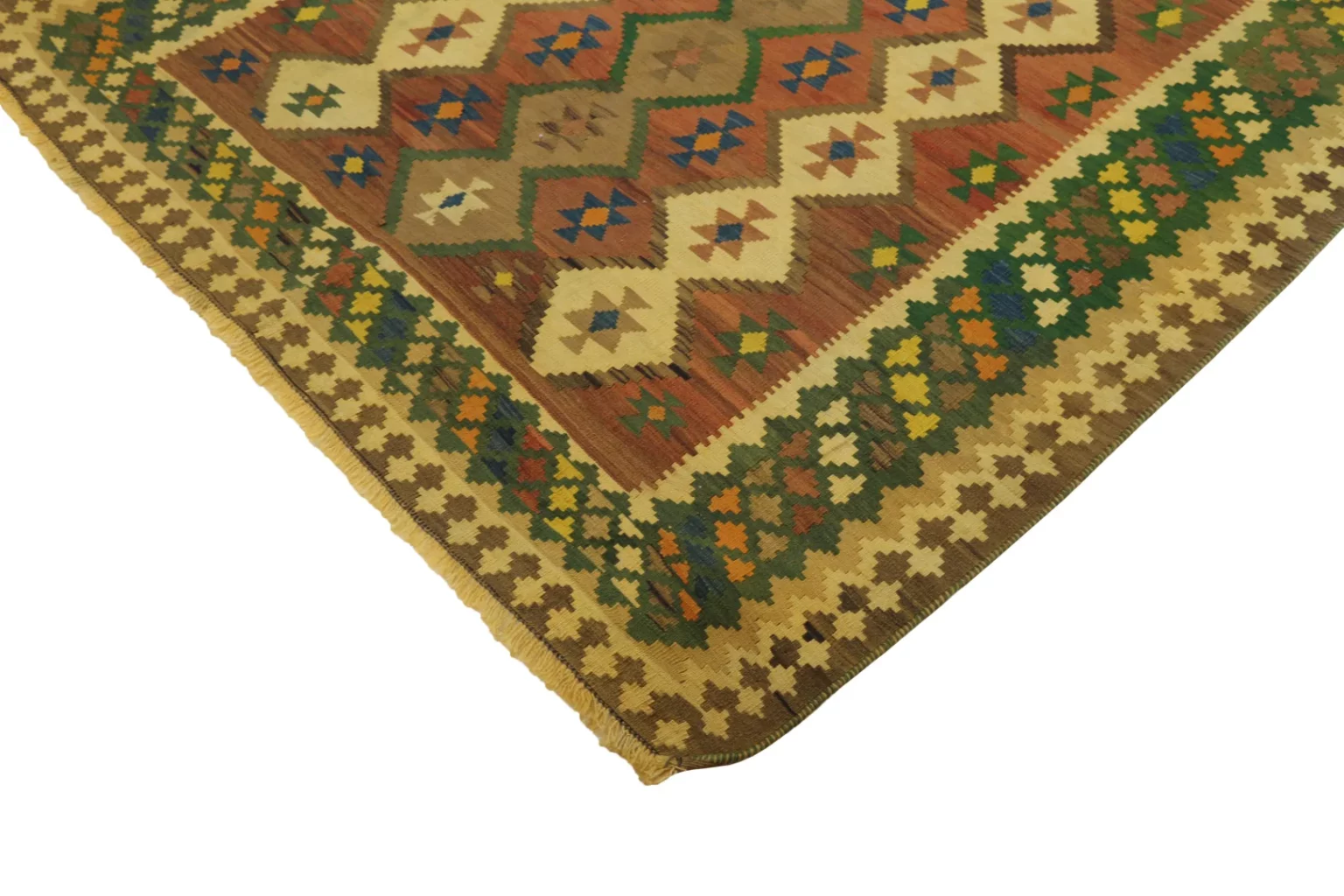
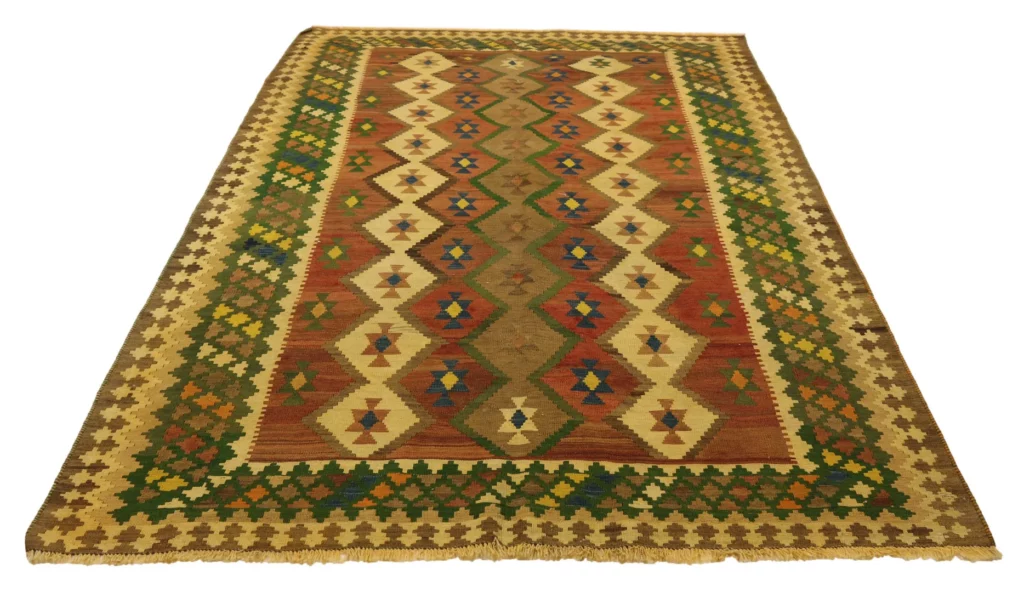
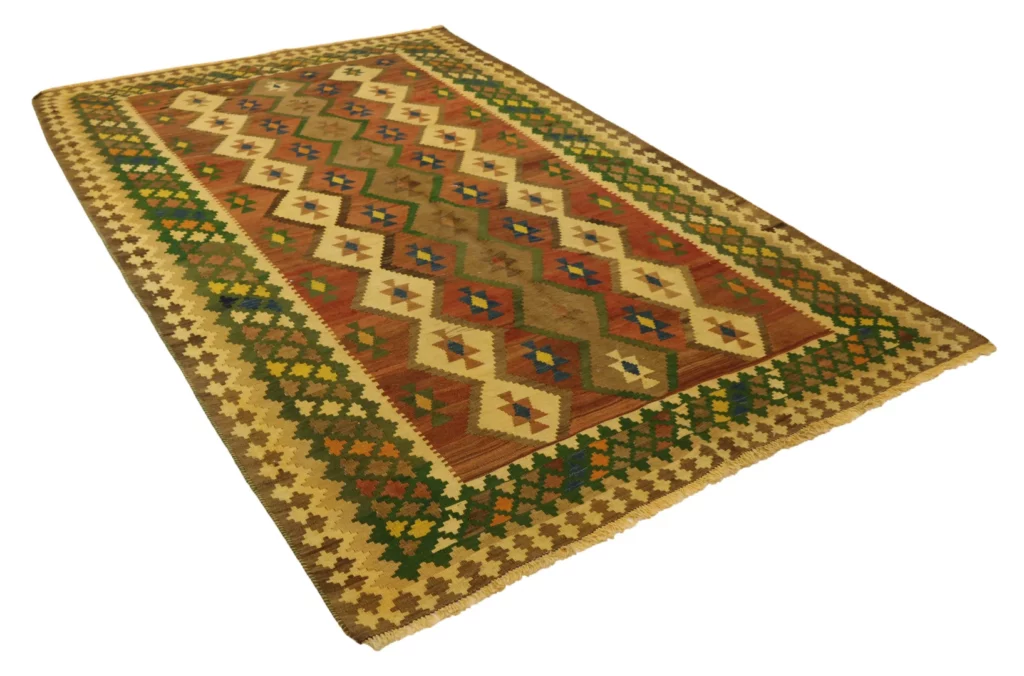
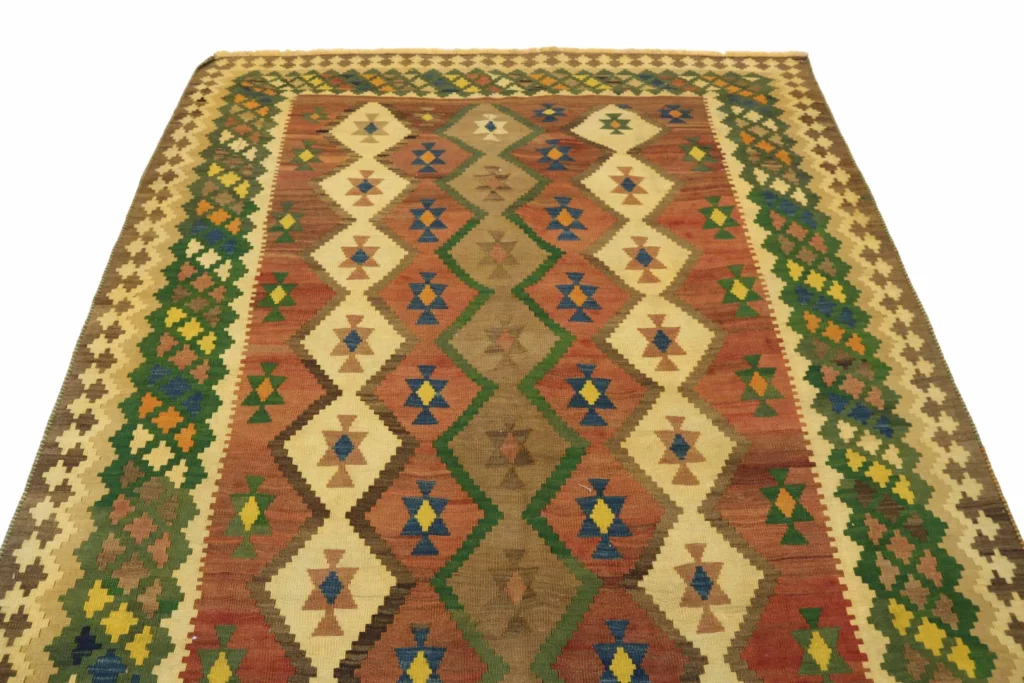
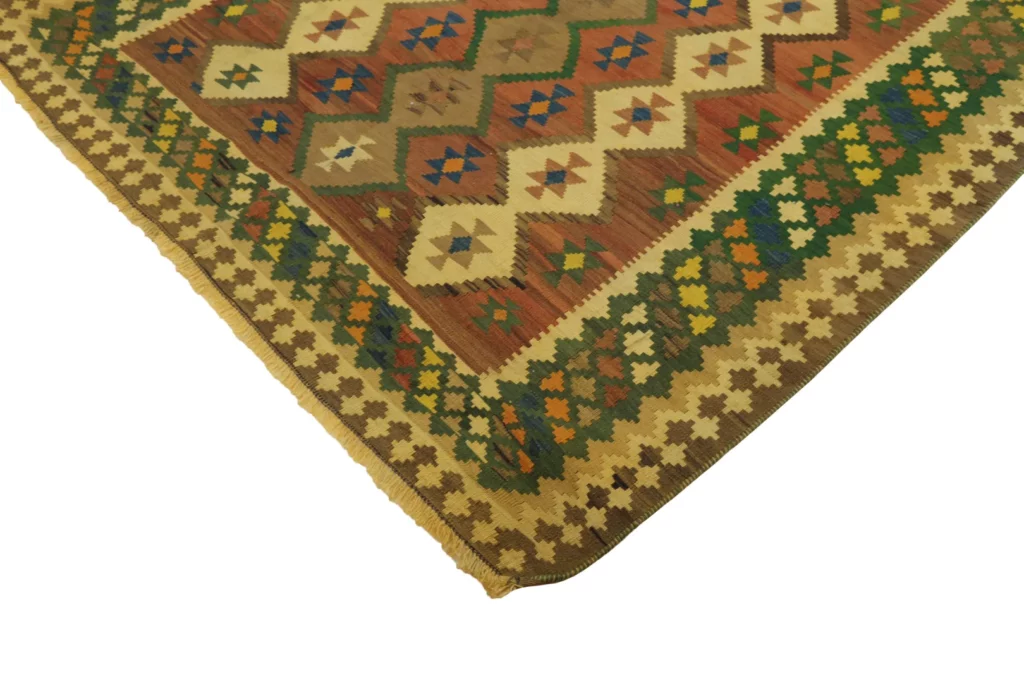
Oriental Rug Fars 270 x 171 cm Wool Hand-woven
Original price was: € 2840€ 1193Current price is: € 1193
Hand-woven Fars Oriental rug | Knot density: high | Material: wool pile | Size: 270 x 171 cm | Pattern: Identical on both sides | Condition: Very good | Origin: Fars, Iran
Sold out
- ✓Free Shipping in EU
- ✓2-5 Business Days Delivery
- ✓14-Day Return Policy
- ✓Worldwide Shipping on request
 SECURE PAYMENT
 SHIPPING PARTNERS
Inventory number: EFBBF634
Description
Fars Oriental Rug
Material and Craftsmanship
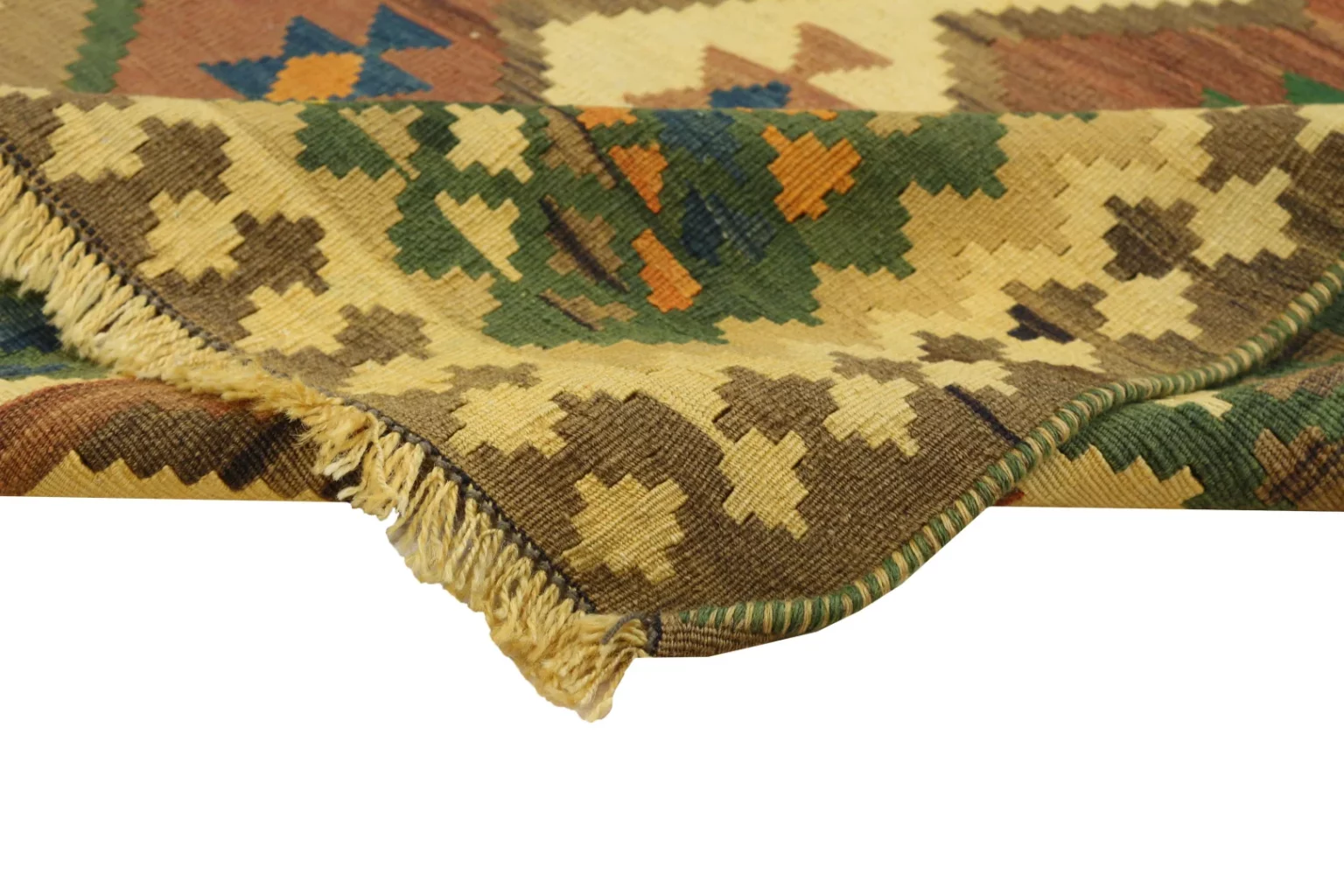
This Kelim is made of wool and hand-woven. The weaving process interlaces the warp and weft to create a flat textile surface. Unlike a pile rug made from individual knots, a Kelim does not have a cut pile. Its construction therefore influences both its feel and the way its design appears. This rug was made by hand, making it a single piece of textile craftsmanship rather than an industrially repeated product.
Wool has long been used for floor textiles because it is a resilient yet flexible natural fibre. It can absorb and release moisture from the surrounding air, helping to moderate the feel of a room. Its natural surface is also regarded as resistant to dirt. In a hand-woven Kelim, the flat structure keeps the pattern legible and allows the character of the weave to remain visible.
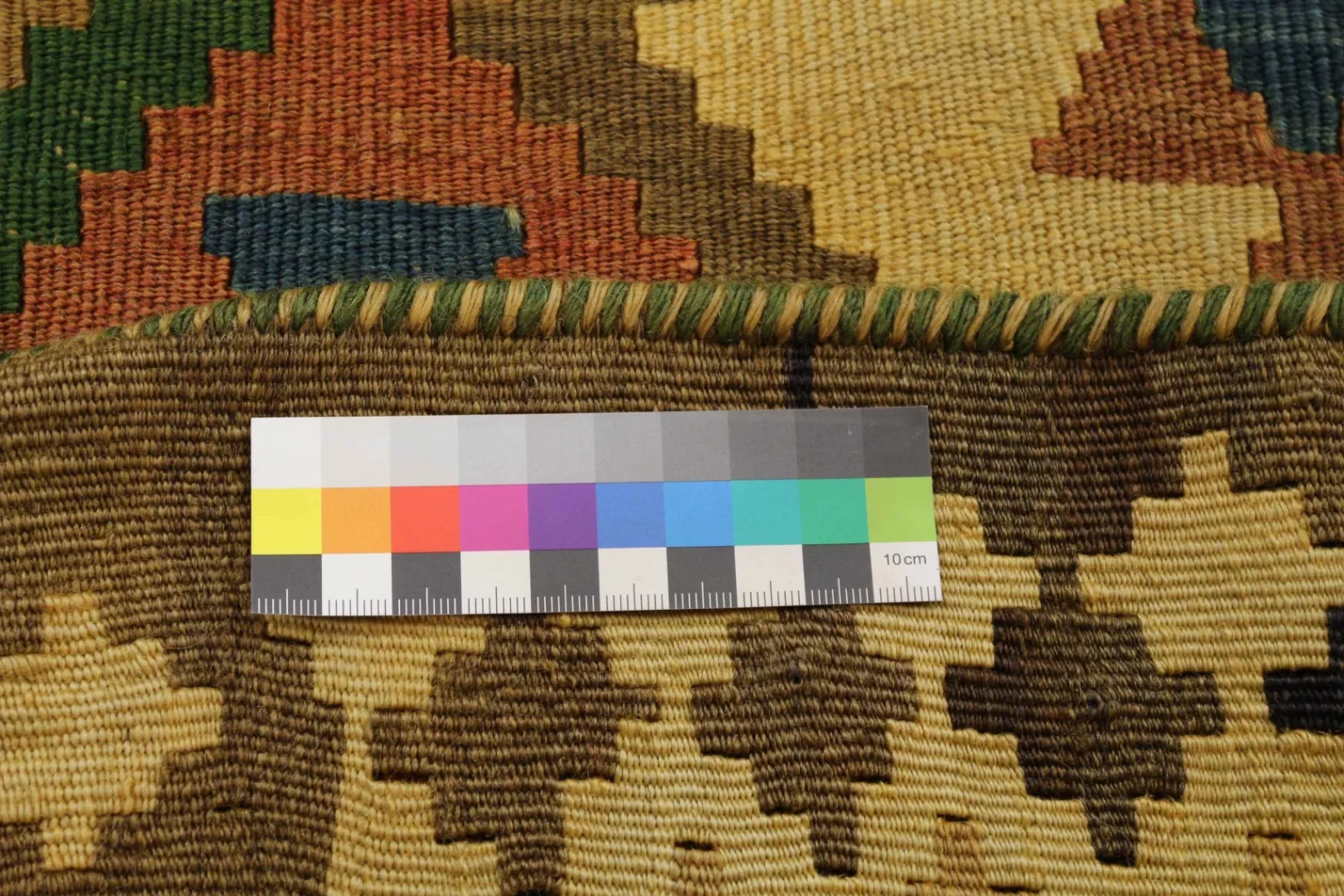
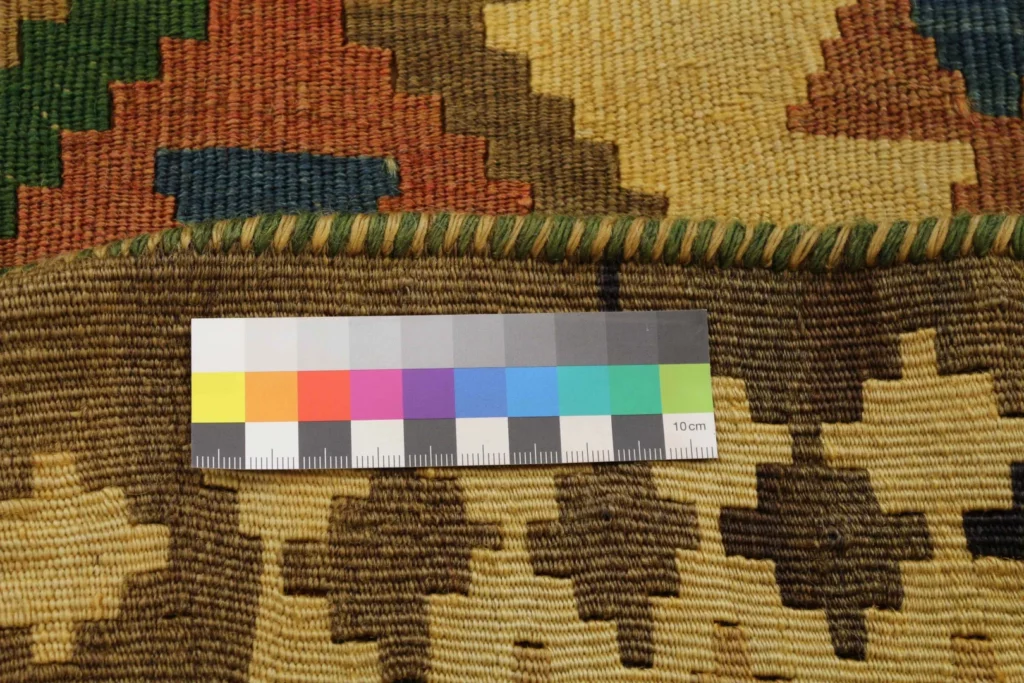
The description identifies the workmanship as careful and refers to a high knot density. For this piece, the hand-woven construction is the defining technical feature. A Kelim is built gradually by passing weft threads through the warp, with the pattern developing as the textile progresses. Variations in thread tension and the rhythm of the work are part of handmade production. The identical design on both sides is an additional characteristic of this rug.
Origin and Tradition
This Kelim originates from Fars in Iran. Fars is one of the Iranian regions associated with long-standing textile traditions shaped by rural and nomadic ways of life. The area contains varied landscapes, and its weaving practices form part of a broader history of handmade textiles. Kelims from this tradition were not made solely as decorative floor coverings. They also served as practical textiles for everyday domestic use.
Oriental flatweaving developed from the need to produce durable, portable fabrics by hand. Nomadic communities used woven pieces as tent flooring, wall hangings and furnishings. Because a Kelim can be folded and moved relatively easily, it suited a mobile household. Making one combined practical purpose with the transmission of colours, forms and symbols from one generation to the next.
Fars brings together several cultural influences. Its weaving heritage is commonly associated with geometric layouts, stylised plant forms and a distinctive approach to colour. These characteristics are part of the regional context, but they do not prescribe every detail of an individual Kelim. The motifs may be understood not only as decoration but also as references to nature, family, protection and everyday life. They place the textile within a living craft tradition.
The history of the Kelim extends beyond any one place of origin. Flat-woven textiles have been produced in many parts of the Middle East, as well as in Afghanistan, Turkey and Iran. Each area developed its own methods and visual vocabulary. A Kelim from Fars is therefore part of the Iranian tradition, while its precise identity rests on the origin and features recorded for this particular piece. Fars and hand weaving are the clear points of reference here.
Traditional Kelims were often made within families or close communities. Knowledge of preparing the warp, selecting wool, controlling the weft and arranging the pattern was passed on through practical instruction. Weaving required patience and an understanding of the intended composition. Repeated geometric forms could be organised through familiar pattern units, while the final result retained the character of the individual weaver. This combination of inherited structure and manual variation is central to the history of Kelim making.
Flatweaving also reflects the relationship between textile production and daily life. A Kelim could be used, stored, transported and displayed according to changing needs. The same basic technique supported household utility and visual expression. In this sense, the tradition is both functional and artistic without separating the two roles. The Fars origin places this particular rug within that wider Iranian history of adaptable, hand-made woven textiles.
Design and Pattern
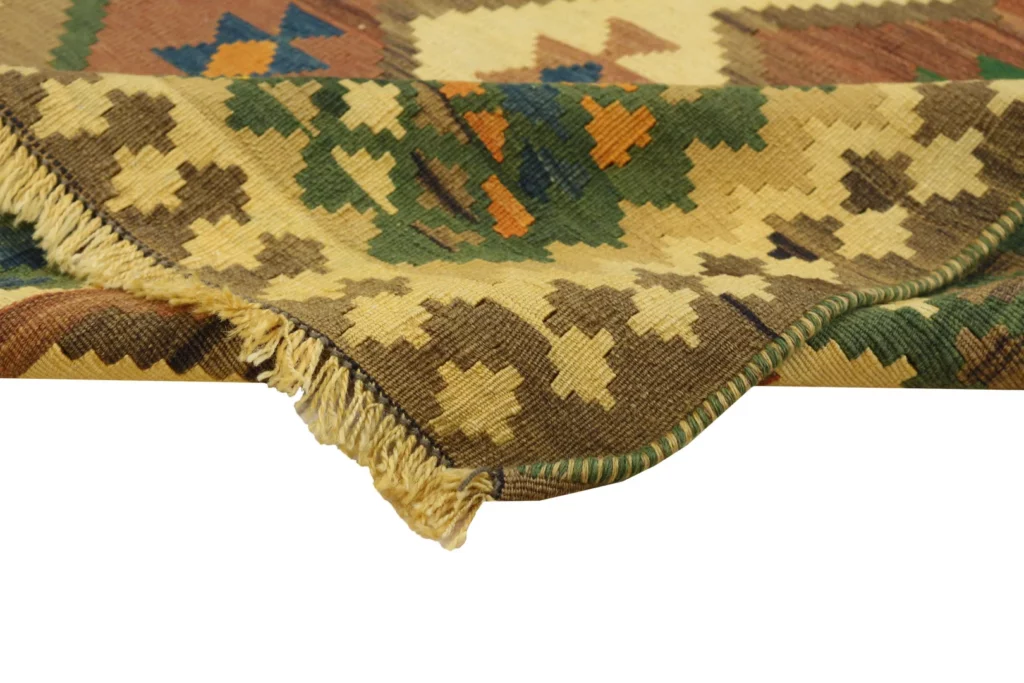
The pattern on this Kelim is identical on both sides. The rug can therefore be turned over without changing the visible design. In a flat-woven textile, the image is created through the arrangement of coloured weft threads and the exposed structure of the warp. The pattern is consequently part of the weaving itself rather than an ornament added to a completed pile surface.
Kelim designs are often organised geometrically. Lines, stepped shapes, hooked forms, diamonds and repeated compartments can be combined into a balanced visual order. Stylised floral elements are also common, with leaves, blossoms or branches reduced to essential shapes. Such motifs do not need to imitate nature literally. Their character comes from abstraction, repetition and the relationship between filled areas and outlines.
The inherited vocabulary of Kelim ornament may refer to nature, family, living conditions and religious or cosmological ideas. Meanings vary between regions and cannot be assigned with certainty to every isolated sign. In general, however, motifs allow experiences and beliefs to be expressed through a textile language. The meeting of geometric structure and symbolic form is one of the features associated with many traditional Kelims.
The description names deep reds, soft beige shades and lively greens among the colours associated with the design. These colour families can be arranged in clearly separated fields or brought together in a continuous composition. In many textile traditions, red is connected with warmth, vitality or protection, while beige can provide a quieter ground. Green is often associated with vegetation and landscape. These are broad cultural associations, not a fixed translation of each individual colour used in this rug.
The identical design on both sides distinguishes this Kelim from textiles whose reverse is only a technical underside. Here, the two-sided pattern is part of the object’s intended character. The flat weave presents the ornament in a direct textile form, allowing the lines and colour areas to remain visible from either side. Turning the rug does not replace the composition with a different one.
A Kelim can sit alongside traditional furnishings as well as more contemporary interiors. Its geometric or floral language can connect different surfaces, materials and furniture styles. The important point is the clarity of the hand-woven pattern rather than a prescribed decorative effect. Colour fields, repeated shapes and the flat structure remain identifiable as features of woven design.
Special Features
This rug has two usable sides with the same pattern. It can be reversed without altering the visible motif. It is also suitable not only for the floor but for use as a wall hanging. Mounted on a wall, the flat weave can be seen as a textile composition in its own right. This multiple use reflects the traditional role of Kelims, which have served as floor coverings, wall textiles and practical household furnishings.
The condition is described as very good. Its versatility comes from the combination of flat hand weaving, an identical design on both sides and the option of displaying it vertically. Wool and the traditional weaving method are also associated with durability and straightforward care. Gentle handling remains important in everyday use so that the fibres, colours and woven edges are protected.
FAQ
How should I clean a hand-woven Kelim?
Dust can be removed regularly with a vacuum cleaner. If a spill occurs, treat the affected area promptly with a damp cloth and a mild cleaning product. Strong chemicals should be avoided because they may damage the wool and affect the colours. Professional cleaning can be considered at longer intervals to care for the textile structure and support the Kelim’s continued use.
Can the Kelim be used over underfloor heating?
Yes. This hand-woven Kelim is described as suitable for rooms with underfloor heating because of its wool and woven construction. Wool has insulating properties and can contribute to a comfortable sense of warmth. The heating system should be operated correctly, and air circulation beneath the rug should be maintained. This allows the floor to release heat while the flat Kelim remains in place as a textile covering.
How can I assess the quality of a hand-woven Kelim?
The materials, weave density and workmanship are useful points when assessing a hand-woven Kelim. Careful construction can be seen in an even textile structure, clearly legible motifs and secure edges. The wool and the durability of the colours are also relevant. Natural dyes are traditionally valued for their lasting qualities and lower environmental impact. Price may reflect the time involved in making a piece, but it should be considered together with the material, pattern and quality of the weaving.
Additional information
| Design Style | |
|---|---|
| Material | |
| Color | |
| Size | |
| Shape | |
| Origin |
Related products

Persian Rug Qashqai 293 x 198 cm Wool Hand-woven
€ 798
Persian Rug Qashqai 288 x 193 cm Wool Hand-woven
€ 798
Persian Rug Gabbeh 305×260 cm Wool Hand-knotted
€ 2307
Persian Rug Qashqai 284 x 183 cm Wool Hand-woven
€ 798
Persian Rug Qashqai 300 x 197 cm Wool Hand-woven
€ 798
Persian Rug Qashqai 290 x 200 cm Wool Hand-woven
€ 798
Oriental Rug Kelim 240 x 180 cm Wool Hand-woven
€ 2249
Persian Rug Gabbeh 250 x 180 cm Cashmere Hand-knotted
€ 1118