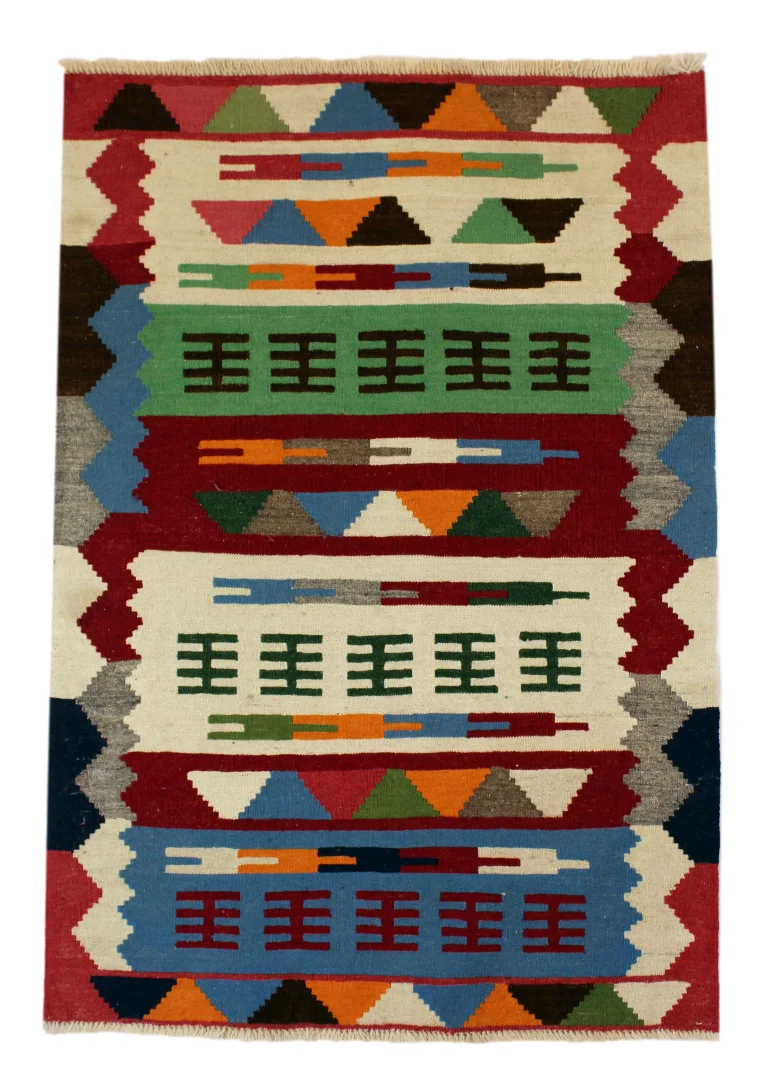
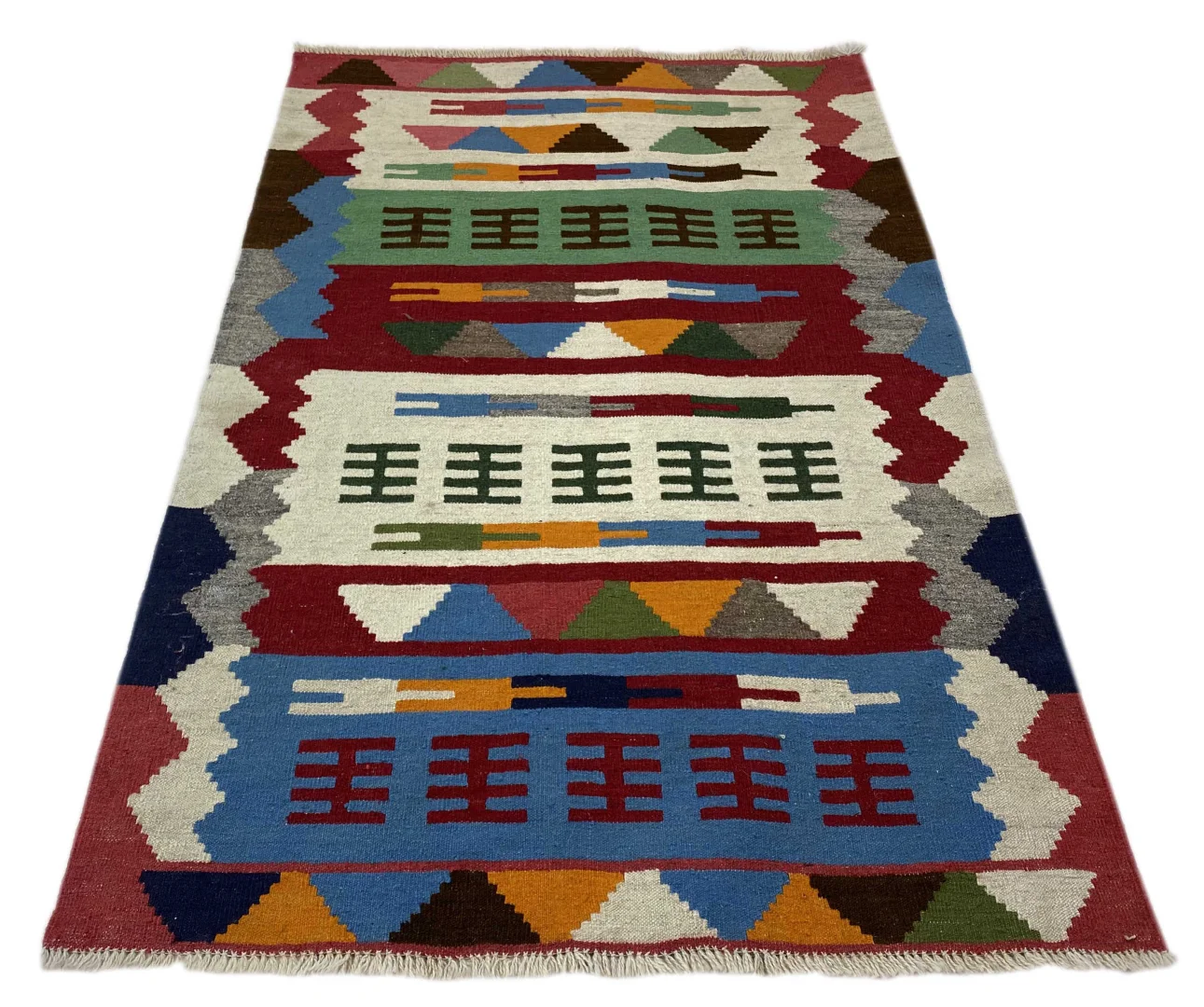
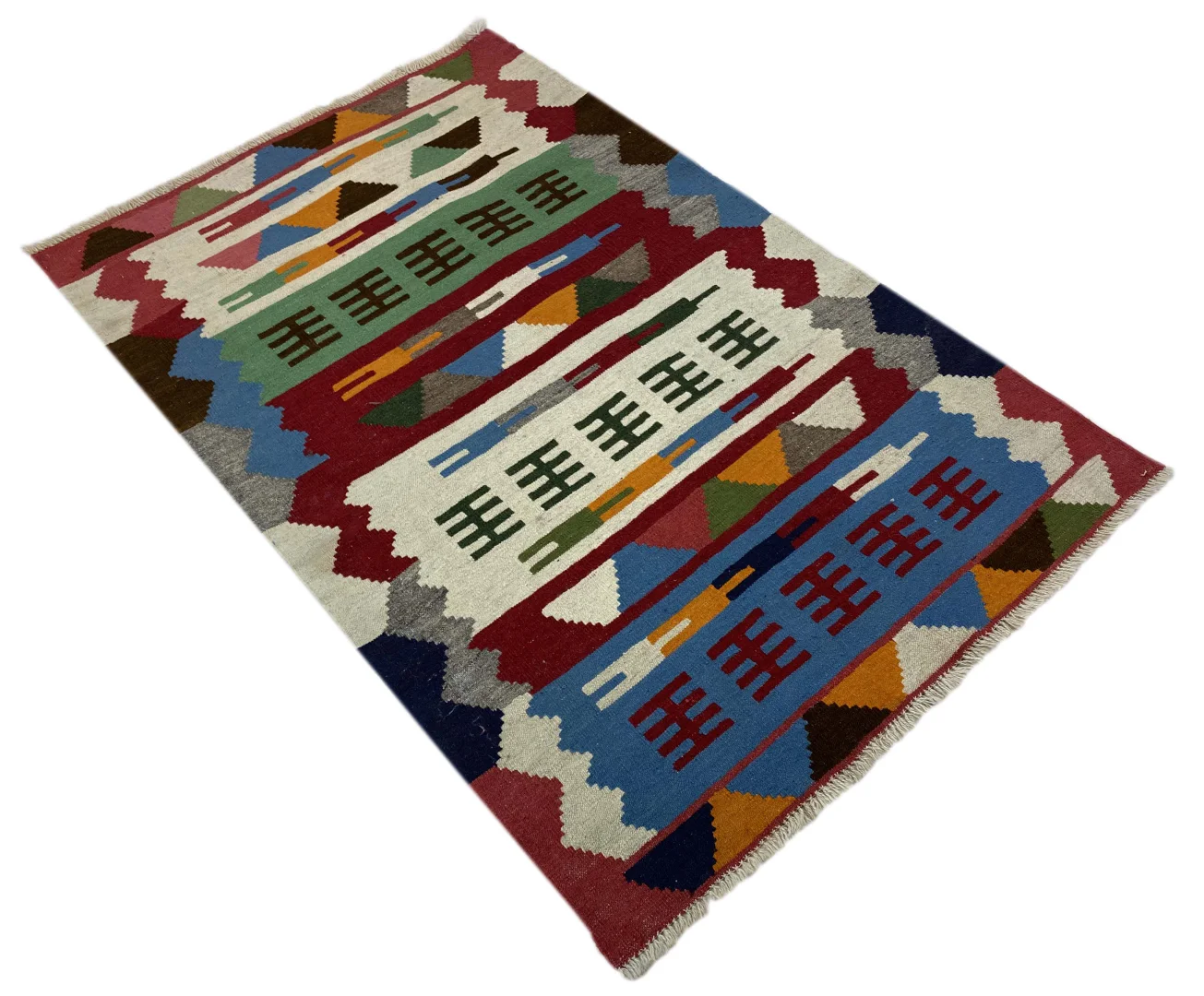
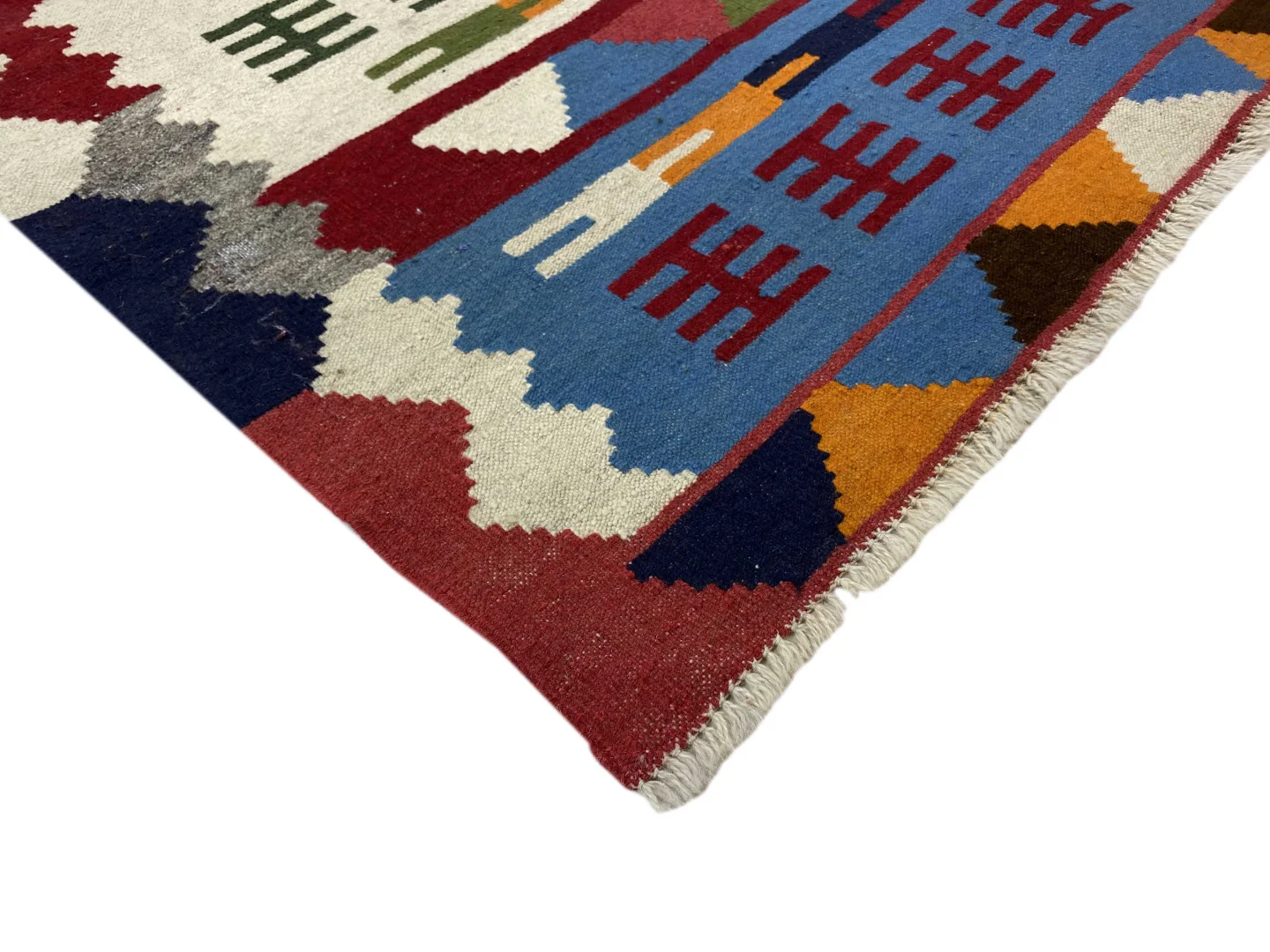
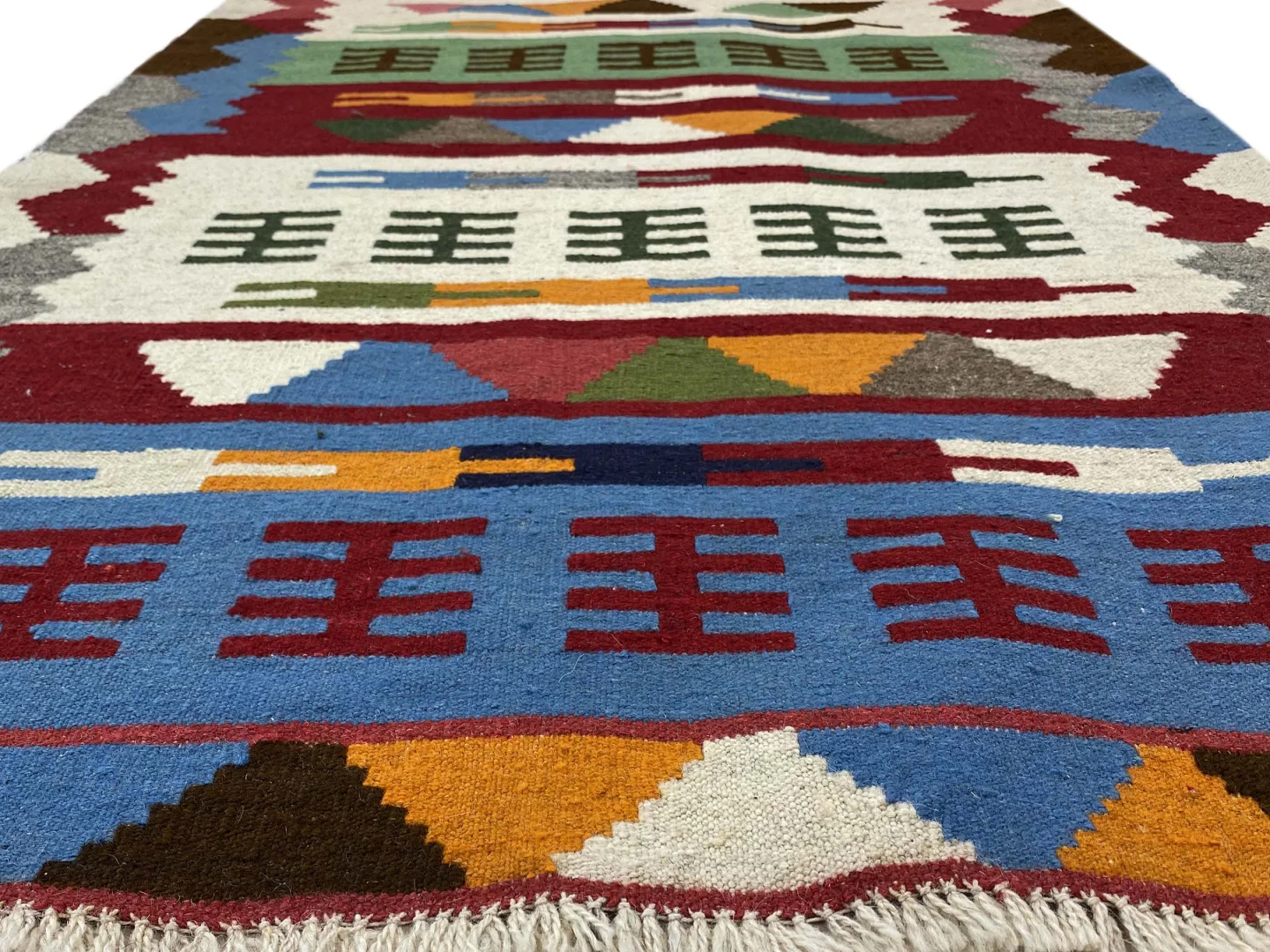
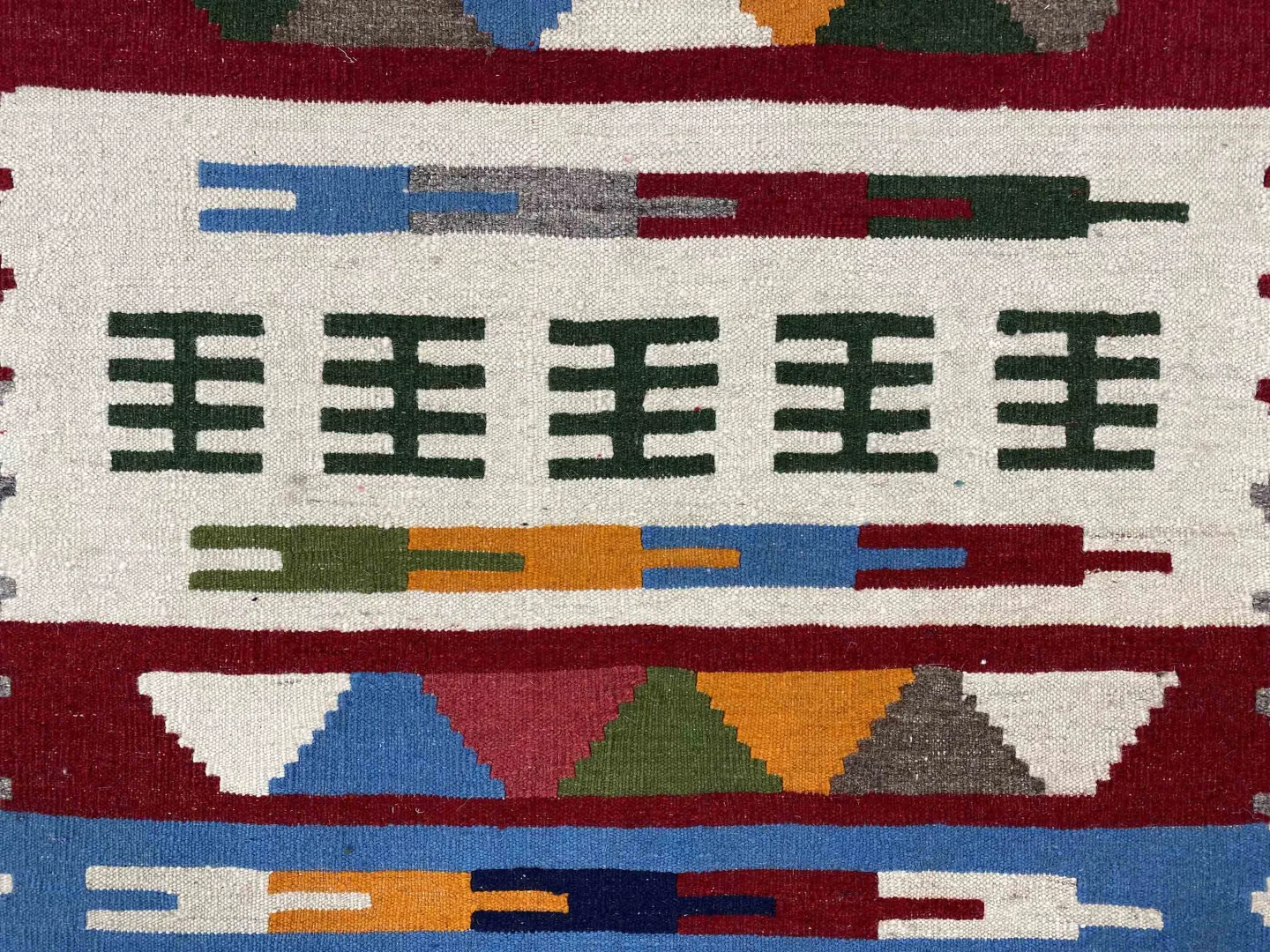
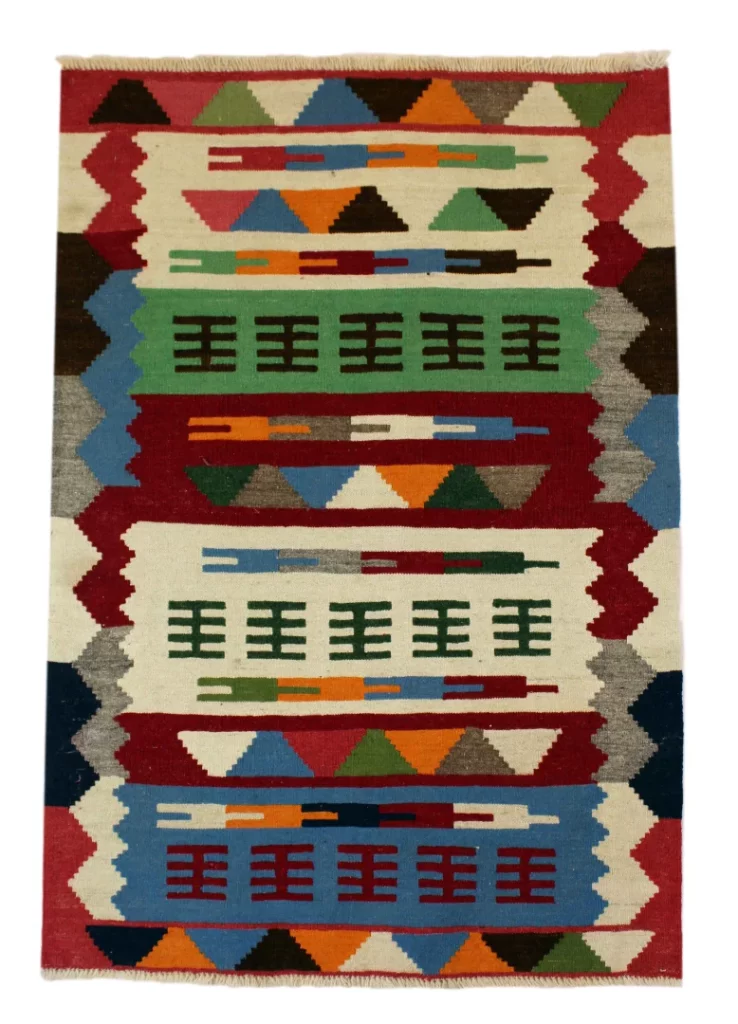
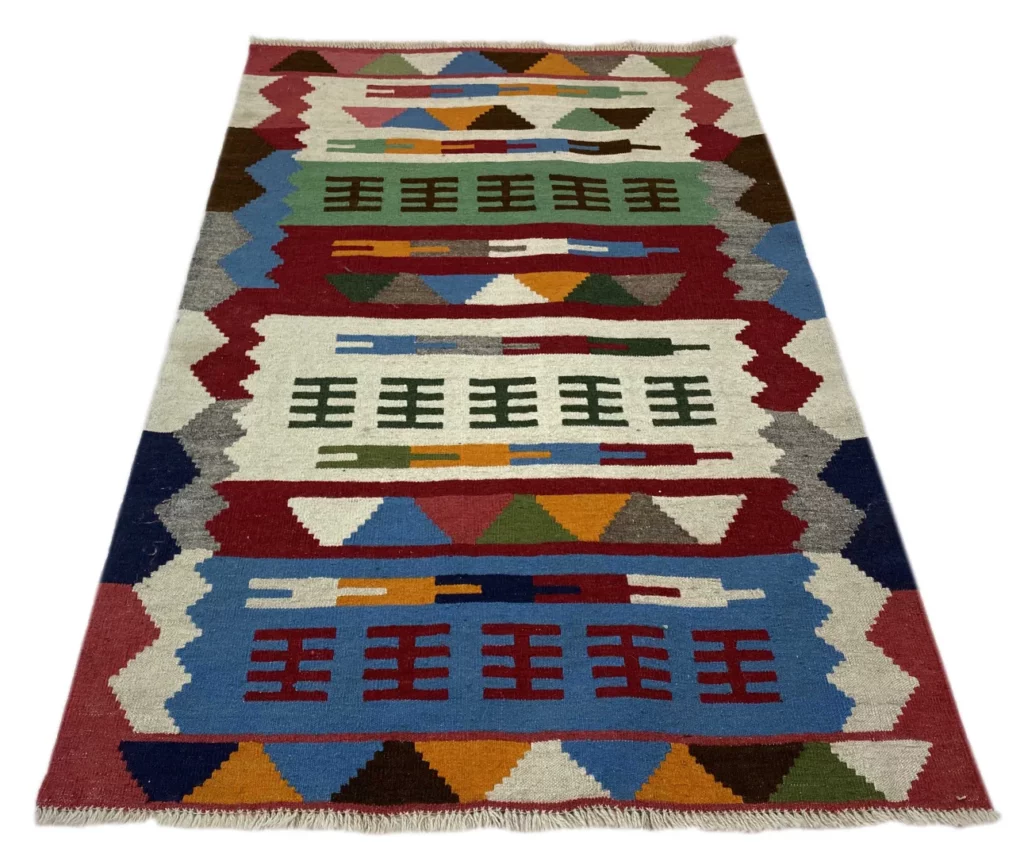
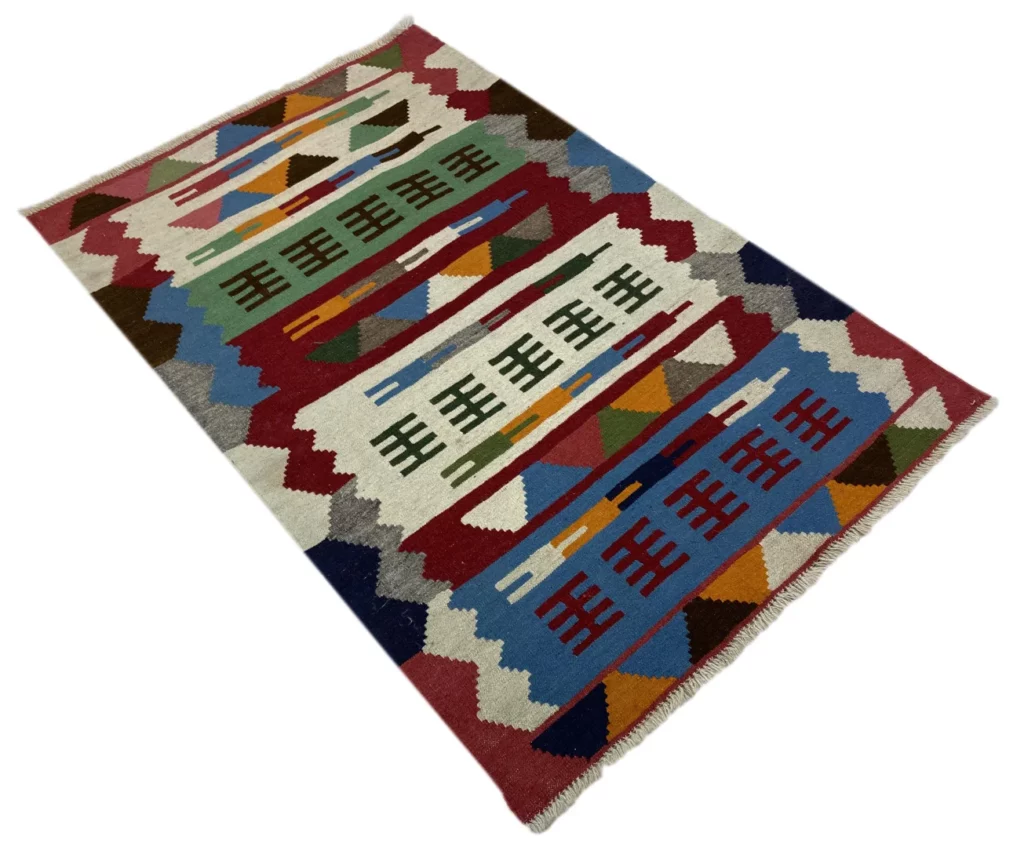
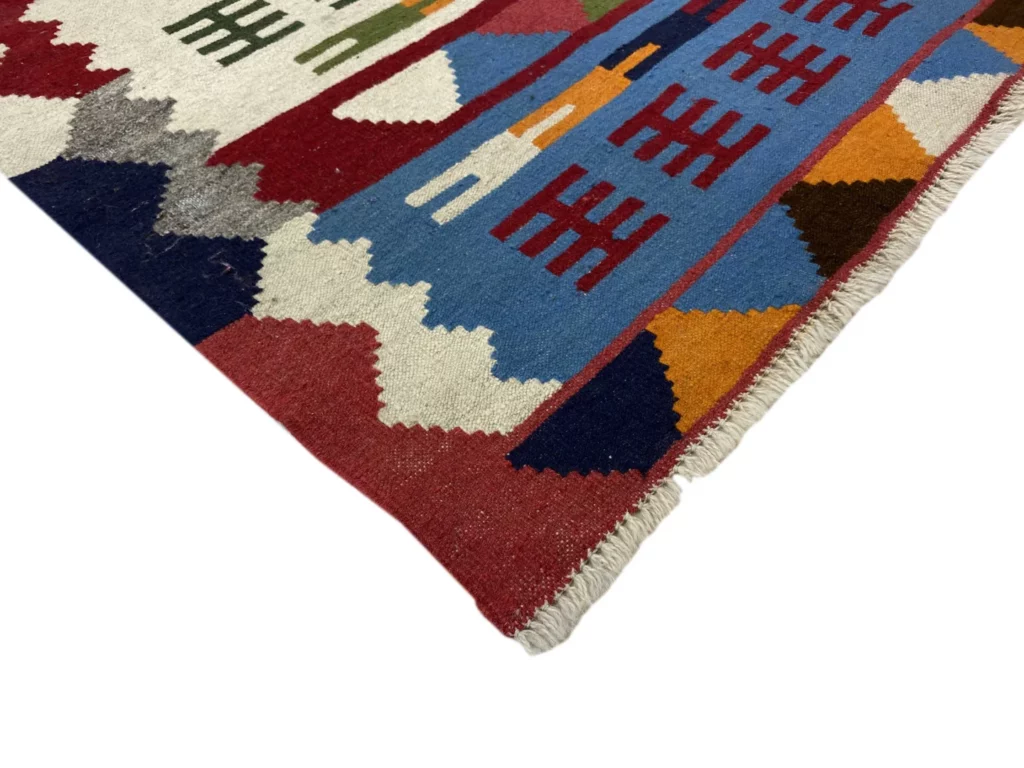
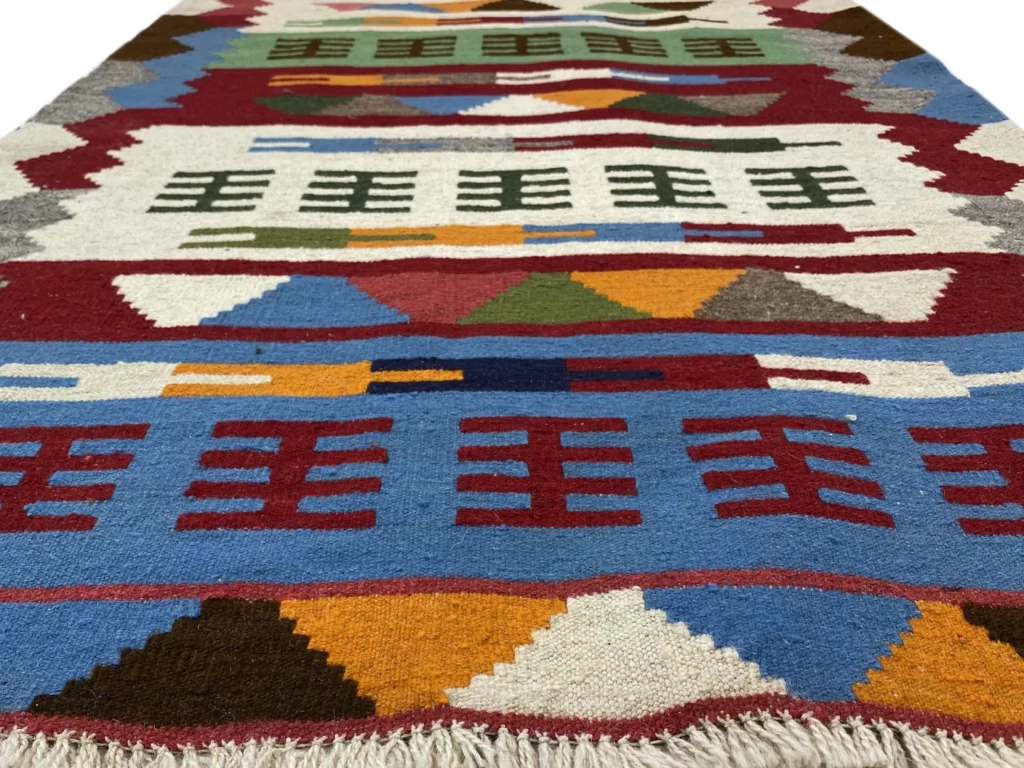
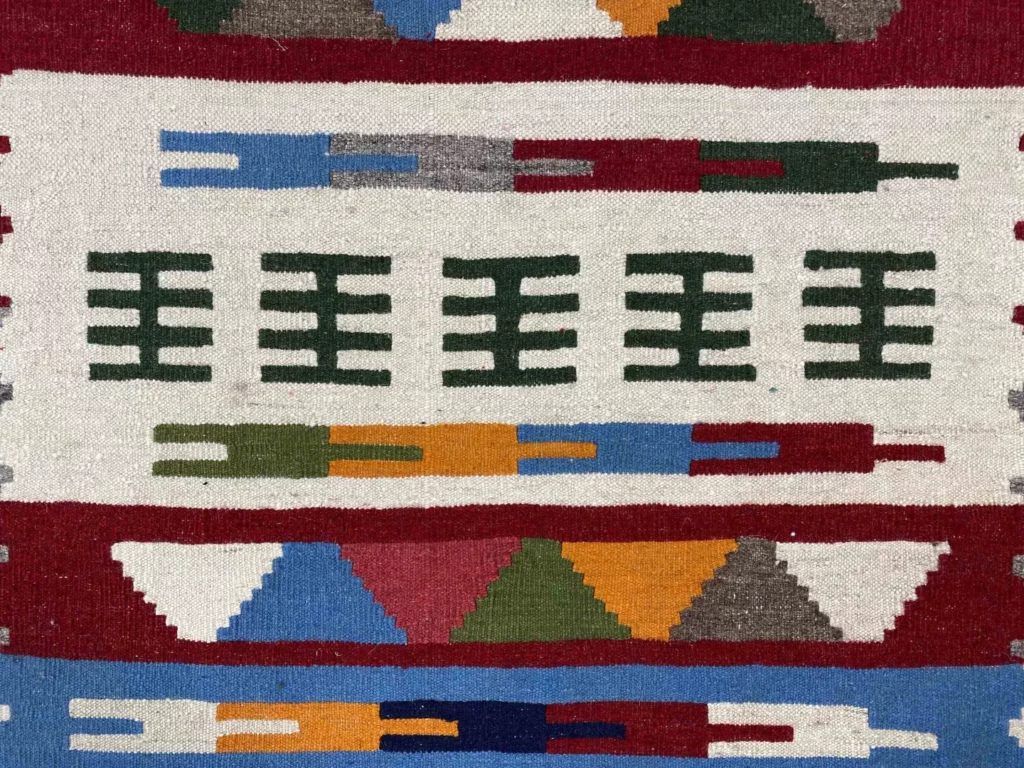
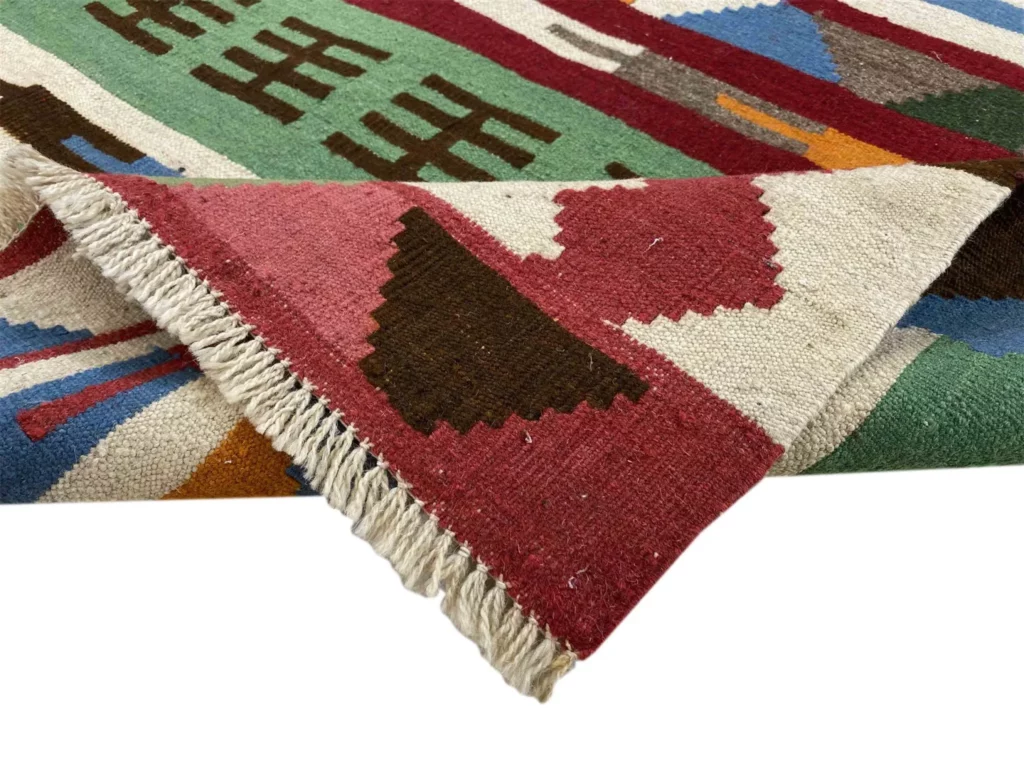
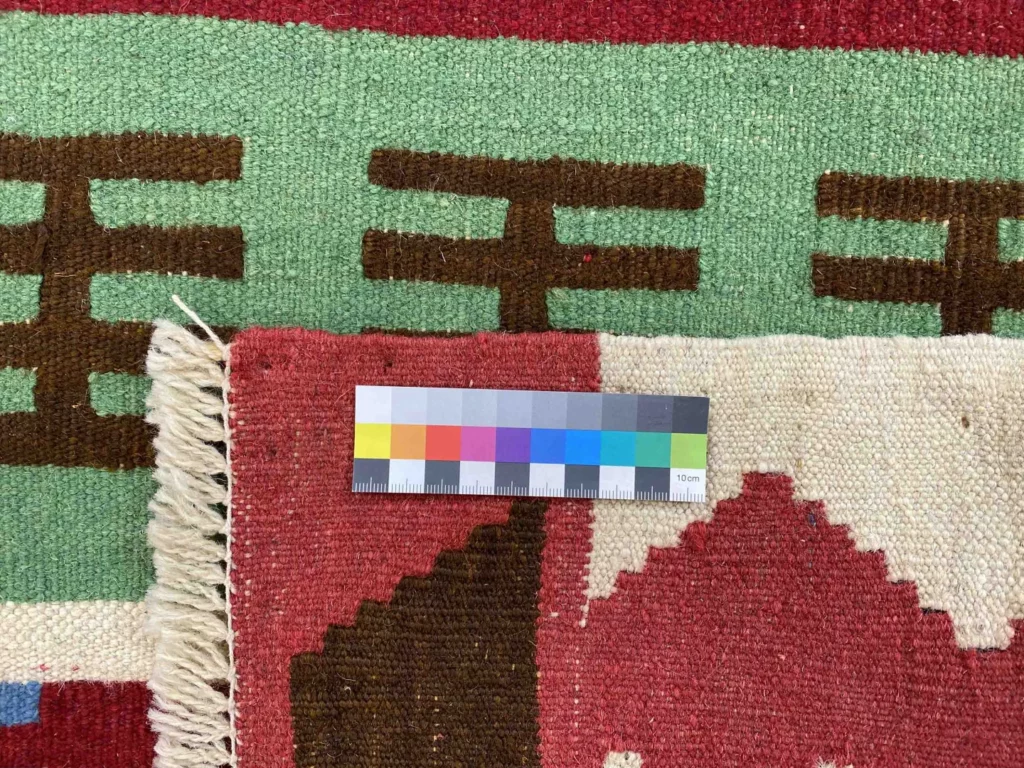
Oriental Rug Fars 150 x 104 cm Wool Hand-woven
€ 432
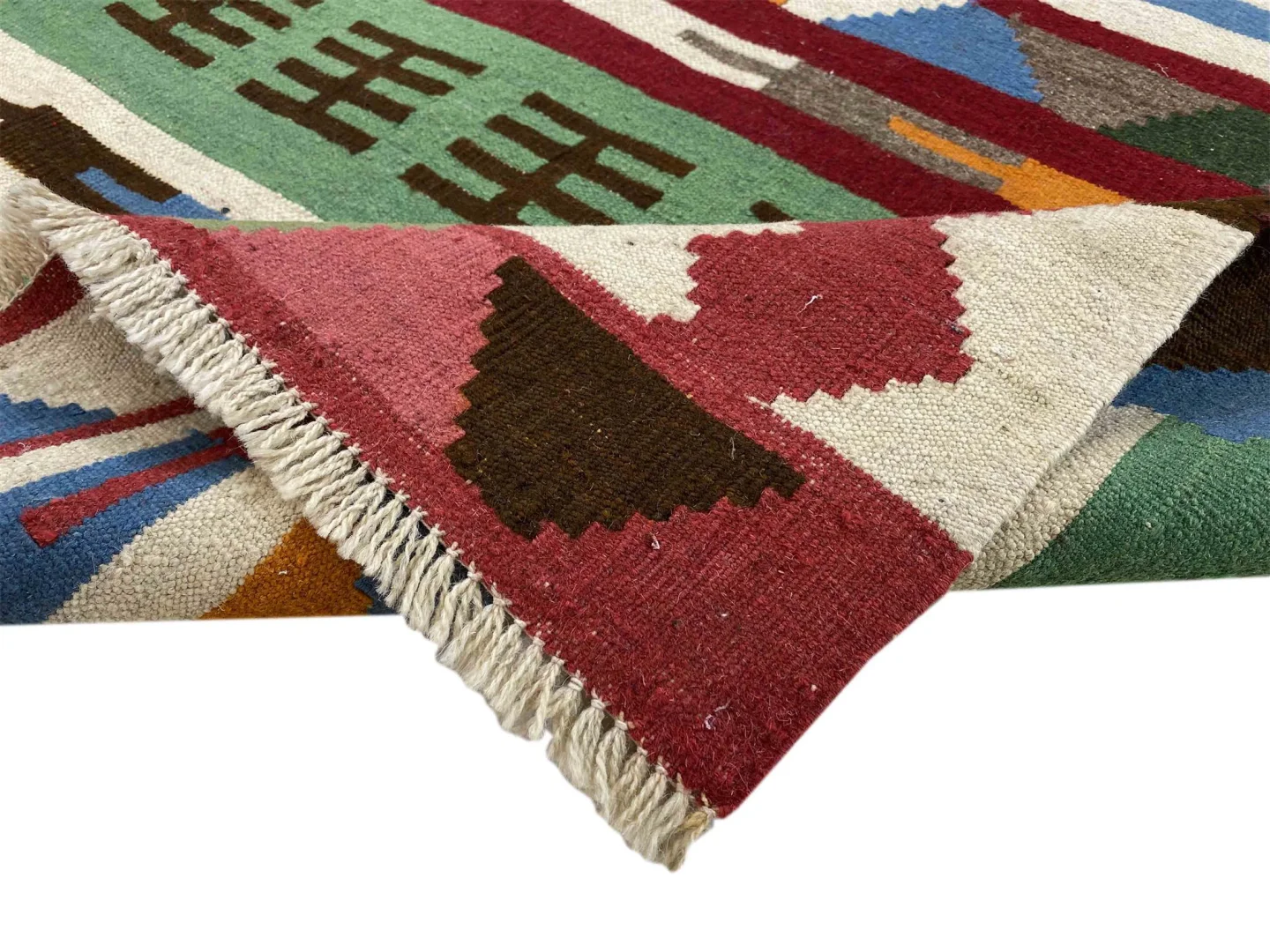
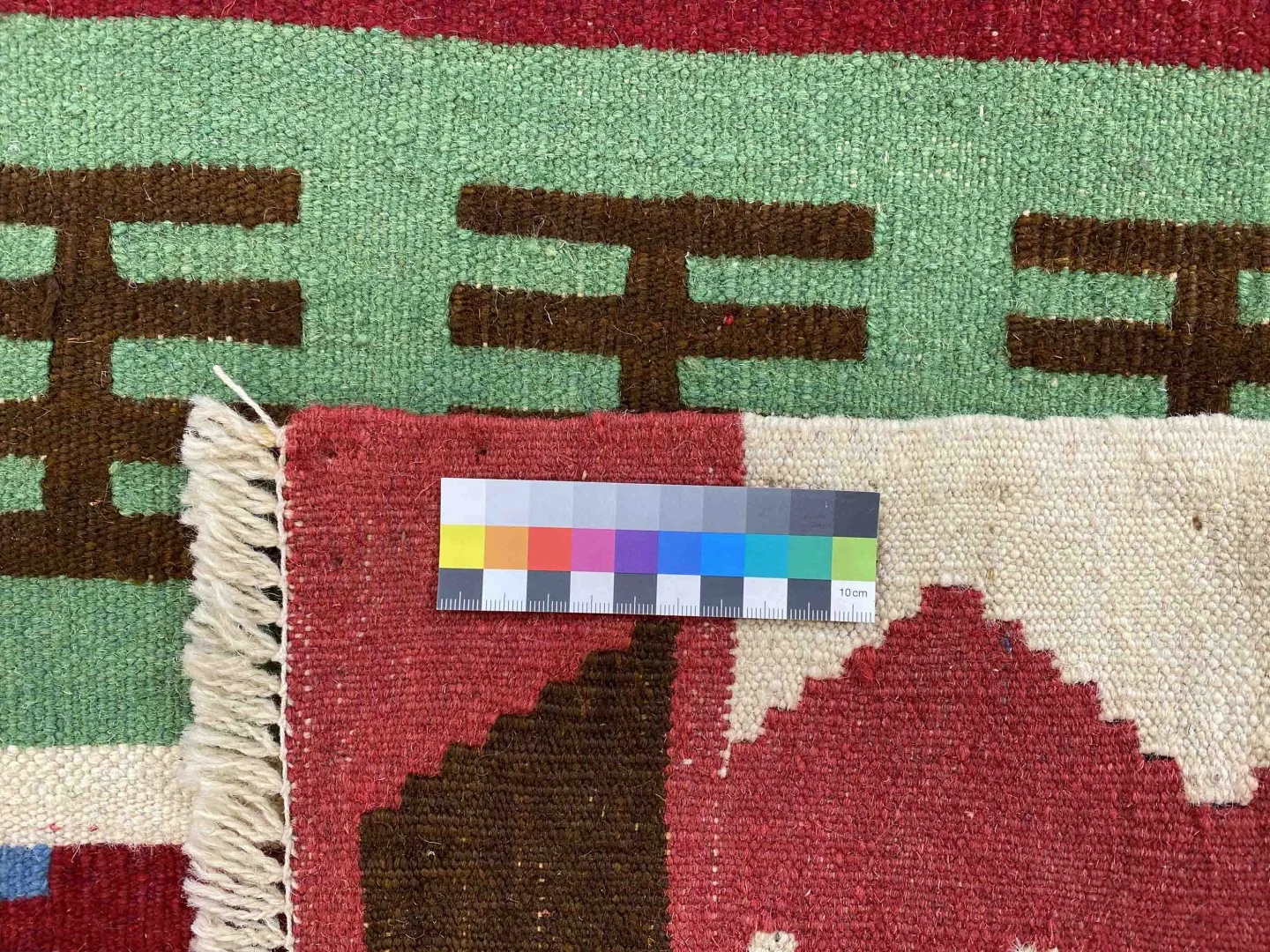
Hand-woven Fars Oriental rug | Material: Wool pile | Size: 150 x 104 cm | Pattern: Identical on both sides | Condition: Very good
1 available
- ✓Free Shipping in EU
- ✓2-5 Business Days Delivery
- ✓14-Day Return Policy
- ✓Worldwide Shipping on request
 SECURE PAYMENT
 SHIPPING PARTNERS
Inventory number: E119805D
Description
Fars Oriental Rug
Material and Craftsmanship
This Kelim from Fars is hand-woven and made of wool. A hand-woven Kelim is formed by interlacing threads rather than by inserting individual knots to create a pile. The result is a flat textile surface in which the material and the construction are closely connected. Wool is traditionally used for this kind of weaving because it can be spun into durable yarn and worked into a firm, flexible fabric. It is the only material specified for this piece.
The weaving process begins by arranging the warp on the loom. These lengthwise threads provide the framework through which the weft is passed. As the weft rows are worked across the warp, the textile surface develops gradually. Unlike a knotted rug, a Kelim does not obtain its structure from a layer of separate knots. Its pattern is formed within the fabric itself, making the technique visible in the flat character of the finished textile.
The pattern is identical on both sides. In many flat weaves, this quality results from the way the design is integrated into the cloth rather than applied to a finished face. The front and reverse can therefore carry the same visual arrangement. That is specifically the case with this piece. Both sides can be viewed as part of the textile design, which is useful when the Kelim is spread out or displayed vertically.
The flat construction sets a Kelim apart from a hand-knotted rug. Knotting creates a pile by tying individual knots around the warp and securing them with weft rows. Weaving connects warp and weft directly. The two techniques produce different surfaces and different structural effects. This rug is identified as hand-woven. No knot density is supplied, so no knot-related specification is added.
Wool is the stated material. There is no supplied information about other fibres, a particular dye method, the warp or a special weave count. The description therefore remains limited to the documented material and the hand-woven technique. With a one-off handmade textile, technical details should be separated carefully from general knowledge about the wider rug type.
Origin and Tradition
Fars is located in southern Iran and has a long, varied history of textile production. Its geography includes plains and mountainous areas, while its cultural landscape has been shaped by settled, village and tribal ways of life. This diversity has supported several forms of weaving and rug making. Alongside knotted carpets, flat-woven Kelims form part of the broader textile heritage associated with Fars.
Fars is a regional designation, not the name of one uniform design. Different communities in the region have developed their own approaches to proportion, ornament, colour arrangement and construction. In rural and tribal traditions, textiles often combine inherited visual forms with the practical needs of everyday use. A Fars Kelim therefore belongs to a regional flat-weaving tradition while individual examples may differ considerably from one another.
Flat-woven textiles have a long history throughout Iran. They have been used as floor coverings, covers, dividing textiles and wall hangings. Their flat and flexible construction made them suitable for objects that had to be folded, rolled, carried or rearranged. A woven textile could serve a practical purpose while also carrying a distinctive regional design. This combination of usefulness and visual identity is central to the history of the Kelim.
Within the Persian rug tradition, the Kelim represents a woven rather than knotted technique. The broad term Persian rug is used for several kinds of Iranian textile work, including knotted rugs and flat weaves. In this example, Fars identifies the regional origin, while Kelim and hand-woven describe the manufacturing method. These terms are related but not interchangeable: a Kelim should not be described as hand-knotted simply because it belongs to the Iranian rug tradition.
Weaving knowledge is traditionally acquired through practical work. Setting the warp, maintaining tension, passing and compacting the weft, joining colour areas and finishing the edges all require familiarity with the loom and the material. The design is not separated completely from the process. The rhythm of the weaving, the available yarn and the structure of the loom influence the way the finished surface is built. This relationship between skill, material and regional practice is an important part of Iranian flat-weaving history.
Textiles from Fars have been made for both everyday use and decoration. In traditional settings, the distinction between a useful object and a work of textile art was not necessarily strict. A floor textile could furnish a living area and at the same time express a local design tradition. A hanging could decorate a room while retaining the structure and character of a woven fabric. Kelims continue to reflect this combination of function and visual culture.
Flat weaves are also connected with ways of life in which furnishings and household textiles needed to be moved or used in more than one place. A Kelim can be spread, rolled, folded or hung. This does not mean that every individual piece had the same historical purpose, but it helps explain the range of uses associated with the type. The traditional use stated for this Fars Kelim is as a rug or wall hanging.
Fars occupies a distinct place within the geography of Iranian carpet production. Its regional identity cannot be reduced to one isolated motif. It is better understood through the combination of local textile practice, the choice of weaving rather than knotting, inherited pattern languages and the uses of the finished fabric. Fars is given as the origin of this piece. No particular city, workshop or weaving group is specified.
The history of Persian textiles includes many centres with different technical and visual traditions. Fars contributes its own regional perspective, especially through the coexistence of flat weaving and carpet making. A Kelim from this region is part of that history without needing to conform to a single standard design. The individual character of a handmade textile comes from the way a regional tradition is applied in one particular woven surface.
Design and Pattern
The documented pattern is identical on the front and the back. In a Kelim, a design is not printed or painted onto a completed surface. It is constructed as the fabric is woven. Coloured areas, outlines and ornaments are created through the order of the weft and the way adjoining sections are joined. On this piece, the reverse carries the same pattern as the front, so both sides belong equally to the visible design.
The wider design vocabulary of Fars Kelims can include geometric, stylised and regionally inherited forms. Geometric shapes are well suited to flat weaving because diamonds, stripes, stepped lines, hooked forms and repeated compartments can be built from clearly defined sections. Such forms occur in several Iranian flat-weaving traditions. They are general background to the type and should not be presented as named motifs of this individual rug. For this piece, the specific recorded design fact is that both sides are identical.
Pattern gives structure to the woven field and creates a rhythm for the work. Repetition can connect separate areas, while borders and bands can organise the surface. In hand weaving, ornament is never entirely independent of technique. The width of the loom, the movement of the weft and the joining of colour fields all affect how a form appears. The visual design is therefore created together with the fabric rather than added after the weaving is complete.
Regional ornaments may carry decorative, structural and inherited aspects at the same time. A repeated shape can refer to an established local vocabulary, but it can also help divide the surface into manageable sections. Traditional textile designs are not always produced from one fixed template. Weavers may use familiar forms, alter their proportions and place them according to the available field. This allows a Kelim to remain connected to regional tradition while retaining the character of handwork.
The identical design on both sides affects how the textile can be presented. Spread on the floor, the pattern becomes a horizontal field within the room. Hung on the wall, it becomes a vertical textile panel. Because the front and reverse show the same pattern, the visual arrangement remains consistent regardless of which side faces outward. The technical property of the flat weave therefore supports both traditional uses recorded for this piece.
A Kelim has a different surface language from a rug with a raised pile. Its appearance depends on woven texture, flat areas, contours and the distribution of the design across the fabric. A knotted rug gains much of its visual relief from the pile created by the knots. A flat weave keeps the pattern closer to the textile plane. This helps make the reverse more relevant to the way the piece is viewed and used.
Fars Kelims are generally discussed in connection with direct, graphic and often geometric approaches to ornament. That is background about the regional type, not an additional claim about this particular item. No specific colour palette, named central motif or particular border is supplied for this Kelim. The confirmed design feature is the identical pattern on both sides. The description therefore avoids assigning an unrecorded motif or colour scheme.
The relationship between pattern and manual production is central to Kelim design. Each part of the ornament develops through the movement of the threads, and small changes in tension or joining can influence the contours of a field. This does not make the design accidental. Rather, it shows how a traditional pattern language is translated into a woven surface by hand. Regional history, material and technique meet directly in the finished textile.
Special Features
The identical pattern on both sides is a specific feature of this Kelim. The front and reverse are not described as separate designs; they show the same pattern. This corresponds to the nature of a flat weave, where the design is integrated into the textile surface. It also allows the piece to be considered from either side when used as a rug or displayed as a wall hanging.
The Kelim comes from Fars, is hand-woven and is made of wool. Its traditional uses are as a rug or wall hanging. The condition is very good. No details are supplied about age, a signature, repairs, colours or a special weave count, so those attributes are not added to the description.
FAQ
What is a Fars Kelim?
A Fars Kelim is a flat-woven textile associated with the Iranian region of Fars. Unlike a hand-knotted rug, it is made by interlacing warp and weft threads rather than by tying individual knots to create a pile. Fars identifies the regional tradition, while Kelim identifies the woven form. This individual piece is hand-woven and made of wool.
Can this Kelim be used on either side?
The front and reverse of this Kelim have an identical pattern. The design therefore remains visible whichever side is presented. It is traditionally intended for use as a rug or wall hanging, so the textile can be viewed horizontally or vertically. The identical pattern is a stated characteristic of this particular piece and is consistent with the way a flat-woven Kelim incorporates its design into the fabric.
How are Kelims traditionally used?
Kelims are traditionally used as flat rugs or as textile wall hangings. On the floor, the woven surface functions as a covering; on the wall, it becomes a textile decorative panel. Their flat construction makes both forms of presentation possible. This Fars Kelim is specifically described for traditional use as a rug or wall hanging, has an identical pattern on both sides and is in very good condition.
Additional information
| Design Style | |
|---|---|
| Color | |
| Size | |
| Shape | |
| Origin | |
| Material |
Related products

Persian Rug Qashqai 293 x 198 cm Wool Hand-woven
€ 798
Oriental Rug Kelim 240 x 180 cm Wool Hand-woven
€ 2249
Persian Rug Gabbeh 250 x 180 cm Cashmere Hand-knotted
€ 1118
Oriental Rug Ushak ca 420 x 296 cm Wool Hand-knotted
€ 2250
Persian Rug Fars 292 x 206 cm Wool Hand-woven
€ 798
Persian Rug Heriz ca 341 x 242 cm Wool Hand-knotted
€ 1800
Persian Rug Tabriz 388 x 295 cm Wool Hand-knotted
€ 1440
Persian Rug Qashqai 290 x 192 cm Wool Hand-woven
€ 798