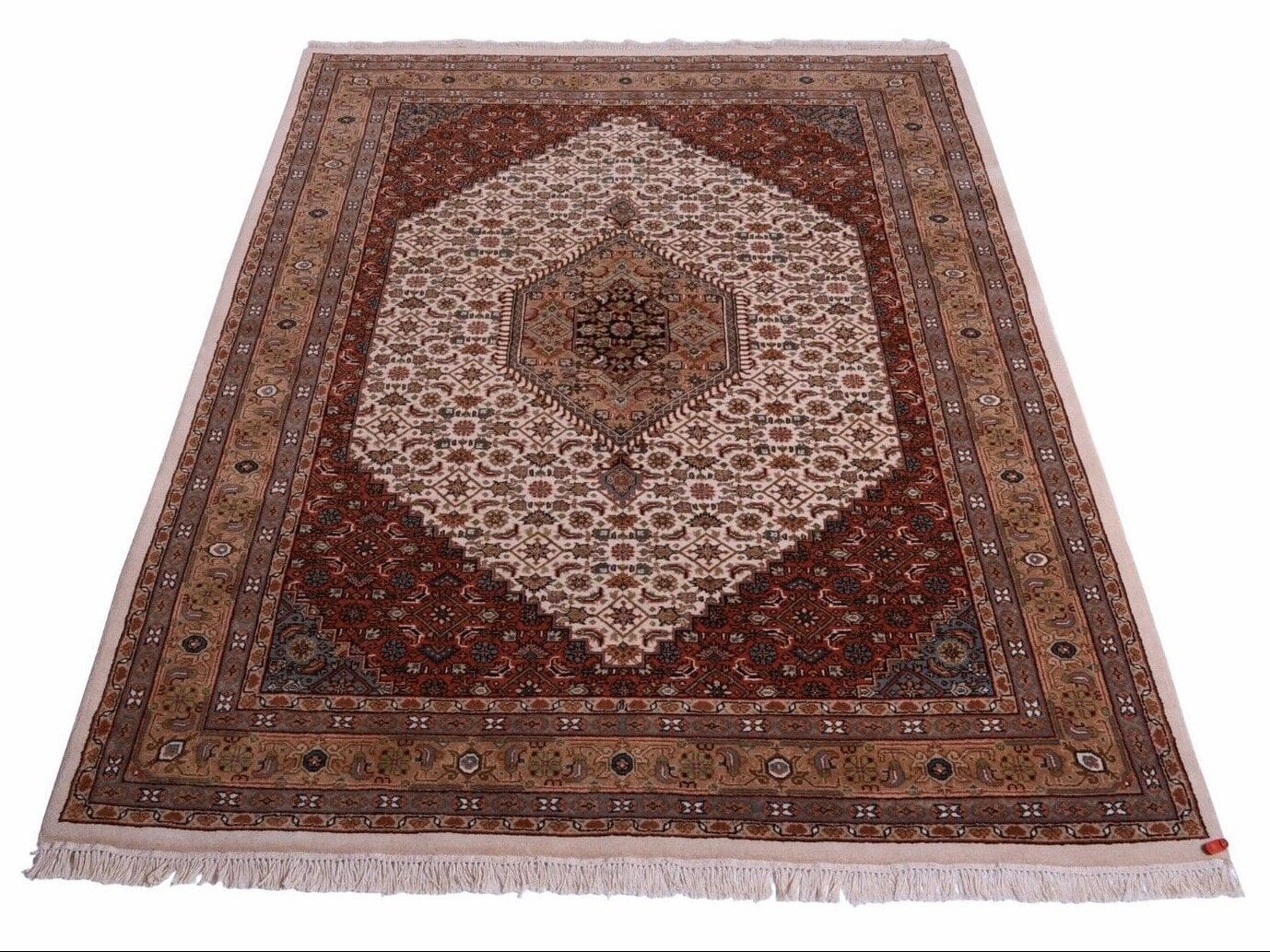
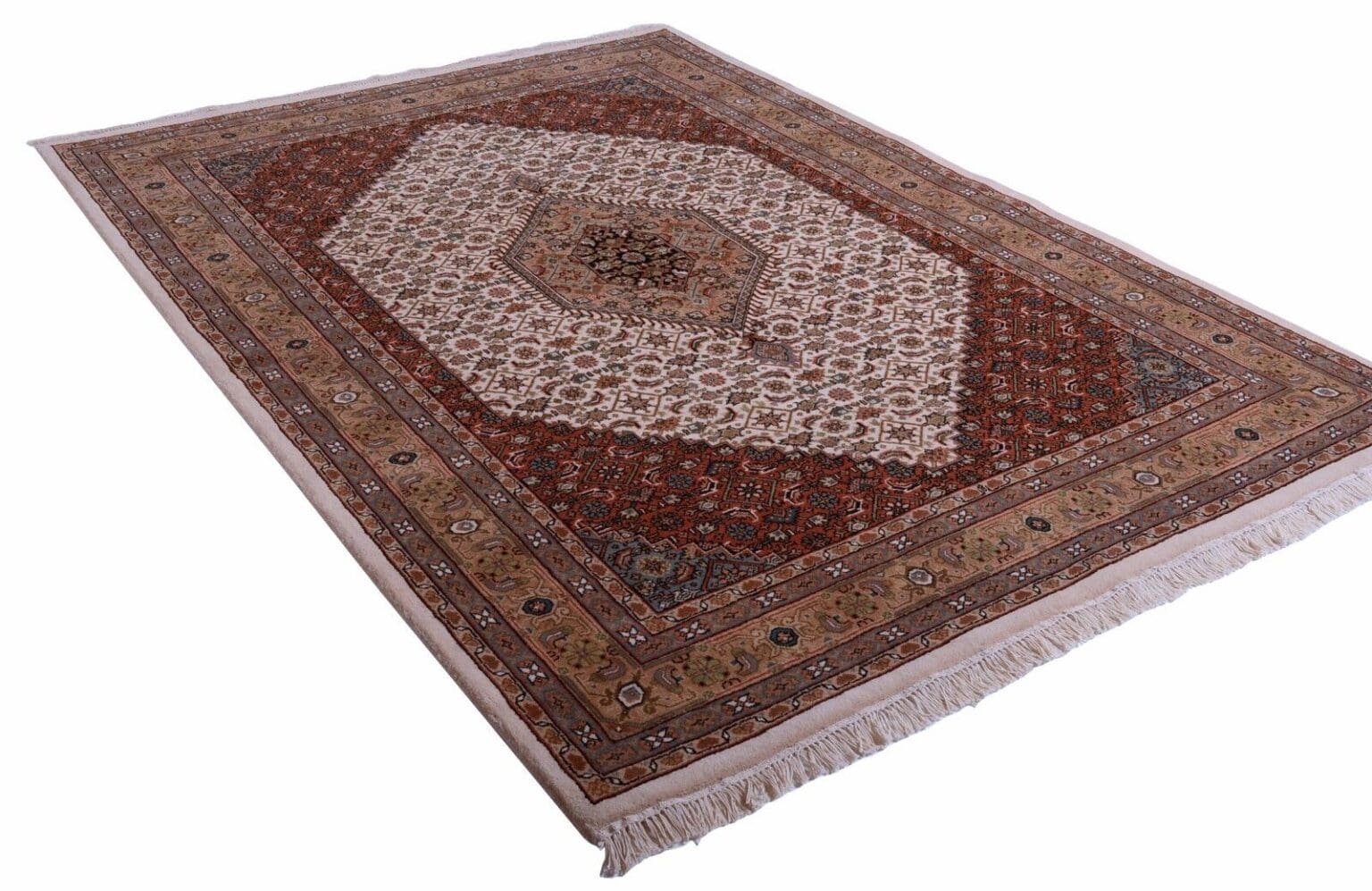
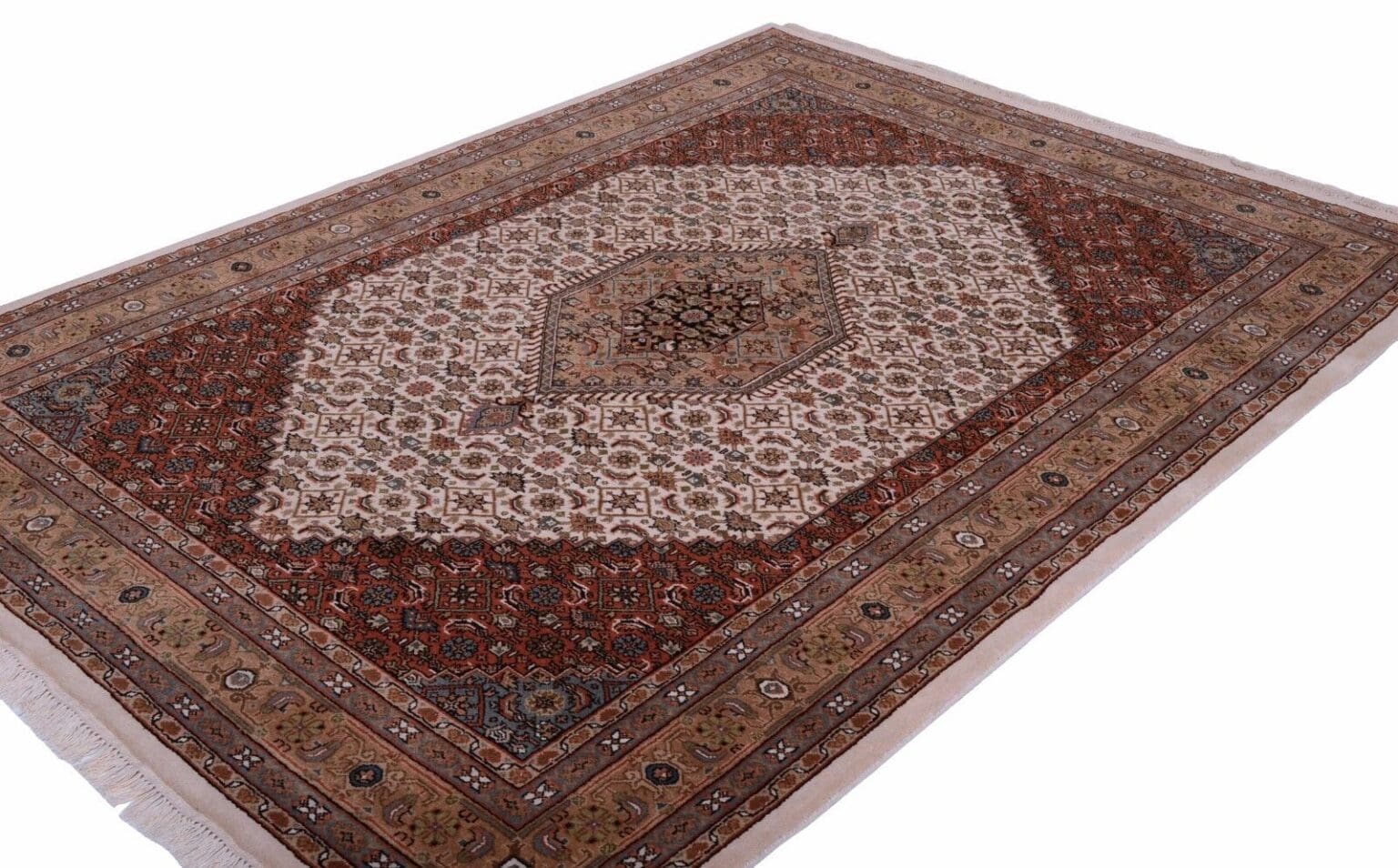
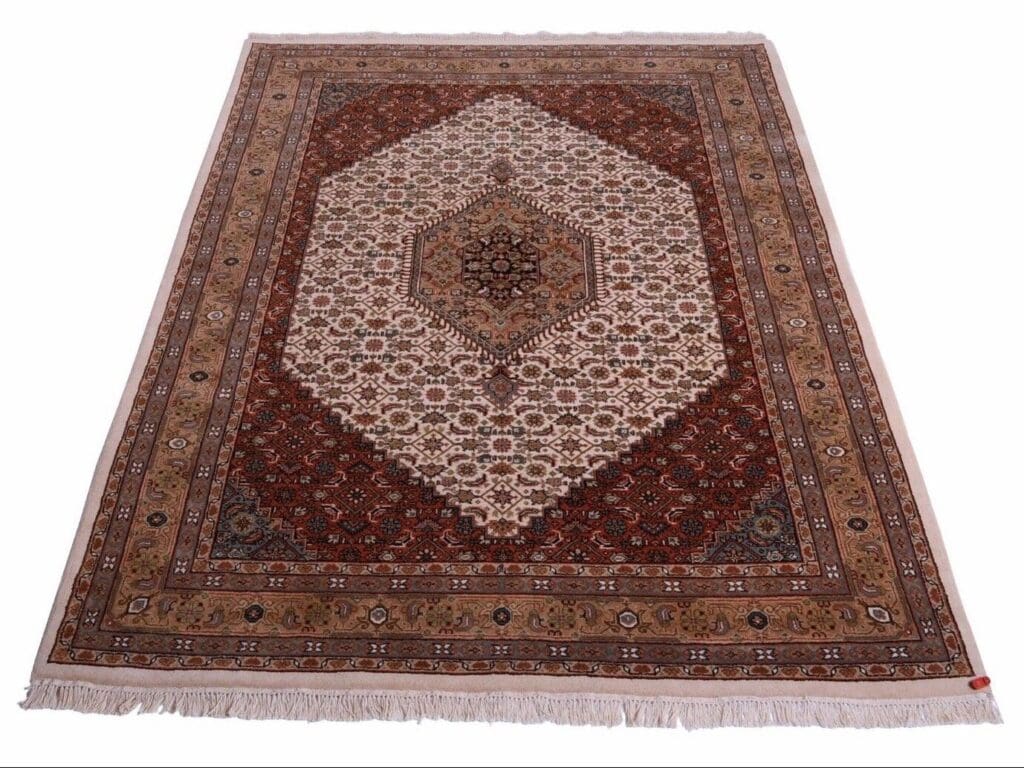
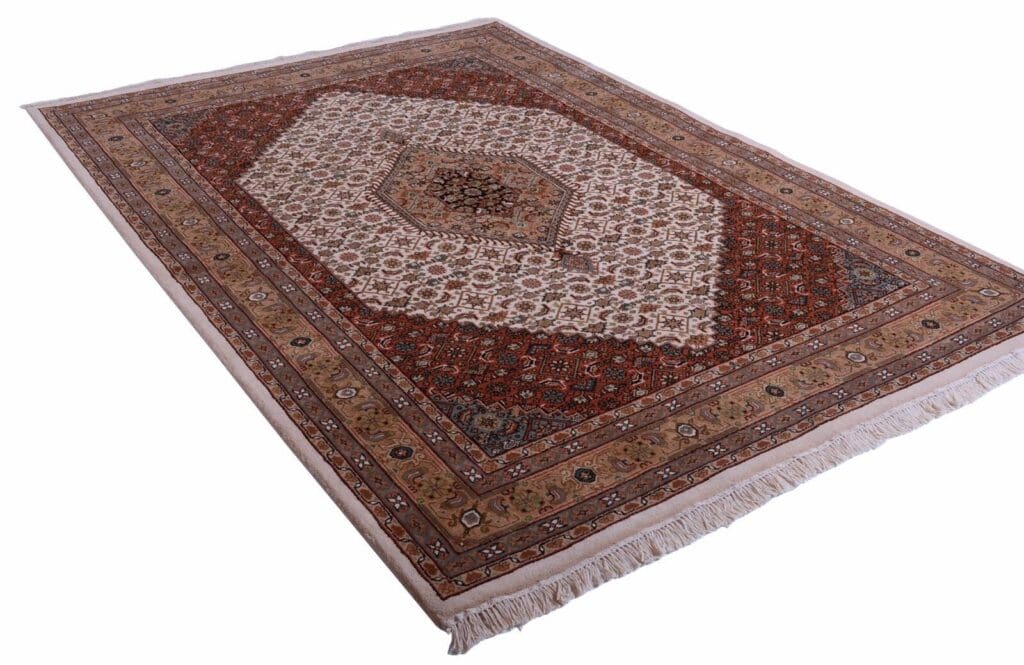
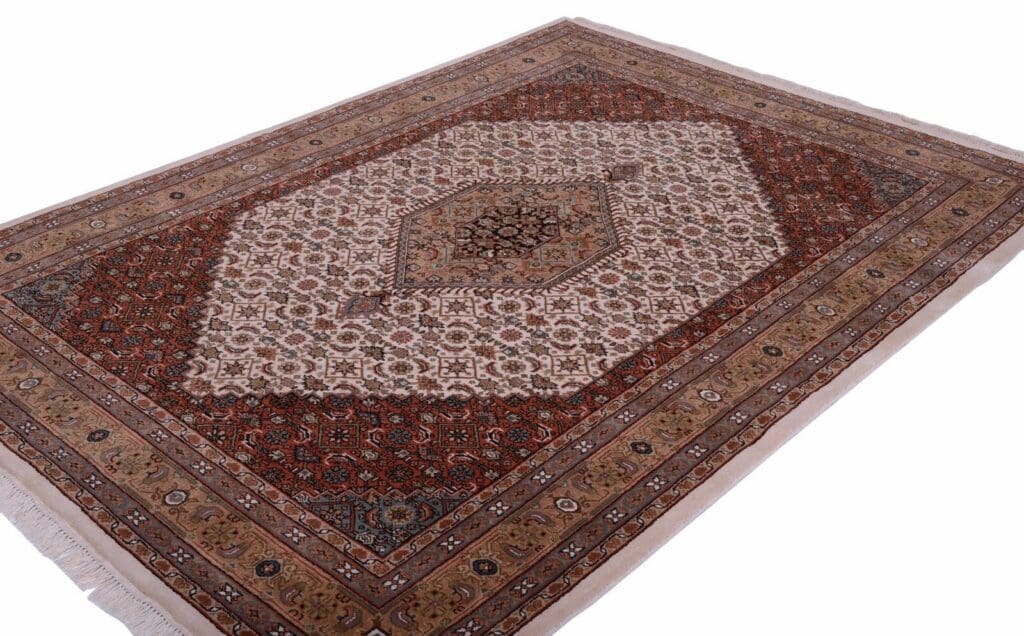
Oriental Rug Bijar Wool Hand-knotted
€ 452
Hand-knotted Bidjar Oriental rug | Knot density: 165,000 – 185,000 knots/m² | Material: 100% virgin wool | Size: various standard sizes | Pattern: geometric pattern with medallion | Condition: New, perfect
1 available
- ✓Free Shipping in EU
- ✓2-5 Business Days Delivery
- ✓14-Day Return Policy
- ✓Worldwide Shipping on request
 SECURE PAYMENT
 SHIPPING PARTNERS
Inventory number: DF13FA2C
Description
Bidjar Oriental Rug
Material and Craftsmanship
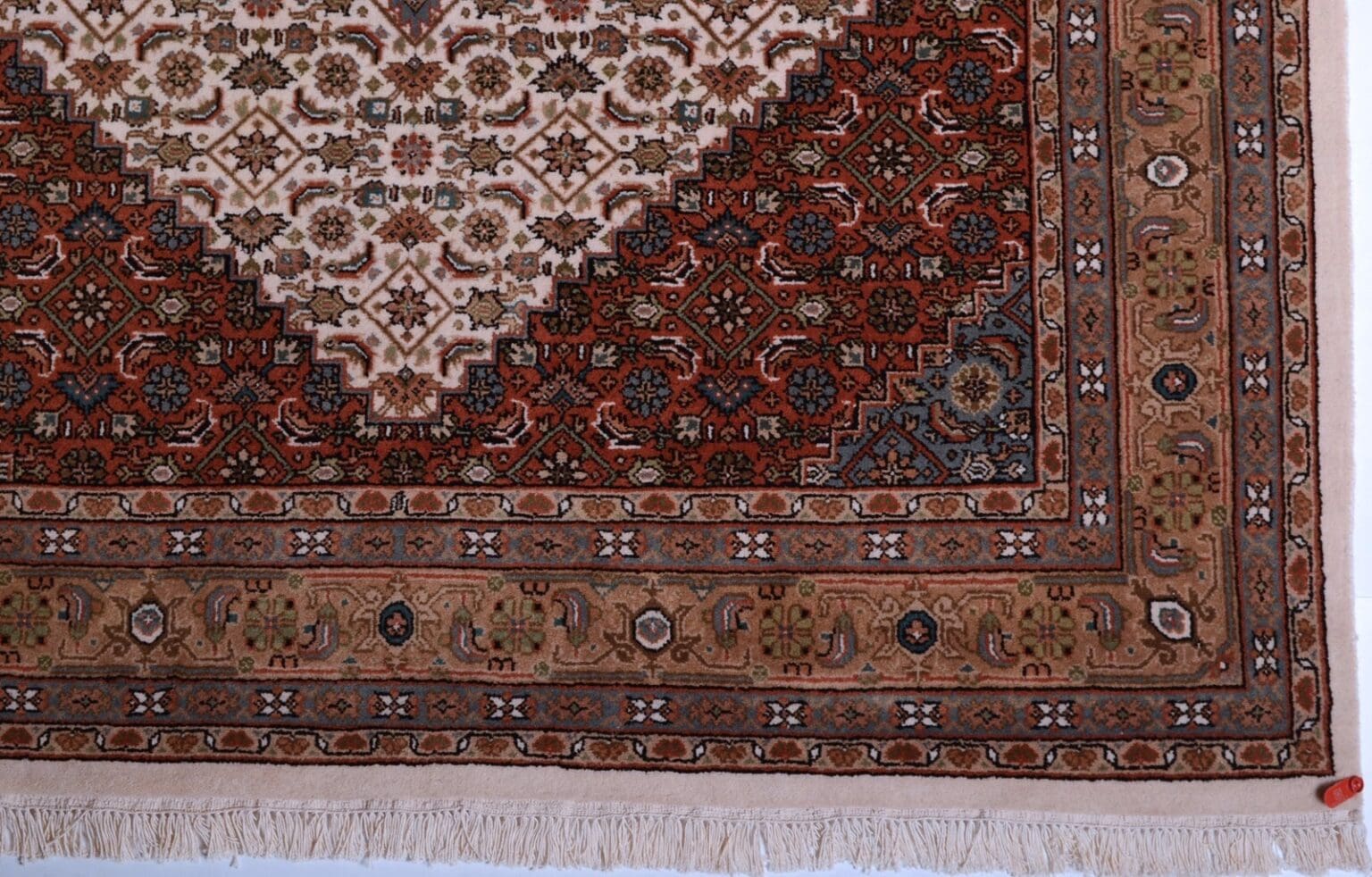
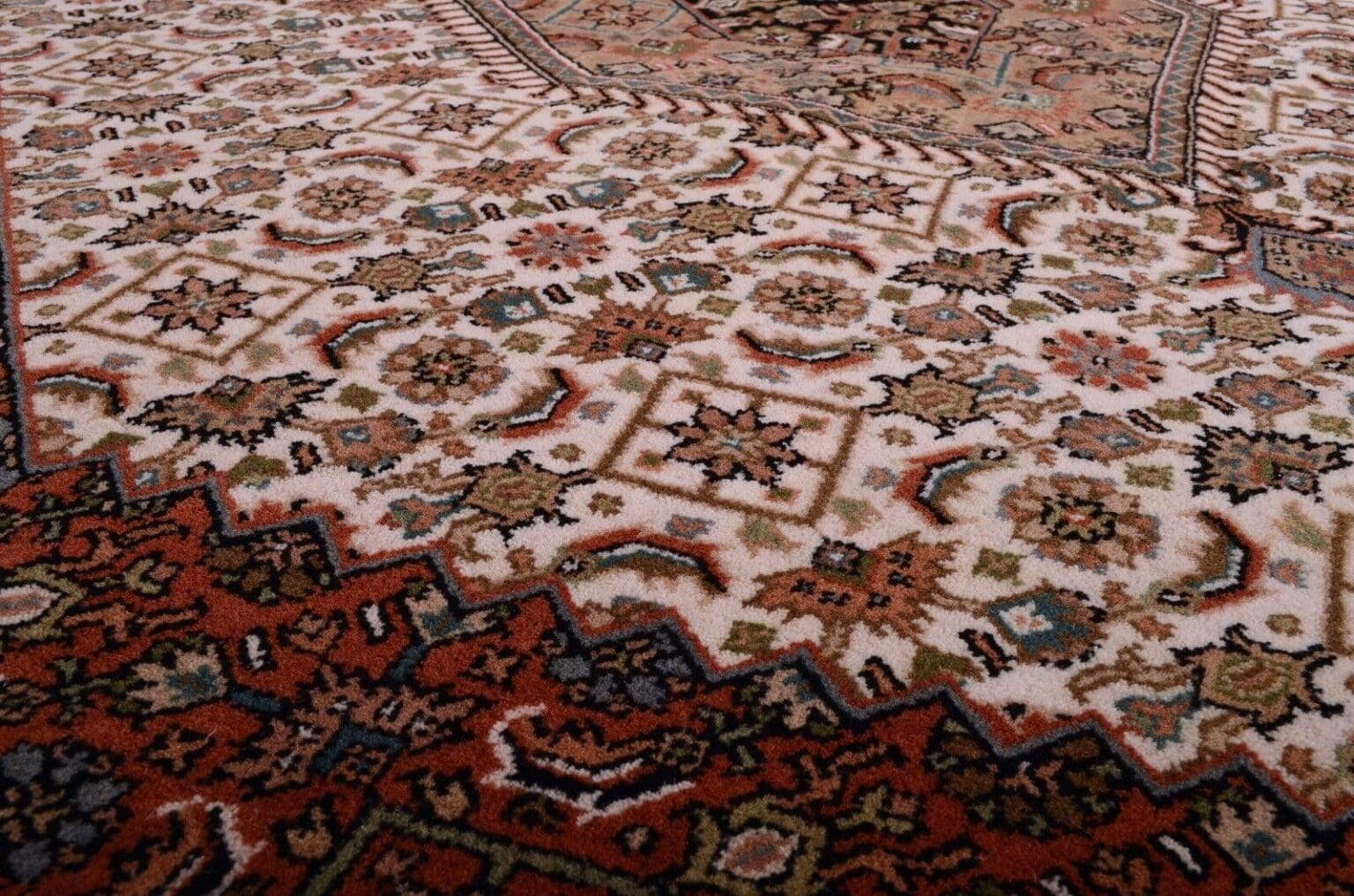
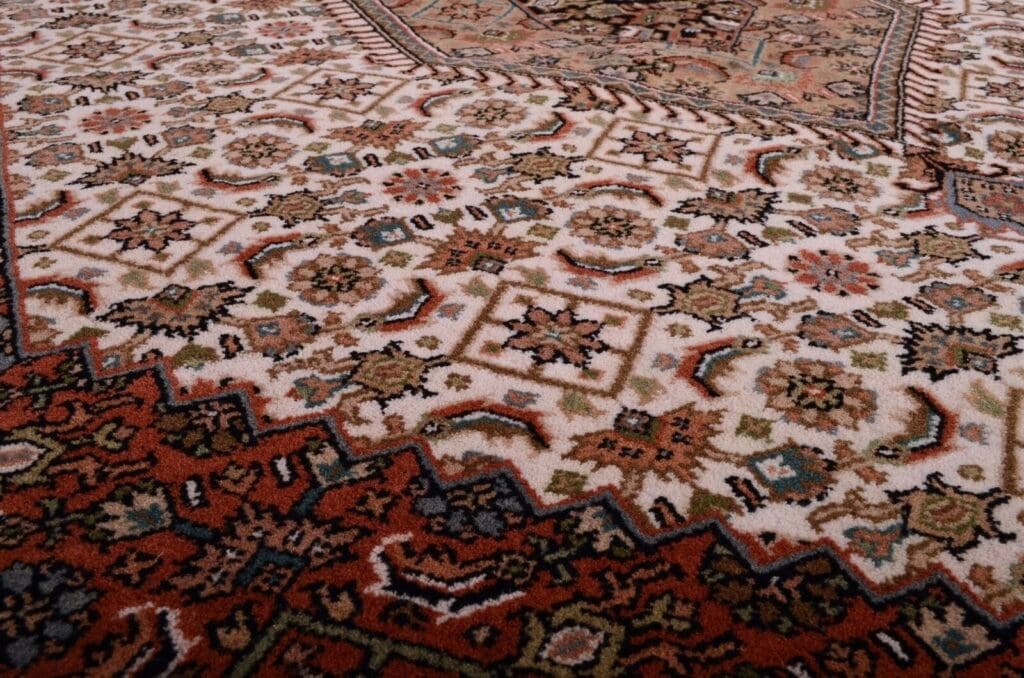
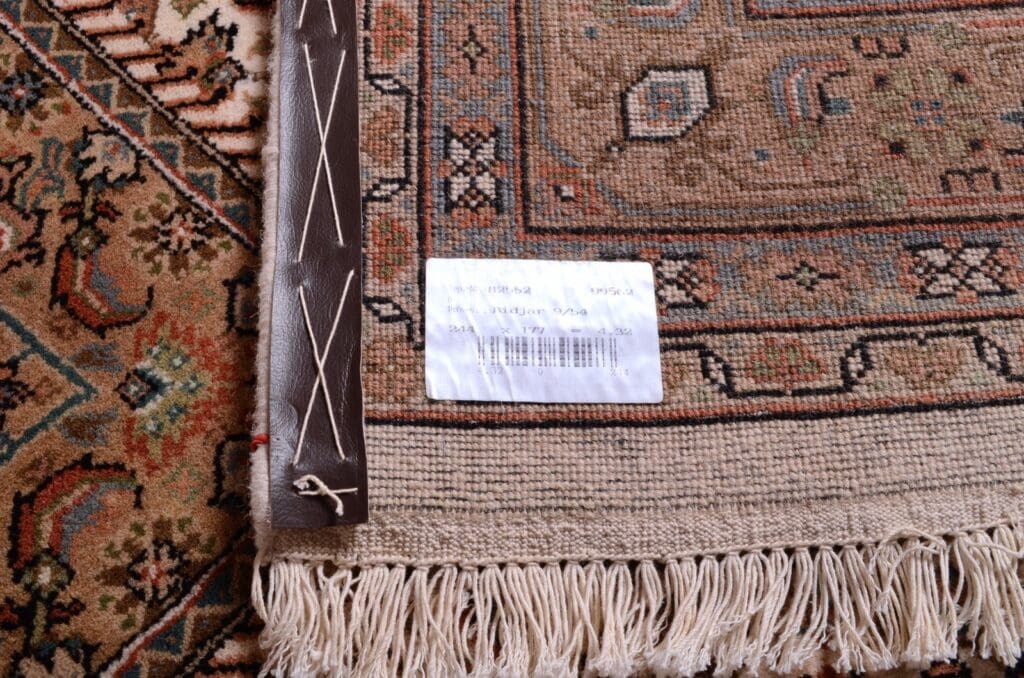
The Indo Bidjar Royal is a hand-knotted Oriental rug made in India. Its stated material is virgin wool. The wool gives the rug a pleasant tactile surface and is associated with durability and resistance in everyday furnishing. The pile is approximately 15 mm high, creating a clearly defined and comfortable surface underfoot. The weight is approximately 4.5 kg/m². These details describe the construction and handling profile of this particular rug.
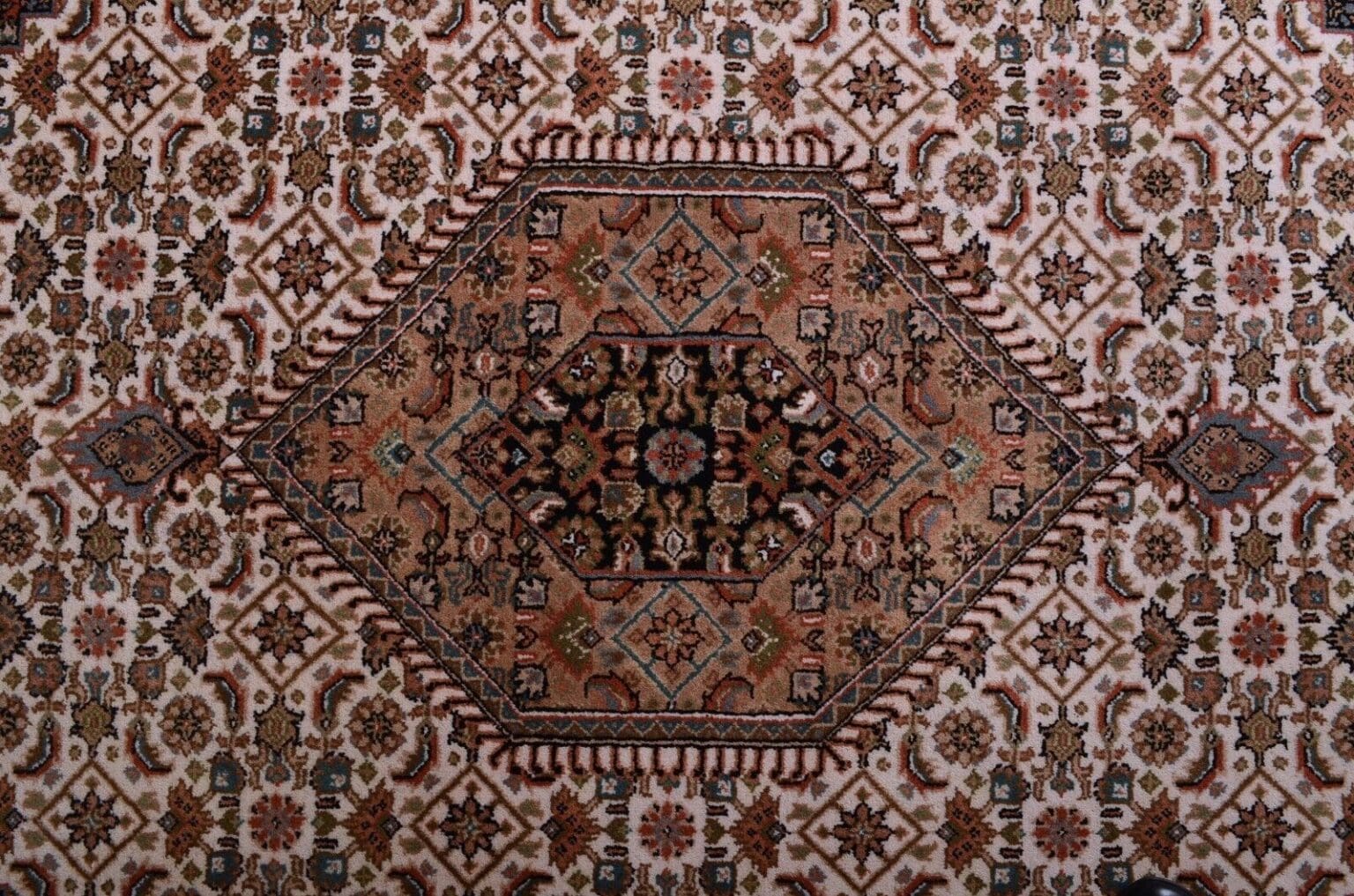
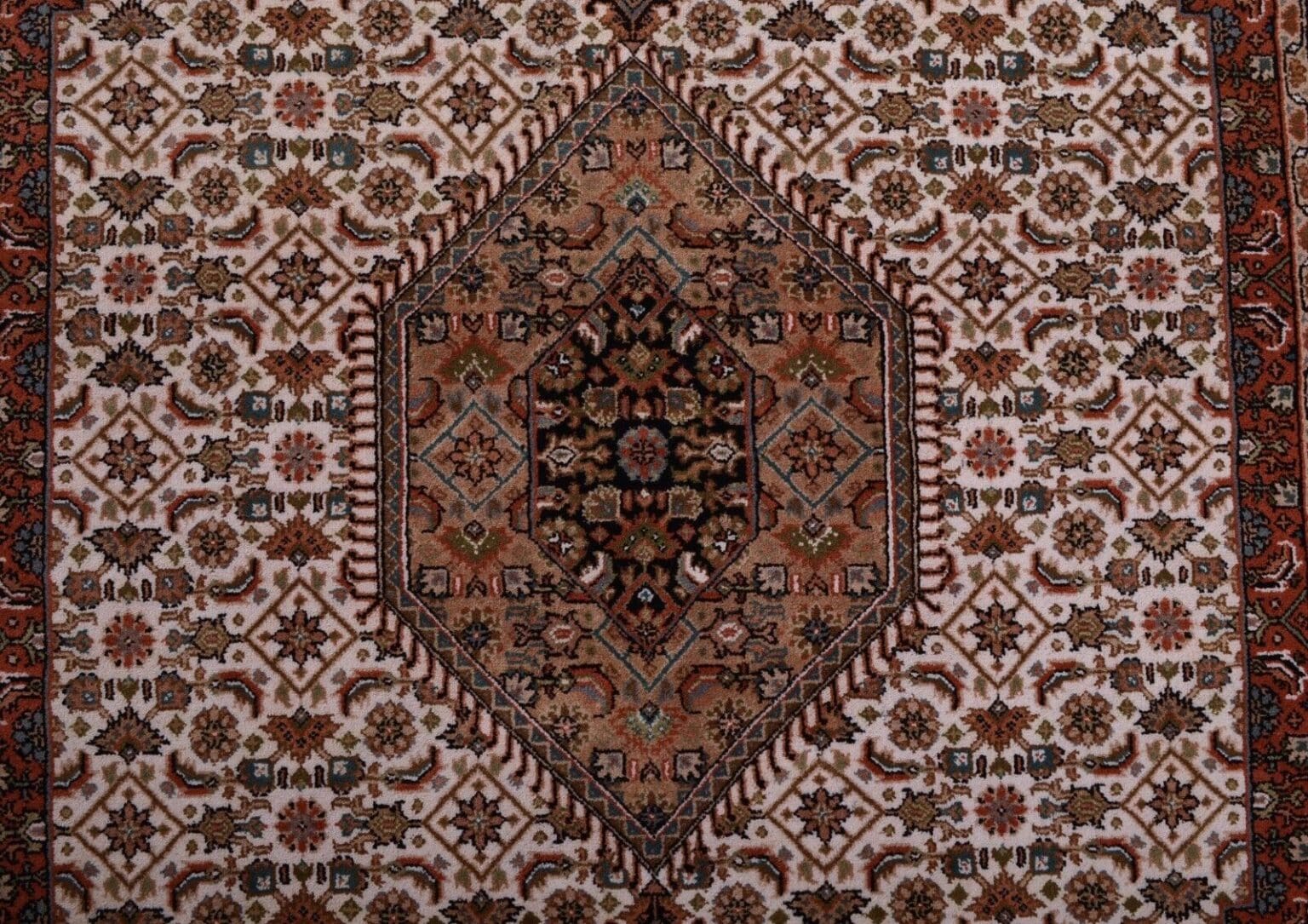
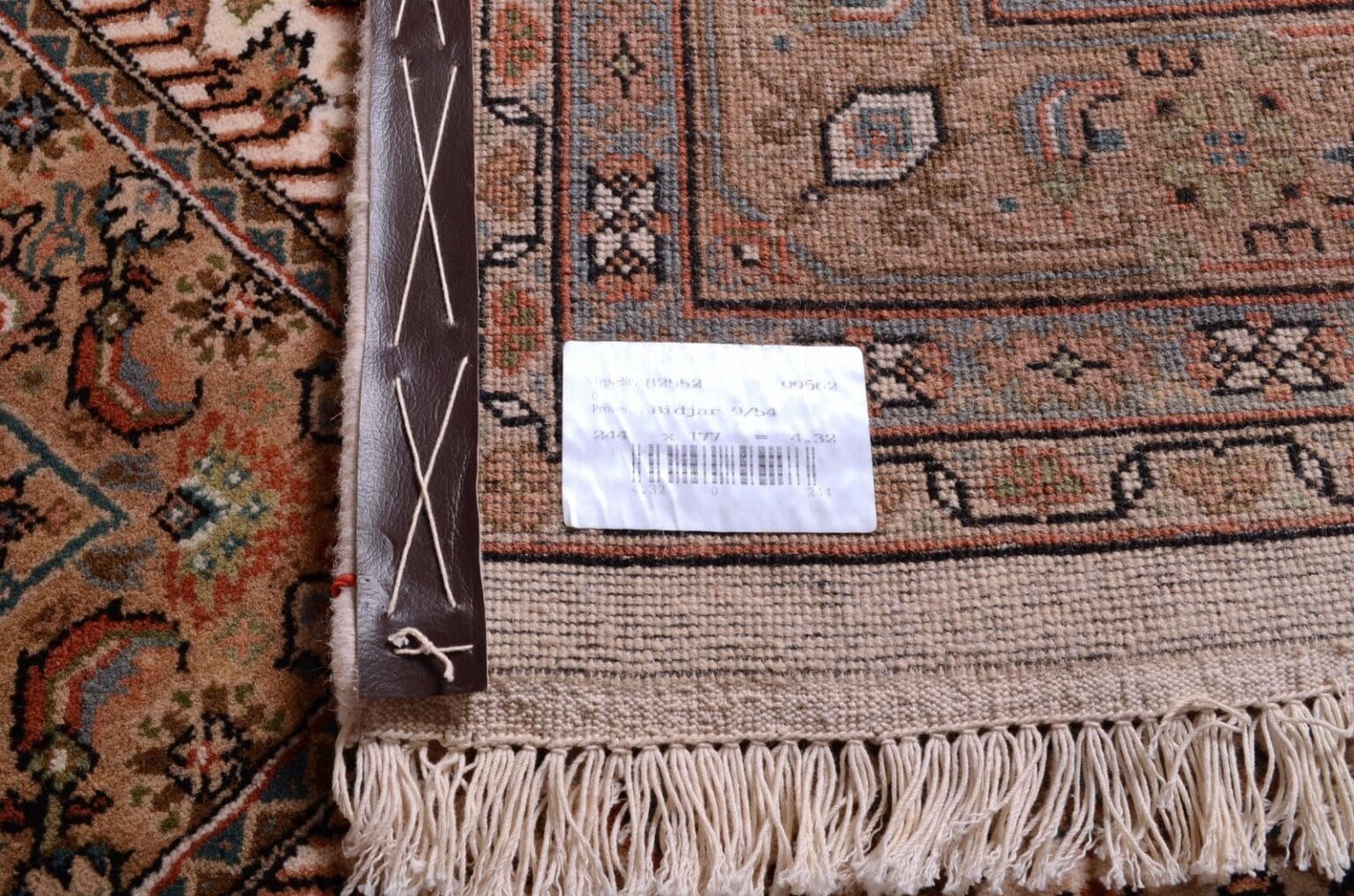
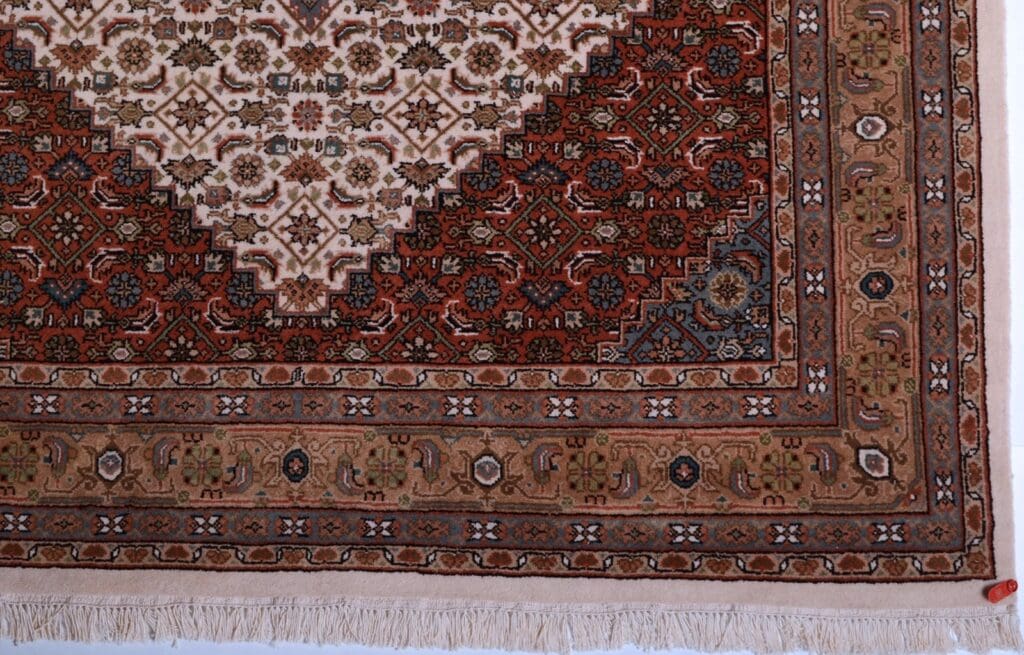
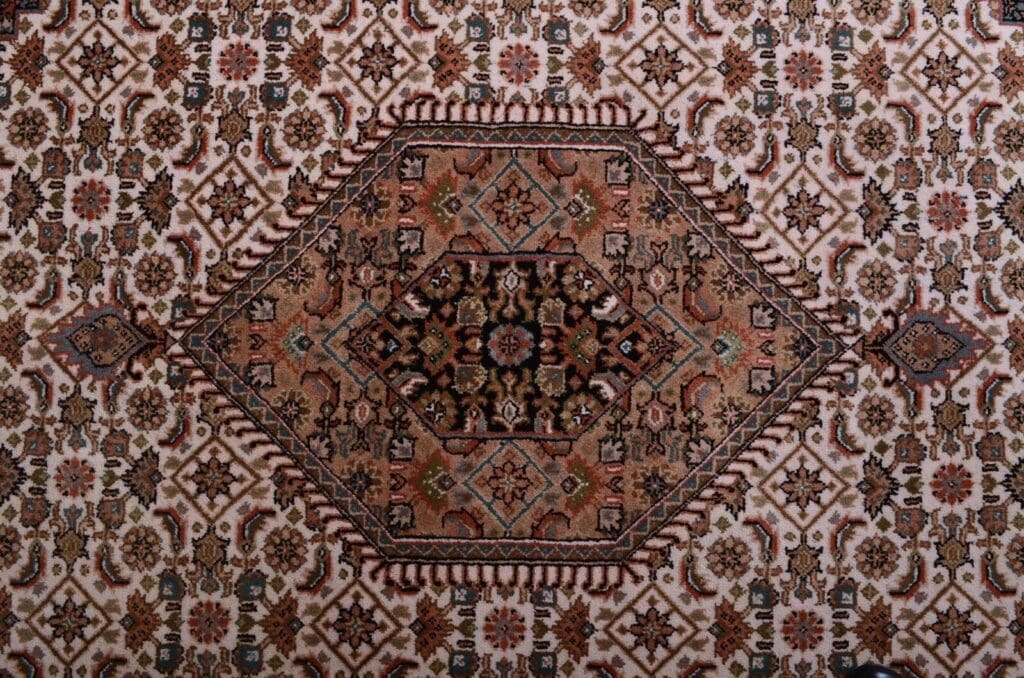
Its knot density is 165,000 to 185,000 knots per square metre. This density supports the precise arrangement of lines, fields and ornaments. In a hand-knotted rug, the design is built through individual knots rather than applied as a printed surface. The central medallion and its surrounding geometry can therefore be distinguished through the placement of the pile and the ordered drawing of the pattern.
The rug combines the hand-knotting method associated with Bidjar designs with production in India. It is suitable for use over underfloor heating. The virgin wool, hand-knotted structure and stated pile height together define its feel and practical profile. The rug is offered in various standard sizes, while individual sizes can be requested when needed.
Origin and Tradition
The name Bidjar refers to a long-established Persian rug tradition from north-western Iran. Bidjar is also written Bijar and is used in rug terminology for a distinctive, durable style of weaving. This particular rug, however, is stated to originate in India. The name Indo Bidjar Royal therefore describes an Indian-made Oriental rug with a Bidjar-inspired design. It does not make the piece an Iranian Persian rug.
The historic Bidjar tradition is widely associated with closely worked rugs, durable construction and careful ornamentation. In northern Iran, weaving traditions developed patterns with strong outlines, balanced spacing and an organised distribution of motifs. A rug name may refer to a region, a recognised design language or a craft tradition. When such a name appears on a rug made elsewhere, it can identify the visual and technical influence without changing the actual country of manufacture.
India also has a substantial history of carpet production. Indian workshops have produced hand-knotted Oriental rugs in a range of established designs, adapting patterns connected with Persia, Anatolia and other weaving cultures. The Indo Bidjar Royal belongs to this category of Indian Oriental rugs with Bidjar character. India identifies where this rug was made, while Bidjar identifies the stylistic direction. Keeping those two meanings separate is important when describing an Oriental rug accurately.
Persian carpet culture includes several other well-known traditions. Tabriz rugs are often linked with floral compositions and refined drawing. Isfahan designs are frequently known for carefully organised ornament and may include elaborate scenes connected with Persian mythology. These examples illustrate the breadth of the wider Persian carpet vocabulary. Bidjar occupies a different place within that vocabulary, with a more structured appearance and a reputation for a robust, closely worked character.
A style history should not automatically be presented as the provenance of an individual rug. For this model, India is the stated origin, while Bidjar supplies the design and type reference. This distinction allows traditional patterns to be discussed without assigning the rug to a country that is not given as its place of manufacture. Workshops in different countries can preserve, adapt and reinterpret historic rug designs while remaining part of their own production environment.
The Indo designation is therefore significant. It identifies the rug as Indian-made and places it within the wider market for Oriental rugs. Bidjar describes the traditional influence visible in the name and pattern. Together, the terms explain why the rug has a Persian-influenced appearance while retaining India as its actual origin. This combination is a common way to understand contemporary hand-knotted rugs that draw on established regional design traditions.
Design and Pattern
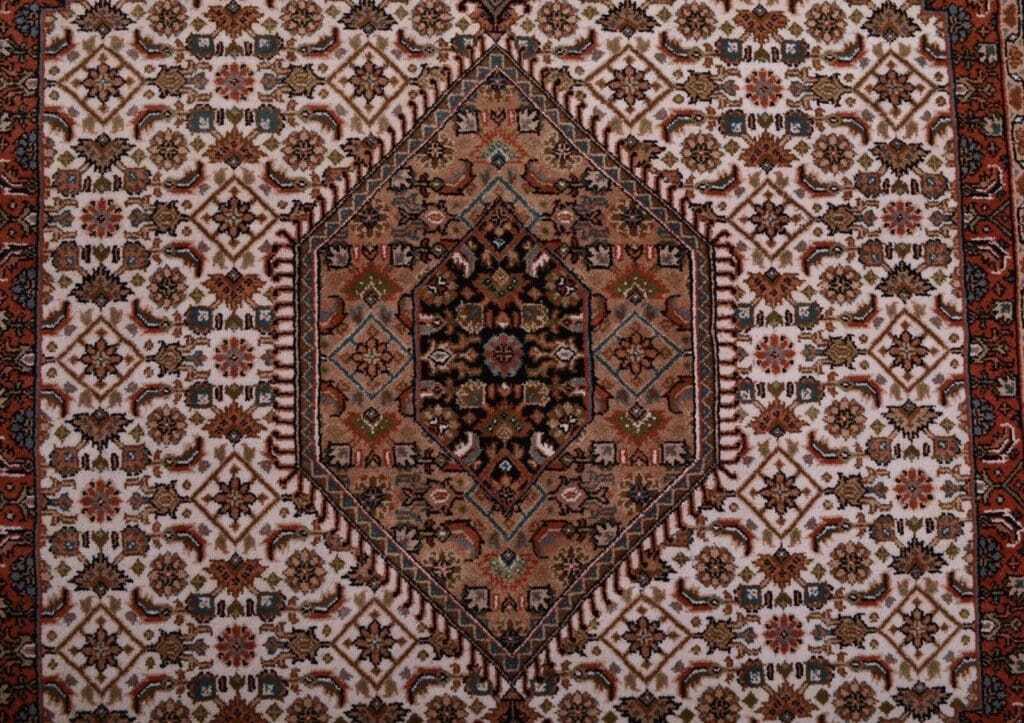
The Indo Bidjar Royal has a beige ground and a geometric pattern with a central medallion. Geometry gives the field a clear visual order. Lines, angles and defined areas create a structured arrangement, while the medallion acts as the principal focus. The design is described as traditionally Oriental or Persian in style. That stylistic description concerns the appearance of the rug and does not alter its Indian origin.
A medallion concentrates the composition at the centre of the field. It provides a visual anchor to which the surrounding ornaments and borders can relate. In a geometric design, the impression is created through symmetry, repetition and the relationship between the main motif and the quieter spaces around it. Clear contours make the individual elements readable while keeping the whole surface connected.
Geometric Bidjar-inspired patterns differ from purely floral arrangements through their emphasis on structured outlines and measured divisions of space. Oriental ornament can include plant-like references, but the defining feature stated for this rug is the geometric pattern with medallion. Beige provides the unifying colour impression. It allows the layout of the design to remain visible and gives the separate elements a coherent relationship across the field.
In Oriental rug design, motifs are not merely decorative additions. They organise the surface, establish a centre and guide the eye through repeated forms. A centred composition can visually gather a furniture arrangement, while borders define the outer edge of the rug. Geometric forms can also create a controlled contrast between quieter grounds and more detailed ornament. The final effect comes from the interaction of the drawing, the colour, the pile and the knotting technique.
The Bidjar reference is commonly connected with concentrated ornament and a detail-conscious approach to pattern. Tabriz and Isfahan provide useful comparisons because they are often associated with other priorities, such as floral drawing or elaborate narrative compositions. This rug remains focused on a geometric language and a clearly positioned medallion. It therefore relates to Oriental tradition through its arrangement of motifs rather than through a claim of Iranian manufacture.
The pattern description is intentionally limited to the features identified for the rug: beige colouring, geometric organisation and a medallion. No additional individual symbols or colour details are specified. The stated structure nevertheless explains the design clearly. The central motif leads the composition, the geometry creates rhythm through repetition, and the surrounding arrangement holds the field together. The result is a Bidjar-oriented design with an orderly and recognisable visual framework.
Special Features
The rug is new and described as being in perfect condition. It is available in various standard sizes, and individual sizes can be requested if required. The rug is suitable for rooms with underfloor heating. Its beige colour, geometric medallion design, virgin wool pile and hand-knotted construction form the principal product characteristics.
Further stated specifications include an approximately 15 mm pile height and an approximate weight of 4.5 kg/m². The knot density is between 165,000 and 185,000 knots per square metre. For care, regular vacuuming is recommended, with professional cleaning when necessary. Direct sunlight should be avoided to help prevent the colours from fading. These points describe the practical handling of the rug without adding claims about an unstated age or provenance.
FAQ
How should I care for the Indo Bidjar Royal?
Regular vacuuming is recommended for everyday care so that dust and loose particles do not remain in the pile. The vacuuming should be gentle and suited to a hand-knotted wool rug rather than unnecessarily aggressive. If the rug requires more intensive treatment, professional cleaning is advisable. A specialist can take the hand-knotted construction, virgin wool and patterned surface into account when choosing the appropriate method. Direct sunlight should be avoided because prolonged exposure can contribute to colour fading. Consistent, careful maintenance helps preserve the beige ground and the clarity of the geometric medallion design.
Is this rug suitable for allergy sufferers?
The rug is made from virgin wool, which is described as naturally hypoallergenic and as attracting little dust. For that reason, it is presented as a suitable choice for allergy sufferers. Regular care remains important, since any floor covering should be kept clean even when its material is considered low in dust attraction. Vacuuming helps remove loose particles from the pile. Individual sensitivities can vary, however. Anyone with a pronounced allergy should consider their own requirements and seek medical advice when appropriate. The stated suitability refers to the described properties of the wool and is not a substitute for an individual medical assessment.
Can the rug be used over underfloor heating?
Yes. The Indo Bidjar Royal is suitable for use with underfloor heating. It can therefore be placed in rooms where warmth is distributed through the floor. Its virgin wool and hand-knotted construction are the material and production characteristics given for the rug. For everyday use, the rug should be laid flat and securely so that it remains even and the heating system can operate as intended. The exact setting of the heating depends on the installation in the room. The stated suitability means that the rug is intended in principle for this type of floor heating.
Additional information
| Design Style | |
|---|---|
| Color | |
| Size | |
| Shape | |
| Origin | |
| Knot Density | |
| Material |
Related products

Persian Rug Tabriz 293 x 203 cm Wool & Silk Hand-knotted
€ 3300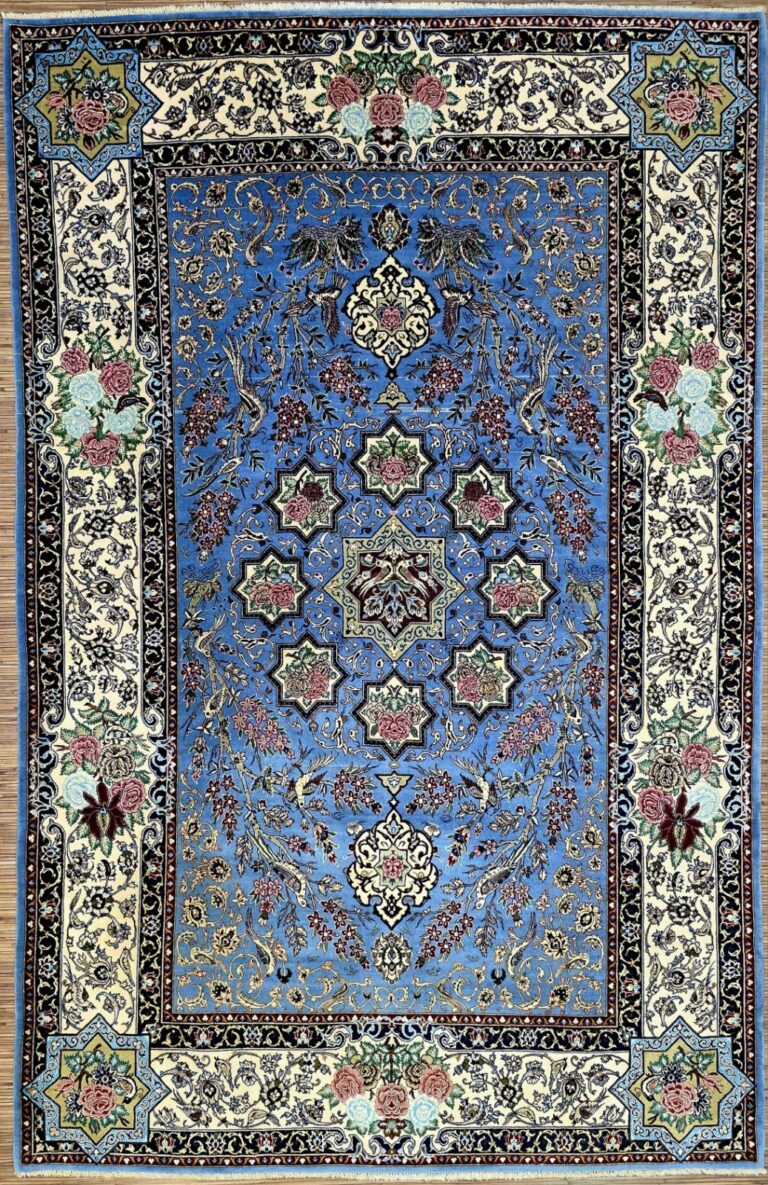
Persian Rug Isfahan 222 x 146 cm Silk Hand-knotted
€ 3905
Persian Rug Nain 355 x 252 cm Wool Hand-knotted
€ 4200
Persian Rug Tabriz 355 x 252 cm Wool Hand-knotted
€ 4890
Persian Rug Tabriz 353 x 253 cm Wool & Silk Hand-knotted
€ 4200
Persian Rug Rosenbidjar 222 x 131 cm Wool Hand-knotted
€ 1530
Persian Rug Kashan 345 x 253 cm Wool Hand-knotted
€ 2910
Persian Rug Nain 330 x 215 cm Wool Hand-knotted
€ 3600