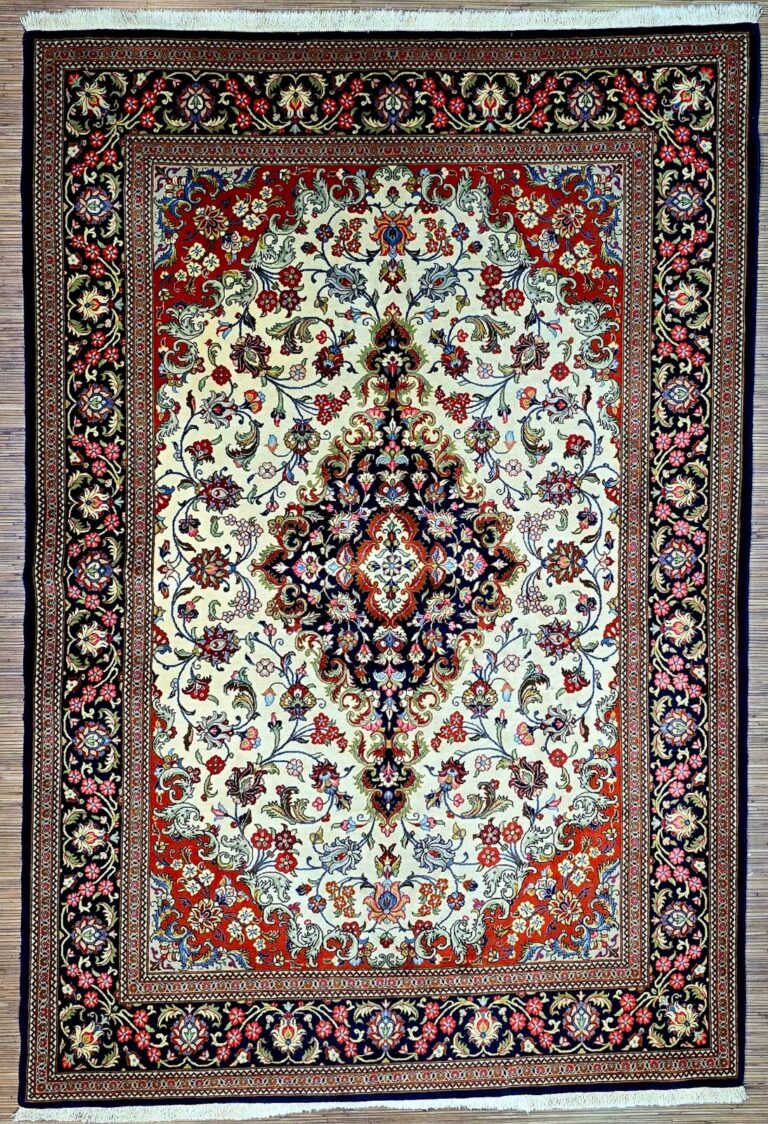
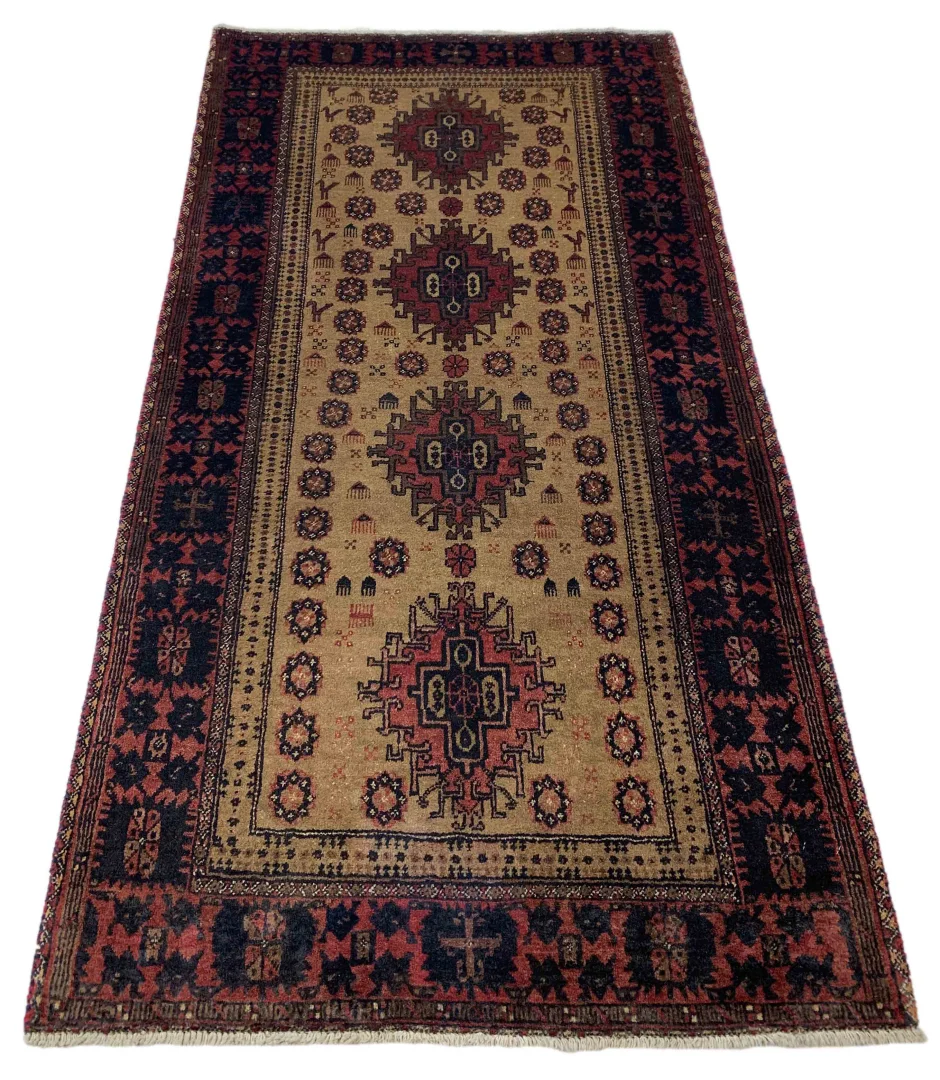
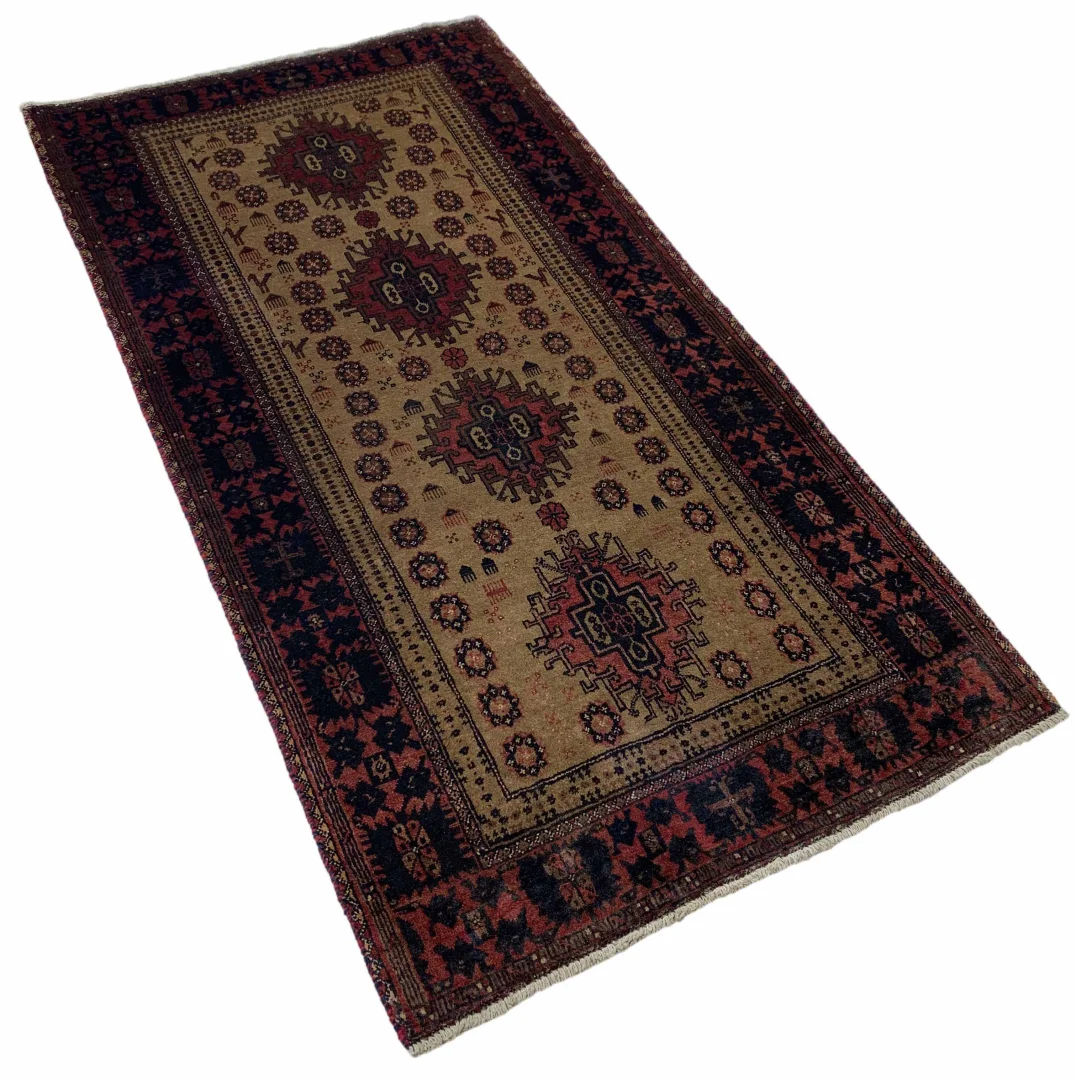
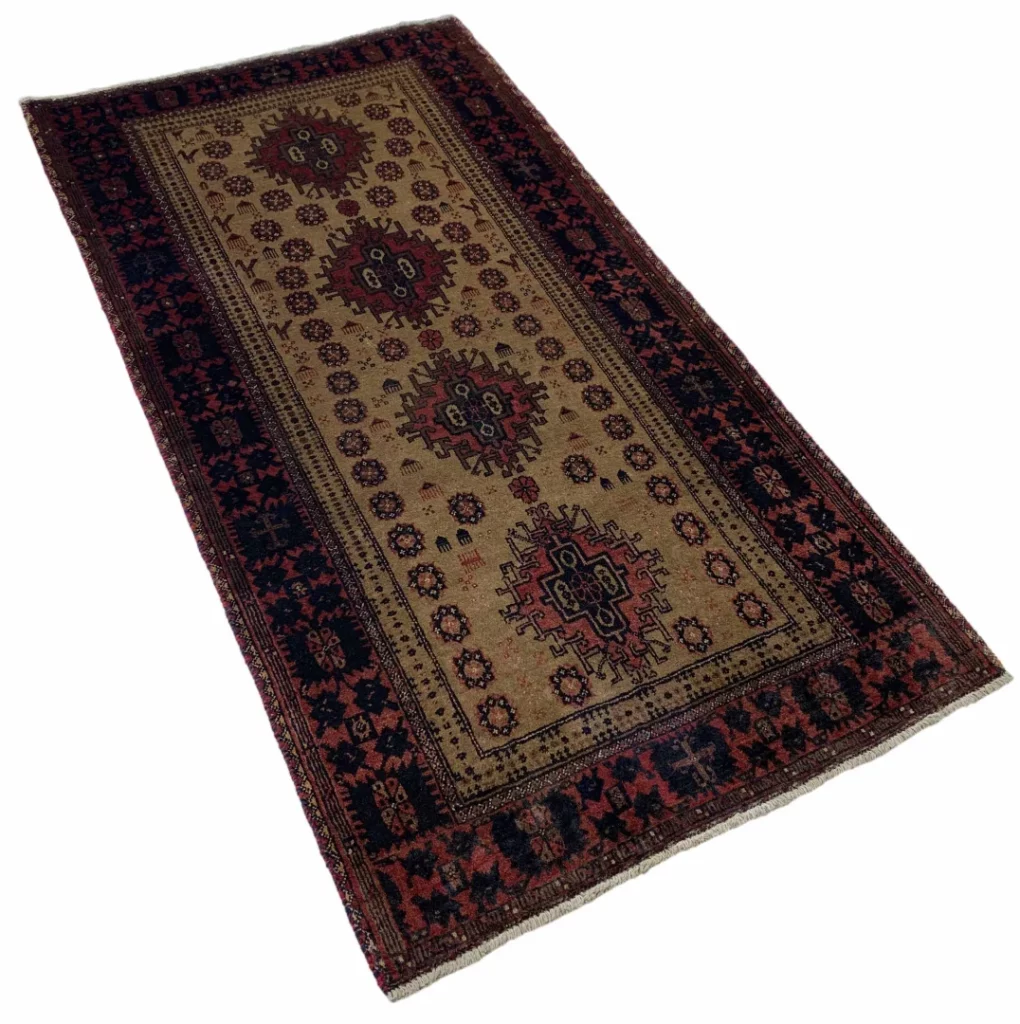
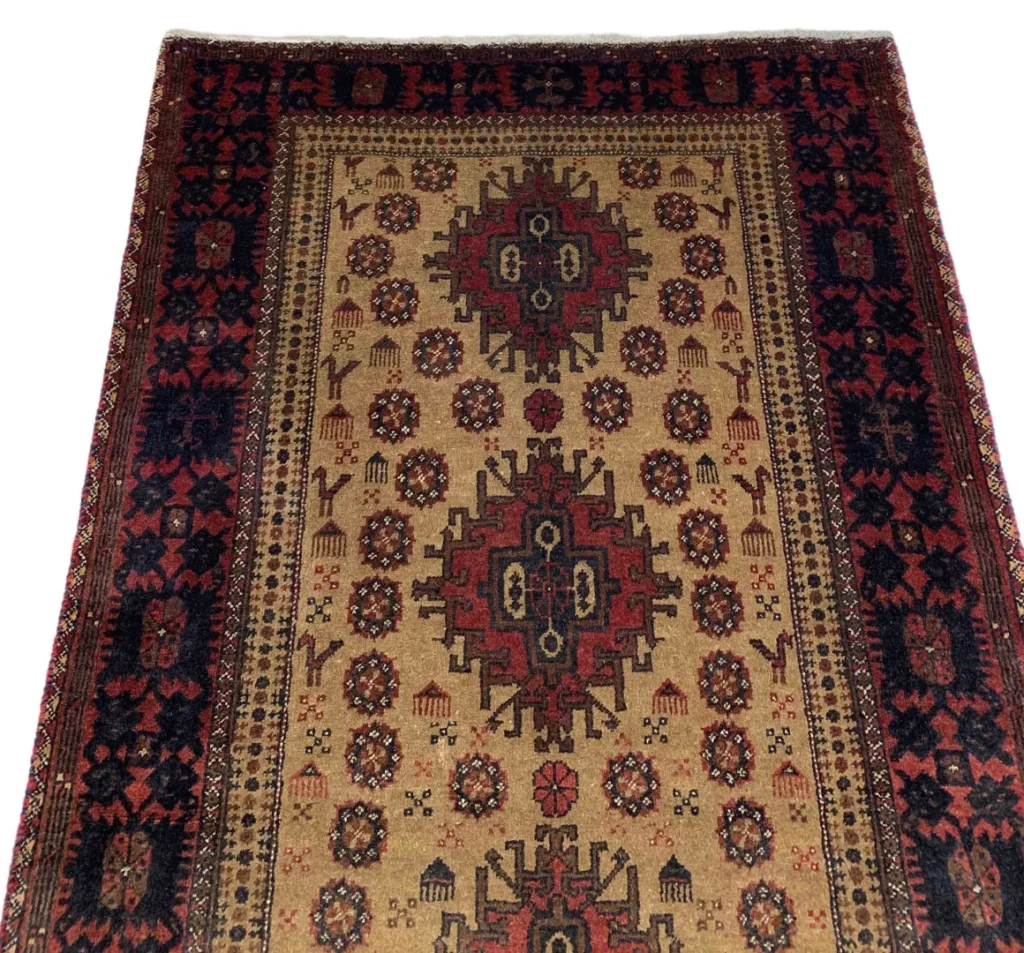
Hand-knotted Balutsch Oriental rug | Knot density: 120,000-250,000 knots per square metre | Material: wool pile | Size: 170 x 92 cm | Pattern: geometric and floral elements
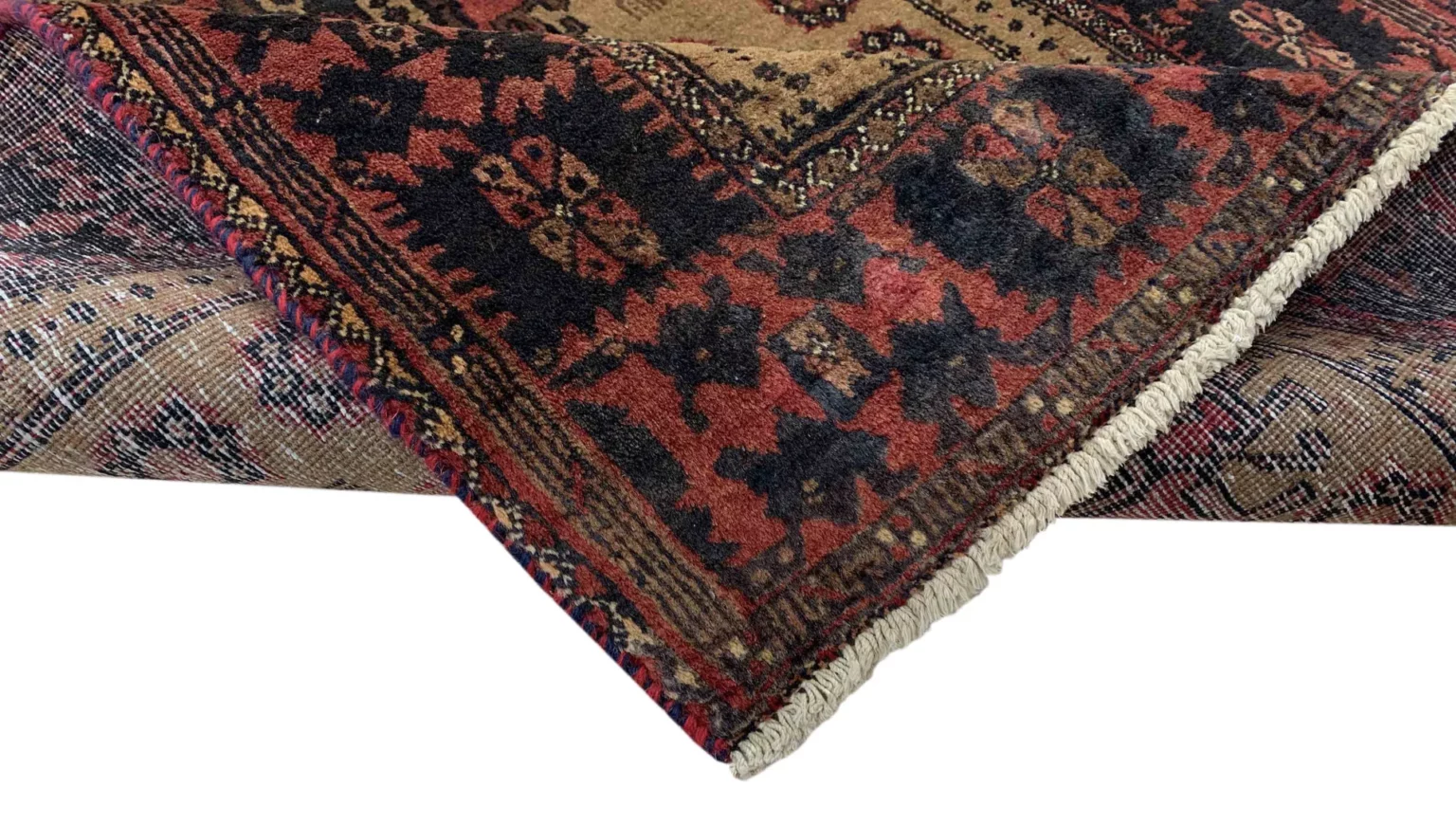
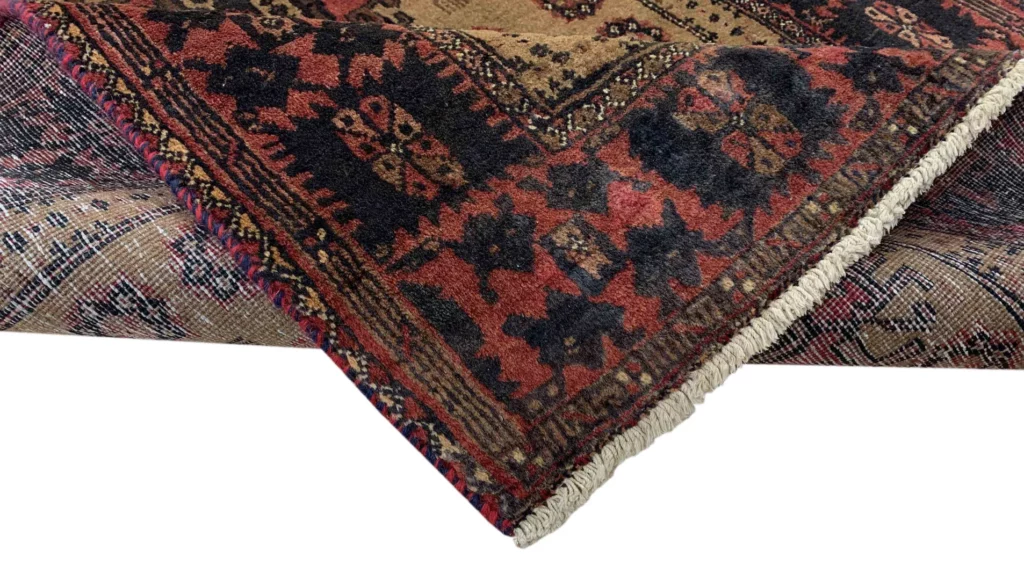
This Balutsch rug is hand-knotted. The knotting is carried out by hand in the traditional manner associated with Balutsch weaving, so each finished rug is a one-off. Hand knotting is a construction method in which individual knots are tied row by row and secured within the foundation of the rug. The result is a textile built through repeated manual work rather than through a mechanically produced surface. Small variations in the arrangement of knots are part of this process and distinguish one handmade rug from another.
The pile material is natural wool from the weavers’ own production. Wool is a traditional rug fibre because it combines a resilient structure with a surface that can hold colour and pattern clearly. In a hand-knotted rug, the pile is formed from many separate wool knots. Their close arrangement gives the surface its characteristic tactile structure, while the material’s natural resilience supports regular use.
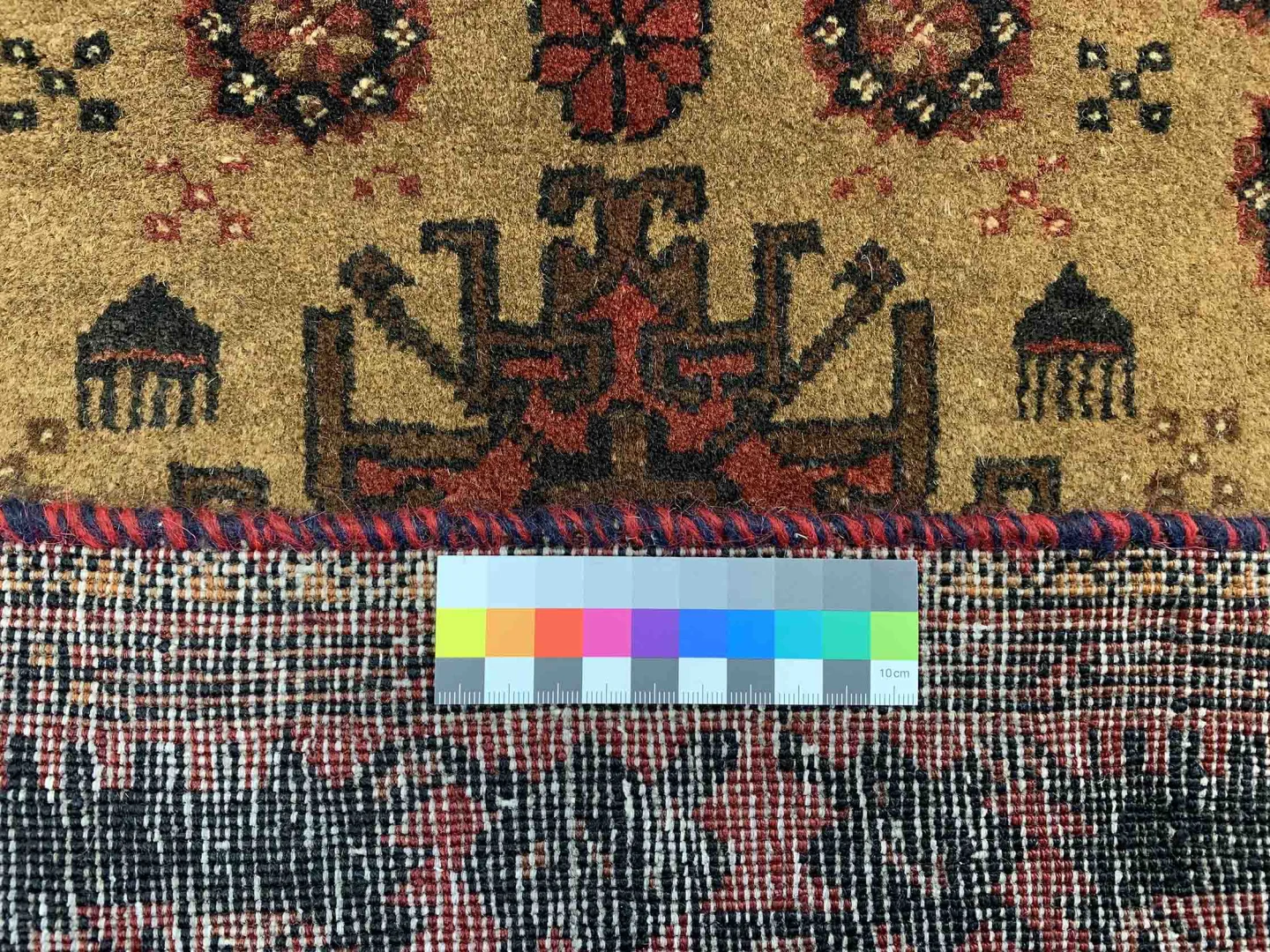
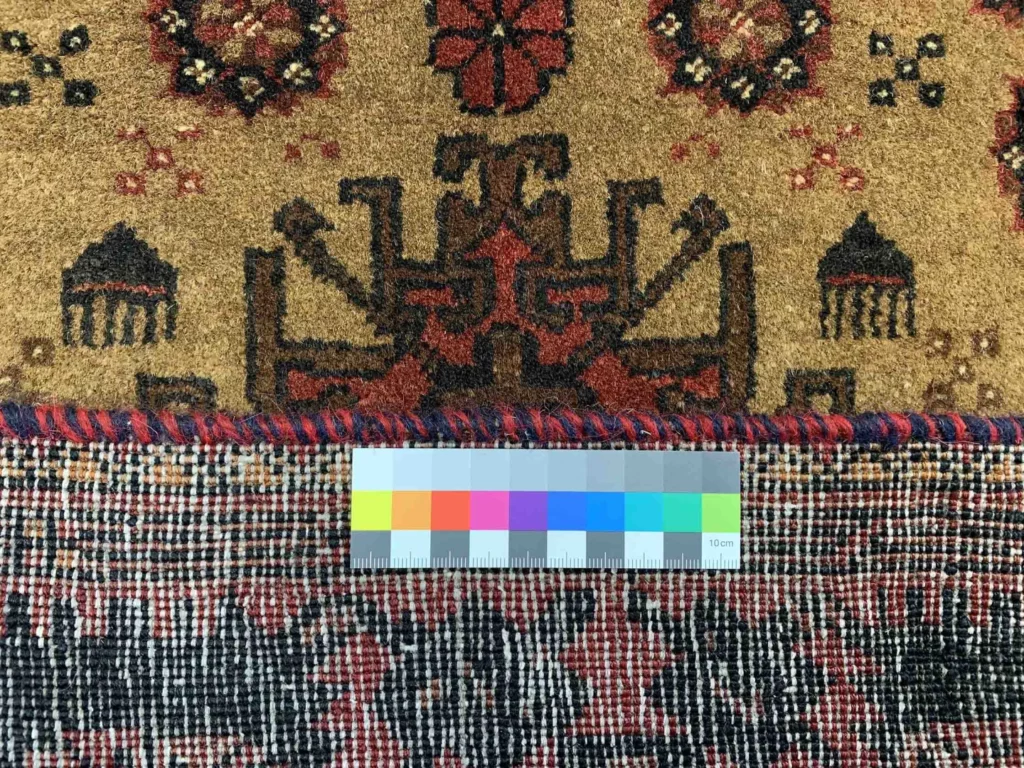
The knot density associated with Balutsch rugs ranges from 120,000 to 250,000 knots per square metre. This is described as a high knot density and creates a compact, hard-wearing structure. Knot density also influences the way a pattern can be rendered: when more knots are placed within a given area, geometric outlines and small decorative details can be set out with greater definition. Density is therefore both a technical feature and an important part of the visual character of this type of rug.
Traditional hand knotting also explains why a Balutsch rug is treated as an individual textile rather than as one identical unit in a series. The work depends on the weaver’s hands, the sequence of the knots and the progression of the design across the field. The combination of natural wool and manual construction gives this rug its stated durable and resilient character without changing its handmade appearance.
Origin and Tradition
Balutsch rugs are associated with the homeland of the Baluch people, a region extending across the border area of Afghanistan, Iran and Pakistan. This three-country region is the cultural setting named for Balutsch weaving. Because the area crosses modern national boundaries, the Balutsch designation describes a weaving tradition and cultural sphere rather than a single present-day administrative origin. This rug is therefore presented as an Oriental rug, with its identity tied to Balutsch tradition.
The Baluch people are known for their carpet-knotting skills. The craft has been passed down through generations, and the techniques used in Balutsch rugs reflect that continuity. Traditional knowledge includes the preparation of wool, the tying of knots, the organisation of a field and border, and the arrangement of repeated motifs. These elements are not separate decorations added after production; they are part of a working textile tradition in which making and design develop together.
Handmade rugs from this region belong to a wider history of practical and decorative weaving. A rug can serve as a useful floor covering while also carrying recognisable signs of the culture that produced it. In Balutsch weaving, the balance between a dense structure, strong colour contrasts and clearly organised motifs supports both purposes. The rug’s durability is connected to the physical demands of its construction, while the pattern provides a visual record of established regional design habits.
The three-country setting is also important when Balutsch rugs are compared with other oriental weaving traditions. Qashqai and Kerman rugs are known for lively colours and complex patterns, while Tabriz rugs are associated with refined workmanship and fine materials. Nain and Isfahan rugs represent further recognised traditions within Persian carpet culture. These names describe other types of regional rugs and should not be confused with the Balutsch identity of this piece. Each tradition has its own history, technical preferences and visual vocabulary.
Regional rug traditions have continued to attract attention because they combine utility with inherited craftsmanship. The value placed on such textiles can extend beyond their decorative function, particularly when a rug demonstrates a recognisable construction and a coherent design tradition. For Balutsch rugs, the connection to the Baluch homeland, the continuity of hand knotting and the use of natural wool are central parts of that cultural context.
Design and Pattern
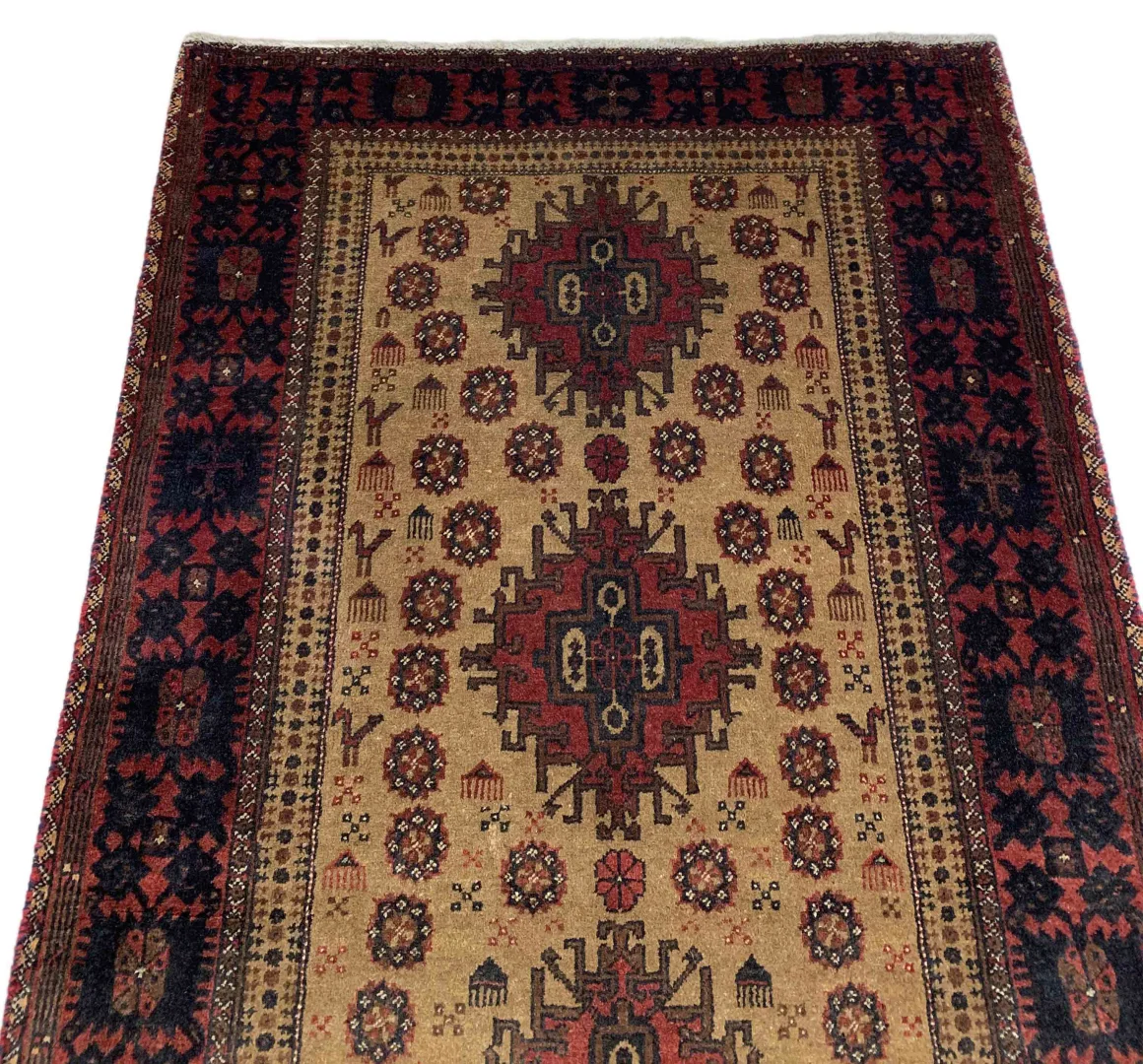
Balutsch rugs are characterised by geometric and floral elements. These two groups of motifs can appear together, allowing an organised structure to be combined with smaller natural forms. Geometric motifs rely on lines, angles, repeated shapes and measured relationships. Floral elements introduce leaves, blossoms or stylised plant forms. In traditional rug design, such elements are not intended as a literal botanical picture; they are arranged and simplified so that they work within the woven field.
The design of a hand-knotted rug is built as the work progresses. A weaver translates the intended composition into successive rows of knots, keeping the relationship between the central field, surrounding borders and smaller details under control. This process gives geometric patterns their rhythm and allows floral forms to be repeated or adapted across the surface. The high knot density associated with Balutsch rugs supports a close arrangement of details, while the hand-made process preserves the individual character of the finished pattern.
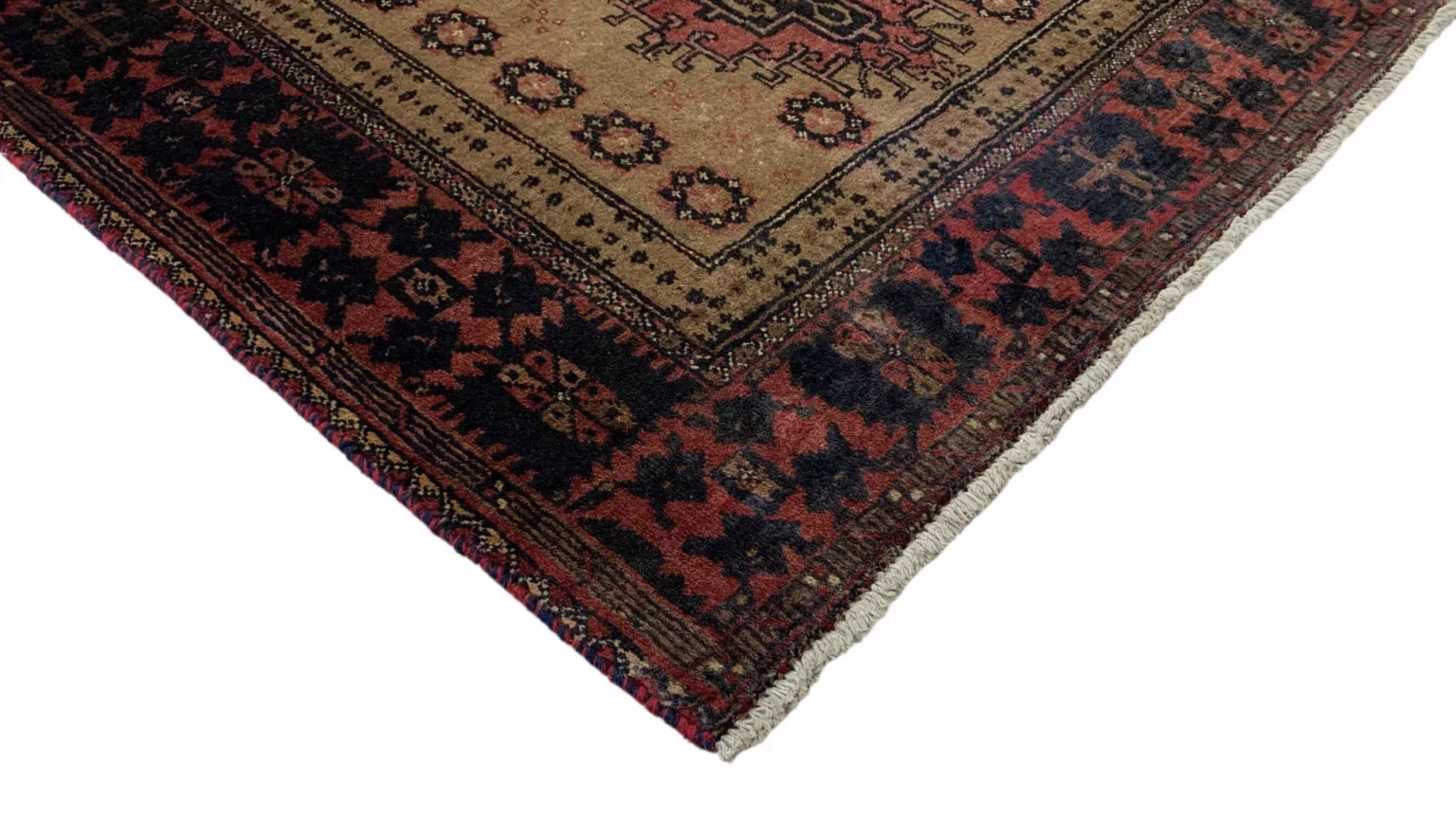
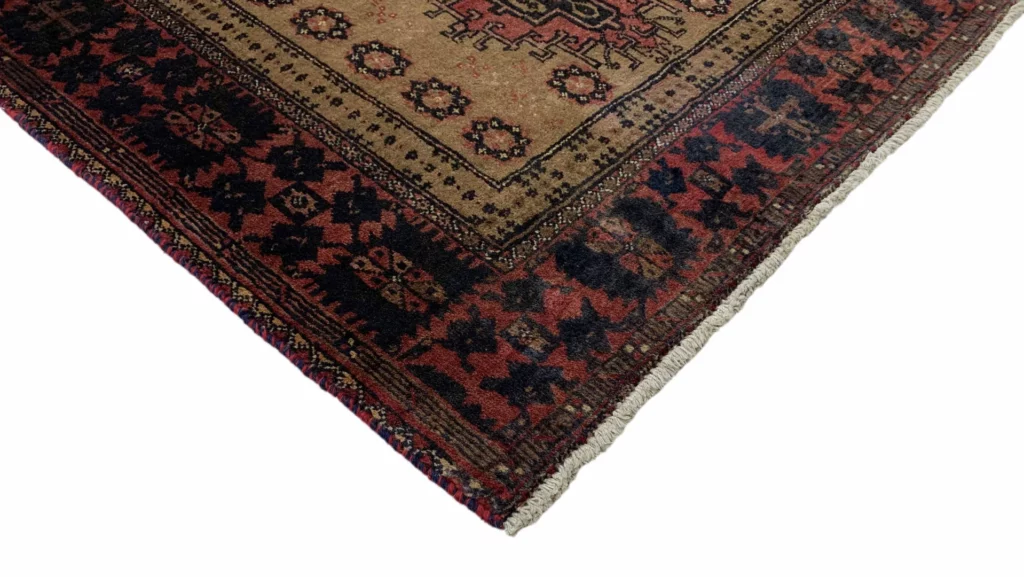
Colour is a significant part of the Balutsch visual language. Warm reds and browns are described as dominant colours in Balutsch Persian carpet traditions. These tones create a grounded, traditional appearance and provide a strong background for contrasting or complementary motifs. The colours are also practical: red and brown tones can conceal everyday dirt and marks more effectively than very pale surfaces. That practical quality helps explain why rugs in this colour family are suited to areas where people pass through frequently.
Pattern in Balutsch weaving is often understood as more than surface ornament. Geometric and floral forms can reflect cultural memory and inherited ways of organising decoration. Motifs are repeated because repetition gives a rug order, but they may also be varied through the hand-knotting process. The resulting design can suggest continuity without looking mechanically uniform. In this sense, the pattern communicates both the discipline of tradition and the individuality of manual work.
The relationship between pattern and use is another characteristic of regional rug design. A clearly structured field remains legible across the surface, while the warm palette supports a practical floor covering for interiors such as hallways, kitchens and living rooms. The design is therefore connected to everyday life as well as to decoration. Balutsch rugs combine a visual vocabulary of geometric and floral forms with a construction intended to withstand regular handling.
When Balutsch designs are set beside Qashqai, Kerman or Tabriz traditions, differences in colour emphasis, motif arrangement and construction become visible. Qashqai and Kerman rugs are noted for lively colours and complex patterns; Tabriz rugs are known for refined workmanship and the use of fine materials. Nain and Isfahan rugs offer other established design traditions. These comparisons provide context for the wider world of oriental rugs, while the geometric and floral character described here remains specifically associated with Balutsch weaving.
Special Features
The defining features of this Balutsch rug are its hand-knotted construction, its natural wool pile and its connection to the Baluch cultural region between Afghanistan, Iran and Pakistan. The knot density is described as high, with the Balutsch range extending from 120,000 to 250,000 knots per square metre. This dense construction contributes to a compact and resilient textile and supports the detailed treatment of the pattern.
Warm red and brown tones are a further characteristic of Balutsch rugs. Alongside their traditional appearance, these colours have a practical function because they can disguise dirt and stains. The combination of a durable wool surface, dense knotting and a pattern made from geometric and floral elements makes this type of rug suitable for frequently used interior areas. The hand-made construction remains the central individual feature: every rug is produced as a unique piece through manual knotting.
FAQ
How should a Balutsch rug be cared for?
Regular vacuuming without a brush attachment is recommended for a Balutsch rug. The brush should be avoided so that the wool pile is not subjected to unnecessary mechanical action during routine cleaning. Occasional airing or beating outdoors is also recommended as part of basic care. If a stain occurs, it should be treated immediately with a damp cloth. Aggressive cleaning agents should not be used, since they can affect the natural wool surface and may change the appearance of the colours. Gentle, prompt care is the appropriate approach for preserving the hand-knotted construction and keeping the rug usable over time.
Where can a Balutsch rug be used?
The durable and dirt-concealing qualities associated with Balutsch rugs make them suitable for hallways, kitchens and living areas. Warm red and brown tones are practical in spaces that receive frequent use because everyday dirt and small marks are less conspicuous on these colours than on very light surfaces. In a hallway, the rug can function as a hard-wearing floor textile; in a kitchen, its practical palette can be useful; and in a living room, the same colours and hand-knotted texture contribute a traditional textile presence. Its use should still take account of ordinary rug care and the need to clean marks promptly.
What is special about the knot density of a Balutsch rug?
Balutsch rugs are associated with a knot density ranging from 120,000 to 250,000 knots per square metre. This high density is connected with a compact and resilient structure. It also allows geometric and floral motifs to be worked with a greater level of detail than a more openly knotted surface would normally permit. Knot density is not the only measure of a rug’s character, but it is an important technical feature because it relates the construction to both pattern definition and durability. Together with hand knotting and a natural wool pile, the dense structure explains why Balutsch rugs are traditionally regarded as robust textiles made for continued use.
To provide the best experiences, we use technologies like cookies to store and/or access device information. Consenting to these technologies will allow us to process data such as browsing behavior or unique IDs on this site. Not consenting or withdrawing consent, may adversely affect certain features and functions.
Functional Always active
The technical storage or access is strictly necessary for the legitimate purpose of enabling the use of a specific service explicitly requested by the subscriber or user, or for the sole purpose of carrying out the transmission of a communication over an electronic communications network.
Preferences
The technical storage or access is necessary for the legitimate purpose of storing preferences that are not requested by the subscriber or user.
Statistics
The technical storage or access that is used exclusively for statistical purposes.The technical storage or access that is used exclusively for anonymous statistical purposes. Without a subpoena, voluntary compliance on the part of your Internet Service Provider, or additional records from a third party, information stored or retrieved for this purpose alone cannot usually be used to identify you.
Marketing
The technical storage or access is required to create user profiles to send advertising, or to track the user on a website or across several websites for similar marketing purposes.

 SECURE PAYMENT
 SHIPPING PARTNERS