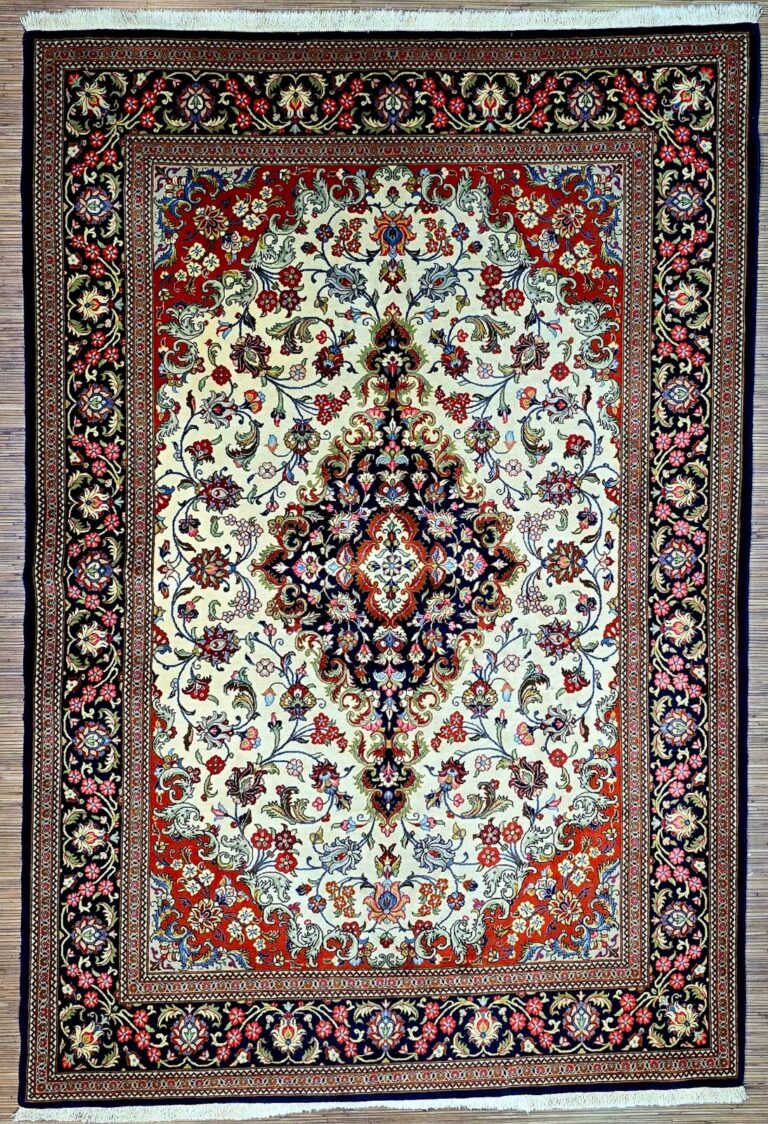
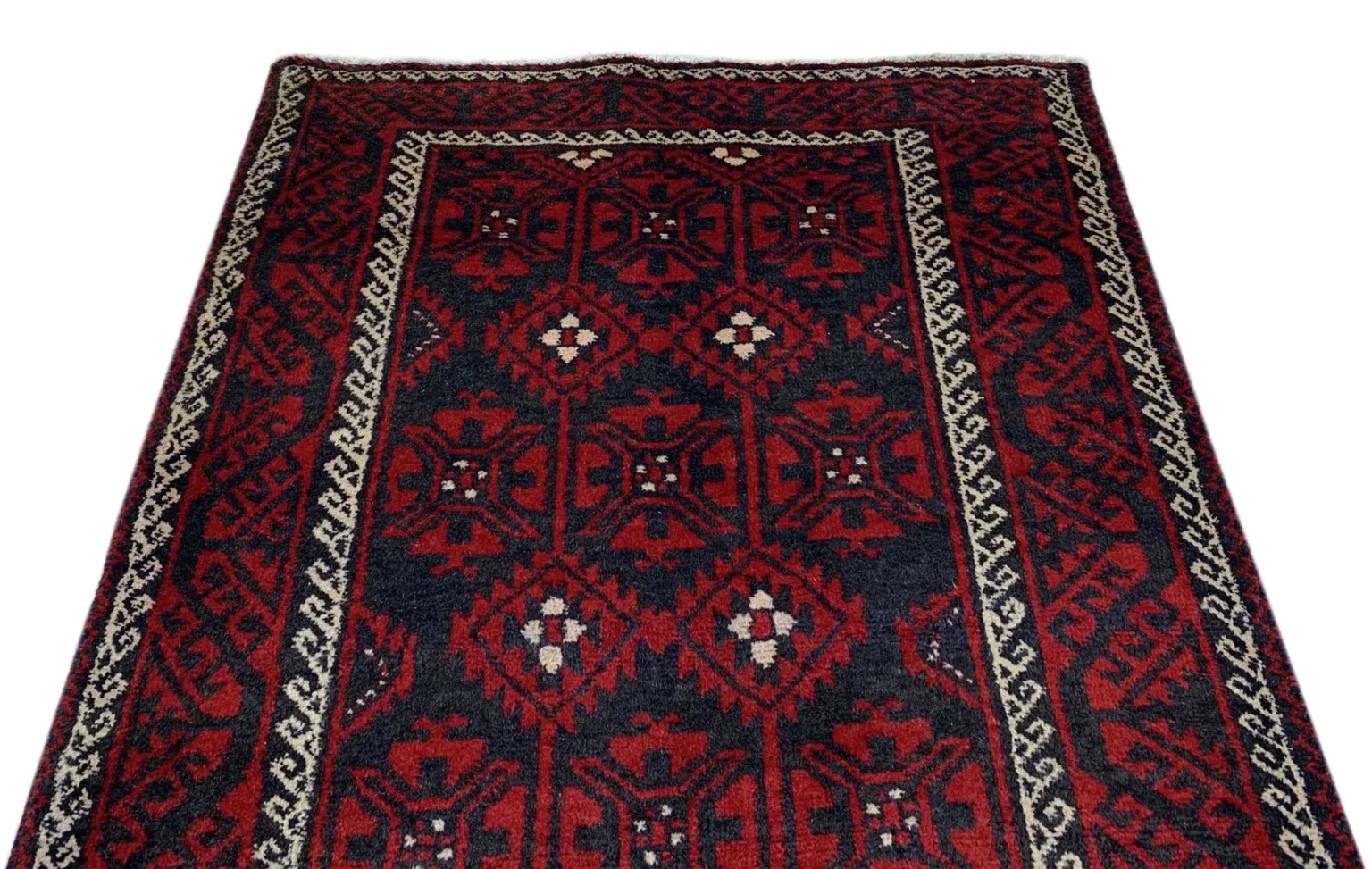
This Baluch Oriental rug is made from natural wool and has been hand-knotted. Natural wool is one of the traditional materials associated with Baluch rug making. The source describes the wool as coming from the region where the Baluch traditionally raise and process it. The material is therefore closely connected with the local craft tradition rather than being presented as a separate industrial component.
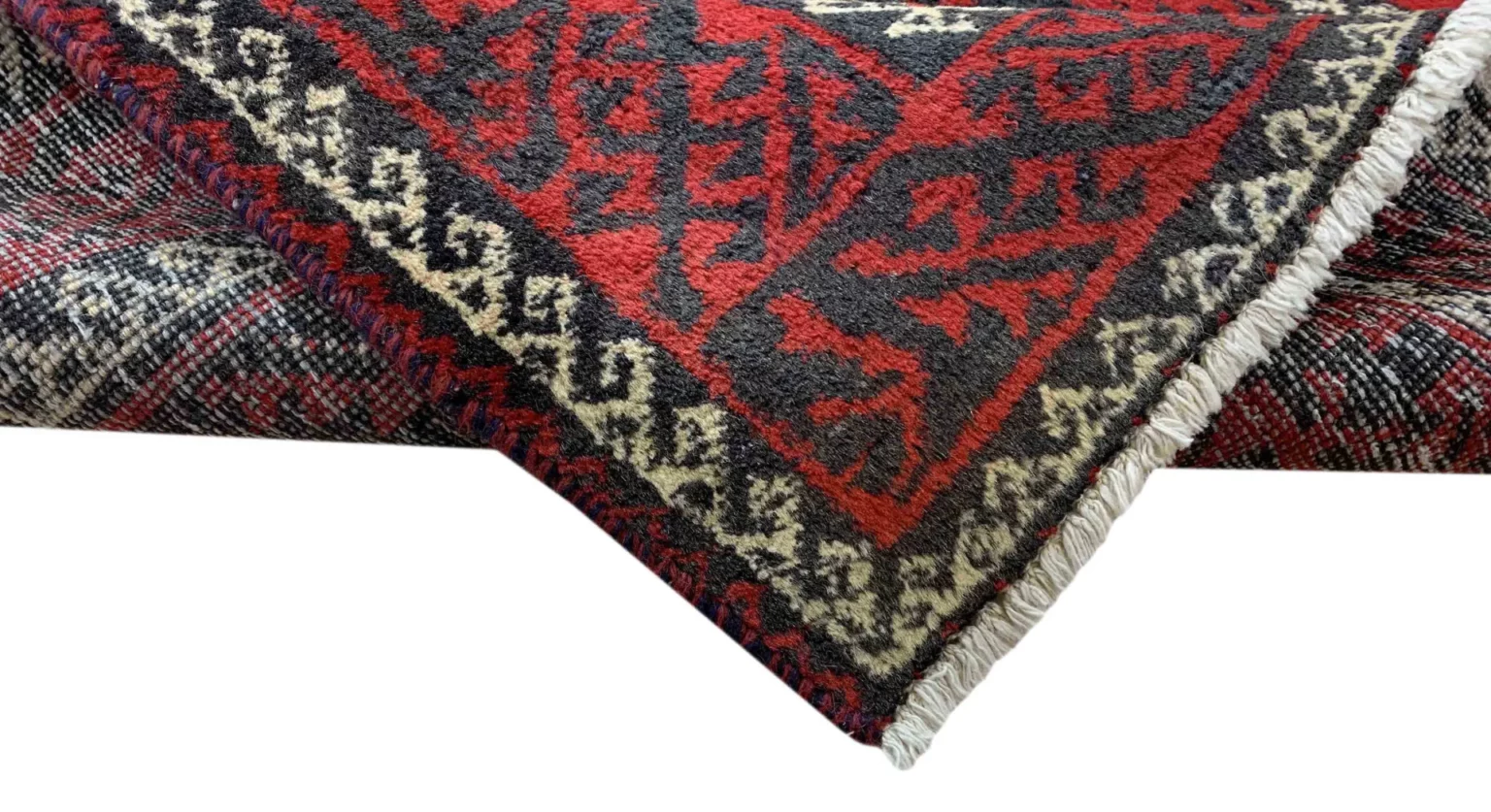
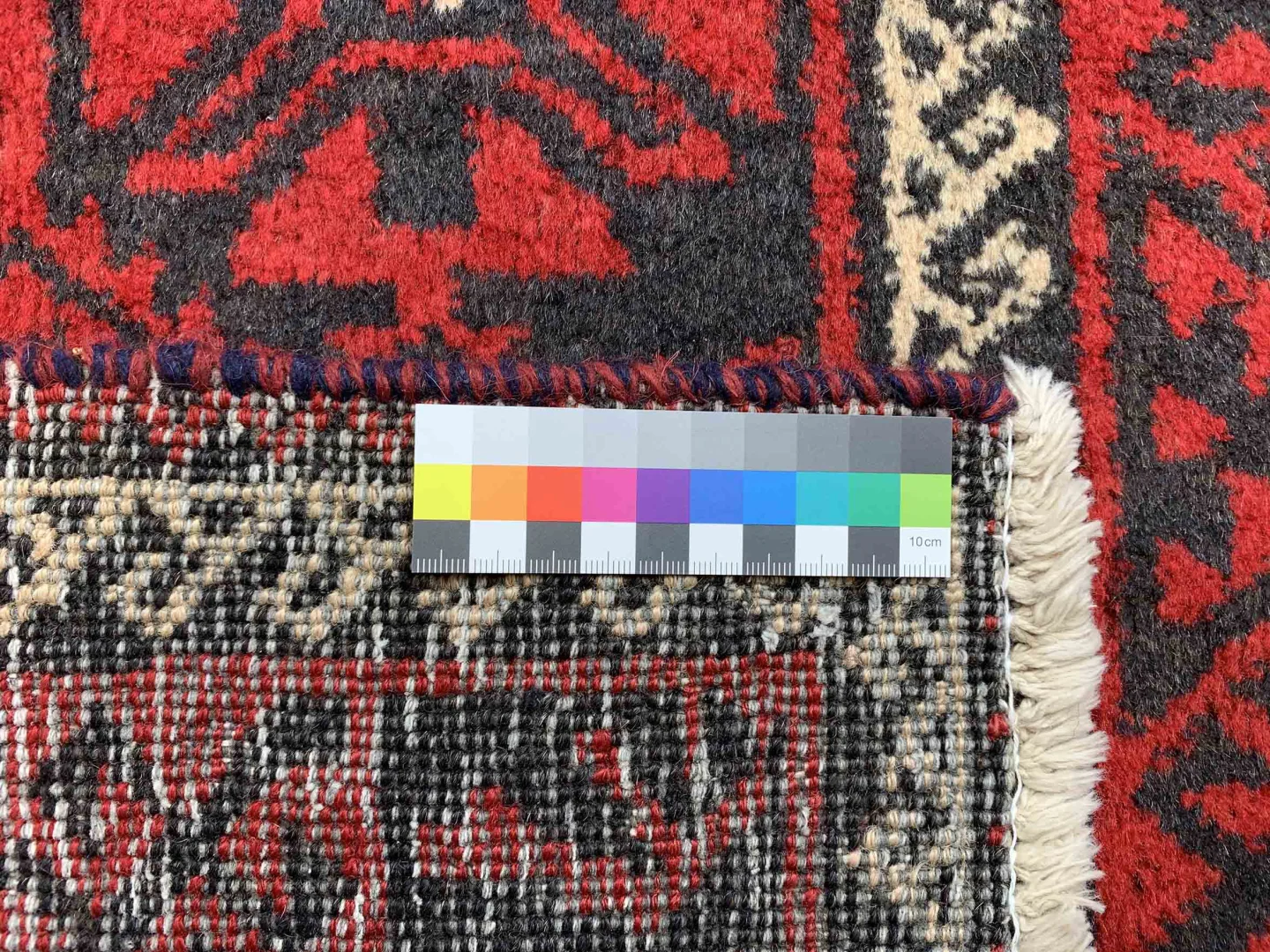
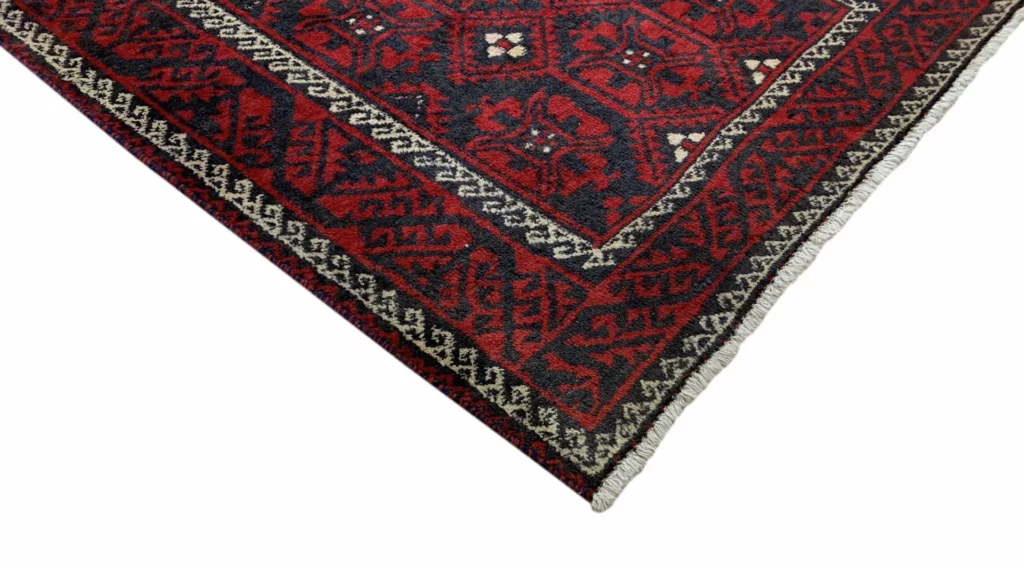
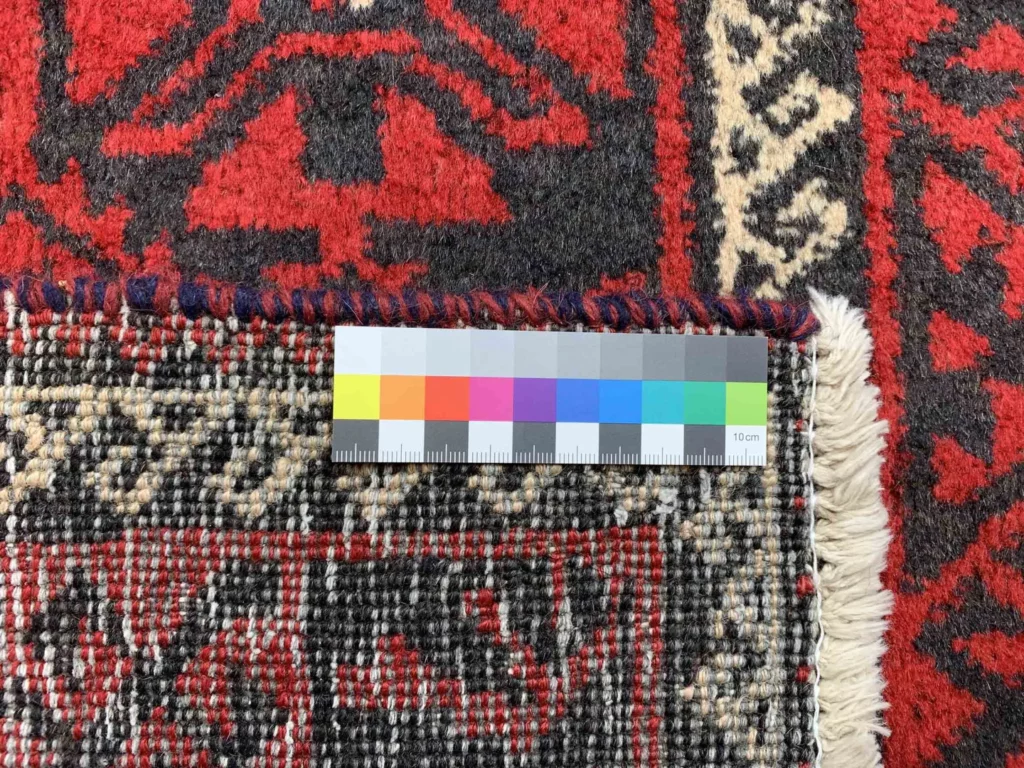
Hand-knotting means that the rug is built knot by knot through sustained manual work. Each knot contributes to the structure and surface of the finished textile. This method requires patience, attention and practical experience. The stated knot density for this rug is between 120.000 and 250.000 knots per square metre. Knot density indicates how closely the knots are set and how finely lines, fields and small design elements can be represented.
Natural wool gives the surface the tactile character associated with a wool rug. The source also connects the use of fine natural wool with durability and an unusual hand feel. These qualities belong to the material and traditional making process described for Baluch rugs. The rug’s hand-knotted construction is part of its identity as a piece of regional textile craftsmanship.
Origin and Tradition
Baluch rugs are traditionally knotted by the Baluch in the historic border region where Afghanistan, Iran and Pakistan meet. This three-country area provides the cultural setting for the tradition. The term Baluch refers here to the people and their established rug-making practice. It does not require assigning the rug to one particular city or to a single Iranian weaving centre.
Rug making is regarded as a highly valued art form in this region. Knowledge of wool, colour, construction and pattern is carried through the craft tradition. A Baluch rug is consequently both a practical textile and an expression of the cultural history associated with its makers. Hand production depends on continuous attention to the arrangement of knots and to the relationship between the surface and the underlying structure.
The area between Afghanistan, Iran and Pakistan is a cultural meeting zone. Regional influences can be reflected in textiles without removing the distinct identity of Baluch weaving. The tradition is associated with a practical approach to rug making, a hand-knotted construction and a recognisable use of geometric and floral forms. These elements connect everyday use with inherited knowledge and visual language.
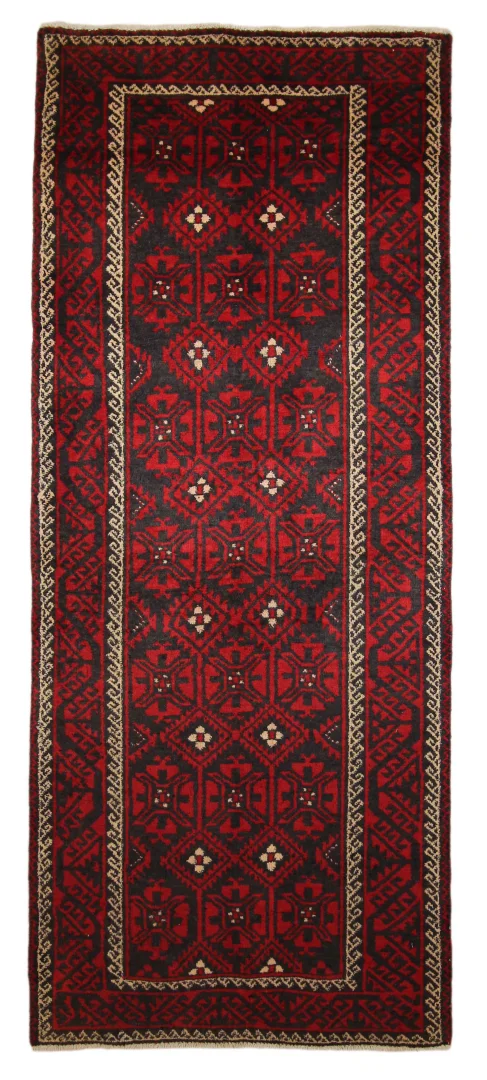
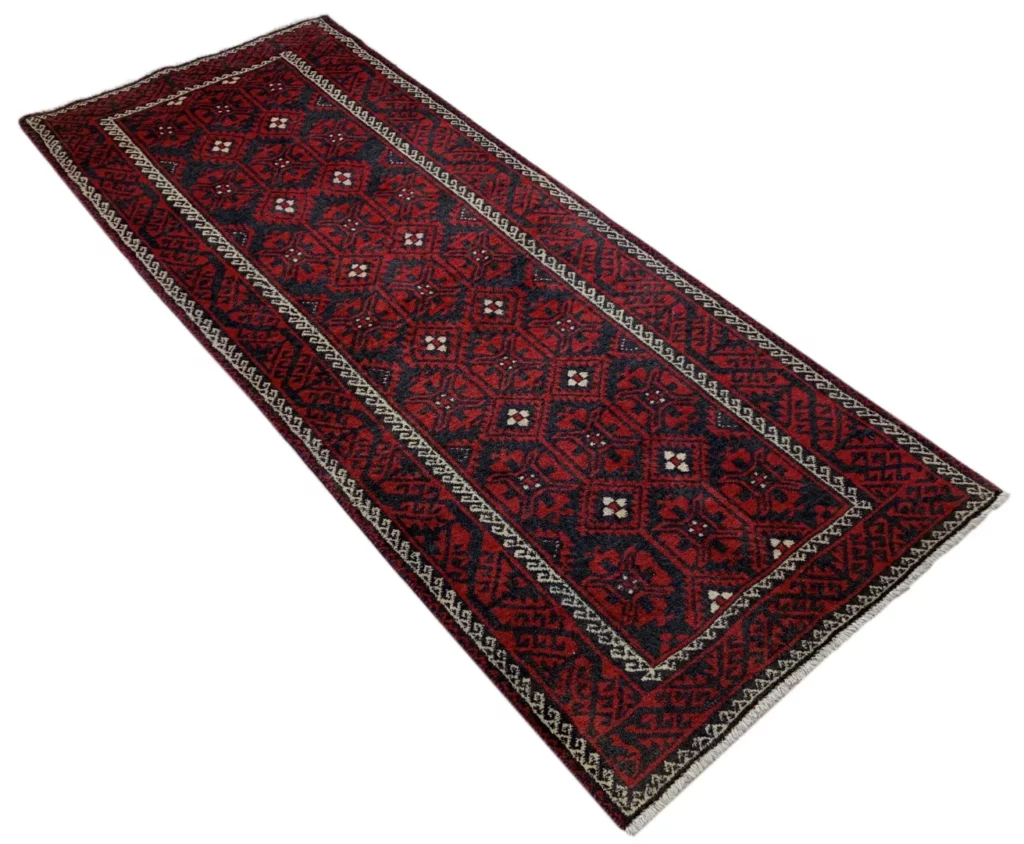
Baluch rugs are made in a range of formats, from small runners to larger rugs for living spaces. Different formats correspond to different rooms and practical requirements. This rug is a runner, making it particularly suited to elongated areas. The format does not change the regional tradition: the connection remains visible in the hand-knotted method, the natural wool and the characteristic colour and pattern vocabulary.
Other rug traditions from the wider region provide useful points of comparison. Gabbeh rugs are also hand-knotted, but they often use simpler designs and have a more rustic appearance. Nain and Tabriz rugs come from other parts of Iran and are known for fine patterns and high knot densities. Qashqai rugs are associated with colourful, artistic compositions that often include animal and plant motifs. Together, these examples show the range of independent traditions found across the region.
Design and Pattern
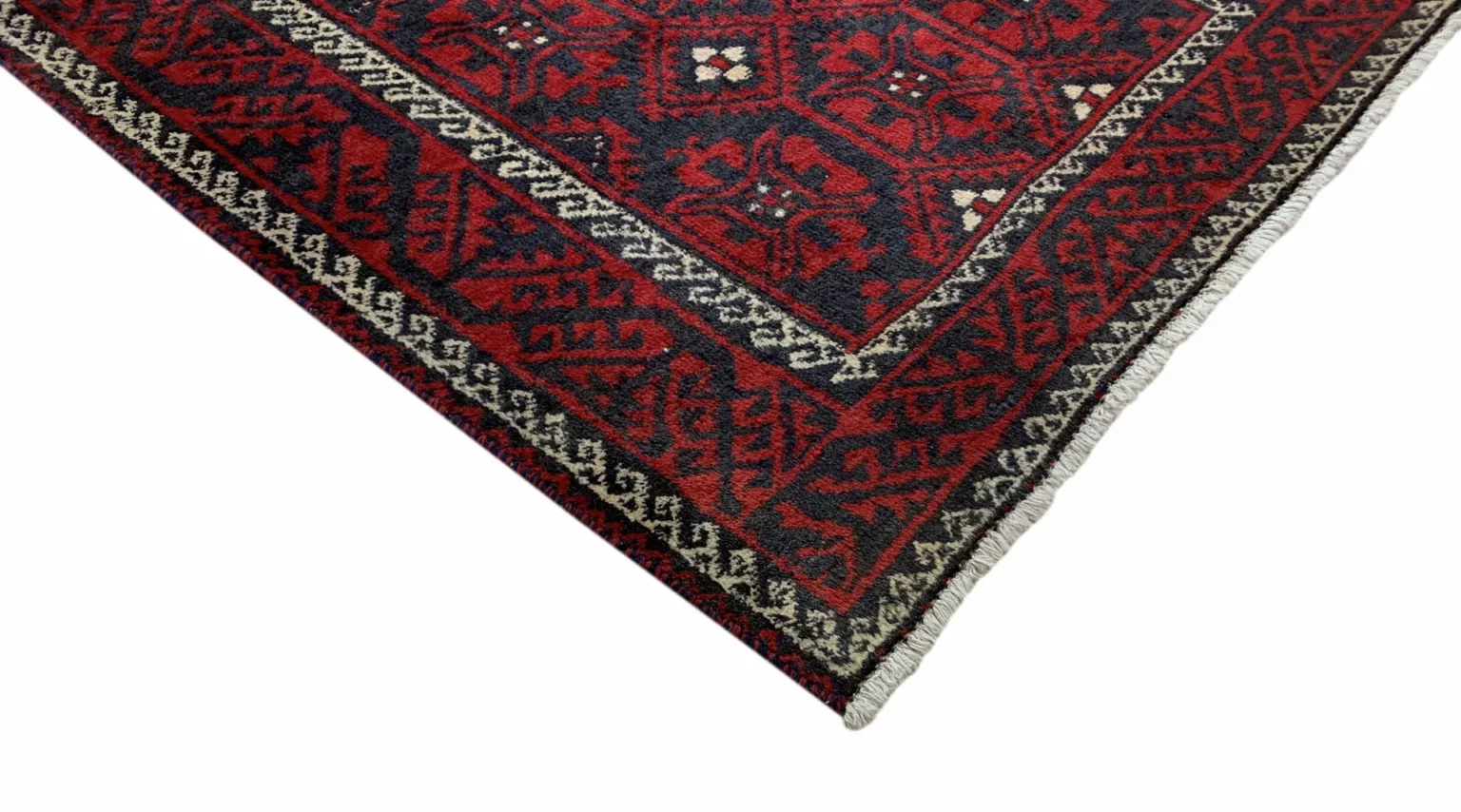
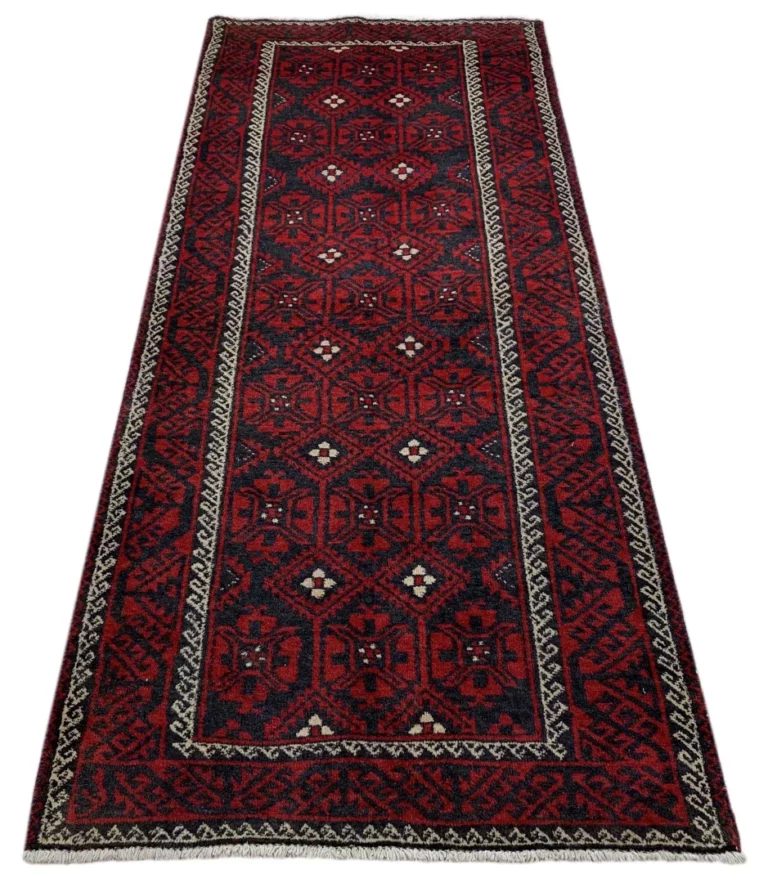
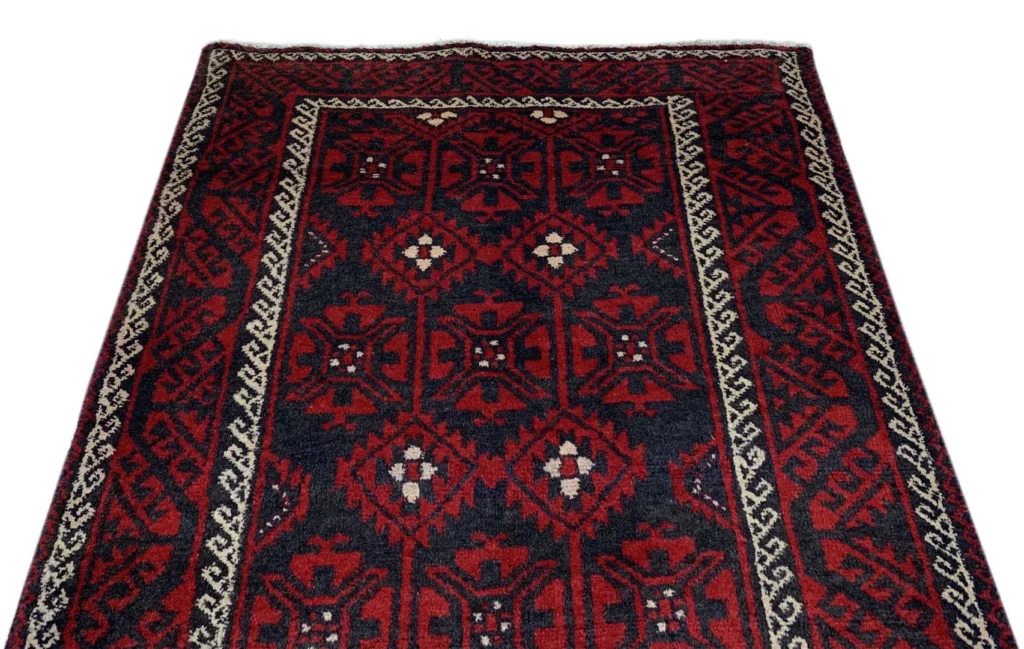
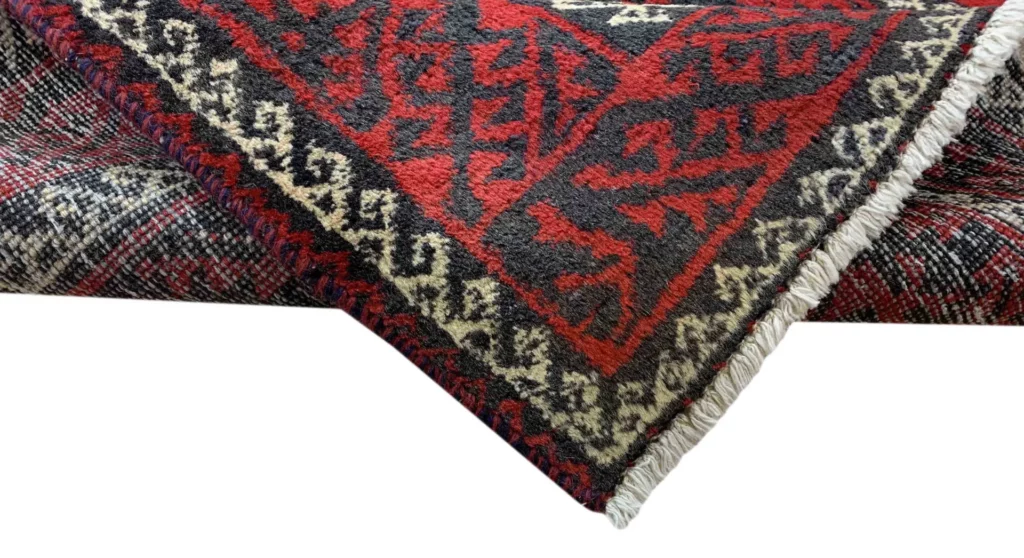
Baluch rugs are characterised by complex geometric designs and floral motifs. Geometric forms can organise the field, define a border or create a repeated framework across the surface. Floral elements introduce more organic shapes into that structure. The two approaches may appear together, producing a composition in which ordered lines and stylised plant forms support one another.
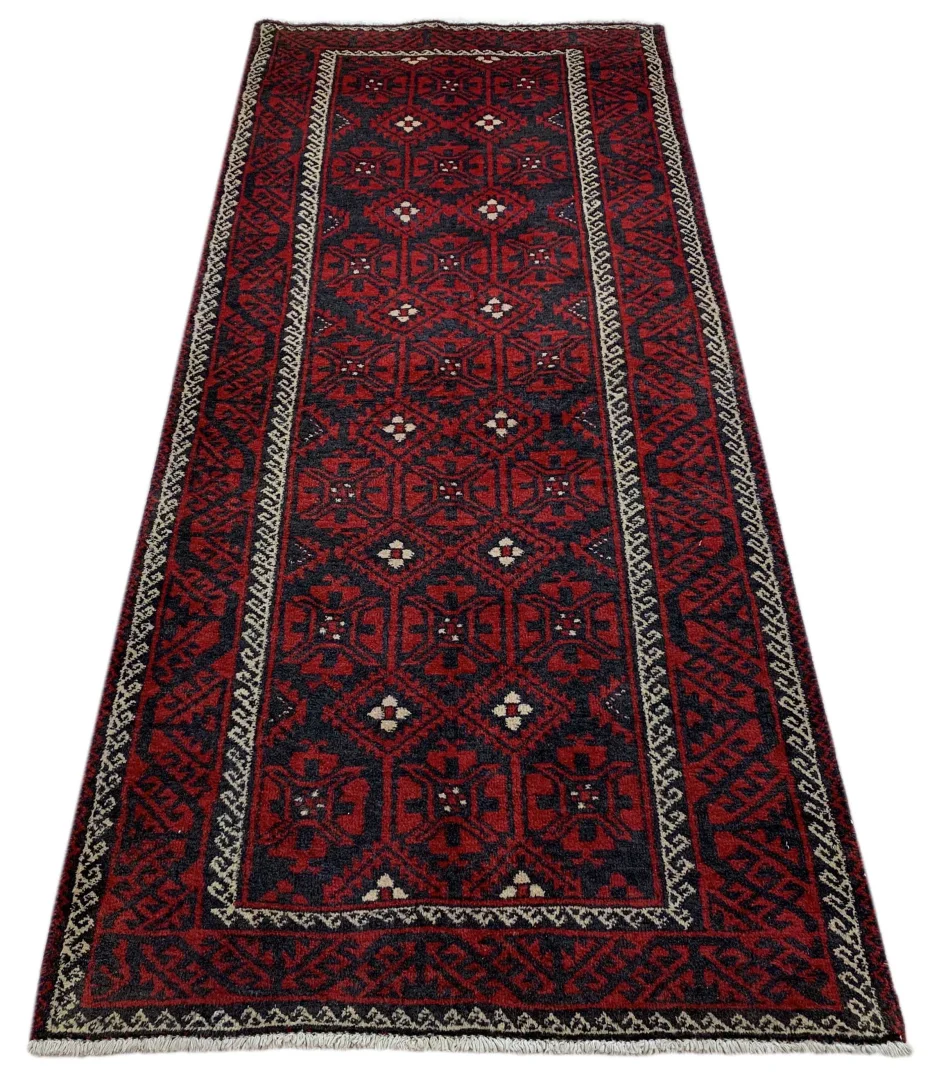
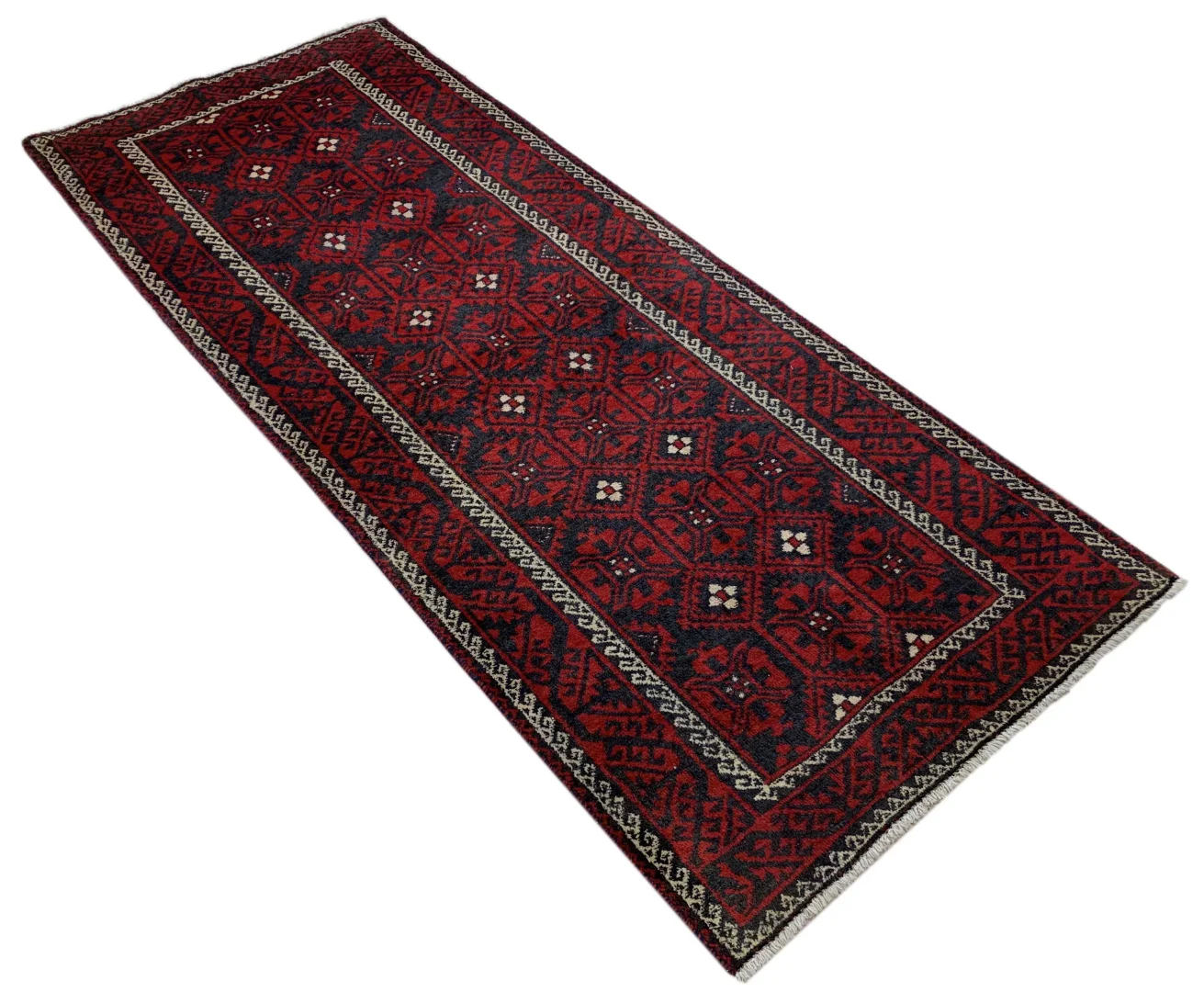
Red and brown tones dominate this rug. Red provides a deep, warm foundation, while brown gives the palette an earthy quality. The combination of rich reds and warm browns is described as characteristic of Baluch rugs. It allows geometric outlines and floral details to remain legible within the overall design while keeping the colour impression cohesive.
The Baluch pattern tradition is not limited to one single motif. Geometric drawings may be tightly organised, repeated in small units or arranged around a central structure. Floral motifs can be highly stylised rather than naturalistic, so that flowers, stems and leaves become part of the woven geometry. Borders, repetition and balanced areas give the composition continuity across the rug.
A dense knotting structure can support the rendering of fine details. Narrow lines, small colour areas and transitions between motifs can be worked with greater differentiation when the knots are closely set. In this rug, the hand-knotted construction, the geometric and floral vocabulary and the dominant red and brown palette form a coherent Baluch expression.
In comparison, Gabbeh rugs are often recognised for simpler designs, lively colours and soft materials, giving them a more rustic appearance. Nain and Tabriz are associated with finer and more elaborate patterns. Qashqai rugs frequently display animal and plant imagery in colourful, artistic arrangements. The Baluch character described here combines practical robustness with the structured presence of geometric and floral patterning.
Special Features
This Baluch rug is described as stain-resistant. The same description identifies it as suitable for hallways and kitchens. Those rooms are used frequently in everyday life, so the stated resistance is a practical feature when considering where to place the rug.
Natural wool, hand-knotted construction and stain-resistant qualities define the main features of this piece. Its dominant reds and browns provide the colour identity, while the Baluch tradition supplies the cultural and craft context. The runner format further supports use in elongated areas such as hallways.
FAQ
How should I care for my Baluch Oriental rug?
For regular care, vacuum the rug without using a brush attachment. It may also be beaten out occasionally outdoors. Treat spills promptly with a damp cloth so that they do not penetrate the material permanently. Gentle handling is appropriate for the natural wool surface and the hand-knotted construction. Stain resistance is useful in everyday settings, but it does not replace prompt attention when a spill occurs.
Where do the materials for a Baluch Oriental rug come from?
The wool used for Baluch rugs comes from the region where these rugs are traditionally made. The source describes it as wool traditionally raised and processed by the Baluch. Natural wool is therefore directly connected with the local craft environment. Its use reflects the established material tradition of Baluch rug making and links the finished textile to the region associated with its production.
What sizes are available for Baluch Oriental rugs?
Baluch rugs are made in different sizes, ranging from small runners to larger rugs suitable for living rooms and dining rooms. This variety allows the format to be matched to different spaces and uses. The present rug is made as a runner and is described as suitable for hallways and kitchens. Larger versions can be used in broader living areas while retaining the same regional craft tradition.
To provide the best experiences, we use technologies like cookies to store and/or access device information. Consenting to these technologies will allow us to process data such as browsing behavior or unique IDs on this site. Not consenting or withdrawing consent, may adversely affect certain features and functions.
Functional Always active
The technical storage or access is strictly necessary for the legitimate purpose of enabling the use of a specific service explicitly requested by the subscriber or user, or for the sole purpose of carrying out the transmission of a communication over an electronic communications network.
Preferences
The technical storage or access is necessary for the legitimate purpose of storing preferences that are not requested by the subscriber or user.
Statistics
The technical storage or access that is used exclusively for statistical purposes.The technical storage or access that is used exclusively for anonymous statistical purposes. Without a subpoena, voluntary compliance on the part of your Internet Service Provider, or additional records from a third party, information stored or retrieved for this purpose alone cannot usually be used to identify you.
Marketing
The technical storage or access is required to create user profiles to send advertising, or to track the user on a website or across several websites for similar marketing purposes.
 SECURE PAYMENT
 SHIPPING PARTNERS