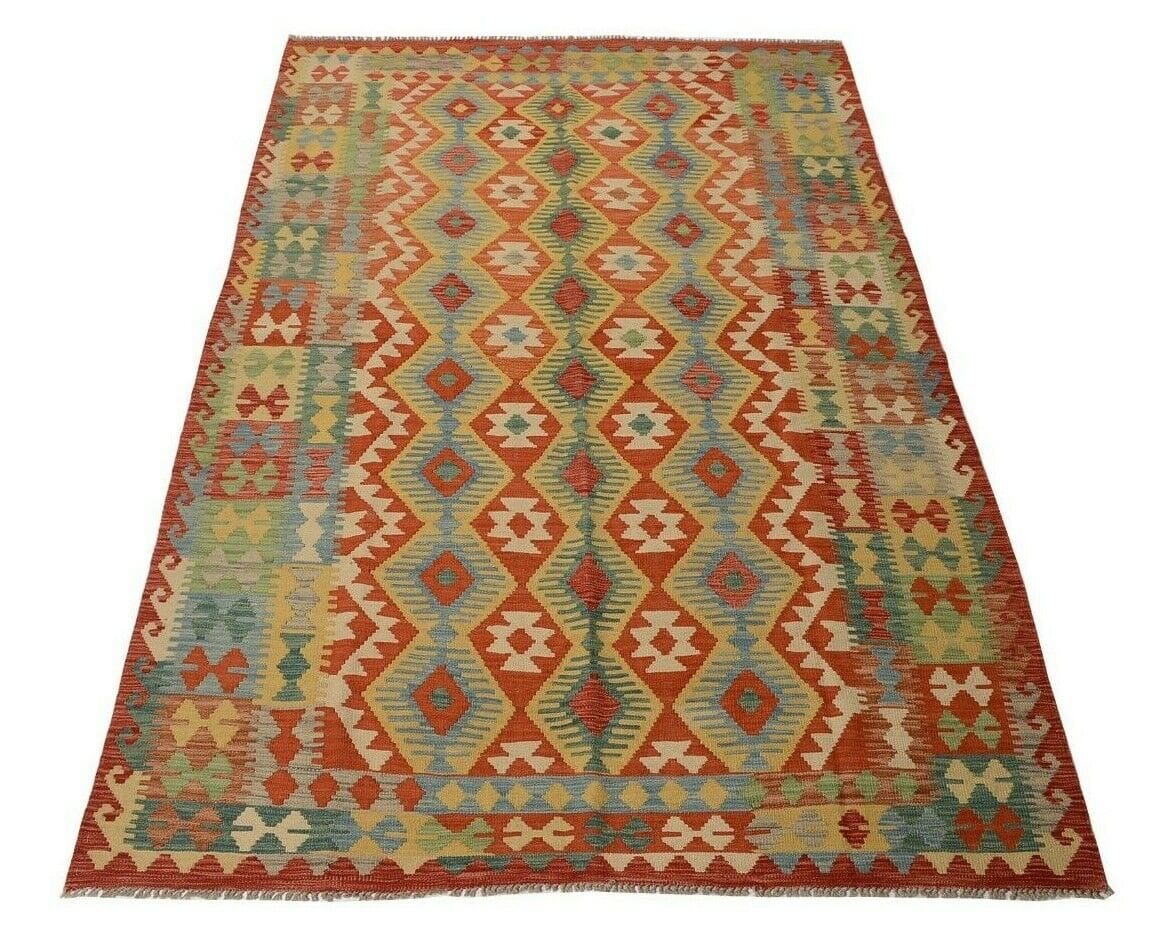
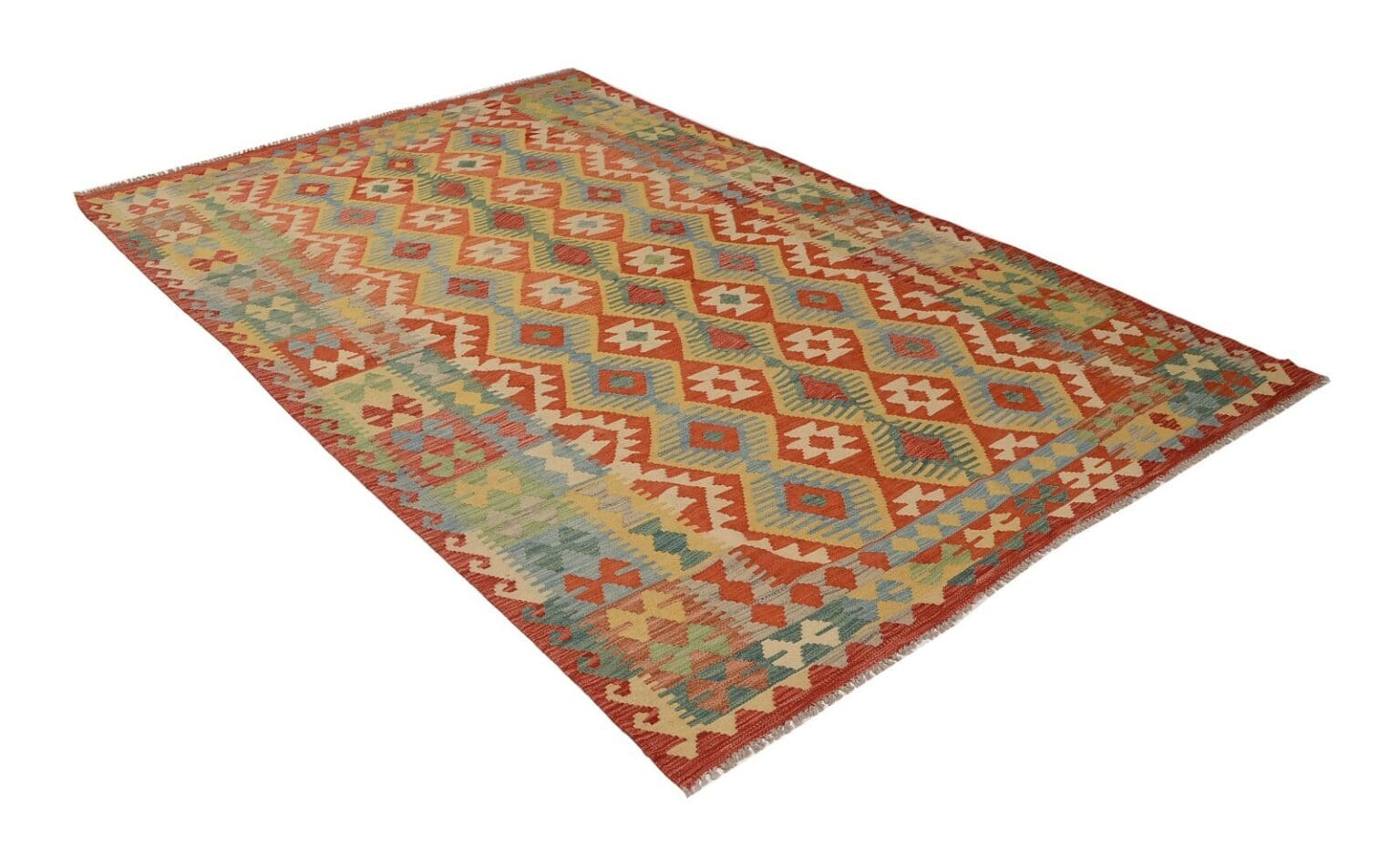
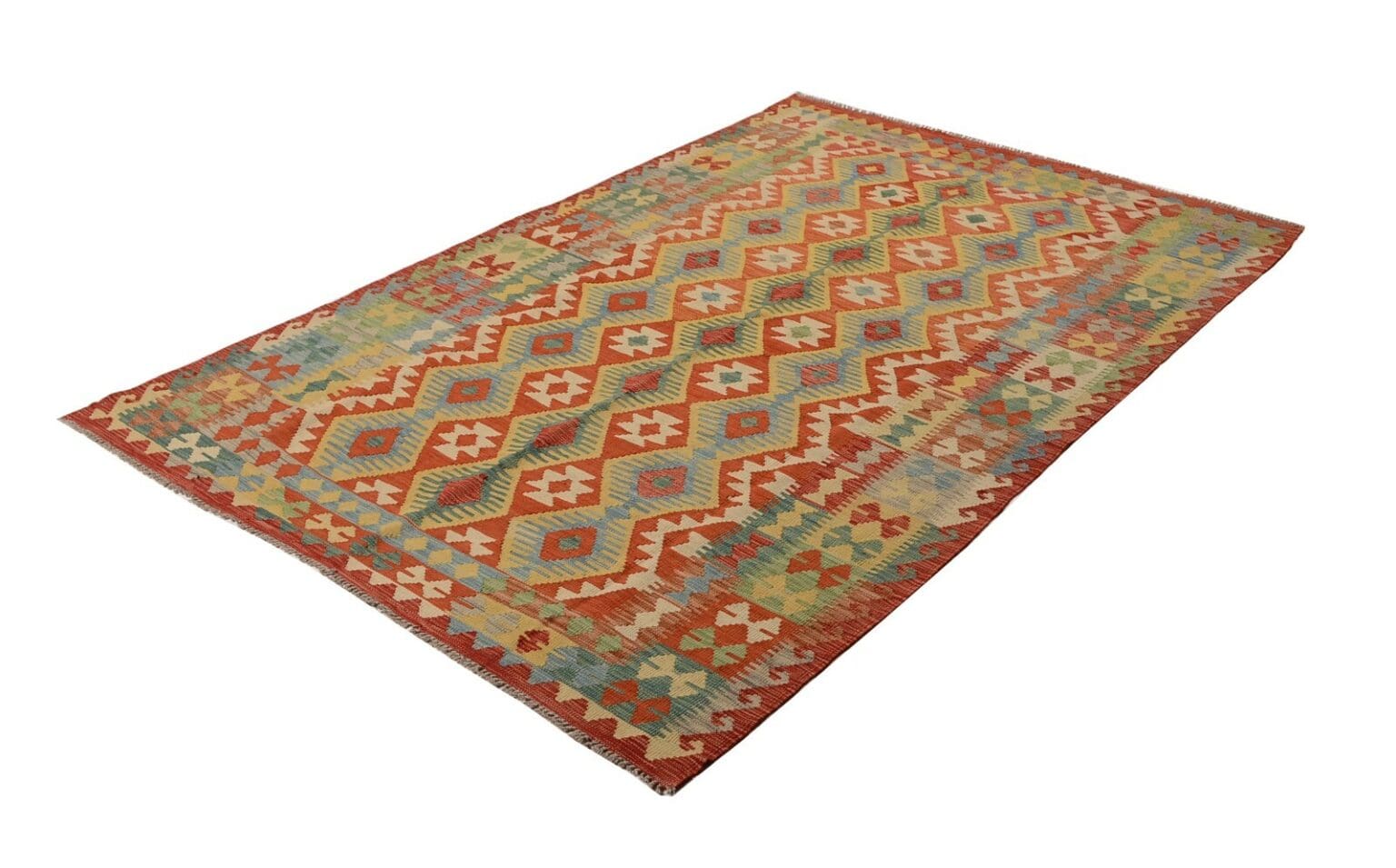
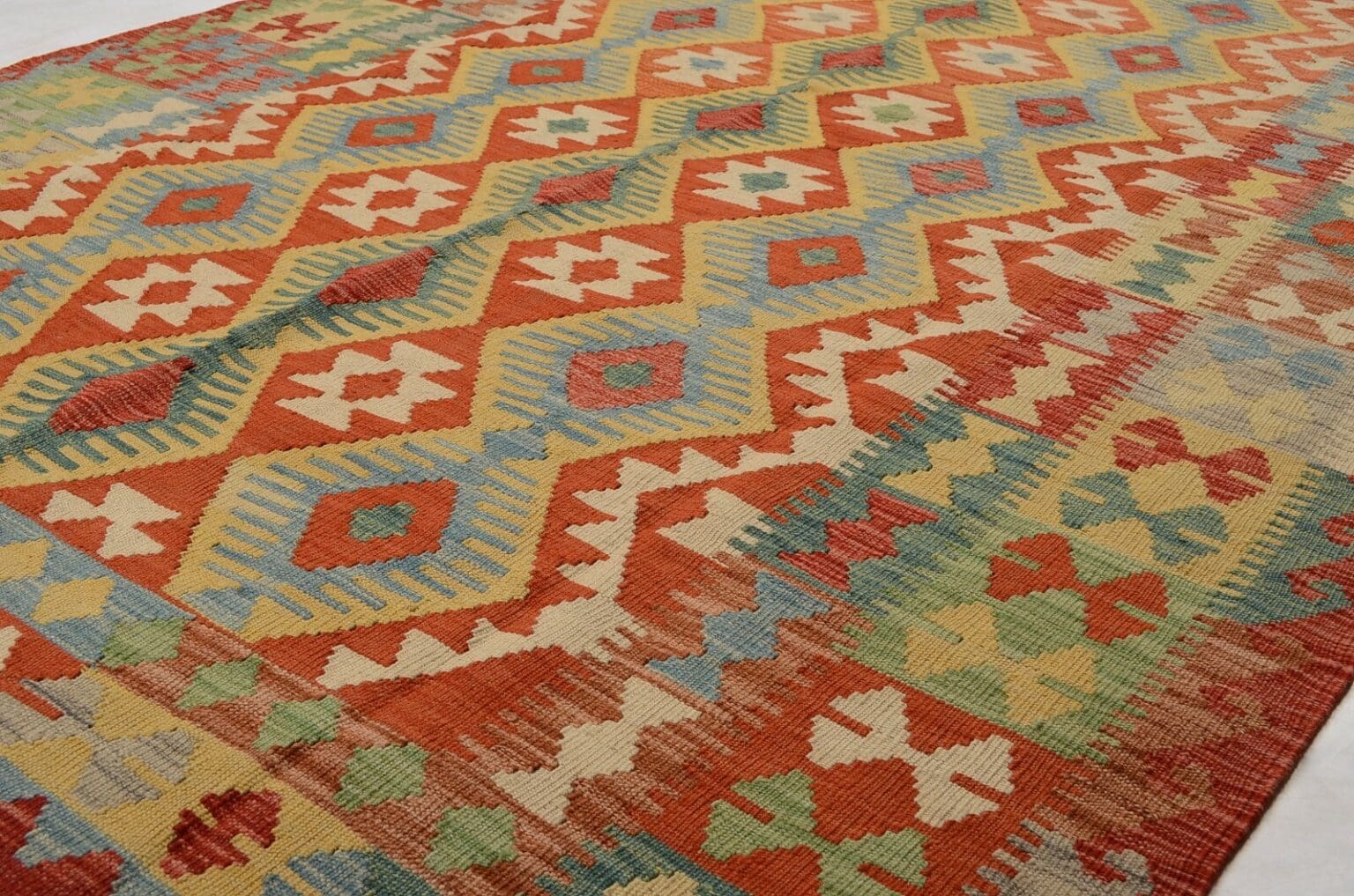
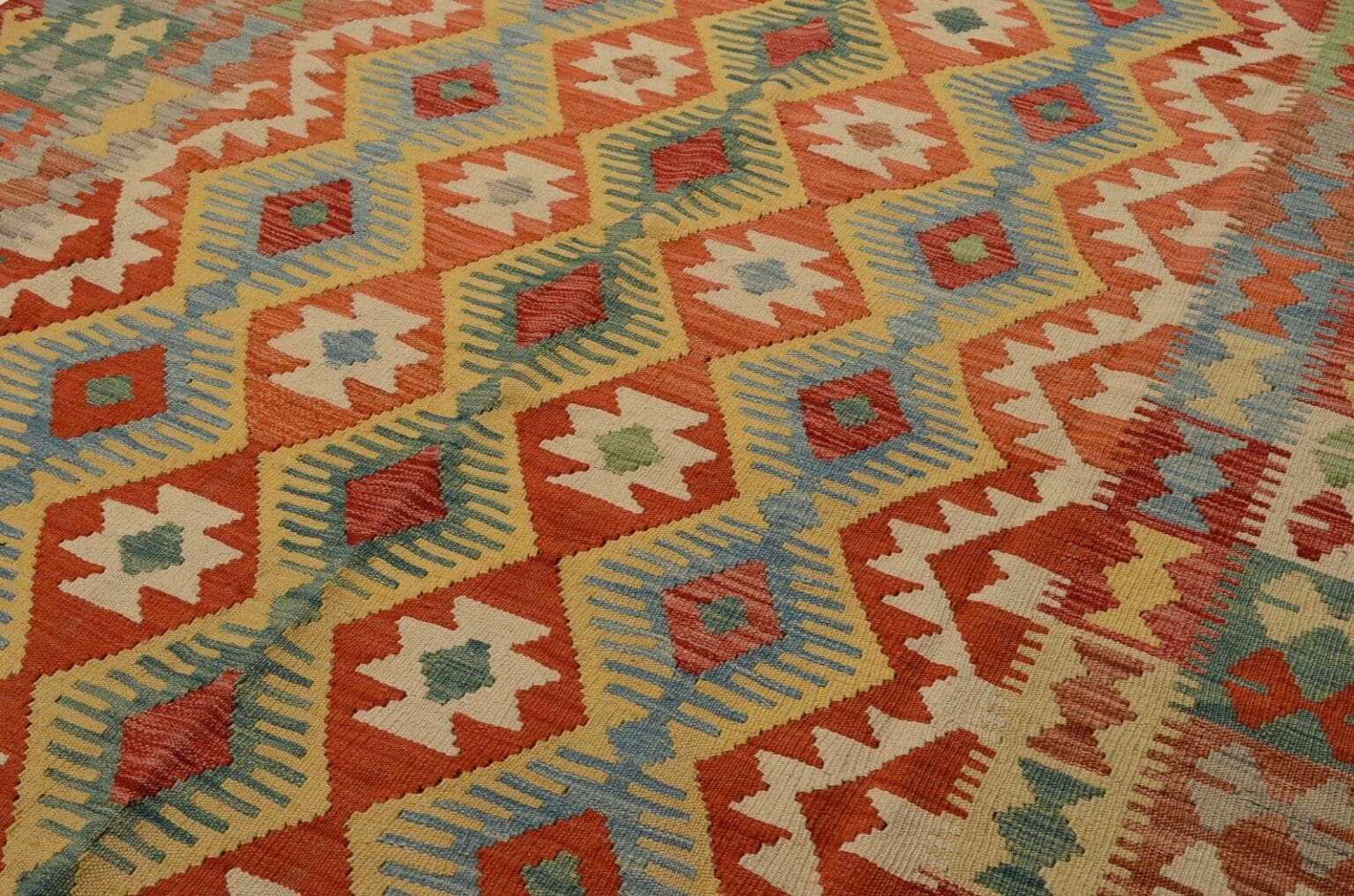
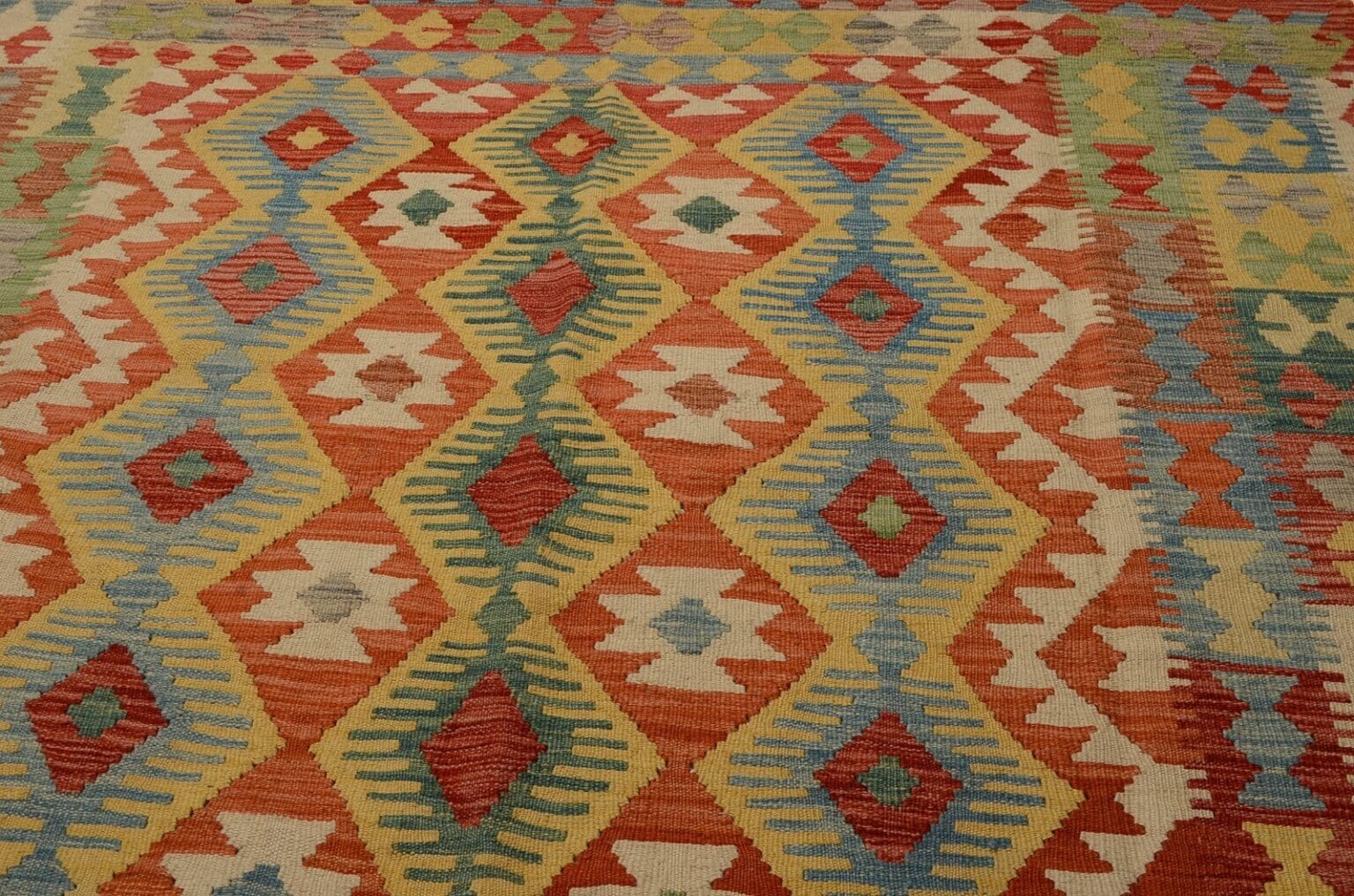
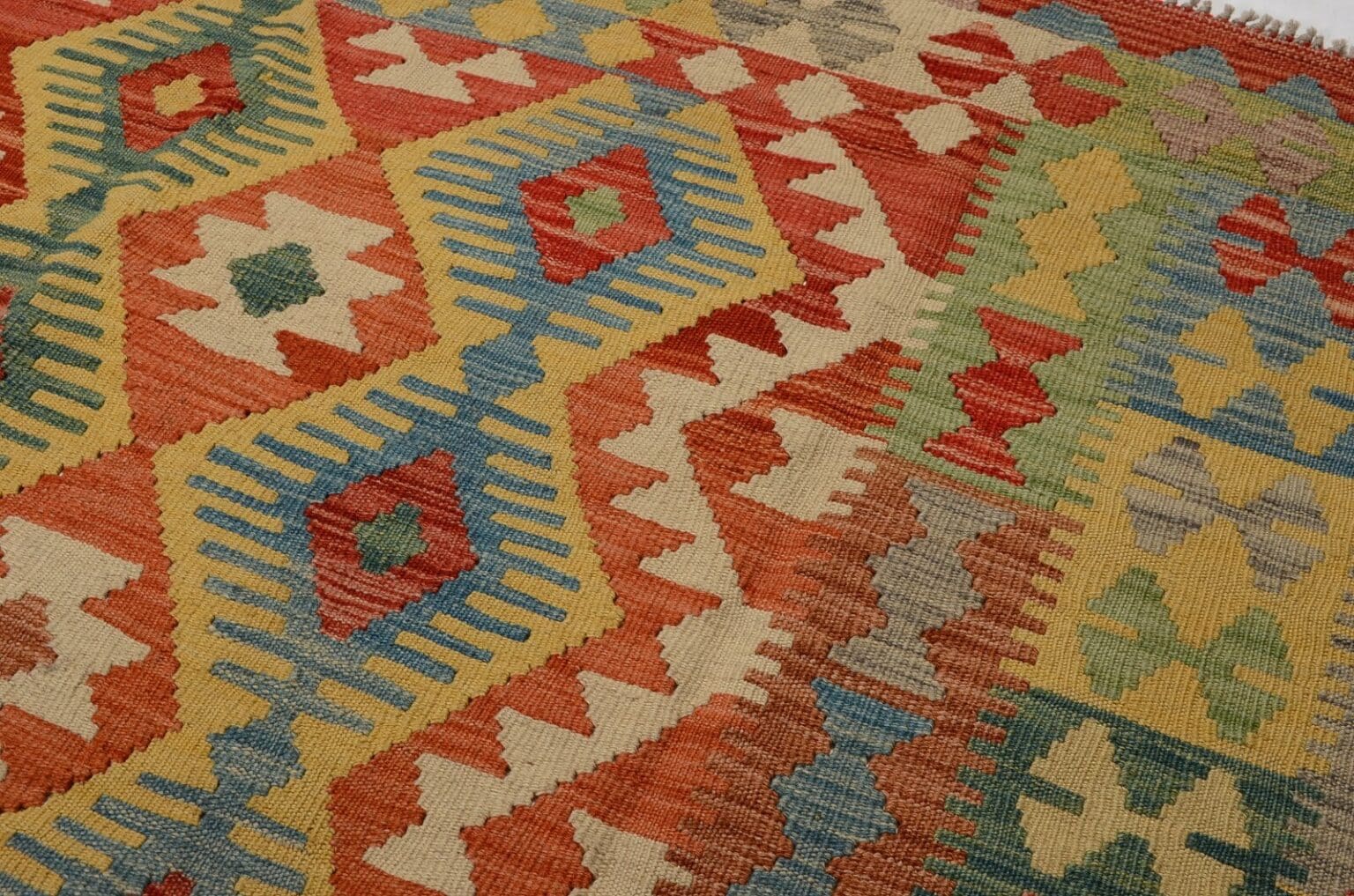
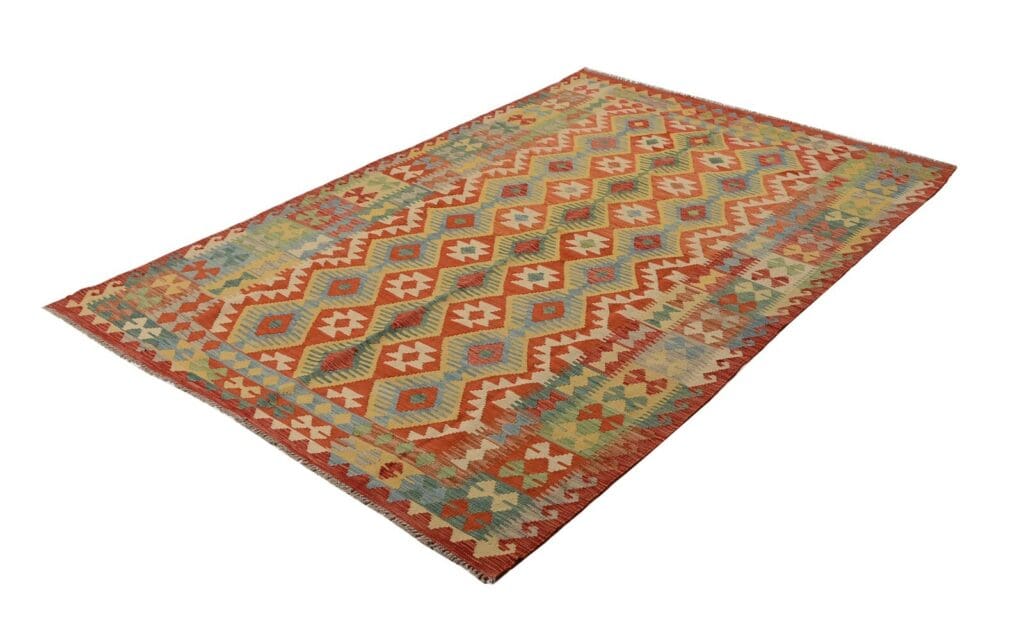
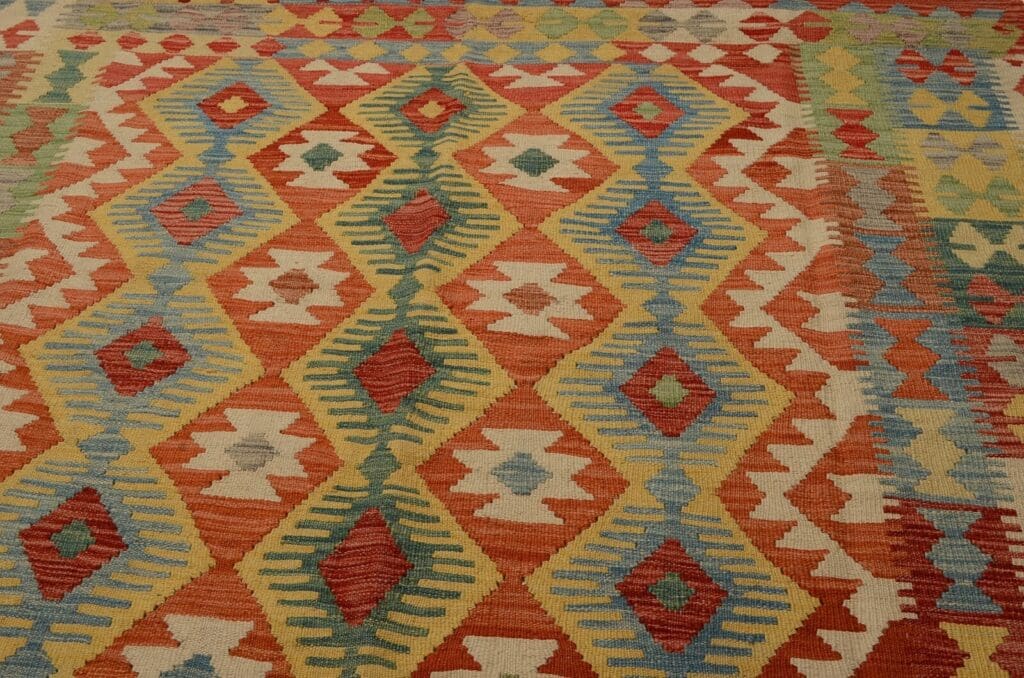
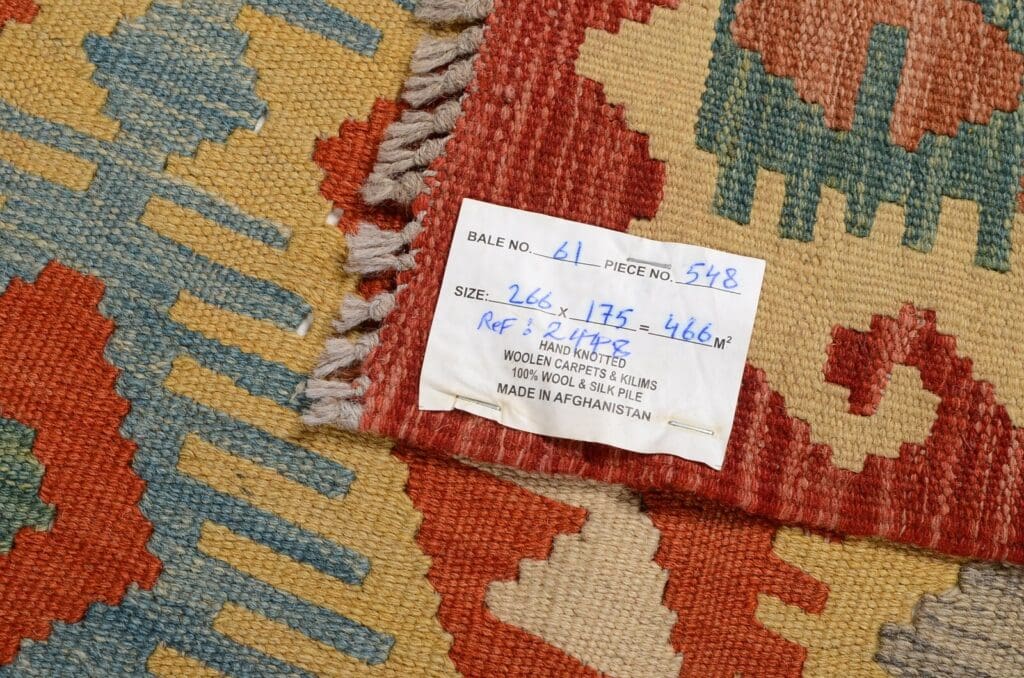
Oriental Rug Afghanistan 266 x 175 cm Wool Hand-woven
€ 715
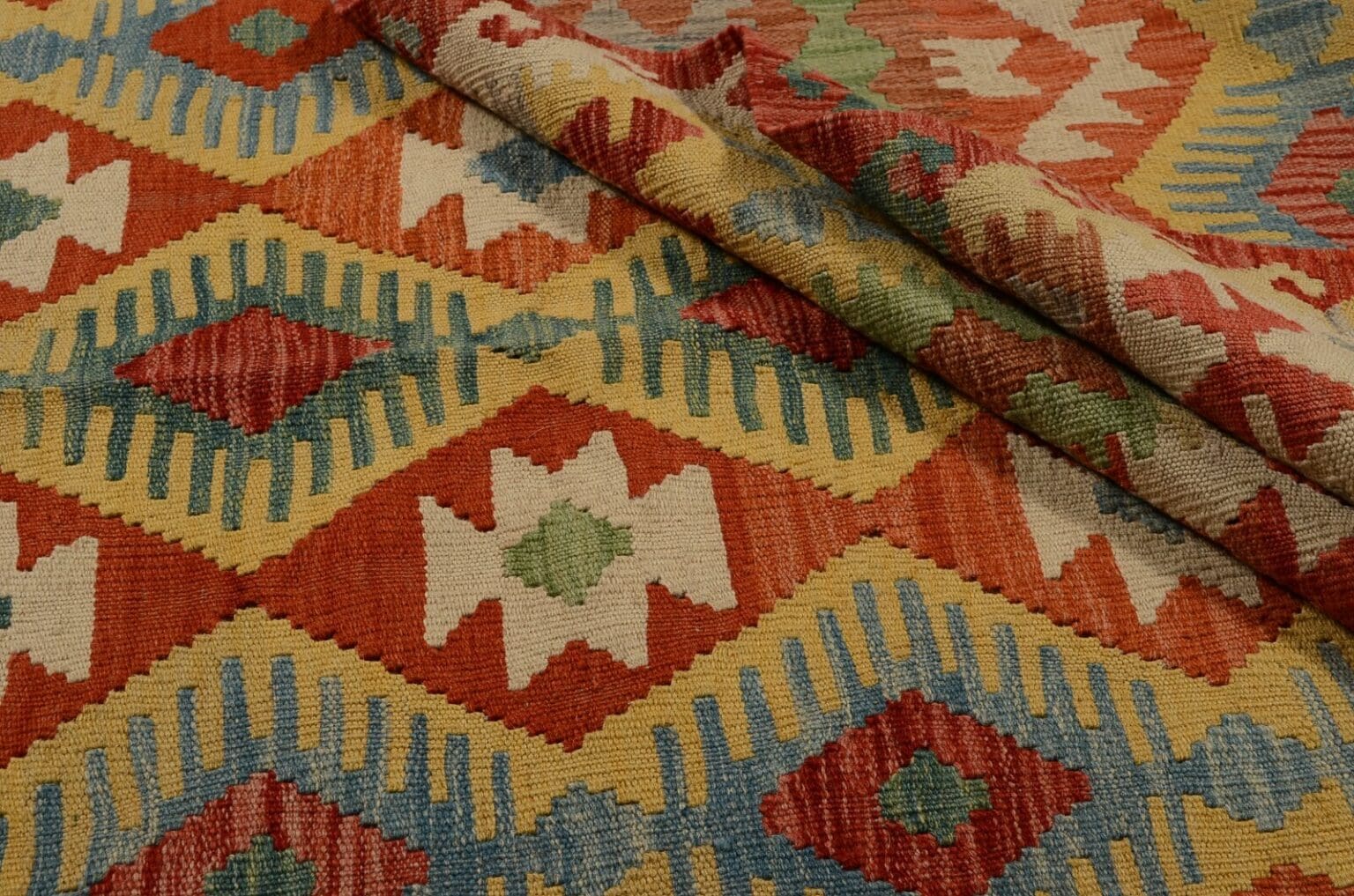
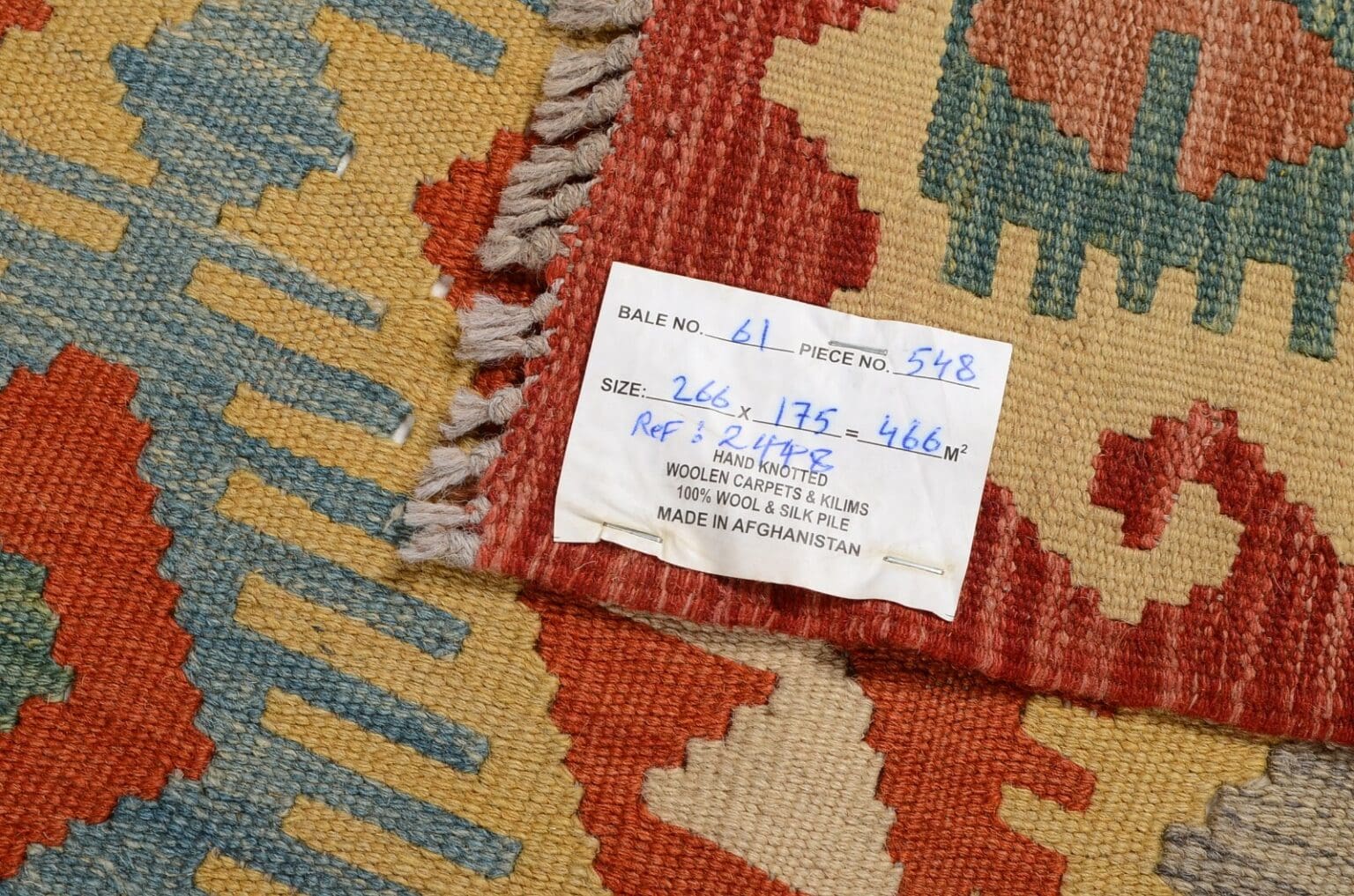
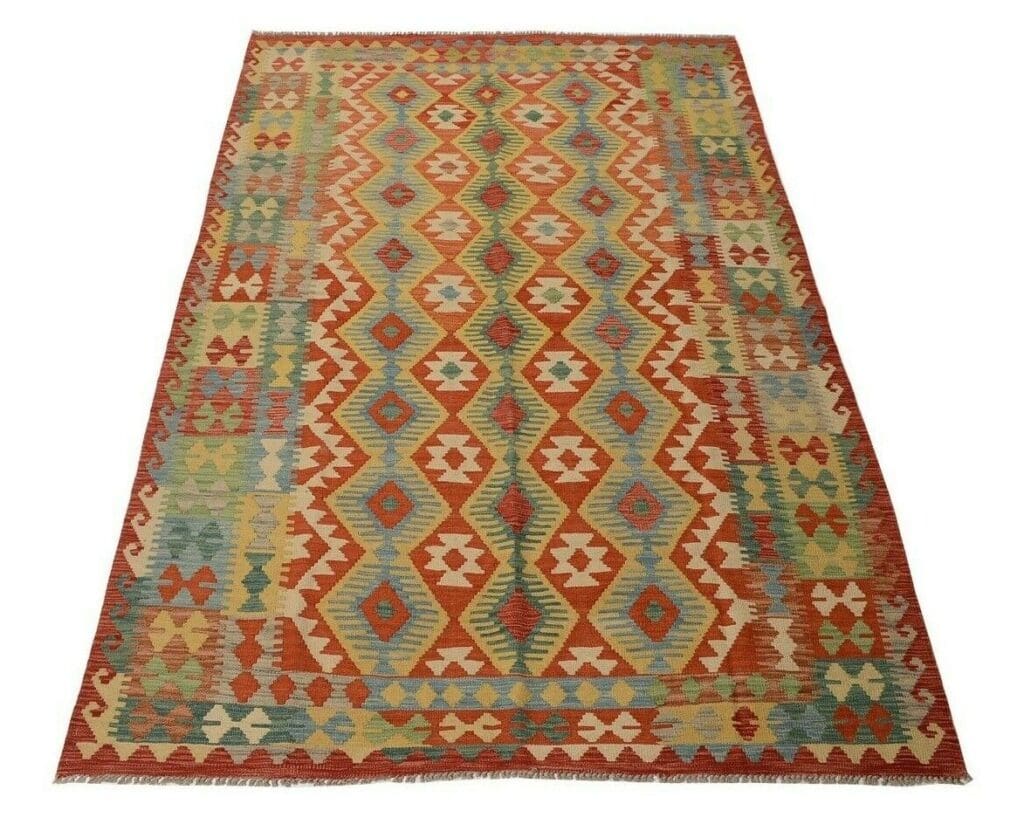
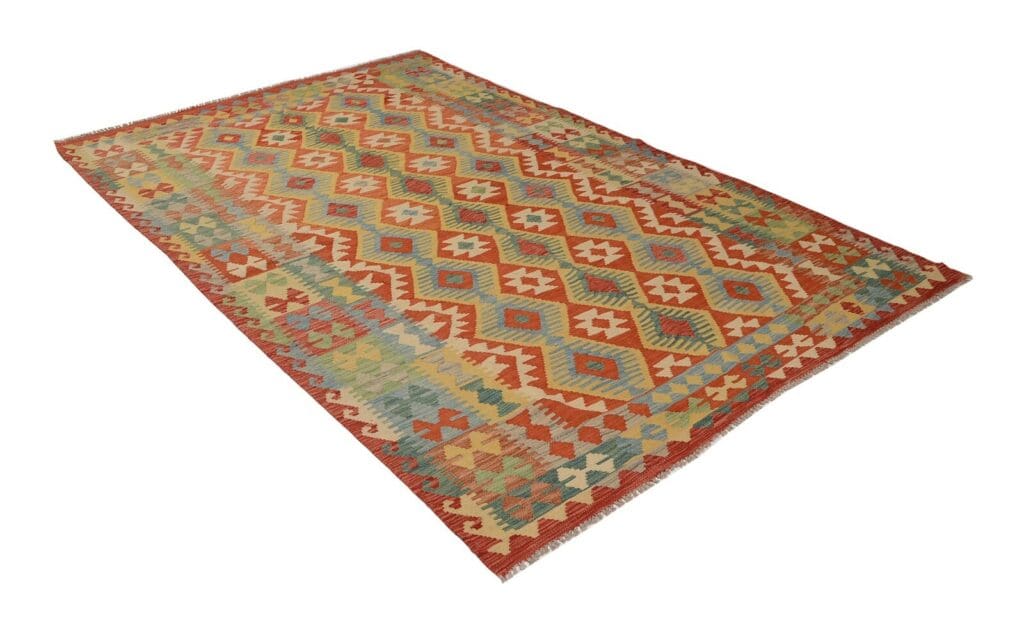
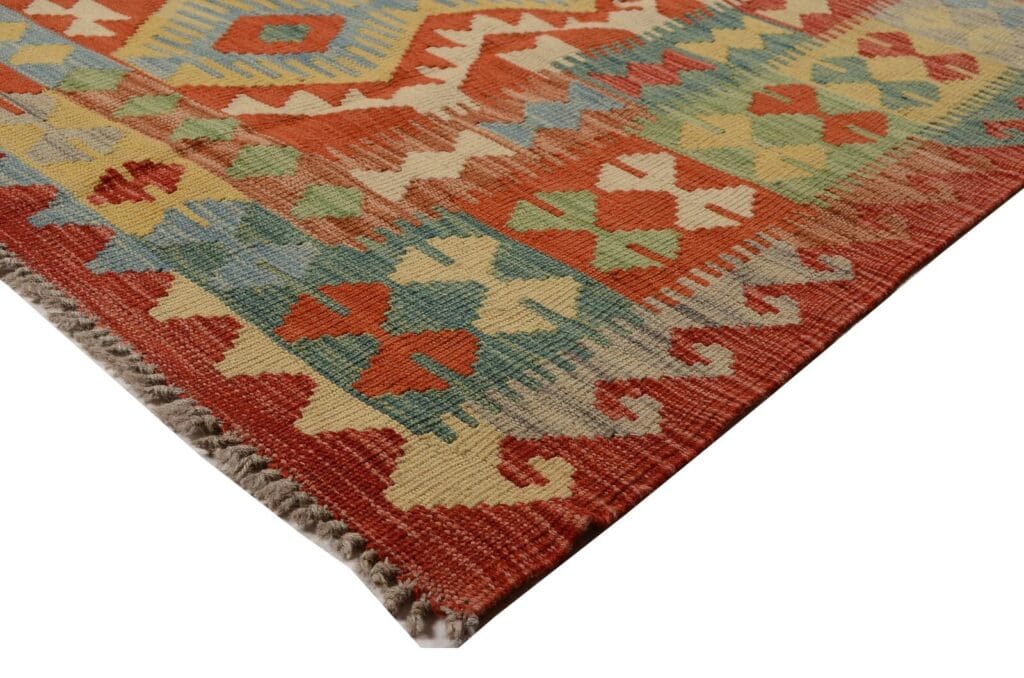
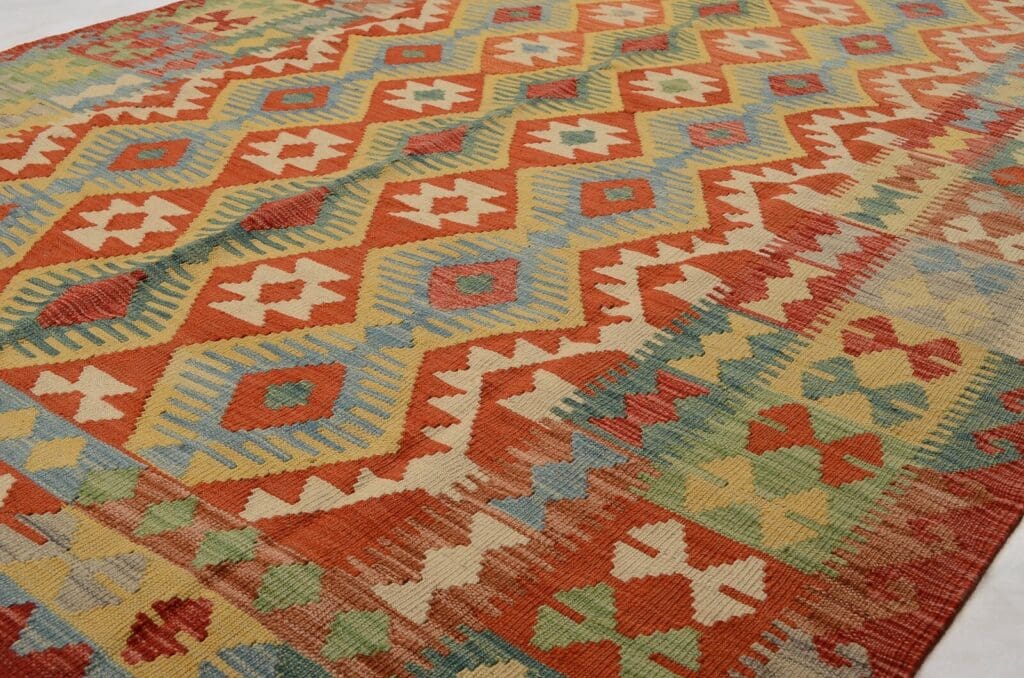
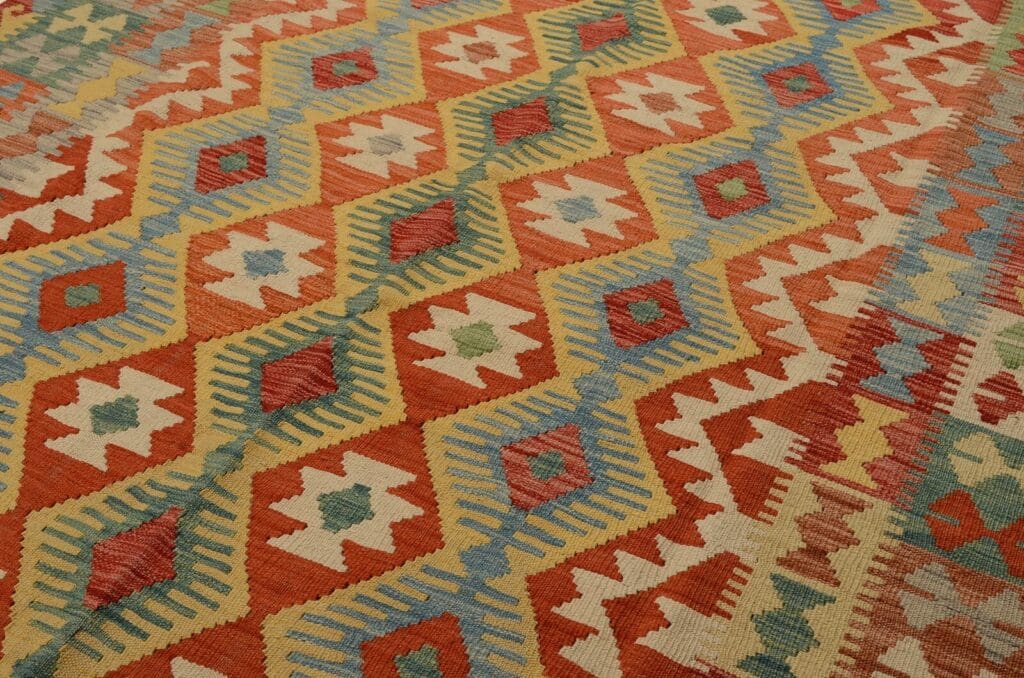
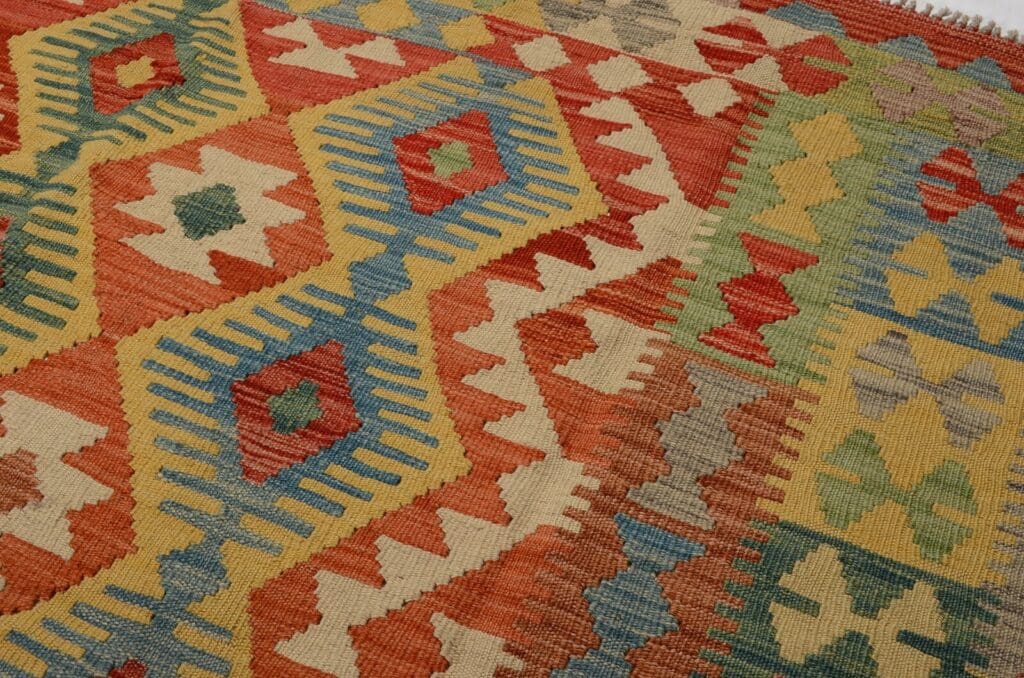
Hand-woven Afghan Oriental rug | Material: pile 100% virgin wool hand-spun and hand-dyed | Size: 266 x 175 cm | Pattern: geometric all-over design in pastel colours | Condition: new unused item
1 available
- ✓Free Shipping in EU
- ✓2-5 Business Days Delivery
- ✓14-Day Return Policy
- ✓Worldwide Shipping on request
 SECURE PAYMENT
 SHIPPING PARTNERS
Inventory number: FB07794D
Description
Afghanistan Oriental Rug
Material and Craftsmanship
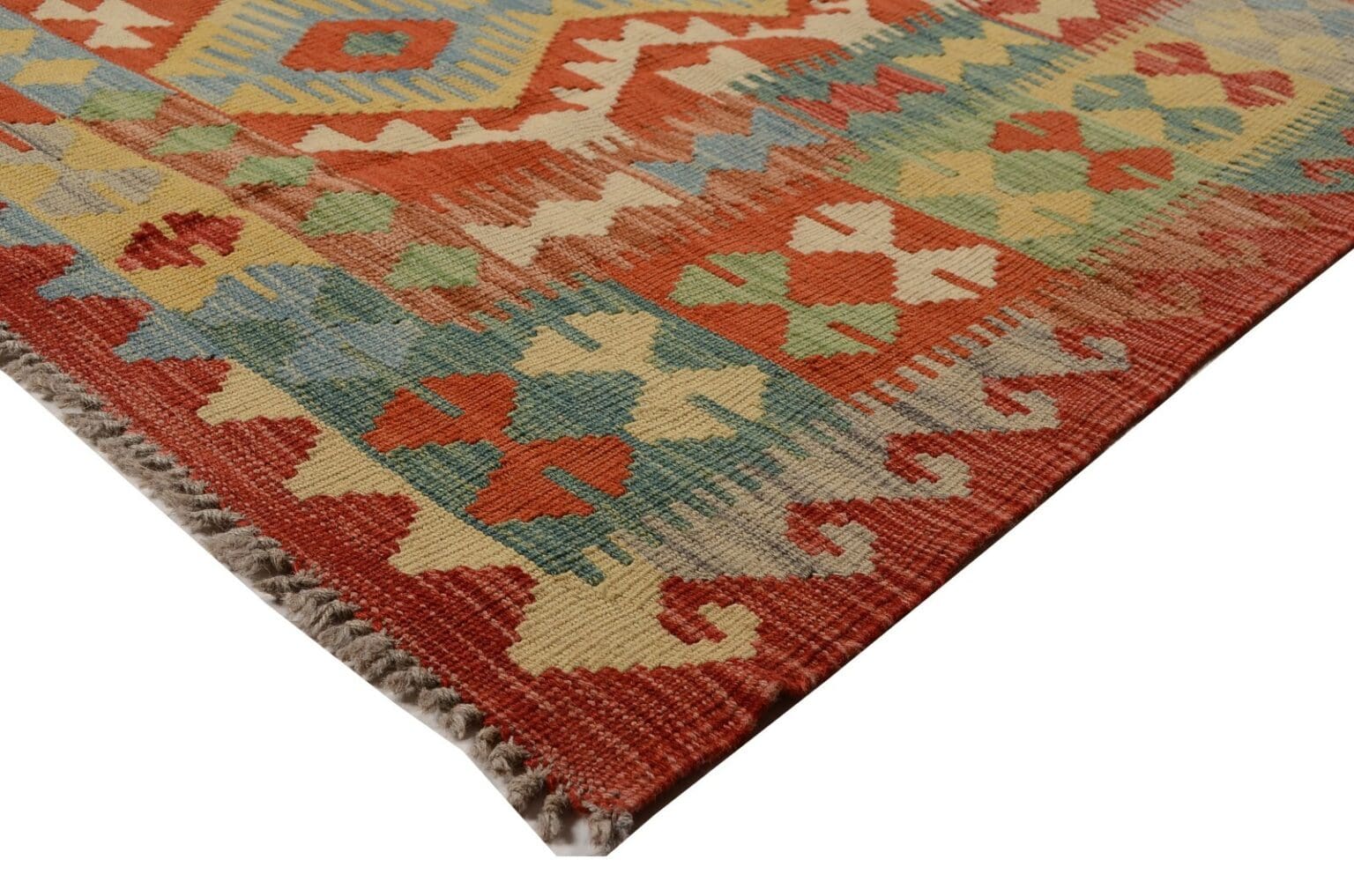
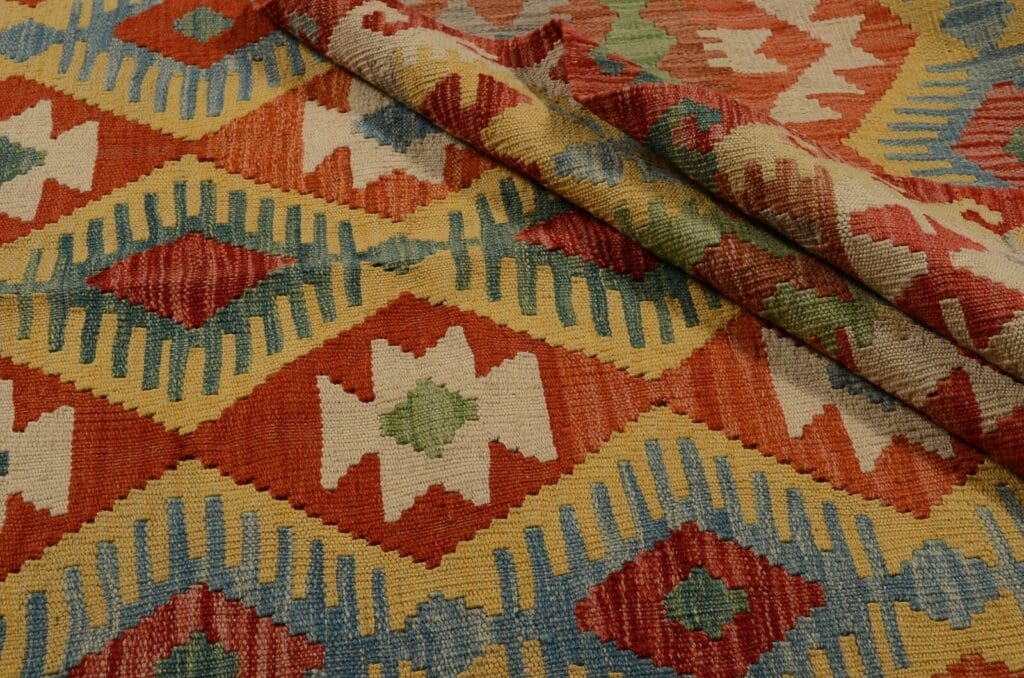
This Afghan Kelim is hand-woven from 100% virgin wool. The wool is hand-spun and hand-dyed, linking the raw material directly with a traditional method of production. Sheep wool has long been used in textile work because its fibres can be spun into yarn and formed into a durable woven surface. A Kelim is made as a flat weave rather than as a carpet with a knotted pile. The yarns that carry the colours are incorporated into the cloth during weaving, so the pattern becomes part of the structure itself.
Warp and weft create the visible surface of a Kelim. The weaver builds coloured areas by placing the yarns according to the intended design. This technique produces a flat construction with a clear graphic appearance. It also means that the material and the ornament remain closely connected: the pattern is not printed or applied after the textile has been made. The even surface is a central technical feature of the Kelim and distinguishes it from pile rugs whose appearance depends on rows of individual knots.
Hand-spun wool can show small variations in thickness, twist and movement. These variations are a natural part of preparing yarn by hand. Hand-dyed wool may likewise contain subtle tonal differences within one colour family. Such nuances can give the woven surface a less mechanically uniform appearance. The use of 100% virgin wool identifies this Kelim as a textile made from a natural animal fibre, with the tactile quality associated with wool.
Flat weaving requires attention to several connected stages of work. The wool must be prepared, spun into yarn, dyed and then arranged during the weaving process. Colour changes, edges and repeated shapes have to be coordinated with the construction of the cloth. The rug is a new, unused item. Its workmanship is defined by the combination of hand-spun and hand-dyed virgin wool with the traditional hand-woven Kelim technique.
Origin and Tradition
The Kelim comes from Afghanistan. Afghan rugs and flat-woven textiles belong to a wide and varied tradition shaped by the country’s landscapes, communities and regional craft practices. Afghanistan has long stood at the meeting point of different cultural and trading areas. This historical position allowed textile knowledge and visual influences to develop in many directions. It is therefore more accurate to speak of a diverse Afghan weaving culture than of one single design shared by every textile from the country.
Wool has practical importance in many Afghan textile traditions. Sheep wool could be obtained as a local natural resource and then cleaned, spun and dyed for further use. Hand-spinning turned the prepared fibre into yarn, while dyeing established the colour groups used in the final textile. The yarns were then brought together on a loom to produce a flat woven surface. This chain of processes shows how closely material knowledge, domestic work and regional craft history are related in the making of a Kelim.
Traditional weaving knowledge is preserved through practice. Learning includes the preparation of wool, the handling of hand-spun yarn, the organisation of warp threads and the insertion of coloured weft. It also includes the ability to repeat or adapt a motif without losing control of the woven structure. Such knowledge is passed on through observation, instruction and repeated work. The tradition is therefore carried not only by familiar patterns but also by the technical skills needed to construct them.
Afghan rugs are associated with a broad range of colours, motifs and techniques. Different areas and communities have developed their own preferences and ways of organising a design. Some textiles use strong contrasts and deep tones, while others rely on lighter or more restrained colour relationships. Geometric layouts may be arranged in bands, compartments or uninterrupted surface patterns. A Kelim expresses this variety through the particular relationship between flat construction, yarn and design.
Oriental rugs have often had functions beyond covering a floor. They could be used in domestic settings, help define interior spaces and reflect the social or economic circumstances of their owners. Colours and motifs have also been connected with ideas such as protection, good fortune, prosperity, fertility and belonging. These associations belong to the wider history of Oriental textiles and do not provide one universal interpretation for every individual motif. Meaning can vary with region, community and the context in which a design is used.
The term Afghan Kelim combines geographical origin with a specific textile form. Kelims differ from knotted rugs mainly through their construction and flat surface. Instead of building a pile from separate knots, the weaver creates the cloth by interlacing warp and weft. This affects the appearance, handle and practical use of the finished textile. Flat weaves have historically been versatile objects that could serve as floor coverings, furnishings or forms of textile space division. The Kelim thus represents an independent branch of Oriental carpet tradition.
Design and Pattern
The design of this Afghan Kelim is a geometric all-over pattern in pastel colours. An all-over arrangement spreads the visual elements across the entire field instead of concentrating them in one central medallion. The eye can move through the surface as a continuous composition. Repeated shapes create rhythm and give the textile an organised appearance, while the flat weave makes the relationship between the coloured areas and the structure of the cloth immediately visible.
Geometry is an important design language in many Kelim traditions. Lines, angles, diamonds, stepped forms and other basic shapes can be repeated, mirrored or joined into larger arrangements. Because the pattern is built while the textile is being woven, the order of the shapes must work together with the technical sequence of the yarns. A simple line may therefore be part of a larger structural rhythm. The graphic quality of a Kelim comes from this interaction between ornament and construction.
Pastel colours create a light and restrained palette. They allow several tones to sit beside one another without the effect of a very hard contrast. The colours remain present, but their relationship is quieter than one based on highly saturated or extremely dark tones. Hand-dyeing can add fine variations within the colour groups. Together with the geometric layout, this palette gives the Kelim a calm yet clearly defined visual identity.
The patterns of Oriental rugs are often discussed in relation to symbolic ideas. Geometric forms may be connected with protection, good fortune, prosperity, fertility, continuity or a sense of community. Interpretations differ across regions and traditions, and not every motif carries one fixed meaning. Some forms may recall natural objects, while others function primarily as abstract arrangements. The important point is that colour and pattern in Oriental textiles have historically carried cultural associations as well as decorative purpose.
The all-over format can be integrated into a range of interior styles. Pastel colours can accompany light furniture, natural wood, simple textiles or more traditional furnishings. In a minimalist room, the geometric pattern can provide a defined accent without relying on a central picture. In a more layered interior, it can help connect existing colours and shapes. Its flexibility comes from the combination of an understated palette, a flat surface and a design distributed evenly across the textile.
Because this is a hand-woven one-off, the design is the result of a sequence of manual decisions. The repeated geometric order gives the composition its recognisable structure, while hand-spun yarn, hand-dyeing and work at the loom shape the textile quality of the finished surface. The motif is therefore not a separate image placed onto the rug. It is an integral part of the woven cloth and of the process by which the Kelim was made.
Special Features
This Afghan Kelim is a hand-woven, new and unused item from Afghanistan. It is made from 100% hand-spun and hand-dyed virgin wool. Its stated features also include the flat Kelim construction, suitability for use over underfloor heating and easy cleaning. The low-profile surface can be practical in everyday interiors. Care should nevertheless be gentle and appropriate for wool and for a hand-dyed textile.
The rug combines a traditional flat-weaving method with a geometric all-over design in pastel colours. Its character comes from the connection between fibre, yarn, colour and loom work. It is therefore both a functional home textile and an example of Afghan weaving tradition. The use of natural wool, the manual preparation of the yarn and the hand-woven construction are the defining features of this individual piece.
FAQ
How should I clean my Afghan Kelim?
Regular vacuuming helps remove loose dirt from the flat weave. For a small stain, use a damp cloth with mild soapy water and work carefully rather than rubbing aggressively. The wool fibres and hand-dyed colours should be treated gently. Strong chemical cleaners should be avoided because they may damage the fibres or alter the colours. Excessive moisture is also unsuitable for a woven wool textile. If the rug has heavier soiling, a professional cleaner experienced with wool and handmade textiles is the safer option. Gentle, limited treatment is preferable to harsh products or vigorous scrubbing.
How can I determine whether my rug is authentic?
For an Afghan Kelim, the material, pattern and workmanship are useful points of reference. Hand-woven fabric often has an individual character and minor irregularities resulting from hand-spinning, hand-dyeing and weaving. The combination of a flat-woven construction, geometric design and Afghan origin is relevant when considering the textile tradition. Labels or certificates may provide additional confirmation of origin. A single visual detail is not enough on its own. Material, construction, colour work and pattern should be considered together when assessing the character and authenticity of a Kelim.
Where is the rug best used?
A hand-woven Afghan Kelim is suitable for living rooms, hallways and bedrooms. Its flat construction works well where a low-profile textile surface is preferred. The pastel colours and geometric all-over design can be combined with modern, Scandinavian and traditional interior styles. In a minimalist room, the rug can provide a clear visual accent. In a more traditionally furnished space, it can connect existing colours and shapes across the room. Because it is suitable for underfloor heating, it can also be used in rooms equipped with that system.
Additional information
| Design Style | |
|---|---|
| Color | |
| Size | |
| Shape | |
| Origin | |
| Material |
Related products

Persian Rug Gabbeh 305×260 cm Wool Hand-knotted
€ 2307
Oriental Rug Ushak ca 420 x 296 cm Wool Hand-knotted
€ 2250
Persian Rug Qashqai 288 x 193 cm Wool Hand-woven
€ 798
Persian Rug Fars 293 x 186 cm Wool Hand-woven
€ 798
Persian Rug Heriz 340 x 254 cm Wool Hand-knotted
€ 1438
Persian Rug Gabbeh 270×83 cm Hand-knotted
€ 755
Persian Rug Gabbeh 250 x 180 cm Cashmere Hand-knotted
€ 1118
Persian Rug Qashqai 284 x 183 cm Wool Hand-woven
€ 798